Search Results: "mak"

23 February 2014

Paul Tagliamonte: Debile + Docker = love

I ve spent a bit of time this saturday Dockerizing Debile s slave / workers (for those who don t know about Debile yet, there are a few posts where I explain it) Many thanks to Tianon Gravi for his work in helping me out :) I created two images to test - the base image for any slave (paultag/debile-slave-base, and a preconfigured image for our test master server. This includes a script to preconfigure the slave worker (OpenPGP keys, username, password) that are passed to it via a tarball generated by debile-remote. Hopefully this makes deploying debile slaves easier :) I was able to do a test build of about 300 packages with the dockerized slave, and I think it s a huge step forward. Onward!

Russell Coker: Electric Car Charging in Melbourne

GoGet plug-in Prius chargingChargePoint Chargers This morning I noticed some parking bays reserved for car charging in a car park at the corner of Sydney Rd and Glenlyon St in Brunswick (near Aldi). One of the parking spots was occupied by a Plug-in Prius from GoGet [1]. I didn t even realise that you could get a plug-in Prius in Australia. The charging station is run by Charge Point [2]. The charging points are about 1.5m high and the cable is about 3cm thick (about as thick as the pipe used for filling a car with petrol), so it would charge a car much faster than could be done with a regular power point. One big problem with the Charge Point web site is that they don t give any information on pricing. They sell home charge points (which I guess means just an all-weather two-phase power point) but don t give a price for that. They sell charge points that can be used by commercially but don t give a price for them either. Also their infrastructure for billing is apparently based on companies installing charge points and setting a price for the service. Some charge points may offer free service (I guess staff car parks and some government agencies) and others will charge varying rates none of which is available on the web site. Apparently they have an online portal which gives information on such things to registered users so you have to register to discover what it costs. Of course hardly anyone is going to register before discovering the price, not even when registration is free. But while registration is free the web site demands the make and model of the electric car, so presumably one has to spend $40,000 or more on a vehicle before discovering the price and availability of charging it. Charge Point can be used as an example of how not to design a web site that promotes a service, or at least how not to promote a service that is aimed at saving money (electricity is significantly cheaper than petrol so it s of interest to people and organisations that want to save money). The Charge Point site seems to be better suited to showing that the concept can work than convincing people that they should sign up for it. It seems to me that the best thing that they could do would be to prominently display the average cost of all non-free charge points that are open to the public along with an explanation of the price of driving a desirable car (such as a plug-in Prius or a Nissan Leaf) with such an electricity cost. The contact section on the web site only has a link for careers . I don t think it s possible to get widespread use of electric vehicles without getting better information out there. It appears that Charge Point is relying on councils to do the work of promoting their business by installing their stations and reserving car parking as Moreland council has done in this case.

Andrew Pollock: [tech] My thoughts on the Ozobot Kickstarter campaign

I'm not an avid Kickstarter follower (if I were, I'd have gone broke long ago). I tend to wind up backing campaigns that come to my attention via other means (in other words, they're in the process of going viral). That said, I've backed plenty of campaigns over the years, and so I'd like to think I have a little bit of familiarity with how they usually operate. When Ozobot came to my attention, I found it unusual, because they were pre-promoting their Kickstarter campaign before it opened. To me, this looked like a case of them trying to build hype prior to the campaign opening, which was a new one to me. The whole thing seemed incredibly slick, and I was surprised they were "only" seeking $100K. The product looked like it'd be something cool for Zoe to play with, so I decided to back it anyway. Then all the updates started flowing in about how well it was being received at various trade shows and whatnot. Yet the amount of dollars flowing into the Kickstarter campaign didn't seem to be reflecting the external hype. I was watching the campaign's dashboard with great interest, because as time marched on, it was looking more and more likely that it wasn't going to make its funding target. This seemed highly unusual to me, given the slickness of the product and purported external interest in it. And then they pulled the plug on the campaign. Purportedly because they were pursuing equity funding instead. They admitted they'd also read the writing on the wall and it was unlikely they were going to make their funding target. I haven't followed other campaigns to see how much of a last minute funding "pop" they have. Usually I've found they've closed at many multiples of their original target, and hit their target well in advance of their deadline, when they're ridiculously popular. My interpretation of Ozobot's campaign, from a funding perspective, is that Kickstarters gave it a big fat "MEH", which surprised me somewhat. Then the question comes up: was the Kickstarter campaign a ruse all along? Was it just a new way of pitching for venture capital? The videos seemed pretty slick. The product seemed already complete, and $100K didn't seem like enough to take it to manufacturing. It'll be interesting to see what becomes of Ozobot now.

Sylvain Le Gall: Release of OASIS 0.4.2

I am happy to announce the release of OASIS v0.4.2. Logo OASIS small OASIS is a tool to help OCaml developers to integrate configure, build and install systems in their projects. It should help to create standard entry points in the source code build system, allowing external tools to analyse projects easily. This tool is freely inspired by Cabal which is the same kind of tool for Haskell. You can find the new release here and the changelog here. More information about OASIS in general on the OASIS website. Here is a quick summary of the important changes: BSD3 and BSD4 are still valid but marked as deprecated. When one of the modules of a library has the name of the library, ocamlbuild tends to just transform this module into a .cmxs. Now, the use of a .mldylib fix that problem and the .cmxs really contains all modules of the library. I have published a quick intermediate version 0.4.1, a few days after the previous release. This was a bug fix related to threads. I also decided to skip the release of last month. I was in the US at this time and didn't have time to work enough on OASIS (christmas vacation and a travel to the US). This month I am back on track. This new version doesn't feature a lot of visible changes. I mostly work on the command line interface code, in order to be able to create external plugins. A first external plugin is almost ready, but need some more polishing before release. This first plugin project is a port of the script that I have used for a long time and that was present in the source code of oasis (oasis-dist.ml). It will be a project on its own and have a different release cycle. The point of this plugin is to create .tar.gz out of an OASIS enabled project. I also must admit that I am very happy to see contributors sending me pull-request through GitHub. It helps me a lot and I also realize that the learning curve to enter OASIS code is steep. This last point is something I will try to improve.

Vincent Cheng: Hello, Planet Debian! (also, RFH: sponsorship-requests)

Hi Debian! Just to briefly introduce myself, I'm Vincent (vcheng@d.o, vincent_c on OFTC/Freenode) and I'm a recent graduate of the NM process, having attained DD-ship (is that even a word?) about a month ago in January. Before that, I was a DM since mid-2012, and just another contributor for a few years prior to that. Most of my contributions to the Project are related to packaging, especially packages maintained within the Debian Games Team. Outside of Debian, well, I'm just another 20-year-old, 3rd-year undergrad student studying at the University of British Columbia, working towards a major in computer science. I anticipate that I'll be able to ditch academia for good in 2016; just 2 more years to go... More about my life story in my AM's report. It's fairly boring, if I say so myself. This blog post isn't just about me; I'd like to touch upon another topic that I consider important, i.e. attracting new contributors, and in many cases that involves package sponsorship. That's one of the many things I'd like to work on as a DD, and to that effect I've dedicated a large chunk of the time I currently spend on Debian sponsoring various packages, including packages that I'm not familiar with. I would love to see the sponsorship-requests queue empty one day, but I admit that I find that increasingly unlikely to happen, now that I've gotten a taste of the time commitment involved with sponsoring. Team maintenance and sponsorship seems to work relatively well in Debian; why does that success not translate over to sponsorship-requests / debian-mentors@l.d.o, where a considerable amount of RFS requests don't see any response at all, and merely get closed once those packages get removed from mentors.debian.net (AFAIK they automatically get removed after 20 weeks)? Well, I'm not here to offer an answer for that, but I will point out that there was a relevant thread that originated on debian-devel a month ago: <87ha8lzl7n.fsf@inf-8660.int-evry.fr> (and no, I'm not talking about the giant init-related threads that pop up on debian-devel every other week or so and drown out everything else on the list...). Are DDs in general reluctant to engage in "fly-by sponsoring"? Most packages coming through the sponsorship-requests queue are not team-maintained, and are sent from sponsorees who are not already in contact with a sponsor, and who have no other way of getting in touch with a potential sponsor (assuming that there isn't an existing team or a DD who happens to be interested in that package). Regardless of the merits of fly-by sponsoring (many arguments in favour of, and against, this type of sponsorship have already been discussed in that thread; no need to re-iterate them here), it's discouraging for potential contributors new to Debian, who may just give up and move on to something else. I've now had the opportunity to be a sponsor (rather than just a sponsoree), and I acknowledge that being a sponsor is more work than I imagined it to be a month ago, and it can be quite tedious and not-fun at times. I suppose I can draw a parallel between sponsoring packages and RC bug fixing; neither is what I'd consider to be a highly enjoyable way of spending my leisure time, and both can eat up a large chunk of time and effort; both often involve working on something that you aren't familiar with. But both are beneficial to Debian. No, beneficial isn't a strong enough word; how about "essential" instead? Yeah, that makes more sense. Without dedicated RC bug squashers, Debian would never be able to make a release; without dedicated sponsors, the size of Debian's archive would be smaller and of lesser quality, and its community also a lot smaller. With all that said...I hope this blog post inspires at least a few DDs, possibly more, to dedicate a little bit more of their time towards sponsoring packages. :)

Diego Escalante Urrelo: Adopted mindset

This just wrinkled my brain. Be nice to programmers:
In order to be a good programmer I need to adopt a certain mindset. That mindset is slowly making me unhappy.
Programming builds an acutely negative mindset over time. I m always asking the question what s wrong with this? Positive people are always focusing on what s good about this?
Go ahead and read the full transcript, you might recognize yourself. There are some other ideas in the original article that linked me to this transcript.

22 February 2014

Petter Reinholdtsen: New home and release 1.0 for netgroup and innetgr (aka ng-utils)

Many years ago, I wrote a GPL licensed version of the netgroup and innetgr tools, because I needed them in Skolelinux. I called the project ng-utils, and it has served me well. I placed the project under the Hungry Programmer umbrella, and it was maintained in our CVS repository. But many years ago, the CVS repository was dropped (lost, not migrated to new hardware, not sure), and the project have lacked a proper home since then. Last summer, I had a look at the package and made a new release fixing a irritating crash bug, but was unable to store the changes in a proper source control system. I applied for a project on Alioth, but did not have time to follow up on it. Until today. :) After many hours of cleaning and migration, the ng-utils project now have a new home, and a git repository with the highlight of the history of the project. I published all release tarballs and imported them into the git repository. As the project is really stable and not expected to gain new features any time soon, I decided to make a new release and call it 1.0. Visit the new project home on https://alioth.debian.org/projects/ng-utils/ if you want to check it out. The new version is also uploaded into Debian Unstable.

Robert Millan: Newcons coming to Debian GNU/kFreeBSD (testers wanted!)

FreeBSD vt(4) -commonly known as Newcons -, which is planned to replace Syscons as the default FreeBSD console, is now available on Debian GNU/kFreeBSD. It is enabled by default, but only in kfreebsd-11 packages from experimental. Newcons provides many interesting new features, such as KMS support, Unicode, double-width CJK characters, etc. More details are available in FreeBSD wiki. Ironically, Debian GNU/kFreeBSD is in a bit more of a hurry to deploy Newcons than FreeBSD is. The reason for this is that Newcons is practically a requirement for using the new KMS drivers. While FreeBSD Ports, in order to ensure a smooth transition, preserve support for UMS (User Mode Setting) in their X11/DRI userland, Debian supports many kernels and (contrary to some ill claims I heard) gives priority to new features on Debian GNU/Linux port, which is the one with most users and developers. In this case, it means KMS is the only option when it comes to X11/DRI userland in Debian. Anyway, we ve been making some nice progress. Here s a screenshot of Newcons in action in a Debian system (running on VirtualBox, thus with VGA backend): newcons The idea is to backport this to kfreebsd 10.0, as FreeBSD plans to merge it into stable/10 anyway. However, it is still in the process of being tested (and being polished on FreeBSD, I hear they plan to merge it on March).

Dirk Eddelbuettel: RcppBDT 0.2.2

A new maintenance release of the RcppBDT package is now on CRAN. There is no new code in this; it mainly accomodates a request by CRAN to standardize the \code Imports: and \code Depends: relationships in the \code DESCRIPTION file. We also updated the build process now that we can use Rcpp 0.11.0. Having said that, there is a lot of new code in the git repository but I guess I'll talk about that when I can make a new upload. Yesterday, this balked because win-builder felt the need for a long long int in 64-bit mode which we can provide once C++11 will be permitted under R 3.1.0, due out in April. Oddly, no such need arose in 64-bit Linux. Oh well. The complete NEWS entry is below:
Changes in version 0.2.2 (2014-02-21)
  • Updates to current CRAN Policy standards for Depends: and Imports: in DESCRIPTION
  • Also take advantage of new Rcpp 0.11.0 build options
  • New code remains in GitHub repo master branch until R 3.1.0 is release so that we can use C++11 in order to get the long long int support without which the package does not build on Windows (whereas Linux is fine)
Courtesy of CRANberries, there is also a diffstat report for 0.2.2 relative to 0.2.1. As always, feedback is welcome and the rcpp-devel mailing list off the R-Forge page for Rcpp is the best place to start a discussion.

This post by Dirk Eddelbuettel originated on his Thinking inside the box blog. Please report excessive re-aggregation in third-party for-profit settings.

21 February 2014

Riku Voipio: Where the armel buildd time went

Wanna-build, wanna-build, which packages spent most time on armel buildd's since beginning of 2013?

package sum(build_time)
-------------------------+--------------
libreoffice 114 09:16:34
linux 113 02:58:50
gcc-4.8 064 01:21:09
webkitgtk 059 19:09:27
acl2 043 16:40:50
gcc-4.7 028 14:03:53
iceweasel 026 19:02:13
gcc-snapshot 026 01:31:21
openjdk-7 020 02:41:53
php5 019 16:13:22
llvm-toolchain-3.3 017 19:05:38
qt4-x11 017 02:57:09
espresso 016 03:50:37
pypy 015 07:07:25
icedove 014 18:57:08
insighttoolkit4 014 17:16:43
qtbase-opensource-src 014 12:39:09
llvm-toolchain-3.4 012 03:06:15
mono 011 22:30:13
atlas 011 20:40:54
qemu 011 17:11:09
calligra 011 16:05:55
gnuradio 011 15:19:35
resiprocate 011 10:14:56
llvm-toolchain-snapshot 011 02:04:44
libav 010 13:52:03
python2.7 009 18:58:33
ghc 009 18:28:48
gnat-4.8 009 13:59:57
axiom 009 12:40:24
cython 009 00:47:04
openjdk-6 008 16:38:14
oce 008 10:29:20
eglibc 008 06:04:26
ppl 007 20:48:45
root-system 007 17:32:16
openturns 007 10:12:53
gcl 007 08:02:42
gcc-4.6 007 02:50:48
k3d 007 00:36:11
python3.3 007 00:25:42
llvm-toolchain-3.2 007 00:17:59
vtk 006 17:53:28
samba 006 17:17:27
mysql-workbench 006 14:36:46
kde-workspace 006 07:31:12
gmsh 006 04:32:42
psi-plus 006 04:30:08
octave 006 04:17:22
paraview 006 04:13:25
Timeformat is "days HH:MM:SS". Our ridiculously stable mv78x00 buildd's have served well, but has come to become let them rest. Now, to find out how many of these top time consuming packages can build with parallel make and are not doing so already.

Guido G nther: Truncating git history

When starting to work on a new project I start from an empty git repository right away so I can try out different ideas, revert easily, can diff against old versions (to check if I missed something) and have a commit history to record fixmes and todos. However when making the repo public these things are not of much interest anymore so I truncate the history. To be on the save side I want to keep that history locally though. Assuming the repo is on master, I do:
# 1.) Move the old master out of the way
git branch -m branch master oldmaster
# 2.) Get the current tree at HEAD
tree=$(git rev-parse HEAD^ tree )
# 3.) Create a new commit without ancestry
commit=$(git commit-tree -m "Initial commit" $tree)
# 4.) Make this the new master
git branch master $commit
# 5.) Switch to the new branch
git checkout master
Done. One can now add a remote and push the master branch. The old history is still there locally on the completely detached commit history ending at oldmaster:
$ git log --pretty=short --graph --decorate master oldmster
* commit d5cf3371eaefbaa8efac10c0fb9e7597da17b423 (HEAD, master)
  Author: Guido G nther <agx@sigxcpu.org>
      Initial commit
* commit 64103ff72bde13d7ec4cf0489ad2a80f3ac249d3 (oldmster)
  Author: Guido G nther <agx@sigxcpu.org>
 
      Another uninteresting commit message
 
* commit bd7332a79380bb217eca09cbd7f6ff0e5174deb8
  Author: Guido G nther <agx@sigxcpu.org>
 
      Uninteresting commit message
 
... <more old history>
Update: Uli Heller pointed out that this is the same as using git checkout's --orphan option.

20 February 2014

Andrew Pollock: [life] Day 23, Playgroup and swimming and some more taxes

Today was a pretty good day. I've found that I quite enjoyed it. Zoe woke up a bit early, around 5:30am. She decided that despite the ridiculous heat, she wanted porridge for breakfast, with cherries in it, so we pitted the cherries and threw it all into the Thermomix to cook while she got dressed. After breakfast and the obligatory bit of TV, we biked over to Playgroup. Zoe's got a few toys that she's taken a liking to, and immediately sought them out. She also seems to really enjoy just running the length of the hall after Playgroup is all done and everything has been packed away and most of the kids are gone. Today the craft activity was making paper crowns, and she wanted to that immediately upon arrival. After we got home, while I was preparing lunch, she blinged it up a bit more with some stuff from home. She took a 2 hour nap after lunch, and I did some more work on my taxes, and then, because it was still stupidly hot, we biked over to Colmslie pool for a swim. Zoe's swimming progress continues in leaps and bounds. She's had one lesson at her new level, and she's started with a kickboard and is doing strokes, so I borrowed a kickboard from the pool, and she did really well with it. We also just fooled around with the kickboard a bit. I took it to the bottom of the pool and launched it out of the water with its own buoyancy, and Zoe tried standing on it under water like a skateboard. The sinkies were also popular again. We grabbed a few things for dinner from the Hawthorne Garage on the way home, and I managed to get Zoe to bed a little bit early. I thought I was going to have a smooth bedtime, but unfortunately, as is a common occurrence at the moment, after lights out, she started crying for her mother. It took about 15 minutes to get her from near-hysterical to calm and drowsy. I'm starting to think I might need to either shorten or eliminate the afternoon naps. One of her complaints recently has been that she's had trouble sleeping at bedtime. That said, she still seems to get to sleep relatively quickly once she gets into the right frame of mind.

19 February 2014

Mario Lang: Enhancing Hub to support GitHub social features

In my article Contributing on GitHub I recently explained that I can not use certain social features of GitHub on their website directly. I also explained that I make great use of Hub to circumvent some accessibility issues I have with GitHub. Well, it turns out that adding star, unstar, follow and unfollow to Hub was actually a lot easier then I thought. It is long ago (probably 10 years) that I touched Ruby code the last time. However, since I do learn a lot from examples, I was actually able to add what I needed just by looking at surrounding code. Well, I had to lookup how you add an element to the end of an array (push) but that was basically it. You can have a look at the final outcome in Hub pull request #490. The code resides in the social branch of my hub fork. If you already have an OAuth token for hub, you need to login to GitHub and edit your token to add the user:follow scope if you want to use the follow and unfollow commands. Interestingly, this type of operation is accessible enough to still work with Lynx! I hope this gets merged, I don't particularily like to maintain my own forks of quite obvious functionality. Anyway, problem solved, mostly. All I am missing now is the ability to delete a repository. A dangerous feature, so probably controversial. Anyway, something for another day.

Michael Stapelberg: Using your TPM for SSH authentication

Thomas Habets has blogged about using your TPM (Trusted Platform Module) for SSH authentication a few weeks ago. We worked together to get his package simple-tpm-pk11 into Debian, and it has just arrived in unstable :-). Using simple-tpm-pk11, you can let your TPM generate a key, which you then can use for SSH authentication. This key will never leave the TPM, so it is safer than having your key on the filesystem (e.g. ~/.ssh/id_rsa), since file system access is not enough to steal your key anymore. Instead, you ll need remote code execution. To use this software, first make sure your TPM is enabled in the BIOS. In my ThinkPad X200 from 2008, the TPM is called Security Chip . Afterwards, claim ownership of your TPM using tpm_takeownership -z (from the tpm-tools package) and enter a password. You will not need to enter this password for every SSH authentication later (but you may choose to set a separate password for that). Then, install simple-tpm-pk11, create a key, set it as your PKCS11Provider and install the public key on the host(s) where you want to use it:
mkdir ~/.simple-tpm-pk11
stpm-keygen -o ~/.simple-tpm-pk11/my.key
echo key my.key > ~/.simple-tpm-pk11/config
echo -e "\nHost *\n    PKCS11Provider libsimple-tpm-pk11.so" >> ~/.ssh/config
ssh-keygen -D libsimple-tpm-pk11.so   ssh shell.example.com tee -a .ssh/authorized_keys
You ll now be able to ssh into shell.example.com without having the key for that on your file system :-). In case you have any feedback about/troubles with the software, please feel free to contact Thomas directly.

Andrew Pollock: [life] Day 22, Kindergarten, cleaning and Officeworks outing

Today was my "clean the house" day. I also had a chiropractic adjustment first thing, and a massage before lunch. I biked to Kindergarten to pick up Zoe, and found her holding court with a bunch of her classmates, giving a show and tell session about the Cinderella snow globe and echidna plush toy she'd taken to Kindergarten. The kids were taking turns to raise their hand and ask questions. I was out of earshot, so I couldn't really make out what was being said, but it all looked very cute from where I was standing. She didn't have a nap today. Sarah's going down to Tasmania until early next month, hiking, and so I've got Zoe for the next 12 nights. This is the longest she will have been away from her mother by quite a significant amount. On top of this, she's been doing rather poorly at bedtime with me the last few nights I've had her. I wanted to try and minimise the emotional impact for both of us as much as possible, so I wanted to make an Advent-style calendar to count down the number of sleeps until Mummy got back. After we got home from Kindergarten, we drove over to Officeworks to pick up some bits and pieces. It ended up being quite a long outing because it took a while for me to figure out how to convince the self-service photo printing kiosk to actually print photos. Zoe parked herself in the kid's colouring area, and she was quite happy there while I went looking for a few things, but after a while wandered off to find me and we spent some time looking for each other. I was pretty impressed with how well she went looking for me. She didn't freak out, and was just wandering around the store looking for me. We had a talk about staying put. Then we called grandma from the carpark to wish her a happy birthday before we headed home. That ended up being quite a lengthy outing, and I started dinner as soon as we got home. Bedtime actually went quite smoothly tonight for a change. No idea if the poster or the lack of a nap helped or not.

18 February 2014

Chris Lamb: Estimating Training Stress Score (TSS) for running on Strava

In cycling, a ride's Training Stress Score is a function of that ride's duration, average power and the intensity of the ride relative to the rider's capability. This Slowtwitch article provides a good overview on how intensity and TSS is calculated on a bike. However, having TSS values for other sports allows a multisport athelete to take into consideration the physiological cost of activities in different sports. This is achieved by ensuring, say, 50 TSS on the bike "counts" the same as a 50 TSS run. This can be used to simply determine the length, intensity and scheduling of the athletes next workout (to ensure adequate recovery) regardless of the combination of sports, or to identify the athlete's long-term tolerance to and targets for training load using metrics such as Chronic Training Load. To make this possible when using Strava, I wrote a Chrome extension that estimates the TSS score of a run from its Grade Adjusted Pace distribution:
https://chris-lamb.co.uk/wp-content/2014/strava-rtss.png

The "TSS (estimated)" value is calculated by the extension.

Source code is available. If you found this Strava extension useful, you might like my extensions to quickly switch between metric and imperial units or to change the default comparison filter.

Margarita Manterola: MiniDebConf 2014 Barcelona

Debian Women is proud to announce that it will hold a MiniDebConf in Barcelona on 15-16 March 2014, where Debian enthusiasts from far and wide will gather to talk about the latest Debian changes and the Debian community, as well as to meet new and old friends. The MiniDebConf is fast approaching, be sure to make your travel arrangements! It is going to be an exciting event, in a beautiful venue, in one of the most famous European cities! Schedule A draft schedule (still subject to some last minute changes) is already available. The list of talks promises two days packed with great talks! If you have an exciting idea for a talk, but missed the deadline, please get in touch with us, we might still have a slot for you. Crowd-funding We are still raising funds to cover the costs of running the conference and to offer travel sponsorship to people who can't pay for it. Please, consider donating any amount you can, everything helps! Sponsorship If you want to attend the conference, but are unable to cover the costs. Please contact us! We don't have a big budget, but we will make our best to help. Naturally, priority will be given to participants who have an accepted talk. About this MiniDebConf We want to have a MiniDebConf with both talks and social events, to which everyone in Debian is invited but where the speakers in the talks are all people who identify themselves as female. We consider this important to The idea behind the conference is not to talk about women in free software, or women in Debian, but rather to make discussion about Debian subjects more inclusive for women. If you agree with this goal, spread the word. Forward this announcement and help us make this event a great success! About our sponsors This event is possible thanks to the help provided by our generous sponsors. In particular, we'd like to thank our platinum sponsor, Google. We hope to see you in Barcelona! For more information, visit http://bcn2014.mini.debconf.org

Mario Lang: Conntributing on GitHub

I really like to read code written by different people. I've always been the type of learner that can cover a lot of ground by looking at examples. A few of the programming tricks I acquired over time have definitely been learnt by reading programs written by other people. There are of course cases of disagrement with coding style (lets put that very mildly), so not every project is fun to read. But I tend to find projects I like enough to actually look at their source code. Now, if you get into this habit, there is also the occasional spotting of a bug. Many are really cosmetic, like typos in comments or documentation. Others are maybe more serious, who knows what can happen if you read a few lines of code written by someone you have never met in person. This is one of the original arguments of open source and free software. It basically goes like: "People will read your code and report problems." I know that happens, but I also know that there are cases of people finding relatively minor things during a small code review, which they don't report, or which get lost in some developers INBOX. I remember waiting months to see memory corruption fixes for a particular project I submitted by email to actually appear in the development repository. In some cases you really need to track your patches and prod someone to remind them about your contribution if need be. True, some of these issues are probably minor enough to not really hurt if they get lost, but I have a feel that a lot of minor things also sort of add up. This is where GitHub comes into play. We have had project hosting services since at least a decade now, but none of them (to my experience) have ever made it so easy for all involved parties to submit and merge changes into projects. Pull requests are just amazing. Well, at least for me, they are since a few months. I have a sort of mixed hate-love relationship with GitHub when it comes to a topic that is very important to me, Accessibility. The last project hosting site I really liked for their simple web interface (read, still usable with Lynx) was Google Code. That was in the days when Google still seemed to care about such things. These days, their newer services are next to unusable to me (with the tools I prefer). SourceForge was always a catastrophy. Many things were cumbersome to do, because the site is so loaded with links to all sorts of things I never need. However, at the time I was using it, all the things I really needed did work. GitHub is a different beast, in a different era of the internet. While I can read project pages and a few basic things perfectly fine, some parts of the GitHub site are simply unusable for no particular reason. For instance, I can edit (some of my) preferences and even save them. But I can not star a project, nor can I follow other developers. Invoking these links gives me a 404, which seems to indicate that some JavaScript (read, client side code execution) is required which my browser does not perform. However, I really wonder why. Because something like "I want to star this project" will eventually have to end up as a request on the server anyway, so it seems technically unnecessary to rely on Javascript for such an operation to succeed. Luckily, these days, hip projects do have an API. An GitHub is no exception. I want to emphasis that an API alone is not an accessibility fix, since you rarely have the time to implement a clinet for a random API, just to get access to a service you want to use. Sometimes you do, and an API is a great enabler in such situations, but a reference client with a rich feature-set is much better. I have to admit that I haven't evaluated any of the possible alternatives, but one client I found for GitHub's API did really boost my productivity in the last year. I am talking about Hub. It is a simple wrapper around Git that adds a few and enhances some other git commands. Most importantly, hub fork will fork the current checkout on GitHub, and hub pull-request allows you to quickly (and I really mean quickly!) open a pull request for some commits you've just done to your fork of some project. This is very helpful, and very accessible. While it does not solve all my accessibility problems with GitHub, it at least enables me to take part in the GitHub workflow. I can easily fork projects and submit pull reuqests for changes I did. And that is what I did, at least a bit, in roughly the past year. I am not sure exactly, but I think it was spring when someone made me aware of Hub. One approach would be to check my GitHub activity graph, but I probably don't have to mention that it is not accessible. Here is a list of some of my contributions to open source projects on GitHub since I discovered a good client for the GitHub API: To summarize: I love GitHub for what it does to the free software community. I think the simplicity (and transparency) of contributions is to the benefit of free and open source software. However, I also hate GitHub sometimes when I need to ask a friend to do relatively trivial changes for me. What I actually want, is a command-line client like Hub that makes most or even all functionality provided on the website available. True, some things like graphs are not immediately easy to adapt. But I really shouldn't need to use a modern full-fledged web browser to tell GitHub that I am interested in the activities of a certain user. Or delete a fork. Yes, thats right. I can use Hub to fork a project, but there is no way to delete it again. Sort of strange for casual small-scale contributions. I guess the workflow there is: fork, commit, pull-request, wait for merge, delete. I don't want to have all sorts of forks on GitHub that I actually don't actively use/maintain. So once a pull request was merged, and I don't have any other things I am working on right now, I actually want to get rid of the fork again. It is easy enough to do a fork should I ever need it again.

Mario Lang: Contributing on GitHub

I really like to read code written by different people. I've always been the type of learner that can cover a lot of ground by looking at examples. A few of the programming tricks I acquired over time have definitely been learnt by reading programs written by other people. There are of course cases of disagrement with coding style (lets put that very mildly), so not every project is fun to read. But I tend to find projects I like enough to actually look at their source code. Now, if you get into this habit, there is also the occasional spotting of a bug. Many are really cosmetic, like typos in comments or documentation. Others are maybe more serious, who knows what can happen if you read a few lines of code written by someone you have never met in person. This is one of the original arguments of open source and free software. It basically goes like: "People will read your code and report problems." I know that happens, but I also know that there are cases of people finding relatively minor things during a small code review, which they don't report, or which get lost in some developers INBOX. I remember waiting months to see memory corruption fixes for a particular project I submitted by email to actually appear in the development repository. In some cases you really need to track your patches and prod someone to remind them about your contribution if need be. True, some of these issues are probably minor enough to not really hurt if they get lost, but I have a feel that a lot of minor things also sort of add up. This is where GitHub comes into play. We have had project hosting services since at least a decade now, but none of them (to my experience) have ever made it so easy for all involved parties to submit and merge changes into projects. Pull requests are just amazing. Well, at least for me, they are since a few months. I have a sort of mixed hate-love relationship with GitHub when it comes to a topic that is very important to me, Accessibility. The last project hosting site I really liked for their simple web interface (read, still usable with Lynx) was Google Code. That was in the days when Google still seemed to care about such things. These days, their newer services are next to unusable to me (with the tools I prefer). SourceForge was always a catastrophy. Many things were cumbersome to do, because the site is so loaded with links to all sorts of things I never need. However, at the time I was using it, all the things I really needed did work. GitHub is a different beast, in a different era of the internet. While I can read project pages and a few basic things perfectly fine, some parts of the GitHub site are simply unusable for no particular reason. For instance, I can edit (some of my) preferences and even save them. But I can not star a project, nor can I follow other developers. Invoking these links gives me a 404, which seems to indicate that some JavaScript (read, client side code execution) is required which my browser does not perform. However, I really wonder why. Because something like "I want to star this project" will eventually have to end up as a request on the server anyway, so it seems technically unnecessary to rely on Javascript for such an operation to succeed. Luckily, these days, hip projects do have an API. An GitHub is no exception. I want to emphasis that an API alone is not an accessibility fix, since you rarely have the time to implement a clinet for a random API, just to get access to a service you want to use. Sometimes you do, and an API is a great enabler in such situations, but a reference client with a rich feature-set is much better. I have to admit that I haven't evaluated any of the possible alternatives, but one client I found for GitHub's API did really boost my productivity in the last year. I am talking about Hub. It is a simple wrapper around Git that adds a few and enhances some other git commands. Most importantly, hub fork will fork the current checkout on GitHub, and hub pull-request allows you to quickly (and I really mean quickly!) open a pull request for some commits you've just done to your fork of some project. This is very helpful, and very accessible. While it does not solve all my accessibility problems with GitHub, it at least enables me to take part in the GitHub workflow. I can easily fork projects and submit pull reuqests for changes I did. And that is what I did, at least a bit, in roughly the past year. I am not sure exactly, but I think it was spring when someone made me aware of Hub. One approach would be to check my GitHub activity graph, but I probably don't have to mention that it is not accessible. Here is a list of some of my contributions to open source projects on GitHub since I discovered a good client for the GitHub API: To summarize: I love GitHub for what it does to the free software community. I think the simplicity (and transparency) of contributions is to the benefit of free and open source software. However, I also hate GitHub sometimes when I need to ask a friend to do relatively trivial changes for me. What I actually want, is a command-line client like Hub that makes most or even all functionality provided on the website available. True, some things like graphs are not immediately easy to adapt. But I really shouldn't need to use a modern full-fledged web browser to tell GitHub that I am interested in the activities of a certain user. Or delete a fork. Yes, thats right. I can use Hub to fork a project, but there is no way to delete it again. Sort of strange for casual small-scale contributions. I guess the workflow there is: fork, commit, pull-request, wait for merge, delete. I don't want to have all sorts of forks on GitHub that I actually don't actively use/maintain. So once a pull request was merged, and I don't have any other things I am working on right now, I actually want to get rid of the fork again. It is easy enough to do a fork should I ever need it again.

17 February 2014

Chris Lamb: The effect of pedestaling on TT bike position

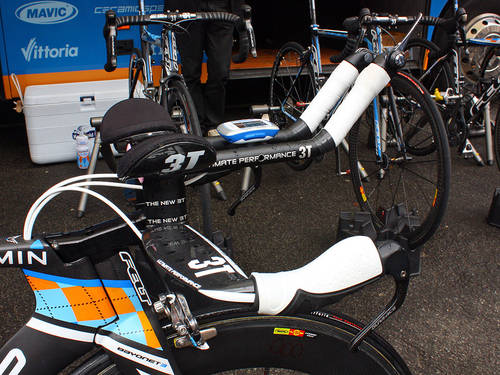
To "pedestal" an aerobar means to elevate the bars above the basebar using risers instead of using headset spacers:
https://chris-lamb.co.uk/wp-content/2014/pedestal1.jpg

David Millar, 2010 Giro d'Italia.

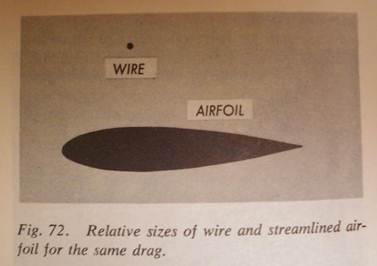
You might do this for a few reasons: https://chris-lamb.co.uk/wp-content/2014/teardrop_vs_cylinder.jpg So, assuming you currently have a bike that uses headset spacers, what would be the effect on your position if you were to replace, say, a 10mm headset spacer with a 10mm armrest riser? First, let us consider the effect of removing the headset spacer. The crucial insight is that removing a 10mm spacer will not lower the stack height ie. the vertical distance relative to the bottom bracket by 10mm. This is because spacers are not oriented perpendicular to the ground; they are stacked along the steerer tube at the head tube angle of the frame. We will assume a head tube angle of 72.5 degrees. We can calculate that removing a 10mm spacer will reduce the stack height by:
sin(72.5 )   10mm = 9.54mm
... and by the same argument it will also increase the effective reach ie. the horizontal distance relative to the bottom bracket by:
cos(72.5 )   10mm = 3.01mm
Next, let us consider the impact of adding the riser. These are oriented perpendicular to the ground, so its addition makes no further change to the reach. However, we can now calculate the overall change in stack height:
  stack = -(sin(72.5 )   10mm) + 10mm = 0.46mm
We can then repeat the calculation for any length of replacement:
Replacement (mm) stack (mm) reach (mm)
10 +0.46 +3.01
20 +0.93 +6.01
30 +1.39 +9.02
40 +1.85 +12.0
50 +2.31 +15.0
60 +2.78 +18.0
From this table, I can discover that if I were to replace 30mm of headset spacers with 30mm of risers it would:
  1. Increase my effective stack height by 1.39mm (likely neglible).
  2. Increase my reach by 9.02mm. This might require me to use a shorter stem to get the same position. If that was undesirable for example, if was already using an extremely short stem I might be forced to abandon the idea altogether.
Three further considerations must be noted:
  1. The resultant low height of the base bar could be quite drastic and prevent you breathing properly whilst climbing.
  2. Having the steerer tube cut down after to removing headset spacers will reduce the resale value of your bike.
  3. You might need to re-cable your brakes as you may have changed the distance the cables must span.
(It may seem odd to provide results for up to 60mm of headset spacers when such a large number of spacers would at the very least void one's warranty. However, I suspect such setups are transiently common within the confines of a fitting studio.)

Next.

Previous.