Search Results: "dom"

20 December 2005

Adam Heath: Truth, justice, and the geekdom way

Your results:
You are Superman
Superman
75%
Spider-Man
65%
Green Lantern
55%
Iron Man
45%
Robin
40%
Supergirl
40%
Catwoman
35%
The Flash
30%
Batman
30%
Wonder Woman
25%
Hulk
20%
You are mild-mannered, good,
strong and you love to help others.
Click here to take the “Which Superhero are you?” quiz…

Bartosz Fenski aka fEnIo: home-etc

I've just uploaded new htop release. Alongside some fixes it adds support for home-etc library.
Basically it's simple library that allows you to put configuration files wherever you want instead of making mess in home directory. I would really like to see patched programs in Debian.
(fenio@domek)~$ls -a   grep '^.'   wc -l
129
(fenio@domek)~$

Would be great to see this number less than 10-20. Home-etc makes it easy to support $HOME-ETC environment variable or ~/.home-etc file to point out where do you want to put all dot-files.
What's your opinion about that?

MJ Ray: If a user attacks another computer, is their sysadmin responsible?

Only if the attack's for the benefit of the sysadmin or their employer, as far as I can tell. All-party Parliamentary Internet Group had links to legislation/regulation: The British and Irish Legal Information Institute didn't let me find any cases with computer misuse AND supervision. Using "lack of supervision" alone finds common sense use only. So it seems to hinge on supervision. I hope that you have to do something pretty obviously daft to fall foul of a court on that. I guess that you shouldn't let a server managed by you run totally unattended, but if you take normal precautions (firewall, logcheck, intrusion detection and so on and actually review them), the admin should be OK whatever. If someone's just using your computer as a jumping-off point for random attacks, I don't see how that's for your benefit either. I think that wording might be to discourage evil businesses having teams trying to deface competitor sites and so on. There's probably a bigger danger from copyright and trademark infringement accusations IMO. I am not a lawyer. Check the above yourself or consult a lawyer about it. If you do and have updates, can you let me know, please?

19 December 2005

Christian Perrier: Old timers

After Bdale blogged about the 5.25" floppy drivers he had in his Fido BBS, I googled a bit and found the following nice gems: http://www.wps.com/FidoNet/FidoNews/1985/FIDO228.NWS:
        ============================================================
                                  NEWS
        ============================================================
        Bdale Garbee
        Sysop of L5NET Gateway, Fido 129/13
              Some Utilities I'm Looking for and Haven't Found
        There are a few public domain utilities I would like to
        locate for my Fido host, which I have unfortunately not yet
        found in my random wanderings around other Fido systems.
        I'm running a Tandy 1200HD, which is an IBM XT-clone.
        If you have any of the things I'm looking for, either send
        them to me by Fidomail, or send me a message detailing how
        I can get them.  Emphasis on public domain.  Sources
        desirable but not absolutely necessary (beggars can't be
        choosers!) 
.../...
http://www.wps.com/FidoNet/FidoNews/1986/FIDO333.NWS:
     =================================================================
                                  NOTICES
     =================================================================
     Announcing the return of the "HIP Shack" to Fidonet, now in
     Colorado Springs, CO.  The files and message areas are in
     the process of being reorganized, but Amateur Radio and SWL
     are still the primary themes.  I'm looking forward to
     hearing from everyone I've been out of touch with for the
     last 9 weeks...
     Bdale Garbee, sysop 128/18, 303/593-0766, 1200 baud, 24hrs
This seems to confirm that, despite our 6 months age difference (guess who wins?), Bdale is way much an old timer than my poor self, whose first appearance in the BBS world is around 1990. Anyway, I found this funny and wanted to share. Enjoy...

Joerg Jaspert: Backports.org

Following nobse’s post: Yes, it is done, backports.org is running with the new setup. The inclusion of bpo into the second wanna-build network is pending, and then the buildds should come up shortly after that. Should be a matter of only a few days now. So, next point: Mirrors. That’s my part. We already have 2 mirrors up and running, and are ready to get more. So if you are a mirror and want to have backports.org please read our little mirror howto, which should have any information you need to know. Please: For the sanity of your users: Do not mirror randomly with cronjobs. We are happy to add you to our mirror network, sending you a push whenever something changed in the archive, so you only mirror when it’s really needed. We are updating our archive hourly (whenever there is something to install), so cronjobs are just always outdated. And I have just another point: While we were changing backports.org we changed mailinglists too. lists.backports.org now runs on another machine. The most visible change there is the webarchive, we are away from the ugly mailman thing to lurker, which has a much improved interface. Most interesting part here was to get lurker to run in a “virtual host” style setup, only showing lists that the current used host should have, as the machine now hosts two list setups. Update: Added a few ”’ for weasel. If you want more: ””””””””””””””.

18 December 2005

Lars Wirzenius: Random hacks: deb-from-bzr

I wrote a little script to help me maintain packages using bzr (bazaar-ng). It builds source and binary packages and tests them with lintian, linda, and piuparts.

17 December 2005

Jonathan McDowell: X11 Programming

I'm feeling somewhat stupid. I sat down tonight to have a look at writing a basic fire/flame demo thing under X (the sort of thing people used to write in 3 bytes of x86 assembly 10 years ago). See, I'd quite like a funky xdm/login thingy for my laptop, so random people who see me use it on the train think "Woah, cool". I'm sad like that. Anyway, my idea is a ring of fire with the login prompt in the middle. This seems simple. Except when I try to get involved with programming X. Now, I'm not a graphics programmer by any stretch of the imagination. But all I want is a nice simple framebuffer I can store pixels of 24 bit colour into. Or 8 bits with a colourmap is fine too. If the functions for dealing with the colourmaps are decently documented. This isn't much to ask, is it? Perhaps the issue was that I assumed Xlib would just provide me something that could do this. Or that I'd be able to find decent docs easily. Or that I had more than 2 braincells to rub together. But I've given up now. I really don't understand how to get Xlib to just let me XSetForeground to a 24 bit colour and then XDrawPoint. I tried to fight XAllocColor. I even accepted defeat and had a quick look for a simple X framebuffer library. No joy. So, can someone point me at the right docs to inhale for this sort of thing? Or a really lightweight C library that'll make it all really easy?

15 December 2005

Colin Walters: Did a human actually write this?

Or was it generated by a computer picking random buzzwords? Take a guess.
The semantic mark-up languages would be used to specify the convergence of business and IT models, and more importantly, their metamodels. The ontological representation of the metamodel of a constituent model enables reasoning about the instance model, which enables a dependency analysis to deduce unknown or implied relationships among entities within the instance model. The analysis would be extended across multiple layers of models. The semantic model-based dependency analysis would reveal which entity has an impact on which entities (for example, business components and processes, performance indicators, IT systems, software classes and objects, among others) of the model. This semantic model-based analysis would be applied to a model that provides an introspective view of the business within an enterprise. Also, it would be applied to a value network that yields an extrospective view of businesses in an ecosystem.

Edd Dumbill: XTech topic musings

Compiled over the last few weeks, here's a random list of some subjects I'd love to see covered in XTech 2006. There's now only three weeks left of the call for participation -- so it's definitely time get that proposal in! Mail me if you have any questions. Submit your proposal here: XTech 2006 Call for Participation. XTech will be held 16-19 May 2006, Amsterdam, Netherlands.

13 December 2005

MJ Ray: More on GPLv3

Well, Georg Greve says he's heard my concerns about the GPLv3. Georg's a good guy. I wonder whether FSF will act on them and open up the GPLv3 process. I note Georg's urging people to Say No to Vienna Manipulations which is interesting, given the structural similarities between the Vienna and GPLv3 processes...

9 December 2005

MJ Ray: Bureaucracy, debian and the web

Reading old email can be entertaining sometimes:
"I've done this before, in various forms, and most of the time it follows the same predictable route: 25% of the time you get a really good committee and it's a blast for all involved; 25% you get a diabolical committee and it stands a chance of dying; half the time you get an average committee and it continues as it was before. The whole "committee" idea has some fairly major pitfalls to avoid: cliques, irrelevance and legality to name but three. [...] I think we should NOT form a committee."
-- Me, to alug, in April 1999 which makes all the crap from Debian-UK Society zealots like:
"While people like MJ Ray like bureaucratic bondage[0], it was felt by everyone else that the best constitution would be the simplest possible."
-- Scott James Remnant, to debian-project, in August 2005 even more obviously laughable. I didn't want a complicated constitution. I want either a minimally-complete constitution, or not to join it. They allow neither. Annoyingly, the Debian-UK Society is still claiming many DDs became members without consenting (which violates article 20 of the universal declaration of human rights), still seem to have permission to use the "Debian" trademark and still seem to be a business selling CDs and t-shirts. Violating a human right may mean they're breaking our Human Rights Act - quite remarkable for a small club. Also, I've seen nothing that suggests that they have notified the Inland Revenue, which I think can get them fined lots, so donations may be at risk. Tomorrow is International Human Rights Day (which centres this year on torture). DUS is a piffling matter, so it should be easy to deal with, but there seems to be lies, bigotry and ignorance in the way. Freedom to associate is one of the most practical human rights. It lets us act on our support or opposition to things. Defend it. I support debian but I oppose the way it's doing business in the UK. Do you support attempted conscription into an odd-looking UK business?

Adam Rosi-Kessel: Windows Live Maps

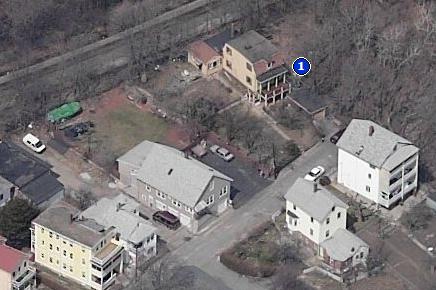
I just checked out the new Windows Live Local—Microsoft’s answer to Google Maps. The interface is a little clunky, but the flyby image quality is amazing. Here’s my house on Windows Live (by the number 1): The same location, at the maximum magnification from Google Maps: Google is going to need to invest in some better images. I think what this proves is that even Google needs some competition. Interestingly, neither of these images shows the 9-unit condominium complex that replaced the duplex across the street from us. The duplex was demolished more than a year ago.

8 December 2005

Martin Michlmayr: Holidays, off-line for two weeks

I'm going on holidays today and will be off-line for the next two weeks. I'll be back on 2005-12-24; I might have a chance to check e-mail from time to time but I really don't know yet. So please don't expect fast responses until I'm back. If you urgently need to reach me, send a mail to giraffa at the domain I always use and I'll download that mail first if I get a chance to.

Clint Adams: zomg

This is not the ugliest code I have ever written. The handling of HTTP/1.1 chunked transfer-encoding is a horrible hack. The indentation isn't quite as random as I would like. I have other complaints, but I've forgotten them, as zomg does mostly what I want, which is to play music and report it to Last.fm. Unfortunately, it lacks the power of vux, but that's another story. zomghelper is a C program that extracts the relevant data from an Ogg Vorbis file. It written because vorbiscomment doesn't report the track length, and ogginfo is much too slow for my needs. I don't expect most people to share my needs, so the five of you that are actually going to use zomg probably won't need it.

7 December 2005

Uwe Hermann: Reading List

My reading list for tomorrow: Nothing really big, just some random programming-related blog posts, but all of them look really interesting and helpful.

5 December 2005

Anthony Towns: Security Infrastructure Changes

Delays suck. I’m actually skipping ahead here, I’d meant to blog about updating the dak codebase into shape for whatever changes were coming up first, but it turns out I’m not in the mood for that. Besides which, most of this entry is preprepared. In the last few entries we went over the background for updating our security infrastructure to make it possible to have security team members that don’t worry about vendor-sec issues (process, overview, NIv2 aka NINJA, queue-build issues), all the while skipping fairly lightly over the question of what has to actually happen. That happens to be the way I prefer to work, lots of background tinkering, then spend as little time on actual implementation as possible; it has it’s drawbacks, but hey, I like it. Anyway, the second last step is working out in detail what’s going to happen. The delay in question was trying to get the security team to sign off on it, but unfortunately they’re busy enough that that looks like it’ll being an indefinite delay, so I’m going with the “well, ftpmaster maintains the dak/katie infrastructure for the security team, so in the end it’s our call on what’s best anyway” line of thought, and just plunging in. Fortunately the current and final plan should make pretty minimal changes to how the existing security team operate anyway, even assuming a massive testing security operation happening in parallel with them – so the downside risk is already pretty minimal. (And it was, afterall, developed in consultation with Joey, and then shopped around a few folks who’ve been doing security work for testing and kernels) What is that plan, you may well ask. It’s something like this: First, let’s restate the idea:
Concept Allow two teams to exist, the current security team as the “vendor-sec subteam”, and the full team which can expand to also include the testing-security people and others interested and able to help out with security work but who do not have access to vendor-sec.
Then, we want to think about the processes that are involved at a global level. First for uploads that can’t be made public until some later date, and can only be worked on by the “vendor-sec” enabled security team.
  • Source upload to queue/unchecked (as now)
    • Upload is authenticated etc
    • Upload is moved to queue/embargoed
  • Upload is autobuilt
    • Logs are sent to a procmail address
    • Logs are forwarded (by procmail) onto the vendor-sec subteam
    • Logs are signed and sent back
    • Binaries are uploaded to queue/unchecked
    • Binaries are moved to queue/embargoed
  • Uploads (source + binaries) are approved from queue/embargoed by
  • running amber
    • Uploads are moved into the archive
    • The archive is mirrored
  • The approver issues an advisory
And likewise for issues that don’t need so much secrecy:
  • Source upload to queue/unchecked-disembargo (new directory)
    • Upload is authenticated etc
    • Source+version added to unembargo table
    • Upload is moved to queue/unembargoed
  • Upload is autobuilt
    • Logs are sent to a procmail address
    • Logs are forwarded (by procmail, after checking unembargo table) onto the full team
    • Logs are signed and sent back
    • Binaries are uploaded to queue/unchecked
    • Noting that the source is in the unembargo table, Binaries are moved to queue/unembargoed
  • Uploads (source + binaries) are approved from queue/unembargoed by running amber
    • Uploads are moved into the archive
    • The archive is mirrored
  • The approver issues an advisory
Processes are great, but they have to be supported by proper information handling, so it’s worth looking at what the above actually means for the on-disk structures, too. This is particularly important, since filesystem level security is mostly how we wall off vendor-sec stuff from other users of the system (whether they’re also working on security issues, or doing, eg, web page maintenance or something equally random). Voila:
queue/unchecked, queue/unchecked-dismebargo
    world writable
    accessible only by katie
    contents automatically cleared every 15m
queue/embargoed
    writable only by katie
    accessible by vendor-sec subteam
    amber allows packages to be ACCEPTed
    [...] allows packages to be REJECTed
queue/unembargoed
    writable only by katie
    accessible by full team
    amber allows packages to be ACCEPTed
    [...] allows packages to be REJECTed
queue/accepted
    packages only sit in accepted briefly while amber is running
And finally, to sum things up, this is what a member of the security team should expect to actually do to release an advisory:
  • Upload package to queue/unchecked (or queue/unchecked-disembargo)
  • Wait for build logs to be sent to your address
  • Check and sign those build logs
  • Check the final packages in queue/embargoed (or queue/unembargoed)
  • Run amber over the packages to accept them
  • Fill in the template advisory generated and send it to the -announce list
The differences between that process and the current one used by the security team is pretty minor, ttbomk: currently uploads sit in queue/accepted not queue/embargoed, and currently the security team ignore the template advisories amber generates preferring to make their own – aiui, this is mostly due to delays in actually receiving the advisory template since amber mails it instead of leaving it somewhere convenient on disk. Anyway, that’s what the plan looks like. We should see how well it survives contact with the enemy, or at least reality, remarkably soon. (Of course, I guess “political issues” could always foul it up completely anyway, particularly going by the fact that it’s been more or less the only problem raised by the folks I’ve passed this on to… Oh well, reconstruct that bridge when we get to it, I guess)

3 December 2005

Matthias Urlichs: Web servers are annoying

So I'm setting up a new web server. It need to be secure (no user A spying in user B's files). It needs to run PHP. Yes, you may run away now. Oh yes, it also needs to be fast...

So how to do that? I'm not going to run Apache+mod_php on the thing. :-/

I've started with Apache2, FastCGI, PHP via FCGI, installed eaccelerator for 60% speed-up.

All of this works reasonably well, except for PHP scripts that want PATH_INFO (like http://.../blog.php/2005/12/03/some_random_gunk). mod_fcgi passes the whole thing's pseudo file system path in PATH_TRANSLATED. The PHP FCGI process checks that path, sees that it doesn't exist (blog.php is a file after all), and immediately returns an unhelpful error.

I've worked around that thing with an ugly hack, but I suspect that the real fix would be to add this same hack to PHP instead.

Opinions, anybody?

NB: Oh, and if somebody could tell me why my mysql server's kernel randomly ignores incoming TCP connections for a few seconds every minute (and yes, it's the kernel), I'd be grateful. I suspect that the solution is going to be "upgrade to something newer than 2.6.12-9-686-smp (Ubuntu Breezy's kernel)"... :-/

NB2: There's also a mod_fcgid for Apache2. Hint: It's crap -- if all FCGI processes happen to be busy, I want new requests to be delayed. I do not want them to be rejected with a terse, hard-coded error message.

2 December 2005

Adam Rosi-Kessel: Dear Msnbot

Dear Msnbot: why do you hammer on port 8080 when there is nothing listening there? I recently set in place a comprehensive iptables firewall and have started logging dropped packets. I’ve noticed the highest number of dropped packets comes from 65.54.188.51 aka msnbot.msn.com. Does it just try port 8080 on every known domain name, “just in case”?

1 December 2005

Uwe Hermann: Drupal 4.6.4 / 4.5.6 fixes three security issues

You might have already noticed, but I'll re-iterate nevertheless: the Drupal project has released Drupal 4.6.4 and 4.5.6 which fix three security vulnerabilities. Everyone running a Drupal site is advised to upgrade, as always. Multiple people were mighty busy yesterday preparing, finalizing and testing the patches and advisories. I was one of them, although I was more like lurking around trying to look busy ;-) Anyways, I have sent the respective advisories (DRUPAL-SA-2005-007, DRUPAL-SA-2005-008, DRUPAL-SA-2005-009) to the "usual suspects" today: Bugtraq, Full Disclosure, and the php-sec mailing list. The advisories have already been picked up by Secunia and a bunch of other security sites... Btw: I finally received news that my domain was transferred to my new web hoster today, which led to a short downtime. Everything should be fine now. If you notice any problems, please drop me a note.

Martin 'Joey' Schulze: Voluntary Work vs. Paid Work

In several semi- or non-commercial associations work is done by volunteers who spend a lot of their spare time and energy for the goals of the association. This works fine as long as all people who are spending a lot of time on the goals are treated the same and work voluntarily. When some people decide that some people should get paid for their work, while others, who don't work significantly less, don't get paid for their work an uneasy situation is created. Why are some people treated better and get paid for their work while others don't get paid, but still work a lot on the same or similar issues? Why should those, who have to make money in other areas in order to live at all, continue to work voluntarily? I have always argued that in such constellations one must not have volunteers and paid workers do the same work. The only exceptions are volunteers who have stated that they want to do the same work, even though they don't get paid for it. Otherwise you'll create dissatisfaction of the volunteers, which in turn will most probably result in less volunteers, at least in the long term. Also volunteer work should be more interesting and relaxed than paid work, so that the volunteers have more freedoms and develop more fun doing the volunteer work they were asked to do. Paid work is fine for boring tasks that not enough volunteers are comfortable with, such as standing around asking visitors at an exhibition for their tickets, keeping people out of areas where they don't belong, working at a counter, folding and packing stuff etc. Looking at LinuxTag, we had such situations twice. First of all, two members of the board of directors have been on the payroll of the LinuxTag association for three or four months, while the others of the team have worked voluntarily. The same or at least a lot of similar work has been done by the same people before voluntarily. This has caused resentment by those who have worked for LinuxTag in their spare time, or even full-time for several months without getting a Penny for it. In addition to that there were two external service providers that have worked on some tasks (such as press coordination, social event and business acquisition) which didn't interfere with volunteer work. We've had those for years and especially for business acquisition it is important since they can maintain regular 9-to-5 business hours. These companies have worked very well, and we've had a great social event this year, after several years with extremely problematic social events. A second situation arose after it was clear that not enough hostesses were available and volunteers should work side by side with them. There is no problem as long as the volunteers want this. However, normally they don't. Many of them enjoy their freedom, not having to work for the entire time but having enough time to walk around and talk to people etc. Most volunteers feel very strange when they are asked to do the same job voluntarily while their neighbour is paid for it. In the Debian project I have always objected to paying some developers while not paying others. In my opinion, the best situation would be a company that employs a developer for regular company work but lets them work on Debian and Free Software issues for 30-60 % of their time. However, I have to admit that those, who work on Debian more or less for the entire day, and, hence, don't have enough time for their studies, jobs or work, will have to get some revenue or they will starve to death sooner or later. On the other hand, if they get paid for the work, they can't easily take a day off and enjoy their non-computer life. Err... I've heard that some people do...

Next.

Previous.