Search Results: "ina"

30 October 2014

Keith Packard: Glamor cleanup

Glamor Cleanup Before I start really digging in to reworking the Render support in Glamor, I wanted to take a stab at cleaning up some cruft which has accumulated in Glamor over the years. Here's what I've done so far. Get rid of the Intel fallback paths I think it's my fault, and I'm sorry. The original Intel Glamor code has Glamor implement accelerated operations using GL, and when those fail, the Intel driver would fall back to its existing code, either UXA acceleration or software. Note that it wasn't Glamor doing these fallbacks, instead the Intel driver had a complete wrapper around every rendering API, calling special Glamor entry points which would return FALSE if GL couldn't accelerate the specified operation. The thinking was that when GL couldn't do something, it would be far faster to take advantage of the existing UXA paths than to have Glamor fall back to pulling the bits out of GL, drawing to temporary images with software, and pushing the bits back to GL. And, that may well be true, but what we've managed to prove is that there really aren't any interesting rendering paths which GL can't do directly. For core X, the only fallbacks we have today are for operations using a weird planemask, and some CopyPlane operations. For Render, essentially everything can be accelerated with the GPU. At this point, the old Intel Glamor implementation is a lot of ugly code in Glamor without any use. I posted patches to the Intel driver several months ago which fix the Glamor bits there, but they haven't seen any review yet and so they haven't been merged, although I've been running them since 1.16 was released... Getting rid of this support let me eliminate all of the _nf functions exported from Glamor, along with the GLAMOR_USE_SCREEN and GLAMOR_USE_PICTURE_SCREEN parameters, along with the GLAMOR_SEPARATE_TEXTURE pixmap type. Force all pixmaps to have exact allocations Glamor has a cache of recently used textures that it uses to avoid allocating and de-allocating GL textures rapidly. For pixmaps small enough to fit in a single texture, Glamor would use a cache texture that was larger than the pixmap. I disabled this when I rewrote the Glamor rendering code for core X; that code used texture repeat modes for tiles and stipples; if the texture wasn't the same size as the pixmap, then texturing would fail. On the Render side, Glamor would actually reallocate pixmaps used as repeating texture sources. I could have fixed up the core rendering code to use this, but I decided instead to just simplify things and eliminate the ability to use larger textures for pixmaps everywhere. Remove redundant pixmap and screen private pointers Every Glamor pixmap private structure had a pointer back to the pixmap it was allocated for, along with a pointer to the the Glamor screen private structure for the related screen. There's no particularly good reason for this, other than making it possible to pass just the Glamor pixmap private around a lot of places. So, I removed those pointers and fixed up the functions to take the necessary extra or replaced parameters. Similarly, every Glamor fbo had a pointer back to the Glamor screen private too; I removed that and now pass the Glamor screen private parameter as needed. Reducing pixmap private complexity Glamor had three separate kinds of pixmap private structures, one for 'normal' pixmaps (those allocated by them selves in a single FBO), one for 'large' pixmaps, where the pixmap was tiled across many FBOs, and a third for 'atlas' pixmaps, which presumably would be a single FBO holding multiple pixmaps. The 'atlas' form was never actually implemented, so it was pretty easy to get rid of that. For large vs normal pixmaps, the solution was to move the extra data needed by large pixmaps into the same structure as that used by normal pixmaps and simply initialize those elements correctly in all cases. Now, most code can ignore the difference and simply walk the array of FBOs as necessary. The other thing I did was to shrink the number of possible pixmap types from 8 down to three. Glamor now exposes just these possible pixmap types: Future Work

29 October 2014

Rhonda D'Vine: Feminist Year

If someone would have told me that I would visit three feminist events this year I would have slowly nodded at them and responded with "yeah, sure..." not believing it. But sometimes things take their own turns. It all started with the Debian Women Mini-Debconf in Barcelona. The organizers did ask me how they have to word the call for papers so that I would feel invited to give a speech, which felt very welcoming and nice. So we settled for "people who identify themselves as female". Due to private circumstances I didn't prepare well for my talk, but I hope it was still worth it. The next interesting part though happened later when there were lightning talks. Someone on IRC asked why there are male people in the lightning talks, which was explicitly allowed for them only. This also felt very very nice, to be honest, that my talk wasn't questioned. Those are amongst the reasons why I wrote My place is here, my home is Debconf. Second event I went to was the FemCamp Wien. It was my first event that was a barcamp, I didn't know what to expect organization wise. Topic-wise it was set about Queer Feminism. And it was the first event that I went to which had a policy. Granted, there was an extremely silly written part in it, which naturally ended up in a shit storm on twitter (which people from both sides did manage very badly, which disappointed me). Denying that there is sexism against cis-males is just a bad idea, but the background of it was that this wasn't the topic of this event. The background of the policy was that usually barcamps but events in general aren't considered that save of a place for certain people, and that this barcamp wanted to make it clear that people usually shying away from such events in the fear of harassment can feel at home there.
And what can I say, this absolutely was the right thing to do. I never felt any more welcomed and included in any event, including Debian events sorry to say that so frankly. Making it clear through the policy that everyone is on the same boat with addressing each other respectfully totally managed to do exactly that. The first session of the event about dominant talk patterns and how to work around or against them also made sure that the rest of the event was giving shy people a chance to speak up and feel comfortable, too. And the range of the sessions that were held was simply great. This was the event that I came up with the pattern that I have to define the quality of an event on the sessions that I'm unable to attend. The thing that hurt me most in the afterthought was that I couldn't attend the session about minorities within minorities. :/ Last but not least I attended AdaCamp Berlin. This was a small unconference/barcamp dedicated to increase women's participation in open technology and culture named after Ada Lovelace who is considered the first programmer. It was a small event with only 50 slots for people who identify as women. So I was totally hyper when I received the mail that was accepted. It was another event with a policy, and at first reading it looked strange. But given that there are people who are allergic to ingredients of scents, it made sense to raise awareness of that topic. And given that women are facing a fair amount of harassment in the IT and at events, it also makes sense to remind people to behave. After all it was a general policy for all AdaCamps, not for this specific one with only women.
I enjoyed the event. Totally. And that's not only because I was able to meet up with a dear friend who I haven't talked to in years, literally. I enjoyed the environment, and the sessions that were going on. And quite similar to the FemCamp, it started off with a session that helped a lot for the rest of the event. This time it was about the Impostor Syndrome which is extremely common for women in IT. And what can I say, I found myself in one of the slides, given that I just tweeted the day before that I doubted to belong there. Frankly spoken, it even crossed my mind that I was only accepted so that at least one trans person is there. Which is pretty much what the impostor syndrome is all about, isn't it. But when I was there, it did feel right. And we had great sessions that I truly enjoyed. And I have to thank one lady once again for her great definition on feminism that she brought up during one session, which is roughly that feminism for her isn't about gender but equality of all people regardless their sexes or gender definition. It's about dropping this whole binary thinking. I couldn't agree more. All in all, I totally enjoyed these events, and hope that I'll be able to attend more next year. From what I grasped all three of them think of doing it again, the FemCamp Vienna already has the date announced at the end of this year's event, so I am looking forward to meet most of these fine ladies again, if faith permits. And keep in mind, there will always be critics and haters out there, but given that thy wouldn't think of attending such an event anyway in the first place, don't get wound up about it. They just try to talk you down. P.S.: Ah, almost forgot about one thing to mention, which also helps a lot to reduce some barrier for people to attend: The catering during the day and for lunch both at FemCamp and AdaCamp (there was no organized catering at the Debian Women Mini-Debconf) did take off the need for people to ask about whether there could be food without meat and dairy products by offering mostly Vegan food in the first place, even without having to query the participants. Often enough people otherwise choose to go out of the event or bring their own food instead of asking for it, so this is an extremely welcoming move, too. Way to go!

/personal permanent link Comments: 2 Flattr this

Steve Kemp: A brief introduction to freebsd

I've spent the past thirty minutes installing FreeBSD as a KVM guest. This mostly involved fetching the ISO (I chose the latest stable release 10.0), and accepting all the defaults. A pleasant experience. As I'm running KVM inside screen I wanted to see the boot prompt, etc, via the serial console, which took two distinct steps: To configure boot messages to display via the serial console, issue the following command as the superuser:
 # echo 'console="comconsole"' >> /boot/loader.conf
To get a login: prompt you'll want to edit /etc/ttys and change "off" to "on" and "dialup" to "vt100" for the ttyu0 entry. Once you've done that reload init via:
 # kill -HUP 1
Enable remote root logins, if you're brave, or disable PAM and password authentication if you're sensible:
 vi /etc/ssh/sshd_config
 /etc/rc.d/sshd restart
Configure the system to allow binary package-installation - to be honest I was hazy on why this was required, but I ran the two command and it all worked out:
 pkg
 pkg2ng
Now you may install a package via a simple command such as:
 pkg add screen
Removing packages you no longer want is as simple as using the delete option:
 pkg delete curl
You can see installed packages via "pkg info", and there are more options to be found via "pkg help". In the future you can apply updates via:
 pkg update && pkg upgrade
Finally I've installed 10.0-RELEASE which can be upgraded in the future via "freebsd-update" - This seems to boil down to "freebsd-update fetch" and "freebsd-update install" but I'm hazy on that just yet. For the moment you can see your installed version via:
 uname -a ; freebsd-version
Expect my future CPAN releases, etc, to be tested on FreeBSD too now :)

Patrick Matth i: geoip and geoip-database news!

Hi, geoip version 1.6.2-2 and geoip-database version 20141027-1 are now available in Debian unstable/sid, with some news of more free databases available :) geoip changes:
   * Add patch for geoip-csv-to-dat to add support for building GeoIP city DB.
     Many thanks to Andrew Moise for contributing!
   * Add and install geoip-generator-asn, which is able to build the ASN DB. It
     is a modified version from the original geoip-generator. Much thanks for
     contributing also to Aaron Gibson!
   * Bump Standards-Version to 3.9.6 (no changes required).
geoip-database changes:
   * New upstream release.
   * Add new databases GeoLite city and GeoLite ASN to the new package
     geoip-database-extra. Also bump build depends on geoip to 1.6.2-2.
   * Switch to xz compression for the orig tarball.
So much thanks to both contributors!

28 October 2014

Jonny Lamb: Sciopero

screenshot Public transport strikes in Rome are so frequent that it s hard to remember when they are. I wrote a Gnome Shell extension to help remind me when there s one either coming up or in progress. Find it on extensions.gnome.org. It gets its data from another little service I just made.
A Roma gli scioperi dei mezzi pubblici sono cos frequenti che spesso facile dimenticarsi quando ci sono. Ho scritto un estensione per Gnome Shell per avvisare quando c o si avvicina uno sciopero dell Atac. La puoi trovare su extensions.gnome.org. Funziona grazie ad un altro piccolo servizio che ho creato.

Keith Packard: Goodbye-Barnes-and-Noble

Goodbye Barnes & Noble I've read books on electronic devices for many years now; the convenience of having a huge library with me while traveling makes up for the lower quality of the presentation. I've read books on a selection of Palm devices, an old OpenInkpot compatible ereader, my phone and, most recently, on my Kobo Aura. To get reading material, I've used a variety of sources, including the venerable Project Gutenberg, the Internet Archive, directly from authors like Cory Doctorow and even our local Multnomah County Public Library. I like to have books in epub format; it's a published standard, based on HTML and CSS. My recent devices have all happily supported that, and it allows for editing when I feel the need to correct typos or formatting problems. Purchasing Books When I wanted to actually purchase a book, I bought from Barnes & Noble; they have a good selection, and reasonable automatic recommendations. According to their web site, since I started shopping there, I've purchased 51 books. I can't tell how much I've spent, but probably in excess of $500. Not knowing which device I'd be reading on at any one time, and liking to have the assurance of ongoing access to my library, I would always download the epub files to my laptop and then transfer them to whichever device I wanted to read on. This ensured that my books would be available even when I didn't have a network connection (as happened yesterday during a wind storm which cut the power to the DSLAM which connects me to the internet). I'd created a simple shell script which captured the file after it was downloaded on my laptop and prepared it for my reader. A bit of browser configuration and it really was as simple as clicking the 'download' button to get a book onto both my laptop and my reading device. Barnes & Noble Disables Downloading I was traveling in Bordeaux a couple of weeks ago and wanted to get the latest volume in a series I was reading. My library didn't have it available, and so I decided that it was worth a few dollars to purchase it for the flight home. After clicking through the Barnes & Noble store, I was ready to download the book so that I could transfer it to my reader. Going to 'My Library', I found my new purchases but the usual 'Download' button was missing. I was a bit surprised as I'd purchased and downloaded the previous volume just before leaving without any troubles. At first, I assumed there was some kind of region restriction on the distribution of this book. I'm familiar with that from DVD region locking of movies, and supposed that the same could be done with books for some reason. However, after setting up a VPN back to home and browsing through that (to ensure that my browser would appear with an Oregon address), the download button was still not present. The unhelpful Barnes & Noble representative that I accessed through the 'help' button disclosed that the 'download' "feature" had been disabled for "security" reasons. Not really having any alternative, I requested a refund for the new book. Barnes & Noble Loses a Customer With no way to actually use ebooks purchased through the Barnes & Noble store, I won't be spending any more money with them. I'm not sure how that helps their "security" issues, although if they lose enough customers and they close their doors, I guess that would make them about as secure as imaginable. Kobo Makes a Sale Having purchased a Kobo Aura, it had built-in access to their book store, which made it easy to download the book that I wanted. Then, I simply connected my reader to my laptop and copied the file over for safe keeping. Buying Books under Linux After I got home, I had to figure out how to get Adobe Digital Editions installed on my laptop. Fortunately, I discovered that version 2.0.1 runs fine under wine. Now, purchasing books can be done with my laptop (a vastly superior browsing experience). The .acsm file can be dragged straight from the iceweasel download menu to Adobe Digital Editions, which happily downloads the actual .epub file and makes it available for transferring to my reader. Of course, now that I've got Adobe Digital Editions working, I can also get digitally restricted books from all over the net, greatly expanding my options for purchasing (or borrowing) books. It's a bit less convenient, and requires that I run an icky Windows binary under wine, but at least I have choices, which is some consolation.

26 October 2014

Colin Watson: Moving on, but not too far

The Ubuntu Code of Conduct says:
Step down considerately: When somebody leaves or disengages from the project, we ask that they do so in a way that minimises disruption to the project. They should tell people they are leaving and take the proper steps to ensure that others can pick up where they left off.
I've been working on Ubuntu for over ten years now, almost right from the very start; I'm Canonical's employee #17 due to working out a notice period in my previous job, but I was one of the founding group of developers. I occasionally tell the story that Mark originally hired me mainly to work on what later became Launchpad Bugs due to my experience maintaining the Debian bug tracking system, but then not long afterwards Jeff Waugh got in touch and said "hey Colin, would you mind just sorting out some installable CD images for us?". This is where you imagine one of those movie time-lapse clocks ... At some point it became fairly clear that I was working on Ubuntu, and the bug system work fell to other people. Then, when Matt Zimmerman could no longer manage the entire Ubuntu team in Canonical by himself, Scott James Remnant and I stepped up to help him out. I did that for a couple of years, starting the Foundations team in the process. As the team grew I found that my interests really lay in hands-on development rather than in management, so I switched over to being the technical lead for Foundations, and have made my home there ever since. Over the years this has given me the opportunity to do all sorts of things, particularly working on our installers and on the GRUB boot loader, leading the development work on many of our archive maintenance tools, instituting the +1 maintenance effort and proposed-migration, and developing the Click package manager, and I've had the great pleasure of working with many exceptionally talented people. However. In recent months I've been feeling a general sense of malaise and what I've come to recognise with hindsight as the symptoms of approaching burnout. I've been working long hours for a long time, and while I can draw on a lot of experience by now, it's been getting harder to summon the enthusiasm and creativity to go with that. I have a wonderful wife, amazing children, and lovely friends, and I want to be able to spend a bit more time with them. After ten years doing the same kinds of things, I've accreted history with and responsibility for a lot of projects. One of the things I always loved about Foundations was that it's a broad church, covering a wide range of software and with a correspondingly wide range of opportunities; but, over time, this has made it difficult for me to focus on things that are important because there are so many areas where I might be called upon to help. I thought about simply stepping down from the technical lead position and remaining in the same team, but I decided that that wouldn't make enough of a difference to what matters to me. I need a clean break and an opportunity to reset my habits before I burn out for real. One of the things that has consistently held my interest through all of this has been making sure that the infrastructure for Ubuntu keeps running reliably and that other developers can work efficiently. As part of this, I've been able to do a lot of work over the years on Launchpad where it was a good fit with my remit: this has included significant performance improvements to archive publishing, moving most archive administration operations from excessively-privileged command-line operations to the webservice, making build cancellation reliable across the board, and moving live filesystem building from an unscalable ad-hoc collection of machines into the Launchpad build farm. The Launchpad development team has generally welcomed help with open arms, and in fact I joined the ~launchpad team last year. So, the logical next step for me is to make this informal involvement permanent. As such, at the end of this year I will be moving from Ubuntu Foundations to the Launchpad engineering team. This doesn't mean me leaving Ubuntu. Within Canonical, Launchpad development is currently organised under the Continuous Integration team, which is part of Ubuntu Engineering. I'll still be around in more or less the usual places and available for people to ask me questions. But I will in general be trying to reduce my involvement in Ubuntu proper to things that are closely related to the operation of Launchpad, and a small number of low-effort things that I'm interested enough in to find free time for them. I still need to sort out a lot of details, but it'll very likely involve me handing over project leadership of Click, drastically reducing my involvement in the installer, and looking for at least some help with boot loader work, among others. I don't expect my Debian involvement to change, and I may well find myself more motivated there now that it won't be so closely linked with my day job, although it's possible that I will pare some things back that I was mostly doing on Ubuntu's behalf. If you ask me for help with something over the next few months, expect me to be more likely to direct you to other people or suggest ways you can help yourself out, so that I can start disentangling myself from my current web of projects. Please contact me sooner or later if you're interested in helping out with any of the things I'm visible in right now, and we can see what makes sense. I'm looking forward to this!

Russ Allbery: California general election

Probably only of interest to California residents. Time again for the general election voting. This is probably too late to be helpful for a lot of people voting permanent absentee, but may as well write this down anyway. (Hm, I apparently didn't do this in 2012.) Propositions: Proposition 1: YES. Now is one of the best times in history to borrow money for infrastructure improvements, and our water infrastructure in the state can certainly use it. Proposition 2: YES. I have somewhat mixed feelings about this, since I hate passing complex legislation like this via proposition, but this already went through the legislature. It would be dumb for the federal government, which can more easily borrow money, but given how the finances of state governments work in the US, this sort of rainy day fund is probably prudent. This one seems reasonably well-designed, and the opposition is panic about a secondary effect on how school reserves are managed that can be changed with later legislative action and which is rather unconvincing. Proposition 45: YES. I can't get very enthused about yet more bandaids on top of our completely broken health care system, but forcing insurance companies to justify rate increases results in some public pressure against profit-taking by insurance companies. Single payer is what we actually need, but this might be mildly helpful. Plus, the argument against is more incoherent nonsense. So, I'm voting yes, but I don't think it's important and I won't mind if it loses. Proposition 46: NO. There are a lot of things that we should do about preventable medical errors, starting with funding our health care system properly, testing drugs properly, and investing in proper inspections and medical licensing investigations. Drug testing doctors is not among those things. This is a well-meaning but horrible idea pushed by a victim's advocacy group that won't do anything to improve our health care system. The fear-mongering of the opponents about malpractice lawsuits is a bit much, but there are essentially no positive benefits here. Proposition 47: YES. Requires that misdemeanor crimes actually be misdemeanors, rather than giving prosecutors discretion to charge them as felonies if the person charged happens to be black-- er, I mean, if the prosecutor doesn't like them for some reason. Obviously a good idea on all fronts: stop over-charging crimes, stop giving prosecutors discretion to choose the impact of laws on particular people (since they rarely use it appropriately), and further try to decriminalize our completely worthless "war on drugs." Proposition 48: YES. I'm opposed to the Indian gaming system in general, but this proposition appears to be a rather cynical attempt to block new casino development by tribes that already have casinos. My general feeling is that if we're going to have casinos, they should generally be legal; the bizarre system where each casino is subject to public approval seems designed to create political cronyism. State offices: I'm not going to comment on the partisan offices, since no one interesting survived the primaries. Across the board, it's basically the Democratic incumbants against various Republicans. The state Republican party in California is dominated by science denialists, Randian objectivists, and people who think the solution to all problems is ensuring rich people don't pay taxes, so it takes rather a lot to get me to vote for any of them. At the moment, the Democrats are doing a reasonably good job running the state, so while I'd vote for challengers from the left against several of them, given the boring candidate slate, I'm just voting Democrat down the line. California has a system that requires voter approval for various state judicial offices. In general, I don't agree with voter approval for judges, since voters are rarely in a position to make reasonable choices about justices. Since there's a Democratic administration in power at the moment, these are probably the best judges that we're going to get (the few I've heard of are good choices), and I don't think the yes/no approval voting is useful anyway. So I'm voting to approve across the board. Superintendent of Public Instruction: Tom Torlakson. I'm not a huge fan of Torlakson, but Tuck is a Harvard MBA who ran charter schools and then a school privatization initiative. Everyone always claims that they want to reduce bureaucracy and empower teachers, but Tuck has a past track record of trying to do so by taking public education private, something that I am passionately opposed to. So Torlakson it is. Local measures: Measure B: YES. Increases the local hotel tax and uses it for local infrastructure. I'm generally in favor of raising taxes, and the amount certainly won't be significant in the ridiculous Palo Alto hotel market. The arguments against feature one of my favorite stupid right-wing talking points: the tax is unfair because it isn't earmarked to benefit the people paying it. Measure C: YES. Reasonable, small reform of the local utility tax, opposed by the Libertarian Party and "taxpayer associations" using an "all taxation is theft" argument. What's not to like? Measure D: NO. Reduces the size of the city council for no clear reason. The stated reasons are saving money (not credible given how little money is involved) and making city meetings not take as long. I'm going to need something better than that to vote for this. Local offices: Judge of the Superior Court, Office #24: Matthew S. Harris. I'm making one exception for my normal rule against voting for former prosecutors for judges because the incumbant, Diane Ritchie, is apparently a train wreck. All it takes is a quick Google search to reveal multiple news stories about strange behavior, clear conflicts of interest, and other serious problems, including a rebuke by the local bar association. Even if not all of that information is true, judges should be above reproach, or at least farther above reproach than this. Palo Alto City Council: I have an agenda here: I think housing density is about the best thing that the local community could support. Housing density enables better mass transit options, makes housing more affordable and brings more housing under possible rent control, and simply makes more sense given the cost of housing in the area. A lot of the city council members run on low-density or anti-growth platforms; I vote against those and for people who support development. And, of course, I'll filter out candidates who believe stupid things, like claiming a minimum wage is un-American (Seelam-Sea Reddy). The best seem to be Greg Scharff, A.C. Johnston, Nancy Shepherd, Cory Wolbach, and Wayne Douglass. Palo Alto Unified School District: The Democratic party has endorsed four out of the five candidates, so it probably doesn't matter too much. Gina Dalma and Ken Dauber sound like the best of the candidates to me, so I will probably vote for them. Santa Clara Valley Water District #7: I voted for Brian Schmidt last time, and I don't see a reason to change my mind. His opponent is a Silicon Valley millionaire who is spending a surprisingly large amount of money on this race and is involved with a business that sells software to water boards, which raises some eyebrows.

25 October 2014

Miriam Ruiz: Video game players and Gamers are different things

Even though the Wikipedia defines gamer as someone who partakes in interactive gaming, such as (predominantly) video games or board games , this doesn t really gets close to that term means socially at the moment. Going back to Wikipedia, we find that the video game subculture is a form of new media subculture that has been influenced by video games , so it might be quite accurate to define gamers as members of that subculture. You will find that most of the uses of the term gamer in the social networks and in the blogosphere refer to that. Please notice that, even though it is quite likely that most of the gamers play video games, the other way round does not need to be true and, in fact, it isn t. Not everyone who plays video games belongs to the video game subculture, shares their point of view, their values and aesthetics, or even know about it. Kind of like what happens with the word hacker . Not everyone who hacks around with a computer belongs to the hacker subculture. Mostly everyone who has access to the technology plays video games now. From babies and kids to grandparents. And people play them in every possible technological system around, not only on video game consoles or personal computers, but alse on mobile phones, tablets, web browsers. And many of those people who use different kind of technologies to play video games are not gamers. Not in the sense of belonging to the video game subculture. It is important to acknowledge that: that the video game subculture does not have the monopoly over video games or the video game developing industry anymore. As you can imagine, all this rand doesn t come from nowhere. During the last months, we have been witnessing a fight between some conservative core members of the video game subculture and people who want to bring some fresh air into the sociocultural elements of that subculture. Namely, that women shouldn t be discriminated inside it. As every time that a women raises her voice to complain about anything in the Internet, they have been subjected to insults, attacks, rape and death threats, etc. I m talking about something called #GamerGate, and even though I m not going to get into it, I will provide some URLs in case someone might be interested. Please acknowledge that not all the points of view might be represented in this list (in fact, they are not, as I won t be promoting in my blog things that I severely disagree with), so search the web for more information if you want to get that. I ve never been a gamer myself, meaning part of the subculture I mentioned. At some point I was probably closer tho the core values they had then than I am now. In any case, video games have already consolidated themselves as an important part of current culture, entertainment, education and socialization, and are definitely here to stay. That will probably mean that the percentage of gamers (members of the video game subculture) will become smaller. as the number of non-gamer video game players keeps raising.

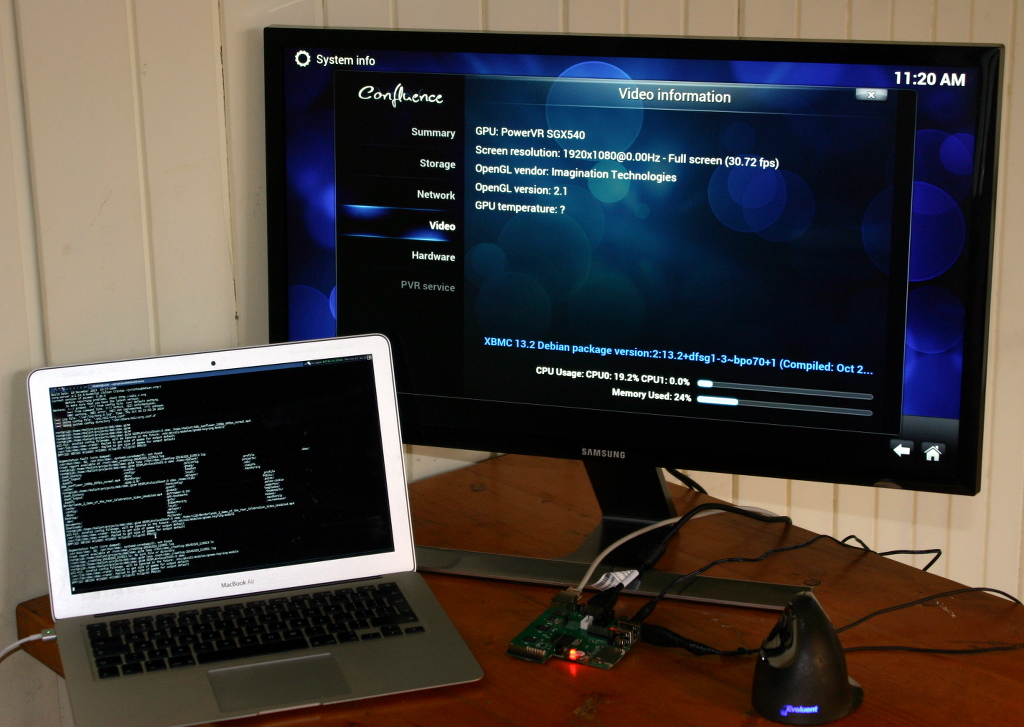
B lint R czey: XBMC (from Debian) running on MIPS CI20 dev board

XBMC on CI20 MIPS dev board

Imagination Tech kindly offered many developers (including me) a CI20 development board which let me play with XBMC on it a bit and patching it alive. The OpenGL GUI works smoothly, but video can t be played due to crashes in FFmpeg/Libav/libva (I ll submit the bug reports soon.).
The patches needed are sent to upstream and the latest Debian package already ships them.

Big part of the credits go to Cory Fields who created the first MIPS patches I found and updated for latest XBMC code. Thanks!

24 October 2014

Daniel Pocock: Positive results from Outreach Program for Women

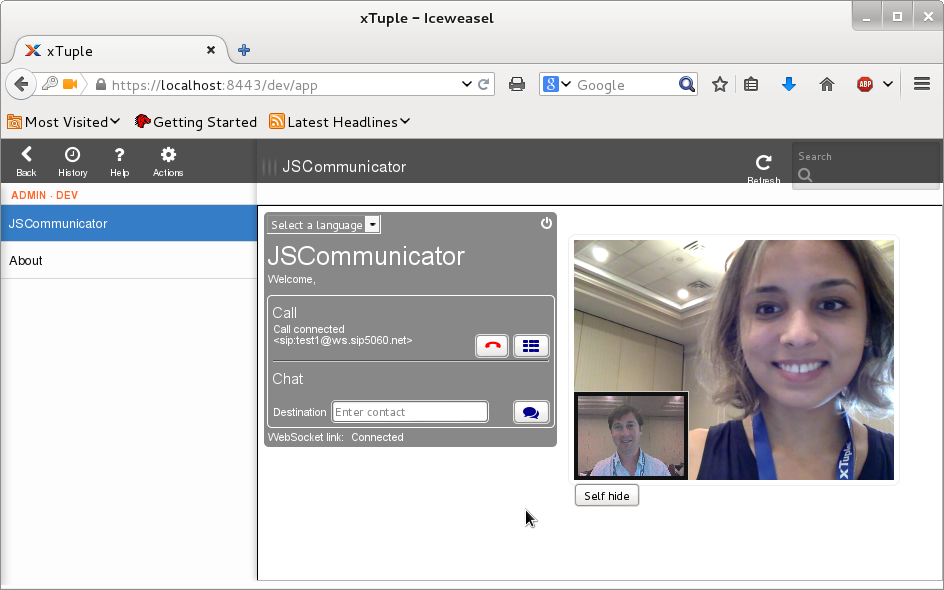
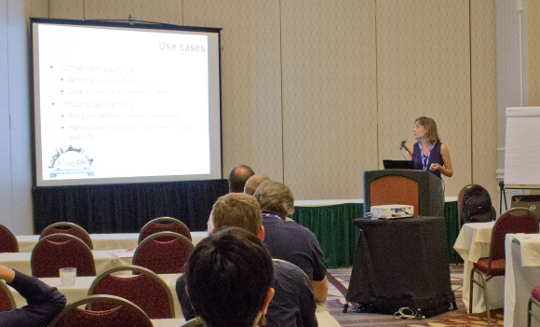
In 2013, Debian participated in both rounds of the GNOME Outreach Program for Women (OPW). The first round was run in conjunction with GSoC and the second round was a standalone program. The publicity around these programs and the strength of the Google and Debian brands attracted a range of female candidates, many of whom were shortlisted by mentors after passing their coding tests and satisfying us that they had the capability to complete a project successfully. As there are only a limited number of places for GSoC and limited funding for OPW, only a subset of these capable candidates were actually selected. The second round of OPW, for example, was only able to select two women. Google to the rescue Many of the women applying for the second round of OPW in 2013 were also students eligible for GSoC 2014. Debian was lucky to have over twenty places funded for GSoC 2014 and those women who had started preparing project plans for OPW and getting to know the Debian community were in a strong position to be considered for GSoC. Chandrika Parimoo, who applied to Debian for the first round of OPW in 2013, was selected by the Ganglia project for one of five GSoC slots. Chandrika made contributions to PyNag and the ganglia-nagios-bridge. Juliana Louback, who applied to Debian during the second round of OPW in 2013, was selected for one of Debian's GSoC 2014 slots working on the Debian WebRTC portal. The portal is built using JSCommunicator, a generic HTML5 softphone designed to be integrated in other web sites, portal frameworks and CMS systems. Juliana has been particularly enthusiastic with her work and after completing the core requirements of her project, I suggested she explore just what is involved in embedding JSCommunicator into another open source application. By co-incidence, the xTuple development team had decided to dedicate the month of August to open source engagement, running a program called haxTuple. Juliana had originally applied to OPW with an interest in financial software and so this appeared to be a great opportunity for her to broaden her experience and engagement with the open source community. Despite having no prior experience with ERP/CRM software, Juliana set about developing a plugin/extension for the new xTuple web frontend. She has published the extension in Github and written a detailed blog about her experience with the xTuple extension API. Participation in DebConf14 Juliana attended DebConf14 in Portland and gave a presentation of her work on the Debian RTC portal. Many more people were able to try the portal for the first time thanks to her participation in DebConf. The video of the GSoC students at DebConf14 is available here. Continuing with open source beyond GSoC Although GSoC finished in August, xTuple invited Juliana and I to attend their annual xTupleCon in Norfolk, Virginia. Google went the extra mile and helped Juliana to get there and she gave a live demonstration of the xTuple extension she had created. This effort has simultaneously raised the profile of Debian, open source and open standards (SIP and WebRTC) in front of a wider audience of professional developers and business users. Juliana describes her work at xTupleCon, Norfolk, 15 October 2014 It started with OPW The key point to emphasize is that Juliana's work in GSoC was actually made possible by Debian's decision to participate in and promote Outreach Program for Women in 2013. I've previously attended DebConf myself to help more developers become familiar with free and open RTC technology. I wasn't able to get there this year but thanks to the way GSoC and OPW are expanding our community, Juliana was there to help out.

Stefano Zacchiroli: Italy puts Free Software first in public sector

Debian participation in Italy's CAD68 committee (The initial policy change discussed in this document is a couple of years old now, but it took about the same time to be fully implemented, and AFAIK the role Debian played in it has not been documented yet.) In October 2012 the Italian government, led at the time by Mario Monti, did something rather innovative, at least for a country that is not usually ahead of its time in the area of information technology legislation. They decided to change the main law (the "CAD", for Codice dell'Amministrazione Digitale) that regulates the acquisition of software at all levels of the public administration (PA), giving an explicit preference to the acquisition of Free Software. The new formulation of article 68 of the CAD first lists some macro criteria (e.g., TCO, adherence to open standards, security support, etc.) that public administrations in Italy shall use as ranking criteria in software-related calls for tenders. Then, and this is the most important part, the article affirms that the acquisition of proprietary software solutions is permitted only if it is impossible to choose Free Software solutions instead; or, alternatively, to choose software solutions that have already being acquired (and paid for) by the PA in the past, reusing preexisting software. The combined effect of these two provisions is that all new software acquisitions by PAs in Italy will be Free Software, unless it is motivated in writing, challengable by a judge that it was impossible to do otherwise. Isn't it great? It is, except that such a law is not necessarily easy to adhere to in practice, especially for small public administrations (e.g., municipalities of a few hundred people, not uncommon in Italy) which might have very little clue about software in general, and even less so about Free Software. This is why the government also tasked the relevant Italian agency to provide guidelines on how to choose software in a way that conforms with the new formulation of article 68. The agency decided to form a committee to work on the guidelines (because you always need a committee, right? :-) ). To my surprise, the call for participation to be part of the committee explicitly listed representatives of Free Software communities as privileged software stakeholders that they wanted to have on the committee kudos to the agency for that. (The Italian wording on the call was: Costituir titolo di preferenza rivestire un ruolo di [ ] referenti di community del software a codice sorgente aperto.) Therefore, after various prods by fellow European Free Software activists that were aware of the ongoing change in legislation, I applied to be a volunteer CAD68 committee member, got selected, and ended up working over a period of about 6 months (March-September 2013) to help the agency writing the new software acquisition guidelines. Logistically, it hasn't been entirely trivial, as the default meeting place was in Rome, I live in Paris, and the agency didn't really have a travel budget for committee members. That's why I've sought sponsorship from Debian, offering to represent Debian views within the committee; Lucas kindly agreed to my request. So what did I do on behalf of Debian as a committee member during those months? Most of my job has been some sort of consulting on how community-driven Free Software projects like Debian work, on how the software they produce can be relied upon and contributed to, and more generally on how the PA can productively interact with such projects. In particular, I've been happy to work on the related work section of the guidelines, ensuring they point to relevant documents such as the French government guidelines on how to adopt Free Software (AKA circulaire Ayrault). I've also drafted the guidelines section on Free Software directories, ensuring that important resources such as FSF's Free Software Directory are listed as starting points for PAs that looking for software solutions for specific needs. Another part of my job has been ensuring that the guidelines do not end up betraying the principle of Free Software preference that is embodied in article 68. A majority of committee members came from a Free Software background, so that might not seem a difficult goal to accomplish. But it is important to notice that: (a) the final editor of the guidelines is the agency itself, not the committee, so having a "pro-Free Software" majority within the committee doesn't mean much per se; and (b) lobbying from the "pro-proprietary software" camp did happen, as it is entirely natural in these cases. In this respect I'm happy with the result: I do believe that the software selection process recommended by the guidelines, finally published in January 2014, upholds the Free Software preference principle of article 68. I credit both the agency and the non-ambiguity of the law (on this specific point) for that result. All in all, this has been a positive experience for me. It has reaffirmed my belief that Debian is a respected, non-partisan political actor of the wider software/ICT ecosystem. This experience has also given me a chance to be part of country-level policy-making, which has been very instructive on how and why good ideas might take a while to come into effect and influence citizen lives. Speaking of which, I'm now looking forward to the first alleged violations of article 68 in Italy, and how they will be dealt with. Abundant popcorn will certainly be needed. Links & press If you want to know more about this topic, I've collected below links to resources that have documented, in various languages, the publication of the CAD68 guidelines.

23 October 2014

Dirk Eddelbuettel: Introducing Rocker: Docker for R

You only know two things about Docker. First, it uses Linux
containers. Second, the Internet won't shut up about it. -- attributed to Solomon Hykes, Docker CEO

So what is Docker? Docker is a relatively new open source application and service, which is seeing interest across a number of areas. It uses recent Linux kernel features (containers, namespaces) to shield processes. While its use (superficially) resembles that of virtual machines, it is much more lightweight as it operates at the level of a single process (rather than an emulation of an entire OS layer). This also allows it to start almost instantly, require very little resources and hence permits an order of magnitude more deployments per host than a virtual machine. Docker offers a standard interface to creation, distribution and deployment. The shipping container analogy is apt: just how shipping containers (via their standard size and "interface") allow global trade to prosper, Docker is aiming for nothing less for deployment. A Dockerfile provides a concise, extensible, and executable description of the computational environment. Docker software then builds a Docker image from the Dockerfile. Docker images are analogous to virtual machine images, but smaller and built in discrete, extensible and reuseable layers. Images can be distributed and run on any machine that has Docker software installed---including Windows, OS X and of course Linux. Running instances are called Docker containers. A single machine can run hundreds of such containers, including multiple containers running the same image. There are many good tutorials and introductory materials on Docker on the web. The official online tutorial is a good place to start; this post can not go into more detail in order to remain short and introductory.

So what is Rocker? rocker logo At its core, Rocker is a project for running R using Docker containers. We provide a collection of Dockerfiles and pre-built Docker images that can be used and extended for many purposes. Rocker is the the name of our GitHub repository contained with the Rocker-Org GitHub organization. Rocker is also the name the account under which the automated builds at Docker provide containers ready for download.

Current Rocker Status

Core Rocker Containers The Rocker project develops the following containers in the core Rocker repository
  • r-base provides a base R container to build from
  • r-devel provides the basic R container, as well as a complete R-devel build based on current SVN sources of R
  • rstudio provides the base R container as well an RStudio Server instance
We have settled on these three core images after earlier work in repositories such as docker-debian-r and docker-ubuntu-r.

Rocker Use Case Containers Within the Rocker-org organization on GitHub, we are also working on
  • Hadleyverse which extends the rstudio container with a number of Hadley packages
  • rOpenSci which extends hadleyverse with a number of rOpenSci packages
  • r-devel-san provides an R-devel build for "Sanitizer" run-time diagnostics via a properly instrumented version of R-devel via a recent compiler build
  • rocker-versioned aims to provided containers with 'versioned' previous R releases and matching packages
Other repositories will probably be added as new needs and opportunities are identified.

Deprecation The Rocker effort supersedes and replaces earlier work by Dirk (in the docker-debian-r and docker-ubuntu-r GitHub repositories) and Carl. Please use the Rocker GitHub repo and Rocker Containers from Docker.com going forward.

Next Steps We intend to follow-up with more posts detailing usage of both the source Dockerfiles and binary containers on different platforms. Rocker containers are fully functional. We invite you to take them for a spin. Bug reports, comments, and suggestions are welcome; we suggest you use the GitHub issue tracker.

Acknowledgments We are very appreciative of all comments received by early adopters and testers. We also would like to thank RStudio for allowing us the redistribution of their RStudio Server binary. Published concurrently at rOpenSci blog and Dirk's blog.

Authors Dirk Eddelbuettel and Carl Boettiger

This post by Dirk Eddelbuettel originated on his Thinking inside the box blog. Please report excessive re-aggregation in third-party for-profit settings.

Alessio Treglia: Bits from the Debian Multimedia Maintainers

This brief announcement was released yesterday to the debian-devel-announce mailing list. Ciao! The Debian Multimedia Maintainers have been quite active since the Wheezy release, and have some interesting news to share for the Jessie release. Here we give you a brief update on what work has been done and work that is still ongoing. Let s see what s cooking for Jessie then. Frameworks and libraries Support for many new media formats and codecs. The codec library libavcodec, which is used by popular media playback applications including vlc, mpv, totem (using gstreamer1.0-libav), xine, and many more, has been updated to the latest upstream release version 11 provided by Libav. This provides Debian users with HEVC playback, a native Opus decoder, Matroska 3D support, Apple ProRes, and much more. Please see libav s changelog for a full list of functionality additions and updates. libebur128 libebur128 is a free implementation of the European Broadcasting Union Loudness Recommendation (EBU R128), which is essentially an alternative to ReplayGain. The library can be used to analyze audio perceived loudness and subsequentially normalize the volume during playback. libltc libltc provides functionalities to encode and decode Linear (or Longitudinal) Timecode (LTC) from/to SMPTE data timecode. libva libva and the driver for Intel GPUs has been updated to the 1.4.0 release. Support for new GPUs has been added. libva now also supports Wayland. Pure Data A number of new additional libraries (externals) will appear in Jessie, including (among others) Eric Lyon s fftease and lyonpotpourrie, Thomas Musil s iemlib, the pdstring library for string manipulation and pd-lua that allows to write Pd-objects in the popular lua scripting language. JACK and LADI LASH Audio Session Handler was abandoned upstream a long time ago in favor of the new session management system, called ladish (LADI Session Handler). ladish allows users to run many JACK applications at once and save/restore their configuration with few mouse clicks. The current status of the integration between the session handler and JACK may be summarized as follows: Note that ladish uses the D-Bus interface to the jack daemon, therefore only Jessie s jackd2 provides support for and also cooperates fine with it. Plugins: LV2 and LADSPA Debian Jessie will bring the newest 1.10.0 version of the LV2 technology. Most changes affect the packaging of new plugins and extensions, a brief list of packaging guidelines is now available.
A number of new plugins and development tools too have been made available during the Jessie development cycle: LV2 Toolkit LVTK provides libraries that wrap the LV2 C API and extensions into easy to use C++ classes. The original work for this was mostly done by Lars Luthman in lv2-c++-tools. Vee One Suite The whole suite by Rui Nuno Capela is now available in Jessie, and consists of three components: All three are provided in both forms of LV2 plugins and stand-alone JACK client. JACK session, JACK MIDI, and ALSA MIDI are supported too. x42-plugins and zam-plugins LV2 bundles containing many audio plugins for high quality processing. Fomp Fomp is an LV2 port of the MCP, VCO, FIL, and WAH plugins by Fons Adriaensen. Some other components have been upgraded to more recent upstream versions: We ve packaged ste-plugins, Fons Adriaensen s new stereo LADSPA plugins bundle. A major upgrade of frei0r, namely the standard collection for the minimalistic plugin API for video effects, will be available in Jessie. New multimedia applications Advene Advene (Annotate Digital Video, Exchange on the NEt) is a flexible video
annotation application. Ardour3 The new generation of the popular digital audio workstation will make its very first appearance in Debian Jessie. Cantata Qt4 front-end for the MPD daemon. Csound Csound for jessie will feature the new major series 6, with the improved IDE CsoundQT. This new csound supports improved array data type handling, multi-core rendering and debugging features. din DIN Is Noise is a musical instrument and audio synthesizer that supports JACK audio output, MIDI, OSC, and IRC bot as input sources. It could be extended and customized with Tcl scripts too. dvd-slideshow dvd-slideshow consists of a suite of command line tools which come in handy to make slideshows from collections of pictures. Documentation is provided and available in /usr/share/doc/dvd-slideshow/ . dvdwizard DVDwizard can fully automate the creation of DVD-Video filesystem. It supports graphical menus, chapters, multiple titlesets and multi-language streams. It supports both PAL and NTSC video modes too. flowblade Flowblade is a video editor like the popular KDenlive based on the MLT engine, but more lightweight and with some difference in editing concepts. forked-daapd Forked-daapd switched to a new, active upstream again dropping Grand Central Dispatch in favor of libevent. The switch fixed several bugs and made forked-daapd available on all release architectures instead of shipping only on amd64 and i386. Now nothing prevents you from setting up a music streaming (DAAP/DACP) server on your favorite home server no matter if it is based on mips, arm or x86! harvid HTTP Ardour Video Daemon decodes still images from movie files and serves them via HTTP. It provides frame-accurate decoding and is main use-case is to act as backend and second level cache for rendering the
videotimeline in Ardour. Groove Basin Groove Basin is a music player server with a web-based user interface inspired by Amarok 1.4. It runs on a server optionally connected to speakers. Guests can control the music player by connecting with a laptop, tablet, or smart phone. Further, users can stream their music libraries remotely.
It comes with a fast, responsive web interface that supports keyboard shortcuts and drag drop. It also provides the ability to upload songs, download songs, and import songs by URL, including YouTube URLs. Groove Basin supports Dynamic Mode which automatically queues random songs, favoring songs that have not been queued recently.
It automatically performs ReplayGain scanning on every song using the EBU R128 loudness standard, and automatically switches between track and album mode. Groove Basin supports the MPD protocol, which means it is compatible with MPD clients. There is also a more powerful Groove Basin protocol which you can use if the MPD protocol does not meet your needs. HandBrake HandBrake, a versatile video transcoder, is now available for Jessie. It could convert video from nearly any format to a wide range of commonly supported codecs. jack-midi-clock New jackd midiclock utility made by Robin Gareus. laborejo Laborejo, Esperanto for Workshop , is used to craft music through notation. It is a LilyPond GUI frontend, a MIDI creator and a tool collection to inspire and help music composers. mpv mpv is a movie player based on MPlayer and mplayer2. It supports a wide variety of video file formats, audio and video codecs, and subtitle types. The project focuses mainly on modern systems and encourages developer activity. As such, large portions of outdated code originating from MPlayer have been removed, and many new features and improvements have been added. Note that, although there are still some similarities to its predecessors, mpv should be considered a completely different program (e.g. lacking compatibility with both mplayer and mplayer2 in terms of command-line arguments and configuration). smtube SMTube is a stand-alone graphical video browser and player, which makes YouTube s videos browsing, playing, and download such a piece of cake.
It has so many features that, we are sure, will make YouTube lovers very, very happy. sonic-visualiser Sonic Visualiser Application for viewing and analysing the contents of music audio files. SoundScapeRenderer SoundScapeRenderer (aka SSR) is a (rather) easy to use render engine for spatial audio, that provides a number of different rendering algorithms, ranging from binaural (headphone) playback via wave field synthesis to higher-order ambisonics. Videotrans videotrans is a set of scripts that allow its user to reformat existing movies into the VOB format that is used on DVDs. XBMC XBMC has been partially rebranded as XBMC from Debian to make it clear that it is changed to conform to Debian s Policy. The latest stable release, 13.2 Gotham will be part of Jessie making Debian a good choice for HTPC-s. zita-bls1 Binaural stereo signals converter made by Fons Adriaensen zita-mu1 Stereo monitoring organiser for jackd made by Fons Adriaensen zita-njbridge Jack clients to transmit multichannel audio over a local IP network made by Fons Adriaensen radium-compressor Radium Compressor is the system compressor of the Radium suite. It is provided in the form of stand-alone JACK application. Multimedia Tasks With Jessie we are shipping a set of multimedia related tasks.
They include package lists for doing several multimedia related tasks. If you are interested in defining new tasks, or tweaking the current, existing ones, we are very much interested in hearing from you. Upgraded applications and libraries What s not going to be in Jessie With the aim to improve the overall quality of the multimedia software available in Debian, we have dropped a number of packages which were abandoned upstream: We ve also dropped mplayer, presently nobody seems interested in maintaining it.
The suggested replacements for users are mplayer2 or mpv. Whilst the former is mostly compatible with mplayer in terms of command-line arguments and configuration (and adds a few new features too), the latter adds a lot of new features and improvements, and it is actively maintained upstream. Please note that although the mencoder package is no longer available anymore, avconv and mpv do provide encoding functionality. For more information see avconv s manual page and documentation, and mpv s encoding documentation. Broken functionalities rtkit under systemd is broken at the moment. Activity statistics More information about team s activity are available. Where to reach us The Debian Multimedia Maintainers can be reached at pkg-multimedia-maintainers AT lists.alioth.debian.org for packaging related topics, or at debian-multimedia AT lists.debian.org for user and more general discussion.
We would like to invite everyone interested in multimedia to join us there. Some of the team members are also in the #debian-multimedia channel on OFTC. Cheers! Alessio Treglia
on behalf of the Debian Multimedia Maintainers

Erich Schubert: Clustering 23 mio Tweet locations

To test scalability of ELKI, I've clustered 23 million Tweet locations from the Twitter Statuses Sample API obtained over 8.5 months (due to licensing restrictions by Twitter, I cannot make this data available to you, sorry.
23 million points is a challenge for advanced algorithms. It's quite feasible by k-means; in particular if you choose a small k and limit the number of iterations. But k-means does not make a whole lot of sense on this data set - it is a forced quantization algorithm, but does not discover actual hotspots.
Density-based clustering such as DBSCAN and OPTICS are much more appropriate. DBSCAN is a bit tricky to parameterize - you need to find the right combination of radius and density for the whole world. Given that Twitter adoption and usage is quite different it is very likely that you won't find a single parameter that is appropriate everywhere.
OPTICS is much nicer here. We only need to specify a minimum object count - I chose 1000, as this is a fairly large data set. For performance reasons (and this is where ELKI really shines) I chose a bulk-loaded R*-tree index for acceleration. To benefit from the index, the epsilon radius of OPTICS was set to 5000m. Also, ELKI allows using geodetic distance, so I can specify this value in meters and do not get much artifacts from coordinate projection.
To extract clusters from OPTICS, I used the Xi method, with xi set to 0.01 - a rather low value, also due to the fact of having a large data set.
The results are pretty neat - here is a screenshot (using KDE Marble and OpenStreetMap data, since Google Earth segfaults for me right now):
Screenshot of Clusters in central Europe
Some observations: unsurprisingly, many cities turn up as clusters. Also regional differences are apparent as seen in the screenshot: plenty of Twitter clusters in England, and low acceptance rate in Germany (Germans do seem to have objections about using Twitter; maybe they still prefer texting, which was quite big in Germany - France and Spain uses Twitter a lot more than Germany).
Spam - some of the high usage in Turkey and Indonesia may be due to spammers using a lot of bots there. There also is a spam cluster in the ocean south of Lagos - some spammer uses random coordinates [0;1]; there are 36000 tweets there, so this is a valid cluster...
A benefit of OPTICS and DBSCAN is that they do not cluster every object - low density areas are considered as noise. Also, they support clusters of different shape (which may be lost in this visualiation, which uses convex hulls!) and different size. OPTICS can also produce a hierarchical result.
Note that for these experiments, the actual Tweet text was not used. This has a rough correspondence to Twitter popularity "heatmaps", except that the clustering algorithms will actually provide a formalized data representation of activity hotspots, not only a visualization.
You can also explore the clustering result in your browser - the Google Drive visualization functionality seems to work much better than Google Earth.
If you go to Istanbul or Los Angeles, you will see some artifacts - odd shaped clusters with a clearly visible spike. This is caused by the Xi extraction of clusters, which is far from perfect. At the end of a valley in the OPTICS plot, it is hard to decide whether a point should be included or not. These errors are usually the last element in such a valley, and should be removed via postprocessing. But our OpticsXi implementation is meant to be as close as possible to the published method, so we do not intend to "fix" this.
Certain areas - such as Washington, DC, New York City, and the silicon valley - do not show up as clusters. The reason is probably again the Xi extraction - these region do not exhibit the steep density increase expected by Xi, but are too blurred in their surroundings to be a cluster.
Hierarchical results can be found e.g. in Brasilia and Los Angeles.
Compare the OPTICS results above to k-means results (below) - see why I consider k-means results to be a meaningless quantization?
k-means clusters
Sure, k-means is fast (30 iterations; not converged yet. Took 138 minutes on a single core, with k=1000. The parallel k-means implementation in ELKI took 38 minutes on a single node, Hadoop/Mahout on 8 nodes took 131 minutes, as slow as a single CPU core!). But you can see how sensitive it is to misplaced coordinates (outliers, but mostly spam), how many "clusters" are somewhere in the ocean, and that there is no resolution on the cities? The UK is covered by 4 clusters, with little meaning; and three of these clusters stretch all the way into Bretagne - k-means clusters clearly aren't of high quality here.
If you want to reproduce these results, you need to get the upcoming ELKI version (0.6.5~201410xx - the output of cluster convex hulls was just recently added to the default codebase), and of course data. The settings I used are:
-dbc.in coords.tsv.gz
-db.index tree.spatial.rstarvariants.rstar.RStarTreeFactory
-pagefile.pagesize 500
-spatial.bulkstrategy SortTileRecursiveBulkSplit
-time
-algorithm clustering.optics.OPTICSXi
-opticsxi.xi 0.01
-algorithm.distancefunction geo.LngLatDistanceFunction
-optics.epsilon 5000.0 -optics.minpts 1000
-resulthandler KMLOutputHandler -out /tmp/out.kmz
and the total runtime for 23 million points on a single core was about 29 hours. The indexes helped a lot: less than 10000 distances were computed per point, instead of 23 million - the expected speedup over a non-indexed approach is 2400.
Don't try this with R or Matlab. Your average R clustering algorithm will try to build a full distance matrix, and you probably don't have an exabyte of memory to store this matrix. Maybe start with a smaller data set first, then see how long you can afford to increase the data size.

Matthew Garrett: Linux Container Security

First, read these slides. Done? Good.

(Edit: Just to clarify - these are not my slides. They're from a presentation Jerome Petazzoni gave at Linuxcon NA earlier this year)

Hypervisors present a smaller attack surface than containers. This is somewhat mitigated in containers by using seccomp, selinux and restricting capabilities in order to reduce the number of kernel entry points that untrusted code can touch, but even so there is simply a greater quantity of privileged code available to untrusted apps in a container environment when compared to a hypervisor environment[1].

Does this mean containers provide reduced security? That's an arguable point. In the event of a new kernel vulnerability, container-based deployments merely need to upgrade the kernel on the host and restart all the containers. Full VMs need to upgrade the kernel in each individual image, which takes longer and may be delayed due to the additional disruption. In the event of a flaw in some remotely accessible code running in your image, an attacker's ability to cause further damage may be restricted by the existing seccomp and capabilities configuration in a container. They may be able to escalate to a more privileged user in a full VM.

I'm not really compelled by either of these arguments. Both argue that the security of your container is improved, but in almost all cases exploiting these vulnerabilities would require that an attacker already be able to run arbitrary code in your container. Many container deployments are task-specific rather than running a full system, and in that case your attacker is already able to compromise pretty much everything within the container. The argument's stronger in the Virtual Private Server case, but there you're trading that off against losing some other security features - sure, you're deploying seccomp, but you can't use selinux inside your container, because the policy isn't per-namespace[2].

So that seems like kind of a wash - there's maybe marginal increases in practical security for certain kinds of deployment, and perhaps marginal decreases for others. We end up coming back to the attack surface, and it seems inevitable that that's always going to be larger in container environments. The question is, does it matter? If the larger attack surface still only results in one more vulnerability per thousand years, you probably don't care. The aim isn't to get containers to the same level of security as hypervisors, it's to get them close enough that the difference doesn't matter.

I don't think we're there yet. Searching the kernel for bugs triggered by Trinity shows plenty of cases where the kernel screws up from unprivileged input[3]. A sufficiently strong seccomp policy plus tight restrictions on the ability of a container to touch /proc, /sys and /dev helps a lot here, but it's not full coverage. The presentation I linked to at the top of this post suggests using the grsec patches - these will tend to mitigate several (but not all) kernel vulnerabilities, but there's tradeoffs in (a) ease of management (having to build your own kernels) and (b) performance (several of the grsec options reduce performance).

But this isn't intended as a complaint. Or, rather, it is, just not about security. I suspect containers can be made sufficiently secure that the attack surface size doesn't matter. But who's going to do that work? As mentioned, modern container deployment tools make use of a number of kernel security features. But there's been something of a dearth of contributions from the companies who sell container-based services. Meaningful work here would include things like:
These aren't easy jobs, but they're important, and I'm hoping that the lack of obvious development in areas like this is merely a symptom of the youth of the technology rather than a lack of meaningful desire to make things better. But until things improve, it's going to be far too easy to write containers off as a "convenient, cheap, secure: choose two" tradeoff. That's not a winning strategy.

[1] Companies using hypervisors! Audit your qemu setup to ensure that you're not providing more emulated hardware than necessary to your guests. If you're using KVM, ensure that you're using sVirt (either selinux or apparmor backed) in order to restrict qemu's privileges.
[2] There's apparently some support for loading per-namespace Apparmor policies, but that means that the process is no longer confined by the sVirt policy
[3] To be fair, last time I ran Trinity under Docker under a VM, it ended up killing my host. Glass houses, etc.

comment count unavailable comments

22 October 2014

Konstantinos Margaritis: Eigen NEON port extended to ARMv8!

Soon after the VSX port, and as promised I have completed the ARMv8 NEON (a.k.a. Advanced SIMD) port. Basically this extends support to 64-bit doubles and also provides faster alternatives to division as ARMv8 has builtin instructions for division both for 32-bit floats and 64-bit doubles. Preliminary benchmarks (bench_gemm):

21 October 2014

Lucas Nussbaum: Tentative summary of the amendments of the init system coupling GR

This is an update of my previous attempt at summarizing this discussion. As I proposed one of the amendments, you should not blindly trust me, of course. :-) First, let s address two FAQ: What is the impact on jessie?
On the technical level, none. The current state of jessie already matches what is expected by all proposals. It s a different story on the social level. Why are we voting now, then?
Ian Jackson, who submitted the original proposal, explained his motivation in this mail. We now have four different proposals: (summaries are mine) [plessy] is the simplest, and does not discuss the questions that the other proposals are answering, given it considers that the normal Debian decision-making processes have not been exhausted. In order to understand the three other proposals, it s useful to break them down into several questions. Q1: support for the default init system on Linux
A1.1: packages MUST work with the default init system on Linux as PID 1.
(That is the case in both [iwj] and [lucas]) A1.2: packages SHOULD work with the default init system on Linux as PID 1.
With [dktrkranz], it would no longer be required to support the default init system, as maintainers could choose to require another init system than the default, if they consider this a prerequisite for its proper operation; and no patches or other derived works exist in order to support other init systems. That would not be a policy violation. (see this mail and its reply for details). Theoretically, it could also create fragmentation among Debian packages requiring different init systems: you would not be able to run pkgA and pkgB at the same time, because they would require different init systems. Q2: support for alternative init systems as PID 1
A2.1: packages MUST work with one alternative init system (in [iwj])
(Initially, I thought that one here should be understood as sysvinit , as this mail, Ian detailed why he chose to be unspecific about the target init system. However, in that mail, he later clarified that a package requiring systemd or uselessd would be fine as well, given that in practice there aren t going to be many packages that would want to couple specifically to systemd _or_ uselessd, but where support for other init systems is hard to provide.)
To the user, that brings the freedom to switch init systems (assuming that the package will not just support two init systems with specific interfaces, but rather a generic interface common to many init systems).
However, it might require the maintainer to do the required work to support additional init systems, possibly without upstream cooperation.
Lack of support is a policy violation (severity >= serious, RC).
Bugs about degraded operation on some init systems follow the normal bug severity rules. A2.2: packages SHOULD work with alternative init systems as PID 1. (in [lucas])
This is a recommendation. Lack of support is not a policy violation (bug severity < serious, not RC). A2.3: nothing is said about alternative init systems (in [dktrkranz]). Lack of support would likely be a wishlist bug. Q3: special rule for sysvinit to ease wheezy->jessie upgrades
(this question is implicitly dealt with in [iwj], assuming that one of the supported init systems is sysvinit)
A3.1: continue support for sysvinit (in [lucas])
For the jessie release, all software available in Debian wheezy that supports being run under sysvinit should continue to support sysvinit unless there is no technically feasible way to do so. A3.2: no requirement to support sysvinit (in [dktrkranz])
Theoretically, this could require two-step upgrades: first reboot with systemd, then upgrade other packages Q4: non-binding recommendation to maintainers
A4.1: recommend that maintainers accept patches that add or improve
support for alternative init systems. (in both [iwj] and [lucas], with a different wording) A4.2: say nothing (in [dktrkranz]) Q5: support for init systems with are the default on non-Linux ports
A5.1: non-binding recommendation to add/improve support with a high priority (in [lucas]) A5.2: say nothing (in [iwj] and [dktrkranz]) Comments are closed: please discuss by replying to that mail.

Thomas Goirand: OpenStack Juno is out, Debian (and Ubuntu Trusty ports) packages ready

This is just a quick announce: Debian packages for Juno are out. In fact, they were ready the day of the release, on the 16th of October. I uploaded it all (to Experimental) the same day, literally a few hours after the final released was git tagged. But I had no time to announce it. This week-end, I took the time to do an Ubuntu Trusty port, which I also publish (it s just a mater of rebuilding all, and it should work out of the box). Here are the backports repositories. For Wheezy: deb http://archive.gplhost.com/debian juno-backports main deb http://archive.gplhost.com/debian juno main For trusty: deb http://archive.gplhost.com/debian trusty-juno-backports main But of course, everything is also available directly in Debian. Since Sid/Jessie contains OpenStack Icehouse (which has more chance to receive long enough security support), and it will be like this until Jessie is released. So I have uploaded all of Juno into Debian Experimental. This shows on the OpenStack qa page (you may also notice that the team is nearly reaching 200 packages though am planning to off-load some of that to the Python module team, when the migration to Git will be finished). On the QA page, you may also see that I uploaded all of the last Icehouse point release to Sid, and that all packages migrated to Jessie. There s only a few minor issues with some Python modules which I fixed, that haven t migrated to Jessie yet. I can already tell that all packages can be installed without an issue, and that I know Horizon at least works as expected. But I didn t have time to test it all just yet. I m currently working on doing even more installation automation at the package level (by providing some OVS bridging init script and such, to make it more easy to run Tempest functional testing). I ll post more about this when it s ready.

19 October 2014

Neil Williams: OpenTAC an automation lab in a box

I ve previously covered running LAVA on ARM devices, now that the packages are in Debian. I ve also covered setting up the home lab, including the difficulty in obtaining the PDU and relying on another machine to provide USB serial converters with inherent problems of needing power to keep the same devices assigned to the same ser2net ports. There have been ideas about how to improve the situation. Conferences are a prime example setting up a demo involving LAVA means bringing a range of equipment, separate power bricks, separate network switches (with power bricks), a device of some kind to connect up the USB serial converters (and power brick) and then the LAVA server (with SATA drive and power brick) that is without the actual devices and their cables and power. Each of those power cables tend to be a metre long, with networking and serial, it quickly becomes a cable spaghetti. Ideas around this also have application inside larger deployments, so the hardware would need to daisy-chain to provide services to a rack full of test devices. The objective is a single case providing network, power and serial connectivity to a number of test devices over a single power input and network uplink. Naturally, with a strong free software and open development bias, the unit will be Open Hardware running Debian, albeit with a custom Beaglebone Linux kernel. It s a Test Automation Controller, so we re using the name OpenTAC. Progress Open hardware ARM device running Debian to automate tests on 4 to 8 devices, initially aimed at LAVA support for Linaro engineers. Power distribution, serial console, network and optional GPIO extensions. The design involves: The initial schematics are now complete and undergoing design review. A lot of work remains

Next.

Previous.