Search Results: "tin"

19 June 2017

Hideki Yamane: PoC: use Sphinx for debian-policy

Before party, we did a monthly study meeting and I gave a talk about tiny hack for debian-policy document.

debian-policy was converted from debian-sgml to docbook in 4.0.0, and my proposal is "Go move forward to Sphinx".

Here's sample, and you can also get PoC source from my GitHub repo and check it.

18 June 2017

Simon Josefsson: OpenPGP smartcard under GNOME on Debian 9.0 Stretch

I installed Debian 9.0 Stretch on my Lenovo X201 laptop today. Installation went smooth, as usual. GnuPG/SSH with an OpenPGP smartcard I use a YubiKey NEO does not work out of the box with GNOME though. I wrote about how to fix OpenPGP smartcards under GNOME with Debian 8.0 Jessie earlier, and I thought I d do a similar blog post for Debian 9.0 Stretch . The situation is slightly different than before (e.g., GnuPG works better but SSH doesn t) so there is some progress. May I hope that Debian 10.0 Buster gets this right? Pointers to which package in Debian should have a bug report tracking this issue is welcome (or a pointer to an existing bug report). After first login, I attempt to use gpg --card-status to check if GnuPG can talk to the smartcard.
jas@latte:~$ gpg --card-status
gpg: error getting version from 'scdaemon': No SmartCard daemon
gpg: OpenPGP card not available: No SmartCard daemon
jas@latte:~$ 
This fails because scdaemon is not installed. Isn t a smartcard common enough so that this should be installed by default on a GNOME Desktop Debian installation? Anyway, install it as follows.
root@latte:~# apt-get install scdaemon
Then try again.
jas@latte:~$ gpg --card-status
gpg: selecting openpgp failed: No such device
gpg: OpenPGP card not available: No such device
jas@latte:~$ 
I believe scdaemon here attempts to use its internal CCID implementation, and I do not know why it does not work. At this point I often recall that want pcscd installed since I work with smartcards in general.
root@latte:~# apt-get install pcscd
Now gpg --card-status works!
jas@latte:~$ gpg --card-status
Reader ...........: Yubico Yubikey NEO CCID 00 00
Application ID ...: D2760001240102000006017403230000
Version ..........: 2.0
Manufacturer .....: Yubico
Serial number ....: 01740323
Name of cardholder: Simon Josefsson
Language prefs ...: sv
Sex ..............: male
URL of public key : https://josefsson.org/54265e8c.txt
Login data .......: jas
Signature PIN ....: not forced
Key attributes ...: rsa2048 rsa2048 rsa2048
Max. PIN lengths .: 127 127 127
PIN retry counter : 3 3 3
Signature counter : 8358
Signature key ....: 9941 5CE1 905D 0E55 A9F8  8026 860B 7FBB 32F8 119D
      created ....: 2014-06-22 19:19:04
Encryption key....: DC9F 9B7D 8831 692A A852  D95B 9535 162A 78EC D86B
      created ....: 2014-06-22 19:19:20
Authentication key: 2E08 856F 4B22 2148 A40A  3E45 AF66 08D7 36BA 8F9B
      created ....: 2014-06-22 19:19:41
General key info..: sub  rsa2048/860B7FBB32F8119D 2014-06-22 Simon Josefsson 
sec#  rsa3744/0664A76954265E8C  created: 2014-06-22  expires: 2017-09-04
ssb>  rsa2048/860B7FBB32F8119D  created: 2014-06-22  expires: 2017-09-04
                                card-no: 0006 01740323
ssb>  rsa2048/9535162A78ECD86B  created: 2014-06-22  expires: 2017-09-04
                                card-no: 0006 01740323
ssb>  rsa2048/AF6608D736BA8F9B  created: 2014-06-22  expires: 2017-09-04
                                card-no: 0006 01740323
jas@latte:~$ 
Using the key will not work though.
jas@latte:~$ echo foo gpg -a --sign
gpg: no default secret key: No secret key
gpg: signing failed: No secret key
jas@latte:~$ 
This is because the public key and the secret key stub are not available.
jas@latte:~$ gpg --list-keys
jas@latte:~$ gpg --list-secret-keys
jas@latte:~$ 
You need to import the key for this to work. I have some vague memory that gpg --card-status was supposed to do this, but I may be wrong.
jas@latte:~$ gpg --recv-keys 9AA9BDB11BB1B99A21285A330664A76954265E8C
gpg: failed to start the dirmngr '/usr/bin/dirmngr': No such file or directory
gpg: connecting dirmngr at '/run/user/1000/gnupg/S.dirmngr' failed: No such file or directory
gpg: keyserver receive failed: No dirmngr
jas@latte:~$ 
Surprisingly, dirmngr is also not shipped by default so it has to be installed manually.
root@latte:~# apt-get install dirmngr
Below I proceed to trust the clouds to find my key.
jas@latte:~$ gpg --recv-keys 9AA9BDB11BB1B99A21285A330664A76954265E8C
gpg: key 0664A76954265E8C: public key "Simon Josefsson " imported
gpg: no ultimately trusted keys found
gpg: Total number processed: 1
gpg:               imported: 1
jas@latte:~$ 
Now the public key and the secret key stub are available locally.
jas@latte:~$ gpg --list-keys
/home/jas/.gnupg/pubring.kbx
----------------------------
pub   rsa3744 2014-06-22 [SC] [expires: 2017-09-04]
      9AA9BDB11BB1B99A21285A330664A76954265E8C
uid           [ unknown] Simon Josefsson 
sub   rsa2048 2014-06-22 [S] [expires: 2017-09-04]
sub   rsa2048 2014-06-22 [E] [expires: 2017-09-04]
sub   rsa2048 2014-06-22 [A] [expires: 2017-09-04]
jas@latte:~$ gpg --list-secret-keys
/home/jas/.gnupg/pubring.kbx
----------------------------
sec#  rsa3744 2014-06-22 [SC] [expires: 2017-09-04]
      9AA9BDB11BB1B99A21285A330664A76954265E8C
uid           [ unknown] Simon Josefsson 
ssb>  rsa2048 2014-06-22 [S] [expires: 2017-09-04]
ssb>  rsa2048 2014-06-22 [E] [expires: 2017-09-04]
ssb>  rsa2048 2014-06-22 [A] [expires: 2017-09-04]
jas@latte:~$ 
I am now able to sign data with the smartcard, yay!
jas@latte:~$ echo foo gpg -a --sign
-----BEGIN PGP MESSAGE-----
owGbwMvMwMHYxl2/2+iH4FzG01xJDJFu3+XT8vO5OhmNWRgYORhkxRRZZjrGPJwQ
yxe68keDGkwxKxNIJQMXpwBMRJGd/a98NMPJQt6jaoyO9yUVlmS7s7qm+Kjwr53G
uq9wQ+z+/kOdk9w4Q39+SMvc+mEV72kuH9WaW9bVqj80jN77hUbfTn5mffu2/aVL
h/IneTfaOQaukHij/P8A0//Phg/maWbONUjjySrl+a3tP8ll6/oeCd8g/aeTlH79
i0naanjW4bjv9wnvGuN+LPHLmhUc2zvZdyK3xttN/roHvsdX3f53yTAxeInvXZmd
x7W0/hVPX33Y4nT877T/ak4L057IBSavaPVcf4yhglVI8XuGgaTP666Wuslbliy4
5W5eLasbd33Xd/W0hTINznuz0kJ4r1bLHZW9fvjLduMPq5rS2co9tvW8nX9rhZ/D
zycu/QA=
=I8rt
-----END PGP MESSAGE-----
jas@latte:~$ 
Encrypting to myself will not work smoothly though.
jas@latte:~$ echo foo gpg -a --encrypt -r simon@josefsson.org
gpg: 9535162A78ECD86B: There is no assurance this key belongs to the named user
sub  rsa2048/9535162A78ECD86B 2014-06-22 Simon Josefsson 
 Primary key fingerprint: 9AA9 BDB1 1BB1 B99A 2128  5A33 0664 A769 5426 5E8C
      Subkey fingerprint: DC9F 9B7D 8831 692A A852  D95B 9535 162A 78EC D86B
It is NOT certain that the key belongs to the person named
in the user ID.  If you *really* know what you are doing,
you may answer the next question with yes.
Use this key anyway? (y/N) 
gpg: signal Interrupt caught ... exiting
jas@latte:~$ 
The reason is that the newly imported key has unknown trust settings. I update the trust settings on my key to fix this, and encrypting now works without a prompt.
jas@latte:~$ gpg --edit-key 9AA9BDB11BB1B99A21285A330664A76954265E8C
gpg (GnuPG) 2.1.18; Copyright (C) 2017 Free Software Foundation, Inc.
This is free software: you are free to change and redistribute it.
There is NO WARRANTY, to the extent permitted by law.
Secret key is available.
pub  rsa3744/0664A76954265E8C
     created: 2014-06-22  expires: 2017-09-04  usage: SC  
     trust: unknown       validity: unknown
ssb  rsa2048/860B7FBB32F8119D
     created: 2014-06-22  expires: 2017-09-04  usage: S   
     card-no: 0006 01740323
ssb  rsa2048/9535162A78ECD86B
     created: 2014-06-22  expires: 2017-09-04  usage: E   
     card-no: 0006 01740323
ssb  rsa2048/AF6608D736BA8F9B
     created: 2014-06-22  expires: 2017-09-04  usage: A   
     card-no: 0006 01740323
[ unknown] (1). Simon Josefsson 
[ unknown] (2)  Simon Josefsson 
gpg> trust
pub  rsa3744/0664A76954265E8C
     created: 2014-06-22  expires: 2017-09-04  usage: SC  
     trust: unknown       validity: unknown
ssb  rsa2048/860B7FBB32F8119D
     created: 2014-06-22  expires: 2017-09-04  usage: S   
     card-no: 0006 01740323
ssb  rsa2048/9535162A78ECD86B
     created: 2014-06-22  expires: 2017-09-04  usage: E   
     card-no: 0006 01740323
ssb  rsa2048/AF6608D736BA8F9B
     created: 2014-06-22  expires: 2017-09-04  usage: A   
     card-no: 0006 01740323
[ unknown] (1). Simon Josefsson 
[ unknown] (2)  Simon Josefsson 
Please decide how far you trust this user to correctly verify other users' keys
(by looking at passports, checking fingerprints from different sources, etc.)
  1 = I don't know or won't say
  2 = I do NOT trust
  3 = I trust marginally
  4 = I trust fully
  5 = I trust ultimately
  m = back to the main menu
Your decision? 5
Do you really want to set this key to ultimate trust? (y/N) y
pub  rsa3744/0664A76954265E8C
     created: 2014-06-22  expires: 2017-09-04  usage: SC  
     trust: ultimate      validity: unknown
ssb  rsa2048/860B7FBB32F8119D
     created: 2014-06-22  expires: 2017-09-04  usage: S   
     card-no: 0006 01740323
ssb  rsa2048/9535162A78ECD86B
     created: 2014-06-22  expires: 2017-09-04  usage: E   
     card-no: 0006 01740323
ssb  rsa2048/AF6608D736BA8F9B
     created: 2014-06-22  expires: 2017-09-04  usage: A   
     card-no: 0006 01740323
[ unknown] (1). Simon Josefsson 
[ unknown] (2)  Simon Josefsson 
Please note that the shown key validity is not necessarily correct
unless you restart the program.
gpg> quit
jas@latte:~$ echo foo gpg -a --encrypt -r simon@josefsson.org
-----BEGIN PGP MESSAGE-----
hQEMA5U1Fip47NhrAQgArTvAykj/YRhWVuXb6nzeEigtlvKFSmGHmbNkJgF5+r1/
/hWENR72wsb1L0ROaLIjM3iIwNmyBURMiG+xV8ZE03VNbJdORW+S0fO6Ck4FaIj8
iL2/CXyp1obq1xCeYjdPf2nrz/P2Evu69s1K2/0i9y2KOK+0+u9fEGdAge8Gup6y
PWFDFkNj2YiVa383BqJ+kV51tfquw+T4y5MfVWBoHlhm46GgwjIxXiI+uBa655IM
EgwrONcZTbAWSV4/ShhR9ug9AzGIJgpu9x8k2i+yKcBsgAh/+d8v7joUaPRZlGIr
kim217hpA3/VLIFxTTkkm/BO1KWBlblxvVaL3RZDDNI5AVp0SASswqBqT3W5ew+K
nKdQ6UTMhEFe8xddsLjkI9+AzHfiuDCDxnxNgI1haI6obp9eeouGXUKG
=s6kt
-----END PGP MESSAGE-----
jas@latte:~$ 
So everything is fine, isn t it? Alas, not quite.
jas@latte:~$ ssh-add -L
The agent has no identities.
jas@latte:~$ 
Tracking this down, I now realize that GNOME s keyring is used for SSH but GnuPG s gpg-agent is used for GnuPG. GnuPG uses the environment variable GPG_AGENT_INFO to connect to an agent, and SSH uses the SSH_AUTH_SOCK environment variable to find its agent. The filenames used below leak the knowledge that gpg-agent is used for GnuPG but GNOME keyring is used for SSH.
jas@latte:~$ echo $GPG_AGENT_INFO 
/run/user/1000/gnupg/S.gpg-agent:0:1
jas@latte:~$ echo $SSH_AUTH_SOCK 
/run/user/1000/keyring/ssh
jas@latte:~$ 
Here the same recipe as in my previous blog post works. This time GNOME keyring only has to be disabled for SSH. Disabling GNOME keyring is not sufficient, you also need gpg-agent to start with enable-ssh-support. The simplest way to achieve that is to add a line in ~/.gnupg/gpg-agent.conf as follows. When you login, the script /etc/X11/Xsession.d/90gpg-agent will set the environment variables GPG_AGENT_INFO and SSH_AUTH_SOCK. The latter variable is only set if enable-ssh-support is mentioned in the gpg-agent configuration.
jas@latte:~$ mkdir ~/.config/autostart
jas@latte:~$ cp /etc/xdg/autostart/gnome-keyring-ssh.desktop ~/.config/autostart/
jas@latte:~$ echo 'Hidden=true' >> ~/.config/autostart/gnome-keyring-ssh.desktop 
jas@latte:~$ echo enable-ssh-support >> ~/.gnupg/gpg-agent.conf 
jas@latte:~$ 
Log out from GNOME and log in again. Now you should see ssh-add -L working.
jas@latte:~$ ssh-add -L
ssh-rsa AAAAB3NzaC1yc2EAAAADAQABAAABAQDFP+UOTZJ+OXydpmbKmdGOVoJJz8se7lMs139T+TNLryk3EEWF+GqbB4VgzxzrGjwAMSjeQkAMb7Sbn+VpbJf1JDPFBHoYJQmg6CX4kFRaGZT6DHbYjgia59WkdkEYTtB7KPkbFWleo/RZT2u3f8eTedrP7dhSX0azN0lDuu/wBrwedzSV+AiPr10rQaCTp1V8sKbhz5ryOXHQW0Gcps6JraRzMW+ooKFX3lPq0pZa7qL9F6sE4sDFvtOdbRJoZS1b88aZrENGx8KSrcMzARq9UBn1plsEG4/3BRv/BgHHaF+d97by52R0VVyIXpLlkdp1Uk4D9cQptgaH4UAyI1vr cardno:000601740323
jas@latte:~$ 
Topics for further discussion or research include 1) whether scdaemon, dirmngr and/or pcscd should be pre-installed on Debian desktop systems; 2) whether gpg --card-status should attempt to import the public key and secret key stub automatically; 3) why GNOME keyring is used by default for SSH rather than gpg-agent; 4) whether GNOME keyring should support smartcards, or if it is better to always use gpg-agent for GnuPG/SSH, 5) if something could/should be done to automatically infer the trust setting for a secret key. Enjoy!

Alexander Wirt: alioth needs your help

It may look that the decision for pagure as alioth replacement is already finalized, but that s not really true. I got a lot of feedback and tips in the last weeks, those made postpone my decision. Several alternative systems were recommended to me, here are a few examples: and probably several others. I won t be able to evaluate all of those systems in advance of our sprint. That s where you come in: if you are familiar with one of those systems, or want to get familiar with them, join us on our mailing list and create a wiki page below https://wiki.debian.org/Alioth/GitNext with a review of your system. What do we need to know? If you want to start on such a review, please announce it on the mailinglist. If you have questions, ask me on IRC, Twitter or mail. Thanks for your help!

Eriberto Mota: Como migrar do Debian Jessie para o Stretch

Bem vindo ao Debian Stretch! Ontem, 17 de junho de 2017, o Debian 9 (Stretch) foi lan ado. Eu gostaria de falar sobre alguns procedimentos b sicos e regras para migrar do Debian 8 (Jessie). Passos iniciais
# apt-get update
# apt-get dist-upgrade
Migrando
deb http://ftp.br.debian.org/debian/ stretch main
deb-src http://ftp.br.debian.org/debian/ stretch main
   
deb http://security.debian.org/ stretch/updates main
deb-src http://security.debian.org/ stretch/updates main
# apt-get update
# apt-get dist-upgrade
Caso haja algum problema, leia as mensagens de erro e tente resolver o problema. Resolvendo ou n o tal problema, execute novamente o comando:
# apt-get dist-upgrade
Havendo novos problemas, tente resolver. Busque solu es no Google, se for necess rio. Mas, geralmente, tudo dar certo e voc n o dever ter problemas. Altera es em arquivos de configura o Quando voc estiver migrando, algumas mensagens sobre altera es em arquivos de configura o poder o ser mostradas. Isso poder deixar alguns usu rios pedidos, sem saber o que fazer. N o entre em p nico. Existem duas formas de apresentar essas mensagens: via texto puro em shell ou via janela azul de mensagens. O texto a seguir um exemplo de mensagem em shell:
Ficheiro de configura o '/etc/rsyslog.conf'
 ==> Modificado (por si ou por um script) desde a instala o.
 ==> O distribuidor do pacote lan ou uma vers o atualizada.
 O que deseja fazer? As suas op es s o:
 Y ou I : instalar a vers o do pacote do maintainer
 N ou O : manter a vers o actualmente instalada
 D : mostrar diferen as entre as vers es
 Z : iniciar uma shell para examinar a situa o
 A a o padr o   manter sua vers o atual.
*** rsyslog.conf (Y/I/N/O/D/Z) [padr o=N] ?
A tela a seguir um exemplo de mensagem via janela: Nos dois casos, recomend vel que voc escolha por instalar a nova vers o do arquivo de configura o. Isso porque o novo arquivo de configura o estar totalmente adaptado aos novos servi os instalados e poder ter muitas op es novas ou diferentes. Mas n o se preocupe, pois as suas configura es n o ser o perdidas. Haver um backup das mesmas. Assim, para shell, escolha a op o "Y" e, no caso de janela, escolha a op o "instalar a vers o do mantenedor do pacote". muito importante anotar o nome de cada arquivo modificado. No caso da janela anterior, trata-se do arquivo /etc/samba/smb.conf. No caso do shell o arquivo foi o /etc/rsyslog.conf. Depois de completar a migra o, voc poder ver o novo arquivo de configura o e o original. Caso o novo arquivo tenha sido instalado ap s uma escolha via shell, o arquivo original (o que voc tinha anteriormente) ter o mesmo nome com a extens o .dpkg-old. No caso de escolha via janela, o arquivo ser mantido com a extens o .ucf-old. Nos dois casos, voc poder ver as modifica es feitas e reconfigurar o seu novo arquivo de acordo com as necessidades. Caso voc precise de ajuda para ver as diferen as entre os arquivos, voc poder usar o comando diff para compar -los. Fa a o diff sempre do arquivo novo para o original. como se voc quisesse ver como fazer com o novo arquivo para ficar igual ao original. Exemplo:

# diff -Naur /etc/rsyslog.conf /etc/rsyslog.conf.dpkg-old
Em uma primeira vista, as linhas marcadas com "+" dever o ser adicionadas ao novo arquivo para que se pare a com o anterior, assim como as marcadas com "-" dever o ser suprimidas. Mas cuidado: normal que haja algumas linhas diferentes, pois o arquivo de configura o foi feito para uma nova vers o do servi o ou aplicativo ao qual ele pertence. Assim, altere somente as linhas que realmente s o necess rias e que voc mudou no arquivo anterior. Veja o exemplo:
+daemon.*;mail.*;\
+ news.err;\
+ *.=debug;*.=info;\
+ *.=notice;*.=warn  /dev/xconsole
+*.* @sam
No meu caso, originalmente, eu s alterei a ltima linha. Ent o, no novo arquivo de configura o, s terei interesse em adicionar essa linha. Bem, se foi voc quem fez a configura o anterior, voc saber fazer a coisa certa. Geralmente, n o haver muitas diferen as entre os arquivos. Outra op o para ver as diferen as entre arquivos o comando mcdiff, que poder ser fornecido pelo pacote mc. Exemplo:
# mcdiff /etc/rsyslog.conf /etc/rsyslog.conf.dpkg-old
Problemas com ambientes e aplica es gr ficas poss vel que voc tenha algum problema com o funcionamento de ambientes gr ficos, como Gnome, KDE etc, ou com aplica es como o Mozilla Firefox. Nesses casos, prov vel que o problema seja os arquivos de configura o desses elementos, existentes no diret rio home do usu rio. Para verificar, crie um novo usu rio no Debian e teste com ele. Se tudo der certo, fa a um backup das configura es anteriores (ou renomeie as mesmas) e deixe que a aplica o crie uma configura o nova. Por exemplo, para o Mozilla Firefox, v ao diret rio home do usu rio e, com o Firefox fechado, renomeie o diret rio .mozilla para .mozilla.bak, inicie o Firefox e teste. Est inseguro? Caso voc esteja muito inseguro, instale um Debian 8, com ambiente gr fico e outras coisas, em uma m quina virtual e migre para Debian 9 para testar e aprender. Sugiro VirtualBox como virtualizador. Divirta-se!

Vasudev Kamath: Rust - Shell like Process pipelines using subprocess crate

I had to extract copyright information from the git repository of the crate upstream. The need aroused as part of updating debcargo, tool to create Debian package source from the Rust crate. General idea behind taking copyright information from git is to extract starting and latest contribution year for every author/committer. This can be easily achieved using following shell snippet

for author in $(git log --format="%an"   sort -u); do
   author_email=$(git log --format="%an <%ae>" --author="$author"   head -n1)
   first=$(git \
   log --author="$author" --date=format:%Y --format="%ad" --reverse \
               head -n1)
   latest=$(git log --author="$author" --date=format:%Y --format="%ad" \
               head -n1)
   if [ $first -eq $latest ]; then
       echo "$first, $author_email"
   else
       echo "$first-$latest, $author_email"
   fi
done
Now challenge was to execute these command in Rust and get the required answer. So first step was I looked at std::process, default standard library support for executing shell commands. My idea was to execute first command to extract authors into a Rust vectors or array and then have 2 remaining command to extract years in a loop. (Yes I do not need additional author_email command in Rust as I can easily get both in the first command which is used in for loop of shell snippet and use it inside another loop). So I setup to 3 commands outside the loop with input and output redirected, following is snippet should give you some idea of what I tried to do.
let authors_command = Command::new("/usr/bin/git")
             .arg("log")
             .arg("--format=\"%an <%ae>\"")
             .spawn()?;
let output = authors_command.wait()?;
let authors: Vec<String> = String::from_utf8(output.stdout).split('\n').collect();
let head_n1 = Command::new("/usr/bin/head")
             .arg("-n1")
             .stdin(Stdio::piped())
             .stdout(Stdio::piped())
             .spwn()?;
for author in &authors  
             ...
 
And inside the loop I would create additional 2 git commands read their output via pipe and feed it to head command. This is where I learned that it is not straight forward as it looks :-). std::process::Command type does not implement Copy nor Clone traits which means one use of it I will give up the ownership!. And here I started fighting with borrow checker. I need to duplicate declarations to make sure I've required commands available all the time. Additionally I needed to handle error output at every point which created too many nested statements there by complicating the program and reducing its readability When all started getting out of control I gave a second thought and wondered if it would be good to write down this in shell script ship it along with debcargo and use the script Rust program. This would satisfy my need but I would need to ship additional script along with debcargo which I was not really happy with. Then a search on crates.io revealed subprocess, a crate designed to be similar with subprocess module from Python!. Though crate is not highly downloaded it still looked promising, especially the trait implements a trait called BitOr which allows use of operator to chain the commands. Additionally it allows executing full shell commands without need of additional chaining of argument which was done above snippet. End result a much simplified easy to read and correct function which does what was needed. Below is the function I wrote to extract copyright information from git repo.
fn copyright_fromgit(repo: &str) -> Result<Vec<String>>  
    let tempdir = TempDir::new_in(".", "debcargo")?;
    Exec::shell(OsStr::new(format!("git clone --bare    ",
                                repo,
                                tempdir.path().to_str().unwrap())
                              .as_str())).stdout(subprocess::NullFile)
                              .stderr(subprocess::NullFile)
                              .popen()?;
    let author_process =  
         Exec::shell(OsStr::new("git log --format=\"%an <%ae>\"")).cwd(tempdir.path())  
         Exec::shell(OsStr::new("sort -u"))
      .capture()?;
    let authors = author_process.stdout_str().trim().to_string();
    let authors: Vec<&str> = authors.split('\n').collect();
    let mut notices: Vec<String> = Vec::new();
    for author in &authors  
        let reverse_command = format!("git log --author=\" \" --format=%ad --date=format:%Y \
                                    --reverse",
                                   author);
        let command = format!("git log --author=\" \" --format=%ad --date=format:%Y",
                           author);
        let first =  
             Exec::shell(OsStr::new(&reverse_command)).cwd(tempdir.path())  
             Exec::shell(OsStr::new("head -n1"))
          .capture()?;
         let latest =  
             Exec::shell(OsStr::new(&command)).cwd(tempdir.path())   Exec::shell("head -n1")
          .capture()?;
        let start = i32::from_str(first.stdout_str().trim())?;
        let end = i32::from_str(latest.stdout_str().trim())?;
        let cnotice = match start.cmp(&end)  
            Ordering::Equal => format!(" ,  ", start, author),
            _ => format!(" - ,  ", start, end, author),
         ;
        notices.push(cnotice);
     
    Ok(notices)
 
Of course it is not as short as the shell or probably Python code, but that is fine as Rust is system level programming language (which is intended to replace C/C++) and doing complex Shell code (complex due to need of shell pipelines) in approximately 50 lines of code in safe and secure way is very much acceptable. Besides code is as much readable as a plain shell snippet thanks to the operator implemented by subprocess crate.

Jonathan Carter: AIMS Desktop 2017.1 is available!

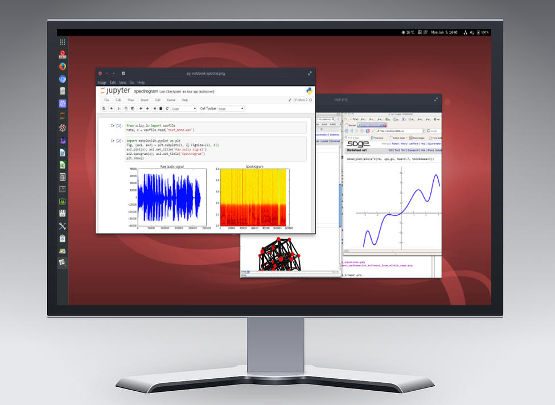
Back at DebConf 15 in Germany, I gave a talk on on AIMS Desktop (which was then based on Ubuntu), and our intentions and rationale for wanting to move it over to being Debian based. Today, alongside the Debian 9 release, we release AIMS Desktop 2017.1, the first AIMS Desktop released based on Debian. For Debian 10, we d like to get the last remaining AIMS Desktop packages into Debian so that it could be a Debian pure blend.

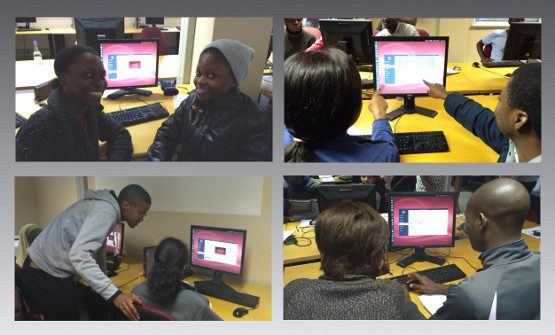
Students trying out a release candidate at AIMS South Africa

It s tailored to the needs of students, lecturers and researchers at the African Institute for Mathemetical Sciences, we re releasing it to the public in the hope that it could be useful for other tertiary education users with an interest in maths and science software. If you run a mirror at your university, it would also be great if you could host a copy. we added an rsync location on the downloads page which you could use to keep it up to date.

Jonathan Carter: Debian 9 is available!

Congratulations to everyone who has played a part in the creation of Debian GNU/Linux 9.0! It s a great release, I ve installed the pre-release versions for friends, family and colleagues and so far the feedback has been very positive. This release is dedicated to Ian Murdock, who founded the Debian project in 1993, and sadly passed away on 28 December 2015. On the Debian ISO files a dedication statement is available on /doc/dedication/dedication-9.0.txt Here s a copy of the dedication text:
Dedicated to Ian Murdock
------------------------
Ian Murdock, the founder of the Debian project, passed away
on 28th December 2015 at his home in San Francisco. He was 42.
It is difficult to exaggerate Ian's contribution to Free
Software. He led the Debian Project from its inception in
1993 to 1996, wrote the Debian manifesto in January 1994 and
nurtured the fledgling project throughout his studies at
Purdue University.
Ian went on to be founding director of Linux International,
CTO of the Free Standards Group and later the Linux
Foundation, and leader of Project Indiana at Sun
Microsystems, which he described as "taking the lesson
that Linux has brought to the operating system and providing
that for Solaris".
Debian's success is testament to Ian's vision. He inspired
countless people around the world to contribute their own free
time and skills. More than 350 distributions are known to be
derived from Debian.
We therefore dedicate Debian 9 "stretch" to Ian.
-- The Debian Developers
During this development cycle, the amount of source packages in Debian grew from around 21 000 to around 25 000 packages, which means that there s a whole bunch of new things Debian can make your computer do. If you find something new in this release that you like, post about it on your favourite social networks, using the hashtag #newinstretch or look it up to see what others have discovered!

Benjamin Mako Hill: The Community Data Science Collective Dataverse

I m pleased to announce the Community Data Science Collective Dataverse. Our dataverse is an archival repository for datasets created by the Community Data Science Collective. The dataverse won t replace work that collective members have been doing for years to document and distribute data from our research. What we hope it will do is get our data like our published manuscripts into the hands of folks in the forever business. Over the past few years, the Community Data Science Collective has published several papers where an important part of the contribution is a dataset. These include: Recently, we ve also begun producing replication datasets to go alongside our empirical papers. So far, this includes: In the case of each of the first groups of papers where the dataset was a part of the contribution, we uploaded code and data to a website we ve created. Of course, even if we do a wonderful job of keeping these websites maintained over time, eventually, our research group will cease to exist. When that happens, the data will eventually disappear as well. The text of our papers will be maintained long after we re gone in the journal or conference proceedings publisher s archival storage and in our universities institutional archives. But what about the data? Since the data is a core part perhaps the core part of the contribution of these papers, the data should be archived permanently as well. Toward that end, our group has created a dataverse. Our dataverse is a repository within the Harvard Dataverse where we have been uploading archival copies of datasets over the last six months. All five of the papers described above are uploaded already. The Scratch dataset, due to access control restrictions, isn t listed on the main page but it s online on the site. Moving forward, we ll be populating this new datasets we create as well as replication datasets for our future empirical papers. We re currently preparing several more. The primary point of the CDSC Dataverse is not to provide you with way to get our data although you re certainly welcome to use it that way and it might help make some of it more discoverable. The websites we ve created (like for the ones for redirects and for page protection) will continue to exist and be maintained. The Dataverse is insurance for if, and when, those websites go down to ensure that our data will still be accessible.
This post was also published on the Community Data Science Collective blog.

17 June 2017

Jonathan Carter: AIMS Desktop 2017.1 is available!

Back at DebConf 15 in Germany, I gave a talk on on AIMS Desktop (which was then based on Ubuntu), and our intentions and rationale for wanting to move it over to being Debian based. Today, alongside the Debian 9 release, we release AIMS Desktop 2017.1, the first AIMS Desktop released based on Debian. For Debian 10, we d like to get the last remaining AIMS Desktop packages into Debian so that it could be a Debian pure blend.

Students trying out a release candidate at AIMS South Africa

It s tailored to the needs of students, lecturers and researchers at the African Institute for Mathemetical Sciences, we re releasing it to the public in the hope that it could be useful for other tertiary education users with an interest in maths and science software. If you run a mirror at your university, it would also be great if you could host a copy. we added an rsync location on the downloads page which you could use to keep it up to date.

Jonathan Carter: Debian 9 is available!

Congratulations to everyone who has played a part in the creation of Debian GNU/Linux 9.0! It s a great release, I ve installed the pre-release versions for friends, family and colleagues and so far the feedback has been very positive. This release is dedicated to Ian Murdock, who founded the Debian project in 1993, and sadly passed away on 28 December 2015. On the Debian ISO files a dedication statement is available on /doc/dedication/dedication-9.0.txt Here s a copy of the dedication text:
Dedicated to Ian Murdock
------------------------
Ian Murdock, the founder of the Debian project, passed away
on 28th December 2015 at his home in San Francisco. He was 42.
It is difficult to exaggerate Ian's contribution to Free
Software. He led the Debian Project from its inception in
1993 to 1996, wrote the Debian manifesto in January 1994 and
nurtured the fledgling project throughout his studies at
Purdue University.
Ian went on to be founding director of Linux International,
CTO of the Free Standards Group and later the Linux
Foundation, and leader of Project Indiana at Sun
Microsystems, which he described as "taking the lesson
that Linux has brought to the operating system and providing
that for Solaris".
Debian's success is testament to Ian's vision. He inspired
countless people around the world to contribute their own free
time and skills. More than 350 distributions are known to be
derived from Debian.
We therefore dedicate Debian 9 "stretch" to Ian.
-- The Debian Developers
During this development cycle, the amount of source packages in Debian grew from around 21 000 to around 25 000 packages, which means that there s a whole bunch of new things Debian can make your computer do. If you find something new in this release that you like, post about it on your favourite social networks, using the hashtag #newinstretch or look it up to see what others have discovered!

16 June 2017

Bits from Debian: Upcoming Debian 9.0 Stretch!

Alt Stretch is coming on 2017-06-17 The Debian Release Team in coordination with several other teams are preparing the last bits needed for releasing Debian 9 Stretch. Please, be patient! Lots of steps are involved and some of them take some time, such as building the images, propagating the release through the mirror network, and rebuilding the Debian website so that "stable" points to Debian 9. Follow the live coverage of the release on https://micronews.debian.org or the @debian profile in your favorite social network! We'll spread the word about what's new in this version of Debian 9, how the release process is progressing during the weekend and facts about Debian and the wide community of volunteer contributors that make it possible.

Elena 'valhalla' Grandi: Travel piecepack v0.1

Travel piecepack v0.1

Immagine/fotosocial.gl-como.it/photos/valha

A www.piecepack.org/ set of generic board game pieces is nice to have around in case of a sudden spontaneous need of gaming, but carrying my full set www.trueelena.org/fantastic/fe takes some room, and is not going to fit in my daily bag.

I've been thinking for a while that an half-size set could be useful, and between yesterday and today I've actually managed to do the first version.

It's (2d) printed on both sides of a single sheet of heavy paper, laminated and then cut, comes with both the basic suites and the playing card expansion and fits in a mint tin divided by origami boxes.

It's just version 0.1 because there are a few issues: first of all I'm not happy with the manual way I used to draw the page: ideally it would have been programmatically generated from the same svg files as the 3d piecepack (with the ability to generate other expansions), but apparently reading paths from an svg and writing it in another svg is not supported in an easy way by the libraries I could find, and looking for it was starting to take much more time than just doing it by hand.

I also still have to assemble the dice; in the picture above I'm just using the ones from the 3d-printed set, but they are a bit too big and only four of them fit in the mint tin. I already have the faces printed, so this is going to be fixed in the next few days.

Source files are available in the same git repository as the 3d-printable piecepack git.trueelena.org/cgit.cgi/3d/, with the big limitation mentioned above; updates will also be pushed there, just don't hold your breath for it :)

Michal &#268;iha&#345;: New projects on Hosted Weblate

Hosted Weblate provides also free hosting for free software projects. The hosting requests queue was over one month long, so it's time to process it and include new project. This time, the newly hosted projects include: We now also host few new Minetest mods: If you want to support this effort, please donate to Weblate, especially recurring donations are welcome to make this service alive. You can do them on Liberapay or Bountysource.

Filed under: Debian English SUSE Weblate

14 June 2017

Steve Kemp: Porting pfctl to Linux

If you have a bunch of machines running OpenBSD for firewalling purposes, which is pretty standard, you might start to use source-control to maintain the rulesets. You might go further, and use some kind of integration testing to deploy changes from your revision control system into production. Of course before you deploy any pf.conf file you need to test that the file contents are valid/correct. If your integration system doesn't run on OpenBSD though you have a couple of choices: I looked at this last year and got pretty far, but then got distracted. So the other day I picked it up again. It turns out that if you're patient it's not hard to use bison to generate some C code, then glue it together such that you can validate your firewall rules on a Linux system.
  deagol ~/pf.ctl $ ./pfctl ./pf.conf
  ./pf.conf:298: macro 'undefined_variable' not defined
  ./pf.conf:298: syntax error
Unfortunately I had to remove quite a lot of code to get the tool to compile, which means that while some failures like that above are caught others are missed. The example above reads:
vlans=" vlan1,vlan2 "
..
pass out on $vlans proto udp from $undefined_variable
Unfortunately the following line does not raise an error:
pass out on vlan12 inet proto tcp from <unknown> to $http_server port  80,443 
That comes about because looking up the value of the table named unknown just silently fails. In slowly removing more and more code to make it compile I lost the ability to keep track of table definitions - both their names and their values - Thus the fetching of a table by name has become a NOP, and a bogus name will result in no error. Now it is possible, with more care, that you could use a hashtable library, or similar, to simulate these things. But I kinda stalled, again. (Similar things happen with fetching a proto by name, I just hardcoded inet, gre, icmp, icmp6, etc. Things that I'd actually use.) Might be a fun project for somebody with some time anyway! Download the OpenBSD source, e.g. from a github mirror - yeah, yeah, but still. CVS? No thanks! - Then poke around beneath sbin/pfctl/. The main file you'll want to grab is parse.y, although you'll need to setup a bunch of headers too, and write yourself a Makefile. Here's a hint:
  deagol ~/pf.ctl $ tree
  .
    inc
      net
        pfvar.h
      queue.h
      sys
          _null.h
          refcnt.h
          tree.h
    Makefile
    parse.y
    pf.conf
    pfctl.h
    pfctl_parser.h
    y.tab.c
  3 directories, 11 files

Daniel Pocock: Croissants, Qatar and a Food Computer Meetup in Zurich

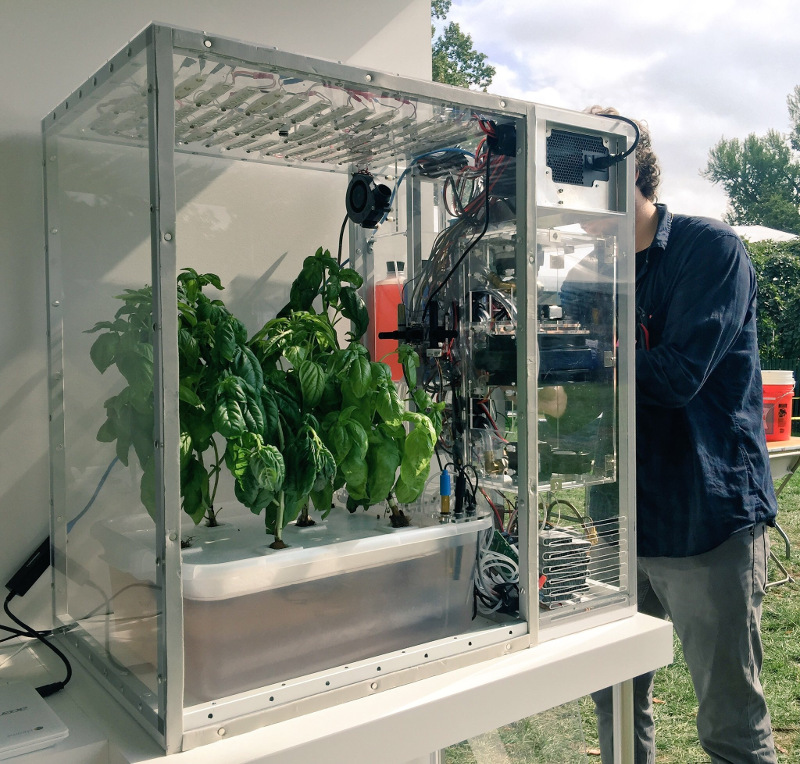
In my last blog, I described the plan to hold a meeting in Zurich about the OpenAg Food Computer. The Meetup page has been gathering momentum but we are still well within the capacity of the room and catering budget so if you are in Zurich, please join us. Thanks to our supporters The meeting now has sponsorship from three organizations, Project 21 at ETH, the Debian Project and Free Software Foundation of Europe. Sponsorship funds help with travel expenses and refreshments. Food is always in the news In my previous blog, I referred to a number of food supply problems that have occurred recently. There have been more in the news this week: a potential croissant shortage in France due to the rising cost of butter and Qatar's efforts to air-lift 4,000 cows from the US and Australia, among other things, due to the Saudi Arabia embargo. The food computer isn't an immediate solution to these problems but it appears to be a helpful step in the right direction.

Antoine Beaupr : Alioth moving toward pagure

Since 2003, the Debian project has been running a server called Alioth to host source code version control systems. The server will hit the end of life of the Debian LTS release (Wheezy) next year; that deadline raised some questions regarding the plans for the server over the coming years. Naturally, that led to a discussion regarding possible replacements. In response, the current Alioth maintainer, Alexander Wirt, announced a sprint to migrate to pagure, a free-software "Git-centered forge" written in Python for the Fedora project, which LWN covered last year. Alioth currently runs FusionForge, previously known as GForge, which is the free-software fork of the SourceForge code base when that service closed its source in 2001. Alioth hosts source code repositories, mainly Git and Subversion (SVN) and, like other "forge" sites, also offers forums, issue trackers, and mailing list services. While other alternatives are still being evaluated, a consensus has emerged on a migration plan from FusionForage to a more modern and minimal platform based on pagure.

Why not GitLab? While this may come as a surprise to some who would expect Debian to use the more popular GitLab project, the discussion and decision actually took place a while back. During a lengthy debate last year, Debian contributors discussed the relative merits of different code-hosting platforms, following the initiative of Debian Developer "Pirate" Praveen Arimbrathodiyil to package GitLab for Debian. At that time, Praveen also got a public GitLab instance running for Debian (gitlab.debian.net), which was sponsored by GitLab B.V. the commercial entity behind the GitLab project. The sponsorship was originally offered in 2015 by the GitLab CEO, presumably to counter a possible move to GitHub, as there was a discussion about creating a GitHub Organization for Debian at the time. The deployment of a Debian-specific GitLab instance then raised the question of the overlap with the already existing git.debian.org service, which is backed by Alioth's FusionForge deployment. It then seemed natural that the new GitLab instance would replace Alioth. But when Praveen directly proposed to move to GitLab, Wirt stepped in and explained that a migration plan was already in progress. The plan then was to migrate to a simpler gitolite-based setup, a decision that was apparently made in corridor discussions surrounding the Alioth Git replacement BoF held during Debconf 2015. The first objection raised by Wirt against GitLab was its "huge number of dependencies". Another issue Wirt identified was the "open core / enterprise model", preferring a "real open source system", an opinion which seems shared by other participants on the mailing list. Wirt backed his concerns with an hypothetical example:
Debian needs feature X but it is already in the enterprise version. We make a patch and, for commercial reasons, it never gets merged (they already sell it in the enterprise version). Which means we will have to fork the software and keep those patches forever. Been there done that. For me, that isn't acceptable.
This concern was further deepened when GitLab's Director of Strategic Partnerships, Eliran Mesika, explained the company's stewardship policy that explains how GitLab decides which features end up in the proprietary version. Praveen pointed out that:
[...] basically it boils down to features that they consider important for organizations with less than 100 developers may get accepted. I see that as a red flag for a big community like debian.
Since there are over 600 Debian Developers, the community seems to fall within the needs of "enterprise" users. The features the Debian community may need are, by definition, appropriate only to the "Enterprise Edition" (GitLab EE), the non-free version, and are therefore unlikely to end up in the "Community Edition" (GitLab CE), the free-software version. Interestingly, Mesika asked for clarification on which features were missing, explaining that GitLab is actually open to adding features to GitLab CE. The response from Debian Developer Holger Levsen was categorical: "It's not about a specific patch. Free GitLab and we can talk again." But beyond the practical and ethical concerns, some specific features Debian needs are currently only in GitLab EE. For example, debian.org systems use LDAP for authentication, which would obviously be useful in a GitLab deployment; GitLab CE supports basic LDAP authentication, but advanced features, like group or SSH-key synchronization, are only available in GitLab EE. Wirt also expressed concern about the Contributor License Agreement that GitLab B.V. requires contributors to sign when they send patches, which forces users to allow the release of their code under a non-free license. The debate then went on going through a exhaustive inventory of different free-software alternatives:
  • GitLab, a Ruby-based GitHub replacement, dual-licensed MIT/Commercial
  • Gogs, Go, MIT
  • Gitblit, Java, Apache-licensed
  • Kallithea, in Python, also supports Mercurial, GPLv3
  • and finally, pagure, also written Python, GPLv2
A feature comparison between each project was created in the Debian wiki as well. In the end, however, Praveen gave up on replacing Alioth with GitLab because of the controversy and moved on to support the pagure migration, which resolved the discussion in July 2016. More recently, Wirt admitted in an IRC conversation that "on the technical side I like GitLab a lot more than pagure" and that "as a user, GitLab is much nicer than pagure and it has those nice CI [continuous integration] features". However, as he explained in his blog "GitLab is Opencore, [and] that it is not entirely opensource. I don't think we should use software licensed under such a model for one of our core services" which leaves pagure as the only stable candidate. Other candidates were excluded on technical grounds, according to Wirt: Gogs "doesn't scale well" and a quick security check didn't yield satisfactory results; "Gitblit is Java" and Kallithea doesn't have support for accessing repositories over SSH (although there is a pending pull request to add the feature). In an email interview, Sid Sijbrandij, CEO of GitLab, did say that "we want to make sure that our open source edition can be used by open source projects". He gave examples of features liberated following requests by the community, such as branded login pages for the VLC project and GitLab Pages after popular demand. He stressed that "There are no artificial limits in our open source edition and some organizations use it with more than 20.000 users." So if the concern of the Debian community is that features may be missing from GitLab CE, there is definitely an opening from GitLab to add those features. If, however, the concern is purely ethical, it's hard to see how an agreement could be reached. As Sijbrandij put it:
On the mailinglist it seemed that some Debian maintainers do not agree with our open core business model and demand that there is no proprietary version. We respect that position but we don't think we can compete with the purely proprietary software like GitHub with this model.

Working toward a pagure migration The issue of Alioth maintenance came up again last month when Boyuan Yang asked what would happen to Alioth when support for Debian LTS (Wheezy) ends next year. Wirt brought up the pagure migration proposal and the community tried to make a plan for the migration. One of the issues raised was the question of the non-Git repositories hosted on Alioth, as pagure, like GitLab, only supports Git. Indeed, Ben Hutchings calculated that while 90% (\~19,000) of the repositories currently on Alioth are Git, there are 2,400 SVN repositories and a handful of Mercurial, Bazaar (bzr), Darcs, Arch, and even CVS repositories. As part of an informal survey, however, most packaging teams explained they either had already migrated away from SVN to Git or were in the process of doing so. The largest CVS user, the web site team, also explained it was progressively migrating to Git. Mattia Rizzolo then proposed that older repository services like SVN could continue running even if FusionForge goes down, as FusionForge is, after all, just a web interface to manage those back-end services. Repository creation would be disabled, but older repositories would stay operational until they migrate to Git. This would, effectively, mean the end of non-Git repository support for new projects in the Debian community, at least officially. Another issue is the creation of a Debian package for pagure. Ironically, while Praveen and other Debian maintainers have been working for 5 years to package GitLab for Debian, pagure isn't packaged yet. Antonio Terceiro, another Debian Developer, explained this isn't actually a large problem for debian.org services: "note that DSA [Debian System Administrator team] does not need/want the service software itself packaged, only its dependencies". Indeed, for Debian-specific code bases like ci.debian.net or tracker.debian.org, it may not make sense to have the overhead of maintaining Debian packages since those tools have limited use outside of the Debian project directly. While Debian derivatives and other distributions could reuse them, what usually happens is that other distributions roll their own software, like Ubuntu did with the Launchpad project. Still, Paul Wise, a member of the DSA team, reasoned that it was better, in the long term, to have Debian packages for debian.org services:
Personally I'm leaning towards the feeling that all configuration, code and dependencies for Debian services should be packaged and subjected to the usual Debian QA activities but I acknowledge that the current archive setup (testing migration plus backporting etc) doesn't necessarily make this easy.
Wise did say that "DSA doesn't have any hard rules/policy written down, just evaluation on a case-by-case basis" which probably means that pagure packaging will not be a blocker for deployment. The last pending issue is the question of the mailing lists hosted on Alioth, as pagure doesn't offer mailing list management (nor does GitLab). In fact, there are three different mailing list services for the Debian project: Wirt, with his "list-master hat" on, explained that the main mailing list service is "not really suited as a self-service" and expressed concern at the idea of migrating the large number mailing lists hosted on Alioth. Indeed, there are around 1,400 lists on Alioth while the main service has a set of 300 lists selected by the list masters. No solution for those mailing lists was found at the time of this writing. In the end, it seems like the Debian project has chosen pagure, the simpler, less featureful, but also less controversial, solution and will use the same hosting software as their fellow Linux distribution, Fedora. Wirt is also considering using FreeIPA for account management on top of pagure. The plan is to migrate away from FusionForge one bit at a time, and pagure is the solution for the first step: the Git repositories. Lists, other repositories, and additional features of FusionForge will be dealt with later on, but Wirt expects a plan to come out of the upcoming sprint. It will also be interesting to see how the interoperability promises of pagure will play out in the Debian world. Even though the federation features of pagure are still at the early stages, one can already clone issues and pull requests as Git repositories, which allows for a crude federation mechanism. In any case, given the long history and the wide variety of workflows in the Debian project, it is unlikely that a single tool will solve all problems. Alioth itself has significant overlap with other Debian services; not only does it handle mailing lists and forums, but it also has its own issue tracker that overlaps with the Debian bug tracking system (BTS). This is just the way things are in Debian: it is an old project with lots of moving part. As Jonathan Dowland put it: "The nature of the project is loosely-coupled, some redundancy, lots of legacy cruft, and sadly more than one way to do it." Hopefully, pagure will not become part of that "legacy redundant cruft". But at this point, the focus is on keeping the services running in a simpler, more maintainable way. The discussions between Debian and GitLab are still going on as we speak, but given how controversial the "open core" model used by GitLab is for the Debian community, pagure does seem like a more logical alternative.
Note: this article first appeared in the Linux Weekly News.

Sjoerd Simons: Debian Jessie on Raspberry Pi 2

Apart from being somewhat slow, one of the downsides of the original Raspberry Pi SoC was that it had an old ARM11 core which implements the ARMv6 architecture. This was particularly unfortunate as most common distributions (Debian, Ubuntu, Fedora, etc) standardized on the ARMv7-A architecture as a minimum for their ARM hardfloat ports. Which is one of the reasons for Raspbian and the various other RPI specific distributions. Happily, with the new Raspberry Pi 2 using Cortex-A7 Cores (which implement the ARMv7-A architecture) this issue is out of the way, which means that a a standard Debian hardfloat userland will run just fine. So the obvious first thing to do when an RPI 2 appeared on my desk was to put together a quick Debian Jessie image for it. The result of which can be found at: https://images.collabora.co.uk/rpi2/ Login as root with password debian (Obviously do change the password and create a normal user after booting). The image is 3G, so should fit on any SD card marketed as 4G or bigger. Using bmap-tools for flashing is recommended, otherwise you'll be waiting for 2.5G of zeros to be written to the card, which tends to be rather boring. Note that the image is really basic and will just get you to a login prompt on either serial or hdmi, batteries are very much not included, but can be apt-getted :). Technically, this image is simply a Debian Jessie debootstrap with a extra packages for hardware support. Unlike Raspbian the first partition (which contains the firmware & kernel files to boot the system) is mounted on /boot/firmware rather then on /boot. This is because the VideoCore expects the first partition to be a FAT filesystem, but mounting FAT on /boot really doesn't work right on Debian systems as it contains files managed by dpkg (e.g. the kernel package) which requires a POSIX compatible filesystem. Essentially the same reason why Debian is using /boot/efi for the ESP partition on Intel systems rather the mounting it on /boot directly. For reference, the RPI2 specific packages in this image are from https://repositories.collabora.co.uk/debian/ in the jessie distribution and rpi2 component (this repository is enabled by default on the image). The relevant packages there are: For the future, it would be nice to see the Raspberry Pi 2 support out of the box on Debian. For that to happen, the most important thing would be to have some mainline kernel support for this board (supporting multiplatform!) so it can be build as part of debians armmp kernel flavour. And ideally, having the firmware load a bootloader (such as u-boot) rather than a kernel directly to allow for a much more flexible boot sequence and support for using an initramfs (u-boot has some support for the original Raspberry Pi, so adding Raspberry Pi 2 support should hopefully not be too tricky) Update: An updated image (20150705) is available with the latest packages from Jessie and a GPG key that's not expired :).

Sjoerd Simons: Debian armhf VM on arm64 server

At Collabora one of the many things we do is build Debian derivatives/overlays for customers on a variety of architectures including 32 bit and 64 bit ARM systems. And just as Debian does, our OBS system builds on native systems rather than emulators. Luckily with the advent of ARM server systems some years ago building natively for those systems has been a lot less painful than it used to be. For 32 bit ARM we've been relying on Calxeda blade servers, however Calxeda unfortunately tanked ages ago and the hardware is starting to show its age (though luckily Debian Stretch does support it properly, so at least the software is still fresh). On the 64 bit ARM side, we're running on Gigabyte MP30-AR1 based servers which can run 32 bit arm code (As opposed to e.g. ThunderX based servers which can only run 64 bit code). As such running armhf VMs on them to act as build slaves seems a good choice, but setting that up is a bit more involved than it might appear. The first pitfall is that there is no standard bootloader or boot firmware available in Debian to boot on the "virt" machine emulated by qemu (I didn't want to use an emulation of a real machine). That also means there is nothing to pick the kernel inside the guest at boot nor something which can e.g. have the guest network boot, which means direct kernel booting needs to be used. The second pitfall was that the current Debian Stretch armhf kernel isn't built with support for the generic PCI host controller which the qemu virtual machine exposes, which means no storage and no network shows up in the guest. Hopefully that will get solved soonish (Debian bug 864726) and can be in a Stretch update, until then a custom kernel package is required using the patch attach to the bug report is required but I won't go into that any further in this post. So on the happy assumption that we have a kernel that works, the challenge left is to nicely manage direct kernel loading. Or more specifically, how ensure the hosts boots the kernel the guest has installed via the standard apt tools without having to copy kernels around between guest/host, which essentially comes down to exposing /boot from the guest to the host. The solution we picked is to use qemu's 9pfs support to share a folder from the host and use that as /boot of the guest. For the 9p folder the "mapped" security mode seems needed as the "none" mode seems to get confused by dpkg (Debian bug 864718). As we're using libvirt as our virtual machine manager the remainder of how to glue it all together will be mostly specific to that. First step is to install the system, mostly as normal. One can directly boot into the vmlinuz and initrd.gz provided by normal Stretch armhf netboot installer (downloaded into e.g /tmp). The setup overall is straight-forward with a few small tweaks: Apart from those tweaks the resulting example command is similar to the one that can be found in the virt-install man-page:
virt-install --name armhf-vm --arch armv7l --memory 512 \
  --disk /srv/armhf-vm.img,bus=virtio
  --filesystem /srv/armhf-vm-boot,virtio-boot,mode=mapped \
  --boot=kernel=/tmp/vmlinuz,initrd=/tmp/initrd.gz,kernel_args="console=ttyAMA0,root=/dev/vda1"

Run through the install as you'd normally would. Towards the end the installer will likely complain it can't figure out how to install a bootloader, which is fine. Just before ending the install/reboot, switch to the shell and copy the /boot/vmlinuz and /boot/initrd.img from the target system to the host in some fashion (e.g. chroot into /target and use scp from the installed system). This is required as the installer doesn't support 9p, but to boot the system an initramfs will be needed with the modules needed to mount the root fs, which is provided by the installed initramfs :). Once that's all moved around, the installer can be finished. Next, booting the installed system. For that adjust the libvirt config (e.g. using virsh edit and tuning the xml) to use the kernel and initramfs copied from the installer rather then the installer ones. Spool up the VM again and it should happily boot into a freshly installed Debian system. To finalize on the guest side /boot should be moved onto the shared 9pfs, the fstab entry for the new /boot should look something like:
virtio-boot /boot  9p trans=virtio,version=9p2000.L,x-systemd.automount 0 0

With that setup, it's just a matter of shuffling the files in /boot around to the new filesystem and the guest is done (make sure vmlinuz/initrd.img stay symlinks). Kernel upgrades will work as normal and visible to the host. Now on the host side there is one extra hoop to jump through, as the guest uses the 9p mapped security model symlinks in the guest will be normal files on the host containing the symlink target. To resolve that one, we've used libvirt's qemu hook support to setup a proper symlink before the guest is started. Below is the script we ended up using as an example (/etc/libvirt/hooks/qemu):
vm=$1
action=$2
bootdir=/srv/$ vm -boot
if [ $ action  != "prepare" ] ; then
  exit 0
fi
if [ ! -d $ bootdir  ] ; then
  exit 0
fi
ln -sf $(basename $(cat $ bootdir /vmlinuz))  $ bootdir /virtio-vmlinuz
ln -sf $(basename $(cat $ bootdir /initrd.img))  $ bootdir /virtio-initrd.img

With that in place, we can simply point the libvirt definition to use /srv/$ vm -boot/virtio- vmlinuz,initrd.img as the kernel/initramfs for the machine and it'll automatically get the latest kernel/initramfs as installed by the guest when the VM is started. Just one final rough edge remains, when doing reboot from the VM libvirt leaves qemu to handle that rather than restarting qemu. This unfortunately means a reboot won't pick up a new kernel if any, for now we've solved this by configuring libvirt to stop the VM on reboot instead. As we typically only reboot VMs on kernel (security) upgrades, while a bit tedious, this avoid rebooting with an older kernel/initramfs than intended.

Mike Gabriel: Ayatana Indicators

In the near future various upstream projects related to the Ubuntu desktop experience as we have known it so far may become only sporadically maintained or even fully unmaintained. Ubuntu will switch to the Gnome desktop environment with 18.04 LTS as its default desktop, maybe even earlier. The Application Indicators [1] brought into being by Canonical Ltd. will not be needed in Gnome (AFAIK) any more. We can expect the Application Indicator related projects become unmaintained upstream. (In fact I have recently been offered continuation of upstream maintenance of libdbusmenu). Historical Background This all started at Ubuntu Developer Summit 2012 when Canonical Ltd. announced Ubuntu to become the successor of Windows XP in business offices. The Unity Greeter received an Remote Login Service enhancement: since then it supports Remote Login to Windows Terminal Servers. The question came up, why Remote Login to Linux servers--maybe even Ubuntu machines--is not on the agenda. It turned out, that it wasn't even a discussable topic. At that time, I started looking into the Unity Greeter code, adding support for X2Go Logon into Unity Greeter. I never really stopped looking at the greeter code from time to time. Since then, it turned into some sort of a hobby... While looking into the Unity Greeter code over the past years and actually forking Unity Greeter as Arctica Greeter [2] in September 2015, I also started looking into the Application Indicators concept just recently. And I must say, the more I have been looking into it, the more I have started liking the concept behind Application Indicators. The basic idea is awesome. However, lately all indicators became more and more Ubuntu-centric and IMHO too polluted by code related to the just declared dead Ubuntu phablet project. Forking Application Indicators Saying all this, I recently forked Application Indicators as Ayatana Indicators. At the moment I represent upstream and Debian package maintainer in one person. Ideally, this is only temporary and more people join in. (I heard some Unity 7 maintainers think about switching to Ayatana Indicators for the now community maintained Unity 7). The goal is to provide Ayatana Indicators to all desktop environments generically, all that want to use them, either as default or optionally. Release-wise, the idea is to strictly differentiate between upstream and Debian downstream in the release cycles of the various related components. I hope, noone is too concerned about the choice of name, as the "Ayatana" word actually was first used for upstream efforts inside Ubuntu [3]. Using the Ayatana term for the indicator forks is meant as honouring the previously undertaken efforts. I have seen very good work, so far, while going through the indicators' code. The upstream code must not be distro-specific, but, of course, can be distro-aware. Contributions Welcome The Ayatana Indicators upstream project components are currently hosted on Github under the umbrella of the Arctica Project. Regarding Debian, first uploads have recently been accepted to Debian experimental. The Debian packages are maintained under the umbrella of the revived Ayatana Packagers team [4]. Meet you at the Ayatana Indicators BoF at DebConf 17 (hopefully) For DebConf 17 (yeah, I am going there, if all plans work out well!!!!) I have submitted a BoF on this topic (let's hope, it gets accepted...). I'd like to give a quick overview on the current status of above named efforts and reasonings behind my commitment to the work. Most of the time during that BoF I would like to get into discussion with desktop maintainers, possibly upstream developers, Ubuntu developers, etc. Anyone who sees an asset in the Indicators approach is welcome to share and contribute. References

Nicolas Dandrimont: DebConf 17 bursaries: update your status now!

TL;DR: if you applied for a DebConf 17 travel bursary, and you haven t accepted it yet, login to the DebConf website and update your status before June 20th or your bursary grant will be gone. *blows dust off the blog* As you might be aware, DebConf 17 is coming soon and it s gonna be the biggest DebConf in Montr al ever. Of course, what makes DebConf great is the people who come together to work on Debian, share their achievements, and help draft our cunning plans to take over the world. Also cheese. Lots and lots of cheese. To that end, the DebConf team had initially budgeted US$40,000 for travel grants ($30,000 for contributors, $10,000 for diversity and inclusion grants), allowing the bursaries team to bring people from all around the world who couldn t have made it to the conference. Our team of volunteers rated the 188 applications, we ve made a ranking (technically, two rankings : one on contribution grounds and one on D&I grounds), and we finally sent out a first round of grants last week. After the first round, the team made a new budget assessment, and thanks to the support of our outstanding sponsors, an extra $15,000 has been allocated for travel stipends during this week s team meeting, with the blessing of the DPL. We ve therefore been able to send a second round of grants today. Now, if you got a grant, you have two things to do : you need to accept your grant, and you need to update your requested amount. Both of those steps allow us to use our budget more wisely: having grants expire frees money up to get more people to the conference earlier. Having updated amounts gives us a better view of our overall budget. (You can only lower your requested amount, as we can t inflate our budget) Our system has sent mails to everyone, but it s easy enough to let that email slip (or to not receive it for some reason). It takes 30 seconds to look at the status of your request on the DebConf 17 website, and even less to do the few clicks needed for you to accept the grant. Please do so now! OK, it might take a few minutes if your SSO certificate has expired and you have to look up the docs to renew it. The deadline for the first round of travel grants (which went out last week) is June 20th. The deadline for the second round (which went out today) is June 24th. If somehow you can t login to the website before the deadline, the bursaries team has an email address you can use. We want to send out a third round of grants on June 25th, using the money people freed up: our current acceptance ratio is around 40%, and a lot of very strong applications have been deferred. We don t want them to wait up until July to get a definitive answer, so thanks for helping us! bient t Montr al !

Next.

Previous.