Search Results: "nate"

7 December 2007

Erich Schubert: Updating Dell BIOS on Linux

... was a lot easier than expected. Just not very well documented.First of all, you need the appropriate utilities. Debian users can aptitude install libsmbios-bin Next identify your system. It will look something like this
$ sudo modprobe dcdbas
$ sudo getSystemId
Libsmbios:    0.13.10
System ID:    0x01D8
Service Tag:  ...REMOVED...
Express Service Code: ...although my warrany is over...
Product Name: MXC061
BIOS Version: A10
Vendor:       Dell Inc.
Is Dell:      1
The information you need is the "System ID".Now you need to get the so-called HDR file for your bios. This can either be extracted from their EXE file using wine (with -dump-hdr or so), or you can find it on the linux.dell.com server. This page contains a huge list, and there are tons of dirs like system_bios_ven_0x1028_dev_0x01d8_version_a10. 0x1028 apparently is "Dell". The second hex number is your System ID. The last number (A10 here) is the BIOS revision. Pick the appropriate directory. There should be a bios.hdr file in there.You can verify if the file is appropriate for your system:
$ sudo dellBiosUpdate -f bios.hdr -t
And do the update by calling
$ sudo modprobe dell_rbu
$ sudo dellBiosUpdate -f bios.hdr -u
When rebooting the next time, your screen might be garbled for a few seconds. At least it was for me. I was scared I might have trashed my system, but then it rebooted and had the new BIOS. So just give it some time (Fortunately I've done enough BIOS updates to know to just wait. I've even done a 'blind' video BIOS update on a Nvidia TNT. The first update had trashed the card, but I was able to redo the flash process without seeing anything on the screen, and guess what, the card worked again!)In case you're wondering how this works: as I understand it, the dell_rbu driver will reserve memory for the BIOS update. Being a kernel module, it can just lock the memory in place until the next reboot. It will store that address in CMOS for the Bios and set the update flag. On reboot, the current Bios will check if that the stored image is still intact (I bet they do some checksumming here!) and then load that into the BIOS flash. That way, you don't need to boot into a low-level system such as Dos or Dos-Mode anymore to do an update.

Aigars Mahinovs: Webmin alternatives

Everyone knows that Webmin is nasty - it does things in wrong way on a pure and nice Debian (and Ubuntu) systems and for some reason is not included in Debian (post-sarge) or Ubuntu. That does not inspire confidence in a root-running web based software to say the least.
I have a need to have a Linux server and give an administrator the ability to add/remove users, configure some LAMP settings, some email settings (SMTP, POP, IMAP, Spam/Virus protection), Samba and those kinds of everyday system administration tasks on a SOHO Linux server without having to know much about Linux. Unfortunately I am very hard pressed to find anything that I could just set up and forget. Does anyone have any good experiences on this?

6 December 2007

Anthony Towns: Asus eeePC

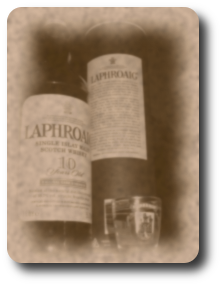
Okay, so any excuse to bring out the Laphroaig is fine by me, but the cute little eeePC is better than most. That it’s cute and popular is all very well, but what really makes my day is this is the first device I’ve seen that both doesn’t hide the fact it’s running Linux, and is available in maintstream stores in Australia. A random review from the Sydney Morning Herald:
You also don’t get Windows. Asus has adopted the free Linux operating system that’s been slowly yet steadily growing in popularity over the past decade. This keeps the cost down and makes better use of its relatively modest hardware, which would creak under the weight of Windows. It does mean not being able to use your favourite Windows software but, fortunately, the Eee PC comes with dozens of programs, including the familiar Firefox web browser and Skype for online phone calls.
That came out on the day the eeePC was released in Australia. Three days later, they did a followup:
Taiwan computer maker Asus might have underestimated the local demand for its diminutive Eee PC, as the $499 laptop is now virtually sold out in Australia.
From that, there’s a brief take on who’s actually buying them:
“We’ve had customers coming in buying two or three units for the family - the mix of customer has been probably novices more than the tech types,” he said.
It’s really good to see that Linux is getting credit in pretty much all those stories, no matter how mainstream. Xandros is pretty rarely mentioned, and I don’t think I’ve seen Debian mentioned yet. But even without the credit, it’s still pretty cool that with the eeePC and Dell’s trysting with Ubuntu, the real in-roads to pre-installed consumer Linux these days are building on Debian. I’d always expected that Red Hat or SuSE or someone with more commercial muscle would get through that door first (they’ve certainly had box sets more readily available!), but apparently elitist, freedom obsessed, techno-geekery actually works better, somehow. At least when there’s a company to put a smiley face in front of it all :) The other interesting thing about choosing Xandros, is that it presumably means the eeePC is covered by Microsoft’s patent protection scheme – which means no baseless threats against eeePC users from Microsoft, but also that Microsoft’s probably getting a cut of whatever Xandros receives from each eeePC sale. Whether you think that’s a problem or not, the result is probably going to be that it’s the thin edge of the wedge: it’s removed Microsoft from blocking a Linux preinstall on consumer hardware, which means we can see that regular people like Linux systems enough that they sell out in days. And that means Linux systems are a fact of life, and if Microsoft try to stop them by making it difficult for you to sell Windows systems, well, that’ll just make it difficult to sell Windows systems – which is another win for Linux. And once you get to the point where the argument for paying off Microsoft doesn’t rely on keeping your OEM deal for Windows, but is just a matter of whether their patents are actually valid… Oh, also nice from the promoting free software angle, is that the first thing you see if you decide to visit Asus’s eeePC site to check the gizmo is the news item:
2007.11.27 ASUSTek is committed to meet the requirements of the GNU General…
Add the fact that an eeePC running a Debian-derivative has access to all the software in the Debian repositories for no cost, and the new government’s planned rebates and investments in IT probably mean that parents can get close to a full refund, and you’re getting pretty close to a choice of spending nothing and getting a popular, reasonably functional and very portable laptop with all the software you could ever want, that just happens to be running Linux, or paying an extra few hundred or thousand dollars to get a Windows laptop, and then probably pirating whatever software you end up needing. In any event, to my mind, that makes 2007 the year of the Linux on the desktop: everything from here is just a simple matter of quantity. What’s next?

5 December 2007

Sune Vuorela: Debian developer. Yay.

There seems to be some kind of tradition for publically telling when one finally gets a debian account. It was apparantly my turn late last night. Unfortunately my internet was gone at that time, so no possibility to see for myself. But now net is back and time to celebrate. It seems to be a tradition to thank all sorts of people, so I guess I need to follow that tradition as well. Thanks everybody who helped me on the way. Including but not limited to the big group of regular sponsors, one time sponsors and NMU sponsors that have put my work in the archive. (and that also covers my application manager - he sponsored the second or third attempt to NMU a *urgh* yada-using package). Time to try break stuff.

Russell Coker: The Meaning of Godwin s Law

A widely cited unofficial rule on the Internet is known as Godwin’s Law [1]. In it’s original form this rule states that “As an online discussion grows longer, the probability of a comparison involving Nazis or Hitler approaches one“. Mike Godwin noted that “overuse of Nazi and Hitler comparisons should be avoided, because it robs the valid comparisons of their impact“. The purpose of noting and publicising this is to reduce such false comparisons. It’s often used as a rule for conduct in various fora where it’s regarded that if you compare your opponent in a debate to Hitler or unjustly call them a Nazi then the debate is over and you have lost. In more recent times due to successful application of Godwin’s Rule the frequency of inappropriate comparisons has dramatically decreased. This combined with the small number of people on the net who are interested in discussing historical events that happened ~60 years ago (and the even smaller number of people who are interested in learning about them) means that the possibility of robbing valid comparisons of their impact is small. Now a large part of the use of Godwin’s rule is because it’s regarded as an ad-hominem attack that distracts everyone from serious discussion more than most such attacks. To see examples of this you merely have to do a Google search for “Bill Gates” and “Hitler” (currently 597,000 web pages have both those terms). Note that the original reason for avoiding such false comparisons is given to sustain the impact of legitimate comparisons. It is quite legitimate to use the term Nazi when describing anyone who wants to implement mass-murder and slavery on a national scale (or any of the other awful things that the Nazis did), or the propaganda and other mechanisms that the NSDAP used to gain power. It is also legitimate to make historical comparisons, comparing Stalin to Hitler is historically valid (both were awful tyrants that committed a similar range of crimes) - I’m not going to compare them in this post but I merely note that such a comparison is valid (and is the subject of much debate by people who are interested in history). I’ve just had a religious zealot named Elder Dave accuse me of breaching some new version of Godwin’s Law. I believe that my mention of the fact that his religious group (which wants to deny homosexuals the same legal rights as all other people) has some beliefs in common with the Westboro Baptist Church [2] is valid. The Westboro Baptist Church seems to be the leading organisation in the English-speaking world for demanding legislation to discriminate against homosexuals. Anyone else who demands such legislation IS trying to achieve similar aims and should expect this to be noted by everyone who has any knowledge of what is happening in the world. Religious groups are given a lot of freedom to discriminate internally (EG “Priest” is one of the few jobs that can be denied to a qualified woman without any legal recourse). Also I think that most people will agree that it’s acceptable for them to advocate self-repression (EG the book What Some of You Were [3]). But when they try and get legislation enacted to institutionalise such discrimination I believe that they are going too far. As for why the 95% of us who aren’t gay should be bothered about this issue, there’s the famous poem by Martin Niem ller which is known by the line “First they came for the Jews” [4] (actually there are a few versions of the poem some of which don’t mention Jews - check the link for details). Here’s another Wikipedia link for the same poem [5].

Jonathan McDowell: A year passes

Katherine and I celebrated our first wedding anniversary over the weekend. We still don't think marriage has changed us or our relationship that much; having lived together for many years beforehand was really a much bigger step. A number of fairly major other events have happened to me in the past year, which I don't think either of us could have predicated. All in all I think I'm in a better place than I was last year. 5:30 starts are painful (it's 2 hours door to door with trains at 6am or 8am and nothing in between), but at least I get to come home to Katherine rather than an empty house, and it's nice to be working in an office again rather than on my own. We will eventually get the Castlerock house sorted (there are still lots of things in boxes, the TV isn't even hooked up, the wireless coverage is patchy in the study, the kitchen isn't quite finished yet, the living room is barely started yet, need I go on?). And I'm sure it'll stop raining for at least one day during the year. Please?

Matthew Palmer: Strategists and Tacticians

Like most things, the scale of decisions that have to be made by a person or organisation fall across a wide spectrum. At one end, you've got the fine-detail work: lines of code, individual config settings, IP addresses, that sort of thing. This is crucial work, because it's this detail that ultimately produces saleable results. Travelling all the way to the other end, there's the "big picture" decisions: the "visionary" stuff. What market segment will we target? What will we do (in large-scale terms) to get there? I am convinced that individuals naturally gravitate towards one end of this spectrum or the other, depending on their psychology. While people usually can work at all scales, they have a "most comfortable" point where they work the most naturally. The further away from this point they are pushed, the less comfortable and effective they are. No level of thinking is better or worse than the other; they're just different. While "large scale thinker" and "small scale thinker" could be taken as being insulting, I certainly don't mean it that way. I should point out that "Strategy" isn't (just) about setting goals. A strategist isn't someone who comes out with grand pronouncements like "By the end of next year this company should be providing telecommunications services to 20% of the Fortune 500" without knowing how to get there. That's not a strategist, that's a poor-quality management consultant. People whose only skill is making vague pronouncements should just be taken out and shot. They're not doing anything useful for anyone. A strategist is someone who is good at planning the goal of "20% of the Fortune 500". They're thinking about the big picture issues, without getting bogged down in the minutiae. A tactician, given the job of planning something at the macro scale, will chase some good idea down an intricately detailed rabbit hole, and miss the other dozen or so large issues that need to be considered. The strategist's planning needs to stop at a certain level and let other people take on the detail work. Conversely, a good tactician can focus on the individual details without getting distracted by the big picture. A strategist put into a tactical role will miss all the important minutiae because they're working out how their little part fits into the big picture, instead of working out how to make their little part work, in and of itself. It's important, for individual happiness, to try and work out what level you're most comfortable thinking at, and then trying to find a job that puts you there. It's almost as important to make sure that the people who are working at the more and less detail levels around you are equally comfortable. Take, for example, the micromanager. We've all either been there ourselves or have heard multiple stories on the subject. I think the micromanager is nothing more than a person who wants to work at a smaller scale than they're being forced to by their organisational rank. Since they can't do the detail work any more, their only outlet is working vicariously through their subordinates. Voila! Instant micromanagement. An even more painful case of micromanagement would be when the subordinate wants to think at a larger scale than the superior. In that case, the subordinate will naturally be thinking large scale, and will miss the details. To the small scale thinking superior, that is incompetence, and will naturally be dealt with by more micromanagement. In reality, both parties are incompetent at their jobs, and they should really swap roles, so that everyone is in their element. It would be nice if companies stopped thinking hierarchically in this way -- that a more "senior" person has to think at larger levels. Just because you've been somewhere longer (or have been working in an industry longer, or got higher marks, or whatever), it doesn't mean that you're more of a strategist. This is probably the Peter Principle restated: people get promoted to a level where they just can't comfortably think at the necessary scale any more. If instead people were put into a planning hierarchy based on their natural scale of thinking, we'd all be a lot better off. There'd be a lot less power games, though, which makes me think it's not going to happen any time soon. A business, at whatever size it might be, needs an appropriate mix of strategists and tacticians. A really small business (1-10 people) can get away without needing large scale thinkers, in the same way that a really small boat can get away without needing a rudder or pilot. If a really small boat gets itself into trouble, everyone on board can grab an oar or bucket and help get the boat out it's predicament -- it's small and nimble enough to be able to do that. As the company expands, though, it's important to make sure you've got some strategists around. If you don't have anyone to keep an eye out for problems and plan around them, your small-to-medium sized boat is likely to have a hole punched in it by a submerged rock. Even if somebody on board happens to notice the rock before you actually hit it, once you get to a certain size you can't physically stop or turn the boat in time. If you don't understand the growth issues in the company, you might not even realise that you're no longer the nimble and low-inertia dinghy until you're up to your knees in sea water. Although an obvious solution to this problem might be to say that all businesses should be small and nimble ones, it's as impractical as saying that all boats should be dinghies. A fleet of dinghies isn't going to be able to support the worldwide sea freight market, and a fleet of small companies doesn't have the necessary resources on hand to take on the big projects that are so often needed. Also, a dinghy is at risk of being swamped by one freak wave, while a larger ship can weather significant storms without going under. Regardless of the size of the business, there always needs to be a good supply of tacticians. A boat (of whatever size) full of people who are all looking out for rocks isn't going to go anywhere, because nobody's making the thing move. Similarly, a company full of strategists isn't going to be doing any of the day-to-day work that actually earns money, and no money means no company. The single most important thing, though, is be self-aware enough to know what sort of person you are, and try to find something that lets you work at the level you're most comfortable at. Otherwise you're just setting yourself up for unhappiness.
(I'm not really sure why I'm suddenly writing management blog posts; this idea of "levels of thinking" just came to me and I figured I'd put it out there. If it makes you feel more comfortable, there's a fairly transparent mapping of these ideas to the practice of software development, although I'll leave the execution of that mapping to the reader. Comments are welcome.)

4 December 2007

Sylvain Le Gall: Solving the dmraid and "attempt to access beyond end of device" problem

Yesterday, i decided to activate the so-called RAID 0 support on my P4P800 mainboard, to increase the performance of my 2 Seagate SATA disk -- bought for this purpose. The first unfortunate event was to discover that there is 3 levels of hardware RAID: controller, accelerator and fake. Of course fake RAID is not the better category and it is the one provided by my mainboard. Once, i have understood that i must use the package dmraid to activate my RAID, i fall into a syslog flood of messages concerning "attempt to access beyond end of device". The problem is simple, the partition table are stored on the first disk of the RAID. Linux believes that he can reach the end of the device defined in the partition table of the first disk. But since, the partition table is for the whole RAID, it cannot access the last partition. In fact, the solution is quite simple and described here . You must add files to udev and hal rules to ignore the partition found in the partition table of the first disk: /etc/udev/rules.d/000dmraid.rules

KERNEL=="sda1", OPTIONS+="ignore_device"
KERNEL=="sda2", OPTIONS+="ignore_device"
KERNEL=="sda3", OPTIONS+="ignore_device"
(where sda1/2/3 are the partition stored on my RAID) /etc/hal/fdi/preprobe/000dmraid.fdi <?xml version="1.0" encoding="UTF-8"?>
<deviceinfo version="0.2">
  <device>
    <match key="scsi.model" string="ST3160811AS">
      <merge key="info.ignore" type="bool">true</merge>
    </match>
  </device>
</deviceinfo>
(where ST3160811AS is my two Seagate disks) You should not ignore the whole disk in udev -- as i think it is suggested in the spanish web page (i don't speak spanish so i really don't know what it explains). After adding this two files, you must update your initrd:
update-initramfs -u
If you have problem with this configuration (you have ignored too much things), you can go back to the former initrd from grub command line, by editing the menu entry and editing the standard initrd to add ".bak" at the end.

At least, i got what i want:
~$ sudo hdparm -Tt /dev/mapper/isw_dhgabfaiad_RAID_Volume1
/dev/mapper/isw_dhgabfaiad_RAID_Volume1:
 Timing cached reads:   1354 MB in  2.00 seconds = 676.78 MB/sec
 Timing buffered disk reads:  426 MB in  3.01 seconds = 141.51 MB/sec
Not that bad for an old P4.

Bastian Venthur: Forcing win32-loader to use i386?

Dear Lazyweb, I’m happily using the win32-loader from goodbye-microsoft.com to install Debian/Etch on several Lenovo X61s subnotebooks which don’t have a DVD drive but a running XP preinstalled. The installer correctly detects a 64bit architecture and therefore installs AMD64. Unfortunately I want to run i386 on those machines. Is there a way to force a specific arch for the win32-loader? Edit: Of course I already tried to install Debian from an USB stick on those machines, but the Debian installer refuses to work at the point where it’s unable to find the DVD/CD drive on the subnotebooks without one. I’ve tried netinst and businesscard, none of them worked from USB for me. Any hints?

3 December 2007

Edd Dumbill: Smartcard authentication on Linux and Mac

For various reasons, I need to secure access to some resources using two-factor authentication, and thus have been looking at smartcards. These little devices store digital keys and certificates, protected by a passphrase, and calculate digital signatures on-device. Hence the two factors: possession of the card, and knowledge of the password.This sort of scheme is widely used by government agencies and large corporations (and largely reliant on Windows, too), but I wanted to find the low cost way in for the small operator using open source.

OpenSC on Linux
The best starting point for Linux is the OpenSC project. It supports a reasonably broad array of devices, and is well supported by Linux distributions. Using command line tools you can create keys and certificates, as you would in OpenSSL for web servers and so on, and then upload them to the smartcard.Although OpenSSH source code has support for OpenSC, it is not compiled in by default in Debian and derived distributions. Unfortunately this means a bit of recompilation to get SSH supporting OpenSC. When that's done, you have an SSH implementation that can use an RSA key from your smartcard, and best of all, you can add this key to the ssh-agent like you would with regular keys. The hardwareI ordered two devices, which seemed to have the best support from OpenSC, the Axalto Cryptoflex E-Gate, and an Aladdin eToken. I got these from UsaSmartCard, who have a special section in their catalogue for Open Source compatible products. Both these cards have a USB interface built-in, I didn't want to be toting around an extra card reader in addition to the tokens themselves.
On the MacWhile both the devices worked as advertised under Linux, the experience has been a lot less fruitful under Mac OS 10.5 Leopard. There is a port of the OpenSC project for Mac OS, called SCA. The promise of the integration is great: you can use the on-device keys with apps like Safari and Mail, but there is a change in the way that the daemon responsible for talking to the smartcards (pcscd) works on Leopard, which means OpenSC won't recognise the cards.
With some fiddling, I have managed to force the Cryptoflex device to work with Mac. Unfortunately the Leopard/Darwin source for OpenSSH has diverged significantly enough from the upstream OpenSSH, that I couldn't apply the OpenSC patches. Not having ssh-agent work with the smartcard is a significant nuisance for me, as it's the easiest way to patch in the extra security to deployment processes.The Aladdin eToken just plain didn't work on Leopard. There is a report that Aladdin are working on Leopard drivers, however.I think a small number of mainly US federal smart cards will work out of the box on Leopard, though I've seen a few complaints about these on the Apple forums. It loooks unfortunately like smartcard support slipped through the net a bit. ConclusionSmartcard support is relatively straightforward on Linux. On Mac OS 10.5, it looks like some waiting is in order before things will work properly.

Christian Perrier: Arrived in BLR

I finally arrived in Bangalore. Unfortunately, alone, without suitcase, which Air India apparently managed to lose. So, it will be the first time I experience the happiness of people who don't get their luggage in an airport and have to live for a few days with nothing but the clothes they had on them while travelling. Running around in local shops to get socks or pants wasn't exactly what I planned to do here and I probably won't. So, I'll take the local stance and learn about patience, and wait. The place we're hosted at is *very* nice (B&B, probably with a few other speakers I haven't seen yet). And, it has a really good Internet connection so I feel pretty safe and can give news around. I'm currently waiting for Sam whose flight was apparently delayed (I hope *he* gets his suitcase).... I hope he won't be too much in trouble: we don't want to lose our DPL in India (maybe they want to keep him here, though).

2 December 2007

Brandon Holtsclaw: Brandon s Holiday Computer Fund

I’m a developer, and my primary tool is my computer. Unfortunately, about 3 months ago, my computer died an untimely death, and I have resorted to using a pentium 200MHz machine with 256MB Ram, which lets me keep up with regular communications, but significantly slows the pace of development. As a computer is a big purchase, and represents most of what I want to receive for the holidays, I’ve set up a fundraiser so that people who wanted to help towards this gift could do so without needing to purchase the entire thing (and to avoid the all too common problem of receiving 8 video cards and no RAM). www.fundable.com allows me to accept pledges via paypal but NOT collect any unless the goal is met, so if you feel giving and pledge something, it will only be charged if the goal is met ( this is set at $250, which seems to be the minimum for a decent system, if more is collected, I can look at something better). You can read more about how fundable works from www.fundable.com/faq, and I’m more than happy to answer any questions via email, IRC, Jabber, etc.

1 December 2007

Stefano Zacchiroli: pts face lift

PTS: face lifting (i.e. tell me what PTS layout you like) My personal PTS small marathon is almost over. The latest addition is a shiny new look and feel. The rationale for that is partly aesthetic (the proposed new colors are mimicking wiki.debian.org and should be more debianish, thanks H01ger for the suggestion!) but mostly functional (the current layout is too "large" and too few information fits on a single average physical screen). So, here are some screenshots you can actually see:
  1. current version . You can see this layout in action on whatever package in the PTS;
  2. tighter layout (smaller fonts, less padding, wiki.d.o-like colors). You can see this layout in action on whatever package in the PTS since the CSS is listed as alternate: just access a page and (assuming you're using firefox) do "View > Page Style > Compact rendering";
  3. tighter and reorganized layout (as for the point above + 3 columns layout, thanks MadCoder for the latter!). Unfortunately you can't try this out by yourself, as it isn't yet committed ... trust the screenshot then :-)
So, question type, what do you like more of the above 3? I'm all for the latter (tighter and 3 columns) and plan to commit it RSN. If you have other preferences please mail me them; also suggestions for improvement are, of course, welcome.

Christian Perrier: Chimney Fire

We just had a chimney fire tonight at home... Nothing grave, indeed. I was just hacking close to the wood stove we use to heat the house during winter and I suddenly hear a kind of whoooosh noise in the chimney. Fortunately, I had of these devices you can throw in the fire and make a lot of smoke that help cooling down the fire, then I poured water inside the stove (which is exactly what's to be done, said the firemen later). Then I call firemen who came in about 10 minutes....and basically had nothing to do except survey the chimney for a while (the exit of the stove to the chimney was bright red for about 1 hour)....and dirty half of the house..:-) Noone hurt, nothing broken in the house, but that was kind of a fear. Man, the chimney was to be cleaned next Wednesday....just a little bit too late, but last cleaning was in May...:- I think it'll be quite a while since a light that wood stove again.... Update: thanks to Eric Cooper, I now know about "wood stove" or "wood-burning stove".

Rodrigo Gallardo: Nasty microscopic life (?) forms

This week I ought to have posted about how Gunnar and I met somewhere along the Ciclotón and had amazing amounts of fun. But I can’t, because we didn’t, because I was stuck in bed, with a 39C fever, all through Sunday and Monday and half of Tuesday. And weak and tired and with a big, nasty, unsuferable headache the other half of Tuesday and Wednesday and half of yesterday. So, instead, all I can do is apologize to santiago, who nominated me for DM, and damog, who seconded the nomination, and anibal who caught my silly mistake of not mentioning that I (of course) love and accept the DFSG in my response, for being silent and unresponsive. And to the people who reported bugs in my packages and got no response. And to oliver, for whom I was supposed to fix some JavaScript issues yesterday. I hate viruses.

30 November 2007

Christian Perrier: Chimney Fire

We just had a chimney fire tonight at home... Nothing grave, indeed. I was just hacking close to the wood oven we use to heat the house during winter and I suddenly hear a kind of whoooosh noise in the chimney. Fortunately, I had of these devices you can throw in the fire and make a lot of smoke that help cooling down the fire, then I poured water inside the oven (which is exactly what's to be done, said the firemen later). Then I call firemen who came in about 10 minutes....and basically had nothing to do except survey the chimney for a while (the exit of the oven to the chimney was bright red for about 1 hour)....and dirty half of the house..:-) Noone hurt, nothing broken in the house, but that was kind of a fear. Man, the chimney was to be cleaned next Wednesday....just a little bit too late, but last cleaning was in May...:- I think it'll be quite a while since a light that wood oven again.... (for the french around, do you have something better than "wood oven" for po le bois"?)

29 November 2007

Daniel Burrows: Ikiwiki and git

Getting ikiwiki to work correctly with git seems to be a bit of a black art. I thought I should probably document what I've discovered in the hopes of saving somebody else the trouble of figuring it out the hard way. This only covers getting the basic setup working; in particular, I don't know how to set up the CGI (so you can have a publically editable wiki, for instance), so any information specific to doing that is not included.
  • Make sure you have the latest version of git. Despite what its package dependencies say, ikiwiki in sid or backports depends on having a more recent git than was distributed with etch. If you don't do this, you'll get a confusing error message: fatal: Not a git repository: '.git'.
  • Make sure you are using two git repositories:
    1. A master repository which you push directly into using git push. This repository must be a bare repository (one without a working directory).
    2. A subordinate repository in which ikiwiki actually runs. This repository must contain a working directory.
    A mistake I often make is not creating the master repository as a bare repository. Thankfully, this is easy to fix. Just move the master repository out of the way, create a bare clone in its place, then remove the old master:
  mv master master-tmp
  git clone --bare master-tmp master
  rm -fr master-tmp
  • Make sure that the rcs option is enabled in ikiwiki.setup and set to git.
  • Make sure the post-commit wrapper is enabled:
  wrappers => [
    ...
     
      wrapper => "/absolute/path/to/repository/hooks/post-update",
     ,
  ]
If the path is not absolute, I seem to get errors from  ikiwiki .
Another tip I've found useful is to have two ikiwiki.setup files: one for previewing on my own computer and a separate one (containing all the git magic and a few changes to settings) for publishing on the Web. I've adopted the convention of calling the published setup ikiwiki-site.setup to avoid confusion.

Eddy Petri&#537;or: Have you ever drove your dreams?

Thomas writes about a dream of his and how his dream self failed to do the right thing.

I have been able several times, while asleep, to be aware enough to realize I was dreaming and was asleep and started to drive my dream the way I wanted.

I made myself fly superman like and fly a plane, I managed to come in second place after Ayrton Senna (this was while he was alive and I respected him too much to take his victory) I managed to do a lot of things. At some point I even managed to turn right a recursive nightmare I had and got rid of it that way.

Unfortunately, I haven't been able to do this in the last 3 or 4 years, but I know I had to set a goal before going to sleep in order to achieve it.

Has anyone else experienced this?

Eddy Petri&#537;or: I thought that was Debian's 50000

Phew, Rob, I thought that was Debian's 50000th bug!

Fortunately, I haven't lost the bet!

28 November 2007

Russell Coker: Creepy Social Networking

Cory Doctorow wrote an interesting article about social networking [1]. One of his points is “Imagine how creepy it would be to wander into a co-worker’s cubicle and discover the wall covered with tiny photos of everyone in the office, ranked by “friend” and “foe,” with the top eight friends elevated to a small shrine decorated with Post-It roses and hearts“, another concerns the issue of forced “friends” where colleagues and casual acquaintances demand to be added to a friends list. He speculates that the reason for social networking systems to be a fad is that once too many people you don’t really like force themselves into your friends list then you will feel compelled to join a different service. I believe that the practice of ranking friends is simply a bad idea and wonder whether anyone who has completed high-school has ever used it seriously. If you publicly rank your friends then you will alienate other friends (particularly any who might have ranked you more highly than you ranked them). Everyone who has used social networking systems has discovered the pressure to avoid alienating people that you don’t actually like. It seems obvious that alienating people who you do like is even more of a problem. In my previous post about Better Social Networking [2] I suggested having multiple lists on your social networking server that are published to different people. That would allow segregating the lists as a way of dealing with some demands to be listed. People who are associated with work (colleagues, managers, and in an example Cory used students at a school where a teacher worked) would be on a work list. The work list would point to the work profiles of other people which would match whatever the standards are for the industry in question (which would still allow quite a range, the standards for sys-admins of ISPs differ significantly from those for primary school teachers). I’m sure that someone who worked for an ISP in Amsterdam would understand that a work-based friend request made to someone who teaches primary school in a part of the world that is religiously conservative would understand why that request would be declined (but the same person might add them to a personal friends list). Another way of alleviating such problems is to not require that listing be bi-directional. Current social networking systems involve one party making a friend request to another which is listed as pending in the GUI for both parties. The options are to either leave it in that state (which is an annoyance) or reject it (which may cause offence). With a uni-directional listing one party would add the other and hope for the best. If they aren’t obsessive about such things they may not even notice that the other party didn’t reciprocate. Also it would allow for famous people receiving links from many people to their public profile without any expectation of reciprocation. Of course a distributed social networking system such as I suggest would inherently have uni-directional links as there would be no central repository to force them to be all bi-directional.

Next.

Previous.