Search Results: "ms"

25 July 2015

Norbert Preining: PiwigoPress release 2.30

I just pushed a new release of PiwigoPress (main page, WordPress plugin dir) to the WordPress servers. This release incorporates some new features, mostly contributed by Anton Lavrov (big thanks!) piwigopress-logo The new features are: I also checked that the plugin runs with the soon to be released WordPress 4.3, and fixed a small problem with the setting of albumpicture not being saved. That s all, enjoy, and leave your wishlist items and complains at the issue tracker on the github project piwigopress.
Email this to someonePrint this pageShare on FacebookShare on Google+Tweet about this on TwitterShare on LinkedInFlattr the author

Michal Čihař: Migrating phpMyAdmin from SourceForge.net

Some time ago we've decided to move phpMyAdmin out of SourceForge.net services. This was mostly motivated by issues with sf.net bundling crapware with installers (though we were not affected), but also we've missed some features that we would like to have and were not possible there. The project relied on SourceForge.net with several services. The biggest ones being website and downloads hosting, issue tracking and mailing lists. We've chosen different approach for each of these. As first, we've moved away website and downloads. Thanks to generous offer of CDN77.com, everything went quite smoothly and we now have HTTPS secured website and downloads, see our announcement. Oh and on the way we've started to PGP sign the releases as well, so you can verify the download. Shortly after this SourceForge.net was hit by major problems with infrastructure. Unfortunately we were not yet completely ready with rest of the migration, but this has definitely pushed us to make progress faster. During the outage, we've opened up issue tracker on GitHub, to be able to receive bug reports from our users. On the background I've worked on the issue migration. The good news is that as of now almost all issues are migrated. There are few missing ones, but these will be hopefully handled in upcoming days as well. Last but not least, we had mailing lists on SourceForge.net. We've shortly discussed available options and decided to run own mail server with these. It will allow us greater flexibility while still using well know software in background. Initial attempts with Mailman 3 failed, so we got back to Mailman 2, which is stable and easy to configure. See also our news posts for official announcement. Thanks to SourceForge.net, it has been great home for us, but now we have better places to live.

Filed under: English phpMyAdmin 0 comments

24 July 2015

Vincent Sanders: NetSurf developers and the Order of the Phoenix

Once more the NetSurf developers gathered to battle the forces of darkness, or as they are more commonly known web specifications.

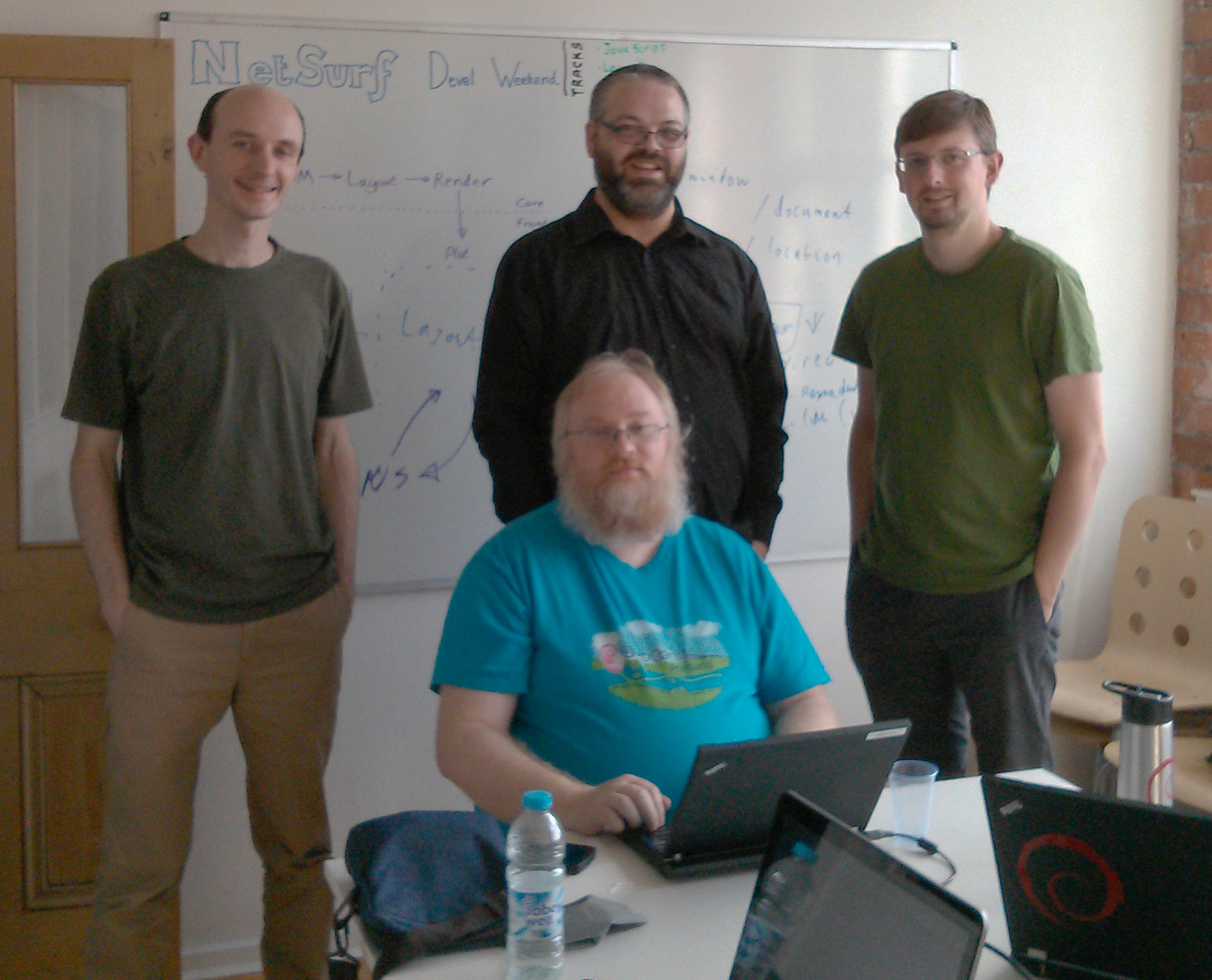
Michael Drake, Vincent Sanders, John-Mark Bell and Daniel Silverstone at the Codethink manchester officesThe fifth developer weekend was an opportunity for us to gather in a pleasant setting and work together in person. We were graciously hosted, once again, by Codethink in their Manchester offices.

Four developers managed to attend in person from around the UK: Michael Drake, John-Mark Bell, Daniel Silverstone and Vincent Sanders.

The main focus of the weekends activities was to address two areas that have become overwhelmingly important: JavaScript and Layout.

Although the browser obviously already has both these features they are somewhat incomplete and incapable of supporting the features of the modern web.
JavaScriptThe discussion started with JavaScript and its implementation. We had previously looked at the feasibility of changing our JavaScript engine from Spidermonkey to DukTape. We had decided this was a change we wanted to make when DukTape was mature enough to support the necessary features.

The main reasons for the change are that Spidermonkey is a poor fit to NetSurf as it is relatively large and does not provide a stable API guarantee. The lack of a stable API requires extensive engineering to update to new releases. Additionally support for compiling on minority platforms is very challenging meaning that most platforms are stuck using version 1.7 or 1.85 (current release is version 31 with 38 due).

We started the move to Duktape by creating a development branch, integrating the Duktape library and open coding a minimal implementation of the core classes as a proof of concept. This work was mostly undertaken by Daniel with input from myself and John-Mark. This resulted in a build that was substantially smaller than using Spidermonkey with all the existing functionality our tests cover.

The next phase of this work is to take the prototype implementation and turn it into something that can be reliably used and covers the entire JavaScript DOM interface. This is no small job as there are at least 200 classes and 1500 methods and properties to implement.
LayoutThe layout library design discussion was an extensive and very involved. The layout engine is a browsers most important component. It takes all the information processed by the CSS and DOM libraries, applies a vast number of involved rules and produces a list of operations that can be rendered.

This reimplementation of our rendering engine has been in planning for many years. The existing engine stems from the browsers earliest days more than a decade ago and has many shortcomings in architecture and implementation we hope to address.

The work has finally started on libnslayout with Michael taking the lead and defining the initial API and starting the laborious work of building the test harness, a feature the previous implementation lacked!
The second war beginsFor a war you need people and it is a little unfortunate that this was our lowest ever turnout for the event. This is true of the project overall with declining numbers of commits and interest outside our core group. If anyone is interested we are always happy to have new contributors and there are opportunities to contribute in many areas from image assets, through translations, to C programming.

We discussed some ways to encourage new developers and try and get committed developers especially for the minority platform frontends. The RISC OS frontend for example has needed a maintainer since the previous one stepped down. There was some initial response from its community, culminating in a total of two patches, when we announced the port was under threat of not being releasable in future. Unfortunately nothing further came from this and it appears our oldest frontend may soon become part of our history.

We also covered some issues from the bug tracker mostly to see if there were any patterns that we needed to address before the forthcoming 3.4 release.

There was discussion about recent improvements to the CI system which generate distribution packages from the development branch and how this could be extended to benefit more users. This also included authorisation to acquire storage and other miscellaneous items necessary to keep the project infrastructure running.

We managed over 20 hours of work in the two days and addressed our current major shortcomings. Now it just requires a great deal of programming to complete the projects started here.

23 July 2015

Antoine Beaupr : Is it safe to use open wireless access points?

I sometimes get questions when people use my wireless access point, which, for as long as I can remember, has been open to everyone; that is without any form of password protection or encryption. I arguably don't use the access point much myself, as I prefer the wired connection for the higher bandwidth, security and reliability it provides. Apart from convenience for myself and visitors, the main reason why I leave my wireless access open is that I believe in a free (both as in beer and freedom) internet, built with principles of solidarity rather than exploitation and profitability. In these days of ubiquitous surveillance, freedom often goes hand in hand with anonymity, which implies providing free internet access to everyone. I also believe that, as more and more services get perniciously transferred to the global internet, access to the network is becoming a basic human right. This is therefore my small contribution to the struggle, now also part of the R seau Libre project. So here were my friends question, in essence:
My credit card info was stolen when I used a wifi hotspot in an airport... Should I use open wifi networks? Is it safe to use my credit card for shopping online?
Here is a modified version of an answer I sent to a friend recently which I thought could be useful to the larger internet community. The short answer is "sorry about that", "it depends, you generally can, but be careful" and "your credit card company is supposed to protect you".

Sorry! First off, sorry to hear that our credit card was stolen in an airport! That has to be annoying... Did the credit card company reimburse you? Normally, the whole point of credit cards is that they protect you in case of theft like this and they are supposed to reimburse you if you credit card gets stolen or abused...

The complexity and unreliability of passwords Now of course, securing every bit of your internet infrastructure helps in protecting against such attacks. However: there is a trade-off! First off, it does makes it more complicated for people to join the network. You need to make up some silly password (which has its own security problems: passwords can be surprisingly easy to guess!) that you will post on the fridge or worst, forget all the time! And if it's on the fridge, anyone with a view to that darn fridge, be it one-time visitor or sneaky neighbor, can find the password and steal your internet access (although, granted, that won't allow them to directly spy on your internet connection). In any case, if you choose to use a password, you should use the tricks I wrote in the koumbit wiki to generate the password and avoid writing it on the fridge.

The false sense of security of wireless encryption Second, it can also give a false sense of security: just because a wifi access point appears "secure" (ie. that the communication between your computer and the wifi access point is encrypted) doesn't mean the whole connection is secure. In fact, one attack that can be done against access points is exactly to masquerade as an existing access point, with no security security at all. That way, instead of connecting to the real secure and trusted access point, you connect to an evil one which spies on our connection. Most computers will happily connect to such a hotspot even with degraded security without warning. It may be what happened at the airport, in fact. Of course this particular attack would be less likely to happen if you live in the middle of the woods than an airport, but it's some important distinction to keep in mind, because the same attack can be performed after the wireless access point, for example by your countryside internet access provider or someone attacking it. Your best protection for your banking details is to rely on good passwords (for your back account) but also, and more importantly, what we call end-to-end encryption. That is usually implemented using the "HTTPS" with a pad lock icon in your address bar. This ensures that the communication between your computer and the bank or credit card company is secure, that is: that no wifi access point or attacker between your computer and them can intercept your credit card number.

The flaws of internet security Now unfortunately, even the HTTPS protocol doesn't bring complete security. For example, one attack that can be done is similar to the previous one and that is to masquerade as a legitimate bank site, but either strip out the encryption or even fake the encryption. So you also need to look at the address of the website you are visiting. Attackers are often pretty clever and will use many tricks to hide the real address of the website in the address bar. To work around this, I always explicitly type my bank website address (https://accesd.desjardins.com/ in my case) directly myself instead of clicking on links, bookmarks or using a search engine to find my bank site. In the case of credit cards, it is much trickier because when you buy stuff online, you end up putting that credit card number on different sites which you do not necessarily trust. There's no good solution but complaining to your credit card company if you believe a website you used has stolen your credit card details. You can also use services like Paypal, Dwolla or Bitcoin that hide your credit card details from the seller, if they support the service. I usually try to avoid putting my credit card details on sites I do not trust, and limit myself to known parties (e.g. Via Rail, Air Canada, etc). Also, in general, I try to assume the network connection between me and the website I visit is compromised. This forced me to get familiar with online security and use of encryption. It is more accessible to me than trying to secure the infrastructure i am using, because i often do not control it at all (e.g. internet cafes...). Internet security is unfortunately a hard problem, and things are not getting easier as more things move online. The burden is on us programmers and system administrators to create systems that are more secure and intuitive for our users so, as I said earlier, sorry the internet sucks so much, we didn't think so many people would join the acid trip of the 70s. ;)

Elena 'valhalla' Grandi: A Makefile for OpenSCAD projects

A Makefile for OpenSCAD projects

When working with OpenSCAD to generate models for 3D printing, I find it convenient to be able to build .stl and .gcode files from the command line, expecially in batch, so I've started writing a Makefile, improving it and making it more generic in subsequent iterations; I've added a page on my website http://www.trueelena.org/computers/howto/makefile_for_openscad_projects.html to hosts my current version.

Most of my projects use the following directory structure.


Running make will generate stl files for all of the models; make gcode adds .gcode files using slic3r; make build/object1.stl and make build/object1.gcode also work, when just one model is needed.


# Copyright 2015 Elena Grandi
# This work is free. You can redistribute it and/or modify it under the
# terms of the Do What The Fuck You Want To Public License, Version 2,
# as published by Sam Hocevar. See http://www.wtfpl.net/ for more details.

BUILDDIR = build
CONFDIR = conf
SRCDIR = src

SLIC3R = slic3r

VPATH = $(SRCDIR):$(BUILDDIR)

STL_TARGETS = $(patsubst $(SRCDIR)/%.scad,$(BUILDDIR)/%.stl,$(wildcard $(SRCDIR)/*.scad))
GCODE_TARGETS = $(patsubst $(SRCDIR)/%.scad,$(BUILDDIR)/%.gcode,$(wildcard $(SRCDIR)/*.scad))

.PHONY: all gcode clean
all: $(STL_TARGETS)

gcode: $(GCODE_TARGETS)

$(BUILDDIR)/%.stl: %.scad $(SRCDIR)/lib/*
mkdir -p $ BUILDDIR
openscad -o $@ $<

$(BUILDDIR)/%.gcode: %.stl $ CONFDIR /basic.ini
$ SLIC3R --load $ CONFDIR /basic.ini $<

clean:
rm -f $ BUILDDIR /*.stl $ BUILDDIR /*.gcode


This Makefile is released under the WTFPL:


DO WHAT THE FUCK YOU WANT TO PUBLIC LICENSE
Version 2, December 2004

Copyright (C) 2004 Sam Hocevar <sam@hocevar.net>

Everyone is permitted to copy and distribute verbatim or modified
copies of this license document, and changing it is allowed as long
as the name is changed.

DO WHAT THE FUCK YOU WANT TO PUBLIC LICENSE
TERMS AND CONDITIONS FOR COPYING, DISTRIBUTION AND MODIFICATION

0. You just DO WHAT THE FUCK YOU WANT TO.

Daniel Pocock: Unpaid work training Google's spam filters

This week, there has been increased discussion about the pain of spam filtering by large companies, especially Google. It started with Google's announcement that they are offering a service for email senders to know if their messages are wrongly classified as spam. Two particular things caught my attention: the statement that less than 0.05% of genuine email goes to the spam folder by mistake and the statement that this new tool to understand misclassification is only available to "help qualified high-volume senders". From there, discussion has proceeded with Linus Torvalds blogging about his own experience of Google misclassifying patches from Linux contributors as spam and that has been widely reported in places like Slashdot and The Register. Personally, I've observed much the same thing from the other perspective. While Torvalds complains that he isn't receiving email, I've observed that my own emails are not always received when the recipient is a Gmail address. It seems that Google expects their users work a little bit every day going through every message in the spam folder and explicitly clicking the "Not Spam" button: so that Google can improve their proprietary algorithms for classifying mail. If you just read or reply to a message in the folder without clicking the button, or if you don't do this for every message, including mailing list posts and other trivial notifications that are not actually spam, more important messages from the same senders will also continue to be misclassified. If you are not willing to volunteer your time to do this, or if you are simply one of those people who has better things to do, Google's Gmail service is going to have a corrosive effect on your relationships. A few months ago, we visited Australia and I sent emails to many people who I wanted to catch up with, including invitations to a family event. Some people received the emails in their inboxes yet other people didn't see them because the systems at Google (and other companies, notably Hotmail) put them in a spam folder. The rate at which this appeared to happen was definitely higher than the 0.05% quoted in the Google article above. Maybe the Google spam filters noticed that I haven't sent email to some members of the extended family for a long time and this triggered the spam algorithm? Yet it was at that very moment that we were visiting Australia that email needs to work reliably with that type of contact as we don't fly out there every year. A little bit earlier in the year, I was corresponding with a few students who were applying for Google Summer of Code. Some of them also observed the same thing, they sent me an email and didn't receive my response until they were looking in their spam folder a few days later. Last year I know a GSoC mentor who lost track of a student for over a week because of Google silently discarding chat messages, so it appears Google has not just shot themselves in the foot, they managed to shoot their foot twice. What is remarkable is that in both cases, the email problems and the XMPP problems, Google doesn't send any error back to the sender so that they know their message didn't get through. Instead, it is silently discarded or left in a spam folder. This is the most corrosive form of communication problem as more time can pass before anybody realizes that something went wrong. After it happens a few times, people lose a lot of confidence in the technology itself and try other means of communication which may be more expensive, more synchronous and time intensive or less private. When I discussed these issues with friends, some people replied by telling me I should send them things through Facebook or WhatsApp, but each of those services has a higher privacy cost and there are also many other people who don't use either of those services. This tends to fragment communications even more as people who use Facebook end up communicating with other people who use Facebook and excluding all the people who don't have time for Facebook. On top of that, it creates more tedious effort going to three or four different places to check for messages. Despite all of this, the suggestion that Google's only response is to build a service to "help qualified high-volume senders" get their messages through leaves me feeling that things will get worse before they start to get better. There is no mention in the Google announcement about what they will offer to help the average person eliminate these problems, other than to stop using Gmail or spend unpaid time meticulously training the Google spam filter and hoping everybody else does the same thing. Some more observations on the issue Many spam filtering programs used in corporate networks, such as SpamAssassin, add headers to each email to suggest why it was classified as spam. Google's systems don't appear to give any such feedback to their users or message senders though, just a very basic set of recommendations for running a mail server. Many chat protocols work with an explicit opt-in. Before you can exchange messages with somebody, you must add each other to your buddy lists. Once you do this, virtually all messages get through without filtering. Could this concept be adapted to email, maybe giving users a summary of messages from people they don't have in their contact list and asking them to explicitly accept or reject each contact? If a message spends more than a week in the spam folder and Google detects that the user isn't ever looking in the spam folder, should Google send a bounce message back to the sender to indicate that Google refused to deliver it to the inbox? I've personally heard that misclassification occurs with mailing list posts as well as private messages.

Daniel Pocock: Recording live events like a pro (part 1: audio)

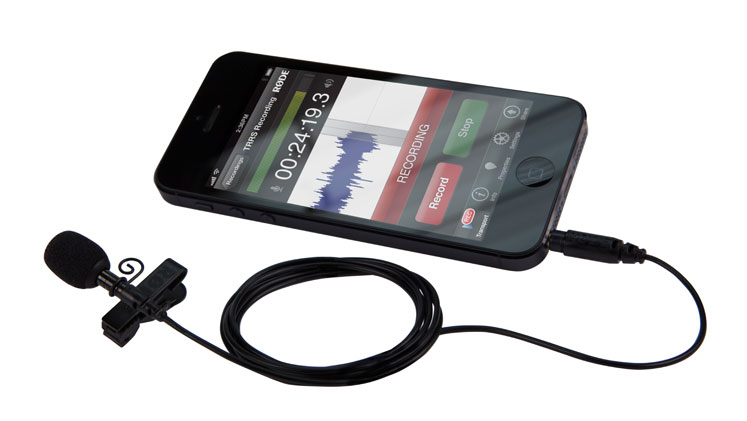
Whether it is a technical talk at a conference, a political rally or a budget-conscious wedding, many people now have most of the technology they need to record it and post-process the recording themselves. For most events, audio is an essential part of the recording. There are exceptions: if you take many short clips from a wedding and mix them together you could leave out the audio and just dub the couple's favourite song over it all. For a video of a conference presentation, though, the the speaker's voice is essential. These days, it is relatively easy to get extremely high quality audio using a lapel microphone attached to a smartphone. Lets have a closer look at the details. Using a lavalier / lapel microphone Full wireless microphone kits with microphone, transmitter and receiver are usually $US500 or more. The lavalier / lapel microphone by itself, however, is relatively cheap, under $US100. The lapel microphone is usually an omnidirectional microphone that will pick up the voices of everybody within a couple of meters of the person wearing it. It is useful for a speaker at an event, some types of interviews where the participants are at a table together and it may be suitable for a wedding, although you may want to remember to remove it from clothing during the photos. There are two key features you need when using such a microphone with a smartphone:
  • TRRS connector (this is the type of socket most phones and many laptops have today)
  • Microphone impedance should be at least 1k (that is one kilo Ohm) or the phone may not recognize when it is connected
Many leading microphone vendors have released lapel mics with these two features aimed specifically at smartphone users. I have personally been testing the Rode smartLav+ Choice of phone There are almost 10,000 varieties of smartphone just running Android, as well as iPhones, Blackberries and others. It is not practical for most people to test them all and compare audio recording quality. It is probably best to test the phone you have and ask some friends if you can make test recordings with their phones too for comparison. You may not hear any difference but if one of the phones has a poor recording quality you will hopefully notice that and exclude it from further consideration. A particularly important issue is being able to disable AGC in the phone. Android has a standard API for disabling AGC but not all phones or Android variations respect this instruction. I have personally had positive experiences recording audio with a Samsung Galaxy Note III. Choice of recording app Most Android distributions have at least one pre-installed sound recording app. Look more closely and you will find not all apps are the same. For example, some of the apps have aggressive compression settings that compromise recording quality. Others don't work when you turn off the screen of your phone and put it in your pocket. I've even tried a few that were crashing intermittently. The app I found most successful so far has been Diktofon, which is available on both F-Droid and Google Play. Diktofon has been designed not just for recording, but it also has some specific features for transcribing audio (currently only supporting Estonian) and organizing and indexing the text. I haven't used those features myself but they don't appear to cause any inconvenience for people who simply want to use it as a stable recording app. As the app is completely free software, you can modify the source code if necessary. I recently contributed patches enabling 48kHz recording and disabling AGC. At the moment, the version with these fixes has just been released and appears in F-Droid but not yet uploaded to Google Play. The fixes are in version 0.9.83 and you need to go into the settings to make sure AGC is disabled and set the 48kHz sample rate. Whatever app you choose, the following settings are recommended:
  • 16 bit or greater sample size
  • 48kHz sample rate
  • Disable AGC
  • WAV file format
Whatever app you choose, test it thoroughly with your phone and microphone. Make sure it works even when you turn off the screen and put it in your pocket while wearing the lapel mic for an hour. Observe the battery usage. Gotchas Now lets say you are recording a wedding and the groom has that smartphone in his pocket and the mic on his collar somewhere. What is the probability that some telemarketer calls just as the couple are exchanging vows? What is the impact on the recording? Maybe some apps will automatically put the phone in silent mode when recording. More likely, you need to remember this yourself. These are things that are well worth testing though. Also keep in mind the need to have sufficient storage space and to check whether the app you use is writing to your SD card or internal memory. The battery is another consideration. In a large event where smartphones are being used instead of wireless microphones, possibly for many talks in parallel, install a monitoring app like Ganglia on the phones to detect and alert if any phone has weak wifi signal, low battery or a lack of memory. Live broadcasts and streaming Some time ago I tested RTP multicasting from Lumicall on Android. This type of app would enable a complete wireless microphone setup with live streaming to the internet at a fraction of the cost of a traditional wireless microphone kit. This type of live broadcast could also be done with WebRTC on the Firefox app. Conclusion If you research the topic thoroughly and spend some time practicing and testing your equipment, you can make great audio recordings with a smartphone and an inexpensive lapel microphone. In subsequent blogs, I'll look at tips for recording video and doing post-production with free software.

22 July 2015

Cyril Brulebois: D-I Stretch Alpha 1

Time for a quick recap of the beginning of the Stretch release cycle as far as the Debian Installer is concerned: (On a related note, I ve started tweeting rather regularly about my actions, wins & fails, using the #DebianInstaller hashtag. I might try and aggregate my tweets as @CyrilBrulebois into more regular blog posts, time permitting.) Executive summary: D-I Stretch Alpha 1 is released, time to stretch a bit! Stretching cat (Credit: rferran on openclipart)

21 July 2015

Dmitry Shachnev: GNOME Flashback 3.16 available in archive, needs your help

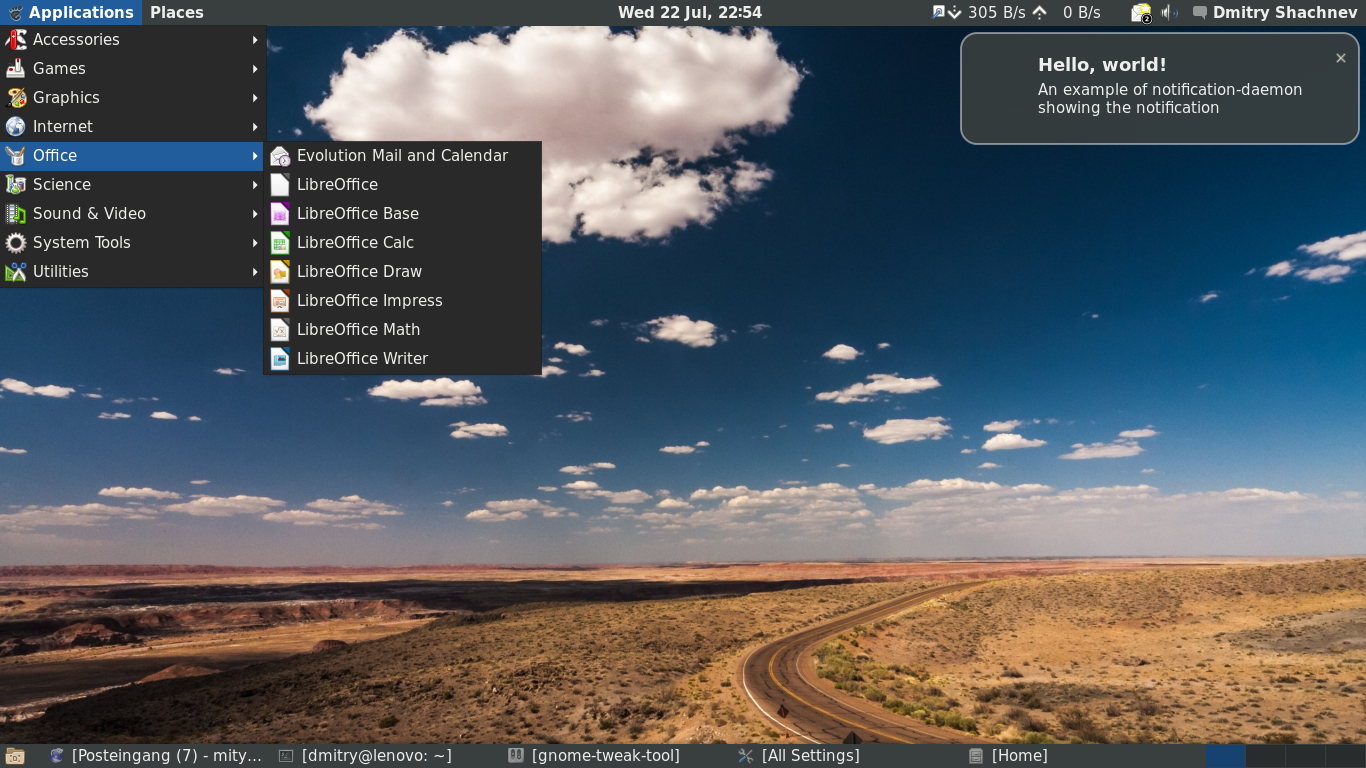
Some time ago GNOME Flashback 3.16/3.17 packages landed in Debian testing and Ubuntu wily. GNOME Flashback is the project which continues the development of components of classic GNOME session, including the GNOME Panel, the Metacity window manager, and so on. Screenshot The full changelog can be found in official announcement mail by Alberts and in changelog.gz files in each package, but I want to list the most imporant improvements in this release (compared to 3.14): Sounds interesting? Contribute! If you are interested in helping us, please write to our mailing list: gnome-flashback-list@gnome.org. The current TODO list is:
  1. Notification Daemon needs GTK notification support.
  2. GNOME Flashback needs screenshot, screencast, keyboard layout switching and bluetooth status icon.
  3. Fix/replace deprecated function usage in all modules.
  4. libstatus-notifier get it in usable state, create a new applet for gnome-panel.

20 July 2015

Niels Thykier: Performance tuning of lintian, take 2

The other day, I wrote about our recent performance tuning in lintian. Among other things, we reduced the memory usage by ~33%. The effect was also reproducible on libreoffice (4.2.5-1 plus its 170-ish binaries, arch amd64), which started at ~515 MB and was reduced to ~342 MB. So this is pretty great in its own right But at this point, I have seen what was in Pandora s box . By which, I mean the two magical numbers 1.7kB per file and 2.2kB per directory in the package (add +250-300 bytes per entry in binary packages). This is before even looking at data from file(1), readelf, etc. Just the raw index of the package. Depending on your point of view, 1.7-2.2kB might not sound like a lot. But for the lintian source with ~1 500 directories and ~3 300 non-directories, this sums up to about 6.57MB out of the (then) usage at 12.53MB. With the recent changes, it dropped to about 1.05kB for files and 1.5kB for dirs. But even then, the index is still 4.92MB (out of 8.48MB). This begs the question, what do you get for 1.05kB in perl? The following is a dump of the fields and their size in perl for a given entry:
lintian/vendors/ubuntu/main/data/changes-file/known-dists: 1077.00 B
  _path_info: 24.00 B
  date: 44.00 B
  group: 42.00 B
  name: 123.00 B
  owner: 42.00 B
  parent_dir: 24.00 B
  size: 42.00 B
  time: 42.00 B
  (overhead): 694.00 B
With time, date, owner and group being fixed sized strings (at most 15 characters). The size and _path_info fields being integers, parent_dir a reference (nulled). Finally, the name being a variable length string. Summed the values take less than half of the total object size. The remainder of ~700 bytes is just overhead . Time for another clean up: Which leaves us now with:
lintian/vendors/ubuntu/main/data/changes-file/known-dists: 698.00 B
  _path_info: 24.00 B
  date_time: 56.00 B
  name: 123.00 B
  parent_dir: 24.00 B
  size: 24.00 B
  (overhead): 447.00 B
Still a ~64% overhead, but at least we reduced the total size by 380 bytes (585 bytes for entries in binary packages). With these changes, the memory used for the lintian source index is now down to 3.62MB. This brings the total usage down to 7.01MB, which is a reduction to 56% of the original usage (a.k.a. the-almost-but-not-quite-50%-reduction ). But at least the results also carried over to libreoffice, which is now down to 284.83 MB (55% of original). The chromium-browser (source-only, version 32.0.1700.123-2) is down to 111.22MB from 179.44MB (61% of original, better results expected if processed with binaries). In closing, Lintian 2.5.34 will use slightly less memory than 2.5.33.
Filed under: Debian, Lintian

Matthew Garrett: Your Ubuntu-based container image is probably a copyright violation

Update: A Canonical employee responded here, but doesn't appear to actually contradict anything I say below.

I wrote about Canonical's Ubuntu IP policy here, but primarily in terms of its broader impact, but I mentioned a few specific cases. People seem to have picked up on the case of container images (especially Docker ones), so here's an unambiguous statement:

If you generate a container image that is not a 100% unmodified version of Ubuntu (ie, you have not removed or added anything), Canonical insist that you must ask them for permission to distribute it. The only alternative is to rebuild every binary package you wish to ship[1], removing all trademarks in the process. As I mentioned in my original post, the IP policy does not merely require you to remove trademarks that would cause infringement, it requires you to remove all trademarks - a strict reading would require you to remove every instance of the word "ubuntu" from the packages.

If you want to contact Canonical to request permission, you can do so here. Or you could just derive from Debian instead.

[1] Other than ones whose license explicitly grants permission to redistribute binaries and which do not permit any additional restrictions to be imposed upon the license grants - so any GPLed material is fine

comment count unavailable comments

Daniel Pocock: RTC status on Debian, Ubuntu and Fedora

Zoltan (Zoltanh721) recently blogged about WebRTC for the Fedora community and Fedora desktop. https://fedrtc.org has been running for a while now and this has given many people a chance to get a taste of regular SIP and WebRTC-based SIP. As suggested in Zoltan's blog, it has convenient integration with Fedora SSO and as the source code is available, people are welcome to see how it was built and use it for other projects. Issues with Chrome/Chromium on Linux If you tried any of FedRTC.org, rtc.debian.org or meet.jit.si using Chrome/Chromium on Linux, you may have found that the call appears to be connected but there is no media. This is a bug and the Chromium developers are on to it. You can work around this by trying an older version of Chromium (it still works with v37 from Debian wheezy) or Firefox/Iceweasel. WebRTC is not everything WebRTC offers many great possibilities for people to quickly build and deploy RTC services to a large user base, especially when using components like JSCommunicator or the DruCall WebRTC plugin for Drupal. However, it is not a silver bullet. For example, there remain concerns about how to receive incoming calls. How do you know which browser tab is ringing when you have many tabs open at once? This may require greater browser/desktop integration and that has security implications for JavaScript. Whether users on battery-powered devices can really leave JavaScript running for extended periods of time waiting for incoming calls is another issue, especially when you consider that many web sites contain some JavaScript that is less than efficient. Native applications and mobile apps like Lumicall continue to offer the most optimized solution for each platform although WebRTC currently offers the most convenient way for people to place a Call me link on their web site or portal. Deploy it yourself The RTC Quick Start Guide offers step-by-step instructions and a thorough discussion of the architecture for people to start deploying RTC and WebRTC on their own servers using standard packages on many of the most popular Linux distributions, including Debian, Ubuntu, RHEL, CentOS and Fedora.

Ritesh Raj Sarraf: Micro DD meetup

A couple of us DDs met here on the weekend. It is always a fun time, being part of these meetings. We talked briefly about the status of Cross Compilation in Debian, on the tools that simplify the process. Next we touched upon licensing, discussing the benefits of particular licenses (BSD, Apache, GPL) from the point of view of the consumer. The consumer being an individual just wanting to use/improve software, to a consumer who's building a (free / non-free) product on top of it. I think the overall conclusion was that there are 2 major licenses at a high level: Ones those allow you take the code and not give back, and the others which allow you to take code only if you are ready to share the enhancements back and forward. Next we briefly touched upon systemd. Given that I recently spent a good amount of time talking to the systemd maintainer while fixing bugs in my software, it was natural for me to steer that topic. At the end, more people are now enthused to learn the paradigm shift. The other topic where we spent time was on Containers. It is impressive to see how quick, and how many, products have now spun out of cgroups. The topic moved to cgroups, thanks to systemd, one of the prime consumers of cgroups. While demonstrating the functionalities of Linux Containers (LXC), I realized that systemd has a tool in place to serve the same use case. So, once back home, I spent some time figuring out the possibility to replace my lxc setup, with that of systemd-nspawn. Apart from a minor bug, almost everything else seems to work find with systemd-nspawn. So, following is the config detail of my container, as used in lxc. And to replace lxc, I need to fill is almost all of it with systemd-nspawn.
rrs@learner:~$ sudo cat /var/lib/lxc/deb-template/config
# Template used to create this container: /usr/share/lxc/templates/lxc-debian
# Parameters passed to the template:
# For additional config options, please look at lxc.container.conf(5)
# CPU
lxc.cgroup.cpuset.cpus = 0,1
lxc.cgroup.cpu.shares = 1234
# Mem
lxc.cgroup.memory.limit_in_bytes = 2000M
lxc.cgroup.memory.soft_limit_in_bytes = 1500M
# Network
lxc.network.type = veth
lxc.network.hwaddr = 00:16:3e:0c:c5:d4
lxc.network.flags = up
lxc.network.link = lxcbr0
# Root file system
lxc.rootfs = /var/lib/lxc/deb-template/rootfs
# Common configuration
lxc.include = /usr/share/lxc/config/debian.common.conf
# Container specific configuration
lxc.mount = /var/lib/lxc/deb-template/fstab
lxc.utsname = deb-template
lxc.arch = amd64
# For apt
lxc.mount.entry = /var/cache/apt/archives var/cache/apt/archives none defaults,bind 0 0
lxc.mount.entry = /var/tmp/lxc var/tmp/lxc none defaults,bind 0 0
2015-07-20 / 16:28:58         
The equivalent of the above, in systemd-nspawn is:
sudo systemd-nspawn -n -b --machine deb-template --network-bridge=lxcbr0 --bind /var/cache/apt/archives/
The only missing bit is CPU and Memory, which I'm yet to try, is documented as doable with the systemctl --property= interface
      --property=
           Set a unit property on the scope unit to register for the machine. This only
           applies if the machine is run in its own scope unit, i.e. if --keep-unit is not
           used. Takes unit property assignments in the same format as systemctl
           set-property. This is useful to set memory limits and similar for machines.
With all this in place, using containers under systemd is a breeze.
rrs@learner:~/Community/Packaging/multipath-tools (experimental)$ sudo machinectl list
MACHINE      CLASS     SERVICE
deb-template container nspawn
1 machines listed.
2015-07-20 / 16:44:07         
rrs@learner:~/Community/Packaging/multipath-tools (experimental)$ sudo machinectl status deb-template
deb-template
           Since: Mon 2015-07-20 16:13:58 IST; 30min ago
          Leader: 9064 (systemd)
         Service: nspawn; class container
            Root: /var/lib/lxc/deb-template/rootfs
           Iface: lxcbr0
         Address: 172.16.10.12
                  fe80::706d:e4ff:fec5:bfc8%3
              OS: Debian GNU/Linux stretch/sid
            Unit: machine-deb\x2dtemplate.scope
                   9064 /lib/systemd/systemd --system --deserialize 14
                   system.slice
                     systemd-journald.service
                       9092 /lib/systemd/systemd-journald
                     ssh.service
                       9160 /usr/sbin/sshd -D
                     console-getty.service
                       9166 /bin/login --     
                       9171 -bash
                       9226 dhclient host0
Jul 20 16:13:58 learner systemd[1]: Started Container deb-template.
Jul 20 16:13:58 learner systemd[1]: Starting Container deb-template.
2015-07-20 / 16:44:15         

Categories:

Keywords:

Like:

19 July 2015

Laura Arjona: Family games: Robots

I play Robots with my kid. I ve tested the game with other kids and it seems that for ages 5 to 7 they like it. I ve talked about the game to several adults and it seems they like too, so I thought maybe writing about it here may be useful for somebody to enjoy some summer days. Players One player is the Robot. The other one is the programmer. If there are more players, it can be several robots and several programmers. If players are older, you can make the game more complicated making robots cooperate or programmers cooperate. If not, you make pairs 1-1 or 1 programmer 2 robots if the number is odd. The game The programmer must turn on the robot, pressing the ON/OFF button (robot chooses where s the button: nose, ear, belly, whatever).
Then, the robot say hello , and the programmer asks for the list of commands available (like Hello, robot, give me the list of commands ). The robot says the list of commands available, for example Run, stop, jump, sing a song, somersault, say something in a different language . Then, the programmer thinks a program, and loads it to the robot (speaks the list of orders, loudly, to the robot). Then the programmer presses the START button (Robot choses where it is) and then the robot has to perform the program without errors. If the robot performs correctly, wins one point. If it fails, looses one point. The programmer can design another program (maybe longer, maybe with some conditional expression) and tries the limits of the memory of robot. If the robot is tired, needs to charge batteries, or whatever, the roles programmer/robot are interchanged, and the one with more points in a certain amount of time or rounds, wins. Variants, tips If the programmer does not like the list, of commands, she can ask for updates, and maybe some new commands will be installed (and/or other uninstalled, who knows). Please be creative with the list of commands, or the game will be very boring. Depending on the operating system which runs the robot, it will give more or less options to the programmer, and the behaviour will be more evil or good. Robots shouldn t behave too much evil, though, otherwise the programmer will erase their disk and install Debian on them to make them obedient ;) You can play with a third person being the Robot manufacturer, who controls the robot, even sometimes overriding the programmer instructions (if the robot has an OS which is not free software). Robot will win one point obeying the manufacturer, but if there are more robots, will loose one round of playing because the programmer got angry and turned it off or reinstalled the software. The manufacturer and the programmer cooperate if the robot runs free software, though. Together they can expand robot memory (for example, lend a piece of paper where to store the program), or create new commands, fix bugs, or whatever. Comments? You can comment about this post in Pump.io thread about this post.
Filed under: My experiences and opinion Tagged: Debian, Education, English, Free culture, Free Software, Games, kids

Gregor Herrmann: RC bugs 2015/17-29

after the release is before the release. or: long time no RC bug report. after the jessie release I spent most of my Debian time on work in the Debian Perl Group. we tried to get down the list of new upstream releases (from over 500 to currently 379; unfortunately the CPAN never sleeps), we were & still are busy preparing for the Perl 5.22 transition (e.g. we uploaded something between 300 & 400 packages to deal with Module::Build & CGI.pm being removed from perl core; only team-maintained packages so far), & we had a pleasant & productive sprint in Barcelona in May. & I also tried to fix some of the RC bugs in our packages which popped up over the previous months. yesterday & today I finally found some time to help with the GCC 5 transition, mostly by making QA or Non-Maintainer Uploads with patches that already were in the BTS. a big thanks especially to the team at HP which provided a couple dozens patches! & here's the list of RC bugs I've worked on in the last 3 months:

18 July 2015

Niels Thykier: Performance tuning of lintian

For quite a while, Lintian has been able to create performance logs (--perf-debug --perf-output perf.log) that help diagnose where lintian spends most of its runtime. I decided to make lintian output these logs on lintian.debian.org to help us spot performance issues, though I have not been very good at analysing them regularly. At the beginning of the month, I finally got around to look a bit into one of them. My findings on IRC triggered Mattia Rizzolo to create this following graph. It shows the accumulated runtime of each check/collection measured in seconds. Find these findings, we set out to solve some of the issues. This lead to the following changes in 2.5.33 (in no particular order): Legend: S: run single threaded (1:1 performance improvement). P: run in parallel. Overall, I doubt the changes will give a revolutionary change in speed, but it should improve the 3rd, 4th and 5th slowest parts in Lintian. Beyond runtime performance, we got a few memory optimisations in the pipeline for Lintian 2.5.34: Combined these 6 commits reduce memory consumption in caches by ~33% compared to 2.5.33, when lintian processes itself. In absolute numbers, we are talking about a drop from 12.53MB to 8.48MB. The mileages can certainly vary depending on the package (mscgen only saw an ~25% improvement). Nevertheless, I was happy to list #715035 as being closed in 2.5.34. :)
Filed under: Debian, Lintian

17 July 2015

John Goerzen: First steps with smartcards under Linux and Android hard, but it works

Well this has been an interesting project. It all started with a need to get better password storage at work. We wound up looking heavily at a GPG-based solution. This prompted the question: how can we make it even more secure? Well, perhaps, smartcards. The theory is this: a smartcard holds your private keys in a highly-secure piece of hardware. The PC can never actually access the private keys. Signing and decrypting operations are done directly on the card to prevent the need to export the private key material to the PC. There are lots of standards to choose from (PKCS#11, PKCS#15, and OpenPGP card specs) that are relevant here. And there are ways to use SSH and OpenVPN with some of these keys too. Access to the card is protected by a passphrase (called a PIN in smartcard lingo, even though it need not be numeric). These smartcards might be USB sticks, or cards you pop into a reader. In any case, you can pop them out when not needed, pop them in to use them, and well, pretty nice, eh? So that s the theory. Let s talk a bit of reality. First of all, it is hard for a person like me to evaluate how secure my data is in hardware. There was a high-profile bug in the OpenPGP JavaCard applet used by Yubico that caused the potential to use keys without a PIN, for instance. And how well protected is the key in the physical hardware? Granted, in most of these cards you re talking serious hardware skill to compromise them, but still, this is unknown in absolute terms. Here s the bigger problem: compatibility. There are all sorts of card readers, but compatibility with pcsc-tools and pcscd on Linux seems pretty good. But the cards themselves oh my. PKCS#11 defines an interface API, but each vendor would provide their own .so or .dll file to interface. Some cards (for instance, the ACOS5-64 mentioned on the Debian wiki!) are made by vendors that charge $50 for the privilege of getting the drivers needed to make them work and they re closed-source proprietary drivers at that. Some attempts I ordered several cards to evaluate: the OpenPGP card, specifically designed to support GPG; the ACOS5-64 card, the JavaCOS A22, the Yubikey Neo, and a simple reader listed on the GPG smartcard howto. The OpenPGP card and ACOS5-64 are the only ones in the list that support 4096-bit RSA keys due to the computational demands of them. The others all support 2048-bit RSA keys. The JavaCOS requires the user to install a JavaCard applet to the card to make it useable. The Yubico OpenPGP applet works here, along with GlobalPlatform to install it. I am not sure just how solid it is. The Yubikey Neo has yet to arrive; it integrates some interesting OAUTH and TOTP capabilities as well. I found that Debian s wiki page for smartcards lists a bunch of them that are not really useable using the tools in main. The ACOS5-64 was such a dud. But I got the JavaCOS A22 working quite nicely. It s also NFC-enabled and works perfectly with OpenKeyChain on Android (looking like a Yubikey Neo to it, once the OpenPGP applet is installed). I m impressed! Here s a way to be secure with my smartphone without revealing everything all the time. Really the large amount of time is put into figuring out how all this stuff fits together. I m getting there, but I ve got a ways to go yet. Update: Corrected to read signing and decrypting rather than signing and encrypting operations are being done on the card. Thanks to Beno t Allard for catching this error.

16 July 2015

Christoph Egger

Mostly a mental note as I've reinvented this the second time now. If you just quickly want to share some org-mode notes with some non-Emacs-users the built-in HTML export comes handy. However it has one Problem: All source syntax highlighting is derived from your current theme. Which of course is a bad idea if your editor has a dark background (say Emacs.reverseVideo: on). The same if your terminal's background color is dark. Running Emacs in batch mode and still getting colorful code formatting seems to be an unsolved problem. All that can be found on the Internet suggests adding a dark background to your HTML export (at least to the code blocks). Or maybe use an external style-sheet. Both not exactly the thing if you just want to scp snippets of HTML somewhere to share. However there's a working hack:
#!/usr/bin/make -f
%.html: %.org
	xvfb-run urxvt +rv -e emacs -nw --visit $< --funcall org-html-export-to-html --kill >/dev/null
So use a terminal you can easily force into light-background-mode (like urxvt +rv) so the emacs -nw runs in light-background-mode and wrap the thing in xvfb-run so you can properly run this over ssh (and don't get annoying windows pop up and disappear again when typing make)

Rapha&#235;l Hertzog: Freexian s report about Debian Long Term Support, June 2015

A Debian LTS logoLike each month, here comes a report about the work of paid contributors to Debian LTS. Individual reports In June, 73.50 work hours have been dispatched among 7 paid contributors. Their reports are available: Evolution of the situation July has seen a nice increase in terms of sponsored hours (79.50 hours per month) but the trend is unlikely to continue for the next month, worse it might be negative. While most sponsors who joined us last year in July will renew their support, there are a few where I have no confirmation yet. Many thanks to those who confirmed early: Universit Lille 3, MyTux. Our first milestone of funding the equivalent of a half-time position is unlikely to be reached before DebConf or even this summer. If you want to prove me wrong, it s time to get in touch with your management and convince your company to contribute a small amount. In terms of security updates waiting to be handled, the situation is similar to last month: the dla-needed.txt file lists 24 packages awaiting an update (5 more than last month), the list of open vulnerabilities in Squeeze shows about 33 affected packages in total (3 less than last month). Thanks to our sponsors There are no new sponsors this month. But I decided to include the number of months that the sponsor has been with us. Since we value long-lasting relations, it seemed quite natural to add this.

No comment Liked this article? Click here. My blog is Flattr-enabled.

15 July 2015

Matthew Garrett: Canonical's Ubuntu IP policy is garbage

(In order to avoid any ambiguity here, this is a personal opinion. The Free Software Foundation's opinion on this matter is here)

Canonical have a legal policy surrounding reuse of Intellectual Property they own in Ubuntu, and you can find it here. It's recently been modified to handle concerns raised by various people including the Free Software Foundation[1], who have some further opinions on the matter here. The net outcome is that Canonical made it explicit that if the license a piece of software is under explicitly says you can do something, you can do that even if the Ubuntu IP policy would otherwise forbid it.

Unfortunately, "Canonical have made it explicit that they're not attempting to violate the GPL" is about the nicest thing you can say about this. The most troubling statement is Any redistribution of modified versions of Ubuntu must be approved, certified or provided by Canonical if you are going to associate it with the Trademarks. Otherwise you must remove and replace the Trademarks and will need to recompile the source code to create your own binaries.. The apparent aim here is to avoid situations where people take Ubuntu, modify it and continue to pass it off as Ubuntu. But it reaches far further than that. Cases where this may apply include (but are not limited to):
In each of these cases, a strict reading of the policy indicates that you are distributing a modified version of Ubuntu and therefore must either get it approved by Canonical or remove the trademarks and rebuild everything. The strange thing is that this doesn't limit itself to rebuilding packages that include Canonical's trademarks - there's a requirement that you rebuild all binaries.

Now obviously this is good engineering practice in a whole bunch of ways, but it's a huge pain in the ass. And to make things worse, Canonical won't clarify what they consider to be use of their trademarks. Many Ubuntu packages rebuilt from Debian include the word "ubuntu" in their version string. Many Ubuntu packages will contain the word "ubuntu" in maintainer email addresses. Many Ubuntu packages include references to Ubuntu (for instance, documentation might say "This configuration file is located under /etc/default in Debian and Ubuntu"). And many Ubuntu packages will include the compiler version string, which will include the word "ubuntu". Realistically, there's no risk of confusion by using the trademarks in this way, and as a consequence there would be no infringement under trademark law. But Canonical aren't using trademark law here. Canonical assert that they hold copyright over binaries that they have built form source, and require that for you to have permission to redistribute these binaries under copyright law you must remove the trademarks. This means that it doesn't matter whether your use of the trademarks would be infringing or not - you're required to remove them, because fuck you that's why.

This is a huge overreach. It's hostile to free software, in that it makes it significantly more difficult to produce derivative works of Ubuntu and doesn't benefit the community in the process. It's hostile to our understanding of IP law, in that it claims that the mechanical process of turning source code into binaries creates an independently copyrightable work. And in some cases it may make it impossible to create derivative works that interoperate with Ubuntu due to applications making assumptions about the presence of strings.

It'd be easy write this off as an over the top misinterpretation of the policy if it hadn't been confirmed by the Ubuntu Community Manager that any binaries shipped by Ubuntu under licenses that don't grant an explicit right to redistribute the binaries can't be redistributed without permission or rebuilding. When I asked for clarification from Canonical over a year ago, I got no response[2]. Perhaps Canonical don't want to force you to remove every single use of the word Ubuntu from derivative works, but their policy is written such that the natural reading is that they do, and they've refused every single opportunity they've been given to clarify the point.

So, we're left with a policy that makes it hugely impractical to redistribute modified versions of Ubuntu unless Canonical approve of it. That's not freedom, and it's certainly not Ubuntu. If Canonical are serious about participating in the free software community then they need to demonstrate their willingness to continue improving this policy to bring it closer to our goals. Failure to do so will give a strong indication of their priorities.

[1] While I'm a member of the FSF's board of directors, I'm not involved in the majority of the FSF's day to day activities and was not part of this process
[2] Nebula's OS was a mixture of binary packages we pulled straight from Ubuntu and packages we rebuilt, so we were obviously pretty interested in what the answer was

comment count unavailable comments

Next.

Previous.