Search Results: "tg"

4 March 2016

Arturo Borrero Gonz lez: How are we training to climb Mulhacen

Alcazaba, Punta de la Cornisa and Mulhac n 3.479 m

I have been in some adventures with a group of friends for a couple of years now. We call ourselves Los Extraviaos (a quick translation to english is perhaps The Wanderers).

We like nature adventures. During summer we use to do water adventures (like rivers trekking, waterfall climbing, snorkeling, canyoning, rafting, kayaking and so on). During winter and spring, we use to do trekking, hiking and mountaineering (low altitudes, keep reading).

For this sport season, one of our main milestones is to climb the second most prominent mountain in Spain: Mulhacen, with 3.479 m over sea level, during summer (June).
From an alpinist point of view, this isn't a very big deal, since most of the mountain's snow and ice is completely melted and the altitude is not that high.
However, from our amateur mountaineering point of view we will be taking a lot of kilometres to walk and a lot of elevation gain uphill (almost 1.600 m), which is in fact a thing to take into account.
Anyway, Mulhacen is considered 'high mountaineering' and all cautions should be taken both during preparation/training and during the climbing of the mountain itself.

To train our bodies and minds we are climbing lower mountains. We have climbed 3 or 4 already, and will continue to climb more in upcoming moths until we go to Mulhacen.
Also, it's important to climb mountains in different weather conditions. We need to train how to overcome wind, snow, storm, cold, night situations. The way we learn most is facing new, challenging situations.

We started by going to the summit of 'El Aljibe', 1.094 m over sea level, with about 500 m elevation gain uphill during 13 km.
This time, the weather was very windy. A video of the summit moment:


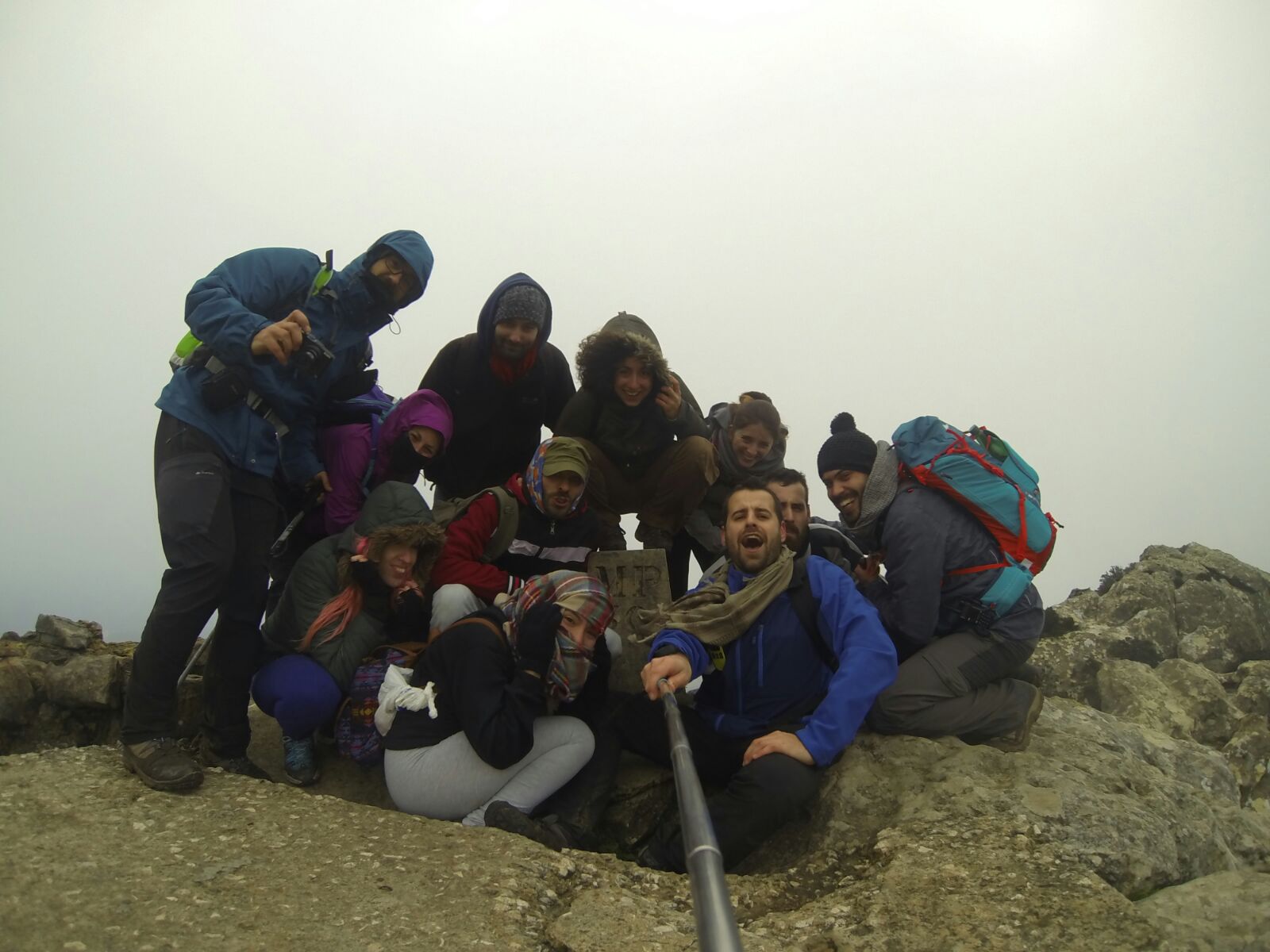
A pic of the group:


Next was the 'Torrecilla' peak. The summit is at 1.919 m over sea level, with about 900 m elevation gain uphill during 15 km.
This time we faced a snowy trekking.
Here a music video of that day:


The Torrecilla peak is in fact challenging with snow, so we went a second time, with even more snow and wind:


This second time we faced winds of 70km/h which, due to wind-chill, resulted in a very cold day.

We also went to Sierra de Grazalema Natural Park, in a hard trekking under snowfall:


This time we walked about 15 km with about 500m elevation gain uphill, while enjoying this kind of environment:


What's next: more mountains! We plan to reach 2.069 m over sea level next week in 'La Maroma' and keep doing steep trekking in upcoming months until we go in June to Mulhacen.

It should be very funny to do some FLOSS contribution from the summit of a mountain. Do you know of someone who did that?

29 February 2016

Chris Lamb: Free software activities in February 2016

Here is my monthly update covering a large part of what I have been doing in the free software world (previously):
Debian
  • Updated travis.debian.net a hosted script to easily test and build Debian packages on the Travis CI continuous integration platform to support:
    • Automatic bumping of the version number in debian/changelog based on TRAVIS_BUILD_NUMBER. (#14)
    • Security repositories. Thanks to Stefan Jenkner for the initial pull request. These are additionally now enabled by default. (#15)
    • The backports repositories. (#13)
  • Applied #812830 and #812830 from James Clark to the Debian Archive Kit to improve the interface of various webpages it generates.
  • Updated the SSL certificate for try.diffoscope.org, a hosted version of the diffoscope in-depth and content-aware diff utility. Thanks to Bytemark for sponsoring the hardware.
  • Worked on my slides for Reproducible Builds - fulfilling the original promise of free software, to be presented at FOSSASIA '16.
My work in the Reproducible Builds project was also covered in more depth in Lunar's weekly reports (#40, #41, #42, #43)
LTS

This month I have been paid to work 18 hours on Debian Long Term Support (LTS). In that time I did the following:
  • "Frontdesk" duty for the week of 22nd 28th, triaging CVEs, etc.
  • Proofread announcements, etc. for the upcoming migration to wheezy-lts.
  • Issued DLA 417-1 for xdelta3 to fix a buffer overflow that allowed arbitrary code execution from input files.
  • Issued DLA 420-1 for libmatroska, correcting a heap information leak.
  • Issued DLA 428-1 for websvn fixing a cross-site scripting vulnerability.
  • Issued DLA 429-1 for pixman fixing a buffer overflow issue.
  • Issued DLA 430-1 & DLA 431-1 for libfcgi and libfcgi-perl respectfully, fixing a remote denial-of-service (DoS) vulnerability.

Uploads
  • redis (2:3.0.7-2) Correcting my SOURCE_DATE_EPOCH reproducibility patch as the conditional was accidentally inverted. Thanks to Reiner Herrmann (deki).
  • disque (1.0~rc1-5) Making the parallel SOURCE_DATE_EPOCH patch change and additionally tidying the packaging after introducing procps as a build-dependency.


RC bugs


I also filed 137 FTBFS bugs against aac-tactics, angular.js, astyle, bcftools, blacs-mpi, bogofilter, boxes, caldav-tester, ccdproc, ckeditor, coq-float, cqrlog, dasher, django-recurrence, dspdfviewer, eclipse-egit, ess, etcd, felix-latin, fio, flexml, funny-manpages, gap-atlasrep, garmin-plugin, gitlab, gnome-mines, graphicsmagick, haskell-nettle, healpy, hg-git, hunspell, hwloc, ijs, ipset, janest-core-extended, jpathwatch, kcompletion, kcompletion, keyrings.alt, kodi-pvr-hts, kodi-pvr-vdr-vnsi, libcommons-compress-java, libgnome2-wnck-perl, libkate, liblrdf, libm4ri, libnet-server-mail-perl, libsis-jhdf5-java, libspectre, libteam, libwnck, libwnckmm, libxkbcommon, lombok, lombok-patcher, mako, maven-dependency-analyzer, mopidy-mpris, mricron, multcomp, netty-3.9, numexpr, ocaml-textutils, openimageio, openttd-openmsx, osmcoastline, osmium-tool, php-guzzle, php-net-smartirc, plexus-component-metadata, polari, profitbricks-client, pyentropy, pynn, pyorbital, pypuppetdb, python-aioeventlet, python-certifi, python-hglib, python-kdcproxy, python-matplotlib-venn, python-mne, python-mpop, python-multipletau, python-pbh5tools, python-positional, python-pydot-ng, python-pysam, python-snuggs, python-tasklib, r-cran-arm, r-cran-httpuv, r-cran-tm, rjava, ros-geometry-experimental, ros-image-common, ros-pluginlib, ros-ros-comm, rows, rr, ruby-albino, ruby-awesome-print, ruby-default-value-for, ruby-fast-gettext, ruby-github-linguist, ruby-gruff, ruby-hipchat, ruby-omniauth-crowd, ruby-packetfu, ruby-termios, ruby-thinking-sphinx, ruby-tinder, ruby-versionomy, ruby-zentest, sbsigntool, scikit-learn, scolasync, sdl-image1.2, signon-ui, sisu-guice, sofa-framework, spykeutils, ssreflect, sunpy, tomcat-maven-plugin, topmenu-gtk, trocla, trocla, tzdata, verbiste, wcsaxes, whitedune, wikidiff2, wmaker, xmlbeans, xserver-xorg-input-aiptek & zeroc-icee-java.

FTP Team

As a Debian FTP assistant I ACCEPTed 107 packages: androguard, android-platform-dalvik, android-platform-development, android-platform-frameworks-base, android-platform-frameworks-native, android-platform-libnativehelper, android-platform-system-core, android-platform-system-extras, android-platform-tools-base, android-sdk-meta, apktool, armci-mpi, assertj-core, bart, bind9, caja, caldav-tester, clamav, class.js, diamond, diffoscope, django-webpack-loader, djangocms-admin-style, dnsvi, esptool, fuel-astute, gcc-6-cross, gcc-6-cross-ports, gdal, giella-core, gnupg, golang-github-go-ini-ini, golang-github-tarm-serial, gplaycli, gradle-jflex-plugin, haskell-mountpoints, haskell-simple, hurd, iceweasel, insubstantial, intellij-annotations, jetty9, juce, keyrings.alt, leptonlib, libclamunrar, libdate-pregnancy-perl, libgpg-error, libhtml5parser-java, libica, libvoikko, linux, llvm-toolchain-3.8, lombok-patcher, mate-dock-applet, mate-polkit, mono-reference-assemblies, mxt-app, node-abab, node-array-equal, node-array-flatten, node-array-unique, node-bufferjs, node-cors, node-deep-extend, node-original, node-setimmediate, node-simplesmtp, node-uglify-save-license, node-unpipe, oar, openjdk-8, openjdk-9, pg8000, phantomjs, php-defaults, php-random-compat, php-symfony-polyfill, pnetcdf, postgresql-debversion, pulseaudio-dlna, pyconfigure, pyomo, pysatellites, python-fuelclient, python-m3u8, python-pbh5tools, python-qtpy, python-shellescape, python-tunigo, pyutilib, qhull, r-cran-rjsonio, r-cran-tm, reapr, ruby-fog-dynect, scummvm-tools, symfony, talloc, tesseract, twextpy, unattended-upgrades, uwsgi, vim-command-t, win-iconv, xkcdpass & xserver-xorg-video-ast. I additionally REJECTed 4 packages.

16 February 2016

Daniel Pocock: FOSSASIA 2016, pgDay Asia 2016 and MiniDebConf Singapore

The FOSSASIA 2016 conference is taking place next month, 18-20 March at the Science Centre Singapore. The FOSSASIA community has also offered to host a MiniDebConf Singapore 2016 and pgDay Asia 2016. With sufficient interest from volunteers and participants, these events could do a lot to raise the profile of free software in the region. Applications from speakers and exhibition tables are still possible using the form. Real-time communications technology at FOSSASIA 2016 We are currently discussing a Real-time lounge and demo area for FOSSASIA, hopefully with a live linkup to the FSF's LibrePlanet 2016 in Boston. FOSSASIA have invited a number of developers to speak about SIP, XMPP, WebRTC and peer-to-peer communications solutions. Hopefully exact attendance and scheduling can be publicised soon. Sponsors needed Bringing leading free software developers to Singapore is not easy and further sponsorship is needed to ensure all the speakers who would like to participate can get there. If you or your organization can help with funding or accommodation please make contact. Google Summer of Code If you want to be selected for Google Summer of Code 2016 and you live in Singapore or a neighbouring country, FOSSASIA could be a great opportunity to meet potential mentors, hack on things together and talk about project ideas. Free software development is a community activity and the more you engage with the community, the more confident mentors are likely to be about selecting you. Questions and contact For general questions about FOSSASIA 2016 and Singapore, please ask the FOSSASIA mailing list. For questions about the MiniDebConf, see debconf-discuss and for pgDay Asia, please join the pgday-asia mailing list or otherwise try pgsql-general or the seasiapug regional list.

7 February 2016

Iain R. Learmonth: After FOSDEM 2016

FOSDEM was fun. It was great to see all these open source projects coming together in one place and it was really good to talk to people that were just as enthusiastic about the FOSS activities they do as I am about mine. Thanks go to Sa l Corretg who looked after the real-time communications dev room and made sure everything ran smoothly. I was very pleased to find that I had to stand for a couple of talks as the room was full with people eager to learn more about the world of RTC. I was again pleased on the Sunday when I had such a great audience for my talk in the distributions dev room. Everyone was very welcoming and after the talk I had some corridor discussions with a few people that were really interesting and have given me a few new things to explore in the near future. A few highlights from FOSDEM: This is just some of the highlights, and I know I'm missing out a lot here. One of the main things that FOSDEM has done for me is open my eyes as to how wide and diverse our community is and it has served as a reminder that there is tons of cool stuff out there if you take a moment to look around. Also, thanks to my trip to FOSDEM, I now have four new t-shirts to add into the rotation: FOSDEM 2016, Debian, XMPP and twiki.org.

1 February 2016

Lunar: Reproducible builds: week 40 in Stretch cycle

What happened in the reproducible builds effort between January 24th and January 30th:

Media coverage Holger Levsen was interviewed by the FOSDEM team to introduce his talk on Sunday 31st.

Toolchain fixes Jonas Smedegaard uploaded d-shlibs/0.63 which makes the order of dependencies generated by d-devlibdeps stable accross locales. Original patch by Reiner Herrmann.

Packages fixed The following 53 packages have become reproducible due to changes in their build dependencies: appstream-glib, aptitude, arbtt, btrfs-tools, cinnamon-settings-daemon, cppcheck, debian-security-support, easytag, gitit, gnash, gnome-control-center, gnome-keyring, gnome-shell, gnome-software, graphite2, gtk+2.0, gupnp, gvfs, gyp, hgview, htmlcxx, i3status, imms, irker, jmapviewer, katarakt, kmod, lastpass-cli, libaccounts-glib, libam7xxx, libldm, libopenobex, libsecret, linthesia, mate-session-manager, mpris-remote, network-manager, paprefs, php-opencloud, pisa, pyacidobasic, python-pymzml, python-pyscss, qtquick1-opensource-src, rdkit, ruby-rails-html-sanitizer, shellex, slony1-2, spacezero, spamprobe, sugar-toolkit-gtk3, tachyon, tgt. The following packages became reproducible after getting fixed: Some uploads fixed some reproducibility issues, but not all of them:
  • gnubg/1.05.000-4 by Russ Allbery.
  • grcompiler/4.2-6 by Hideki Yamane.
  • sdlgfx/2.0.25-5 fix by Felix Geyer, uploaded by Gianfranco Costamagna.
Patches submitted which have not made their way to the archive yet:
  • #812876 on glib2.0 by Lunar: ensure that functions are sorted using the C locale when giotypefuncs.c is generated.

diffoscope development diffoscope 48 was released on January 26th. It fixes several issues introduced by the retrieval of extra symbols from Debian debug packages. It also restores compatibility with older versions of binutils which does not support readelf --decompress.

strip-nondeterminism development strip-nondeterminism 0.015-1 was uploaded on January 27th. It fixes handling of signed JAR files which are now going to be ignored to keep the signatures intact.

Package reviews 54 reviews have been removed, 36 added and 17 updated in the previous week. 30 new FTBFS bugs have been submitted by Chris Lamb, Michael Tautschnig, Mattia Rizzolo, Tobias Frost.

Misc. Alexander Couzens and Bryan Newbold have been busy fixing more issues in OpenWrt. Version 1.6.3 of FreeBSD's package manager pkg(8) now supports SOURCE_DATE_EPOCH. Ross Karchner did a lightning talk about reproducible builds at his work place and shared the slides.

Junichi Uekawa: Been playing with user namespaces.

Been playing with user namespaces. But it seems we lack documentation, and moreover, it lacks coherent design as an API, probably because we are playing whack a mole on new holes as they are discovered. As for the naming, seems to be called 'userns' in patch sets. The API is unshare(CLONE_NEWUSER) with bunch of files in proc such as /proc/self/uid_map,gid_map. CAP_SETGID seems also be related but not sure if it's doing anything.

31 January 2016

Chris Lamb: Free software activities in January 2016

Here is my monthly update covering a large part of what I have been doing in the free software world (previously):
Debian
  • Had a talk proposal accepted (Reproducible Builds - fulfilling the original promise of free software) at FOSSASIA 16.
My work in the Reproducible Builds project was also covered in more depth in Lunar's weekly reports (#35, #36, #37, #38, #39)
LTS

This month I have been paid to work 18 hours on Debian Long Term Support (LTS). In that time I did the following:
  • Sevend days of "frontdesk" duties, triaging CVEs, etc.
  • Issued DLA 386-1 for cacti to patch an SQL injection vulnerability.
  • Issued DLA 388-1 for dwarfutils fixing a NULL deference issue.
  • Issued DLA 391-1 for prosody correcting the use of a weak pseudo-random number generator.
  • Issued DLA 404-1 for nginx to prevent against an invalid pointer deference.

Uploads
  • redis (2:3.0.7-1) New upstream stable release, also ensure that test processes are cleaned up and replacing an existing reproducibility patch with a SOURCE_DATE_EPOCH solution.
  • python-django (1.9.1-1) New upstream release.
  • disque (1.0~rc1-4) Make the build reproducible via SOURCE_DATE_EPOCH, ensure that test processes are cleaned up and that the nocheck flag is correctly honoured.
  • gunicorn (19.4.5-1) New upstream release.
  • redis (2:3.2~rc3-1) New upstream RC release (to experimental).


RC bugs


I also filed 100 FTBFS bugs against apache-log4j2, awscli, binutils, brian, ccbuild, coala, commons-beanutils, commons-vfs, composer, cyrus-sasl2, debiandoc-sgml-doc-pt-br, dfvfs, dillo, django-compat, dulwich, git-annex, grpc, hdf-eos5, hovercraft, ideviceinstaller, ircp-tray, isomd5sum, javamail, jhdf, jsonpickle, kivy, klog, libcloud, libcommons-jexl2-java, libdata-objectdriver-perl, libdbd-sqlite3-perl, libpam-krb5, libproc-waitstat-perl, libslf4j-java, libvmime, linuxdcpp, lsh-utils, mailutils, mdp, menulibre, mercurial, mimeo, molds, mugshot, nose, obex-data-server, obexfs, obexftp, orafce, p4vasp, pa-test, pgespresso, pgpool2, pgsql-asn1oid, php-doctrine-cache-bundle, php-net-ldap2, plv8, pngtools, postgresql-mysql-fdw, pyfftw, pylint-common, pylint-django, pylint-django, python-ase, python-axiom, python-biopython, python-dcos, python-falcon, python-instagram, python-markdown, python-pysam, python-requests-toolbelt, python-ruffus, pytsk, pyviennacl, ros-class-loader, ros-ros-comm, ros-roscpp-core, roxterm, ruby-celluloid-extras, ruby-celluloid-fsm, ruby-celluloid-supervision, ruby-eye, ruby-net-scp, ruby-net-ssh, ruby-sidekiq, ruby-sidekiq-cron, ruby-sinatra-contrib, seaview, smc, spatial4j-0.4, swift-plugin-s3, tilecache, typecatcher, ucommon, undertaker, urdfdom, ussp-push, xserver-xorg-video-intel & yt.

FTP Team

As a Debian FTP assistant I ACCEPTed 201 packages: abi-tracker, android-platform-build, android-platform-frameworks-native, android-platform-libcore, android-platform-system-core, animate.css, apitrace, argon2, autosize.js, bagel, betamax, bittorrent, bls-standalone, btfs, caja-dropbox, cegui-mk2, complexity, corebird, courier-authlib, cpopen, ctop, dh-haskell, django-python3-ldap, e2fsprogs1.41, emacs-async, epl, fast5, fastkml, flask-restful, flask-silk, gcc-6, gitlab, golang-github-kolo-xmlrpc, golang-github-kr-fs, golang-github-pkg-sftp, golang-github-prometheus-common, google-auth-library-php, h5py, haskell-aeson-compat, haskell-userid, heroes, hugo, ioprocess, iptables, ivy-debian-helper, ivyplusplus, jquery-timer.js, klaus, kpatch, lazarus, libatteanx-store-sparql-perl, libbrowserlauncher-java, libcgi-test-perl, libdata-sah-normalize-perl, libfsntfs, libjs-fuzzaldrin-plus, libjung-free-java, libmongoc, libmygpo-qt, libnet-nessus-rest-perl, liborcus, libperinci-sub-util-propertymodule-perl, libpodofo, librep, libsodium, libx11-xcb-perl, linux, linux-grsec-base, list.js, lombok, lua-mediator, luajit, maven-script-interpreter, midicsv, mimeo, miniasm, mlpack, mom, mosquitto-auth-plugin, moxie.js, msgpuck, nanopolish, neovim, netcdf, network-manager-applet, network-manager-ssh, node-esprima-fb, node-mocks-http, node-schlock, nomacs, ns3, openalpr, openimageio, openmpi, openms, orafce, pbsim, pd-iemutils, pd-nusmuk, pd-puremapping, pd-purest-json, pg-partman, pg-rage-terminator, pgfincore, pgmemcache, pgsql-asn1oid, php-defaults, php-jwt, php-mf2, php-redis, pkg-info-el, plr, pnmixer, postgresql-multicorn, postgresql-mysql-fdw, powa-archivist, previsat, pylint-flask, pyotherside, python-caldav, python-cookies, python-dcos, python-flaky, python-flickrapi, python-frozendict, python-genty, python-git, python-greenlet, python-instagram, python-ironic-inspector-client, python-manilaclient, python-neutronclient, python-openstackclient, python-openstackdocstheme, python-prometheus-client, python-pymzml, python-pysolr, python-reno, python-requests-toolbelt, python-scales, python-socketio-client, qdox2, qgis, r-cran-biasedurn, rebar.js, repmgr, rfcdiff, rhythmbox-plugin-alternative-toolbar, ripe-atlas-cousteau, ripe-atlas-sagan, ripe-atlas-tools, ros-image-common, ruby-acts-as-list, ruby-allocations, ruby-appraiser, ruby-appraiser-reek, ruby-appraiser-rubocop, ruby-babosa, ruby-combustion, ruby-did-you-mean, ruby-fixwhich, ruby-fog-xenserver, ruby-hamster, ruby-jeweler, ruby-mime-types-data, ruby-monkey-lib, ruby-net-telnet, ruby-omniauth-azure-oauth2, ruby-omniauth-cas3, ruby-puppet-forge, ruby-racc, ruby-reek, ruby-rubinius-debugger, ruby-rubysl, ruby-rubysl-test-unit, ruby-sidekiq-cron, ruby-threach, ruby-wavefile, ruby-websocket-driver, ruby-xmlhash, rustc, s-nail, scrm, select2.js, senlin, skytools3, slurm-llnl, sphinx-argparse, sptk, sunpy, swauth, swift, tdiary, three.js, tiny-initramfs, tlsh, ublock-origin, vagrant-cachier, xapian-core, xmltooling, & yp-tools. I additionally REJECTed 29 packages.

30 January 2016

Lunar: Only allow outgoing connections through Tor

Using Tor helps take back control of what data one decides to share online. It also helps in avoiding surveillance from the local network (think of someone listening to the public Wi-Fi) or the Internet access provider. But it is easy to make mistakes: Tor Browser, the easiest and most common way to use Tor, is just a web browser. Extra special care is required to make other applications use Tor, and it is easy to forget to change settings, let alone actual attackers. That's why using Tails is often recommended as everything is preconfigured and it requires traffic to go through Tor by various means. Qubes or Whonix also have interesting properties, but require reinstalling systems and changing habits. Meanwhile, securing the network on an already installed system can help you feel better. A potential solution to prevent connections from leaking out without going through Tor is simply to prevent all connections from leaving the computer, except the ones going to the Tor network. This can quite easily be implemented by setting up an outgoing firewall. Using the default settings, a Tor client can potentially connect to any of the 2,000 Guard relays. While there are ways to get such a list and turn it into firewall rules, we are going to use an easier solution. Because the list of Tor relays is public, censors have often used it to prevent people from connecting to the Tor network. The Tor project came up with bridges as a work-around. Bridges are entry nodes in the Tor network. For public bridges, users can only get a few bridge addresses at a time, preventing an adversary from easily blocking them at all once. When configured to use a set of bridges, Tor will only connect to their addresses. This will make our firewall much shorter. The instructions that follow should work on Debian Jessie and later versions. Adapting them to other systems should not be too hard either. We assume that Tor Browser is already installed. As we will want other applications to use Tor than just the browser, we also want to install a system-wide instance:
# apt install tor
Next, visit bridges.torproject.org to request a set of bridges: BridgeDB landing page You then need to select the type of bridges. Tor standard protocol is easy to identify as such. The Tor project has developed pluggable transports to easily disguise the traffic, but using them is outside the scope for this documentation. So lets stay with the default type of bridges: BridgeDB bridge type selection After solving a CAPTCHA, you'll get a list of addresses and fingerprints for a couple of bridges like the following one: Example bridge list from BridgeDB (blurred to protect the actual bridges To tell Tor to use these bridges, edit /etc/tor/torrc, and at the end, add something like:
UseBridges 1
Bridge 109.XXX.XXX.XXX:4XXX 2244XXXXXXXXXXXXXXXXXXXXXXXXXXXXXXXXXXXX
Bridge 37.XXX.XXX.XXX:1XXXX 9CF0XXXXXXXXXXXXXXXXXXXXXXXXXXXXXXXXXXXX
Bridge 171.XXX.XXX.XXX:4XXX 7705XXXXXXXXXXXXXXXXXXXXXXXXXXXXXXXXXXXX
Replace the actual addresses and fingerprints by those you got earlier. Now reload the daemon and make sure that it still connects to the network:
# service tor reload
# tail -f /var/log/tor/log
Tor Browser also needs to be told to use these bridges. Open the onion menu close to the location bar, and select Tor Network Settings . Tor Browser  onion menu In there, tick My Internet Service Provider (ISP) blocks connections to the Tor network and paste the list of bridges below Enter custom bridges: Tor Browser Network Settings Before we restrict outgoing connections to only use the Tor network, lets configure APT to use Tor as well so we can continue installing and upgrading packages in the future:
# apt install apt-transport-tor
The following command will reconfigure APT to use Tor to access the currently configured package repositories. It basically takes care of replacing every http:// by tor+http://:
# sed -e 's/^[^#]*\(deb\(-src\)\?\W\+\)http/\1tor+http/' -i /etc/apt/sources.list /etc/apt/sources.list.d/*.list
Lets see if it still works:
# apt update
One last thing: sometimes, we still need to bypass our restrictions and access the network directly. Some websites sadly deny access to Tor users, or we might need to login through a captive portal before being able to use a random network. To make it practical, we are going to create a new user account. This will enable us to use the desktop user switching capabilities to start a new browser or sudo for command line applications. In this example, the user is going to be named passthrough:
# adduser passthrough
Make sure to set a proper password! Now lets configure the firewall. Here we are going to use ferm which makes it fairly easy to do low-level firewall rule in a readable manner:
# apt install ferm
We want the firewall to be started at boot time. Now edit its configuration in /etc/ferm/ferm.conf. At the end, add:
# Let's block everything for both IPv4 and IPv6, except to localhost,
# already established connections and the special 'passthrough' user.
domain (ip ip6) chain OUTPUT  
    policy DROP;
    outerface lo ACCEPT;
    proto icmp ACCEPT;
    mod state state (ESTABLISHED RELATED) ACCEPT;
    mod owner uid-owner "passthrough" ACCEPT;
 
# Now for IPv4, we want to restrict output to configured Tor bridges
domain ip chain OUTPUT  
    # Don't break network autoconfiguration
    mod owner uid-owner 0 proto udp dport bootps ACCEPT;
    # Allow bridges defined in torrc by getting them directly
    # from the configuration file.
    @include "sed -n -e 's/^Bridge \([^ ]* \)\?\([0-9.]*\):\([0-9]*\).*/daddr \2 proto tcp dport \3 ACCEPT;/p' /etc/tor/torrc  ";
 
# Let's REJECT everything else so we get notice instead of timeouts
domain (ip ip6) chain OUTPUT REJECT;
Reload the firewall through:
# service ferm reload
Lets do some tests:
# ping check.torproject.org
  ping: unknown host check.torproject.org
# tor-resolve check.torproject.org
  38.229.72.22
# ping 38.229.72.22
  From 192.168.7.234 icmp_seq=1 Destination Port Unreachable
# curl https://check.torproject.org/
  curl: (6) Could not resolve host: check.torproject.org
# curl -I https://38.229.72.22/
  curl: (7) Failed to connect to 38.229.72.22 port 443: Connection refused
# curl --socks5 127.0.0.1:9050 https://check.torproject.org/
  curl: (6) Could not resolve host: check.torproject.org
# curl --silent --socks5-hostname 127.0.0.1:9050 https://check.torproject.org/   grep Congratulations
  Congratulations. This browser is configured to use Tor.
# sudo -u passthrough ping -c 1 check.torproject.org
  64 bytes from sergii.torproject.org (38.229.72.22): icmp_seq=1 ttl=54 time=148 ms
# sudo -u passthrough curl --silent https://check.torproject.org/   grep Sorry
  Sorry. You are not using Tor.
One last thing to complete the setup: for command line applications like SSH, torsocks does wonders. Just prefix your usual commands by torsocks and they should work:
# apt install torsocks
# torsocks curl --silent https://check.torproject.org/   grep Congratulations
  Congratulations. This browser is configured to use Tor.
All set! In case you ever need to turn it all off, just ask ferm to reconfigure the firewall:
# service ferm stop
But don't forget to turn it back on later!
# service ferm start
Ideally, we would have a way to automatically configure a different set of bridges for each network we connect to make it more difficult to trace the computer from network to network. But there's quite some more work to be done on various levels before that can be done in an integrated manner (torshiftchange and tordyguards are promising options). Meanwhile, be aware that you might want to keep a fresh set of bridges handy to configure them after leaving for a trip. Another downside of the setup currently is that it doesn't allow for network time synchronization. That might make the system fingerprintable by using its clock drift. To use obfs4 bridges which helps defeating censored networks, you will need two extra steps. First, install the required software:
# apt install obfs4proxy
Then add the following extra line to /etc/tor/torrc:
ClientTransportPlugin obfs2,obfs3,obfs4,scramblesuit exec /usr/bin/obfs4proxy
You can then request obfs4 bridges from BridgeDB. These changes are only required for the system-wide Tor daemon, as Tor Browser comes with obs4proxy preconfigured. Kudos to Micah for proofreading this article.

27 January 2016

Uwe Kleine-K nig: Installing Debian Jessie on a Netgear ReadyNAS 104

The Netgear ReadyNAS 104 comes shipped with U-Boot. To access its "shell" remove the small quadratic sticker at the backside to reveal the UART pins (3V3, pinout available at Arnaud's NAS page[1] and connect a matching adapter. Also connect a network cable to the lower jack. Then on a different machine in the same network setup a tftp server (e.g. apt-get install tftpd-hpa). As of today the latest beta netboot installer (Beta 2) doesn't work any more because the kernel in jessie was updated since the installer was released. So pick up the armhf netboot installer from the daily snapshots. You need initrd.gz and vmlinuz. Furthermore armada-370-netgear-rn104.dtb. Update: As jessie is released now, download the following images: To make the installer ready to boot do:
# apt-get install u-boot-tools
$ cat vmlinuz armada-370-netgear-rn104.dtb > vmlinuz-rn104
$ mkimage -A arm -O linux -T multi -C none -a 0x04000000 -e 0x04000000 -n "Debian Jessie armhf installer" -d vmlinuz-rn104:initrd.gz uImage-installer-rn104
# cp uImage-installer-rn104 /srv/tftp
Then on the U-Boot shell setup networking and start the installer by issuing the following commands:
dhcp
setenv serverip 192.168.1.17
tftp uImage-installer-rn104
bootm $load_addr
With 192.168.1.17 being the IPv4 of the machine you set up the tftp server above, adapt accordingly to your setup. While in U-Boot the default ethernet device is the lower jack, the installer is only able to use the upper, so replug the ethernet cable to the upper receptacle. Go through the installation, and before rebooting do the following: Select "Change debconf priority" and set it to "low". Then "Download installer components" and check "mtd-modules-3.16.0-4-armmp-di". After that "Execute a shell" and do:
# depmod -a 
# modprobe pxa3xx_nand
# apt-install flash-kernel
# mount --bind /proc /target/proc
# chroot /target
# cat >> /etc/flash-kernel/db << EOF
Machine: NETGEAR ReadyNAS 104
DTB-Id: armada-370-netgear-rn104.dtb
DTB-Append: yes
Mtd-Kernel: uImage
Mtd-Initrd: minirootfs
U-Boot-Kernel-Address: 0x04000000
U-Boot-Initrd-Address: 0x05000000
Required-Packages: u-boot-tools
EOF
# flash-kernel
You then need to adapt the u-boot environment to pass the right root parameter to Linux. Alternatively add Bootloader-Sets-Incorrect-Root: yes to /etc/flash-kernel/db. [1] Note this page is about a ReadyNAS 102, the pinout is identical though.

21 January 2016

Jonathan Dowland: Network Attached Storage

little and large little and large
I've just upgraded my home Network Storage box. Until now, it was very discreet, about the size of a car radio. It lived on one of my bookcases and I was very happy with it but it could only take 2.5" sized hard drives and I've outgrown what you can fit on them. I've ended up moving to 2x4T 3.5" drives, a Coolermaster Elite 110 case and re-using the mainboard/CPU and RAM. This is hopefully enough capacity that I don't need to look at another upgrade for a few years, and the case could take more drives if I need it to. The Elite 110 is - by Mini-ITX case terms - pretty small, but still 6 times larger in volume than the old case. In the consumer NAS market, there are plenty of appliances that takes two 3.5" drives and are much smaller than that (such as the WD MyBook Duo, or Synology DS214). Unfortunately I could not find any cases that were of this size for a DIY build. Did I miss anything obvious? (As to why I choose DIY, that could be the subject for a future post.) The full boring details of the build are on the NAS system page.

20 January 2016

Steve Kemp: So life in Finland goes on

So after living here in Finland for 6 months I've now bought a flat. We have a few days to sort out mortgage paperwork, and assuming there are no problems we'll be moving into the new place on/around the 1st of March. Finally I'll be living in Finland, with a sauna of my very own. Interesting times. In more developer-friendly news I made a new release of Lumail with the integrated support for IMAP. Let us hope people like it.

18 January 2016

David Pashley: NullPointerExceptions in Xerces-J

Xerces is an XML library for several languages, but if a very common library in Java. I recently came across a problem with code intermittently throwing a NullPointerException inside the library:
java.lang.NullPointerException
        at org.apache.xerces.dom.ParentNode.nodeListItem(Unknown Source)
        at org.apache.xerces.dom.ParentNode.item(Unknown Source)
        at com.example.xml.Element.getChildren(Element.java:377)
        at com.example.xml.Element.newChildElementHelper(Element.java:229)
        at com.example.xml.Element.newChildElement(Element.java:180)
         
 
You may also find the NullPointerException in ParentNode.nodeListGetLength() and other locations in ParentNode. Debugging this was not helped by the fact that the xercesImpl.jar is stripped of line numbers, so I couldn t find the exact issue. After some searching, it appeared that the issue was down to the fact that Xerces is not thread-safe. ParentNode caches iterations through the NodeList of children to speed up performance and stores them in the Node s Document object. In multi-threaded applications, this can lead to race conditions and NullPointerExceptions. And because it s a threading issue, the problem is intermittent and hard to track down. The solution is to synchronise your code on the DOM, and this means the Document object, everywhere you access the nodes. I m not certain exactly which methods need to be protected, but I believe it needs to be at least any function that will iterate a NodeList. I would start by protecting every access and testing performance, and removing some if needed.
/**
 * Returns the concatenation of all the text in all child nodes
 * of the current element.
 */
public String getText()  
StringBuilder result = new StringBuilder();
 
synchronized ( m_element.getOwnerDocument())  
NodeList nl = m_element.getChildNodes();
for (int i = 0; i < nl.getLength(); i++)  
Node n = nl.item(i);
 
if (n != null && n.getNodeType() == org.w3c.dom.Node.TEXT_NODE)  
result.append(((CharacterData) n).getData());


return result.toString();
 
Notice the synchronized ( m_element.getOwnerDocument()) block around the section that deals with the DOM. The NPE would normally be thrown on the nl.getLength() or nl.item() calls. Since putting in the synchronized blocks, we ve gone from having 78 NPEs between 2:30am and 3:00am, to having zero in the last 12 hours, so I think it s safe to say, this has drastically reduced the problem. The post NullPointerExceptions in Xerces-J appeared first on David Pashley.com.

15 January 2016

Ian Wienand: Australia, ipv6 and dd-wrt

It seems that other than Internode, no Australian ISP has any details at all about native IPv6 deployment. Locally I am on Optus HFC, which I believe has been sold to the NBN, who I believe have since discovered that it is not quite what they thought it was. i.e. I think they have more problems than rolling out IPv6 and I won't hold my breath. So the only other option is to use a tunnel of some sort, and it seems there is really only one option with local presence via SixXS. There are other options, notably He.net, but they do not have Australian tunnel-servers. SixXS is the only one I could find with a tunnel in Sydney. So first sign up for an account there. The process was rather painless and my tunnel was provided quickly. After getting this, I got dd-wrt configured and working on my Netgear WNDR3700 V4. Here's my terse guide, cobbled together from other bits and pieces I found. I'm presuming you have a recent dd-wrt build that includes the aiccu tool to create the tunnel, and are pretty familiar with logging into it, etc. Firstly, on dd-wrt make sure you have JFFS2 turned on for somewhere to install scripts. Go Administration, JFFS2 Support, Internal Flash Storage, Enabled. Next, add the aiccu config file to /jffs/etc/aiccu.conf
# AICCU Configuration
# Login information
username USERNAME
password PASSWORD
# Protocol and server listed on your tunnel
protocol tic
server tic.sixxs.net
# Interface names to use
ipv6_interface sixxs
# The tunnel_id to use
# (only required when there are multiple tunnels in the list)
#tunnel_id <your tunnel id>
# Be verbose?
verbose false
# Daemonize?
daemonize true
# Require TLS?
requiretls true
# Set default route?
defaultroute true
Now you can add a script to bring up the tunnel and interface to /jffs/config/sixxs.ipup (make sure you make it executable) where you replace your tunnel address in the ip commands.
# wait until time is synced
while [  date +%Y  -eq 1970 ]; do
sleep 5
done
# check if aiccu is already running
if [ -n " ps grep etc/aiccu grep -v grep " ]; then
aiccu stop
sleep 1
killall aiccu
fi
# start aiccu
sleep 3
aiccu start /jffs/etc/aiccu.conf
sleep 3
ip -6 addr add 2001:....:....:....::/64 dev br0
ip -6 route add 2001:....:....:....::/64 dev br0
sleep 5
#### BEGIN FIREWALL RULES ####
WAN_IF=sixxs
LAN_IF=br0
#flush tables
ip6tables -F
#define policy
ip6tables -P INPUT DROP
ip6tables -P FORWARD DROP
ip6tables -P OUTPUT ACCEPT
# Input to the router
# Allow all loopback traffic
ip6tables -A INPUT -i lo -j ACCEPT
#Allow unrestricted access on internal network
ip6tables -A INPUT -i $LAN_IF -j ACCEPT
#Allow traffic related to outgoing connections
ip6tables -A INPUT -i $WAN_IF -m state --state RELATED,ESTABLISHED -j ACCEPT
# for multicast ping replies from link-local addresses (these don't have an
# associated connection and would otherwise be marked INVALID)
ip6tables -A INPUT -p icmpv6 --icmpv6-type echo-reply -s fe80::/10 -j ACCEPT
# Allow some useful ICMPv6 messages
ip6tables -A INPUT -p icmpv6 --icmpv6-type destination-unreachable -j ACCEPT
ip6tables -A INPUT -p icmpv6 --icmpv6-type packet-too-big -j ACCEPT
ip6tables -A INPUT -p icmpv6 --icmpv6-type time-exceeded -j ACCEPT
ip6tables -A INPUT -p icmpv6 --icmpv6-type parameter-problem -j ACCEPT
ip6tables -A INPUT -p icmpv6 --icmpv6-type echo-request -j ACCEPT
ip6tables -A INPUT -p icmpv6 --icmpv6-type echo-reply -j ACCEPT
# Forwarding through from the internal network
# Allow unrestricted access out from the internal network
ip6tables -A FORWARD -i $LAN_IF -j ACCEPT
# Allow some useful ICMPv6 messages
ip6tables -A FORWARD -p icmpv6 --icmpv6-type destination-unreachable -j ACCEPT
ip6tables -A FORWARD -p icmpv6 --icmpv6-type packet-too-big -j ACCEPT
ip6tables -A FORWARD -p icmpv6 --icmpv6-type time-exceeded -j ACCEPT
ip6tables -A FORWARD -p icmpv6 --icmpv6-type parameter-problem -j ACCEPT
ip6tables -A FORWARD -p icmpv6 --icmpv6-type echo-request -j ACCEPT
ip6tables -A FORWARD -p icmpv6 --icmpv6-type echo-reply -j ACCEPT
#Allow traffic related to outgoing connections
ip6tables -A FORWARD -i $WAN_IF -m state --state RELATED,ESTABLISHED -j ACCEPT
Now you can reboot, or run the script, and it should bring the tunnel up and you should be correclty firewalled such that packets get out, but nobody can get in. Back to the web-interface, you can now enable IPv6 with Setup, IPV6, Enable. You leave "IPv6 Type" as Native IPv6 from ISP. Then I enabled Radvd and added a custom config in the text-box to get DNS working with google DNS on hosts with:
interface br0
 
AdvSendAdvert on;
prefix 2001:....:....:....::/64
  
  ;
 RDNSS 2001:4860:4860::8888 2001:4860:4860::8844
  
  ;
 ;
(again, replace the prefix with your own) That is pretty much it; at this point, you should have an IPv6 network and it's most likely that all your network devices will "just work" with it. I got full scores on the IPv6 test sites on a range of devices. Unfortunately, even a geographically close tunnel still really kills latency; compare these two traceroutes:
$ mtr -r -c 1 google.com
Start: Fri Jan 15 14:51:18 2016
HOST: jj                          Loss%   Snt   Last   Avg  Best  Wrst StDev
1.  -- 2001:....:....:....::      0.0%     1    1.4   1.4   1.4   1.4   0.0
2.  -- gw-163.syd-01.au.sixxs.ne  0.0%     1   12.0  12.0  12.0  12.0   0.0
3.  -- ausyd01.sixxs.net          0.0%     1   13.5  13.5  13.5  13.5   0.0
4.  -- sixxs.sydn01.occaid.net    0.0%     1   13.7  13.7  13.7  13.7   0.0
5.  -- 15169.syd.equinix.com      0.0%     1   11.5  11.5  11.5  11.5   0.0
6.  -- 2001:4860::1:0:8613        0.0%     1   14.1  14.1  14.1  14.1   0.0
7.  -- 2001:4860::8:0:79a0        0.0%     1  115.1 115.1 115.1 115.1   0.0
8.  -- 2001:4860::8:0:8877        0.0%     1  183.6 183.6 183.6 183.6   0.0
9.  -- 2001:4860::1:0:66d6        0.0%     1  196.6 196.6 196.6 196.6   0.0
10. -- 2001:4860:0:1::72d         0.0%     1  189.7 189.7 189.7 189.7   0.0
11. -- kul01s07-in-x09.1e100.net  0.0%     1  194.9 194.9 194.9 194.9   0.0
$ mtr -4 -r -c 1 google.com
Start: Fri Jan 15 14:51:46 2016
HOST: jj                          Loss%   Snt   Last   Avg  Best  Wrst StDev
1. -- gateway                    0.0%     1    1.3   1.3   1.3   1.3   0.0
2. -- 10.50.0.1                  0.0%     1   11.0  11.0  11.0  11.0   0.0
3. -- ???                       100.0     1    0.0   0.0   0.0   0.0   0.0
4. -- ???                       100.0     1    0.0   0.0   0.0   0.0   0.0
5. -- ???                       100.0     1    0.0   0.0   0.0   0.0   0.0
6. -- riv4-ge4-1.gw.optusnet.co  0.0%     1   12.1  12.1  12.1  12.1   0.0
7. -- 198.142.187.20             0.0%     1   10.4  10.4  10.4  10.4   0.0
When you watch what is actually using ipv6 (the ipvfoo plugin for Chrome is pretty cool, it shows you what requests are going where), it's mostly all just traffic to really big sites (Google/Google Analytics, Facebook, Youtube, etc) who have figured out IPv6. Since these are exactly the type of places that have made efforts to get caching as close as possible to you (Google's mirror servers are within Optus' network, for example) and so you're really shooting yourself in the foot going around it using an external tunnel. The other thing is that I'm often hitting IPv6 mirrors and downloading larger things for work stuff (distro updates, git clones, image downloads, etc) which is slower and wasting someone else's bandwith for really no benefit. So while it's pretty cool to have an IPv6 address (and a fun experiment) I think I'm going to turn it off. One positive was that after running with it for about a month, nothing has broken -- which suggests that most consumer level gear in a typical house (phones, laptops, TVs, smart-watches, etc) is either ready or ignores it gracefully. Bring on native IPv6!

14 January 2016

Lunar: Reproducible builds: week 37 in Stretch cycle

What happened in the reproducible builds effort between January 3rd and January 9th 2016:

Toolchain fixes David Bremner uploaded dh-elpa/0.0.18 which adds a --fix-autoload-date option (on by default) to take autoload dates from changelog. Lunar updated and sent the patch adding the generation of .buildinfo to dpkg.

Packages fixed The following packages have become reproducible due to changes in their build dependencies: aggressive-indent-mode, circe, company-mode, db4o, dh-elpa, editorconfig-emacs, expand-region-el, f-el, geiser, hyena, js2-mode, markdown-mode, mono-fuse, mysql-connector-net, openbve, regina-normal, sml-mode, vala-mode-el. The following packages became reproducible after getting fixed: Some uploads fixed some reproducibility issues, but not all of them: Patches submitted which have not made their way to the archive yet:
  • #809780 on flask-restful by Chris Lamb: implement support for SOURCE_DATE_EPOCH in the build system.
  • #810259 on avfs by Chris Lamb: implement support for SOURCE_DATE_EPOCH in the build system.
  • #810509 on apt by Mattia Rizzolo: ensure a stable file order is given to the linker.

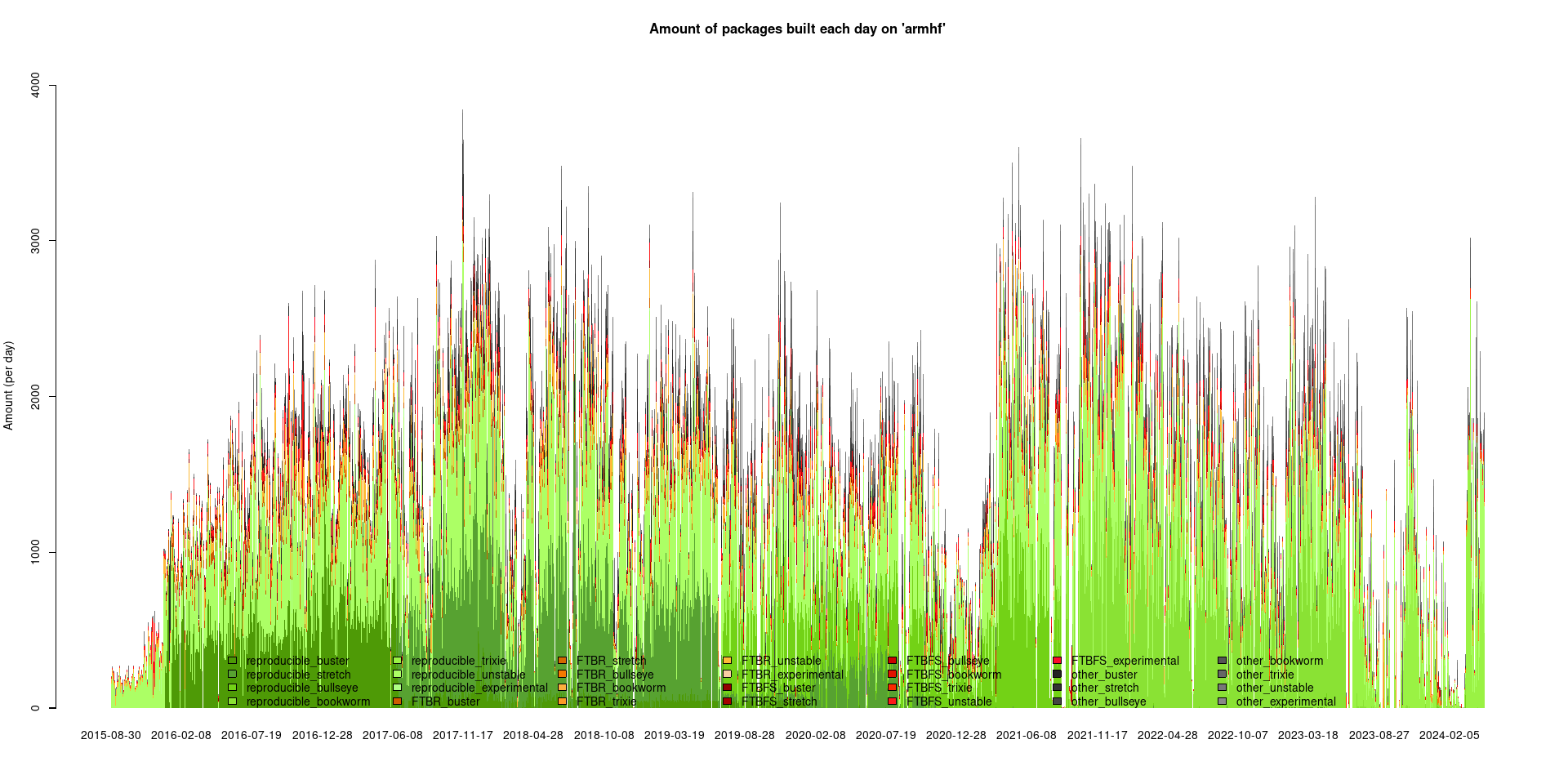
reproducible.debian.net Add 2 more armhf build nodes provided by Vagrant Cascadian. This added 7 more armhf builder jobs. We now run around 900 tests of armhf packages each day. (h01ger) The footer of each page now indicates by which Jenkins jobs build it. (h01ger)

diffoscope development diffoscope 45 has been released on January 4th. It features huge memory improvements when comparing large files, several fixes of squashfs related issues that prevented comparing two Tails images, and improve the file list of tar and cpio archive to be more precise and consistent over time. It also fixes a typo that prevented the Mach-O to work (Rainer M ller), improves comparisons of ELF files when specified on the command line, and solves a few more encoding issues.

Package reviews 134 reviews have been removed, 30 added and 37 updated in the previous week. 20 new fail to build from source issues were reported by Chris Lamb and Chris West. prebuilder will now skip installing diffoscope to save time if the build results are identical. (Reiner Herrmann)

9 January 2016

Norbert Preining: Kobo firmware 3.19.5761 mega update (KSM, nickel patch, ssh, fonts)

Since 3.18.0 there have been two new firmwares for the Kobo eInk devices. For the very recently released firmware release 3.19.5761 I have updated my collection of patches and features. As with previous mega-package, I prepared updates for all three hardwares, Mark4 (Glo), Mark5 (Aura), and Mark6 (GloHD), but only the one for Mark6 is tested by myself. Kobo Logo Changes since last release: Included patches from the Metazoa firmware patches: Custom reading footer style, My 15 line spacing values, Custom left & right margins, Brightness fine control, Search in Library by default, Custom page refresh options (1,2,3, ,12), Fix three KePub fullScreenReading bugs, Always display chapter name on navigation menu. Other things that are included are as usual: koreader, pbchess, coolreader, the ssh part of kobohack, and some side-loaded fonts. For details on the respective parts please see the previous post Download Mark6 Kobo GloHD firmware: Kobo 3.19.5761 for GloHD Mega update: Kobo-3.19.5761-combined/Mark6/KoboRoot.tgz Mark5 Aura firmware: Kobo 3.19.5761 for Aura Mega update: Kobo-3.19.5761-combined/Mark5/KoboRoot.tgz Mark4 Kobo Glo, Aura HD firmware: Kobo 3.19.5761 for Glo and AuraHD Mega update: Kobo-3.19.5761-combined/Mark4/KoboRoot.tgz Enjoy.

7 January 2016

Thorsten Glaser: git find published; test, review, fix it please

I just published the first version of git find on gh/mirabilos/git-find for easy collaboration. The repository deliberately only contains the script and the manual page so it can easily be merged into git.git with complete history later, should they accept it. git find is MirOS licenced. It does require a recent mksh (Update: I did start it in POSIX sh first, but it eventually turned out to require arrays, and I don t know perl(1) and am not going to rewrite it in C) and some common utility extensions to deal with NUL-separated lines (sort -z, grep -z, git ls-tree -z); also, support for '\0' in tr(1) and a comm(1) that does not choke on embedded NULs in lines.
To install or uninstall it, run

	$ git clone git@github.com:mirabilos/git-find.git
	$ cd git-find
	$ sudo ln -sf $PWD/git-find /usr/lib/git-core/
	$ sudo cp git-find.1 /usr/local/share/man/man1/
	  hack  
	$ sudo rm /usr/lib/git-core/git-find \
	    /usr/local/share/man/man1/git-find.1

then you can call it as git find and look at the documentation with git help find , as is customary. The idea behind this utility is to have a tool like git grep that acts on the list of files known to git (and not e.g. ignored files) to quickly search for, say, all PNG files in the repository (but not the generated ones). git find acts on the index for the HEAD, i.e. whatever commit is currently checked-out (unlike git grep which also knows about git add ed files; fix welcome) and then offers a filter syntax similar to find(1) to follow up: parenthes s, ! for negation, -a and -o for boolean are supported, as well as -name, -regex and -wholename and their case-insensitive variants, although regex uses grep(1) without (or, if the global option -E is given, with) -E, and the pattern matches use mksh(1) s, which ignores the locale and doesn t do [[:alpha:]] character classes yet. On the plus side, the output is guaranteed to be sorted; on the minus side, it is rather wastefully using temporary files (under $TMPDIR of course, so use of tmpfs is recommended). -print0 is the only output option (-print being the default). Another mode forwards the file list to the system find; since it doesn t support DOS-style response files, this only works if the amount of files is smaller than the operating system s limit; this mode supports the full range (except -maxdepth) of the system find(1) filters, e.g. -mmin -1 and -ls, but it occurs filesystem access penalty for the entire tree and doesn t sort the output, but can do -ls or even -exec. The idea here is that it can collaboratively be improved, reviewed, fixed, etc. and then, should they agree, with the entire history, subtree-merged into git.git and shipped to the world. Part of the development was sponsored by tarent solutions GmbH, the rest and the entire manual page were done in my vacation.

4 January 2016

John Goerzen: Hiking a mountain with Ian Murdock

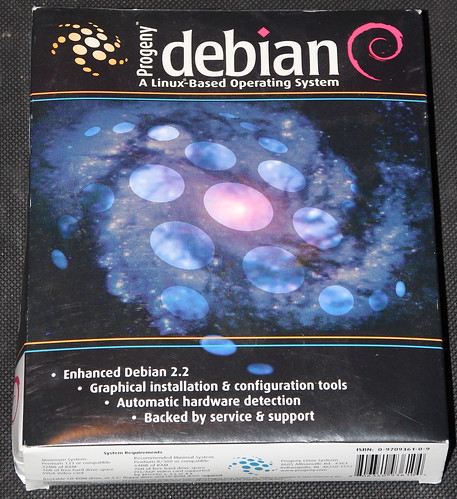
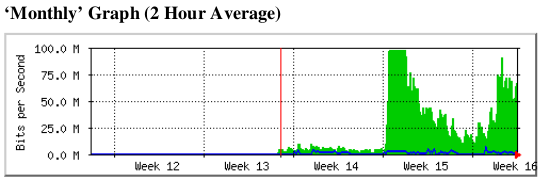
Would you like to hike a mountain? That question caught me by surprise. It was early in 2000, and I had flown to Tucson for a job interview. Ian Murdock was starting a new company, Progeny, and I was being interviewed for their first hire. Well, I thought, hiking will be fun. So we rode a bus or something to the top of the mountain and then hiked down. Our hike was full of well, everything. Ian talked about Tucson and the mountains, about his time as the Debian project leader, about his college days. I asked about the plants and such we were walking past. We talked about the plans for Progeny, my background, how I might fit in. It was part interview, part hike, part two geeks chatting. Ian had no HR telling him you can t go hiking down a mountain with a job candidate, as I m sure HR would have. And I am glad of it, because even 16 years later, that is still by far the best time I ever had at a job interview, despite the fact that it ruined the only pair of shoes I had brought along I had foolishly brought dress shoes for a, well, job interview. I guess it worked, too, because I was hired. Ian wanted to start up the company in Indianapolis, so over the next little while there was the busy work of moving myself and setting up an office. I remember those early days Ian and I went computer shopping at a local shop more than once to get the first workstations and servers for the company. Somehow he had found a deal on some office space in a high-rent office building. I still remember the puzzlement on the faces of accountants and lawyers dressed up in suits riding in the elevators with us in our shorts and sandals, or tie-die, next to them. Progeny s story was to be a complicated one. We set out to rock the world. We didn t. We didn t set out to make lasting friendships, but we often did. We set out to accomplish great things, and we did some of that, too. We experienced a full range of emotions there elation when we got hardware auto-detection working well or when our downloads looked very popular, despair when our funding didn t come through as we had hoped, being lost when our strategy had to change multiple times. And, as is the case everywhere, none of us were perfect. I still remember the excitement after we published our first release on the Internet. Our little server that could got pegged at 100Mb of outbound bandwidth (that was something for a small company in those days.) The moment must have meant something, because I still have the mrtg chart from that day on my computer, 15 years later. Progeny's Bandwidth Chart We made a good Linux distribution, an excellent Debian derivative, but commercial success did not flow from it. In the succeeding months, Ian and the company tried hard to find a strategy that would stick and make our big break. But that never happened. We had several rounds of layoffs when hoped-for funding never materialized. Ian eventually lost control of the company, and despite a few years of Itanium contract work after I left, closed for good. Looking back, Progeny was life compressed. During the good times, we had joy, sense of accomplishment, a sense of purpose at doing something well that was worth doing. I had what was my dream job back then: working on Debian as I loved to do, making the world a better place through Free Software, and getting paid to do it. And during the bad times, different people at Progeny experienced anger, cynicism, apathy, sorrow for the loss of our friends or plans, or simply a feeling to soldier on. All of the emotions, good or bad, were warranted in their own way. Bruce Byfield, one of my co-workers at Progeny, recently wrote a wonderful memoriam of Ian. He wrote, More than anything, he wanted to repeat his accomplishment with Debian, and, naturally he wondered if he could live up to his own expectations of himself. That, I think, was Ian s personal tragedy that he had succeeded early in life, and nothing else he did with his life could quite measure up to his expectations and memories. Ian was not the only one to have some guilt over Progeny. I, for years, wondered if I should have done more for the company, could have saved things by doing something more, or different. But I always came back to the conclusion I had at the time: that there was nothing I could do a terribly sad realization. In the years since, I watched Ubuntu take the mantle of easy-to-install Debian derivative. I saw them reprise some of the ideas we had, and even some of our mistakes. But by that time, Progeny was so thoroughly forgotten that I doubt they even realized they were doing it. I had long looked at our work at Progeny as a failure. Our main goal was never accomplished, our big product never sold many copies, our company eventually shuttered, our rock-the-world plan crumpled and forgotten. And by those traditional measurements, you could say it was a failure. But I have come to learn in the years since that success is a lot more that those things. Success is also about finding meaning and purpose through our work. As a programmer, success is nailing that algorithm that lets the application scale 10x more than before, or solving that difficult problem. As a manager, success is helping team members thrive, watching pieces come together on projects that no one person could ever do themselves. And as a person, success comes from learning from our experiences, and especially our mistakes. As J. Michael Straczynski wrote in a Babylon 5 episode, loosely paraphrased: Maybe this experience will be a good lesson. Too bad it was so painful, but there ain t no other kind. The thing about Progeny is this Ian built a group of people that wanted to change the world for the better. We gave it our all. And there s nothing wrong with that. Progeny did change the world. As us Progeny alumni have scattered around the country, we benefit from the lessons we learned there. And many of us were different , sort of out of place before Progeny, and there we found others that loved C compilers, bootloaders, and GPL licenses just as much as we did. We belonged, not just online but in life, and we went on to pull confidence and skill out of our experience at Progeny and use them in all sorts of ways over the years. And so did Ian. Who could have imagined the founder of Debian and Progeny would one day lead the cause of an old-guard Unix turning Open Source? I run ZFS on my Debian system today, and Ian is partly responsible for that and his time at Progeny is too. So I can remember Ian, and Progeny, as a success. And I leave you with a photo of my best memento from the time there: an original unopened boxed copy of Progeny Linux. IMG_6197_v1

3 January 2016

Iustin Pop: Orcas Island day trip, June 2015

I just finished going through my last set of pending-review pictures from 2015, so I'm starting 2016 with a post about the past. In June 2015 I travelled to Seattle/Kirkland area for work purposes, and took advantage of a weekend to plan some more outdoors stuff. After looking around on maps, I settled on the San Juan islands, so I started looking at hiking possibilities, and in the end Orcas island looked the best choice - all the others had much lower elevations. So, early in the morning, I started driving from Kirkland to Anacortes ferry terminal. The drive itself is quite nice: after getting past the more populated areas, passing Everett, the the view are very nice, especially in the early morning hours and with very few traffic. At Anacortes, there was already a small queue, fortunately I had a pre-ordered ticket, and there was not much to do until the ferry arrived except to look forward at the day, and hope that the weather will stay nice. On the ferry then, crossing the straits and enjoying the very nice views: Perfect blue Catching the morning wind The ferry stops at Orcas (is it a town or just the terminal), and the next stop is Eastsound town. I pre-planned here a stop to get a second mini-breakfast: however, I misjudged what the portion sizes are and got myself a maxi-cinnamon roll at Caffe Olga: Second breakfast :) At least I knew I wasn't going to be hungry for a while :) Driving on, briefly stopping at Cascade Lake (I also stopped on the way back, the view is nice), then reaching the parking at the Twin Lakes trail on the shore of Mountain Lake. Good think I arrived somewhat early the parking was quite full already. I also got a bit confused on which way the hike starts, since it's not well marked, but after that I started the hike. It's also possible to drive up to Mount Constitution, but that's just lame; hiking from the base it's quite easy, if you find how to start the hike. Anyway: Starting to climb Finished the steepest part At one point, one meets this particular sign: Which way now? Beware the Little Summit is not to be missed! After ~40 minutes of hiking, with some parts a tiny bit strenuous, the view is really breathtaking. It's definitely worth stopping by, as the view is (IMHO) nicer than the view from the top of Mt. Constitution: Wow! The reason I say this is better is because you look towards ocean, whereas later the view is back towards the continent. And looking towards the big ocean is just perfect! Plus, the many small island, fully covered with forest are also nice. Onwards then towards the peak of Mount Constitution. You cross the "ridge" of the island, and your view shifts to the other side. Which means you see back to the Mountain Lake where the hike starts: Loocking back towards the start Here the path is more exposed, not through tall forest like at the beginning: Watching the horizon Right before reaching the peak, you pass through an interesting forest: A different kind of forest And then you're finally reaching the peak. Compared to Switzerland, it's very much not impressive (730m), but nevertheless, being so close to the ocean results in some very nice views: Couldn't have asked for better weather You can go into the small tower, and read through the history of the location, including the personal life of Robert Moran (shipbuilder), who retired in 1905 to Orcas island to live what (his doctors said to be) his last months, and who instead ended living until 1943. Not bad! To be filled under "too much stress is bad, nature is good" heading, I think. After eating a small packed lunch, I started back. At the beginning the forest is similar to the one back at the beginning of the hike, but then, as you reach the level of lakes, it is slightly different. More tall (old?) trees, more moss and ferns: Afternoon sun in the forest I passed briefly by the Twin Lakes, which were interesting (lots of submerged trunks), and then finally on the Twin Lakes trail back to the start. The views of Mountain Lake from here are also nice, especially in the less harsh afternoon sun: Reached Mountain Lake How did those trees get there? And then the hike was over. I still had some time to spend before the ferry I had a ticket on was scheduled, so I drove down to Olga town, as I was curious what was at the end of "Olga Road". Not much, but again nice views, and this very picturesque pier: Nice pier in Olga And then it was back to the ferry, waiting in line, getting on the ferry, and crossing back: Goodbye Orcas! Overall, it was a day well spent, part different, part similar to last year's mostly road trip. Definitely recommended if you're in the area, and there are a couple of other hikes on Orcas Island, plus all the other islands which make up the San Juans. However, traffic on the way back was not that awesome :/ Small price though!

2 January 2016

Daniel Pocock: The great life of Ian Murdock and police brutality in context

Tributes: (You can Follow or Tweet about this blog on Twitter) Over the last week, people have been saying a lot about the wonderful life of Ian Murdock and his contributions to Debian and the world of free software. According to one news site, a San Francisco police officer, Grace Gatpandan, has been doing the opposite, starting a PR spin operation, leaking snippets of information about what may have happened during Ian's final 24 hours. Sadly, these things are now starting to be regurgitated without proper scrutiny by the mainstream press (note the erroneous reference to SFGate with link to SFBay.ca, this is British tabloid media at its best). The report talks about somebody (no suggestion that it was even Ian) "trying to break into a residence". Let's translate that from the spin-doctor-speak back to English: it is the silly season, when many people have a couple of extra drinks and do silly things like losing their keys. "a residence", or just their own home perhaps? Maybe some AirBNB guest arriving late to the irritation of annoyed neighbours? Doesn't the choice of words make the motive sound so much more sinister? Nobody knows the full story and nobody knows if this was Ian, so snippets of information like this are inappropriate, especially when somebody is deceased. Did they really mean to leave people with the impression that one of the greatest visionaries of the Linux world was also a cat burglar? That somebody who spent his life giving selflessly and generously for the benefit of the whole world (his legacy is far greater than Steve Jobs, as Debian comes with no strings attached) spends the Christmas weekend taking things from other people's houses in the dark of the night? The report doesn't mention any evidence of a break-in or any charges for breaking-in. If having a few drinks and losing your keys in December is such a sorry state to be in, many of us could potentially be framed in the same terms at some point in our lives. That is one of the reasons I feel so compelled to write this: somebody else could be going through exactly the same experience at the moment you are reading this. Any of us could end up facing an assault as unpleasant as the tweets imply at some point in the future. At least I can console myself that as a privileged white male, the risk to myself is much lower than for those with mental illness, the homeless, transgender, Muslim or black people but as the tweets suggest, it could be any of us. The story reports that officers didn't actually come across Ian breaking in to anything, they encountered him at a nearby street corner. If he had weapons or drugs or he was known to police that would have almost certainly been emphasized. Is it right to rush in and deprive somebody of their liberties without first giving them an opportunity to identify themselves and possibly confirm if they had a reason to be there? The report goes on, "he was belligerent", "he became violent", "banging his head" all by himself. How often do you see intelligent and successful people like Ian Murdock spontaneously harming themselves in that way? Can you find anything like that in any of the 4,390 Ian Murdock videos on YouTube? How much more frequently do you see reports that somebody "banged their head", all by themselves of course, during some encounter with law enforcement? Do police never make mistakes like other human beings? If any person was genuinely trying to spontaneously inflict a head injury on himself, as the police have suggested, why wouldn't the police leave them in the hospital or other suitable care? Do they really think that when people are displaying signs of self-harm, rounding them up and taking them to jail will be in their best interests? Now, I'm not suggesting this started out with some sort of conspiracy. Police may have been at the end of a long shift (and it is a disgrace that many US police are not paid for their overtime) or just had a rough experience with somebody far more sinister. On the other hand, there may have been a mistake, gaps in police training or an inappropriate use of a procedure that is not always justified, like a strip search, that causes profound suffering for many victims. A select number of US police forces have been shamed around the world for a series of incidents of extreme violence in recent times, including the death of Michael Brown in Ferguson, shooting Walter Scott in the back, death of Freddie Gray in Baltimore and the attempts of Chicago's police to run an on-shore version of Guantanamo Bay. Beyond those highly violent incidents, the world has also seen the abuse of Ahmed Mohamed, the Muslim schoolboy arrested for his interest in electronics and in 2013, the suicide of Aaron Swartz which appears to be a direct consequence of the "Justice" department's obsession with him. What have the police learned from all this bad publicity? Are they changing their methods, or just hiring more spin doctors? If that is their response, then doesn't it leave them with a cruel advantage over those people who were deceased? Isn't it standard practice for some police to simply round up anybody who is a bit lost and write up a charge sheet for resisting arrest or assaulting an officer as insurance against questions about their own excessive use of force? When British police executed Jean Charles de Menezes on a crowded tube train and realized they had just done something incredibly outrageous, their PR office went to great lengths to try and protect their image, even photoshopping images of Menezes to make him look more like some other suspect in a wanted poster. To this day, they continue to refer to Menezes as a victim of the terrorists, could they be any more arrogant? While nobody believes the police woke up that morning thinking "let's kill some random guy on the tube", it is clear they made a mistake and like many people (not just police), they immediately prioritized protecting their reputation over protecting the truth. Nobody else knows exactly what Ian was doing and exactly what the police did to him. We may never know. However, any disparaging or irrelevant comments from the police should be viewed with some caution. The horrors of incarceration It would be hard for any of us to understand everything that an innocent person goes through when detained by the police. The recently released movie about The Stanford Prison Experiment may be an interesting place to start, a German version produced in 2001, Das Experiment, is also very highly respected. The United States has the largest prison population in the world and the second-highest per-capita incarceration rate. Many, including some on death row, are actually innocent, in the wrong place at the wrong time, without the funds to hire an attorney. The system, and the police and prison officers who operate it, treat these people as packages on a conveyor belt, without even the most basic human dignity. Whether their encounter lasts for just a few hours or decades, is it any surprise that something dies inside them when they discover this cruel side of American society? Worldwide, there is an increasing trend to make incarceration as degrading as possible. People may be innocent until proven guilty, but this hasn't stopped police in the UK from locking up and strip-searching over 4,500 children in a five year period, would these children go away feeling any different than if they had an encounter with Jimmy Saville or Rolf Harris? One can only wonder what they do to adults. What all this boils down to is that people shouldn't really be incarcerated unless it is clear the danger they pose to society is greater than the danger they may face in a prison. What can people do for Ian and for justice? Now that these unfortunate smears have appeared, it would be great to try and fill the Internet with stories of the great things Ian has done for the world. Write whatever you feel about Ian's work and your own experience of Debian. While the circumstances of the final tweets from his Twitter account are confusing, the tweets appear to be consistent with many other complaints about US law enforcement. Are there positive things that people can do in their community to help reduce the harm? Sending books to prisoners (the UK tried to ban this) can make a difference. Treat them like humans, even if the system doesn't. Recording incidents of police activities can also make a huge difference, such as the video of the shooting of Walter Scott or the UK police making a brutal unprovoked attack on a newspaper vendor. Don't just walk past a situation and assume everything is under control. People making recordings may find themselves in danger, it is recommended to use software that automatically duplicates each recording, preferably to the cloud, so that if the police ask you to delete such evidence, you can let them watch you delete it and still have a copy. Can anybody think of awards that Ian Murdock should be nominated for, either in free software, computing or engineering in general? Some, like the prestigious Queen Elizabeth Prize for Engineering can't be awarded posthumously but others may be within reach. Come and share your ideas on the debian-project mailing list, there are already some here. Best of all, Ian didn't just build software, he built an organization, Debian. Debian's principles have helped to unite many people from otherwise different backgrounds and carry on those principles even when Ian is no longer among us. Find out more, install it on your computer or even look for ways to participate in the project.

21 December 2015

David Bremner: Bootable Debian USB

Umm. Somehow I thought this would be easier than learning about live-build. Probably I was wrong. There are probably many better tutorials on the web. Two useful observations: zeroing the key can eliminate mysterious grub errors, and systemd-nspawn is pretty handy. One thing that should have been obvious, but wasn't to me is that it's easier to install grub onto a device outside of any container. Find device
 $ dmesg
Count sectors
 # fdisk -l /dev/sdx
Assume that every command after here is dangerous. Zero it out. This is overkill for a fresh key, but fixed a problem with reusing a stick that had a previous live distro installed on it.
 # dd if=/dev/zero of=/dev/sdx bs=1048576 count=$sectors
Make file system. There are lots of options. I eventually used parted
 # parted
 (parted) mklabel msdos
 (parted) mkpart primary ext2 1 -1
 (parted) set 1 boot on
 (parted) quit
Make a file system
 # mkfs.ext2 /dev/sdx1
 # mount /dev/sdx1 /mnt
Install the base system
 # debootstrap --variant=minbase jessie /mnt http://httpredir.debian.org/debian/
Install grub (no chroot needed)
 # grub-install --boot-directory /mnt/boot /dev/sdx1
Set a root password
 # chroot /mnt
 # passwd root
 # exit
create up fstab
# blkid -p /dev/sdc1   cut -f2 -d' ' > /mnt/etc/fstab
Now edit to fix syntax, tell ext2, etc... Now switch to system-nspawn, to avoid boring bind mounting, etc..
# systemd-nspawn -b -D /mnt
login to the container, install linux-base, linux-image-amd64, grub-pc EDIT: fixed block size of dd, based on suggestion of tg.

Next.

Previous.