Joachim Breitner: Extrinsic termination proofs for well-founded recursion in Lean
 A few months ago I explained that one reason why this blog has become more quiet is that all my work on Lean is covered elsewhere.
This post is an exception, because it is an observation that is (arguably) interesting, but does not lead anywhere, so where else to put it than my own blog
Want to share your thoughts about this? Please join the discussion on the Lean community zulip!
Background
When defining a function recursively in Lean that has nested recursion, e.g. a recusive call that is in the argument to a higher-order function like List.map, then extra attention used to be necessary so that Lean can see that xs.map applies its argument only elements of the list xs. The usual idiom is to write xs.attach.map instead, where List.attach attaches to the list elements a proof that they are in that list. You can read more about this my Lean blog post on recursive definitions and our new shiny reference manual, look for Example Nested Recursion in Higher-order Functions .
To make this step less tedious I taught Lean to automatically rewrite xs.map to xs.attach.map (where suitable) within the construction of well-founded recursion, so that nested recursion just works (issue #5471). We already do such a rewriting to change if c then else to the dependent if h : c then else , but the attach-introduction is much more ambitious (the rewrites are not definitionally equal, there are higher-order arguments etc.) Rewriting the terms in a way that we can still prove the connection later when creating the equational lemmas is hairy at best. Also, we want the whole machinery to be extensible by the user, setting up their own higher order functions to add more facts to the context of the termination proof.
I implemented it like this (PR #6744) and it ships with 4.18.0, but in the course of this work I thought about a quite different and maybe better way to do this, and well-founded recursion in general:
A simpler fix
Recall that to use WellFounded.fix
WellFounded.fix : (hwf : WellFounded r) (F : (x : ) ((y : ) r y x C y) C x) (x : ) : C x
we have to rewrite the functorial of the recursive function, which naturally has type
F : ((y : ) C y) ((x : ) C x)
to the one above, where all recursive calls take the termination proof r y x. This is a fairly hairy operation, mangling the type of matcher s motives and whatnot.
Things are simpler for recursive definitions using the new partial_fixpoint machinery, where we use Lean.Order.fix
Lean.Order.fix : [CCPO ] (F : ) (hmono : monotone F) :
so the functorial s type is unmodified (here will be ((x : ) C x)), and everything else is in the propositional side-condition montone F. For this predicate we have a syntax-guided compositional tactic, and it s easily extensible, e.g. by
theorem monotone_mapM (f :         m  ) (xs : List  ) (hmono : monotone f) :
    monotone (fun x => xs.mapM (f x))
Once given, we don t care about the content of that proof. In particular proving the unfolding theorem only deals with the unmodified F that closely matches the function definition as written by the user. Much simpler!
Isabelle has it easier
Isabelle also supports well-founded recursion, and has great support for nested recursion. And it s much simpler!
There, all you have to do to make nested recursion work is to define a congruence lemma of the form, for List.map something like our List.map_congr_left
List.map_congr_left : (h :   a   l, f a = g a) :
    List.map f l = List.map g l
This is because in Isabelle, too, the termination proofs is a side-condition that essentially states the functorial F calls its argument f only on smaller arguments .
Can we have it easy, too?
I had wished we could do the same in Lean for a while, but that form of congruence lemma just isn t strong enough for us.
But maybe there is a way to do it, using an existential to give a witness that F can alternatively implemented using the more restrictive argument. The following callsOn P F predicate can express that F calls its higher-order argument only on arguments that satisfy the predicate P:
section setup
variable   : Sort u
variable   :     Sort v
variable   : Sort w
def callsOn (P :     Prop) (F : (  y,   y)    ) :=
    (F': (  y, P y     y)    ),   f, F' (fun y _ => f y) = F f
variable (R :         Prop)
variable (F : (  y,   y)   (  x,   x))
local infix:50 "   " => R
def recursesVia : Prop :=   x, callsOn (    x) (fun f => F f x)
noncomputable def fix (wf : WellFounded R) (h : recursesVia R F) : (  x,   x) :=
  wf.fix (fun x => (h x).choose)
def fix_eq (wf : WellFounded R) h x :
    fix R F wf h x = F (fix R F wf h) x := by
  unfold fix
  rw [wf.fix_eq]
  apply (h x).choose_spec
This allows nice compositional lemmas to discharge callsOn predicates:
theorem callsOn_base (y :  ) (hy : P y) :
    callsOn P (fun (f :   x,   x) => f y) := by
  exists fun f => f y hy
  intros; rfl
@[simp]
theorem callsOn_const (x :  ) :
    callsOn P (fun (_ :   x,   x) => x) :=
   fun _ => x, fun _ => rfl
theorem callsOn_app
      : Sort uu    : Sort ww
    (F  :  (  y,   y)        ) -- can this also support dependent types?
    (F  :  (  y,   y)    )
    (h  : callsOn P F )
    (h  : callsOn P F ) :
    callsOn P (fun f => F  f (F  f)) := by
  obtain  F ', h  := h
  obtain  F ', h  := h
  exists (fun f => F ' f (F ' f))
  intros; simp_all
theorem callsOn_lam
      : Sort uu
    (F :     (  y,   y)    ) -- can this also support dependent types?
    (h :   x, callsOn P (F x)) :
    callsOn P (fun f x => F x f) := by
  exists (fun f x => (h x).choose f)
  intro f
  ext x
  apply (h x).choose_spec
theorem callsOn_app2
      : Sort uu    : Sort ww
    (g :          )
    (F  :  (  y,   y)    ) -- can this also support dependent types?
    (F  :  (  y,   y)    )
    (h  : callsOn P F )
    (h  : callsOn P F ) :
    callsOn P (fun f => g (F  f) (F  f)) := by
  apply_rules [callsOn_app, callsOn_const]
With this setup, we can have the following, possibly user-defined, lemma expressing that List.map calls its arguments only on elements of the list:
theorem callsOn_map (  : Type uu) (  : Type ww)
    (P :     Prop) (F : (  y,   y)        ) (xs : List  )
    (h :   x, x   xs   callsOn P (fun f => F f x)) :
    callsOn P (fun f => xs.map (fun x => F f x)) := by
  suffices callsOn P (fun f => xs.attach.map (fun  x, h  => F f x)) by
    simpa
  apply callsOn_app
    apply callsOn_app
      apply callsOn_const
      apply callsOn_lam
      intro  x', hx'
      dsimp
      exact (h x' hx')
    apply callsOn_const
end setup
So here is the (manual) construction of a nested map for trees:
section examples
structure Tree (  : Type u) where
  val :
  cs : List (Tree  )
-- essentially
-- def Tree.map (f :      ) : Tree     Tree   :=
--   fun t =>  f t.val, t.cs.map Tree.map )
noncomputable def Tree.map (f :      ) : Tree     Tree   :=
  fix (sizeOf   < sizeOf  ) (fun map t =>  f t.val, t.cs.map map )
    (InvImage.wf (sizeOf  ) WellFoundedRelation.wf) <  by
  intro  v, cs
  dsimp only
  apply callsOn_app2
    apply callsOn_const
    apply callsOn_map
    intro t' ht'
    apply callsOn_base
    -- ht' : t'   cs -- !
    --   sizeOf t' < sizeOf   val := v, cs := cs
    decreasing_trivial
end examples
This makes me happy!
All details of the construction are now contained in a proof that can proceed by a syntax-driven tactic and that s easily and (likely robustly) extensible by the user. It also means that we can share a lot of code paths (e.g. everything related to equational theorems) between well-founded recursion and partial_fixpoint.
I wonder if this construction is really as powerful as our current one, or if there are certain (likely dependently typed) functions where this doesn t fit, but the above is dependent, so it looks good.
With this construction, functions defined by well-founded recursion will reduce even worse in the kernel, I assume. This may be a good thing.
The cake is a lie
What unfortunately kills this idea, though, is the generation of the functional induction principles, which I believe is not (easily) possible with this construction: The functional induction principle is proved by massaging F to return a proof, but since the extra assumptions (e.g. for ite or List.map) only exist in the termination proof, they are not available in F.
Oh wey, how anticlimactic.
PS: Path dependencies
Curiously, if we didn t have functional induction at this point yet, then very likely I d change Lean to use this construction, and then we d either not get functional induction, or it would be implemented very differently, maybe a more syntactic approach that would re-prove termination. I guess that s called path dependence.
fix
Recall that to use WellFounded.fix
WellFounded.fix : (hwf : WellFounded r) (F : (x : ) ((y : ) r y x C y) C x) (x : ) : C xF : ((y : ) C y) ((x : ) C x)r y x. This is a fairly hairy operation, mangling the type of matcher s motives and whatnot.
Things are simpler for recursive definitions using the new partial_fixpoint machinery, where we use Lean.Order.fix
Lean.Order.fix : [CCPO ] (F : ) (hmono : monotone F) : will be ((x : ) C x)), and everything else is in the propositional side-condition montone F. For this predicate we have a syntax-guided compositional tactic, and it s easily extensible, e.g. by
theorem monotone_mapM (f : m ) (xs : List ) (hmono : monotone f) :
monotone (fun x => xs.mapM (f x)) F that closely matches the function definition as written by the user. Much simpler!
Isabelle has it easier
Isabelle also supports well-founded recursion, and has great support for nested recursion. And it s much simpler!
There, all you have to do to make nested recursion work is to define a congruence lemma of the form, for List.map something like our List.map_congr_left
List.map_congr_left : (h : a l, f a = g a) :
List.map f l = List.map g l
This is because in Isabelle, too, the termination proofs is a side-condition that essentially states the functorial F calls its argument f only on smaller arguments .
Can we have it easy, too?
I had wished we could do the same in Lean for a while, but that form of congruence lemma just isn t strong enough for us.
But maybe there is a way to do it, using an existential to give a witness that F can alternatively implemented using the more restrictive argument. The following callsOn P F predicate can express that F calls its higher-order argument only on arguments that satisfy the predicate P:
section setup
variable : Sort u
variable : Sort v
variable : Sort w
def callsOn (P : Prop) (F : ( y, y) ) :=
(F': ( y, P y y) ), f, F' (fun y _ => f y) = F f
variable (R : Prop)
variable (F : ( y, y) ( x, x))
local infix:50 " " => R
def recursesVia : Prop := x, callsOn ( x) (fun f => F f x)
noncomputable def fix (wf : WellFounded R) (h : recursesVia R F) : ( x, x) :=
wf.fix (fun x => (h x).choose)
def fix_eq (wf : WellFounded R) h x :
fix R F wf h x = F (fix R F wf h) x := by
unfold fix
rw [wf.fix_eq]
apply (h x).choose_spec
This allows nice compositional lemmas to discharge callsOn predicates:
theorem callsOn_base (y : ) (hy : P y) :
callsOn P (fun (f : x, x) => f y) := by
exists fun f => f y hy
intros; rfl
@[simp]
theorem callsOn_const (x : ) :
callsOn P (fun (_ : x, x) => x) :=
fun _ => x, fun _ => rfl
theorem callsOn_app
: Sort uu : Sort ww
(F : ( y, y) ) -- can this also support dependent types?
(F : ( y, y) )
(h : callsOn P F )
(h : callsOn P F ) :
callsOn P (fun f => F f (F f)) := by
obtain F ', h := h
obtain F ', h := h
exists (fun f => F ' f (F ' f))
intros; simp_all
theorem callsOn_lam
: Sort uu
(F : ( y, y) ) -- can this also support dependent types?
(h : x, callsOn P (F x)) :
callsOn P (fun f x => F x f) := by
exists (fun f x => (h x).choose f)
intro f
ext x
apply (h x).choose_spec
theorem callsOn_app2
: Sort uu : Sort ww
(g : )
(F : ( y, y) ) -- can this also support dependent types?
(F : ( y, y) )
(h : callsOn P F )
(h : callsOn P F ) :
callsOn P (fun f => g (F f) (F f)) := by
apply_rules [callsOn_app, callsOn_const]
With this setup, we can have the following, possibly user-defined, lemma expressing that List.map calls its arguments only on elements of the list:
theorem callsOn_map ( : Type uu) ( : Type ww)
(P : Prop) (F : ( y, y) ) (xs : List )
(h : x, x xs callsOn P (fun f => F f x)) :
callsOn P (fun f => xs.map (fun x => F f x)) := by
suffices callsOn P (fun f => xs.attach.map (fun x, h => F f x)) by
simpa
apply callsOn_app
apply callsOn_app
apply callsOn_const
apply callsOn_lam
intro x', hx'
dsimp
exact (h x' hx')
apply callsOn_const
end setup
So here is the (manual) construction of a nested map for trees:
section examples
structure Tree ( : Type u) where
val :
cs : List (Tree )
-- essentially
-- def Tree.map (f : ) : Tree Tree :=
-- fun t => f t.val, t.cs.map Tree.map )
noncomputable def Tree.map (f : ) : Tree Tree :=
fix (sizeOf < sizeOf ) (fun map t => f t.val, t.cs.map map )
(InvImage.wf (sizeOf ) WellFoundedRelation.wf) < by
intro v, cs
dsimp only
apply callsOn_app2
apply callsOn_const
apply callsOn_map
intro t' ht'
apply callsOn_base
-- ht' : t' cs -- !
-- sizeOf t' < sizeOf val := v, cs := cs
decreasing_trivial
end examples
This makes me happy!
All details of the construction are now contained in a proof that can proceed by a syntax-driven tactic and that s easily and (likely robustly) extensible by the user. It also means that we can share a lot of code paths (e.g. everything related to equational theorems) between well-founded recursion and partial_fixpoint.
I wonder if this construction is really as powerful as our current one, or if there are certain (likely dependently typed) functions where this doesn t fit, but the above is dependent, so it looks good.
With this construction, functions defined by well-founded recursion will reduce even worse in the kernel, I assume. This may be a good thing.
The cake is a lie
What unfortunately kills this idea, though, is the generation of the functional induction principles, which I believe is not (easily) possible with this construction: The functional induction principle is proved by massaging F to return a proof, but since the extra assumptions (e.g. for ite or List.map) only exist in the termination proof, they are not available in F.
Oh wey, how anticlimactic.
PS: Path dependencies
Curiously, if we didn t have functional induction at this point yet, then very likely I d change Lean to use this construction, and then we d either not get functional induction, or it would be implemented very differently, maybe a more syntactic approach that would re-prove termination. I guess that s called path dependence.
List.map_congr_left : (h : a l, f a = g a) :
List.map f l = List.map g lF can alternatively implemented using the more restrictive argument. The following callsOn P F predicate can express that F calls its higher-order argument only on arguments that satisfy the predicate P:
section setup
variable : Sort u
variable : Sort v
variable : Sort w
def callsOn (P : Prop) (F : ( y, y) ) :=
(F': ( y, P y y) ), f, F' (fun y _ => f y) = F f
variable (R : Prop)
variable (F : ( y, y) ( x, x))
local infix:50 " " => R
def recursesVia : Prop := x, callsOn ( x) (fun f => F f x)
noncomputable def fix (wf : WellFounded R) (h : recursesVia R F) : ( x, x) :=
wf.fix (fun x => (h x).choose)
def fix_eq (wf : WellFounded R) h x :
fix R F wf h x = F (fix R F wf h) x := by
unfold fix
rw [wf.fix_eq]
apply (h x).choose_speccallsOn predicates:
theorem callsOn_base (y : ) (hy : P y) :
callsOn P (fun (f : x, x) => f y) := by
exists fun f => f y hy
intros; rfl
@[simp]
theorem callsOn_const (x : ) :
callsOn P (fun (_ : x, x) => x) :=
fun _ => x, fun _ => rfl
theorem callsOn_app
: Sort uu : Sort ww
(F : ( y, y) ) -- can this also support dependent types?
(F : ( y, y) )
(h : callsOn P F )
(h : callsOn P F ) :
callsOn P (fun f => F f (F f)) := by
obtain F ', h := h
obtain F ', h := h
exists (fun f => F ' f (F ' f))
intros; simp_all
theorem callsOn_lam
: Sort uu
(F : ( y, y) ) -- can this also support dependent types?
(h : x, callsOn P (F x)) :
callsOn P (fun f x => F x f) := by
exists (fun f x => (h x).choose f)
intro f
ext x
apply (h x).choose_spec
theorem callsOn_app2
: Sort uu : Sort ww
(g : )
(F : ( y, y) ) -- can this also support dependent types?
(F : ( y, y) )
(h : callsOn P F )
(h : callsOn P F ) :
callsOn P (fun f => g (F f) (F f)) := by
apply_rules [callsOn_app, callsOn_const]List.map calls its arguments only on elements of the list:
theorem callsOn_map ( : Type uu) ( : Type ww)
(P : Prop) (F : ( y, y) ) (xs : List )
(h : x, x xs callsOn P (fun f => F f x)) :
callsOn P (fun f => xs.map (fun x => F f x)) := by
suffices callsOn P (fun f => xs.attach.map (fun x, h => F f x)) by
simpa
apply callsOn_app
apply callsOn_app
apply callsOn_const
apply callsOn_lam
intro x', hx'
dsimp
exact (h x' hx')
apply callsOn_const
end setupmap for trees:
section examples
structure Tree ( : Type u) where
val :
cs : List (Tree )
-- essentially
-- def Tree.map (f : ) : Tree Tree :=
-- fun t => f t.val, t.cs.map Tree.map )
noncomputable def Tree.map (f : ) : Tree Tree :=
fix (sizeOf < sizeOf ) (fun map t => f t.val, t.cs.map map )
(InvImage.wf (sizeOf ) WellFoundedRelation.wf) < by
intro v, cs
dsimp only
apply callsOn_app2
apply callsOn_const
apply callsOn_map
intro t' ht'
apply callsOn_base
-- ht' : t' cs -- !
-- sizeOf t' < sizeOf val := v, cs := cs
decreasing_trivial
end examplespartial_fixpoint.
I wonder if this construction is really as powerful as our current one, or if there are certain (likely dependently typed) functions where this doesn t fit, but the above is dependent, so it looks good.
With this construction, functions defined by well-founded recursion will reduce even worse in the kernel, I assume. This may be a good thing.
 Update 20250309 13:20-03:00 - How to help
A friend of mine living in the USA sent me this link to help the flood victims:



 The "real" thing
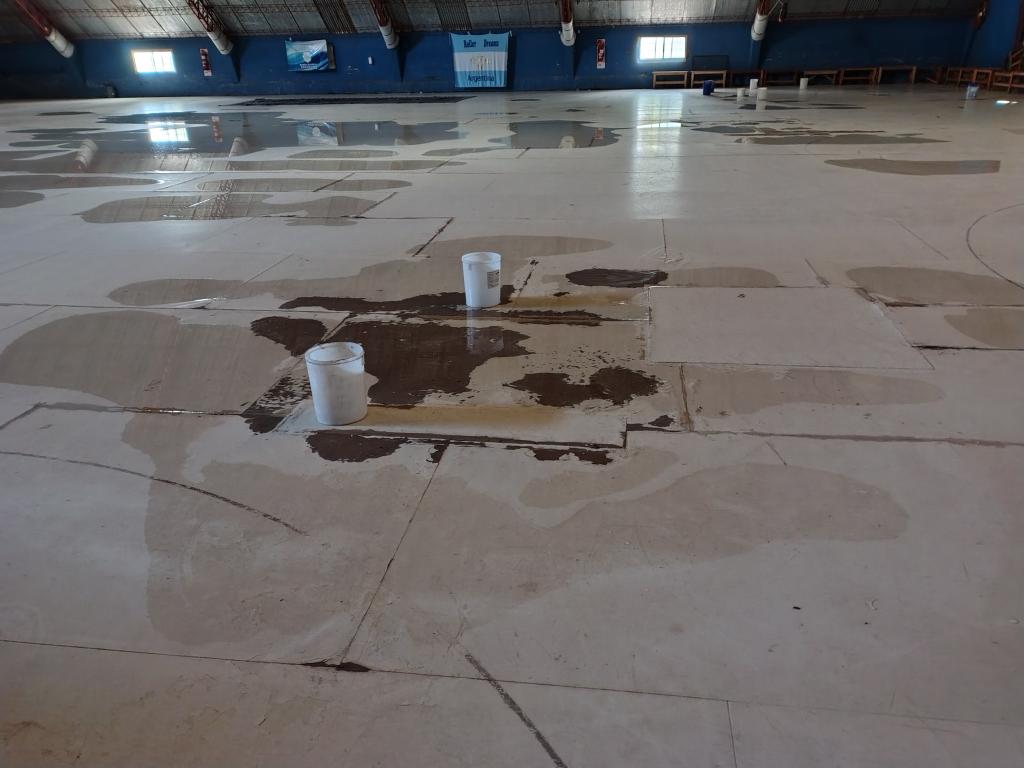
Let's get to the heavy, heartbreaker part. I did go to downtown Bah a Blanca, but during night, so let me share some links, most of them in Spanish, but images are images:
 From April 27th to 30th, 2024,
 This was the fifth time that a MiniDebConf (as an exclusive in-person event
about Debian) took place in Brazil. Previous editions were in Curitiba
(
 2024 edition numbers
During the four days of the event, several activities took place for all
levels of users and collaborators of the Debian project. The official schedule
was composed of:
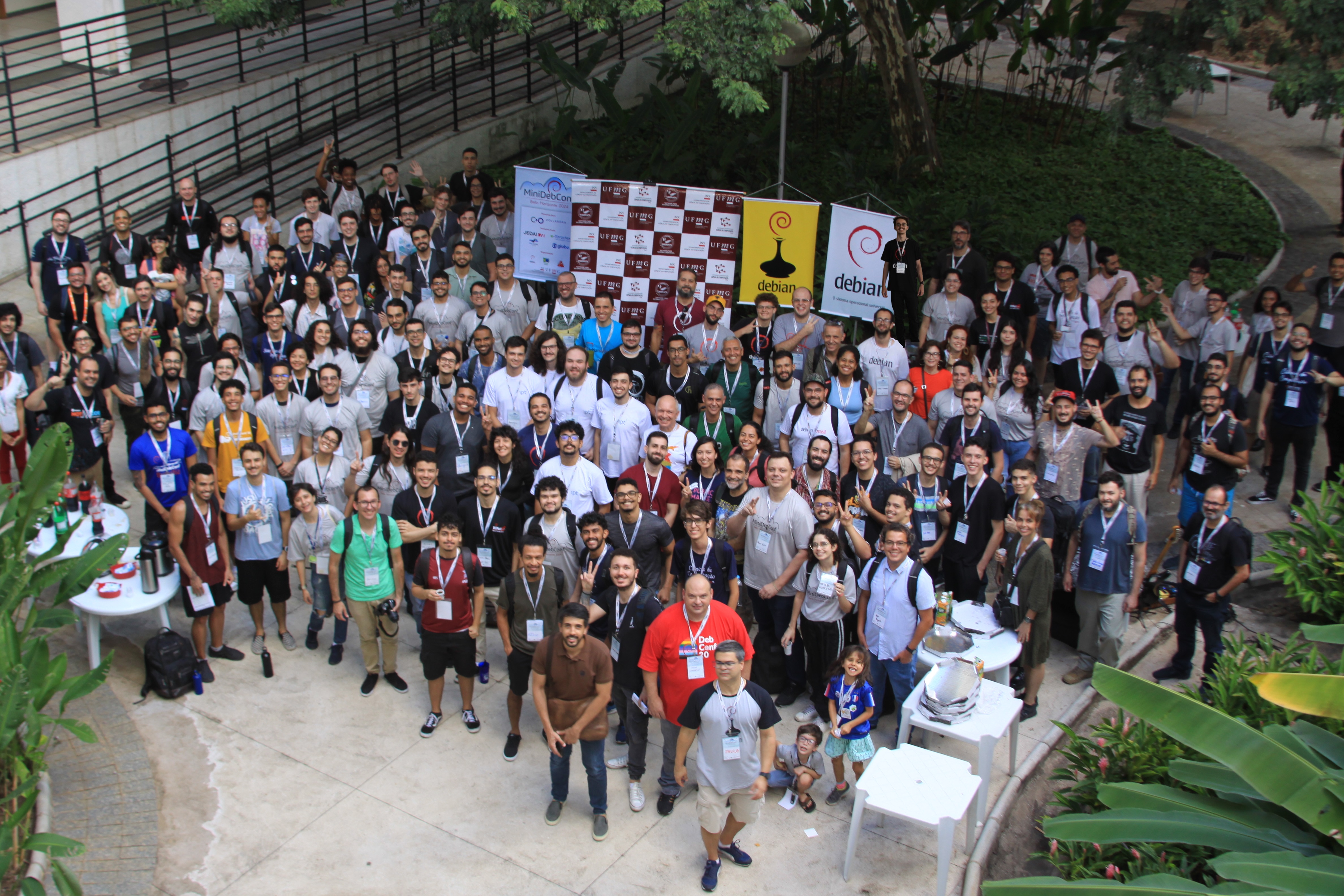
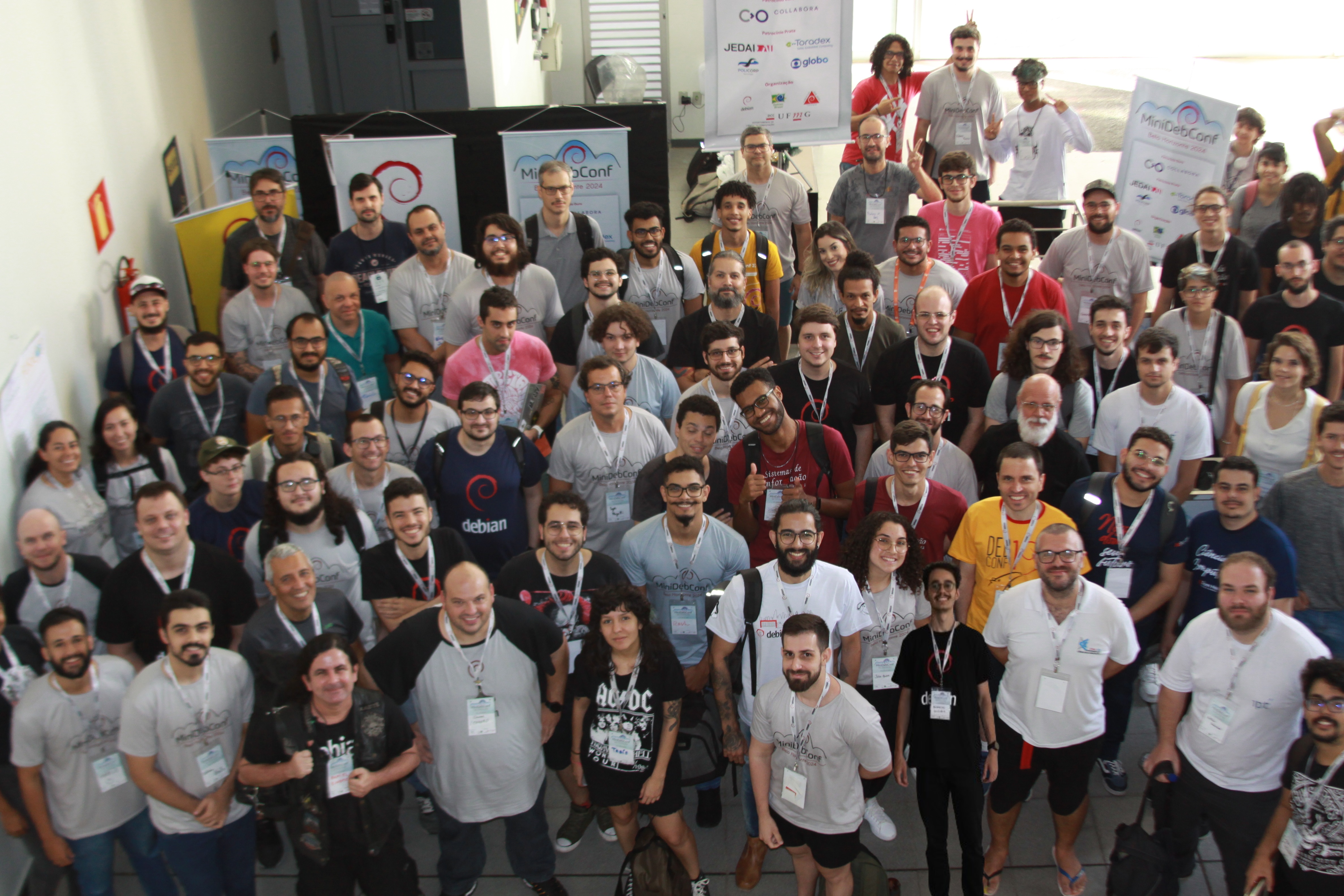
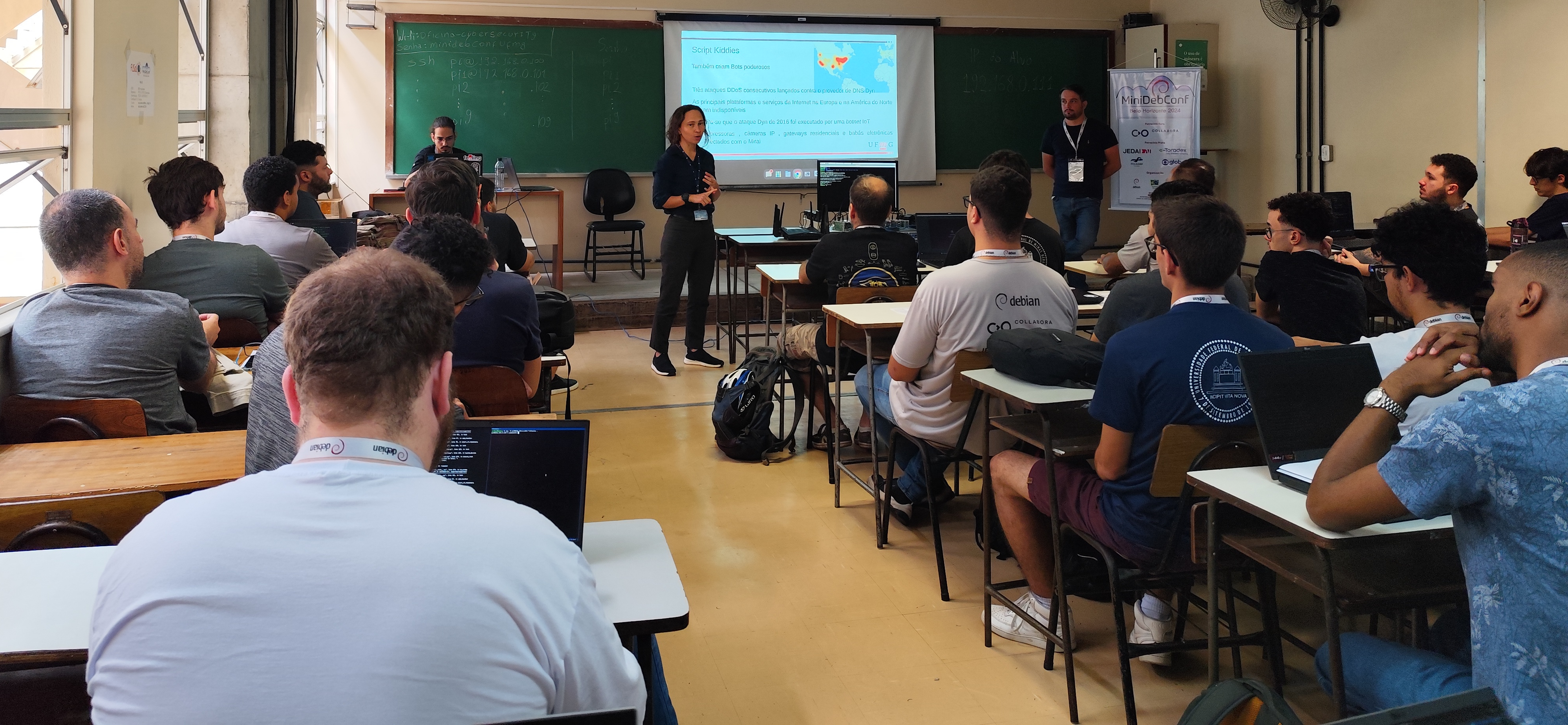 The final numbers for MiniDebConf Belo Horizonte 2024 show that we had a
record number of participants.
 Activities
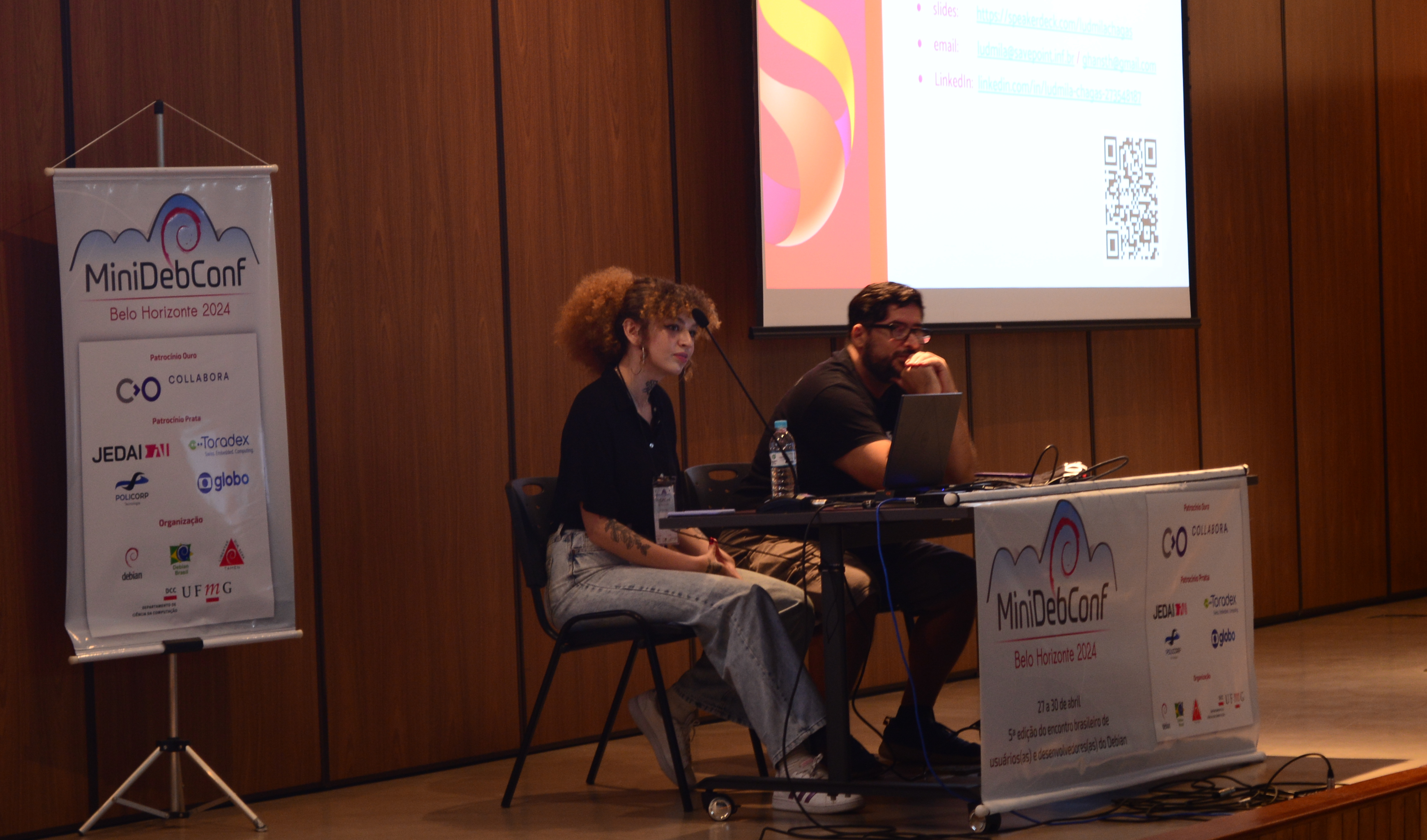
The MiniDebConf schedule was intense and diverse. On the 27th, 29th and 30th
(Saturday, Monday and Tuesday) we had talks, discussions, workshops and many
practical activities.
 On the 28th (Sunday), the Day Trip took place, a day dedicated to sightseeing
around the city. In the morning we left the hotel and went, on a chartered bus,
to the
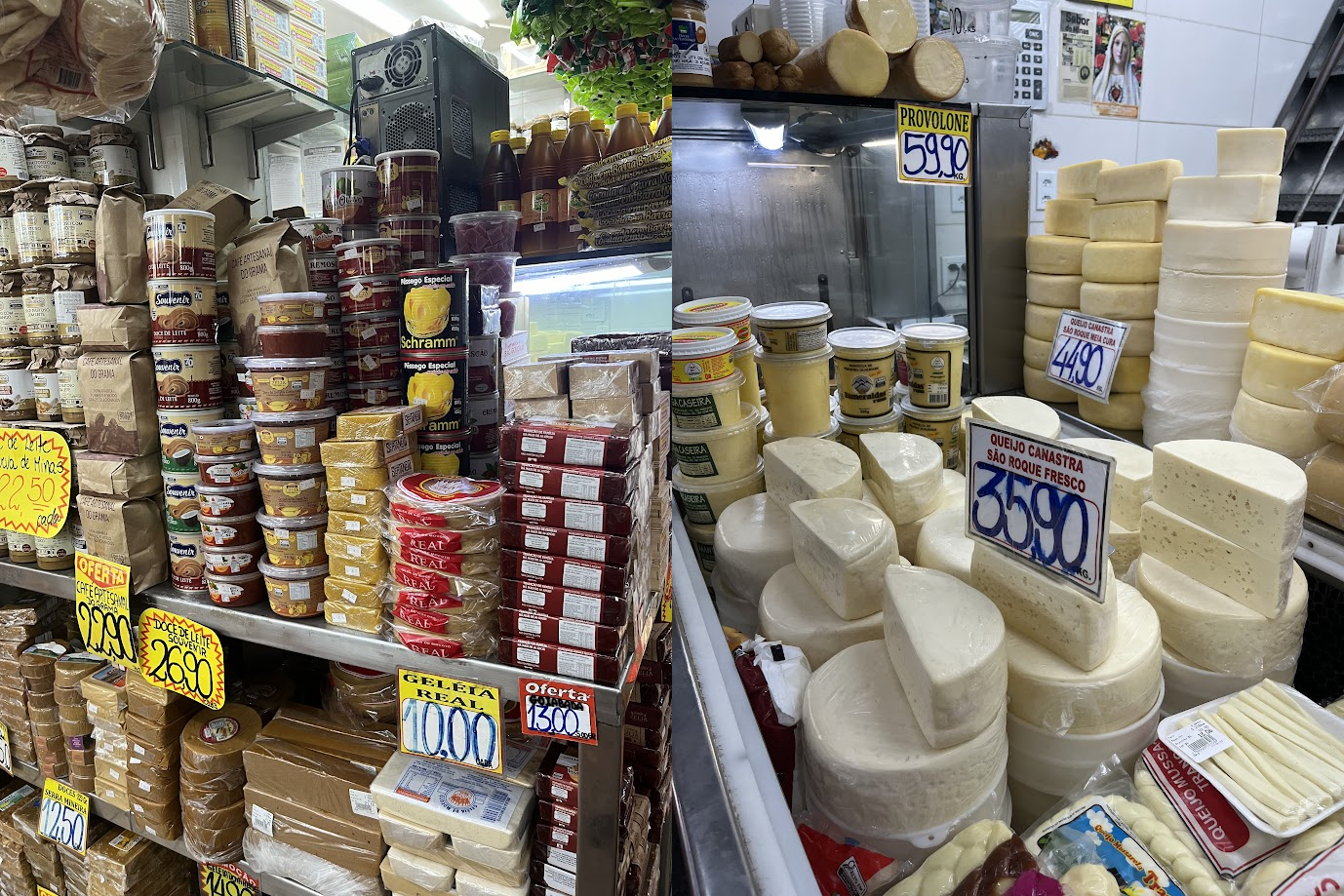 After a 2-hour tour of the Market, we got back on the bus and hit the road for
lunch at a typical Minas Gerais food restaurant.
 With everyone well fed, we returned to Belo Horizonte to visit the city's
main tourist attraction: Lagoa da Pampulha and Capela S o Francisco de Assis,
better known as
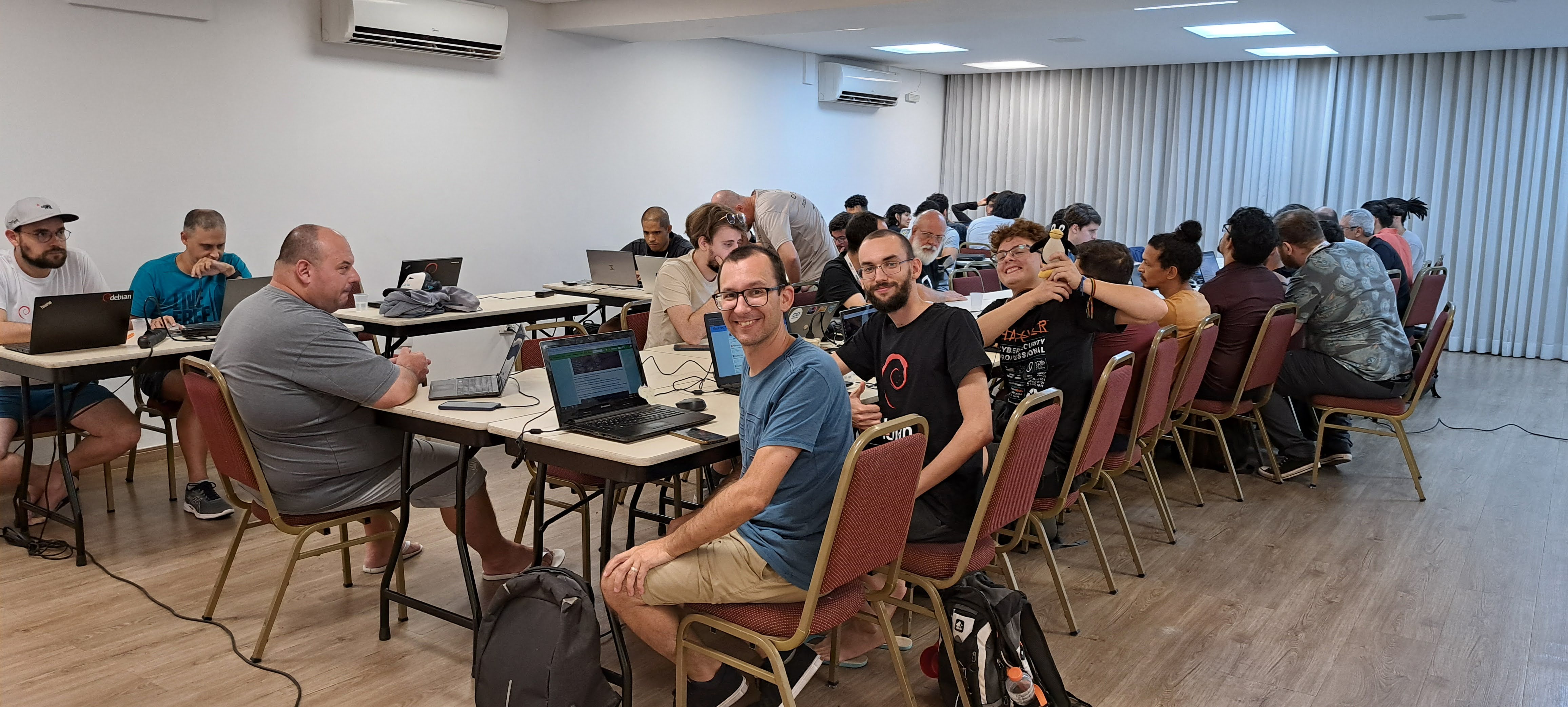
 We went back to the hotel and the day ended in the hacker space that we set up
in the events room for people to chat, packaging, and eat pizzas.
 Crowdfunding
For the third time we ran a crowdfunding campaign and it was incredible how
people contributed! The initial goal was to raise the amount equivalent to a
gold tier of R$ 3,000.00. When we reached this goal, we defined a new one,
equivalent to one gold tier + one silver tier (R$ 5,000.00). And again we
achieved this goal. So we proposed as a final goal the value of a gold + silver
+ bronze tiers, which would be equivalent to R$ 6,000.00. The result was that
we raised R$7,239.65 (~ USD 1,400) with the help of more than 100 people!
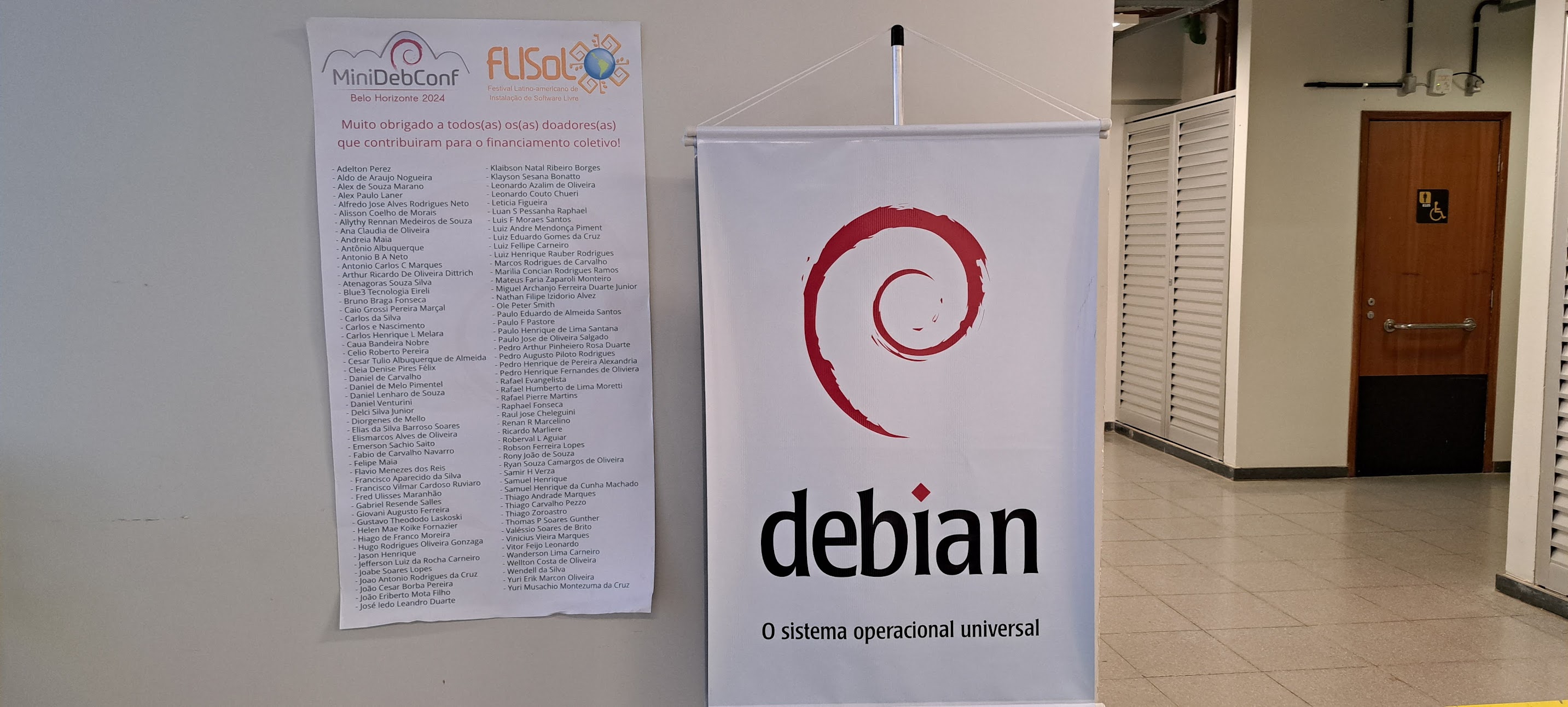
Thank you very much to the people who contributed any amount. As a thank you, we
 Food, accommodation and/or travel grants for participants
Each edition of MiniDebConf brought some innovation, or some different benefit
for the attendees. In this year's edition in Belo Horizonte, as with DebConfs, we
 Photos and videos
You can watch recordings of the talks at the links below:
 Sponsors
Gold:
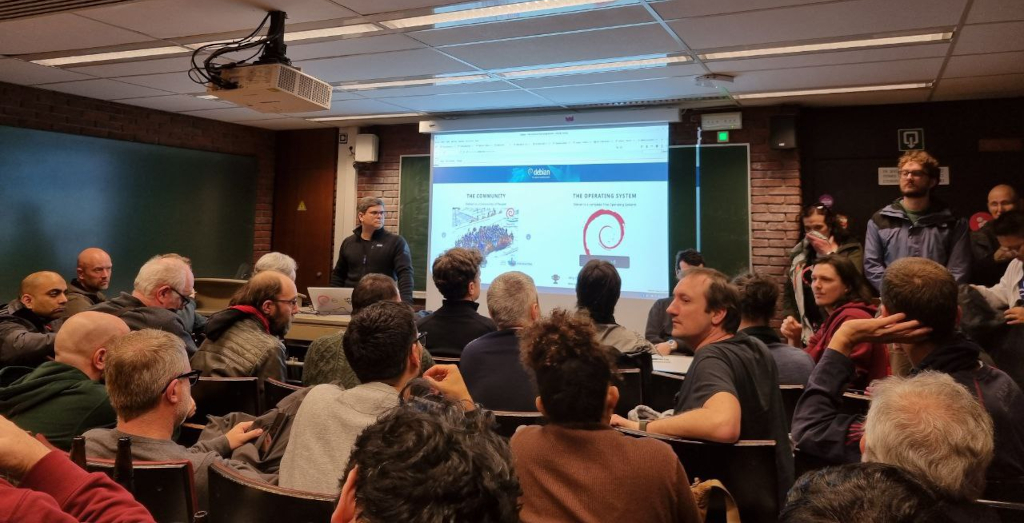
 This year I was at






 A couple of years ago, I
 However, the sole is still going strong, and the general concept has
proved valid, so when I needed a second pair of slippers I used
 Then, my partner also needed new slippers, and I wanted to make his too.
His preference, however, is for open heeled slippers, so I adjusted the
pattern into
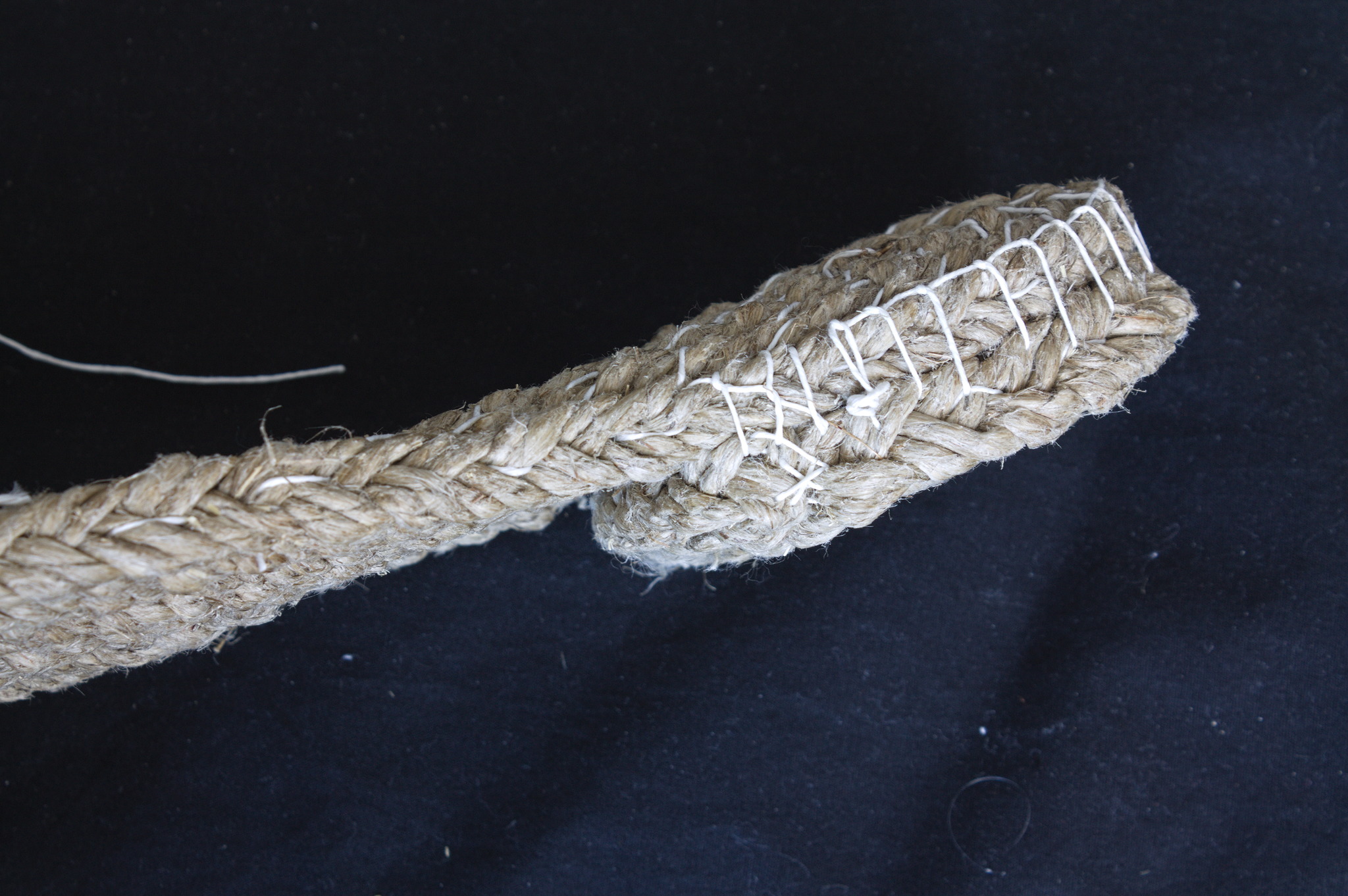 He also finds completely flat soles a bit uncomfortable, so I made an
heel with the same braided twine technique: this also seems to be
working fine, and I ve also added











 In today s digital landscape, social media is more than just a communication tool it is the primary medium for global discourse. Heads of state, corporate leaders and cultural influencers now broadcast their statements directly to the world, shaping public opinion in real time. However, the dominance of a few centralized platforms X/Twitter, Facebook and YouTube raises critical concerns about control, censorship and the monopolization of information. Those who control these networks effectively wield significant power over public discourse.
In response, a new wave of distributed social media platforms has emerged, each built on different decentralized protocols designed to provide greater autonomy, censorship resistance and user control. While
 Mastodon was created in 2016 by
 Interestingly,
 Dear Debian community,
this is bits from DPL for February.
Ftpmaster team is seeking for new team members
In December, Scott Kitterman announced his retirement from the project.
I personally regret this, as I vividly remember his invaluable support
during the Debian Med sprint at the start of the COVID-19 pandemic. He
even took time off to ensure new packages cleared the queue in under 24
hours. I want to take this opportunity to personally thank Scott for his
contributions during that sprint and for all his work in Debian.
With one fewer FTP assistant, I am concerned about the increased
workload on the remaining team. I encourage anyone in the Debian
community who is interested to consider reaching out to the FTP masters
about joining their team.
If you're wondering about the role of the
 Network is unreliable. Seems like my router is trying to reconnect every 20 seconds after something triggers.
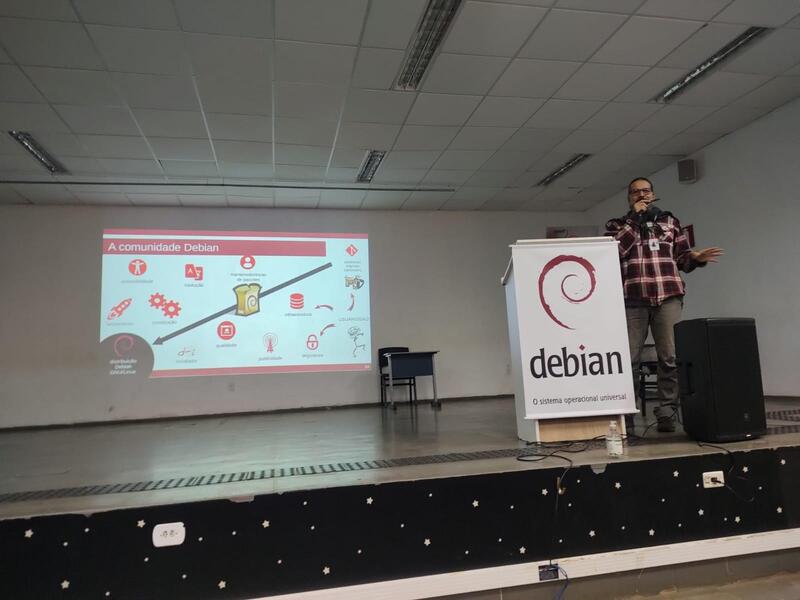
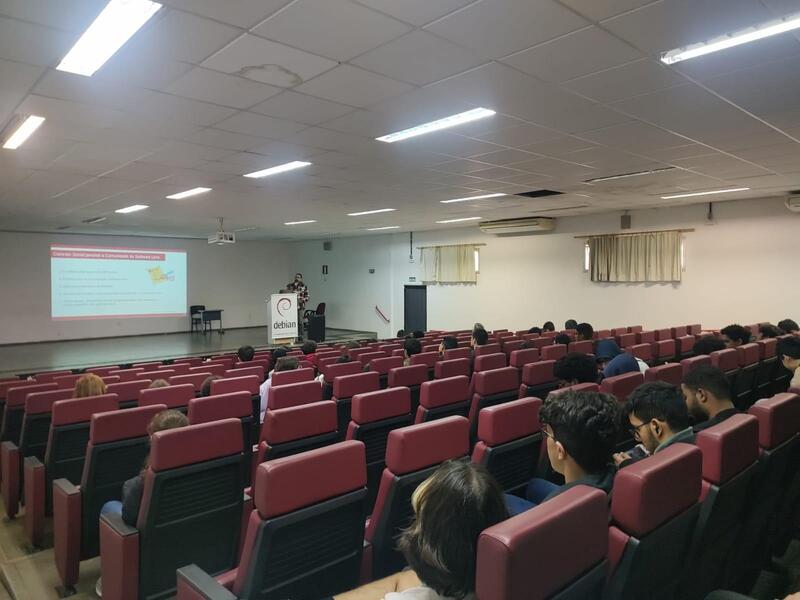
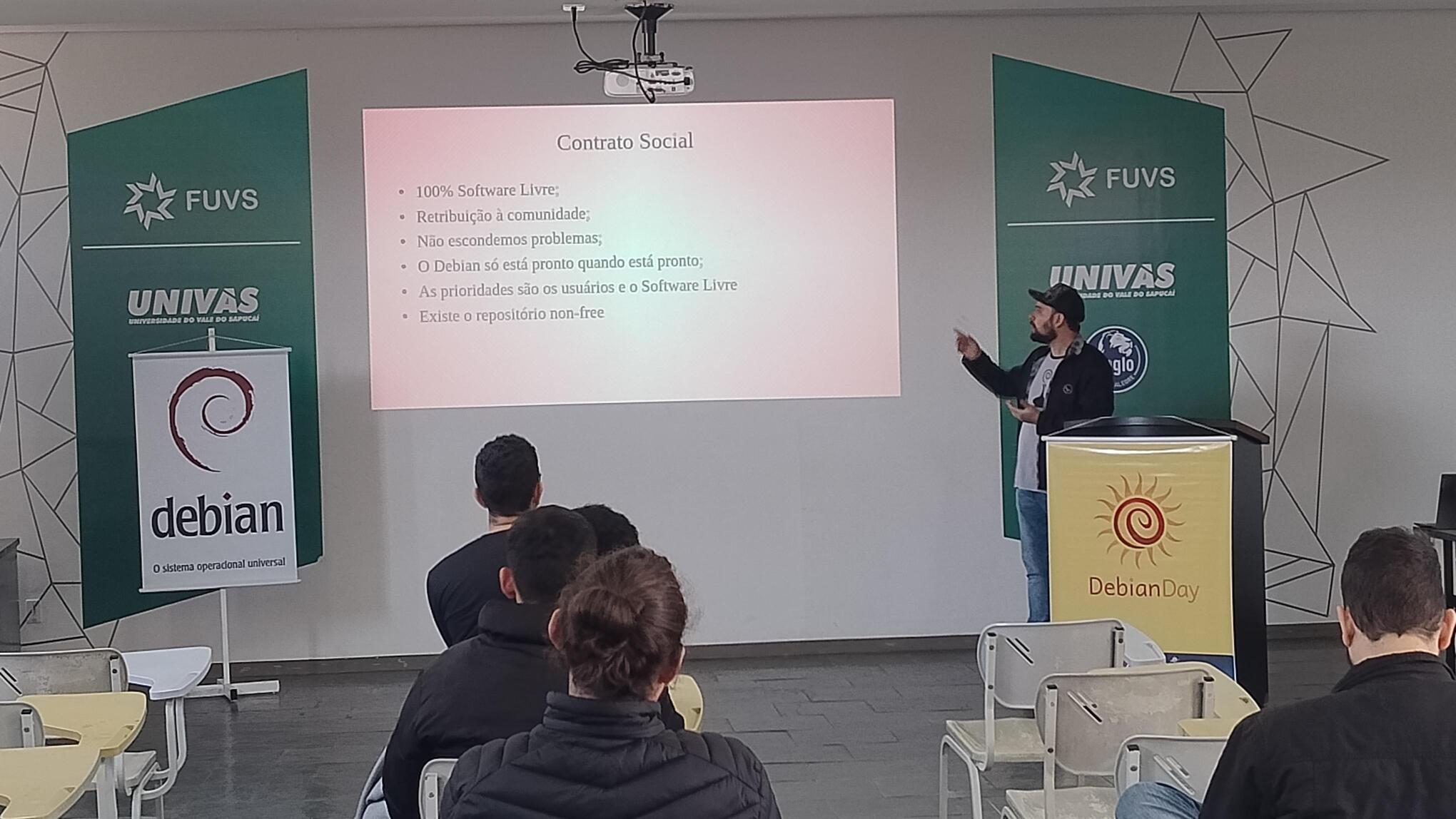
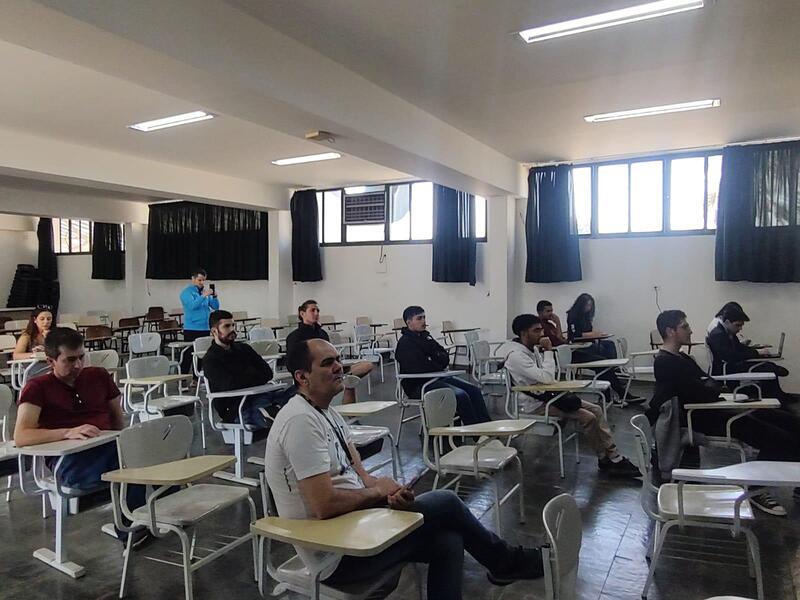

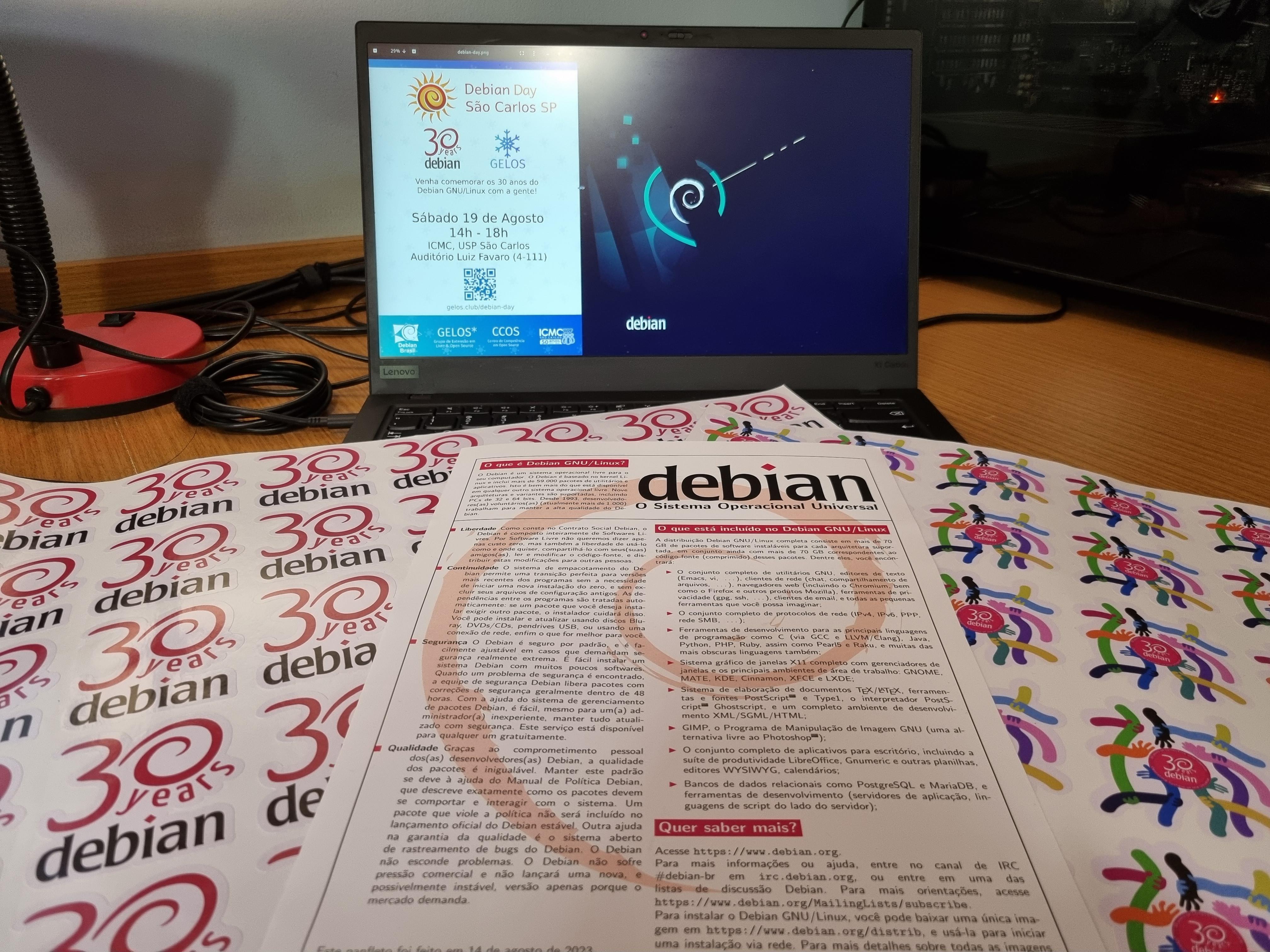 Getting things ready for the event.
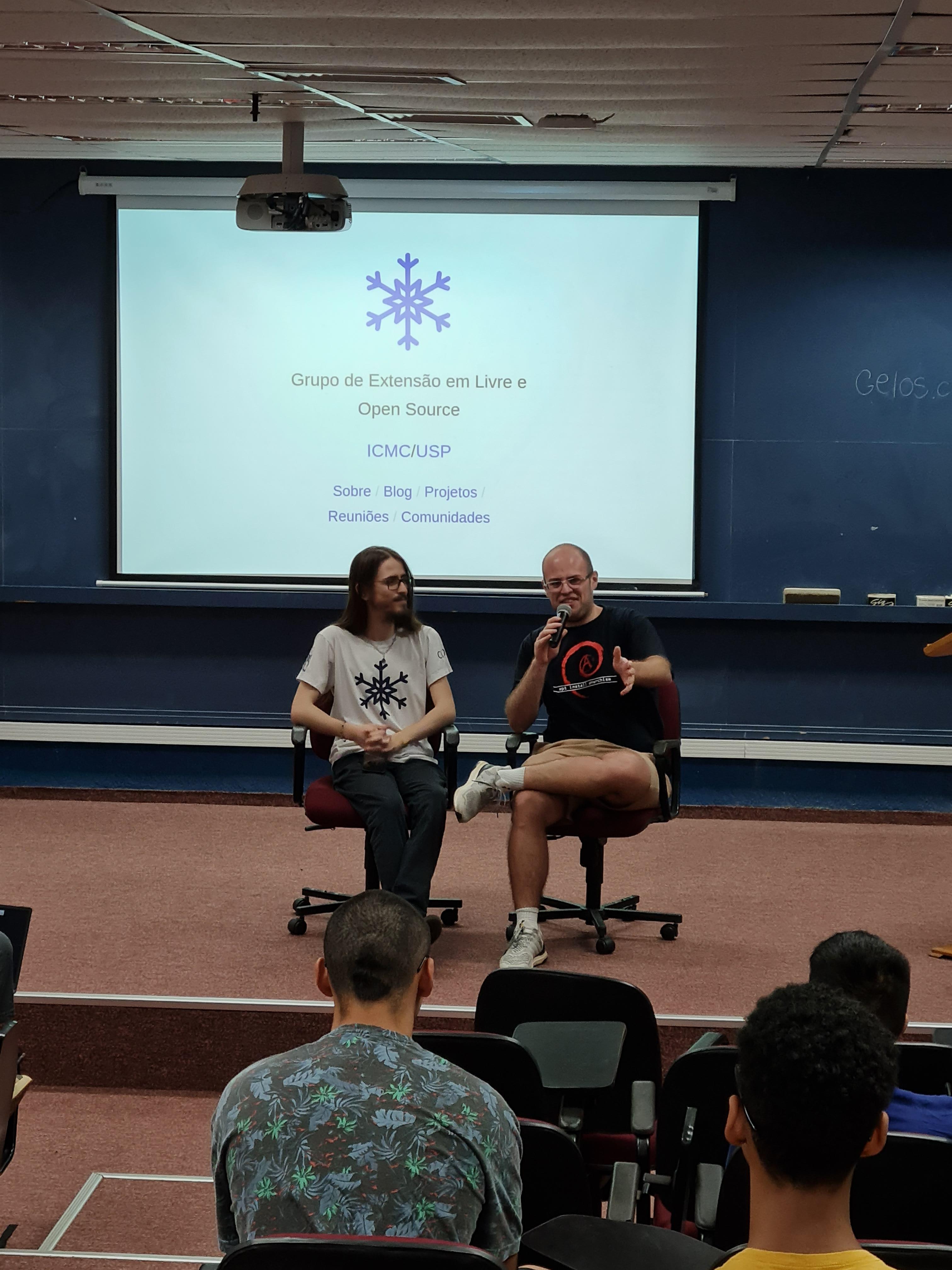 Intro to GELOS talk.
 A ~~not so~~ Brief Introdution to the Debian Project talk.
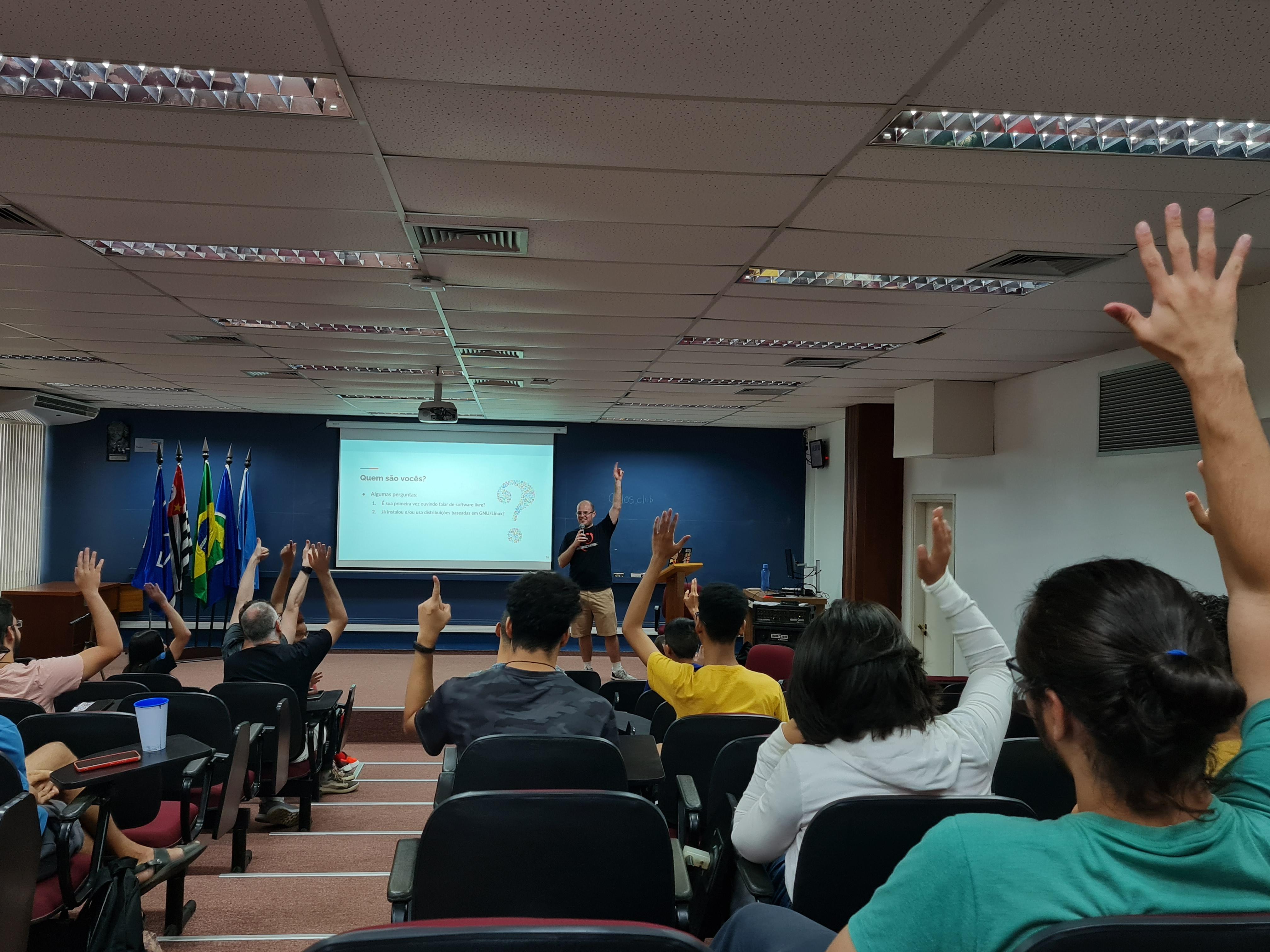 Everyone already knew Debian!
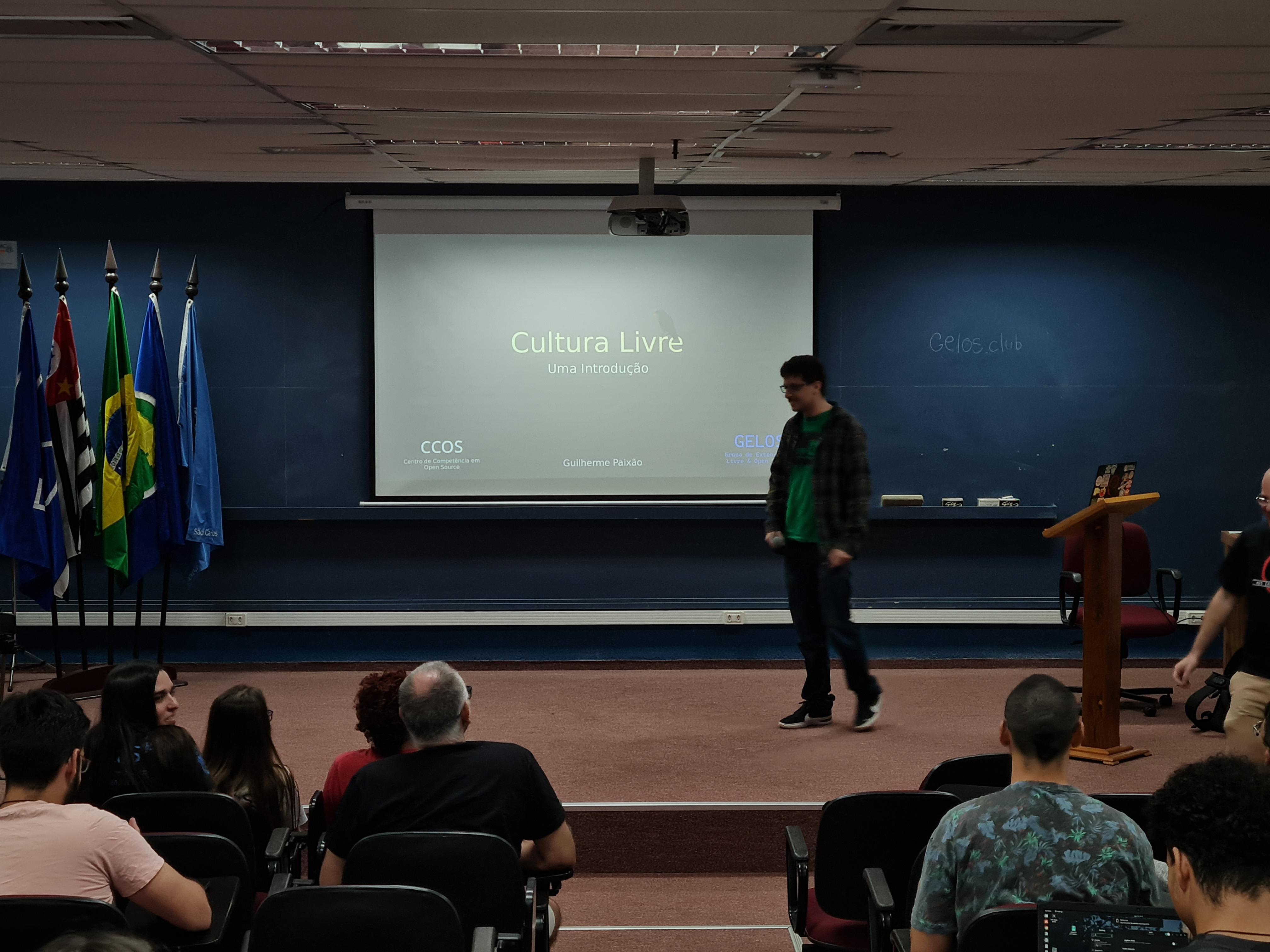 Debian and the Free Culture talk
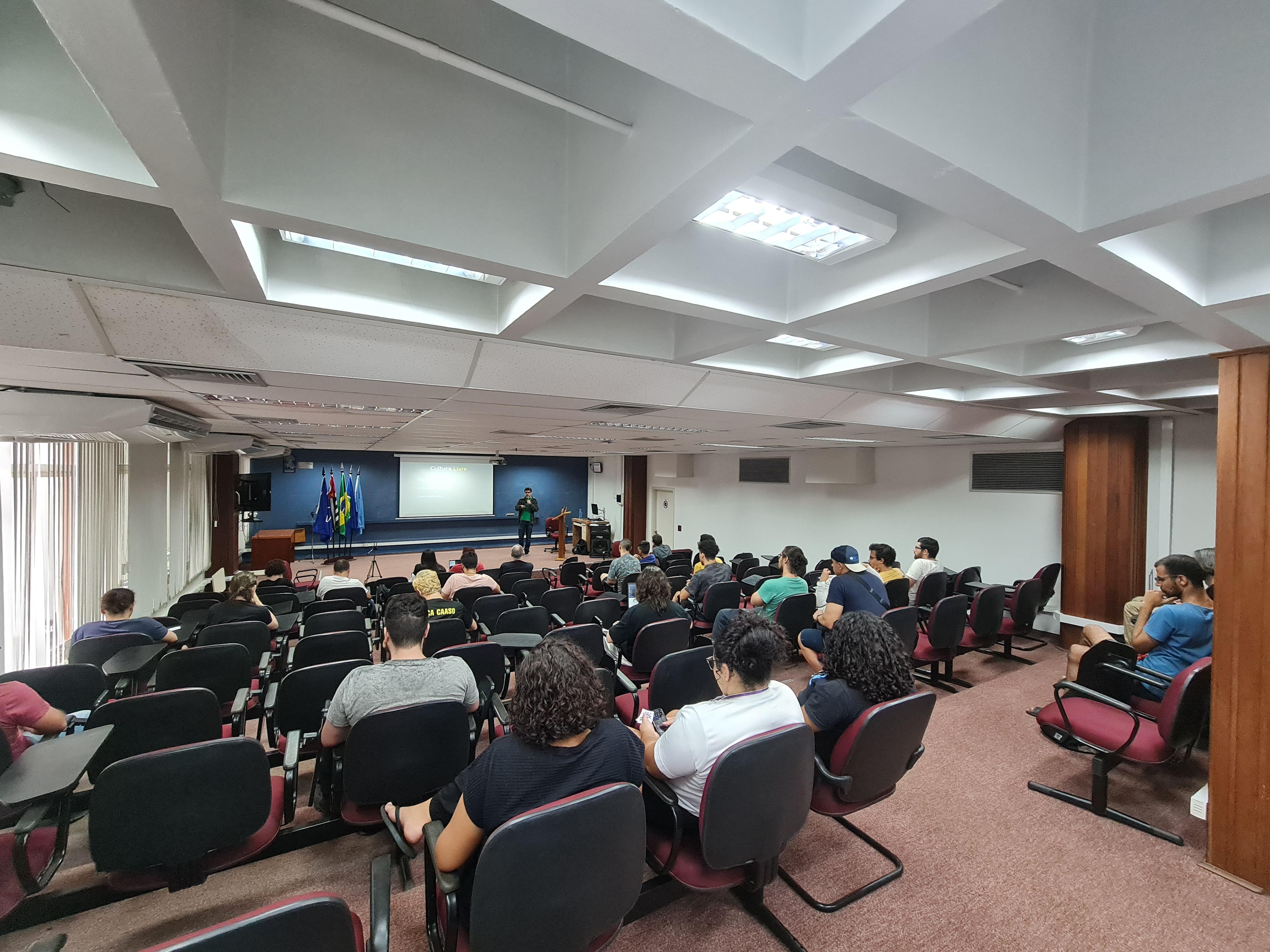 People in the auditorium space.
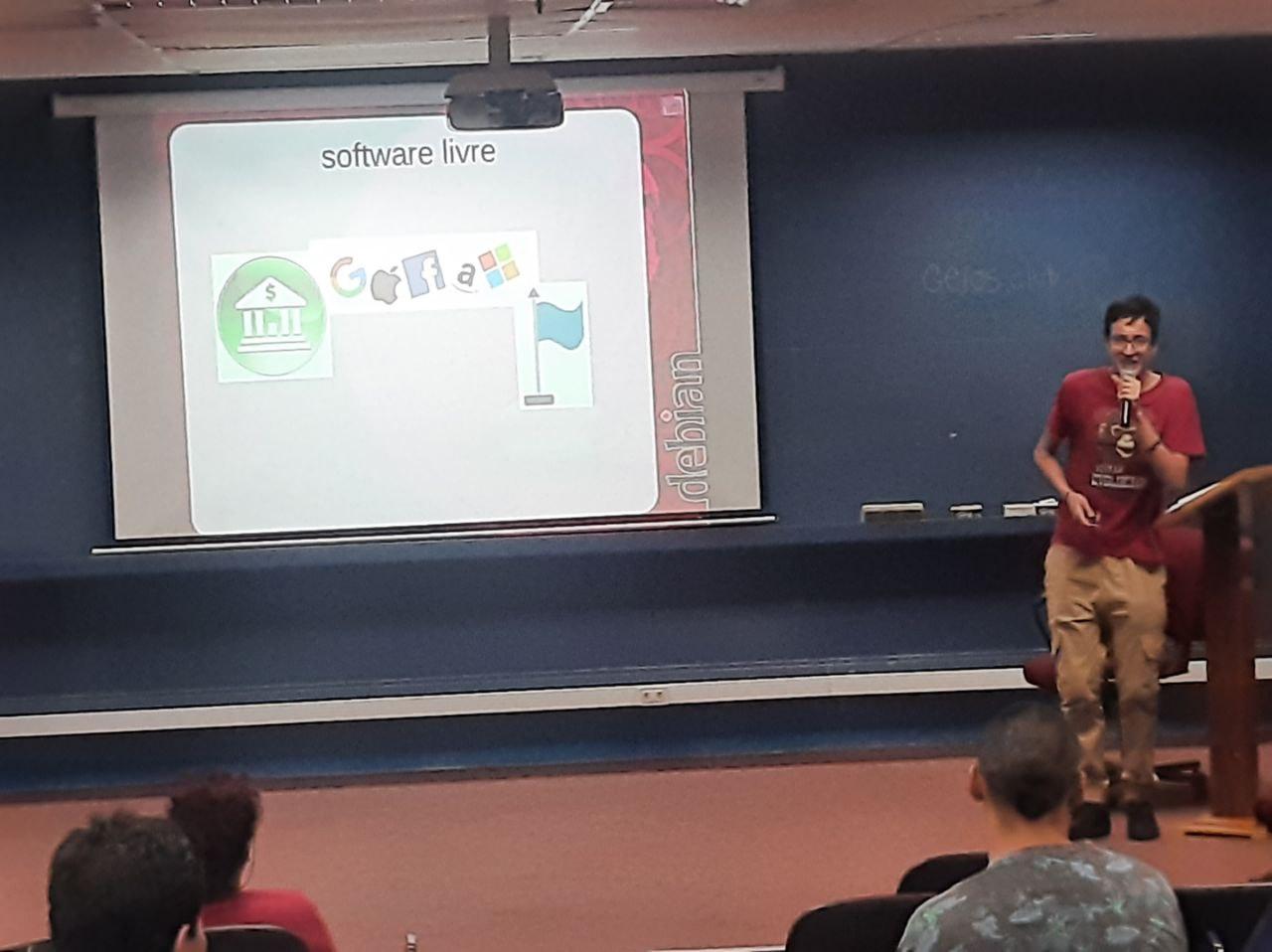 Free Software: the paths to a free life talk
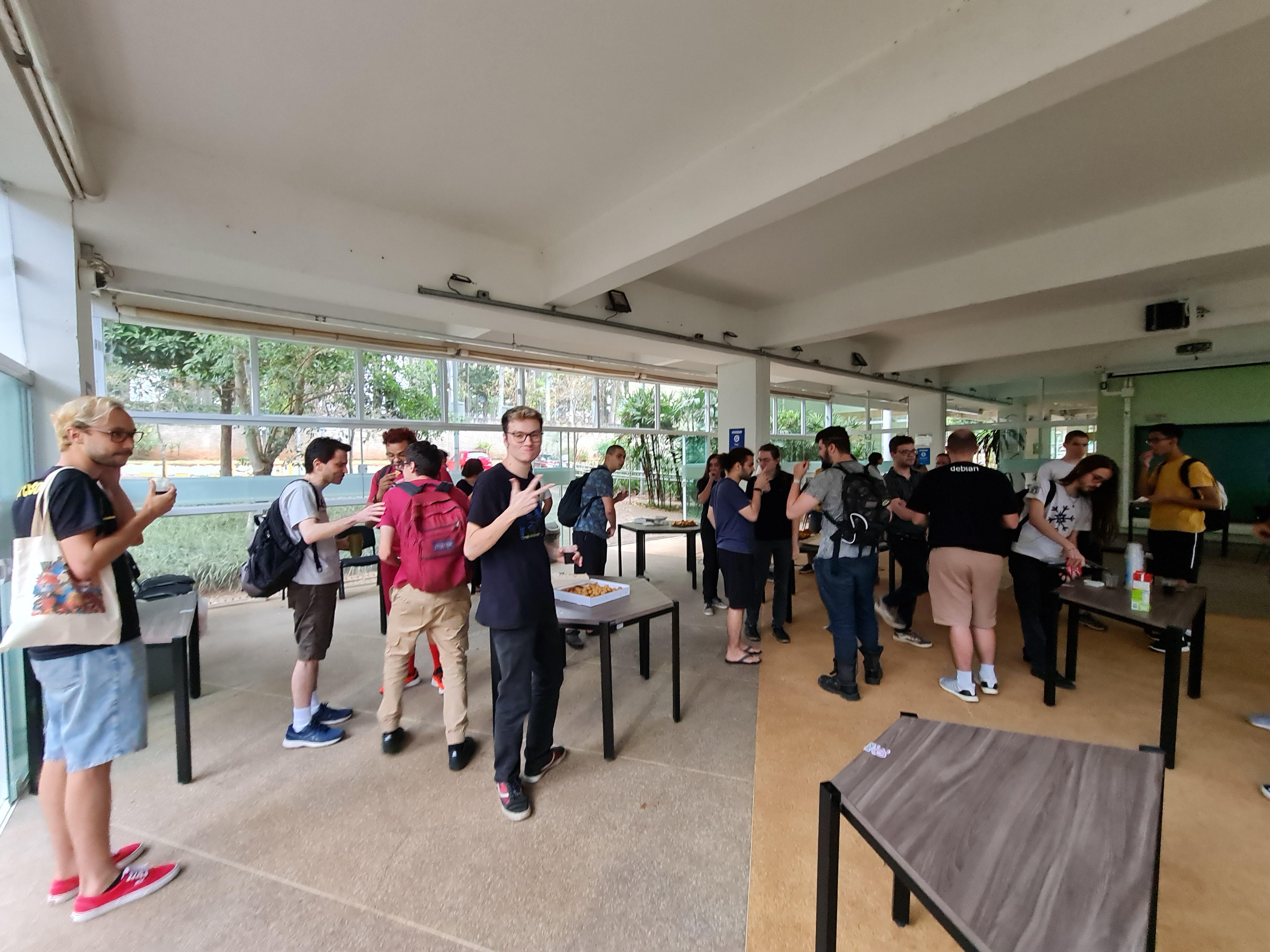 Coffee Break.
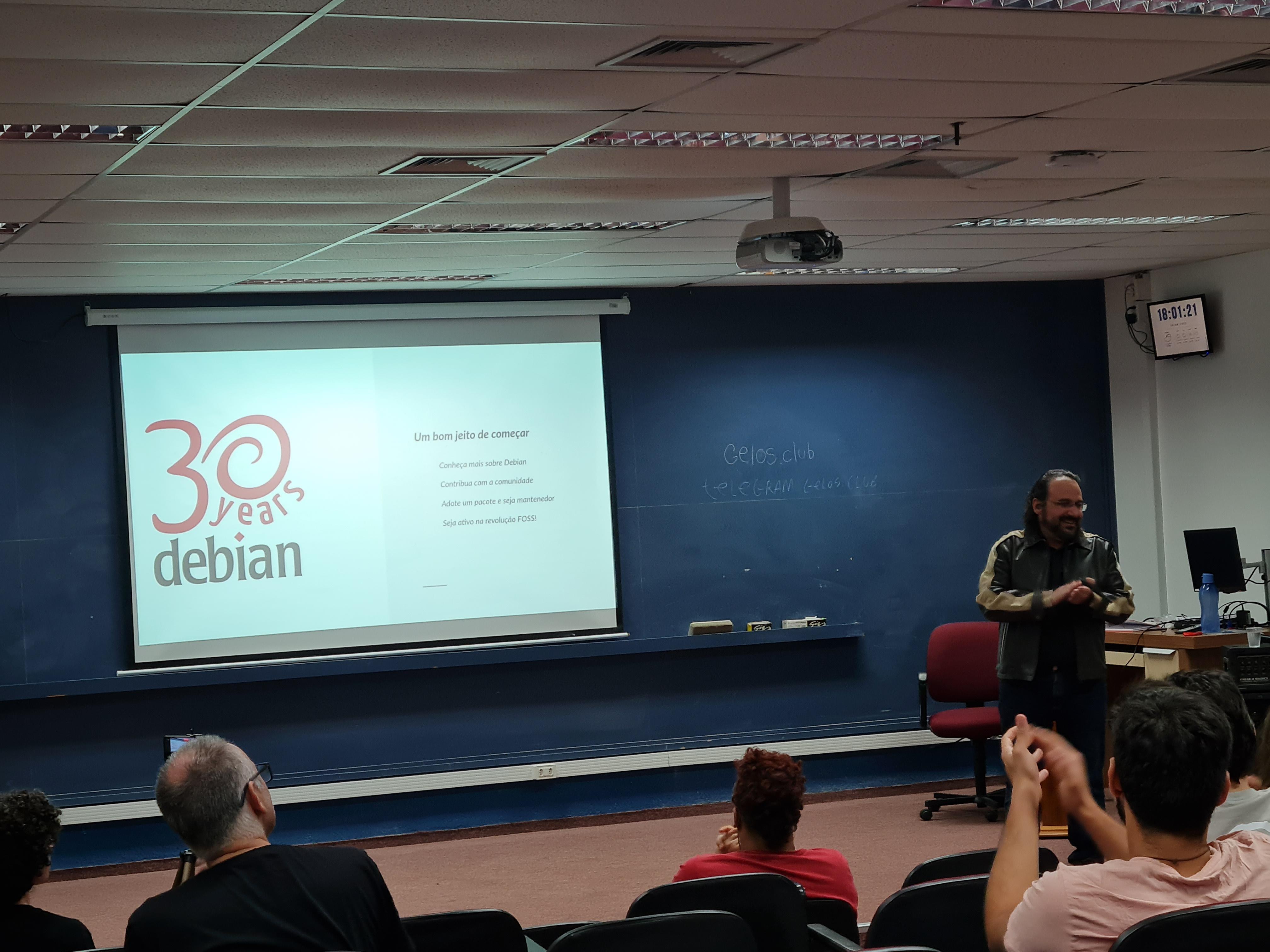 The FOSS Ecosystem and You talk.
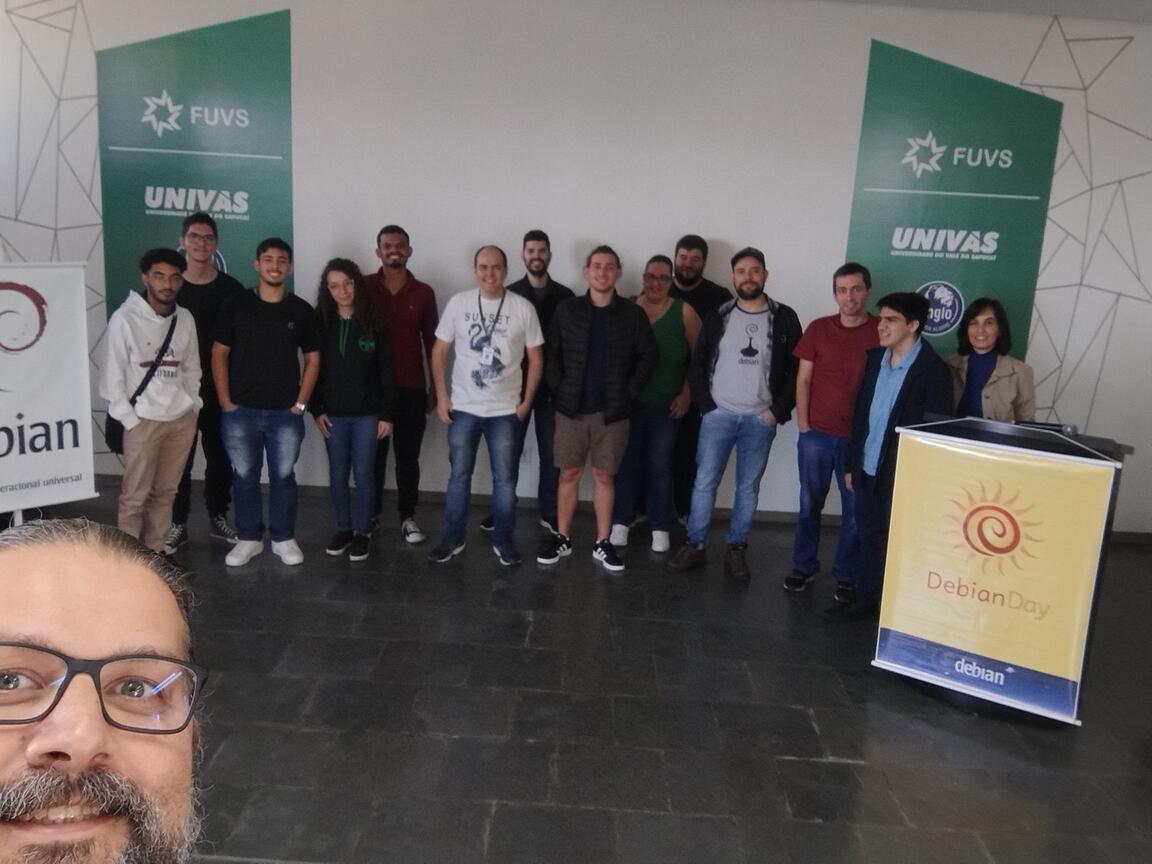
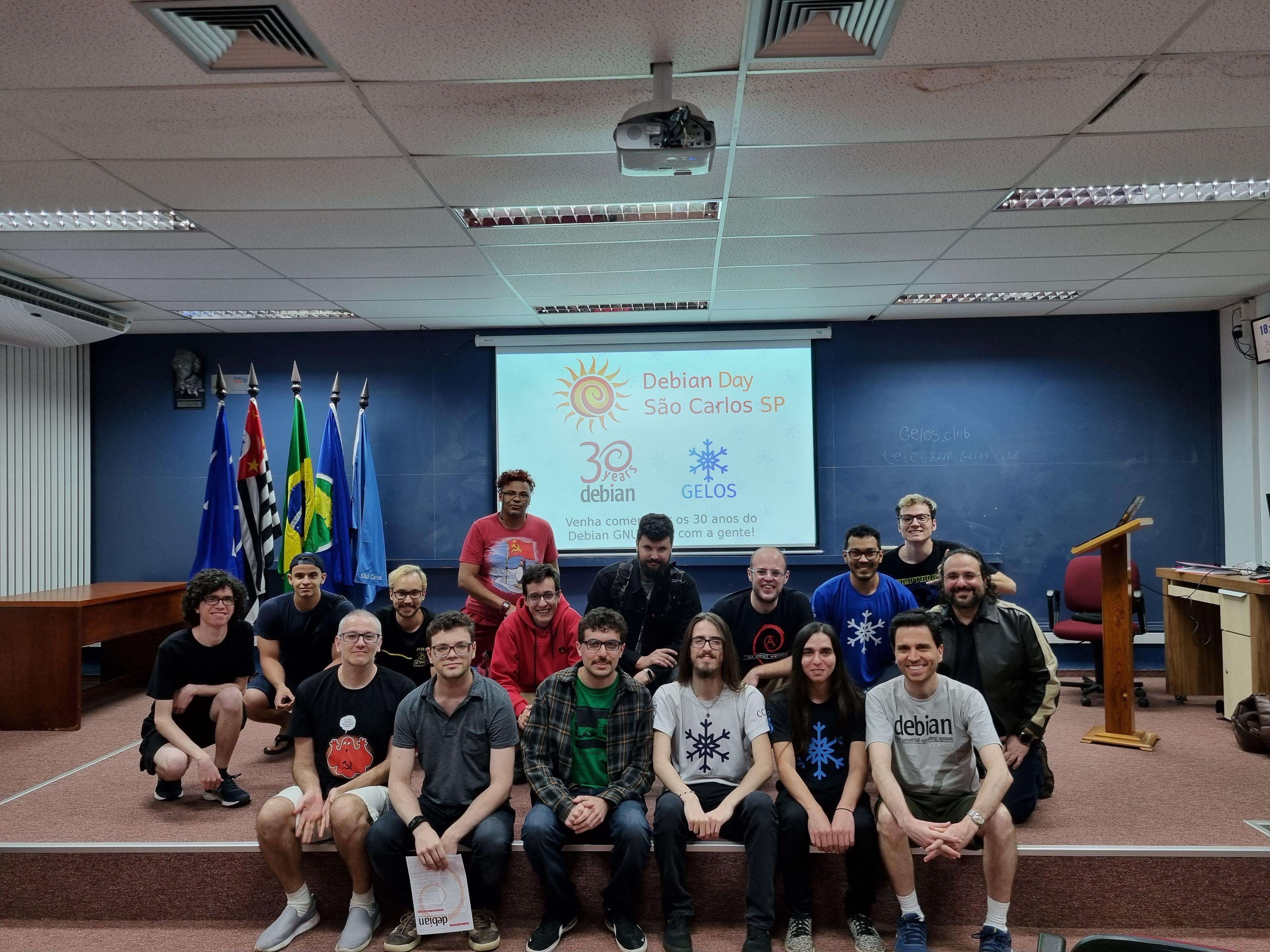 Group photo.
 Celebration goes on in the bar.
 Nova gera o: uma entrevista com iniciantes no projeto Debian
 Instala o personalizada e automatizada do Debian com preseed
 Manipulando patches com git-buildpackage
 debian.social: Socializando Debian do jeito Debian
 Proxy reverso com WireGuard
 Celebra o dos 30 anos do Debian!
 Instalando o Debian em disco criptografado com LUKS
 O que a equipe de localiza o j conquistou nesses 30 anos
 Debian - Projeto e Comunidade!
 Design Gr fico e Software livre, o que fazer e por onde come ar
 For quite a few years, I ve been using pattern weights instead of pins
when cutting fabric, starting with random objects and then mostly using
some big washers from the local hardware store.
However, at about 22 g per washer, I needed quite a few of them, and
dealing with them tended to get unwieldy; I don t remember how it
happened, but one day I decided to make myself some bigger weights with
a few washers each.
I suspect I had seen somebody online with some nice hexagonal pattern
weights, and hexagonal of course reminded me of the
 Anarcat recently
 Many years ago I made myself a
 Then a few years ago the cheap cotton had started to get worn, and I
decided I needed to replace it. I found a second choice (and thus
cheaper :) ) version of a
 This time I skipped a few pockets that I had found I didn t use that
much, and I didn t add a hood, which didn t play that well when worn
over a hoodie, but I added some detached sleeves, for additional wind
protection.
This left about 60 cm and some odd pieces of leftover fabric in my
stash, for which I had no plan.
 And then February
 I did however have a spool of reflector thread made of glass fibre by
Rico Design, which I think was originally sold to be worked into
knitting or crochet projects (it is now discontinued) and I had never
used.
I decided to try and sew a decorative blanket stitch border, a decision
I had reasons to regret, since the thread broke and tangled like crazy,
but in the end it was done, I like how it looks, and it seems pretty
functional. I hope it won t break with time and use, and if it does I ll
either fix it or try to redo with something else.
Of course, the day I finished sewing the reflective border it stopped
raining, so I haven t worn it yet, but I hope I ll be able to, and if it
is an horrible failure I ll make sure to update this post.