I've been pondering what should happen to personal websites once the owner has
passed, or otherwise "moved on". Some time ago I stumbled across a blog by Kev
Quirk, who wrote
I d need to come up with contingency plans for...This website, and any other
websites and own/manage
I thought it was a strange idea, to have a contingency plan for a personal site
to survive its writer. Even a site such as my own, which (as sites go) would be
trivial to host/mirror (since it's static), who would want to do that? Why
would they do that?
On the other hand, whether something I've written is useful or not is largely
independent of whether I'm alive and well. And if anything I've written is
useful independently from me (to pick a recent example, my notes on imaging
optical media), should it persist somewhere?
I've long thought of personal sites much like any website, which is to say,
implicitly eternal, despite mountains of evidence that practically the reverse
is true. I was influenced a long time ago by the article Cool URIs don't
change. Thinking more about
"digital legacy" led me to start believing that personal sites are ultimately
not the right place for any kind of content that should have some persistence.
(You might well have started with that assumption!)
Yesterday via Planet Debian I read Aur lien
Jarno's recent blog post where they
have deprecated all of their personal site bar their blog. Quoting Aur lien:
Wikipedia is a much better platform for sharing knowledge than random
websites.
This struck me as an interesting idea. Wikipedia is a reasonable place for a
lot of material that might otherwise be hosted on personal sites, and as a
"living website", content can be adapted, corrected, etc. over time. Wikipedia
is clearly not the right place for much other material that might exist on
personal sites (it's not the right place for my aforementioned article). I'm
not sure where might be. Perhaps we, as a culture, need to move away from the
notion of personal sites, and devise a more collective concept. Or perhaps it's
no bad thing that, without intervention, this stuff disappears.
As we slowly move our members to our new email infrastructure, an unexpected
twist turned up: One member reported getting the Gmail warning:
Be careful with this message The sender hasn t authenticated this message so Gmail can t verify that it actually came from them.
They have their email delivered to May First, but have configured Gmail to pull
in that email using the Check mail from other accounts feature. It worked
fine on our old infrastructure, but started giving this message when we
transitioned.
A further twist: he only receives this message from email sent by other
people in his organization - in other words email sent via May First gets
flagged, email sent from other people does not.
These Gmail messages typically warn users about email that has failed (or
lacks) both SPF and DKIM. However, before diving into the technical details,
my first thought was: why is Gmail giving a warning on a message that wasn t
even delivered to them? It s always nice to get confirmation from
others that this is totally wrong
behavior. Unfortunately, when it s Gmail, it doesn t matter if they are wrong.
We all have to deal with it.
So next, I decided to investigate why this message failed both DKIM (digital
signature) and SPF (ensuring the message was sent from an authorized server).
Examining the headers immediately turned up the SPF failure:
Authentication-Results: mx.google.com;
       spf=fail (google.com: domain of xxx@xxx.org does not designate n.n.n.n as permitted sender) smtp.mailfrom=xxx@xxx.org
The IP address Google checked to ensure the message was sent by an authorized
server is the IP address of our internal mail filter server in our new email
infrastructure. That s the last hop before delivery to the user s mailbox, so
that s the last hop Gmail sees. This is why Gmail is totally wrong to run this
check: all email messages retreived via their mail fecthing service are going
to fail the SPF test because Gmail has no way of knowing what the actual last
hop is.
So why is this problem only showing up after we transitioned to our new
infrastructure? Because our old infrastructure had only one mail server for
every user. The one mail server was the MX server and the relay server, so it
was included in their SPF record.
And why does this only affect mail sent via May First and not other domains?
Because we add our DKIM signature to outgoing email, not to email delivered
internally. Therefore, these messages both fail the SPF check and also don t
have a DKIM signature. Other messages have a DKIM signature.
Ugggg. So what do we do now? Clearly, something dumb and simple is in order:
I added the IP addresses of our internal filter servers to our global SPF
record.
Someday, years from now, after Gmail is long gone (or has fixed this dumb
behavior), when I m doing whatever retired people like me do, someone will
notice that our internal filter server IPs are included in our SPF record.
Hopefully they will fix the problem, but instead they ll probably think: no
idea why these are here - something will probably break if I remove them.
For over 15 years, I've hardly made any updates to my website, and it remains
low on my priority list. So I made a radical decision to replace it entirely
with my blog. The content of the website has been reduced to just two
additionalpages.
But nothing has been lost: nowadays, Wikipedia is a much better platform for
sharing knowledge than random websites. And it happens that they already cover
all that was on my website about
subaquatic diving in French.
They also offer a multitude of resources in electronics, including the topics that
were on my website:
LCD displays,
I C bus,
barcodes,
parallel ports,
serial ports, and
DCF77 reception.
Finally if you're in need of Debian QEMU images for various architectures, I
recommend the
Debian Quick Image Baker pre-baked images
page instead.
The absolute number may not be impressive, but what I hope is at least a useful contribution is that there actually is a number on how much of Trisquel is reproducible. Hopefully this will inspire others to help improve the actual metric.
tl;dr: go to reproduce-trisquel.
When I set about to understand how Trisquel worked, I identified a number of things that would improve my confidence in it. The lowest hanging fruit for me was to manually audit the package archive, and I wrote a tool called debdistdiff to automate this for me. That led me to think about apt archive transparency more in general. I have made some further work in that area (hint: apt-verify) that deserve its own blog post eventually. Most of apt archive transparency is futile if we don t trust the intended packages that are in the archive. One way to measurable increase trust in the package are to provide reproducible builds of the packages, which should by now be an established best practice. Code review is still important, but since it will never provide positive guarantees we need other processes that can identify sub-optimal situations automatically. The way reproducible builds easily identify negative results is what I believe has driven much of its success: its results are tangible and measurable. The field of software engineering is in need of more such practices.
The design of my setup to build Trisquel reproducible are as follows.
The project debdistget is responsible for downloading Release/Packages files (which are the most relevant files from dists/) from apt archives, and works by commiting them into GitLab-hosted git-repositories. I maintain several such repositories for popular apt-archives, including for Trisquel and its upstream Ubuntu. GitLab invokes a schedule pipeline to do the downloading, and there is some race conditions here.
The project debdistdiff is used to produce the list of added and modified packages, which are the input to actually being able to know what packages to reproduce. It publishes human readable summary of difference for several distributions, including Trisquel vs Ubuntu. Early on I decided that rebuilding all of the upstream Ubuntu packages is out of scope for me: my personal trust in the official Debian/Ubuntu apt archives are greater than my trust of the added/modified packages in Trisquel.
The final project reproduce-trisquel puts the pieces together briefly as follows, everything being driven from its .gitlab-ci.yml file.
There is a (manually triggered) job generate-build-image to create a build image to speed up CI/CD runs, using a simple Dockerfile.
There is a (manually triggered) job generate-package-lists that uses debdistdiff to generate and store package lists and puts its output in lists/. The reason this is manually triggered right now is due to a race condition.
There is a (scheduled) job that does two things: from the package lists, the script generate-ci-packages.sh builds a GitLab CI/CD instruction file ci-packages.yml that describes jobs for each package to build. The second part is generate-readme.sh that re-generate the project s README.md based on the build logs and diffoscope outputs that stored in the git repository.
Through the ci-packages.yml file, there is a large number of jobs that are dynamically defined, which currently are manually triggered to not overload the build servers. The script build-package.sh is invoked and attempts to rebuild a package, and stores build log and diffoscope output in the git project itself.
I did not expect to be able to use the GitLab shared runners to do the building, however they turned out to work quite well and I postponed setting up my own runner. There is a manually curated lists/disabled-aramo.txt with some packages that all required too much disk space or took over two hours to build. Today I finally took the time to setup a GitLab runner using podman running Trisquel aramo, and I expect to complete builds of the remaining packages soon one of my Dell R630 server with 256GB RAM and dual 2680v4 CPUs should deliver sufficient performance.
Current limitations and ideas on further work (most are filed as project issues) include:
We don t support *.buildinfo files. As far as I am aware, Trisquel does not publish them for their builds. Improving this would be a first step forward, anyone able to help? Compare buildinfo.debian.net. For example, many packages differ only in their NT_GNU_BUILD_ID symbol inside the ELF binary, see example diffoscope output for libgpg-error. By poking around in jenkins.trisquel.org I managed to discover that Trisquel built initramfs-utils in the randomized path /build/initramfs-tools-bzRLUp and hard-coding that path allowed me to reproduce that package. I expect the same to hold for many other packages. Unfortunately, this failure turned into success with that package moved the needle from 42% reproducibility to 43% however I didn t let that stand in the way of a good headline.
The mechanism to download the Release/Package-files from dists/ is not fool-proof: we may not capture all ever published such files. While this is less of a concern for reproducibility, it is more of a concern for apt transparency. Still, having Trisquel provide a service similar to snapshot.debian.org would help.
Having at least one other CPU architecture would be nice.
Due to lack of time and mental focus, handling incremental updates of new versions of packages is not yet working. This means we only ever build one version of a package, and never discover any newly published versions of the same package. Now that Trisquel aramo is released, the expected rate of new versions should be low, but still happens due to security or backports.
Porting this to test supposedly FSDG-compliant distributions such as PureOS and Gnuinos should be relatively easy. I m also looking at Devuan because of Gnuinos.
The elephant in the room is how reproducible Ubuntu is in the first place.
Happy Easter Hacking!
Update 2023-04-17: The original project reproduce-trisquel that was announced here has been archived and replaced with two projects, one generic debdistreproduce and one with results for Trisquel: reproduce/trisquel .
Welcome to the March 2023 report from the Reproducible Builds project.
In these reports we outline the most important things that we have been up to over the past month. As a quick recap, the motivation behind the reproducible builds effort is to ensure no malicious flaws have been introduced during compilation and distributing processes. It does this by ensuring identical results are always generated from a given source, thus allowing multiple third-parties to come to a consensus on whether a build was compromised.
If you are interested in contributing to the project, please do visit our Contribute page on our website.
News
There was progress towards making the Go programming language reproducible this month, with the overall goal remaining making the Go binaries distributed from Google and by Arch Linux (and others) to be bit-for-bit identical. These changes could become part of the upcoming version 1.21 release of Go. An issue in the Go issue tracker (#57120) is being used to follow and record progress on this.
Arnout Engelen updated our website to add and update reproducibility-related links for NixOS to reproducible.nixos.org. []. In addition, Chris Lamb made some cosmetic changes to our presentations and resources page. [][]
Intel published a guide on how to reproducibly build their Trust Domain Extensions (TDX) firmware. TDX here refers to an Intel technology that combines their existing virtual machine and memory encryption technology with a new kind of virtual machine guest called a Trust Domain. This runs the CPU in a mode that protects the confidentiality of its memory contents and its state from any other software.
A reproducibility-related bug from early 2020 in the GNU GCC compiler as been fixed. The issues was that if GCC was invoked via the as frontend, the -ffile-prefix-map was being ignored. We were tracking this in Debian via the build_path_captured_in_assembly_objects issue. It has now been fixed and will be reflected in GCC version 13.
Holger Levsen will present at foss-north 2023 in April of this year in Gothenburg, Sweden on the topic of Reproducible Builds, the first ten years.
Anthony Andreoli, Anis Lounis, Mourad Debbabi and Aiman Hanna of the Security Research Centre at Concordia University, Montreal published a paper this month entitled On the prevalence of software supply chain attacks: Empirical study and investigative framework:
Software Supply Chain Attacks (SSCAs) typically compromise hosts through trusted but infected software. The intent of this paper is twofold: First, we present an empirical study of the most prominent software supply chain attacks and their characteristics. Second, we propose an investigative framework for identifying, expressing, and evaluating characteristic behaviours of newfound attacks for mitigation and future defense purposes. We hypothesize that these behaviours are statistically malicious, existed in the past, and thus could have been thwarted in modernity through their cementation x-years ago. []
Mattia Rizzolo is asking everyone in the community to save the date for the 2023 s Reproducible Builds summit which will take place between October 31st and November 2nd at Dock Europe in Hamburg, Germany. Separate announcement(s) to follow. []
ahojlm posted an message announcing a new project which is the first project offering bootstrappable and verifiable builds without any binary seeds. That is to say, a way of providing a verifiable path towards trusted software development platform without relying on pre-provided binary code in order to prevent against various forms of compiler backdoors. The project s homepage is hosted on Tor (mirror).
The minutes and logs from our March 2023 IRC meeting have been published. In case you missed this one, our next IRC meeting will take place on Tuesday 25th April at 15:00 UTC on #reproducible-builds on the OFTC network.
and as a Valentines Day present, Holger Levsen wrote on his blog on 14th February to express his thanks to OSUOSL for their continuous support of reproducible-builds.org. []
Debian
Vagrant Cascadian developed an easier setup for testing debian packages which uses sbuild s unshare mode along and reprotest, our tool for building the same source code twice in different environments and then checking the binaries produced by each build for any differences. []
Over 30 reviews of Debian packages were added, 14 were updated and 7 were removed this month, all adding to our knowledge about identified issues. A number of issues were updated, including the Holger Levsen updating build_path_captured_in_assembly_objects to note that it has been fixed for GCC 13 [] and Vagrant Cascadian added new issues to mark packages where the build path is being captured via the Rust toolchain [] as well as new categorisation for where virtual packages have nondeterministic versioned dependencies [].
Upstream patches
The Reproducible Builds project detects, dissects and attempts to fix as many currently-unreproducible packages as possible. We endeavour to send all of our patches upstream where appropriate. This month, we wrote a large number of such patches, including:
Testing framework
The Reproducible Builds project operates a comprehensive testing framework (available at tests.reproducible-builds.org) in order to check packages and other artifacts for reproducibility. In March, the following changes were made by Holger Levsen:
Add/update openQA configuration [], and use the actual timestamp for openQA builds [].
Moved adding the user to the docker group from the janitor_setup_worker script to the (more general) update_jdn.sh script. []
Use the (short-term) reproducible source when generating live-build images. []
diffoscope development
diffoscope is our in-depth and content-aware diff utility. Not only can it locate and diagnose reproducibility issues, it can provide human-readable diffs from many kinds of binary formats as well. This month, Mattia Rizzolo released versions 238, and Chris Lamb released versions 239 and 240. Chris Lamb also made the following changes:
Fix compatibility with PyPDF 3.x, and correctly restore test data. []
Rework PDF annotation handling into a separate method. []
In addition, Holger Levsen performed a long-overdue overhaul of the Lintian overrides in the Debian packaging [][][][], and Mattia Rizzolo updated the packaging to silence an include_package_data=True [], fixed the build under Debian bullseye [], fixed tool name in a list of tools permitted to be absent during package build tests [] and as well as documented sending out an email upon [].
In addition, Vagrant Cascadian updated the version of GNU Guix to 238 [ and 239 []. Vagrant also updated reprotest to version 0.7.23. []
If you are interested in contributing to the Reproducible Builds project, please visit our Contribute page on our website. However, you can get in touch with us via:
Review: The Nordic Theory of Everything, by Anu Partanen
Publisher:
Harper
Copyright:
2016
Printing:
June 2017
ISBN:
0-06-231656-7
Format:
Kindle
Pages:
338
Anu Partanen is a Finnish journalist who immigrated to the United States.
The Nordic Theory of Everything, subtitled In Search of a
Better Life, is an attempt to explain the merits of Finnish approaches to
government and society to a US audience. It was her first book.
If you follow US policy discussion at all, you have probably been exposed
to many of the ideas in this book. There was a time when the US left was
obsessed with comparisons between the US and Nordic countries, and while
that obsession has faded somewhat, Nordic social systems are still
discussed with envy and treated as a potential model. Many of the topics
of this book are therefore predictable: parental leave, vacation, health
care, education, happiness, life expectancy, all the things that are far
superior in Nordic countries than in the United States by essentially
every statistical measure available, and which have been much-discussed.
Partanen brings two twists to this standard analysis. The first is that
this book is part memoir: she fell in love with a US writer and made the
decision to move to the US rather than asking him to move to Finland. She
therefore experienced the transition between social and government systems
first-hand and writes memorably on the resulting surprise, trade-offs,
anxiety, and bafflement. The second, which I've not seen previously in
this policy debate, is a fascinating argument that Finland is a far more
individualistic country than the United States precisely because of its
policy differences.
Most people, including myself, assumed that part of what made the
United States a great country, and such an exceptional one, was that
you could live your life relatively unencumbered by the downside of a
traditional, old-fashioned society: dependency on the people you
happened to be stuck with. In America you had the liberty to express
your individuality and choose your own community. This would allow
you to interact with family, neighbors, and fellow citizens on the
basis of who you were, rather than on what you were obligated to do or
expected to be according to old-fashioned thinking.
The longer I lived in America, therefore, and the more places I
visited and the more people I met and the more American I myself
became the more puzzled I grew. For it was exactly those key
benefits of modernity freedom, personal independence, and
opportunity that seemed, from my outsider s perspective, in a
thousand small ways to be surprisingly missing from American life
today. Amid the anxiety and stress of people s daily lives, those
grand ideals were looking more theoretical than actual.
The core of this argument is that the structure of life in the United
States essentially coerces dependency on other people: employers, spouses,
parents, children, and extended family. Because there is no universally
available social support system, those relationships become essential for
any hope of a good life, and often for survival. If parents do not
heavily manage their children's education, there is a substantial risk of
long-lasting damage to the stability and happiness of their life. If
children do not care for their elderly parents, they may receive no care
at all. Choosing not to get married often means choosing precarity and
exhaustion because navigating society without pooling resources with
someone else is incredibly difficult.
It was as if America, land of the Hollywood romance, was in practice
mired in a premodern time when marriage was, first and foremost, not
an expression of love, but rather a logistical and financial pact to
help families survive by joining resources.
Partanen contrasts this with what she calls the Nordic theory of love:
What Lars Tr g rdh came to understand during his years in the United
States was that the overarching ambition of Nordic societies during
the course of the twentieth century, and into the twenty-first, has
not been to socialize the economy at all, as is often mistakenly
assumed. Rather the goal has been to free the individual from all
forms of dependency within the family and in civil society: the poor
from charity, wives from husbands, adult children from parents, and
elderly parents from their children. The express purpose of this
freedom is to allow all those human relationships to be unencumbered
by ulterior motives and needs, and thus to be entirely free,
completely authentic, and driven purely by love.
She sees this as the common theme through most of the policy differences
discussed in this book. The Finnish approach is to provide neutral and
universal logistical support for most of life's expected challenges:
birth, child-rearing, education, health, unemployment, and aging. This
relieves other social relations family, employer, church of the
corrosive strain of dependency and obligation. It also ensures people's
basic well-being isn't reliant on accidents of association.
If the United States is so worried about crushing entrepreneurship and
innovation, a good place to start would be freeing start-ups and
companies from the burdens of babysitting the nation s citizens.
I found this fascinating as a persuasive technique. Partanen embraces the
US ideal of individualism and points out that, rather than being
collectivist as the US right tends to assume, Finland is better at
fostering individualism and independence because the government works to
removes unnecessary premodern constraints on individual lives. The reason
why so many Americans are anxious and frantic is not a personal failing or
bad luck. It's because the US social system is deeply hostile to healthy
relationships and individual independence. It demands a constant level of
daily problem-solving and crisis management that is profoundly exhausting,
nearly impossible to navigate alone, and damaging to the ideal of equal
relationships.
Whether this line of argument will work is another question, and I'm
dubious for reasons that Partanen (probably wisely) avoids. She presents
the Finnish approach as a discovery that the US would benefit from, and
the US approach as a well-intentioned mistake. I think this is
superficially appealing; almost all corners of US political belief at
least give lip service to individualism and independence. However,
advocates of political change will eventually need to address the fact
that many US conservatives see this type of social coercion as an intended
feature of society rather than a flaw.
This is most obvious when one looks at family relationships. Partanen
treats the idea that marriage should be a free choice between equals
rather than an economic necessity as self-evident, but there is a
significant strain of US political thought that embraces punishing people
for not staying within the bounds of a conservative ideal of family. One
will often find, primarily but not exclusively among the more religious, a
contention that the basic unit of society is the (heterosexual,
patriarchal) family, not the individual, and that the suffering of anyone
outside that structure is their own fault. Not wanting to get married, be
the primary caregiver for one's parents, or abandon a career in order to
raise children is treated as malignant selfishness and immorality rather
than a personal choice that can be enabled by a modern social system.
Here, I think Partanen is accurate to identify the Finnish social system
as more modern. It embraces the philosophical concept of modernity,
namely that social systems can be improved and social structures are not
timeless. This is going to be a hard argument to swallow for those who
see the pressure towards forming dependency ties within families as
natural, and societal efforts to relieve those pressures as government
meddling. In that intellectual framework, rather than an attempt to
improve the quality of life, government logistical support is perceived as
hostility to traditional family obligations and an attempt to replace
"natural" human ties with "artificial" dependence on government services.
Partanen doesn't attempt to have that debate.
Two other things struck me in this book. The first is that, in Partanen's
presentation, Finns expect high-quality services from their government and
work to improve it when it falls short. This sounds like an obvious
statement, but I don't think it is in the context of US politics, and
neither does Partanen. She devotes a chapter to the topic, subtitled "Go
ahead: ask what your country can do for you."
This is, to me, one of the most frustrating aspects of US political
debate. Our attitude towards government is almost entirely hostile and
negative even among the political corners that would like to see
government do more. Failures of government programs are treated as
malice, malfeasance, or inherent incompetence: in short, signs the program
should never have been attempted, rather than opportunities to learn and
improve. Finland had mediocre public schools, decided to make them
better, and succeeded. The moment US public schools start deteriorating,
we throw much of our effort into encouraging private competition and
dismantling the public school system.
Partanen doesn't draw this connection, but I see a link between the US
desire for market solutions to societal problems and the level of
exhaustion and anxiety that is so common in US life. Solving problems by
throwing them open to competition is a way of giving up, of saying we have
no idea how to improve something and are hoping someone else will figure
it out for a profit. Analyzing the failures of an existing system and
designing incremental improvements is hard and slow work. Throwing out
the system and hoping some corporation will come up with something better
is disruptive but easy.
When everyone is already overwhelmed by life and devoid of energy to
work on complex social problems, it's tempting to give up on compromise
and coalition-building and let everyone go their separate ways on their
own dime. We cede the essential work of designing a good society to
start-ups. This creates a vicious cycle: the resulting market solutions
are inevitably gated by wealth and thus precarious and artificially
scarce, which in turn creates more anxiety and stress. The short-term
energy savings from not having to wrestle with a hard problem is
overwhelmed by the long-term cost of having to navigate a complex and
adversarial economic relationship.
That leads into the last point: schools. There's a lot of discussion here
about school quality and design, which I won't review in detail but which
is worth reading. What struck me about Partanen's discussion, though, is
how easy the Finnish system is to use. Finnish parents just send their
kids to the most convenient school and rarely give that a second thought.
The critical property is that all the schools are basically fine, and
therefore there is no need to place one's child in an exceptional school
to ensure they have a good life.
It's axiomatic in the US that more choice is better. This is a constant
refrain in our political discussion around schools: parental choice,
parental control, options, decisions, permission, matching children to
schools tailored for their needs. Those choices are almost entirely
absent in Finland, at least in Partanen's description, and the amount of
mental and emotional energy this saves is astonishing. Parents simply
don't think about this, and everything is fine.
I think we dramatically underestimate the negative effects of constantly
having to make difficult decisions with significant consequences, and
drastically overstate the benefits of having every aspect of life be full
of major decision points. To let go of that attempt at control, however
illusory, people have to believe in a baseline of quality that makes the
choice less fraught. That's precisely what Finland provides by expecting
high-quality social services and working to fix them when they fall short,
an effort that the United States has by and large abandoned.
A lot of non-fiction books could be turned into long articles without
losing much substance, and I think The Nordic Theory of Everything
falls partly into that trap. Partanen repeats the same ideas from several
different angles, and the book felt a bit padded towards the end. If
you're already familiar with the policy comparisons between the US and
Nordic countries, you will have seen a lot of this before, and the book
bogs down when Partanen strays too far from memoir and personal reactions.
But the focus on individualism and eliminating dependency is new, at least
to me, and is such an illuminating way to look at the contrast that I
think the book is worth reading just for that.
Rating: 7 out of 10
I ve used hardware-backed OpenPGP keys since 2006 when I imported newly generated rsa1024 subkeys to a FSFE Fellowship card. This worked well for several years, and I recall buying more ZeitControl cards for multi-machine usage and backup purposes. As a side note, I recall being unsatisfied with the weak 1024-bit RSA subkeys at the time my primary key was a somewhat stronger 1280-bit RSA key created back in 2002 but OpenPGP cards at the time didn t support more than 1024 bit RSA, and were (and still often are) also limited to power-of-two RSA key sizes which I dislike.
I had my master key on disk with a strong password for a while, mostly to refresh expiration time of the subkeys and to sign other s OpenPGP keys. At some point I stopped carrying around encrypted copies of my master key. That was my main setup when I migrated to a new stronger RSA 3744 bit key with rsa2048 subkeys on a YubiKey NEO back in 2014. At that point, signing other s OpenPGP keys was a rare enough occurrence that I settled with bringing out my offline machine to perform this operation, transferring the public key to sign on USB sticks. In 2019 I re-evaluated my OpenPGP setup and ended up creating a offline Ed25519 key with subkeys on a FST-01G running Gnuk. My approach for signing other s OpenPGP keys were still to bring out my offline machine and sign things using the master secret using USB sticks for storage and transport. Which meant I almost never did that, because it took too much effort. So my 2019-era Ed25519 key still only has a handful of signatures on it, since I had essentially stopped signing other s keys which is the traditional way of getting signatures in return.
None of this caused any critical problem for me because I continued to use my old 2014-era RSA3744 key in parallel with my new 2019-era Ed25519 key, since too many systems didn t handle Ed25519. However, during 2022 this changed, and the only remaining environment that I still used my RSA3744 key for was in Debian and they require OpenPGP signatures on the new key to allow it to replace an older key. I was in denial about this sub-optimal solution during 2022 and endured its practical consequences, having to use the YubiKey NEO (which I had replaced with a permanently inserted YubiKey Nano at some point) for Debian-related purposes alone.
In December 2022 I bought a new laptop and setup a FST-01SZ with my Ed25519 key, and while I have taken a vacation from Debian, I continue to extend the expiration period on the old RSA3744-key in case I will ever have to use it again, so the overall OpenPGP setup was still sub-optimal. Having two valid OpenPGP keys at the same time causes people to use both for email encryption (leading me to have to use both devices), and the WKD Key Discovery protocol doesn t like two valid keys either. At FOSDEM 23 I ran into Andre Heinecke at GnuPG and I couldn t help complain about how complex and unsatisfying all OpenPGP-related matters were, and he mildly ignored my rant and asked why I didn t put the master key on another smartcard. The comment sunk in when I came home, and recently I connected all the dots and this post is a summary of what I did to move my offline OpenPGP master key to a Nitrokey Start.
First a word about device choice, I still prefer to use hardware devices that are as compatible with free software as possible, but the FST-01G or FST-01SZ are no longer easily available for purchase. I got a comment about Nitrokey start in my last post, and had two of them available to experiment with. There are things to dislike with the Nitrokey Start compared to the YubiKey (e.g., relative insecure chip architecture, the bulkier form factor and lack of FIDO/U2F/OATH support) but as far as I know there is no more widely available owner-controlled device that is manufactured for an intended purpose of implementing an OpenPGP card. Thus it hits the sweet spot for me.
Nitrokey Start
The first step is to run latest firmware on the Nitrokey Start for bug-fixes and important OpenSSH 9.0 compatibility and there are reproducible-built firmware published that you can install using pynitrokey. I run Trisquel 11 aramo on my laptop, which does not include the Python Pip package (likely because it promotes installing non-free software) so that was a slight complication. Building the firmware locally may have worked, and I would like to do that eventually to confirm the published firmware, however to save time I settled with installing the Ubuntu 22.04 packages on my machine:
$ sha256sum python3-pip*
ded6b3867a4a4cbaff0940cab366975d6aeecc76b9f2d2efa3deceb062668b1c  python3-pip_22.0.2+dfsg-1ubuntu0.2_all.deb
e1561575130c41dc3309023a345de337e84b4b04c21c74db57f599e267114325  python3-pip-whl_22.0.2+dfsg-1ubuntu0.2_all.deb
$ doas dpkg -i python3-pip*
...
$ doas apt install -f
...
$
Installing pynitrokey downloaded a bunch of dependencies, and it would be nice to audit the license and security vulnerabilities for each of them. (Verbose output below slightly redacted.)
jas@kaka:~$ pip3 install --user pynitrokey
Collecting pynitrokey
  Downloading pynitrokey-0.4.34-py3-none-any.whl (572 kB)
Collecting frozendict~=2.3.4
  Downloading frozendict-2.3.5-cp310-cp310-manylinux_2_17_x86_64.manylinux2014_x86_64.whl (113 kB)
Requirement already satisfied: click<9,>=8.0.0 in /usr/lib/python3/dist-packages (from pynitrokey) (8.0.3)
Collecting ecdsa
  Downloading ecdsa-0.18.0-py2.py3-none-any.whl (142 kB)
Collecting python-dateutil~=2.7.0
  Downloading python_dateutil-2.7.5-py2.py3-none-any.whl (225 kB)
Collecting fido2<2,>=1.1.0
  Downloading fido2-1.1.0-py3-none-any.whl (201 kB)
Collecting tlv8
  Downloading tlv8-0.10.0.tar.gz (16 kB)
  Preparing metadata (setup.py) ... done
Requirement already satisfied: certifi>=14.5.14 in /usr/lib/python3/dist-packages (from pynitrokey) (2020.6.20)
Requirement already satisfied: pyusb in /usr/lib/python3/dist-packages (from pynitrokey) (1.2.1.post1)
Collecting urllib3~=1.26.7
  Downloading urllib3-1.26.15-py2.py3-none-any.whl (140 kB)
Collecting spsdk<1.8.0,>=1.7.0
  Downloading spsdk-1.7.1-py3-none-any.whl (684 kB)
Collecting typing_extensions~=4.3.0
  Downloading typing_extensions-4.3.0-py3-none-any.whl (25 kB)
Requirement already satisfied: cryptography<37,>=3.4.4 in /usr/lib/python3/dist-packages (from pynitrokey) (3.4.8)
Collecting intelhex
  Downloading intelhex-2.3.0-py2.py3-none-any.whl (50 kB)
Collecting nkdfu
  Downloading nkdfu-0.2-py3-none-any.whl (16 kB)
Requirement already satisfied: requests in /usr/lib/python3/dist-packages (from pynitrokey) (2.25.1)
Collecting tqdm
  Downloading tqdm-4.65.0-py3-none-any.whl (77 kB)
Collecting nrfutil<7,>=6.1.4
  Downloading nrfutil-6.1.7.tar.gz (845 kB)
  Preparing metadata (setup.py) ... done
Requirement already satisfied: cffi in /usr/lib/python3/dist-packages (from pynitrokey) (1.15.0)
Collecting crcmod
  Downloading crcmod-1.7.tar.gz (89 kB)
  Preparing metadata (setup.py) ... done
Collecting libusb1==1.9.3
  Downloading libusb1-1.9.3-py3-none-any.whl (60 kB)
Collecting pc_ble_driver_py>=0.16.4
  Downloading pc_ble_driver_py-0.17.0-cp310-cp310-manylinux_2_17_x86_64.manylinux2014_x86_64.whl (2.9 MB)
Collecting piccata
  Downloading piccata-2.0.3-py3-none-any.whl (21 kB)
Collecting protobuf<4.0.0,>=3.17.3
  Downloading protobuf-3.20.3-cp310-cp310-manylinux_2_12_x86_64.manylinux2010_x86_64.whl (1.1 MB)
Collecting pyserial
  Downloading pyserial-3.5-py2.py3-none-any.whl (90 kB)
Collecting pyspinel>=1.0.0a3
  Downloading pyspinel-1.0.3.tar.gz (58 kB)
  Preparing metadata (setup.py) ... done
Requirement already satisfied: pyyaml in /usr/lib/python3/dist-packages (from nrfutil<7,>=6.1.4->pynitrokey) (5.4.1)
Requirement already satisfied: six>=1.5 in /usr/lib/python3/dist-packages (from python-dateutil~=2.7.0->pynitrokey) (1.16.0)
Collecting pylink-square<0.11.9,>=0.8.2
  Downloading pylink_square-0.11.1-py2.py3-none-any.whl (78 kB)
Collecting jinja2<3.1,>=2.11
  Downloading Jinja2-3.0.3-py3-none-any.whl (133 kB)
Collecting bincopy<17.11,>=17.10.2
  Downloading bincopy-17.10.3-py3-none-any.whl (17 kB)
Collecting fastjsonschema>=2.15.1
  Downloading fastjsonschema-2.16.3-py3-none-any.whl (23 kB)
Collecting astunparse<2,>=1.6
  Downloading astunparse-1.6.3-py2.py3-none-any.whl (12 kB)
Collecting oscrypto~=1.2
  Downloading oscrypto-1.3.0-py2.py3-none-any.whl (194 kB)
Collecting deepmerge==0.3.0
  Downloading deepmerge-0.3.0-py2.py3-none-any.whl (7.6 kB)
Collecting pyocd<=0.31.0,>=0.28.3
  Downloading pyocd-0.31.0-py3-none-any.whl (12.5 MB)
Collecting click-option-group<0.6,>=0.3.0
  Downloading click_option_group-0.5.5-py3-none-any.whl (12 kB)
Collecting pycryptodome<4,>=3.9.3
  Downloading pycryptodome-3.17-cp35-abi3-manylinux_2_17_x86_64.manylinux2014_x86_64.whl (2.1 MB)
Collecting pyocd-pemicro<1.2.0,>=1.1.1
  Downloading pyocd_pemicro-1.1.5-py3-none-any.whl (9.0 kB)
Requirement already satisfied: colorama<1,>=0.4.4 in /usr/lib/python3/dist-packages (from spsdk<1.8.0,>=1.7.0->pynitrokey) (0.4.4)
Collecting commentjson<1,>=0.9
  Downloading commentjson-0.9.0.tar.gz (8.7 kB)
  Preparing metadata (setup.py) ... done
Requirement already satisfied: asn1crypto<2,>=1.2 in /usr/lib/python3/dist-packages (from spsdk<1.8.0,>=1.7.0->pynitrokey) (1.4.0)
Collecting pypemicro<0.2.0,>=0.1.9
  Downloading pypemicro-0.1.11-py3-none-any.whl (5.7 MB)
Collecting libusbsio>=2.1.11
  Downloading libusbsio-2.1.11-py3-none-any.whl (247 kB)
Collecting sly==0.4
  Downloading sly-0.4.tar.gz (60 kB)
  Preparing metadata (setup.py) ... done
Collecting ruamel.yaml<0.18.0,>=0.17
  Downloading ruamel.yaml-0.17.21-py3-none-any.whl (109 kB)
Collecting cmsis-pack-manager<0.3.0
  Downloading cmsis_pack_manager-0.2.10-py2.py3-none-manylinux1_x86_64.whl (25.1 MB)
Collecting click-command-tree==1.1.0
  Downloading click_command_tree-1.1.0-py3-none-any.whl (3.6 kB)
Requirement already satisfied: bitstring<3.2,>=3.1 in /usr/lib/python3/dist-packages (from spsdk<1.8.0,>=1.7.0->pynitrokey) (3.1.7)
Collecting hexdump~=3.3
  Downloading hexdump-3.3.zip (12 kB)
  Preparing metadata (setup.py) ... done
Collecting fire
  Downloading fire-0.5.0.tar.gz (88 kB)
  Preparing metadata (setup.py) ... done
Requirement already satisfied: wheel<1.0,>=0.23.0 in /usr/lib/python3/dist-packages (from astunparse<2,>=1.6->spsdk<1.8.0,>=1.7.0->pynitrokey) (0.37.1)
Collecting humanfriendly
  Downloading humanfriendly-10.0-py2.py3-none-any.whl (86 kB)
Collecting argparse-addons>=0.4.0
  Downloading argparse_addons-0.12.0-py3-none-any.whl (3.3 kB)
Collecting pyelftools
  Downloading pyelftools-0.29-py2.py3-none-any.whl (174 kB)
Collecting milksnake>=0.1.2
  Downloading milksnake-0.1.5-py2.py3-none-any.whl (9.6 kB)
Requirement already satisfied: appdirs>=1.4 in /usr/lib/python3/dist-packages (from cmsis-pack-manager<0.3.0->spsdk<1.8.0,>=1.7.0->pynitrokey) (1.4.4)
Collecting lark-parser<0.8.0,>=0.7.1
  Downloading lark-parser-0.7.8.tar.gz (276 kB)
  Preparing metadata (setup.py) ... done
Requirement already satisfied: MarkupSafe>=2.0 in /usr/lib/python3/dist-packages (from jinja2<3.1,>=2.11->spsdk<1.8.0,>=1.7.0->pynitrokey) (2.0.1)
Collecting asn1crypto<2,>=1.2
  Downloading asn1crypto-1.5.1-py2.py3-none-any.whl (105 kB)
Collecting wrapt
  Downloading wrapt-1.15.0-cp310-cp310-manylinux_2_5_x86_64.manylinux1_x86_64.manylinux_2_17_x86_64.manylinux2014_x86_64.whl (78 kB)
Collecting future
  Downloading future-0.18.3.tar.gz (840 kB)
  Preparing metadata (setup.py) ... done
Collecting psutil>=5.2.2
  Downloading psutil-5.9.4-cp36-abi3-manylinux_2_12_x86_64.manylinux2010_x86_64.manylinux_2_17_x86_64.manylinux2014_x86_64.whl (280 kB)
Collecting capstone<5.0,>=4.0
  Downloading capstone-4.0.2-py2.py3-none-manylinux1_x86_64.whl (2.1 MB)
Collecting naturalsort<2.0,>=1.5
  Downloading naturalsort-1.5.1.tar.gz (7.4 kB)
  Preparing metadata (setup.py) ... done
Collecting prettytable<3.0,>=2.0
  Downloading prettytable-2.5.0-py3-none-any.whl (24 kB)
Collecting intervaltree<4.0,>=3.0.2
  Downloading intervaltree-3.1.0.tar.gz (32 kB)
  Preparing metadata (setup.py) ... done
Collecting ruamel.yaml.clib>=0.2.6
  Downloading ruamel.yaml.clib-0.2.7-cp310-cp310-manylinux_2_17_x86_64.manylinux2014_x86_64.manylinux_2_24_x86_64.whl (485 kB)
Collecting termcolor
  Downloading termcolor-2.2.0-py3-none-any.whl (6.6 kB)
Collecting sortedcontainers<3.0,>=2.0
  Downloading sortedcontainers-2.4.0-py2.py3-none-any.whl (29 kB)
Requirement already satisfied: wcwidth in /usr/lib/python3/dist-packages (from prettytable<3.0,>=2.0->pyocd<=0.31.0,>=0.28.3->spsdk<1.8.0,>=1.7.0->pynitrokey) (0.2.5)
Building wheels for collected packages: nrfutil, crcmod, sly, tlv8, commentjson, hexdump, pyspinel, fire, intervaltree, lark-parser, naturalsort, future
  Building wheel for nrfutil (setup.py) ... done
  Created wheel for nrfutil: filename=nrfutil-6.1.7-py3-none-any.whl size=898520 sha256=de6f8803f51d6c26d24dc7df6292064a468ff3f389d73370433fde5582b84a10
  Stored in directory: /home/jas/.cache/pip/wheels/39/2b/9b/98ab2dd716da746290e6728bdb557b14c1c9a54cb9ed86e13b
  Building wheel for crcmod (setup.py) ... done
  Created wheel for crcmod: filename=crcmod-1.7-cp310-cp310-linux_x86_64.whl size=31422 sha256=5149ac56fcbfa0606760eef5220fcedc66be560adf68cf38c604af3ad0e4a8b0
  Stored in directory: /home/jas/.cache/pip/wheels/85/4c/07/72215c529bd59d67e3dac29711d7aba1b692f543c808ba9e86
  Building wheel for sly (setup.py) ... done
  Created wheel for sly: filename=sly-0.4-py3-none-any.whl size=27352 sha256=f614e413918de45c73d1e9a8dca61ca07dc760d9740553400efc234c891f7fde
  Stored in directory: /home/jas/.cache/pip/wheels/a2/23/4a/6a84282a0d2c29f003012dc565b3126e427972e8b8157ea51f
  Building wheel for tlv8 (setup.py) ... done
  Created wheel for tlv8: filename=tlv8-0.10.0-py3-none-any.whl size=11266 sha256=3ec8b3c45977a3addbc66b7b99e1d81b146607c3a269502b9b5651900a0e2d08
  Stored in directory: /home/jas/.cache/pip/wheels/e9/35/86/66a473cc2abb0c7f21ed39c30a3b2219b16bd2cdb4b33cfc2c
  Building wheel for commentjson (setup.py) ... done
  Created wheel for commentjson: filename=commentjson-0.9.0-py3-none-any.whl size=12092 sha256=28b6413132d6d7798a18cf8c76885dc69f676ea763ffcb08775a3c2c43444f4a
  Stored in directory: /home/jas/.cache/pip/wheels/7d/90/23/6358a234ca5b4ec0866d447079b97fedf9883387d1d7d074e5
  Building wheel for hexdump (setup.py) ... done
  Created wheel for hexdump: filename=hexdump-3.3-py3-none-any.whl size=8913 sha256=79dfadd42edbc9acaeac1987464f2df4053784fff18b96408c1309b74fd09f50
  Stored in directory: /home/jas/.cache/pip/wheels/26/28/f7/f47d7ecd9ae44c4457e72c8bb617ef18ab332ee2b2a1047e87
  Building wheel for pyspinel (setup.py) ... done
  Created wheel for pyspinel: filename=pyspinel-1.0.3-py3-none-any.whl size=65033 sha256=01dc27f81f28b4830a0cf2336dc737ef309a1287fcf33f57a8a4c5bed3b5f0a6
  Stored in directory: /home/jas/.cache/pip/wheels/95/ec/4b/6e3e2ee18e7292d26a65659f75d07411a6e69158bb05507590
  Building wheel for fire (setup.py) ... done
  Created wheel for fire: filename=fire-0.5.0-py2.py3-none-any.whl size=116951 sha256=3d288585478c91a6914629eb739ea789828eb2d0267febc7c5390cb24ba153e8
  Stored in directory: /home/jas/.cache/pip/wheels/90/d4/f7/9404e5db0116bd4d43e5666eaa3e70ab53723e1e3ea40c9a95
  Building wheel for intervaltree (setup.py) ... done
  Created wheel for intervaltree: filename=intervaltree-3.1.0-py2.py3-none-any.whl size=26119 sha256=5ff1def22ba883af25c90d90ef7c6518496fcd47dd2cbc53a57ec04cd60dc21d
  Stored in directory: /home/jas/.cache/pip/wheels/fa/80/8c/43488a924a046b733b64de3fac99252674c892a4c3801c0a61
  Building wheel for lark-parser (setup.py) ... done
  Created wheel for lark-parser: filename=lark_parser-0.7.8-py2.py3-none-any.whl size=62527 sha256=3d2ec1d0f926fc2688d40777f7ef93c9986f874169132b1af590b6afc038f4be
  Stored in directory: /home/jas/.cache/pip/wheels/29/30/94/33e8b58318aa05cb1842b365843036e0280af5983abb966b83
  Building wheel for naturalsort (setup.py) ... done
  Created wheel for naturalsort: filename=naturalsort-1.5.1-py3-none-any.whl size=7526 sha256=bdecac4a49f2416924548cae6c124c85d5333e9e61c563232678ed182969d453
  Stored in directory: /home/jas/.cache/pip/wheels/a6/8e/c9/98cfa614fff2979b457fa2d9ad45ec85fa417e7e3e2e43be51
  Building wheel for future (setup.py) ... done
  Created wheel for future: filename=future-0.18.3-py3-none-any.whl size=492037 sha256=57a01e68feca2b5563f5f624141267f399082d2f05f55886f71b5d6e6cf2b02c
  Stored in directory: /home/jas/.cache/pip/wheels/5e/a9/47/f118e66afd12240e4662752cc22cefae5d97275623aa8ef57d
Successfully built nrfutil crcmod sly tlv8 commentjson hexdump pyspinel fire intervaltree lark-parser naturalsort future
Installing collected packages: tlv8, sortedcontainers, sly, pyserial, pyelftools, piccata, naturalsort, libusb1, lark-parser, intelhex, hexdump, fastjsonschema, crcmod, asn1crypto, wrapt, urllib3, typing_extensions, tqdm, termcolor, ruamel.yaml.clib, python-dateutil, pyspinel, pypemicro, pycryptodome, psutil, protobuf, prettytable, oscrypto, milksnake, libusbsio, jinja2, intervaltree, humanfriendly, future, frozendict, fido2, ecdsa, deepmerge, commentjson, click-option-group, click-command-tree, capstone, astunparse, argparse-addons, ruamel.yaml, pyocd-pemicro, pylink-square, pc_ble_driver_py, fire, cmsis-pack-manager, bincopy, pyocd, nrfutil, nkdfu, spsdk, pynitrokey
  WARNING: The script nitropy is installed in '/home/jas/.local/bin' which is not on PATH.
  Consider adding this directory to PATH or, if you prefer to suppress this warning, use --no-warn-script-location.
Successfully installed argparse-addons-0.12.0 asn1crypto-1.5.1 astunparse-1.6.3 bincopy-17.10.3 capstone-4.0.2 click-command-tree-1.1.0 click-option-group-0.5.5 cmsis-pack-manager-0.2.10 commentjson-0.9.0 crcmod-1.7 deepmerge-0.3.0 ecdsa-0.18.0 fastjsonschema-2.16.3 fido2-1.1.0 fire-0.5.0 frozendict-2.3.5 future-0.18.3 hexdump-3.3 humanfriendly-10.0 intelhex-2.3.0 intervaltree-3.1.0 jinja2-3.0.3 lark-parser-0.7.8 libusb1-1.9.3 libusbsio-2.1.11 milksnake-0.1.5 naturalsort-1.5.1 nkdfu-0.2 nrfutil-6.1.7 oscrypto-1.3.0 pc_ble_driver_py-0.17.0 piccata-2.0.3 prettytable-2.5.0 protobuf-3.20.3 psutil-5.9.4 pycryptodome-3.17 pyelftools-0.29 pylink-square-0.11.1 pynitrokey-0.4.34 pyocd-0.31.0 pyocd-pemicro-1.1.5 pypemicro-0.1.11 pyserial-3.5 pyspinel-1.0.3 python-dateutil-2.7.5 ruamel.yaml-0.17.21 ruamel.yaml.clib-0.2.7 sly-0.4 sortedcontainers-2.4.0 spsdk-1.7.1 termcolor-2.2.0 tlv8-0.10.0 tqdm-4.65.0 typing_extensions-4.3.0 urllib3-1.26.15 wrapt-1.15.0
jas@kaka:~$
Then upgrading the device worked remarkable well, although I wish that the tool would have printed URLs and checksums for the firmware files to allow easy confirmation.
jas@kaka:~$ PATH=$PATH:/home/jas/.local/bin
jas@kaka:~$ nitropy start list
Command line tool to interact with Nitrokey devices 0.4.34
:: 'Nitrokey Start' keys:
FSIJ-1.2.15-5D271572: Nitrokey Nitrokey Start (RTM.12.1-RC2-modified)
jas@kaka:~$ nitropy start update
Command line tool to interact with Nitrokey devices 0.4.34
Nitrokey Start firmware update tool
Platform: Linux-5.15.0-67-generic-x86_64-with-glibc2.35
System: Linux, is_linux: True
Python: 3.10.6
Saving run log to: /tmp/nitropy.log.gc5753a8
Admin PIN:
Firmware data to be used:
- FirmwareType.REGNUAL: 4408, hash: ...b'72a30389' valid (from ...built/RTM.13/regnual.bin)
- FirmwareType.GNUK: 129024, hash: ...b'25a4289b' valid (from ...prebuilt/RTM.13/gnuk.bin)
Currently connected device strings:
Device:
    Vendor: Nitrokey
   Product: Nitrokey Start
    Serial: FSIJ-1.2.15-5D271572
  Revision: RTM.12.1-RC2-modified
    Config: *:*:8e82
       Sys: 3.0
     Board: NITROKEY-START-G
initial device strings: [ 'name': '', 'Vendor': 'Nitrokey', 'Product': 'Nitrokey Start', 'Serial': 'FSIJ-1.2.15-5D271572', 'Revision': 'RTM.12.1-RC2-modified', 'Config': '*:*:8e82', 'Sys': '3.0', 'Board': 'NITROKEY-START-G' ]
Please note:
- Latest firmware available is:
  RTM.13 (published: 2022-12-08T10:59:11Z)
- provided firmware: None
- all data will be removed from the device!
- do not interrupt update process - the device may not run properly!
- the process should not take more than 1 minute
Do you want to continue? [yes/no]: yes
...
Starting bootloader upload procedure
Device: Nitrokey Start FSIJ-1.2.15-5D271572
Connected to the device
Running update!
Do NOT remove the device from the USB slot, until further notice
Downloading flash upgrade program...
Executing flash upgrade...
Waiting for device to appear:
  Wait 20 seconds.....
Downloading the program
Protecting device
Finish flashing
Resetting device
Update procedure finished. Device could be removed from USB slot.
Currently connected device strings (after upgrade):
Device:
    Vendor: Nitrokey
   Product: Nitrokey Start
    Serial: FSIJ-1.2.19-5D271572
  Revision: RTM.13
    Config: *:*:8e82
       Sys: 3.0
     Board: NITROKEY-START-G
device can now be safely removed from the USB slot
final device strings: [ 'name': '', 'Vendor': 'Nitrokey', 'Product': 'Nitrokey Start', 'Serial': 'FSIJ-1.2.19-5D271572', 'Revision': 'RTM.13', 'Config': '*:*:8e82', 'Sys': '3.0', 'Board': 'NITROKEY-START-G' ]
finishing session 2023-03-16 21:49:07.371291
Log saved to: /tmp/nitropy.log.gc5753a8
jas@kaka:~$
jas@kaka:~$ nitropy start list
Command line tool to interact with Nitrokey devices 0.4.34
:: 'Nitrokey Start' keys:
FSIJ-1.2.19-5D271572: Nitrokey Nitrokey Start (RTM.13)
jas@kaka:~$
Before importing the master key to this device, it should be configured. Note the commands in the beginning to make sure scdaemon/pcscd is not running because they may have cached state from earlier cards. Change PIN code as you like after this, my experience with Gnuk was that the Admin PIN had to be changed first, then you import the key, and then you change the PIN.
jas@kaka:~$ gpg-connect-agent "SCD KILLSCD" "SCD BYE" /bye
OK
ERR 67125247 Slut p  fil <GPG Agent>
jas@kaka:~$ ps auxww grep -e pcsc -e scd
jas        11651  0.0  0.0   3468  1672 pts/0    R+   21:54   0:00 grep --color=auto -e pcsc -e scd
jas@kaka:~$ gpg --card-edit
Reader ...........: 20A0:4211:FSIJ-1.2.19-5D271572:0
Application ID ...: D276000124010200FFFE5D2715720000
Application type .: OpenPGP
Version ..........: 2.0
Manufacturer .....: unmanaged S/N range
Serial number ....: 5D271572
Name of cardholder: [not set]
Language prefs ...: [not set]
Salutation .......:
URL of public key : [not set]
Login data .......: [not set]
Signature PIN ....: forced
Key attributes ...: rsa2048 rsa2048 rsa2048
Max. PIN lengths .: 127 127 127
PIN retry counter : 3 3 3
Signature counter : 0
KDF setting ......: off
Signature key ....: [none]
Encryption key....: [none]
Authentication key: [none]
General key info..: [none]
gpg/card> admin
Admin commands are allowed
gpg/card> kdf-setup
gpg/card> passwd
gpg: OpenPGP card no. D276000124010200FFFE5D2715720000 detected
1 - change PIN
2 - unblock PIN
3 - change Admin PIN
4 - set the Reset Code
Q - quit
Your selection? 3
PIN changed.
1 - change PIN
2 - unblock PIN
3 - change Admin PIN
4 - set the Reset Code
Q - quit
Your selection? q
gpg/card> name
Cardholder's surname: Josefsson
Cardholder's given name: Simon
gpg/card> lang
Language preferences: sv
gpg/card> sex
Salutation (M = Mr., F = Ms., or space): m
gpg/card> login
Login data (account name): jas
gpg/card> url
URL to retrieve public key: https://josefsson.org/key-20190320.txt
gpg/card> forcesig
gpg/card> key-attr
Changing card key attribute for: Signature key
Please select what kind of key you want:
   (1) RSA
   (2) ECC
Your selection? 2
Please select which elliptic curve you want:
   (1) Curve 25519
   (4) NIST P-384
Your selection? 1
The card will now be re-configured to generate a key of type: ed25519
Note: There is no guarantee that the card supports the requested size.
      If the key generation does not succeed, please check the
      documentation of your card to see what sizes are allowed.
Changing card key attribute for: Encryption key
Please select what kind of key you want:
   (1) RSA
   (2) ECC
Your selection? 2
Please select which elliptic curve you want:
   (1) Curve 25519
   (4) NIST P-384
Your selection? 1
The card will now be re-configured to generate a key of type: cv25519
Changing card key attribute for: Authentication key
Please select what kind of key you want:
   (1) RSA
   (2) ECC
Your selection? 2
Please select which elliptic curve you want:
   (1) Curve 25519
   (4) NIST P-384
Your selection? 1
The card will now be re-configured to generate a key of type: ed25519
gpg/card>
jas@kaka:~$ gpg --card-edit
Reader ...........: 20A0:4211:FSIJ-1.2.19-5D271572:0
Application ID ...: D276000124010200FFFE5D2715720000
Application type .: OpenPGP
Version ..........: 2.0
Manufacturer .....: unmanaged S/N range
Serial number ....: 5D271572
Name of cardholder: Simon Josefsson
Language prefs ...: sv
Salutation .......: Mr.
URL of public key : https://josefsson.org/key-20190320.txt
Login data .......: jas
Signature PIN ....: not forced
Key attributes ...: ed25519 cv25519 ed25519
Max. PIN lengths .: 127 127 127
PIN retry counter : 3 3 3
Signature counter : 0
KDF setting ......: on
Signature key ....: [none]
Encryption key....: [none]
Authentication key: [none]
General key info..: [none]
jas@kaka:~$
Once setup, bring out your offline machine and boot it and mount your USB stick with the offline key. The paths below will be different, and this is using a somewhat unorthodox approach of working with fresh GnuPG configuration paths that I chose for the USB stick.
jas@kaka:/media/jas/2c699cbd-b77e-4434-a0d6-0c4965864296$ cp -a gnupghome-backup-masterkey gnupghome-import-nitrokey-5D271572
jas@kaka:/media/jas/2c699cbd-b77e-4434-a0d6-0c4965864296$ gpg --homedir $PWD/gnupghome-import-nitrokey-5D271572 --edit-key B1D2BD1375BECB784CF4F8C4D73CF638C53C06BE
gpg (GnuPG) 2.2.27; Copyright (C) 2021 Free Software Foundation, Inc.
This is free software: you are free to change and redistribute it.
There is NO WARRANTY, to the extent permitted by law.
Secret key is available.
sec  ed25519/D73CF638C53C06BE
     created: 2019-03-20  expired: 2019-10-22  usage: SC
     trust: ultimate      validity: expired
[ expired] (1). Simon Josefsson <simon@josefsson.org>
gpg> keytocard
Really move the primary key? (y/N) y
Please select where to store the key:
   (1) Signature key
   (3) Authentication key
Your selection? 1
sec  ed25519/D73CF638C53C06BE
     created: 2019-03-20  expired: 2019-10-22  usage: SC
     trust: ultimate      validity: expired
[ expired] (1). Simon Josefsson <simon@josefsson.org>
gpg>
Save changes? (y/N) y
jas@kaka:/media/jas/2c699cbd-b77e-4434-a0d6-0c4965864296$
At this point it is useful to confirm that the Nitrokey has the master key available and that is possible to sign statements with it, back on your regular machine:
jas@kaka:~$ gpg --card-status
Reader ...........: 20A0:4211:FSIJ-1.2.19-5D271572:0
Application ID ...: D276000124010200FFFE5D2715720000
Application type .: OpenPGP
Version ..........: 2.0
Manufacturer .....: unmanaged S/N range
Serial number ....: 5D271572
Name of cardholder: Simon Josefsson
Language prefs ...: sv
Salutation .......: Mr.
URL of public key : https://josefsson.org/key-20190320.txt
Login data .......: jas
Signature PIN ....: not forced
Key attributes ...: ed25519 cv25519 ed25519
Max. PIN lengths .: 127 127 127
PIN retry counter : 3 3 3
Signature counter : 1
KDF setting ......: on
Signature key ....: B1D2 BD13 75BE CB78 4CF4  F8C4 D73C F638 C53C 06BE
      created ....: 2019-03-20 23:37:24
Encryption key....: [none]
Authentication key: [none]
General key info..: pub  ed25519/D73CF638C53C06BE 2019-03-20 Simon Josefsson <simon@josefsson.org>
sec>  ed25519/D73CF638C53C06BE  created: 2019-03-20  expires: 2023-09-19
                                card-no: FFFE 5D271572
ssb>  ed25519/80260EE8A9B92B2B  created: 2019-03-20  expires: 2023-09-19
                                card-no: FFFE 42315277
ssb>  ed25519/51722B08FE4745A2  created: 2019-03-20  expires: 2023-09-19
                                card-no: FFFE 42315277
ssb>  cv25519/02923D7EE76EBD60  created: 2019-03-20  expires: 2023-09-19
                                card-no: FFFE 42315277
jas@kaka:~$ echo foo gpg -a --sign gpg --verify
gpg: Signature made Thu Mar 16 22:11:02 2023 CET
gpg:                using EDDSA key B1D2BD1375BECB784CF4F8C4D73CF638C53C06BE
gpg: Good signature from "Simon Josefsson <simon@josefsson.org>" [ultimate]
jas@kaka:~$
Finally to retrieve and sign a key, for example Andre Heinecke s that I could confirm the OpenPGP key identifier from his business card.
jas@kaka:~$ gpg --locate-external-keys aheinecke@gnupg.com
gpg: key 1FDF723CF462B6B1: public key "Andre Heinecke <aheinecke@gnupg.com>" imported
gpg: Total number processed: 1
gpg:               imported: 1
gpg: marginals needed: 3  completes needed: 1  trust model: pgp
gpg: depth: 0  valid:   2  signed:   7  trust: 0-, 0q, 0n, 0m, 0f, 2u
gpg: depth: 1  valid:   7  signed:  64  trust: 7-, 0q, 0n, 0m, 0f, 0u
gpg: next trustdb check due at 2023-05-26
pub   rsa3072 2015-12-08 [SC] [expires: 2025-12-05]
      94A5C9A03C2FE5CA3B095D8E1FDF723CF462B6B1
uid           [ unknown] Andre Heinecke <aheinecke@gnupg.com>
sub   ed25519 2017-02-13 [S]
sub   ed25519 2017-02-13 [A]
sub   rsa3072 2015-12-08 [E] [expires: 2025-12-05]
sub   rsa3072 2015-12-08 [A] [expires: 2025-12-05]
jas@kaka:~$ gpg --edit-key "94A5C9A03C2FE5CA3B095D8E1FDF723CF462B6B1"
gpg (GnuPG) 2.2.27; Copyright (C) 2021 Free Software Foundation, Inc.
This is free software: you are free to change and redistribute it.
There is NO WARRANTY, to the extent permitted by law.
pub  rsa3072/1FDF723CF462B6B1
     created: 2015-12-08  expires: 2025-12-05  usage: SC
     trust: unknown       validity: unknown
sub  ed25519/2978E9D40CBABA5C
     created: 2017-02-13  expires: never       usage: S
sub  ed25519/DC74D901C8E2DD47
     created: 2017-02-13  expires: never       usage: A
The following key was revoked on 2017-02-23 by RSA key 1FDF723CF462B6B1 Andre Heinecke <aheinecke@gnupg.com>
sub  cv25519/1FFE3151683260AB
     created: 2017-02-13  revoked: 2017-02-23  usage: E
sub  rsa3072/8CC999BDAA45C71F
     created: 2015-12-08  expires: 2025-12-05  usage: E
sub  rsa3072/6304A4B539CE444A
     created: 2015-12-08  expires: 2025-12-05  usage: A
[ unknown] (1). Andre Heinecke <aheinecke@gnupg.com>
gpg> sign
pub  rsa3072/1FDF723CF462B6B1
     created: 2015-12-08  expires: 2025-12-05  usage: SC
     trust: unknown       validity: unknown
 Primary key fingerprint: 94A5 C9A0 3C2F E5CA 3B09  5D8E 1FDF 723C F462 B6B1
     Andre Heinecke <aheinecke@gnupg.com>
This key is due to expire on 2025-12-05.
Are you sure that you want to sign this key with your
key "Simon Josefsson <simon@josefsson.org>" (D73CF638C53C06BE)
Really sign? (y/N) y
gpg> quit
Save changes? (y/N) y
jas@kaka:~$
This is on my day-to-day machine, using the NitroKey Start with the offline key. No need to boot the old offline machine just to sign keys or extend expiry anymore! At FOSDEM 23 I managed to get at least one DD signature on my new key, and the Debian keyring maintainers accepted my Ed25519 key. Hopefully I can now finally let my 2014-era RSA3744 key expire in 2023-09-19 and not extend it any further. This should finish my transition to a simpler OpenPGP key setup, yay!
Phew!
Today, after four days of combing through code I am unfamiliar with, I
was finally able to change my expression.
I m finally at the part of my PhD work where I am tasked with
implementing the protocol I claim improves from the current
situation. I wrote a script to deploy the infrastructure I need for
the experiment, and was not expecting any issues I am not (yet)
familiar with the Go language (in which the Hockeypuck key
server is developed), but I have managed to
install it several times, and it holds no terrible surprises anymore
for me. Or so I think.
So, how come it s possible the five servers in my laboratory network
don t gossip to each other? The logs don t show anything clear Only
a sucession of this:
hockeypuck[5295]: time="2023-03-24T00:00:28-06:00" level=error msg="recon with :0 failed" error="[ /srv/hockeypuck/packaging/src/gopkg.in/hockeypuck/conflux.v2/recon/gossip.go:109:    dial tcp :0: connect: connection refused ]" label="gossip :11370"
hockeypuck[5295]: time="2023-03-24T00:00:28-06:00" level=info msg="waiting 27s for next gossip attempt" label="gossip :11370"
And while tcp :0: connect: connection refused sounds fishy It
took me too long to find the reasons.
But, at least, along the way I decided to find my errors by debugging
the code, rather than by rebuilding the laboratory and random-stabbing
at the configuration.
And yes, finally I came to my senses, and found out my silly
mistake was to have my configuration read:
Because, of course, TOML would find no child declarations for
hockeypuck.conflux.recon.partner.10 (as the following period makes
the rest of the entry an entirely distinct one from what I thought I
specified).
Anyway, this made me at least:
Lose my fear of trying to understand the logic of a Go program (and
of the Go language)
Understand the logging framework for Go
Learning how to use the (great!) format strings infrastructure it
has
Do some minor logic modifications, trying to find the issue
Dig into how TOML parsing is done, idiomatically
Now Why am I posting this? Not only because I feel very happy and
wanted to share my a-ha moment, but also because I m sure this time
that seems that I mindlessly spent poking at Go without knowing the
basics will be somehow rewarded I have to learn bits of the language
anyway, so it s time well spent.
Or so I hope.
(oh, and the funny spectacles? I am not sure, but I believe them to
have been property of my grandfather or great-grandfather when they
came from Europe, in 1947 or in 1928 respectively. One glasspiece is
sadly lost, but other than that, I love them!)
Thief of Time is the 26th Discworld novel and the last Death novel,
although he still appears in subsequent books. It's the third book
starring Susan Sto Helit, so I don't recommend starting here.
Mort is the best starting point for the
Death subseries, and Reaper Man provides
a useful introduction to the villains.
Jeremy Clockson was an orphan raised by the Guild of Clockmakers. He is
very good at making clocks. He's not very good at anything else,
particularly people, but his clocks are the most accurate in Ankh-Morpork.
He is therefore the logical choice to receive a commission by a mysterious
noblewoman who wants him to make the most accurate possible clock: a clock
that can measure the tick of the universe, one that a fairy tale says had
been nearly made before. The commission is followed by a surprise
delivery of an Igor, to help with the clock-making.
People who live in places with lots of fields become farmers. People who
live where there is lots of iron and coal become blacksmiths. And people
who live in the mountains near the Hub, near the gods and full of magic,
become monks. In the highest valley are the History Monks, founded by Wen
the Eternally Surprised. Like most monks, they take apprentices with
certain talents and train them in their discipline. But Lobsang Ludd, an
orphan discovered in the Thieves Guild in Ankh-Morpork, is proving a
challenge. The monks decide to apprentice him to Lu-Tze the sweeper;
perhaps that will solve multiple problems at once.
Since Hogfather, Susan has moved from
being a governess to a schoolteacher. She brings to that job the same
firm patience, total disregard for rules that apply to other people, and
impressive talent for managing children. She is by far the most popular
teacher among the kids, and not only because she transports her class all
over the Disc so that they can see things in person. It is a job that she
likes and understands, and one that she's quite irate to have interrupted
by a summons from her grandfather. But the Auditors are up to something,
and Susan may be able to act in ways that Death cannot.
This was great. Susan has quickly become one of my favorite Discworld
characters, and this time around there is no (or, well, not much)
unbelievable romance or permanently queasy god to distract. The
clock-making portions of the book quickly start to focus on Igor, who is a
delightful perspective through whom to watch events unfold. And the
History Monks! The metaphysics of what they are actually doing (which I
won't spoil, since discovering it slowly is a delight) is perhaps my
favorite bit of Discworld world building to date. I am a sucker for
stories that focus on some process that everyone thinks happens
automatically and investigate the hidden work behind it.
I do want to add a caveat here that the monks are in part a parody of
Himalayan Buddhist monasteries, Lu-Tze is rather obviously a parody of
Laozi and Daoism in general, and Pratchett's parodies of non-western
cultures are rather ham-handed. This is not quite the insulting mess that
the Chinese parody in Interesting Times
was, but it's heavy on the stereotypes. It does not, thankfully,
rely on the stereotypes; the characters are great fun on their own
terms, with the perfect (for me) balance of irreverence and
thoughtfulness. Lu-Tze refusing to be anything other than a sweeper and
being irritatingly casual about all the rules of the order is a classic
bit that Pratchett does very well. But I also have the luxury of ignoring
stereotypes of a culture that isn't mine, and I think Pratchett is on
somewhat thin ice.
As one specific example, having Lu-Tze's treasured sayings be a collection
of banal aphorisms from a random Ankh-Morpork woman is both hilarious and
also arguably rather condescending, and I'm not sure where I landed. It's
a spot-on bit of parody of how a lot of people who get very into "eastern
religions" sound, but it's also equating the Dao De Jing with
advice from the Discworld equivalent of a English housewife. I think the
generous reading is that Lu-Tze made the homilies profound by looking at
them in an entirely different way than the woman saying them, and that's
not completely unlike Daoism and works surprisingly well. But that's
reading somewhat against the grain; Pratchett is clearly making fun of
philosophical koans, and while anything is fair game for some friendly
poking, it still feels a bit weird.
That isn't the part of the History Monks that I loved, though. Their
actual role in the story doesn't come out of the parody. It's something
entirely native to Discworld, and it's an absolute delight. The scene
with Lobsang and the procrastinators is perhaps my favorite Discworld set
piece to date. Everything about the technology of the History Monks, even
the Bond parody, is so good.
I grew up reading the Marvel Comics universe, and Thief of Time
reminds me of a classic John Byrne or Jim Starlin story, where the heroes
are dumped into the middle of vast interdimensional conflicts involving
barely-anthropomorphized cosmic powers and the universe is revealed to
work in ever more intricate ways at vastly expanding scales. The Auditors
are villains in exactly that tradition, and just like the best of those
stories, the fulcrum of the plot is questions about what it means to be
human, what it means to be alive, and the surprising alliances these
non-human powers make with humans or semi-humans. I devoured this kind of
story as a kid, and it turns out I still love it.
The one complaint I have about the plot is that the best part of this book
is the middle, and the end didn't entirely work for me. Ronnie Soak is at
his best as a supporting character about three quarters of the way through
the book, and I found the ending of his subplot much less interesting.
The cosmic confrontation was oddly disappointing, and there's a whole
extended sequence involving chocolate that I think was funnier in
Pratchett's head than it was in mine. The ending isn't bad, but
the middle of this book is my favorite bit of Discworld writing yet, and I
wish the story had carried that momentum through to the end.
I had so much fun with this book. The Discworld novels are clearly
getting better. None of them have yet vaulted into the ranks of my
all-time favorite books there's always some lingering quibble or sagging
bit but it feels like they've gone from reliably good books to more
reliably great books. The acid test is coming, though: the next book is a
Rincewind book, which are usually the weak spots.
Followed by The Last Hero in publication order. There is no direct
thematic sequel.
Rating: 8 out of 10
Review: The Kaiju Preservation Society, by John Scalzi
Publisher:
Tor
Copyright:
2022
ISBN:
0-7653-8913-4
Format:
Kindle
Pages:
264
As this novel opens, Jamie Gray, our first-person narrator, is working for
the business side of a startup food delivery service named f dm d. He's
up for his six month performance review and has some great ideas for how
to improve the company's market standing going into pandemic lockdown.
His boss has other ideas: Jamie at the bottom of the corporate ladder,
delivering food door-to-door.
Tom is working for a semi-secret organization with a last-minute,
COVID-induced worker shortage. He needs someone who can lift things.
Jamie used to go to some of the same parties, can lift things, and is
conveniently available. And that's how Jamie ends up joining the Kaiju
Preservation Society, because it turns out the things that need lifting
are in a different dimension.
This book was so bad. I think this may be the worst-written novel at a
technical level that I have read since I started writing book reviews.
It's become trendy in some circles to hate Scalzi, so I want to be clear
that I normally get along fine with his writing. Scalzi is an unabashedly
commercial writer of light, occasionally humorous popcorn SF. It's not
great literature, and he's unlikely to write a new favorite novel, but his
books are easy to read and reliably deliver a few hours of comfortable
entertainment. The key word is "reliably"; Scalzi doesn't have a lot of
dynamic range, but you know what you're getting and can decide to read him
when that matches your mood.
When I give a book a bad review, it's usually because I found the ideas
deeply unpleasant (genocidal theology, for
instance, or creepy voyeuristic sexism). That's
not the problem here. The ideas are fine: a variation on the
Jurassic Park setup but with
kaiju and less commercialism,
an everyman narrator to look at everything for the reader, a few assholes
thrown in to provide some conflict sure, sign me up, sounds like the
kind of light entertainment I expect from a Scalzi novel. The excuse for
interdimensional portals was clever (and consistent with kaiju story
themes), and the biological handwaving created a lot of good story hooks.
The material for a fun novel is all present.
The problem, instead, is that this book was not finished. It's the bare
skeleton of a story with almost-nonexistent characters and plot, stuck in
a novel-shaped box and filled in with repetitive banter and dad jokes of
the approximate consistency of styrofoam packing material.
When I complain about the characterization, I fear people who haven't read
the book won't understand what I mean. He's always had dialogue quirks
that tend to show up in all of his characters and make them sound similar.
I noticed this in other books, but it wasn't a
big deal.
The characterization problems in this book are a big deal.
I can identify four characters, total, from the entire novel: the
first-person protagonist, the villain, the pilot, and the woman who does
the forest floor safety training. None of those characters are memorable
or interesting, but at least they're somewhat distinct. Apart from them,
you could write a computer program that randomly selected character names
for each dialogue line and I wouldn't be able to tell the
difference. I have never given up on character identity and started
ignoring all the dialogue tags in a book before. Everyone says the same
thing, makes the same jokes, has the same emotional reactions, and has the
same total lack of interiority or distinguishing characteristics. The
only way I can imagine telling the characters apart is if you memorized
the association between names and professions, and I have no idea why
you'd bother.
The descriptions are, if anything, worse. Scalzi is not a heavily
descriptive author, but usually he gives me something to hang my
imagination on. You would think that if you were writing a book about
kaiju one where kaiju are quite actively involved in the story,
fighting, roaring, menacing, being central to the plot you would
describe a kaiju at some point during the novel. They're visually
impressive giant monsters! This is an inherently visual story genre! And
at no point in this entire novel does Scalzi ever describe a kaiju in any
detail. Not once! The most we get is that one has tentacles and a sort
of eye spot. And sometimes there are wings. There are absolutely no
overall impressions, comparisons, attempts to sketch what the characters
are seeing, nothing.
Or, for another example, consider the base, the place where the characters
live for most of the story and where much of the dialogue happens. Here
is the sum total of all sensory information I can recall about the
characters' home: it has stairs, and there's a plant in Jamie's room.
(The person who left the plant, who never appears on screen, gets more
characterization in two pages than anyone else gets in the whole novel.)
What does the base look like from the outside? The inside? How many
stories does it have? What are the common spaces like? What does it
smell like? Does it feel institutional, or welcoming, or dirty, or
sparkling? How long does it take to get from one end of it to the other?
Does it make weird noises at night? I have no impressions of this place
whatsoever. Maybe a few of these things were mentioned in passing and I
missed them, but that's because the narrator of this book never describes
his surroundings in detail, stops to look at something eye-catching,
thinks about how he feels about a place, or otherwise gives the reader any
meaningful emotional engagement with the spaces around him.
And it's not like this story was instead stuffed with action. There is
barely a novelette's worth of plot and most of that is predictable: the
setup, the initial confrontation, the discovery of the evil plan, the
final confrontation. For most of the book, nothing of any consequence
happens. It's just endless pages of vaguely bantering dialogue between
totally indistinguishable characters while Jamie repeats "I lift things."
(That was funny the first couple of times; by the fifth time, the funny
wore off.) The climax, when it finally happens, is mostly monologuing and
half-hearted repartee that is cringeworthy and vaguely embarrassing for
everyone involved.
I don't really blame Scalzi for this book. I wish he had realized that it
was half-baked at best and needed some major revisions, but the author's
note at the end makes it clear that the process of bringing this book into
the world was a train wreck. It was written in two months, in a rush,
after Scalzi had already missed a deadline for a different book that
failed to come together. Life happens, and in 2020 and early 2021 a whole
lot of life was happening. The tone of the author's note is vaguely
apologetic; I think Scalzi realizes at some level that this is not his
best work.
The person I do blame is Patrick Nielsen Hayden, Scalzi's editor,
who is a multiple-Hugo-award-winning book editor and the managing editor
of science fiction at Tor and absolutely should have known better. It was
his responsibility to look at this book and say "this is not ready yet";
this is part of the function of the traditional publishing apparatus.
This could have been a good book. The ideas and the hook were there; it
just needed some actual substance in the middle and a whole lot of
character work. Instead, he was the one who made the decision to publish
the book in this state.
But, well, the joke's on me, because The Kaiju Preservation Society
sold a ton of copies, got nominated for several awards, won an
Alex Award, and made
Amazon's best of 2022 list, so I guess this was a brilliant publishing
decision and the book was everything it needed to be? Maybe I'm just bad
at reading and have no sense of humor? I have no explanation; I am truly
and completely baffled.
There are books that I don't like but that have obvious merits for people
who are not me. There are styles of writing that I don't like and other
people do. But I would have sworn this book was objectively unfinished
and half-assed at a craft and construction level, in ways that don't
depend as much on personal taste. I recommend quietly forgetting it was
ever published and waiting for a better Scalzi novel, but it has a 4.04
star rating on Goodreads with nearly 32,000 reviews, so what do I know.
Anyway, I was warned that I wasn't going to like this book and I read it
anyway for silly reasons because I figured it was a Scalzi novel and how
bad could it be, really. I brought this on myself, and I at least got the
fun of ranting about it. Apparently this book found its people and they
got a lot of joy out of it, and good for them.
Rating: 2 out of 10
Anti-national and Anti-India judges Kiren Rijiju, Law Minister.
For those who can t see the above poster says the following A handful of retired Supreme Court judges who are part of Anti-India and are trying to make Indian judiciary play role of the Opposition party. Law Minister Kiren Rijiju.
Now, just to give bit more of a context, the above has happened as the CJI (Chief Justice has not been listening or toeing their line)
The above is a statement given by CJI DY Chandrachud. He says and I quote Democracy needs truth to survive. Democracy and truth go hand in hand. Speaking truth to power is a right of every citizen in a democracy. It is equally a duty.
Another quote by him. I am personally averse to sealed covers. There has to be transparency in Court. This is about implementing the orders. What can be secrecy here.
Now I need to again give context of the various statements given. The law minister who gave this statement, his name incidentally came first under the radar sometime in 2013-2014 in a list given/shared by Union Home Secretary R K Singh (then in UPA, now in BJP) as an anti-India China sympathizer. Of course today all sorts of thugs use the brand nationalism he is one of them.
Now as far as the CJI is concerned, AFAIK I know he bent over backwards for them but they were not pleased with him. The latest sealed cover statement is because BJP wanted to put a sealed cover in the ongoing Udhav Thackeray vs Eknath Shinde case where BJP or the Eknath Shinde faction tried to give a sealed cover. The problem with sealed cover is for any defence there is nothing to fight against it. It could be a blank paper, it could be whole lot of gossip or innuendo, unless it s out in the open the prosecution in this case i.e. Udhav Thackeray team could not effectively fight as they do not know the contents of the said sealed cover. This goes against all judicial norms. The U.S. tried with sealed cover and ended the practise only after couple of cases. Even in the OROP case (One Rank One Pension) the Govt. tried the same trick.
As I have shared before, this actually comes Senator Joseph Mccarthy who started this whole thing in 1950 s, a bit of background on him. I probably had shared about him before but it bears to know and remember again and again. The same is what Mr. Trump has done time and again. It s a similar script. Bully your opponents and use sealed cover as no questions can be asked about it. The good news though is that the views of CJI have been changing. So, yes they would like to change the CJI, they actually have been trying to have their own man have keys to the judiciary but without success so far, soon though this bastion would also fall, if not today then tomorrow. The EC (Election Commission) has been thoroughly compromised. Would not share more as that EC s bending acts would use a whole blog post or two to share the numerous instances where BJP has been given all rights. In fact, via RTI it came to be known that many of the BJP leaders had given false statements about their education in the EC affidavit. That alone should have been grounds for throwing out the legislators but in their wisdom they see fit to remain blind. The latest case is of Mr. Nishikant Dubey.
Of course, even with the legal documents shared in public domain and EC having powers to verify such documents, they are choosing to remain silent. If one has lied about one thing in an affidavit, what or how many lies he has shared in that same document. And how are you supposed to trust anything that comes out of his mouth. This is the state of not just Mr. Dubey but a whole lot of people who are in BJP today. And EC as an institution seems to be let down. There was a time when it was lead by T.N. Seshan who was courageous, fearless and fair. He later went to become Speaker but even then he was harsh but fair. Perhaps people thought we will always have people like him. Hence instead of strong institutions having strong rules, we based our trust on people and hence we are where we are
There is much to share but some other day, Till later.
Russell published an interesting post about his first experience with Firebuild accelerating refpolicy s and the Linux kernel s build. It turned out a few small tweaks could accelerate the builds even more, crossing the 10 second barrier with Linux s build.
Build performance with 18 cores
The Linux kernel s build time is a widely used benchmark for compilers, making it a prime candidate to test a build accelerator as well. In the first run on Russell s 18 core test system the observed user+sys CPU time was cut by 44% with an actual increase in wall clock time which was quite unusual. Firebuild performed much better than that in prior tests. To replicate the results I ve set up a clean Debian Bookworm VM on my machine:
lxc launch images:debian/bookworm vm -c limits.cpu=18 -c limits.memory=16GB bookworm-vm
Compiling Linux 6.1.10 in this clean Debian VM showed build times closer to what I expected to see, ~72% less wall clock time and ~97% less user+sys CPU time:
$ make defconfig && time make bzImage -j18
real	1m31.157s
user	20m54.256s
sys	2m25.986s
$ make defconfig && time firebuild make bzImage -j18
# first run:
real	2m3.948s
user	21m28.845s
sys	4m16.526s
# second run
real	0m25.783s
user	0m56.618s
sys	0m21.622s
There are multiple differences between Russell s and my test system including having different CPUs (E5-2696v3 vs. virtualized Ryzen 5900X) and different file systems (BTRFS RAID-1 vs ext4), but I don t think those could explain the observed mismatch in performance. The difference may be worth further analysis, but let s get back to squeezing out more performance from Firebuild.
Firebuild was developed on Ubuntu. I was wondering if Firebuild was faster there, but I got only slightly better build times in an identical VM running Ubuntu 22.10 (Kinetic Kudu):
$ make defconfig && time make bzImage -j18
real	1m31.130s
user	20m52.930s
sys	2m12.294s
$ make defconfig && time firebuild make bzImage -j18
# first run:
real	2m3.274s
user	21m18.810s
sys	3m45.351s
# second run
real	0m25.532s
user	0m53.087s
sys	0m18.578s
The KVM virtualization certainly introduces an overhead, thus builds must be faster in LXC containers. Indeed, all builds are faster by a few percents:
$ lxc launch ubuntu:kinetic kinetic-container
...
$ make defconfig && time make bzImage -j18
real	1m27.462s
user	20m25.190s
sys	2m13.014s
$ make defconfig && time firebuild make bzImage -j18
# first run:
real	1m53.253s
user	21m42.730s
sys	3m41.067s
# second run
real	0m24.702s
user	0m49.120s
sys	0m16.840s
# Cache size:    1.85 GB
Apparently this ~72% reduction in wall clock time is what one should expect by simply prefixing the build command with firebuild on a similar configuration, but we should not stop here. Firebuild does not accelerate quicker commands by default to save cache space. This howto suggests letting firebuild accelerate all commands including even "sh by passing "-o 'processes.skip_cache = []' to firebuild.
Accelerating all commands in this build s case increases cache size by only 9%, and increases the wall clock time saving to 91%, not only making the build more than 10X faster, but finishing it in less than 8 seconds, which may be a new world record!:
$ make defconfig && time firebuild -o 'processes.skip_cache = []' make bzImage -j18
# first run:
real	1m54.937s
user	21m35.988s
sys	3m42.335s
# second run
real	0m7.861s
user	0m15.332s
sys	0m7.707s
# Cache size:    2.02 GB
There are even faster CPUs on the market than this 5900X. If you happen to have access to one please leave a comment if you could go below 5 seconds!
Scaling to higher core counts and comparison with ccache
Russell raised the very valid point about Firebuild s single threaded supervisor being a bottleneck on high core systems and comparison to ccache also came up in comments. Since ccache does not have a central supervisor it could scale better with more cores, but let s see if ccache could go below 10 seconds with the build times
firebuild -o processes.skip_cache = [] and ccache scaling to 24 cores
Well, no. The best time time for ccache is 18.81s, with -j24. Both firebuild and ccache keep gaining from extra cores up to 8 cores, but beyond that the wall clock time improvements diminish. The more interesting difference is that firebuild s user and sys time is basically constant from -j1 to -j24 similarly to ccache s user time, but ccache s sys time increases linearly or exponentially with the number of used cores. I suspect this is due to the many parallel ccache processes performing file operations to check if cache entries could be reused, while in firebuild s case the supervisor performs most of that work not requiring in-kernel synchronization across multiple cores.
It is true, that the single threaded firebuild supervisor is a bottleneck, but the supervisor also implements a central filesystem cache, thus checking if a command s cache entry can be reused can be implemented with much fewer system calls and much less user space hashing making the architecture more efficient overall than ccache s.
The beauty of Firebuild is not being faster than ccache, but being faster than ccache with basically no hard-coded information about how C compilers work. It can accelerate any other compiler or program that generates deterministic output from its input, just by observing what they did in their prior runs. It is like having ccache for every compiler including in-house developed ones, and also for random slow scripts.
Ken MacLeod is a Scottish science fiction writer who has become amusingly
famous for repeatedly winning the libertarian Prometheus Award despite
being a (somewhat libertarian-leaning) socialist. The Star
Fraction is the first of a loose series of four novels about future solar
system politics and was nominated for the Clarke Award (as well as winning the Prometheus). It was MacLeod's
first novel.
Moh Kohn is a mercenary, part of the Felix Dzerzhinsky Workers' Defence
collective. They're available for hire to protect research labs and
universities against raids from people such as animal liberationists and
anti-AI extremists (or, as Moh calls them, creeps and cranks). As
The Star Fraction opens, he and his smart gun are protecting a lab
against an attack.
Janis Taine is a biologist who is currently testing a memory-enhancing
drug on mice. It's her lab that is attacked, although it isn't vandalized
the way she expected. Instead, the attackers ruined her experiment by
releasing the test drug into the air, contaminating all of the controls.
This sets off a sequence of events that results in Moh, Janis, and Jordon
Brown, a stock trader for a religious theocracy, on the run from the US/UN
and Space Defense.
I had forgotten what it was like to read the uncompromising old-school
style of science fiction novel that throws you into the world and explains
nothing, leaving it to the reader to piece the world together as you go.
It's weirdly fun, but I'm either out of practice or this was a
particularly challenging example of the genre. MacLeod throws a lot of
characters at you quickly, including some that have long and complicated
personal histories, and it's not until well into the book that the pieces
start to cohere into a narrative. Even once that happens, the
relationship between the characters and the plot is unobvious until late
in the book, and comes from a surprising direction.
Science fiction as a genre is weirdly conservative about political
systems. Despite the grand, futuristic ideas and the speculation about
strange alien societies, the human governments rarely rise to the
sophistication of a modern democracy. There are a lot of empires,
oligarchies, and hand-waved libertarian semi-utopias, but not a lot of
deep engagement with the speculative variety of government systems humans
have proposed. The rare exceptions therefore get a lot of attention from
those of us who find political systems fascinating.
MacLeod has a reputation for writing political SF in that sense, and
The Star Fraction certainly delivers. Moh (despite the name of his
collective, which is explained briefly in the book) is a Trotskyist with a
family history with the Fourth International that is central to the plot.
The setting is a politically fractured Britain full of autonomous zones
with wildly different forms of government, theoretically ruled by a
restored monarchy. That monarchy is opposed by the Army of the New
Republic, which claims to be the legitimate government of the United
Kingdom and is considered by everyone else to be terrorists. Hovering in
the background is a UN entirely subsumed by the US, playing global
policeman over a chaotic world shattered by numerous small-scale wars.
This satisfyingly different political world is a major plus for me. The
main drawback is that I found the world-building and politics more
interesting than the characters. It's not that I disliked them; I found
them enjoyably quirky and odd. It's more that so much is happening and
there are so many significant characters, all set in an unfamiliar and
unexplained world and often divided into short scenes of a few pages, that
I had a hard time keeping track of them all. Part of the point of
The Star Fraction is digging into their tangled past and connecting
it up with the present, but the flashbacks added a confused timeline on
top of the other complexity and made it hard for me to get lost in the
story. The characters felt a bit too much like puzzle pieces until the
very end of the book.
The technology is an odd mix with a very 1990s feel. MacLeod is one of
the SF authors who can make computers and viruses believable, avoiding the
cyberpunk traps, but AI becomes relevant to the plot and the conception of
AI here feels oddly retro. (Not MacLeod's fault; it's been nearly 30
years and a lot has changed.) On-line discussion in the book is still
based on newsgroups, which added to the nostalgic feel. I did like the
eventual explanation for the computing part of the plot, though; I can't
say much while avoiding spoilers, but it's one of the more believable
explanations for how a technology could spread in a way required for the
plot that I've read.
I've been planning on reading this series for years but never got around
to it. I enjoyed my last try at a MacLeod
series well enough to want to keep reading, but not well enough to keep
reading immediately, and then other books happened and now it's been 19
years. I feel similarly about The Star Fraction: it's good enough
(and in a rare enough subgenre of SF) that I want to keep reading, but not
enough to keep reading immediately. We'll see if I manage to get to the
next book in a reasonable length of time.
Followed by The Stone Canal.
Rating: 6 out of 10
Utkarsh Gupta
did 24.25h (out of 49.25h assigned), thus carrying over 8.0h to the next month.
Evolution of the situation
In February, we have released 44 DLAs, which resolved 156 CVEs.
We are glad to welcome some new contributors who will hopefully help us fix CVEs in the supported release even faster.
However, we also experienced some setbacks as a few sponsors have stopped (or decreased) their support. If your company ever hesitated to sponsor Debian LTS, now might be a good time to join to ensure that we can continue this important work without having to scale down on the number of packages that we are able to support.
Thanks to our sponsors
Sponsors that joined recently are in bold.
The Framework is a 13.5" laptop body with swappable parts, which
makes it somewhat future-proof and certainly easily repairable,
scoring an "exceedingly rare" 10/10 score from ifixit.com.
There are two generations of the laptop's main board (both compatible
with the same body): the Intel 11th and 12th gen chipsets.
I have received my Framework, 12th generation "DIY", device in late
September 2022 and will update this page as I go along in the process
of ordering, burning-in, setting up and using the device over the
years.
Overall, the Framework is a good laptop. I like the keyboard, the
touch pad, the expansion cards. Clearly there's been some good work
done on industrial design, and it's the most repairable laptop I've
had in years. Time will tell, but it looks sturdy enough to survive me
many years as well.
This is also one of the most powerful devices I ever lay my hands
on. I have managed, remotely, more powerful servers, but this is the
fastest computer I have ever owned, and it fits in this tiny case. It
is an amazing machine.
On the downside, there's a bit of proprietary firmware required (WiFi,
Bluetooth, some graphics) and the Framework ships with a proprietary
BIOS, with currently no Coreboot support. Expect to need the
latest kernel, firmware, and hacking around a bunch of things to get
resolution and keybindings working right.
Like others, I have first found significant power management issues,
but many issues can actually be solved with some configuration. Some
of the expansion ports (HDMI, DP, MicroSD, and SSD) use power when
idle, so don't expect week-long suspend, or "full day" battery while
those are plugged in.
Finally, the expansion ports are nice, but there's only four of
them. If you plan to have a two-monitor setup, you're likely going to
need a dock.
Read on for the detailed review. For context, I'm moving from the
Purism Librem 13v4 because it
basically exploded on me. I
had, in the meantime, reverted back to an old ThinkPad X220, so I
sometimes compare the Framework with that venerable laptop as well.
This blog post has been maturing for months now. It started in
September 2022 and I declared it completed in March 2023. It's the
longest single article on this entire website, currently clocking at
about 13,000 words. It will take an average reader a full hour to go
through this thing, so I don't expect anyone to actually do
that. This introduction should be good enough for most people, read
the first section if you intend to actually buy a Framework. Jump
around the table of contents as you see fit for after you did buy the
laptop, as it might include some crucial hints on how to make it work
best for you, especially on (Debian) Linux.
Advice for buyers
Those are things I wish I would have known before buying:
consider buying 4 USB-C expansion cards, or at least a mix of 4
USB-A or USB-C cards, as they use less power than other cards and
you do want to fill those expansion slots otherwise they snag
around and feel insecure
you will likely need a dock or at least a USB hub if you want a
two-monitor setup, otherwise you'll run out of ports
you have to do some serious tuning to get proper (10h+ idle, 10
days suspend) power savings
in particular, beware that the HDMI, DisplayPort and
particularly the SSD and MicroSD cards take a significant amount
power, even when sleeping, up to 2-6W for the latter two
beware that the MicroSD card is what it says: Micro, normal SD
cards won't fit, and while there might be full sized one
eventually, it's currently only at the prototyping stage
Current status
I have the framework! It's setup with a fresh new Debian bookworm
installation. I've ran through a large number of tests and burn in.
I have decided to use the Framework as my daily driver, and had to buy
a USB-C dock to get my two monitors
connected, which was own adventure.
Update: Framework just (2023-03-23) just announced a whole bunch of
new stuff:
The recording is available in this video and it's not your
typical keynote. It starts ~25 minutes late, audio is crap, lightning
and camera are crap, clapping seems to be from whatever staff they
managed to get together in a room, decor is bizarre, colors are
shit. It's amazing.
Specifications
Those are the specifications of the 12th gen, in general terms. Your
build will of course vary according to your needs.
CPU: i5-1240P, i7-1260P, or i7-1280P (Up to 4.4-4.8 GHz, 4+8
cores), Iris Xe graphics
4 x USB-C user-selectable expansion ports, including
USB-C
USB-A
HDMI
DP
Ethernet
MicroSD
250-1000GB SSD
3.5mm combo headphone jack
Kill switches for microphone and camera
Battery: 55Wh
Camera: 1080p 60fps
Biometrics: Fingerprint Reader
Backlit keyboard
Power Adapter: 60W USB-C (or bring your own)
ships with a screwdriver/spludger
1 year warranty
base price: 1000$CAD, but doesn't give you much, typical builds
around 1500-2000$CAD
Actual build
This is the actual build I ordered. Amounts in CAD. (1CAD =
~0.75EUR/USD.)
Base configuration
CPU: Intel Core i5-1240P (AKA Alder Lake P 8 4.4GHz
P-threads, 8 3.2GHz E-threads, 16 total, 28-64W), 1079$
Memory: 16GB (1 x 16GB) DDR4-3200, 104$
Customization
Keyboard: US English, included
Expansion Cards
2 USB-C $24
3 USB-A $36
2 HDMI $50
1 DP $50
1 MicroSD $25
1 Storage 1TB $199
Sub-total: 384$
Accessories
Power Adapter - US/Canada $64.00
Total
Before tax: 1606$
After tax and duties: 1847$
Free shipping
Quick evaluation
This is basically the TL;DR: here, just focusing on broad pros/cons of
the laptop.
Pros
easily repairable (complete with QR codes pointing to repair
guides!), the 11th gen received a 10/10 score from
ifixit.com, which they call "exceedingly rare", the 12th gen
has a similar hardware design and would probably rate similarly
replaceable motherboard!!! can be reused as a NUC-like device, with a
3d-printed case, 12th gen board can be bought standalone and
retrofitted into an 11th gen case
not a passing fad: they made a first laptop with the 11th gen Intel
chipset in 2021, and a second motherboard with the 12th Intel
chipset in 2022
four modular USB-C ports which can fit HDMI, USB-C (pass-through,
can provide power on both sides), USB-A, DisplayPort, MicroSD,
external storage (250GB, 1TB), active modding community
nice power led indicating power level (charging, charged, etc) when
plugged
they used to have some difficulty keeping up with the orders: first
two batches shipped, third batch sold out, fourth batch should have
shipped in October 2021. they generally seem to keep up with
shipping. update (august 2022): they rolled out a second line of
laptops (12th gen), first batch shipped, second batch shipped
late, September 2022 batch was generally on time, see this
spreadsheet for a crowdsourced effort to track those
supply chain issues seem to be under control as of early 2023. I
got the Ethernet expansion card shipped within a week.
compared to my previous laptop (Purism Librem
13v4), it feels strangely
bulkier and heavier; it's actually lighter than the purism (1.3kg
vs 1.4kg) and thinner (15.85mm vs 18mm) but the design of the
Purism laptop (tapered edges) makes it feel thinner
no space for a 2.5" drive
rather bright LED around power button, but can be dimmed in the
BIOS (not low enough to my taste) I got used to it
fan quiet when idle, but can be noisy when running, for example if
you max a CPU for a while
battery described as "mediocre" by Ars Technica (above), confirmed
poor in my tests (see below)
no RJ-45 port, and attempts at designing ones are failing
because the modular plugs are too thin to fit (according to Linux
After Dark), so unlikely to have one in the future
Update: they cracked that nut and ship an 2.5 gbps Ethernet
expansion card with a realtek chipset, without any
firmware blob
a bit pricey for the performance, especially when compared to the
competition (e.g. Dell XPS, Apple M1)
12th gen Intel has glitchy graphics, seems like Intel hasn't fully
landed proper Linux support for that chipset yet
Initial hardware setup
A breeze.
Accessing the board
The internals are accessed through five TorX screws, but there's a nice
screwdriver/spudger that works well enough. The screws actually hold in
place so you can't even lose them.
The first setup is a bit counter-intuitive coming from the Librem
laptop, as I expected the back cover to lift and give me access to the
internals. But instead the screws is release the keyboard and touch
pad assembly, so you actually need to flip the laptop back upright and
lift the assembly off to get access to the internals. Kind of
scary.
I also actually unplugged a connector in lifting the assembly because
I lifted it towards the monitor, while you actually need to lift it
to the right. Thankfully, the connector didn't break, it just
snapped off and I could plug it back in, no harm done.
Once there, everything is well indicated, with QR codes all over the
place supposedly leading to online instructions.
Bad QR codes
Unfortunately, the QR codes I tested (in the expansion card slot, the
memory slot and CPU slots) did not actually work so I wonder how
useful those actually are.
After all, they need to point to something and that means a URL, a
running website that will answer those requests forever. I bet those
will break sooner than later and in fact, as far as I can tell, they
just don't work at all. I prefer the approach taken by the MNT reform
here which designed (with the 100 rabbits folks) an actual paper
handbook (PDF).
The first QR code that's immediately visible from the back of the
laptop, in an expansion cord slot, is a 404. It seems to be some
serial number URL, but I can't actually tell because, well, the page
is a 404.
I was expecting that bar code to lead me to an introduction page,
something like "how to setup your Framework laptop". Support actually
confirmed that it should point a quickstart guide. But in a
bizarre twist, they somehow sent me the URL with the plus (+) signs
escaped, like this:
(They have also "let the team know about this for feedback and help
resolve the problem with the link" which is a support code word for
"ha-ha! nope! not my problem right now!" Trust me, I know, my own
code word is "can you please make a ticket?")
Seating disks and memory
The "DIY" kit doesn't actually have that much of a setup. If you
bought RAM, it's shipped outside the laptop in a little plastic case,
so you just seat it in as usual.
Then you insert your NVMe drive, and, if that's your fancy, you also
install your own mPCI WiFi card. If you ordered one (which was my
case), it's pre-installed.
Closing the laptop is also kind of amazing, because the keyboard
assembly snaps into place with magnets. I have actually used the
laptop with the keyboard unscrewed as I was putting the drives in and
out, and it actually works fine (and will probably void your warranty,
so don't do that). (But you can.) (But don't, really.)
Hardware review
Keyboard and touch pad
The keyboard feels nice, for a laptop. I'm used to mechanical keyboard
and I'm rather violent with those poor things. Yet the key travel is
nice and it's clickety enough that I don't feel too disoriented.
At first, I felt the keyboard as being more laggy than my normal
workstation setup, but it turned out this was a graphics driver
issues. After enabling a composition manager, everything feels snappy.
The touch pad feels good. The double-finger scroll works well enough,
and I don't have to wonder too much where the middle button is, it
just works.
Taps don't work, out of the box: that needs to be enabled in Xorg,
with something like this:
But be aware that once you enable that tapping, you'll need to deal
with palm detection... So I have not actually enabled this in the end.
Power button
The power button is a little dangerous. It's quite easy to hit, as
it's right next to one expansion card where you are likely to plug in
a cable power. And because the expansion cards are kind of hard to
remove, you might squeeze the laptop (and the power key) when trying
to remove the expansion card next to the power button.
So obviously, don't do that. But that's not very helpful.
An alternative is to make the power button do something else. With
systemd-managed systems, it's actually quite easy. Add a
HandlePowerKey stanza to (say)
/etc/systemd/logind.conf.d/power-suspends.conf:
And the power button will suspend! Long-press to power off doesn't
actually work as the laptop immediately suspends...
Note that there's probably half a dozen other ways of doing this,
see this, this, or that.
Special keybindings
There is a series of "hidden" (as in: not labeled on the key)
keybindings related to the fn keybinding that I actually
find quite useful.
Key
Equivalent
Effect
Command
p
Pause
lock screen
xset s activate
b
Break
?
?
k
ScrLk
switch keyboard layout
N/A
It looks like those are defined in the microcontroller so it
would be possible to add some. For example, the SysRq key
is almost bound to fns in there.
Note that most other shortcuts like this are clearly documented
(volume, brightness, etc). One key that's less obvious is
F12 that only has the Framework logo on it. That actually
calls the keysym XF86AudioMedia which, interestingly, does
absolutely nothing here. By default, on Windows, it opens your
browser to the Framework website and, on Linux, your "default
media player".
The keyboard backlight can be cycled with fn-space. The
dimmer version is dim enough, and the keybinding is easy to find in
the dark.
A skinny elephant would be performed with altPrtScr (above F11) KEY, so for
example altfnF11b
should do a hard reset. This comment suggests you need to hold
the fnonly if "function lock" is on, but that's
actually the opposite of my experience.
Out of the box, some of the fn keys don't work. Mute,
volume up/down, brightness, monitor changes, and the airplane mode key
all do basically nothing. They don't send proper keysyms to Xorg at
all.
This is a known problem and it's related to the fact that the
laptop has light sensors to adjust the brightness
automatically. Somehow some of those keys (e.g. the brightness
controls) are supposed to show up as a different input device, but
don't seem to work correctly. It seems like the solution is for the
Framework team to write a driver specifically for this, but so far no
progress since July 2022.
In the meantime, the fancy functionality can be supposedly disabled with:
echo 'blacklist hid_sensor_hub' sudo tee /etc/modprobe.d/framework-als-blacklist.conf
Kill switches
The Framework has two "kill switches": one for the camera and the
other for the microphone. The camera one actually disconnects the USB
device when turned off, and the mic one seems to cut the circuit. It
doesn't show up as muted, it just stops feeding the sound.
Both kill switches are around the main camera, on top of the monitor,
and quite discreet. Then turn "red" when enabled (i.e. "red" means
"turned off").
Monitor
The monitor looks pretty good to my untrained eyes. I have yet to do
photography work on it, but some photos I looked at look sharp and the
colors are bright and lively. The blacks are dark and the screen is
bright.
I have yet to use it in full sunlight.
The dimmed light is very dim, which I like.
Screen backlight
I bind brightness keys to xbacklight in i3, but out of the box I get
this error:
sep 29 22:09:14 angela i3[5661]: No outputs have backlight property
It just requires this blob in /etc/X11/xorg.conf.d/backlight.conf:
This way I can control the actual backlight power with the brightness
keys, and they do significantly reduce power usage.
Multiple monitor support
I have been able to hook up my two old monitors to the HDMI and
DisplayPort expansion cards on the laptop. The lid closes without
suspending the machine, and everything works great.
I actually run out of ports, even with a 4-port USB-A hub, which gives
me a total of 7 ports:
power (USB-C)
monitor 1 (DisplayPort)
monitor 2 (HDMI)
USB-A hub, which adds:
keyboard (USB-A)
mouse (USB-A)
Yubikey
external sound card
Now the latter, I might be able to get rid of if I switch to a
combo-jack headset, which I do have (and still need to test).
But still, this is a problem. I'll probably need a powered USB-C dock
and better monitors, possibly with some Thunderbolt chaining, to
save yet more ports.
But that means more money into this setup, argh. And figuring out my
monitor situation is the kind of thing I'm not that big
of a fan of. And neither is shopping for USB-C (or is it Thunderbolt?)
hubs.
My normal autorandr setup doesn't work: I have tried saving a
profile and it doesn't get autodetected, so I also first need to do:
autorandr -l framework-external-dual-lg-acer
The magic:
autorandr -l horizontal
... also works well.
The worst problem with those monitors right now is that they have a
radically smaller resolution than the main screen on the laptop, which
means I need to reset the font scaling to normal every time I switch
back and forth between those monitors and the laptop, which means I
actually need to do this:
Expansion ports
I ordered a total of 10 expansion ports.
I did manage to initialize the 1TB drive as an encrypted storage,
mostly to keep photos as this is something that takes a massive amount
of space (500GB and counting) and that I (unfortunately) don't work on
very often (but still carry around).
The expansion ports are fancy and nice, but not actually that
convenient. They're a bit hard to take out: you really need to crimp
your fingernails on there and pull hard to take them out. There's a
little button next to them to release, I think, but at first it feels
a little scary to pull those pucks out of there. You get used to it
though, and it's one of those things you can do without looking
eventually.
There's only four expansion ports. Once you have two monitors, the
drive, and power plugged in, bam, you're out of ports; there's nowhere
to plug my Yubikey. So if this is going to be my daily driver, with a
dual monitor setup, I will need a dock, which means more crap firmware
and uncertainty, which isn't great. There are actually plans to make a
dual-USB card, but that is blocked on designing an actual
board for this.
I can't wait to see more expansion ports produced. There's a ethernet
expansion card which quickly went out of stock basically the day
it was announced, but was eventually restocked.
I would like to see a proper SD-card reader. There's a MicroSD card
reader, but that obviously doesn't work for normal SD cards, which
would be more broadly compatible anyways (because you can have a
MicroSD to SD card adapter, but I have never heard of the
reverse). Someone actually found a SD card reader that fits and
then someone else managed to cram it in a 3D printed case, which
is kind of amazing.
Still, I really like that idea that I can carry all those little
adapters in a pouch when I travel and can basically do anything I
want. It does mean I need to shuffle through them to find the right
one which is a little annoying. I have an elastic band to keep them
lined up so that all the ports show the same side, to make it easier
to find the right one. But that quickly gets undone and instead I have
a pouch full of expansion cards.
Another awesome thing with the expansion cards is that they don't just
work on the laptop: anything that takes USB-C can take those cards,
which means you can use it to connect an SD card to your phone, for
backups, for example. Heck, you could even connect an external display
to your phone that way, assuming that's supported by your phone of
course (and it probably isn't).
The expansion ports do take up some power, even when idle. See the
power management section below, and particularly the power usage
tests for details.
USB-C charging
One thing that is really a game changer for me is USB-C charging. It's
hard to overstate how convenient this is. I often have a USB-C cable
lying around to charge my phone, and I can just grab that thing and
pop it in my laptop. And while it will obviously not charge as fast as
the provided charger, it will stop draining the battery at least.
(As I wrote this, I had the laptop plugged in the Samsung charger that
came with a phone, and it was telling me it would take 6 hours to
charge the remaining 15%. With the provided charger, that flew down to
15 minutes. Similarly, I can power the laptop from the power grommet
on my desk, reducing clutter as I have that single wire out there
instead of the bulky power adapter.)
I also really like the idea that I can charge my laptop with a power
bank or, heck, with my phone, if push comes to shove. (And
vice-versa!)
This is awesome. And it works from any of the expansion ports, of
course. There's a little led next to the expansion ports as well,
which indicate the charge status:
red/amber: charging
white: charged
off: unplugged
I couldn't find documentation about this, but the forum
answered.
This is something of a recurring theme with the Framework. While it
has a good knowledge base and repair/setup guides (and the
forum is awesome) but it doesn't have a good "owner manual" that
shows you the different parts of the laptop and what they do. Again,
something the MNT reform did well.
Another thing that people are asking about is an external sleep
indicator: because the power LED is on the main keyboard assembly,
you don't actually see whether the device is active or not when the
lid is closed.
Finally, I wondered what happens when you plug in multiple power
sources and it turns out the charge controller is actually pretty
smart: it will pick the best power source and use it. The only
downside is it can't use multiple power sources, but that seems like
a bit much to ask.
Multimedia and other devices
Those things also work:
webcam: splendid, best webcam I've ever had (but my standards are
really low)
onboard mic: works well, good gain (maybe a bit much)
onboard speakers: sound okay, a little metal-ish, loud enough to be
annoying, see this thread for benchmarks, apparently pretty
good speakers
Combo jack mic tests
The Framework laptop ships with a combo jack on the left side, which
allows you to plug in a CTIA (source) headset. In human
terms, it's a device that has both a stereo output and a mono input,
typically a headset or ear buds with a microphone somewhere.
It works, which is better than the Purism (which only had audio
out), but is on par for the course for that kind of onboard
hardware. Because of electrical interference, such sound cards very
often get lots of noise from the board.
With a Jabra Evolve 40, the built-in USB sound card generates
basically zero noise on silence (invisible down to -60dB in Audacity)
while plugging it in directly generates a solid -30dB hiss. There is
a noise-reduction system in that sound card, but the difference is
still quite striking.
On a comparable setup (curie, a 2017 Intel NUC), there is
also a his with the Jabra headset, but it's quieter, more in the order
of -40/-50 dB, a noticeable difference. Interestingly, testing with my
Mee Audio Pro M6 earbuds leads to a little more hiss on curie, more on
the -35/-40 dB range, close to the Framework.
Also note that another sound card, the Antlion USB adapter that comes
with the ModMic 4, also gives me pretty close to silence on a quiet
recording, picking up less than -50dB of background noise. It's
actually probably picking up the fans in the office, which do make
audible noises.
In other words, the hiss of the sound card built in the Framework
laptop is so loud that it makes more noise than the quiet fans in the
office. Or, another way to put it is that two USB sound cards (the
Jabra and the Antlion) are able to pick up ambient noise in my office
but not the Framework laptop.
See also my audio page.
Performance tests
Compiling Linux 5.19.11
On a single core, compiling the Debian version of the Linux kernel
takes around 100 minutes:
I had to plug the normal power supply after a few minutes because
battery would actually run out using my desk's power grommet (34
watts).
During compilation, fans were spinning really hard, quite noisy, but
not painfully so.
The laptop was sucking 55 watts of power, steadily:
  Time    User  Nice   Sys  Idle    IO  Run Ctxt/s  IRQ/s Fork Exec Exit  Watts
-------- ----- ----- ----- ----- ----- ---- ------ ------ ---- ---- ---- ------
 Average  87.9   0.0  10.7   1.4   0.1 17.8 6583.6 5054.3 233.0 223.9 233.1  55.96
 GeoMean  87.9   0.0  10.6   1.2   0.0 17.6 6427.8 5048.1 227.6 218.7 227.7  55.96
  StdDev   1.4   0.0   1.2   0.6   0.2  3.0 1436.8  255.5 50.0 47.5 49.7   0.20
-------- ----- ----- ----- ----- ----- ---- ------ ------ ---- ---- ---- ------
 Minimum  85.0   0.0   7.8   0.5   0.0 13.0 3594.0 4638.0 117.0 111.0 120.0  55.52
 Maximum  90.8   0.0  12.9   3.5   0.8 38.0 10174.0 5901.0 374.0 362.0 375.0  56.41
-------- ----- ----- ----- ----- ----- ---- ------ ------ ---- ---- ---- ------
Summary:
CPU:  55.96 Watts on average with standard deviation 0.20
Note: power read from RAPL domains: package-0, uncore, package-0, core, psys.
These readings do not cover all the hardware in this device.
memtest86+
I ran Memtest86+ v6.00b3. It shows something like this:
Software setup
Once I had everything in the hardware setup, I figured, voil , I'm
done, I'm just going to boot this beautiful machine and I can get back
to work.
I don't understand why I am so na ve some times. It's mind boggling.
Obviously, it didn't happen that way at all, and I spent the best of
the three following days tinkering with the laptop.
Secure boot and EFI
First, I couldn't boot off of the NVMe drive I transferred from the
previous laptop (the Purism) and the
BIOS was not very helpful: it was just complaining about not finding
any boot device, without dropping me in the real BIOS.
At first, I thought it was a problem with my NVMe drive, because it's
not listed in the compatible SSD drives from upstream. But I
figured out how to enter BIOS (press F2 manically, of
course), which showed the NVMe drive was actually detected. It just
didn't boot, because it was an old (2010!!) Debian install without
EFI.
So from there, I disabled secure boot, and booted a grml image to
try to recover. And by "boot" I mean, I managed to get to the grml
boot loader which promptly failed to load its own root file system
somehow. I still have to investigate exactly what happened there, but
it failed some time after the initrd load with:
Unable to find medium containing a live file system
This, it turns out, was fixed in Debian lately, so a daily GRML
build will not have this problems. The upcoming 2022 release
(likely 2022.10 or 2022.11) will also get the fix.
I did manage to boot the development version of the Debian
installer which was a surprisingly good experience: it mounted the
encrypted drives and did everything pretty smoothly. It even offered
me to reinstall the boot loader, but that ultimately (and correctly, as
it turns out) failed because I didn't have a /boot/efi partition.
At this point, I realized there was no easy way out of this, and I
just proceeded to completely reinstall Debian. I had a spare NVMe
drive lying around (backups FTW!) so I just swapped that in, rebooted
in the Debian installer, and did a clean install. I wanted to switch
to bookworm anyways, so I guess that's done too.
Storage limitations
Another thing that happened during setup is that I tried to copy over
the internal 2.5" SSD drive from the Purism to the Framework 1TB
expansion card. There's no 2.5" slot in the new laptop, so that's
pretty much the only option for storage expansion.
I was tired and did something wrong. I ended up wiping the partition
table on the original 2.5" drive.
Oops.
It might be recoverable, but just restoring the partition table
didn't work either, so I'm not sure how I recover the data
there. Normally, everything on my laptops and workstations is designed
to be disposable, so that wasn't that big of a problem. I did manage
to recover most of the data thanks to git-annexreinit, but
that was a little hairy.
Bootstrapping Puppet
Once I had some networking, I had to install all the packages I
needed. The time I spent setting up my workstations with Puppet has
finally paid off. What I actually did was to restore two critical
directories:
/etc/ssh
/var/lib/puppet
So that I would keep the previous machine's identity. That way I could
contact the Puppet server and install whatever was missing. I used my
Puppet optimization
trick to do a batch
install and then I had a good base setup, although not exactly as it
was before. 1700 packages were installed manually on angela before
the reinstall, and not in Puppet.
I did not inspect each one individually, but I did go through /etc
and copied over more SSH keys, for backups and SMTP over SSH.
LVFS support
It looks like there's support for the (de-facto) standard LVFS
firmware update system. At least I was able to update the UEFI
firmware with a simple:
Those instructions come from the beta forum post. I performed the
BIOS update on 2023-01-16T16:00-0500.
Resolution tweaks
The Framework laptop resolution (2256px X 1504px) is big enough to
give you a pretty small font size, so welcome to the marvelous world
of "scaling".
The Debian wiki page has a few tricks for this.
Console
This will make the console and grub fonts more readable:
Xorg
Adding this to your .Xresources will make everything look much bigger:
! 1.5*96
Xft.dpi: 144
Apparently, some of this can also help:
! These might also be useful depending on your monitor and personal preference:
Xft.autohint: 0
Xft.lcdfilter:  lcddefault
Xft.hintstyle:  hintfull
Xft.hinting: 1
Xft.antialias: 1
Xft.rgba: rgb
It my experience it also makes things look a little fuzzier, which is
frustrating because you have this awesome monitor but everything looks
out of focus. Just bumping Xft.dpi by a 1.5 factor looks good to me.
The Debian Wiki has a page on HiDPI, but it's not as good as the
Arch Wiki, where the above blurb comes from. I am not using the
latter because I suspect it's causing some of the "fuzziness".
TODO: find the equivalent of this GNOME hack in i3? (gsettings set
org.gnome.mutter experimental-features
"['scale-monitor-framebuffer']"), taken from this Framework
guide
Issues
BIOS configuration
The Framework BIOS has some minor issues. One issue I personally
encountered is that I had disabled Quick boot and Quiet boot in
the BIOS to diagnose the above boot issues. This, in turn, triggers a
bug where the BIOS boot manager (F12) would just hang
completely. It would also fail to boot from an external USB drive.
The current fix (as of BIOS 3.03) is to re-enable both Quick
boot and Quiet boot. Presumably this is something that will get
fixed in a future BIOS update.
Note that the following keybindings are active in the BIOS POST
check:
Key
Meaning
F2
Enter BIOS setup menu
F12
Enter BIOS boot manager
Delete
Enter BIOS setup menu
WiFi compatibility issues
I couldn't make WiFi work at first. Obviously, the default Debian
installer doesn't ship with proprietary firmware (although that might
change soon) so the WiFi card didn't work out of the box. But even
after copying the firmware through a USB stick, I couldn't quite
manage to find the right combination of ip/iw/wpa-supplicant
(yes, after repeatedly copying a bunch more packages over to get
those bootstrapped). (Next time I should probably try something like
this post.)
Thankfully, I had a little USB-C dongle with a RJ-45 jack lying
around. That also required a firmware blob, but it was a single
package to copy over, and with that loaded, I had network.
Eventually, I did managed to make WiFi work; the problem was more on
the side of "I forgot how to configure a WPA network by hand from the
commandline" than anything else. NetworkManager worked fine and got
WiFi working correctly.
Note that this is with Debian bookworm, which has the 5.19 Linux
kernel, and with the firmware-nonfree (firmware-iwlwifi,
specifically) package.
Battery life
I was having between about 7 hours of battery on the Purism Librem
13v4, and that's after a year or two of battery life. Now, I still
have about 7 hours of battery life, which is nicer than my old
ThinkPad X220 (20 minutes!) but really, it's not that good for a new
generation laptop. The 12th generation Intel chipset probably improved
things compared to the previous one Framework laptop, but I don't have
a 11th gen Framework to compare with).
(Note that those are estimates from my status bar, not wall clock
measurements. They should still be comparable between the Purism and
Framework, that said.)
The battery life doesn't seem up to, say, Dell XPS 13, ThinkPad X1, and
of course not the Apple M1, where I would expect 10+ hours of battery
life out of the box.
That said, I do get those kind estimates when the machine is fully
charged and idle. In fact, when everything is quiet and nothing is
plugged in, I get dozens of hours of battery life estimated (I've
seen 25h!). So power usage fluctuates quite a bit depending on usage,
which I guess is expected.
Concretely, so far, light web browsing, reading emails and writing
notes in Emacs (e.g. this file) takes about 8W of power:
Expansion cards matter a lot in the battery life (see below for a
thorough discussion), my normal setup is 2xUSB-C and 1xUSB-A (yes,
with an empty slot, and yes, to save power).
Interestingly, playing a video in a (720p) window in a window takes up
more power (10.5W) than in full screen (9.5W) but I blame that on my
desktop setup (i3 + compton)... Not sure if mpv hits the
VA-API, maybe not in windowed mode. Similar results with 1080p,
interestingly, except the window struggles to keep up altogether. Full
screen playback takes a relatively comfortable 9.5W, which means a
solid 5h+ of playback, which is fine by me.
Fooling around the web, small edits, youtube-dl, and I'm at around 80%
battery after about an hour, with an estimated 5h left, which is a
little disappointing. I had a 7h remaining estimate before I started
goofing around Discourse, so I suspect the website is a pretty
big battery drain, actually. I see about 10-12 W, while I was probably at
half that (6-8W) just playing music with mpv in the background...
In other words, it looks like editing posts in Discourse with Firefox
takes a solid 4-6W of power. Amazing and gross.
(When writing about abusive power usage generates more power usage, is
that an heisenbug? Or schr dinbug?)
Power management
Compared to the Purism Librem 13v4, the ongoing power usage seems to
be slightly better. An anecdotal metric is that the Purism would take
800mA idle, while the more powerful Framework manages a little over
500mA as I'm typing this, fluctuating between 450 and 600mA. That is
without any active expansion card, except the storage. Those numbers
come from the output of tlp-stat -b and, unfortunately, the "ampere"
unit makes it quite hard to compare those, because voltage is not
necessarily the same between the two platforms.
TODO: i915 driver has a lot of parameters, including some about
power saving, see, again, the arch wiki, and particularly
enable_fbc=1
TL:DR; power management on the laptop is an issue, but there's various
tweaks you can make to improve it. Try:
powertop --auto-tune
apt install tlp && systemctl enable tlp
nvme.noacpi=1 mem_sleep_default=deep on the kernel command line
may help with standby power usage
keep only USB-C expansion cards plugged in, all others suck power
even when idle
consider upgrading the BIOS to latest beta (3.06 at the time of
writing), unverified power savings
latest Linux kernels (6.2) promise power savings as well
(unverified)
Update: also try to follow the official optimization guide. It
was made for Ubuntu but will probably also work for your distribution
of choice with a few tweaks. They recommend using tlpui but it's
not packaged in Debian. There is, however, a Flatpak
release. In my case, it resulted in the following diff to
tlp.conf: tlp.patch.
Background on CPU architecture
There were power problems in the 11th gen Framework laptop, according
to this report from Linux After Dark, so the issues with power
management on the Framework are not new.
The 12th generation Intel CPU (AKA "Alder Lake") is a big-little
architecture with "power-saving" and "performance" cores. There
used to be performance problems introduced by the scheduler in Linux
5.16 but those were eventually fixed in 5.18, which uses
Intel's hardware as an "intelligent, low-latency hardware-assisted
scheduler". According to Phoronix, the 5.19 release improved the
power saving, at the cost of some penalty cost. There were also patch
series to make the scheduler configurable, but it doesn't look
those have been merged as of 5.19. There was also a session about this
at the 2022 Linux Plumbers, but they stopped short of
talking more about the specific problems Linux is facing in Alder
lake:
Specifically, the kernel's energy-aware scheduling heuristics don't
work well on those CPUs. A number of features present there
complicate the energy picture; these include SMT, Intel's "turbo
boost" mode, and the CPU's internal power-management mechanisms. For
many workloads, running on an ostensibly more power-hungry Pcore can
be more efficient than using an Ecore. Time for discussion of the
problem was lacking, though, and the session came to a close.
All this to say that the 12gen Intel line shipped with this Framework
series should have better power management thanks to its
power-saving cores. And Linux has had the scheduler changes to make
use of this (but maybe is still having trouble). In any case, this
might not be the source of power management problems on my laptop,
quite the opposite.
Also note that the firmware updates for various chipsets are
supposed to improve things eventually.
On the other hand, The Verge simply declared the whole P-series
a mistake...
Attempts at improving power usage
I did try to follow some of the tips in this forum post. The
tricks powertop --auto-tune and tlp's
PCIE_ASPM_ON_BAT=powersupersave basically did nothing: I was stuck
at 10W power usage in powertop (600+mA in tlp-stat).
Apparently, I should be able to reach the C8 CPU power state (or
even C9, C10) in powertop, but I seem to be stock at
C7. (Although I'm not sure how to read that tab in powertop: in the
Core(HW) column there's only C3/C6/C7 states, and most cores are 85%
in C7 or maybe C6. But the next column over does show many CPUs in
C10 states...
As it turns out, the graphics card actually takes up a good chunk of
power unless proper power management is enabled (see below). After
tweaking this, I did manage to get down to around 7W power usage in
powertop.
Expansion cards actually do take up power, and so does the screen,
obviously. The fully-lit screen takes a solid 2-3W of power compared
to the fully dimmed screen. When removing all expansion cards and
making the laptop idle, I can spin it down to 4 watts power usage at
the moment, and an amazing 2 watts when the screen turned off.
Caveats
Abusive (10W+) power usage that I initially found could be a problem
with my desktop configuration: I have this silly status bar that
updates every second and probably causes redraws... The CPU certainly
doesn't seem to spin down below 1GHz. Also note that this is with an
actual desktop running with everything: it could very well be that
some things (I'm looking at you Signal Desktop) take up unreasonable
amount of power on their own (hello, 1W/electron, sheesh). Syncthing
and containerd (Docker!) also seem to take a good 500mW just sitting
there.
Beyond my desktop configuration, this could, of course, be a
Debian-specific problem; your favorite distribution might be better at
power management.
Idle power usage tests
Some expansion cards waste energy, even when unused. Here is a summary
of the findings from the powerstat page. I also include other
devices tested in this page for completeness:
Device
Minimum
Average
Max
Stdev
Note
Screen, 100%
2.4W
2.6W
2.8W
N/A
Screen, 1%
30mW
140mW
250mW
N/A
Backlight 1
290mW
?
?
?
fairly small, all things considered
Backlight 2
890mW
1.2W
3W?
460mW?
geometric progression
Backlight 3
1.69W
1.5W
1.8W?
390mW?
significant power use
Radios
100mW
250mW
N/A
N/A
USB-C
N/A
N/A
N/A
N/A
negligible power drain
USB-A
10mW
10mW
?
10mW
almost negligible
DisplayPort
300mW
390mW
600mW
N/A
not passive
HDMI
380mW
440mW
1W?
20mW
not passive
1TB SSD
1.65W
1.79W
2W
12mW
significant, probably higher when busy
MicroSD
1.6W
3W
6W
1.93W
highest power usage, possibly even higher when busy
Ethernet
1.69W
1.64W
1.76W
N/A
comparable to the SSD card
So it looks like all expansion cards but the USB-C ones are active,
i.e. they draw power with idle. The USB-A cards are the least concern,
sucking out 10mW, pretty much within the margin of error. But both the
DisplayPort and HDMI do take a few hundred miliwatts. It looks like
USB-A connectors have this fundamental flaw that they necessarily draw
some powers because they lack the power negotiation features of
USB-C. At least according to this post:
It seems the USB A must have power going to it all the time, that
the old USB 2 and 3 protocols, the USB C only provides power when
there is a connection. Old versus new.
Apparently, this is a problem specific to the USB-C to USB-A
adapter that ships with the Framework. Some people have actually
changed their orders to all USB-C because of this problem, but I'm
not sure the problem is as serious as claimed in the forums. I
couldn't reproduce the "one watt" power drains suggested elsewhere,
at least not repeatedly. (A previous version of this post did show
such a power drain, but it was in a less controlled test
environment than the series of more rigorous tests above.)
The worst offenders are the storage cards: the SSD drive takes at
least one watt of power and the MicroSD card seems to want to take all
the way up to 6 watts of power, both just sitting there doing
nothing. This confirms claims of 1.4W for the SSD (but not
5W) power usage found elsewhere. The former post has
instructions on how to disable the card in software. The MicroSD card
has been reported as using 2 watts, but I've seen it as high as 6
watts, which is pretty damning.
The Framework team has a beta update for the DisplayPort adapter
but currently only for Windows (LVFS technically possible, "under
investigation"). A USB-A firmware update is alsounder
investigation. It is therefore likely at least some of those power
management issues will eventually be fixed.
Note that the upcoming Ethernet card has a reported 2-8W power usage,
depending on traffic. I did my own power usage tests in
powerstat-wayland and they seem lower than 2W.
The upcoming 6.2 Linux kernel might also improve battery usage when
idle, see this Phoronix article for details, likely in early
2023.
Idle power usage tests under Wayland
Update: I redid those tests under Wayland, see powerstat-wayland
for details. The TL;DR: is that power consumption is either smaller or
similar.
Idle power usage tests, 3.06 beta BIOS
I redid the idle tests after the 3.06 beta BIOS update and ended
up with this results:
Device
Minimum
Average
Max
Stdev
Note
Baseline
1.96W
2.01W
2.11W
30mW
1 USB-C, screen off, backlight off, no radios
2 USB-C
1.95W
2.16W
3.69W
430mW
USB-C confirmed as mostly passive...
3 USB-C
1.95W
2.16W
3.69W
430mW
... although with extra stdev
1TB SSD
3.72W
3.85W
4.62W
200mW
unchanged from before upgrade
1 USB-A
1.97W
2.18W
4.02W
530mW
unchanged
2 USB-A
1.97W
2.00W
2.08W
30mW
unchanged
3 USB-A
1.94W
1.99W
2.03W
20mW
unchanged
MicroSD w/o card
3.54W
3.58W
3.71W
40mW
significant improvement! 2-3W power saving!
MicroSD w/ card
3.53W
3.72W
5.23W
370mW
new measurement! increased deviation
DisplayPort
2.28W
2.31W
2.37W
20mW
unchanged
1 HDMI
2.43W
2.69W
4.53W
460mW
unchanged
2 HDMI
2.53W
2.59W
2.67W
30mW
unchanged
External USB
3.85W
3.89W
3.94W
30mW
new result
Ethernet
3.60W
3.70W
4.91W
230mW
unchanged
Note that the table summary is different than the previous table: here
we show the absolute numbers while the previous table was doing a
confusing attempt at showing relative (to the baseline) numbers.
Conclusion: the 3.06 BIOS update did not significantly change idle
power usage stats except for the MicroSD card which has
significantly improved.
The new "external USB" test is also interesting: it shows how the
provided 1TB SSD card performs (admirably) compared to existing
devices. The other new result is the MicroSD card with a card which,
interestingly, uses less power than the 1TB SSD drive.
That's 8mAh per 10 minutes (and 2 seconds), or 48mA, or, with this
battery, about 127 hours or roughly 5 days of standby. Not bad!
In comparison, here is my really old x220, before:
sep 29 22:13:54 emma systemd-sleep[176315]: /sys/class/power_supply/BAT0/energy_now = 5070 [mWh]
... after:
sep 29 22:23:54 emma systemd-sleep[176486]: /sys/class/power_supply/BAT0/energy_now = 4980 [mWh]
... which is 90 mwH in 10 minutes, or a whopping 540mA, which was
possibly okay when this battery was new (62000 mAh, so about 100
hours, or about 5 days), but this battery is almost dead and has
only 5210 mAh when full, so only 10 hours standby.
And here is the Framework performing a similar test, before:
... which is 49mAh in a little over 10 minutes (and 4 seconds), or
292mA, much more than the Purism, but half of the X220. At this rate,
the battery would last on standby only 12 hours!! That is pretty
bad.
Note that this was done with the following expansion cards:
2 USB-C
1 1TB SSD drive
1 USB-A with a hub connected to it, with keyboard and LAN
Preliminary tests without the hub (over one minute) show that it
doesn't significantly affect this power consumption (300mA).
This guide also suggests booting with nvme.noacpi=1 but this
still gives me about 5mAh/min (or 300mA).
Adding mem_sleep_default=deep to the kernel command line does make a
difference. Before:
... which is 2mAh in 74 seconds, which is 97mA, brings us to a more
reasonable 36 hours, or a day and a half. It's still above the x220
power usage, and more than an order of magnitude more than the Purism
laptop. It's also far from the 0.4% promised by upstream, which
would be 14mA for the 3500mAh battery.
It should also be noted that this "deep" sleep mode is a little more
disruptive than regular sleep. As you can see by the timing, it took
more than 10 seconds for the laptop to resume, which feels a little
alarming as your banging the keyboard to bring it back to life.
You can confirm the current sleep mode with:
# cat /sys/power/mem_sleep
s2idle [deep]
In the above, deep is selected. You can change it on the fly with:
... better! 6 mAh in about 6 minutes, works out to 63.5mA, so more
than two days standby.
A longer test:
oct 01 09:22:56 angela systemd-sleep[62978]: /sys/class/power_supply/BAT1/charge_now                     =   3327 [mAh]
oct 01 12:47:35 angela systemd-sleep[63219]: /sys/class/power_supply/BAT1/charge_now                     =   3147 [mAh]
That's 180mAh in about 3.5h, 52mA! Now at 66h, or almost 3 days.
I wasn't sure why I was seeing such fluctuations in those tests, but
as it turns out, expansion card power tests show that they do
significantly affect power usage, especially the SSD drive, which can
take up to two full watts of power even when idle. I didn't control
for expansion cards in the above tests running them with whatever
card I had plugged in without paying attention so it's likely the
cause of the high power usage and fluctuations.
It might be possible to work around this problem by disabling USB
devices before suspend. TODO. See also this post.
In the meantime, I have been able to get much better suspend
performance by unplugging all modules. Then I get this result:
oct 04 11:15:38 angela systemd-sleep[257571]: /sys/class/power_supply/BAT1/charge_now                     =   3203 [mAh]
oct 04 15:09:32 angela systemd-sleep[257866]: /sys/class/power_supply/BAT1/charge_now                     =   3145 [mAh]
Which is 14.8mA! Almost exactly the number promised by Framework! With
a full battery, that means a 10 days suspend time. This is actually
pretty good, and far beyond what I was expecting when starting down
this journey.
So, once the expansion cards are unplugged, suspend power usage is
actually quite reasonable. More detailed standby tests are available
in the standby-tests page, with a summary below.
There is also some hope that the Chromebook edition
specifically designed with a specification of 14 days standby
time could bring some firmware improvements back down to the
normal line. Some of those issues were reported upstream in April
2022, but there doesn't seem to have been any progress there
since.
TODO: one final solution here is suspend-then-hibernate, which
Windows uses for this
TODO: consider implementing the S0ix sleep states , see also troubleshooting
TODO: consider https://github.com/intel/pm-graph
Standby expansion cards test results
This table is a summary of the more extensive standby-tests I have performed:
Device
Wattage
Amperage
Days
Note
baseline
0.25W
16mA
9
sleep=deep nvme.noacpi=1
s2idle
0.29W
18.9mA
~7
sleep=s2idle nvme.noacpi=1
normal nvme
0.31W
20mA
~7
sleep=s2idle without nvme.noacpi=1
1 USB-C
0.23W
15mA
~10
2 USB-C
0.23W
14.9mA
same as above
1 USB-A
0.75W
48.7mA
3
+500mW (!!) for the first USB-A card!
2 USB-A
1.11W
72mA
2
+360mW
3 USB-A
1.48W
96mA
<2
+370mW
1TB SSD
0.49W
32mA
<5
+260mW
MicroSD
0.52W
34mA
~4
+290mW
DisplayPort
0.85W
55mA
<3
+620mW (!!)
1 HDMI
0.58W
38mA
~4
+250mW
2 HDMI
0.65W
42mA
<4
+70mW
Conclusions:
USB-C cards take no extra power on suspend, possibly less
than empty slots, more testing required
USB-A cards take a lot more power on suspend
(300-500mW) than on regular idle (~10mW, almost negligible)
1TB SSD and MicroSD cards seem to take a reasonable
amount of power (260-290mW), compared to their runtime
equivalents (1-6W!)
DisplayPort takes a surprising lot of power (620mW), almost
double its average runtime usage (390mW)
HDMI cards take, surprisingly, less power (250mW) in
standby than the DP card (620mW)
and oddly, a second card adds less power usage (70mW?!) than the
first, maybe a circuit is used by both?
Standby expansion cards test results, 3.06 beta BIOS
Framework recently (2022-11-07) announced that they will publish
a firmware upgrade to address some of the USB-C issues, including
power management. This could positively affect the above result,
improving both standby and runtime power usage.
The update came out in December 2022 and I redid my analysis with
the following results:
Device
Wattage
Amperage
Days
Note
baseline
0.25W
16mA
9
no cards, same as before upgrade
1 USB-C
0.25W
16mA
9
same as before
2 USB-C
0.25W
16mA
9
same
1 USB-A
0.80W
62mA
3
+550mW!! worse than before
2 USB-A
1.12W
73mA
<2
+320mW, on top of the above, bad!
Ethernet
0.62W
40mA
3-4
new result, decent
1TB SSD
0.52W
34mA
4
a bit worse than before (+2mA)
MicroSD
0.51W
22mA
4
same
DisplayPort
0.52W
34mA
4+
upgrade improved by 300mW
1 HDMI
?
38mA
?
same
2 HDMI
?
45mA
?
a bit worse than before (+3mA)
Normal
1.08W
70mA
~2
Ethernet, 2 USB-C, USB-A
Full results in standby-tests-306. The big takeaway for me is that
the update did not improve power usage on the USB-A ports which is a
big problem for my use case. There is a notable improvement on the
DisplayPort power consumption which brings it more in line with the
HDMI connector, but it still doesn't properly turn off on suspend
either.
Even worse, the USB-A ports now sometimes fails to resume after
suspend, which is pretty annoying. This is a known problem
that will hopefully get fixed in the final release.
I looked at building this myself but failed to run it. I opened a
RFP in Debian so that we can ship this in Debian, and also documented
my work there.
Note that there is now a counter that tracks charge/discharge
cycles. It's visible in tlp-stat -b, which is a nice
improvement:
Ethernet expansion card
The Framework ethernet expansion card is a fancy little doodle:
"2.5Gbit/s and 10/100/1000Mbit/s Ethernet", the "clear housing lets
you peek at the RTL8156 controller that powers it". Which is another
way to say "we didn't completely finish prod on this one, so it kind
of looks like we 3D-printed this in the shop"....
The card is a little bulky, but I guess that's inevitable considering
the RJ-45 form factor when compared to the thin Framework laptop.
I have had a serious issue when trying it at first: the link LEDs
just wouldn't come up. I made a full bug report in the forum and
with upstream support, but eventually figured it out on my own. It's
(of course) a power saving issue: if you reboot the machine, the links
come up when the laptop is running the BIOS POST check and even when
the Linux kernel boots.
I first thought that the problem is likely related to the
powertop service which I run at boot time to tweak some power saving
settings.
It seems like this:
By default, USB power saving is active in the kernel, but not
force-enabled for incompatible drivers. That is, devices that
support suspension will suspend, drivers that do not, will not.
So the fix is actually to uninstall tlp or disable that setting by
adding this to /etc/tlp.conf:
USB_AUTOSUSPEND=0
... but that disables auto-suspend on all USB devices, which may
hurt other power usage performance. I have found that a a
combination of:
USB_AUTOSUSPEND=1
USB_DENYLIST="0bda:8156"
and this on the kernel commandline:
usbcore.quirks=0bda:8156:k
... actually does work correctly. I now have this in my
/etc/default/grub.d/framework-tweaks.cfg file:
# net.ifnames=0: normal interface names ffs (e.g. eth0, wlan0, not wlp166
s0)
# nvme.noacpi=1: reduce SSD disk power usage (not working)
# mem_sleep_default=deep: reduce power usage during sleep (not working)
# usbcore.quirk is a workaround for the ethernet card suspend bug: https:
//guides.frame.work/Guide/Fedora+37+Installation+on+the+Framework+Laptop/
108?lang=en
GRUB_CMDLINE_LINUX="net.ifnames=0 nvme.noacpi=1 mem_sleep_default=deep usbcore.quirks=0bda:8156:k"
# fix the resolution in grub for fonts to not be tiny
GRUB_GFXMODE=1024x768
Other than that, I haven't been able to max out the card because I
don't have other 2.5Gbit/s equipment at home, which is strangely
satisfying. But running against my Turris Omnia
router, I could pretty much max a gigabit fairly easily:
The card doesn't require any proprietary firmware blobs which is
surprising. Other than the power saving issues, it just works.
In my power tests (see powerstat-wayland), the Ethernet card seems
to use about 1.6W of power idle, without link, in the above "quirky"
configuration where the card is functional but without autosuspend.
Proprietary firmware blobs
The framework does need proprietary firmware to operate. Specifically:
the WiFi network card shipped with the DIY kit is a AX210 card that
requires a 5.19 kernel or later, and the firmware-iwlwifi non-free firmware package
the Bluetooth adapter also loads the firmware-iwlwifi
package (untested)
the graphics work out of the box without firmware, but certain
power management features come only with special proprietary
firmware, normally shipped in the firmware-misc-nonfree
but currently missing from the package
Note that, at the time of writing, the latest i915 firmware from
linux-firmware has a serious bug where loading all the
accessible firmware results in noticeable I estimate 200-500ms lag
between the keyboard (not the mouse!) and the display. Symptoms also
include tearing and shearing of windows, it's pretty nasty.
One workaround is to delete the two affected firmware files:
cd /lib/firmware && rm adlp_guc_70.1.1.bin adlp_guc_69.0.3.bin
update-initramfs -u
You will get the following warning during build, which is good as
it means the problematic firmware is disabled:
W: Possible missing firmware /lib/firmware/i915/adlp_guc_69.0.3.bin for module i915
W: Possible missing firmware /lib/firmware/i915/adlp_guc_70.1.1.bin for module i915
But then it also means that critical firmware isn't loaded, which
means, among other things, a higher battery drain. I was able to move
from 8.5-10W down to the 7W range after making the firmware work
properly. This is also after turning the backlight all the way down,
as that takes a solid 2-3W in full blast.
The proper fix is to use some compositing manager. I ended up using
compton with the following systemd unit:
compton is orphaned however, so you might be tempted to use
picom instead, but in my experience the latter uses much
more power (1-2W extra, similar experience). I also tried
compiz but it would just crash with:
anarcat@angela:~$ compiz --replace
compiz (core) - Warn: No XI2 extension
compiz (core) - Error: Another composite manager is already running on screen: 0
compiz (core) - Fatal: No manageable screens found on display :0
When running from the base session, I would get this instead:
Also note that the iwlwifi firmware also looks incomplete. Even with
the package installed, I get those errors in dmesg:
[   19.534429] Intel(R) Wireless WiFi driver for Linux
[   19.534691] iwlwifi 0000:a6:00.0: enabling device (0000 -> 0002)
[   19.541867] iwlwifi 0000:a6:00.0: firmware: failed to load iwlwifi-ty-a0-gf-a0-72.ucode (-2)
[   19.541881] iwlwifi 0000:a6:00.0: firmware: failed to load iwlwifi-ty-a0-gf-a0-72.ucode (-2)
[   19.541882] iwlwifi 0000:a6:00.0: Direct firmware load for iwlwifi-ty-a0-gf-a0-72.ucode failed with error -2
[   19.541890] iwlwifi 0000:a6:00.0: firmware: failed to load iwlwifi-ty-a0-gf-a0-71.ucode (-2)
[   19.541895] iwlwifi 0000:a6:00.0: firmware: failed to load iwlwifi-ty-a0-gf-a0-71.ucode (-2)
[   19.541896] iwlwifi 0000:a6:00.0: Direct firmware load for iwlwifi-ty-a0-gf-a0-71.ucode failed with error -2
[   19.541903] iwlwifi 0000:a6:00.0: firmware: failed to load iwlwifi-ty-a0-gf-a0-70.ucode (-2)
[   19.541907] iwlwifi 0000:a6:00.0: firmware: failed to load iwlwifi-ty-a0-gf-a0-70.ucode (-2)
[   19.541908] iwlwifi 0000:a6:00.0: Direct firmware load for iwlwifi-ty-a0-gf-a0-70.ucode failed with error -2
[   19.541913] iwlwifi 0000:a6:00.0: firmware: failed to load iwlwifi-ty-a0-gf-a0-69.ucode (-2)
[   19.541916] iwlwifi 0000:a6:00.0: firmware: failed to load iwlwifi-ty-a0-gf-a0-69.ucode (-2)
[   19.541917] iwlwifi 0000:a6:00.0: Direct firmware load for iwlwifi-ty-a0-gf-a0-69.ucode failed with error -2
[   19.541922] iwlwifi 0000:a6:00.0: firmware: failed to load iwlwifi-ty-a0-gf-a0-68.ucode (-2)
[   19.541926] iwlwifi 0000:a6:00.0: firmware: failed to load iwlwifi-ty-a0-gf-a0-68.ucode (-2)
[   19.541927] iwlwifi 0000:a6:00.0: Direct firmware load for iwlwifi-ty-a0-gf-a0-68.ucode failed with error -2
[   19.541933] iwlwifi 0000:a6:00.0: firmware: failed to load iwlwifi-ty-a0-gf-a0-67.ucode (-2)
[   19.541937] iwlwifi 0000:a6:00.0: firmware: failed to load iwlwifi-ty-a0-gf-a0-67.ucode (-2)
[   19.541937] iwlwifi 0000:a6:00.0: Direct firmware load for iwlwifi-ty-a0-gf-a0-67.ucode failed with error -2
[   19.544244] iwlwifi 0000:a6:00.0: firmware: direct-loading firmware iwlwifi-ty-a0-gf-a0-66.ucode
[   19.544257] iwlwifi 0000:a6:00.0: api flags index 2 larger than supported by driver
[   19.544270] iwlwifi 0000:a6:00.0: TLV_FW_FSEQ_VERSION: FSEQ Version: 0.63.2.1
[   19.544523] iwlwifi 0000:a6:00.0: firmware: failed to load iwl-debug-yoyo.bin (-2)
[   19.544528] iwlwifi 0000:a6:00.0: firmware: failed to load iwl-debug-yoyo.bin (-2)
[   19.544530] iwlwifi 0000:a6:00.0: loaded firmware version 66.55c64978.0 ty-a0-gf-a0-66.ucode op_mode iwlmvm
Some of those are available in the latest upstream firmware package
(iwlwifi-ty-a0-gf-a0-71.ucode, -68, and -67), but not all
(e.g. iwlwifi-ty-a0-gf-a0-72.ucode is missing) . It's unclear what
those do or don't, as the WiFi seems to work well without them.
I still copied them in from the latest linux-firmware package in the
hope they would help with power management, but I did not notice a
change after loading them.
There are also multiple knobs on the iwlwifi and iwlmvm
drivers. The latter has a power_schmeme setting which defaults to
2 (balanced), setting it to 3 (low power) could improve
battery usage as well, in theory. The iwlwifi driver also has
power_save (defaults to disabled) and power_level (1-5, defaults
to 1) settings. See also the output of modinfo iwlwifi and
modinfo iwlmvm for other driver options.
Graphics acceleration
After loading the latest upstream firmware and setting up a
compositing manager (compton, above), I tested the classic
glxgears.
Running in a window gives me odd results, as the gears basically grind
to a halt:
Running synchronized to the vertical refresh.  The framerate should be
approximately the same as the monitor refresh rate.
137 frames in 5.1 seconds = 26.984 FPS
27 frames in 5.4 seconds =  5.022 FPS
Ouch. 5FPS!
But interestingly, once the window is in full screen, it does hit the
monitor refresh rate:
300 frames in 5.0 seconds = 60.000 FPS
I'm not really a gamer and I'm not normally using any of that fancy
graphics acceleration stuff (except maybe my browser does?).
I installed intel-gpu-tools for the intel_gpu_top
command to confirm the GPU was engaged when doing those simulations. A
nice find. Other useful diagnostic tools include glxgears and
glxinfo (in mesa-utils) and (vainfo in vainfo).
Following to this post, I also made sure to have those settings
in my about:config in Firefox, or, in user.js:
user_pref("media.ffmpeg.vaapi.enabled", true);
Note that the guide suggests many other settings to tweak, but those
might actually be overkill, see this comment and its parents. I
did try forcing hardware acceleration by setting gfx.webrender.all
to true, but everything became choppy and weird.
The guide also mentions installing the intel-media-driver package,
but I could not find that in Debian.
The Arch wiki has, as usual, an excellent reference on hardware
acceleration in Firefox.
Chromium / Signal desktop bugs
It looks like both Chromium and Signal Desktop misbehave with my
compositor setup (compton + i3). The fix is to add a persistent
flag to Chromium. In Arch, it's conveniently in
~/.config/chromium-flags.conf but that doesn't actually work in
Debian. I had to put the flag in
/etc/chromium.d/disable-compositing, like this:
It's possible another one of the hundreds of flags might fix this
issue better, but I don't really have time to go through this entire,
incomplete, and unofficial list (!?!).
Signal Desktop is a similar problem, and doesn't reuse those flags
(because of course it doesn't). Instead I had to rewrite the wrapper
script in /usr/local/bin/signal-desktop to use this instead:
exec /usr/bin/flatpak run --branch=stable --arch=x86_64 org.signal.Signal --disable-gpu-compositing "$@"
This was mostly done in this Puppet commit.
I haven't figured out the root of this problem. I did try using
picom and xcompmgr; they both suffer from the same issue. Another
Debian testing user on Wayland told me they haven't seen this problem,
so hopefully this can be fixed by switching to
wayland.
Graphics card hangs
I believe I might have this bug which results in a total
graphical hang for 15-30 seconds. It's fairly rare so it's not too
disruptive, but when it does happen, it's pretty alarming.
The comments on that bug report are encouraging though: it seems this
is a bug in either mesa or the Intel graphics driver, which means many
people have this problem so it's likely to be fixed. There's actually
a merge request on mesa already (2022-12-29).
It could also be that bug because the error message I get is
actually:
Jan 20 12:49:10 angela kernel: Asynchronous wait on fence 0000:00:02.0:sway[104431]:cb0ae timed out (hint:intel_atomic_commit_ready [i915])
Jan 20 12:49:15 angela kernel: i915 0000:00:02.0: [drm] GPU HANG: ecode 12:0:00000000
Jan 20 12:49:15 angela kernel: i915 0000:00:02.0: [drm] Resetting chip for stopped heartbeat on rcs0
Jan 20 12:49:15 angela kernel: i915 0000:00:02.0: [drm] GuC firmware i915/adlp_guc_70.1.1.bin version 70.1
Jan 20 12:49:15 angela kernel: i915 0000:00:02.0: [drm] HuC firmware i915/tgl_huc_7.9.3.bin version 7.9
Jan 20 12:49:15 angela kernel: i915 0000:00:02.0: [drm] HuC authenticated
Jan 20 12:49:15 angela kernel: i915 0000:00:02.0: [drm] GuC submission enabled
Jan 20 12:49:15 angela kernel: i915 0000:00:02.0: [drm] GuC SLPC enabled
It's a solid 30 seconds graphical hang. Maybe the keyboard and
everything else keeps working. The latter bug report is quite long,
with many comments, but this one from January 2023 seems to say
that Sway 1.8 fixed the problem. There's also an earlier patch to
add an extra kernel parameter that supposedly fixes that too. There's
all sorts of other workarounds in there, for example this:
from this comment... So that one is unsolved, as far as the
upstream drivers are concerned, but maybe could be fixed through Sway.
Weird USB hangs / graphical glitches
I have had weird connectivity glitches better described in this
post, but basically: my USB keyboard and mice (connected over a
USB hub) drop keys, lag a lot or hang, and I get visual glitches.
The fix was to tighten the screws around the CPU on the motherboard
(!), which is, thankfully, a rather simple repair.
USB docks are hell
Note that the monitors are hooked up to angela through a USB-C /
Thunderbolt dock from Cable Matters, with the lovely name of
201053-SIL. It has issues, see this blog
post for an in-depth discussion.
Shipping details
I ordered the Framework in August 2022 and received it about a month
later, which is sooner than expected because the August batch was
late.
People (including me) expected this to have an impact on the September
batch, but it seems Framework have been able to fix the delivery
problems and keep up with the demand.
As of early 2023, their website announces that laptops ship "within 5
days". I have myself ordered a few expansion cards in November 2022,
and they shipped on the same day, arriving 3-4 days later.
The supply pipeline
There are basically 6 steps in the Framework shipping pipeline, each
(except the last) accompanied with an email notification:
pre-order
preparing batch
preparing order
payment complete
shipping
(received)
This comes from the crowdsourced spreadsheet, which should be
updated when the status changes here.
I was part of the "third batch" of the 12th generation laptop, which
was supposed to ship in September. It ended up arriving on my door
step on September 27th, about 33 days after ordering.
It seems current orders are not processed in "batches", but in real
time, see this blog post for details on shipping.
Shipping trivia
I don't know about the others, but my laptop shipped through no less
than four different airplane flights. Here are the hops it took:
I can't quite figure out how to calculate exactly how much mileage
that is, but it's huge. The ride through Alaska is surprising enough
but the bounce back through Winnipeg is especially weird. I guess
the route happens that way because of Fedex shipping hubs.
There was a related oddity when I had my Purism laptop shipped: it
left from the west coast and seemed to enter on an endless, two week
long road trip across the continental US.
Posted on March 6, 2023
When I paint postcards I tend to start with a draft (usually on lightweight (250 g/m ) watercolour paper, then trace1 the drawing on blank postcards and paint it again.
I keep the drafts for a number of reasons; for the views / architectural ones I m using a landscape photo album that I bought many years ago, but lately I ve also sent a few cards with my historical outfits to people who like to be kept updated on that, and I wanted a different book for those, both for better organization and to be able to keep them in the portrait direction.
If you know me, you can easily guess that buying one wasn t considered as an option.
Since I m not going to be writing on the pages, I decided to use a relatively cheap 200 g / m linoprint paper with a nice feel, and I ve settled on a B6 size (before trimming) to hold A6 postcard drafts.
For the binding I ve decided to use a technique I ve learned from a craft book ages ago that doesn t use tapes, and added a full hard cover in dark grey linen-feel2 paper. For the end-papers I ve used some random sheets of light blue paper (probably around 100-something g / m ), and that s the thing where I could have done better, but they work.
Up to now there isn t anything I hadn t done before, what was new was the fact that this book was meant to hold things between the pages, and I needed to provide space for them.
After looking on the internet for solutions, I settled on adding spacers by making a signature composed of paper - spacer - paper - spacer, with the spacers being 2 cm wide, folded in half.
And then, between finishing binding the book and making the cover I utterly forgot to add the head bands. Argh. It s not the first time I make this error.
I m happy enough with the result. There are things that are easy to improve on in the next iteration (endpapers and head bands), and something in me is not 100% happy with the fact that the spacers aren t placed between every sheet, but there are places with no spacer and places with two of them, but I can t think of (and couldn t find) a way to make them otherwise with a sewn book, unless I sew each individual sheet, which sounds way too bulky (the album I m using for the landscapes was glued, but I didn t really want to go that way).
The size is smaller than the other one I was using and doesn t leave a lot of room around the paintings, but that isn t necessarily a bad thing, because it also means less wasted space.
I believe that one of my next project will be another similar book in a landscape format, for those postcard drafts that aren t landscapes nor clothing related.
And then maybe another? or two? or
Traceback (most recent call last):
TooManyProjectsError: project queue is full
yes, trace. I can t draw. I have too many hobbies to spend the required amount of time every day to practice it. I m going to fake it. 85% of the time I m tracing from a photo I took myself, so I m not even going to consider it cheating.
the description of which, on the online shop, made it look like fabric, even if the price was suspiciously low, so I bought a sheet to see what it was. It wasn t fabric. It feels and looks nice, but I m not sure how sturdy it s going to be.
As I am sure everyone is aware, there is a growing interest in [SBOMs] as a
way of improving software security and resilience. In the last two years, the
US through the Exec Order, the EU through the proposed Cyber Resilience Act
(CRA) and this month the UK has issued a consultation paper looking at
software security and SBOMs appear very prominently in each
publication. []
Tim Retout wrote a blog post discussing AlmaLinux in the context of CentOS, RHEL and supply-chain security in general []:
Alma are generating and publishing Software Bill of Material (SBOM) files for
every package; these are becoming a requirement for all software sold to the
US federal government. What s more, they are sending these SBOMs to a third
party (CodeNotary) who store them in some sort of
Merkle tree system to make it
difficult for people to tamper with later. This should theoretically allow
end users of the distribution to verify the supply chain of the packages they
have installed?
Debian
Vagrant Cascadian noted that the Debian bookworm distribution has finally surpassed bullseye for reproducibility: 96.1% vs. 96.0%, despite having over 3500 more packages in the distribution.
Roland Clobus posted his latest update of the status of reproducible Debian ISO images noting that all major desktops build reproducibly with bullseye, bookworm and sid, with the caveat that when non-free firmware is activated, some non-reproducible files are generated .
23 reviews of Debian packages were added, 24 were updated and 20 were removed this month adding to our knowledge about identified issues. A new issue was added and identified by Chris Lamb [], and the timestamps_embedded_in_manpages_by_node_marked_man issue has been marked as resolved [].
Lastly, FC Stegerman reported two issues on Google s own issue tracker: one related to a non-deterministic Dependency Info Block [] and another about a virtual entry added by the signflinger tool causing unexpected differences between signed and unsigned APKs [].
diffoscopediffoscope is our in-depth and content-aware diff utility. Not only can it locate and diagnose reproducibility issues, it can provide human-readable diffs from many kinds of binary formats.
This month, Chris Lamb released versions 235 and 236; Mattia Rizzolo later released version 237.
Contributions include:
Chris Lamb:
Fix compatibility with PyPDF2 (re. issue #331) [][][].
Fix compatibility with ImageMagick version 7.1 [].
Require at least version 23.1.0 to run the Black source code tests [].
Update debian/tests/control after merging changes from others [].
Don t write test data during a test [].
Update copyright years [].
Merged a large number of changes from others.
Akihiro Suda edited the .gitlab-ci.yml configuration file to ensure that versioned tags are pushed to the container registry [].
Daniel Kahn Gillmor provided a way to migrate from PyPDF2 to pypdf (#1029741).
Efraim Flashner updated the tool metadata for isoinfo on GNU Guix [].
FC Stegerman added support for Android resources.arsc files [], improved a number of file-matching regular expressions [][] and added support for Android dexdump []; they also fixed a test failure (#1031433) caused by Debian s black package having been updated to a newer version.
updated the autopkgtest configuration to only install aapt and dexdump on architectures where they are available [], making sure that the latest diffoscope release is in a good fit for the upcoming Debian bookworm freeze.
reprotestReprotest version 0.7.23 was uploaded to both PyPI and Debian unstable, including the following changes:
Holger Levsen improved a lot of documentation [][][], tidied the documentation as well [][], and experimented with a new --random-locale flag [].
Vagrant Cascadian adjusted reprotest to no longer randomise the build locale and use a UTF-8 supported locale instead [ ] (re. #925879, #1004950), and to also support passing --vary=locales.locale=LOCALE to specify the locale to vary [].
Upstream patches
The Reproducible Builds project detects, dissects and attempts to fix as many currently-unreproducible packages as possible. We endeavour to send all of our patches upstream where appropriate. This month, we wrote a large number of such patches, including:
Testing framework
The Reproducible Builds project operates a comprehensive testing framework (available at tests.reproducible-builds.org) in order to check packages and other artifacts for reproducibility. In February, the following changes were made by Holger Levsen:
Add three new OSUOSL nodes [][][] and decommission the osuosl174 node [].
Change the order of listed Debian architectures to show the 64-bit ones first [].
Reduce the frequency that the Debian package sets and dd-list HTML pages update [].
Sort Tested suite consistently (and Debian unstable first) [].
Update the Jenkins shell monitor script to only query disk statistics every 230min [] and improve the documentation [][].
Other development work
disorderfs version 0.5.11-3 was uploaded by Holger Levsen, fixing a number of issues with the manual page [][][].
Bernhard M. Wiedemann published another monthly report about reproducibility within openSUSE.
If you are interested in contributing to the Reproducible Builds project, please visit the Contribute page on our website. You can get in touch with us via:
Here s my (forty-first) monthly but brief update about the activities I ve done in the F/L/OSS world.
Debian
This was my 50th month of actively contributing to Debian.
I became a DM in late March 2019 and a DD on Christmas 19! \o/
There s a bunch of things I do, both, technical and non-technical. Here are the things I did this month:
libyang2 (2.1.30-2) - Adding DEP8 test for yangre.
redmine (5.0.4-3) - Add patch to stop unnecessary recursive chown ing (Fixes: #1022816, #1022817).
redmine (5.0.4-4) - Set DH_RUBY_IGNORE_TESTS to all (Fixes: #1031308).
python-jira (3.4.1-1) - New upstream version, v3.4.1.
Others
Looked up some Release team documentation.
Sponsored php-font-lib and php-dompdf-svg-lib for William.
Granted DM rights for php-dompdf.
Mentoring for newcomers.
Reviewed micro bits for Nilesh, new uploads and changes.
Ruby sprints.
Bug work (on BTS and #debian-ruby) for rails and redmine.
Moderation of -project mailing list.
A huge thanks to Freexian for sponsoring my Debian work and Entrouvert for sponsoring the Redmine backports. :D
Ubuntu
This was my 25th month of actively contributing to Ubuntu.
Now that I joined Canonical to work on Ubuntu full-time, there s a bunch of things I do! \o/
I mostly worked on different things, I guess.
I was too lazy to maintain a list of things I worked on so there s
no concrete list atm. Maybe I ll get back to this section later or
will start to list stuff from the fall, as I was doing before. :D
Debian (E)LTS
Debian Long Term Support (LTS) is a project to extend the lifetime of all Debian stable releases to (at least) 5 years. Debian LTS is not handled by the Debian security team, but by a separate group of volunteers and companies interested in making it a success.
And Debian Extended LTS (ELTS) is its sister project, extending support to the stretch and jessie release (+2 years after LTS support).
This was my forty-first month as a Debian LTS and thirty-second month as a Debian ELTS paid contributor.
I worked for 24.25 hours for LTS and 28.50 hours for ELTS.
LTS CVE Fixes and Announcements:
Fixed CVE-2022-47016 for tmux and uploaded to buster via 2.8-3+deb10u1.
But decided to not roll the DLA for the package as the CVE got rejected upstream.
Worked on ruby-rails-html-sanitize and added notes to the security-tracker.
TL;DR: we need newer methods in ruby-loofah to make the patches for ruby-rails-html-sanitize backportable.
Started to look at other set of packages meanwhile.
ELTS CVE Fixes and Announcements:
Issued ELA 813-1, fixing CVE-2017-12618 and CVE-2022-25147, for apr-util.
For Debian 8 jessie, these problems have been fixed in version 1.5.4-1+deb8u1.
For Debian 9 stretch, these problems have been fixed in version 1.5.4-3+deb9u1.
Issued ELA 815-1, fixing CVE-2022-44792 and CVE-2022-44793, for net-snmp.
For Debian 8 jessie, these problems have been fixed in version 5.7.2.1+dfsg-1+deb8u6.
For Debian 9 stretch, these problems have been fixed in version 5.7.3+dfsg-1.7+deb9u5.
Helped facilitate RabbitMQ s update queries by one of our customers.
Started to look at other set of packages meanwhile.
The GnuPG (gpg) ecosystem has been played with a bit in 2019 by adding fake signatures en masse to well known keys. The main result is that the SKS Keyserver network based on the OCaml software of the same name is basically history. A few other keyservers have come up like Hagrid (Rust) and Hockeypuck (Go) but there seems to be no clear winner yet. In case you missed it in 2019, see my take on cleaning these polluted keys.
Now the changed defaults in gpg to "mitigate" this issue are trickling down to even the conservative distributions. Debian Bullseye has self-sigs-only on gpg 2.2.27 and it looks like Debian Bookworm will get gpg 2.2.40. This would add import-clean but Daniel Kahn Gillmor patched it out. He argues correctly that this new default could delete data from good locally store pubkeys.
This all ends in you getting some random combination of self-sigs-only and / or import-clean depending on which Linux distribution and version you happen to use.
Better be explicit. I recommend to add:
# disable new gpg defaults keyserver-options no-self-sigs-only keyserver-options no-import-clean
to your ~/.gnupg/gpg.conf to make sure you can manage signatures yourself and receive them from keyservers or local imports as intended.
In case you care: See info gnupg --index-search=keyserver-options for the fine documentation. Of course apt install info first to be able to read info pages. 'cause who still used them in 2023? Oh, wait...
 I've been pondering what should happen to personal websites once the owner has
passed, or otherwise "moved on". Some time ago I stumbled across a blog by Kev
Quirk, who wrote
 For over 15 years, I've hardly made any updates to my website, and it remains
low on my priority list. So I made a radical decision to replace it entirely
with my blog. The content of the website has been reduced to just two









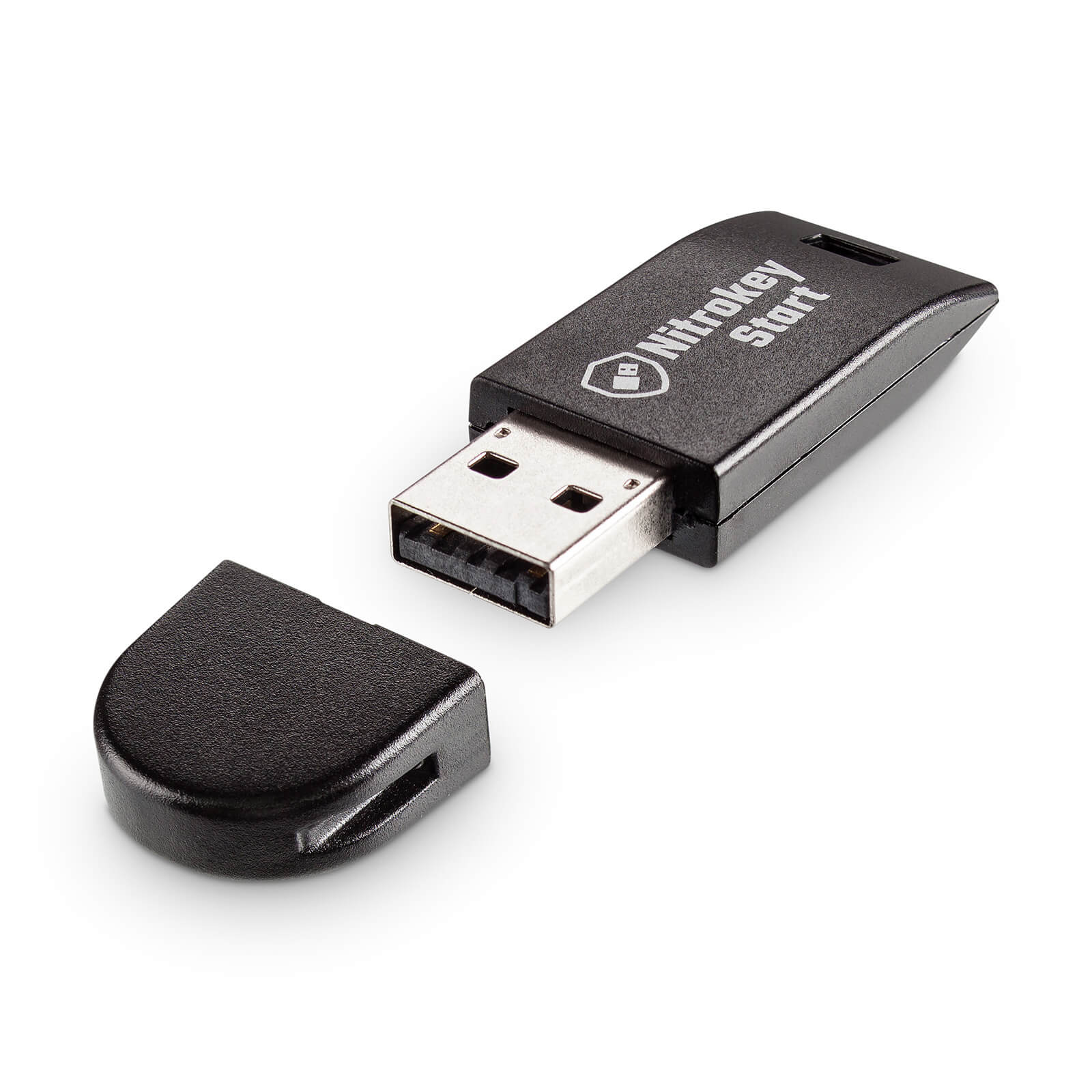 Nitrokey Start
 Phew!
Today, after four days of combing through code I am unfamiliar with, I
was finally able to change my expression.
 I m finally at the part of my PhD work where I am tasked with
implementing the protocol I claim improves from the current
situation. I wrote a script to deploy the infrastructure I need for
the experiment, and was not expecting any issues I am not (yet)
familiar with the Go language (in which

 Anti-national and Anti-India judges Kiren Rijiju, Law Minister.


 There is much to share but some other day, Till later.




 Like each month, have a look at the work funded by
 (no site yet)
 in October 2021. they generally seem to keep up with
shipping. update (august 2022): they rolled out a second line of
laptops (12th gen), first batch shipped, second batch
 When I paint postcards I tend to start with a draft (usually on lightweight (250 g/m ) watercolour paper, then trace
 Since I m not going to be writing on the pages, I decided to use a relatively cheap 200 g / m linoprint paper with a nice feel, and I ve settled on a B6 size (before trimming) to hold A6 postcard drafts.
For the binding I ve decided to use a technique I ve learned from a craft book ages ago that doesn t use tapes, and added a full hard cover in dark grey linen-feel
 After looking on the internet for solutions, I settled on adding spacers by making a signature composed of paper - spacer - paper - spacer, with the spacers being 2 cm wide, folded in half.
And then, between finishing binding the book and making the cover I utterly forgot to add the head bands. Argh. It s not the first time I make this error.
 I m happy enough with the result. There are things that are easy to improve on in the next iteration (endpapers and head bands), and something in me is not 100% happy with the fact that the spacers aren t placed between every sheet, but there are places with no spacer and places with two of them, but I can t think of (and couldn t find) a way to make them otherwise with a sewn book, unless I sew each individual sheet, which sounds way too bulky (the album I m using for the landscapes was glued, but I didn t really want to go that way).
The size is smaller than the other one I was using and doesn t leave a lot of room around the paintings, but that isn t necessarily a bad thing, because it also means less wasted space.
I believe that one of my next project will be another similar book in a landscape format, for those postcard drafts that aren t landscapes nor clothing related.
And then maybe another? or two? or









 The GnuPG (gpg) ecosystem has been played with a bit in 2019 by adding fake signatures en masse to well known keys. The main result is that the SKS Keyserver network based on the