Search Results: "dark"

27 March 2007

Adrian von Bidder: Samsung D900

David, after the demise of the little joystick of my previous phone (Sony Ericsson T610), I opted for the D900 (at CHF 21.-- plus 2 years, quite a good offer IMHO.) The hardware is very slick, though the display is disappointingly dark if you use the phone outside in bright light (Look at Casio's Exilim cameras for a good example of how a display can be readable even in direct sunlight.) Since I'm using the device as a phone only (and write less than 5 messages per month, usually), I still think it's a nice thing, but... Would I buy that phone again? I don't know. The price was good, and, again, it's still a very slick looking phone. But the firmware designers should be locked up for a few years and forced to write their code with the built in editor or someting like that. But if you expect anything other than to be able to call people over this device: don't go near it. I haven't relly looked at any other phones when I bought it, so I can't compare.

23 March 2007

Uwe Hermann: Measuring the energy consumption of everything you own

Voltcraft Energy Check 3000 Inspired by this post from Lars Wirzenius, I recently bought an electricity meter (or energy meter) and measured the energy consumption of everything I could find in my flat. I did not yet perform any long-term tests, i.e. measuring the average consumption over multiple days or so, only some quick ad-hoc checks. I just recorded the number of watts the respective device used when powered on. Here are the results: Kitchen stuff: Computer stuff: By removing all devices which draw more than 0 watts in stand-by mode, I was able to reduce the overall (useless) energy consumption (and costs!) quite a bit. I also replaced a bunch of 40 W and 60 W lightbulbs with energy saving lightbulbs which are equally bright, but only consume 8 W or 12 W respectively. On the long run you can save quite some amount of energy (and money) with them. They do cost a little bit more than normal lightbulbs, but save lots of electricity costs and they also last a lot longer (8000-15000 hours vs. 1000 hours according to Wikipedia).

14 March 2007

Steve McIntyre: Travels after Debconf - an alternative

To whom it may concern... Daniel and Rob are holding a party in June to celebrate their Civil Partnership. Yay! And I'm invited. Double-yay! Unfortunately, it's the same weekend that Debconf 7 finishes. And it's in in deepest, darkest Wales, almost at the opposite end of the UK from Edinburgh. Less yay...! As Daniel is a DD, I'm guessing (and he has confirmed) that quite a few of the party guests will be at Debconf. That means there will be quite a number of people will be needing to get from one end of the country to the other on Saturday 23rd June. As I'm a mug for this kind of thing, I'm looking into organising travel for a group. If you're looking at making this trip, mail me if you're interested in travelling together. Options at the moment include hiring a minibus and driving the whole distance, or maybe flying from Edinburgh to somewhere much closer (Bristol or Cardiff) and sharing a vehicle from there. Let me know...

13 March 2007

Gunnar Wolf: Reworking .deb - Does debian/rules really need to be a makefile?

Eddy Petri or wrote quite an interesting text about the shortcomings of the .deb packaging format, specially comparing it to Gentoo's ebuilds. And, basically, it all comes down to this phrase:
Why this is not possible for deb right now? Simple, we have it as a rule in the policy that the debian/rules file is a makefile. So even if one would implement a class-like model for deb packages, you'd still have the debian/rules file as a make file
Now... Is debian/rules really expected to be a makefile, or it is just customary for it to be so? Look at the very top of your rules files - you will see they (at least, almost) always start with #!/usr/bin/make -f - That means, of course, that you can omit the fact they are makefiles. While packaging/debugging, I often run -say- fakeroot debian/rules build && fakeroot debian/rules clean. That, my friend, is closer to the invocation you often use for a shell script than for a makefile. I don't know if we have tools that rely on having rules called via make (and that should be easy to correct if needed), but I really don't see it problematic at a first glance to create packages based on something different than a makefile.
Recently, I've been tempted by CDBS. I still don't fully understand its flow, and it's still mostly a dark-magic beast for me, but at least I am comfortable using it for my everyday packaging work (hey, pkg-perl group, I'll be bugging you again with my weird ideas soon ;-) ), but it surely has the advantages you quote in your message: It takes part of the complexity away. Of course, it introduces some extra bits. By using CDBS, the packaging entry level is considerably lowered - but the real understanding of properly maintaining a package becomes somewhat more difficult.
Or is it just me clinging to the comfort of having learned my way around writing debian/rules?

10 March 2007

Russell Coker: another visual migraine

Late this afternoon I had a visual migraine while driving. I was driving west and the glare from the sun was making it difficult to see so I didn't realise that I was having a migraine until I stopped. When I finished my journey and went inside a reasonably dark room I started seeing flashes of light (which weren't apparently bright enough to be noticed when outside). After about an hour the visual effects went away but I still felt weird for the rest of the day.

8 March 2007

Joey Hess: openmoko and n800

I wonder why I have such a better feeling about the OpenMoko than the Nokia n800. I feel that I know the OpenMoko already just by reading Harald's blog and browsing its wiki. It's a pretty stock arm system, boots with uboot, system in jffs2 flash, interesting interface to the necessarily proprietary cell phone stuff, all the hardware will work with only lightly modified linux kernels and the kdrive X server. Major downside of no wifi, though bluetooth is available, and if there's power, a USB wifi dongle could be used. Afrer putting in a similar amount of time googling for info about the n800, I'm still left in the dark on a number of points. I don't know what the boot loader is, what kernel or X modifications are needed, whether non-free drivers might be needed for some hardware, etc. IIRC the n700 had some issues along those lines. Of course, the reason I care about this stuff is that I can't conceive of owning a linux PDA or cell phone and not putting Debian on it, and I don't mean running Debian in a chroot, which is as far as I've heard of people getting with either the n800 or the n700. The GUI stuff for both these is pretty nice, and would make nice Debian packages. I, however, want to use ion. Note: See discussion for some notes based on feedback.

7 March 2007

Jordi Mallach: Cal otada and lunar eclipse in Picamoixons

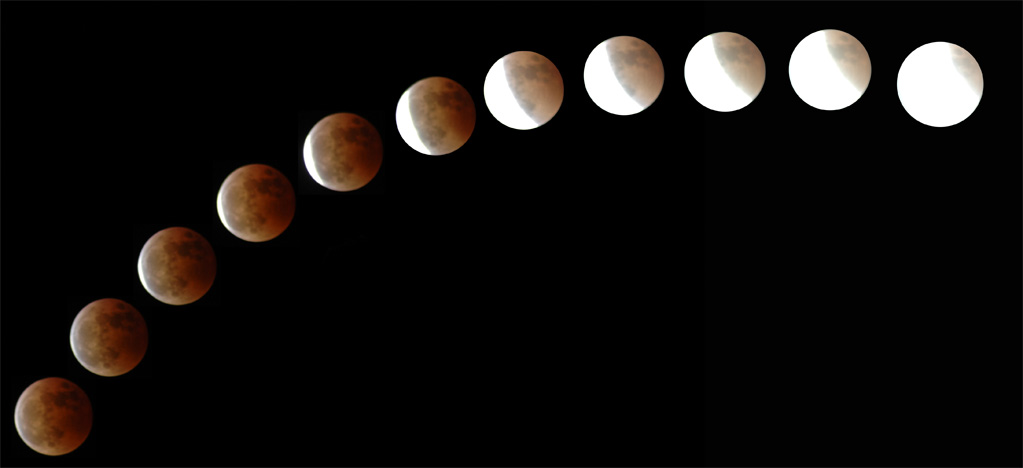
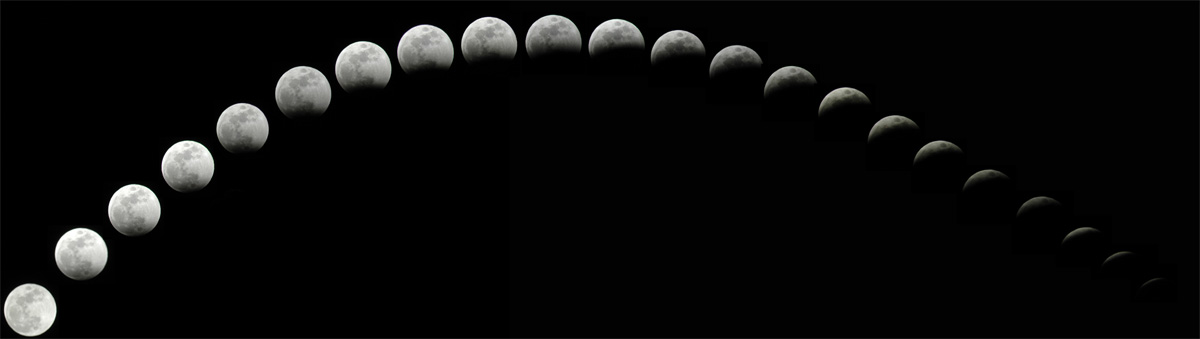
Last weekend I had great fun during my first cal otada with my Friends in Picamoixons, very near Valls in Tarragona. While it's already a tradition for my friends, this was the first time I went there, after having missed many other opportunities probably due to my overcommitment to triathlon training a few years ago. So on Friday we drove up North to Catalunya, and arrived quite late to Frago's house in the center of the town, where we slept in two packed rooms and the terrace after getting some beers in Dune. Early next morning we met Frago's friends and bought the necessary vegetables and wine for our great lunch, and soon after we were in the middle of some olive field outside Picamoixons, where we prepared a big fire and the cal ots. A cal ot is a special type of onion which grows in the area, which ends up being very long and thin. After cutting part of the green leaves, they are cooked over the flames, which carbonises the first few layers of the onion, but leaves the inner part ready for consumption. After this, you just need to pull from the inner leaves to get rid of the burnt stuff and eat the rest with a delicious and typical sauce for cal ots. So far, so good. What if your group of friends has extended the tradition, allowing for extra fun bits? In our cal otades, after you've peeled the cal ot, you keep the carbonised stuff. It's valuable ammo, which will soon be thrown at others' faces. Trying to remain clean is futile, you soon are covered by sauce and black stuff all over your head and clothes. This was real fun! After eating part of the group went up a mountain to visit an arab tower, which helped me not to get totally drunk before the night. When it got dark, we were all back to our positions around the fire, chatting and listening to varied music, while we waited for the lunar eclipse. The eclipse was impressive, seen from the country side, with absolutely no luminic contamination. My friend Jordi carefully prepared his camera to do a good photograph series of the event, and the results were impressive. When the eclipse was about to be full, it was great to see a miriad of stars appear in the sky, previously hidden by the perfect full moonlight. We were just too lucky that the weather fixed up just on time to have a completely clear sky.


The lunar eclipse, as seen from the Catalan countryside. Pics by Jordi Jover. Many were quite tired by 3 or so, so we started setting up tents and went to sleep by 4. Sunday was a slow day, dedicated to cleaning up our stuff and eating leftovers cooked on a new fire. We were back in Val ncia at 8PM or so and even after showering and cleaning my hair with shampoo, my head still smelled like smoke. Actually, I think it might still smell a tiny bit today. In short, a lovely weekend, which I hope to repeat next year. Too bad the lunar eclipse bit will be missing for quite a few more years. :)

5 March 2007

Russell Coker: last beard post

On Tuesday the 23rd of January I shaved off my beard after spending 107 days growing it, see above for the final beard pic. It was an interesting experiment and it's something that I recommend trying, but I couldn't keep it.

Having a beard is more effort than being clean-shaven. Eating is more difficult when you are trying to keep your beard out of your food. If you get the full beard (as I did) then the moustache at the sides of your mouth will get into your food (particularly bad for ice-cream). I guess that the benefit of having a waxed moustache would be that the wax would keep it out of the way of the food - the waxed moustache wasn't just an issue of style!

Madduck suggests that when you drink Guinness you "push your lips past the head and draw up only the dark stuff". Of course that won't work if you have a moustache as you don't want a moustache that's soaked in beer!

Immediately after cutting off my beard I didn't shave for almost a week and experienced much less discomfort than I had preveiously experienced when not shaving for that period. I think that having been used to having a beard an amount of hair that would previously annoy me is not noticable. Also it
seems that the hair was initially softer after I cut off the beard. Maybe shaving somehow makes the hair grow tougher.

When I had the beard I thought that I hadn't adjusted my body image to match, as every time I looked in the mirror I felt surprised to see it. Once it was gone my new look initially seemed more odd to me than my previous appearance, and it took me a number of weeks to get used to not having a beard.


When shaving off my beard I decided to do it in stages, firstly I did a "goatee" cut and then just a moustache. The moustache is a little lop-sided, but I was in a hurry and didn't plan to keep it for long.

26 February 2007

Annabelle Tully: FOSDEM

So its post-FOSDEM already… Time flies when you’re having fun.
I arrived Brussels at around 10AM friday, met Tulitar, who was just as clueless as me regarding where the hell we were going. We ended up meeting a nice group of people on the train who incidently neither knew where they were going, but were following someone who did. We eventually got off at the right place and met Dave, who also had no clue where the hostel was.
After being slightly lost and meeting some other Debian people, we finally got in at the hostel where we had to lock baggage in the basement as we could not check in before three. Tired as hell, we left out and met Jeroen and a few other people and headed for the chocolate museum. Belgian chocolate is /awesome/. They had solid dark chocolate sculptures and even chocolate CLOTHING.
After the chocolate museum, everyone left back for the hostel and passed out, except me, who was still eager for more city exploring and/or beer. I met up with Martin and left to get some asian foods before the famous beer gathering. I’m convinced we tried every beer on every page of every beer charter of every pub we visited. Belgian beer is by far the best I’ve ever had. ‘Duvel’ is one of my top favourites.
During the beer gathering we thought it’d be a really good idea to discretely throw coasters at the people sitting below, us hiding at the top of the pub. Ended not as discretely as it started, hundreds of coasters flying throughout the room. Pure entertainment gold, but seemed to piss off the organizers and bar-people, and Martin was noble enough to take the blame even if I blatantly started it all with my childish ways.
The next day was started with getting lost AGAIN, because I could in no way remember where the hostel was. Interesting start of the day. I think I’ve lost count on the amount of times I’ve gotten lost in Brussels at this point. On our way to the FOSDEM venues we also found an entire area of brussels where they just don’t sell sandwiches. The day ended with much delicious Belgian beer consumage.
All in all it was fun and interesting. I also discovered that they are way more lenient with airport security in Belgium. I had tons of liquids and creams in my bag, and they didn’t comment it at all OR put it in little plastic bags. Despite me happily not feeling like a terrorist, the flight back sucked. It was an hour delayed, and when I landed there was even more snow in Norway than there originally was when I left. Missing the green grass of Belgium.
Now please, people, upload pictures from FOSDEM and give me the URL! :-)

15 February 2007

Jordi Mallach: Tunisia

Last month, Bel n and I managed to secure our trip to Tunisia on the very last moment. So, planning trips on the very last moment isn't nothing new around this place, but we made a big effort to take things to the limit. I can't remember why exactly, but on January 31 we were *so* close to fucking everything up before it started, when we packed our stuff just a pair of hours before having to leave to the train station. My luggage was prepared in a rush, so while I think I took everything I thought I'd need, I didn't really select my clothes too much. The idea was to have our suitcases mostly empty to bring back stuff from the markets: smoking cachimbas, lamps, leather stuff, etc. At that time I didn't know that would end up being a great strategy. Anyway, like 9 minutes before the train's departure we were stuck in Nuevo Centro without a taxi and at that point I really had lost hope about being on time. For some reason, there were no taxis in the area, when it's normally a place where there's tons of them. Suddenly one appeared, we rushed in and I asked the taxi driver to please fly to the station. Happily, we got an incredible green wave around the avenues, he drove us at like 80 Km/h and we even had to wait for a few minutes at the station. In Barcelona, we prepared our small New Year's Eve dinner with my cousin Laia and Marc, and while the plan was to go to sleep pretty early to be in good shape to go to the airport next morning, the bottles of wine and cava emptied quite fast, and around 4:30 we were quite drunk when we decided it was enough. When some annoying sound woke us up next morning, it was really late, so we again rushed out to the empty streets of Barcelona, sneaked into a regional train, without knowing it was the only way to get in time in El Prat airport, and after some initial confusion trying to find the travel's agency desk in the wrong terminal, we managed to check into our flight, being the very last to do so. With all the rush, I couldn't get some clothes from my suitcase transfered into my hand luggage, which I really wanted to do after my nice lost luggage experience during Debconf 5 in Helsinki. Anyway, chances are small that your luggage gets lost, right? But of course, Murphy is always vigilant, and this was a great opportunity to fuck me up. After a short but horrible (due to our really bad hangover) to Tunis/Carthage airport, we were in the long security/passport check. When Bel n picked up her bag and mine didn't appear, I tried to tell myself hey, it'll appear, no worries! . After 15 minutes, the stupid suitcase was nowhere to be found. Apparently, another two pieces of luggage had the same luck, which made us contact a group of four Uruguayans who were missing one of them. Nothing too terrible; it'll surely come on tomorrow's flight. After reclaiming our lost luggage, we went out to the parking where a bus was waiting for us, and on the way there, the six of us nearly fell into the first Tunisian scam, involving a dude selling jasmine flowers at 2 each. The bus took us down to Jasmine Hammamet, the most touristic place in Tunisia. Valencians might have an easy imagining the atrocity of the area by picturing what twice Marina d'Or plus Benidorm including Terra M tica would look like. Kilometres and kilometres of a disgusting Who can build the most horrible giant hotel right next to the beach contest. So it was pretty clear we had to spend as little time as possible in the area. We soon learned about how transport works in Tunisia. The cheapest is to use the public busses and the luagge collective taxis, we soon found out. Our first morning there, our guide Rejeb, working for Iberojet and Solplan touroperators, gave a talk where he advised us against travelling alone, specially around the South, while he offered organised trips around the country for every day of the week. Although we expected this danger! speech, we decided to book the two day trip to the South and Great South of the country, basically because it was the best way to see many places in a short time, even if it meant having limited time in each destination. We wandered around Jasmine Hammamet and discovered Carthage Land, sort of a Disneyland set in the age of Anibal and Carthage's empire, which was inside a newly built medina complex. This was a really bad place to practice the art of haggling, as the place was so desert, merchants really tried hard to get you buy something. Again, we were close to fucking up after our first negotiation, but we finally decided we weren't so interested. Lucky, we later found out the price was outrageous. Sadly, we spent way too much time in that tourist trap, and we found it was too late to go to the real Hammamet town to see a real medina and real stuff, so we had a long walk around the immense beach until sunset. On Wednesday, we did organise a bit with the Uruguayans and some others we had met: Mar a and Santi Kuchi Kuchy , Cristina and Pedro and an Argentinian family, and managed to hire a van driver to drive us all over the North. For quite a good price, we were taken to a few ruin sites in Carthago, now mostly a residential area, and it was really impressive. While the condition of many of the remainings is not optimal, it was exciting to see things which had been built by Phoenicians and Romans 2,000 years ago. I really enjoyed the remainings of the Antonine thermal baths of the city. It had been a huge building right next to the sea; one of the standing columns helps figuring out how big it had been. Right next to this site, the Presidential Palace dominated the whole gulf. Military places are treated zealously in Tunisia, and it is against the law to take pictures of any bit of it, not even a barbwire of the fence. The Palace had a great Tunisian flag waving over it, and many signs advised you against taking pictures in that direction. I couldn't resist.


The ruins of the Roman Antonine Baths After Carthage, we went to Sidi Bou Said, a small touristic town, which had the peculiarity and beauty of having all windows and doors painted in a beautiful light blue colour. Our last stop for the day was in Tunis, where we visited the most amazing medina of the whole week. Unlike the new medina in Jasmine Hammamet, this one was literally packed with people going up and down the maze of very narrow streets. Every few metres you'd come across a new, attractive smell coming from the few salons de th or spice, leather or perfume shops. Here we finally started developing our haggling skills, and managed to get a few items for reasonable amounts.


Streets of Sidi Bou Said Back at our hotel, everyone tried to get a quick dinner and go early to bed, as next morning we were taking a bus for our trip around the South. There was time to call yet another time to the Airport, to find out that one of the luggage pieces had been found. While there was no news about my suitcase, we shared a taxi to the airport to pick the found suitcase, and see if mine was actually there by any chance. Unluckily, it wasn't, so I wouldn't have any clothes for the desert visit. Some people in the group were kind enough to lend me some t-shirts and pants. For my underwear, I actually resorted to using some of Bel n's (no kidding, it was way too sexy :P), while mine dried up after some manual washing. The alarm clock went off at 5:15 or so, and soon after we were ready in the hall with our small bags. When the bus was ready to pick us up, the guide said we weren't allowed in, as we weren't on the list. WTF? We were nearly the first ones to book and pay for it! So he finally let us in, for a short while, until he realised there was no space for everyone, so he demanded that we got off. Of course, we didn't, and a long and very disgusting argument started between the guide, us and a few people who had seen us pay for our trip, and were trying to support us. To make a long story short, we ended up stepping down when I noticed the bus driver calling the police, and after Rejeb, our guide, told us the other bus would be waiting for us at the travel agency if we quickly took a taxi there. We of course knew that was a fantasy to get the bus moving, but dealing with the police at 6:30AM wasn't on my list of activities for the day, so we finally gave up to let the rest of the people get in time to their visits, as they were very tightly scheduled to make everything fit in two days. Nobody was waiting for us at the travel agency, but we were promised our money back, which did happen in the evening; our plans for Thursday and Friday were a bit broken though, and the rest of the morning was spent looking for alternatives. When we had managed to book a new trip in a different agency for Saturday, we took the bus to Nabeul, the capital of the province, well known for their medina specialised in pottery. In Nabeul, we lived a tourist trap which I found to be quite original. Not having walked 3 metres into the city walls, some young dude stops us and tells us that he knows us, as he works in the restaurant of our hotel . I totally didn't remember his face at all, but why not? So he quickly tells us Nabeul has good carpet workshops, and her sister is working in one which is regulated by the Government, and you can only visit two days a week. Coincidentally, Thursday is one of them! So he literally grabs us by the arm and takes us to one of the streets perpendicular to the main market street, and we enter a carpet shop. To the right, his sister probably being like 45 years older, is knitting a nice carpet on the loom. And a few seconds after, we're taken upstairs, where a Teletienda show starts before us. Without being asked if we want to buy a carpet, some other dude starts to unroll carpets and more carpets before us, talking in some very basic Spanish. While we're offered jasmine tea, which is really nice, Ali the brother quickly excuses himself and vanishes, leaving us with the salesman, which continues unrolling more and more before us, now helped by someone else. When 10 minutes later we convince them that we won't buy any carpet, he asks a donative for his young employee, who has unrolled and will now roll back a zillion carpets. Back in the hotel, we have dinner with a pair of Catalans from our flight, and when we tell us about the carpet place, they tell us they went over the same story like one hour before us! On Friday, we got some advice on other places to visit, and decided to go up to Cape Bon and visit Kerkuan, the only important remainings of a Punic city which, when conquered by the Romans, was destroyed to the grounds, but not rebuilt on top (they were busy with Carthage). Romans did an excellent job when destroying cities, and the result is a site which still lets you see perfectly how a small town (around 1,500) looked like 2,000 years ago.


Ruins of a Kerkuan neighbourhood, with their red bathrooms nearly intact To reach Kerkuan we had taken the bus up to Nabeul and then our first luagge to Kelibia, where we took a taxi (after no less than half an hour arguing in French with the taxi driver to settle on a rate for a ride to Kerkuan and then to the tip of the Cape in El Haouaria. Luagges are undoubtedly the best way to travel medium distances for very little money, while getting mixed with locals. During our ride up North, we chatted with a nursing student from Kelibia who was going back to her town for the weekend. She was really open, like most of the people we found in Tunisia, and we ended up exchanging our post addresses; we still need to send her a postcard from Val ncia soonish. This area wasn't so touristic, so the roads, while totally acceptable, weren't as good as the highway from Tunis to Sfax we were used to. We had seen some bits of the local driving skills , but the luagge driver performed some of the most extreme overtakings I've ever seen. These happened every three of four minutes, so after a while I was actually amused about what was going on. We would overtake two lorries on one go when there was absolutely no visibility; if things went too far, people would just slow down to let the overtaker get back into his lane on time, and those coming ahead would just use their headlamps to make them know it was just a bit too close. The taxi driver, annoyed at us, took us to Kerkuan but didn't wait for us; he immediately left, leaving us without any transportation in the middle of nowhere. After a visit at the site, we walked around 2.5 kilometres back to the main road, where we decided it was too late and risky to continue the journey up to El Haouaria, so we waited on the road gutter for a taxi. The first one which stopped was, to our surprise, the same bastard who left us one hour before, who stopped, laughing at us a little. Luckily some other taxi came by in the correct direction, and soon forgot about that man. After a taxi, luagge and bus ride, we were back in Hammamet, and the desert group had already got back from the two day trip. We were asked over and over what happened, what did we do, etc. People who hadn't talked to us before would come over and see; we were really surprised about the warm welcome we had. After dinner, we improvised a customes party, and many people managed to dress up in Tunisian/arabic fashions using bed sheets and so on. We had to wake up at 5AM next morning, but didn't go to bed until 2AM. Nothing could go wrong this time. We had our tickets, we had confirmed we would be going on Sunday the night before, so at 6:15, our new guide came in, and came straight towards me. He said something in German, and after I told him I spoke absolutely no German, he said huh, well you know the bus is full of Germans, and my indications will be in German? . Pretty incredible, but again a fuckup by the agency. My ticket said, clearly: Sahara safari. Bus + 4x4. (ALL). Turns out ALL meant Allemand, not everything included , although we had requested English pretty clearly. This was quite a minor problem though, after having no clothes for a whole week and having been left behind two days before. I think we were really lucky getting that German group, though. We were only 16 people on the minibus, making the stops a lot faster than the normal ones, where 55 persons need to get out and in of the bus. We had our own Routard guide for Tunisia, so we could read about the places we were about to visit before getting ther. Also, I surprisingly knew much of what our guide was talking about, just missing the details he talked about oil production in Tunisia compared to Spain's, among other topics . When the landscape was becoming drier and drier, Bel n and I spotted something dark far away ahead in the completely straight road. As it became bigger, I started thinking it might be the #1 place to visit for me in Tunisia: El Djem's impressive Roman amphitheatre. When we got off the bus, I was totally excited. Before me, the walls of an incredibly well preserved, huge Roman building; in fact, the best Roman ruins in the whole continent. El Djem's amphitheatre was the third biggest of the Roman empire with 35,000 seats, only surpased by Rome's and Capua's. It remained mostly intact until the 17th century, when some of its stones were used to build the city and some of the treasures taken to the Great Mosque of Kairouan, but when it took more damage was during two consequent wars, when the Turks didn't have many problems to blow part of the wall away using cannons to end up a siege of the city.


The Roman amphitheatre of El Djem The underground tunnels are intact, and it's difficult to not have flashes of Gladiator while walking under the arena's trapdoors. Sadly, there was little time to spend there, and we had to continue the journey after just 45 minutes. I would have spent half of the day there. From here, the landscape truly started to get drier and more desertic. The south of Tunisia is a giant olive field, until you reach the Great South, where it's dry enough that the only thing that grows in the land are rocks. Hours later we arrived in Matm ta, the very famous troglodyte village of small holes in the ground. Although I was curious about being there, watching how organised and massive tourism has destroyed these Berber's ways of life dissapointed me greatly. Our guide stopped the bus in one of the pits, which was decorated with white and light blue. In the first room, an old woman was grinding something in a small, stone mill. The dwellers of the few pits still used by their original inhabitants now make a living by letting people into their homes and getting dinar as a payment for taking photographs. What the woman was doing was just a bit of theatre, part of the show. After this first room, we got into the middle of the pit, which had a series of other passages to some rooms, some of which were simply open so we could get in and have a look. I felt a little bit like violating someone's privacy, and wondered how much the house had changed in the last years.


Inside a troglodyte underground house in Matm ta After our visit, we continued up the mountains of Matm ta, and after going by a giant "WELCOME TO MATMATA" sign drawn in white in the middle of a mountain, Hollywood style (!), we stopped for a brief photo-stop (sic). Indeed, the view was quite impressive, and is universally famous as one of the filming spots of Tatoonie scenes in Star Wars: A New Hope. Speaking of famous places, a few minutes later we stopped at the top of one of the hills, were we'd have lunch in the Hotel Sidi Driss, a place of pilgrimage for Star Wars fans, as it was the troglodyte pit which served as the Skywalker's home. The place is full of references to the film saga, and one of the open pits is full of set pieces stuck into the walls. We were served couscous, which wasn't bad, but was cooked and served in the most genuine fast-food fashion. Everyone there gets couscous to eat, apparently, and it's the same in many other touristic places in the area.


Matm ta's lunar landscape From here, our journey headed straight West, in the middle of the rocky desert, until after some time, you could start to see lines of palm tree branches planted here and there, a sign that rocks would soon disappear, being replaced by sand and dunes. As when we were approaching El Djem, at some point a huge, dark spot appeared on the horizon. Douz, probably named after some 12th French batallion which stayed there, is a small town in the very limit of the Sahara desert, built right next to a huge oasis, exclusively dedicated to palm tree plantations, making dates production a big source of income, along with, of course tourism. The travel agencies use Douz as the starting point for several-day trips into the desert, camel rides and stuff like this. Our guide offered us getting a camel and carriage ride in Tozeus for 20 dinar, but Bel n and I declined. He didn't seem to be too happy about it, and had no problem commenting this in German and Arab with the driver (Spanisch and Spanien were clear to me). We learned that the agency (or the guide) makes around 3 Dinar for everyone who contracts the camel rides, after speaking to one native young kid who worked in the camel place. While our German trip mates got dressed in berber fashion, we opted to walk into the desert and play around in the sand on our own. I discovered a few desert insects which were unlike anything I've seen anywhere, and their diminute trails were all over the dunes. Looking West, the view was astonishing, with only thousands of kilometres of yellow dunes ahead us.


The evening sun over the dunes After they came back, we were taken to our hotel, which was really impressive. After leaving our stuff in our room, we headed back to the desert, which was like 300 metres away, to see the sunset over the Great Dune . There's a street which literally serves as the frontier between the rocky ground and the sand desert. From there, you could see many lines of palm tree branches, which are planted by locals in a futile attempt to stop the inexorable advance of the desert. Women in Douz and other towns in the desert limit spend their days sweeping the entrances to their homes, as sand gets in really fast. A small village next to Douz even had to be abandoned and rebuilt in some other place, with the old one being finally devoured by the dunes. When it got dark, we still had some time to kill before dinner, and we discovered a hammam in our hotel. I got in, and saw there was a bored young man inside. He informed us about the prices, and after some short deliberation, we realised we'd spent half of the camel money in some Arab relaxation; while I got a really cool massage, Bel n enjoyed a Turkish bath. I spoke to the guy for a while, and he said not that many people used that hammam. He actually handed the list of services since 2002, which easily fitted in one piece of paper. People don't know what they are missing; he explained that most of the hotel's clients just showed no interest in the baths. I wonder how Fins or Norwegians would react, given their sauna culture. The dinner and breakfast in that hotel was absolutely awesome, and I actually ate too much to have an easy sleep. Next morning we had to be ready at 5:30. That's pushing my limits. The bus started crossing the Chott Jerid when it was still quite dark. The chotts are dry, salt lakes in the middle of the desert, which during some seasons do get some water, sometimes from the underground. The Chott Jerid is the biggest of the three chotts in the area, and the views are fantastic. It's like a giant, totally flat muddy sea which reflects light creating dangerous mirages of oasis-like dark patterns. Before the construction of the recent road that links Douz and Tozeur, crossing the chott was so risky that many people died in the attempt. We had the unique opportunity to see the sun rise over the salty horizon.


Sunrise at the Chott Jerid Again, on our way to Tozeur, we were offered a carriage ride for ten dinar, and again we declined. The guide then asked us if we had no money or what. So in Tozeur we basically wanted to walk around the oasis fields, and ended up talking most of the time with some old man who sold drums and desert roses. On a 4x4, we went up North to Chebika, a really cool town with a small oasis of thermal water, which I guess was around 40 C. The short walk to the wall where the oasis surfaced was packed with children who insistently begged for money or offered necklaces and other items. It was difficult to make them understand you didn't want anything. We then went up the mountain behind Chebika through a road which had its own piece of history. It seems that during WWII, Rommel suffered an Allied siege in Chebika, with a range of mountains behind their backs. The Allies gave him one month to surrender, and he took his time to answer. During that time, he ordered his engineers to design and build a road which would let them escape Chebika through the steep mountains, and they managed. When the ultimatum expired, the Allies apparently found out Chebika had been abandoned by the Germans, including tanks and most of their equipment. So, on the way up, a few kilometres away from the Algerian border, there was another typical visit to the biggest oasis waterfall in Tunisia, which was several metres high.


The oasis at Chebika Our Sahara trip would soon end, and after lunch we headed Northeast on our way to Hammamet. On our way back, we stopped in Kairouan, one of the key Islam pilgrimace spots, with the Great Mosque as the biggest attraction. Unluckily, as we arrived after lunch, we didn't had a chance to see it. Apparently it is really impressive. We haggled a bit for a pair of babouches and a small leather couch in the medina. We came back to our hotel around 7, and found most of the people around the hall. After the obligatory update on how it went, we went to bed as we were exhausted, and of course we had to get up really early to head to the airport. The airport was at that early time of the morning a total chaos, and while people stood in the checkin lines, I tried to find out what was going on with my still lost luggage. I went back to the lost luggage window, which would be closed for 5 more minutes. When they finally opened, they told me once again they had no clue about what was going on with my luggage. I finally understood they had no clue: my tracking number wasn't in their database. I asked them if I could have a look at the unreclaimed luggage storage room. They kindly opened a small door for me, and invited me to go inside and have a look. The view was gross: hundreds of lost bags all over the place. As I was in a bit of a hurry (I actually had to get back to Barcelona), I asked him where to find the bags of one week ago, and he nearly bursted into laugher. Okay, I had to look all over the place, scanning every piece of luggage in an attempt to spot mine. There were bags of absolutely every type in there. In one of the corridors, I sensed a disgusting smell, and figured out some poor guy may have food or something in one of their lost bags, which was rotting in that horrible room. So wrong: soon after I found myself nearly stepping on a puddle of shit, as if someone had literally dumped it right there. Oh my... luckily my search was nearly over and unsuccessful, and I got back to Barcelona with the hope of finding my bag in El Prat. After looking in their two storage rooms I realised I'd probably not see the luggage again, which is a real pain in the ass. A few hours of train later we were back in Val ncia, with a feeling of having spent 3 or 4 weeks in Tunisia, not just 8 days. Really a great place to visit, not only for their cultural treasures, both current and ancient, but for the openness of their people. I hope I'll be back at some point!

5 February 2007

Martin F. Krafft: Install full Vista from upgrade version

This is just hilarious and representative of a company that seems to have no idea about security or the ways of the hackers (from Monsters and Cirtics.com): With a DVD-based Windows Vista upgrade, you can install the complete version, even if you've never owned (or installed) Windows before. Simply don't enter the product key after booting from the DVD and install a 30-day trial. Then reboot with the DVD a second time, and now enter the product key. It will upgrade the trial to a full version. I am definitely not advocating anyone to do this because there are plenty of reasons to avoid Windows Vista; I just post this for the giggles. Microsoft, you are morons. Get a grip. You can't beat the "bad" guys at security. Noone can. And when it's about licencing costs, the only lucrative way seems to find real business models based on a non-volatile basis and with a more sustainable edge to them. NP: Green Carnation / Light of Day, Day of Darkness Update: In the light of the above story, this interview makes me laugh for the sheer amount of hot air. And then there is this this gem, an email from Jim Allchin to Billie Boy and his mate Stevie with fabulous statements, like "... our teams lost sight of what bug-free means, ... what security means..." (as if they ever knew...), or "I would buy a Mac today if I was not working at Microsoft." That was 2004. Three years later it is as if this email had never been written.

2 February 2007

Meike Reichle: First day in Luxembourg

29 January 2007

Gustavo Franco: Weird results

Your results:
You are The Joker


The Joker
65%
Venom
53%
Mr. Freeze
49%
Riddler
49%
Dark Phoenix
49%
Dr. Doom
45%
Magneto
42%
Lex Luthor
40%
Green Goblin
38%
Apocalypse
38%
Two-Face
38%
Juggernaut
34%
Mystique
30%
Kingpin
29%
Catwoman
26%
Poison Ivy
15%
The Clown Prince of Crime. You are a brilliant mastermind but are criminally insane. You love to joke around while accomplishing the task at hand.


Click here to take the "Which Super Villain am I?" quiz...

27 January 2007

Martin F. Krafft: Guinness insider drinking tips

Guinness was out on promotion in the pub where we played pool last night. In a leaflet they share the Guinness grandmaster's secrets to getting more enjoyment from the stout:
Push your lips past the head and draw up only the dark stuff.
It's actually well worth a try to suck on it that way. NP: Anekdoten / From Within

21 January 2007

Adam Rosi-Kessel: Near-Death Experiences

Via the Frontal Cortex (my favorite recently and accidentally discovered blog1), on the cultural relativity of near-death experiences:
Many Africans interpret near-death experiences as somewhat evil, a bad omen or a sign that they were somehow “bewitched.” Among 400 Japanese NDErs that participated in a study, many reported seeing long, dark rivers and beautiful flowers, two common symbols that frequently appear as images in Japanese art. East Indians sometimes see Heaven as a giant bureaucracy, and frequently report being sent back because of clerical errors. Americans and Brits often say they are sent back for love or in order to perform a job or task. Natives of Micronesia often visualize Heaven as a large, brightly lit American city with loud, noisy cars and tall buildings.
I’m not sure what’s worse — returning from death to rectify the inadvertent omission of a certificate of service on a motion for leave to file a reply brief in excess of the ten-page limit (maybe I should have picked a different profession) or getting additional time on Earth because the powers-that-be failed to complete a 27B/6. I really prefer the beautiful flowers, but it’s probably too late for that. 1Is there a term of art for such blogs? E.g., a blog discovered from an unrelated Google search that turns out to be worth adding to the blogroll.

20 January 2007

Martin F. Krafft: No-fly list to be scrubbed?

Nori points me to this article by Bruce Schneier, which seems like good news for me. Does it mean I'll be able to visit the US again sometime in the future? I don't think so; travel to the US is among the most unattractive things I can currently think of. I might reconsider when the US stops treating visitors like terrorists, taking their fingerprints and requiring so-called "Passenger Name Records" to be made available by the airline companies transporting passengers into the US, with the sole purpose to build a criminal file for everyone entering the country, just in case they become a threat to national security or an obstacle in the path of the neo-conservatives to forge ahead. In addition, I'd fear for my laptop, which US immigration officers can now seize without reasons and scrutinise; I do not own a laptop because I can do without one for weeks on end. Furthermore, all my data are encrypted for good reasons. As the old saying goes: "only the guilty have something to hide", I'd surely make it into their prisons as a suspected terrorist (which has happened to people before). What the US doesn't understand is that even though I may be guilty and therefore hiding something, it doesn't mean I am hiding it from them. So no, I don't think I'll enter the US anytime soon. NP: I Love You but I've Chosen Darkness / Fear Is on Our Side

17 January 2007

Martin F. Krafft: Stuff I forgot to pack

After an amazingly stressless journey [0], I've arrived yesterday evening in Limerick and met Daren and Mel, two alumni of UL who let me move into a spare room in the house they're renting. To be exact, Mel actually lives next door, but who cares about details. After a bit of unpacking, we headed for the pub and returned for an extensive session of Guitar Hero on the Playstation II, which is a truly fun and excellent game.
[0]

I brought my bike along, for transport and exploring. This involved packing a bit of extra stuff, borrowing a friend's Tranzbag, arriving early at the airport to get it boxed to ensure a safer journey, picking it up in Dublin, and somehow getting it to Limerick, where I'd have to reassemble it. I wasn't really looking forward to the trip. It turned out to be stressless, as I said. The boxing cost me 10 Franks at the airport and was completed in less than 5 minutes, nobody at the check-in counter said anything, as if it was the most normal thing for them to check in bikes, some dude retrieved the box in Dublin and placed it on my cart, and while I was waiting, I found out that I wouldn't have to hop on a coach (bus) to go to the Dublin train station, catch a train to Limerick, and then finish the last mile in a taxi: a bus operates fairly regularly directly from Dublin airport to Limerick, taking four hours for the journey. That's about how long it would have taken me via the train station, but I only had to pay 19 the train itself would have been 25 , plus the taxi charges.

The coach driver was curious when he saw the box, but I didn't have to pay extra, and after watching Airport on my laptop and listening to the new Katatonia album, I found myself with my bag and the bike next to the university's main entrance, with Mel and Daren on the way to pick me up. Five minutes later, I was in my home-to-be-for-five-weeks.

I dropped into bed at around 4am and promptly overslept the next morning, then decided to use the day for errands, hitched a ride from Laura (the stressed-out Skynet president and Skycon organiser) to an excellent nearby bike store where I reassembled the bike, got myself a lock (see below) and a mud guard for the front wheel, then headed off for the campus bank to open an account, rode back and forth between the Lero building and the bank to satisfy their bureaucratic thirsts and finally obtained the details for my very own Irish bank account. And I squeezed a bit of grocery shopping in between. Meeting Brian (my supervisor) in the hallway, we agreed on a meeting on Monday, so the remainder of this week is for finishing the various proposals and papers on my to-do list, preparing for the meeting by getting back to speed with my research, as well as getting to know the local party crowd exams are about to end in Limerick and I've been told to have picked quite an excellent time of year for my visit because the university will become a mad house this weekend. We'll see how compatible those tasks are, but boy am I glad that I am not living anywhere near the student villages, or as I put it last night: I don't mind going to parties, but if the party comes to where I am, I'd rather not have it be every night. So this would bring me to the title of this post: stuff that I forgot to pack:
  • A second sweater, it's pretty cold here and I don't want to be wearing the same sweater every day (even though it's merino wool and thus woudn't start to smell).
  • A pair of windcheater gloves, the thin wool ones I have aren't exactly made for cycling.
  • Rain trousers to wear over my regular pants. It's raining and wet and the light colours of the pants I am wearing are a high-contrast basis for the mud.
  • My bike's lock key. Fortunately I left it unlocked, but still had to go out and buy a new lock (which was more painless than having the key sent here).
  • Comfy sneakers for home use, as it's too cold to just be wearing socks.
Due to popular request, I shall be back here with pictures of my surroundings one of these days. NP: I Love You but I've Chosen Darkness / Fear Is on Our Side

6 January 2007

Martin F. Krafft: Adam's Apples

I've been away from Zurich for a while, and one of the things I missed the most was my favourite cinema. So last night, I didn't need my arm twisted much (by Hanspeter) to go and see the Danish film Adam's Apples (warning: Flash content). Imagine a church community made up of four people: Ivan, the reverend, who lives Jesus' philosophy to offer the other cheek when slapped on one. Ivan is father to Christoffer, a spastic-retard, and widow to his late wife, who killed herself not being able to handle the retardation of their child. Ivan, of course, denies all this and treats Christoffer like a regular, jovial and energetic child, and lulls over the loss of his wife in an accident. If someone get too close to Ivan, he'll bleed from his ear. Ivan is played by Mads Mikkelsen, who also plays Le Chiffre in the latest Bond movie "Casino Royale" (which I'll cover in another post). Then there's Sarah, a dosser who got off with a man she didn't know or love and now expects a child. Because of her drinking problem, the child is said to have a 40% chance of being disabled. She cannot handle it and runs to Ivan for advice. Khalid is a Saudi who's on parole at the church after plenty of armed robberies of Statoil stations as part of his mission to destroy the Statoil empire. He speaks broken Danish (wonderfully translated in the subtitles), seems extreme at most of his actions, but all he really wants it is to return to Saudi Arabia. He's been at the church way longer than his parole, saving money but also just enjoying the innocence. Gunnar is a massively obese ex-tennis player who turned to overeating and alcohol after a ball of his was wrongfully judged to be out, causing him to lose an important game. He's at the church on parole for small-scale thievery and plays a role somewhat reminiscent of Lenny in "Of Mice and Men:" stupid but kind. He is also way beyond the end of his parole. There's also a doctor who seems to be the only one with a firm grasp of reality, but his sarcasm overshadows that completely. One day, Adam arrives. Adam's a misanthropic neo-nazi on parole, sent to the church to be cured. Adam calls himself evil and seems to be just that: he cannot deal with niceness, especially not the straioght-up, disarming kind displayed by Ivan in fact, he's the kind of guy who'd slap the other cheek even if not offered. Adam's task is to care for the apple tree (which is everyone's pride) and bake a cake from the harvest. As the story develops, Adam's fight against Ivan's benevolence reaches hilarious heights as the characters seem to exchange exactly those sentences that the other didn't want to hear. When later a group of neo-nazis join the battle, as well as what would have to be called God, everyone (characters and movie-goers) are left wondering who's after whom, and sundry other questions on morale. The film was once again a great display of Scandinavian cinematography, which I've grown to like a lot over the years of being a regular at this cinema. Despite the somewhat flat story and the surreal element of God in one scene (and only one), I can hartily recommend it. The actors are doing an amazing job, and in the end, the movie is primarily funny, not because of jokes or forced humour, but because of the dryness and darkness of what's happening between what seems to be average people like you and me on the screen. NP: The Flower Kings / Paradox Hotel

Andrew Pollock: [life] Trip to Spain

(continuing with clearing the blogging backlog) Four days after returning home to the US from the trip to Australia, I was at it again, flying the other way around the world. In hindsight, this was totally insane, but I'd expressed interest in going much earlier in the year, I think before we'd organised to visit Australia. I flew to Madrid, via Philadelphia. I've said it before, but I'll say it again, Philadelphia International is a very nice airport. It's the first time I've flown across the United States, and it really is a long way. Just like Brisbane to Perth, it's a long time on a plane for staying in the same country. Arriving in Madrid, entering the country was extremely straightforward, as I've also said previously, the immigration guy barely looked at my passport long enough to open it and find a page to stamp. It was my first time in a country that didn't speak English and wasn't terribly bilingual. Fortunately the airport was signed in English as well as Spanish, and the information/assistance people all seemed to be able to speak English. I arrived in Terminal 1, and the European contingent were mostly arriving at Terminal 4, which is essentially a completely separate airport, a short shuttle bus ride away. My flight arrived in the morning, and I had about 4 or 5 hours to kill before the first of the European contingent rocked up. It was tempting to get a train or taxi into Madrid and have a bit of an explore, but I really didn't want to risk not getting back in time, so I just loitered around Terminal 4 for the time. The highlight of the waiting was I bumped into Doug Foster, who I used to work with a SecureNet in Canberra, disembarking a flight from London (where he's now working). It really is a small world. After everyone turned up, we got on a bus and headed for Badajoz, a mere 5 hour bus ride away. We didn't get away until about 7pm, so by the time we hit the road, it was dark, so there wasn't a lot to see. We arrived at Badajoz around midnight, and made a short walk to the hotel and had a late dinner and hit the sack. Unfortunately with all my travelling in the three weeks, I'd managed to come down with a cold, which started manifesting itself pretty much from the moment I got to Badajoz, so I started to feel increasingly suboptimal as the week wore on. Badajoz itself is an incredible little city. It's just like what I envisaged an old European city to be: narrow winding streets. It had a funny effect on me. I'd alternate between finding it really quaint, and incredibly claustrophobic (and I'm not usually the claustrophobic type). After doing a bit of self-analysis, I think the problem was the lack of sky. With so many buildings crammed in together and the narrow streets, the amount of sky you got to see was minimal. Definitely no horizon. I felt more comfortable at night, in fact the place looked really awesome at night. Everything was lit up, I think especially so for Christmas, and everyone came out and walked around and did shopping. The other thing that, well, I noticed about the city was that it was wall to wall concrete (or bricks, or bitumen). The buildings all connected up, there were no gaps between them, and the sidewalk basically ran from the front edge of the building, to the kerb, then there was the road, and then the reverse, so it was a real concrete jungle. That said, it was pretty clean. the sidewalks were all swept, there was no rubbish in the gutters. By about the second day, my cold had driven me crazy (my nose was running incessantly) and I just wanted some pseudoephedrine to dry it up. I didn't have a clue how pharmacies operated, but fortunately I was able to get Miriam to tag along with me, who spoke English as well as Spanish. She'd never heard of pseudoephedrine before, but as soon as she said it to the pharmacist, he knew what it was and came back with some form of Nurofen (ibuprofen) that also had pseudoephedrine in it. I didn't really want or need the ibuprofen, but when sick in Spain, beggars can't be choosers, so I took it. I didn't feel that it did a great deal for me anyway. Getting home again was fun. Due to various peoples' flights, the bus was leaving at 6:30am, and that wouldn't get me back to Madrid the ideal 3 hours before departure, so I took a taxi with a few people who needed to be there earlier. It left Badajoz at midnight, and arrived at Madrid at about 4am, where I had to wait for about 5 hours before I could check in for my flight. I had a bit of fun leaving, which I've already written about, and was happy to get home late on Sunday night. My cold had gone to my chest by this stage and I had bronchitis, so I was just glad to get home and see a doctor on Monday. So now I can say I've been to Europe. It was a shame I didn't get to see Madrid itself. Next time. Update Photos from the trip are here

Next.

Previous.