Search Results: "Chris Lamb"

10 December 2014

Chris Lamb: Starting IPython automatically from zsh

Instead of a calculator, I tend to use IPython for those quotidian bits of "mental" arithmetic:
In  [1]: 17 * 22.2
Out [1]: 377.4
However, I often forget to actually start IPython, resulting in me running the following in my shell:
$ 17 * 22.2
zsh: command not found: 17
Whilst I could learn do this maths within Zsh itself, I would prefer to dump myself into IPython instead being able to use "_" and Python modules generally is just too useful. After following this pattern too many times, I put together the following snippet that will detect whether I have prematurely attempted a calculation inside zsh and pretend that I ran it in IPython all along:
zmodload zsh/pcre
math_regex='^[\d\-][\d\.\s\+\*\/\-]*$'
function math_precmd()  
    if [ "$ ? " = 0 ]
    then
        return
    fi
    if [ -z "$ math_command " ]
    then
        return
    fi
    if whence -- "$math_command" 2>&1 >/dev/null
    then
        return
    fi
    if [ "$ math_command " -pcre-match "$ math_regex " ]
    then
        echo
        ipython -i -c "_=$ math_command ; print _"
    fi
 
function math_preexec()  
    typeset -g math_command="$ 1 "
 
typeset -ga precmd_functions
typeset -ga preexec_functions
precmd_functions+=math_precmd
preexec_functions+=math_preexec
For example:
lamby@seriouscat:~% 17 * 22.2
zsh: command not found: 17
377.4
In  [1]: _ + 1
Out [1]: 378.4
(Canonical version from my zshrc.d)

4 December 2014

Chris Lamb: Don't ask your questions in private

(If I've linked you to this page, it is my feeble attempt to provide a more convincing justification.)


I often receive instant messages or emails requesting help or guidance at work or on one of my various programming projects. When asked why they asked privately, the responses vary; mostly along the lines of it simply being an accident, not knowing where else to ask, as well as not wishing to "disturb" others with their bespoke question. Some will be more candid and simply admit that they were afraid of looking unknowledgable in front of others. It is always tempting to simply reply with the answer, especially as helping another human is inherently rewarding unless one is a psychopath. However, one can actually do more good overall by insisting the the question is re-asked in a more public forum.
This is for many reasons. Most obviously, public questions are simply far more efficient as soon as more than one person asks that question the response can be found in a search engine or linked to in the future. These time savings soon add up, meaning that simply more stuff can be done in any given day. After all, most questions are not as unique as people think. Secondly, a private communication cannot be corrected or elaborated on if someone else notices it is incorrect or incomplete. Even this rather banal point is more subtle that it first appears the lack of possible corrections deprives both the person asking and the person responding of the true and correct answer. Lastly, conversations that happen in private are depriving others of the answer as well. Perhaps someone was curious but hadn't got around to asking? Maybe the answer or even the question! contains a clue to solving some other issue. None of this can happen if this is occurs behind closed doors. (There are lots of subtler reasons too in a large organisation or team, simply knowing what other people are curious about can be curiously valuable information.)
Note that this is not as you might immediately suspect simply a way of ensuring that one gets the public recognition or "kudos" from being seen helping others. I wouldn't deny that technical communities work on a gift economy basis to some degree, but to attribute all acts of assistance as "selfish" and value-extracting would be to take the argument too far in the other direction. Saying that, the lure and appeal of public recognition should not be understated and can certainly provide an incentive to elaborate and provide a generally superior response.

More philosophically, there's also something fundamentally "honest" about airing issues in an appropriately public and transparent manner. I feel it promotes a culture of egoless conversations, of being able to admit one's mistakes and ultimately a healthy personal mindset. So please, take care not only in the way you phrase and frame your question, but also consider wider context in which you are asking it. And don't take it too personally if I ask you to re-ask elsewhere...

25 November 2014

Chris Lamb: Validating Django model attribute assignment

Ever done the following?
>>> user = User.objects.get(pk=102)
>>> user.superuser = True
>>> user.save()
# Argh, why is this user now not a superuser...
Here's a dirty hack to validate these:
import sys
from django.db import models
from django.conf import settings
FIELDS =  
EXCEPTIONS =  
    'auth.User': ('backend',),
 
def setattr_validate(self, name, value):
    super(models.Model, self).__setattr__(name, value)
    # Real field names cannot start with underscores
    if name.startswith('_'):
        return
    # Magic
    if name == 'pk':
        return
    k = '%s.%s' % (self._meta.app_label, self._meta.object_name)
    try:
        fields = FIELDS[k]
    except KeyError:
        fields = FIELDS[k] = set(
            getattr(x, y) for x in self._meta.fields
            for y in ('attname', 'name')
        )
    # Field is in allowed list
    if name in fields:
        return
    # Field is in known exceptions
    if  name in EXCEPTIONS.get(k, ()):
        return
    # Always allow Django internals to set values (eg. aggregates)
    if 'django/db/models' in sys._getframe().f_back.f_code.co_filename:
        return
    raise ValueError(
        "Refusing to set unknown attribute '%s' on %s instance. "
        "(Did you misspell %s?)" % (name, k, ', '.join(fields))
    )
# Let's assume we have good test coverage
if settings.DEBUG:
    models.Model.__setattr__ = setattr_validate
Now:
>>> user = User.objects.get(pk=102)
>>> user.superuser = True
...
ValueError: Refusing to set unknown attribute 'superuser' on auth.User instance. (Did you misspell 'username', 'first_name', 'last_name', 'is_active', 'email', 'is_superuser', 'is_staff', 'last_login', 'password', 'id', 'date_joined')
(Django can be a little schizophrenic on this Model.save()'s update_fields keyword argument validates its fields, as does prefetch_related, but it's taking select_related a little while to land.)

17 November 2014

Chris Lamb: Calculating the number of pedal turns on a bike ride

If you have a cadence sensor on your bike such as the Garmin GSC-10, you can approximate the number of pedal turns you made on the bike ride using the following script (requires GPSBabel):
#!/bin/sh
STYLE="$(mktemp)"
cat >$ STYLE  <<EOF
FIELD_DELIMITER COMMA
RECORD_DELIMITER NEWLINE
OFIELD CADENCE,"","%d"
EOF
exec gpsbabel -i garmin_fit -f "$ 1 " -o xcsv,style=$ STYLE  -F-  
    awk ' x += $1  END  print int(x / 60) '
... then call with:
$ sh cadence.sh ~/path/to/2014-11-16-14-46-05.fit
24344
Unfortunately the Garmin .fit format doesn't store the actual number of pedal turns, only the average for each particular second. However, it should be reasonably accurate given that one keeps a reasonably steady cadence. As a bonus, using a small amount of shell plumbing you can then sum an entire year's worth of riding like so:
$ for X in ~/path/to/2014-*.fit; do sh cadence.sh $ X ; done   awk ' x += $1  END   print x  '
749943

3 November 2014

Chris Lamb: Generating gradiented fade images using ImageMagick

Whilst gradienting images is certainly possible with CSS, current browser support means that it can still make sense to do it yourself, especially if front-end performance is a concern. However, to avoid manual work in Gimp or Photoshop, you can use ImageMagick to generate them for you:
$ wget --quiet -Obackground.jpg http://i.imgur.com/WCjlJ.jpg
$ convert background.jpg \
      -alpha set -channel A \
      -sparse-color Barycentric '%w,%[fx:h-300] opaque %w,%h transparent' \
      -background '#ffcc32' -flatten \
      background-gradiented.jpg
300 here refers to the height or "speed" of the gradient and the target colour is specified by with -background. Before: https://chris-lamb.co.uk/wp-content/2014/gradient_before.png After: https://chris-lamb.co.uk/wp-content/2014/gradient_after.png
30 October 2014

Chris Lamb: Are you building an internet fridge?

Mikkel Rasmussen:
If you look at the idea of "The Kitchen of Tomorrow" as IKEA thought about it is the core idea is that cooking is slavery. It's the idea that technology can free us from making food. It can do it for us. It can recognise who we are, we don't have to be tied to the kitchen all day, we don't have to think about it. Now if you're an anthropologist, they would tell you that cooking is perhaps one of the most complicated things you can think about when it comes to the human condition. If you think about your own cooking habits they probably come from your childhood, the nation you're from, the region you're from. It takes a lot of skill to cook. It's not so easy. And actually, it's quite fun to cook. there's also a lot of improvisation. I don't know if you ever tried to come home to a fridge and you just look into the fridge: oh, there's a carrot and some milk and some white wine and you figure it out. That's what cooking is like it's a very human thing to do.
https://chris-lamb.co.uk/wp-content/2014/fridge.jpg

The physical version of your smart recipe site?


Therefore, if you think about it, having anything that automates this for you or decides for you or improvises for you is actually not doing anything to help you with what you want to do, which is that it's nice to cook. More generally, if you make technology for example that has at its core the idea that cooking is slavery and that idea is wrong, then your technology will fail. Not because of the technology, but because it simply gets people wrong. This happens all the time. You cannot swing a cat these days without hitting one of those refrigerator companies that make smart fridges. I don't know you've ever seen them, like a "intelligent fridge". There's so many of them that there is actually a website called "Fuck your internet fridge" by a guy who tracks failed prototypes on intelligent fridges. Why? Because the idea is wrong. Not the technology, but the idea about who we are - that we do not want the kitchen to be automated for us. We want to cook. We want Japanese knives. We want complicated cooking. And so what we are saying here is not that technology is wrong as such. It's just you need to base it especially when you are innovating really big ideas on something that's a true human insight. And cooking as slavery is not a true human insight and therefore the prototypes will fail.
(I hereby nominate "internet fridge" as the term to describe products or ideas that whilst technologically sound is based on fundamentally flawed anthropology.) Hearing "I hate X" and thinking that simply removing X will provide real value to your users is short-sighted, especially when you don't really understand why humans are doing X in the first place.

9 October 2014

Chris Lamb: London Paris London 2014

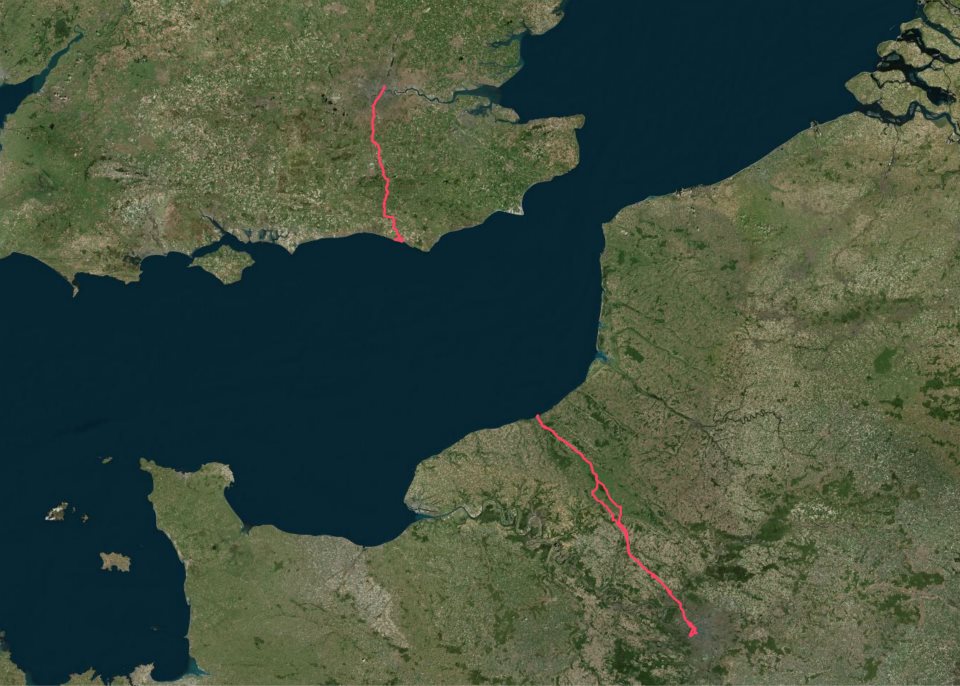
I've wanted to ride to Paris for a few months now but was put off by the hassle of taking a bicycle on the Eurostar, as well having a somewhat philosophical and aesthetic objection to taking a bike on a train in the first place. After all, if one already is possession of a mode of transport... My itinerary was straightforward:
Friday 12h00
London Newhaven
Friday 23h00
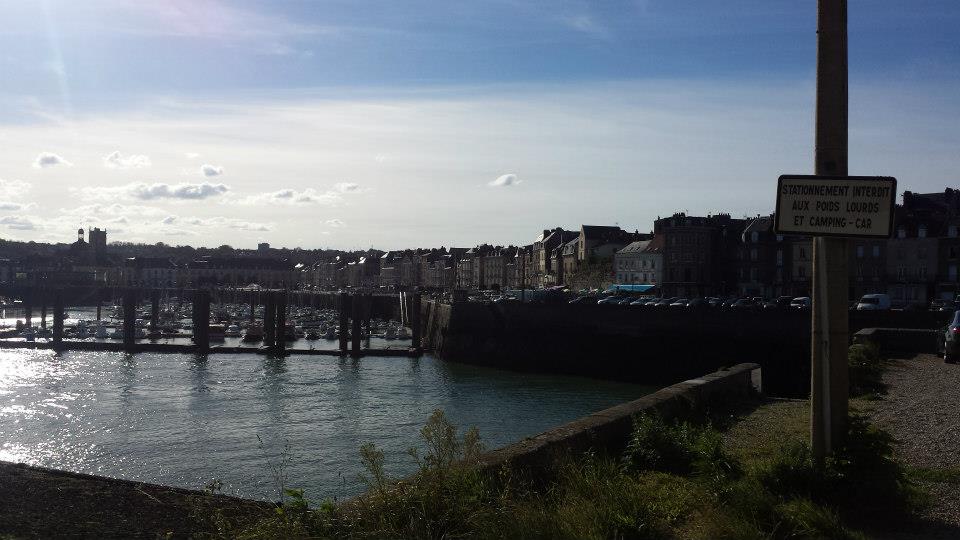
Newhaven Dieppe (ferry)
Saturday 04h00
Dieppe Paris
Saturday 23h00
(Sleep)
Sunday 07h00
Paris Dieppe
Sunday 18h00
Dieppe Newhaven (ferry)
Sunday 21h00
Newhaven Peacehaven
Sunday 23h00
(Sleep)
Monday 07h00
Peacehaven London
Packing list https://chris-lamb.co.uk/wp-content/2014/london-paris-london/01.jpg
  • Ferry ticket (unnecessary in the end)
  • Passport
  • Credit card
  • USB A male mini A male (charges phone, battery pack & front light)
  • USB A male mini B male (for charging or connecting to Edge 800)
  • USB mini A male OTG A female (for Edge 800 uploads via phone)
  • Waterproof pocket
  • Sleeping mask for ferry (probably unnecessary)
  • Battery pack

Not pictured:
  • Castelli Gabba Windstopper short-sleeve jersey
  • Castelli Velocissimo bib shorts
  • Castelli Nanoflex arm warmers
  • Castelli Squadra rain jacket
  • Garmin Edge 800
  • Phone
  • Front light: Lezyne Macro Drive
  • Rear lights: Knog Gekko (on bike), Knog Frog (on helmet)
  • Inner tubes (X2), Lezyne multitool, tire levers, hand pump

Day 1: London Newhaven
https://chris-lamb.co.uk/wp-content/2014/london-paris-london/02.jpg

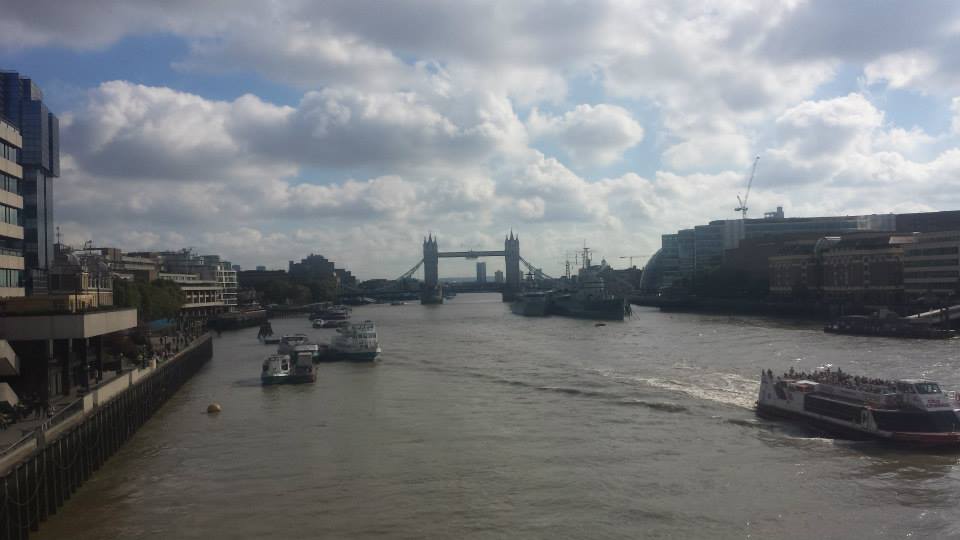
Tower Bridge.

Many attempt to go from Tower Bridge Eiffel Tower (or Marble Arch Arc de Triomphe) in less than 24 hours. This would have been quite easy if I had left a couple of hours later.
https://chris-lamb.co.uk/wp-content/2014/london-paris-london/03.jpg

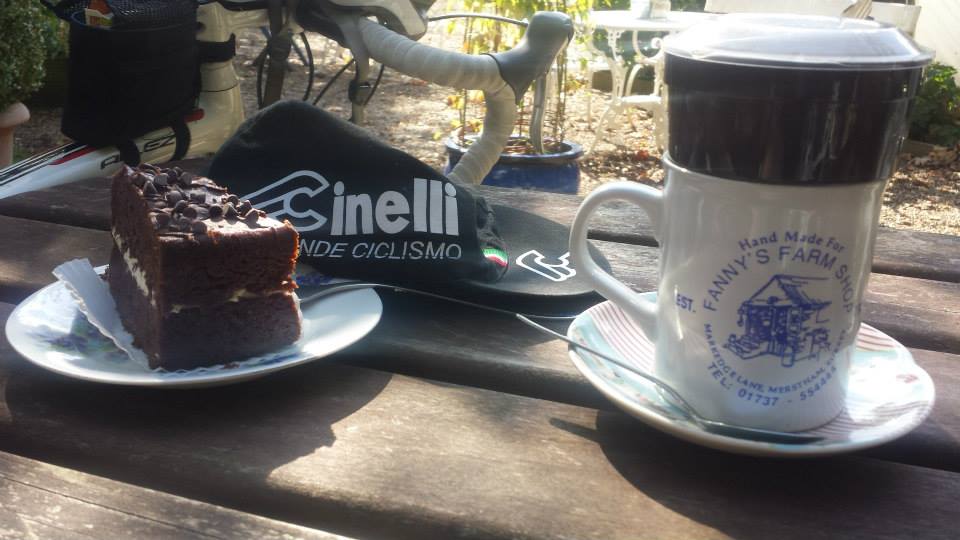
Fanny's Farm Shop, Merstham, Surrey.

https://chris-lamb.co.uk/wp-content/2014/london-paris-london/04.jpg

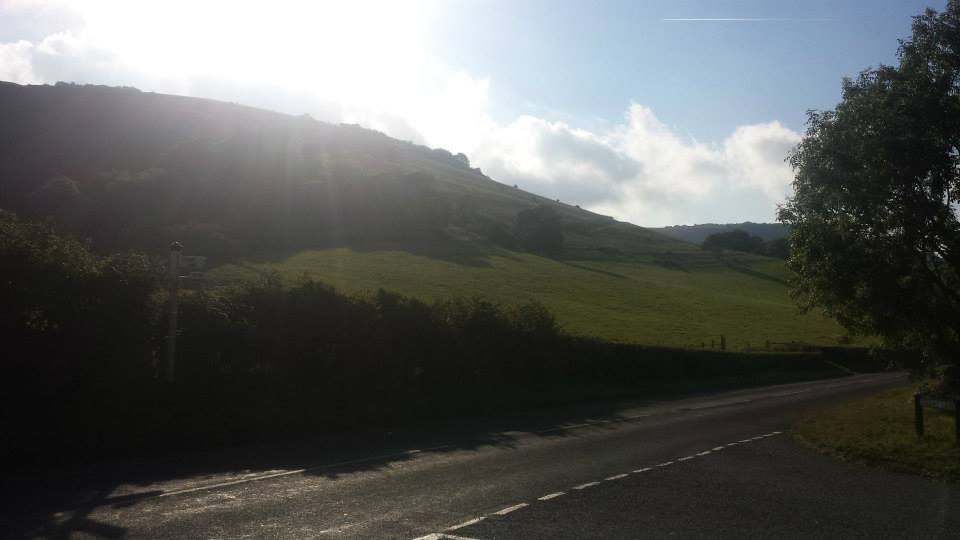
Plumpton, East Sussex.

https://chris-lamb.co.uk/wp-content/2014/london-paris-london/05.jpg

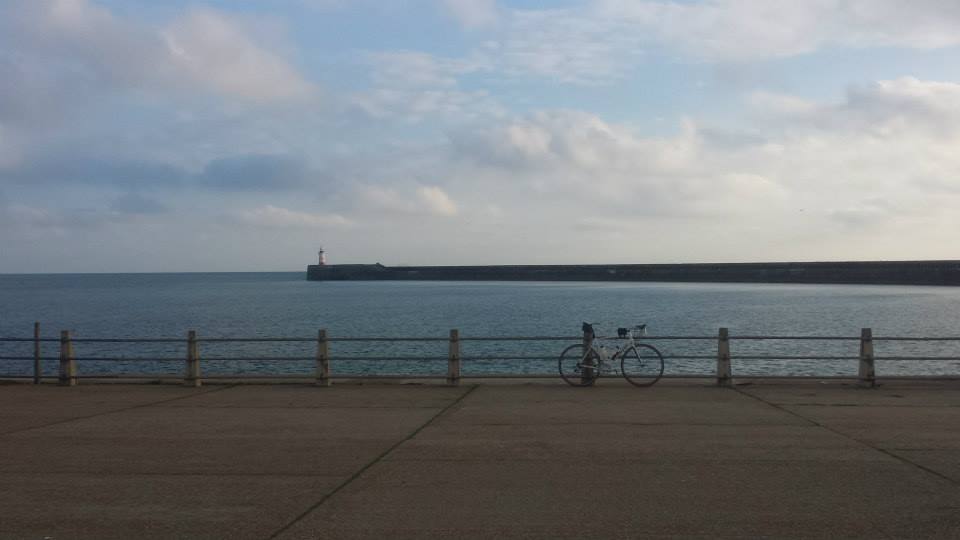
West Pier, Newhaven.

https://chris-lamb.co.uk/wp-content/2014/london-paris-london/07.jpg

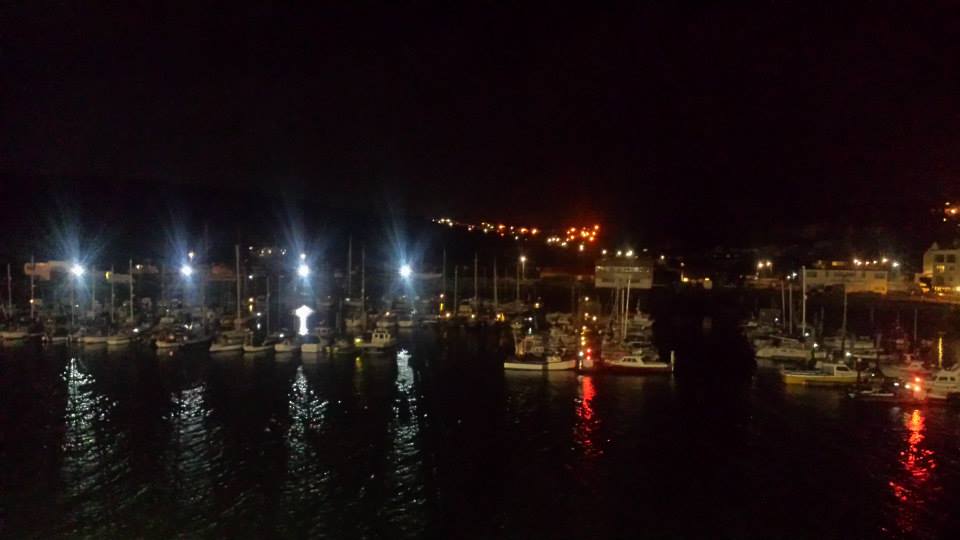
Leaving Newhaven on the 23h00 ferry.


Day 2: Dieppe Paris
https://chris-lamb.co.uk/wp-content/2014/london-paris-london/09.jpg

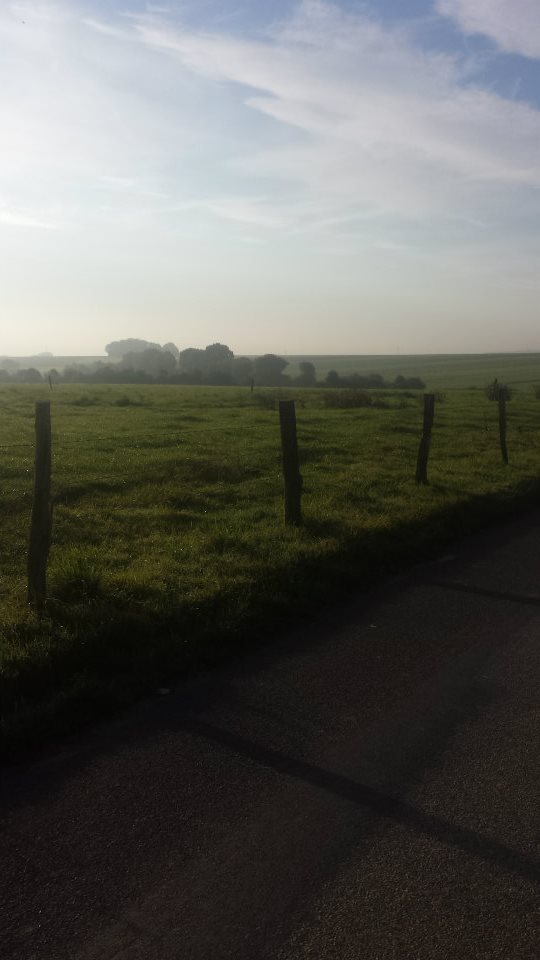
Beauvoir-en-Lyons, Haute-Normandie.

https://chris-lamb.co.uk/wp-content/2014/london-paris-london/10.jpg

S rifontaine, Picardie.

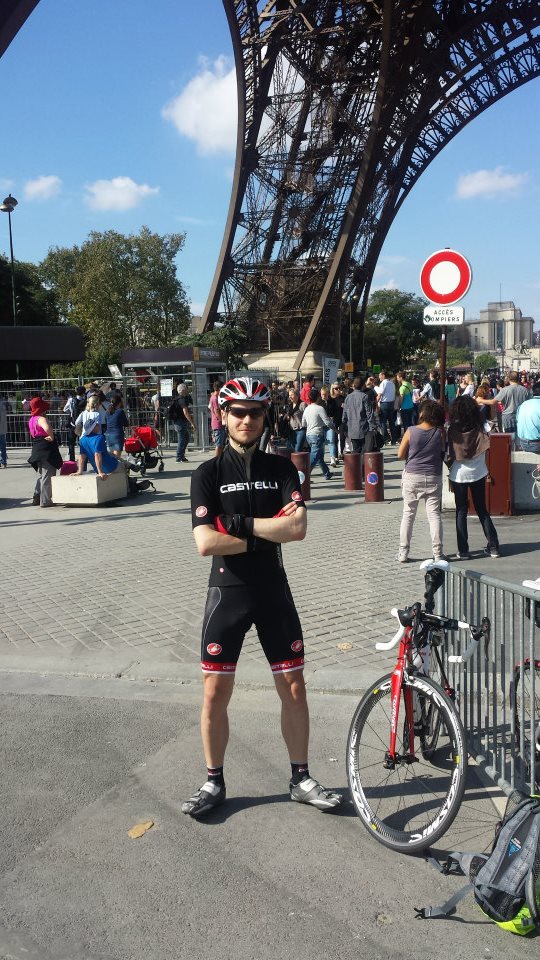
https://chris-lamb.co.uk/wp-content/2014/london-paris-london/12.jpg

La tour Eiffel, Paris.

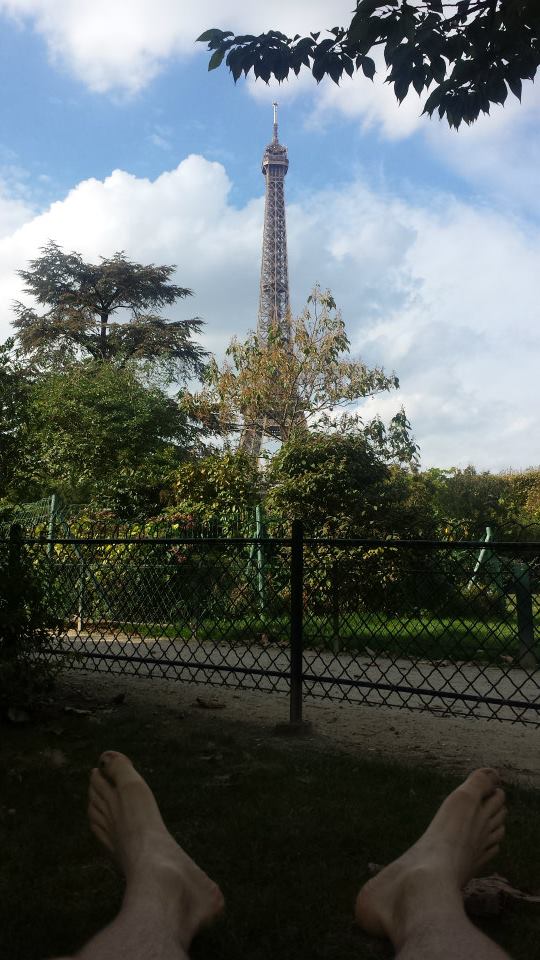
https://chris-lamb.co.uk/wp-content/2014/london-paris-london/13.jpg

Champ de Mars, Paris.

https://chris-lamb.co.uk/wp-content/2014/london-paris-london/15.jpg

Pont de Grenelle, Paris.


Day 3: Paris Dieppe
https://chris-lamb.co.uk/wp-content/2014/london-paris-london/18.jpg

Cormeilles-en-Vexin, le-de-France.

https://chris-lamb.co.uk/wp-content/2014/london-paris-london/20.jpg

Gisors, Haute-Normandie.

https://chris-lamb.co.uk/wp-content/2014/london-paris-london/21.jpg

Paris-Brest, Gisors, Haute-Normandie.

Wikipedia: This pastry was created in 1910 to commemorate the Paris Brest bicycle race begun in 1891. Its circular shape is representative of a wheel. It became popular with riders on the Paris Brest cycle race, partly because of its energizing high caloric value, and is now found in p tisseries all over France.
https://chris-lamb.co.uk/wp-content/2014/london-paris-london/22.jpg

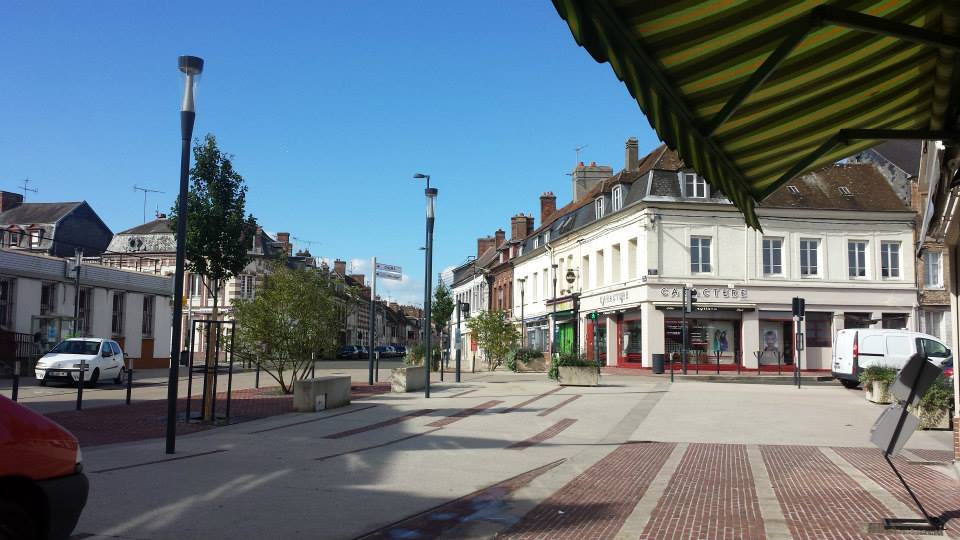
Gournay-en-Bray, Haute-Normandie.

https://chris-lamb.co.uk/wp-content/2014/london-paris-london/23.jpg

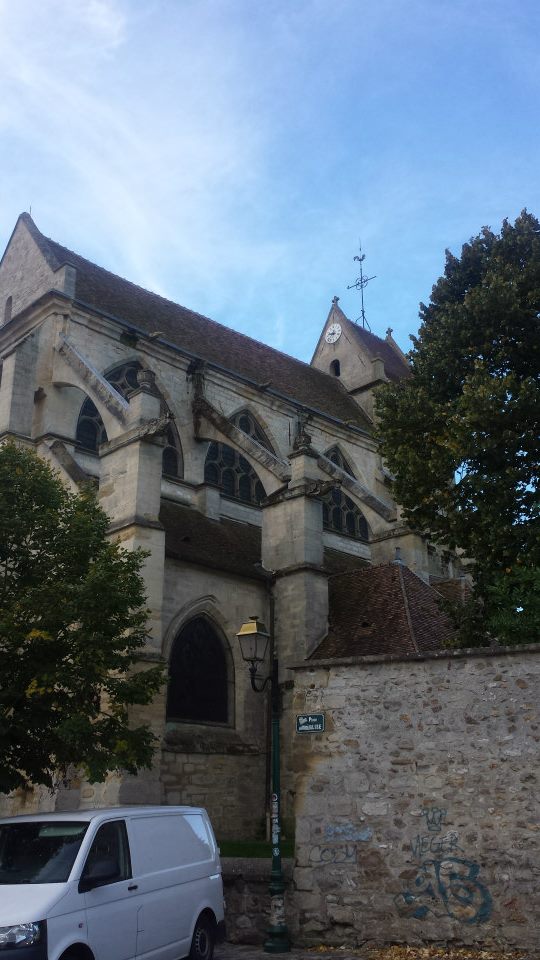
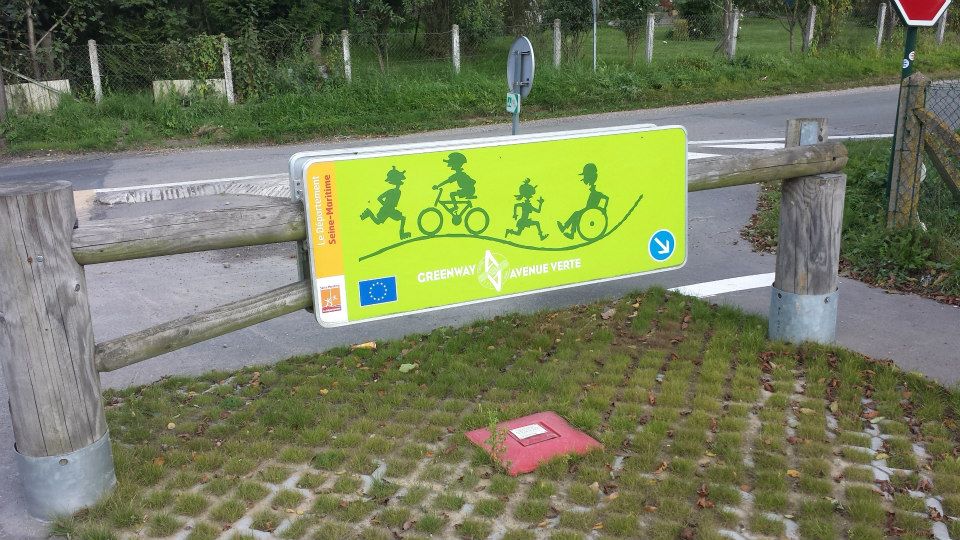
D but de l'Avenue Verte, Forges-les-Eaux, Haute-Normandie.

https://chris-lamb.co.uk/wp-content/2014/london-paris-london/24.jpg

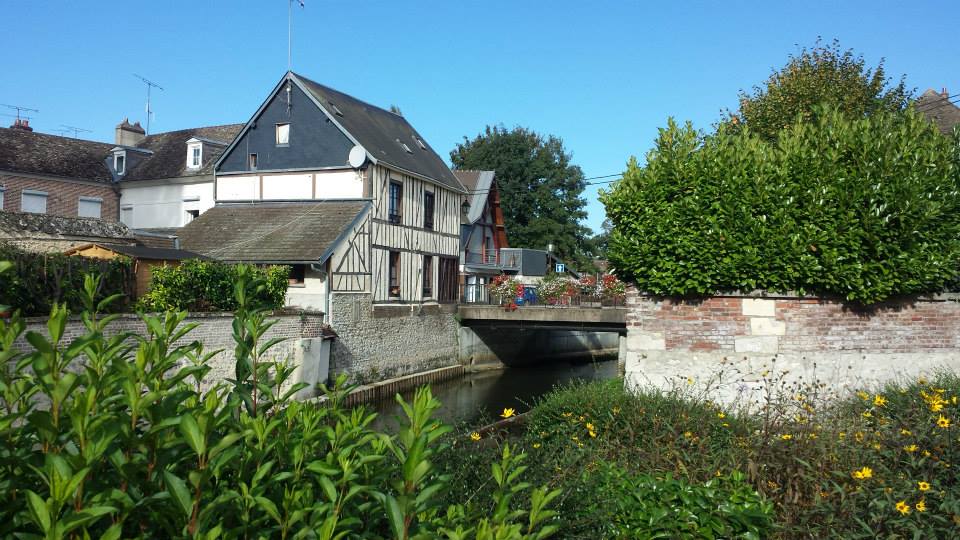
Mesni res-en-Bray, Haute-Normandie.

https://chris-lamb.co.uk/wp-content/2014/london-paris-london/26.jpg

Dieppe, Haute-Normandie.

https://chris-lamb.co.uk/wp-content/2014/london-paris-london/28.jpg

La Mancha .


Day 4: Peacehaven London
https://chris-lamb.co.uk/wp-content/2014/london-paris-london/29.jpg

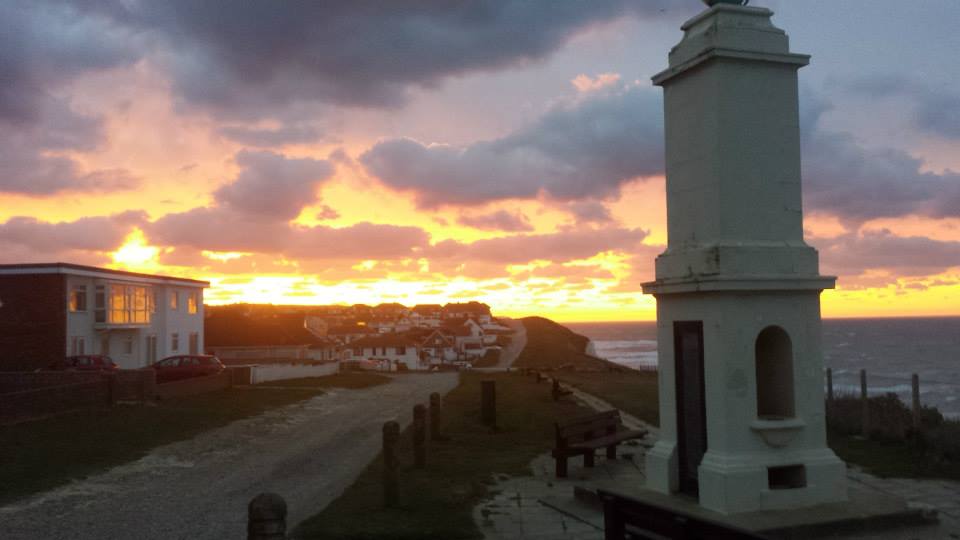
Peacehaven, East Sussex.

https://chris-lamb.co.uk/wp-content/2014/london-paris-london/31.jpg

Highbrook, West Sussex.

https://chris-lamb.co.uk/wp-content/2014/london-paris-london/33.jpg

London weather.


Summary https://chris-lamb.co.uk/wp-content/2014/london-paris-london/34.jpg
Distance
588.17 km
Pedal turns
~105,795
My only non-obvious tips would be to buy a disposable blanket in the Newhaven Co-Op to help you sleep on the ferry. In addition, as the food on the ferry is good enough you only need to get to the terminal one hour before departure, avoiding time on your feet in unpicturesque Newhaven. In terms of equipment, I would bring another light for the 4AM start on L'Avenue Verte if only as a backup and I would have checked I could arrive at my Parisian Airbnb earlier in the day - I had to hang around for five hours in the heat before I could have a shower, properly relax, etc. I had been warned not to rely on being able to obtain enough water en route on Sunday but whilst most shops were indeed shut I saw a bustling tabac or boulangerie at least once every 20km so one would never be truly stuck. Route-wise, the surburbs of London and Paris are both equally dismal and unmotivating and there is about 50km of rather uninspiring and exposed riding on the D915. However, L'Avenue Verte is fantastic even in the pitch-black and the entire trip was worth it simply for the silent and beautiful Normandy sunrise. I will be back.

6 August 2014

Chris Lamb: Strava Enhancement Suite update

https://chris-lamb.co.uk/wp-content/2014/strava/chrome_web_store.png I've been told I don't blog about my projects often enough, so here's a feature update on my Chrome Extension that adds various improvements to the Strava.com fitness tracker. All the features are optional and can be individually enabled in the options panel.

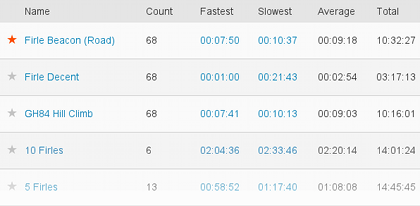
Repeated segments This adds aggregate data (fastest, slowest, average, etc.) when segments are repeated within an activity. It's particularly useful for laps or like this Everesting attempt hill repeats: https://chris-lamb.co.uk/wp-content/2014/strava/repeated_segments3.png

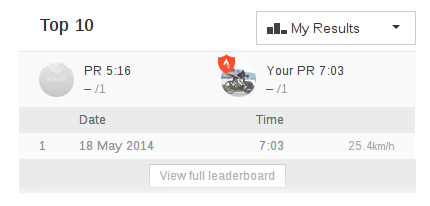
Leaderboard default Changes the default leaderboard away from "Overall" when viewing a segment effort. The most rewarding training often comes from comparing your own past performances rather than those of others, so viewing your own results by default can make more sense. You can select any of Men, Women, I'm Following or My Results: https://chris-lamb.co.uk/wp-content/2014/strava/leaderboard_default.png

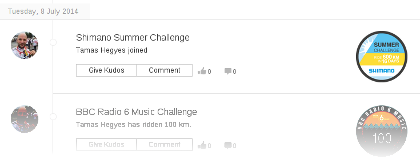
Hide feed entries Hides various entry types in the activity feed that can get annoying. You currently have the option of hiding challenges, route creations, goals created or club memberships: https://chris-lamb.co.uk/wp-content/2014/strava/hide_challenge_feed_entries.png

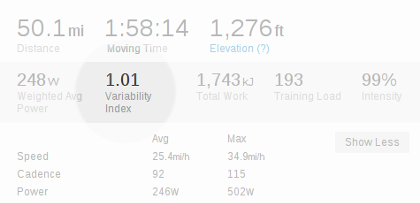
Variability Index Calculates a Variability Index (VI) from the weighted average power and the average power, an indication of how "smooth" a ride was. Required a power meter. A VI of 1.0 would mean a ride was paced "perfectly", with very few surges of effort: https://chris-lamb.co.uk/wp-content/2014/strava/variability_index.png

Infinite scroll Automatically loads more dashboard entries when reaching the bottom, saving a tedious click on the "More" button: https://chris-lamb.co.uk/wp-content/2014/strava/infinite_scroll.png

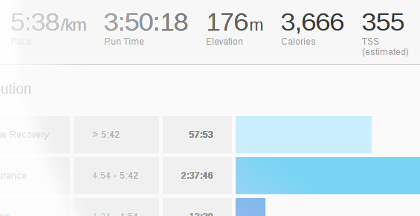
Running TSS Estimates a run's Training Stress Score (TSS) from its Grade Adjusted Pace distribution, a measure of that workout's duration and intensity relative to the athletes's capability, providing an insight into correct recovery time and overall training load over time: https://chris-lamb.co.uk/wp-content/2014/strava/running_tss.png

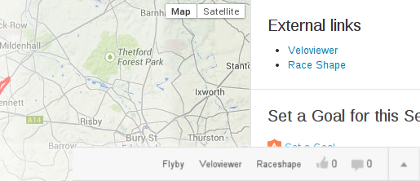
Hide "find friends" Hides social networking buttons, including invitations to invite or find further friends: https://chris-lamb.co.uk/wp-content/2014/strava/hide_invite_friends.png

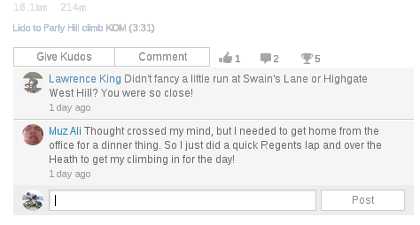
"Enter" posts comment Immediately posts comment when pressing Enter/Return key in the edit box rather than adding a newline: https://chris-lamb.co.uk/wp-content/2014/strava/comment_post_on_enter.png

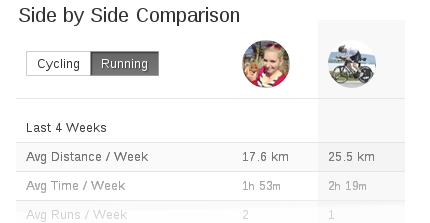
Compare running Changes the default sport for the "Side by Side comparison" module to running when viewing athlete profiles: https://chris-lamb.co.uk/wp-content/2014/strava/side_by_side_running.png

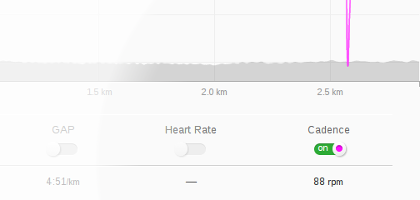
Running cadence Shows running cadence by default in the elevation profile: https://chris-lamb.co.uk/wp-content/2014/strava/running_cadence.png

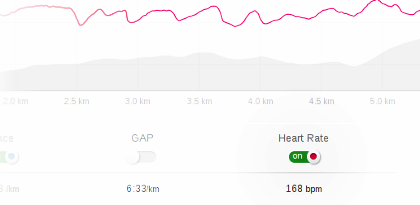
Running heart rate Shows running heart rate by default in elevation profile: https://chris-lamb.co.uk/wp-content/2014/strava/running_heart_rate.png

Estimated FTP Selects "Show Estimated FTP" by default on the Power Curve page: https://chris-lamb.co.uk/wp-content/2014/strava/estimated_ftp.png

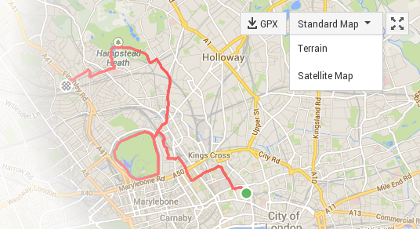
Standard Google map Prefer the "Standard" Google map over the "Terrain" view: https://chris-lamb.co.uk/wp-content/2014/strava/standard_google_map.png

Let me know if you have any comments, suggestions or if you have any other feedback. If you find this software useful, please consider donating via Paypal to support further development. You can also view the source and contribute directly on GitHub. https://chris-lamb.co.uk/wp-content/2014/strava/chrome_web_store.png

28 July 2014

Chris Lamb: start-stop-daemon: --exec vs --startas

start-stop-daemon is the classic tool on Debian and derived distributions to manage system background processes. A typical invokation from an initscript is as follows:
start-stop-daemon \
    --quiet \
    --oknodo \
    --start \
    --pidfile /var/run/daemon.pid \
    --exec /usr/sbin/daemon \
    -- -c /etc/daemon.cfg -p /var/run/daemon.pid
The basic operation is that it will first check whether /usr/sbin/daemon is not running and, if not, execute /usr/sbin/daemon -c /etc/daemon.cfg -p /var/run/daemon.pid. This process then has the responsibility to daemonise itself and write the resulting process ID to /var/run/daemon.pid. start-stop-daemon then waits until /var/run/daemon.pid has been created as the test of whether the service has actually started, raising an error if that doesn't happen. (In practice, the locations of all these files are parameterised to prevent DRY violations.)
Idempotency By idempotence we are mostly concerned with repeated calls to /etc/init.d/daemon start not starting multiple versions of our daemon. This might not seem to be particularly big issue at first but the increased adoption of stateless configuration management tools such as Ansible (which should be completely free to call start to ensure a started state) mean that one should be particularly careful of this apparent corner case. In its usual operation, start-stop-daemon ensures only one instance of the daemon is running with the --exec parameter: if the specified pidfile exists and the PID it refers to is an "instance" of that executable, then it is assumed that the daemon is already running and another copy is not started. This is handled in the pid_is_exec method (source) - the /proc/$PID/exe symlink is resolved and checked against the value of --exec.
Interpreted scripts However, one case where this doesn't work is interpreted scripts. Lets look at what happens if /usr/sbin/daemon is such a script, eg. a file that starts:
#!/usr/bin/env python
# [..]
The problem this introduces is that /proc/$PID/exe now points to the interpreter instead, often with an essentially non-deterministic version suffix:
$ ls -l /proc/14494/exe
lrwxrwxrwx 1 www-data www-data 0 Jul 25 15:18
                              /proc/14494/exe -> /usr/bin/python2.7
When this process is examined using the --exec mechanism outlined above it will be rejected as an instance of /usr/sbin/daemon and therefore another instance of that daemon will be incorrectly started.
--startas The solution is to use the --startas parameter instead. This omits the /proc/$PID/exe check and merely tests whether a PID with that number is running:
start-stop-daemon \
    --quiet \
    --oknodo \
    --start \
    --pidfile /var/run/daemon.pid \
    --startas /usr/sbin/daemon \
    -- -c /etc/daemon.cfg -p /var/run/daemon.pid
Whilst it is therefore less reliable (in that the PID found in the pidfile could actually be an entirely different process altogether) it's probably an acceptable trade-off against the case of running multiple instances of that daemon. This danger can be ameliorated by using some of start-stop-daemon's other matching tests, such as --user or even --name.

21 July 2014

Chris Lamb: Disabling internet for specific processes with libfiu

My primary usecase is to prevent testsuites and build systems from contacting internet-based services. This, at the very least, introduces an element of non-determinism and malicious code at worst. I use Alberto Bertogli's libfiu for this, specifically the fiu-run utility which part of the fiu-utils package on Debian and Ubuntu. Here's a contrived example, where I prevent Curl from talking to the internet:
$ fiu-run -x -c 'enable name=posix/io/net/connect' curl google.com
curl: (6) Couldn't resolve host 'google.com'
... and here's an example of it detecting two possibly internet-connecting tests:
$ fiu-run -x -c 'enable name=posix/io/net/connect' ./manage.py text
[..]
----------------------------------------------------------------------
Ran 892 tests in 2.495s
FAILED (errors=2)
Destroying test database for alias 'default'...

Note that libfiu inherits all the drawbacks of LD_PRELOAD; in particular, we cannot limit the child process that calls setuid binaries such as /bin/ping:
$ fiu-run -x -c 'enable name=posix/io/net/connect' ping google.com
PING google.com (173.194.41.65) 56(84) bytes of data.
64 bytes from lhr08s01.1e100.net (17.194.41.65): icmp_req=1 ttl=57 time=21.7 ms
64 bytes from lhr08s01.1e100.net (17.194.41.65): icmp_req=2 ttl=57 time=18.9 ms
[..]
Whilst it would certainly be more robust and flexible to use iptables such as allowing localhost and other local socket connections but disabling all others I gravitate towards this entirely userspace solution as it requires no setup and I can quickly modify it to block other calls on an ad-hoc basis. The list of other "modules" libfiu supports is viewable here.

7 May 2014

Mario Lang: Planet bug: empty alt tags for hackergotchis

There is a strange bug in Planet Debian I am seeing since I joined. It is rather minor, but since it is an accessibility bug, I'd like to mention it here. I have written to the Planet Debian maintainers, and was told to figure it out myself. This is a pattern, accessibility is considered wishlist, apparently. And the affected people are supposed to fix it on their own. It is better if I don't say anything more about that attitude.
The Bug On Planet Debian, only some people have an alt tag for their hackergotchi, while all the configured entries look similar. There is no obvious difference in the configuration, but still, only some users here have a proper alt tag for their hackergotchi. Here is a list:
  • Dirk Eddelbuettel
  • Steve Kemp
  • Wouter Verhelst
  • Mehdi (noreply@blogger.com)
  • Andrew Pollock
  • DebConf Organizers
  • Francois Marier
  • The MirOS Project (tg@mirbsd.org)
  • Paul Tagliamonte
  • Lisandro Dami n Nicanor P rez Meyer (noreply@blogger.com)
  • Joey Hess
  • Chris Lamb
  • Mirco Bauer
  • Christine Spang
  • Guido G nther
These people/organisations currently displayed on Planet Debian have a proper alt tag for their hackergotchi. All the other members have none. In Lynx, it looks like the following:
hackergotchi for
And for those where it works, it looks like:
hackergotchi for Dirk Eddelbuettel
Strange, isn't it? If you have any idea why this might be happening, let me know, or even better, tell Planet Debian maintainers how to fix it. P.S.: Package planet-venus says it is a rewrite of Planet, and Planet can be found in Debian as well. I don't see it in unstable, maybe I am blind? Or has it been removed recently? If so, the package description of planet-venus is wrong.

30 April 2014

Chris Lamb: Marlon Brando in the Lake District

Alan How:
There's an Italian restaurant somewhere in the Lake District in the north of England. And if you can imagine, there are hills, lots of rain, lakes, and so on and so forth. And inside this Italian restaurant is a huge picture a wall-sized mural of Marlon Brando. Now, I asked my students once: Why Marlon Brando? Well he's The Godfather! I don't think he was a Godfather, you know... But he was in that film, wasn't he? It was called The Godfather. Ah, that film from 40 years ago, virtually.. 1970-something? Yes, yes, but he was The Godfather then, wasn't he? You mean if was a mafiosi? He was a leading figure in gangsterland in New York? Well, yes, he was The Godfather, they keep saying, ... and he was Italian. Well, no, actually he was American... So you get this regular kind of placing and misplacing of the real, ie. a very large American actor who played in a film called The Godfather about American gangsters, or Italian-American gangsters, nothing to do with godfathers in Christianity, in the north of England, stuck on a huge wall in a restaurant. All of which tells us that it's an Italian restaurant. And we don't demure, we don't say "no, that's all untrue", we just take it for granted: "Yeah, that's what it means - it's an Italian restaurant". And it's that kind of slippage between the real and the imagined or the true and the fictional which Baudrillard thinks is becoming inceasingly characteristic of how our society goes on.

14 April 2014

Chris Lamb: Race report: Cambridge Duathlon 2014

(This is my first race of the 2014 season.)


I had entered this race in 2013 and found it was effective for focusing winter training. As triathlons do not typically start until May in the UK, scheduling earlier races can be motivating in the colder winter months. I didn't have any clear goals for the race except to blow out the cobwebs and improve on my 2013 time. I couldn't set reasonable or reliable target times after considerable "long & slow" training in the off-season but I did want to test some new equipment and stategies, especially race pacing with a power meter, but also a new wheelset, crankset and helmet. Preparation was both accidentally and deliberately compromised: I did very little race-specific training as my season is based around an entirely different intensity of race, but compounding this I was confined to bed the weekend before. Sleep was acceptable in the preceding days and I felt moderately fresh on race morning. Nutrition-wise, I had porridge and bread with jam for breakfast, a PowerGel before the race, 750ml of PowerBar Perform on the bike along with a "Hydro" PowerGel with caffeine at approximately 30km.
Run 1 (7.5km) A few minutes before the start my race number belt the only truly untested equipment that day refused to tighten. However, I decided that once the race began I would either ignore it or even discard it, risking disqualification. Despite letting everyone go up the road, my first km was still too fast so I dialed down the effort, settling into a "10k" pace and began overtaking other runners. The Fen winds and drag-strip uphill from 3km provided a bit of pacing challenge for someone used to shelter and shorter hills but I kept a metered effort through into transition.
Time
33:01 (4:24/km, T1: 00:47) Last year: 37:47 (5:02/km)
Bike (40km) Although my 2014 bike setup features a power meter, I had not yet had the chance to perform an FTP test outdoors. I was thus was not able to calculate a definitive target power for the bike leg. However, data from my road bike suggested I set a power ceiling of 250W on the longer hills. This was extremely effective in avoiding going "into the red" and compromising the second run. This lends yet more weight to the idea that a power meter in multisport events is "almost like cheating". I was not entirely comfortable with my bike position: not only were my thin sunglasses making me raise my head more than I needed to, I found myself creeping forward onto the nose of my saddle. This is sub-optimal, even if only considering that I am not training in that position. Overall, the bike was uneventful with the only memorable moment provided by a wasp that got stuck between my head and a helmet vent. Coming into transition I didn't feel like I had really pushed myself that hard probably a good sign but the time difference from last year's bike leg (1:16:11) was a little underwhelming.
Time
1:10:45 (T2: 00:58)
Run 2 (7.5km) After leaving transition, my legs were extremely uncooperative and I had great difficulty in pacing myself in the first kilometer. Concentrating hard on reducing my cadence as well as using my rehearsed mental cue, I managed to settle down. The following 4 kilometers were a mental struggle rather than a physical one, modulo having to force a few burps to ease some discomfort, possibly from drinking too much or too fast on the bike. I had planned to "unload" as soon as I reached 6km but I didn't really have it in me. Whilst I am physiologically faster compared to last year, I suspect the lack of threshold-level running over the winter meant the mental component required for digging deep will require some coaxing to return. However, it is said that you have successfully paced a duathlon if the second run faster than the first. On this criterion, this was a success, but it would have been a bonus to have really felt completely completely drained at the end of the day, if only from a neo-Calvinist perspective.
Time
32:46 (4:22/km) / Last year: 38:10 (5:05/km)

Overall
Total time
2:18:19
A race that goes almost entirely to plan is a bit of a paradox there's certainly satisfaction in setting goals and hitting them without issue, but this is a gratification of slow-burning fire rather than the jubilation of a fireworks display. However, it was nice to learn that I managed to finish 5th in my age group despite this race attracting an extremely strong field: as an indicator, the age-group athlete finishing immediately before me was seven minutes faster and the overall winner finished in 1:54:53 (!). The race identified the following areas to work on:
  • Perform an outdoors FTP on my time-trial bike outdoors to develop an optimum power plan.
  • Do a few more brick runs, at least to re-acclimatise the feeling.
  • Schedule another bike fit.
Although not strictly race-related, I also need to find techniques to ensure transporting a bike on public transport is less stressful. (Full results & full 2014 race schedule)

11 April 2014

Chris Lamb: 2014 race schedule

Swim 2.4 miles! Bike 112 miles! Run 26.2 miles! Brag for the rest of your life...


In 2013, my training efforts were based around a "70.3"-distance race. In my second year in triathlon I will be targetting my first Ironman-distance event. After some deliberation I decided on the Ironman event in Klagenfurt, Austria (pictured) not only because the location lends a certain tone to the occasion but because the course is suited to my relative strengths within the three disciplines. I've made the following conscious changes to my race scheduling and selection this year: Readers may observe that despite my primary race finishing with a marathon-distance run, I am not racing a standalone marathon in preparation. This is common practice, justified by the run-specific training leading up to a marathon and the recovery period afterwards compromising training overall. For similar reasons, I have also chosen not to race a "70.3" distance event in 2014. Whether to do so is a more contentious issue than whether to run a marathon, but it resolved itself once I could not find an event that was suitably scheduled and I could convince myself that most of the benefits could be achieved through other means.
April 13th

Cambridge Duathlon (link)

Run: 7.5km, bike: 40km, run: 7.5km

May 11th

St Neots Olympic Tri (link)

Swim: 1,500m, bike: 40km, run: 10km

May 17th

ECCA 50-mile cycling time trial (link)

50 miles. Course: E2/50C

June 1st

Icknield RC 100-mile cycling time trial (link)

100 miles. Course: F1/100

June 15th

Cambridge Triathlon (link)

Swim: 1,500m, bike: 40km, run: 10km

June 29th

Ironman Austria (link)

Swim 2.4km, bike: 190km, run: 42.2km

Chris Lamb: My 2014 race schedule

Swim 2.4 miles! Bike 112 miles! Run 26.2 miles! Brag for the rest of your life...


Whilst 2013 was based around a "70.3"-distance race, in my second year in triathlon I will be targetting training solely around my first Ironman-distance event. I chose the Ironman event in Klagenfurt, Austria not only because the location lends a certain tone to the occasion but because the course is suited to my relative strengths within the three disciplines. Compared to 2013 I've made the following conscious changes to my race scheduling and selection: Readers unfamiliar with triathlon training may observe that despite my primary race finishing with a marathon-distance run, I am not racing a standalone marathon in preparation. This is a common practice, justified by the run-specific training leading up to the event as well as the long recovery period afterwards compromising your training overall. For similar reasons, I have also chosen not to race the "70.3" distance event in 2014. Whether to do so is a more contentious issue than whether to run a marathon, but it resolved itself once I could not find an event that was scheduled suitably and I could convince myself that most of the benefits could be achieved through other means.
April 13th

Cambridge Duathlon (link)

Run: 7.5km, bike: 40km, run: 7.5km

May 11th

St Neots Olympic Tri (link)

Swim: 1,500m, bike: 40km, run: 10km

May 17th

ECCA 50-mile cycling time trial (link)

Course: E2/50C

June 1st

Icknield RC 100-mile cycling time trial (link)

Course: F1/100

June 15th

Cambridge Triathlon (link)

Swim: 1,500m, bike: 40km, run: 10km

June 29th

Ironman Austria (link)

Swim 2.4km, bike: 190km, run: 42.2km

23 March 2014

Chris Lamb: Fingerspitzengef hl

Loanwords can often appear more insightful than they really are. How prescient of another culture to codify such a concept into a single word! They surely must have lofty and perceptive discussions if it was necessary to coin and codify one. But whilst there is always the danger of over-inflating the currency of the loanword especially the compound one there must be a few that are worth the trouble. One such term is fingerspitzengef hl. Literally meaning "finger-tips feeling" in German, it attempts to capture the idea of an intuitive sophistication, flair or instinct. Someone exhibiting fingerspitzengef hl would be able to respond appropriately, delicately and tactfully to certain things or situations. Oliver Reichenstein clarifies the distinction from a personal taste:
Whether I like pink or not, sugar in my coffee, red or white wine, these things are a matter of personal taste. These are personal preferences, and both designers and non-designers have them. This is the taste we shouldn't bother discussing. Whether I set a text s line height to 100% or 150% is not a matter of taste, it is a matter of knowing the principles of typography. However, whether I set a text s line height at 150% or 145% is a matter of Fingerspitzengef hl; wisdom in craft, or sophistication.
Fingerspitzengef hl is therefore not innate and is probably refined over the years via subconscious rather than conscious study and reflection. However, it always flows naturally in the moment, not dissimilar to Castiglione's sprezzatura. Personally, I am particularly enamoured how this concept of a "trained taste" appears to blur the line between an objective and subjective aesthetic, putting me somewhat at odds with those who baldly assert that taste is "obviously" entirely individual.

11 March 2014

Chris Lamb: Two aesthetically pleasing Python snippets

The following Python tree structure recently resurfaced. I find it rare to see functional or recursive techniques expressed so succinctly in Python:
def tree():
    return collections.defaultdict(tree)
Another construction I am quite fond of is:
for _, dirnames, filenames in os.walk(path):
    break
...which leaves dirnames and filenames in the current scope, containing the immediate subdirectories and files of the specified path. Perhaps a little too cute, but appealing in its own way.

18 February 2014

Chris Lamb: Estimating Training Stress Score (TSS) for running on Strava

In cycling, a ride's Training Stress Score is a function of that ride's duration, average power and the intensity of the ride relative to the rider's capability. This Slowtwitch article provides a good overview on how intensity and TSS is calculated on a bike. However, having TSS values for other sports allows a multisport athelete to take into consideration the physiological cost of activities in different sports. This is achieved by ensuring, say, 50 TSS on the bike "counts" the same as a 50 TSS run. This can be used to simply determine the length, intensity and scheduling of the athletes next workout (to ensure adequate recovery) regardless of the combination of sports, or to identify the athlete's long-term tolerance to and targets for training load using metrics such as Chronic Training Load. To make this possible when using Strava, I wrote a Chrome extension that estimates the TSS score of a run from its Grade Adjusted Pace distribution:
https://chris-lamb.co.uk/wp-content/2014/strava-rtss.png

The "TSS (estimated)" value is calculated by the extension.

Source code is available. If you found this Strava extension useful, you might like my extensions to quickly switch between metric and imperial units or to change the default comparison filter.

17 February 2014

Chris Lamb: The effect of pedestaling on TT bike position

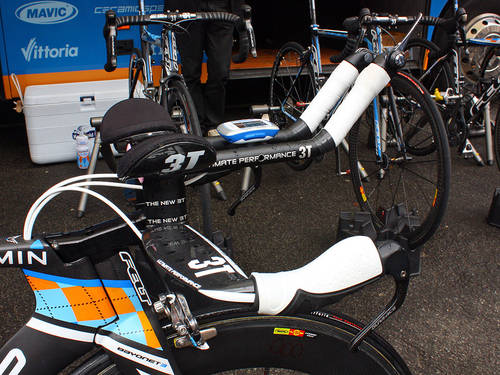
To "pedestal" an aerobar means to elevate the bars above the basebar using risers instead of using headset spacers:
https://chris-lamb.co.uk/wp-content/2014/pedestal1.jpg

David Millar, 2010 Giro d'Italia.

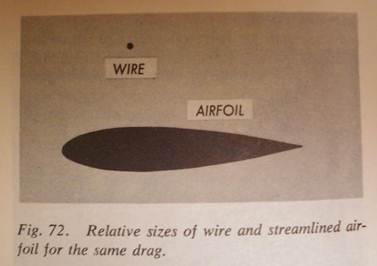
You might do this for a few reasons: https://chris-lamb.co.uk/wp-content/2014/teardrop_vs_cylinder.jpg So, assuming you currently have a bike that uses headset spacers, what would be the effect on your position if you were to replace, say, a 10mm headset spacer with a 10mm armrest riser? First, let us consider the effect of removing the headset spacer. The crucial insight is that removing a 10mm spacer will not lower the stack height ie. the vertical distance relative to the bottom bracket by 10mm. This is because spacers are not oriented perpendicular to the ground; they are stacked along the steerer tube at the head tube angle of the frame. We will assume a head tube angle of 72.5 degrees. We can calculate that removing a 10mm spacer will reduce the stack height by:
sin(72.5 )   10mm = 9.54mm
... and by the same argument it will also increase the effective reach ie. the horizontal distance relative to the bottom bracket by:
cos(72.5 )   10mm = 3.01mm
Next, let us consider the impact of adding the riser. These are oriented perpendicular to the ground, so its addition makes no further change to the reach. However, we can now calculate the overall change in stack height:
  stack = -(sin(72.5 )   10mm) + 10mm = 0.46mm
We can then repeat the calculation for any length of replacement:
Replacement (mm) stack (mm) reach (mm)
10 +0.46 +3.01
20 +0.93 +6.01
30 +1.39 +9.02
40 +1.85 +12.0
50 +2.31 +15.0
60 +2.78 +18.0
From this table, I can discover that if I were to replace 30mm of headset spacers with 30mm of risers it would:
  1. Increase my effective stack height by 1.39mm (likely neglible).
  2. Increase my reach by 9.02mm. This might require me to use a shorter stem to get the same position. If that was undesirable for example, if was already using an extremely short stem I might be forced to abandon the idea altogether.
Three further considerations must be noted:
  1. The resultant low height of the base bar could be quite drastic and prevent you breathing properly whilst climbing.
  2. Having the steerer tube cut down after to removing headset spacers will reduce the resale value of your bike.
  3. You might need to re-cable your brakes as you may have changed the distance the cables must span.
(It may seem odd to provide results for up to 60mm of headset spacers when such a large number of spacers would at the very least void one's warranty. However, I suspect such setups are transiently common within the confines of a fitting studio.)

2 February 2014

Chris Lamb: Defaulting to comparing against yourself on Strava

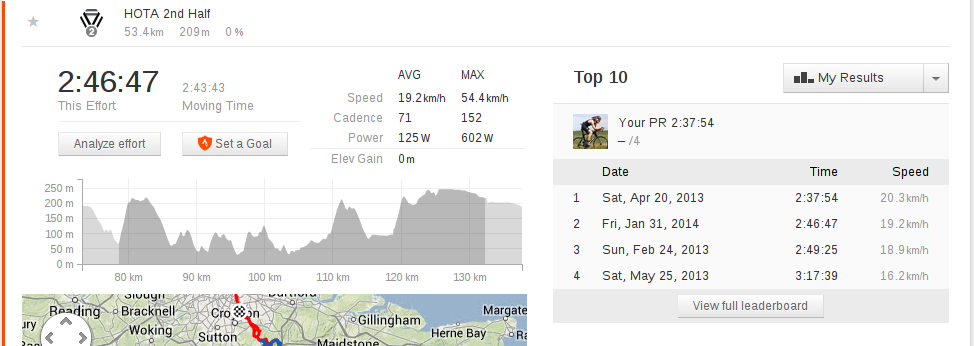
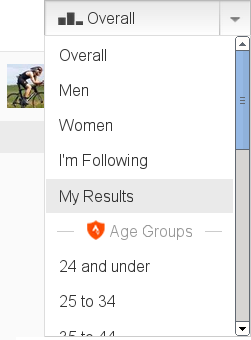
Strava's brand positioning is based around challenging and comparing yourself to others through virtual competitions and leaderboards. I am not against the competitive spirit in principle, but my personal experience is that most psychologically and physiologically rewarding training comes from comparing your own past performances to today or from setting long term goals. I accordingly use the service as a glorified training diary, with the public leaderboards serving only as curiosa or as an occasional check on hubris. (Zen-like introspection aside, using public data as a guide in a metropolis such as London is problematic as rankings are distorted by professional racers, KOM hunters, drafting, fraud and obviously traffic conditions.) To make this easier, I wrote a Chrome extension that changes the default leaderboard to "My Results" instead of "Overall" when viewing a segment effort: https://chris-lamb.co.uk/wp-content/2014/my_results.png The other leaderboards can still be viewed via the usual selector: https://chris-lamb.co.uk/wp-content/2014/my_results_dropdown.png I've found it curious but not altogether surprising how this mere change of default dramatically affects one's mindset. Source code is available. If you found this extension useful, you might like my extension to quickly switch between metric and imperial units.
Next.

Previous.