Here's a practical example of applying Template Haskell to reduce
the amount of boilerplate code that is otherwise required. I wrote the below
after following this excellent blog post by Matt Parsons. This post will be much higher-level, read
Matt's blog for the gorier details.
Liquorice
Liquorice is a toy project of mine from a few years ago that lets you
draw 2D geometric structures similar to LOGO. Liquorice offers two interfaces:
pure functions that operate on an explicit Context (the pen location:
existing lines, etc.), and a second "stateful" interface where the input and
output are handled in the background.
I prefix the pure ones P. and the stateful ones S. in this blog post for
clarity.
The stateful interface can be much nicer to use for larger drawings.
Compare example8b.hs,
written in terms of the pure functions, and the stateful equivalent
example8.hs.
The majority of the stateful functions are "wrapped" versions of the pure
functions. For example, the pure function P.step takes two numbers
and moves the pen forward and sideways. Its type signature is
P.step :: Int -> Int -> Context -> Context
Here's the signature and implementation of the stateful equivalent:
S.step :: Int -> Int -> State Context ()
S.step x y = modify (P.step x y)
Writing these wrapped functions for the 29 pure functions is boilerplate that
can be generated automatically with Template Haskell.
Generating the wrapper functions
Given the Name of a function to wrap, we construct an instance of FunD, the
TH data-type representing a function definition. We use the base name of the
incoming function as the name for the new one.
mkWrap fn = do
let name = mkName (nameBase fn)
return $ FunD name [ Clause (map VarP args) (NormalB rhs) [] ]
To determine how many arguments the wrapper function needs to accept, we need
to determine the input function's arity. We use Template Haskell's reify
function to get type information about the function, and derive the arity from
that. Matt Parson's covers this exactly in his blog.
info <- reify fn
let ty = (\(VarI _ t _ ) -> t) info
let n = arity ty - 1
args <- replicateM n (newName "arg")
We can use the list "args" directly in the clause part of the function
definition, as the data-type expects a list. For the right-hand side, we need
to convert from a list of arguments to function application. That's a simple
left-fold:
-- mkFnApp f [a,b,c] => ((f a) b) c => f a b c
mkFnApp = foldl (\e -> appE e . varE)
rhs <- [ modify $(mkFnApp (varE fn) args) :: State Context () ]
We use TH's oxford brackets for the definition of rhs. This permits us
to write real Haskell inside the brackets, and get an expression data-type
outside them. Within we have a splice (the $( )), which does the opposite:
the code is evaluated at compile time and generates an Exp that is then
converted into the equivalent Haskell code and spliced into place.
Finally, we need to apply the above to a list of Names. Sadly, we can't get at
the list of exported names from a Module automatically. There is an open
request for a TH extension for
this. In the meantime,
we export a list of the functions to wrap from the Pure module and operate
on that
import Liquorice.Pure
wrapPureFunctions = mapM mkWrap pureFns
Finally, we 'call' wrapPureFunctions at the top level in our state module
and Template Haskell splices all the function definitions into place.
The final code ended up only around 30 lines of code, and saved about the
same number of lines of boilerplate. But in doing this I noticed some missing
functions, and it will pay dividends if more pure functions are added.
Limitations
The current implementation has one significant limitation: it cannot handle
higher-order functions. An example of a pure higher-order function is
place, which moves the pen, performs an operation, and then moves it back:
P.place :: Int -> Int -> (Context -> Context) -> Context -> Context
Wrapping this is not sufficient because the higher-order parameter has
the pure function signature Context -> Context. If we wrapped it, the
stateful version of the function would accept a pure function as the
parameter, but you would expect it to accept another stateful function.
To handle these, at a minimum we would need to detect the function arguments
that have type Context -> Context and replace them with State Context ().
The right-hand side of the wrapped function would also need to do more work to
handle wrapping and unwrapping the parameter. I haven't spent much time
thinking about it but I'm not sure that a general purpose wrapper would work
for all higher-order functions. For the time being I've just re-implemented the
half-dozen of them.
For about two months I've been working on a new project, debplate,
which currently lives
at benh/debplate

on Salsa. This is a template system for Debian packages, primarily
intended to ease building multiple similar binary packages from a
single source. With some changes, it could also be useful for
making multiple source packages consistent
(issue
#9).
I want debplate to be capable of replacing the kernel team's
existing template system and a lot of its custom scripting, but it
is also meant to a general tool. I believe it's already capable of
supporting source packages with relatively simple needs, and there
are some examples of these in the debplate source. My long-term
goal is that debplate will replace most team-specific and
package-specific template systems, making those source packages
using it less unusual and easier to contribute to.
I gave
a short
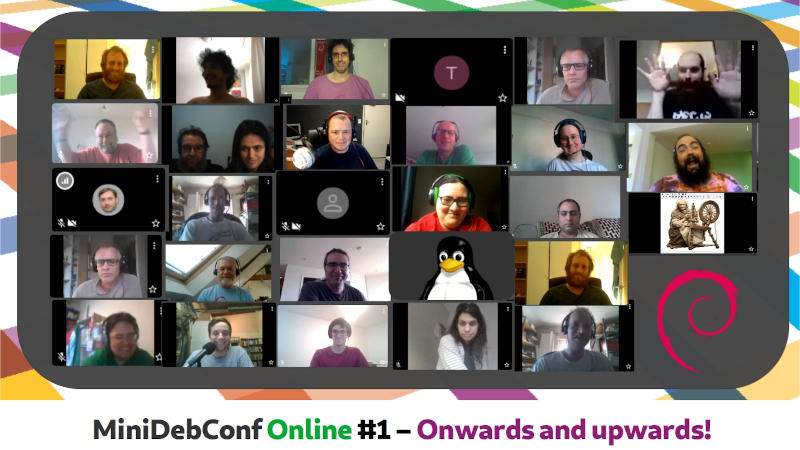
talk about debplate at MiniDebConf Online on Sunday.
I was assigned 17.25 hours of work by Freexian's Debian LTS
initiative, and carried over 2.5 hours from April. I worked all
19.75 hours this month.
I sent
a request
for testing an update of the linux package to 3.16.83. I then
prepared and, after review, released Linux 3.16.84. I rebased the
linux package onto that and sent out
a further
request for testing. I then backported some additional security
fixes, but have still not made an upload.
I attended the LTS contributor meeting on IRC.
At work we have a wonderful pyhon tool that we are able to send CoAP messages to and from our products. Perfect for development work. However recently I needed to install a copy of the tools onto my personal laptop because the only work laptops I have access to have completely dead batteries and so are not suitable for taking out into a field to perform RF range tests .wget http://snapshot.debian.org/archive/debian/20180412T100152Z/pool/main/g/gcc-5/libasan2_5.5.0-12_amd64.debgreat that was enough to get the port bindings to work
wget http://snapshot.debian.org/archive/debian/20180412T100152Z/pool/main/g/gcc-5/gcc-5-base_5.5.0-12_amd64.deb
dpkg -i ./gcc-5-base_5.5.0-12_amd64.deb ./libasan2_5.5.0-12_amd64.deb
apt-get install python3-protobufDone! everything works :-)
The eleventh release of littler as a CRAN package is now available, following in the fourteen-ish year history as a package started by Jeff in 2006, and joined by me a few weeks later.
littler is the first command-line interface for R as it predates Rscript. It allows for piping as well for shebang scripting via #!, uses command-line arguments more consistently and still starts faster. It also always loaded the methods package which Rscript only started to do in recent years.
littler lives on Linux and Unix, has its difficulties on macOS due to yet-another-braindeadedness there (who ever thought case-insensitive filesystems as a default where a good idea?) and simply does not exist on Windows (yet the build system could be extended see RInside for an existence proof, and volunteers are welcome!). See the FAQ vignette on how to add it to your PATH.
A few examples are highlighted at the Github repo, as well as in the examples vignette.
This release adds a new helper / example script installBioc.r for BioConductor package installation, generalizes the roxygenize() wrapper roxy.r a little, and polished a couple of other corners.
The NEWS file entry is below.
CRANberries provides a comparison to the previous release. Full details for the littler release are provided as usual at the ChangeLog page. The code is available via the GitHub repo, from tarballs and now of course also from its CRAN page and viaChanges in littler version 0.3.10 (2020-06-02)
- Changes in examples
- The
update.rscript only considers writeable directories.- The
rcc.rscript tries to report full logs by setting_R_CHECK_TESTS_NLINES_=0.- The
tt.rscript has an improvedncpufallback.- Several installation and updating scripts set
_R_SHLIB_STRIP_toTRUE.- A new script
installBioc.rwas added.- The
--erroroption toinstall2.rwas generalized (Sergio Oller in #78).- The
roxy.rscript was extended a little.- Changes in package
- Travis CI now uses R 4.0.0 and the bionic distro
install.packages("littler"). Binary packages are available directly in Debian as well as soon via Ubuntu binaries at CRAN thanks to the tireless Michael Rutter.
Comments and suggestions are welcome at the GitHub repo.
If you like this or other open-source work I do, you can now sponsor me at GitHub. For the first year, GitHub will match your contributions.
This post by Dirk Eddelbuettel originated on his Thinking inside the box blog. Please report excessive re-aggregation in third-party for-profit settings.
BigBlueButton, aka BBB, is a webrtc conferencing solution, that among many features, allows to record a conference, for later replay.
We have been working together with my colleague Fran ois Trahay, on a set of scripts (bbb-downloader) that will allow to easily (on Linux) download recordings of BBB conferences, for local backup, video editing, upload on video sharing platforms, etc. This is particularly useful in our distance learning contexts where students may have to catch up on a live session that was recorded.
We have integrated a hackish solution to capture, as a single video, presentations that contained slide deck presentations. Let me explain why this was necessary.
A nice feature of BBB is the fact that, to present a slides deck, you don t need to share your screen (as a video stream), but just have to upload your file, which is then auto-converted to images, that are sent to participants, in sync with your next/previous browsing of the slides.
This is great for participants with low bandwidth, which can see the slides ( static images) instead of receiving a full screen video stream.
But a side effect is that the recording of a class/conference that is done by BBB replays the slides just as it was done live : displaying images one after the other.
While it is easy to retrieve the audio, webcams of participants, or screen sharings as video streams, directly available from the recordings replay app, it is thus not the same for the slides, which don t come as a video.
Our script will perform a replay, using a Docker container which drives Selenium under the hood, to capture the full replay, as a single video, which then includes the slides and everything. You can see my demo of this process in the following video:
bbb-downloader full capture demo.
It takes long to replay, in real-time, the recordings, to perform this capture but it works. Kudos to elgalu/docker-selenium for the Docker env.
Feel free to test it and profit, or to report issues in the Guthub issues of the repo: https://github.com/trahay/bbb-downloader/.
Float/String Conversion in Picolibc: Enter Ry
I recently wrote about this topic

having concluded that the best route for now was to use the
malloc-free, but imprecise, conversion routines in the tinystdio alternative.
A few days later, Sreepathi Pai pointed me at some very recent work in this area:
int
__dtoa_engine(double x, struct dtoa *dtoa, uint8_t max_digits, uint8_t max_decimals);
This converts the double x to a string of decimal digits and a
decimal exponent stored inside the 'dtoa' struct. It limits the
total number of digits to max_digits and, optionally (when
max_decimals is non-zero), limits the number of fractional digits
to max_decimals - 1. This latter supports 'f' formats. Returns
the number of digits stored, which is <= max_digits. Less if the
number can be accurately represented in fewer digits.int
__ftoa_engine(float x, struct ftoa *ftoa, uint8_t max_digits, uint8_t max_decimals);
The same as __dtoa_engine, except for floats.double
__atod_engine(uint64_t m10, int e10);
To avoid needing to handle stdio inside the conversion function,
__atod_engine receives fully parsed values, the base-10
significand (m10) and exponent (e10). The value to convert is
m10 * pow(10, e10).float
__atof_engine(uint32_t m10, int e10);
The same as __atod_engine, except for floats.max_digits or max_decimals
were smaller. I'm not sure I managed to do that correctly, but at
least it appears to be passing all of the test cases I have. In normal
operation, Ry iteratively removes digits from the answer that aren't
necessary to disambiguate with neighboring values.
What I changed was to keep removing digits using that method until the
answer had few enough digits to fit in the desired length. There's
some tricky rounding code that adjusts the final result and I had to
bypass that if I'd removed extra digits.
That was about the only change necessary to the core algorithm. I also
trimmed the code to only include the general case and not the
performance improvements, then wrapped it with code to provide the
_engine interface.
On the string-to-float side, most of what I needed to do was remove
the string parsing bits at the start of the function and switch from
performance-optimized to space-optimized versions of a couple of
internal routines.
Correctness Results
Because these new functions are now 'exact', I was able to adjust the
picolibc tests to compare all of the bits for string/float conversion
instead of having to permit a bit of slop in the answers. With those
changes, the picolibc test suite passes, which offers some assurance
that things aren't completely broken.
Size Results
Snek uses the 32-bit float versions of the conversion routines, and
for that, the size difference is:
text data bss dec hex filename
59068 44 37968 97080 17b38 snek-qemu-riscv-orig.elf
59430 44 37968 97442 17ca2 snek-qemu-riscv-ryu.elf
362
362 bytes added to gain accurate printf/strtof results seems like a
good trade-off in this case.
Performance
I haven't measured performance at all, but I suspect that it won't be
nearly as problematic on most platforms as the source code makes it
appear. And that's because Ry is entirely integer arithmetic with no
floating point at all. This avoids using the soft fp code for
platforms without hardware float support.
Pointers to the Code
I haven't merged this to picolibc master yet, it's on the ryu branch:
Review, especially of the hack above to return short results, would be
greatly appreciated!
Thanks again to Ulf Adams for creating this code and to Sreepathi Pai
for sending me a note about it!
You may have heard of my search for Cloud solutions to run labs in an academic context, with a focus on free an open source solutions . You may read previous installments of this blog, or for a shorter, check the presentation I ve recorded last week.
I ve become quite interested, in the latest month, in 2 projects: NRELab s Antidote and Eclipse Che.
Antidote is the software that powers NRELabs, a labs platform for learning network automation, which runs on top of Kubernetes (k8s). The interesting thing is that for each learner, there can be a dedicated k8s namespace with multiple virtual nodes running on a separate network. This can be used in the context of virtual classes/labs where our students will perform network labs in parallel on the same cluster.
Eclipse Che powers Eclipse on the Cloud , making available software development environments, for developers, on a Kubernetes Cloud. Developers typically work from a Web page instead of installing local development tools.
Both projects seem quite complementary. For one, we both teach networks and software developments. So that would naturally appeal for many professors.
Furthermore, Eclipse Che provides a few features that Antidote is lacking : authenticating users (with keycloak), and persisting their work in workspaces, between work sessions. Typically what we need in our academic context where students will work on the same labs during scheduled classes, week after week, during or off-hours.
Thus it would be great to have more integration between the 2 environments.
I intend to work on that front, but that takes time, as running stuff on Kubernetes isn t exactly trivial, at least when you re like me and want to use a vanilla kubernetes.
I ve mainly relied on running k8s inside VMs using Vagrant and/or minikube so far.
A first milestone I ve achieved is making sure that Antidote and Eclipse Che aren t incompatible. Antidote s selfmedicate script was actually running inside a Vagrant VM, where I had difficulties installing Eclipse Che (probably because of old software, or particular networking setup details). I ve overcome this hurdle, as I m now able to install both environments on a single Kubernetes VM (using my own Vagrant setup).
Running Eclipse Che (alongsite Antidote) on a k8s Vagrant VM.
This proves only that there s no show stopper there, but a lot of work remains.
Stay tuned.
Update: I ve finally managed to get it to work on the antidote-selfmedicate base too. See my branch at: https://github.com/olberger/antidote-selfmedicate/tree/che
ordered comparison between pointer and zero or oscar fails on a -Werror,-Wdeprecated-copy error.
Breaking the build later also highlighted some new classes of issues which didn't occur with clang < 10.some new symbols appeared in the symbols file or some symbols or patterns disappeared in the symbols file will NOT fail the build.
Unsurprisingly, all but one package (libktorrent) build.
Even if I am pessimistic, I reported a bug on dpkg-dev to evaluate if we could improve dpkg-gensymbol not to fail on these cases.
Imake.tmpl:2243:10: fatal error: ' X11 .rules' file not found with more than an hundred occurrences, reported upstream quite sometime ago.
Then, the big issues are going to be much harder to fix as they are real issues/warnings (with -Werror) in the code of the packages. Example: -Wc++11-narrowing & Wreserved-user-defined-literal... The list is long.apt install clang && CC=clang CXX=clang++ <build step> is good enough.
I have been quite absent from Debian stuff lately, but this increased since COVID-19 hits us. In this blog post I'll try to sketch what I have been doing to help fight COVID-19 this last few months.A vast majority of Covid pneumonia patients I met had remarkably low oxygen saturations at triage seemingly incompatible with life but they were using their cellphones as we put them on monitors. Although breathing fast, they had relatively minimal apparent distress, despite dangerously low oxygen levels and terrible pneumonia on chest X-rays.
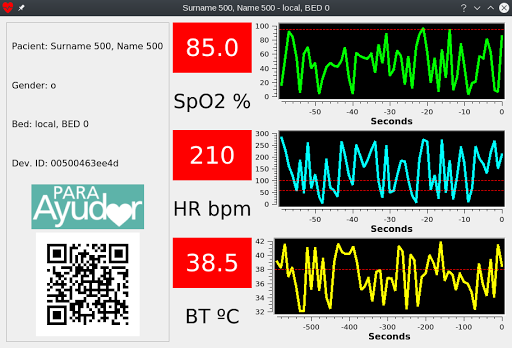
![]() |
| MoSimPa's monitor main screen |
![]() |
| Plots of a patient's data |
![]() |
| Alarm thresholds setup |
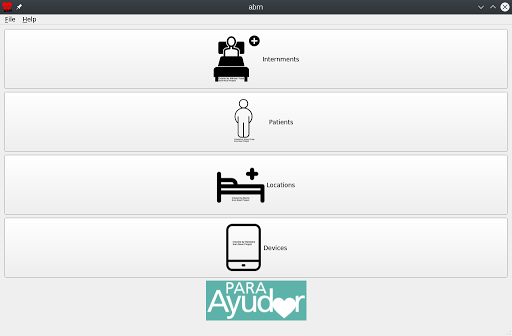
![]() |
| ABM main screen |
![]() |
| ABM internments view |
I have delivered a speech last week about some ideas and experiments I have about the use of remote access and Cloud technologies for labs. I have collected the speech recording and stuff, in french, in another post.
The presentation was in french originaly, so I ve quickly translated my slides and recorded an english version.
I mention tools like Guacamole, MeshCentral, NRELab s Antidote, Eclipse Che and Labtainers, as well as k8s and Docker, as interesting tools that may allow us to continue teaching in labs while allowing more flexibility, distant learning, and hopefully improved quality.
You can find the slides here: https://speakerdeck.com/oberger/experimenting-on-distant-labs-and-labs-on-the-cloud, and the recording is here:
Experimenting on distant labs and labs on the Cloud.
Here is my transparent report for my work on the Debian Long Term Support (LTS) and Debian Extended Long Term Support (ELTS), which extend the security support for past Debian releases, as a paid contributor.
In May, the monthly sponsored hours were split evenly among contributors depending on their max availability - I was assigned 17.25h for LTS (out of 30 max; all done) and 9.25h for ELTS (out of 20 max; all done).
A survey will be published very shortly to gather feedback from all parties involved in LTS (users, other Debian teams...) -- let us know what you think, so we start the forthcoming new (Stretch) LTS cycle in the best conditions
Discussion is progressing on funding & governance of larger LTS-related projects. Who should decide: contributors, Freexian, sponsors? Do we fund with a percentage or by capping resources allocated on security updates? I voiced concerns over funding these at the expense of smaller, more organic, more recurrent tasks that are less easy to specify but greatly contribute to the overall quality nevertheless.
ELTS - Wheezy


I would say that this was a crazy month, but with everything ever escalating, does that even mean anything anymore?
I lost track of tracking my activities in the second half of the month, and I m still not very good at logging the soft stuff , that is, things like non-technical work but that also takes up a lot of time, but will continue to work on it.
Debian Packaging 2020-05-02: Upload package gnome-shell-extension-workspaces-to-dock (53-1) to Debian unstable. 2020-05-02: Upload package tetzle (2.1.6-1) to Debian unstable. 2020-05-06: Upload package bundlewrap (3.9.0-1) to Debian unstable. 2020-05-06: Accept MR#1 for connectagram. 2020-05-06: Upload package connectagram (1.2.11-1) to Debian unstable. 2020-05-07: Upload package gnome-shell-extension-multi-monitors (20-1) to Debian unstable (Closes: #956169). 2020-05-07: Upload package tanglet (1.5.6-1) to Debian unstable. 2020-05-16: Upload package calamares (3.2.24-1) to Debian unstable. 2020-05-16: Accept MR#1 for tuxpaint-config. 2020-05-16: Accept MR#7 for debian-live. 2020-05-18: Upload package bundlewrap (3.10.0) to Debian unstable.
Debian Mentoring 2020-05-02: Sponsor package gamemode (1.5.1-3) (Games team request). 2020-05-16: Sponsor package gamemode (1.5.1-4) (Games team request).
In May 2020, I have worked on the Debian LTS project for 14.5 hours (of 14.5 hours planned).
LTS Work

A Quick Recap from last year:
Kotlin is being packaged under the Google Summer of Code within the Debian organization itself. The major reason behind bringing Kotlin in Debian is to update all the Android packages which are now heavily dependent upon the Kotlin libraries.
The major work to bring Kotlin into Debian is done for the version 1.3.30, by Saif Abdul Cassim (goes by m36 on IRC) as a part of his GSoC'2019.
All his contributions to the team can be found in his blog posts.
So, for now, we have a bootstrap package and a Kotlin package for the version with 1.3.30.
There were still changes needed as we lacked some of the dependencies for Kotlin, and the source package lacked copyright information and didn t comply with Debian standards.
What's the present year brought for Kotlin?
To be specific the following were mainly left dependencies for Kotlin:
Jline3 (done by @samyak-jn, myself), and intellij-community-idea (finished by @The_LoudSpeaker, Raman Sarda).
kotlin package residing in m36 s repository had a couple of issues that were needed to be fixed to meet Debian standards, but Kotlin was building fine locally with the mentioned dependencies. :D
patches as all the changes were made directly to the source, and henceforth fixed rules and control files to meet Debian Standards. Debian is very particular about its license policies. The copyright was a pending task that was completed for Good.
The newer package exists at Samyak's repo.
@_hc) for the help with that. The wiki page for Kotlin exists here.
#debian-mobile channel on OFTC.
Dir.entries instead of Dir[glob]. Fixes CVE-2020-8161.git-repo-updater and mplcursors for Sudip.
whenever for Ruby2.7 test failures.aggregate asking upstream for a release on rubygems.irb for asking more about Array.join("\n").mail asking upstream to cut a new release.rack reporting test failures in the CVE fix.ruby-dbus for help with Debian bug #836296.ruby-dbus asking if they still use rDoc for doc generation.aggregate for dropping git from gemspec.whenever for dropping git from gemspec.
phantomjs, asking to look into CVE-2019-17221. Still no action :/sympa, reporting an incomplete patch for CVE-2020-10936.polybar, mentioning that the build is not reproducible.libgit2, mentioning that the build is not reproducible.polybar, which was a fix for the above issue.:wq for today.
Tired of staying inside in Tokyo.
Next.