Search Results: "ana"

14 June 2011

Cyril Brulebois: mesa: a disturbance in the Force?

Just a quick heads-up: I ve just uploaded mesa 7.10.2-4, which is multiarch-enabled, thanks to Steve Langasek. As explained in its changelog, this breaks the X server currently in testing and in unstable, but a rebuild is already pending, which will make everyone upgradable. For curious people, those commands took care of scheduling the binNMU, with a proper dep-wait:
wb nmu xorg-server . ALL . -m 'Rebuild against new (multiarch-enabled) mesa.'
wb dw xorg-server . ALL . -m 'libgl1-mesa-dev (>= 7.10.2-4)'
In the meanwhile, if your mirror gets a new mesa without the rebuilt server, your package manager should bail out and refuse to upgrade mesa (or propose to remove the server). So wait a bit, upgrade everything, and enjoy! mesa 7.10.3 (released a few hours ago) should reach unstable tomorrow, so that we can ask our users to track (possible) regressions between 7.10.2-3 and 7.10.3-1 to either 7.10.2-4 (multiarchification), or to 7.10.3-1 (the stable upgrade), thanks to the excellent http://snapshot.debian.org/ service.

13 June 2011

Russell Coker: Parsing Daemontools/Multilog dates in Shell Script

I run some servers that use the DJB Daemontools to manage their daemons [1]. This is something I would have changed years ago if given a chance because DJB software always seems to do things in a different way to other Unix software and causes pain. Unfortunately when you have a lot of semi-embedded systems that have intermittent net access it s really not easy to change things, and having staff who aren t computer experts who have been trained to use certain DJB software makes it even more difficult. Daemontools uses multilog [2] to manage it s logging, this gives dates of the format @400000004deedcea1e4a18d4. While DJB has written a tool to parse this it s not always convenient, and I don t want to install DJB software on every system that might be used for reading logs (among other things DJB software is not included in any popular distribution). George Bernard Shaw says that All progress depends on the unreasonable man [3], of course he never participated in a large-scale software development project. In the modern age progress usually depends on people who can work with others, which is why DJB software doesn t get used much for every DJB program there is a similar program written by someone else that works about equally well on it s own and is more than 10* more popular because of better interoperability. So I wrote the following script to convert DJB dates to regular dates. It takes a DJB format date as the first command-line parameter as I generally just paste the relevant date into a different window. At some future time I may write a program to parse an entire log file and convert all the dates but I haven t had a need for it yet. I think that I ve done the hardest work involved in writing such a parser so someone else can use this as a starting point if they have such a need. #!/bin/bash
set -e
DATE=$(echo $1 cut -c 10-17)
SECS=$(echo -e ibase=16\\n$(echo $DATE tr "[a-z]" "[A-Z]") bc)
exec date -d "1970-01-01 $SECS sec utc"

Christian Perrier: So, what happened with Kikithon?

I mentioned this briefly yesterday, but now I'll try to summarize the story of a great surprise and a big moment for me. All this started when my wife Elizabeth and my son Jean-Baptiste wanted to do something special for my 50th birthday. So, it indeed all started months ago, probably early March or something (I don't yet have all the details). Jean-Baptiste described this well on the web site, so I won't go again into details, but basically, this was about getting birthday wishes from my "free software family" in, as you might guess, as many languages as possible. Elizabeth brought the original idea and JB helped her by setting up the website and collecting e-mail addresses of people I usually work with: he grabbed addresses from PO files on Debian website, plus some in his own set of GPG signatures and here we go. And then he started poking dozens of you folks in order to get your wishes for this birthday. Gradually, contributions accumulated on the website, with many challenges for them: be sure to get as many people as possible, poking and re-poking all those FLOSS people who keep forgetting things... It seems that poking people is something that's probably in the Perrier's genes! And they were doing all this without me noticing. As usually in Debian, releasing on time is a no-no. So, it quickly turned out that having everything ready by April 2nd wouldn't be possible. So, their new goal was offering this to me on Pentecost Sunday, which was yesterday. And...here comes the gift. Aha, this looks like a photo album. Could it be a "50 years of Christian" album? But, EH, why is that pic of me, with the red Debconf5 tee-shirt (that features a world map) and a "bubulle" sign, in front of the book? But, EH EH EH, what the .... are doing these word by H0lger, then Fil, then Joey doing on the following pages? And only then, OMG, I discover the real gift they prepared. 106, often bilingual, wishes from 110 people (some were couples!). 18 postcards (one made of wood). 45 languages. One postcard with wishes from nearly every distro representatives at LinuxTag 2011. Dozens of photos from my friends all around the world. All this in a wonderful album. I can't tell what I said. Anyway, JB was shooting a video, so...we'll see. OK, I didn't cry...but it wasn't that far and emotion was really really intense. Guys, ladies, gentlemen, friends....it took me a while to realize what you contributed to. It took me the entire afternoon to realize the investment put by Elizabeth and JB (and JB's sisters support) into this. Yes, as many of you wrote, I have an awesome family and they really know how to share their love. I also have an awesome virtual family all around the world. Your words are wholeheartedly appreciated and some were indeed much much much appreciated. Of course, I'll have the book in Banja Luka so that you can see the result. I know (because JB and Elizabeth told me) that many of you were really awaiting to see how it would be received (yes, that includes you, in Germany, who I visited in early May!!!). Again, thank you so much for this incredible gift. Thank you Holger Levsen, Phil Hands, Joey Hess, Lior Kaplan, Martin Michlmayr, Alberto Gonzalez Iniesta, Kenshi "best friend" Muto, Praveen Arimbrathodiyil, Felipe Augusto van de Wiel, Ana Carolina Comandulli (5 postcards!), Stefano Zacchiroli (1st contribution received by JB, of course), Gunnar Wolf, Enriiiiiico Zini, Clytie Siddall, Frans Pop (by way of Clytie), Tenzin Dendup, Otavio Salvador, Neil McGovern, Konstantinos Margaritis, Luk Claes, Jonas Smedegaard, Pema Geyleg, Meike "sp tzle queen" Reichle, Alexander Reichle-Schmehl, Torsten Werner, "nette BSD" folks, CentOS Ralph and Brian, Fedora people, SUSE's Jan, Ubuntu's Lucia Tamara, Skolelinux' Paul, Rapha l Hertzog, Lars Wirzenius, Andrew McMillan (revenge in September!), Yasa Giridhar Appaji Nag (now I know my name in Telugu), Amaya Rodrigo, St phane Glondu, Martin Krafft, Jon "maddog" Hall (and God save the queen), Eddy Petri or, Daniel Nylander, Aiet Kolkhi, Andreas "die Katze geht in die K che, wunderbar" Tille, Paul "lets bend the elbow" Wise, Jordi "half-marathon in Banja Luka" Mallach, Steve "as ever-young as I am" Langasek, Obey Arthur Liu, YAMANE Hideki, Jaldhar H. Vyas, Vikram Vincent, Margarita "Bronx cross-country queen" Manterola, Patty Langasek, Aigars Mahinovs (finding a pic *with* you on it is tricky!), Thepittak Karoonboonyanan, Javier "nobody expects the Spanish inquisition" Fern ndez-Sanguino, Varun Hiremath, Moray Allan, David Moreno Garza, Ralf "marathon-man" Treinen, Arief S Fitrianto, Penny Leach, Adam D. Barrat, Wolfgang Martin Borgert, Christine "the mentee overtakes the mentor" Spang, Arjuna Rao Chevala, Gerfried "my best contradictor" Fuchs, Stefano Canepa, Samuel Thibault, Eloy "first samba maintainer" Par s, Josip Rodin, Daniel Kahn Gillmor, Steve McIntyre, Guntupalli Karunakar, Jano Gulja , Karolina Kali , Ben Hutchings, Matej Kova i , Khoem Sokhem, Lisandro "I have the longest name in this list" Dami n Nicanor P rez-Meyer, Amanpreet Singh Alam, H ctor Or n, Hans Nordhaugn, Ivan Mas r, Dr. Tirumurti Vasudevan, John "yes, Kansas is as flat as you can imagine" Goerzen, Jean-Baptiste "Piwet" Perrier, Elizabeth "I love you" Perrier, Peter Eisentraut, Jesus "enemy by nature" Climent, Peter Palfrader, Vasudev Kamath, Miroslav "Chicky" Ku e, Mart n Ferrari, Ollivier Robert, Jure uhalev, Yunqiang Su, Jonathan McDowell, Sampada Nakhare, Nayan Nakhare, Dirk "rendez-vous for Chicago marathon" Eddelbuettel, Elian Myftiu, Tim Retout, Giuseppe Sacco, Changwoo Ryu, Pedro Ribeoro, Miguel "oh no, not him again" Figueiredo, Ana Guerrero, Aur lien Jarno, Kumar Appaiah, Arangel Angov, Faidon Liambotis, Mehdi Dogguy, Andrew Lee, Russ Allbery, Bj rn Steensrud, Mathieu Parent, Davide Viti, Steinar H. Gunderson, Kurt Gramlich, Vanja Cvelbar, Adam Conrad, Armi Be irovi , Nattie Mayer-Hutchings, Joerg "dis shuld be REJECTed" Jaspert and Luca Capello. Let's say it gain:

Maximilian Attems: Easy way to void() your Debian support

Craig Small gives a very bad advice on his recent post Debian Linux on HP DV6-6023TX. As soon as one loads such a binary graphics driver your Linux kernel is marked as tainted. Due to be running a proprietary module your box may behave strangely and is certainly not debuggable. Be aware that in such a case you are no longer running a free and open OS. What he actually wants is a very recent 3.0 linux image from experimental and to google for vga switcheroo, which leads to the following commit with explanations for /sys/kernel/debug/vgaswitcheroo/switch: vga_switcheroo: initial implementation (v15).

Raphaël Hertzog: Why you should always have a network connection when installing Debian

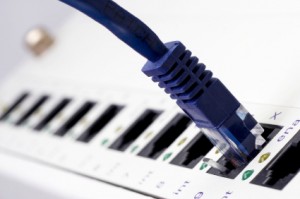
This is a simple tip but an important one: when you re installing Debian, take the time required to ensure the machine is connected to the Internet with a wired connection. If you have DHCP available, the debian-installer will use it to configure the network. Why not use the wireless connection? Because debian-installer in Squeeze doesn t support WPA encryption, but only WEP. So if you re using WPA, picking the wireless connection will lead to no working network during the installation and this is to be avoided. If you re still using WEP, you can go ahead of course. If you only have a wireless connection with WPA, your might want to help the debian-installer team and add the required support. Matthew Palmer did some work on it a few months ago (see this mail and his branch in the netcfg git repository) but he resigned from the d-i team in the mean time. So WPA support is still not available in the wheezy debian-installer. Why is the network so important?

  1. The tasks that you select during the installation process might suggest installation of supplementary packages that are not available on your installation disc. If you install without network, the resulting system might differ from the expected one since it will be missing some packages that are available in the Debian repositories but not on your installation disc.
  2. Your installation media might be old and there are security updates that have been published. If you do your initial installation with network, the security updates will be installed before the reboot and thus before the services are exposed over the network.
  3. If you re not installing a desktop with network-manager (Debian s default GNOME Desktop provides it), the initial network configuration is important since this configuration is kept for the future. And you surely want network connectivity on your machine, don t you?
  4. Without network, APT s sources.list will not be properly configured to include an HTTP mirror of your country. And really, I prefer when apt-get install can work without the initial installation disc.
If you want to read more articles like this one, click here to subscribe to my free newsletter. You can also follow me on Identi.ca, Twitter and Facebook.

22 comments Liked this article? Click here. My blog is Flattr-enabled.

Craig Small: Debian Linux on HP DV6-6023TX

It was time to update my creaking old laptop. I ordered HP6-6023TX online and after a few days it arrived just before a long weekend. I first backed up Windows 7 onto a set of DVDs and found that either my blank DVDs are old or this new DVD drive is far more fussy. There were quite a few coasters made until I gave up and bought some new ones. DVDs seemed to be trouble for me that day. I downloaded the Debian 6.0.4 DVD image but couldn t burn it. Brasero would just keep saying calculating checksum and go no further. So after waiting too long, the CD iso was downloaded and installed. Installation of debian onto the laptop was straightforward. That is if you used a wired connection. Wireless needs the non-free firmware and I gave up trying to work out how to install it at debian-installer time as it didn t see the tar.gz full of firmware on the USB stick. Wireless worked perfectly once I loaded everything on. So at this point with not much trouble I had an almost fully working setup. Even the webcam and sound was working. Video Fun The laptop is one of these strange modern ones that has two video cards. The low-spec one is an Intel Sandybridge while the higher one is an AMD/ATI Radeon HD 6700M. The idea being you use the ATI when plugged in and the Intel on batteries. Xorg worked first go, but only on the Intel chip. Trying to force X to use the ATI driver with an Xorg configuration resulted in the Xserver crashing. Next attempt was the fglrx packages within Debian. aticonfig said it didn t know about the card. The reason for this is that the Debian packages use fglrx version11.4 and I needed for my card 11.5 So close but so far away. OK, so building the ATI software can t be that hard can it? A nice set of instructions on the Debian wiki and we had errors. The first problem is that the packaging used is ancient. The second problem is much more serious; it won t compile. I was stuck about here until I hopped onto the Debian irc channel and asked about it and someone found a very useful webpage about compiling the ATI drivers on Debian which importantly had information about the patches you need, especially the blk patch. Success! the program compiled and installed. A small xorg.conf specifying the fglrx driver and the BusID and we were up and running. I now have accelerated graphics on the laptop. Ouch, my eyes! I do actually get outside (one of my hobbies is gardening and that is an outdoor activity) so I don t need a monitor screen trying to give me a suntan. The default screen brightness on the laptop could be described as sub-nova . I m sure there is some alien astronomers several light-years away who will in many years time wonder what that flash from the unimpressive end of the milky-way was about. To protect your eyes and keep the neighborhood complaints down you can reduce the brightness to something sane. You do this in the power management settings which for me is System -> Preferences -> Power Management. I can see again!

Russell Coker: Evil Psychologists

Last year the Psychologist and Baptist minister George Rekers who is famous for anti-homosexuality pseudo-science was discovered to be hiring gay escorts from Rentboy.com. Lots of LULZ there. But the story didn t end there. It turns out that George Rekers did some research on a child who ended up committing suicide as an adult, and the circumstantial evidence suggests that George s actions are directly related to the suicide [1]. The Rentboy.com affair doesn t seem so funny now. The Box Turtle Bulletin has a series of articles about Kirk Andrew Murphy s suicide and the roles of George Rekers and Richard Green in all of this [2], the articles are well written and generally appear to be well researched I recommend reading the articles if you can stomach them (lots of nasty stuff is described). The section answering the question of who s responsible for the mistreatment of Kirk Andrew Murphy [3] where they describe the use of ABA (AKA the Lovaas Technique) is interesting. Ivar Lovaas worked with George Rekers in such research and published a paper with him. The term ABA gets an immediate hostile reaction in the Autism community, but until now I hadn t realised why so many people hate it so much. It seems that to some extent I made the classic mistake of misjudging the reports of Autistic people who are unable to present their case well (as opposed to the psychologists who can present any position very well even if it s utterly insane). In the past I had the impression that ABA wasn t inherently bad, it was just implemented in a bad way in some cases now it seems that ABA was designed in an evil way right from the start. There is one massive problem with the Box Turtle analysis, he says Behavioral analysts don t dig around much into people s feelings, fears, dreams, family relationships or childhood memories. Indeed, in cases like autism, Lovaas s specialty, those avenues of exploration would be irrelevant . It could be that Jim Burroway (the Box Turtle writer) is merely quoting someone else without attribution, but even so saying that the feelings, fears, and dreams of a group of people are irrelevant is just awful, a statement that denies the humanity of a group of people can t be quoted without further explanation. In his article about ABA Jim refers to childhood Autism as a condition for which there is no hope for interior change [4]. I m not sure if he s just saying that Autistic children are incapable of learning or whether it s all Autistic people, in either case it s nonsense in terms of science and nasty as well. Generally I expect that members of various minority groups will show more sympathy to each other than they receive from the general population. Jim s posts are a great disappointment. I understand that he would be rather stressed about the horrible things that George Rekers et al did, but even so he should be able to avoid that sort of thing. Jim is obviously a very talented writer and can do better. One might think that Jim s posts use the word Autism to refer only to the people who are non-verbal (or in other ways less capable than the huge number of Autistic people who work for companies like Google and IBM). But that s no excuse either. You can find blogs and essays written by non-verbal Autistic people that describe their experiences if you care to search for them. It s obvious that they are people too and deserve to be treated as people not objects. Abusing Autistic children to try and make them impersonate NT children is no less evil than abusing children who don t fit gender norms.

12 June 2011

Clint Adams: Debian on the DreamPlug, Part II

If you have debootstrapped the internal microSD card, the vendor-supplied U-Boot config should serve you adequately. To boot off of a USB stick, however, interrupt the boot sequence (if you don't have a JTAG/serial board at this point, go buy one immediately), and enter the following commands:
setenv x_bootcmd_kernel fatload usb 1:1 0x6400000 uImage
setenv x_bootargs_root root=/dev/sdc2 rootdelay=10
saveenv
reset
If you just want to testboot once, and don't want to make it permanent, omit the saveenv. If you do want to make it permanent, consider removing the superfluous pings from the bootcmd, but be careful to escape semicolons and dollar signs instead of zealously copying and pasting. If you haven't bothered putting a FAT partition with uImage on the USB stick, omit the setenv x_bootcmd_kernel line. Once you've booted Debian, you may wish to natively-debootstrap or copy your new partition to /dev/sda2 (which is what Linux will call the ext3 partition of your microSD card). To then return to fully booting off of microSD so you can repurpose the USB stick,
setenv x_bootcmd_kernel fatload usb 0:1 0x6400000 uImage
setenv x_bootargs_root root=/dev/sda2 rootdelay=10
saveenv
reset
Enjoy.

Christian Perrier: Developers per country (June 2011) - 3rd take

See comments at the end about this 3rd version This is time again for yet another bubulle game: counting the number of developers per country. I already published such analysis in 2010 and 2009. So, here we are with the June 2011 version, sorted by the ratio of *active* developers per million population for each country.
Act: number of active developers
Dev: total number of developers
A/M: number of active devels per million pop.
D/M: number of devels per million pop.
2009: rank in 2009
2010: rank in 2010
June 2011: rank now
Code Name Population Act Dev Dev Act/Million Dev/Million 2009 2010 June 2011
fi Finland 5374781 21 31 3,91 5,77 1 1 1
ch Switzerland 7866500 21 26 2,67 3,31 2 2 2
mq Martinique 397730 1 1 2,51 2,51

3
no Norway 4964500 12 15 2,42 3,02 5 4 4
nz New Zealand 4393500 10 15 2,28 3,41 4 3 5
ie Ireland 4470700 10 13 2,24 2,91 13 9 6
se Sweden 9354462 19 35 2,03 3,74 3 6 7
lu Luxemburg 511840 1 1 1,95 1,95 8 5 8
de Germany 81802000 155 221 1,89 2,7 7 7 9
at Austria 8404252 15 25 1,78 2,97 6 8 10
fr France 63136180 91 119 1,44 1,88 12 12 11
au Australia 22632213 31 57 1,37 2,52 9 10 12
be Belgium 11007020 15 17 1,36 1,54 10 11 13
uk United-Kingdom 62008048 67 106 1,08 1,71 14 14 14
nl Netherlands 16674600 18 37 1,08 2,22 11 13 15
dk Denmark 5564219 6 10 1,08 1,8 17 17 16
ca Canada 34480000 27 57 0,78 1,65 15 15 17
hr Croatia 4429078 3 3 0,68 0,68 20 18 18
es Spain 46030109 31 51 0,67 1,11 16 16 19
lt Lithuania 3225346 2 2 0,62 0,62 28 19 20
cz Czech Rep 10540748 6 6 0,57 0,57 21 20 21
it Italy 60605053 33 47 0,54 0,78 23 22 22
bg Bulgaria 7351254 4 4 0,54 0,54 25 23 23
il Israel 7602400 4 6 0,53 0,79 24 24 24
us USA 308745538 162 364 0,52 1,18 19 21 25
hu Hungary 9979000 5 11 0,5 1,1 18 25 26
lv Latvia 2245357 1 1 0,45 0,45 26 26 27
uy Uruguay 3494382 1 2 0,29 0,57 22 27 28
jp Japan 127960000 33 46 0,26 0,36 30 28 29
pl Poland 38186860 9 13 0,24 0,34 29 29 30
cr Costa Rica 4253897 1 1 0,24 0,24 31 30 31
pt Portugal 10647763 2 4 0,19 0,38 27 32 32
sk Slovakia 5429763 1 1 0,18 0,18 32 31 33
gr Greece 11305118 2 3 0,18 0,27 33 38 34
ar Argentina 40091359 7 9 0,17 0,22 34 33 35
sv El Salvador 6134000 1 1 0,16 0,16

36
tw Taiwan 23061689 3 3 0,13 0,13 37 34 37
br Brazil 190732694 20 21 0,1 0,11 36 35 38
by Belarus 9648533 1 1 0,1 0,1 35 36 39
mg Madagascar 20653556 2 2 0,1 0,1 44 37 40
cu Cuba 11239363 1 1 0,09 0,09
38 41
kr South Korea 48758000 4 6 0,08 0,12 39 39 42
ec Ecuador 14790608 1 1 0,07 0,07
40 43
cl Chile 17224200 1 2 0,06 0,12 42 41 44
ro Romania 21466174 1 2 0,05 0,09 45 43 45
co Colombia 45925397 2 3 0,04 0,07 41 44 46
ru Russia 142905200 6 7 0,04 0,05 43 42 47
za South Africa 49991300 2 9 0,04 0,18 38 48 48
my Malaysia 27565821 1 1 0,04 0,04

49
ve Venezuela 29105632 1 1 0,03 0,03 40 45 50
pe Peru 29496000 1 1 0,03 0,03 46 46 51
tr Turkey 73722988 2 2 0,03 0,03 47 47 52
mx Mexico 112322757 2 2 0,02 0,02 49 49 53
th Thailand 63878267 1 2 0,02 0,03 50 50 54
eg Egypt 80085862 1 3 0,01 0,04 51 51 55
in India 1210193422 8 8 0,01 0,01 52 52 56
cn China 1339724852 7 11 0,01 0,01 53 53 57
ua Ukraine 45888000 0 0 0 0 48 53 58


896 1450 61,79%


A few interesting facts: v2 comment: This is the second version of this blog post. I have been pointed that the population I was using for "Ireland" is indeed the population of the entire island, so Republic of Ireland (Eire) plus Northern Ireland (Ulster). We may guess that people listing "IE" as their country are citizens of the Republic of Ireland, so the population to use is that of this part of the island. As a consequence, Ireland is bumped up to 6th rank instead of 9th. v3 comment: Doh. Since I'm doing this survey, I was always adding people using "sv" as country to Sweden. This is a quite common mistake and it was happening in the past. But now, there is only ONE developer who uses "sv" as country, this is Rene Mayorga and he definitely lives in El Salvador, not Sweden. As a consequence, Sweden lost one developer (but keeps its rank) and El Salvador now appears at rank 36. It is not a "new" country as Rene is DD for quite some time.

11 June 2011

Martin Zobel-Helas: I am going to DebConf11

DC11_web_120x240_03.pngI am going to DebCamp11 and DebConf11. I hope I can do some productive work with the website team, as well for the DSA team. Maybe I can find someone for a little skill-exchange regarding pylons.

During DebCamp I will most probably helping setting up the local infrastructure, esp for video streaming. Maybe I will also find some time for OpenStreetMap during DebCamp.

Let's hope for a good and productive DebConf with all the other DDs I haven't seen for years.

Christian Perrier: Developers per country (June 2011) - 2nd take

See comment at the end about this 2nd version This is time again for yet another bubulle game: counting the number of developers per country. I already published such analysis in 2010 and 2009. So, here we are with the June 2011 version, sorted by the ratio of *active* developers per million population for each country.
Act: number of active developers
Dev: total number of developers
A/M: number of active devels per million pop.
D/M: number of devels per million pop.
2009: rank in 2009
2010: rank in 2010
June 2011: rank now
Code Name Population Act Dev Dev Act/Million Dev/Million 2009 2010 June 2011
fi Finland 5374781 21 31 3,91 5,77 1 1 1 1
ch Switzerland 7866500 21 26 2,67 3,31 2 2 2 2
mq Martinique 397730 1 1 2,51 2,51

3 3
no Norway 4964500 12 15 2,42 3,02 5 4 4 4
nz New Zealand 4393500 10 15 2,28 3,41 4 3 5 5
ie Ireland 4470700 10 13 2,24 2,91 13 9 6 6
se Sweden 9354462 20 36 2,14 3,85 3 6 7 7
lu Luxemburg 511840 1 1 1,95 1,95 8 5 8 8
de Germany 81802000 155 221 1,89 2,7 7 7 9 9
at Austria 8404252 15 25 1,78 2,97 6 8 10 10
fr France 63136180 91 119 1,44 1,88 12 12 11 11
au Australia 22632213 31 57 1,37 2,52 9 10 12 12
be Belgium 11007020 15 17 1,36 1,54 10 11 13 13
uk United-Kingdom 62008048 67 106 1,08 1,71 14 14 14 14
nl Netherlands 16674600 18 37 1,08 2,22 11 13 15 15
dk Denmark 5564219 6 10 1,08 1,8 17 17 16 16
ca Canada 34480000 27 57 0,78 1,65 15 15 17 17
hr Croatia 4429078 3 3 0,68 0,68 20 18 18 18
es Spain 46030109 31 51 0,67 1,11 16 16 19 19
lt Lithuania 3225346 2 2 0,62 0,62 28 19 20 20
cz Czech Rep 10540748 6 6 0,57 0,57 21 20 21 21
it Italy 60605053 33 47 0,54 0,78 23 22 22 22
bg Bulgaria 7351254 4 4 0,54 0,54 25 23 23 23
il Israel 7602400 4 6 0,53 0,79 24 24 24 24
us USA 308745538 162 364 0,52 1,18 19 21 25 25
hu Hungary 9979000 5 11 0,5 1,1 18 25 26 26
lv Latvia 2245357 1 1 0,45 0,45 26 26 27 27
uy Uruguay 3494382 1 2 0,29 0,57 22 27 28 28
jp Japan 127960000 33 46 0,26 0,36 30 28 29 29
pl Poland 38186860 9 13 0,24 0,34 29 29 30 30
cr Costa Rica 4253897 1 1 0,24 0,24 31 30 31 31
pt Portugal 10647763 2 4 0,19 0,38 27 32 32 32
sk Slovakia 5429763 1 1 0,18 0,18 32 31 33 33
gr Greece 11305118 2 3 0,18 0,27 33 38 34 34
ar Argentina 40091359 7 9 0,17 0,22 34 33 35 35
tw Taiwan 23061689 3 3 0,13 0,13 37 34 36 36
br Brazil 190732694 20 21 0,1 0,11 36 35 37 37
by Belarus 9648533 1 1 0,1 0,1 35 36 38 38
mg Madagascar 20653556 2 2 0,1 0,1 44 37 39 39
cu Cuba 11239363 1 1 0,09 0,09
38 40 40
kr South Korea 48758000 4 6 0,08 0,12 39 39 41 41
ec Ecuador 14790608 1 1 0,07 0,07
40 42 42
cl Chile 17224200 1 2 0,06 0,12 42 41 43 43
ro Romania 21466174 1 2 0,05 0,09 45 43 44 44
co Colombia 45925397 2 3 0,04 0,07 41 44 45 45
ru Russia 142905200 6 7 0,04 0,05 43 42 46 46
za South Africa 49991300 2 9 0,04 0,18 38 48 47 47
my Malaysia 27565821 1 1 0,04 0,04

48 48
ve Venezuela 29105632 1 1 0,03 0,03 40 45 49 49
pe Peru 29496000 1 1 0,03 0,03 46 46 50 50
tr Turkey 73722988 2 2 0,03 0,03 47 47 51 51
mx Mexico 112322757 2 2 0,02 0,02 49 49 52 52
th Thailand 63878267 1 2 0,02 0,03 50 50 53 53
eg Egypt 80085862 1 3 0,01 0,04 51 51 54 54
in India 1210193422 8 8 0,01 0,01 52 52 55 55
cn China 1339724852 7 11 0,01 0,01 53 53 56 56
ua Ukraine 45888000 0 0 0 0 48 53 57 57


896 1450 61,79%


A few interesting facts: This is the second version of this blog post. I have been pointed that the population I was using for "Ireland" is indeed the population of the entire island, so Republic of Ireland (Eire) plus Northern Ireland (Ulster). We may guess that people listing "IE" as their country are citizens of the Republic of Ireland, so the population to use is that of this part of the island. As a consequence, Ireland is bumped up to 6th rank instead of 9th.

Clint Adams: Debian on the DreamPlug

The DreamPlug is like a GuruPlug Server-Plus with a few notable differences: So let's say you want to put Debian on your DreamPlug. You do, of course, because running some other operating system is in poor taste, and you'd be embarrassed telling your friends. How do you do it? You can't use d-i. Let me back up. In the onboard SPI flash, there is a copy of Das U-Boot. This is a fork of mainline U-Boot, with no complete and corresponding source available. To the casual observer, this might look like an egregious GPL violation, but, on the other hand, no one seems to know how to rewrite the SPI flash except from U-Boot itself, so if you happen to corrupt said flash, your plug is bricked and openocd can't save you. I would be happy to be proven wrong on this last point, but for not let's assume that you're screwed and unable to replace your boot loader with free software. The next problem is the kernel, which lives on the microSD card. This is potentially free software, though I can't swear that complete and corresponding source code is available. What I can claim is that linux-2.6.33.6.tar.bz2 on Google Code will build a Linux that works on the plug. I will also point out that this doesn't match Linux 2.6.33.6 from kernel.org. Some other time I should rant about ARM Linux but for now I will just say that if you use the U-Boot of questionable provenance and either the Linux that's shipped with the plug or the one at the above link, you will be able to boot a mostly Debian system. I'll mention the third exception later. One thing you can do is to take the plug apart, remove the microSD card from its slot, and then stick it into a reader that you can then manipulate on another machine. If you're choosing this route and wish to take this opportunity to replace the microSD card with something larger than 2 gigs, keep in mind that you'll have to either preserve the uImage file from the first partition or build a new one. I am not fond of cross-architecture anything. I prefer to do things natively rather than cross-compile or foreign-debootstrap, and I own enough armel boxes that I can do this easily. So at this point I would just debootstrap a new Debian base onto the second partition of the microSD card. The first partition contains the uImage (which is your Linux image in a wrapper), and must be a FAT filesystem since you can't replace your boot loader with something that can read a better filesystem. The second partition will be your rootfs and can be whichever filesystem your Linux can read. If you do not have another armel system to play with, you might want to familiarize yourself with Marco's Sheevaplug instructions. You can install to a USB stick as well. Just remember that U-Boot needs a FAT filesystem containing the uImage on it and that you can't use a kernel in Debian yet. You'll also want to ignore the instructions regarding U-Boot, since that must be done differently. I'll be back later with some more details.

Christian Perrier: Developers per country (June 2011)

This is time again for yet another bubulle game: counting the number of developers per country. I already published such analysis in 2010 and 2009. So, here we are with the June 2011 version, sorted by the ratio of *active* developers per million population for each country.
Act: number of active developers
Dev: total number of developers
A/M: number of active devels per million pop.
D/M: number of devels per million pop.
2009: rank in 2009
2010: rank in 2010
June 2011: rank now
Code Name Population Act Dev Dev Act/Million Dev/Million 2009 2010 June 2011
fi Finland 5374781 21 31 3,91 5,77 1 1 1
ch Switzerland 7866500 21 26 2,67 3,31 2 2 2
mq Martinique 397730 1 1 2,51 2,51

3
no Norway 4964500 12 15 2,42 3,02 5 4 4
nz New Zealand 4393500 10 15 2,28 3,41 4 3 5
se Sweden 9354462 20 36 2,14 3,85 3 6 6
lu Luxemburg 511840 1 1 1,95 1,95 8 5 7
de Germany 81802000 155 221 1,89 2,7 7 7 8
at Austria 8404252 15 25 1,78 2,97 6 8 9
ie Ireland 6197100 10 13 1,61 2,1 13 9 10
fr France 63136180 91 119 1,44 1,88 12 12 11
au Australia 22632213 31 57 1,37 2,52 9 10 12
be Belgium 11007020 15 17 1,36 1,54 10 11 13
uk United-Kingdom 62008048 67 106 1,08 1,71 14 14 14
nl Netherlands 16674600 18 37 1,08 2,22 11 13 15
dk Denmark 5564219 6 10 1,08 1,8 17 17 16
ca Canada 34480000 27 57 0,78 1,65 15 15 17
hr Croatia 4429078 3 3 0,68 0,68 20 18 18
es Spain 46030109 31 51 0,67 1,11 16 16 19
lt Lithuania 3225346 2 2 0,62 0,62 28 19 20
cz Czech Rep 10540748 6 6 0,57 0,57 21 20 21
it Italy 60605053 33 47 0,54 0,78 23 22 22
bg Bulgaria 7351254 4 4 0,54 0,54 25 23 23
il Israel 7602400 4 6 0,53 0,79 24 24 24
us USA 308745538 162 364 0,52 1,18 19 21 25
hu Hungary 9979000 5 11 0,5 1,1 18 25 26
lv Latvia 2245357 1 1 0,45 0,45 26 26 27
uy Uruguay 3494382 1 2 0,29 0,57 22 27 28
jp Japan 127960000 33 46 0,26 0,36 30 28 29
pl Poland 38186860 9 13 0,24 0,34 29 29 30
cr Costa Rica 4253897 1 1 0,24 0,24 31 30 31
pt Portugal 10647763 2 4 0,19 0,38 27 32 32
sk Slovakia 5429763 1 1 0,18 0,18 32 31 33
gr Greece 11305118 2 3 0,18 0,27 33 38 34
ar Argentina 40091359 7 9 0,17 0,22 34 33 35
tw Taiwan 23061689 3 3 0,13 0,13 37 34 36
br Brazil 190732694 20 21 0,1 0,11 36 35 37
by Belarus 9648533 1 1 0,1 0,1 35 36 38
mg Madagascar 20653556 2 2 0,1 0,1 44 37 39
cu Cuba 11239363 1 1 0,09 0,09
38 40
kr South Korea 48758000 4 6 0,08 0,12 39 39 41
ec Ecuador 14790608 1 1 0,07 0,07
40 42
cl Chile 17224200 1 2 0,06 0,12 42 41 43
ro Romania 21466174 1 2 0,05 0,09 45 43 44
co Colombia 45925397 2 3 0,04 0,07 41 44 45
ru Russia 142905200 6 7 0,04 0,05 43 42 46
za South Africa 49991300 2 9 0,04 0,18 38 48 47
my Malaysia 27565821 1 1 0,04 0,04

48
ve Venezuela 29105632 1 1 0,03 0,03 40 45 49
pe Peru 29496000 1 1 0,03 0,03 46 46 50
tr Turkey 73722988 2 2 0,03 0,03 47 47 51
mx Mexico 112322757 2 2 0,02 0,02 49 49 52
th Thailand 63878267 1 2 0,02 0,03 50 50 53
eg Egypt 80085862 1 3 0,01 0,04 51 51 54
in India 1210193422 8 8 0,01 0,01 52 52 55
cn China 1339724852 7 11 0,01 0,01 53 53 56
ua Ukraine 45888000 0 0 0 0 48 53 57


896 1450 61,79%


A few interesting facts:

10 June 2011

Neil Williams: Putting the magic smoke back into the ring main

Haven't been in my new home that long and through a long chain of contacts, my neighbour was finally able to contact me. (Just goes to show that having Debian friends nearby who like board games turns out to make some things JustWork.)
So, when I got the message and got home the flat was fine - just with no electrical power. Murphy's Law ensured that my laptop was also low on power, as was my mobile phone and my landline is cordless and the router was, naturally, not working. My communication options were suddenly rather limited.

The 50yr old wiring in this block finally surrendered the magic smoke and caused a fire downstairs (mostly melted insulation) before it disconnected. I got home around 1pm, electricians to fix the problem arrived about 5pm and haven't finished quite yet. (It's now 12:11am). A relatively large hole in the lawn was dug (a hard task in itself seeing as this area is officially in a drought and the ground is like iron), two junction boxes rebuilt, new connection made from downstairs to upstairs, the work just went on and on.

I'll get some accurate details when I manage to speak to my brother - I do a little bit of hardware but I deal in 1W or a few hundred mA, when a 80A cable melts I'm just a bit out of my depth. I've not seen a fuse that size since I left school.

Thanks to those Debian and non-Debian people who helped me actually contact the relevant people today. I was due to get so many things done today, instead I got through the worry to end up incredibly bored - it turns out to be surprisingly difficult to find things to do when there is no mains power, all the batteries in mobile devices are flat and it's too dark to read.
:-(

Gunnar Wolf: Reading revolutions: Online digital text and implications for reading in academe A (very informal) review

It's been a long time since I last took some time to read First Monday A great online publication, if you are not familiar with it, that I would categorize (and no, I'm not probably well-informed in it to be authoritative) as dealing with social, psychological aspects of the cultural shifts the online world has brought upon us (often dealing with topics related to Free Software communities, the reason I first met the publication). Firstmonday is an Open Access champion from early on. It follows an approachable but academic format (this means, it is peer-reviewed, its articles give extensive lists of references, and the articles are not the short reads we have got used to finding on the net, but, quoting from their audience profile, English is not the first language of many First Monday readers; A large percentage of First Monday readers are not a part of academia; Cultures, educational backgrounds, and fields of study vary greatly among First Monday readers.) This means, it's at least a great publication for me to follow :) Anyway After a long time not following it, I have just read Reading revolutions: Online digital text and implications for reading in academe, by Barry W. Cull; First Monday, Volume 16, Number 6 - 6 June 2011 Nice, interesting read. As I was planning on telling about the article to a couple of friends more into the subjects than myself, I'll comment+quote some bits on it. Before going any further: The article makes several references to Maryanne Wolf. No relation to her I'm not lulling my (two? are you both still reading?) readers towards her work ;-) The article talks about the differences social, even dips into some physiological aspects that the activity of reading is sustaining due to the shift from an activity done mainly from books (or other similar printed material) to the computer screen. Of course, we all know from our own experience many of the basic traits Shorter attention spans, a different reading pattern (skimming instead of reading; browsing through several related items instead of in-depth reading a single text as a knowledge unit). The article begins with an overview of reading and humankind. Cull quotes Maryanne Wolf's phrase, despite the fact that it took our ancestors about 2,000 years to develop an alphabetic code, children are regularly expected to crack this code in about 2,000 days . An interesting point I never thaught of is the start of reading as a purely mental activity, detaching reason from verbalization, ~1200 years ago:

Interestingly, these early scribes first did their work by reading out loud to themselves. Not until the ninth century did monastic regulations begin requiring silent reading. By the thirteenth century the practice of men reading silently and alone became commonplace. This shift to silent reading was a profound change, one that Darnton suggested involved a greater mental adjustment than the shift to printed text
. One last important point in this older history, that I'm quoting because I know I'll need the reference later on for one of my texts is about reading as a social activity Yes, also related to the quietness I just mentioned:
Interestingly, with the democratization of the printed text, there was a return to reading aloud. Reading was a solitary silent process only for the educated elite who could afford to buy books. For the rest of the population, as Darnton pointed out, reading was a social activity which took place in workshops, barns, and taverns [and] while children played, women sewed, and men repaired tools.
After this introduction (obviously one of the most interesting parts to me), Cull gives numbers showing how reading is evolving (in the USA and Canada), and quotes some prediction on how the future will end up adapting. Of course, I live in a place with a very different society, so I cannot comment much. Then he confronts some studies regarding specifically leisure reading, as it is a much more trustable factor than just literacy (in a world as highly literate as ours is, many people only read when they have to and have never or very seldom experienced the pleasure of reading just for the sake of it), bringing into the discussion the Internet (and computers in general) usage patterns. I found also very interesting the next section, regarding the pattern changes many libraries are facing now, specially academic/research-oriented libraries:
For several millennia, right up until just two decades ago, the central role of a library was to collect and house physical texts: from clay tablets, to scrolls, to printed books (Battles, 2003; Manguel, 2006). While printed text remains essential to most academic libraries, today s libraries have also become a core conduit via which researchers access scholarly texts online. Just within the last few years, Canadian academic libraries, in a situation similar to libraries throughout the Western world, have reached an interesting tipping point librarians now spend the majority of their collections budgets on electronic instead of printed texts.
( )
Libraries are convinced that digital text, now in its infancy, is likely to have a long future. Not only do they purchase electronic texts, but most academic libraries have also become publishers of electronic texts, whether they are digitizing large portions of their book holdings, or focusing on scanning a relatively small number of archival documents from their unique special collections.
And yes, doing some work with our Institute's library, I can confirm this trend. About e-books: I have got quite into that topic since the Kindle won my heart (and my money!) half a year ago. The little device completly changed my reading habits, I have read lots more since I carry it. And yes, I have never considered a full tablet-like device The article talks long about the difference, about the disadvantage that multitasking means to the human brain (oh, do I suffer from it!) I liked this snippet, quoting Steve Jobs a couple of years ago, regarding an Apple e-book reader question:
When Apple was rumoured to be working on an e book reader a few years ago, CEO Steve Jobs expressed his lack of interest: It doesn t matter how good or bad the product is, the fact is that people don t read anymore, he reportedly said, continuing by stating that 40 percent of the people in the U.S. read one book or less last year. The whole conception is flawed at the top because people don t read anymore (Markoff, 2008). Nicholas Carr (2010) has summed up Apple s involvement in the tablet phenomenon this way: Jobs is no dummy. As a text delivery system, the iPad is perfectly suited to readers who don t read anymore .
The issue for me is, I do enjoy reading, but I am an information addict. I know that if I have parallel information flows, my attention will surely dilute between them. Of course, as I read this article on-screen, it was hard for me to take the needed discipline not to be distracted by IMs or IRC highlights during the whole reading (which was also as an excercise for myself ;-) ). I am surprised to see this on student preferences (and even more surprised to see this data comes from my university):
In a study of students at the Universidad Nacional Aut noma de M xico (UNAM), the majority of students preferred print, and 63 percent reported that they could bear reading a document on a computer screen for no more than one hour (Ram rez Leyva, 2003). When it comes to course textbooks, a marked student preference for paper over e books has recently been found (Woody, 2010).
As we approach the end, it talks about another important topics I have often tried (and often failed) to communicate to my users: That of paratext, the meaning of the different texts, covers, items, layouts, etc. that are not part of the text itself but do shape the way we face it. To some of us, this seems obvious. To others, it is so hard to understand It closes with two more topics I will refer to. One is the permanent connectivity. All the time, more people are connected virtually all of their waking time. This affects not only learning habits but priorities. Will this near constant access to information interfere with students desire to comprehend and remember information, necessary to the educational process of turning it into knowledge? Author and university business school lecturer Don Tapscott recently suggested that students might not have to stress about the details those you can check Finally, regarding the continuity and ellaboration found in texts that are each time more common He quotes Maryanne Wolf:
I am worried about kids who are immersed in digital culture. They will get to college and they will have been Twittering so much that they won t have the patience to read those really long cognitively convoluted and complex sentences. They may not have developed those rich networks which are required in order to read at a high level of sophistication. The effort is what we are going to lose. They are becoming not so much a lazy reader, but an atrophied reader
As you can see, not only this post is meant to tell my couple-of-interested-friends to read the article, but it's mainly meant as a mental placeholder for myself. I will be surely refering to some of these items.

Raphaël Hertzog: People behind Debian: Philipp Kern, Stable Release Manager

Philipp is a Debian developer since 2005 and a member of the release team since 2008. Since he took the responsibility of Stable Release Manager, the process has evolved for the best. I asked him to explain how the release team decides what s fit for stable or not. His work on the buildd infrastructure is also admirable but I ll let him describe that. My questions are in bold, the rest is by Philipp. Who are you? I m a 24 year old Computer Science student, living in Karlsruhe, Germany. As a student assistant I m currently in two jobs: one is taking care of getting our university IPv6 network in shape, or rather generally getting fringe technologies into the network. The second is taking care of a s390x machine in the basement which my faculty got sponsored recently. In my spare time I tend my Debian duties and I m active in the student council (Fachschaft) as a sys-admin, software developer and until recently as treasurer. I got accepted as a Debian Developer in 2005. I m only really active since I was invited to join the Release Team in early 2008 after I contributed rewrites of some scripts that got lost in a disk crash of ftp-master. In late 2008 I also took on wanna-build/buildd duties. What s your notable achievement within Debian? For one I worked on the deployment of a single buildd/sbuild combination over all of our buildds and I rebased it on the sbuild in the archive several times already. All buildds basically look the same on all architectures, with only few variations. The chroots are now also created in a mostly predictable manner. Then we finally got build autosigning after years of constant poking. However the policy decision to allow it was made by the ftp-masters anyway, for which I m grateful, as it eases the workload of the buildd maintainers, the Security Team and the Release Team quite a bit. On the release side there s the integration of volatile into the proper structures of Debian. But there I m guilty for choosing the bad name squeeze-updates is, in comparision with security s squeeze/updates. Let s see if we can improve that for wheezy. The policy for stable updates have changed over time. Can you summarize what kind of updates are allowed nowadays? All the changes that were made to the policy were driven by the aim to keep stable (and to some lesser degree oldstable) usable throughout its lifetime. I have to admit that we got slightly more liberal in what we accept since I took over. The previous stable update policy included the fixes of critical bugs that break the system in interesting ways and security fixes. We also opened up the possibility of including important fixes for annoying bugs on a case-by-case basis. The whole don t update that much part of the stable release management is rooted in let s don t change the behaviour of a running system and let s have as few regressions as possible . We currently try to counter that with a review process that only allows self-contained fixes that were tested in unstable first, if applicable. In the future I d also like to have a feedback process that includes the users of the packages to report problems more early. In fact that s also why we now send calls for testing to debian-stable-announce one week in advance (see this mail as an example). So stable is updated through point releases that happen roughly every two months for stable and roughly every four for oldstable. They are accompanied by announcements and new CD/DVD sets. To be able to push some updates with less delay to our users and to avoid that they have to pick them from proposed-updates, there is stable-updates. The current policy for this suite is available in this post on debian-devel-announce. It boils down to everything urgent like tzdata, regression fixes and volatile packages. We noticed that some packages in stable just weren t useful anymore when they got updated through volatile. Hence those are folded into stable, too. We also relaxed the rules a bit so that leaf packages like clive, that rely on external websites not to change their URLs, can be updated too. If somebody wonders what happened to the and a half releases Those were intended to mark the inclusion of new hardware support (mostly by including a co-installable new kernel version). This kind of flag point release is thankfully no longer needed because our marvellous kernel team now backports certain hardware drivers to the kernel version in stable. They have some trouble soliciting test feedback for them, though. It would be cool if more people using stable could respond to their calls for testing. What are your plans for Debian Wheezy? Luckily the wanna-build/buildd side isn t much dependent on release cycles. The stable release management also just takes care of what gets dumped on them by the testing RMs. ;-) The near-term goals are certainly: Apart from that my work is mainly squashing the bugs on buildd.debian.org for the wanna-build part, so if you want something fixed, you need to report it, I m afraid. You have several roles within Debian, in particular stable release manager and member of the wanna-build team. Which role do you enjoy more and why? So the regular duties of the SRM, apart from setting up policies, are reviewing requests for uploads to proposed-updates, accepting them, chasing builds and scheduling point releases. It s mainly steady work. As for the Release Team it s working in a fabulous team where everyone s doing an awesome job. For me the wanna-build role is holding the things together and fixing up stuff that breaks while the world continues to evolve. And occassionally taking a stab at the ftp-masters. So rather different. My heart is probably siding with the buildd side because it s infrastructure but release work is fun, too. What s the biggest problem of Debian? Mainly that we re not quick in picking up new technologies and that we got slow on innovation. Distro-wide changes are usually a very big effort to coordinate and to finally complete. I guess people should be able to push fixes for release goals more eagerly into the archive. Also it seems to me that many DDs are actually disengaging from the release process, especially during the freeze but also before, which makes me a bit sad. However I m still not sure how we could counter that. As we re all volunteers you can t suddenly make others love the idea of releasing something together, I guess. Do you have wishes for Debian Wheezy? It s getting old, but there s certainly multiarch. Also a usable Python 3 is something I d really appreciate. Is there someone in Debian that you admire for their contributions? Peter Palfrader did an awesome job of getting a nicely working team together for DSA and got many tasks as automated as they are now. It s a pleasure to work with them and setting up a new buildd is, for example, a real breeze. He also developed a sane archive snapshot service, kudos for that.
Thank you to Philipp for the time spent answering my questions. I hope you enjoyed reading his answers as I did. Subscribe to my newsletter to get my monthly summary of the Debian/Ubuntu news and to not miss further interviews. You can also follow along on Identi.ca, Twitter and Facebook.

3 comments Liked this article? Click here. My blog is Flattr-enabled.

9 June 2011

Gerfried Fuchs: Reinhard Mey

This is a very special person. He is a very well known songwriter, at least in German language countries because he sings in German. He was that special kind of person with his lyrics when I was still a kid, and is still around continuing to write his songs in his very own special way. This person is Reinhard Mey, and if you understand German and have missed him so far, you have missed a lot. The songs that I present to you are special in the way that they are all contained in the special compilation titled Mein Apfelb umchen. The dedication he wrote for the album is also very special:

Ich glaube, Kinder zu haben ist das aufregendste Abenteuer, das wir erleben k nnen. Es ist der schwerste Beruf und die gr te Herausforderung, die ich mir denken kann, und die gl cklichste Erfahrung zugleich. Ich bin dankbar daf r! Dies sind die Lieder, die ich bis heute daf r geschrieben habe. Mein Anteil aus dem Erl s dieser Schallplatte gebe ich der Hilfe f r krebskranke Kinder.
Rough translation: I believe that having kids is the most exciting adventure that we can undergo. It is the hardest job and the biggest challenge that I can think of, and at the same time the happiest experience. I'm thankful for it! These are the songs that I wrote up to today for it. My part of the revenues of this record go to Help for children with cancer. So here are the songs: Enjoy! And if you feel like it, support these kind of special people.

/music permanent link Comments: 2 Flattr this

Matthew Garrett: IPv6 routers

I have a WRT-54G. I've had it for some years. It's run a bunch of different firmware variants over that time, but they've all had something in common. There's no way to configure IPv6 without editing text files, installing packages and punching yourself in the face repeatedly. Adam blogged about doing so today, and I suspect he may be in need of some reconstructive surgery now.

I spent yesterday looking at disassembled ACPI tables and working out the sequence of commands the firmware was sending to the hard drive. I'm planning on spending tomorrow writing x86 assembler to parse EFI memory maps. I spend a lot of time caring about stupidly awkward implementation details worked out from staring at binary dumps. The last thing I want to do is have to spend more than three minutes working out how to get IPv6 working on my home network because that cuts into the time I can spend drinking to forget.

Thankfully this is the future and punching yourself in the face is now an optional extra rather than bundled. Recent versions of Tomato USB (ie, newer than actually released) have a nice web UI for this. I registered with Tunnelbroker.net, got a tunnel, copied the prefix and endpoint addresses into the UI, hit save and ever since then NetworkManager has given me a routable IPv6 address. It's like the future.

Because I'm lazy I ended up getting an unofficial build from here. The std built doesn't seem to include IPv6, so I grabbed the miniipv6 one. The cheat-sheet for identifying builds is here. And I didn't edit a single text file. Excellent.

( Comments Comment on this)

8 June 2011

Joey Hess: date formats of a decade of usenet

I've finished importing the usenet archive for oldusenet. The fun part was parsing the dates to put the posts in order. No date format was really required on usenet, and so a wide variery of formats were used. Some posts didn't have a Date, but a guess could be made from their Message-ID. Some posts had absurd dates (ie, 1969, 1995), others had dates that were correct in every way.. except the year was left out (oops). One early post had a date of "_". Still, this excerpt of my code managed to parse the rest and so gives a fairly complete picture of how messy dates can possibly be. Read and weep.

  p anyzone "%d %b %y %T"       "15 Jun 88 02:27:41 GMT"
, p anyzone "%a, %d %b %y %T"       "Thu, 22 Jun 89 20:02:03 GMT"
, p anyzone "%a, %d-%b-%y %T"       "Thu, 15-Jun-89 18:01:56 EDT"
, p anyzone "%d %b %y %T"       "8 Jan 90 14:07:27 -0400"
, p anyzone "%d %b %y %H:%M"        "4 Oct 89 19:56 GMT"
, p anyzone "%a, %d %b %y %H:%M"    "Thu, 23 May 91 02:13 PDT"
, p anyzone "%a, %d %b %Y %T"       "Thu, 23 May 1991 07:07:00 -0400"
, p anyzone "%a, %d %b %Y %H:%M"    "Sat, 18 May 1991 17:28 CDT"
, p anyzone "%d %b %Y %T"       "11 Apr 1991 12:02:01 GMT"
, p anyzone "%d-%b-%y %H:%M"        "24-Mar-90 14:22 CST"
, p anyzone "%d %b %y, %T"      "22 May 91, 16:31:37 EST"
, p anyzone "%d %b %Y %H:%M"        "30 June 1991 17:15 -0400"
, p anyzone "%a, %d %b T  %T"       "Fri, 8 Feb T  09:49:39 EST"
-- special cases
, p (tzconst est) "%a %b %d %T EST %Y"  "Tue Jan 11 12:44:36 EST 1983"
, p (tzconst est) "%a %b %d %T EST %y"  "Tue Jan 11 12:44:36 EST 83"
, p (tzconst edt) "%a %b %d %T EDT %Y"  "Tue Jan 11 12:44:36 EDT 1983"
, p (tzconst edt) "%a %b %d %T EDT %y"  "Tue Jan 11 12:44:36 EDT 83"
, p (tzconst utc) "%a %b %d %T GMT %Y"  "Thu Nov  1 23:14:37 GMT 1990"
, p (tzconst pdt) "%d %b %y %T -7"  "11 Jun 91 15:41:21 -7"
-- dates with no timezone specified are guessed
, p nozone "%d %b %y %T"        "9 Jan 90 09:33:59"
, p nozone "%d %b %Y %T"        "10 APR 1990 05:25:28"
, p nozone "%a %b %d %T %Y"     "Fri Feb  6 00:19:47 1981"
, p nozone "%a %b %d %T %y"     "Fri Feb  6 00:19:47 81"
, p nozone "%Y-%m-%d %T"        "1981-11-12 18:31:01"
, p nozone "%y-%m-%d %T"        "81-11-12 18:31:01"
, p nozone "%a, %d %b %y %T"        "Sat, 13 Apr 91 08:37:57"
, p nozone "%a, %d %b %Y %T"        "Sun, 16 Jun 1991 13:23:02"
, p nozone "%d %b, %Y %T"       "1 May, 1991 00:00:00"
, p nozone "%d %b %y %H:%M"     "8 Jan 88 18:03"
, p nozone "%a, %d %b %y %H:%M"     "Wed, 29 May 91 17:14"
, p nozone "1 %b %d %T %Y"      "1 Jan 08 20:59:08 1991"
-- this has to come near the end, as it matches greedily
, g nozone "%a %b %d %T %Y ("       "Wed Oct 27 17:02:46 1982 (Tuesday)"
, g nozone "%a, %d %b %y %T +"      "Tue, 21 May 91 16:46:01 +22323328"
-- extract date from message-id headers
-- (used for messages with no Date field)
, g nozone "<%Y%b%d.%H%M%S."        "<1989Jul6.214048.28313@jarvis.csri.toronto.edu>"
(Parsing the often ambiguous, malformed, etc timezones was fun all its own too, of course.)

Lars Wirzenius: Living off freedom

I was laid off a couple of months ago, and have been thinking about what I want to do next. Actually, I've mostly been writing code for my pet projects, but earning a living again is occasionally on my mind. I would, very much, like to earn a living while deveoping interesting free software that I would like to use myself. There's a bunch of options available: In this blog entry, I want to think about that last option. Here's I imagine it would work: I would post a list of things I would like to do, estimates of how much work they'd be, and a hourly price. People would tell me how many hours of work they'd like to pay for. I would then do the work, send everyone their bill, and they'd pay it. In the ideal world, this would be an awesome way to fund development. I could, for example, write some automated tools for system testing of Debian, to help with release management, or I could finish Obnam. And that's just two things I'm already working on: there's no end of things I would like to develop, if I didn't need to worry about my next meal. However, this is not without problems. To start with, it might look like I'm trying to blackmail the world: "pay me, or this software won't be written". That's not a problem in the general case, but it'd easily look like that if the work would be to, say, maintain Debian packages. As a Debian developer, I should keep my packages in good shape whether someone is paying me or not. I would need to be careful to keep things ethical here. Another problem would be the issue of being realistic: would there be enough people willing to pay me, and how long would that last? That partly depends on the pricing. Although my needs are fairly modest, I do live in a country that is fairly expensive to live in. If I started doing this, it'd be easy for someone in a country it is cheaper to live in to compete on price (and they might well be better than I am, too). Then again, since there's no end of things to do, perhaps we could both make a living. Would you pay someone to develop free software by the hour? How much? How often? What should the software do?

Next.

Previous.