Raphaël Hertzog: People behind Debian: Martin Michlmayr, former Debian Project Leader

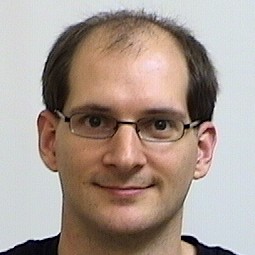 Martin Michlmayr is a Debian developer since 2000 and I share quite a few things with him, starting with his age and involvement in the quality assurance team. He managed to be elected Debian Project Leader in 2003 and 2004.
He s no longer as active as he used to be but his input is always very valuable and he continues to do very interesting things in particular concerning the support of NAS devices. Read on for the details.
Raphael: Who are you?
Martin: I m Martin Michlmayr. I m 32, originally from Austria, and currently living in the UK.
I ve contributed to various free software projects over the years but
Debian is without doubt the one I m most passionate about. I joined Debian
in 2000 when I was a student. I worked on Debian more or less full time
for a few years while I was pretending to study. Later I started a PhD to
do research about quality and management aspects of volunteer free software
projects. I investigated the release process in several free software
projects, in particular looking at time-based releases. After finishing my
PhD in 2007, I joined Hewlett-Packard. I m part of HP s Open Source
Program Office and work on various free software and open source
activities, both internally and within the community.
Raphael: How did you start contributing to Debian?
Martin: I first used Debian in the days of 0.93R6, some time around the end of
1995. The 0.93R6 release was still based on a.out but I needed an
ELF-based system for some application, so I moved to Slackware. I then
quickly moved to Red Hat Linux where I stayed for several years. I
rediscovered Debian in 2000 and quickly decided to join the project. I
cannot recall how I rediscovered Debian but when I did, it was clear to me
that Debian was the ideal project for me: I could identify with its
philosophy, I liked the volunteer nature of the project, and I found the
size and diversity of Debian interesting since a large project offers a lot
of different challenges and opportunities.
I remember how many new things there were to learn and back then the
documentation and other resources for new contributors were nowhere as good
as they are today. My application manager, Julian Gilbey, was a great
help he was incredibly friendly and passionate about Debian. I also
remember meeting up with Peter Palfrader (weasel) for key signing when we
were both in the New Maintainer queue. I was incredibly lucky with my New
Maintainer process and soon became an official Debian Developer. Because
there was a shortage of application managers, my first major contribution
in Debian was to become an application manager myself and help other people
join the project.
Debian is a large project with a long history and a rich culture, so new
contributors should expect that it will take some time to become familiar
with everything. Fortunately, there are many resources, such as
documentation and the debian-mentors list, for new contributors. Another
great way to become familiar with the way things are done in Debian is to
subscribe to various Debian mailing lists and ideally to read some mailing
list archives. It s also a great idea to attend the Debian Conference or
other conferences since meeting people in real life is a great way to
integrate. I remember attending Debian Conference 1 in Bordeaux where I
gave my first public talk.
Finally, new contributors should find an area where they can make a unique
contribution. Most people in Debian maintain packages but there are so
many other ways to contribute. For example, most of my contributions were
not technical but were about coordination and other organizational
activities.
Raphael: What s your biggest achievement within Debian?
Martin: I m particularly proud of a number of achievements:
- New Maintainer: I helped a lot of people join Debian. It s great to help someone join the project and then see how they contribute. Of course, some people join Debian and then quickly become inactive or retire you never know in advance how it will work out. But I had the pleasure to help some truly outstanding contributors to join Debian.
- Quality Assurance: I helped improve QA processes within Debian. In particular, I realized a few years ago that a lot of packages had maintainers who were inactive and that nobody did anything about it. I started to write to those maintainers to see what could be done. It s hard because you don t know the circumstance of someone they may be inactive because of an illness or for other good reasons so you have to be friendly, but yet persistent. Fortunately, most maintainers I contacted were truly inactive and so they couldn t complain when I took their packages away.
- DPL: I acted as the Debian Project Leader for two years. I m particularly proud of this because Debian is a great project and it was an honour to represent it. I performed important organizational and coordination tasks. I also traveled to a lot of conferences and had the pleasure to meet many Debian Developers as well as users of Debian. It s very motivating to meet users and to hear how they use Debian and how we can further improve it.
- Debian on NAS: Debian is without the doubt the Linux distro with the best support for NAS (Network Attached Storage) devices. I was always impressed by what the OpenWRT folks have done to support wireless routers and wanted to do something similar for Debian. Unfortunately, wireless routers just don t have enough storage for a full distro. But then NAS devices came along and they obviously have enough space since they are meant for storage.
Thank you to Martin for the time spent answering my questions. I hope you enjoyed reading his answers as I did. He raised some interesting questions. Subscribe to my newsletter to get my monthly summary of the Debian/Ubuntu news and to not miss further interviews. You can also follow along on Identi.ca, Twitter and Facebook.
No comment Liked this article? Click here. My blog is Flattr-enabled.
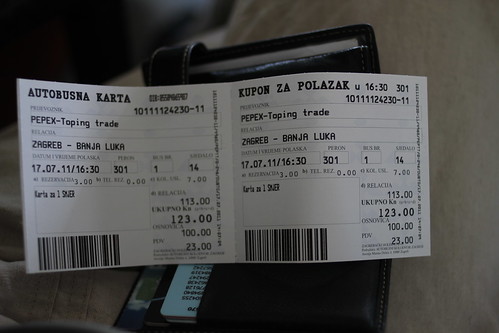
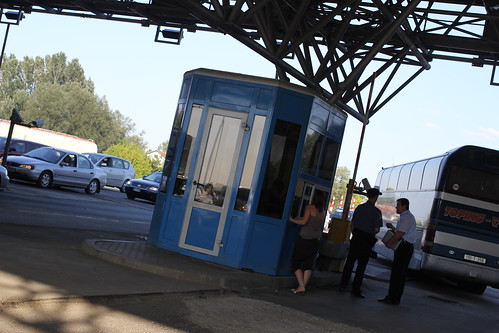
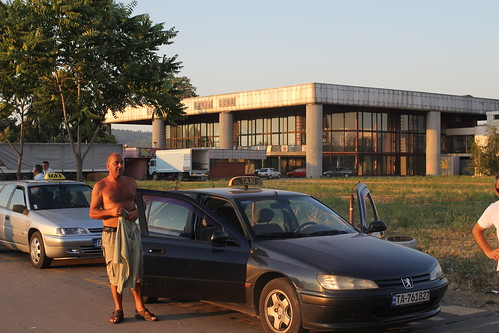
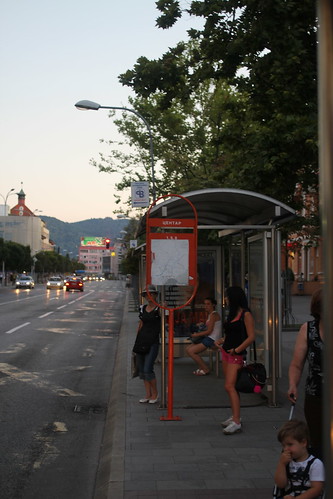
 Short version arrival was quite easy, the


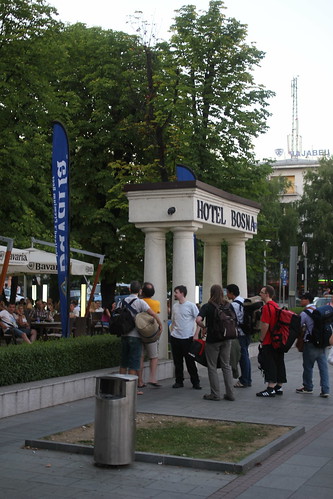
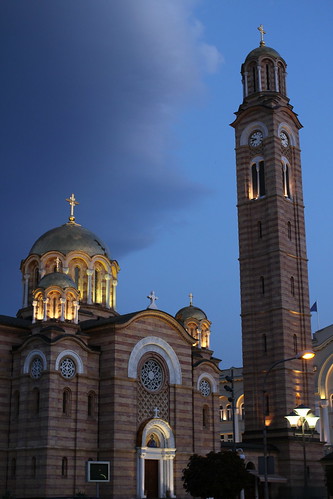
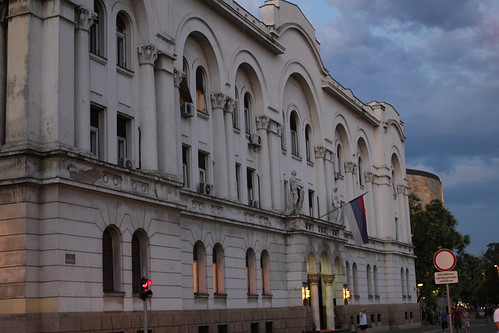
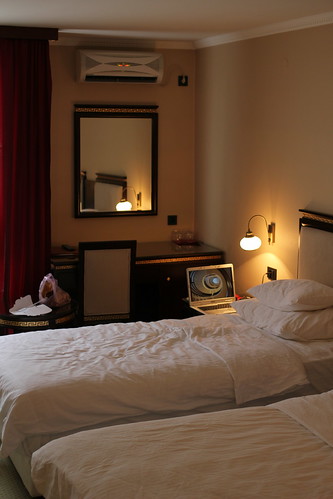
 See
 When I

 My flights tickets are booked so I guess:


 One of the ways in which EFI is *actually* better than BIOS is its native support for multiple boot choices. All EFI systems should have an EFI system partition which holds the OS bootloaders. Collisions are avoided by operating system vendors registering a unique name
 I got tired of my previous website theme, so I created a new one.
And thanks to the miracles of CSS, I didn't have to throw out the
old there's still a 'choose your layout' option in the menu.
Playing with CSS is fun, and this was an ideal opportunity to learn
the new features of CSS3. I've used some of those, and did so in such a
way that the theme should still be usable under a browser that doesn't
speak CSS3 yet (I hope, though I didn't test). I'm calling it the
'grass' theme if you go check it out, you'll see why and
it's now the default.
While I was at it, I found out about this little features of CSS that
I didn't know about earlier, but could be useful none the less:
Using background: inherit is not the same as
background: transparent. The latter will render all elements on
the site (including floating elements) on top of eachother, while the
former will inherit the background of parent elements, but will 'hide'
elements that have a lower z-index value on the same location.
This is useful if you have position:fixed or position:
absolute elements that might overlap with floating elements on
small screens.
I'm sure this is old hat to anyone who's done some serious web
development (me, serious web development? hah!), but it's news to
me.
One thing I haven't found is whether it's possible to use an alpha
layer using CSS3. I looked for quite a while and didn't find it, so I
suppose the answer is that it can't be done, and you'll have to use a
PNG file with alpha values, or some such. Oh well.
In other news,

 Somehow, even though I'd know about it for the longest time, I had never get around to reading George
 and I immediately got myself a copy. (Nowadays I mostly do my recreational reading with the Kindle app on my Android smartphone.)
As before, I'm spellbound. I'm already about 25% through it and loving it. What I love about Martin is that he really gets how traditional, "pagan", "feudal" societies work. Take religion for instance. A lot of Sci-Fi/Fantasy authors if they deal with the subject at all usually give a cartoon version of polytheism that owes more to Christian canards and Dungeons & Dragons than any existing human religion. But in Westeros, one can be simultaneously devout, amoral, superstitious, and cynical in a way that makes a lot of sense to me as a Hindu. Or class. Being a peasant in Martins' world is horrible. Your life is completely at the mercy of Lords and Ladies and can end in an instant. But the upper class despite its wealth and power is trapped in its own way too. They must constantly protect their status from jealous competitors and a reversal of political or military fortune can destroy an ancient noble family just as suddenly as a bad harvest can destroy a family of farmers.
Like the other books in the series, this one has a huge cast of characters whose stories weave in and out with each chapter told mainly from one characters viewpoint. This is a tactic which I for one found helpful to keep my attention from flagging but it means you can't really enjoy it unless you've read the previous volumes in order first. I definitely think it's worth the effort though.
 Let's make it clear:

 Cineast and Free Culture activist
 Picked up a
 The Scavengers ship, from the Doctor Who Spam Filtered story, 2011:
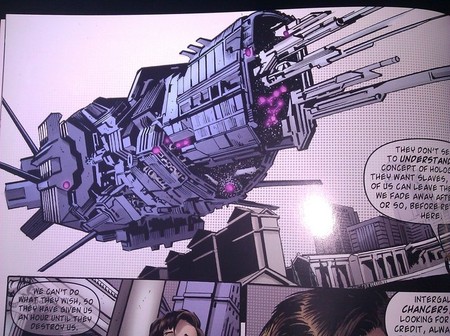 Such a great ship. Not even remotely made to look aerodynamic.
And to make this almost related to Ubuntu and Debian, here was my command line to remove exif data from the image I took with my phone:
