Search Results: "mak"

6 April 2014

Keith Packard: Java-Sound-on-Linux

Java Sound on Linux I m often in the position of having my favorite Java program (AltosUI) unable to make any sounds. Here s a history of the various adventures I ve had. Java and PulseAudio ALSA support When we started playing with Java a few years ago, we discovered that if PulseAudio were enabled, Java wouldn t make any sound. Presumably, that was because the ALSA emulation layer offered by PulseAudio wasn t capable of supporting Java. The fix for that was to make sure pulseaudio would never run. That s harder than it seems; pulseaudio is like the living dead; rising from the grave every time you kill it. As it s nearly impossible to install any desktop applications without gaining a bogus dependency on pulseaudio, the solution that works best is to make sure dpkg never manages to actually install the program with dpkg-divert:
# dpkg-divert --rename /usr/bin/pulseaudio
With this in place, Java was a happy camper for a long time. Java and PulseAudio Native support More recently, Java has apparently gained some native PulseAudio support in some fashion. Of course, I couldn t actually get it to work, even after running the PulseAudio daemon but some kind Debian developer decided that sound should be broken by default for all Java applications and selected the PulseAudio back-end in the Java audio configuration file. Fixing that involved learning about said Java audio configuration file and then applying patch to revert the Debian packaging damage.
$ cat /usr/lib/jvm/java-7-openjdk-amd64/jre/lib/sound.properties
...
#javax.sound.sampled.Clip=org.classpath.icedtea.pulseaudio.PulseAudioMixerProvider
#javax.sound.sampled.Port=org.classpath.icedtea.pulseaudio.PulseAudioMixerProvider
#javax.sound.sampled.SourceDataLine=org.classpath.icedtea.pulseaudio.PulseAudioMixerProvider
#javax.sound.sampled.TargetDataLine=org.classpath.icedtea.pulseaudio.PulseAudioMixerProvider
javax.sound.sampled.Clip=com.sun.media.sound.DirectAudioDeviceProvider
javax.sound.sampled.Port=com.sun.media.sound.PortMixerProvider
javax.sound.sampled.SourceDataLine=com.sun.media.sound.DirectAudioDeviceProvider
javax.sound.sampled.TargetDataLine=com.sun.media.sound.DirectAudioDeviceProvider
You can see the PulseAudio mistakes at the top of that listing, with the corrected native interface settings at the bottom. Java and single-open ALSA drivers It used to be that ALSA drivers could support multiple applications having the device open at the same time. Those with hardware mixing would use that to merge the streams together; those without hardware mixing might do that in the kernel itself. While the latter is probably not a great plan, it did make ALSA a lot more friendly to users. My new laptop is not friendly, and returns EBUSY when you try to open the PCM device more than once. After downloading the jdk and alsa library sources, I figured out that Java was trying to open the PCM device multiple times when using the standard Java sound API in the simplest possible way. I thought I was going to have to fix Java, when I figured out that ALSA provides user-space mixing with the dmix plugin. I enabled that on my machine and now all was well.
$ cat /etc/asound.conf
pcm.!default  
    type plug
    slave.pcm "dmixer"
 
pcm.dmixer   
    type dmix
    ipc_key 1024
    slave  
        pcm "hw:1,0"
        period_time 0
        period_size 1024
        buffer_size 4096
        rate 44100
     
    bindings  
        0 0
        1 1
     
 
ctl.dmixer  
    type hw
    card 1
 
ctl.!default  
    type hw
    card 1
 
As you can see, my sound card is not number 0, it s number 1, so if your card is a different number, you ll have to adapt as necessary.

4 April 2014

Daniel Pocock: Best real-time communication (RTC / VoIP) softphone on the Linux desktop?

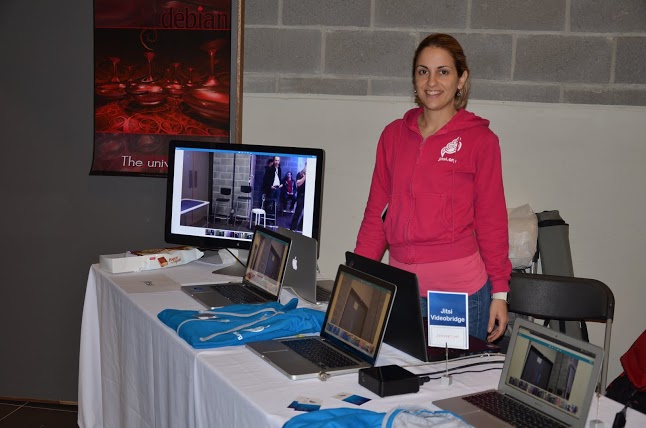
The Debian community has recently started discussing the way to choose the real-time communications (RTC/VoIP) desktop client for Debian 8 (jessie) users. Debian 7 (wheezy), like Fedora, ships GNOME as the default desktop and the GNOME Empathy client is installed by default with it. Simon McVittie, Empathy package maintainer has provided a comprehensive response to the main discussion points indicating that the Empathy project comes from an Instant Messaging (IM) background (it is extremely easy to setup and use for XMPP chat) but is not a strong candidate for voice and video. Just how to choose an RTC/VoIP client then? One question that is not answered definitively is just who should choose the default RTC client. Some people have strongly argued that the maintainers of individual desktop meta-packages should choose as they see fit. Personally, I don't agree with this viewpoint and it is easy to explain why. Just imagine the maintainers of GNOME choose one RTC application and the maintainers of XFCE choose an alternative and these two RTC applications don't talk to each other. If a GNOME user wants to call an XFCE user, do they have to go to extra effort to get an extra package installed? Do they even have to change their desktop? For power users these questions seem trivial but for many of our friends and family who we would like to contact with free software, it is not amusing. When the goal of the user is to communicate freely and if they are to remain free to choose any of the desktops then a higher-level choice of RTC client (or at least a set of protocols that all default clients must support) becomes essential. Snail mail to the rescue? There are several friends and family I want to be able to call with free software. The only way I could make it accessible to them was to burn self-booting Debian Live desktop DVDs with an RTC client pre-configured. Once again, as a power-user maybe I have the capability to do this - but is this an efficient way to overcome those nasty proprietary RTC clients, burning one DVD at a time and waiting for it to be delivered by snail mail? A billion browsers can't be wrong WebRTC has been in the most recent stable releases of Firefox/Iceweasel and Chrome/Chromium for over a year now. Many users already have these browsers thanks to automatic updates. It is even working well on the mobile versions of these browsers. In principle, WebRTC relies on existing technologies such as the use of RTP as a transport for media streams. For reasons of security and call quality, the WebRTC standard mandates the use of several more recent standards and existing RTC clients simply do not interoperate with WebRTC browsers. It really is time for proponents of free software to decide if they want to sink or swim in this world of changing communications technology. Browsers will not dumb-down to support VoIP softphones that were never really finished in the first place. Comparing Empathy and Jitsi There are several compelling RTC clients to choose from and several of them are now being compared on the Debian wiki. Only Jitsi stands out offering the features needed for a world with a billion WebRTC browser users.
Feature Empathy WebRTC requirement? Comments
Internet Connectivity Establishment (ICE) and TURN (relay) Only for gmail XMPP accounts, and maybe not for much longer For all XMPP users with any standards-based TURN server, soon for SIP too Mandatory Enables effective discovery of NAT/firewall issues and refusal to place a call when there is a risk of one-way-audio. Some legacy softphones support STUN, which is only a subset of ICE/TURN.
AVPF X Mandatory Enables more rapid feedback about degrading network conditions, packet loss, etc to help variable bit rate codecs adapt and maximise call quality. Most legacy VoIP softphones support AVP rather than AVPF.
DTLS-SRTP X Mandatory for Firefox, soon for Chrome too DTLS-based peer-to-peer encryption of the media streams. Most legacy softphones support no encryption at all, some support the original SRTP mechanism based on SDES keys exchanged in the signalling path.
Opus audio codec X Strongly recommended. G.711 can also be used but does not perform well on low bandwidth/unreliable connections Opus is a variable bit rate codec the supercedes codecs like Speex, SILK, iLBC, GSM and CELT. It is the only advanced codec browsers are expected or likely to implement. Most of the legacy softphones support the earlier codec versions (such as GSM) and some are coded in such a way that they can't support any variable bit-rate codec at all.
Retrofitting legacy softphones with all of these features is no walk in the park. Some of them may be able to achieve compliance more easily by simply throwing away their existing media code and rebuilding on top of the WebRTC media stack used by the browsers However, the Jitsi community have already proven that their code can handle all of these requirements by using their media processing libraries to power their JitMeet WebRTC video conferencing server Dreams are great, results are better Several people have spoken out to say they want an RTC client that has good desktop integration (just like Empathy) but I'm yet to see any of them contribute any code to such an effort. Is this type of desktop integration the ultimate priority and stubbornly non-negotiable though? Is it more an example of zealous idealism that may snuff out hope of bringing the optimum communications tools into the hands of users? As for solving all the other problems facing free communications software, the Jitsi community have been at it for more than 10 years. Just have a look at their scorecard on Github to see what I mean. Jitsi lead developer Emil Ivov has a PhD in multimedia and is a regular participant in the IETF, taking on some of the toughest questions, like how to make a world with two protocols (SIP and XMPP) friendly for real users. A serious issue for all Linux distributions Communications technology is one of the most pervasive applications and also one of the least forgiving. Users have limited patience with phones that don't work, as the Australian Russell Crowe demonstrated in his infamous phone-throwing incident. Maximizing the number of possible users is the key factor that makes networks fail or succeed. It is a knife that cuts both ways: as the free software community struggles with this issue, it undermines our credibility on other issues and makes it harder to bring free desktops to our friends, families and workplaces. Do we really want to see the rest of our work in these areas undermined, especially when there is at least one extremely viable option knocking at the door?

Mario Lang: Accessible voting graphs

It is that time of the year again, Debian is electing the Project Leader for 2014/15. Whenever a Debian vote is in progress, I find myself rather happy to rediscover that Debian is providing text mode voting graphs. These are quite accessible to me as a braille user. It is rather unusual for me as a blind person to be able to access any graphs on the internet at all. All this has been made possible by gnuplots ability to generate text plots, and Manoj's willingness to implement it during his term as project secretary. Thanks to Gnuplot and Manoj, and thanks to the current secretary for keeping this feature, it is (at least to me) a very nice to have, and actually makes Debian rather unique. I personally don't know of any other major projects which provide text graphs. We are indeed setting a very good example here. It would be nice if other projects would adopt this as well. This is bridging the digital divide for me. For completeness sake I should probably mention that text graphs are not an universal solution for blind users. Those of us who do not use braille will probably have a very hard time extracting any meaningful information from this ASCII character salad. But to a braille user used to reading two dimensional information from the screen, it does actually work rather well. Some solutions from the 90s, when people didn't have graphical terminals readily available everywhere, are still very good accessibility workarounds. I am going to post another article about how I play chess on a computer, with newsgroup-style chessboard diagrams. Now that I think of it, these two topics are very related. There are some rather nifty solutions floating around from the good old text mode days which we need to revive before they finally get forgotten on the internet.

Gunnar Wolf: Mozilla: So our communitary echobox *does* resound with social issues

I woke up to the news that, after a very short tenure, Brendan Eich steps down as the Mozilla CEO. Why? Because of the community outcry. Because some years ago, Eich pubilcly supported (and donated funds) the ban of any kind of marriages in California that were not between a man and a woman. The world has advanced enormously in this regard in the last years/decades, and so many individuals and organizations opposed and announced they would boycott Mozilla that either him or Mozilla could not stand the pressure anymore. So, of course, it's sad the person had to resign. Many people talked about freedom of speech, freedom of harbouring his own personal opinion But when it comes to the rights of minorities, particularly of minorities that have suffered such hard prejudice and abuse as the gay, lesbian and all the other non-orthodox sexual- and gender- orientations, righting a wrong is much more important than preserving an individual's freedom of opinion. Besides, it's not just thinking or talking about something The concrete proposition Eich supported (and eventually made him resign) is about bringing the life of thousands of people to a hellish state of uncertainty, and going back to not having a way for the society to legally recognize their way of being, their love, their lifes. But anyway What prompts me into writing this is that, once again, the Free Software (and related denominations) community has shown that a set of core values, seemingly shared by a very large amount of our own people with no coordination or correlation with what conforms us as a community (and thus, being emergent traits), are strong enough to create a critical mass, to achieve cohesion. And that ours is not just a technical community of people writing software at all layers of the stack, but first and foremost is a group of social activists, committed to making the world better. I will quote from Matthew Garrett's post on this topic, clearly more contundent and thorough that what I'm trying to come up with:
The Mozilla Manifesto discusses individual liberty in the context of use of the internet, not in a wider social context. Brendan's appointment was very much in line with the explicit aims of both the Foundation and the Corporation - whatever his views on marriage equality, nobody has seriously argued about his commitment to improving internet freedom. So, from that perspective, he should have been a fine choice. But that ignores the effect on the wider community. People don't attach themselves to communities merely because of explicitly stated goals - they do so because they feel that the community is aligned with their overall aims. The Mozilla community is one of the most diverse in free software, at least in part because Mozilla's stated goals and behaviour are fairly inspirational. People who identify themselves with other movements backing individual liberties are likely to identify with Mozilla. So, unsurprisingly, there's a large number of socially progressive individuals (LGBT or otherwise) in the Mozilla community, both inside and outside the Corporation. A CEO who's donated money to strip rights from a set of humans will not be trusted by many who believe that all humans should have those rights. It's not just limited to individuals directly affected by his actions - if someone's shown that they're willing to strip rights from another minority for political or religious reasons, what's to stop them attempting to do the same to you? Even if you personally feel safe, do you trust someone who's willing to do that to your friends? In a community that's made up of many who are either LGBT or identify themselves as allies, that loss of trust is inevitably going to cause community discomfort.

3 April 2014

Daniel Pocock: LogAnalyzer and rsyslog MongoDB support now in wheezy-backports and Ubuntu

LogAnalyzer is a powerful but simple log file analysis tool. The upstream web site gives an online demo. It is developed in PHP, runs in Apache and has no other dependencies such as databases - it can read directly from the log files. For efficiency, however, it is now trivial to make it work with MongoDB on Debian. Using a database (including MongoDB and SQL backends) also means that severity codes (debug/info/notice/warn/error/...) are retained. These are not available from many log files. The UI can only colour-code and filter the messages by severity if it has a database backend. Package status The packages just entered Debian recently. It has now been migrated to wheezy-backports and Ubuntu so anybody on wheezy or Ubuntu can use it. Quick start with MongoDB The version of rsyslog in Debian wheezy does not support MongoDB output. It is necessary to grab 7.4.8 from backports. Some versions, up to 7.4.4 in backports, had bugs with MongoDB support - if you tried those, please try again now. The backported rsyslog is a drop-in replacement for the standard rsyslog package and for users with a default configuration it is unlikely you will notice any difference. For users who customized the configuration, as always, make a backup before trying the new version.
  • Install all the necessary packages: apt-get install rsyslog-mongodb php5-mongo mongodb-server
  • Add the following to /etc/rsyslog.conf:
    module (load="ommongodb")
    *.* action(type="ommongodb" server="127.0.0.1" db="logs" collection="syslog")
  • Look for the MongoDB settings in /etc/loganalyzer/config.php and uncomment them. Comment out the stuff for disk log access.
  • Restart rsyslog and then browse your logs at http://localhost/loganalyzer

Gunnar Wolf: DrupalCamp Mexico City: April 23-25

We are organizing a DrupalCamp in Mexico City! DrupalCamp Mexico City logo As a Drupal user, I have so far attended two DrupalCamps (one in Guadalajara, Mexico, and one in Guatemala, Guatemala). They are as Free Software conferences usually are great, informal settings where many like-minded users and developers meet and exchange all kinds of contacts, information, and have a good time. Torre de Ingenier a Torre de Ingenier a, UNAM This year, I am a (minor) part of the organizing team. DrupalCamp will be held in Torre de Ingenier a, UNAM Just by Facultad de Ingenier a, where I teach. A modern, beautiful building in Ciudad Universitaria. Talks, tracks So, who is this for? You can go look at the accepted sessions, you will find there is a lot of ground. Starting from the very introduction to how Drupal is structured and some tips on how to work with it (delivered by yours truly), through workflows for specific needs, to strong development-oriented talks. The talks are structured along four tracks: "Training", "Theming", "Development", "Business" and "SymfonyDay". "SymfonyDay"? Yes. Drupal is a fast-evolving Free Software project. Most users are currently using versions 6 and 7, which are as different between each other as day and night... But the upcoming Drupal 8 brings even greater changes. One of the most interesting changes I can see is that Drupal will now be based on a full MVC framework, Symfony. One of the days of our DrupalCamp will be devoted to Symfony (dubbed the Symfony Day). ...And... Again, just look at the list of talks. You will find a great amount of speakers interested in coming here. Not just from Mexico City. Not just from Mexico. Not just from Latin America. I must say I am personally impressed. Sponsors! Of course, as with any volunteer-run conferences: We are still looking for sponsors. We believe being a DrupalCamp sponsor will greatly increase your brand visibility in the community you want to work with. There are still a lot of expenses to cover to make this into all that we want. And surely, you want to be a part of this great project. There are many sponsor levels Surely you can be part of it!
AttachmentSize
drupalcampmx.png57.81 KB
torre_ing.jpg90.22 KB
torre_ing_mini.jpg21.64 KB

Andrew Pollock: [life] Day 65: Playgroup, and the foil confetti play date

Zoe slept pretty well last night. She only woke up briefly at 4am because Cowie had fallen out of bed and she couldn't find her. Today was the last Playgroup of the term. Megan, her little sister and her Dad came as well to check it out, which was nice, because Zoe then had someone to actively play with in addition to me. After Playgroup, we went to the adjacent Bulimba Memorial Park with Megan, and then had some lunch at Grill'd. Megan's Dad wanted to do some work on their house while Megan's little sister napped, so I offered to give Megan a play date at our place. The plan was to watch a movie and chill out. The girls picked Ratatouille and I made a batch of popcorn for them. Unfortunately Megan seemed to be less of a square eyes than Zoe, and she lost interest after a bit, so we stopped watching the movie and moved out to the balcony to do some craft. Zoe had been wanting to make a crown for Mummy's boss for a while, so we made a couple of crowns with the hot glue gun. I had bought this bag of mixed craft "jewels" and it's probably the best single craft thing I've bought. Zoe loves gluing them onto everything. After that, Zoe pulled out the bag of coloured foil confetti. If the gems were the best thing I've bought, this would have to be the worst. So far, all it's done is leak in the drawer it's been stored in, and I've been avoiding using it because it was going to be messy. Today, Zoe wanted to glue it onto the outside of her cardboard box, so I decided to give in and embrace the mess, and boy, did we make a mess. It probably ended up being the longest bit of cooperative play the girls did. They'd alternate between handing each other a fistful of confetti while I applied globs of glue where directed. Probably about 10 percent of each handful ended up stuck to the rocket, so the balcony looked like quite a mess by the end of it all, but at least it was a dry mess, so I could just vacuum it all up. I suspect I'll be encountering dregs for quite a while, because I doubt it's stuck to the cardboard particularly well. After that, the girls played indoors for a bit, and watched a bit more of the movie, but Megan seemed to be scared of Anton Ego, so I think that was why it wasn't holding her attention. The other activity that the girls seemed to thoroughly enjoy was tearing around the living room squealing while they took turns at throwing a grapefruit-sized beach ball at me, and I threw it back at them. Jason came back to pick up Megan, and I started dinner. Not that long after Megan left, Sarah arrived to watch Zoe for me so I could go visit my cousin in hospital. I had dinner on the table pretty much as soon as she walked in the door, and headed out.

2 April 2014

Joey Hess: propellor type-safe reversions

Propellor ensures that a list of properties about a system are satisfied. But requirements change, and so you might want to revert a property that had been set up before. For example, I had a system with a webserver container:
Docker.docked container hostname "webserver"
I don't want a web server there any more. Rather than having a separate property to stop it, wouldn't it be nice to be able to say:
revert (Docker.docked container hostname "webserver")
I've now gotten this working. The really fun part is, some properies support reversion, but other properties certianly do not. Maybe the code to revert them is not worth writing, or maybe the property does something that cannot be reverted. For example, Docker.garbageCollected is a property that makes sure there are no unused docker images wasting disk space. It can't be reverted. Nor can my personal standardSystem Unstable property, which amoung other things upgrades the system to unstable and sets up my home directory.. I found a way to make Propellor statically check if a property can be reverted at compile time. So revert Docker.garbageCollected will fail to type check! The tricky part about implementing this is that the user configures Propellor with a list of properties. But now there are two distinct types of properties, revertable ones and non-revertable ones. And Haskell does not support heterogeneous lists.. My solution to this is a typeclass and some syntactic sugar operators. To build a list of properties, with individual elements that might be revertable, and others not:
 props
        & standardSystem Unstable
        & revert (Docker.docked container hostname "webserver")
        & Docker.docked container hostname "amd64-git-annex-builder"
        & Docker.garbageCollected

Tassia Camoes Araujo: Mini-Debconf Barcelona videos now available

Hello world!!! For those who were impatiently waiting for the Mini-Debconf Barcelona videos, there you go, enjoy it! We ll probably have subtitles and some late slides soon, so come back after a while. Thank you very much for all those who make this adventure possible! If you also want to thank the videoteam, the orgateam, Debian Women, or the Universe, for converging and bringing us together in Barcleona, please do it! Just for the records, it was a great success in terms of women participation. As we didn t collect gender information at the registration, it is hard to make a clear comparison with previous Debconfs. Since 2007, the rate of non-male participants ranged from 13% to 17%. For this Mini-Debconf, the orga team did the gender identification per name and found a non-male rate of 36%. Again, since the methods were not the same we cannot safely compare, but still, I think it s worth it to make this info public ;-) The most important thing to save from this experience is that we were around 160 human beings together, sharing common goals, in a lovely and warm place, with kids around, baby trollers on the stage, painting table in the patio yes it was fun!
BCN group photo - first try

BCN group photo first try

BCN group photo - second try

BCN group photo second try

Last but not least, now we need to gather information for a final report, so if you can help, please speak up! Hope to see you all soon!

Andrew Pollock: [life] Day 64: Baking, Last day of Kindergarten term 1, BJJ

I had a busy morning this morning. I had a small flood of emails in response to various inquiries I made yesterday, so it took me a while to get my inbox under control. One of Zoe's Kindergarten teachers is returning to New Zealand as of the end of term 1, so they were having an afternoon tea for her today. Parents were requested to "bring a plate", so I thought I'd bake some spinach, pumpkin and feta muffins that I've been meaning to try making. After my chiropractic adjustment I got stuck into that. I'd hoped to finalise my US taxes today, but I learned I could deduct my moving expenses, so now I have to dig up the documentation for them. I had a later than usual massage, and drove directly from there to Kindergarten, muffins in hand. They'd omitted rest time today to facilitate the afternoon tea, so the upside of that was Zoe was happy. Zoe's Brazilian Jiu-Jitsu teacher had said that she could try out one of the 4-7 year old classes, so for her last class of the 10 week block, we went to one of them this afternoon. I wasn't sure if today would be a good day for it or not, given she'd had Kindergarten and hadn't napped, but I gave her the option, and she wanted to do it. It worked out well, aside from Zoe really not wanting to wear her gi (I managed to convince her to wear the pants). There were three other kids of varying school ages in the class, and Zoe followed the instructions really well. I'm really glad we signed up the classes. I'm pretty sure Zoe has enjoyed herself, and she's definitely bonded with the teacher. I'll miss it. I can't believe how fast this term has gone by. There's now two weeks of "school holidays", where I'll have to entertain Zoe for the entire week. I'm not too worried about finding things to do, I'm more worried about contention with all the other kids on school holidays. Zoe was pretty tired tonight, I'd say with the combination of Kindergarten, no nap and BJJ class. Nonetheless, she procrastinated all the way through the bed time routine anyway. When I finally got her to bed, she fell asleep without a peep. She went on her second "bushwalk" at Kindergarten yesterday and picked up three mosquito bites, so I'm hoping they don't trouble her overnight.

1 April 2014

Marco d'Itri: Real out of band connectivity with network namespaces

This post explains how to configure on a Linux server a second and totally independent network interface with its own connectivity. It can be useful to access the server when the regular connectivity is broken. This can happen thanks to network namespaces, a virtualization feature available in recent kernels. We need to create a simple script to be run at boot time which will create and configure the namespace. First, move in the new namespace the network interface which will be dedicated to it:
ip netns add oob
ip link set eth2 netns oob
And then configure it as usual with iproute, by executing it in the new namespace with ip netns exec:
ip netns exec oob ip link set lo up
ip netns exec oob ip link set eth2 up
ip netns exec oob ip addr add 192.168.1.2/24 dev eth2
ip netns exec oob ip route add default via 192.168.1.1
The interface must be configured manually because ifupdown does not support namespaces yet, and it would use the same /run/network/ifstate file which tracks the interfaces of the main namespace (this is also a good argument in favour of something persistent like Network Manager...). Now we can start any daemon in the namespace, just make sure that they will not interfere with the on-disk state of other instances:
ip netns exec oob /usr/sbin/sshd -o PidFile=/run/sshd-oob.pid
Netfilter is virtualized as well, so we can load a firewall configuration which will be applied only to the new namespace:
ip netns exec oob iptables-restore < /etc/network/firewall-oob-v4
As documented in ip-netns(8), iproute netns add will also create a mount namespace and bind mount in it the files in /etc/netns/$NAMESPACE/: this is very useful since some details of the configuration, like the name server IP, will be different in the new namespace:
mkdir -p /etc/netns/oob/
echo 'nameserver 8.8.8.8' > /etc/netns/oob/resolv.conf
If we connect to the second SSH daemon, it will create a shell in the second namespace. To enter the main one, i.e. the one used by PID 1, we can use a simple script like:
#!/bin/sh -e
exec nsenter --net --mount --target 1 "$@"
To reach the out of band namespace from the main one we can use instead:
#!/bin/sh -e
exec nsenter --net --mount --target $(cat /var/run/sshd-oob.pid) "$@"
Scripts like these can also be used in fun ssh configurations like:
Host 10.2.1.*
 ProxyCommand ssh -q -a -x -N -T server-oob.example.net 'nsenter-main nc %h %p'

Russell Coker: Comparing Telcos Again

Late last year I compared the prices of mobile providers after Aldi started getting greedy [1]. Now Aldi have dramatically changed their offerings [2] so at least some of the phones I manage have to be switched to another provider. There are three types of use that are of interest to me. One is for significant use, that means hours of calls per month, lots of SMS, and at least 2G of data transfer. Another is for very light use, maybe a few minutes of calls per month where the aim is to have the lowest annual price for an almost unused phone. The third is somewhere in between and being able to easily switch between plans for moderate and significant use is a major benefit. Firstly please note that I have no plans to try and compare all telcos, I ll only compare ones that seem to have good offers. Ones with excessive penalty clauses or other potential traps are excluded. Sensible Plans The following table has the minimum costs for plans where the amount paid counts as credit for calls and data, this makes it easy to compare those plans.
Plan Cost per min or SMS Data Minimum cost
AmaySIM As You Go [3] $0.12 $0.05/meg, $19.90 for 2.5G in 30 days, $99.90 for 10G in 365days $10 per 90 days
AmaySIM Flexi [4] $0.09 500M included, free calls to other AmaySIM users, $19.90 for 2.5G in 30 days, $99.90 for 10G in 365days $19.90 per 30 days
Aldi pre-paid [5] $0.12 $0.05/meg, $30 for 3G in 30 days $15 per 365 days
Amaysim has a $39.90 Unlimited plan which doesn t have any specific limits on the number of calls and SMS (unlike Aldi Unlimited ) [6], that plan also offers 4G of data per month. The only down-side is that changing between plans is difficult enough to discourage people from doing so, but if you use your phone a lot every month then this would be OK. AmaySIM uses the Optus network. Lebara has a $29.90 National Unlimited plan that offers unlimited calls and SMS and 2G of data [7]. The Lebara web site doesn t seem to include details such as how long pre-paid credit lasts, the lack of such detail doesn t give me confidence in their service. Lebara uses the Vodafone network which used to have significant problems, hopefully they fixed it. My lack of confidence in the Vodafone network and in Lebara s operations makes me inclined to avoid them. Obscure Plans Telechoice has a $28 per month i28 plan that offers unlimited SMS, $650 of calls (which can be international) at a rate of over $1 per minute, unlimited SMS, unlimited calls to other Telechoice customers, and 2G of data [8]. According to the Whirlpool forum they use the Telstra network although the TeleChoice web site doesn t state this (one of many failings of a horrible site). The TeleChoice Global Liberty Starter plan costs $20 per month and includes unlimited calls to other TeleChoice customers, unlimited SMS, $500 of calls at a rate of over $1 per minute, and 1G of data [9]. Which One to Choose For my relatives who only rarely use their phones the best options are the AmaySIM As You Go [3] plan which costs $40 per 360 days and the Aldi prepaid which costs $15 per year. Those relatives are already on Aldi and it seems that the best option for them is to keep using it. My wife typically uses slightly less than 1G of data per month and makes about 25 minutes of calls and SMS. For her use the best option is the AmaySIM As You Go [3] plan which will cost her about $4 in calls per month and $99.90 for 10G of data which will last 10 months. That will average out to about $13 per month. It could end up being a bit less because the 10G of data that can be used in a year gives an incentive to reduce data use while previously with Aldi she had no reason to use less than 2G of data per month. Her average cost will be $11.30 per month if she can make 10G of data last a year. The TeleChoice Global Liberty Starter [9] plan is also appealing, but it is a little more expensive at $20 per month, it would be good value for someone who averages more than 83 minutes per month and also uses almost 1G of data. Some of my relatives use significantly less than 1G of data per month. For someone who uses less than 166MB of billable data per month then the Aldi pre-paid rate of $0.05 per meg [5] is the best, but with a modern phone that does so many things in the background and a plan that rounds up data use it seems almost impossible to be billed for less than 300MB/month. Even when you tell the phone not to use any mobile data some phones still do, on a Nexus 4 and a Nexus 5 I ve found that the only way to prevent being billed for 3G data transfer is to delete the APN from the phone s configuration. So it seems that the AmaySIM As You Go [3] plan with a 10G annual data pack is the best option. One of my relatives needs less than 1G of data per month and not many calls, but needs to be on the Telstra network because their holiday home is out of range of Optus. For them the TeleChoice Global Liberty Starter [9] plan seems best. I have been averaging a bit less than 2G of data transfer per month. If I use the AmaySIM As You Go [3] plan with the 10G data packs then I would probably average about $18 worth of data per month. If I could keep my average number of phone calls below $10 (83 minutes) then that would be the cheapest option. However I sometimes spend longer than that on the phone (one client with a difficult problem can involve an hour on the phone). So the TeleChoice i28 plan looks like the best option for me, it gives $650 of calls at a rate of $0.97 per minute + $0.40 connection (that s $58.60 for a hour long call I can do 11 of those calls in a month) and 2G of data. The Telstra coverage is an advantage for TeleChoice, I can run my phone as a Wifi access point so my wife can use the Internet when we are out of Optus range. Please let me know if there are any good Australian telcos you think I ve missed or if there are any problems with the above telcos that I m not aware of.

Gergely Nagy: Motif on Wayland

Earlier this year, on the fourth of February, Matthew Garrett posted an interesting tweet. The idea of porting Motif to Wayland sounded quite insane, which is right up my alley, so I've been pondering and preparing since. The result of that preparation is a fundraiser campaign, which, if successful, I'll dive deeper into the porting effort, to deliver a library that brings the Motif we used to love back in the days to a modern platform.The aim of the project is to create a library, available under the GNU Lesser General Public License (version 2.1 or later, the same license original Motif is under), ported to Wayland, with full API compatibility if at all possible. In the end, we want the result to feel like Motif, to look like Motif, so that any program that can be compiled against Motif, will also work with the ported library. I will start fresh, using modern tools and modern methodologies (including, but not limited to autotools and test-driven development, on GitHub) to develop the new library, instead of changing the existing code base. Whether the goal is fully achievable remains to be seen, but the API - and the look of the widgets, of course - will feel like Motif, even if in a Wayland context, and we will do our best to either make the API 100% compatible with Motif, or provide a compatibility library.Since I have a day job, in order to be able to spend enough time on the library, I will need funding that more or less matches my salary. The more raised, the more time will be allocated to the porting project. Would we exceed the funding goal, there are a few stretch goal ideas that can be added later (such as porting the Motif Window Manager, and turning it into a Wayland compositor, with a few modern bells and whistles).For further information, such as perks, updates and all, please see the campaign, or the project website!

Bits from Debian: Debian Project elects Javier Merino Cacho as Project Leader

This post was an April Fools' Day joke. Alt Red Nose DPL In accordance with its constitution, the Debian Project has just elected Javier Merino Cacho as Debian Project Leader. More than 80% of voters put him as their first choice (or equal first) on their ballot papers. Javier's large majority over his opponents shows how his inspiring vision for the future of the Debian project is largely shared by the other developers. Lucas Nussbaum and Neil McGovern also gained a lot of support from Debian project members, both coming many votes ahead of the None of the above ballot choice. Javier has been a Debian Developer since February 2012 and, among other packages, works on keeping the mercurial package under control, as mercury is very poisonous for trouts. After it was announced that he had won this year's election, Javier said: I'm flattered by the trust that Debian members have put in me. One of the main points in my platform is to remove the "Debian is old and boring" image. In order to change that, my first action as DPL is to encourage all Debian Project Members to wear a clown red nose in public. Among others, the main points from his platform are mainly related to improve the communication style in mailing lists through an innovative filter called aponygisator, to make Debian less "old and boring", as well as solve technical issues among developers with barehanded fights. Betting on the fights will be not only allowed but encouraged for fundraising reasons. Javier also contemplated the use of misleading talk titles such as The use of cannabis in contemporary ages: a practical approach and Real Madrid vs Barcelona to lure new users and contributors to Debian events. Javier's platform was collaboratively written by a team of communication experts and high profile Debian contributors during the last DebConf. It has since evolved thanks to the help of many other contributors.

Petter Reinholdtsen: ReactOS Windows clone - nice free software

Microsoft have announced that Windows XP reaches its end of life 2014-04-08, in 7 days. But there are heaps of machines still running Windows XP, and depending on Windows XP to run their applications, and upgrading will be expensive, both when it comes to money and when it comes to the amount of effort needed to migrate from Windows XP to a new operating system. Some obvious options (buy new a Windows machine, buy a MacOSX machine, install Linux on the existing machine) are already well known and covered elsewhere. Most of them involve leaving the user applications installed on Windows XP behind and trying out replacements or updated versions. In this blog post I want to mention one strange bird that allow people to keep the hardware and the existing Windows XP applications and run them on a free software operating system that is Windows XP compatible. ReactOS is a free software operating system (GNU GPL licensed) working on providing a operating system that is binary compatible with Windows, able to run windows programs directly and to use Windows drivers for hardware directly. The project goal is for Windows user to keep their existing machines, drivers and software, and gain the advantages from user a operating system without usage limitations caused by non-free licensing. It is a Windows clone running directly on the hardware, so quite different from the approach taken by the Wine project, which make it possible to run Windows binaries on Linux. The ReactOS project share code with the Wine project, so most shared libraries available on Windows are already implemented already. There is also a software manager like the one we are used to on Linux, allowing the user to install free software applications with a simple click directly from the Internet. Check out the screen shots on the project web site for an idea what it look like (it looks just like Windows before metro). I do not use ReactOS myself, preferring Linux and Unix like operating systems. I've tested it, and it work fine in a virt-manager virtual machine. The browser, minesweeper, notepad etc is working fine as far as I can tell. Unfortunately, my main test application is the software included on a CD with the Lego Mindstorms NXT, which seem to install just fine from CD but fail to leave any binaries on the disk after the installation. So no luck with that test software. No idea why, but hope someone else figure out and fix the problem. I've tried the ReactOS Live ISO on a physical machine, and it seemed to work just fine. If you like Windows and want to keep running your old Windows binaries, check it out by downloading the installation CD, the live CD or the preinstalled virtual machine image.

Joey Hess: adding docker support to propellor

Propellor development is churning away! (And leaving no few puns in its wake..) Now it supports secure handling of private data like passwords (only the host that owns it can see it), and fully end-to-end secured deployment via gpg signed and verified commits. And, I've just gotten support for Docker to build. Probably not quite work, but it should only be a few bugs away at this point. Here's how to deploy a dockerized webserver with propellor:
host hostname@"clam.kitenet.net" = Just
    [ Docker.configured
    , File.dirExists "/var/www"
    , Docker.hasContainer hostname "webserver" container
    ]
container _ "webserver" = Just $ Docker.containerFromImage "joeyh/debian-unstable"
        [ Docker.publish "80:80"
        , Docker.volume "/var/www:/var/www"
        , Docker.inside
            [ serviceRunning "apache2"
                 requires  Apt.installed ["apache2"]
            ]
        ]
Docker containers are set up using Properties too, just like regular hosts, but their Properties are run inside the container. That means that, if I change the web server port above, Propellor will notice the container config is out of date, and stop the container, commit an image based on it, and quickly use that to bring up a new container with the new configuration. If I change the web server to say, lighttpd, Propellor will run inside the container, and notice that it needs to install lighttpd to satisfy the new property, and so will update the container without needing to take it down. Adding all this behavior took only 253 lines of code, and none of it impacts the core of Propellor at all; it's all in Propellor.Property.Docker. (Well, I did need another hundred lines to write a daemon that runs inside the container and reads commands to run over a named pipe... Docker makes running ad-hoc commands inside a container a PITA.) So, I think that this vindicates the approach of making the configuration of Propellor be a list of Properties, which can be constructed by abitrarily interesting Haskell code. I didn't design Propellor to support containers, but it was easy to find a way to express them as shown above. Compare that with how Puppet supports Docker: http://docs.docker.io/en/latest/use/puppet/
docker::run   'helloworld':
  image        => 'ubuntu',
  command      => '/bin/sh -c "while true; do echo hello world; sleep 1; done"',
  ports        => ['4444', '4555'],
...
All puppet manages is running the image and a simple static command inside it. All the complexities that puppet provides for configuring servers cannot easily be brought to bear inside the container, and a large reason for that is, I think, that its configuration file is just not expressive enough.

Hideki Yamane: dot paint characters in motd

Do you enjoy April fool jokes? :-)

Best of today's one for me is... "dot paint characters in motd"
I've login to remote server and see it with a bit surprise.

You can show it with copy&paste each gist to /etc/motd.tail.

Russ Allbery: Review: Asimov's, September 2011

Review: Asimov's Science Fiction, September 2011
Editor: Sheila Williams
Issue: Volume 35, No. 9
ISSN: 1065-2698
Pages: 112
Due to various other life priorities, it's been quite a while since I read this magazine. Let's see if I can remember the contents well enough to review it properly. The editorial this issue was about the Readers' Awards. Vaguely interesting, but Williams didn't have much to add beyond announcing the winners. I'm very happy to see Rusch's "Becoming One with the Ghosts" win best novella, though. The Silverberg column was more interesting: some musings and pop history about the Japanese convention of a retired emperor and how that fit into national politics. Di Filippo's book review column is all about short story collections, continuing the trend of Di Filippo mostly being interested in things I don't care about. "The Observation Post" by Allen M. Steele: A bit of alternate history set during the Cuban Missile Crisis, but with airships. The protagonist was a radioman aboard a blimp that was patrolling the ocean for Russian vessels sailing to Cuba. A storm forces them down on an island, resulting in an encounter with some claimed tourists who may be Russian spies. The SFnal twist is unlikely to come as much surprise to an experienced reader, and the barb at the end of the story suffers from the same problem. I appreciate the ethical dilemma, but I've also seen it in lots of stories and have a hard time getting fully invested in another version of it. But the story is otherwise competently written. (6) "D.O.C.S." by Neal Barrett, Jr.: Everyone has an author or two that they just don't get. Barrett is one of mine, although this story is a bit less surreal than most of his. I'm fairly sure it's an odd twist on the "death panel" conspiracy theory given a fantastic twist, but it's not entirely forthright about what's going on. Possibly of more interest to those who like Barrett better. (5) "Danilo" by Carol Emshwiller: Emshwiller's stories are always distinctive and not quite like anyone else's, involving odd outsiders and their attempts to make sense of their world. This one involves, as is common, an out-of-the-way village. Lewella claims that she's going to be married to a stranger from the north. No one believes her, although they give her bridal gifts anyway, and then one day she takes her gifts and leaves. The protagonist follows her, to look after her. The rest of the story walks the boundary that Emshwiller often walks, leaving the reader unsure whether the characters are in touch with some deeper reality or insane and suffering, but the ending is even more ambiguous than normal and, at least for me, entirely unsatisfying. (4) "Shadow Angel" by Erick Melton: This is another retread of an old SF idea. This time, it's that piloting through hyperspace involves alternate modes of consciousness and has profound effects on the pilot. The risk of this sort of story is that it turns hallucinatory and a bit incoherent, and I think that happened here. I like the world-building; the glimmers of future politics and trade and the way he weaves alternate timelines into the story caught my interest. But the story wasn't quite coherent enough (although part of this may be reviewing it quite some time after I originally read it). Promising, but not clear, and without quite enough agency for the protagonist. (6) "The Odor of Sanctity" by Ian Creasey: I found this story more memorable. The conceit is that a future society has developed technology that allows the capture and replay of scents, which has created a huge market for special scent experiences and the triggering of memories. The story is set in the Philippines and revolves around a Catholic priest who takes the mission to the poor seriously. He's dying, and several people wonder if it is possible to capture the mythical odor of scantity: the sweet scent said to follow the death of a saint rather than the normal odor of human death. Creasey handles this idea well, blending postulated future technology, the practical and cynical world of the poor streets, and a balance between mystical belief and practical skepticism. Nothing in the story is that surprising, but I was happy with the eventual resolution. (7) "Grandma Said" by R. Neube: This story's protagonist is a cleanser on a frontier planet made extremely dangerous by a virulent alien fungus. It is almost always fatal and very difficult to eradicate. Vic's job is to completely sanitize anything that had been in contact with a victim and maintain the other rules of strict quarantine required to keep the fungal infection from spreading uncontrolled. Nuebe weaves world-building together with Vic's background and adds a twist in the form of deeply unhealthy responses to the constant stress of living near death. Well told, if a bit disturbing. (7) "Stalker" by Robert Reed: Reed has a knack for fascinating and disturbing stories, and this is an excellent example of the type. The protagonist is a manufactured companion who is completely devoted to its owner. Their commercial name is Adorers, but everyone calls them Stalkers. In this case, the protagonist's owner is a serial rapist and murderer; given that, and given how good Reed is at writing these sorts of stories, you can probably imagine how chilling it is. As usual, there is a sharp barb in the ending, and not the one I was expecting. Good if you can handle the graphic violence and disturbing subject material. (7) "Burning Bibles" by Alan Wall: This is an interesting twist on the spy thriller. A three-letter agency in charge of investigating possible terrorist plots becomes suspicious after a warehouse of Bibles burns in mysterious circumstances. The agent they send in is a deaf-mute with special powers of intuition. This prompted some eye-rolling, and there's a lot of magic disability powers here to annoy, but it's played mostly straight after that introduction. The rest is a fairly conventional spy story, despite special empathic powers, but it's one I enjoyed and thought was fairly well-written. (7) Rating: 6 out of 10

31 March 2014

John Goerzen: Springtime in the Mountains

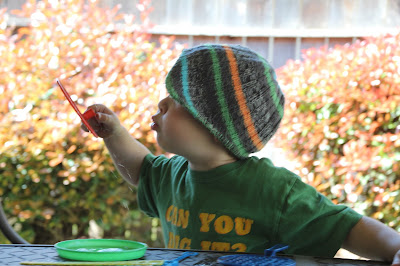
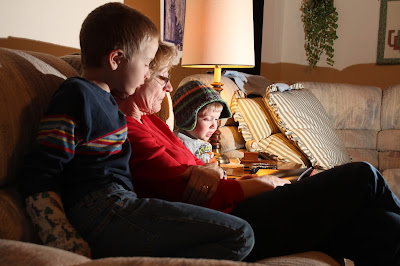
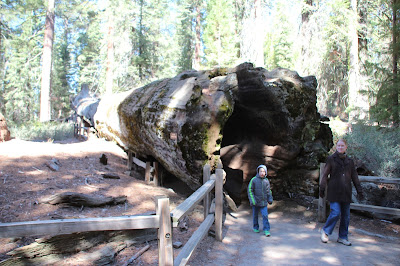
The scene: early one morning as the sun has just started to rise. Jacob and Oliver, ages 7 and 4, are the first people to wake up in the house their grandparents in California, where the four of us are visiting for the first time as a family. They have a conversation and decide that would be a good to go find a mystery. They decide to take their flashlights pink and blue, matching each boy s favorite color and slowly, but not very quietly, open their bedroom door and creep out. Brother, you forgot your flashlight! says Oliver. Oh, thanks brother! I ll get it! says Jacob. Meanwhile, Laura s mom wakes up, and notices two boys with flashlights creeping through the living room. Pretty soon they reach the kitchen, open the dishwasher, spy a suspicious-looking bowl, and decide that they have found the mystery a clean bowl! Or, at least that s the story that I pieced together based on what a 4-year-old and the grandma he awakened told me. We were on our first family trip to the Fresno, California area, to visit Laura s parents Jacob and Oliver s new grandparents. They ve played together before, but as this was our first visit to their place, there was quite the excitement. The boys had flown before, but it was several years ago and neither of them remember it well, so they were excited about that, too. The night before, Jacob woke up to tell me Dad, I am too excited to sleep. I think I will go downstairs and watch some TV. He didn t get too far with that plan. But he was excited. We went through security at the laid-back Wichita airport (where the TSA agents smile and there are often no security lines at all). We found our gate with enough time to grab lunch, which we did. The boys and I then did what we often do to kill time: explore. We explored the terminal, watching carpet-layers cut out carpet for the jetway, watching the construction of the new Terminal 3 out the window. And, of course, watching airplanes take off and land from the terminal s large windows. Finally it was our turn to board, and we all got on the plane: Jacob and Oliver with their backpacks of on-board activites, Laura and me with the rest of our carryon luggage, for the short trip to Denver. Jacob and Oliver s noses were pressed against the windows. Or, well, Jacob s was. Oliver s window was a little too high for him, but he was thrilled anyhow. They delighted in the airplane snacks, and the fact that they were allowed to drink pop on the plane. We packed books and some new art supplies for them (colored post-its, pages from a train-themed page-a-day calendar, a notebook, and a set of colored pens really seemed to do the trick.) We had a choice of 35 minutes or 4 hours between flights in Denver, and I had chosen 4 hours, thinking that would be a lot less stressful with boys. And it was. We found a nice corner of the mezzanine to sit for awhile they did art projects and played a game with Laura. Then I took them exploring Denver. We rode the moving sidewalks up and down the terminal, took a train ride to another terminal and back, ate supper all together, and flew to Fresno. We had stopped in the Wichita airport to buy them each a souvenir airplane, and these came out often during the rest of the trip. They enjoyed the mockups of the sequoias in Fresno Yosemite International Airport, enjoyed their beds and their room at the house, and did actually manage to fall asleep eventually. We had a few days there, where they played in a park, with bubbles on the patio, or croquet in the yard (I even discovered Jacob happily using the cast his broken arm is in as a hammer to pound the hoops into the ground!) There are a lot of miniatures in the house, and the boys enjoyed exploring the dollhouses and especially the N-gauge model train. Jacob enjoyed it so much he asked me to record a video of him playing with the trains. Evenings often brought book-reading, from the many children s books in the house. At home, Laura and I and both boys often scrunch onto an oversized chair and read a book and sing a song (one I make up on whatever topic they choose). Over there, we often had Laura, Jacob, Oliver, Laura s mom, and me scrunched up somewhere while the boys heard a story read to them by their grandma. That happened plenty of times other than bedtime, too. (Or Jacob would take his favorite books and read them to himself.) Laura s parents organized a reception Sunday for us, for the people from that area that couldn t make it to our wedding. Jacob and Oliver, predictably, had fun playing and even talked to some of the adults. The adults that didn t ask Jacob about his cast, anyhow (he dislikes talking about it). The boys discovered a live mic at the church where the reception was, and do I detect two future pastors in our midst? We had a great time at Laura s uncle and aunt s place. The boys were happy to discover an orange tree in their backyard, a tetherball post not far away, and an uncle ready to give them a demonstration of a swimming pool vacuum cleaner or sit at the piano with them. Jacob s favorite part, though, was when the hamburger buns his great uncle were toasting were left on the grill during the prayer before the meal, got a bit scorched, and the uncle remarked with a chuckle that I guess the Lord was tired of listening to me drone on! Jacob loved his meal, and cackled at the thought of a prayer causing buns to get scorched. But their highlight was the visit to the sequoias at Kings Canyon National Park the next day. The excitement had been building for that day all weekend. On the way out, we stopped at a fruit stand and bought some delicious strawberries the fresh, juicy, sweet and tasty kind that are red all the way through. We continued up through the foothills, stopping periodically to get out and stretch, look at the sights, take some photos, or borrow grandpa s binoculars. I knew we d be traveling in two cars, so I had the thought to pack some 2-way radios before we left. I gave one to the boys and one to the grandparents. All weekend long, whenever the six of us went somewhere, the boys (and especially Jacob) would give directions to the car that was following. Turn right! The light is green! Catch up, you re going too slow! So all the way into the mountains, Jacob would send back instructions on what to do. We saw Grant Grove, home to the worlds third-largest tree (267ft/81m tall and 3000 years old). It s quite the impressive tree the trunk s diameter near the ground is 29ft or almost 9m. As we walked the trails, their speed kept increasing as they were hunting for the tree tunnel I had told them about a tree that fell centuries ago and had been hollowed out to make a home. That trunk was easily 8ft or more in diameter, and I could stand up completely in places. We found it, to much delight from the boys So this is what it s like to be inside a tree! Our trip home brought a delay in Denver and a missed flight, which excited the boys when I told them now we get to eat supper in the airport! I wonder how long that tactic will work But Jacob was also excited because the plane we were put on in the end was bigger than the one we were scheduled on, so that was another piece of excitement. We got home, and I carried two sleeping boys in from the car, upstairs, tucked them in, pulled off their shoes, and put their favorite stuffed animals in their arms. They were happy to be home, and with memories to treasure for a long time.





Laura Arjona: MiniDebConf Barcelona 2014

Wow, I cannot believe it has already been 2 weeks from MiniDebConf Barcelona.
It has been the first Debian event (and free software conference) that I have attended in person, and I took the opportunity to get more involved, giving a talk about translations together with Francesca Ciceri, and two lightning talks about two free software projects that I use and love and I d like to see them packaged for Debian: Pump.io and GNU MediaGoblin (videos coming soon). I also somehow-promoted Keysigning during the conference (well, in fact, I just sent some two emails to the mailing list before, and printed stickers with May I sign your key? slogan so we could keysign easily in the freetime between talks). The people I ve met some people in person, who I was following in the Debian mailing lists and identi.ca for long time (years, in some cases \o/). It has been amazing to meet Francesca Ciceri and Enrico Zini, since their blogposts and vision about Debian diversity skills have influenced very much in my involvement in Debian. It has been very important to me to be able to say THANK YOU to Tiago from the Debian video team (sorry Holger, I couldn t manage to meet you face to face), because I have learned so many things watching videos from Debconfs! Videos helped me to feel that I m part of the community, even when I cannot attend to the events, by following the streaming and being able to recognize the faces of the people and the work they do in Debian. I ve met many Debian Women, of course. I m so fan of all of them! I m enjoying a welcoming and diverse community thanks to many of them that worked since many years ago to make Debian what it is now, and faced bitter moments too. I cannot say that I engaged in many deep conversations (well, maybe some 2 or 3, and me mostly listening), but the most important thing that I keep from them was simply being there , watching and listening, enjoying the voices of the experience like Ana and Miriam, and the freshness and joy of Tassia, Solveig and Elena, for example. I ve tried to be welcoming too, I m not a newbie anymore as new people come to the group :) New projects (and renewing forces for other) Debian contributors I wanted to get more involved in the Debian contributors project and it has been a perfect opportunity to understand better all what I had read and watched about it before going to Barcelona. My plan is, apart of doing promotion as with all the projects that I use and love, to try to get translator work credited via Debian Contributors. That means to hack the l10n bot that now gathers info from the mailing lists to build the coordination pages for translators. It shouldn t be difficult to make it send that info to contributors.debian.org site, but I ll try to understand how it works and propose an elegant patch. No idea about Perl, btw, but anyway, it s a good excuse to start learning. Mediagoblin and pump.io packaging I m not sure I can help on this, but I ll keep an eye in the evolution of the Debian packaging of GNU MediaGoblin and the Pumpiverse software. I ll give moral support, at least, to the people actually working on that :) Website and Publicity team After Solveig s talk about bug triaging I ve been thinking about some bugs that I reviewed in the Website and Publicity team, and I think I should make a new round on the pending bugs to close them if they don t apply anymore, or to try to push a bit more towards a solution, if I can. Tails website translation Tails is a Debian derivative preconfigured to work out-of-the-box with privacy and anonymity features, since uses the Tor network for all the outgoing and ingoing connections.
Solveig proposed me to join the Spanish translators team at Tails. I just joined the translators mailing list, in order to help translating the Tails website into Spanish (the software is already translated, under the Tor Project). This is a new challenge from the translation point of view, since they work with PO files. And now, what? Well, first, I ll try to clean a bit my TODO list, mainly about translations, and other things not related to Debian. From now on until summer, I ll keep an eye and a hand on all the projects in which I am involved, and also I ll try to keep on engaging with the community via pump.io, the mailing lists, and IRC channels. Next summer, if I can put in order my GPG keys (long story), I ll try to join the Debian New Member process. If not, I ll try to get new keys and some signs, and then I ll apply. OTOH, thanks to the end of Windows XP support, it seems that some people are willing to migrate to any GNU/Linux distribution, and of course I m recommending Debian. Expect some blog posts about these migrations (wow, I should migrate some servers that still run Squeeze too ) and my new role of Debian help desk at job, if finally some people decide to migrate. I have gathered Debian stickers to proudly give to anyone that installs Debian in their computer!
Filed under: Events, My experiences and opinion, Videos Tagged: Communities, Contributing to libre software, Debian, English, Free Software, libre software, MediaGoblin, Moving into free software, pump.io, translations

Next.

Previous.