Search Results: "ean"

29 November 2011

Lior Kaplan: Translation status for LibreOffice 3.5.0 beta0

Following the good examples of Christian Perrier (Debian l10n leader), I m glad to publish translation status update for LibreOffice 3.5.0 beta0. Information is based on the documentation foundation pootle server. 9 languages at 100%: Catalan (ca), Danish (da), French (fr), Scottish Gaelic (gd), Portuguese (pt), Portuguese (Brazil) (pt_BR), Russian (ru), Slovenian (sl) and Chinese (China) (zh_CN). 15 languages at 99%: Asturian (ast), Bulgarian (bg), Breton (br), Welsh (cy), Belarusian (be), German (de), English (United Kingdom) (en_GB), Esperanto (eo), Estonian (et), Galician (gl), Latvian (lv), Norwegian Bokm l (nb), Polish (pl), Turkish (tr) and Slovak (sk). 1 languages at 98%: Hungarian (hu) 15 languages at 97%: Assamese (as), Czech (cs), Chinese (Taiwan) (ch_TW), Spanish (es), Basque (eu), Finnish (fi), Irish (ga), Gujarati (gu), Croatian (hr), Italian (it), Icelandic (is), Kannada (kn), Marathi (mr), Dutch (nl) andTelugu (te). 2 languages at 96%: Hebrew (he) and Japanese (ja). 1 languages at 95%: Vietnamese (vi) 5 languages at 94%: English (South Africa) (en_ZA), Indonesian (id), Khmer (km), Tamil (ta) and Uighur (ug). 4 languages at 93%: Arabic (ar), Bengali (bn), Catalan (Valencia) (ca_XV) and Korean (ko). 1 languages at 92%: Oriya (or). 1 languages at 91%: Swedish (sv). 1 languages at 90%: Greek (el). 11 languages between 80%-89%: Afrikaans (af), Bosnian (bs), Hindi (hi), Lithuanian (lt), Macedonian (mk), Burmese (my), Norwegian Nynorsk (nn), Occitan (oc), Oromo (om), Sinhala (si) and Ukrainian (uk). 11 languages between 70%-79%: (no list) 10 languages between 60%-69%: (no list) 13 languages between 50%-59%: (no list)
Filed under: LibreOffice

28 November 2011

Craig Sanders: one of the reasons i like zfs

I got home from work tonight and zfs had reported that one of the disks in my main pool was dying. no great problem. insert a disk i had spare, and run zpool replace like so:
ganesh:~# zpool replace -f export  scsi-SATA_WDC_WD10EARS-00_WD-WMAV50933036 scsi-SATA_ST31000528AS_9VP16X03
and now it s just a matter of waiting until the data has resilvered and i can remove the old dying drive.
ganesh:~# zpool status export -v
  pool: export
 state: ONLINE
status: One or more devices is currently being resilvered.  The pool will
        continue to function, possibly in a degraded state.
action: Wait for the resilver to complete.
 scan: resilver in progress since Mon Nov 28 19:25:49 2011
    75.1G scanned out of 2.29T at 88.3M/s, 7h17m to go
    18.0G resilvered, 3.21% done
config:
        NAME                                                   STATE     READ WRITE CKSUM
        export                                                 ONLINE       0     0     0
          raidz1-0                                             ONLINE       0     0     0
            scsi-SATA_WDC_WD10EACS-00_WD-WCASJ2114122          ONLINE       0     0     0
            scsi-SATA_WDC_WD10EACS-00_WD-WCASJ2195141          ONLINE       0     0     0
            scsi-SATA_WDC_WD10EARS-00_WD-WMAV50817803          ONLINE       0     0     0
            replacing-3                                        ONLINE       0     0     0
              scsi-SATA_WDC_WD10EARS-00_WD-WMAV50933036        ONLINE       0     0     0
              scsi-SATA_ST31000528AS_9VP16X03                  ONLINE       0     0     0  (resilvering)
        logs
          scsi-SATA_Patriot_Torqx_278BF0715010800025492-part6  ONLINE       0     0     0
        cache
          scsi-SATA_Patriot_Torqx_278BF0715010800025492-part7  ONLINE       0     0     0
errors: No known data errors
(I use /dev/disk/by-id device names so I don t have to care about the kernel detecting the disks and disk controllers in a different order on each reboot also makes it easier to identify which disk is having a problem as I can squint at the front of the drives in my Lian Li 4-in-3 hotswap bays and read the serial number sticker) OK, yeah, sure it s not that much different from replacing a dying drive in an mdadm or hardware raid array but one nice advantage of zfs over raid is that it only resyncs the data in use, not the empty or unused blocks. given that these are 1TB drives in a raidz vdev, and the pool is 63% used that means syncing only about 630GB rather than 1TB. ps: in the time it s taken to write this, it s up to 10.11% done. 88MB/s reading data from the existing raidz drives and writing to a single drive isn t too bad at all. one of the reasons i like zfs is a post from: Errata

Christian Perrier: Two important uploads: samba and pytrainer

This week-end, after a few week-ends more targeted on real life activities (country house fall works, 70km ultra run preparation and ultra run week-end), I spent most of Sunday working on two important uploads of packages I'm involved in. So, as of Sunday evening, samba 3.6.1 is now in unstable. This is the first 3.6 version to land there, after earlier versions were in experimental while Steve Langasek was working on multi-arch support and dh7-like debian/rules transition in unstable, with 3.5 versions. Merging together changes in 3.5 and 3.6 branches has been a bit painful. I guess I had it right (thankfully, I merged 3.5 packaging changes from time to time to the 3.6 branch). If there are problems with 3.6 packages, anyway, you know what to do. I also worked to package the new version of pytrainer, a sport activity logging tool. pytrainer is maintained by the "pkg-running" team, aka No l K the, Ralf Treinen and /me. This is the software I use for keeping track of all my running activities. We have a very good link with our upstream and I even recently brought several translation updates by involving Debian translators in the loop. While working to integrate version 1.9.1 (we had 1.8.0 up to now in unstable), I also cleanedout things here orthereand I'mquite happy with the result. More testing will of course be appreciated.

26 November 2011

Lars Wirzenius: Obnam version 0.22 (backup application)

I have just released version 0.22 of Obnam, my backup application. Snippet from the NEWS file below. This version fixes a couple of bugs that could be said to be of the brown paper bag variety. USER VISIBLE CHANGES: BUG FIXES: CHANGES RELEVANT TO DEVELOPERS ONLY:

Lars Wirzenius: Obnam 0.23 released (backup software)

I've released version 0.23 of Obnam, my backup application. USER VISIBLE CHANGES: DEVELOPER CHANGES: INTERNAL CHANGES:

Steve Kemp: Slaughter now tested upon Microsoft Windows hosts.

Recently I said that my perl-based sysadmin tool, Slaughter, was at the cross-roads. I wasn't sure if I should leave it alone, or update it somehow. As I'm generally lazy and busy (yes it is possible to be both simultaneously!) I didn't do anything. But happily earlier in the week I received a bunch of updates from Jean Baptiste which implemented support for managing Windows clients, via Strawberry Perl. So I guess the conclusion is: Do nothing. Change nothing. Just fix any issues which are reported to me, and leave it as-is. (I did a little more than that, refactoring to avoid duplication and improve "neatness".) As I said at the time I've had some interesting feedback, suggestions and bugfixes from people over the past year or so - so I shouldn't be surprised to learn I'm not the only person using it. ObQuote: "Oh, yes, a big cat! My salvation depends upon it! " - Dracula (1992)

Christian Perrier: [life] [running] How do you feel after running 70km?

Happy. This is how I feel after I ran the "Le Puy-Firminy" night race last Sunday. 70 kilometers (mixed roads and trails), 1500 meters positive slope, close to my birth town, St-Etienne (the track on Garmin Connect unfortunately has bugs for the profile, sorry for this....this is apparently a bug in Garmin Connect as pyTrainer shows the track very well. And running this by night, starting at midnight and arriving at....09:16 the next day. A full night running. Such "ultra" experience is completely different from marathon running. In marathons, you mostly try keeping a constant pace all along the race, running very close to your limits all along the race. Very long distances involve managing much more than keeping a constant pace. Being able to run (and walk) for many hours requires being very careful at the start of the race, controlling the pace and save energy for the last part of the race. Climbing is most of the time done by walking (except for the very first runners) and going down for kilometers is very hard for legs, even at slow paces. Night running is also making things a lot different. Particularly in a quite small race like this one, it means running alone most of the time. And, by alone, I really mean alone. You and your head lamp, that's all. I am very happy about the way I managed this race. I reached the 32km mark, where an important food/drink point was organised, in a little bit more than 3 hours 15 minutes, where I stopped about 7-8 minutes. That was followed by about 5 kilometers downhill, at 6%, on a paved road, which is really killing legs. The marathon distance was reached in about 5h05, more or less what I planned, but that race is known to be harder in its second half. And completing a marathon, *then* knowing that you still have 2/3 of a marathon to run is kinda challenging..:-) Another important moment of the race was the 55 kilometer mark. This, because this was the longest distance I ever ran in a single race (in March, for the Paris Ecotrail race). Of course, the longer you run, the harder are legs and what was expected happened to me: I had cramps in both legs, at the worst moment, around km 64, when the track brutally goes down for 150 meters in a small canyon, then goes up for about 200 meters. Indeed, I completed kilometer 66 in....22 minutes (I see my marathon runners friends laughing here). This is indeed where you know if you're strong and motivated enough : not abandoning, continue despite cramps, waiting for them to disappear...and finally complete the race. It was really worth it anyway : running by night is really magic. I still remember the though moments at 5am, in the moonlight, alone on a road...and so happy to be there..:-) That race was the last one for me this year. I followed my plans (the only regret being not beating my record at Berlin marathon). Next year plans include two marathons: probably Caen ("Les Routes de la Libert " along the D-Day beaches in Normandy) in June and another one during Fall. I'll also push my limits a bit further with the 80km race of Ecotrail, arriving at Eiffel Tower first floor after running through forests in the SW area of Paris....and probably again that 70km race in November. Once you've tried ultra races, you don't want to stop..:-) Until the end of the year....recovery...and training. After all, Ecotrail is only in 4 months..:-)

Christian Perrier: Bug #650000

Sam Morris reported the Debian bug #650000 on Friday November 25th, against system-tools-backends. Bug #640000 was reported as of September 1st. We're now approching the 3 months mark for 10,000 bugs. It either means that Debian development rate is slowing down...or that we're in the way to stabilize our development version. To be honest, I think that both reasons can be invoked. So, we're indeed halfway in the road from bug #600000 to bug #700000. Remenber the bug #700000 prediction contest? Bug #600000 was reported as of October 12th 2010, So, it took 1 year, 1 month and 13 days to reach #650000. It means that, with the same rate, we should reach bug #700000 at the very very beginning of 2013.And thus, the closest bets as of now are those by David Pr vot and, sorry, myself. There's of course plenty of time (and a release) to change this.

Andrew McMillan: CeBIT 2011 in (overdue) review

The German Linux Magazine runs a sponsored an "Open Source Lounge" at CeBIT each year. Last year I put in a proposal for DAViCal and it got accepted! With some airfare support from InternetNZ I got to showcase my Free Software project at the largest IT trade fair in the world.If you have an open source project to promote I can't recommend this highly enough. Below is a review of my experience at CeBIT early this year. This is long overdue for posting, and I'm prompted now because submissions are now open for the Open Source Project Lounge at CeBIT in 2012. Apply now.The German Linux Magazine runs a sponsored an "Open Source Lounge" at CeBIT each year. Last year I put in a proposal for DAViCal and it got accepted! With some airfare support from InternetNZ I got to showcase my Free Software project at the largest IT trade fair in the world. If you have an open source project to promote I can't recommend this highly enough. Below is a review of my experience at CeBIT early this year. This is long overdue for posting, and I'm prompted now because submissions are now open for the Open Source Project Lounge at CeBIT in 2012. Apply now.

CeBIT Hall 2 is an enormous space

DAViCal at CeBIT 2011 CeBIT in Hannover is said to be the largest trade fair in the world, attracting over 300,000 visitors during it's five days. Late last year a DAViCal user in Germany suggested that I apply for a free booth for DAViCal in the Linux New Media Open Source Project Lounge . When DAViCal was accepted, I realised I needed some funding to help me travel around the world to attend, so I applied for a grant from InternetNZ who were kind enough to agree to cover part of my travel costs, and I was on my way. Germany in March is cold, especially for me coming from Summer! My travel allowed for a couple of days in Germany before CeBIT because that was when I could get the cheapest flights, and I wanted to have a little time to recover from the journey. Everyone had warned me to pack my winter woollies, and they were definitely needed! I stayed with a friend in Hamburg for two days and on the the second day we walked through the frozen park, past the frozen lake and over the frozen streams to see the Attraktor Hackerspace in Hamburg Nord where the CCC also hold their meetings a very impressive hackerspace in a repurposed bank (including the vault :-) with several separated areas for talks, meetings and workplaces. The day before CeBIT I travelled to Hannover to take a look at my booth space, fetch exhibitor passes for myself and volunteers and generally prepare to do battle with the crowds. The following day the fair started and it was up at 6:30 to get ready and catch the 7:38 train out to the fairgrounds. Although the fair opens at 9:00 there was always something to do between eight o'clock or so when I arrived at my booth and when the attendees started wandering past.
I was fortunate to have two volunteers for my booth who were there all week, as well as a couple more who turned up on the first two days. Not only did this mean that I got to spend a few hours during the week actually wandering the fairgrounds, but that I had some knowledgeable native german speakers for the occasional visitor who could not speak English. DAViCal has been translated into a dozen languages, and there had been some extra work put in to update the German translation before CeBIT also. As well as showing DAViCal, I was also able to demonstrate a new project at the fair which was aCal - a CalDAV Calendar Client for Android which I had released into the market just a few days beforehand for a token sum (it is licensed GPL v3 or later and the source code is available on gitorious.org). Having the smartphone devices available was great for giving live demonstrations, and I used the timetable for events at the Open Source Forum across the aisle from the Open Source Lounge to populate a calendar that we shared among a variety of devices. The first day was really the calm before the storm, and we saw lots of people asking what we were about, and had some good conversations with people wanting to know more, or telling us they used the software and were very happy with it.
CeBIT closes the gates at 18:00 with the visitor supply drying up pretty quickly around then and the secret lives of the exhibitors are revealed with people starting to relax and joke, and beer or wine starting to come out and some booth parties kicking off... if you have the stamina! I didn't, so it was off back to the train, to Hildesheim, to dinner and to bed. That first day blurred into the next, and the next and by Friday I was starting to lose my voice with all the talking I had been doing. I was visited by a chap from Posnan University who are a DAViCal user and he invited me down to the Polish stand to tell me about what they do there, and he agreed that they would love to help get the Polish translation improved. Another DAViCal user turned up with some bavarian wheat beer and a special beer glass for it by way of thanks. In some spare moments I fixed a bug in aCal's handling of character sets and uploaded a new version, so that we could use umlauts in events. Many people came past to talk to us, some of whom want to help with them project or have ideas for interesting things to do with DAViCal, some were already users of DAViCal and some went away thinking that they would be in the future. The last day of CeBIT is a little different: it's a Saturday and the doors are opened to the public and the minimum age is lowered to allow children to attend the event. I had been warned that this day is a madhouse, and it did indeed seem to be so for many booths. For DAViCal it was probably quieter than the day before, I think perhaps because calendar server software is inherently less sexy than many of the other things on display. We still had plenty of great discussions with interested people nonetheless and to be honest I was fairly happy to be spared the further exhaustion that had been threatened. Sunday was spent recuperating: discovering that Hildesheim has a great little restaurant that does traditional german pancakes for breakfast and then wandering around the small city soaking in the sunshine that I'd seen through the windows outside all week. On Monday I caught the train to M nchengladbach to meet with an organisation that might provide support for DAViCal in Germany, but who hadn't been able to come to the fair to see me due to illness. I was encouraged to spend the night in Aachen a beautiful little city , which I did, arriving around sunset and I spent a couple more days before flying home being intensely antisocial to recover from the furious week beforehand. Is CeBIT worth it? CeBIT seemed to me to be quite a different business model, or perhaps on a different scale. I've seen trade fairs in New Zealand for other purposes, but not to showcase software and services in quite this way. To give an idea of it's scale, consider that I had a tiny booth in a hall that was probably four times the size of the TSB Arena, and CeBIT included around 20 such buildings , packed with exhibitors, with free buses to get around the campus, acres of multi-storey parking buildings, two train stations, and so on. The scale of the event is incredible.

Polish people are huge too, like these friendly DAViCal
users from Pozna University of Technology who
showed me all the cool toys they brought to CeBIT.

As a result of this scale, CeBIT boasts impressive visitor numbers, and while a visitor will usually attend with a specific area of interest in relation to their business they will also wander the fair to see other areas of more personal interest, or just to see what is around. Open Source is a specific area of interest to a significant percentage of business in Germany, and Deutsche Messe, the fair operators, recognise the value of having an open source area as a draw for visitors, with the primary open source area placed in Hall 2, directly off the main north entrance. Within the open source area, the Open Source Project Lounge , where DAViCal was located, is a series of booths sponsored by Linux New Media AG. Projects in the Open Source Lounge are selected by a jury of Linux New Media, Deutsche Messe and several community advisors, so as such there is a range of interesting projects on show and the draw of any given project has a flow-on effect to the others. As an example, at one point while briefly minding the adjacent stand for the OpenEmbedded project I was unable to help an inquiring visitor, but I was able to talk about DAViCal with him until the exhibitor returned to answer his question. His interest in DAViCal was definitely increased in this process, and I'm sure that many people came into our area of the lounge attracted by a specific exhibitor and moving on to see some of the others. Outside of this association with open source, however, CeBIT offers something which general free software events cannot: an association with mainstream software and services. This presentation of Open Source alongside IBM, SAP, HP, Oracle, Software AG, Apple, Microsoft and so forth makes inclusion at this event particularly valuable. Free software solutions can have good brand recognition within the open ecosystem itself and yet be practically unheard of outside it. Most traditional methods of communication with suppliers don't work well with Open Source projects: a request for proposal will sail silently by, unless noted by a related commercial entity. In general there is no sales department, and marketing is frequently a desultory hit or miss affair. The fair is different. The fair is about talking with people. While there is still plenty of collateral marketing with brochures, signs, presentations and giveaway knick-knacks those things are just there to bring people into range: the real action happens when you engage a person in conversation, and at that point a humble free software project can be on an equal footing with a larger booth staffed with eager young salesmen. Of course there are a number of places where free software can get a booth. Linuxtag is a German example where there are many booths for free software projects, linux.conf.au also offers booths to free software projects during it's more outreach Open Day and software freedom day events happen all around the world where booths are available, but the audience arriving at these events are all largely pre-sold on openness and free software. So in presenting this broad blend of people, in a way in which free software projects can present on a roughly equal footing with their commercial brethren, CeBIT is an opportunity not to be missed. The numbers speak for themselves, too: traffic to the DAViCal websites has increased by about 50% around CeBIT with 25% coming from Germany, but significant increases also from France, Netherlands, Italy, Switzerland and Poland. Traffic to the DAViCal wiki has doubled over the last 12 months in a steady increase to around 200,000 page views each month. This sudden increase to around 10000/day in March, with some days during CeBIT peaking at over 20000/day The Future I won't be returning to CeBIT to represent DAViCal in Hannover next year as the sponsored booth is pretty much a one-time thing and the costs involved in purchasing a booth for attendance at the fair are significant (around NZD$15000 for a small 3m x 2m stall). It's possible that I will return next year in a different capacity, as one of the larger stand organisers has confidentially indicated he will invite me to attend as part of an Open Source Apps area that he is considering running on his stand, somewhat along the lines of the Open Source Lounge . Time will tell, I guess, but if invited I think I would definitely go for that. I will definitely be suggesting to a few specific free software projects that they should apply for the Linux New Media opportunity when it comes around again. Koha is one project that immediately springs to mind, but of course there are many, many worthy free software projects and this opportunity seems to be little-understood outside of Germany.

Britta was unfailingly helpful and charming

If I do convince a project to apply, and they are successful, I will also try and give them some assistance and background knowledge to understand the fair, and how best they can take advantage of the opportunity it offers. Some basic tips would be: and finally... I would like to express my appreciation to InternetNZ for the grant to partially cover my travel costs to Hannover, making my attendance at this outstanding event much more achievable. My thanks also to Britta Wulfling who supported all of the projects in the Open Source Lounge. My friends Alexander & Meike in Hildesheim who supplied somewhere for me to recuperate, and accompanied me to the fair every day to run the Debian booth. Thanks also, of course, to the German Linux Magazine for selecting DAViCal for a free booth, and to Benny who pointed the opportunity out, encouraged me to apply, and came along and helped out for the whole week.

Jonathan McDowell: All I need is a large enough white wall

I think I'm currently supposed to be out buying a TV at the moment. Or something else expensive. Instead I'm lying on the sofa listening to Whale and drinking tea. That's much better in my opinion, but it reminded me that I hadn't mentioned that I bought a projector. I had the loan of a projector for a while when I was in Belfast. It was a huge thing that made a lot of noise, but was pretty cool for watching films with. When I moved to the US I decided not to bother with a TV to start with - using my laptop did just fine for most things. Except films. They really benefit from a bigger screen. Especially if you want to watch them with someone else. So I started looking at pico projectors, because I wanted something small and cute that I could throw in a bag with my tiny laptop. At the time the best the pico projectors could do was 840x480, which I felt wasn't really that great. However back in January TI announced their DLP Pico HD chipset, offering a resolution 1280x800. I kept a look out for projectors using this to appear, and eventually, in July, Amazon claimed to have availability of the Vivtek Qumi. So I bought one. And I'm very happy with it. I'm not a heavy user, and there are some niggles, but it's small and does exactly what I want. In low light conditions it'll happily throw an image all the way across the room, which is more than it's rated at. There's a mini-HDMI connector on the back, so it's a doddle to plug it into my laptop using the supplied HDMI to mini-HDMI cable. The laptop auto-detects the device and extends the desktop appropriate, as you'd expect. It'll also do media playback itself - there's a USB host port and a micro SD slot on the back. This works ok, and the included remote means you can easily set the projector somewhere above your head and still be able to easily control it. Unfortunately the built in speakers are fairly useless. There's a 3.5mm socket for external speakers, but having to plug something else in detracts from the convenience factor of the built-in media player. Also my unit had the power switch installed upside down (the little red line indicating the power is on actually shows up when it's off), but that's the only complaint I've got about the build quality. There's a little neoprene case to store the thing in as well. So, er, yeah. I think I can continue to make do without a normal TV for a while longer and avoid the nightmare that I suspect are the shops on Black Friday.

25 November 2011

Bernhard R. Link: checking buildd logs for common issues

Being tired of feeling embarrassed when noticing some warning in a buildd log only after having it uploaded and looking at the buildd logs of the other architectures, I've decided to write some little infrastructure to scan buildd logs for things that can be found in buildd logs. The result can be visited at https://buildd.debian.org/~brlink/. Note that it currently only has one real check (looking for E: Package builds NAME_all.deb when binary-indep target is not called.) yet and additionally two little warnings (dh_clean -k and dh_installmanpages deprecation output) which lintian could at catch just as well. The large size of the many logs to scan is a surprisingly small problem. (As some tests indicated it would only take a couple of minutes for a full scan, I couldn't help to run one full scan, only to learn afterwards that wb-team was doing the import of the new architectures at that time. Oops!) More surprising for me using small files to keep track of logs already scanned does not scale at all with the large number of source packages. File system overhead is gigantic and it makes the whole process needlessly IO bound. That problem was be easily solved using sqlite to track things done, though as buildd.debian.org doesn't have that installed yet, so no automatic updates yet. [Update: already installed, will be some semi-automatic days first, though anyway] The next thing to do is writing more checks, where I hope for some help from you: What kind of diagnostics do you know from buildd logs that you would like to be more prominently visible (hopefully soon on packages.qa.debian.org, wishlist item already filed)? Trivial target is everything that can be identified from regular expression applied to every line of the buildd log. For such cases the most complicated part is writing a short description of what this message means. (So if you sent me some suggestions, I'd be very happy to also get a short text suitable for that, together with the message to looks for and ideally some example package having that message in its buildd log). I'm also considering some more complicated tests. I'd really like to have something to test for packages being built multiple times to due Makefile errors and stuff like that.

24 November 2011

Matt Brown: How I m voting in 2011

It s general election time again in New Zealand this year, with the added twist of an additional referendum on whether to keep MMP as our electoral system. If you re not interested in New Zealand politics, then you should definitely skip the rest of this post. I ve never understood why some people consider their voting choices a matter of national security, so when via Andrew McMillan, I saw a good rationale for why you should share your opinion I found my excuse to write this post. Party Vote
I ll be voting for National. I m philosophically much closer to National than Labour, particularly on economic and personal responsibility issues, but even if I wasn t the thought of having Phil Goff as Prime Minister would be enough to put me off voting Labour. His early career seems strong, but lately it s been one misstep and half-truth after another, the remainder of the Labour caucus and their likely support partners don t offer much reassurance either. If I was left-leaning and the mess that Labour is in wasn t enough to push me over to National this year then I d vote Greens and hope they saw the light and decided to partner with National. Electorate Vote
I live in Dublin, but you stay registered in the last electorate where you resided, which for me is Tamaki. I have no idea who the candidates there are, so I ll just be voting for the National candidate for the reasons above. MMP Referendum
I have no real objections to MMP and I think it s done a good job of increasing representation in our parliament. I like that parties can bring in some star players without them having to spend time in an electorate. I don t like the tendency towards unstable coalitions that our past MMP results have sometimes provided. Of the alternatives, STV is the only one that I think should be seriously considered, FPP and it s close cousin SM don t give the proportionality of MMP and PV just seems like a simplified version of STV with limited other benefit. If you re going to do preferential voting, you might as well do it properly and use STV. So, I ll vote for a change to STV, not because I m convinced that MMP is wrong, but because I think it doesn t hurt for the country to spend a bit more time and energy confirming that we have the right electoral system. If the referendum succeeds and we get another referendum between MMP and something other than STV in 2014, I ll vote to keep MMP. If we have a vote between MMP and STV in 2014 I m not yet sure how I d vote. STV is arguably an excellent system, but I worry that it s too complex for most voters to understand. PS. Just found this handy list of 10 positive reasons to vote for National, if you re still undecided and need a further nudge. Kiwiblog: 10 positive reasons to vote National

Andrew McMillan: The Obligation to Vote

Could you not trust this man?Max and Fraser are very interested in this year's election. I guess political awareness starts at the first election after you turn 10, or so. They're both very curious about how mum and dad are voting, and while their mother will not tell (though we all have our suspicions :-) I don't see any reason not to discuss my political leanings with them.I've been what is commonly termed a 'floating' voter for most of my voting life. I imagine the politicians themselves might term people like me 'floaters', with an eye to the scatalogical implications. After all, their livelihoods are on the line!So, after reading this blog post I thought I might as well also share my personal voting plans with the world.

Could you not trust this man?

Max and Fraser are very interested in this year's election. I guess political awareness starts at the first election after you turn 10, or so. They're both very curious about how mum and dad are voting, and while their mother will not tell (though we all have our suspicions :-) I don't see any reason not to discuss my political leanings with them. I've been what is commonly termed a 'floating' voter for most of my voting life. I imagine the politicians themselves might term people like me 'floaters', with an eye to the scatalogical implications. After all, their livelihoods are on the line! So, after reading this blog post I thought I might as well also share my personal voting plans with the world. In the referendum I will be voting to retain MMP MMP is a straightforward system which gives a representation in parliament almost directly proportional to the proportion of votes for each party. It seems like a no-brainer to anyone aged five to twenty-five, and I figure it's important for their future that I vote this way. Some older folk seem shocked at the idea that a government might have to negotiate with representatives of large minorities in order to actually get legislation passed which would annoy one person in twenty. In voting for an alternative to MMP, should an insufficiency of fairness-loving voters visit the polls, I will be voting for STV. STV is a stupid alternative, because it's complicated and confusing, and so if we really end up going down to the wire against some less fair system than MMP it will be much easier to argue against STV, but I'm really hoping that doesn't happen. MMP has been a great enabler to produce a much more inclusive government for New Zealand since it's introduction. In the Mana Electorate I will be voting for Hekia Parata I've been disappointed with Kris Fa'afoi who seems to think that "communicating with the electorate" means "standing on street corners shouting into a megaphone", and I believe Hekia is much more aware of the issues, and a much more capable and experienced politician. My party vote will go to the Green Party It's pretty obvious that National don't need my party vote, and I've been disappointed with their performance on important environmental and economic issues in any case. In an ideal world they'd have to form a coalition with the Green Party in order to govern, but that seems unlikely unless every Labour and Green voter who can still draw breath turns up at the polling places while the National voters all sleep in and forget to vote. Unlikely. What I see from John Key seems increasingly like patronising gloss, and I can only imagine he has his hand behind his back with his fingers crossed. We're getting little real information in between the sound bites, for example the National Party has refused to answer the questions from Radio NZ. That can't be good. And what do the kids think? They tell me that they believe that these are good choices for the future. Fraser's fairly easily swayed by the opinions of those around him, but he's only 10 after all. Max does look at all the options, thinks about them and has interesting things to say. I don't think they're saying it just to please dad! Oh, and Max drew the politician for this post. I'll let you guess who he definitely doesn't trust...

22 November 2011

Joachim Breitner: First contribution to a basic Haskell library

While working on SAT-Britney, I made heavy use of the IntSet data type provided by the basic Haskell library containers . Since memory consumption was a problem, I looked at its implementation, which is a binary tree, and wondered whether this could be improved for dense sets by using a machine sized word as a bit map to represent a continuous part of the integers, so I started to implement it. The effect on my program was not as strong as I had hoped for, but nevertheless, the code made its way back into containers after a thorough review and a considerable amount of further improvements by Milan Straka. I m getting sucked deeper and deeper into the Haskell community... (which means that the Haskell community does not suck, of course.)
Flattr this post

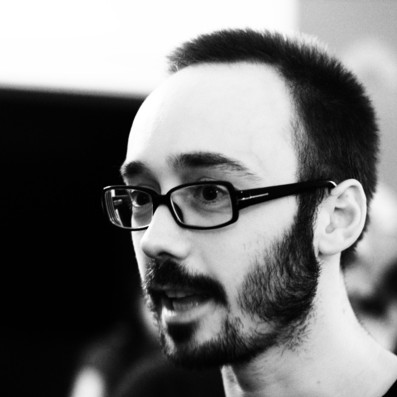
Raphaël Hertzog: People behind Debian: Stefano Zacchiroli, Debian Project Leader

picture by Tiago Bortoletto Vaz, CC BY-NC-SA 2.0


It s been one year since the first People behind Debian interview. For this special occasion, I wanted a special guest and I m happy that our Debian Project Leader (DPL) Stefano Zacchiroli accepted my invitation. He has a difficult role in the community, but he s doing a really great job of it. He s a great mediator in difficult situations, but he s also opinionated and can push a discussion towards a conclusion. Read on to learn how he became a Debian developer and later DPL, what he s excited about in the next Debian release, and much more. Raphael: Who are you? Stefano: I m Stefano Zacchiroli, but I prefer to be called Zack, both on the Internet and in real life. I m 32, Italian, emigrated to France about 4 years ago. I live in Paris, and I find it to be one of the most gorgeous and exciting cities in the world. As my day job I m a Computer Science researcher and teacher at University Paris Diderot and IRILL. In my copious free time I contribute to Debian, and I m firmly convinced that doing so is an effective way to help the cause of Free Software. Besides, I find it to be a lot of fun! Raphael: How did you start contributing to Debian? Stefano: Flash back to 1999, when I was a 2nd year student in Computer Science at the University of Bologna. Back then in Italy it was uncommon for young geeks to get exposed to Free Software: Internet was way less pervasive than today and most computer magazines didn t pay much attention to GNU/Linux. Luckily for me, the professor in charge of the student lab was a Free Software enthusiast and all students machines there were running Debian. Not only that, but there was also a student program that allowed volunteers to become sysadmins after having shown their skills and convinced the director they were trustworthy. Becoming one of those volunteer Debian admins quickly became one of my top objectives for the year, and that is were I ve learned using Debian. The year after that, I got in touch with a research group that was to become the happy bunch of hackers with whom I would have done both my master and PhD theses. They were designing a new proof assistant. Most of the development was in OCaml and happened on Debian. OCaml was available in Debian, but many of the libraries we needed were not. So I approached the Debian OCaml Team offering to help. Before I realize what was going on I was (co-)maintainer of tens of OCaml-related packages. At some point I got told I think you should apply as a Debian Developer . So I did and in a couple of months I went through the New Member (NM) process, that was back then in its infancy. I still remember my happiness while reading the account created mail, the day after my 22nd birthday. I know the NM process went through some bad publicity in the past, but I m happy to see that nowadays the process can be as swift as it has been for me 10 years ago. Raphael: It s your second year as Debian Project Leader (DPL). Are you feeling more productive in the role? Do you fear to burn out? Stefano: I m feeling way more productive, no doubts. The task of the Debian Project Leader is not necessarily difficult, but it is a complex and scarcely documented one. It is also profoundly different from any other task that Debian people usually work on, so that experience doesn t help much in getting started. Before becoming effective as DPL one needs to get to know many people and mechanisms he is not familiar with. More importantly, one needs to set up a personal work-flow that allows to keep up with day-to-day DPL tasks (which are aplenty) as well as with urgencies (that tend to pop-up in the leader@debian.org INBOX at the least convenient time). Finally, one also needs to do proper traffic shaping and always retain enough motivation bandwidth to keep the Project informed about what is going on in DPL-land. Finding the right balance among all these ingredients can take some time. Once one is past it, everything goes way more smoothly. The above is why I m constantly encouraging people interested in running for DPL in the future to reach out to me and work on some tasks of the current DPL s TODO list. I swear it is not just a cheap attempt at slavery!. It is rather an attempt at DPL mentoring that could be beneficial: both to give future candidates more awareness of the task, and to reduce the potential downtime when handing over from one DPL to the next. Regarding burn out, I don t feel prone to its risk these days. If I look back, I can say that my contributions as DPL have been pretty constant in volume over time; my enthusiasm for the task, if anything, is on the rise. The effectiveness of my contributions as DPL are, on the other hand, not mine to judge. Raphael: If you had to single out two achievements where you were involved as DPL, what would they be? Stefano: I d go for the following two, in no particular order: OK, let me cheat and add a third one I m also proud of having been able to report to the Project my whereabouts as DPL, thoroughly and periodically, since the very beginning is first term. People annoyed by my reporting logorrhea now have all my sympathies. Raphael: Among the possible new features of Debian Wheezy, which one gets you excited most? Stefano: It s multi-arch, no doubt. Even though it is not a directly user visible change, it s a very far reaching one. It is also one of those changes that make me feel that moment of truth of coders, when you realize you are finally doing the right thing and ditching piles of ugly hacks.
It s multi-arch [ ] you realize you are finally doing the right thing and ditching piles of ugly hacks.
Raphael: If you were not DPL and could spend all your time on Debian, what project would you do? Stefano: I would sit down and do software development for Debian. It s impressive how many important and beneficial changes for Debian could be delivered by specific software improvements in various parts of our infrastructure. We tend to attract many packagers, but not so many people willing to maintain Debian infrastructure softwares like dak, britney, debbugs, the PTS, etc. Their maintenance burden then falls on the shoulders of the respective teams which are generally very busy with other important tasks. As a project, we seem to be more appealing to packagers than to software developers. That is a pity given the amount of exciting coding tasks that are everywhere in Debian. Part of the reason we are not appealing to developers is that we are not particularly good at collecting coding tasks in a place where interested developers could easily pick them up. It also takes quite a bit of inside knowledge to spot infrastructure bugs and understand how to fix them. I long for some spare hacking time to check if I m still good enough of a coder to hunt down longstanding bugs in our infrastructure, which have ended up being my pet peeves. I d also love to dive again into RCBW. It s less committing than package maintenance, more diverse and challenging, and also an immensely useful activity to get Debian releases done. Raphael: Martin Michlmayr is worried that there is so few paid opportunities around Debian. Do you agree with his sentiment, and if yes do you have ideas on how to improve this situation? Stefano: The idealistic me wishes Debian to be a community made only of volunteers that devote their free time to the Project. Oh, and that me also wishes Debian to be competitive with similar projects, no matter how many full-time employees others have! That is coherent with a view of society where everyone has a day job, but also engages in volunteering activities ensuring that public interest is pursued by people motivated by interests other than profit. But I do realize that for Free Software to succeed companies, employees, and salaries should all have a role. I admire projects that strike a good balance between volunteer and paid work. The Linux kernel is emblematic in that respect: many developers are paid by companies that have a commercial or strategic interest in Linux. Nevertheless volunteers contributions are aplenty and the Linux community gives a convincing impression that choices are driven by the community itself (or by its benevolent dictator) without money-driven impositions.
I do realize that for Free Software to succeed companies, employees, and salaries should all have a role.
Such an ecosystem does not exist around Debian. We do have a partner program that allows for it to happen, but we have very few partners with an interest in doing distribution development work. Like Martin, I m worried by this state of affairs, because it de facto means we lag behind in terms of available people power. In a community of volunteers, that might frustrate people and that is not good. To improve over the status quo the first step is to federate together small and medium companies that have a strategic interest in Debian and listen to their needs. I m already in touch with representatives of such companies that, in many cases, already employ Debian Developers to do some distribution work in Debian. We will be soon sending out a call to reach out to more such companies, but since we are discussing this, why waiting? If some of our readers here are representative of such companies, I encourage them to get in touch with me about this. Raphael: You know that the fundraising campaign for the Debian Administrator s Handbook is on good track but the liberation of the book is not yet assured. What do you think of this project? Stefano: I m happy about the project, to the point that I ve accepted writing a testimonial for it :-) . I m sad about the scarce availability of up to date and high quality (DFSG-)Free books about Debian and I welcome any initiative that might help closing that gap.
I m sad about the scarce availability of up to date and high quality (DFSG-)Free books about Debian.
Free Culture is a great offspring of Free Software and I m convinced we need to stand up against double standards in the two camps. Letting aside software-specific licensing details, the basic freedoms to be defended are the same. They are those freedoms that ensure that a reader is in full control of his book, pretty much as they ensure that a computer user is in full control of the software that runs on it. I m therefore proud that Debian has long resolved that the Debian Free Software Guidelines (DFSG) apply not only to software but also to books and other pieces of documentation. But the status quo implies that not only we have very few up to date, high quality books about Debian. It also implies that, at present, we have no such book that we can distribute in the Debian archive, showing off the Free Software (and Free Culture!) values we stand for.
Crowdfunding is considered to be a good mate for Free Culture, where the services model that applies to Free Software is more difficult to exploit. I so wish any luck to yours and Roland s initiative. A different matter is whether Debian, as a project, should endorse the initiative and actively campaign for it. As you know, I think it should not. While we do advertise general project donations, we don t do mission-specific fundraising campaign for Debian itself. Coherently with that, I don t think we should relay crowdfunding campaigns for 3rd parties, even when the result would be beneficial to Debian. Raphael: Is there someone in Debian that you admire for their contributions? Stefano: There are two classes of people that I particularly admire in Debian:
Thank you to Zack for the time spent answering my questions. I hope you enjoyed reading his answers as I did.

Subscribe to my newsletter to get my monthly summary of the Debian/Ubuntu news and to not miss further interviews. You can also follow along on Identi.ca, Google+, Twitter and Facebook .

7 comments Liked this article? Click here. My blog is Flattr-enabled.

Jonas Smedegaard: Asia 2011

In september I visited Brussels, Belgium. EPFSUG had kindly invited me to give a talk about FreedomBox in the European Parliament, and together we extended to also visit other organizations - both grassroots and more formal. I returned home exhausted but also fuelled with renewed energy and passion, and decided to engage in more such activities. Also, an old promise of mine to visit friends in the Aceh region of Indonesia (whom I met in Taiwan a few years back) rumbled in the back of my head. After a bit of juggling with travel routes and sponsoring options, my course was set for a 2 month journey with Debian Pure Blends as main theme:
  1. England: London
  2. India: Khammam, Hyderabad, Mangaluru, Bengaluru
  3. Vietnam: Ho Chi Minh City, Can Tho
  4. Thailand: Bangkok
  5. Malaysia: Putrajaya
  6. Indonesia: Surabaya, Yogyakarta, Bogor, Banda Aceh, Takengon
  7. England: Cambridge
Debian will be sponsoring East Asia part, and Debian enthusiasts in India seek sponsorship for India part.

Dirk Eddelbuettel: RPostgreSQL 0.2-0, 0.2-1 and an unsung Open Source hero

RPostgreSQL goes back to a topic suggestion I had made for the Google Summer of Code 2008, and specifically for the R Project participation that year. And Sameer Kumar Prayaga (whom I then mentored for the project) did a fine job that summer putting together a working framework of package connecting R and the excellent PostgreSQL database system. Unfortunately, Sameer vanished once the summer was up; I heard he got himself a job a another db company. Fast-forward a few years. A caretaker group had maintained the package in the meantime, but without really writing any new code. But thanks to the tireless efforts of Tomoaki Nishiyama, who not only wrote a lot of new code addressing some of issues logged at the Google Code project page, but also stepped forward and became the new lead maintainer, things are much, much better now. The first 0.2-0 release a few weeks ago already addressed a rather large number of issues, bringing the feature set much closer to what one would expect from a feature-complete package. But one big thorn remained: builds on Windows still required a local PostgreSQL library installation as well as local compilation. And as we can tell from the mailing list(s), this is a little daunting for many potential users. But what did release 0.2-1 bring: a complete set of libpq sources so that builds on Windows no longer require presence of local PostgreSQL sources! We tested this using Uwe Ligges' excellent win-builder service for R, and after I reminded Uwe on the weekend to no longer blacklist build attempts of RPostgreSQL, we now have Windows binaries for direct installation. Just call install.packages(), and you're good to go -- much nicer! Tomoaki achieved this pretty much single-handedly, and for that reason he greatly deserves some extra praise as an unsung Open Source hero!

21 November 2011

Sune Vuorela: Those small nice tools we all write

Many of us out there writes small tools to just solve a simple task that you need. Here, I will present a tool I needed last night. I have a small job doing a wordpress site for some people, and I needed a image with the site title in a font matching some specific criteria (like a double story lowercase A and a small serif on lowercase L, while in general being a Sans Serif type). So what I needed was a application that let me write a word or a phrase, and see it written with all available fonts on the system. So, it took a little more than a effective hour and 120 lines of code to come up with this: Click to see image And if anyone cares, I have pushed the sources to git.kde.org. I m sure many of you also have various such small apps. Let s see them. That s also you Eike and your svgtoy app :) Another thing I learned from this app is that the ukij fonts targetted the Uyghyr language actually is very interesting also for western europeans.

Craig Small: New procps 3.3.0 for Debian

Coming soon after the upstream procps 3.3.0 being released, the debian packages have been uploaded tonight. The Debian packages have had the added benefit of being a day late by having a tiny 2 line patch to stop pgrep from crashing. One regression that is on purpose, watch is currently not 8-bit clean again until I can sort out how to get the linking right with the new build process. Testing Systems The embarrassing problem with pgrep did start a discussion about testing, especially regression testing. I ve recently started using unit testing in my python programs and love the level of assurance those tests give me that I haven t broken anything (to a degree anyhow). I d really like to be able to type make test and have each of the programs run through a series of tests. The problem with packages like procps (psmisc too) is that you really need to test the entire program, not just a stub, and that the program needs access to a know level of /proc. The only thing I have seen that is even remotely what is needed is the bunch of scripts that coreutils uses which creates dummy files and directories to operate the commands on. I expect we could do something similar with some scripts that create a known process but if anyone has a better idea about how to test a command line program let me know.

Petter Reinholdtsen: Automatically upgrading server firmware on Dell PowerEdge

At work we have heaps of servers. I believe the total count is around 1000 at the moment. To be able to get help from the vendors when something go wrong, we want to keep the firmware on the servers up to date. If the firmware isn't the latest and greatest, the vendors typically refuse to start debugging any problems until the firmware is upgraded. So before every reboot, we want to upgrade the firmware, and we would really like everyone handling servers at the university to do this themselves when they plan to reboot a machine. For that to happen we at the unix server admin group need to provide the tools to do so. To make firmware upgrading easier, I am working on a script to fetch and install the latest firmware for the servers we got. Most of our hardware are from Dell and HP, so I have focused on these servers so far. This blog post is about the Dell part. On the Dell FTP site I was lucky enough to find an XML file with firmware information for all 11th generation servers, listing which firmware should be used on a given model and where on the FTP site I can find it. Using a simple perl XML parser I can then download the shell scripts Dell provides to do firmware upgrades from within Linux and reboot when all the firmware is primed and ready to be activated on the first reboot. This is the Dell related fragment of the perl code I am working on. Are there anyone working on similar tools for firmware upgrading all servers at a site? Please get in touch and lets share resources.
#!/usr/bin/perl
use strict;
use warnings;
use File::Temp qw(tempdir);
BEGIN  
    # Install needed RHEL packages if missing
    my %rhelmodules = (
        'XML::Simple' => 'perl-XML-Simple',
        );
    for my $module (keys %rhelmodules)  
        eval "use $module;";
        if ($@)  
            my $pkg = $rhelmodules $module ;
            system("yum install -y $pkg");
            eval "use $module;";


my $errorsto = 'pere@hungry.com';
upgrade_dell();
exit 0;
sub run_firmware_script  
    my ($opts, $script) = @_;
    unless ($script)  
        print STDERR "fail: missing script name\n";
        exit 1
     
    print STDERR "Running $script\n\n";
    if (0 == system("sh $script $opts"))   # FIXME correct exit code handling
        print STDERR "success: firmware script ran succcessfully\n";
      else  
        print STDERR "fail: firmware script returned error\n";
     
 
sub run_firmware_scripts  
    my ($opts, @dirs) = @_;
    # Run firmware packages
    for my $dir (@dirs)  
        print STDERR "info: Running scripts in $dir\n";
        opendir(my $dh, $dir) or die "Unable to open directory $dir: $!";
        while (my $s = readdir $dh)  
            next if $s =~ m/^\.\.?/;
            run_firmware_script($opts, "$dir/$s");
         
        closedir $dh;
     
 
sub download  
    my $url = shift;
    print STDERR "info: Downloading $url\n";
    system("wget --quiet \"$url\"");
 
sub upgrade_dell  
    my @dirs;
    my $product =  dmidecode -s system-product-name ;
    chomp $product;
    if ($product =~ m/PowerEdge/)  
        # on RHEL, these pacakges are needed by the firwmare upgrade scripts
        system('yum install -y compat-libstdc++-33.i686 libstdc++.i686 libxml2.i686 procmail');
        my $tmpdir = tempdir(
            CLEANUP => 1
            );
        chdir($tmpdir);
        fetch_dell_fw('catalog/Catalog.xml.gz');
        system('gunzip Catalog.xml.gz');
        my @paths = fetch_dell_fw_list('Catalog.xml');
        # -q is quiet, disabling interactivity and reducing console output
        my $fwopts = "-q";
        if (@paths)  
            for my $url (@paths)  
                fetch_dell_fw($url);
             
            run_firmware_scripts($fwopts, $tmpdir);
          else  
            print STDERR "error: Unsupported Dell model '$product'.\n";
            print STDERR "error: Please report to $errorsto.\n";
         
        chdir('/');
      else  
        print STDERR "error: Unsupported Dell model '$product'.\n";
        print STDERR "error: Please report to $errorsto.\n";
     
 
sub fetch_dell_fw  
    my $path = shift;
    my $url = "ftp://ftp.us.dell.com/$path";
    download($url);
 
# Using ftp://ftp.us.dell.com/catalog/Catalog.xml.gz, figure out which
# firmware packages to download from Dell.  Only work for Linux
# machines and 11th generation Dell servers.
sub fetch_dell_fw_list  
    my $filename = shift;
    my $product =  dmidecode -s system-product-name ;
    chomp $product;
    my ($mybrand, $mymodel) = split(/\s+/, $product);
    print STDERR "Finding firmware bundles for $mybrand $mymodel\n";
    my $xml = XMLin($filename);
    my @paths;
    for my $bundle (@ $xml-> SoftwareBundle )  
        my $brand = $bundle-> TargetSystems -> Brand -> Display -> content ;
        my $model = $bundle-> TargetSystems -> Brand -> Model -> Display -> content ;
        my $oscode;
        if ("ARRAY" eq ref $bundle-> TargetOSes -> OperatingSystem )  
            $oscode = $bundle-> TargetOSes -> OperatingSystem [0]-> osCode ;
          else  
            $oscode = $bundle-> TargetOSes -> OperatingSystem -> osCode ;
         
        if ($mybrand eq $brand && $mymodel eq $model && "LIN" eq $oscode)
         
            @paths = map   $_-> path    @ $bundle-> Contents -> Package ;
         
     
    for my $component (@ $xml-> SoftwareComponent )  
        my $componenttype = $component-> ComponentType -> value ;
        # Drop application packages, only firmware and BIOS
        next if 'APAC' eq $componenttype;
        my $cpath = $component-> path ;
        for my $path (@paths)  
            if ($cpath =~ m%/$path$%)  
                push(@paths, $cpath);


    return @paths;
 
The code is only tested on RedHat Enterprise Linux, but I suspect it could work on other platforms with some tweaking. Anyone know a index like Catalog.xml is available from HP for HP servers? At the moment I maintain a similar list manually and it is quickly getting outdated.

Next.

Previous.




