Search Results: "mak"

27 April 2014

Keith Packard: Glamor performance

Current Glamor Performance I finally managed to get a Gigabyte Brix set up running Debian so that I could do some more reasonable performance characterization of Glamor in its current state. I wanted to use this particular machine because it has enough cooling to keep from thermally throttling the CPU/GPU package. This is running my glamor-server branch of the X server, which completes the core operation rework and then has some core X server performance improvements as well for filled and outlined arcs. Changes in X11perf First off, I did some analysis of what x11perf was doing and found that it wasn t quite measuring what we thought. I m not interested in competing on x11perf numbers absolutely, I m only interested in doing relative measurements of useful operations, so fixing the tool to measure what I want seems reasonable to me. When x11perf was first written, it drew 100x100 rectangles tight against one another without any gap. And, it filled the window with them, drawing a 6x6 grid of 100x100 rectangles in a 600x600 window. To better exercise the rectangle code and check edge conditions better, we added a one pixel gap between the rectangles. However, we didn t reduce the number of rectangles drawn, so we ended up drawing 11 of the 36 rectangles on top of the first set of 25. Simple region computations would allow the X server to draw only 25 most of the time, skipping the redundant rectangles. The vertical and horizontal line tests were added a while after the first set of tests, and were done without regard to how an X server might optimize for them. x11perf draws these lines packed tightly together, creating a single square of pixels for the result. EXA, UXA and SNA all take vertical and horizontal lines and convert them to rectangles, then take the rectangles and clip them against the window clip list by computing a region from them and intersecting that with the GC composite clip. It s a completely reasonable plan, however, when you take what x11perf was drawing and run it through this code, you end up with a single solid rectangle. Which is surprisingly fast, compared with drawing individual lines. I fixed the overlapping rectangle case by reducing the number of boxes drawn from 36 to 25, and I fixed the vertical and horizontal line case by spacing the lines a pixel apart. I ve pushed out these changes to my x11perf repository on freedesktop.org. What s Fast Things that match GL s capabilities are fast, things which don t are slow. No surprises there. What s interesting is precisely what matches GL Patterns For Free Because GL makes it easy to program fill patterns into the GPU, there are essentially no performance differences between solid and patterned operations. GL Lines Glamor uses GL lines, which can be programmed to match X semantics, to quite good effect. The only trick required was to deal with cap styles. GL never draws the final pixel in a line, while X does unless the cap style is CapNotLast. The solution was to draw an extra line segment containing a single pixel at the end of every joined set of lines for this case. The other implicit requirement is that all zero width lines look the same. Right now, I ve solved that for fill styles and raster ops as they re all drawn with the same GL operations. However, for plane masks, we re currently falling back to software, which may draw something different. Fixing that isn t impossible, it s just tedious. Text Pushing all of the work of drawing core text into glamor wasn t terribly difficult, and the results are pretty spectacular. What s Slow We ve still got room for improvement in Glamor, but there aren t any obvious show-stoppers to getting great performance for reasonable X applications anymore. Wide Lines and Arcs One of the speed-ups I ve made in my glamor branch is to merge all of drawing of multiple filled and zero-width arcs into a single giant GL request. That turned out to both improve performance and save a bit of code. Right now, drawing wide lines and wide arcs doesn t do this, and so we suffer from submitting many smaller requests to GL. It s hard to get excited about speeding any of this up as all of the wide primitives are essentially unused these days. Filled Polygons Because X only lets applications draw a single polygon in each request, Glamor can t really gain any efficiency from batching work unless we start looking ahead in the X protocol stream to see if the next request is another polygon. Alternatively, we could leave the span operation pending to see if more spans were coming before the X serve went idle. Neither of these is all that exciting though; X polygons just aren t that useful. Render Operations These are still not structured to best fit modern GL; some work here would help a bunch. We ve got a gsoc student ready to go at this though, so I expect we ll have much better numbers in a few months. Window Operations You wouldn t think that moving and resizing windows would be so limited by drawing performance, but x11perf tests these with tiny little windows, and each operation draws or copies only a couple of little rectangles, which makes GL quite expensive. Working on speeding up GL for small numbers of operations would help a bunch here. Unexpected Results Solid rectangles are actually running slower than patterned rectangles, and I really have no idea why. The CPU is close to idle during the 500x500 solid rectangle test (as you d expect, given the workload), the vertex and fragment shaders look correct out of the compiler, and yet solid rectangles run at only 0.80 of the performance of the patterned rectangles. GL semantics for copying data essentially preclude overlapping blts of any form. There s the NVtexturebarrier extension which at least lets us do blts within the same object, but even that doesn t define how overlapping blts work. So, we have to create a temporary copy for this operation to make it work right. I was worried that this would slow things down, but the Iris Pro 3D engine is enough faster than the 2D engine that even with the extra copy, large scrolls and copies within the same object are actually faster. Results Here s a giant image showing the ratio of Glamor to both UXA and SNA running on the same machine, with all of the same software; the only change between runs was to switch the configured acceleration architecture.

26 April 2014

DebConf team: Registration is now open for DebConf14 (Posted by Steve Langasek)

Going to DebConf14!
The Debian Project is pleased to announce that registration is now open for DebConf14, taking place in Portland, Oregon, USA from Saturday, August 23 to Sunday, August 31, 2014. To request food, accommodation, or travel sponsorship, you must be registered by Thursday, May 15, 2014. After this date, registrations will still be accepted in any of the basic, professional, and corporate categories, but requests for sponsorship will no longer be accepted. Note that, as for previous years, you will be asked to confirm your registration later once sponsorship has been finalized. If you are not certain you will attend but are considering it, we encourage you to register now. Registration If you want to attend DebConf14, please fill out the registration form. This year, conference registration is integrated with the new Debian SSO system. If you are a Debian developer and have not previously used the Debian SSO system, you will need to configure an SSO password on db.debian.org. If you are not a Debian developer, you will have an opportunity to create an alioth account as part of the registration process. For more information about Debian single sign-on, see the Debian wiki. DebCamp In past years, DebConf has been preceded by a separate DebCamp event, for developers to gather before the conference and collaborate in person on Debian. This year the team is trying a different approach, with a longer conference period allowing for blocks of talks to be mixed with blocks of coding time throughout the week. More information about the schedule will be made available when the Call for Papers is posted in the near future. As mentioned in the last bits from the DPL mail, there is also an opportunity for Debian teams to organize sprints around DebConf. Teams who are interested should follow the documented process. Thank you The DebConf14 team would like to thank all of our sponsors who have made this event possible - a full list of whom can be found here. We are still seeking sponsors to help us make DebConf14 a success. If you or your company would like to give back to Debian, please consider becoming a sponsor. We look forward to seeing you in Portland in August! The DebConf team

25 April 2014

Matthias Klumpp: AppStream 0.6.1 released a quick look at what you can do with the cli tool

Today I released AppStream and libappstream 0.6.1, which feature mostly bugfixes, so nothing incredibly exciting to see there (but this also means no API/ABI breaks). The release clarifies some paragraphs in the spec which people found confusing, and fixes a few issues (like one example in the docs not being valid AppStream metadata). As only spec extension, we introduce a priority property in distro metadata to allow metadata from one repository to override data shipped by another one. This is used (although with a similar syntax) in Fedora already to have placeholder data for non-free stuff, which gets overridden by the real metadata if a new application was added. In general, the property tag was added to make the answer to the question which data is preferred much less magic. The libappstream library got some new API to query component data in different ways, and I also brought back support for Vala (so if you missed the Vapi file: It s back now, although you have to manually enable this feature). The CLI tool also got some extensions to query AppStream data. Here is a brief introduction: First of all, we need to make sure the database is up-to-date, which should be the case already (it is rebuilt automatically):
$ sudo appstream-index --refresh
The database will only be rebuilt when necessary, if you want to force a rebuild anyway, use the force parameter. Now imagine we want to search for an app containing the word media (in description, keywords, summary, ):
$ appstream-index -s media
which will return:
Identifier: gnome-media-player.desktop [desktop-app]
Name: GNOME Media Player
Summary: A simple media player for GNOME
Package: gnome-media-player
----
Identifier: mediaplayer-app.desktop [desktop-app]
Name: Media Player
Summary: Media Player
Package: mediaplayer-app
----
Identifier: kde4__plasma-mediacenter.desktop [desktop-app]
Name: Plasma Media Center
Summary: A mediacenter user interface written with the Plasma framework
Package: plasma-mediacenter
----
etc.
If we already know the name if a .desktop-file or the ID of a component, we can have the tool print out information about the application, including which package it was installed from:
$ appstream-index --get lyx.desktop
If we want to see more details, including e.g. a screenshot URL and a longer description, we can pass details to the tool:
Identifier: lyx.desktop [desktop-app]
Name: LyX
Summary: An advanced document processor with the power of LaTeX.
Package: lyx-common
Homepage: http://www.lyx.org/
Icon: lyx.png
Description: LyX is a document processor that encourages an approach to writing
 based on the structure of your documents (WYSIWYM) and not simply
 their appearance (WYSIWYG).
 
 LyX combines the power and flexibility of TeX/LaTeX[...]
Sample Screenshot URL: http://alt.fedoraproject.org/pub/alt/screenshots/f21/source/lyx-ea535ddf18b5c7328c5e88d2cd2cbd8c.png
License: GPLv2+
(I truncated the results slightly ;-) ) Okay, so far so good. But now it gets really exciting (and this is a feature added with 0.6.1): We can now query a component by the items it provides. For example, I want to know which software provides the library libfoo.2:
appstream-index --what-provides -t lib -v libfoo.so.2
This also works with binaries, or Python modules:
appstream-index --what-provides -t bin -v apper
This stuff works distribution-agnostic, and as long as software ships upstream metadata with a valid <provides/> field, or the distributor adds it while generating AppStream distro metadata.
This means that software can as soon as we have sufficient metadata of this kind declare it s dependencies upstream in form of a simple text file, referencing the needed components to build and run it on any Linux distribution. Users can simply install missing stuff by passing that file to their package manager, which can look up the components->packaging mapping and versions and do the right thing in installing the dependencies. So basically, this allows things pip -r does for Python, but for any application (not only Python stuff), and based on the distributors package database. With the provides-items, we can also scan software to detect it s dependencies automatically (and have it in a distro-agnostic form directly). We can also easily search for missing mimetype-handlers, missing kernel-modules, missing firmware etc. to install it on-demand, making the system much smarter in handling it s dependencies. And users don t need to do search orgies to find the right component for a given task. Also on my todo list for the future, based on this feature: A small tool telling upstream authors which distribution has their application in which version, using just one command (and AppStream data from multiple distros). Also planned: A cross-distro information page showing which distros ship which library versions, Python modules and application versions (and also the support status of the distro), so developers know which library versions (or GCC versions etc.) they should at least support to make their application easily available on most distributions. As always, you can get the releases on Freedesktop, as well es the AppStream specification.

Daniel Pocock: Extra fuel charges when carrying passengers in your car?

Some people seem to be justifying the way mobile networks try to discriminate against tethering. One comment even suggests that multiple devices is a valid justification. Really? Isn't it just as simple as measuring the actual volume of megabytes used, regardless of how many devices are connected? Lets consider a couple of analogies:
  • A petrol station puts some fine print at the bottom of their sign in the street: cars with passengers pay an extra 0.05 per litre (or gallon). It is just a gimmick: the marketing man has worked out that he can put a lower price on his big sign this way and people with passengers may well be splitting the fuel bill between them. There is no technical reason for the charge however - the car actually uses more fuel carrying the extra weight anyway.
  • Or imagine this: the marketing man puts up small print that advises a higher charge of 0.05 per litre for fuelling an exotic car like a Ferrari. The only reason for this, of course, is that the Ferrari driver is probably busy (so he doesn't have time to shop around) and wealthy (so the extra charge won't deter him from making any purchase at all, because he has money to pay it).
Of course, these ideas sound a bit outlandish but the only difference between these crazy ideas and tethering charges is that mobile phone networks usually have the monopoly/duopoly to get away with it. Mobile networks actually dread the idea of becoming commodities like fuel. They thrive on price discrimination and they seem to have an endless number of tricks to get extra money out of people who may have it by deliberately crippling parts of the service for everybody else. This goes against the ideals of innovation and efficiency and in the most extreme cases their practices are widely recognised for the sham that they are. Revealing that you have connected a laptop to your phone may be like revealing you live in an affluent area or that you have an expensive car. Plenty of businesses try to exploit such knowledge when deciding how much they can charge you or other aspects of how they provide you with a service. This is why privacy is important in every feature of the technology we use. This rogue behaviour by "creative" marketing men also helps to understand just what would happen in the world of technology if it wasn't for the use of free licenses, open standards, accessible encryption and net neutrality.

24 April 2014

Daniel Pocock: Android betrays tethering data

When I upgraded an Android device the other day, I found that tethering completely stopped working. The updated CyanogenMod had inherited a new bug from Android, informing the carrier that I was tethering. The carrier, Vodafone Italy, had decided to make my life miserable by blocking that traffic. I had a closer look and managed to find a workaround. There is absolutely no difference, from a technical perspective, between data transmitted from a mobile device on-screen application and data transmitted from tethering. Revealing the use of tethering to the carrier is a massive breach of privacy - yet comments in the Google bug tracker suggest it is a feature rather than a bug. This little table helps put that logic in perspective:
Product Person who carries handset
User Mobile network who wants to discriminate against some types of network traffic to squeeze more money out of the Product
Feature Revealing private information about the way the Product uses his/her Internet so the real User can profit.
It is also bad news for the environment: many people are being tricked into buying un-needed USB dongle modems that will end up in the rubbish in 1-2 years time when their contract expires and the company pushes them to upgrade to the next best thing. Behind the scenes What does it really mean in practice, how does Android tell your carrier which data is from tethering? As my device is rooted and as it is my device and I will do what I want with it, I decided to have a look inside. The ip command revealed that there are now two network devices, rmmnet_usb0 and rmmnet_usb1. The basic ip route command reveals that traffic from different source addresses is handled differently and split over the different network devices:
shell@android:/ # ip route
0.0.0.0/1 dev tun0  scope link
default via 100.66.150.89 dev rmnet_usb0
83.224.66.138 via 100.87.31.214 dev rmnet_usb1
83.224.70.94 via 100.87.31.214 dev rmnet_usb1
100.66.150.88/30 dev rmnet_usb0  proto kernel  scope link  src 100.66.150.90
100.66.150.89 dev rmnet_usb0  scope link
100.87.31.212/30 dev rmnet_usb1  proto kernel  scope link  src 100.87.31.213
100.87.31.214 dev rmnet_usb1  scope link
128.0.0.0/1 dev tun0  scope link
192.168.42.0/24 dev rndis0  proto kernel  scope link  src 192.168.42.129
I then looked more closely and found that there is also an extra routing table, it can be found with ip rule
shell@android:/ # ip rule show
0:      from all lookup local
32765:  from 192.168.42.0/24 lookup 60
32766:  from all lookup main
32767:  from all lookup default
shell@android:/ # ip route show table 60
default via 100.87.51.57 dev rmnet_usb1
100.87.51.57 dev rmnet_usb1
192.168.42.0/24 dev rndis0  scope link
In this routing table, it is obvious that data from the tethering subnet (192.168.42.0/24) is sent over the extra device rmnet_usb1. Manually cleaning it up If the phone is rooted, it is possible to very quickly change the routing table to get all the tethering traffic going through the normal rmnet_usb0 interface again. It is necessary to get rid of that alternative routing table first:
ip rule del pref 32765
and then update the iptables entries that refer to interface names:
iptables -t nat -I natctrl_nat_POSTROUTING -s 192.168.0.0/16 -o rmnet_usb0 -j MASQUERADE
iptables -I natctrl_FORWARD -i rmmnet_usb0 -j RETURN
This immediately resolved the problem for me on the Vodafone network in Italy. Conclusion If Google can be bullied into accepting this kind of discriminatory routing in the stock Android builds and it can even propagate into CyanogenMod, then I'm just glad I'm not running one of those Android builds that has been explicitly "enhanced" by a carrier. It raises big questions about who really is the owner and user of the device and who is receiving the value when a person pays money to "buy" a device.

Martin Pitt: Booting Ubuntu with systemd: Test packages available

On the last UDS we talked about migrating from upstart to systemd to boot Ubuntu, after Mark announced that Ubuntu will follow Debian in that regard. There s a lot of work to do, but it parallelizes well once developers can run systemd on their workstations or in VMs easily and the system boots up enough to still be able to work with it. So today I merged our systemd package with Debian again, dropped the systemd-services split (which wasn t accepted by Debian and will be unnecessary now), and put it into my systemd PPA. Quite surprisingly, this booted a fresh 14.04 VM pretty much right away (of course there s no Plymouth prettiness). The main two things which were missing were NetworkManager and lightdm, as these don t have an init.d script at all (NM) or it isn t enabled (lightdm). Thus the PPA also contains updated packages for these two which provide a proper systemd unit. With that, the desktop is pretty much fully working, except for some details like cron not running. I didn t go through /etc/init/*.conf with a small comb yet to check which upstart jobs need to be ported, that s now part of the TODO list. So, if you want to help with that, or just test and tell us what s wrong, take the plunge. In a 14.04 VM (or real machine if you feel adventurous), do
  sudo add-apt-repository ppa:pitti/systemd
  sudo apt-get update
  sudo apt-get dist-upgrade
This will replace systemd-services with systemd, update network-manager and lightdm, and a few libraries. Up to now, when you reboot you ll still get good old upstart. To actually boot with systemd, press Shift during boot to get the grub menu, edit the Ubuntu stanza, and append this to the linux line: init=/lib/systemd/systemd. For the record, if pressing shift doesn t work for you (too fast, VM, or similar), enable the grub menu with
  sudo sed -i '/GRUB_HIDDEN_TIMEOUT/ s/^/#/' /etc/default/grub
  sudo update-grub
Once you are satisfied that your system boots well enough, you can make this permanent by adding the init= option to /etc/default/grub (and possibly remove the comment sign from the GRUB_HIDDEN_TIMEOUT lines) and run sudo update-grub again. To go back to upstart, just edit the file again, remove the init=sudo update-grub again. I ll be on the Debian systemd/GNOME sprint next weekend, so I feel reasonably well prepared now. :-) Update: As the comments pointed out, this bricked /etc/resolv.conf. I now uploaded a resolvconf package to the PPA which provides the missing unit (counterpart to the /etc/init/resolvconf.conf upstart job) and this now works fine. If you are in that situation, please boot with upstart, and do the following to clean up:
  sudo rm /etc/resolv.conf
  sudo ln -s ../run/resolvconf/resolv.conf /etc/resolv.conf
Then you can boot back to systemd. Update 2: If you want to help testing, please file bugs with a systemd-boot tag. See the list of known bugs when booting with systemd.

23 April 2014

Russ Allbery: On learning, growth, and trust

Here are two separate ideas about programming, Internet security, Internet architecture, and free software. Both of them are fundamental to everything those of us who work on free software are doing.
  1. Writing secure and reliable code is a highly complex and demanding task. It's something that one has to learn, like any other skilled profession. It's not something we're very good at teaching via any mechanism other than apprenticeship and experimentation. The field is changing quickly; if you took ten years off from writing security-critical code, you would expect to have to learn multiple new tools (static analysis, testing techniques, security features), possibly new programming languages, and not infrequently new ways of thinking about threat models and vulnerabilities.
  2. Nearly every computer user trusts tens of thousands of other programmers and millions of lines of code with their day-to-day computer security and reliability, without auditing that code themselves. Even if you have the skill required to audit the code (and very, very few people have the skill to audit all of the code that they use), you do not have the time. Therefore, our computer security is built on trust. We're trusting other programmers not to be malicious, which is obvious, but we're also trusting other programmers to be highly skilled, careful, cautious (but still fast and productive, since we quickly abandon software that isn't "actively developed"), and constantly adopting new techniques and treat models.
I think both of those principles are very widely understood and widely acknowledged. And, as we all know, both of those principles have failure modes, and those failures mean that our computers are nowhere near as secure as we would like them to be. There has been quite a lot of technical discussion about both of these principles in recent days and months, ranging from better code analysis and testing through the flaws in particular programming languages to serious questions about the trust model we use for verifying the code that we're running. I'm going to switch gears away from that discussion for a moment to talk about a social aspect. When a piece of code that one is using has a security vulnerability, it is not unusual to treat that as a trust failure. In other words, technical flaws are very quickly escalated to social flaws. This is less likely among practitioners, since we're all painfully aware of how many bugs we have in our own code, but it's still not unheard of, particularly if the authors of the code do not immediately and publicly show a socially-acceptable level of humility and contrition (in the middle of what is often a horrifically stressful experience). I think this reaction comes largely from fear. Anyone who has given it a moment's thought is painfully aware of just how much code they are running on trust, and just how many ways it could be compromised, accidentally or maliciously. And how frequently that code is compromised. The less control one has over a situation, the more terrifying it is, and the cold reality is that we have very little control over our computer security. There is a natural tendency, when afraid, to look for targets for that fear. Now, go back and think about the first principle. Anyone who has ever worked on or near free software is painfully aware that we have far more good ideas about how to improve computing and security than we have skilled resources to execute on those ideas. My own backlog of things that I've already thought about, know would be good ideas, and simply have to implement is probably longer than my remaining lifespan. I suspect that's the case for nearly all of us. In other words, we have a severe shortage of programmers who care and who have skill. We desperately need more skilled programmers who can write secure and reliable code. We may (and I think do) also need better tools, techniques, languages, protocols, and all the other machinery that we, as technical people, spend most of our time thinking about. But none of that changes the fact that we need more skilled people. In fact, it makes that need more acute: in addition to skilled people to write the code we use, we need skilled people to write the tools. Skilled people are not born. They're made. And in professions where training techniques are still in their infancy and where we don't have a good formal grasp on which techniques work, those skilled people are made primarily through apprenticeship, experimentation, and learning from failure. Worse, people who were skilled do not remain skilled without continually participating in that learning process. See the above point about a fast-changing field with evolving best practices. It's not enough to know how to write secure code to the best known practices today, or even enough to retrofit all of your existing code to current knowledge (which is often so large of an effort as to be practically impossible). You have to constantly, continually learn more, for which there is no reliable formal training. We have to try, fail, try again, and fail better. But failure that leads to a security vulnerability is treated as a loss of trust. We trusted that person to write secure code that we could use. They failed. Now we can't trust them. Based on the trust model of security, we should revoke their ability to try again and instead rely on people who have not failed, since that will make us more secure. Except now we just broke the learning process. And there's no such thing as a programmer who can stop learning. So what does that do to our resource pool? It's sadly ironic, but I believe the free software community writ large has a very serious collaboration problem: we do not tolerate each other's learning processes. This leads to a wide variety of social failures around hostile communities and the failures of meritocracy that other people have talked about at much greater length. But even if you set that all aside, it threatens our security. We need secure code, a lot of it, a lot more than we have right now. To get that code, we need people who can write it. We need to grow, encourage, and support those people and enable their learning processes. Code is written by people. If we rip people apart when they write bad, insecure code, we don't get better, secure code. We get fewer people writing security code. We get far fewer people writing security code in public, since some of the people who haven't been ripped apart will look at that experience and say, "No way am I going near that problem area. It's too scary. I don't want to end up like those programmers." Fewer people writing security code means fewer people learning how to write better security code. Fewer people capable of writing good, secure code is not a solution to any of our problems. If we do not tolerate, support, and encourage the learning process required to become a skilled programmer, or maintain one's skill in programming, we are destroying our future as a community. When you find code that is broken and badly written, you have found a problem that should be reported, analyzed, and corrected. You have also found a programmer who is about to have one of two very different types of experiences. Either they are about to learn how to become a better programmer, or they are about to be publicly shamed, humiliated, and treated as untrustworthy. Which branch they take is partly up to them, but it's also heavily influenced by how all of us react socially to the discovery of bad code. One of those branches leads to more good, secure code being written in the future. The other does not.

Gunnar Wolf: DrupalCamp starting in 5... 4... 3... 2... ( #DrupalCampMX )

Ok, so the day has come: Today begins the much awaited Drupal Camp Mexico City, yay! For those that cannot make it to Mexico City, I understand understood1 we would have live streaming of at least one of the rooms, but anyway, talks will be recorded, and will be put online later on. As for the talks schedule, here you have it. Yes, today my workmate and I will be giving a simple introduction to having a useful basic Drupal install. Today is the tutorials / workshops / BoF / hackathon day, and Thursday and Friday will be the more traditional talks days. Several of the talks on Thursday are grouped under the SymfonyDay track and will refer to the framework that serves as a base for Drupal 8. Anyway, for the Tweetheads among the readers of this post, I understand information will flow under the #DrupalCampMX tag.

Petter Reinholdtsen: Install hardware dependent packages using tasksel (Isenkram 0.7)

It would be nice if it was easier in Debian to get all the hardware related packages relevant for the computer installed automatically. So I implemented one, using my Isenkram package. To use it, install the tasksel and isenkram packages and run tasksel as user root. You should be presented with a new option, "Hardware specific packages (autodetected by isenkram)". When you select it, tasksel will install the packages isenkram claim is fit for the current hardware, hot pluggable or not. The implementation is in two files, one is the tasksel menu entry description, and the other is the script used to extract the list of packages to install. The first part is in /usr/share/tasksel/descs/isenkram.desc and look like this:
Task: isenkram
Section: hardware
Description: Hardware specific packages (autodetected by isenkram)
 Based on the detected hardware various hardware specific packages are
 proposed.
Test-new-install: mark show
Relevance: 8
Packages: for-current-hardware
The second part is in /usr/lib/tasksel/packages/for-current-hardware and look like this:
#!/bin/sh
#
(
    isenkram-lookup
    isenkram-autoinstall-firmware -l
)   sort -u
All in all, a very short and simple implementation making it trivial to install the hardware dependent package we all may want to have installed on our machines. I've not been able to find a way to get tasksel to tell you exactly which packages it plan to install before doing the installation. So if you are curious or careful, check the output from the isenkram-* command line tools first. The information about which packages are handling which hardware is fetched either from the isenkram package itself in /usr/share/isenkram/, from git.debian.org or from the APT package database (using the Modaliases header). The APT package database parsing have caused a nasty resource leak in the isenkram daemon (bugs #719837 and #730704). The cause is in the python-apt code (bug #745487), but using a workaround I was able to get rid of the file descriptor leak and reduce the memory leak from ~30 MiB per hardware detection down to around 2 MiB per hardware detection. It should make the desktop daemon a lot more useful. The fix is in version 0.7 uploaded to unstable today. I believe the current way of mapping hardware to packages in Isenkram is is a good draft, but in the future I expect isenkram to use the AppStream data source for this. A proposal for getting proper AppStream support into Debian is floating around as DEP-11, and GSoC project will take place this summer to improve the situation. I look forward to seeing the result, and welcome patches for isenkram to start using the information when it is ready. If you want your package to map to some specific hardware, either add a "Xb-Modaliases" header to your control file like I did in the pymissile package or submit a bug report with the details to the isenkram package. See also all my blog posts tagged isenkram for details on the notation. I expect the information will be migrated to AppStream eventually, but for the moment I got no better place to store it.

22 April 2014

Steve Kemp: I've not commented on security for a while

Unless you've been living under a rock, or in a tent (which would make me slightly jealous) you'll have heard about the recent heartbleed attack many times by now. The upshot of that attack is that lots of noise was made about hardening things, and there is now a new fork of openssl being developed. Many people have commented about "hardening Debian" in particular, as well as random musing on hardening software. One or two brave souls have even made noises about auditing code. Once upon a time I tried to setup a project to audit Debian software. You can still see the Debian Security Audit Project webpages if you look hard enough for them. What did I learn? There are tons of easy security bugs, but finding the hard ones is hard. (If you get bored some time just pick your favourite Editor, which will be emacs, and look how /tmp is abused during the build-process or in random libraries such as tramp [ tramp-uudecode].) These days I still poke at source code, and I still report bugs, but my enthusiasm has waned considerably. I tend to only commit to auditing a package if it is a new one I install in production, which limits my efforts considerably, but makes me feel like I'm not taking steps into the dark. It looks like I reported only three security isseus this year, and before that you have to go down to 2011 to find something I bothered to document. What would I do if I had copious free time? I wouldn't audit code. Instead I'd write test-cases for code. Many many large projects have rudimentary test-cases at best, and zero coverage at worse. I appreciate writing test-cases is hard, because lots of times it is hard to test things "for real". For example I once wrote a filesystem, using FUSE, there are some built-in unit-tests (I was pretty pleased with that, you could lauch the filesystem with a --test argument and it would invoke the unit-tests on itself. No separate steps, or source code required. If it was installed you could use it and you could test it in-situ). Beyond that I also put together a simple filesystem-stress script, which read/wrote/found random files, computes MD5 hashes of contents, etc. I've since seen similar random-filesystem-stresstest projects, and if they existed then I'd have used them. Testing filesystems is hard. I've written kernel modules that have only a single implicit test case: It compiles. (OK that's harsh, I'd usually ensure the kernel didn't die when they were inserted, and that a new node in /dev appeared ;) I've written a mail client, and beyond some trivial test-cases to prove my MIME-handling wasn't horrifically bad there are zero tests. How do you simulate all the mail that people will get, and the funky things they'll do with it? But that said I'd suggest if you're keen, if you're eager, if you want internet-points, writing test-cases/test-harnesses would be more useful than randomly auditing source code. Still what would I know, I don't even have a beard..

Ritesh Raj Sarraf: Basis B1

Starting yesterday, I am a happy user of the Basis B1 (Carbon Edition) Smart Watch The company recently announced being acquired by Intel. Overall I like the watch. The price is steep, but if you care of a watch like that, you may as well try Basis. In case you want to go through the details, there's a pretty comprehensive review here. Since I've been wearing it for just over 24hrs, there's not much data to showcase a trend. But the device was impressively precise in monitoring my sleep.

Pain points - For now, sync is the core of the pains. You need either a Mac or a Windows PC. I have a Windows 7 VM with USB Passthru, but that doesn't work. There's also an option to sync over mobile (iOS and Android). That again does not work for my Chinese Mobile Handset running MIUI.

AddThis:

Categories:

Keywords:

Erich Schubert: Kernel-density based outlier detection and the need for customization

Outlier detection (also: anomaly detection, change detection) is an unsupervised data mining task that tries to identify the unexpected.
Most outlier detection methods are based on some notion of density: in an appropriate data representation, "normal" data is expected to cluster, and outliers are expected to be further away from the normal data.
This intuition can be quantified in different ways. Common heuristics include kNN outlier detection and the Local Outlier Factor (which uses a density quotient). One of the directions in my dissertation was to understand (also from a statistical point of view) how the output and the formal structure of these methods can be best understood.
I will present two smaller results of this analysis at the SIAM Data Mining 2014 conference: instead of the very heuristic density estimation found in above methods, we design a method (using the same generalized pattern) that uses a best-practise from statistics: Kernel Density Estimation. We aren't the first to attempt this (c.f. LDF), but we actuall retain the properties of the kernel, whereas the authors of LDF tried to mimic the LOF method too closely, and this way damaged the kernel.
The other result presented in this work is the need to customize. When working with real data, using "library algorithms" will more often than not fail. The reason is that real data isn't as nicely behaved - it's dirty, it seldom is normal distributed. And the problem that we're trying to solve is often much narrower. For best results, we need to integrate our preexisting knowledge of the data into the algorithm. Sometimes we can do so by preprocessing and feature transformation. But sometimes, we can also customize the algorithm easily.
Outlier detection algorithms aren't black magic, or carefully adjusted. They follow a rather simple logic, and this means that we can easily take only parts of these methods, and adjust them as necessary for our problem at hand!
The article persented at SDM will demonstrate such a use case: analyzing 1.2 million traffic accidents in the UK (from data.gov.uk) we are not interested in "classic" density based outliers - this would be a rare traffic accident on a small road somewhere in Scotland. Instead, we're interested in unusual concentrations of traffic accidents, i.e. blackspots.
The generalized pattern can be easily customized for this task. While this data does not allow automatic evaluation, many outliers could be easily verified using Google Earth and search: often, historic imagery on Google Earth showed that the road layout was changed, or that there are many news reports about the dangerous road. The data can also be nicely visualized, and I'd like to share these examples with you. First, here is a screenshot from Google Earth for one of the hotspots (Cherry Lane Roundabout, North of Heathrow airport, which used to be a double cut-through roundabout - one of the cut-throughs was removed since):
Screenshot of Cherry Lane Roundabout hotspot
Google Earth is best for exploring this result, because you can hide and show the density overlay to see the crossroad below; and you can go back in time to access historic imagery. Unfortunately, KML does not allow easy interactions (at least it didn't last time I checked).
I have also put the KML file on Google Drive. It will automatically display it on Google Maps (nice feature of Drive, kudos to Google!), but it should also allow you to download it. I've also explored the data on an Android tablet (but I don't think you can hide elements there, or access historic imagery as in the desktop application).
With a classic outlier detection method, this analysis would not have been possible. However, it was easy to customize the method; and the results are actually more meaningful: instead of relying on some heuristic to choose kernel bandwidth, I opted for choosing the bandwidth by physical arguments: 50 meters is a reasonable bandwidth for a crossroad / roundabout, and for comparison a radius of 2 kilometers is used to model the typical accident density in this region (there should other crossroads within 2 km in Europe).
Since I advocate reproducible science, the source code of the basic method will be in the next ELKI release. For the customization case studies, I plan to share them as a how-to or tutorial type of document in the ELKI wiki; probably also detailing data preprocessing and visualization aspects. The code for the customizations is not really suited for direct inclusion in the ELKI framework, but can serve as an example for advanced usage.
Reference:
E. Schubert, A. Zimek, H.-P. Kriegel
Generalized Outlier Detection with Flexible Kernel Density Estimates
In Proceedings of the 14th SIAM International Conference on Data Mining (SDM), Philadelphia, PA, 2014.
So TLDR of the story: A) try to use more established statistics (such as KDE), and B) don't expect an off-the-shelf solution to do magic, but customize the method for your problem.
P.S. if you happen to know nice post-doc positions in academia:
I'm actively looking for a position to continue my research. I'm working on scaling these methods to larger data and to make them work with various real data that I can find. Open-source, modular and efficient implementations are very important to me, and one of the directions I'd like to investigate is porting these methods to a distributed setting, for example using Spark. In order to get closer to "real" data, I've started to make these approaches work e.g. on textual data, mixed type data, multimedia etc. And of course, I like teaching; which is why I would prefer a position in academia.

Bits from Debian: Debian welcomes its 2014 GSoC students!

We're excited to announce that 19 students have been selected to work with Debian during the Google Summer of Code this year! Here is the list of accepted students and projects: As always, you will be able to follow their progress on the SoC coordination mailing-list Congratulations to all the students and let's make sure we all have an amazing summer!

Andrew Pollock: [life] Day 84: Kindergarten Term 2 starts, I collapse on the couch for the day

Zoe had her first day back at Kindy this morning for Term 2. I couldn't believe how fast Term 1 flew by, and how little I felt I accomplished on a personal front. The two weeks of school holidays certainly put the brakes on trying to get anything much more done for myself, but Zoe and I had a great time. I was really happy with the variety of activities we were able to do, and it was nice that Zoe and Megan got to spend a reasonable amount of time together too. The weather cooperated for the majority of the time, which was the cherry on top. Zoe only had Kindergarten today this week, but Sarah has the week off, so she's going to be taking Zoe for the next couple of days, which is really convenient timing, as it'll give me time to recover from some minor surgery tomorrow without having to run around after her. I might also manage to finalise my US tax return. I'm hoping to catch a few movies with Anshu too, who also has the week off work. Zoe slept reasonably well last night. Two wake ups, but they were both quickly resolved, so we both got back to sleep quickly. I was absolutely exhausted last night, but felt positively chipper this morning. We biked to Kindergarten, and I decided to leave the trailer there to make things a bit easier for myself in the afternoon. I got home, and just felt like vegging on the couch. Then I remembered Anshu had the day off, so she came over and we hung out and had lunch. It was really nice to have a few hours during the day off. I biked back to Kindergarten, wondering if I'd have to deal with waking up Zoe from a nap, but she hadn't had a nap. We'd had a bit of a talk at breakfast about napping at Kindergarten, and I have no idea if it helped or not, but it meant we could make an orderly departure. Zoe wanted to participate in Megan's tennis class after Kindergarten, and they were down a kid, which made the warm up stuff not work so well, so the teacher was happy for Zoe to take part. I managed to extract her once the real nitty gritty of the class started. I did get a good opportunity to suss out place availability for term 3. We biked home, and I wanted to take my bike in for a service while I'm on lifting restrictions, so we drove over to Cannon Hill to drop it off. The Gold Cross bike shop has now merged into the Super Amart store, so Zoe wanted to look at everything on the way back out. We eventually emerged without buying anything. Next, we went over to Bunnings, because Zoe's been asking if we can grow some veggies and flowers from seed. That ended up being about an hour of trekking around the nursery section trying to find stuff. It was a good way to use up the afternoon. We made it out with a bag of potting mix and a few packets of seeds and a kit for growing stuff that requires a trellis. Unfortunately most of the climbing stuff (like tomatoes) are out of season now, so I'm not sure what we're going to be able to grow with the kit. We got back home, and I put dinner on and we watched a bit of TV together while it cooked. Bath time and bed time went really smoothly, as I think she was pretty tired. Here's hoping she sleeps well tonight.

Mart&iacute;n Ferrari: DNSSEC, DANE, SSHFP, etc

While researching some security-related stuff for a post I am currently writing, I found some interesting bits here and there that I though I should share, as they were new to me, and probably for many others.

DNSSEC The first thing is DNSSEC. I knew about it, of course, but never bothered to dig much into it. While reading about many interesting applications of DNS for key distribution, and thinking of ways to use them, it is clear that DNSSEC is a precondition for any of that to work. In case you don't know about it, it is an extension for the DNS service to make it safer, for example, to avoid the bad guys having you think that google.com points to sniffer.nsa.gov. Apart from these ber-cool applications I was thinking about, avoiding DNS-based attacks becomes more and more relevant these days. And I think Debian and the rest of the Free Software world should work on making this available to all end-users as easily as possible. While adoption still looks pretty low, there are some good news. First, Google claims its public DNS supports DNSSEC. Of course, you need to trust Google servers, and the path between your machine and them. But if your resolver supports DNSSEC, you can use their servers and validate the answers. On the other side, I am not too sure about their implementation, as half of the time, it would return a valid answer to a query for an invalid record: dig +dnssec sigfail.verteiltesysteme.net @8.8.8.8). Also, they have not published DNSSEC records for google.com, which seems crazy. Some packages included in Debian already take advantage of DNSSEC, if available (more on that later), but more importantly, there are a couple of DNSSEC-enabled recursive servers, including bind, unbound, and the more commonly-used dnsmasq (there is a wiki page summarising Debian's status). Sadly, the default configuration for dnsmasq does not enable DNSSEC, and most people will not use it, even if it installed, because DHCP-provided servers are usually preferred. It seems to me that it would be wise to have a package that would install dnsmasq with DNSSEC enabled, and make it the only valid resolver for the system. If you want to check if your resolver is correctly validating DNSSEC, you can use this test web page. Another good news is that many top-level domains already support DNSSEC, and in my case, Gandi.net has support in place to set it up. So I am going to look into enabling it for my own domain.

SSHFP One useful and simple advantage of using DNSSEC, is that you can store information there, and then trust it to be correct. One new DNS RR (resource record) that is useful in this context is the SSHFP RR, which allows the sysadmin of a host to publish the host SSH key fingerprint in the DNS zone. The ssh client, when enabling the VerifyHostKeyDNS option, will use that information to trust unknown hosts. One downside to this, is that either if you set the option to ask, or if your resolver does not support DNSSEC, you get the same message, which does not warn you about the extra risk. To help you create your DNS records, you can just run this command:
$ ssh-keygen -r brie.tincho.org
brie.tincho.org IN SSHFP 1 1 6ac93c63379828b5b75847bc37d8ab2b48983343
brie.tincho.org IN SSHFP 2 1 cf0d11515367e3aa7eeb37056688f11b53c8ef23

DANE, S/MIME and GPG Recently, while at FOSDEM, I attended talks that mentioned DANE. This proposed IETF standard introduces a mechanism to use DNS as a secure key distribution system, which could completely override the CA oligopoly, a very attractive proposition for many people. In short, it is very similar to the SSHFP mechanism, but it is not restricted to SSH host keys: it can be used to distribute public key information for any TLS-enabled service. So, instead (or in addition to) of having a CA sign your certificate, and relying on the chain of trust by means of having a local copy of all root CA certificates, you use the chain of trust embedded in DNSSEC to make sure that the DNS RRs you publish are valid. Then, the client application can trust the fingerprint published for the relevant service to verify that it is talking to the right server. This is a very exciting development, and I hope it gets widespread adoption. It is already supported in Postfix, there seem to be some work going on in Mozilla, as well as in Prosody which is a great start. Another exciting development of this, is the generalisation of DANE for other entities, like email addresses. There are two draft RFCs being worked on right now to deploy S/MIME and OpenPGP key material using DNSSEC. This could also change completely the way we manage the Web of Trust.

21 April 2014

John Goerzen: A Dry Spring

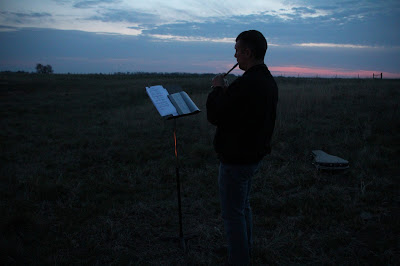
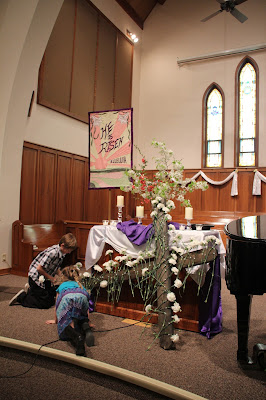
Spring in the prairie is a bit of an odd thing this year. Here and there, near ditches and creeks, a short, soft blanket of lush green grass covers the ground. A few feet away, patches of green are visible between the brown shoots of last year s grass. Some trees are already turning green, purple, red, and white, while others stand still and brown, stubbornly insisting that spring is not here yet. To look at the thermometer may not be much guide either; two days after the temperature was nearly 90, we woke to see a dusting of snow on the ground. It s been dry, terribly try in Kansas. Grass next to a gravel driveway or road often has a chalkish layer of dust on it, kicked up by passing cars or even a stiff wind. The earth thirsts. It is somehow fitting to celebrate Easter, that spring holiday, in the midst of the dry ground, to remember that water is not the only thing that can quench thirst. Easter morning began sleepily, as we got up early to head to a sunrise service. It was in a pasture just outside a small Kansas town, and we gathered there at about 6:15, wearing only light jackets against the breeze. A fire was burning, and there was water on hand to quickly douse any grass that caught first that wasn t supposed to and it was occasionally used. I was doing the prelude for the service, playing on my penny whistle. I enjoyed being able to do that, and was glad that the wind was calm enough that it didn t interfere too much with the music. We sang some hymns, listened to some Bible readings, and just stood in silence, listening to the crackle of the fire, some country dogs playing, and watching the sky to the east transform as the sun came up. Then it was on to church for breakfast, and a break before the Easter service the pipe organ ringing, piano playing with it, and deep trombone and full sanctuary of people singing our 4-part Easter hymns celebrating the day. Laura had the idea of pinning carnations onto the cross, and we got to watch everyone come up and add theirs. Jacob and Oliver enjoyed the sunrise service. They decided they would keep a watchful eye on the first and the dogs, they enjoyed muffins at breakfast and playing in the church after that. But if you are 4 or 7, what is Easter without an Easter egg hunt? And they got in several. Laura and I hid some eggs around the yard. Jacob asked me to use a radio to tell them when the eggs were ready. Here they are, bounding out the door to begin the hunt! And, of course, if you are 4 or 7 and have a geek for a dad, you will naturally think to bring radios with you to the next hunt. To tell your brother what you re finding, of course. It was a good weekend, and in fact, Jacob even volunteered to put up a wet floor sign after he spilled some water: On the last car ride of the day, Jacob decided he would write a story about his Easter. He decided he would publish a big book, and be a famous author and make other children happy. Oliver, of course, decided he needed an Easter story also. We couldn t very well publish a book in the car, but I did manage to use my phone to capture their stories. It s been a long and busy week, but there is much to be joyful about, even when tired.

Russ Allbery: Review: Hyperbole and a Half

Review: Hyperbole and a Half, by Allie Brosh
Publisher: Touchstone
Copyright: November 2013
ISBN: 1-4767-6459-X
Format: Graphic novel
Pages: 373
It's fundamentally pointless to write this review. Some number of you have already heard of Hyperbole and a Half. Most of that group already own this book and are only reading this review so that you can remember how much fun you had reading it. But, even better, you could just stop reading this review and go read the book again. Some of you who have heard of Hyperbole and a Half didn't know that Allie Brosh had published a book. If that's you, you're probably not reading this review any more, since you're now at your favorite book seller buying a copy of the book, rendering the review somewhat pointless. For those of you who have not heard of Hyperbole and a Half, there's no need to read a review, because it's a blog. So, rather than reading this review, you can just follow that link and read it for yourself. If you find yourself laughing uncontrollably (and occasionally crying) and going "where can I get more of this?", well, there's a book. Which you could have also found out from the blog itself. Like I said, not much point. If you read the blog and don't particularly care for it, well, I greatly respect your position. The diversity of taste in the human race is what leads to our wonderful variety of culture, philosophy, and art, and I appreciate your substantial contribution to that diversity. However, you should now make a mental note to never trust my humor recommendations, and you shouldn't let this review change your mind. But, since I'm here, I may as well write a review anyway. Hyperbole and a Half is, as mentioned, a blog by Allie Brosh. Most of the posts are quite long and substantial and in the form of cartoons mixed with text, usually (but not always) telling some sort of story. The cartoon style is what is often called "MS Paint," meaning that it looks like something drawn in Microsoft Paint with its most basic tools. (Other examples of this style are the Oatmeal and Homestuck, although Brosh stays consistently with a rawer art style than either of those.) It looks extremely simple, like child drawings (and early childhood inspires much of Brosh's material), but once one gets used to it, one realizes that Brosh gets amazing expressiveness and character out of the art style. As an aside, yes, I am wholeheartedly recommending a book that is full of material about young children. Brosh is that good. The subtitle of this book is "unfortunate situations, flawed coping mechanisms, mayhem, and other things that happened," and it's mostly based on (exaggerated) incidents that occurred in Brosh's life. Most of them are hilarious. Some of them are both hilarious and stunning psychological insights. She has an amazing knack for storytelling and for exaggerating just the right moments of the story, or summing up emotions in a wonderful turn of phrase or a picture. She's also amazingly good at telling embarrassing stories about herself in a way that makes you empathize rather than just cringe, and then come away feeling like you understand both her and yourself better. If you've wandered around the Internet much, you have probably run across the phrase "clean ALL the things!" and the corresponding picture. That's from Hyperbole and a Half (specifically, "This is Why I'll Never Be an Adult") and is included in this book (improved; see below). It's even better in context. But, beyond storytelling, the other thing Brosh is amazingly good at is capturing internal mental states and emotions in a way that the reader understands and those who have experienced the emotion immediately go "yes, THAT." The apex of this is her two-part post on depression, which is hands-down the best description of depression that I've ever read. That judgment has been echoed by multiple friends of mine with depression. And yes, both of those posts are included in the book as well, although you can also read them on the web. As you've probably noticed, this book is partly a collection of material that's freely available on the web. Unlike some web comics collections, it's not entirely a reprint collection; there are entirely new stories here (which for me was enough by itself to buy the book). Brosh's post on the book says that it's about 50% new material. But the ones that aren't original have been edited and improved, sometimes substantially. For example, I did a quick comparison of the book version with the web version of "This is Why I'll Never be an Adult" and found Brosh redrew all of the cartoons for the story. The book is also gorgeous, if you care about such things like I do: high quality paper, thick pages, vibrant colors, and a comfortable heft to the hardcover version. It's the sort of book that feels like it will survive for decades, which is good since I intend to re-read it for decades. Brosh has a lot of material on-line, so obviously only a small fraction made it into the book and there's more to discover on the blog. I can particularly recommend "The Alot is Better Than You at Everything" and "Boyfriend Doesn't Have Ebola. Probably.". The latter, which is mostly about creating a better pain scale, is my favorite from the blog that didn't make it into the book. And there are two more examples of the sort of thing that you'll getting here. So ends the probably pointless review. I absolutely adore Hyperbole and a Half. It is my favorite web comic, even surpassing XKCD, which is saying something. Even if there were no material, I would have bought this book in hardcover to support Brosh and to have a high-quality printing of the blog posts. The reworkings and improvements of the republished material and the brand new additions are just bonuses. But there's no need to take my word for it; the best possible advertisement for Brosh's work is on-line, from which you can easily determine if you'll enjoy this book as much as I did. Even the back cover and the inside flaps are awesome. Rating: 10 out of 10

Russell Coker: Sociological Images 2014

White Trash The above poster was on a bridge pylon in Flinders St in 2012. It s interesting to see what the Fringe Festival people consider to be associated with white trash . They claim homophobia is a white trash thing however lower class people have little political power and the fact that we still don t have marriage equality in Australia is clear evidence that homophobia is prevalent among powerful people. Toys vs Fairies Fairies look pretty while boys toys do things I took the above photo at Costco in 2012. I think it s worth noting the way that the Disney Fairies (all female and marketed to a female audience) are standing around looking pretty while the Toy Story characters (mostly male and marketed to a male audience) are running out to do things. Having those items side by side on the shelf was a clear example of a trend in toys towards girls being encouraged to be passive while boys are doing things. The Toy Story pack has one female character, so it could be interpreted as being aimed at both boys and girls. But even that interpretation doesn t remove the clear gender difference. It seems ironic to me that the descriptions on the boxes are Read, Play, and Listen for the Toy Story pack and Read, Play, and Colour on the Fairies pack. Colouring is more active than listening so the pictures don t match the contents. Make Up vs Tools Girls chocolate is make-up and boys chocolate is tools I took the above photo in an Aldi store in early 2013, today I was in Aldi and noticed that the same chocolate is still on sale. A clear and pointless gender difference. Rumor has it that some of the gender difference in kids clothing is so that a child can t wear the clothes of an older sibling of different gender, but chocolate only gets eaten once so there is no reason for this. Oath The above poster was inside the male toilet at Melbourne University in 2013. It would probably be good to have something like that on display all the time instead of just for one event. Locks Locks with inscriptions on a bridge on the Yarra River in Melbourne I took the above picture early this year, it shows hundreds of padlocks attached to a bridge across the Yarra River in Melbourne. Each padlock has a message written or inscribed in it, mostly declarations of love. I first noticed this last year, I m not sure how long it s been up. There was nothing formal about this (no signs about it), people just see it and decide that they want to add to it. I guess that the council cuts some of them off periodically as the number of locks doesn t seem to be increasing much in recent times. It would be interesting to do some research into how many locks are needed to start one of these. It would also be interesting to discover whether the nature of the inscriptions determines the speed at which it takes off, would a bunch of padlocks with messages like I Love Linux inspire others as well as messages declaring love for random people? All that is required is some old locks and an engraving tool. I wonder what the social norm might be regarding messing with those locks. If I was to use those padlocks to practice the sport of lock-picking (which I learned when in Amsterdam) I wonder whether random bystanders would try to discourage me. It seems likely that picking the locks and taking them away would get a negative reaction but I wonder whether picking them one at a time and replacing them (or maybe moving them to another wire) would get a reaction. Blackface for Schoolkids teachers choice blackface and yellowface masks A craft shop at the Highpoint shopping center in Melbourne is selling Teacher s Choice brand Multicultural Face Masks . Multicultural is a well regarded term in education, teaching children about other cultures is a good concept but can be implemented really badly. When I was in high school the subject Social Studies seemed to have an approach of look how weird people are in other places instead of teaching the kids anything useful. Sociological Images has an informative article on the Australian Hey Hey it s Saturday blackface incident in 2009 [1]. The idea of these masks seems to involve students dressing up as caricatures of other races. The mask which looks like someone s idea of a Geisha is an even bigger WTF, mixing what the package calls culture (really race) with sex work. When I visited Tokyo I got the impression that French maids fill a similar niche to Geisha for younger Japanese men and the maid cafe thing is really popular there. I think it s interesting to consider the way that a French maid costume is regarded differently to a Geisha costume. I expect that Teacher s Choice doesn t sell French maid costumes. Delicious Cow picture of a bovine named Delicious Usually meat is advertised in a way that minimises the connection to living animals. Often adverts just show cuts of meat and don t make any mention of animals and when animals are shown they are in the distance. The above picture was on the wall at a Grill d burger restaurant in Point Cook. It shows a bovine (looks like a bull even though I believe that cows are the ones that are usually eaten) with a name-tag identifying it as Delicious . The name tag personalises the animal which is an uncommon thing to do when parts of an animal are going to be eaten. Of the animals that are commonly eaten it seems that the general trend is to only show fish as complete live animals, presumably because people can identify with mammals such as cattle in a way that they can t identify with fish. Fish are also the only complete animals that are shown dead, adverts for fish that are sold as parts (EG salmon and tuna) often show complete dead fish. But I ve never seen a meat advert that shows a complete dead cow or sheep.

Matthew Garrett: Home entertainment implementations are pretty appalling

I picked up a Panasonic BDT-230 a couple of months ago. Then I discovered that even though it appeared fairly straightforward to make it DVD region free (I have a large pile of PAL region 2 DVDs), the US models refuse to play back PAL content. We live in an era of software-defined functionality. While Panasonic could have designed a separate hardware SKU with a hard block on PAL output, that would seem like unnecessary expense. So, playing with the firmware seemed like a reasonable start.

Panasonic provide a nice download site for firmware updates, so I grabbed the most recent and set to work. Binwalk found a squashfs filesystem, which was a good sign. Less good was the block at the end of the firmware with "RSA" written around it in large letters. The simple approach of hacking the firmware, building a new image and flashing it to the device didn't appear likely to work.

Which left dealing with the installed software. The BDT-230 is based on a Mediatek chipset, and like most (all?) Mediatek systems runs a large binary called "bdpprog" that spawns about eleventy billion threads and does pretty much everything. Runnings strings over that showed, well, rather a lot, but most promisingly included a reference to "/mnt/sda1/vudu/vudu.sh". Other references to /mnt/sda1 made it pretty clear that it was the mount point for USB mass storage. There were a couple of other constraints that had to be satisfied, but soon attempting to run Vudu was actually setting a blank root password and launching telnetd.

/acfg/config_file_global.txt was the next stop. This is a set of tokens and values with useful looking names like "IDX_GB_PTT_COUNTRYCODE". I tried changing the values, but unfortunately made a poor guess - on next reboot, the player had reset itself to DVD region 5, Blu Ray region C and was talking to me in Russian. More inconveniently, the Vudu icon had vanished and I couldn't launch a shell any more.

But where there's one obvious mechanism for running arbitrary code, there's probably another. /usr/local/bin/browser.sh contained the wonderful line:
export LD_PRELOAD=/mnt/sda1/bbb/libSegFault.so
, so then it was just a matter of building a library that hooked open() and launched inetd and dropping that into the right place, and then opening the browser.

This time I set the country code correctly, rebooted and now I can actually watch Monkey Dust again. Hurrah! But, at the same time, concerning. This software has been written without any concern for security, and it listens on the network by default. If it took me this little time to find two entirely independent ways to run arbitrary code on the device, it doesn't seem like a stretch to believe that there are probably other vulnerabilities that can be exploited with less need for physical access.

The depressing part of this is that there's no reason to believe that Panasonic are especially bad here - especially since a large number of vendors are shipping much the same Mediatek code, and so probably have similar (if not identical) issues. The future is made up of network-connected appliances that are using your electricity to mine somebody else's Dogecoin. Our nightmarish dystopia may be stranger than expected.

comment count unavailable comments

Next.

Previous.