Search Results: "ina"

13 January 2015

Dirk Eddelbuettel: RcppGSL 0.2.3

A new version of RcppGSL is now on CRAN today. This package provides an interface from R to the GNU GSL using our Rcpp. Similar to the recent RcppClassic release, this update was triggered by the CRAN maintainers desire to keep the Makefile free of GNU make extensions. At the same time we simplified the configure file a little, and refreshed the look and feel of the vignette. No user-facing changes were made. The NEWS file entries follows below:
Changes in version 0.2.3 (2015-01-10)
  • The src/Makevars.in was pruned of GNU make features at the request of the CRAN Maintainers
  • configure.ac and configure were updated, and shortened
  • The RcppGSL-intro.Rnw vignette was updated for its look and feel.
Courtesy of CRANberries, a summary of changes to the most recent release is available. More information is on the RcppGSL page. Questions, comments etc should go to the rcpp-devel mailing list off the R-Forge page.

This post by Dirk Eddelbuettel originated on his Thinking inside the box blog. Please report excessive re-aggregation in third-party for-profit settings.

12 January 2015

Russell Coker: Systemd Notes

A few months ago I gave a lecture about systemd for the Linux Users of Victoria. Here are some of my notes reformatted as a blog post: Scripts in /etc/init.d can still be used, they work the same way as they do under sysvinit for the user. You type the same commands to start and stop daemons. To get a result similar to changing runlevel use the systemctl isolate command. Runlevels were never really supported in Debian (unlike Red Hat where they were used for starting and stopping the X server) so for Debian users there s no change here. The command systemctl with no params shows a list of loaded services and highlights failed units. The command journalctl -u UNIT-PATTERN shows journal entries for the unit(s) in question. The pattern uses wildcards not regexs. The systemd journal includes the stdout and stderr of all daemons. This solves the problem of daemons that don t log all errors to syslog and leave the sysadmin wondering why they don t work. The command systemctl status UNIT gives the status and last log entries for the unit in question. A program can use ioctl(fd, TIOCSTI, ) to push characters into a tty buffer. If the sysadmin runs an untrusted program with the same controlling tty then it can cause the sysadmin shell to run hostile commands. The system call setsid() to create a new terminal session is one solution but managing which daemons can be started with it is difficult. The way that systemd manages start/stop of all daemons solves this. I am glad to be rid of the run_init program we used to use on SE Linux systems to deal with this. Systemd has a mechanism to ask for passwords for SSL keys and encrypted filesystems etc. There have been problems with that in the past but I think they are all fixed now. While there is some difficulty during development the end result of having one consistent way of managing this will be better than having multiple daemons doing it in different ways. The commands systemctl enable and systemctl disable enable/disable daemon start at boot which is easier than the SysVinit alternative of update-rc.d in Debian. Systemd has built in seat management, which is not more complex than consolekit which it replaces. Consolekit was installed automatically without controversy so I don t think there should be controversy about systemd replacing consolekit. Systemd improves performance by parallel start and autofs style fsck. The command systemd-cgtop shows resource use for cgroups it creates. The command systemd-analyze blame shows what delayed the boot process and
systemd-analyze critical-chain shows the critical path in boot delays. Sysremd also has security features such as service private /tmp and restricting service access to directory trees. Conclusion For basic use things just work, you don t need to learn anything new to use systemd. It provides significant benefits for boot speed and potentially security. It doesn t seem more complex than other alternative solutions to the same problems. https://wiki.debian.org/systemd http://freedesktop.org/wiki/Software/systemd/Optimizations/ http://0pointer.de/blog/projects/security.html

Chris Lamb: Giant's Causeway puzzle

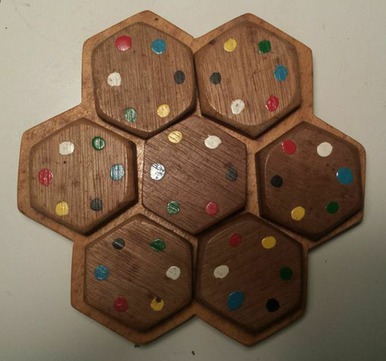
https://d1icoid1cnixnp.cloudfront.net/yadt/blog.Image/image/original/23.jpeg Over Christmas I found the above puzzle at my parent's house. I don't know if it has a name but it seemed apt to name it after The Giant's Causeway. The idea is that you swap and/or rotate the outer tiles until the colours at the edges match. The center tile is fixed, or at least I assume it is as the wooden edges are deliberately less rounded. Of course, solving it manually would be boring so here's a dumb brute force solution. I actually admire how inefficient and stupid it is...
import itertools
class Tile(list):
    def __getitem__(self, x):
        return super(Tile, self).__getitem__(x % len(self))
    def rotate(self, x):
        return Tile(self[x:] + self[:x])
COLOURS = ('YELLOW', 'WHITE', 'BLACK', 'RED', 'GREEN', 'BLUE')
YELLOW, WHITE, BLACK, RED, GREEN, BLUE = range(len(COLOURS))
TILES = (
    Tile((WHITE, YELLOW, RED, BLUE, BLACK, GREEN)),
    Tile((RED, BLUE, BLACK, YELLOW, GREEN, WHITE)),
    Tile((WHITE, BLACK, YELLOW, GREEN, BLUE, RED)),
    Tile((WHITE, BLUE, GREEN, YELLOW, BLACK, RED)),
    Tile((GREEN, BLUE, BLACK, YELLOW, RED, WHITE)),
    Tile((RED, YELLOW, GREEN, BLACK, BLUE, WHITE)),
)
CENTER = Tile((WHITE, BLACK, RED, GREEN, BLUE, YELLOW))
def pairwise(it):
    a, b = itertools.tee(it)
    next(b, None)
    return itertools.izip(a, b)
def validate(xs):
    for idx, x in enumerate(xs):
        if x[idx + 3] != CENTER[idx]:
            raise ValueError("Tile does not match center")
    for idx, (a, b) in enumerate(pairwise(xs)):
        if a[idx + 2] != b[idx + 5]:
            raise ValueError("Tile does not match previous anticlockwise tile")
    return xs
def find_solution():
    # For all possible tile permutations..
    for xs in itertools.permutations(TILES):
        # ... try all possible rotations
        for ys in itertools.product(range(len(COLOURS)), repeat=len(COLOURS)):
            try:
                return validate([x.rotate(y) for x, y in zip(xs, ys)])
            except ValueError:
                pass
    raise ValueError("Could not find a solution.")
for x in find_solution():
    print ', '.join(COLOURS[y] for y in x)
This prints (after 5 minutes!):
$ python giants.py
GREEN, BLUE, RED, WHITE, BLACK, YELLOW
WHITE, BLUE, GREEN, YELLOW, BLACK, RED
YELLOW, GREEN, BLACK, BLUE, WHITE, RED
GREEN, WHITE, YELLOW, RED, BLUE, BLACK
RED, BLUE, BLACK, YELLOW, GREEN, WHITE
BLUE, BLACK, YELLOW, RED, WHITE, GREEN
python giants.py  269.08s user 0.02s system 99% cpu 4:29.36 total
UPDATE: Seems like this puzzle is called "Circus Seven". Now to dust off my Prolog...

11 January 2015

Dirk Eddelbuettel: rfoaas 0.1.1

A brand new and shiny version of rfoaas is now on CRAN. The rfoaas package provides an interface for R to the most excellent FOAAS service--which provides a modern, scalable and RESTful web service for the frequent need to tell someone to f$#@ off. There are two (internal) changes of merit in this version. First off, as FOAAS was refactored upstream, we are now forced to supply an accept: text/plain http request header. Which, sadly enough, is not something the url() function in R can do---so we brought in more cavalry and now depend on the httr package by Hadley, and use its GET() method. A second change is that we added a (simple but effective enough) regression test which simply calls all foaas entry points available throug rfoaas, and compares this to the anticipated result. To run it, you need to set an environment variable RunFOAASTests=yes as eg out Travis script does. Finally, we aligned the version number with upstream to signal that we cover all available entry points of that version. As usual, CRANberries provides a diff to the previous release. Questions, comments etc should go to the GitHub issue tracker.

This post by Dirk Eddelbuettel originated on his Thinking inside the box blog. Please report excessive re-aggregation in third-party for-profit settings.

Steve McIntyre: UEFI Debian installer work for Jessie, part 5

Time for another update on my work for UEFI improvements in Jessie! I've spent more time on the integration of 32-bit grub-efi with a 64-bit Debian system, and just published a new test image on pettersson. I've added: These remove the manual steps that were necessary for a 64-bit installation with the previous build. I've just used this exact image (and a network mirror) to install a fully-functional 64-bit Gnome system on the X205TA, simply by selecting "64-bit install" from the GRUB menu and following prompts. Yay! Visit http://cdimage.debian.org/cdimage/unofficial/efi-development/jessie-upload3/ to download and test the image. Now, there's no guarantee that the kernel patch I've submitted to the linux-efi folks will be accepted in its current form, and even if it is I'll have to get it and the other code I've written accepted into the various packages and then into Jessie! But for now this image should work just fine for Bay Trail folks I hope! WARNING: this CD is provided for testing only. Use at your own risk! If you have appropriate (U)EFI hardware, please try this image and let me know how you get on, via the debian-cd and debian-boot mailing lists. For now, I'm going to pause development here. The core code I'm using to make these images is all in the debian-cd and d-i repos, and I'll push the other patches once I know they'll work with the kernel. But I've got a slew of other things that I need to work on in the next few weeks, in no particular order: I'm currently not planning to make all of Debian's amd64 images bootable using 32-bit UEFI like this image - I'm happy to leave this as just an option for our multi-arch i386/amd64 images (netinst or DVD only). I think that's a reasonable compromise here, and it's also the easiest thing for me to do with the current debian-cd build system. Finally, apologies if you've asked me questions about the earlier images in this series and I've not responded yet. Fixing that ASAP!

10 January 2015

Dirk Eddelbuettel: RcppClassic 0.9.6

A maintenance release of RcppClassic, now at version 0.9.6, went out to CRAN today. This package provides a maintained version of the otherwise deprecated first Rcpp API; no new projects should use it. No changes were in user-facing code. The Makevars file was change to accomodate a request by the CRAN Maintainer to keep it free of GNU Make extensions. At the same time, we overhauled the look and feel of the (very short) vignette. Build instructions were updated both in the vignette and in the included example package. Other accumulated changes since the last release were updates to the DESCRIPTION and NAMESPACE file as well two namespace-related R code updates. Courtesy of CRANberries, there is the set of changes relative to the previous release. Questions, comments etc should go to the rcpp-devel mailing list off the R-Forge page.

This post by Dirk Eddelbuettel originated on his Thinking inside the box blog. Please report excessive re-aggregation in third-party for-profit settings.

Mike Gabriel: Shifting my Focus in X2Go

Dear X2Go Community, dear friends, as many of you may know, I have been contributing a considerable amount
of time to upstream-maintaining X2Go over the past 4 years. I provided
new X2Go components (Python X2Go, PyHoca X2Go Client, a publicly
available X2Go Session Broker, X2Go MATE Bindings, etc.) and focused on
making X2Go a wide-spread community project. For the last 2-3 years I
have been in the role of the X2Go project coordinator and various other
roles. With the beginning of 2015, I will pass on several of those roles to
other people in the project, see the below list for already assigned and
unassigned roles: The reasons for tremendously reducing my workload on X2Go are these: In several internal exchanges we (Heinz, Stefan, Mihai, Mike#2, read more

9 January 2015

Chris Lamb: Uploading a large number of files to Amazon S3

I recently had to upload a large number (~1 million) of files to Amazon S3. My first attempts revolved around s3cmd (and subsequently s4cmd) but both projects seem to based around analysing all the files first rather than blindly uploading them. This not only requires a large amount of memory, non-trivial experimentation, fiddling and patching is also needed to avoid unnecessary stat(2) calls. I even tried a simple find xargs -P 5 s3cmd put [..] but I just didn't trust the error handling correctly. I finally alighted on s3-parallel-put, which worked out well. Here's a brief rundown on how to use it:
  1. First, change to your source directory. This is to ensure that the filenames created in your S3 bucket are not prefixed with the directory structure of your local filesystem whilst s3-parallel-put has a --prefix option, it is ignored if you pass a fully-qualified source, ie. one starting with a /.
  2. Run with --dry-run --limit=1 and check that the resulting filenames will be correct after all:
$ export AWS_ACCESS_KEY_ID=FIXME
$ export AWS_SECRET_ACCESS_KEY=FIXME
$ /path/to/bin/s3-parallel-put \
    --bucket=my-bucket \
    --host=s3.amazonaws.com \
    --put=stupid \
    --insecure \
    --dry-run --limit=1 \
    .
[..]
INFO:s3-parallel-put[putter-21714]:./yadt/profile.Profile/image/circle/807.jpeg -> yadt/profile.Profile/image/circle/807.jpeg
[..]
  1. Remove --dry-run --limit=1, and let it roll.

Dirk Eddelbuettel: random 0.2.3

A new release of my random package for truly (hardware-based) random numbers as provided by random.org is now on CRAN. The main change is a switch to the curl() function from the eponymous package by Jeroen Ooms. This was caused by random.org now using https instead of http, annd the fact that te url() function from R does not cope well with the redirect. Besides this (enforced) change, everything else remains the same. Courtesy of CRANberries comes a diffstat report for this release. Current and previous releases are available here as well as on CRAN.

This post by Dirk Eddelbuettel originated on his Thinking inside the box blog. Please report excessive re-aggregation in third-party for-profit settings.

Peter Eisentraut: Directing output to multiple files with zsh

Normally, this doesn t work as one might naively expect:
program > firstfile > secondfile
The second redirection will override the first one. You d have to use an external tool to make this work, maybe something like:
program   tee firstfile secondfile
But with zsh, this type of thing actually works. It will duplicate the output and write it to multiple files. This feature also works with a combination of redirections and pipes. For example
ls > foo   grep bar
will write the complete directory listing into file foo and print out files matching bar to the terminal. That s great, but this feature pops up in unexpected places. I have a shell function that checks whether a given command produces any output on stderr:
! myprog "$arg" 2>&1 >/dev/null   grep .
The effect of this is: (Note the ordering of 2>&1 >/dev/null to redirect stderr to stdout and silence the original stdout, as opposed to the more common incantation of >/dev/null 2>&1, which silences both stderr and stdout.) The reason for this is that myprog has a bug that causes it to print errors but not produce a proper exit status in some cases. Now how will my little shell function snippet behave under zsh? Well, it s quite confusing at first, but the following happens. If there is stderr output, then only stderr is printed. If there is no stderr output, then stdout is passed through instead. But that s not what I wanted. This can be reproduced simply:
ls --bogus 2>&1 >/dev/null   grep .
prints an error message, as expected, but
ls 2>&1 >/dev/null   grep .
prints a directory listing. That s because zsh redirects stdout to both /dev/null and the pipe, which makes the redirection to /dev/null pointless. Note that in bash, the second command prints nothing. This behavior can be changed by turning off the MULTIOS option (see zshmisc man page), and my first instinct was to do that, but options are not lexically scoped (I think), so this would break again if the option was somehow changed somewhere else. Also, I think I kind of like that option for interactive use. My workaround is to use a subshell:
! ( myprog "$arg" 2>&1 >/dev/null )   grep .
The long-term fix will probably be to write an external shell script in bash or plain POSIX shell.

8 January 2015

Russell Coker: Conference Suggestions

LCA 2015 is next week so it seems like a good time to offer some suggestions for other delegates based on observations of past LCAs. There s nothing LCA specific about the advice, but everything is based on events that happened at past LCAs. Don t Oppose a Lecture Question time at the end of a lecture isn t the time to demonstrate that you oppose everything about the lecture. Discussion time between talks at a mini-conf isn t a time to demonstrate that you oppose the entire mini-conf. If you think a lecture or mini-conf is entirely wrong then you shouldn t attend. The conference organisers decide which lectures and mini-confs are worthy of inclusion and the large number of people who attend the conference are signalling their support for the judgement of the conference organisers. The people who attend the lectures and mini-confs in question want to learn about the topics in question and people who object should be silent. If someone gives a lecture about technology which appears to have a flaw then it might be OK to ask one single question about how that issue is resolved, apart from that the lecture hall is for the lecturer to describe their vision. The worst example of this was between talks at the Haecksen mini-conf last year when an elderly man tried at great length to convince me that everything about feminism is wrong. I m not sure to what degree the Haecksen mini-conf is supposed to be a feminist event, but I think it s quite obviously connected to feminism which is of course was why he wanted to pull that stunt. After he discovered that I was not going to be convinced and that I wasn t at all interested in the discussion he went to the front of the room to make a sexist joke and left. Consider Your Share of Conference Resources I ve previously written about the length of conference questions [1]. Question time after a lecture is a resource that is shared among all delegates. Consider whether you are asking more questions than the other delegates and whether the questions are adding benefit to other people. If not then send email to the speaker or talk to them after their lecture. Note that good questions can add significant value to the experience of most delegates. For example when a lecturer appears to be having difficulty in describing their ideas to the audience then good questions can make a real difference, but it takes significant skill to ask such questions. Dorm Walls Are Thin LCA is one of many conferences that is typically held at a university with dorm rooms offered for delegates. Dorm rooms tend to have thinner walls than hotel rooms so it s good to avoid needless noise at night. If one of your devices is going to make sounds at night please check the volume settings before you start it. At one LCA I was startled at about 2AM but the sound of a very loud porn video from a nearby dorm room, the volume was reduced within a few seconds, but it s difficult to get to sleep quickly after that sort of surprise. If you set an alarm then try to avoid waking other people. If you set an early alarm and then just get up then other people will get back to sleep, but pressing snooze repeatedly for several hours (as has been done in the past) is anti-social. Generally I think that an alarm should be at a low volume unless it is set for less than an hour before the first lecture in which case waking people in other dorm rooms might be doing them a favor. Phones in Lectures Do I need to write about this? Apparently I do because people keep doing it! Phones can be easily turned to vibrate mode, most people who I ve observed taking calls in LCA lectures have managed this but it s worth noting for those who don t. There are very few good reasons for actually taking a call when in a lecture. If the hospital calls to tell you that they have found a matching organ donor then it s a good reason to take the call, but I can t think of any other good example. Many LCA delegates do system administration work and get calls at all times of the day and night when servers have problems. But that isn t an excuse for having a conversation in the middle of the lecture hall while the lecture is in progress (as has been done). If you press the green button on a phone you can then walk out of the lecture hall before talking, it s expected that mobile phone calls sometimes have signal problems at the start of the call so no-one is going to be particularly surprised if it takes 10 seconds before you say hello. As an aside, I think that the requirement for not disturbing other people depends on the number of people who are there to be disturbed. In tutorials there are fewer people and the requirements for avoiding phone calls are less strict. In BoFs the requirements are less strict again. But the above is based on behaviour I ve witnessed in mini-confs and main lectures. Smoking It is the responsibility of people who consume substances to ensure that their actions don t affect others. For smokers that means smoking far enough away from lecture halls that it s possible for other delegates to attend the lecture without breathing in smoke. Don t smoke in the lecture halls or near the doorways. Also using an e-cigarette is still smoking, don t do it in a lecture hall. Photography Unwanted photography can be harassment. I don t think there s a need to ask for permission to photograp people who harass others or break the law. But photographing people who break the social agreement as to what should be done in a lecture probably isn t. At a previous LCA a man wanted to ask so many questions at a keynote lecture that he had a page of written notes (seriously), that was obviously outside the expected range of behaviour but probably didn t justify the many people who photographed him. A Final Note I don t think that LCA is in any way different from other conferences in this regard. Also I don t think that there s much that conference organisers can or should do about such things.

MJ Ray: Social Network Wishlist

All I want for 2015 is a Free/Open Source Software social network which is: Is this too much to ask for? Does it exist already?

7 January 2015

Dirk Eddelbuettel: RcppCNPy 0.2.4

A new release of the RcppCNPy package is now on CRAN. This release mostly solidifies and fixes things. Support for saving integer objects, which was expanded in release 0.2.3, was not entirely correct. Operations on big-endian systems were not up to snuff either. Wush Wu helped in getting this right with very diligent testing and patching particularly on big-endian hardware. We also got a pull request from Romain to reflect better const correctness at the Rcpp side of things. Last but not least we obliged by the CRAN Maintainers to not assume one could call gzip from system() call because, well, you guessed it.
Changes in version 0.2.4 (2015-01-05)
  • Support for saving integer objects was not correct and has been fixed.
  • Support for loading and saving on 'big endian' systems was incomplete, has been greatly expanded and corrected, thanks in large part to very diligent testing as well as patching by Wush Wu.
  • The implementation now uses const iterators, thanks to a pull request by Romain Francois.
  • The vignette no longer assumes that one can call gzip via system as the world's leading consumer OS may disagree.
CRANberries also provides a diffstat report for the latest release. As always, feedback is welcome and the rcpp-devel mailing list off the R-Forge page for Rcpp is may be the best place to start a discussion. GitHub issue tickets are also welcome.

This post by Dirk Eddelbuettel originated on his Thinking inside the box blog. Please report excessive re-aggregation in third-party for-profit settings.

6 January 2015

Steve McIntyre: Bootstrapping arm64 in Debian

I promised to write about this a long time, ooops... :-) Another ARM port in Debian - yay! arm64 is officially a release architecture for Jessie, aka Debian version 8. That's taken a lot of manual porting and development effort over the last couple of years, and it's also taken a lot of CPU time - there are ~21,000 source packages in Debian Jessie! As is often the case for a brand new architecture like arm64 (or AArch64, to use ARM's own terminology), hardware can be really difficult to get hold of. In time this will cease to be an issue as hardware becomes more commoditised, but in Debian we really struggled to get hold of equipment for a very long time during the early part of the port. First bring-up in Debian Ports To start with, we could use ARM's own AArch64 software models to build the first few packages. This worked, but only very slowly. Then Chen Baozi and the folks running the Tianhe-2 supercomputer project in Guangzhou, China contacted us to offer access to some arm64 hardware, and this is what Wookey used for bootstrapping the new port in the unofficial Debian Ports archive. This has now become the normal way for new architectures to get into Debian. We got most of the archive built in debian-ports this way, and we could then use those results to seed the initial core set of packages in the main Debian archive. Second bring-up - moving into the main Debian archive By the time that first Debian bring-up was done, ARM was starting to produce its own "Juno" development boards, and with the help of my boss^4 James McNiven we managed to acquire a couple of those machines for use as official Debian build machines. The existing machines in China were faster, but for various reasons quite difficult to maintain as official Debian machines. So I set up the Junos as buildds just before going to DebConf in August 2014. They ran very well, and (for dev boards!) were very fast and stable. They built a large chunk of the Debian archive, but as the release freeze for Jessie grew close we weren't quite there. There was a small but persistent backlog of un-built packages that were causing us issues, plus the Juno machines are/were not quite suitable as porter boxes for Debian developers all over the world to use for debugging their packages on the new architecture. More horsepower - Linaro machines This is where Linaro came to our aid. Linaro's goal is to help improve Free and Open Source Software on ARM, and one of the more recent projects in Linaro is a cluster of servers that are made available for software developers to use to get early access to ARMv8 (arm64) hardware. It's a great way for people who are interested in this new architecture to try things out, port their software or indeed just help with the general porting effort. As Debian is seen as such an important part of the FLOSS ecosystem, we managed to negotiate dedicated access to three of the machines in that cluster for Debian's use and we set those up in October, shortly before the freeze for Jessie. Andy Doan spent a lot of his time getting these machines going for us, and then I set up two of them as build machines and one as the porter box we were still needing. With these extra machines available, we quickly caught up with the ever-busy "Needs-Build" queue and we've got sufficient build power now to keep things going for the Jessie release. We were officially added to the list of release architectures at the Cambridge mini-Debconf in November, and all is looking good now! And in the future? I've organised the loan of another arm64 machine from AMD for Debian to use for further porting and/or building. We're also expecting that more and more machines will be coming out soon as vendors move on from prototyping to producing real customer equipment. Once that's happened, more kit will be available and everybody will be able to have arm64-powered computers in the server room, on their desk and even inside their laptop! Mine will be running Debian Jessie... :-) Thanks! There's been a lot of people involved in the Debian arm64 bootstrapping at various stages, so many that I couldn't possibly credit them all! I'll highlight some, though. :-) First of all, Wookey's life has revolved around this port for the last few years, tirelessly porting, fixing and hacking out package builds to get us going. We've had loads of help from other teams in Debian, particularly the massive patience of the DSA folks with getting early machines up and running and the prodding of the ftpmaster, buildd and release teams when we've been grinding our way through ever more package builds and dependency loops. We've also had really good support from toolchain folks in Debian and ARM, fixing bugs as we've found them by stressing new code and new machines. We've had a number of other people helping by filing bugs and posting patches to help us get things built and working. And (last but not least!) thanks to all the folks who've helped us beg and borrow the hardware to make the Debian arm64 port a reality. Rumours of even more ARM ports coming soon are entirely scurrilous... *grin*

Holger Levsen: 20150106-lts-december-2014

My LTS December In December 2014 I spent 11h on Debian LTS work and managed to get six DLAs released and another one almost done... I did: Thanks to everyone who is supporting Squeeze LTS in whatever form! Even just expressing that you or the company or project you're working with is using LTS, is useful, as it's always nice to hear once work is used and appreciated. If you can contribute more, please do so. If you can't, that's also fine. It's free software after all :-)

Tiago Bortoletto Vaz: A few excerpts from The Invisible Committe's latest article

Just sharing some points from "2. War against all things smart!" and "4. Techniques against Technology" by The Invisible Committee's "Fuck off Google" article. You may want to get the "Fuck off Google" pdf and watch that recent talk at 31C3. "...predicts The New Digital Age, there will be people who resist adopting and using technology, people who want nothing to do with virtual profiles, online data systems or smart phones. Yet a government might suspect that people who opt out completely have something to hide and thus are more likely to break laws, and as a counterterrorism measure, that government will build the kind of hidden people registry we described earlier. If you don t have any registered social-networking profiles or mobile subscriptions, and on-line references to you are unusually hard to find, you might be considered a candidate for such a registry. You might also be subjected to a strict set of new regulations that includes rigorous airport screening or even travel restrictions. " I've been introduced to following observations about 5 years ago when reading "The Immaterial" by Andr Gorz. Now The Invisible Committee makes that even clearer in a very few words: "Technophilia and technophobia form a diabolical pair joined together by a central untruth: that such a thing as the technical exists. [...] Techniques can t be reduced to a collection of equivalent instruments any one of which Man, that generic being, could take up and use without his essence being affected." "[...] In this sense capitalism is essentially technological; it is the profitable organization of the most productive techniques into a system. Its cardinal figure is not the economist but the engineer. The engineer is the specialist in techniques and thus the chief expropriator of them, one who doesn t let himself be affected by any of them, and spreads his own absence from the world every where he can. He s a sad and servile figure. The solidarity between capitalism and socialism is confirmed there: in the cult of the engineer. It was engineers who drew up most of the models of the neoclassical economy like pieces of contemporary trading software."

Joey Hess: a bug in my ear

True story: Two days ago, as I was about to drift off to sleep at 2 am, a tiny little bug flew into my ear. Right down to my eardrum, which it fluttered against with its wings. It was a tiny little moth-like bug, the kind you don't want to find in a bag of flour, and it had been beating against my laptop screen a few minutes before. This went on for 20 minutes, in which I failed to get it out with a cue tip and shaking my head. It is very weird to have a bug flapping in your head. I finally gave up and put in eardrops, and stopped the poor thing flapping. I happen to know these little creatures mass almost nothing, and rapidly break up into nearly powder when dead. So while I've not had any bug bits come out, I'm going by the way my ear felt a little stopped up yesterday, and just fine today, and guessing it'll be ok. Oh, and I've been soaking it in the tub and putting in eardrops for good measure. If I've seemed a little distracted lately, now you know why!

5 January 2015

Dirk Eddelbuettel: BH release 1.55.0-3

Right on the heels of yesterday's BH release 1.55.0-2 bringing Boost Fusion, we now have release 1.55.0-3 bringing Boost Graph. To recap, BH is our CRAN package providing (a large part of the) Boost C++ libraries as a set of template headers for use by R and of course Rcpp. And as a small project I am working on--and which should now be so much closer to release--needed not only Boost Fusion but also Boost Graph, I had to bother the CRAN maintainers twice in two days. This new version closes issue ticket 9, and may be of interest to other packages such as the venerable RBGL formerly on CRAN and now a BioConductor package which includes its own copy of this graph library (plus depends). A brief summary of changes from the NEWS file is below.
Changes in version 1.55.0-3 (2015-01-04)
  • Added Boost Graph requested in GH ticket #9 by Dirk for RcppStreams
Courtesy of CRANberries, there is also a diffstat report for the most recent release. Comments and suggestions are welcome via the mailing list or the issue tracker at the GitHubGitHub repo.

This post by Dirk Eddelbuettel originated on his Thinking inside the box blog. Please report excessive re-aggregation in third-party for-profit settings.

Russ Allbery: Review: Ancillary Sword

Review: Ancillary Sword, by Ann Leckie
Series: Imperial Radch #2
Publisher: Orbit
Copyright: October 2014
ISBN: 0-316-24665-4
Format: Trade paperback
Pages: 354
This is the second book in the Imperial Radch series and a direct sequel to Ancillary Justice. You don't want to read this book out of order, since the previous book sets up the background of everything that happens here. Besides, Ancillary Justice is an amazing book. It's going to be challenging to review Ancillary Sword without spoiling the previous book. If you're planning on reading Ancillary Justice but haven't gotten to it, you may want to stop here and come back to this review after you've read it. Or, even better, just read both books. They're some of the best science fiction I've read. Ancillary Justice started small, with one person and their quixotic search for revenge, and grew large, to encompass conflicts and confrontations that would shake the Radch. Ancillary Sword returns to a smaller scale and stays there. This means that much of what was left unresolved at the end of the previous book is still unresolved; Leckie does not continue escalating into large-scale conflict. It also means that we see a lot more of Breq making personal choices and trying to work out her own sense of morality, plus semi-adopting a couple more injured people along the way. One of my favorite types of stories is where I get to watch someone who is very good at something do the thing that they're very good at. Breq's unique background and experience makes her a wildcard outsider with vast experience in her new role. (Not to mention the special advantages she has from her implants.) Her long experience with people, similarly from a unique perspective, lets her use her power to effectively navigate political situations while keeping people slightly off-balance. And now she has some real power, made more potent for being somewhat ill-defined. In short, this is a story of political agency, given to someone who hasn't had it before but who is very good at using it. It's immensely satisfying, in part because it's not a simple wish fulfillment. Breq can't just reshape the world to her preferences; in fact, she can't do much about one of the social conflicts she runs into, except treat the people involved with unexpected respect. But she can occasionally do something, and she can always upset existing power structures in subtle ways, and the way Leckie writes this makes it so much fun to read. I think one of the reasons why I enjoyed this so much is that Breq is not relentlessly introspective. She just acts. Usually this sort of book involves lots of soul-searching and analysis, and the lack is refreshing. The other people in the story analyze Breq much more than she analyzes herself, sometimes incorrectly, and Breq finds the whole thing faintly amusing. Not only does this keep the story from bogging down in too much internal drama, it means that Breq frequently surprises the reader, usually in ways that had me grinning. And, despite not mulling things over incessantly, she is growing and developing, finding her own sense of morality and and ethics in a way that's sometimes only apparent in retrospect. The one caveat I will mention is that this is a book that concerns itself a great deal with colonialism and racial slavery, but it's a fantasy of political agency focused on someone who's part of the dominant culture. While it's not quite accurate to say that Breq is this world's equivalent of white, she can pass, and she's Radchaai. I thought the book handles the issues reasonably well, but it is still using oppressed cultures to focus on the agency and power of someone who is, comparatively, privileged. This didn't bother me while I was reading the story, but it started to bother me a little afterwards once it was pointed out. There's nothing inherently wrong with that story, but it's a rather common pattern, and I'm afraid Ancillary Sword doesn't do much to broaden the pattern. That said, it's a caveat rather than a fatal flaw, at least for me. Ancillary Sword is obviously the middle book of a trilogy, and normally the lack of forward progress on the overarching story and the sense of filling in background and setting the scene would undermine the book. But Breq and the other characters in this world are so fascinating that I didn't mind. The ending was not quite what I expected, but worked better the more that I thought about it. I'm really looking forward to the next book. Followed by Ancillary Mercy. Rating: 9 out of 10

4 January 2015

Dirk Eddelbuettel: BH release 1.55.0-2

A new release of BH, our package providing (a large part of the) Boost C++ libraries as a set of template headers for use by R, is now on CRAN. This is a relatively minor change which expands the set of Boost libraries included in the package to Boost Fusion per issue ticket 7. Boost Fusion is a very clever library providing a fusion of both compile-time meta-programming and run-time programming to provide something similar to the STL (i.e. containers, algorithms, ...) for heterogenous tuples. I also added pointers to both the mailing list and the GitHub issue tracker to the DESCRIPTION file, README and main manual page. A brief summary of changes from the NEWS file is below.
Changes in version 1.55.0-2 (2015-01-03)
  • Added Boost Fusion requested in GH ticket #7 by Dirk for RcppStreams
Courtesy of CRANberries, there is also a diffstat report for the most recent release. Comments and suggestions are welcome via the mailing list or the issue tracker at the GitHubGitHub repo.

This post by Dirk Eddelbuettel originated on his Thinking inside the box blog. Please report excessive re-aggregation in third-party for-profit settings.

Next.

Previous.