Search Results: "ean"

5 January 2012

Michal Čihař: ColorHug client in unstable

It took me much more uploads than I expected, but ColorHug client is finally in unstable. I was fighting with various bugs, which I could not reproduce locally and of course with my own stupidity in configuring pbuilder. Anyway the buildds overview now shows mostly green, so this is good. The remaining ones mostly wait for libgusb, which needs build on armhf and needs to be ported to non Linux (or rather libusb needs to exist there). One of things I've learned on the way is that docbook-utils is not enough to convert docbook to man pages, you need docbook package as well. Still I don't understand why this did locally work for me... The one outstanding issue is that client code assumes it runs on little endian host (or rather same endianity as the ColorHug device) and thus will break on PPC and other big endian machines. The upstream is aware of that an I even managed to produce patch which should fix it, though I have no means to test it (lack of big endian hardware and lack of the ColorHug device itself).

Filed under: Debian English 4 comments Flattr this!

Jaldhar Vyas: Jeopardy!: The Post-Mortem

By now hopefully you got a chance to see my Jeopardy! episode so it won't be much of a spoiler to mention that I didn't win. It went like this. I flew into LA on the night of October 31st. The taping was to take place on the next two days. Jeopardy! tapes two weeks of shows, two days a week for a total of 10 episodes. Contestants are randomly chosen for one of those 10 episodes but you don't find out which one you will be on until the last minute. Randomness and secrecy have become become a big part of the production process in games since the quiz show scandals of the 1950s. (Interesting fact: it is a Federal felony to tamper with a TV game show.) There were a group of just under 20 0f us altogether waiting to go on. All very nice people. Here in the New York area one tends to equate very intelligent people with "Type A" personalities but we got on well together. Interspersed between the tapings, we had short practice sessions to familiarize ourselves with the studio setup and this is where I first started getting a little apprehensive. Jeopardy! is not just about general knowledge, there is a physical element too in that you have to buzz in by pressing a button on a stick which is wired up to some producers console. You can't buzz in before Alex has finished reading the question and obviously you can't buzz in if someone is already answering the question. If you buzz at the wrong time, your buzzer locks for 0.75 seconds so just jamming your finger on the button. I didn't even get that far as on the entire first day I failed to buzz in at all despite changing hands, changing grip different ways and other strategies. I was pretty despondent by the second day but then miraculously I managed to get the hang of it. So when I was finally selected (for the 3rd game of that day.) I was back to my usual cool self. I was up against Dave Leach and Nicholas Campiz who were returning after having tied in the previous game. And the game did start well enough. Oh one thing you may notice is that Alex mispronounces my name Jaldhal. I knew he did that once or twice and even mentioned it to a producer but it was only viewing the episode right now that I see he does it consistently. I assumed such things would be fixed up in post-editting but I guess not. Oh well, after living in this country for so many years I've learned to be happy whenever two consonants are more or less in the right place. This particular mispronunciation is actually fairly common, even Indian people have been known to make it. The alternative theory is that Alex couldn't read my horrible handwriting which is also plausible. Anyway, I digress. I started off fairly well. My first mistake was in a category about alcoholic drinks. I answered vermouth when the correct response was gin. In my defense I'm a strict teetoler so none of these words mean anything to me. I also earned the disapproval of my superhero fan son by mistaking Dr. Strange for Dr. Doom. I did get the one about Spiderman villain Dr. Octopus so that mollified him somewhat. The highlight of my evening was strangely enough in a category about books of the Bible. I got a Daily Double. It was a risky move but I have always wanted to make a "true" daily double so I threw caution to the winds and wagered everything I had. To my surprise as much as anyones, got the answer right doubling my score. I was in a pretty good position for the Double Jeopardy but thats when Dave started dominating. If you haven't been watching previous games, Dave Leach is arguably the best player this season. Not only is he smart but he is almost supernaturally fast on the buzzer. You can't see because I kept my hands behind the podium but I again and again I would desperately try to ring in on a question I knew the answer to only to be beaten to the punch by Dave. This caused me to start getting a bit reckless and answering questions where I was less than certain which cost me dearly. One particularly dumb mistake was in a category where all the answers were supposed to start with the letter g. I said compass when I should said gyrocompass but actually I should have left that category alone entirely. By the time Final Jeopardy came around winning was no longer an option as Dave was too far in the lead. I was slightly ahead of Nicholas in 2nd place. This is where I again made a strategic error. My original plan to bet nothing in Final Jeopardy but the category was "1930s Novels" and I liked my chances. The clue was read out and it involved an anti-war novel whose author was blacklisted. I was elated. It had to be "All Quiet on the Western Front" right? The blacklist bit gave me pause as the author Erich Maria Remarque was German and this was obviously a reference to the anti-Communist blacklist in the 1950s USA. But somehow I remembered that he had spent the end of his life in Hollywood or maybe I just convinced myself that it was plausible. Evidently my thought process wasn't too crazy because all three of us came up with the same answer. All three of us were wrong. The correct answer was "Johnny Got His Gun" by Daltan Trumbo. In hindsight I knew this but it illustrates the strange ways the mind works. I knew because the video for Metallicas song "One" from "...And Justice for All" is based on the film adaptation of this book. However in a previous orientation session the lady who is the contestant coordinator for Jeopardy! had mentioned AQOTHWF as anexample of something and this got stuck in my brain crowding out the previously known fact. So when all was said and done I ended up in 3rd place. (I bet big whereas Nicholas was more conservative.) Oh well. Despite not winning I had a blast. I fulfilled my dream of appearing on Jeopardy! I met Alex Trebek. (And I should be receiving an autographed picture of us together soon.) My witty banter was sufficiently witty. I made enough money to cover my travel expenses and still have a nice amount left. And I got to meet lots of interesting and wonderful people. So I'm satisfied.

4 January 2012

Lior Kaplan: FOSDEM 2012

I'm going to FOSDEM, the Free and Open Source Software Developers' European Meeting See you there
Filed under: Debian GNU/Linux, FOSDEM, LibreOffice

Matthew Garrett: The economic incentive to violate the GPL

My post yesterday on how Google gains financial benefit from vendor GPL violations contained an assertion that some people have questioned - namely, "unscrupulous hardware vendors save money by ignoring their GPL obligations". And, to be fair, as written it's true but not entirely convincing. So instead, let's consider "unscrupulous hardware vendors have economic incentives to ignore their GPL obligations".

The direct act of compliance costs money
Complying with the GPL means having the source code that built the binaries you ship. This is easy if your workflow involves putting source in at one end and getting binaries out at the other, but getting to that workflow means having a certain degree of engineering rigour. If your current build process involves mixing a bunch of known good binaries you got from somewhere but you can't remember where with a hacked up source tree that exists on someone's hard drive and then pushing all of these into a tool that only runs on Windows ME, before taking the resulting image and replacing chunks of it by hand, compliance is effectively impossible.

We all know that this is against all kinds of best practices and probably causes so many problems that it's more expensive in the long term, but retooling and hiring someone to oversee all of this takes time and money, and given the margins on many of these devices that's probably enough to make you uncompetitive for a couple of product cycles. Maybe you'll be in a better position afterwards, but you don't know that there'll be an afterwards.

Suppliers who don't provide you with the source code may be cheaper than those who do
You can't be in compliance if you don't have the source code in the first place. The same arguments that apply to the hardware vendors also apply to the people selling you your chips, so there's also an economic incentive for them to avoid complying. And there's an obvious incentive for you to choose the cheaper chipset, even if they don't comply.

Getting the source may cost money
Buying a chipset doesn't necessarily get you the software that makes it work - several silicon vendors will charge you for the SDK. But many of these devices are effectively reference platforms, so are basically identical from a hardware perspective. So if one of your competitors paid for the SDK, you can just dump the binaries off their machine, flash them onto your own boards and save yourself a decent amount of money. You obviously don't get the source, and nor do you have the standing to insist that the vendor whose binaries you misappropriated give you the source.

In the absence of enforcement, GPL compliance only works if it's the norm
Let's imagine two companies, A and B. Both build a tablet device, and buy the full SDK including source code. Both find a bunch of bugs in the vendor SDK and fix a different subset of them. They ship. A provides source code. B doesn't. B can now take A's bugfixes and incorporate them, resulting in a more compelling product without any significant extra cost. You now have two products that can sell for the same price, but B's is better. A would need to prove that B copied their bugfixes rather than simply fixing them themselves , which probably isn't going to happen.

In a larger market, if B is the only vendor who does this then their advantage isn't large - some of A's work is misappropriated by B, but A does benefit from the engineering work contributed by C, D, E, F and G. A combination of social pressure and legal threats may bring B into compliance. But if infringement is the norm, A has no incentive at all to release the source - by doing so they'll be helping not only B, but also C, D, E, F and G. Everyone undercuts A and they go out of business quite quickly.

Moral: In the absence of enforcement, if everyone else is infringing, a single company who complies is at a disadvantage.

If compliance cost nothing then everyone would do it
You can argue that cheap tablets from China are infringing simply because nobody knows better. But what's HTC's excuse? They've clearly decided that there's a benefit in holding back their source code releases[1], balancing this against the risk of being sued. They know full well what they're doing. If compliance was free they'd ship the source at the same time as they shipped the binaries. Other significant vendors are also fully aware of their obligations but choose to ignore them anyway.

Summary
There are economic incentives to infringe the GPL, and therefore (all else being equal) an infringing device can be sold for less money. All else being equal, a cheaper device will sell more units. More sales means more devices selling adverts for Google. Google makes more money because Android vendors infringe the GPL.

Edited to add:

But don't just take my word for it - Jean-Baptiste Queru says the same here (search for "scrubbing" - is there any way to link directly to a Google plus comment?)

[1] The usual argument is "We will release the source code within 120 days", implying that it's a process that takes time and we should just be patient. Every single time I've started making threatening noises, the source has appeared within a week.

comment count unavailable comments

Russell Coker: Autism and a Child Beauty Contest

Fenella Wagener wrote an article for the Herald Sun about an Autistic girl who won the best personality award from the controversial new Australian children s beauty pageant [1]. The girl s mother is complaining that an Autistic girl shouldn t win a prize for personality and is critizing the pageant organisers. A beauty contest involves queuing, being quiet, appearing on stage, wearing cosmetics and unusual/uncomfortable clothes. It probably also involves having someone else assist with dressing and applying cosmetics (being touched by another person). These are all things which tend to be difficult or impossible for Autistic kids. So any girl who can get on stage wearing make-up can probably do whatever is required to avoid being obviously excluded from a personality prize. As any such prize has to be largely subjective I don t think it would ever be possible to prove that someone was the correct choice for the winner, it would merely be possible to prove that some candidates excluded themselves. But whether the girl deserved to win isn t the real issue here. I think that beauty pageants should be restricted to adults, merely entering a child in such a contest is bad enough, but making nasty public statements about a child is horrible. If other children made a Facebook page claiming that the girl in question didn t deserve to win a best personality prize it would probably be reported as cyber-bullying. I don t think that publishing the name or photo of the girl in question is in the public interest either. Many news sites that have picked up the story have shown the same lack of journalistic ethics so now the girl has some high traffic sites with her name linked to this story, it seems unlikely that anything good she might do in the near future will get a higher ranking for her name in search engines. So any time she searches for her name on Google (which most people do regularly) she will be reminded that her mother thinks she has some sort of defective personality because she is Autistic. High school is generally bad for almost everyone on the Autism Spectrum. Presumably any parent who would abuse their child by allowing such an article to be published would also send them to a regular school (as opposed to Home Schooling which is probably the only good option for Autistic kids in Australia). I m sure that the standard practice at every high school nowadays is that the kids all use Google to discover things to tease each other about. So in a few years the Herald Sun article will probably be the basis of a high school bullying campaign. The girl in question is only 9, so she s got another 6 or 7 years before she can legally leave her mother. In Australia 16 is the minimum legal age to live without parents and the police won t forcibly return runaway children who are almost 16. The Journalistic Code of Ethics Here is a link to the Australian Media Alliance code of Journalistic Ethics [2]. Section 8 includes Never exploit a person s vulnerability or ignorance of media practice . I think that publishing the name and photograph of a 9yo girl in a way that is likely to lead to bullying in a few years is a clear example of exploiting a vulnerable person. The code of ethics has a guidance clause which says Only substantial advancement of the public interest or risk of substantial harm to people allows any standard to be overridden . Even if it was a proven fact that a beauty pageant was issuing awards to unqualified children there would not be any substantial advancement of the public interest in publishing that. Beauty Contests are Evil The Australian has an article about the same beauty contest by Caroline Overington which quotes adolescent and child psychotherapist Collett Smart calling for government intervention [3]. Catherine Manning has written a good article explaining some of the reasons for opposing child beauty pageants [4]. The American Psychological Association has published a report on the Sexualization of Girls [5], they have lots of references to psychological research which gives a variety of reasons for opposing child beauty contests. IMHO each of the reasons alone should be sufficient to convince people that child beauty pageants are bad. Finally the pictures of contestants who are less than 10yo but made up to look like they are 20+ are rather disturbing. Related posts:
  1. Child Abuse and Censorship In Australia we are currently in the middle of a...
  2. Autism Awareness and the Free Software Community It s Autism Awareness Month April is Autism Awareness month, there...
  3. Autism, Food, etc James Purser wrote Stop Using Autism to Push Your Own...

2 January 2012

Michal Čihař: ColorHug for Debian and in Czech

Today, I've spent some time on ColorHug software (which I've preordered some time ago). The first missing bit there were Debian packages. There are already some packages available for Ubuntu, but I've chosen clean start and did all the packaging on my own. The packages are now waiting in NEW queue (which is amazingly empty in last months) and will hopefully get accepted soon. In case you are too impatient, you can look to git repository on Alioth (you will need libgusb as well). Packaging effort lead to writing (quite minimalistic) man page for colorhug-ccmx, which I've also sent upstream. The other thing, where I can help right now (not owning the device itself) is translation. As you can see on Transifex, my task is done here and Czech translation is complete :-).

Filed under: Debian English Photography 0 comments Flattr this!

Gunnar Wolf: Happy Public Domain day, even for the inhabitants of the longest-copyright-term country

Happy Public Domain day, even for the inhabitants of the longest-copyright-term country
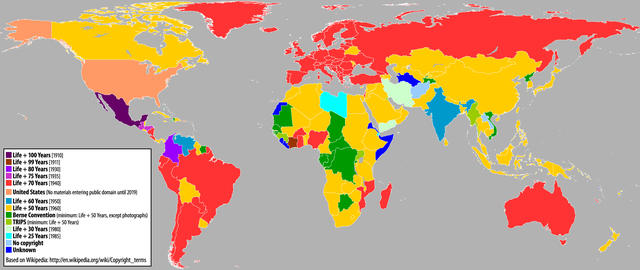
Every year, on January 1st, new material ceases to be protected by copyright and enters the public domain. This means, every year, more knowledge, literature, paintings, music, movies and a long etcetera becomes collective property, instead of being artificially held by the current holders of their rights. As this image shows (source: http://publicdomainday.org/node/39 ), I have the honor(?) to live in the country with the longest copyright protection term in the world. Copyright in Mexico does not only last for 100 years It lasts for the natural life of the author plus 100 years. This means that the popular corridos that tell the stories of the 1910 revolution are still not in the public domain. La sucesi n presidencial, the book which Francisco I. Madero wrote to justify that a peaceful political change was needed for the 1910 elections, will not enter the public domain until 2014 (president Madero was killed during 1913). Does it make any sense to kidnap cultural, political or artistic works for over a century? Not only that: Material that is legally sold as public domain in other countries is illegal in ours. Take as an example the recordings of Enrico Carusso, the great Italian tenor who died in 1921. Over 15 years ago, I bought a couple of CDs with his recordings (even if the sources were quite low-quality, as they had been copied over from wax cylinders to magnetic tapes to optical media). I bought them surprisingly cheap, as they were genuine public domain. But they are still protected in my country. That means, I ilegally have some stolen(!) works of art which I lawfully bought outside my country. Copyright law needs to be revised to match reality. Technological advances have strongly changed reality since 1717's promulgation of the first copyright laws. The solution is not to extend the terms, but to rethink the whole process. (yes, this rant was mainly made as an excuse for me to copy this image and put it in a location I can easily refer to later. But I hope it is interesting to you!)

Thomas Koch: Perils of not switching to Git

Somebody probably already recommended you to switch to Git, because it's the best VCS. I'd like to go a step further now and talk about the risk you're taking if you won't switch soon.
By still using SVN (if you're using CVS you're doomed anyway), you communicate the following:
Be aware that good developers today will not consider working with or for you if you're still using SVN. - And that's the risk.
Until recently I thought that Mercurial would be an acceptable alternative to Git. Until I used mercurial for some time. It is not.

Update: The comments are not too approving, to say the least. Lets see what time will tell. In the meanwhile I'll attach links to this blogpost:

1 January 2012

Russ Allbery: 2011 Book Reading in Review

For the year of 2011, I finished and reviewed 60 books. This is a huge milestone for me; it's the first time since the second year I started doing this that the number of books I read actually increased. This gives me more confidence that I've stabilized the year-by-year decline in my reading. I did that while substantially increasing the amount of time I spent enjoying video games, which was another major goal of the year. Only two books received a 10 out of 10 this year, one fiction and one non-fiction. The novel was Jo Walton's Among Others: the best book I read this year. It's a delightful look at the process of finding a place for oneself in the world and features one of the best protagonists that I've seen. The non-fiction book was Rory Stewart's The Prince of the Marshes, which means that both of Stewart's books that I've read have received 10 ratings. The Prince of the Marshes is his look at his time spent in the provisional government of Iraq after the overthrow of Saddam Hussein. I think it should be required reading for anyone expressing an opinion on what the US and other western powers should or should not have done in Iraq. It lays bare the difficulties, confusion, and frequent stupidity of going into someone else's country and trying to fix it, and I think seriously calls into question whether this sort of international intervention can ever work. Other fiction highlights of the year were Kelley Eskridge's Solitaire, a startling and deep look at identity and social connection, and Mira Grant's Feed, a zombie apocalypse story that completely overcame my deep dislike of zombie apocalypse stories. Feed should have won the Hugo in 2011, despite some unbelievable politics and a bit too much cheering for bloggers. This was the year for excellent protagonists, with all three of my top-rated fiction books featuring unique and memorable characters who left a deep and lasting emotional impact. The two other non-fiction standouts were both a bit dry, but if you have the patience and attention, they reward persistance. Richard Hofstadter's Anti-Intellectualism in American Life is a deserved classic that gave me an eye-opening perspective on the long history of interactions between intellectualism and populism in US politics and culture. David Levering Lewis's God's Crucible is a wonderful history of Islam as it related to Europe and filled in some large gaps in my knowledge of world and religious history. 60 books a year, or five books a month, feels like a comfortable and sustainable level, although I'm going to keep my formal goal at a book a week (52 in the year) to give myself some leeway to either get distracted by video games or by other projects. My reading did concentrate more than usual in science fiction and fantasy this year, and I'd like to add more mainstream fiction and more non-fiction. The full analysis includes some additional personal reading statistics, probably only of interest to me.

Gunnar Wolf: A happy and disconnected new year

I came to Argentina with my girlfriend to visit her family and friends, and to spend here some disconnected days during my winter^Wsummer vacations. And so it was, we had some very nice, relaxing days, with everything running smooth and with infrequent but enough sessions of mail access to withstand the disconnection without pain. Of course, I didn't anticipate that the Network Operations Center of my university would break my institute's connectivity while performing their planned maintenance on December 23. After some days, I was able to talk with one person in the university, but connectivity was not restored. Nobody with knowledge to look at the firewall's screen is available. So, as of today (happy new year 2012!), I have been mail-less for over a week. I will be back in my office soon now, so I'll get mail connectivity within the upcoming week. Meanwhile, everybody who mailed me for any reason (job, Debian, holiday greetings, whatever)... Well, I'm sad to tell you that the mails were lost. But worry not, I will act as if nothing like that happened and I received all of your best wishes.

Cyril Brulebois: X server 1.12 RC1

It s this time of the year again: a new X release approaches. The upstream schedule has been delayed a tiny bit so that the multitouch changes could land in master during this merge window. Which is what happened, a few days before Christmas. The other components involved in XI2.2 (aka. multitouch ) were packaged in experimental while the server side was getting prepared: Given we reached the 1.12 RC1 stage, it s a good idea to start building drivers against the new server to make it possible for users to perform some tests. And as usual, a new server means bumped input and video ABI, meaning a rebuild for the drivers to pick new dependencies. Some of them also needed a few fixes to make them build against the new server. Nothing that can t be fixed with a few merges from upstream master branches. The usual set of major drivers was uploaded to experimental: Significant change on the intel side: a snapshot of the current master branch was created, and packaged with SNA support enabled. SandyBridge's New Acceleration has apparently reached a point where it can be published to the masses, so here we go. Some details about it can be found in the initial commit. Also, for those wondering about the xorg-server FTBFS on some architectures, fixes are pending. Happy new year.

31 December 2011

Joey Hess: solar year

I've been at the cabin, on solar power, for a year now. I have a year of data! Everything went pretty well until last month. There was an April rainy spell where power felt slightly tight. Then over the summer, plenty of power, no need to conserve. The last month though had what seemed like weeks of continual grey clouds, where I never saw the sun.
high noon today
Of course, even on a sunny day in winter, it does not get far above the hills, and the peak production window is only a few hours. This bad combination had my battery power dipping below the 10 volts that I consider low, down to 9, and even to 8 volts. I use kerosine lamps in the winter. (I prefer the light anway.) I've also started unplugging my Thecus server at night to conserve power, meaning no internet late or early. For four or so nights, I had no power to run even my laptop after sunset. On one notable day, there was no power even in the daytime. Even when it turned sunny again, I found that the batteries would seem to charge to 12 volts during the day, but then precipitously drop to 10 and 9 volts at night. I think the problem was not damaged batteries, but that these Nicads charge most efficiently above 12 volts (14 volts is best), and there was never enough power saved up to get them full enough that they could charge really efficiently. So, I reluctantly spent three days away this week, to let the batteries soak up sun and recover. It seems to have worked; they've been holding a 12 volt charge overnight again.

Russell Coker: Sociological Images

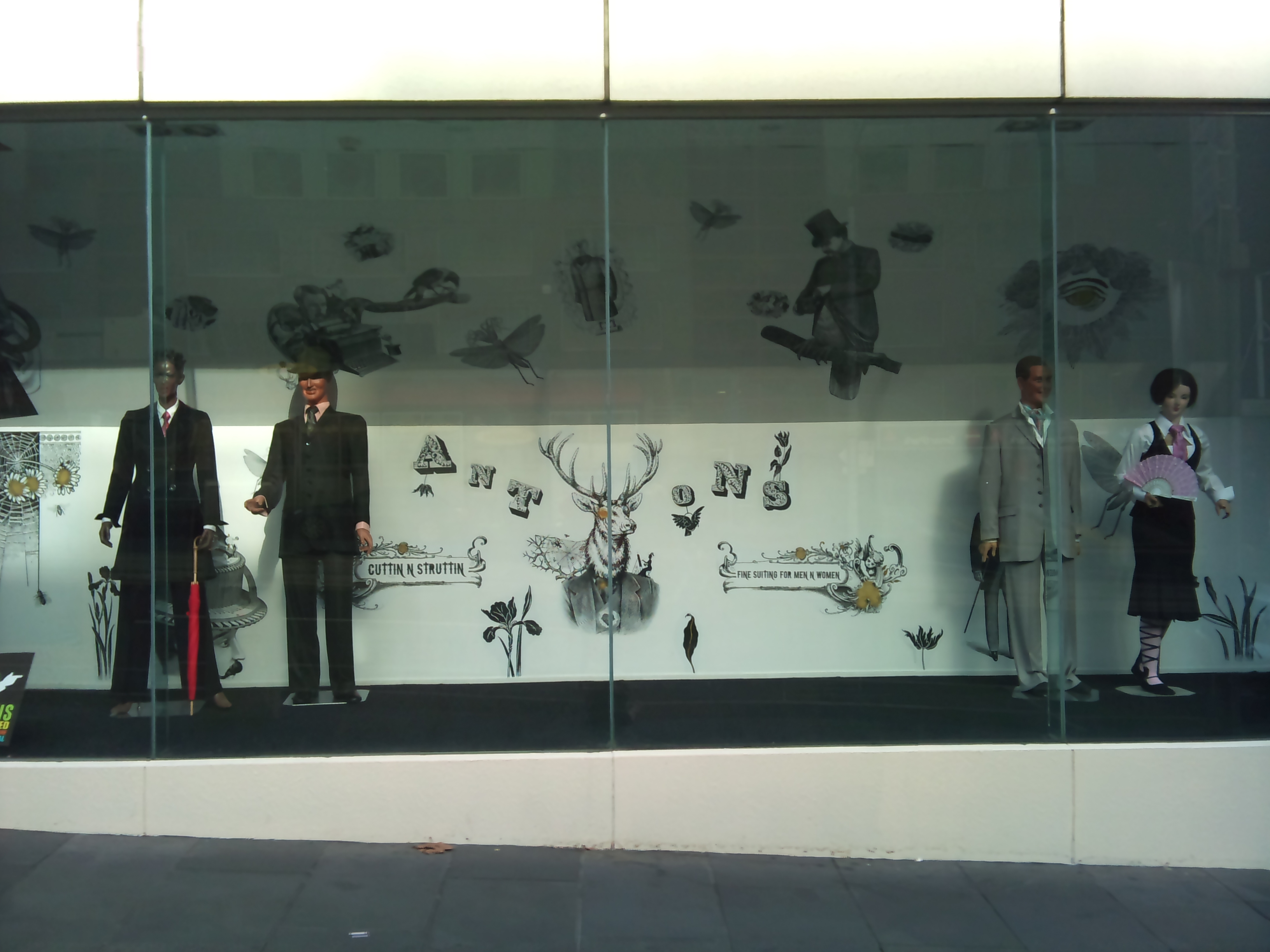
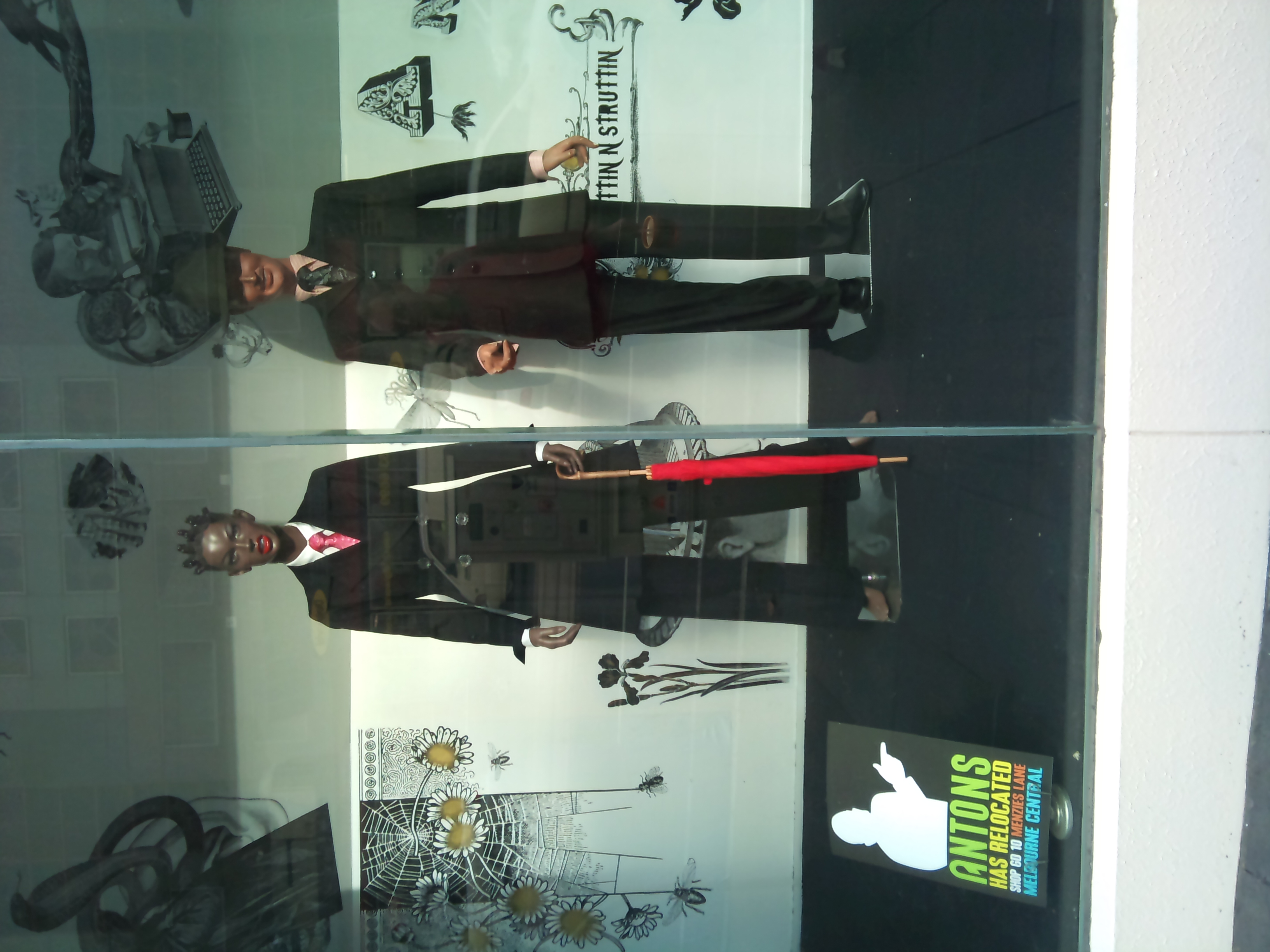
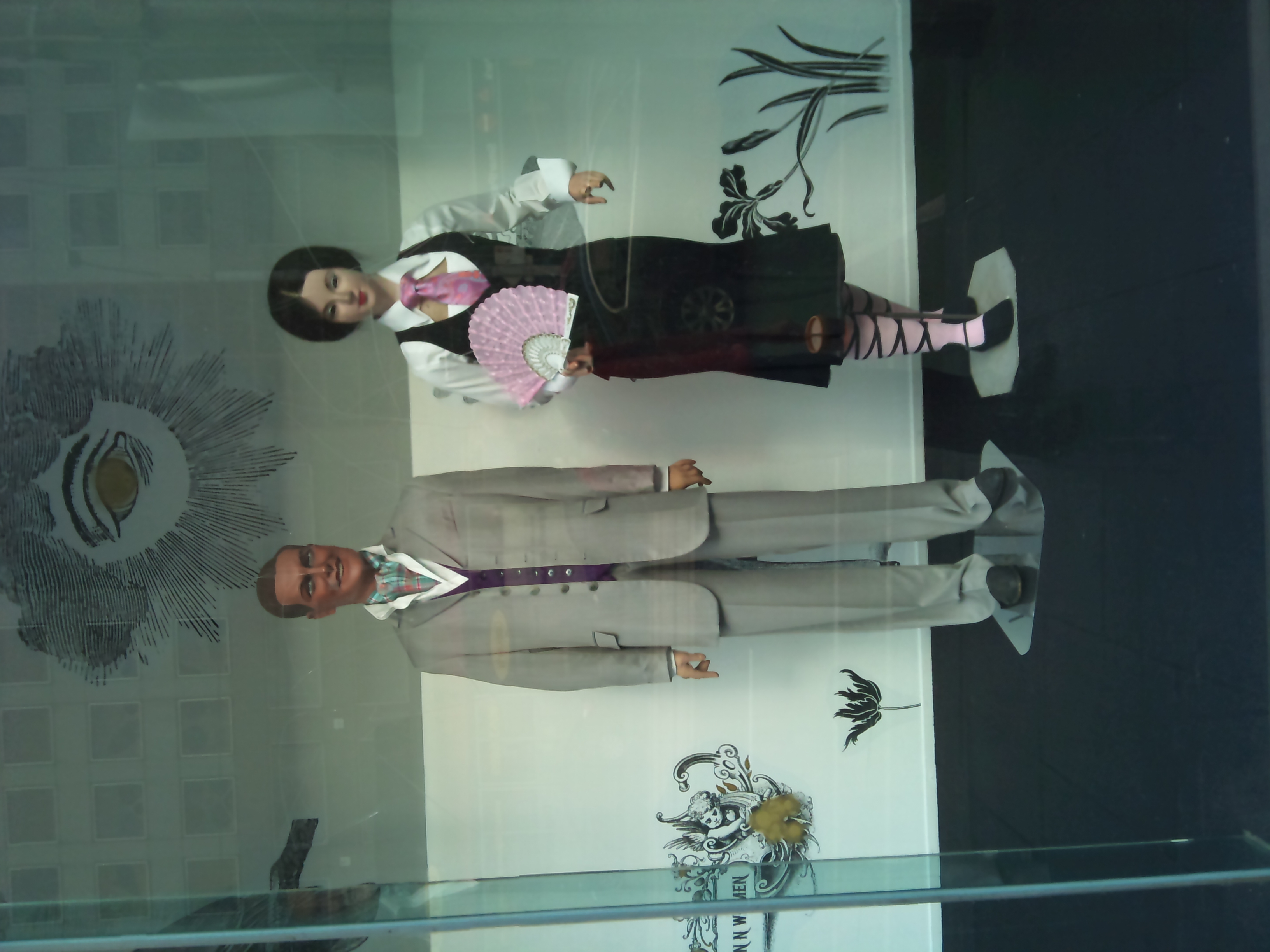
I ve recently been reading the Sociological Images blog [1]. That site has lots of pictures and videos that are relevant to the study of Sociology (most of which have a major WTF factor) and it s run by people who have Ph.Ds in Sociology so the commentary is insightful. Since reading that I ve started photographing relevant things. woman in straight-jacket advertising energy prices I can t work out the logic behind the above advert for Energy Watch which was on a billboard near Ringwood Station in Melbourne, Australia. The only thing that it clear is that it spreads bad ideas about mental illness and psychiatric treatment. It doesn t make me want to do business with them. Antons full display The above picture is a shop-front for the Antons clothing store (I m not sure if they are a tailor or if they sell ready to wear). It was taken on Lonsdale St, Melbourne where the store apparently used to be, now they are in Melbourne Central. Antons left display, African and Southern EuropeanAntons right display, Northern European and Japanese The above pictures show more detail. Unfortunately the combination of lighting and my camera (Xperia X10 phone camera) wasn t adequate to show the apparent ethnic differences between the two men. It seems that the most likely Australian interpretation of the ethnic groups that are represented are African (maybe Afro-American), Southern-European or maybe American Hispanic, North-Western European, and Japanese. It s good to have mannequins representing the fact that not everyone in Australia is white, but different facial expressions for different races seems a strange choice (admittedly it might be a choice made by mannequin manufacturers). Also the Japanese woman with fan idea is rather outdated. I ve just started reading You May Ask Yourself: An Introduction to Thinking Like a Sociologist (Second Edition) by Dalton Conley. I ve only read the first chapter, but that was good enough that the entire book has to be good enough to recommend.

28 December 2011

Paul Tagliamonte: libolla (from the useless script department)

Hello, World! Today s hacks come remotely, on the first day of my long trek to Cleveland. As many debian readers know, debian URLs are usually transmitted over IRC or email with some snappy abbreviations. Usually, you ll see something like:
Feel free to check out information about frob at wiki.d.o/Frob
or something like:
I have uploaded package bar onto mentors.d.n for review
What bugs me most about this is that I have to expand URLs by hand. Which is lame. Enter libolla (a fitting name as well as a graceful nod to my alma mater John Carroll University s crest). When LD_PRELOAD d, it ll intercept and expand calls to getaddrinfo transparently. It seems to work fine on SSH, and chrome (but I can t test well, since I m not on a real line). This was all hacked up in a few hours I had to spare, and without any sort of internet love, so I m willing to bet there are some bits that can be cleaned up (after all, the name of the blog is Peace, Love and C++ , not Peace, Love and C - I don t clam to be a c expert ;) ) So, feel free to fork the project on github (or as I can now do - http://g.c/paultag/libolla) Now, I just need to find a way to globally pre-load this for apps that I start in my DE. Should be easy enough fiddling with some env-var files.

Wouter Verhelst: Rsync'ing over a newer subversion (fsfs) repository

So there are two servers; let's call them srv1 and srv2. Srv1 contains a bunch of subversion repositories, but these are to be migrated to srv2. Since the repositories are not (just) used for ascii-only files, they're fairly big (several tens of gigabytes, altogether), so copying them from one server to the other would take a while. In order to make sure this would happen quickly, we had already copied them over to the new server, so that on the final switch would be quick (an rsync that would copy over just the new done transactions). That final switch was today. Only I didn't know that instead of just testing, the customer had already started using one of the repositories (and they'd forgotten to remind me), so the subversion repository suddenly jumped backwards in time. In addition, the new server wasn't being backed up yet (at least not for the subversion bits), so restoring from backups wasn't an option. Oops. Luckily the solution is fairly simple. You see, fsfs stores each revision in a unique file; that means that as long as nobody has committed to the repository yet (which they couldn't, since system users aren't the same on both servers, so the webserver didn't have write permissions on the repository after the rsync), nothing is lost. One only needs to manually change the repository so that whatever subversion thinks is the latest commit, actually is the latest commit. That information is stored in a file called db/current inside the repository. What's in that file depends on the repository version, which is stored in a file called db/format in the repository. For versions 1 and 2, the format is a single line with three space-separated values, of which the first is the last revision number used in the repository. The other two are counters that are used to give transactions unique names; and they, too, need to be up-to-date. For version 3 and above, the file contains only the revision number; there, the other two are derived from that instead of having their own unique number. Figuring out the last used revision number in an fsfs repository is ridiculously easy:

ls -v db/revs tail -n1
So if you've got a repository of fsfs version 3 or above, just change the revision number in the db/current file (after taking backups and making sure nobody can access the repository while you're doing this, of course), and you're all set. Unfortunately, in my case, the repository was still in fsfs version 2, which meant I could not change just the revision number and not expect trouble. I suppose it should've been possible to figure out what the last transaction numbers are, somehow, so that I could fix the current file completely, but I reasoned that upgrading to a newer repository format might have other advantages too, so I just dumped the repository and reloaded it, and everything worked at that point.

Bernhard R. Link: symbol files: With great power comes great responsibility

Symbol files are a nice little feature to reduce dependencies of packages. Before there were symbol files libraries in Debian just had shlibs files (both to be found in /var/lib/dpkg/info/. A shlibs file says for each library which packages to depend on when using this library. When a package is created, the build scripts will usually call dpkg-shlibdeps, which then looks which libraries the programs in the library use and then calculate the needed dependencies. This means the maintainers of most packages do not have to care what libraries to depend on, as it is automatically calculated. And as compiling and linking against a newer version of a library can cause the program to no longer work with an older library, it also means those dependencies are correct regardless of which version of a library is compiled against. As shlibs files only have one dependency information per soname, that also means they are quite strict: If there is any possible program that would not work with an older version of a library, then the shlibs file must pull in a dependency for the newer version, so everything needing that library ends up depending on the newer version. As most libraries added new stuff most of the time, most library packages (except some notable extremely API stable packages like for example some X libs) just chose to automatically put the latest package version in the shlibs file. This of course caused library packages to be quite strict: Almost every package depended on the latest version of all libraries, including libc, so practically no package from unstable or testing could be used in stable. To fix this problems, symbols files were introduced. A symbols file is a file (also finally installed in /var/lib/dpkg/info/ alongside the shlibs file) to give a minimum version for each symbol found in the library. The idea is that different programs use different parts of a library. Thus if new functionality is introduced, it would be nice to differentiate which functionality is used and give dependencies depending on that. As the only thing programmatically extractable from a binary file is the list of dynamic symbols used, this is the information used for that. But this only means the maintainer of the library package has now not only one question to answer ("What is the minimal version of this library a program compiled against the current version will need?"), but many questions: "What is the minimal version of this library a program compiled against the current version and referencing this symbol name will need?". Given a symbols file of the last version of a library package and the libraries in the new version of the package, there is one way to catch obvious mistakes: If a symbol was not in the old list but is not in the current library, one needs at least the current version of the library. So if dpkg-gensymbols finds a missing symbol, it will add it with the current version. While this will never create dependencies too strict, it sadly can have the opposite effect of producing dependencies that are not strict enough: Consider for example some library exporting the following header file:
enum foo_action   foo_START, foo_STOP ;
void do_foo_action(enum foo_action);
Which in the next version looks like that:
enum foo_action   foo_START, foo_STOP, foo_RESTART ;
void do_foo_action(enum foo_action);
As the new enum value was added at the end, the numbers of the old constants did not change, so the API and ABI did not change incompatibly, so a program compiled against the old version still works with the new one. (that means: upstream did their job properly). But the maintainer of the Debian package faces a challenge: There was no new symbol added, dpkg-gensymbols will not see that anything changed (as the symbols are the same). So if the maintainer forgets to manually increase the version required by the do_foo_action symbol, it will still be recorded in the symbols file as needing the old version. Thus dpkg will not complain if one tries to install the package containing the program together with the old version of the library. But if that program is called and calls do_foo_action with argument 2 (foo_RESTART), it will not behave properly. To recap:

Russell Coker: Secure Boot and Protecting Against Root

There has been a lot of discussion recently about the recent Microsoft ideas regarding secure boot, in case you have missed it Michael Casadevall has written a good summary of the issue [1]. Recently I ve seen a couple of people advocate the concept of secure boot with the stated idea that root should be unable to damage the system, as Microsoft Software is something that doesn t matter to me I ll restrict my comments to how this might work on Linux. Restricting the root account is something that is technically possible, for much of the past 9 years I have been running SE Linux Play Machines which have UID 0 (root) restricted by SE Linux such that they can t damage the system [2] there are other ways of achieving similar goals. But having an account with UID 0 that can t change anything on the system doesn t really match what most people think of as root , I just do it as a way of demonstrating that SE Linux controls all access such that cracking a daemon which runs as root won t result in immediately controlling the entire system. As an aside my Play Machine is not online at the moment, I hope to have it running again soon. Root Can t Damage the System One specific claim was that root should be unable to damage the system. While a secure boot system can theoretically result in a boot to single user mode without any compromise that doesn t apply to fully operational systems. For a file owned by root to be replaced the system security has to be compromised in some way. The same compromise will usually work every time until the bug is fixed and the software is upgraded. So the process of cracking root that might be used to install hostile files can also be used at runtime to exploit running processes via ptrace and do other bad stuff. Even if the attacker is forced to compromise the system at every boot this isn t a great win for the case of servers with months of uptime or for the case of workstations that have confidential data that can be rapidly copied over the Internet. There are also many workstations that are live on the Internet for months nowadays. Also the general claim doesn t really make sense on it s own. root usually means the account that is used for configuring the system. If a system can be configured then the account which is used to configure it will be able to do unwanted things. It is theoretically possible to run workstations without external root access (EG have them automatically update to the latest security fixes). Such a workstation configuration MIGHT be able to survive a compromise by having a reboot trigger an automatic update. But a workstation that is used in such a manner could be just re-imaged as it would probably be used in an environment where data-less operation makes sense. An Android phone could be considered as an example of a Linux system for which the root user can t damage the system if you consider root to mean person accessing the GUI configuration system . But then it wouldn t be difficult to create a configuration program for a regular Linux system that allows the user to change some parts of the system configuration while making others unavailable. Besides there are many ways in which the Android configuration GUI permits the user to make the system mostly unusable (EG by disabling data access) or extremely expensive to operate (EG by forcing data roaming). So I don t think that Android is a good example of root being prevented from doing damage. Signing All Files Another idea that I saw advocated was to have the secure boot concept extended to all files. So you have a boot loader that loads a signed kernel which then loads only signed executables and then every interpreter (Perl, Python, etc) will also check for signatures on files that they run. This would be tricky with interpreters that are designed to run from standard input (most notably /bin/sh but also many other interpreters). Doing this would require changing many programs, I guess you would even have to change mount to check the signature on /etc/fstab etc. This would be an unreasonably large amount of work. Another possibility would be to change the kernel such that it checks file signatures and has restrictions on system calls such as open() and the exec() family of calls. In concept it would be possible to extend SE Linux or any other access control system to include access checks on which files need to be signed (some types such as etc_t and bin_t would need to be signed but others such as var_t wouldn t). Of course this would mean that no sysadmin work could be performed locally as all file changes would have to come from the signing system. I can imagine all sorts of theoretically interesting but practically useless ways of implementing this such as having the signing system disconnected from the Internet with USB flash devices used for one-way file transfer because you can t have the signing system available to the same attacks as the host system. The requirement to sign all files would reduce the use of such a system to a tiny fraction of the user-base. Which would then raise the question of why anyone would spend the effort on that task when there are so many other ways of improving security that involve less work and can be used by more people. Encrypted Root Filesystem One real benefit of a secure boot system is for systems using encrypted filesystems. It would be good to know that a hostile party hasn t replaced the kernel and initrd when you are asked for the password to unlock the root filesystem. This would be good for the case where a laptop is left in a hotel room or other place where a hostile party could access it. Another way of addressing the same problem is to boot from a USB device so that you can keep a small USB boot device with you when it s inconvenient to carry a large laptop (which works for me). Of course it s theoretically possible for the system BIOS to be replaced with something that trojans the boot process (EG runs the kernel in a virtual machine). But I expect that if someone who is capable of doing that gets access to my laptop then I m going to lose anyway. Conclusion The secure boot concept does seem to have some useful potential when the aim is to reboot the system and have it automatically apply security fixes in the early stages of the boot process. This could be used for Netbooks and phones. Of course such a process would have to reset some configuration settings to safe defaults, this means replacing files in /etc and some configuration files in the user s home directory. So such a reboot and upgrade procedure would either leave the possibility that files in /etc were still compromised or it would remove some configuration work and thus give the user an incentive to avoid applying the patch. Any system that tries to extend signature checks all the way would either be vulnerable to valid but hostile changes to system configuration (such as authenticating to a server run by a hostile party) or have extreme ease of use issues due to signing everything. Also a secure boot will only protect a vulnerable system between the time it is rebooted and the time it returns to full operation after the reboot. If the security flaw hasn t been fixed (which could be due to a 0-day exploit or an exploit for which the patch hasn t been applied) then the system could be cracked again. I don t think that a secure boot process offers real benefits to many users.

27 December 2011

Joey Hess: a Github survey

The great thing about git and other distributed version control systems is that once you clone (or fork) a repository, you have all the data. You don't have to trust that Github will preserve it; everyone who develops the project is a backup. Github carries this principle quite far amoung the features they provide. But not all the way. Today I have surveyed their features, and where the data for each is stored. The two that really stand out are the issues and notes not being stored in git. This means that, if a project uses github, it gets locked into github to a degree. The records of bugs and features, all the planning, and communication, is locked away in a database where it cannot be cloned, where every developer is not a backup. Github's intent here is not to control this data to lock you in (to the extent they want to lock you in, they do that by providing a proprietary UI that people rave about); it was probably only expedient to use some sort of database, rather than git, when implementing these features. They should automatically produce git repository branches containing a project's issues, and notes, based on the contents of their database. (For notes, git notes is the obviously right storage location.) Along with ensuring every developer checkout is a backup, this would allow accessing that data while offline, which is one of the reasons we use distributed version control. The lack of a global list of projects is problimatic in a more global sense. It means that we can't make a backup of all the (public) repositories in Github (assuming that we had the bandwidth and storage to do it). I recently backed up all the repositories on Berlios.de, when it looked to be shutting down; this was only possible because they allowed enumerating them all. People at The Internet Archive say that their archival coverage of free software is actually quite bad. We trust our version control systems to save our free software data, but while this works individually, it will result in data loss globally over time. I'd encourage Github to help the Internet Archive improve their collections by donating periodic snapshots of their public git repositories to the Archive. You're located in the same city, 5 miles apart; they have lots of hard drives (though less right now during the shortage than usual); this should be pretty easy to do.
Full disclosure: Github has bought me dinner and seemed like stand-up guys to me.

26 December 2011

Christian Perrier: Wheezy active NMU campaign starting...

2012 will be the year where we release wheezy. So, it's time to start fighting for one of my pet projects: bringing as many languages to 100% completeness for debconf templates translation. The reference for this is the ranking page. I think we can have up to seven languages fully complete and maybe even some above 90% (Danish, Dutch, Italian with currently very active translators, are the best candidates). For this, as usual, I'll have to shake down many maintainers and handle my big NMU stick, with NMU proposals for packages that are too high in this page (which I'll start cleaning out from its many artefacts). So, if you're a translator, it's time to hang on in the debian-i18n mailing list and follow calls for translation updates there. It's also time to remind me which packages you would like to see uploaded so that your translation work is really used. Please focus on the oldest pending translations. If you're a package maintainer, please look at the following pages: (my NMU stick is bigger and harder for the latter of course...:-)) And, if you're a maintainer, it's now time to please stop changing the bloody debconf templates for no reason....or, if you have to do that for a good reason, send a call for translations first, or at least ask about how to do this. I can help you doing that, of course. Thanks in advance for your cooperation.

Thomas Koch: Stop coding for money

Do you believe that there will come a major inflation in the next months or years? If not, you can stop reading this article. Otherwise lets think what would be the right thing to do now.
If you're a programmer, you've most probably been able to save a bit of money over the years and should worry now how to rescue this savings over the inflation. My suggestion is: don't.
Instead stop coding for money and start to life of your savings. There are three things that are worth to invest in and will surely keep their value: health, education and community. All three things require investment of time. Go to the gym, work off your backlog of things you wanted to learn, meet with friends and family more often. Well, you could spent some money and let the dentist give you a good overhaul.
When the inflation comes, you'd better be in good health because you probably don't have the money for a doctor. When the inflation is over your education will quickly get you a good job again. And a good crisis is the moment that shows you which of your friends you can really count on. You can use a bit of free time to contribute to free software which will come in handy at a portfolio when searching a new job.
On the other hand, it's now even more futile than ever to say that you don't have time for clean code and good software engineering practices. If you're in a company that pressures you to compromise on quality, then it's now the time to quit. Remember that your boss can only give you money, which will loose it's value anyways in short terms.
Am I totally mislead or is this good advise? What do you think?

Next.

Previous.