Search Results: "spa"

18 September 2011

Keith Packard: MacBook-Air

Installing Linux on Sandybridge MacBook Air Matthew Garrett got a report from someone who bought a brand new Sandybridge MacBook Air and was trying to install Fedora on it. The screen went black as soon as the i915 driver tried to set the initial mode. I bought one to try and help out. Just getting Linux installed turned out to be a minor adventure and I thought I d write a few notes for the next person who comes along and tries to do this. The obvious method I downloaded a collection of Debian ISO images, live images, netboot images from testing and CD-1 of squeeze. I downloaded a Fedora 16 alpha XFCE live image. I burned all of these to actual CDs, and then stuck them in a CD drive and held the c key while booting the machine. Nothing worked. The CD would spin up, the screen would switch from white to a black text mode with a blinking cursor at the upper left and then then CD would stop. rEFIt attempts rEFIt provides a boot selection menu and various configuration bits to provide for a multi-boot environment. This is necessary to leave the OS-X install on the disk and also install Linux. It also lets you boot from removable media, or at least that was the story. rEFIt would list removable USB flash storage devices, but it would not list CD drives, even after the CD drive spun up and did stuff for a while. This makes me wonder if the c key technique wasn t actually trying to boot from the CD. However, rEFIt wouldn t boot from a grub2-enabled USB key. ISO on USB flash key What rEFIt will boot is a Fedora or Debian ISO image copied directly to the USB flash device. The Ubuntu 11.04 live image and it did not work. Fedora F16 Alpha The live image came up and started X in frame buffer mode. However, when I went to install the image to the hard disk, it got stuck trying to discover devices. I waited about 20 minutes and it never finished, although it did chew up a lot of CPU time. Debian Squeeze I copied CD-1 of the 32-bit Squeeze distribution to my flash key. That booted up to text mode and went through the install. Nothing really unusual until it came to installing grub. I let it install grub to /dev/sda4, the new partition I had created for Linux. I figured installing grub to /dev/sda would be a bad idea (I think it would have actually worked just fine in retrospect). A slight out-of-sync diversion here I couldn t get the 32-bit kernel to talk to any keyboard or USB networking device, so I eventually installed a 64-bit kernel and that works just fine. You can run a 32-bit user space with a 64-bit kernel without any trouble. Making EFI boot Naturally, I couldn t get the machine to boot to Linux after this. rEFIt, the multi-boot tool for Mac OS X appears only interested in booting EFI images, or at least was not interested in booting my BIOS-based Grub2 installation on /dev/sda4. I used the rescue mode on the USB flash drive to get back to my installed Linux image and installed grub-efi-amd64. The OS X EFI version does not support 32-bit EFI code, which seems entirely reasonable to me. What took a while was figuring out that all of the grub files need to be readable through EFI, and that the Mac EFI code can only read FAT (and HFS?) partitions. So, the trick appears to be to stick the grub files on the Mac OS X efi partition (/dev/sda1). I created a directory over there, /EFI/grub and then mounted that as /efi and made a symlink from /boot/grub to /efi/EFI/grub. Now, grub-install sticks the files in the right place, and update-grub will even place grub.cfg in the directory where it needs to go. At this point, rEFIt will happily find the core.efi and grub.efi files and show them in the list of possible operating systems to boot. I don t know why there are both core.efi and grub.efi files; I ve only ever picked grub.efi and that has worked nicely. Broadcom WiFi I haven t gotten that working yet; the b43 supported chip list says it works in kernel 3.1. I m busy building a 3.1-rc4 kernel as I type this, so perhaps that will just work when I boot that. i915 KMS The whole reason for doing the install is to fix problems with the eDP EDID discovery which is currently preventing the machine from running X. I ll be working on that next; a quick kludge to just read the current mode from the device should get something on the screen (we already do that for LVDS panels). Beyond that, I ll be trying to figure out whether I can make EDID actually work, or whether it s just not available in this machine. Somehow the kernel frame buffer ended up as 1280x800, which was quite annoying. As a temporary kludge, I ran fbset -yres 768 to at least avoid having text disappear off the bottom of the screen. Once the panel size is discovered correctly, that should be fixed. Status This is sure not like installing Linux on a regular PC. However, I m reasonably hopeful that the devices in the machine will be working pretty well under Debian within the next few days.

Craig Small: Getting music into the iPod Shuffle

IPod shuffle

Image via Wikipedia

Sounds easy doesn t it? You got a nice debian computer filled with mp3s and you got an iPod Shuffle. You want to get the mp3s onto the Shuffle, simple really! Well, no. I ve got a 2nd Generation iPod Shuffle; its a little blue thing the size of a postage stamp with no screen. Specifically a model A1204. It uses the headphone socket with a special connector to get it connected via USB. It also steadfastly refused to play anything I transferred onto it. gtkpod was first. I knew I was in trouble when my model doesn t appear in their list of supported devices. 2nd Generation Shuffles do, just not an A1204. After a lot of fiddling around and playing with special files and firewire IDs I got a file onto it. Great, but then turning the iPod on I got the green and orange sequence of lights which means no file found. Next, was Rhythmbox. It is supposed to understand iPods too. The funny thing was that it saw the music file I put on the iPod by gtkpod, but adding any file gave me the same colour sequence. What was worse is if you tried to look at the information about the iPod, Rhythmbox crashed. It seemed I was doomed to use iTunes on the windows computer in the living room. A program that seems designed not to work the way I want. (It tries to load all the mp3 files from my son s games into the iPod but ignores my music on the samba share, for starters). I just wanted the files on the player and the player to recognise and play them. It didn t seem like a too hard a task, but I was stuck. That was until I found a small (643 lines) python script called rebuild-db that builds the special iPod files with my music. I found the file at the rebuild-db sourceforge page and it was very simple process. Now I plug the iPod in, wait for the window to appear, push my songs onto the iPod and run the script. It s quick and simple and more importantly it works. Not bad for a program that hasn t been developed since April 2006.

Paul Wise: Revisiting personal software freedom

Since it was Software Freedom Day again, I figured I should revisit my personal software freedom and see what has changed since my post two years ago. There hasn't been a vrms meme again this year so I don't have anyone else to compare with. A small survey on IRC indicates folks still need non-free nVidia drivers, embedded software, GNU documentation, Java and more. Since then I have switched my laptop from the Dell Inspiron 6400 to the Thinkpad X201 Tablet. Nothing really changed with my laptop, GNU documentation is still non-free and the new Intel WiFi chip on my new laptop still uses non-free embedded software. To remind myself of the non-free bits embedded in the hardware (CPU microcode, BIOS, EC etc), I have installed intel-microcode and microcode.ctl. Since then I didn't get any new phone, still the same OpenMoko FreeRunner. I'm now using QtMoko on a 4GB microSD card and Debian and SHR on other cards for testing. QtMoko is based on Debian and is the latest incarnation of Qtopia. It is probably free but I haven't done any audit of it. One interesting thing that changed with the FreeRunner in the past two years is that Harald Welte and friends started OsmocomBB, a project to create free software for the GSM modem built into the FreeRunner and many old feature-phones. I haven't tried it yet due to lack of time. While at the Chaos Communication Camp 2011 I learnt about the blackbox that SIM cards are (video), which hopefully OsmocomBB has a chance to protect against. AFAIK nothing else has changed to improve software freedom on the FreeRunner, the WiFi, GPS and other parts still contain non-free software with no chance of a replacement in sight. Since then I am still using the same wireless router and ADSL modem and I wasn't brave enough to try replacing their software. I still use gmail out of intertia, but I at least have started using offlineimap to prepare for the day when I will move away from it. I still use Google Maps, mainly for searching for public transport routes. With my recent travels in Europe I encountered many places where OpenStreetMap has much better coverage than Google. One nice thing about Google Maps adding public transport information is that public transport organisations have been publishing public data feeds for Google to consume. Apparently there is also a realtime variant. I also found one website using a JSON API for Google street view. The combination of these gives me hope for better support for spatial data in free software. The data (aerial and streets) will obviously remain a much longer term freeness issue though. For flash video on the web get-flash-videos appeared and made it even easier to ignore flash, especially since I got a few patches added to it. In addition Swfdec died but Gnash improved enough to replace it. Lightspark was also created but has so far been pretty buggy and unstable. Free RAR v3 format support appeared in the form of TheUnarchiver. The Voxware audio codec and DigiTrakker MDL files are still not supported by Rhythmbox. Unicode has been updated and so now Debian doesn't support every script fully. I still manage to avoid Skype. The nouveau drivers have matured enough to provide 3D support, multi-monitor support and general stability for the one nVidia card I used in the past two years. Overall, I'm reasonably happy with my level of software freedom. My main strategy for preventing regressions in my software freedom remains to just avoid doing things that require non-free software. The most problematic FLOSS issues for me are embedded software, spatial data support and Flash support. Please feel free to contact me with any comments or questions. Happy Software Freedom Day everyone!

17 September 2011

Petter Reinholdtsen: Ripping problematic DVDs using dvdbackup and genisoimage

For convenience, I want to store copies of all my DVDs on my file server. It allow me to save shelf space flat while still having my movie collection easily available. It also make it possible to let the kids see their favourite DVDs without wearing the physical copies down. I prefer to store the DVDs as ISOs to keep the DVD menu and subtitle options intact. It also ensure that the entire film is one file on the disk. As this is for personal use, the ripping is perfectly legal here in Norway. Normally I rip the DVDs using dd like this:
#!/bin/sh
# apt-get install lsdvd
title=$(lsdvd 2>/dev/null awk '/Disc Title: /  print $3 ')
dd if=/dev/dvd of=/storage/dvds/$title.iso bs=1M
But some DVDs give a input/output error when I read it, and I have been looking for a better alternative. I have no idea why this I/O error occur, but suspect my DVD drive, the Linux kernel driver or something fishy with the DVDs in question. Or perhaps all three. Anyway, I believe I found a solution today using dvdbackup and genisoimage. This script gave me a working ISO for a problematic movie by first extracting the DVD file system and then re-packing it back as an ISO.
#!/bin/sh
# apt-get install lsdvd dvdbackup genisoimage
set -e
tmpdir=/storage/dvds/
title=$(lsdvd 2>/dev/null awk '/Disc Title: /  print $3 ')
dvdbackup -i /dev/dvd -M -o $tmpdir -n$title
genisoimage -dvd-video -o $tmpdir/$title.iso $tmpdir/$title
rm -rf $tmpdir/$title
Anyone know of a better way available in Debian/Squeeze? Update 2011-09-18: I got a tip from Konstantin Khomoutov about the readom program from the wodim package. It is specially written to read optical media, and is called like this: readom dev=/dev/dvd f=image.iso. It got 6 GB along with the problematic Cars DVD before it failed, and failed right away with a Timmy Time DVD. Next, I got a tip from Bastian Blank about his program python-dvdvideo, which seem to be just what I am looking for. Tested it with my problematic Timmy Time DVD, and it succeeded creating a ISO image. The git source built and installed just fine in Squeeze, so I guess this will be my tool of choice in the future.

Patrick Schoenfeld: Struggling with Advanced Format during a LVM to RAID migration

Recently I decided to invest in another harddisk for my atom system. That system, I built up almost two years ago, has become the central system in my home network, serving as a fileserver to host my personal data, some git repositories etc., streaming server and since I switched to a cable internet connection it also serves as a router/firewall.
Originally, I bought that disk to backup some data, of the systems in the network, but I realized that all data on this system were hosted on a single 320GB 2,5" disk and it became clear to me, that, in absense of a proper backup strategy, I at least should provide some redundancy.


So I decided, once the disk was in place, that the whole system should move to a RAID1 over the two disks. Basically this is not that hard as it may seem at a first glance, but I had some problems due to a new sector size in some recent harddisks, which is called Advanced Format.


But lets begin from the start. The basic idea of such a migration is:
  1. Install mdadm with apt-get. Make sure to answer 'all' to the question which devices need to be activated in order to boot the system.
  2. Partition the new disk (almost) identical.
    Because the new drive is somewhat bigger that wouldn't make sense, but at least the two partitions which should be mirrored on the second disk, need to be identical.
    Usually this is achieved easily by using
    sfdisk -d /dev/sda sfdisk /dev/second/sdb

    In this case, it wasn't that easy. But I will come to that in a minute.
  3. Change the type of the partitions to 'FD' (Linux RAID autodetect) with fdisk
  4. Erase evidence of an eventual old RAID from the partitions, which is probably pointless on a brand-new disk, but we want to be sure:
    mdadm --zero-superblock /dev/sdb1
    mdadm --zero-superblock /dev/sdb2
  5. Create two DEGRADED raid1 arrays from the partitions:
    mdadm --create /dev/md0 --level=1 --raid-devices=2 /dev/sdb1 missing
    mdadm --create /dev/md1 --level=1 --raid-devices=2 /dev/sdb2 missing
  6. Create filesystem on the first raid device, which will become /boot.
  7. Mount that filesystem somewhere temporary and move the contents of /boot to it:
    mount /dev/md0 /mnt/somewhere
  8. Unmount /boot, edit fstab to mount /boot from /dev/md0 and re-mount /boot (from md0)
  9. Create mdadm configuration with mdadm and append it to /etc/mdadm/mdadm.conf:
    mdadm --examine --scan >> /etc/mdadm/mdadm.conf
  10. Update the initramfs and grub (no manual modification needed with grub2 on my system)
    and install grub into the MBR of the second disk.

    update-initramfs -u
    update-grub
    grub-install /dev/sdb
  11. The first point to pray: Reboot the system to verify it can boot from the new /boot.
  12. Create a physical volume on /dev/md1:
    pvcreate /dev/md1
  13. Extend the volume group to contain that device:
    vgextend <volgroup_name> /dev/md1
  14. Move the whole volume group physically from the first disk to the degraded RAID:
    vgmove <volgroup_name> /dev/md1

    (Wait for it to complete... takes some time ;)
  15. Reduce first disk from the VG:
    vgreduce <volgroup_name> /dev/sda2
  16. Prepare it for addition to the RAID (see step 3 and 4) and add it:
    mdadm --add /dev/md0 /dev/sda1
    mdadm --add /dev/md1 /dev/sda2
  17. Hooray! Watch into /proc/mdstat. You should see that the RAID is recovering.
  18. When recovery is finished pray another time and hope that system is still booting with it running from the RAID entirely. If it does: Finished :-)

Now to the problem with the advanced format:
There is some action taking place with the hardware vendors to move to a new sector size. Physically my new device has a size of 4096 bytes per sector. Somewhat different to the 512 bytes disks used to have the last decade.


Logically it still has 512 bytes per sector. As far as I understand this is achieved by placing 8 logical sectors into one physical sector, so when partitioning a new disk the alignment of the disk has to be so that partitions start in a sector which is a multiple of 8.

That, obviously, wasn't the case with the old partitioning on my first disk. So I had to manually create partitions by specifying start points manually and making sure they are dividable by 8.

Otherwise fdisk would complain about the layout on the disk.
This does not work with cfdisk, because it does not accept manual alignment parameters and unfortunately the partitions it creates do have a wrong alignment. So good old fdisk and some calculations how many sectors are needed and where to start, to the rescue.

So the layout is now:
Device Boot Start End Blocks Id System
/dev/sdb1 2048 291154 144553+ fd Linux raid autodetect
/dev/sdb2 291160 625139334 312424087+ fd Linux raid autodetect


16 September 2011

Wouter Verhelst: Dear lazyweb,

Is there a syscall to ask the system whether a file is sparse in a particular region? I.e., if I say dd if=/dev/zero of=./foo seek=10 count=10, then I should get a "yes" for the first half of the file, but a "no" for the second half. Case in point: I need to write a test for the newly-implemented NBD_CMD_TRIM which uses fallocate with the FALLOC_FL_PUNCH_HOLE option to sparsify a file. kthxbye,

Rapha&#235;l Hertzog: How to triage bugs in the Debian bug tracking system

Triaging bugs is one of the easiest way to start contributing to Debian. I ll teach you the basics in this article. 1. Prerequisites All interactions with the Debian Bug Tracking System (BTS) happen through email so you need to have an email account with an address that you re willing to make public. All the mail that you send to the BTS will be archived and publicly available through its web-interface. This also means that you should have some spam filters in place because it will inevitably be harvested by spammers. :-( To ensure that this email address is consistently used by the various tools that we re going to use, it s a good idea to put this email address in the DEBEMAIL environment variable. You can also specify your full name in DEBFULLNAME (in case you don t want to use the name associated with your Unix account). You usually do this by modifying ~/.bashrc (if you use bash as login shell):
export DEBEMAIL="hertzog@debian.org"
export DEBFULLNAME="Rapha l Hertzog"
You should also install the devscripts package, it provides the bts command that we re going to use. 2. Find a package or a team with too many bugs You can literally pick any popular software that s in Debian, they almost always get more bug reports than the maintainers can handle. Instead of picking a package, you can also select a packaging team and concentrate your efforts on the set of packages managed by the team. In any case, it s important to receive the bug traffic for the packages that you re going to work on. If you went for a specific package, you should subscribe to the package via the Package Tracking System (there s a subscribe box on the bottom left corner once you selected the source package of interest). If you decided to help a team, there s usually a dedicated mailing list receiving all bug traffic. You can browse a list of packages with the most bugs if you have troubles finding a package to work on. A stack of bug reports to triage 3. Triage bugs! Bug triaging is all about making sure that bugs are correctly classified so that when a developer looks at the bug list, he can quickly find bugs with all the information required to be able to fix them! 3.1 Adding information to bug Adding supplementary information is easily done just by sending a mail to XXXX@bugs.debian.org (replace XXXX with the bug number). But often you want to reply to a message in the bug history, in that case bts --mbox show XXXX is for you. It will grab the corresponding mailbox and open a mailer (mutt by default) on it. Now you can directly reply in your favorite mailer. 3.2 Classifying bugs The Debian BTS uses tags (click the link and read the doc!) to classify bugs. bts tag XXXX + foo will add the foo tag (replace the + with a to remove a tag). If you want to explain why you re adding a tag, you should instead reply in the bug log as explained above, put control@bugs.debian.org in Bcc (Blind Carbon Copy) and start the body of your message with your tag command:

tag XXXX + foo
thanks
But what tag should you add? When a bug is submitted, you should try to reproduce the bug. If you can reproduce it, then tag the bug confirmed (example in #641710). If you can t, you should request more information (ex: a sample document triggering the bug, a configuration file, the output of some relevant command, etc.) until you can reproduce it or conclude that it was a user mistake. When you request supplementary information due to this, you should tag the bug unreproducible moreinfo (example in #526774). moreinfo should be later dropped when the requested information are provided, and unreproducible should be dropped if those information were enough to actually help reproduce the bug (example in #526774). During that initial evaluation, it s also worth differentiating packaging bugs (which are specific to Debian) from upstream bugs (which are relevant also for non-Debian users). The latter should be tagged upstream (and forwarded upstream if the bug is reproducible or contains enough information for the upstream developers, example in #635112). If you saw a (viable) patch in the bug log, the bug should be tagged patch . This is usually done by the patch submitter but sometimes it s forgotten (example in #632460). Take care though to not reinstate the patch tag if it was initially set but then dropped by the package maintainer after a review of the patch. If the title of the bug report is not descriptive enough, you can change it with a retitle XXXX new-title command (example in #170850). You can also change the severity of the bug report depending on the impact of the problem (with a command severity XXXX new-severity , what a surprise!). Request for new features are wishlist , most documentation problems are minor . On the other side of the scale, you can use important for bugs that are very annoying but that should not block a release. serious , grave and critical are used for release critical bugs, check the official definitions of the severities (examples in 502738 or #506498). 3.3 Closing non-bugs and bugs that are already fixed If your analysis of the bug report is that it s not really a bug but a user mistake, then you should close it by sending a mail to XXXX-done@bugs.debian.org with some explanations of the user s mistake so that he can get past his problem (example in #592853). If the problem was a real bug, but one that is apparently already fixed, you should try to quickly find the version that fixed the bug. If you can t find it in the changelog (there s a link to it in the PTS, or you can use /usr/share/doc/package/changelog.Debian.gz), you ll make the safe assumption that the upstream version you re currently using is the first one where this is fixed. Then you send a mail to XXXX-done@bugs.debian.org but you start your mail with Version: version-that-fixed-the-bug and continue with a small explanation of why you believe the bug to be fixed by this version (example in #122948). 3.4 Reassigning misfiled bug reports Bug reports are not always filed against the proper package. Users file bugs against applications where they experience the bugs, but the real bug might be in an underlying library or application. When that happens, you should use the reassign XXXX correct-package version command to get it filed against the correct package. The version parameter is optional but should be provided if possible, it should be the oldest version that we know to have the problem (example in #626232). 3.5 Forwarding bugs Forwarding bugs means opening bug reports in the upstream bug tracker for issues that have been reported in Debian but that applies to the upstream (unmodified) source code. Be sure to include all the relevant information and a link to the corresponding Debian bug. Depending on the upstream bug tracker, you might have to open an account to be able to file new bug reports. On the Debian side, you must record that a bug has been forwarded with bts forwarded XXXX upstream-bug-url . upstream-bug-url is the URL corresponding to the upstream bug report you created (ex: http://projects.ciarang.com/p/feed2omb/issues/21/ recorded in #609345 ). If the upstream authors fix the bug you reported, you can tag the Debian bug with fixed-upstream so that it s easier to find bugs to close when the next upstream release comes out (example in #637275). 3.6 Updating version information The Debian BTS uses version tracking to know which package versions are affected by a given bug. It s particularly important to have correct version information for release critical bugs since it might affect the migration of packages to testing. You can learn more on this topic here: http://wiki.debian.org/HowtoUseBTS. 4. More advice Colin Watson wrote a constructive rant explaining some mistakes that bug triagers are often doing. While it refers mainly to Ubuntu s launchpad, the advice apply equally as well to Debian. Check it out to become a better bug triager! Note that you can refer to this article with this shorter URL: http://raphaelhertzog.com/go/bugtriaging/

Do you want to read more tutorials like this one? Click here to subscribe to my free newsletter, you can opt to receive future articles by email.

One comment Liked this article? Click here. My blog is Flattr-enabled.

John Goerzen: Mexico Part 5: Food, Restaurants, and Dueling Karaoke Guys

The fifth in a series; see also parts 1, 2, 3, and 4. One piece of advice we got in Mexico went like this: the nicer a place looks, the worse the food and prices will be. Roadside taco stands will be great, and nice-looking restaurants not so much. That seemed to be accurate. We only tried one real nice-looking restaurant and it was very good (though pricy), but it may have been sort of an exception. But perhaps the most interesting bit about eating in Mexico wasn t the food. It s the adventure. We ate one day at Guadalajara s San Juan de Dios market. In that huge labyrinth somewhere was a set of restaurants. They d tend to have a small cooking area, usually just open, and a few tables. We chose one. And at this point, I have to take brief detour and explain something. There are a lot of people in Mexico that do things for tips, and quite often without being asked. Some other examples might be washing a car s windshield at a stoplight. So anyhow, we had ordered our food, and before long, a guy wanders down the aisle and plonks down a boombox. And turns it on. And then he pulled out a microphone, which we quite soon realized was connected to the boombox. (I guess making it more of a karaoke box.) Anyhow, he started singing a song decently and seemed to be enjoying it. About 45 seconds into it, a competing boombox man plonked down a competing boombox 25 feet away, turned it on, and yes, you guessed it pulled out a microphone and started singing a different song. Worse than the first person but louder. Eventually the boombox people left and our lunchtime conversation could resume. But pretty soon a drum guy showed up. He had a bunch of drums on a strap so he could just walk around and play them. He apparently decided that an excellent place to play them would be directly behind my head. I did not entirely agree with his decision, but hey, it beat the competing karaoke guys. Eventually the drum guy left, and somehow between the time I looked down to get out money to pay our bill and the time I had it counted out, a clown had shown up and made several balloon animals for our boys. I tipped him, we paid, and then headed on. You might think from this story that this would be an annoying series of events. And honestly, if it had happened in a big mall in the USA, it would probably have been both annoying and creepy. But really I enjoyed it. The fact that dueling karaoke happened, despite sounding really awful, was pretty funny and really seeing this whole parade of people was interesting too. It made American restaurants seem a little boring. You always know what s going to happen here (and if something surprising does happen, the place probably gets a bad review on Yelp.) Interesting things sometimes happen at mealtimes in Mexico and I like it that way. I had a torta ahogada (drowned sandwich) at that restaurant. And at this point, another brief aside. I m the kind of person that can go to an average American restaurant, see items on the menu helpfully indicated as spicy, order one, and genuinely wonder if other people would find them spicy, because I either don t notice spiciness at all, or maybe notice a tiny bit if I concentrate really hard. Others, meanwhile, might take a bite and lunge for the water. Having said that, I know people that lived in Thailand for awhile and I have nowhere near their tolerance for spiciness. So, having been in Mexico a whole 24 hours or so, I decided not to follow Jonathan s wise lead in ordering a torta with the spicy sauce on the side. I figured I hadn t had anything spicy yet, so maybe this was would be nice and mild for me. Via Jonathan s translation, I ordered it with the spicy sauce. I believe the phrase I heard him use was con chile . The waitress looked at me, gave me an amused the American is ordering it con chile? Hahaha . sort of smile, and went off. Pretty soon our food arrived. (The food always seems to arrive pretty soon in Mexico, by the way.) Oliver was having a bit of a culture shock that day, and mostly refusing to eat (once hunger got the best of him later, he really enjoyed Mexican food.) But the rest of us dug in, including me. I enjoyed my torta. It was spicy, but not too bad. I took some big bites (it was, after all, a thick sandwich) and was really enjoying it. For about a minute. Slowest-acting spiciness I ve had in awhile. Then it hit me. Spiciness, and lots of it. I took a big gulp of my horchata (a creamy sweet rice drink that I found at many restaurants). That helped. A little. I really liked the torta and ate it, but it wouldn t surprise me if the waitress noticed how extremely quickly a drank my horchata Another interesting experience was in Guanajuato. It was raining as we walked towards the Guanajuato market. Their market was large and similar in concept to the Guadalajara one, though a lot smaller. The restaurants were all in a row, in a side of the building that was open to the outside. Most were on the ground level but it looked like a restaurant or two were upstairs. As we approached, all of a sudden people were yelling at us. First it was a guy on the second story, then pretty soon people at the restaurants on the first floor did so as well. They were yelling rapidly in Spanish, waving their menus around in the air. I m imagining they were naming foods they sold or reasons to eat there, but I don t know enough Spanish to know. As we walked down the long row of restaurants, the ones we left behind would quiet down in disgust and other hopeful restaurant owners would take up the yelling and waving cause. I imagine if we did some time-lapse videography and walked up and down that row, we could produce an effect not unlike the sound of a dot-matrix printer going back and forth on the page. Anyhow, we selected one of the quieter restaurants pretty much random. The others then quieted down until another person chanced to walk past at which point it would get loud again. The lunch there was good but I think I mainly will remember it for the selection process! On our way into Guanajuato, we stopped at a wonderful roadside taco place. In typical fashion, they had a large vertical pork thing (I don t know the proper word for it) from which they would carve off meat on the spot anytime someone ordered something with pastor. We found a table. And we ordered a few tacos and such. They were usually a few pesos each (working out to less than a dollar), small round things on a soft tortilla, with meat, cilantro, and onion on top. And typically delicious. They had very little in common with an American taco . We d often order a few, and if we wanted more, just order more. They were made quickly enough for that. Tacos were very similar from one restaurant to the next. My favorite flavors were pastor (pork), chorizo (sausage), and bistec (beef steak). A restaurant in Guadalajara sadly I ve forgotten its name, since we kept calling it the potato place had what I might call a Mexican version of the loaded baked potato, with a meat, queso (cheese), a delicious sauce with a flavor unlike anything I d had before, and some garnish. But really my favorite thing from that restaurant was their amazing juices. I am not much of a juice drinker normally, but in Mexico I went for them whenever they were offered. What passes as fruit juice in the USA has about as much resemblance to a real Mexican fruit juice as Taco Bell has to a real Mexican taco stand. (Very little, in case that wasn t crystal clear.) That particular restaurant offered three types of juices, which were, if I m remembering right, aguas, frescas, and jugos. I has a jugo verde (green juice) on the first visit there. It was good, but the one I can still remember was called, I think, the fresa fresca (fresh strawberry juice). And it was incredible. I m not sure how to describe it, other than real. One observation before I end. It seemed a common thread at some Mexican roadside taco stands to not have soap in their restrooms. Instead there would be a plastic cup holding I kid you not powder-form Tide laundry detergent. It was amusing anyhow. My hands left those places extremely soft and smelling like laundry. One of the last restaurants we visited on our trip was in Ajijic, near the Chapala lake. It was actually right on the lake and served seafood. This was the only restaurant with prices as high as I d be used to in the United States. I ordered a stew served in a stone bowl. It came out sizzling, and since the very thick stone bowl retains heat well, it kept sizzling the entire time I was eating. It was excellent as usual. Coming up in part 6: some thoughts on returning to the United States, our decision to visit, communication, and tips for anyone else considering a first visit to Mexico.

15 September 2011

Joey Hess: watch me program for half an hour

In this screencast, I implement a new feature in git-annex. I spend around 10 minutes writing haskell code, 10 minutes staring at type errors, and 10 minutes writing documentation. A normal coding session for me. I give a play-by-play, and some thoughts of what programming is like for me these days. <video controls="controls" src="http://kitenet.net/~joey/screencasts/git-annex_coding_in_haskell.ogg"></video> git-annex coding in haskell.ogg (38 MB) on vimeo Not shown is the hour I spent the next day changing the "optimize" subcommand implemented here into "--auto" options that can be passed to git-annex's get and drop commands.
watched it all, liked it (45%)
watched some, boring (11%)
too long for me (3%)
too haskell for me (22%)
not interested (17%)
Total votes: 62

14 September 2011

John Goerzen: Mexico Part 4: Street Scenes and Architecture

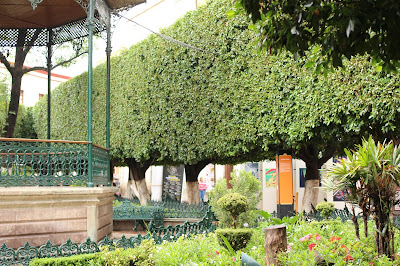
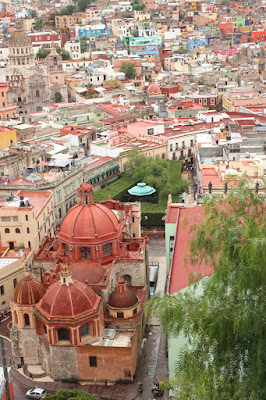
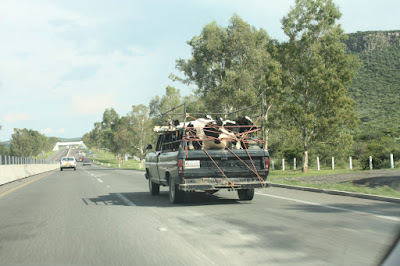
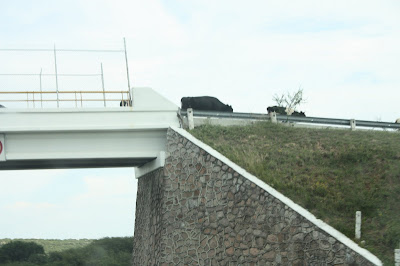
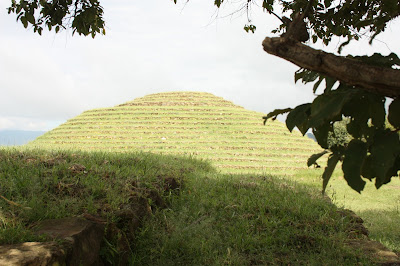
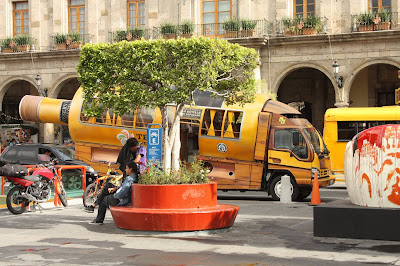
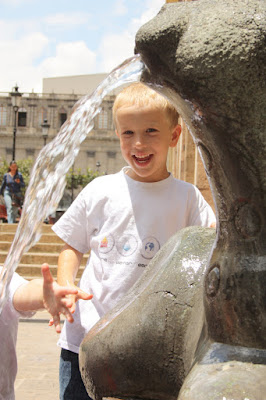
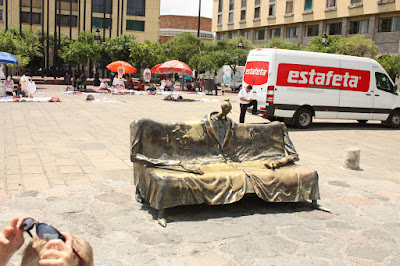
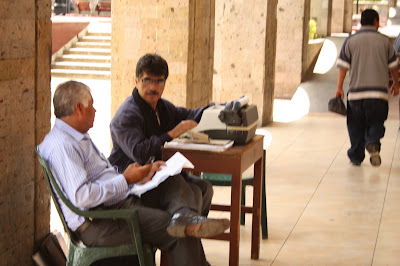
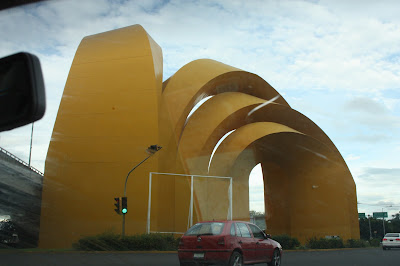
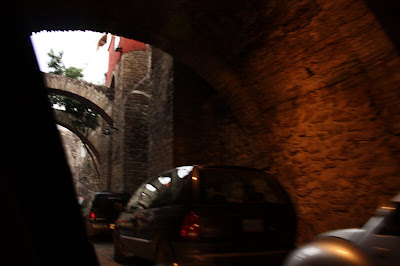
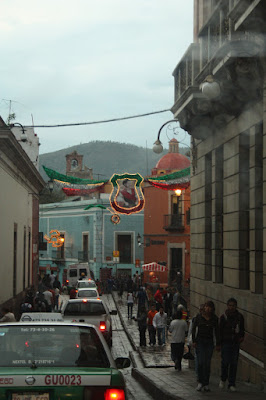
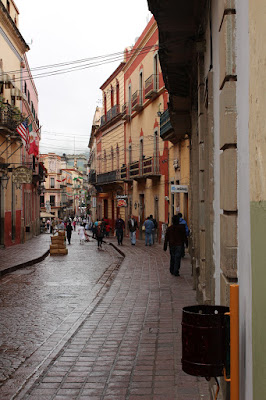
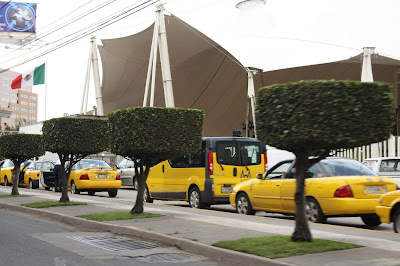
The fourth in a series; see also parts 1, 2, and 3. This post is going to be more a photolog than a narrative, and I apologize in advance for it being a bit disjointed. I ve already touched on these themes a bit in the other post, but now it s time to focus on them. Immediately after leaving the airport, it s quite clear that things are a little different. Trees are square. People ride around in the backs of pickups sometimes on top of piles of debris. Left turns are made in front of other lanes of traffic going the same way. But those are just the things obvious from the road. It s a lot of fun to enjoy the differences. First, the ubiquitous square trees. They look pretty, and are found all over. I also found carefully-manicured trees in cone shapes, more cylindrical shapes, etc. It seems that tree care is taken seriously in Mexico. It was also not uncommon to see the bottom few feet of a tree painted white. A park in Guanajuato had a whole bunch of trees carefully trimmed. And from up on the mountain, it still looked impressive (the green area behind the dome). Driving in Mexico was interesting for a lot of reasons. The highways there aren t quite as limited access as the freeways in the USA. It was quite common to see bicyclists, walkers, a mule, or some cattle ambling along the side of the road. Roadside taco stands don t require taking an exit. You just pull off the road because it s right there. Some sights were a bit surprising. Cattle in a pickup, with rope, for instance. Or cattle crossing the highway on the overpass. Street vendors were everywhere. Stop at a red light and someone might spring from the side of the road and suddenly start washing your windshield (expecting a tip); try to sell you flowers, juice, or bug zappers; or even throw business card-sized advertisements for adult websites into any open windows they can find. One night we saw an incredible fire juggler. I would have tipped him well but he was too far away to do so before the light turned green. Mexico s history stretches back into prehistoric times, and we saw the Teuchitlan ruins at Guachimontones one day. It was truly a remarkable feeling to be able to walk down the middle of the ancient ball court, or to climb up one pyramid and see the other from it. It s not exactly architecture, but Jacob and Oliver sure enjoyed visiting the hot springs at Bosque de la Primavera. Jacob still remembers that where the steam is, the water is 200 degrees, and we CAN T TOUCH IT THERE! Back in Guadalajara, here s a photo from the inside of the grand old cathedral. Compared to the cathedrals we saw in Europe, this was of a similar general size and design, and perhaps only slightly newer. But one big difference: worshipers outnumbered tourists at every Mexican cathedral I saw, whether in the center of Guadalajara or at a rainy intersection in Guanajuato or a plaza in Tlaquepaque. It made them feel more alive, and perhaps more sacred as well. One surprise was seeing people sitting on the steps of the cathedral in downtown Guadalajara selling trinkets such as beads. I think the only other place I had seen something like that was in New Orleans. All of Guadalajara s Centro was beautiful. Much of it survives from colonial days; I think a person could spend days exploring its museums and buildings. Way too many of my 900 photos were taken in Centro to post on the blog, but just for flavor, here s one of the less than historic scenes. Yes, that is a bus shaped like a tequila bottle. Fountains were beautiful and common across Mexico. A few of them were easily reachable by boys, and ours sure loved those. There was a lot of public art, including this interesting chair/skeleton/I m not sure what it is: And, just for good measure while walking around Centro, they tossed in an apparent Redundant Array of Inexpensive Typewriters. I don t know what they were doing, but there were about a dozen guys sitting out in the sun typing on their manual typewriters on their identical tables. And who can leave Guadalajara without seeing one of North America s most impressive traffic circles. I ve got to hand it to the Mexicans for making something that is normally really boring into an interesting work of art. Over in Guanajuato, a lot of driving takes place in the city s vast underground tunnel system. Here s a scene emerging from one of them. Guanajuato was already getting decorated for Mexican independence day festivities (Sept. 15-16) while we were there. Here s a typical Guanajuato street scene. Many of the streets were closed to traffic and perhaps not wide enough to handle vehicles anyway. Those streets had a wonderful peaceful and slow feel to them. I feel that I ve barely done the trip justice with this post. The feelings of walking down a beautiful Guanajuato street, or stepping into a Spanish cathedral, or even seeing a bunch of guys with typewriters, just can t be replicated. It s brimming with history and character, and shouldn t be missed.

13 September 2011

Kai Wasserb ch: Time-critical: Sign the petition against a new data retention law

If you're a German citizen and haven't signed the petition against a new data retention law, then sign it immediately, please. There are approximately [UPDATE]five twenty-five*[/UPDATE] hours left (after that you can still sign the petition until 2011-10-06, but it won't help in the endeavour to cause a public meeting of the petition committee). If you know somebody, who hasn't signed, get the word to them. [UPDATE]* According to netzpolitik.org the deadline for triggering a public meeting of the petition committee was moved to 2011-09-14 23:59 (CEST), which gives you another 24 hours to sign the petition in time (or get others to sign it). Please use that time![/UPDATE] [UPDATE2 (2011-09-14)]netzpolitik.org moved the entry about the deadline change to a new blog post, thus I've updated the link above. If you need instructions for the signing process, you can watch Endspurt: Petition gegen die Vorratsdatenspeicherung .[/UPDATE2 (2011-09-14)] [UPDATE3 (2011-09-14)]We did it! Keep it up![/UPDATE3 (2011-09-14)]

Jose Luis Rivas Contreras: Changing background sync d with jQueryUI Tabs

I love to use jQuery UI plugins. The one I use constantly is Tabs and this time I needed to sync the auto-changing of tab with the background. For this I used an event called tabsshow to trigger my function + the code I wrote yesterday for full-page background with CSS:
/* @author Jose Luis Rivas <joseluis@eserre.com>
*
* @desc swaping full-background pages with jQuery UI's Tabs plugin events.
*/


$(document).ready(function()

$( "#slides" ).bind( "tabsshow", function(event, ui)
var tabattr = $('.ui-state-active').find('a').attr('href');

switch(tabattr)
case '#tab1':
$('img#bg').attr('src', '/img/tab1.jpg');
break;

case '#tab2':
$('img#bg').attr('src', '/img/tab2.jpg');
break;

default:
$('img#bg').attr('src', '/img/tab1.jpg');
break;


);

);
What it does the script? Finds the active-tab identified with the .ui-state-active class and then changes the img tab src attribute according to the href attribute of the active-tab.

12 September 2011

Antonio Terceiro: Laptop fun, or "WTF, HP?"

A couple of weeks ago my old laptop decided to rest forever, and I was forced to impose some economic pressure onto the consumption of the planet resources by acquiring a new one. Fortunately this happened while I am still here in Canada, where it is reasonably cheaper to get a decent laptop than it is in Brazil. Although I did not have the budget I wanted for buying a really kick ass laptop, I was able to buy a decent one, an HP Pavilion G6 1B74CA. I went on 4 different shops with a USB stick loaded with Debian Live to check whether all the hardware would work ok. I always asked one of the salesman before rebooting the laptops, but it was funny to see the reactions of the different employees who came by to check what I was doing: some of them barely noticed that GNOME was not Windows XYZ, and and some asked whether I was hacking the laptops. Unfortunately, I wasn t able to find a single laptop in which the wireless worked out of the box with the Squeeze kernel, which sucks. I searched over the internet a lot, and it seems that even the vendors recommended by the FSF do not provide laptops with wireless cards that work without non-free blobs. Other issue I had was with the Intel graphics. After the kernel enables the modesetting, the backlight goes to the minimum and it looks like you have no video. There are a couple of workarounds in the internet, and the one in which you add acpi_osi=Linux acpi_backlight=vendor to the kernel parameters makes the laptop turn on by itself in the morning. This is probably caused by broken ACPI handling in the BIOS, who almost always is written by people on crack. The other issues I had were related to the keyboard. First, the BIOS came by default with Access keys mode enabled, which means that by default pressing F2-F12 actually activated the multimedia keys instead of the real function keys. It was disapointing to hit F12 and have my wireless turned off. After disabling this in the BIOS setup, it was OK. Well, not quite: for some reason, Fn+F4 did not generate the expected keycodes. After some research on the internet, I found a interesting Ubuntu bug . It seems that the latest and greatest version of Windows starts its video setup application via the Meta+P shortcut ( Meta is the actual name of what Windows people call the Windows key ). Guess what the morons writing the HP BIOS did yes, they made the keys Fn+F4 (where F4 has video setup as its multimedia key ) generate the keycodes for Meta+P! It would be a lot easier for everyone in the world if the people at Microsoft just make their stuff listen to both Meta+P and the video setup keycode, which is generated by every laptop out there, to activate the Windows screen setup thing. This way the very smart dudes writing BIOS at HP wouldn t need to make Fn+F4 generate the keycodes for Meta+P and break every single desktop that is not procuced at Redmond.

Jose Luis Rivas Contreras: Full-Page Background with CSS with crossbrowser support

I ve been trying to get the perfect full-page background without using JavaScript since a while. I tried with CSS3 but, obviously for IE <9 was a pain in the ass, even for older Firefox' releases. So I decided to go with the plain-CSS option:
<!doctype html>
<head>
<link rel="stylesheet" href="style.css">
</head>
<body>
<img id="bg" src="/img/bg.jpg">

<p>Content</p>
</body>
</html>
img#bg
min-width: 100%;
min-height: 100%;

/* Proportionate re-dimension */
width: 100%;
height: auto;

position: fixed; top: 0; left: 0;

z-index: -1;
What does it does? It takes an inline image and uses it as if were a background-image thanks to the z-index: -1 CSS-rule. There are lots of other techniques at CSS-Tricks but none works in every browser as this one in particular. Enjoy.

Jaldhar Vyas: 9/11: Never Forget

As many people reading this may know, my wife Jyoti was in the World Trade Center on 9/11. When the first plane hit, she joined some colleagues at her employers offices on the 78th floor of the South Tower to see what was going on. A few minutes later she went downstairs to her desk on the 77th floor to call me and tell me about it. That's when the second plane hit. Everyone on the 78th floor was instantly killed as she would have been if she had decided to stay. She and some friends, covered in debris and soaked in jet fuel, blinded by thick black smoke made their way down 77 flights of stairs (the elevators were out of action) and even though she was seven months pregnant with our daughter at the time she went all the way down without stopping to rest. An NYPD officer Ramon Suarez helped her out and to an ambulance. He went back to rescue others and died half an hour later when the North Tower collapsed. I was at home. After getting ready and saying my morning prayers, I was leisurly preparing breakfast before starting the day. I started getting phone calls asking "Is Jyoti ok?" Of course she was. Why wouldn't she be? I somehow don't remember who said it first but I was told to turn on the TV because a plane had hit the World Trade Center. I spent the rest of the morning glued to the screen in horror as information on what exactly had happened. Absolutely the lowest moment of my life was when I saw, in real time, the twin towers fall. It was several more hours before I actually got to talk to Jyoti on the phone, confirmation that she was still alive. I didn't get to actually see her and hold her until the next day owing to the curfew around Manhattan. So that's what happened that day. We have repeatedly been told "Never forget" but truth be told some of the details are already fading from my memory. For my wife too, while she occasionally had panic attacks at first, every day life is foremost now and it is only on days like this that her ordeal comes to mind. Our daughter Shailaja is now 10 years old and an honor roll student who just started 4th grade. She knows the story but is not affected by it. These are good things in my opinion. What the jihadists want most of all is apocalypse. They wanted the world to change course but ten years later America remains as generous, bull-headed, lively, spiritual, garish and crude as ever. That's the sweetest revenge lovers of life can have. Don't give up your rights and your daily routines to fear but make the bastards give up theirs. Or as the cliche goes, the terrorists will win.
John Goerzen: Mexico Part 2: Lodging & Family

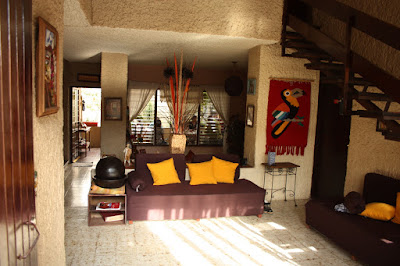
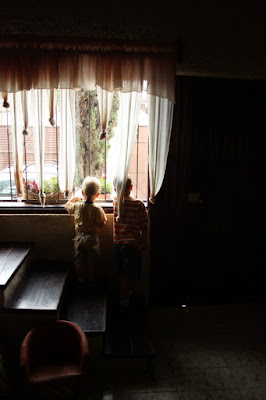
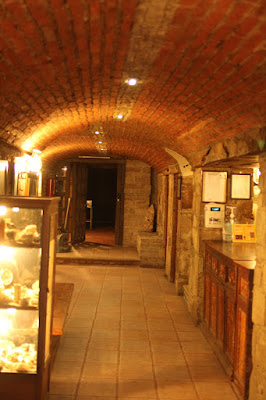
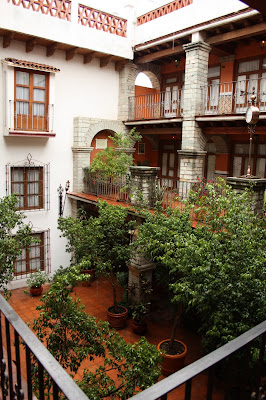
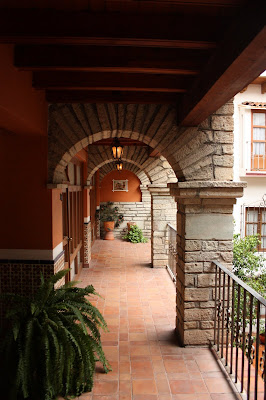
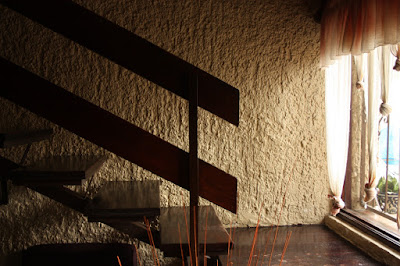
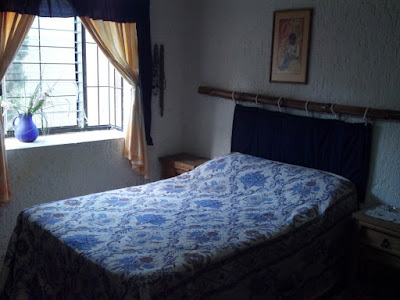
As I wrote in part 1, my family and I were in Mexico recently. Today I ll write about the places we stayed. We spent most of the time in a room we rented in a private home in Guadalajara. My friend Jonathan had found it for us, and it was not too far from his home. The owner was a grandmother, and across the courtyard was more family, including a granddaughter close in age to our boys. They enjoyed playing together. It was really a perfect arrangement for us. There s no better way to be a part of local life when traveling than to stay in someone s house. Here s our bedroom: Notice the glass slats in the window it s a nifty, though not airtight, alternative to our regular windows. More on that later. More of the inside: We had a bit of a language barrier while in Mexico, though never anything significant. My Spanish vocabulary started with almost nothing and I reached maybe a few dozen words by the time we left. Terah knew some Spanish from high school and college, and my friend was fluent. Our hostess also knew a little English. But we all communicated well enough. Terah or Jonathan would help translate when needed. As I d seen before, the children would say things to each other, but never seemed to be bothered that their playmates didn t understand what was being said. They just had a great time anyhow. On Sunday afternoon, when we came back from our activities, there was a buzz of activity. Children everywhere outside, running and playing. Adults too, chatting. We didn t know exactly what was happening, but sent Jacob and Oliver out to play anyhow (which they were eager to do). The yard was enclosed by a wall, so children could pretty much run around without lots of supervision. Eventually they were invited to have some birthday cake (ah ha!) it was one of the children s birthday. Jacob and Oliver actually were served the first two pieces of cake (as the amigos ). Everyone seemed so friendly, warm, and welcoming. Each morning started with breakfast at the house, followed by a scene like this: That s Jacob and Oliver, looking to see if Jonathan had arrived for the day yet. I often noticed in Mexico that I was unsure if I was inside or outside. Here in Kansas, we can have a string of summer days that each exceed 110F (44C) or a few weeks in winter that never get above 15F (-9C), even in daytime. And then we have some pleasant days like right now, too or rain blowing sideways at 60MPH. In general, we spend a lot of effort keeping the outside, well, out. It is quite clear that this isn t a problem in the Guadalajara area. Some restaurants could have been described as buildings with large, open windows so you feel a lot of breeze while inside. Or perhaps as a simple shade roof with a few supports on the edges, so you re never really inside at all (sort of like going under a small shade tent outdoors). To the extent that windows could close, many of them couldn t be made airtight. It was clear that in that area, people spend more energy finding ways to invite the outdoors in rather than to keep it out, thanks to the year-round moderate climate. Perhaps the best example of this surprised me one evening. We were arriving in Guanajuato, an old silver mining town in the mountains, and were going to spend the night at Hotel Socav n, which had been recommended to us by a local friend of Jonathan s. From the street, the hotel looked tiny. But walk in, and you get in this old-looking (and feeling) entry tunnel: That s the front desk, apparently cut out of it there on the right. We asked to see some of the rooms before buying apparently a normal request around there. The innkeeper agreed, and gave us keys and directions to find them on the third floor. It included going up 2 flights of stairs, passing through a courtyard, and going up another flight. It was after dark, and the hotel was dimly lit something I was fine with. I thought we were stepping out into a beautiful atrium with some potted plants in the center of the building something fairly common in some nicer hotels. Until I felt rain on my head. Then I realized that the courtyard, which began two floors up from the street, was open to the sky. Beautiful! Here was the view from out room door: And down the hall : After getting home, a Google happened to turn up some reviews of this hotel. I was so annoyed at what some people wrote! One person gave them only 3 stars because they didn t have air conditioning, had poor water pressure, and lots of steps . Someone else complained of the dark entry tunnel something I couldn t help but smiling about the moment I entered. My review, which should hopefully get posted soon, is certainly different. I gave them 5 stars, because if I wanted a Super 8 with generic fluorescent lighting and the same layout as thousands of other hotels, I would have gone to Nebraska instead of Mexico. Most homes and local hotels in the region don t have air conditioning because they don t need it, and that s just how water pressure is in Mexico (due to needing to pump it from municipal supplies to private storage tanks overhead). And who doesn t appreciate entering a hotel through a brick tunnel? Ah, sigh This should give you some idea of the kind of travel we like: part of the point of traveling is enjoying the differences from home, and I think it is a huge mistake to be annoyed at everything that is different. Enjoy the differences! Finally, here s a photo of the staircase in the home we stayed in, which I thought was fascinating:

11 September 2011

Andrea Veri: A few other additions to my Mutt and Desktop setup!

A few days ago I blogged about my main computer s configuration files and desktop s appearance and today I managed to add a few little tweaks to those, they are: Curious to know how you can easily integrate your Google s contacts into Mutt? Well, you should be able to achieve that within a few minutes after reading this small HowTo: 1. Download and install goobook as explained here. 2. Setup a .goobookrc file into your Home directory. It should look like this:
machine google.com
 login example@gmail.com
 password yourpassword
3. Add the relevant configuration bits into your /etc/Muttrc file:
set query_command="goobook query '%s'"
bind editor <Tab> complete-query
macro index,pager a "<pipe-message>goobook add<return>" "Add sender's address to your Google contacts"
4. Your configuration should be good to go now, so here s a few examples on goobook s usage within Mutt: We can now move on on customizing your Login Screen running GDM3. Let s begin with a screenshoot: I definitely love it, it s clear and clean and most of all it has everything I need, no extra toolbars or menus. If you agree with me, open up the /etc/gdm3/greeter.gconf-defaults file and do the needed changes. This is how your greeter.gconf-defaults file should look like:
/desktop/gnome/background/picture_filename      /path/to/your/dusty-bg/file # dusty's background can be downloaded here.
/desktop/gnome/interface/gtk_theme              Darklooks # this is my main theme, feel free to adapt that to your needs.
/apps/gdm/simple-greeter/logo_icon_name         debian-swirl # this is the default on Debian's systems.
/desktop/gnome/sound/event_sounds               false # I don't like hearing any sound when when I am prompted to insert my user's details on the Login Screen.
/apps/gdm/simple-greeter/disable_user_list      true # users list will be disabled, you won't be able to select your username from a list but you'll have to insert that yourself.
/apps/metacity/general/compositing_manager      false # default, no need to change this.
/apps/gnome-power-manager/ui/icon_policy        never # default, no need to change this.
We are close to the end but we are missing an important detail: how can you safely remove bottom s toolbar and menus for a clearer and cleaner Login Screen? Open up the /var/lib/gdm3/.gconf.mandatory/%gconf-tree.xml file, search for the <dir name= general > section and apply the following change:
- <entry name="compositing_manager" mtime="1315580582" type="bool" value="false"/>
+ <entry name="compositing_manager" mtime="1315580582" type="bool" value="true"/>
But what if you prefer keeping the toolbar as it is, but you definitely don t like seeing the Accessibility icon appearing on your Login Screen? On the same file as above, search for the <dir name= accessibility > section and modify the following string as it follows:
- <entry name="enable" mtime="1315580582" type="bool" value="true"/>
+ <entry name="enable" mtime="1315580582" type="bool" value="false"/>
See you on my next blog post and don t forget to have a look at my GitHub s repository! Oh and follow me on Twitter!

Craig Sanders: Setting gnome-fallback as the default session

How to set gnome-fallback as the default session for gnome3 & gdm3. The easiest way to do it in debian is to use update-alternatives to "install" a new alternative x-session-manager.
update-alternatives --install /usr/bin/x-session-manager x-session-manager \
/usr/bin/gnome-session-fallback 100 --slave /usr/share/man/man1/x-session-manager.1.gz \
x-session-manager.1.gz /usr/share/man/man1/gnome-session.1.gz
This gives gnome-session-fallback a much higher priority than gnome-session so is unlikely to be bumped by any other session managers that might get installed/upgraded Setting gnome-fallback as the default session is a post from: Errata

Christian Perrier: Cleaning spam in Spanish-speaking Debian mailing lists

A new effort for removing spam from a set of Debian mailing list has started: on September 3rd, Fernando Estrada announced the launch of the "Eliminar correo no deseado de las listas en espa ol" effort. Muchas gracias, Fernando, for this initiative. So, if you happen to be a Spanish native speaker and want to help this effort (no need to be a Debian developer or maintainer for that, just motivation and some time)....feel free to join the effort. As a first result of this, I had, today, a few dozens of proposed spam messages to review, coming from debian-user-spanish. Yay!

John Goerzen: Mexico Part 1: Genesis and Travel

My family and I (including our boys) are just back from a great visit to Mexico. It was my first time there, and also the first time our boys have been outside the USA. I ll be writing about all the fun stuff in the posts to come, so you ll have to bear with me on this one as I describe why we did something that appears to horrify a segment of Americans. About a year ago, I wrote a review of Travel as a Political Act by Rick Steves. Rick s point wasn t actually directly political in the conventional sense, but summed up as:
I ve taught people how to travel. I focus mostly on the logistics: finding the right hotel, avoiding long lines But that s not why we travel. We travel to have enlightening experiences, to meet inspirational people, to be stimulated, to learn, and to grow. Travel has taught me the fun in having my cultural furniture rearranged and my ethnocentric self-assuredness walloped.
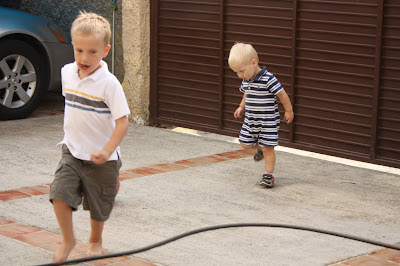
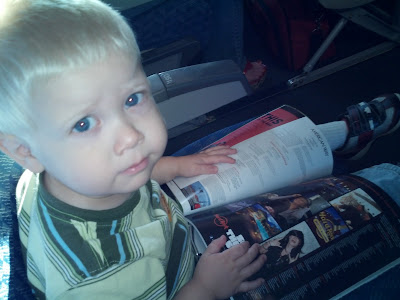
He speaks of giving onesself permission to have a conversation with someone that doesn t speak a language you know, for instance. I got an email this spring from my longtime friend Jonathan Hall, who had moved to Mexico a couple of years ago. He invited my family and me to go to Mexico, generously offered to host us and show us around, and specifically mentioned my review of Rick Steves as a reason to do so, this was immediately intriguing. Due to his other plans, it was also something of a limited-time offer. Those of you that don t live in the USA may not know what sort of stories we get about Mexico over here. Most of them involve either illegal immigration to the USA or the Mexican drug war. Occasionally there is some sort of drug-related violence on the US side of the border as well, which always makes the news. There are a lot of people that have the perception that Mexico is a dangerous place to be. Terah even knows some people that grew up in Mexico and are too afraid to return. So we did some research, asked some questions, and it became pretty clear that yes, some parts of Mexico are dangerous, but many parts are really quite safe, and Jonathan had invited us to one of those. The reactions we got from Americans when we told them of our plan ranged from excitement that we would get to visit a beautiful country to concern and worry about our safety. Besides that, I knew almost no Spanish and Terah had a few high school and college classes years ago to go on. And, we knew that Mexico would, in many ways, be more different from the USA than Germany was. We concluded that this would get us out of our comfort zone in a significant way, have lots of great things to do, be a good experience for the boys, and something that we wouldn t do without Jonathan. So we bought the tickets for it! As you might notice, I m quite glad we did. I ll follow up with the details in the next stories, but for today I ll end with the story of getting there. It involves two cute boys, so of course it ll be interesting. Jacob is almost 5 and Oliver is 2, and neither one of them had flown for over a year. Despite leaving home at 5AM to drive to the airport (about an hour away), they were both awake and alert. Jacob was jabbering away the whole way there. He enjoyed the security process and found it interesting I had to explain that they were checking to make sure everyone was following the airplane rules. Then as we walked to our gate, he pressed his face against every window, looking at the parked airplanes in the dark. Oliver would see him doing this and run over to join him. With a bit of help, he noticed some airplanes had United Express painted on them, and others had American with an AA on them. He would talk about American AA and United Express airplanes for the rest of the week whenever he heard one in the sky. I sat between the boys on our flight to Dallas, and Terah was in the row ahead of us. This is how Jacob spent most of the flight. And Oliver, who had the aisle seat, enjoyed paging through the inflight magazines, safety brochure, wifi instruction card, and airsickness bag. The real highlight came at the Dallas/Ft. Worth (DFW) airport, where we had a connection. And the reason: we needed to take a train to get to our connecting gate. The DFW Skylink system really works very well but the boys cared most that it s a TRAIN. It was difficult to get them both away from it when we got off. They wanted to see it leave, stay and watch the next one come, etc. Jacob was only happy when he realized he could see the Skylink trains running high above the window at our departure gate for Guadalajara. The 2.5-hour flight to Guadalajara got a little long for them, but they managed OK. We struck up several conversations with friendly people that knew English as we waited in various lines. It seems to be something of a rarity for American families with young children and no Mexican heritage to visit Mexico. People went out of their way to be friendly and welcoming even the customs officials. It felt like a great start to the visit. One Mexican man who was chatting with me encouraged me to learn some Spanish. I said my wife knows some, and that I had tried to learn some German back when I took foreign language classes. Laughing, he said, Why would you do that? Not as an insult; it just genuinely didn t seem useful to him. I think they were happy and proud that someone wanted to visit Mexico and was excited about it! More to come.

Next.

Previous.