Chris Lamb: Free software activities in July 2020
 Here is my monthly update covering what I have been doing in the free and open source software world during July 2020 (previous month):
- Opened a pull request to make the build reproducible in PyERFA, a set of Python bindings for various astronomy-related utilities (#45), as well as one for PeachPy assembler to make the output of
codecode/x86_64.pyreproducible (#108).
- As part of being on the board of directors of the Open Source Initiative and Software in the Public Interest I attended their respective monthly meetings and participated in various licensing and other discussions occurring on the internet, as well as the usual internal discussions regarding logistics and policy etc. This month, it was SPI's Annual General Meeting and the OSI has been running a number of remote strategy sessions for the board.
-
Fixed an issue in my tickle-me-email library that implements Getting Things Done (GTD)-like behaviours in IMAP inboxes to ensure that all messages have a unique
Message-Idheader. [...] - Reviewed and merged even more changes by Pavel Dolecek into my Strava Enhancement Suite, a Chrome extension to improve the user experience on the Strava athletic tracker.
-
Updated travis.debian.net, my hosted service for projects that host their Debian packaging on GitHub, to use the Travis CI continuous integration platform) to fix a compatibility issue with the latest version of
mk-build-deps. [...][...]
-
Update the regular expression to search for all the released versions in a
.changesfile. [...] -
Avoid false-positives when matching
sensible-utilsutilities such asi3-sensible-pager. (#966022) -
Rename the
send-patchtag topatch-not-forwarded-upstream. [...] - Drop reminders from 26 tags that false-positives should be reported to Lintian as this is implicit in all our tags. [...]
Reproducible Builds One of the original promises of open source software is that distributed peer review and transparency of process results in enhanced end-user security. However, whilst anyone may inspect the source code of free and open source software for malicious flaws, almost all software today is distributed as pre-compiled binaries. This allows nefarious third-parties to compromise systems by injecting malicious code into ostensibly secure software during the various compilation and distribution processes. The motivation behind the Reproducible Builds effort is to ensure no flaws have been introduced during this compilation process by promising identical results are always generated from a given source, thus allowing multiple third-parties to come to a consensus on whether a build was compromised. The project is proud to be a member project of the Software Freedom Conservancy. Conservancy acts as a corporate umbrella allowing projects to operate as non-profit initiatives without managing their own corporate structure. If you like the work of the Conservancy or the Reproducible Builds project, please consider becoming an official supporter. This month, I:
-
Opened pull requests to make the build reproducible in pyerfa (#45) as well as one for PeachPy to make the output of
codecode/x86_64.pyreproducible (#108). -
In Debian:
- Submitted the following patches to fix reproducibility-related toolchain issues within Debian:
- I also submitted 13 patches to fix specific reproducibility issues in flit, gmap, jskeus, libtpms, logilab-common, mrbayes, numpydoc, pyerfa, python-cooler, python-peachpy, python-pyxs, sratom & weather-util.
-
When investigating packages, I discovered and reported that
dolfinxwas running its test suite even when thenocheckbuild profile was set. (#965946) - Kept isdebianreproducibleyet.com up to date. [...]
- Categorised a large number of packages and issues in the Reproducible Builds 'notes' repository.
- Drafted, published and publicised our monthly report.
- Updated the main Reproducible Builds website and documentation to drop a number of unused Javascript files [...][...][...] and added unminified versions of Bootstrap and jQuery [...] and fixed a number of broken URLs [...][...].
- strip-nondeterminism is our tool to remove specific non-deterministic results from a completed build. This month, I made sure that we did not install the internal handler documentation generated from Perl POD documents [...] and fixed a trivial typo [...].
diffoscope Elsewhere in our tooling, I made the following changes to diffoscope, including preparing and uploading versions
150, 151, 152, 153 & 154 to Debian:
-
New features:
- Add support for flash-optimised F2FS filesystems. (#207)
- Don't require
zipnote(1)to determine differences in a.zipfile as we can uselibarchive. [...] - Allow
--profileas a synonym for--profile=-, ie. write profiling data to standard output. [...] - Increase the minimum length of the output of
strings(1)to eight characters to avoid unnecessary diff noise. [...] - Drop some legacy argument styles:
--exclude-directory-metadataand--no-exclude-directory-metadatahave been replaced with--exclude-directory-metadata= yes,no. [...]
-
Bug fixes:
- Pass the absolute path when extracting members from SquashFS images as we run the command with working directory in a temporary directory. (#189)
- Correct adding a comment when we cannot extract a filesystem due to missing libguestfs module. [...]
- Don't crash when listing entries in archives if they don't have a listed size such as hardlinks in ISO images. (#188)
-
Output improvements:
- Strip off the file offset prefix from
xxd(1)and show bytes in groups of 4. [...] - Don't emit
javap not found in pathif it is available in the path but it did not result in an actual difference. [...] - Fix
... not available in pathmessages when looking for Java decompilers that used the Python class name instead of the command. [...]
- Strip off the file offset prefix from
-
Logging improvements:
- Add a bit more debugging info when launching libguestfs. [...]
- Reduce the
--debuglog noise by truncating thehas_some_contentmessages. [...] - Fix the
compare_fileslog message when the file does not have a literal name. [...]
-
Codebase improvements:
- Rewrite and rename
exit_if_paths_do_not_existto not check files multiple times. [...][...] - Add an
add_commenthelper method; don't mess with our internal list directly. [...] - Replace some simple usages of
str.formatwith Python 'f-strings' [...] and make it easier to navigate to themain.pyentry point [...]. - In the RData comparator, always explicitly return
Nonein the failure case as we return a non-Nonevalue in the success one. [...] - Tidy some imports [...][...][...] and don't alias a variable when we don't end up using. [...]
- Clarify the use of a separate
NullChangesquasi-file to represent missing data in the Debian package comparator [...] and clarify use of a 'null' diff in order to remember an exit code. [...]
- Rewrite and rename
- Misc:
Debian In Debian, I made the following uploads this month:
-
Redis (
6.0.6-1) New upstream release. -
Django:
2.2.14-1New upstream bugfix release.3.1~rc1-1New upstream release candidate.
-
lastpass-cli(1.3.3-4) Fix a build failure under GCC 10. (#957416)
Debian LTS This month I have worked 18 hours on Debian Long Term Support (LTS) and 12 for the Extended LTS project. This included:
- Frontdesk duties, including responding to user/developer questions, reviewing packages, participating in mailing list discussions, offering comments on our survey and attended our IRC contributor meeting. I also made some changes to tools after the move from the Debian version supported [...].
-
Investigated and triaged
atril,ceph,cimg,ffmpeg,golang-github-seccomp-libseccomp-golang,gosa,http-parser,jruby,json-c,jupyter-notebook,keystone,ksh,libjpeg-turbo,libopenmpt,libpam-radius-auth,log4net,mailman,milkytracker,mupdf,pillow,poppler,puma,python-rtslib-fb,roundcube,ruby-zip,salt,slirp,sqlite3,transmission&wordpress. -
Issued DLA 2273-1 for
shiro, first to fix a path-traversal issue where a specially-crafted request could cause an authentication bypass (CVE-2020-1957) and then to fix an encoding issue introduced in the handling of the previous CVE-2020-1957 path-traversal issue which itself could have also caused an authentication bypass (CVE-2020-11989). -
Issued DLA 2274-1 to fix a possible signature verification issue in the fwupd firmware update tool as the return value of
gpgme_op_verify_resultwas not being checked. - Issued DLA 2299-1 and ELA 252-1 in order to prevent a privilege escalation vulnerability discovered in Net-SNMP, a set of tools for collecting and organising information about devices on computer networks.
-
Issued DLA 2300-1 as it was discovered that there was an issue where
kdepim-runtimewould default to using unencrypted POP3 communication despite the user interface indicating that encryption was in use.

 Here are my uploads for the month of July, which is just a part of my free software activities, I ll try to catch up on the rest in upcoming posts. I haven t indulged in online conferences much over the last few months, but this month I attended the virtual editions of Guadec 2020 and HOPE 2020. HOPE isn t something I knew about before and I enjoyed it a lot, you can find their
 Only a short update on the current status of my KDE/Plasma package for Debian sid and testing:
 So a few months ago kiddo one dropped an apparently fairly large cup of coffee onto her one and only trusted computer. With a few months (then) to graduation (which by now
 Fast forward a few months and I finally got hold of it, and had some time to play with it. First, a bootable usbstick was prepared, and the machine s content was really (really, and check again: really) no longer needed, I got hold of it for good.
tl;dr It works just fine. It is a little heavier than I thought (and isn t air supposed to be weightless?) The ergonomics seem quite nice. The keyboard is decent. Screen-resolution on this pre-retina simple Air is so-so at 1440 pixels. But battery live seems ok and e.g. the camera is way better than what I have in my trusted Lenovo X1 or at my desktop. So just as a zoom client it may make a lot of sense; otherwise just walking around with it as a quick portable machine seems perfect (especially as my Lenovo X1 still (ahem) suffers from one broken key I really need to fix ).
 Below are some lightly edited notes from the installation. Initial steps were quick: maybe an hour or less? Customizing a machine takes longer than I remembered, this took a few minutes here and there quite a few times, but always incremental.
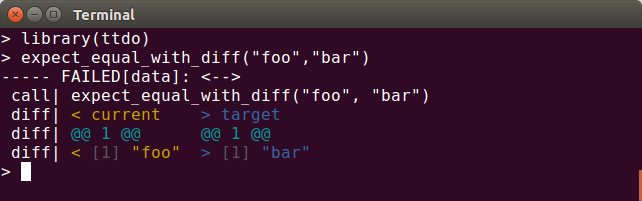 This release corrects a minor editing error spotted by the ever-vigilant
 Sometimes I enjoy reading the source code to projects I like, use, or am about to install for the first time. This was something I used to do on a very regular basis, looking for
 First off - nothing I'm going to talk about in this post is novel or overly surprising, I just haven't found a clear writeup of it before. I'm not criticising any design decisions or claiming this is an important issue, just raising something that people might otherwise be unaware of.
 I released version 2.4 of