Search Results: "tg"

24 May 2016

Carl Chenet: Tweet your database with db2twitter

Follow me also on Diaspora*diaspora-banner or Twitter You have a database (MySQL, PostgreSQL, see supported database types), a tweet pattern and wants to automatically tweet on a regular basis? No need for RSS, fancy tricks, 3rd party website to translate RSS to Twitter or whatever. Just use db2twitter. A quick example of a tweet generated by db2twitter: db2twitter The new version 0.6 offers the support of tweets with an image. How cool is that? db2twitter is developed by and run for LinuxJobs.fr, the job board of th french-speaking Free Software and Opensource community. banner-linuxjobs-small db2twitter also has cool options like; db2twitter is coded in Python 3.4, uses SQlAlchemy (see supported database types) and Tweepy. The official documentation is available on readthedocs.

23 May 2016

Daniel Pocock: PostBooks, PostgreSQL and pgDay.ch talk

PostBooks 4.9.5 was recently released and the packages for Debian (including jessie-backports), Ubuntu and Fedora have been updated. Postbooks at pgDay.ch in Rapperswil, Switzerland pgDay.ch is coming on Friday, 24 June. It is at the HSR Hochschule f r Technik Rapperswil, at the eastern end of Lake Zurich. I'll be making a presentation about Postbooks in the business track at 11:00. Getting started with accounting using free, open source software If you are not currently using a double-entry accounting system or if you are looking to move to a system that is based on completely free, open source software, please see my comparison of free, open source accounting software. Free and open source solutions offer significant advantages: flexibility, businesses can choose any programmer to modify the code, and use of SQL back-ends, multi-user support and multi-currency support are standard. These are all things that proprietary vendors charge extra money for. Accounting software is the lowest common denominator in the world of business software, people keen on the success of free and open source software may find that encouraging businesses to use one of these solutions is a great way to lay a foundation where other free software solutions can thrive. PostBooks new web and mobile front end xTuple, the team behind Postbooks, has been busy developing a new Web and Mobile front-end for their ERP, CRM and accounting suite, powered by the same PostgreSQL backend as the Linux desktop client. More help is needed to create official packages of the JavaScript dependencies before the Web and Mobile solution itself can be packaged.

19 May 2016

Valerie Young: Summer of Reproducible Builds

Hello friend, family, fellow Outreachy participants, and the Debian community!
This blog's primary purpose will be to track the progress of the Outreachy project in which I'm participating this summer    This post is to introduce myself and my project (working on the Debian reproducible builds project).
What is Outreachy? You might not know! Let me empower you: Outreachy is an organization connecting woman and minorities to mentors in the free (as in freedom) software community, /and/ funding for three months to work with the mentors and contribute to a free software project.  If you are a woman or minority human that likes free software, or if you know anyone in this situation, please tell them about Outreachy   Or put them in touch with me, I'd happily tell them more.
So who am I?
My name is Valerie Young. I live in the Boston Metropolitan Area (any other outreachy participants here?) and hella love free software. 
Some bullet pointed Val facts in rough reverse chronological order:
- I run Debian but only began contributing during the Outreachy application process
- If you went to DebConf2015, you might have seen me dye nine people's hair blue, blond or Debian swirl.
- If you stop through Boston I could be easily convinced to dye your hair.
- I worked on electronic medical records web application for the last two years (lotsa Javascriptin' and Perlin' at athenahealth)
- Before that I taught a programming summer program at University of Moratuwain Sri Lanka.
- Before that I got a degrees in physics and computer science at Boston University.
- At BU I helped start a hackerspace where my interest in technology, free software, hacker culture, anarchy, the internet all began.
- I grew up in the very fine San Francisco Bay Area.
What will I be working on?
Reproducible builds!
In the near future I'll write a  What is reproducible builds? Why is it so hot right now?  post.  For now, from a high (and not technical) level, reproducible builds is a broad effort to verify that the computer executable binary programs you run on your computer come from the human readable source code they claim to. It is not presently /impossible/ to do this verification, but it's not easy, and there are a lot of nuanced computer quirks that make it difficult for the most experienced programmer and straight-up impossible for a user with no technical expertise. And without this ability to verify -- the state we are in now -- any executable piece of software could be hiding secret code. 
The first step towards the goal of verifiability is to make reproducibility a essential part of software development. Reproducible builds means this: when you compile a program from the source code, it should always be identical, bit by bit. If the program is always identical, you can compare your version of the software to any trusted programmer with very little effort. If it is identical, you can trust it -- if it's not, you have reason to worry.
The Debian project is undergoing an effort to make the entire Debian operating system verifiable reproducible (hurray!). My outreachy-funded summer contribution involves the improving and updating tests.reproducible-builds.org   a site that presently presently surfaces the results of reproducibility testing of several free software projects (including Debian, Fedora, coreboot, OpenWrt, NetBSD, FreeBSD and ArchLinux). However, the design of test.r-b.org is a bit confusing, making it difficult for a user to find how to check on the reproducibility of a given package for one of the aforementioned projects, or understand the reasons for failure. Additional, the backend test results of Debian are outgrowing the original SQLite database, and many projects do not log the results of package testing at all. I hope, by the end of the summer, we'll have a more beefed-out and pretty site as well as better organized backend data  
This summer there will be 3 other Outreachy participants working on the Debian reproducible builds project! Check out their blogs/projects:
Scarlett
Satyam
Ceridwen
Thanks to our Debian mentors -- Lunar, Holger Levsen, and Mattia Rizzolo -- for taking us on   

17 May 2016

Reproducible builds folks: Reproducible builds: week 55 in Stretch cycle

What happened in the Reproducible Builds effort between May 8th and May 14th 2016: Documentation updates Toolchain fixes Packages fixed The following 28 packages have become newly reproducible due to changes in their build dependencies: actor-framework ask asterisk-prompt-fr-armelle asterisk-prompt-fr-proformatique coccinelle cwebx d-itg device-tree-compiler flann fortunes-es idlastro jabref konclude latexdiff libint minlog modplugtools mummer mwrap mxallowd mysql-mmm ocaml-atd ocamlviz postbooks pycorrfit pyscanfcs python-pcs weka The following 9 packages had older versions which were reproducible, and their latest versions are now reproducible again due to changes in their build dependencies: csync2 dune-common dune-localfunctions libcommons-jxpath-java libcommons-logging-java libstax-java libyanfs-java python-daemon yacas The following packages have become newly reproducible after being fixed: The following packages had older versions which were reproducible, and their latest versions are now reproducible again after being fixed: Some uploads have fixed some reproducibility issues, but not all of them: Patches submitted that have not made their way to the archive yet: Package reviews 344 reviews have been added, 125 have been updated and 20 have been removed in this week. 14 FTBFS bugs have been reported by Chris Lamb. tests.reproducible-builds.org Misc. Dan Kegel sent a mail to report about his experiments with a reproducible dpkg PPA for Ubuntu. According to him sudo add-apt-repository ppa:dank/dpkg && sudo apt-get update && sudo apt-get install dpkg should be enough to get reproducible builds on Ubuntu 16.04. This week's edition was written by Ximin Luo and Holger Levsen and reviewed by a bunch of Reproducible builds folks on IRC.

10 May 2016

Reproducible builds folks: Reproducible builds: week 54 in Stretch cycle

What happened in the Reproducible Builds effort between May 1st and May 7th 2016: Media coverage There has been a surprising tweet last week: "Props to @FiloSottile for his nifty gvt golang tool. We're using it to get reproducible builds for a Zika & West Nile monitoring project." and to our surprise Kenn confirmed privately that he indeed meant "reproducible builds" as in "bit by bit identical builds". Wow. We're looking forward to learn more details about this; for now we just know that they are doing this for software quality reasons basically. Two of the four GSoC and Outreachy participants for Reproducible builds posted their introductions to Planet Debian: Toolchain fixes and other upstream developments dpkg 1.18.5 was uploaded fixing two bugs relevant to us: This upload made it necessary to rebase our dpkg on the version on sid again, which Niko Tyni and Lunar promptly did. Then a few days later 1.18.6 was released to fix a regression in the previous upload, and Niko promptly updated our patched version again. Following this Niko Tyni found #823428: "dpkg: many packages affected by dpkg-source: error: source package uses only weak checksums". Alexis Bienven e worked on tex related packages and SOURCE_DATE_EPOCH: Emmanuel Bourg uploaded jflex/1.4.3+dfsg-2, which removes timestamps from generated files. Packages fixed The following 285 packages have become reproducible due to changes in their build dependencies (mostly from GCC honouring SOURCE_DATE_EPOCH, see the previous week report): 0ad abiword abcm2ps acedb acpica-unix actiona alliance amarok amideco amsynth anjuta aolserver4-nsmysql aolserver4-nsopenssl aolserver4-nssqlite3 apbs aqsis aria2 ascd ascii2binary atheme-services audacity autodocksuite avis awardeco bacula ballerburg bb berusky berusky2 bindechexascii binkd boinc boost1.58 boost1.60 bwctl cairo-dock cd-hit cenon.app chipw ckermit clp clustalo cmatrix coinor-cbc commons-pool cppformat crashmail crrcsim csvimp cyphesis-cpp dact dar darcs darkradiant dcap dia distcc dolphin-emu drumkv1 dtach dune-localfunctions dvbsnoop dvbstreamer eclib ed2k-hash edfbrowser efax-gtk efax exonerate f-irc fakepop fbb filezilla fityk flasm flightgear fluxbox fmit fossil freedink-dfarc freehdl freemedforms-project freeplayer freeradius fxload gdb-arm-none-eabi geany-plugins geany geda-gaf gfm gif2png giflib gifticlib glaurung glusterfs gnokii gnubiff gnugk goaccess gocr goldencheetah gom gopchop gosmore gpsim gputils grcompiler grisbi gtkpod gvpe hardlink haskell-github hashrat hatari herculesstudio hpcc hypre i2util incron infiniband-diags infon ips iptotal ipv6calc iqtree jabber-muc jama jamnntpd janino jcharts joy2key jpilot jumpnbump jvim kanatest kbuild kchmviewer konclude krename kscope kvpnc latexdiff lcrack leocad libace-perl libcaca libcgicc libdap libdbi-drivers libewf libjlayer-java libkcompactdisc liblscp libmp3spi-java libpwiz librecad libspin-java libuninum libzypp lightdm-gtk-greeter lighttpd linpac lookup lz4 lzop maitreya meshlab mgetty mhwaveedit minbif minc-tools moc mrtrix mscompress msort mudlet multiwatch mysecureshell nifticlib nkf noblenote nqc numactl numad octave-optim omega-rpg open-cobol openmama openmprtl openrpt opensm openvpn openvswitch owx pads parsinsert pcb pd-hcs pd-hexloader pd-hid pd-libdir pear-channels pgn-extract phnxdeco php-amqp php-apcu-bc php-apcu php-solr pidgin-librvp plan plymouth pnscan pocketsphinx polygraph portaudio19 postbooks-updater postbooks powertop previsat progressivemauve puredata-import pycurl qjackctl qmidinet qsampler qsopt-ex qsynth qtractor quassel quelcom quickplot qxgedit ratpoison rlpr robojournal samplv1 sanlock saods9 schism scorched3d scummvm-tools sdlbasic sgrep simh sinfo sip-tester sludge sniffit sox spd speex stimfit swarm-cluster synfig synthv1 syslog-ng tart tessa theseus thunar-vcs-plugin ticcutils tickr tilp2 timbl timblserver tkgate transtermhp tstools tvoe ucarp ultracopier undbx uni2ascii uniutils universalindentgui util-vserver uudeview vfu virtualjaguar vmpk voms voxbo vpcs wipe x264 xcfa xfrisk xmorph xmount xyscan yacas yasm z88dk zeal zsync zynaddsubfx Last week the 1000th bug usertagged "reproducible" was fixed! This means roughly 2 bugs per day since 2015-01-01. Kudos and huge thanks to everyone involved! Please also note: FTBFS packages have not been counted here and there are still 600 open bugs with reproducible patches provided. Please help bringing that number down to 0! The following packages have become reproducible after being fixed: Some uploads have fixed some reproducibility issues, but not all of them: Uploads which fix reproducibility issues, but currently FTBFS: Patches submitted that have not made their way to the archive yet: Package reviews 54 reviews have been added, 6 have been updated and 44 have been removed in this week. 18 FTBFS bugs have been reported by Chris Lamb, James Cowgill and Niko Tyni. diffoscope development Thanks to Mattia, diffoscope 52~bpo8+1 is available in jessie-backports now. tests.reproducible-builds.org Misc. This week's edition was written by Reiner Herrmann, Holger Levsen and Mattia Rizzolo and reviewed by a bunch of Reproducible builds folks on IRC. Mattia also wrote a small ikiwiki macro for this blog to ease linking reproducible issues, packages in the package tracker and bugs in the Debian BTS.

7 May 2016

Keith Packard: Altos1.6.3

AltOS 1.6.3 Bdale and I are pleased to announce the release of AltOS version 1.6.3. AltOS is the core of the software for all of the Altus Metrum products. It consists of firmware for our cc1111, STM32L151, STMF042, LPC11U14 and ATtiny85 based electronics and Java-based ground station software. Version 1.6.3 adds idle mode to AltosDroid and has bug fixes for our host software on desktops, laptops an android devices along with BlueTooth support for Windows. 1.6.3 is in Beta test for Android; if you want to use the beta version, join the AltosDroid beta program AltOS AltOS fixes: AltosUI and TeleGPS Applications AltosUI and TeleGPS New Features: AltosUI and TeleGPS Fixes: AltosDroid AltosDroid new features: AltosDroid bug fixes: Documentation

6 May 2016

Scarlett Clark: Kubuntu: Debian: KDE: Outreachy! Yay! Upcoming changes

I was approved to participate in Outreachy!
https://www.gnome.org/outreachy/ I will be working on the Debian reproducible builds.
https://wiki.debian.org/ReproducibleBuilds Some of you in the Debian community might know me from working with the debian-qt-kde team
as we (Kubuntu) collaborated in packaging for some time. Will this affect my current volunteer work for my current projects? Absolutely.
I am currently putting in 10-18 hours a day in volunteer work. Obviously, I cannot give up sleep.
I love all of my projects dearly, but after some recent events, I have found that I absolutely must
resurrect my career. AKA I need to make money to be able to stand on my own two feet without relying on
someone else. I do appreciate the donations, but they do not even dent my student loans :-).
So with all of that said, this will be a positive move in my career path. I have not sorted out how my current projects contributions will change, but I can tell you
Debian reproducible builds will be number one priority come May 20th. This will last for 3 months.
Then my focus will be on getting a paying job. Please understand, I need this. One needs money to survive, and working for donations is not working.
I feel the Outreachy work will improve my chances at obtaining a paid job in the open source field.
I have been chasing my dream job for some time now, and it is time to go get it. I will post again, when I have sorted out how I will split up my time.
Thank you my friends.

2 May 2016

Reproducible builds folks: Reproducible builds: week 53 in Stretch cycle

What happened in the Reproducible Builds effort between April 24th and 30th 2016. Media coverage Reproducible builds were mentioned explicitly in two talks at the Mini-DebConf in Vienna: Aspiration together with the OTF CommunityLab released their report about the Reproducible Builds summit in December 2015 in Athens. Toolchain fixes Now that the GCC development window has been opened again, the SOURCE_DATE_EPOCH patch by Dhole and Matthias Klose to address the issue timestamps_from_cpp_macros (__DATE__ / __TIME__) has been applied upstream and will be released with GCC 7. Following that Matthias Klose also has uploaded gcc-5/5.3.1-17 and gcc-6/6.1.1-1 to unstable with a backport of that SOURCE_DATE_EPOCH patch. Emmanuel Bourg uploaded maven/3.3.9-4, which uses SOURCE_DATE_EPOCH for the maven.build.timestamp. (SOURCE_DATE_EPOCH specification) Other upstream changes Alexis Bienven e submitted a patch to Sphinx which extends SOURCE_DATE_EPOCH support for copyright years in generated documentation. Packages fixed The following 12 packages have become reproducible due to changes in their build dependencies: hhvm jcsp libfann libflexdock-java libjcommon-java libswingx1-java mobile-atlas-creator not-yet-commons-ssl plexus-utils squareness svnclientadapter The following packages have became reproducible after being fixed: Some uploads have fixed some reproducibility issues, but not all of them: Patches submitted that have not made their way to the archive yet: Package reviews 95 reviews have been added, 15 have been updated and 129 have been removed in this week. 22 FTBFS bugs have been reported by Chris Lamb and Martin Michlmayr. diffoscope development strip-nondeterminism development tests.reproducible-builds.org Misc. Amongst the 29 interns who will work on Debian through GSoC and Outreachy there are four who will be contributing to Reproducible Builds for Debian and Free Software. We are very glad to welcome ceridwen, Satyam Zode, Scarlett Clark and Valerie Young and look forward to working together with them the coming months (and maybe beyond)! This week's edition was written by Reiner Herrmann and Holger Levsen and reviewed by a bunch of Reproducible builds folks on IRC.

30 April 2016

Chris Lamb: Free software activities in April 2016

Here is my monthly update covering a large part of what I have been doing in the free software world (previously):
Debian My work in the Reproducible Builds project was covered in our weekly reports. (#48, #49, #50, #51 & #52)
Uploads
  • redis (2:3.0.7-3) Adding, amongst some other changes, systemd LimitNOFILE support to allow a higher number of open file descriptors.


FTP Team

As a Debian FTP assistant I ACCEPTed 135 packages: aptitude, asm, beagle, blends, btrfs-progs, camitk, cegui-mk2, cmor-tables, containerd, debian-science, debops, debops-playbooks, designate-dashboard, efitools, facedetect, flask-testing, fstl, ganeti-os-noop, gnupg, golang-fsnotify, golang-github-appc-goaci, golang-github-benbjohnson-tmpl, golang-github-dchest-safefile, golang-github-docker-go, golang-github-dylanmei-winrmtest, golang-github-hawkular-hawkular-client-go, golang-github-hlandau-degoutils, golang-github-hpcloud-tail, golang-github-klauspost-pgzip, golang-github-kyokomi-emoji, golang-github-masterminds-semver-dev, golang-github-masterminds-vcs-dev, golang-github-masterzen-xmlpath, golang-github-mitchellh-ioprogress, golang-github-smartystreets-assertions, golang-gopkg-hlandau-configurable.v1, golang-gopkg-hlandau-easyconfig.v1, golang-gopkg-hlandau-service.v2, golang-objx, golang-pty, golang-text, gpaste, gradle-plugin-protobuf, grip, haskell-brick, haskell-hledger-ui, haskell-lambdabot-haskell-plugins, haskell-text-zipper, haskell-werewolf, hkgerman, howdoi, jupyter-client, jupyter-core, letsencrypt.sh, libbpp-phyl, libbpp-raa, libbpp-seq, libbpp-seq-omics, libcbor-xs-perl, libdancer-plugin-email-perl, libdata-page-pageset-perl, libevt, libevtx, libgit-version-compare-perl, libgovirt, libmsiecf, libnet-ldap-server-test-perl, libpgobject-type-datetime-perl, libpgobject-type-json-perl, libpng1.6, librest-client-perl, libsecp256k1, libsmali-java, libtemplates-parser, libtest-requires-git-perl, libtext-xslate-perl, linux, linux-signed, mandelbulber2, netlib-java, nginx, node-rc, node-utml, nvidia-cuda-toolkit, openfst, openjdk-9, openssl, php-cache-integration-tests, pulseaudio, pyfr, pygccxml, pytest-runner, python-adventure, python-arrayfire, python-django-feincms, python-fastimport, python-fitsio, python-imagesize, python-lib389, python-libtrace, python-neovim-gui, python3-proselint, pythonpy, pyzo, r-cran-ca, r-cran-fitbitscraper, r-cran-goftest, r-cran-rnexml, r-cran-rprotobuf, rrdtool, ruby-proxifier, ruby-seamless-database-pool, ruby-syslog-logger, rustc, s5, sahara-dashboard, salt-formula-ceilometer, salt-formula-cinder, salt-formula-glance, salt-formula-heat, salt-formula-horizon, salt-formula-keystone, salt-formula-neutron, salt-formula-nova, seer, simplejson, smrtanalysis, tiles-autotag, tqdm, tran, trove-dashboard, vim, vulkan, xapian-bindings & xapian-core.

29 April 2016

Iain R. Learmonth: MiniDebCamp Vienna 2016

I'm currently in Vienna for MiniDebCamp and MiniDebConf at FH Technikum Wien, hosted as a part of Linuxwochen Wien. Today and yesterday have been spent hacking on Debian, and I've produced a few package updates and closed a few bugs.

Scapy The last update to Scapy in Debian was in August 2011. Bug #773554 was filed in 2014 to request a new upstream version be packaged and in a few days this bug should be closed. As this package is maintained by someone else and I'm performing a non-maintainer upload, the upload will sit in the delayed queue for 3 days. There has also been a Python 3 port of Scapy developed, and I've also packaged this (bug #822096). You will be able to install this version as python3-scapy and run it as /usr/bin/scapy3, which means it can fully co-exist with an installation of the original Python 2 version on the same system.

Hamradio Blend
  • Carles Fernandez had produced an updated package for gnss-sdr and this has now been uploaded to unstable.
  • Ana Custura produced an updated package for chirp and this has now been uploaded to unstable.
  • I've made a couple of updates to the hamradio-maintguide and released version 0.2 of that documentation. This was simple changes for secure URIs for the Vcs-* fields and options for updating existing packages to new upstream versions using uscan, by tarball URL or by local tarball.

qtile qtile is a "full-featured, hackable tiling window manager written and configured in Python". I've been a big fan of tiling window managers for a few years now, starting with XMonad in 2013, moving to i3 and now I plan to move to qtile as I think its customisability and complete removal of window decorations will work well for me. I have now packaged qtile (bug #762637), and updated one of its dependencies (xcffib), and it will appear in unstable after passing ftp-master scrutiny.

26 April 2016

Reproducible builds folks: Reproducible builds: week 52 in Stretch cycle

What happened in the Reproducible Builds effort between April 17th and April 23rd 2016: Toolchain fixes Thomas Weber uploaded lcms2/2.7-1 which will not write uninitialized memory when writing color names. Original patch by Lunar. The GCC 7 development phase has just begun, so Dhole reworked his patch to make gcc use SOURCE_DATE_EPOCH if set which prompted interesting feedback, but it has not been merged yet. Alexis Bienven e submitted a patch for sphinx to strip Python object memory addresses from the generated documentation. Packages fixed The following packages have become reproducible due to changes in their build dependencies: cobertura, commons-pool, easymock, eclipselink, excalibur-logkit, gap-radiroot, gluegen2, jabref, java3d, jcifs, jline, jmock2, josql, jtharness, libfann, libgroboutils-java, libjemmy2-java, libjgoodies-binding-java, libjgrapht0.8-java, libjtds-java, liboptions-java, libpal-java, libzeus-jscl-java, node-transformers, octave-msh, octave-secs2d, openmama, rkward. The following packages have become reproducible after being fixed: Patches submitted that have not made their way to the archive yet: tests.reproducible-builds.org diffoscope development diffoscope 52 was released with changes from Mattia Rizzolo, h01ger, Satyam Zode and Reiner Herrmann, who also did the release. Notable changes included: As usual, diffoscope 52 is available on Debian, Archlinux and PyPI, other distributions will hopefully soon update. Package reviews 28 reviews have been added, 11 have been updated and 94 have been removed in this week. 14 FTBFS bugs were reported by Chris Lamb (one being was a duplicate of a bug filed by Sebastian Ramacher an hour earlier). Misc. This week's edition was written by Lunar, Holger 'h01ger' Levsen and Chris Lamb and reviewed by a bunch of Reproducible builds folks on IRC.

15 April 2016

Raphaël Hertzog: Freexian s report about Debian Long Term Support, March 2016

A Debian LTS logoLike each month, here comes a report about the work of paid contributors to Debian LTS. Individual reports In February, 111.75 work hours have been dispatched among 10 paid contributors. Their reports are available: Evolution of the situation The number of sponsored hours started to increase for April (116.75 hours, thanks to Sonus Networks) and should increase even further for May (with a new Gold sponsor currently joining us, Babiel GmbH). Hopefully the trend will continue so that we can reach our objective of funding the equivalent of a full-time position. At the end of the month the LTS team will be fully responsible of all Debian 7 Wheezy updates. For now paid contributors are still helping the security team by fixing packages that were fixed in squeeze already but that are still outstanding in wheezy. They are also looking for ways to ensure that some of the most complicated packages can be supported over the wheezy LTS timeframe. It is likely that we will seek external help (possibly from credativ which is already handling support of PostgreSQL) for the maintenance of Xen and that some other packages (like libav, vlc, maybe qemu?) will be upgraded to newer versions which are still maintained (either upstream or in Debian Jessie by the Debian maintainers). Thanks to our sponsors New sponsors are in bold.

No comment Liked this article? Click here. My blog is Flattr-enabled.

5 April 2016

Ian Wienand: Image building in OpenStack CI

Also titled minimal images - maximal effort! The OpenStack Infrastructure Team manages a large continuous-integration system that provides the broad range of testing the OpenStack project requires. Tests are run thousands of times a day across every project, on multiple platforms and on multiple cloud-providers. There are essentially no manual steps in any part of the process, with every component being automated via scripting, a few home-grown tools and liberal doses of Puppet and Ansible. More importantly, every component resides in the public git trees right alongside every other OpenStack project, with contributions actively encouraged. As with any large system, technical debt can build up and start to affect stability and long-term maintainability. OpenStack Infrastructure can see some of this debt accumulating as more testing environments across more cloud-providers are being added to support ever-growing testing demands. Thus a strong focus of recent work has been consolidating testing platforms to be smaller, better defined and more maintainable. This post illustrates some of the background to the issues and describes how these new platforms are more reliable and maintainable.
OpenStack CI Overview Before getting into details, it's a good idea to get a basic big-picture conceptual model of how OpenStack CI testing works. If you look at the following diagram and follow the numbers with the explanation below, hopefully you'll have all the context you need. Overview of OpenStack CI
  1. The developer uploads their code to gerrit via the git-review tool. There is no further action required on their behalf and the developer simply waits for results.

  2. Gerrit provides a JSON-encoded "firehose" output of everything happening to it. New reviews, votes, updates and more all get sent out over this pipe. Zuul is the overall scheduler that subscribes itself to this information and is responsible for managing the CI jobs appropriate for each change.

  3. Zuul has a configuration that tells it what jobs to run for what projects. Zuul can do lots of interesting things, but for the purposes of this discussion we just consider that it puts the jobs it wants run into gearman for a Jenkins master to consume. gearman is a job-server; as they explain it "[gearman] provides a generic application framework to farm out work to other machines or processes that are better suited to do the work". Zuul puts into gearman basically a tuple (job-name, node-type) for each job it wants run, specifying the unique job name to run and what type of node it should be run on.

  4. A group of Jenkins masters are subscribed to gearman as workers. It is these Jenkins masters that will consume the job requests from the queue and actually get the tests running. However, Jenkins needs two things to be able to run a job a job definition (what to actually do) and a slave node (somewhere to do it). The first part what to do is provided by job-definitions stored in external YAML files and processed by Jenkins Job Builder (jjb) in to job configurations for Jenkins. Each Jenkins master gets these definitions pushed to it constantly by Puppet, thus each Jenkins master instance knows about all the jobs it can run automatically. Zuul also knows about these job definitions; this is the job-name part of the tuple we said it put into gearman. The second part somewhere to run the test takes some more explaining. To the next point...

  5. Several cloud companies donate capacity in their clouds for OpenStack to run CI tests. Overall, this capacity is managed by a customised orchestration tool called nodepool. Nodepool watches the gearman queue and sees what requests are coming out of Zuul. It looks at node-type of jobs in the queue and decides what types of nodes need to start and which cloud providers have capacity to satisfy demand. Nodepool will monitor the start-up of the virtual-machines and register the new nodes to the Jenkins master instances.

  6. At this point, the Jenkins master has what it needs to actually get jobs started. When nodepool registers a host to a Jenkins master as a slave, the Jenkins master can now advertise its ability to consume jobs. For example, if a ubuntu-trusty node is provided to the Jenkins master instance by nodepool, Jenkins can now consume from gearman any job it knows about that is intended to run on an ubuntu-trusty slave. Jekins will run the job as defined in the job-definition on that host ssh-ing in, running scripts, copying the logs and waiting for the result. (It is a gross oversimplification, but for the purposes of OpenStack CI, Jenkins is pretty much used as a glorified ssh/scp wrapper. Zuul Version 3, under development, is working to remove the need for Jenkins to be involved at all).

  7. Eventually, the test will finish. The Jenkins master will put the result back into gearman, which Zuul will consume. The slave will be released back to nodepool, which destroys it and starts all over again (slaves are not reused and also have no sensitive details on them, as they are essentially publicly accessible). Zuul will wait for the results of all jobs for the change and post the result back to Gerrit; it either gives a positive vote or the dreaded negative vote if required jobs failed (it also handles merges to git, but we'll ignore that bit for now).

In a nutshell, that is the CI work-flow that happens thousands-upon-thousands of times a day keeping OpenStack humming along.
Image builds So far we have glossed over how nodepool actually creates the images that it hands out for testing. Image creation, illustrated in step 8 above, contains a lot of important details. Firstly, what are these images and why build them at all? These images are where the "rubber hits the road" they are instantiated into the virtual-machines that will run DevStack, unit-testing or whatever else someone might want to test. The main goal is to provide a stable and consistent environment in which to run a wide-range of tests. A full OpenStack deployment results in hundreds of libraries and millions of lines of code all being exercised at once. The testing-images are right at the bottom of all this, so any instability or inconsistency affects everyone; leading to constant fire-firefighting and major inconvenience as all forward-progress stops when CI fails. We want to support a wide number of platforms interesting to developers such as Ubuntu, Debian, CentOS and Fedora, and we also want to and make it easy to handle new releases and add other platforms. We want to ensure this can be maintained without too much day-to-day hands-on. Caching is a big part of the role of these images. With thousands of jobs going on every day, an occasional network blip is not a minor annoyance, but creates constant and difficult to debug failures. We want jobs to rely on as few external resources as possible so tests are consistent and stable. This means caching things like the git trees tests might use (OpenStack just broke the 1000 repository mark), VM images, packages and other common bits and pieces. Obviously a cache is only as useful as the data in it, so we build these images up every day to keep them fresh.
Snapshot images If you log into almost any cloud-provider's interface, they almost certainly have a range of pre-canned images of common distributions for you to use. At first, the base images for OpenStack CI testing came from what the cloud-providers had as their public image types. However, over time, there are a number of issues that emerge:
  1. No two images, even for the same distribution or platform, are the same. Every provider seems to do something "helpful" to the images which requires some sort of workaround.
  2. Providers rarely leave these images alone. One day you would boot the image to find a bunch of Python libraries pip-installed, or a mount-point moved, or base packages removed (all happened).
  3. Even if the changes are helpful, it does not make for consistent and reproducible testing if every time you run, you're on a slightly different base system.
  4. Providers don't have some images you want (like a latest Fedora), or have different versions, or different point releases. All update asynchronously whenever they get around to it.
So the original incarnations of OpenStack CI images were based on these public images. Nodepool would start one of these provider images and then run a series of scripts on it these scripts would firstly try to work-around any quirks to make the images look as similar as possible across providers, and then do the caching, setup things like authorized keys and finish other configuration tasks. Nodepool would then snapshot this prepared image and start instantiating VM's from these snapshots into the pool for testing. If you hear someone talking about a "snapshot image" in OpenStack CI context, that's likely what they are referring to. Apart from the stability of the underlying images, the other issue you hit with this approach is that the number of images being built starts to explode when you take into account multiple providers and multiple regions. Even with just Rackspace and the (now defunct) HP Cloud we would end up creating snapshot images for 4 or 5 platforms across a total of about 8 regions meaning anywhere up to 40 separate image builds happening daily (you can see how ridiculous it was getting in the logging configuration used at the time). It was almost a fait accompli that some of these would fail every day nodepool can deal with this by reusing old snapshots but this leads to a inconsistent and heterogeneous testing environment. Naturally there was a desire for something more consistent a single image that could run across multiple providers in a much more tightly controlled manner.
Upstream-based builds Upstream distributions do provide "cloud-images", which are usually pre-canned .qcow2 format files suitable for uploading to your average cloud. So the diskimage-builder tool was put into use creating images for nodepool, based on these upstream-provided images. In essence, diskimage-builder uses a series of elements (each, as the name suggests, designed to do one thing) that allow you to build a completely customised image. It handles all the messy bits of laying out the image file, tries to be smart about caching large downloads and final things like conversion to qcow2 or vhd. nodepool has used diskimage-builder to create customised images based upon the upstream releases for some time. These are better, but still have some issues for the CI environment:
  1. You still really have no control over what does or does not go into the upstream base images. You don't notice a change until you deploy a new image based on an updated version and things break.
  2. The images still start with a fair amount of "stuff" on them. For example cloud-init is a rather large Python program and has a fair few dependencies. These dependencies can both conflict with parts of OpenStack or end up tacitly hiding real test requirements (the test doesn't specify it, but the package is there as part of another base dependency. Things then break when the base dependencies change). The whole idea of the CI is that (as much as possible) you're not making any assumptions about what is required to run your tests you want everything explicitly included.
  3. An image that "works everywhere" across multiple cloud-providers is quite a chore. cloud-init hasn't always had support for config-drive and Rackspace's DHCP-less environment, for example. Providers all have their various different networking schemes or configuration methods which needs to be handled consistently.
If you were starting this whole thing again, things like LXC/Docker to keep "systems within systems" might come into play and help alleviate some of the packaging conflicts. Indeed they may play a role in the future. But don't forget that DevStack, the major CI deployment mechanism, was started before Docker existed. And there's tricky stuff with networking and Neutron going on. And things like iSCSI kernel drivers that containers don't support well. And you need to support Ubuntu, Debian, CentOS and Fedora. And you have hundreds of developers already relying on what's there. So change happens incrementally, and in the mean time, there is a clear need for a stable, consistent environment.
Minimal builds To this end, diskimage-builder now has a serial of "minimal" builds that are really that systems with essentially nothing on them. For Debian and Ubuntu this is achieved via debootstrap, for Fedora and CentOS we replicate this with manual installs of base packages into a clean chroot environment. We add on a range of important elements that make the image useful; for example, for networking, we have simple-init which brings up the network consistently across all our providers but has no dependencies to mess with the base system. If you check the elements provided by project-config you can see a range of specific elements that OpenStack Infra runs at each image build (these are actually specified by in arguments to nodepool, see the config file, particularly diskimages section). These custom elements do things like caching, using puppet to install the right authorized_keys files and setup a few needed things to connect to the host. In general, you can see the logs of an image build provided by nodepool for each daily build. So now, each day at 14:14 UTC nodepool builds the daily images that will be used for CI testing. We have one image of each type that (theoretically) works across all our providers. After it finishes building, nodepool uploads the image to all providers (p.s. the process of doing this is so insanely terrible it spawned shade; this deserves many posts of its own) at which point it will start being used for CI jobs. If you wish to replicate this entire process, the build-image.sh script, run on an Ubuntu Trusty host in a virtualenv with diskimage-builder will get you pretty close (let us know of any issues!).
DevStack and bare nodes There are two major ways OpenStack projects test their changes:
  1. Running with DevStack, which brings up a small, but fully-functional, OpenStack cloud with the change-under-test applied. Generally tempest is then used to ensure the big-picture things like creating VM's, networks and storage are all working.
  2. Unit-testing within the project; i.e. what you do when you type tox -e py27 in basically any OpenStack project.
To support this testing, OpenStack CI ended up with the concept of bare nodes and devstack nodes.
  • A bare node was made for unit-testing. While tox has plenty of information about installing required Python packages into the virtualenv for testing, it doesn't know anything about the system packages required to build those Python packages. This means things like gcc and library -devel packages which many Python packages use to build bindings. Thus the bare nodes had an ever-growing and not well-defined list of packages that were pre-installed during the image-build to support unit-testing. Worse still, projects didn't really know their dependencies but just relied on their testing working with this global list that was pre-installed on the image.
  • In contrast to this, DevStack has always been able to bootstrap itself from a blank system to a working OpenStack deployment by ensuring it has the right dependencies installed. We don't want any packages pre-installed here because it hides actual dependencies that we want explicitly defined within DevStack otherwise, when a user goes to deploy DevStack for their development work, things break because their environment differs slightly to the CI one. If you look at all the job definitions in OpenStack, by convention any job running DevStack has a dsvm in the job name this referred to running on a "DevStack Virtual Machine" or a devstack node. As the CI environment has grown, we have more and more testing that isn't DevStack based (puppet apply tests, for example) that rather confusingly want to run on a devstack node because they do not want dependencies installed. While it's just a name, it can be difficult to explain!
Thus we ended up maintaining two node-types, where the difference between them is what was pre-installed on the host and yes, the bare node had more installed than a devstack node, so it wasn't that bare at all!
Specifying Dependencies Clearly it is useful to unify these node types, but we still need to provide a way for the unit-test environments to have their dependencies installed. This is where a tool called bindep comes in. This tool gives project authors a way to specify their system requirements in a similar manner to the way their Python requirements are kept. For example, OpenStack has the concept of global requirements those Python dependencies that are common across all projects so version skew becomes somewhat manageable. This project now has some extra information in the other-requirements.txt file, which lists the system packages required to build the Python packages in the global-requirements list. bindep knows how to look at these lists provided by projects and get the right packages for the platform it is running on. As part of the image-build, we have a cache-bindep element that can go through every project and build a list of the packages it requires. We can thus pre-cache all of these packages onto the images, knowing that they are required by jobs. This both reduces the dependency on external mirrors and improves job performance (as the packages are locally cached) but doesn't pollute the system by having everything pre-installed. Package installation can now happen via the way we really should be doing it as part of the CI job. There is a job-macro called install-distro-packages which a test can use to call bindep to install the packages specified by the project before the run. You might notice the script has a "fallback" list of packages if the project does not specify it's own dependencies this essentially replicates the environment of a bare node as we transition to projects more strictly specifying their system requirements. We can now start with a blank image and all the dependencies to run the job can be expressed by and within the project leading to a consistent and reproducible environment without any hidden dependencies. Several things have broken as part of removing bare nodes this is actually a good thing because it means we have revealed areas where we were making assumptions in jobs about what the underlying platform provides. There's a few other job-macros that can do things like provide MySQL/Postgres instances for testing or setup other common job requirements. By splitting these types of things out from base-images we also improve the performance of jobs who don't waste time doing things like setting up databases for jobs that don't need it. As of this writing, the bindep work is new and still a work-in-progress. But the end result is that we have no more need for a separate bare node type to run unit-tests. This essentially halves the number of image-builds required and brings us to the goal of a single image for each platform running all CI.
Conclusion While dealing with multiple providers, image-types and dependency chains has been a great effort for the infra team, to everyone's credit I don't think the project has really noticed much going on underneath. OpenStack CI has transitioned to a situation where there is a single image type for each platform we test that deploys unmodified across all our providers and runs all testing environments equally. We have better insight into our dependencies and better tools to manage them. This leads to greatly decreased maintenance burden, better consistency and better performance; all great things to bring to OpenStack CI!

4 April 2016

Ian Wienand: Image building for OpenStack CI -- Minimal images, big effort

A large part of OpenStack Infrastructure teams recent efforts has been focused on moving towards more stable and maintainable CI environments for testing.
OpenStack CI Overview Before getting into details, it's a good idea to get a basic big-picture conceptual model of how OpenStack CI testing works. If you look at the following diagram and follow the numbers with the explanation below, hopefully you'll have all the context you need. Overview of OpenStack CI
  1. The developer uploads their code to gerrit via the git-review tool. They wait.

  2. Gerrit provides a JSON-encoded "firehose" output of everything happening to it. New reviews, votes, updates and more all get sent out over this pipe. Zuul is the overall scheduler that subscribes itself to this information and is responsible for managing the CI jobs appropriate for each change.

  3. Zuul has a configuration that tells it what jobs to run for what projects. Zuul can do lots of interesting things, but for the purposes of this discussion we just consider that it puts the jobs it wants run into gearman for a Jenkins host to consume. gearman is a job-server; as they explain it "[gearman] provides a generic application framework to farm out work to other machines or processes that are better suited to do the work".

  4. A group of Jenkins hosts are subscribed to gearman as workers. It is these Jenkins hosts that will consume the job requests from the queue and actually get the tests running. Jenkins needs two things to be able to run a job -- a job definition (what to actually do) and a slave node (somewhere to do it). The first part -- what to do -- is provided by job-definitions stored in external YAML files and processed by Jenkins Job Builder (jjb) in to job configurations for Jenkins. Thus each Jenkins instance knows about all the jobs it might need to run. Zuul also knows about these job definitions, so you can see how we now have a mapping where Zuul can put a job into gearman saying "run test foo-bar-baz" and a Jenkins host can consume that request and know what to do. The second part -- somewhere to run the test -- takes some more explaining. To the next point...

  5. Several cloud companies donate capacity in their clouds for OpenStack to run CI tests. Overall, this capacity is managed by nodepool -- a customised orchestration tool. Nodepool watches the gearman queue and sees what requests are coming out of Zuul, and decides what type of capacity to provide and in what clouds to satisfy the outstanding job queue. Nodepool will start-up virtual-machines as required, and register those nodes to the Jenkins instances.

  6. At this point, Jenkins has what it needs to actually get jobs started. When nodepool registers a host to Jenkins as a slave, the Jenkins host can now advertise its ability to consume jobs. For example, if a ubuntu-trusty node is provided to the Jenkins instance by nodepool, Jenkins can now consume a job from the queue intended to run on an ubuntu-trusty host. It will run the job as defined in the job-definition -- ssh-ing into the host, running scripts, copying the logs and waiting for the result. (It is a gross oversimplification, but but Jenkins is pretty much a glorified ssh/scp wrapper to OpenStack CI. Zuul Version 3, under development, is working to remove the need for Jenkins to be involved at all).

  7. Eventually, the test will finish. Jenkins will put the result back into gearman, which Zuul will consume. The slave will be released back to nodepool, which destroys it and starts all over again (slaves are not reused and also have no sensitive details on them, as they are essentially publicly accessible). Zuul will wait for the results of all jobs and post the result back to Gerrit and give either a positive vote or the dreaded negative vote if required jobs failed (it also handles merges to git, but we'll ignore that bit for now).

In a nutshell, that is the CI work-flow that happens thousands-upon-thousands of times a day keeping OpenStack humming along.
Image builds There is, however, another more asynchronous part of the process that hides a lot of details the rest of the system relies on. Illustrated in step 8 above, this is the management of the images that tests are being run upon. Above we we said that a test runs on a ubuntu-trusty, centos, fedora or some other type of node, but glossed over where these images come from. Firstly, what are these images, and why build them at all? These images are where the "rubber hits the road" -- where DevStack, functional testing or whatever else someone might want to test is actually run for real. Caching is a big part of the role of these images. With thousands of jobs going on every day, an occasional network blip is not a minor annoyance, but creates constant and difficult to debug CI failures. We want the images that CI runs on to rely on as few external resources as possible so test runs are as stable as possible. This means caching all the git trees tests might use, VM images consumed by various tests and other common bits and pieces. Obviously a cache is only as useful as the data in it, so we build these images up every day to keep them fresh.
Provider images If you log into almost any cloud-provider's interface, they almost certainly have a range of pre-canned images of common distributions for you to use. At first, the base images for OpenStack CI testing came from what the cloud-providers had as their public image types. However, over time, there are a number of issues that emerge:
  1. No two images, even for the same distribution or platform, are the same. Every provider seems to do something "helpful" to the images which requires some sort of workaround.
  2. Providers rarely leave these images alone. One day you would boot the image to find a bunch of Python libraries pip-installed, or a mount-point moved, or base packages removed (all happened).
  3. Even if the changes are helpful, it does not make for consistent and reproducible testing if every time you run, you're on a slightly different base system.
  4. Providers don't have some images you want (like a latest Fedora), or have different versions, or different point releases. All update asynchronously whenever they get around to it.
So the original incarnations of building images was that nodepool would start one of these provider images, run a bunch of scripts on it to make a base-image (do the caching, setup keys, etc), snapshot it and then start putting VM's based on these images into the pool for testing (if you hear someone talking about a "snapshot image" in OpenStack CI context, that's what it means). The first problem you hit here is that the number of images being built starts to explode when you take into account multiple providers and multiple regions. Even with just Rackspace and the (now defunct) HP Cloud we would end up snapshot images for 4 or 5 platforms across a total of about 8 regions -- meaning anywhere up to 40 separate image builds happening. It was almost a fait accompli that some images would fail every day -- nodepool can deal with this by reusing old snapshots; but this leads to a inconsistent and heterogeneous testing environment. OpenStack is like a gigantic Jenga tower, with a full DevStack deployment resulting in hundreds of libraries and millions of lines of code all being exercised at once. The testing images are right at the bottom of all this, and it doesn't take much to make the whole thing fall over (see points about providers not leaving images alone). This leads to constant fire-firefighting and everyone annoyed as all CI stops. Naturally there was a desire for something much more consistent -- a single image that could run across multiple providers in a much more tightly controlled manner.
Upstream-based builds Upstream distributions do provide their "cloud-images", which are usually pre-canned .qcow2 format files suitable for uploading to your average cloud. So the diskimage-builder tool was put into use creating images for nodepool, based on these upstream-provided images. In essence, diskimage-builder uses a series of elements (each, as the name suggests, designed to do one thing) that allow you to build a completely customised image. It handles all the messy bits of laying out the image file, tries to be smart about caching large downloads and final things like conversion to qcow2 or vhd or whatever your cloud requires. nodepool has used diskimage-builder to create customised images based upon the upstream releases for some time. These are better, but still have some issues for the CI environment:
  1. You still really have no control over what does or does not go into the upstream base images. You don't notice a change until you deploy a new image based on an updated version and things break.
  2. The images still have a fair amount of "stuff" on them. For example cloud-init is a rather large Python program and has a fair few dependencies. These dependencies can both conflict with parts of OpenStack or end up tacitly hiding real test requirements (the test doesn't specify it, but the package is there as part of another base dependency -- things break when the base dependencies change). The whole idea of the CI is that (as much as possible) you're not making any assumptions about what is required to run your tests -- you want everything explicitly included. (If you were starting this whole thing again, things like Docker to keep "systems within systems" might come into play. Indeed they may be in the future. But don't forget that DevStack, the major CI deployment mechanism, was started before Docker existed. And there's tricky stuff with networking and Neutron etc going on).
  3. An image that "works everywhere" across multiple cloud-providers is quite a chore. cloud-init hasn't always had support for config-drive and Rackspace's DHCP-less environment, for example. Providers all have their various different networking schemes or configuration methods which needs to be handled consistently.
Minimal builds To this end, diskimage-builder now has a serial of "minimal" builds that are really that -- systems with essentially nothing on them. For Debian and Ubuntu, this is achieved via debootstrap, for Fedora and CentOS we replicate this with manual installs of base packages into a clean chroot environment. We add-on a range of important elements that make the image useful; for example, for networking, we have simple-init which brings up the network consistently across all our providers but has no dependencies to mess with the base system. If you check the elements provided by project-config you can see a range of specific elements that OpenStack Infra runs at each image build (these are actually specified by in arguments to nodepool, see the config file, particularly diskimages section). These custom elements do things like caching, using puppet to install the right authorized_keys files and setup a few needed things to connect to the host. In general, you can see the logs of an image build provided by nodepool for each daily build. So now, each day at 14:00 UTC nodepool builds the daily images that will be used for CI testing. We have one image of each type that (theoretically) works across all our providers. After it finishes building, nodepool uploads the image to all providers (p.s. the process of doing this is so insanely terrible it spawned shade; this deserves many posts of its own) at which point it will start being used for CI jobs. If you wish to replicate this entire process, the build-image.sh script, run on an Ubuntu Trusty host in a virtualenv with diskimage-builder will get you pretty close (let us know of any issues!).
Dependencies But guess what, there's more! Along the way, OpenStack CI ended up with the concept of bare nodes and devstack nodes. A bare node was one that was used for functional testing; i.e. what you do when you type tox -e py27 in basically any OpenStack project. The problem here is that tox has plenty of information about installing required Python packages into the virtualenv for testing; but it doesn't know anything about the system packages required to build the Python libraries. This means things like gcc and -devel packages which many Python libraries use to build library bindings. In contrast to this, DevStack has always been able to bootstrap itself from a blank system to a working OpenStack deployment, ensuring it has the right libraries, etc, installed to get everything working. If you look at all the job definitions, anything running DevStack has a dsvm in the job name; which referred to to "DevStack Virtual Machine"; or basically specifying what was installed on the host (and yes, the bare node had more installed, so it wasn't that bare at all!). Thus we don't want packages pre-installed for DevStack, because it hides actual devstack dependencies that we want explicitly defined. But the bare nodes, used for functional testing, were different -- there was an every-growing and not well-defined list of packages that were pre-installed on those nodes to make sure functional testing worked. In general, you don't want jobs relying on something like this; we want to be sure if jobs have a dependency, they require it explicitly. This is where a tool called bindep comes in. OpenStack has the concept of global requirements -- those Python dependencies that are common across all projects so version skew becomes somewhat manageable. This now has some extra information in the other-requirements.txt file, which lists the system-packages required to build the Python-packages in the requirements list. bindep knows how to look at this and get the right packages for the platform it is running on. Indeed -- remember how it was previously mentioned we want to minimise dependencies on external resources at runtime? Well we can pre-cache all of these packages onto the images, knowing that they are likely to be required by packages. How do we get the packages installed? The way we really should be doing it -- as part of the CI job. There is a macro called install-distro-packages which uses bindep to install those packages as required by the global-requirements list. The result -- no more need for the bare node type to run functional tests! In all cases we can start with essentially a blank image and all the dependencies to run the job are expressed by and within the job -- leading to a consistent and reproducible environment. Several things have broken as part of removing bare nodes -- this is actually a good thing because it means we have revealed areas where we were making assumptions in jobs about what the underlying platform provides; issues that get fixed by thinking about and ensuring we have correct dependencies bringing up jobs. There's a few other macros there that do things like provide MySQL/Postgres instances or setup other common job requirements. By splitting these out we also improve the performance of jobs who now only bring in the dependencies they need -- we don't waste time doing things like setting up databases for jobs that don't need it.
Conclusion While dealing with multiple providers, image-types and dependency chains has been a great effort for the infra team, to everyone's credit I don't think the project has really noticed much going on underneath. OpenStack CI has transitioned to a situation where there is a single image type for each platform we test that deploys unmodified across all our providers. We have better insight into our dependencies and better tools to manage them. This leads to greatly decreased maintenance burden, better consistency and better performance; all great things to bring to OpenStack CI!

31 March 2016

Antoine Beaupr : My free software activities, march 2016

Debian Long Term Support (LTS) This is my 4th month working on Debian LTS, started by Raphael Hertzog at Freexian. I spent half of the month away on a vacation so little work was done, especially since I tried to tackle rather large uploads like NSS and Xen. I also worked on the frontdesk shift last week.

Frontdesk That work mainly consisted of figuring out how to best help the security team with the last uploads to the Wheezy release. For those who don't know, Debian 7 Wheezy, or "oldstable", is going to be unsupported by the security team starting end of april, and the Debian 6 Squeeze (the previous LTS) is now unsupported. The PGP signatures on the archived release have started yielding expiration errors which can be ignored but that are really a strong reminder that it is really time to upgrade. So the LTS team is now working towards backporting a few security issues from squeeze to wheezy, and this is what I focused on during triage work. I have identified the following high priority packages I will work on after I complete my work on the Xen and NSS packages (detailed below):
  • libidn
  • icu
  • phpmyadmin
  • tomcat6
  • optipng
  • srtp
  • dhcpcd
  • python-tornado

Updates to NSS and Xen I have spent a lot of time testing and building packages for NSS and Xen. To be fair, Brian May did most of the work on the Xen packages, and I merely did some work to test the packages on Koumbit's infrastructure, something which I will continue doing in the next month. For NSS, wheezy and jessie are in this weird state where patches were provided to the security team all the way back in November yet were never tested. Since then, yet more issues came up and I worked hard to review and port patches for those new security issues to wheezy. I'll followup on both packages in the following month.

Other free software work

Android TL;DR: there's an even longer version of this with the step-by-step procedures and that I will update as time goes on in my wiki. I somehow inherited an Android phone recently, on a loan from a friend because the phone broke one too many times and she got a new one from her provider. This phone is a HTC One S "Ville", which is fairly old, but good enough to play with and give me a mobile computing platform to listen to podcasts, play music, access maps and create GPS traces. I was previously doing this with my N900, but that device is really showing its age: very little development is happening on it, the SDK is closed source and the device itself is fairly big, compared to the "Ville". Plus, the SIM card actually works on the Ville so, even though I do not have an actual contract with a cell phone provider (too expensive, too invasive on my privacy), I can still make emergency phone calls (911)! Plus, since there is good wifi on the machine, I can use it to connect to the phone system with the built-in SIP client, send text messages through SMS (thanks to VoIP.ms SMS support) or Jabber. I have also played around with LibreSignal, the free software replacement for Signal, which uses proprietary google services. Yes, the VoIP.ms SMS app also uses GCM, but hopefully that can be fixed. (While I was writing this, another Debian Developer wrote a good review of Signal so I am happy to skip that step. Go read that.)
See also my apps list for a more complete list of the apps I have installed on the phone. I welcome recommendations on cool free software apps I should use!
I have replaced the stock firmware on the phone with Cyanogenmod 12.1, which was a fairly painful experience, partly because of the difficult ambiance on the #cyanogenmod channel on Freenode, where I had extreme experiences: a brave soul helped me through the first flashing process for around 2 hours, nicely holding my hand at every step. Other times, I have seen flames and obtuse comments from people being vulgar, brutal, obnoxious, if not sometimes downright homophobic and sexist from other users. It is clearly a community that needs to fix their attitude. I have documented everything I could in details in this wiki page, in case others want to resuscitate their old phones, but also because I ended up reinstalling the freaking phone about 4 times, and was getting tired of forgetting how to do it every time. I am somewhat fascinated by Android: here is the Linux-based device that should save us all from the proprietary Apple nightmares of fenced in gardens and censorship. Yet, public Android downloads are hidden behind license agreements, even though the code itself is free, which has led fellow Debian developers to work on making libre rebuilds of Androids to workaround this insanity. But worse: all phones are basically proprietary devices down to the core. You need custom firmware to be loaded on the machine for it to boot at all, from the bootloader all the way down to the GSM baseband and Wifi drivers. It is a minefield of closed source software, and trying to run free software on there is a bit of a delusion, especially since the baseband has so much power over the phone. Still, I think it is really interesting to run free software on those machines, and help people that are stuck with cell phones get familiar with software freedom. It seems especially important to me to make Android developers aware of software freedom considering how many apps are available for free yet on which it is not possible to contribute significantly because the source code is not published at all, or published only on the Google Store, instead of the more open and public F-Droid repository which publishes only free software. So I did contribute. This month, I am happy to announce that I contributed to the following free software projects on Android: I have also reviewed the literature surrounding Telegram, a popular messaging app rival to Signal and Whatsapp. Oddly enough, my contributions to Wikipedia on that subject were promptly reverted which made me bring up the subject on the page's Talk page. This lead to an interesting response from the article's main editors which at least added that the "its security features have been contested by security researchers and cryptography experts". Considering the history of Telegram, I would keep people away from it and direct people to use Signal instead, even though Signal has similar metadata issues, mostly because Telegram's lack of response to the security issues that were outlined by fellow security researchers. Both systems suffer from a lack of federation as well, which is a shame in this era of increasing centralization. I am not sure I will put much more work in developing for Android for now. It seems like a fairly hostile platform to work on, and unless I have specific pain points I want to fix, it feels so much better to work on my own stuff in Debian. Which brings me to my usual plethora of free software projects I got stuck in this month.

IRC projects irssi-plugin-otr had a bunch of idiotic bugs lying around, and I had a patch that I hadn't submitted upstream from the Debian package, which needed a rebuild because the irssi version changed, which is a major annoyance. The version in sid is now a snapshot because upstream needs to make a new release but at least it should fix things for my friends running unstable and testing. Hopefully those silly uploads won't be necessary in the future. That's for the client side. On the server side, I have worked on updating the Atheme-services package to the latest version, which actually failed because the upstream libmowgli is missing release tags, which means the Debian package for it is not up-to-date either. Still, it is nice to have a somewhat newer version, even though it is not the latest and some bugs were fixed. I have also looked at making atheme reproducible but was surprised at the hostility of the upstream. In the end, it looks like they are still interested in patches, but they will be a little harder to deploy than for Charybdis, so this could take some time. Hopefully I will find time in the coming weeks to test the new atheme services daemon on the IRC network I operate.

Syncthing I have also re-discovered Syncthing, a file synchronization software. Amazingly, I was having trouble transferring a single file between two phones. I couldn't use Bluetooth (not sure why), the "Wifi sharing" app was available only on one phone (and is proprietary, and has a limit of 4MB files), and everything else requires an account, the cloud, or cabling. So. Just heading to f-droid, install syncthing, flash a few qr-codes around and voil : files are copied over! Pretty amazing: the files were actually copied over the local network, using IPv6 link-local addresses, encryption and the DHT. Which is a real geeky way of saying it's completely fast, secure and fast. Now, I found a few usability issues, so much that I wrote a whole usability story for the developers, which were really appreciative of my review. Some of the issues were already fixed, others were pretty minor. Syncthing has a great community, and it seems like a great project I encourage everyone to get familiar with.

Battery stats The battery-status project I mentionned previously has been merged with the battery-stats project (yes, the names are almost the same, which is confusing) and so I had to do some work to fix my Python graph script, which was accepted upstream and will be part of Debian officially from now on, which is cool. The previous package was unofficial. I have also noticed that my battery has a significantly than when I wrote the script. Whereas it was basically full back then, it seems now it has lost almost 15% of its capacity in about 6 months. According to the calculations of the script:
this battery will reach end of life (5%) in 935 days, 19:07:58.336480, on 2018-10-23 12:06:07.270290
Which is, to be fair, a good life: it will somewhat work for about three more years.

Playlist, git-annex and MPD in Python On top of my previously mentioned photos-import script, I have worked on two more small programs. One is called get-playlist and is an extension to git-annex to easily copy to the local git-annex repository all files present in a given M3U playlist. This is useful for me because my phone cannot possibly fit my whole MP3 collection, and I use playlists in GMPC to tag certain files, particularly the Favorites list which is populated by the "star" button in the UI. I had a lot of fun writing this script. I started using elpy as an IDE in Emacs. (Notice how Emacs got a new webpage, which is a huge improvement was had been basically unchanged since the original version, now almost 20 years old, and probably written by RMS himself.) I wonder how I managed to stay away from Elpy for so long, as it glues together key components of Emacs in an elegant and functional bundle:
  • Company: the "vim-like" completion mode i had been waiting for forever
  • Jedi: context-sensitive autocompletion for Python
  • Flymake: to outline style and syntax errors (unfortunately not the more modern Flycheck)
  • inline documentation...
In short, it's amazing and makes everything so much easier to work with that I wrote another script. The first program wouldn't work very well because some songs in the playlists had been moved, so I made another program, this time to repair playlists which refer to missing files. The script is simply called fix-playlists, and can operate transparently on multiple playlists. It has a bunch of heuristics to find files and uses a MPD server as a directory to search into. It can edit files in place or just act as a filter.

Useful snippets Writing so many scripts, so often, I figured I needed to stop wasting time always writing the same boilerplate stuff on top of every file, so I started publishing Yasnippet-compatible file snippets, in my snippets repository. For example, this report is based on the humble lts snippet. I also have a base license snippet which slaps the AGPLv3 license on top of a Python file. But the most interesting snippet, for me, is this simple script snippet which is a basic scaffolding for a commandline script that includes argument processing, logging and filtering of files, something which I was always copy-pasting around.

Other projects And finally, a list of interesting issues en vrac:
  • there's a new Bootstrap 4 theme for Ikiwiki. It was delivering content over CDNs, which is bad for privacy issues, so I filed an issue which was almost immediately fixed by the author!
  • I found out about BitHub, a tool to make payments with Bitcoins for patches submitted on OWS projects. It wasn't clear to me where to find the demo, but when I did, I quickly filed a PR to fix the documentation. Given the number of open PRs there and the lack of activity, I wonder if the model is working at all...
  • a fellow Debian Developer shared his photos workflow, which was interesting to me because I have my own peculiar script, which I never mentionned here, but which I ended up sharing with the author

30 March 2016

Colin Watson: Re-signing PPAs

Julian has written about their efforts to strengthen security in APT, and shortly before that notified us that Launchpad s signatures on PPAs use weak SHA-1 digests. Unfortunately we hadn t noticed that before; GnuPG s defaults tend to result in weak digests unless carefully tweaked, which is a shame. I started on the necessary fixes for this immediately we heard of the problem, but it s taken a little while to get everything in place, and I thought I d explain why since some of the problems uncovered are interesting in their own right. Firstly, there was the relatively trivial matter of using SHA-512 digests on new signatures. This was mostly a matter of adjusting our configuration, although writing the test was a bit tricky since PyGPGME isn t as helpful as it could be. (Simpler repository implementations that call gpg from the command line should probably just add the --digest-algo SHA512 option instead of imitating this.) After getting that in place, any change to a suite in a PPA will result in it being re-signed with SHA-512, which is good as far as it goes, but we also want to re-sign PPAs that haven t been modified. Launchpad hosts more than 50000 active PPAs, though, a significant percentage of which include packages for sufficiently recent Ubuntu releases that we d want to re-sign them for this. We can t expect everyone to push new uploads, and we need to run this through at least some part of our usual publication machinery rather than just writing a hacky shell script to do the job (which would have no idea which keys to sign with, to start with); but forcing full reprocessing of all those PPAs would take a prohibitively long time, and at the moment we need to interrupt normal PPA publication to do this kind of work. I therefore had to spend some quality time working out how to make things go fast enough. The first couple of changes (1, 2) were to add options to our publisher script to let us run just the one step we need in careful mode: that is, forcibly re-run the Release file processing step even if it thinks nothing has changed, and entirely disable the other steps such as generating Packages and Sources files. Then last week I finally got around to timing things on one of our staging systems so that we could estimate how long a full run would take. It was taking a little over two seconds per archive, which meant that if we were to re-sign all published PPAs then that would take more than 33 hours! Obviously this wasn t viable; even just re-signing xenial would be prohibitively slow. The next question was where all that time was going. I thought perhaps that the actual signing might be slow for some reason, but it was taking about half a second per archive: not great, but not enough to account for most of the slowness. The main part of the delay was in fact when we committed the database transaction after processing each archive, but not in the actual PostgreSQL commit, rather in the ORM invalidate method called to prepare for a commit. Launchpad uses the excellent Storm for all of its database interactions. One property of this ORM (and possibly of others; I ll cheerfully admit to not having spent much time with other ORMs) is that it uses a WeakValueDictionary to keep track of the objects it s populated with database results. Before it commits a transaction, it iterates over all those alive objects to note that if they re used in future then information needs to be reloaded from the database first. Usually this is a very good thing: it saves us from having to think too hard about data consistency at the application layer. But in this case, one of the things we did at the start of the publisher script was:
def getPPAs(self, distribution):
    """Find private package archives for the selected distribution."""
    if (self.isCareful(self.options.careful_publishing) or
            self.options.include_non_pending):
        return distribution.getAllPPAs()
    else:
        return distribution.getPendingPublicationPPAs()
def getTargetArchives(self, distribution):
    """Find the archive(s) selected by the script's options."""
    if self.options.partner:
        return [distribution.getArchiveByComponent('partner')]
    elif self.options.ppa:
        return filter(is_ppa_public, self.getPPAs(distribution))
    elif self.options.private_ppa:
        return filter(is_ppa_private, self.getPPAs(distribution))
    elif self.options.copy_archive:
        return self.getCopyArchives(distribution)
    else:
        return [distribution.main_archive]
That innocuous-looking filter means that we do all the public/private filtering of PPAs up-front and return a list of all the PPAs we intend to operate on. This means that all those objects are alive as far as Storm is concerned and need to be considered for invalidation on every commit, and the time required for that stacks up when many thousands of objects are involved: this is essentially accidentally quadratic behaviour, because all archives are considered when committing changes to each archive in turn. Normally this isn t too bad because only a few hundred PPAs need to be processed in any given run; but if we re running in a mode where we re processing all PPAs rather than just ones that are pending publication, then suddenly this balloons to the point where it takes a couple of seconds. The fix is very simple, using an iterator instead so that we don t need to keep all the objects alive:
from itertools import ifilter
def getTargetArchives(self, distribution):
    """Find the archive(s) selected by the script's options."""
    if self.options.partner:
        return [distribution.getArchiveByComponent('partner')]
    elif self.options.ppa:
        return ifilter(is_ppa_public, self.getPPAs(distribution))
    elif self.options.private_ppa:
        return ifilter(is_ppa_private, self.getPPAs(distribution))
    elif self.options.copy_archive:
        return self.getCopyArchives(distribution)
    else:
        return [distribution.main_archive]
After that, I turned to that half a second for signing. A good chunk of that was accounted for by the signContent method taking a fingerprint rather than a key, despite the fact that we normally already had the key in hand; this caused us to have to ask GPGME to reload the key, which requires two subprocess calls. Converting this to take a key rather than a fingerprint gets the per-archive time down to about a quarter of a second on our staging system, about eight times faster than where we started. Using this, we ve now re-signed all xenial Release files in PPAs using SHA-512 digests. On production, this took about 80 minutes to iterate over around 70000 archives, of which 1761 were modified. Most of the time appears to have been spent skipping over unmodified archives; even a few hundredths of a second per archive adds up quickly there. The remaining time comes out to around 0.4 seconds per modified archive. There s certainly still room for speeding this up a bit. We wouldn t want to do this procedure every day, but it s acceptable for occasional tasks like this. I expect that we ll similarly re-sign wily, vivid, and trusty Release files soon in the same way.

28 March 2016

Rhonda D'Vine: Ich bin was ich bin

As my readers probably are well aware, I wrote my transgender coming out poem Mermaids over 10 years ago, to make it clear to people how I define, what I am and how I would hope they could accept me. I did put it publicly into my blog so I could point people to it. And I still do so regularly. It still comes from the bottom of my heart. And I am very happy that I got the chance to present it in a Poetry Slam last year, it was even recorded and uploaded to YouTube. There is just one thing that I was also told over the time every now and then by some people that I would have liked to understand what's going on: Why is it in English, my English isn't that good. My usual response was along the lines of that the events that triggered me writing it were in an international context and I wanted to make sure that they understood what I wrote. At that time I didn't realize that I am cutting out a different group of people from being able to understand what's going on inside me. So this year there was a similar event: the Flawless Poetry Slam which touched the topics of Feminist? Queer? Gender? Rolemodels? - Let's talk about it. I took that as motivation to finally write another text on the topic, and this time in German. Unfortunately though I wasn't able to present it that evening, I wasn't drawn for the lineup. But, I was told that there was another slam going on just last wednesday, so I went there ... and made it onto the stage! And this is the text that I presented there. I am uncertain how well online translators work for you, but I hope you get the core points if you don't understand German:
Ich bin was ich bin
F nf Worte mit wahrem Sinn:
Ich bin was ich bin Du denkst: "Mann im Rock?
Das ist ja wohl l cherlich,
der ist sicher schwul." "Fingernagellack?
Na da schau ich nicht mehr hin,
wer will das schon seh'n." Jedoch liegst du falsch,
Mit all deinen Punkten, denn:
Ich bin was ich bin. Ich bin Transgender
Und erlebe mich selber,
ich bin eine Frau. "Haha, eine Frau?
Wem willst du das weismachen?
Heb mal den Rock hoch!" Und wie ist's bei dir?
Was ist zwischen den Beinen?
Geht mich das nichts an? Warum fragst du mich?
Da ist's dann in Ordnung?
Oder vielleicht nicht? Ich bin was ich bin
F nf Worte mit ernstem Sinn:
Ich bin was ich bin Ich steh weiblich hier
Und das hier ist mein K rper
Mein Geschlecht ist's auch Oberfl chlichkeit
Das ist mein gr tes Problem
Schl gt mir entgegen Wenn ich mich ffne
Verst ndnis fast berall
Es wird akzeptiert Doch gelegentlich
und das schmerzt mich am meisten
sagt doch mal wer "er" Von Fremden? Egal
Doch hab ich mich ge ffnet
Ist es eine Qual "Ich seh dich als Mann"
Da ist, was es transportiert
Akzeptanz? Dahin Meine Pronomen
Wenn ihr ber mich redet
sind sie, ihr, ihres Ich leb was ich leb
F nf Worte mit tiefem Sinn:
Ich bin was ich bin "Doch, wie der erst spricht!
Ich meinte, wie sie denn spricht!
Das ist nicht normal." Ich schreib hier Haikus:
Japanische Gedichtsform
Mit fixem Versmars Sind f nf, sieben, f nf
Silben in jeder Zeile
Haikus sind simpel Probier es mal aus
Transportier eine Message
Es macht auch viel Spa Wortwahl ist wichtig
Ein guter Thesaurus hilft
Sei kurz und pr gnant Ich sag was ich sag
F nf Worte mit klugem Sinn:
Ich bin was ich bin Doch ich schweife ab
Verst ndnis fast berall?
Wird es akzeptiert? Erstaunlicherweise
Doch ich bin auch was and'res
Und hier geht's bergab Eine Sache gibt's
Die erw h'n ich besser nicht
f r die steck ich ein "Deshalb bin ich hier"
So der Titel eines Lieds
verfasst von Thomas D "Wenn ich erkl re
warum ich mich wie ern hr"
So weit komm ich nicht Man erw hnt Vegan
Die Intoleranz ist da
Man ist unten durch "Mangelerscheinung!"
"Das Essen meines Essens!"
Akzeptanz ade Hab 'ne Theorie:
Vegan sein: 'ne Entscheidung
Transgender sein nicht Mensch f hlt sich dann schlecht
dass bei sich selbst die Kraft fehlt
und greift damit an "Ich k nnte das nicht"
Ich verurteile dich nicht
Iss doch was du willst Ich zwing es nicht auf
Aber R cksicht w r schon fein
Statt nur Hohn und Schm h Ich ess was ich ess
F nf Worte zum nachdenken:
Ich bin was ich bin
Hope you get the idea. The audience definitely liked it, the jury wasn't so much on board but that's fine, it's five random people and it's mostly for fun anyway. Later that night though some things happened that didn't make me feel so comfortable anymore. I went to the loo, waiting in line with the other ladies, a bit later the waitress came along telling me "the men's room is over there". I told her that I'm aware of that and thanked her, which got her confused and said something along the lines of "so you are both, or what?" but went away after that. Her tone and response wasn't really giving me much comfort, though none of the other ladies in the line did look strangely.
But the most disturbing event after that was to find out about North Carolina signed the bathroom bill making it illegal for trans people to use the bathroom for their gender and insisting on using the one for the gender they were assigned at birth. So men like James Sheffield are now forced to go to the lady's restroom, or face getting arrested. Brave new world. :/ So, enjoy the text and don't get too wound up by stupid laws and hope for time to fix people's discriminatory minds for fixing issues that already are regulated: Assaults are assaults and are already banned. Arguing with people might get assaulted and thus discriminating trans people is totally missing the point, by miles.

/personal permanent link Comments: 2 Flattr this

6 March 2016

Thorsten Glaser: mksh R52c, paxmirabilis 20160306 released; PA4 paper size PDF manpages

The MirBSD Korn Shell R52c was published today as bugfix-accumulating release of low upto medium importance. Thanks to everyone who helped squashing all those bugs; this includes our bug reporters who always include reproducer testcases; you re wonderful! MirCPIO was also resynchronised from OpenBSD, to address the CVE-2015- 1193,1194 test cases, after a downstream (wow there are so many?) reminded us of it; thanks!
This is mostly to prevent extracting ../foo either directly or from a symlink(7) from actually ending up being placed in the parent directory. As such the severity is medium-high. And it has a page now initially just a landing page / stub; will be fleshed out later. Uploads for both should make their way into Debian very soon (these are the packages mksh and pax). Uploading backports for mksh (jessie and wheezy-sloppy) have been requested by several users, but none of the four(?) DDs asked about sponsoring them even answered at all, and the regular (current) sponsors don t have experience with bpo, so SOL I ve also tweaked a bug in sed(1), in MirBSD. Unfortunately, this means it now comes with the GNUism -i too: don t use it, use ed(1) (much nicer anyway) or perlrun(1) -p/-n Finally, our PDF manpages now use the PA4 paper size instead of DIN ISO A4, meaning they can be printed without cropping or scaling on both A4 and US-american letter paper. And a from the last announcement: we now use Gentium and Inconsolata as body text and monospace fonts, respectively. (And propos, the website ought to be more legible due to text justification and better line spacing now.) I managed to hack this up in GNU groff and Ghostscript, thankfully. (LaTeX too) Currently there are PDF manpages for joe (jupp), mksh, and cpio/pax/tar. And we had Gr nkohl today! Also, new console-setup package in the WTF APT repository since upstream managed to do actual work on it (even fixed some bugs). Read its feed if interested, as its news will not be repeated here usually. (That means, subscribe as there won t be many future reminders in this place.) The netboot.me service appears to be gone. I ll not remove our images, but if someone knows what became of it drop us a message (IRC or mailing list will work just fine). PS: This was originally written on 20160304 but opax refused to be merged in time Happy Birthday, gecko2! In the meantime, the Street Food festival weekend provided wonderful food at BaseCamp, and headache prevented this from being finished on the fifth. Update 06.03.2016: The pax changes were too intrusive, so I decided to only backport the fixes OpenBSD did (both those they mentioned and those silently included), well, the applicable parts of them, anyway, instead. There will be a MirCPIO release completely rebased later after all changes are merged and, more importantly, tested. Another release although not set for immediate future should bring a more sensible (and mksh-like) buildsystem for improved portability (and thus some more changes we had to exclude at first). I ve also cloned the halfwidth part of the FixedMisc [MirOS] font as FixedMiscHW for use with Qt5 applications, xfonts-base in the WTF APT repo. (Debian #809979) tl;dr: mksh R52c (bugfix-only, low-medium); mircpio 20160306 (security backport; high) with future complete rebase (medium) upstream and in Debian. No mksh backports due to lacking a bpo capable sponsor. New console-setup in WTF APT repo, and mksh there as usual. xfonts-base too. netboot.me gone?

5 March 2016

Antonio Terceiro: Debian Ruby Sprint 2016 - day 5: More Reproducible Builds, Retrospective, and A Little Bit of Tourism

Earlier today I was made aware by Holger of the results of our reproducibility efforts during the sprint. I would like to thank Lunar for pinging us about the issue, and Holger for pointing me to updated results. The figure below depicts a stacked area chart where the X axis is time and the green area is reproducible packages. Red is packages that fail to build, and Orange are unreproducible packages I was able to book accommodation for the sprint attendees very close to both my place and the sprint venue, what was very useful but also had this downside of them not being able to see much of city. As the final day of the sprint was getting closer, we decided to have a different lunch to allow them to see one of the most famous local landmarks, the botanical gardens. So we headed down to the botanical gardens, grabbed a few items for lunch at the park coffee shop, and set out to visit this very beautiful place. I have to say that there is the place were I usually take every visitor I have. We were joined by Gioavani who had just arrived for the the MiniDebconf on the following weekend. The final lists of accomplishments of the day was again very impressive By the end of the afternoon I asked everyone to fill out a simple retrospective list, what we can use later to make future sprints better and better. Below are the results we got. What was good: What could be better: The night ended at Bar do Alem o ( The German s Bar ). Both their beer and their food are very good, but I don t have enough elements to vouch for their authenticity. :) We were joined by Giovani (who we also met earlier in the botanic gardens), and by Paulo and Daniel who are organizing the MiniDebconf. And that is the end of this year s Debian Ruby team sprint. I hope we do it all over again next year.
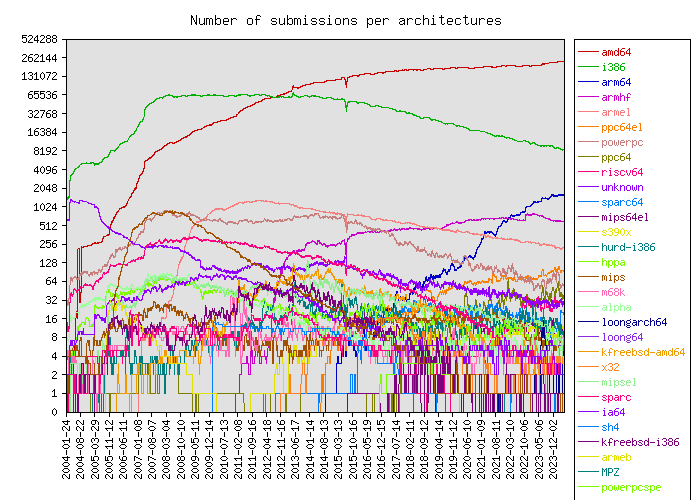
Next.

Previous.