Search Results: "tats"

16 September 2011

Sha Liu: Test blogging from w.bloggar v4.03 portable build

I just download this tool here. After finishing a really simple setup wizard, which includes choosing your blog service provider, filling in your username&passwd info, I m now writing my first blog with this tool. Before I download and begin to use it, I knew from reviews that this is NOT a WYSIWYG tool. I really doubt it that it could be useful for a person like me who have nearly no HTML knowledge. But so many reviews mention this tool and all give it high options that I decide to give it a try.

screenshot of Editor Tab

The tool looks pretty neat, isn t it? It s simple for me to use any buttons without guessing what they will do. And you can see that there s Preview tab, in which you can check the real layout when published.

screenshot of Preview Tab

The preview tab(it seems the first picture is not uploaded successfully?) In all, I begin to love this editor even this is my first time using it! It s simple yet completely enough for users like me. And with this editing HTML directly, I can even learn a little bit about its syntax. Don t mention all the merits an offline desktop editor can provide. Now, I ll try the last and most important function Publish! See you on my blog!

Lior Kaplan: Happy 10th b-day bug #98160

Happy 10th birthday Mozilla bug #98160, I hope you won t make it to your 11th, but who knows I hope the same for your younger brothers bug #166240 which is only 9 years old. Many thanks for all the people who tried to help RTL users switch their textarea directionality and alignment easier. Another bug in the it sometime sucks to be an RTL user department is bug #119857, soon to be age 10. I m lucky to have BiDi Mail UI as a good workaround, otherwise I couldn t read emails in Hebrew with the proper alignment/directionality. In another department, I must say I love daylight saving time, as I have more hours of sun, but this comes on the expense of my schedule as due to bug #504299 all my events aren t on the right local time, but an hour earlier. Although the post is written cynically, I would like to call the Mozilla community to help with fixing these issues. I also want to thank the people who are already helping with these issues or helped in the past.
Filed under: Free software applications, i18n & l10n, Mozilla

15 September 2011

Christian Perrier: An update about Debian Installer localization

It's quite some time since I haven't nagged fellow translators about Debian Installer translation status. D-I development, these days, has ups and down. The team is quite loose and activity has not been that high after Debconf. Still, enough changes took place since squeeze for localization completeness to drop to about 93% for languages that were previously 100% when we released squeeze. So, this week, I felt the need to send a call for translation updates. As usual, this woke up several translators and a bunch of updates were committed. I suspect that more will come over the next days. Sadly, as usual, the call for translation lead to several translators sending me their updates directly instead of committing them to SVN. This is unfortunately something I probably have to live with even though I keep explaining and documenting how to do things. I suspect that nobody really imagines the hassle it is when you have to check and commit files and files and files and files..... Any, here's the status for D-I level 1 (core D-I files): Your language is not listed here? This is because its statistics are lower and it had no single update since the release of squeeze. See the the full statistics page for details about rankings and statistics for levels, sublevels and all the crap that's described in the beautiful D-I internationalization and localization documentation. In the upcoming weeks, I'll try to continue giving updates about the progress of this effort. The only demotivating part is that I already know it will lead to gazillion of exchanges by mail with people asking about how to help...leading me to explain over and over and over and over always the same thing. Sometimes, I wonder why I took time to write all these documentation and statistics pages.... So, before you jump on your mail client and write me a mail asking me how to help in translating D-I in Northern Bechuanalese (ijekavian variant)....please join debian-i18n and/or debian-boot lists, read available documentation, check existing PO files and try to get in touch with existing teams and/or individuals. Learn a bit about SVN and figure out how to commit things. Read documentation. Ask about robots that can notify you when a file changes. Read documentation. Read documentation. In short, try to help yourself first before expecting me to hold your hands. I like holding hands and helping people. It's only that you are so many folks that I can't help you individually. But, of course, if you mail me, I'll answer anyway.. And, of course, I'll keep posting updates and nagging you guys. And, of course, we'll have more complete languages for wheezy than we had for squeeze.

14 September 2011

Christian Perrier: An update about Debian Installer localization

It's quite some time since I haven't nagged fellow translators about Debian Installer translation status. D-I development, these days, has ups and down. The team is quite loose and activity has not been that high after Debconf. Still, enough changes took place since squeeze for localization completeness to drop to about 93% for languages that were previously 100% when we released squeeze. So, this week, I felt the need to send a call for translation updates. As usual, this woke up several translators and a bunch of updates were committed. I suspect that more will come over the next days. Sadly, as usual, the call for translation lead to several translators sending me their updates directly instead of committing them to SVN. This is unfortunately something I probably have to live with even though I keep explaining and documenting how to do things. I suspect that nobody really imagines the hassle it is when you have to check and commit files and files and files and files..... Any, here's the status for D-I level 1 (core D-I files): Your language is not listed here? This is because its statistics are lower and it had no single update since the release of squeeze. See the the full statistics page for details about rankings and statistics for levels, sublevels and all the crap that's described in the beautiful D-I internationalization and localization documentation. In the upcoming weeks, I'll try to continue giving updates about the progress of this effort. The only demotivating part is that I already know it will lead to gazillion of exchanges by mail with people asking about how to help...leading me to explain over and over and over and over always the same thing. Sometimes, I wonder why I took time to write all these documentation and statistics pages.... So, before you jump on your mail client and write me a mail asking me how to help in translating D-I in Northern Bechuanalese (ijekavian variant)....please join debian-i18n and/or debian-boot lists, read available documentation, check existing PO files and try to get in touch with existing teams and/or individuals. Learn a bit about SVN and figure out how to commit things. Read documentation. Ask about robots that can notify you when a file changes. Read documentation. Read documentation. In short, try to help yourself first before expecting me to hold your hands. I like holding hands and helping people. It's only that you are so many folks that I can't help you individually. But, of course, if you mail me, I'll answer anyway.. And, of course, I'll keep posting updates and nagging you guys. And, of course, we'll have more complete languages for wheezy than we had for squeeze.

1 September 2011

Niels Thykier: DEP-5, JW, dev docs and other goodies

Are you using DEP-5 in copyright file? Are you doing it right? Thanks to the work of Jakub Wilk, Lintian 2.5.3 will spot some of the regular mistakes (including syntax errors) and check if you are using the newest revision. This is far from the only thing Jakub Wilk has added to Lintian in this development cycle. Most of his contributions in 2.5.3 are listed next to a little [JW] in the changelog and I hope to see a lot more of those. :) Together with Jeremiah Foster, we have created a small POD document that hopefully will help aspiring developers. The file currently explains how the source code is divided, some core concepts and how to run specific tests in the test suite. The plan is to make it available on lintian.d.o along with a link to the git source code (#639974). Last time, I mentioned we have gotten rid of collection/fields by a simple improvement to our Lintian::Collect API. Turns out the same improvement could also be used on collection/source-control-file. This means we no longer create a file per field in the d/control of the source package. To avoid (any more) confusion, Lintian will now inform you if the package carries an override for a non-overridable tag (except if you use --quiet). On a related note, Lintian will now error out if it sees an unknown field in a vendor profile. Previously it would just silently ignore the field. There is one more change I would like to highlight and this one is probably best served with an example:
$ lintian --show-overrides ../lintian_2.5.2.dsc
N: We build-depend on cdbs for the test suite
O: lintian source: unused-build-dependency-on-cdbs
N: We build-depend on quilt for the test suite
O: lintian source: quilt-build-dep-but-no-series-file
N: We don't have a patch system for lintian itself
O: lintian source: patch-system-but-no-source-readme
Lintian will now attempt to extract and print the comment related to the override from the overrides file. The comment will be printed above each tag the override applies to (so you may see some repeated comments). The full documentation for how Lintian finds the comments (or why it does not find the comment) is available in the Lintian User Manual. The exact format of the comments being outputted may change in the near future. Particularly, we may add a marker to assist the tools generating lintian.d.o to find the comments. Hopefully we will be able to close #512901 soon. Beyond the changes above, I am very happy to see the bug count drop below 180 unfixed bugs[1]. We have not been this low there since the 2.5.0~rc1 upload (in February) and I hope we can keep it this time. :) Finally if you ever wanted to run your own little lintian.d.o , then you may find the Lintian harness proposal interesting. The basic idea the is to clean up the current tools and make a proper frontend out of them. Should you be interested, feel free to come with suggestions or requests. [1] Lintain bug page I use the number next to Outstanding under Status near the bottom. So pending bugs are considered fixed in my numbering.

31 August 2011

Keith Packard: Altos1.0

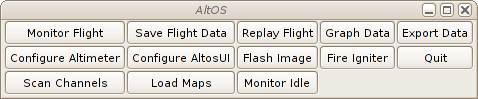
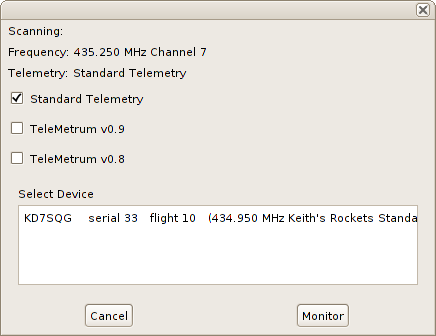
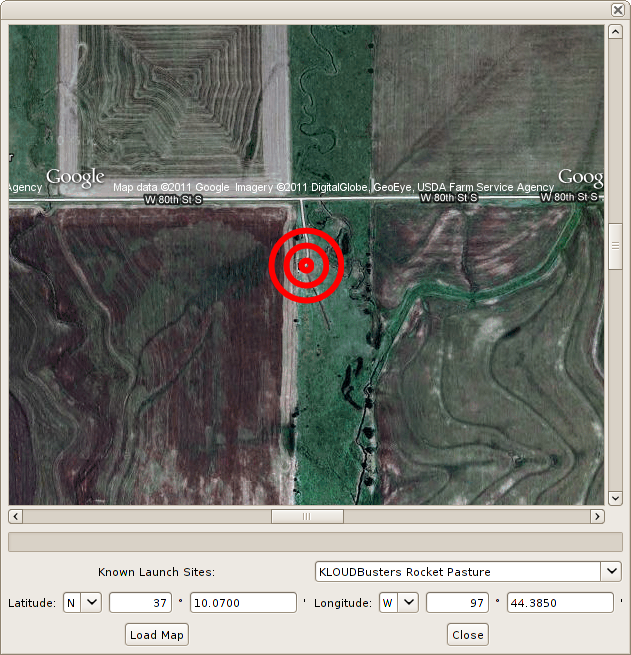
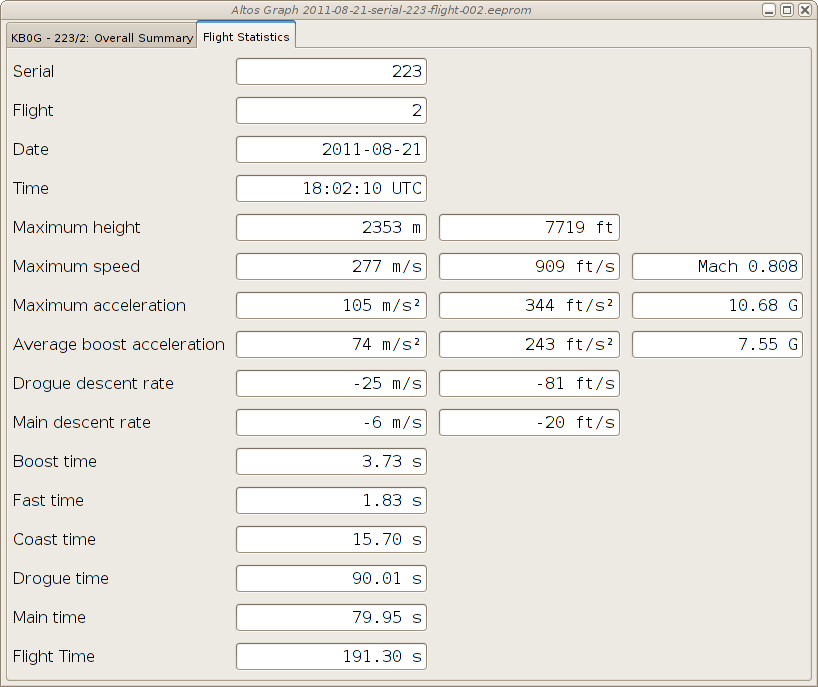
AltOS 1.0 TeleMini support and a host of new features Bdale and I are pleased to announce the release of AltOS version 1.0. AltOS is the core of the software for all of the Altus Metrum products. It consists of cc1111-based microcontroller firmware and Java-based ground station software. AltOS Firmware TeleMini support, Kalman Filtering and more Support for the new TeleMini altimeter is included in version 1.0 along with a wealth of other new features: AltosUI New Features AltosUI has also seen quite a bit of work for the 1.0.1 release. Of course, many of the changes in AltosUI are to accomodate the new TeleMini altimeter and changes in the AltOS firmware for TeleMetrum. In addition, we ve also added lots of new features in response to user requests.

29 August 2011

Lior Kaplan: The Mozilla Inn

Hello planet Mozilla. For my first post appearing in the planet I d like to write about a recent community aspect I experienced, the rest will probably be more technical. While we have some great volunteers participating in Mozilla, there s aren t any Mozilla representatives in Israel. To be exact, there are a few Israeli that do work for Mozilla (and I think they work from within Israel), but we don t feel them in the local free software community. I was very surprised to see 5 people from Mozilla attending Wikimania 2011, but this is of course a good surprise. I would have excepted to see representatives in a free software conference, but we still haven t had any international free software conference in Israel (maybe some day I could bring Debconf here). A week later I had another representative arriving for a free software conference I organized called August Penguin. This is the first time having someone arriving from abroad just for the local conference. For me, a free software user and contributor, Mozilla is mostly a software project. Meeting the various representatives gave me the chance to know some of the other sides of the organization and its activities. For me that was really interesting and I think that it would be positive to do many of the activities also in Israel. Besides the interest in the organization, I had the chance to host some of the representatives by showing them around, providing a place to crash at and making sure they stay after the conferences would be as easy and enjoyable as possible. Reflecting back, my place would probably could be the Moziila Inn as I had 3 people from Mozilla as guests in one week (on separate days). For me that was fulfilling the community side of the term free software community , as we re not only a technical community. Others might even call this an outreach program (a term I heard from all 3 guess in various contexts), but I m still not sure who is outreaching to whom (: So if you happen to work on Mozilla stuff, and arriving Israel, drop me a note
Filed under: Israeli Community, Mozilla

Mike Hommey: Extreme tab browsing

I have a pathological use of browser tabs: I use a lot of them. A lot is probably an understatement. We could say I use them as bookmarks of things I need to track. A couple weeks ago, I was saying I had around two hundred tabs opened. I now actually have much more. It affected startup until I discovered that setting the browser.sessionstore.max_concurrent_tabs pref to 0 was making things much better by only loading tabs when they are selected. This preference has/will become browser.sessionstore.restore_on_demand. However, since I only start my main browser once a day, while other applications start and while I begin to read email, I hadn t noticed that this was still heavily affecting startup time: about:startup tells me reaching the sessionRestored state takes seven seconds, even on a warm startup. It also affects memory usage, because even when tabs are only loaded on demand, there is a quite big overhead for each tab. And more importantly, it gets worse with time. And I think the user interface is actively making it worse. So, to get an idea how bad things were in my session, I wrote a little restartless extension. After installing it, you can go to the about:tabs url to see the damage on your session. Please note that the number of groups is currently wrong until you open the tab grouping interface. This is what the extension has to say about my session 2 days ago, right after a startup: The first thing to note is that when I filed the memory bug 4 days earlier, I had a bit more than 470 tabs in that session. You can see 4 days later, I now have 555 tabs (if excluding the about:tabs tab). The second thing to note is something I suspected because it s so easy to get there: a lot of the tabs are opened on the same address. Since Firefox 4.0, if I m not mistaken, there is a great feature in the awesomebar, that allows to jump to an existing tab matching what you type in the urlbar. That is very useful, and I use it a lot. However, there are a lot of cases where it s not as useful as it could be. One of the addresses I visit a lot is http://buildd.debian.org/iceweasel. It gives me the build status of the latest iceweasel package I uploaded to Debian unstable. That url is particularly known in my browsing history, and is the first hit when I type buildd in the urlbar (actually, even typing b brings it first). Unfortunately, that url redirects to https://buildd.debian.org/status/package.php?p=iceweasel through an HTTP redirection. I say unfortunately because when I type buildd in the urlbar, I get 6 suggestions for urls in the form http://buildd.debian.org/package (I also watch other packages build status), and the suggestion to switch to the existing tab for what the first hit would get me to is 7th. Guess what? The suggestion list only shows 6 items ; you have to scroll to see the 7th. The result is that I effectively have fifteen tabs open on that url. I also keep a lot of bugzilla.mozilla.org bugs open in different tabs. The extension tells me there are 255 of them for 166 unique bugs. Largely, the duplicate bug tabs are due to having these bugs open in some tab, but accessing the same bugs from somewhere else, usually a dependent bug or TBPL. I also have 5 tabs opened on my request queue. I usually get there by going to the bugzilla home page and clicking on the My Requests link. And I have several tabs opened on the same bug lists. For the same reason. When I started using tab groups, I splitted in very distinct groups. Basically, one for Mozilla, one for Debian, one for stuff I want to follow (usually blog posts I want to follow comments from), and one for the rest. While I was keeping up with grouping at the beginning, I don t anymore, and the result is that each group is now a real mess. Firefox has hundreds of millions users. It s impossible to create a user experience that works for everyone. One thing is sure, it doesn t work for me. My usage is probably very wrong at different levels, but I don t feel my browser is encouraging me to use it better, except by making my number of opened tabs explode to an unmanageable level (I already have 30 tabs more than when I started writing this post 2 days ago). There are a few other things I would like to know about my usage that my extension hasn t told me yet, either because it doesn t tell, or because I haven t looked: Reflecting on my usage patterns, I think a few improvements, either in the stock browser, or through extensions, could make my browsing easier: Maybe these exist as extensions, I don t know. It s hard to find very specific things like that through an add-on search (though I haven t searched very hard). [Looks like there is an experiment for the auto tab grouping part] I think it would also be interesting to have something like Test Pilot, but for users that want to know the answer to How do I use my browser? . As I understand it, Test Pilot can show individual user data, but it only can do so if there is such data, and you can t get data for past studies you didn t take. In my case, I m not entirely sure that, apart from the pinned tabs, I use the tab bar a lot. And even for pinned tabs, most of the time I use keyboard shortcuts. I m not using the menu button that much either. I already removed the url and search bar (most of the time) with LessChrome HD. Maybe I could go further and use the full window for web browsing.

28 August 2011

Lior Kaplan: Talk proposal accepted to LibreOffice Conference 2011

A month ago I sent a talk proposal for the LibreOffice conference regarding RTL issues in LibreOffice . Today I got the response:
Thank you for your paper submission to the LibreOffice Conference.
We are happy to inform you that your proposal has been accepted.
Cool but now the hard part begins with preparing the talk itself and making sure people who are used to left to right languages would also understand and take something productive out of it.
Filed under: Free software applications, LibreOffice

26 August 2011

Luca Bruno: OpenOCD and the Bus Pirate

As an enthusiast Open Hardware supporter, I regularly read the always brilliant Dangerous Prototype blog.
Last week it featured a short but complete tutorial about unbricking a Seagate Dockstar with OpenOCD and the Bus Pirate. The Bus Pirate is an open source hacker multi-tool that talks to electronic stuff, and which can be used as a JTAG adaptor (and much more!).
OpenOCD, the widespread free JTAG debugger, recently gained support for it. The good news is that, after almost a year and half of development, OpenOCD 0.5.0 has been finally released and is currently available in both Debian testing and unstable. Get it from the repository while it is hot, no need to fiddle with autotools and build tools anymore :) As a side-note for interested parties, SWD (Serial Wire Debugging) support is currently under development, along with its companion library (libswd). Hack and enjoy!

25 August 2011

Lior Kaplan: Happy birthday Linux

Well, it seem that 20 year really flies by when you re having fun (:
I m doing a (free) operating system (just a hobby, won t be big and professional like gnu) for 386(486) AT clones. This has been brewing since april, and is starting to get ready.
Linus Torvalds, 25 August 1991 on comp.os.minix (original message)

20th Anniversary of Linux T-shirt by Kim Blanche
Filed under: Proud to use free software

23 August 2011

Julian Andres Klode: Looking for HP Touchpad, Intel tablets, and other devices

If someone in Germany (or want to send it to Germany [at low costs]) still has (new) Touchpads to sell, I d buy one or two of them at the reduced price (16GB: 99 , 32GB: 129 ), or take them for free. I promise that I will not sell them to others. I m interested in WebOS, in running Debian and/or Ubuntu on those devices (for the extra fun factor), and lend it to family members for surfing, etc. I also take other tablets and smart phones and various kinds of ARM and PowerPC hardware (I guess that s all that s interesting for me) for free, just send me an email if you have some and want to give them to me. This applies to Intel stuff as well, I d really like to get some kind of WeTab/ExoPC, but can t buy one currently (and they re probably to outdated hardware-wise for buying to make sense).
Filed under: Uncategorized

19 August 2011

Michael Prokop: Use of VCS in Debian packages some stats

Everyone loves stats, ok well at least I do. I was doing some research with regards to package maintenance within the Debian distribution and since the results might be interesting for someone else there we are. On 19th of August 2011 there have been: Therefore ~59% of all packages in Debian/sid are officially managed with a version control system (VCS). Now, which VCS do those packages use?
  1. Svn: 4939
  2. Git: 4377
  3. Darcs: 284
  4. Bzr: 247
  5. Hg: 61
  6. Cvs: 31
  7. Arch: 28
  8. Mtn: 10
I ve retrieved the numbers from the Ultimate Debian Database (UDD). Sadly there s a bug in UDD regarding the Vcs-Type information, see #637524. Therefore I ve extracted a list of 80 packages where a Vcs-Browser header is available but the Vcs-Type entry is empty in UDD. 29 packages of them are managed inside CVS but don t appear as such in UDD, so I manually corrected the number for CVS in the numbers above. The remaining 51 packages have a Vcs-Browser field set but lack the according Vcs-* entry, some of them pointing to upstream VCS instead of the according Debian package repository, some of them result in 404 errors, etc. As a result I ve reported bugs where applicable (#638466, #638468, #638469, #638470, #638471, #638472, #638474, #638475, #638476, #638477, #638479, #638482, #638486, #638488, #638493, #638497, #638501, #638475, #638475, #638502, #638503, #638505, #638506, #638508, #638509, #638510, #638511, #638512, #638513, #638516, #638518, #638519, #638520, #638522, #638523, #638524, #638525, #638526, #638527, #638528, #638529, #638530, #638516, #638531). Disclaimer: I found Debian s Statistics wiki page and Zack s VCS usage stats after starting to play with my own stats. AFAICT Zack s slightly higher numbers are the result of looking at multiple versions for the same source packages, as you ll see when comparing numbers from UDD s sources_uniq view (which I used) with either 1) UDD s sources table, 2) source table count from projectb or 3) Package count from http://$DEBIAN_MIRROR/debian/dists/unstable/ main,contrib,non-free /source/Sources.bz2. Conclusion: 9316 packages are officially managed with Subversion and Git as of today, representing ~94% of the VCS managed packages. This means ~55% of all the Debian (source) packages are available through either a Git or Subversion repository and that s actually the number I was originally interested in. Thanks to Alexander Wirt, Christian Hofstaedter, Gerfried Fuchs, J rg Jaspert and Michael Renner for hints in forming up the final stats results.

15 August 2011

Matt Zimmerman: Building a personal data locker

If you were building a digital container to store your personal data, what would it look like? Personal data being information associated with you: your contacts, your photos, the web pages you ve visited, the places you ve been, the messages you ve sent and received, and so on. In short, your stuff. Here s my personal wish list of technical requirements: Of course, this isn t merely an academic exercise, as my new day job at Singly is about building exactly this type of system. With a technical team including Jeremie Miller of Jabber and XMPP fame, our goal is to develop a personal data platform which meets these criteria and more. There s a lot of work to do, but today, you can check out the code and run a locker of your own, which can sync in data from Facebook, Twitter, Google, Foursquare, Github and dozens of other services. It s a bit of a bear to set up, particularly if you don t already have API keys for these services, but that s fairly normal at this early stage of development. If you try it, or have thoughts about what we re doing, please let me know in the comments.

12 August 2011

Luca Falavigna: Turning 28

Getting older^W wiser, and definitely fatter than yesterday ;) [ Photo of the cake is missing, have I already told you I became fatter? ]

11 August 2011

Julian Andres Klode: World, Space, and Licenses

Common licenses for software include the term worldwide . Now, what does worldwide mean? The problem with the term worldwide is that it is ambigous and depending on it s interpretation, violates against DFSG 6 which states: No Discrimination Against Fields of Endeavor . The reason: Space travel. If we take the term worldwide to mean everywhere on earth , the license becomes non-free, as it prohibits the use outside of this planet. Affected by this problem are the patent section of GPL-3, the Apache 2.0 license, the CC licenses, the GFDL, and probably also others. Now what should be used instead? Universal? No, that wouldn t work in case there are multiple ones (while travelling between them (if they exist) could be impossible, it would still be a restriction). The correct team would probably be omniversal meaning everywhere in the omniverse . But really, avoiding locations is probably the best way. In any case, if you have received software from me under a license that uses the term worldwide , you can treat worldwide as everywhere, and are thus free to use it outside of earth (and other planets).
Filed under: General

9 August 2011

Aurelien Jarno: Debian s390x port (aka 31 bits is not enough)

During Debconf 11, I got access to a fast s390 machine, and I have started to work on a Debian s390x port, the 64-bit version of the s390 port. One of my goal was to help the SPARC64 port, as some of the issues are the same: both are 64-bit big-endian, don t support unaligned access and behave differently between -fpic and -fPIC. Why such a port? When talking about 64-bit ports, we usually hear: 4GB is enough, handling 64-bit takes more memory . This really sounds like 640K ought to be enough for anybody . The s390 port is actually 31-bit from the address point of view (one bit is reserved for address space extension from 24 to 31 bits), so each process is limited to 2GB only. Nowadays applications which need more than 2GB are not that uncommon, especially on mainframes. Actually the 2GB limit already causes some problem in Debian: in some cases it s not possible to build haskell applications or even C applications using GCC. On the other hand, we already require a 64-bit kernel on the s390 port (only the userland is 32-bit), and applications are handling more and more 64-bit or greater values (files offset, time counters, uid, etc.). What is the status? Bootstrapping the architecture was not really easy (as for any other new architectures), due to a huge amount of dependencies and build-dependencies loops, as explained by Wookey during Debconf11. Now that this part is mostly done, an autobuilder has been started and currently more than 65% of the packages are built. The s390x port is hosted on debian-ports.org. Unfortunately it is not yet deboostrapable, though that should happen in the next few days (only a few packages are missing). The main issues are currently packages which fail to build from source due to linker, gcc-4.6 and curl changes, or due to the libjpeg and multiarch transitions, and thus are not directly related to s390x. If your package is in this case, it would be a good idea to fix it. Otherwise if it has a lot of reverse dependencies and the bug is opened for a while, just expect an NMU (as allowed by the 0-day NMU policy). Of course for a few packages s390x specific fixes are needed, some of them are already in the BTS. How you can help? The list of bugs blocking the s390x port is available through the s390x usertag, fixing these bugs (a lot of them are general FTBFS) would help a lot. Alternatively if you have access to an s390x machine you can take a look at the packages failing to build. Update: Fixed the explanation about the 32th bit, thanks to Bastian Blank for the comment.

Matt Zimmerman: Where s your data center?

Thanks to the tremendous growth of social applications over the past five years, we have our pick of services for collecting, saving and sharing our experiences online. We each have collections of photos, contacts, messages and more, spread across multiple popular services like Twitter, Facebook, LinkedIn, as well as many less popular services which address particular needs or preferences. We re also producing a wealth of exhaust data through our browsing history, mobile sensors, transactions and other activity streams that we rarely if ever examine directly. This ecosystem is becoming so complex that it s easy to lose track of what you ve created, shared or seen. We need new tools to manage this complexity, to make the most of the wealth of information and connections available to us through various services. John Battelle calls these metaservices , and points to growth in the number of connections between the services we use. I expect that this next age of information tools will center around data rather than services. Data is a common denominator for these online experiences, a bridge across disparate services, technologies, social graphs, and life cycles. Personal data, in particular, has this property: the only thing that links together your photos on Flickr, Facebook, Picasa and Twitpic is you. So where s your data center ? I don t anticipate the emergence of a single service where you do everything. There will continue to be innovation in the form of new and specialized services which meet a particular need very well. There won t be a single service which is everything to everybody. Instead, I foresee us wanting to track, save, use and control all of our stuff across the web. That s why my new colleagues and I are working to make that possible. There s open source code available on github, a vibrant IRC channel (#lockerproject on Freeenode), and lots more I d like to write about it. But it s time to get back to work for now

Robert Millan: Debian GNU/kFreeBSD on production

Yesterday I begun using Debian GNU/kFreeBSD squeeze in thorin, my main workstation. During the last few weeks I had to work through some of the limitations that were holding me back, such automated driver load and FUSE. I was lucky enough that other people filled the missing pieces I wanted, such as NFS client support and a GRUB bugfix that broke booting from Mirrored pools. I have to say that I m very satisfied. Barring a pair of small nuissances here and there, the result is quite impressive: That s basically my personal experience as newbie Debian GNU/kFreeBSD user. Of course my perspective is very limited because I just started and yes, I am biased. Anyway, what about yours? If you have installed Debian GNU/kFreeBSD, was it meant for production or just a toy machine ? If you considered using it on production, did it succeed at satisfying your needs, or did something hold you back? Leave your comment!

8 August 2011

Niels Thykier: Updates in the Lintian World

Documentation! That is what the next version of Lintian will have. In 2.5.1, Lintian
had support for adding options in the lintianrc. Unfortunately, the
user had to guess the syntax, which makes the feature less useful.
With the next release, the manpage and the example config file[1]
will contain documentation and examples. The User Manual[2] also saw some improvements. Particularly, it will
mention that lintian can process a .changes file and that it does
cross-package checks. Of course, it also documents the format of the
new Vendor Profiles. Though even with these improvements, the current
documentation still leaves much to be wanted. The last unpack script (unpack-srcpkg-l1) was finally removed and
was replaced by a smarter version of index collection. This means
that Lintian can now schedule index in parallel with a few other
collections (namely unpacked, which is the current bottleneck). The speed improvement is probably not noticeable, but it was also a
good time to upgrade our index collection to properly handle
multi-tarball source packages. Previously Lintian only extracted the
index from the base tarball. The fields collection also saw some attention. Previously it
extracted fields from the control file (in the .deb, etc.) into a
directory. Each field became a file and the value of the field would
be written in the field. Today, the collection basically looks like
this:
[...]
if (-d 'fields') 
    system('rm', '-rf', 'fields') == 0
        or die 'Could not remove old fields directory';
 
[...]
It has been deprecated the minute Lintian::Collect API saw a little
upgrade to fetch these fields itself. This change should remove some
unnecessary file I/O in a normal run[3]. If you have a friend with his/her own little home-grown Lintian check
(or collection)[4], they will have to update it to A) not depend on
fields, B) use the Lintian::Collect API for accessing fields and C)
depend on index for source packages if it uses the index information.
For the latter, Lintian::Collect has grown support for source package
index. Lintian has also seen a lot of decrufting in the 2.5.2 development
cycle. The new test suite now features skeletons ( standard base
environments ) and template support for all package test suites[5]. This means it takes a lot less of writing (or copy/waste) to generate
a simple specialized test in the low-level test suites. As a part
of cleaning up the test-suites, I got to run:
$ git rm t/ source,debs /*/copyright
without breaking a single test. I have to admit that commit 8584996
is among my favorite ones in the 2.5.2 development cycle. Finally, if you are one of the few that have ever used the
--packages-file option, then I am pleased to inform you that it will
be deprecated in 2.5.2 and replaced by --packages-from-file. The
old option had some specialized format, whereas the new option parses
the file (or stdin) as one package per line . The latter being far
more "find -name '*.deb' "-friendly. In case you are wondering why --packages-file is deprecated, here is
the packages-file parser from lintian 2.5.1:
    while (my $line = <$pkgin>)  
	chomp($line);
	my (undef, undef, undef, $file) = split(/\s+/, $line, 4);
	$pool->add_file($file);
     
- [1] Installed as /etc/lintianrc [2] Installed as /usr/share/doc/lintian/lintian. html/,txt.gz [3] Namely, 2 opens + 2 closes + 1 read and one write for each field
in every package (the fields were cached, once they were read). Not
to mention a directory listing and having to remove the files again
later. [4] Of course, you do not have such a thing Because we all know
that no one (except this not too close friend of yours) messes with
Internal APIs of other projects [5] The exception being that the changes suite does not have a
standard base environment, since it would be completely unused.

Next.

Previous.