Search Results: "js"

11 August 2017

Michal Čihař: Weblate 2.16

Weblate 2.16 has been released today while I'm at DebConf17. There are quite some performance improvements (and more of that is scheduled for 2.17), new file formats support and various other improvements. Full list of changes: If you are upgrading from older version, please follow our upgrading instructions. You can find more information about Weblate on https://weblate.org, the code is hosted on Github. If you are curious how it looks, you can try it out on demo server. You can login there with demo account using demo password or register your own user. Weblate is also being used on https://hosted.weblate.org/ as official translating service for phpMyAdmin, OsmAnd, Turris, FreedomBox, Weblate itself and many other projects. Should you be looking for hosting of translations for your project, I'm happy to host them for you or help with setting it up on your infrastructure. Further development of Weblate would not be possible without people providing donations, thanks to everybody who have helped so far! The roadmap for next release is just being prepared, you can influence this by expressing support for individual issues either by comments or by providing bounty for them.

Filed under: Debian English SUSE Weblate

10 August 2017

Thorsten Glaser: New mksh and jupp releases, mksh FAQ, jupprc for JOE 4.4; MuseScore

mksh R56 was released with experimental fixes for the history no longer persisted when HISTFILE near-full and interactive shell cannot wait on coprocess by PID issues (I hope they do not introduce any regressioins) and otherwise as a bugfix release. You might wish to know the $EDITOR selection mechanism in dot.mkshrc changed. Some more alias characters are allowed again, and POSIX character classes (for ASCII, and EBCDIC, only) appeared by popular vote. mksh now has a FAQ; enjoy. Do feel free to contribute (answers, too, of course). The jupp text editor has also received a new release; asides from being much smaller, and updated (mksh too, btw) to Unicode 10, and some segfault fixes, it features falling back to using /dev/tty if stdin or stdout is not a terminal (for use on GNU with find xargs jupp, since they don t have our xargs(1) -o option yet), a new command to exit nonzero (sometimes, utilities invoking the generic visual editor need this), and presentation mode . Presentation mode, crediting Natureshadow, is basically putting your slides as (UTF-8, with fancy stuff inside) plaintext files into one directory, with sorting names (so e.g. zero-padded slide numbers as filenames), presenting them with jupp * in a fullscreen xterm. You d hit F6 to switch to one-file view first, then present by using F8 to go forward (F7 to go backward), and, for demonstrations, F9 to pipe the entire slide through an external command (could be just sh ) offering the previous one as default. Simple yet powerful; I imagine Sven Guckes would love it, were he not such a vim user. The new release is offered as source tarball (as usual) and in distribution packages, but also, again, a Win32 version as PKZIP archive (right-click on setup.inf and hit I nstall to install it). Note that this comes with its own (thankfully local) version of the Cygwin32 library (compatible down to Windows 95, apparently), so if you have Cygwin installed yourself you re better off compiling it there and using your own version instead. I ve also released a new DOS version of 2.8 with no code patches but an updated jupprc; the binary (self-extracting LHarc archive) this time comes with all resource files, not just jupp s. Today, the jupprc drop-in file for JOE 3.7 got a matching update (and some fixes for bugs discovered during that) and I added a new one for JOE 4.4 (the former being in Debian wheezy, the latter in jessie, stretch and buster/sid). It s a bit rudimentary (the new shell window functionality is absent) but, mostly, gives the desired jupp feeling, more so than just using stock jstar would. CVS ability to commit to multiple branches of a file at the same time, therefore grouping the commit (by commitid at least, unsure if cvsps et al. can be persuaded to recognise it). If you don t know what cvs(GNU) is: it is a proper (although not distributed) version control system and the best for centralised tasks. (For decentral tasks, abusing git as pseudo-VCS has won by popularity vote; take this as a comparison.) If desired, I can make these new versions available in my WTF APT repository on request. (Debian buster/sid users: please change https to http there, the site is only available with TLSv1.0 as it doesn t require bank-level security.) I d welcome it very much if people using an OS which does not yet carry either to package it there. Message me when one more is added, too In unrelated news I uploaded MuseScore 2.1 to Debian unstable, mostly because the maintainers are busy (though I could comaintain it if needed, I d just need help with the C++ and CMake details). Bonus side effect is that I can now build 2.2~ test versions with patches of mine added I plan to produce to fix some issues (and submit upstream) (read more )

9 August 2017

Junichi Uekawa: reading up on rapidjson.

reading up on rapidjson. I was reading the docs for rapidjson performance and I like that source buffer is destroyed for performance. I was wrinting JSON parser myself and performance bottleneck seems to be copying and constructing objects.

5 August 2017

Daniel Silverstone: USB Device Stacks, on RTFM, part 2

Previously we talked about all the different kinds of descriptors which USB devices use to communicate their capability. This is important stuff because to write any useful USB device firmware we need to be able to determine how to populate our descriptors. However, having that data on the device is entirely worthless without an understanding of how it gets from the device to the host so that it can be acted upon. To understand that, let's look at the USB wire protocol.
Note, I'll again be talking mostly about USB2.0 low- and full-speed. I believe that high speed is approximately the same but with faster wires, except not quite that simple.

Down to the wire I don't intend to talk about the actual electrical signalling, though it's not un-reasonable for you to know that USB is a pair of wires forming a differentially signalled bidirectional serial communications link. The host is responsible for managing all the framing and timing on the link, and for formatting the communications into packets. There are a number of packet types which can appear on the USB link:
Packet type Purpose
Token Packet When the host wishes to send a message to the Control endpoint to configure the device, read data IN, or write data OUT, it uses this to start the transaction.
Data(0/1) Packet Following a Setup, In, or Out token, a Data packet is a transfer of data (in either direction). The 0 and 1 alternate to provide a measure of confidence against lost packets.
Handshake Packet Following a data packet of some kind, the other end may ACK the packet (all was well), NAK the packet (report that the device cannot, temporarily, send/receive data, or that an interrupt endpoint isn't triggered), or STALL the bus in which case the host needs to intervene.
Start of Frame Every 1ms (full-speed) the host will send a SOF packet which carries a frame number. This can be used to help keep time on very simple devices. It also divides the bus into frames within which bandwidth is allocated.
As an example, when the host wishes to perform a control transfer, the following packets are transacted in turn:
  1. Setup Token - The host addresses the device and endpoint (OUT0)
  2. Data0 Packet - The host transmits a GET_DESCRIPTOR for the device descriptor
  3. Ack Packet - The device acknowledges receipt of the request
This marks the end of the first transaction. The device decodes the GET_DESCRIPTOR request and prepares the device descriptor for transmission. The transmission occurs as the next transaction on the bus. In this example, we're assuming 8 byte maximum transmission sizes, for illustrative purposes.
  1. In Token - The host addresses the device and endpoint (IN0)
  2. Data1 Packet - The device transmits the first 8 bytes of the descriptor
  3. Ack Packet - The host acknowledges the data packet
  4. In Token - The host addresses the device and endpoint (IN0)
  5. Data0 Packet - The device transmits the remaining 4 bytes of the descriptor (padded)
  6. Ack Packet - The host acknowledges the data packet
The second transaction is now complete, and the host has all the data it needs to proceed. Finally a status transaction occurs in which:
  1. Out Token - The host addresses the device and endpoint (OUT0)
  2. Data1 Packet - The host transmits a 0 byte data packet to indicate successful completion
  3. Ack Packet - The device acknowledges the completion, indicating its own satisfaction
And thus ends the full control transaction in which the host retrieves the device descriptor. From a high level, we need only consider the activity which occurs at the point of the acknowledgement packets. In the above example:
  1. On the first ACK the device prepares IN0 to transmit the descriptor, readying whatever low level device stack there is with a pointer to the descriptor and its length in bytes.
  2. On the second ACK the low levels are still thinking.
  3. On the third ACK the transmission from IN0 is complete and the endpoint no longer expects to transfer data.
  4. On the fourth ACK the control transaction is entirely complete.

Thinking at the low levels of the control interface Before we can build a high level USB stack, we need to consider the activity which might occur at the lower levels. At the low levels, particularly of the device control interface, work has to be done at each and every packet. The hardware likely deals with the token packet for us, leaving the data packets for us to process, and the resultant handshake packets will be likely handled by the hardware in response to our processing the data packets. Since every control transaction is initiated by a setup token, let's look at the setup requests which can come our way...
Setup Packet (Data) Format
Field Name Byte start Byte length Encoding Meaning
bmRequestType 0 1 Bitmap Describes the kind of request, and the target of it. See below.
bRequest 1 1 Code The request code itself, meanings of the rest of the fields vary by bRequest
wValue 2 2 Number A 16 bit value whose meaning varies by request type
wIndex 4 2 Number A 16 bit value whose meaning varies by request type but typically encodes an interface number or endpoint.
wLength 6 2 Number A 16 bit value indicating the length of the transfer to come.
Since bRequest is essentially a switch against which multiple kinds of setup packet are selected between, here's the meanings of a few...
GET_DESCRIPTOR (Device) setup packet
Field Name Value Meaning
bmRequestType 0x08 Data direction is IN (from device to host), recipient is the device
bRequest 0x06 GET_DESCRIPTOR (in this instance, the device descriptor is requested)
wValue 0x0001 This means the device descriptor
wIndex 0x0000 Irrelevant, there's only 1 device descriptor anyway
wLength 12 This is the length of a device descriptor (12 bytes)
SET_ADDRESS to set a device's USB address
Field Name Value Meaning
bmRequestType 0x00 Data direction is OUT (from host to device), recipient is the device
bRequest 0x05 SET_ADDRESS (Set the device's USB address)
wValue 0x00nn The address for the device to adopt (max 127)
wIndex 0x0000 Irrelevant for address setting
wLength 0 There's no data transfer expected for this setup operation
Most hardware blocks will implement an interrupt at the point that the Data packet following the Setup packet has been receive. This is typically called receiving a 'Setup' packet and then it's up to the device stack low levels to determine what to do and dispatch a handler. Otherwise an interrupt will fire for the IN or OUT tokens and if the endpoint is zero, the low level stack will handle it once more. One final thing worth noting about SET_ADDRESS is that it doesn't take effect until the completion of the zero-length "status" transaction following the setup transaction. As such, the status request from the host will still be sent to address zero (the default for new devices).

A very basic early "packet trace" This is an example, and is not guaranteed to be the packet sequence in all cases. It's a good indication of the relative complexity involved in getting a fresh USB device onto the bus though... When a device first attaches to the bus, the bus is in RESET state and so the first event a device sees is a RESET which causes it to set its address to zero, clear any endpoints, clear the configuration, and become ready for control transfers. Shortly after this, the device will become suspended. Next, the host kicks in and sends a port reset of around 30ms. After this, the host is ready to interrogate the device. The host sends a GET_DESCRIPTOR to the device, whose address at this point is zero. Using the information it receives from this, it can set up the host-side memory buffers since the device descriptor contains the maximum transfer size which the device supports. The host is now ready to actually 'address' the device, and so it sends another reset to the device, again around 30ms in length. The host sends a SET_ADDRESS control request to the device, telling it that its new address is nn. Once the acknowledgement has been sent from the host for the zero-data status update from the device, the device sets its internal address to the value supplied in the request. From now on, the device shall respond only to requests to nn rather than to zero. At this point, the host will begin interrogating further descriptors, looking at the configuration descriptors and the strings, to build its host-side representation of the device. These will be GET_DESCRIPTOR and GET_STRING_DESCRIPTOR requests and may continue for some time. Once the host has satisfied itself that it knows everything it needs to about the device, it will issue a SET_CONFIGURATION request which basically starts everything up in the device. Once the configuration is set, interrupt endpoints will be polled, bulk traffic will be transferred, Isochronous streams begin to run, etc.

Okay, but how do we make this concrete? So far, everything we've spoken about has been fairly abstract, or at least "soft". But to transfer data over USB does require some hardware. (Okay, okay, we could do it all virtualised, but there's no fun in that). The hardware I'm going to be using for the duration of this series is the STM32 on the blue-pill development board. This is a very simple development board which does (in theory at least) support USB device mode. If we view the schematic for the blue-pill, we can see a very "lightweight" USB interface which has a pullup resistor for D+. This is the way that a device signals to the host that it is present, and that it wants to speak at full-speed. If the pullup were on D- then it would be a low-speed device. High speed devices need a little more complexity which I'm not going to go into for today. The USB lines connect to pins PA11 and PA12 which are the USB pins on the STM32 on the board. Since USB is quite finicky, the STM32 doesn't let you remap that function elsewhere, so this is all looking quite good for us so far. The specific STM32 on the blue-pill is the STM32F103C8T6. By viewing its product page on ST's website we can find the reference manual for the part. Jumping to section 23 we learn that this STM32 supports full-speed USB2.0 which is convenient given the past article and a half. We also learn it supports up to eight endpoints active at any one time, and offers double-buffering for our bulk and isochronous transfers. It has some internal memory for packet buffering, so it won't use our RAM bandwidth while performing transfers, which is lovely. I'm not going to distill the rest of that section here, because there's a large amount of data which explains how the USB macrocell operates. However useful things to note are:
  • How IN OUT and SETUP transfers work.
  • How the endpoint buffer memory is configured.
  • That all bus-powered devices MUST respond to suspend/resume properly
  • That the hardware will prioritise endpoint interrupts for us so that we only need deal with the most pressing item at any given time.
  • There is an 'Enable Function' bit in the address register which must be set or we won't see any transactions at all.
  • How the endpoint registers signal events to the device firmware.
Next time, we're going to begin the process of writing a very hacky setup routine to try and initialise the USB device macrocell so that we can see incoming transactions through the ITM. It should be quite exciting, but given how complex this will be for me to learn, it might be a little while before it comes through.

2 August 2017

Markus Koschany: PDFsam: How to upgrade a Maven application for Debian

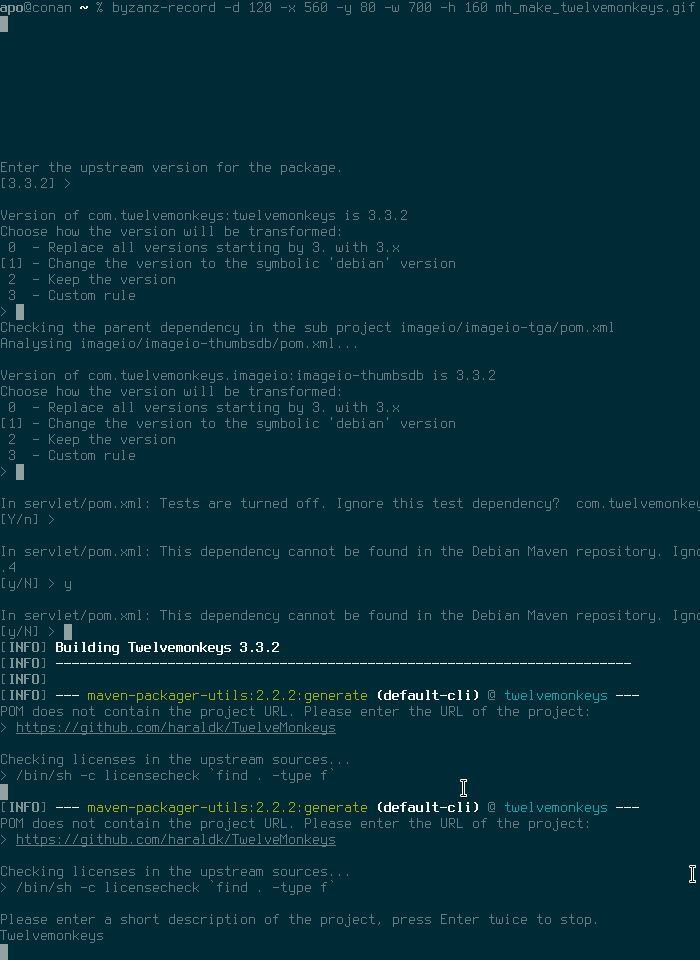
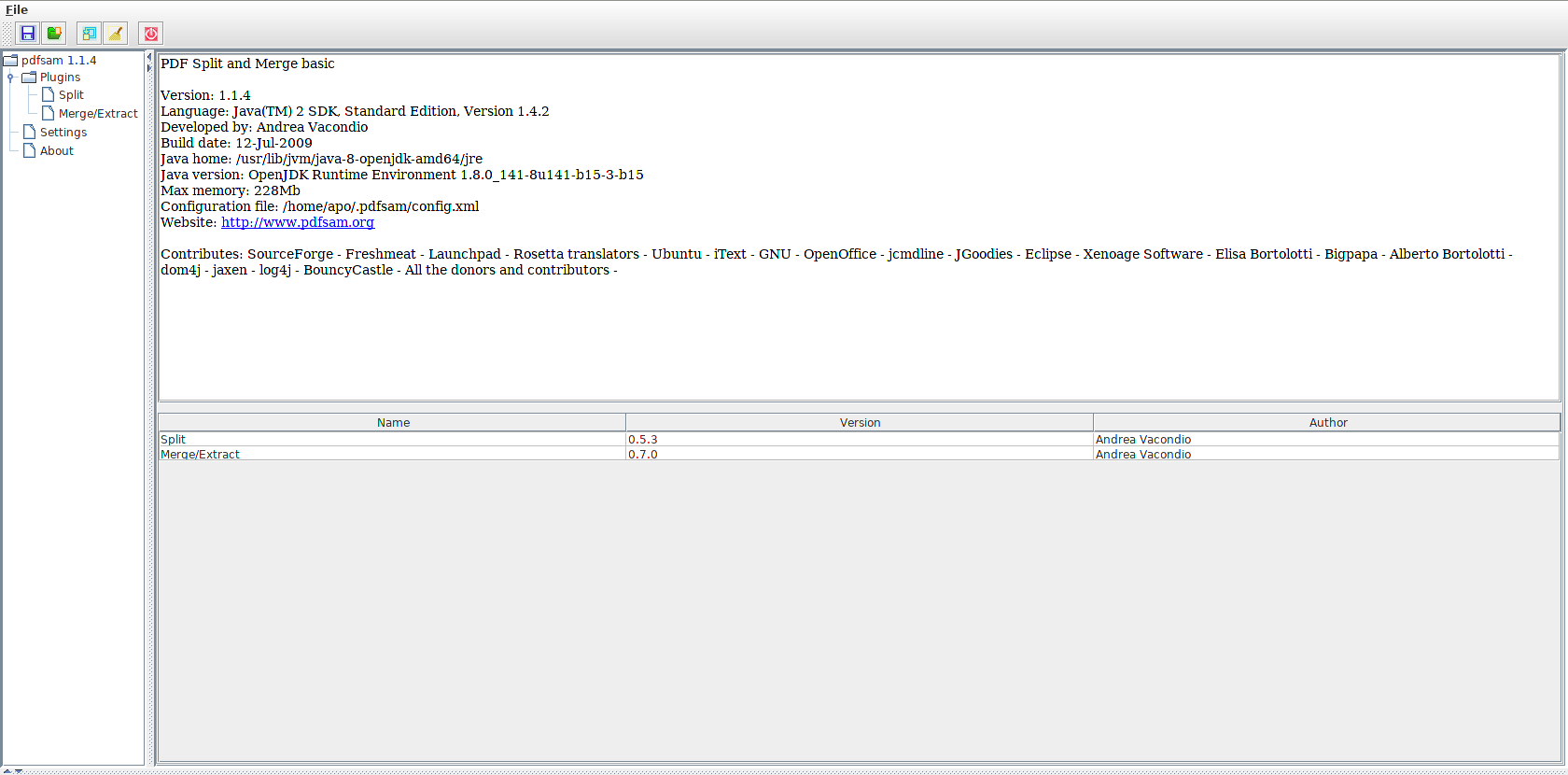
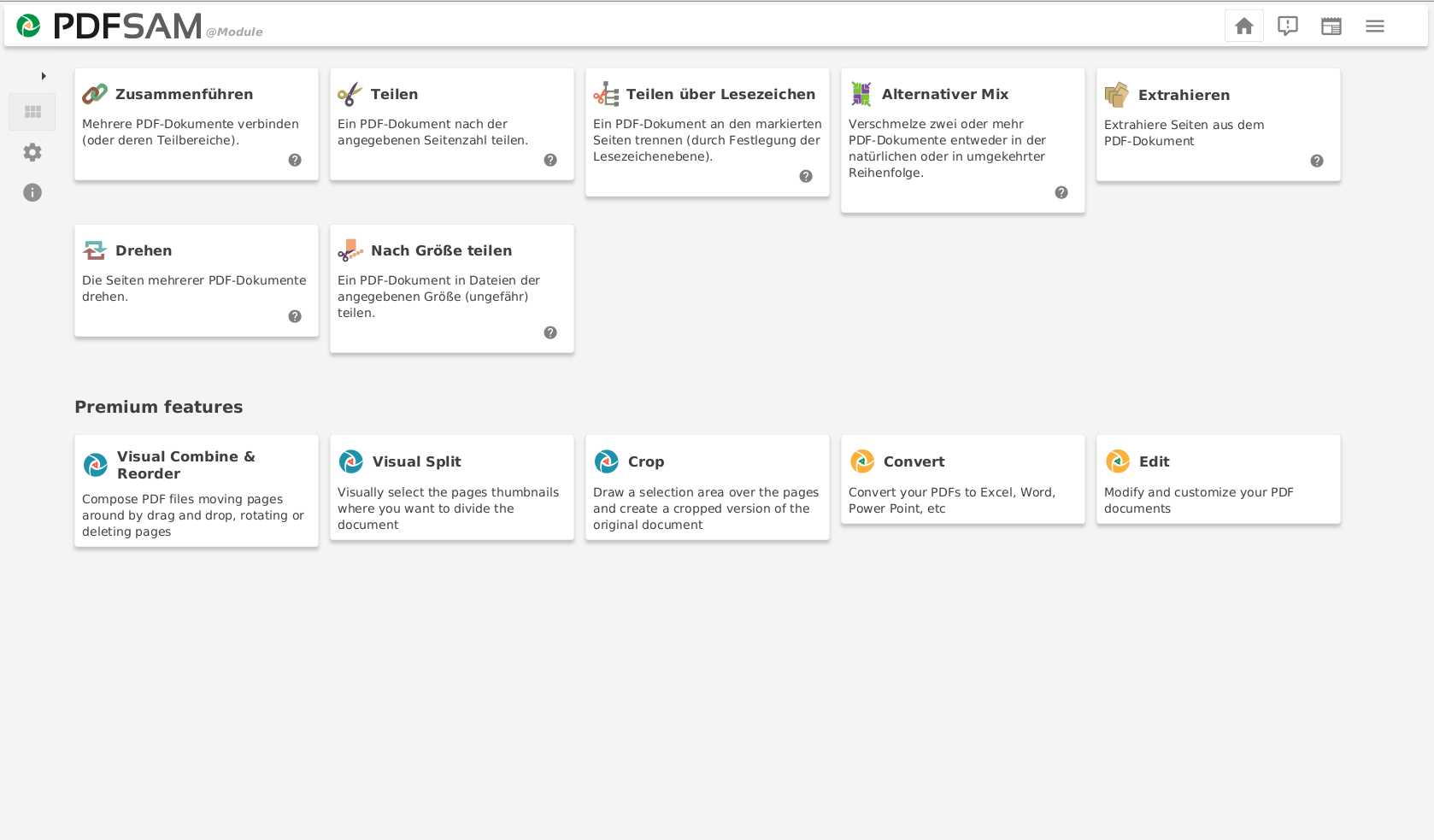
In the coming weeks and months I intend to write a mini series about packaging Java software for Debian. The following article basically starts in the middle of this journey because the PDFsam upgrade is still fresh in my mind. It requires some preexisting knowledge about build tools like Maven and some Java terminology. But do not fear. Hopefully it will make sense in the end when all pieces fall into place. A month ago I decided to upgrade PDFsam, a Java application to split, merge, extract, mix and rotate PDF documents. The current version 1.1.4 is already seven years old and uses Ant as its build system. Unfortunately up to now nobody was interested enough to invest the time to upgrade it to the latest version. A quick internet search unveils that the current sources can be found on github.com. Another brief look reveals we are dealing with a Maven project here because we can find a pom.xml file in the root directory and there is no sign of Ant s typical build.xml file anymore. Here are some general tips how to proceed from this point by using the PDFsam upgrade as an example. Find out how many new dependencies you really need The pom.xml file declares its dependencies in the <dependencies> section. It is good practice to inspect the pom.xml file and determine how much work will be required to upgrade the package. A seasoned Java packager will quickly find common dependencies like Hibernate or the Apache Commons libraries. Fortunately for you they are already packaged in Debian because a lot of projects depend on them. If you are unsure what is and what is not packaged for Debian, tracker.debian.org and codesearch.debian.net are useful tools to search for those packages. If in doubt just ask on debian-java@lists.debian.org. There is no automagical tool (yet) to find out what dependencies are really new (we talk about mh_make soon) but if you use the aforementioned tools and websites you will notice that in June 2017 one could not find the following artifacts: fontawesomefx, eventstudio, sejda-* and jackson-jr-objects. There are also jdepend and testFx but notice they are marked as <scope>test</scope> meaning they are only required if you would like to run upstream s test suite as well. For the sake of simplicity, it is best to ignore them for now and to focus on packaging only dependencies which are really needed to compile the application. Test dependencies can always be added later. This pom.xml investigation leads us to the following conclusion: PDFsam depends on Sejda, a PDF library. Basically Sejda is the product of a major refactoring that happened years ago and allows upstream to develop PDFsam faster and in multiple directions. For Debian packagers it is quite clear now that the upgrade of PDFsam is in reality more like packaging a completely new application. The inspection of Sejda s pom.xml file (another Maven project) reveals we also have to package imgscalr, Twelvemonkeys and SAMBox. We continue with these pom.xml analyses and end up with these new source packages: jackson-jr, libimgscalr-java, libsambox-java, libsejda-java, libsejda-injector-java, libsejda-io-java, libsejda-eventstudio-java, libtwelvemonkeys-java, fontawesomefx and libpdfbox2-java. Later I discovered that gettext-maven-plugin was also required. This was not obvious at first glance if you only check the pom.xml in the root directory but PDFsam and Sejda are multi-module projects! In this case every subdirectory (module) contains another pom.xml with additional information, so ideally you should check those too before you decide to start with your packaging. But don t worry it is often possible to ignore modules with a simple ignore rule inside your debian/*.poms file. The package will have less functionality but it can be still useful if you only need a subset of the modules. Of course in this case ignoring the gettext-maven-plugin artifact would result in a runtime error. C est la vie. A brief remark about Java package names: Java library packages must be named like libXXX-java. This is important for binary packages to avoid naming collisions. We are more tolerant when it comes to source package names but in general we recommend to use the exact same name as for the binary package. There are exceptions like prefixing source packages with their well known project name like jackson-XXX or jboss-XXX but this should only be used when there are already existing packages that use such a naming scheme. If in doubt, talk to us. mh_make or how to quickly generate an initial debian directory Packaging a Maven library is usually not very difficult even if it consists of multiple modules. The tricky part is to get the maven.rules, maven.IgnoreRules and your *.poms file right but debian/rules often only consists of a single dh line and the rest is finding the build-dependencies and adding them to debian/control. A small tool called mh_make, which is included in maven-debian-helper, can lend you a helping hand. The tool is not perfect yet. It requires that most build-dependencies are already installed on your local system, otherwise it won t create the initial debian directory and will only produce some unfinished (but in some cases still useful) files. A rule of thumb is to start with a package that does not depend on any other new dependency and requires the fewest build-dependencies. I have chosen libtwelvemonkeys-java because it was the simplest package and met the aforementioned criteria. Here is how mh_make looks like in action. (The animated GIF was created with Byzanz) First of all download the release tarball, unpack it and run mh_make inside the root directory. Ok, what is happening here? First you can choose a source and binary package name. Then disable the tests and don t run javadoc to create the documentation. This will simplify things a little. Tests and javadoc settings can be added later. Choose the version you want to package and then you can basically follow the default recommendations and confirm them by hitting the Enter key. Throughout the project we choose to transform the upstream version with the symbolic debian version. Remember that Java/Maven is version-centric. This will ensure that our Maven dependencies are always satisfied later and we can simply upgrade our Maven libraries and don t have to change the versions by hand in various pom.xml files; maven-debian-helper will automatically transform them for us to debian . Enable all modules. If you choose not to, you can select each module individually. Note that later on some of the required build-dependencies cannot be found because they are either not installed (libjmagick6-java) or they cannot be found in Debian s Maven repository under /usr/share/maven-repo. You can fix this by entering a substitution rule or, as I did in this case, you can just ignore these artifacts for now. They will be added to maven.IgnoreRules. In order to successfully compile your program you have to remove them from this file later again, create the correct substitution rule in maven.rules and add the missing build-dependencies to debian/control. For now we just want to quickly create our initial debian directory. If everything went as planned a complete debian directory should be visible in your root directory. The only thing left is to fix the substitution rule for the Servlet API 3.1. Add libservlet3.1-java to Build-Depends and the following rule to maven.rules: javax.servlet s/servlet-api/javax.servlet-api/ * s/.*/3.1/ * *
s/javax.servlet/javax.servlet.jsp/ s/jsp-api/javax.servlet.jsp-api/ * s/.*/2.3/ * * The maven.rules file consists of multiple rows separated by six columns. The values represent groupId, artifactId, type, version number and two fields which I never use.  You can just use an asterisk to match any value. Every value can be substituted. This is necessary when the value of upstream s pom.xml file differs from Debian s system packages. This happens frequently for API packages which are uploaded to Maven Central multiple times under a different groupId/artifactId but provide the same features. In this case the Twelvemonkeys pom requires an older API version but Debian is already at version 3.1. Note that we require a strict version number in this case because libservlet3.1-java does not use a symbolic debian version since we provide more than one Servlet API in the archive and this measure prevents conflicts. Thanks for reading this far. More articles about Java packaging will follow in the near future and hopefully they will clarify some terms and topics which could only be briefly mentioned in this post.

before

and after

31 July 2017

Chris Lamb: Free software activities in July 2017

Here is my monthly update covering what I have been doing in the free software world during July 2017 (previous month): I also blogged about my recent lintian hacking and installation-birthday package.
Reproducible builds

Whilst anyone can inspect the source code of free software for malicious flaws, most software is distributed pre-compiled to end users. The motivation behind the Reproducible Builds effort is to permit verification that no flaws have been introduced either maliciously or accidentally during this compilation process by promising identical results are always generated from a given source, thus allowing multiple third-parties to come to a consensus on whether a build was compromised. (I have generously been awarded a grant from the Core Infrastructure Initiative to fund my work in this area.) This month I:
  • Assisted Mattia with a draft of an extensive status update to the debian-devel-announce mailing list. There were interesting follow-up discussions on Hacker News and Reddit.
  • Submitted the following patches to fix reproducibility-related toolchain issues within Debian:
  • I also submitted 5 patches to fix specific reproducibility issues in autopep8, castle-game-engine, grep, libcdio & tinymux.
  • Categorised a large number of packages and issues in the Reproducible Builds "notes" repository.
  • Worked on publishing our weekly reports. (#114 #115, #116 & #117)

I also made the following changes to our tooling:
diffoscope

diffoscope is our in-depth and content-aware diff utility that can locate and diagnose reproducibility issues.

  • comparators.xml:
    • Fix EPUB "missing file" tests; they ship a META-INF/container.xml file. [ ]
    • Misc style fixups. [ ]
  • APK files can also be identified as "DOS/MBR boot sector". (#868486)
  • comparators.sqlite: Simplify file detection by rewriting manual recognizes call with a Sqlite3Database.RE_FILE_TYPE definition. [ ]
  • comparators.directory:
    • Revert the removal of a try-except. (#868534)
    • Tidy module. [ ]

strip-nondeterminism

strip-nondeterminism is our tool to remove specific non-deterministic results from a completed build.

  • Add missing File::Temp imports in the JAR and PNG handlers. This appears to have been exposed by lazily-loading handlers in #867982. (#868077)

buildinfo.debian.net

buildinfo.debian.net is my experiment into how to process, store and distribute .buildinfo files after the Debian archive software has processed them.

  • Avoid a race condition between check-and-creation of Buildinfo instances. [ ]


Debian My activities as the current Debian Project Leader are covered in my "Bits from the DPL emails to the debian-devel-announce mailing list.
Patches contributed
  • obs-studio: Remove annoying "click wrapper" on first startup. (#867756)
  • vim: Syntax highlighting for debian/copyright files. (#869965)
  • moin: Incorrect timezone offset applied due to "84600" typo. (#868463)
  • ssss: Add a simple autopkgtest. (#869645)
  • dch: Please bump $latest_bpo_dist to current stable release. (#867662)
  • python-kaitaistruct: Remove Markdown and homepage references from package long descriptions. (#869265)
  • album-data: Correct invalid Vcs-Git URI. (#869822)
  • pytest-sourceorder: Update Homepage field. (#869125)
I also made a very large number of contributions to the Lintian static analysis tool. To avoid duplication here, I have outlined them in a separate post.

Debian LTS

This month I have been paid to work 18 hours on Debian Long Term Support (LTS). In that time I did the following:
  • "Frontdesk" duties, triaging CVEs, etc.
  • Issued DLA 1014-1 for libclamunrar, a library to add unrar support to the Clam anti-virus software to fix an arbitrary code execution vulnerability.
  • Issued DLA 1015-1 for the libgcrypt11 crypto library to fix a "sliding windows" information leak.
  • Issued DLA 1016-1 for radare2 (a reverse-engineering framework) to prevent a remote denial-of-service attack.
  • Issued DLA 1017-1 to fix a heap-based buffer over-read in the mpg123 audio library.
  • Issued DLA 1018-1 for the sqlite3 database engine to prevent a vulnerability that could be exploited via a specially-crafted database file.
  • Issued DLA 1019-1 to patch a cross-site scripting (XSS) exploit in phpldapadmin, a web-based interface for administering LDAP servers.
  • Issued DLA 1024-1 to prevent an information leak in nginx via a specially-crafted HTTP range.
  • Issued DLA 1028-1 for apache2 to prevent the leakage of potentially confidential information via providing Authorization Digest headers.
  • Issued DLA 1033-1 for the memcached in-memory object caching server to prevent a remote denial-of-service attack.

Uploads
  • redis:
    • 4:4.0.0-1 Upload new major upstream release to unstable.
    • 4:4.0.0-2 Make /usr/bin/redis-server in the primary package a symlink to /usr/bin/redis-check-rdb in the redis-tools package to prevent duplicate debug symbols that result in a package file collision. (#868551)
    • 4:4.0.0-3 Add -latomic to LDFLAGS to avoid a FTBFS on the mips & mipsel architectures.
    • 4:4.0.1-1 New upstream version. Install 00-RELEASENOTES as the upstream changelog.
    • 4:4.0.1-2 Skip non-deterministic tests that rely on timing. (#857855)
  • python-django:
    • 1:1.11.3-1 New upstream bugfix release. Check DEB_BUILD_PROFILES consistently, not DEB_BUILD_OPTIONS.
  • bfs:
    • 1.0.2-2 & 1.0.2-3 Use help2man to generate a manpage.
    • 1.0.2-4 Set hardening=+all for bindnow, etc.
    • 1.0.2-5 & 1.0.2-6 Don't use upstream's release target as it overrides our CFLAGS & install RELEASES.md as the upstream changelog.
    • 1.1-1 New upstream release.
  • libfiu:
    • 0.95-4 Apply patch from Steve Langasek to fix autopkgtests. (#869709)
  • python-daiquiri:
    • 1.0.1-1 Initial upload. (ITP)
    • 1.1.0-1 New upstream release.
    • 1.1.0-2 Tidy package long description.
    • 1.2.1-1 New upstream release.

I also reviewed and sponsored the uploads of gtts-token 1.1.1-1 and nlopt 2.4.2+dfsg-3.

Debian bugs filed
  • ITP: python-daiquiri Python library to easily setup basic logging functionality. (#867322)
  • twittering-mode: Correct incorrect time formatting due to "84600" typo. (#868479)

25 July 2017

Norbert Preining: Debian/TeX Live 2017.20170724-1

Yesterday I uploaded the first update of the TeX Live packages in Debian after TeX Live 2017 has entered Debian/unstable. The packages should by now have reached most mirrors. Nothing spectacular here besides a lot of updates and new packages. If I have to pick one update it would be the one of algorithm2e, a package that has seen lots of use and some bugs due to two years of inactivity. Good to see a new release. Enjoy. New packages algolrevived, invoice2, jfmutil, maker, marginfit, pst-geometrictools, pst-rputover, pxufont, shobhika, tikzcodeblocks, zebra-goodies. Updated packages acmart, adobemapping, algorithm2e, arabluatex, archaeologie, babel, babel-french, bangorexam, beamer, beebe, biblatex-gb7714-2015, bibleref, br-lex, bxjscls, combofont, computational-complexity, dozenal, draftfigure, elzcards, embrac, esami, factura, fancyhdr, fei, fithesis, fmtcount, fontspec, fonttable, forest, fvextra, genealogytree, gotoh, GS1, l3build, l3experimental, l3kernel, l3packages, latexindent, limap, luapackageloader, lwarp, mcf2graph, microtype, minted, mptopdf, pdfpages, polynom, powerdot, probsoln, pxbase, pxchfon, pythontex, reledmac, siunitx, struktex, tcolorbox, tetex, texdirflatten, uowthesistitlepage, uptex-fonts, xcharter.

23 July 2017

Gregor Herrmann: RC bugs 2017/08-29

long time no blog post. & the stretch release happened without many RC bug fixes from me; in practice, the auto-removals are faster & more convenient. what I nevertheless did in the last months was to fix RC bugs in pkg-perl packages (it still surprises me how fast rotting & constantly moving code is); prepare RC bug fixes for jessie (also for pkg-perl packages); & in the last weeks provide patches & carry out NMUs for perl packages as part of the ongoing perl 5.26 transition.

18 July 2017

Reproducible builds folks: Reproducible Builds: week 116 in Stretch cycle

Here's what happened in the Reproducible Builds effort between Sunday July 9 and Saturday July 15 2017: Packages reviewed and fixed, and bugs filed Reviews of unreproducible packages 13 package reviews have been added, 12 have been updated and 19 have been removed in this week, adding to our knowledge about identified issues. 2 issue types have been added: 3 issue types have been updated: Weekly QA work During our reproducibility testing, FTBFS bugs have been detected and reported by: diffoscope development Version 84 was uploaded to unstable by Mattia Rizzolo. It included contributions already reported from the previous weeks, as well as new ones: After the release, development continued in git with contributions from: strip-nondeterminism development Versions 0.036-1, 0.037-1 and 0.038-1 were uploaded to unstable by Chris Lamb. They included contributions from: reprotest development Development continued in git with contributions from: buildinfo.debian.net development tests.reproducible-builds.org Misc. This week's edition was written by Bernhard M. Wiedemann, Chris Lamb, Mattia Rizzolo, Vagrant Cascadian & reviewed by a bunch of Reproducible Builds folks on IRC & the mailing lists.

15 July 2017

Junichi Uekawa: revisiting libjson-spirit.

revisiting libjson-spirit. I tried compiling a program that uses libjson-spirit and noticed that it still is broken. New programs compiled against the header does not link with the provided static library. Trying to rebuild it fixes it, but it uses compat version 8, and that needs to be fixed (trivially). hmm... actually code doesn't build anymore and there's multiple new upstream versions. ... and then I noticed that it was a stale copy already removed from Debian repository. What's a good C++ json implementation these days?

20 June 2017

Norbert Preining: TeX Live 2017 hits Debian/unstable

Yesterday I uploaded the first packages of TeX Live 2017 to Debian/unstable, meaning that the new release cycle has started. Debian/stretch was released over the weekend, and this opened up unstable for new developments. The upload comprised the following packages: asymptote, cm-super, context, context-modules, texlive-base, texlive-bin, texlive-extra, texlive-extra, texlive-lang, texworks, xindy.
I mentioned already in a previous post the following changes: The last two changes are described together with other news (easy TEXMF tree management) in the TeX Live release post. These changes more or less sum up the new infra structure developments in TeX Live 2017. Since the last release to unstable (which happened in 2017-01-23) about half a year of package updates have accumulated, below is an approximate list of updates (not split into new/updated, though). Enjoy the brave new world of TeX Live 2017, and please report bugs to the BTS! Updated/new packages:
academicons, achemso, acmart, acro, actuarialangle, actuarialsymbol, adobemapping, alkalami, amiri, animate, aomart, apa6, apxproof, arabluatex, archaeologie, arsclassica, autoaligne, autobreak, autosp, axodraw2, babel, babel-azerbaijani, babel-english, babel-french, babel-indonesian, babel-japanese, babel-malay, babel-ukrainian, bangorexam, baskervaldx, baskervillef, bchart, beamer, beamerswitch, bgteubner, biblatex-abnt, biblatex-anonymous, biblatex-archaeology, biblatex-arthistory-bonn, biblatex-bookinother, biblatex-caspervector, biblatex-cheatsheet, biblatex-chem, biblatex-chicago, biblatex-claves, biblatex-enc, biblatex-fiwi, biblatex-gb7714-2015, biblatex-gost, biblatex-ieee, biblatex-iso690, biblatex-manuscripts-philology, biblatex-morenames, biblatex-nature, biblatex-opcit-booktitle, biblatex-oxref, biblatex-philosophy, biblatex-publist, biblatex-shortfields, biblatex-subseries, bibtexperllibs, bidi, biochemistry-colors, bookcover, boondox, bredzenie, breqn, bxbase, bxcalc, bxdvidriver, bxjalipsum, bxjaprnind, bxjscls, bxnewfont, bxorigcapt, bxpapersize, bxpdfver, cabin, callouts, chemfig, chemformula, chemmacros, chemschemex, childdoc, circuitikz, cje, cjhebrew, cjk-gs-integrate, cmpj, cochineal, combofont, context, conv-xkv, correctmathalign, covington, cquthesis, crimson, crossrefware, csbulletin, csplain, csquotes, css-colors, cstldoc, ctex, currency, cweb, datetime2-french, datetime2-german, datetime2-romanian, datetime2-ukrainian, dehyph-exptl, disser, docsurvey, dox, draftfigure, drawmatrix, dtk, dviinfox, easyformat, ebproof, elements, endheads, enotez, eqnalign, erewhon, eulerpx, expex, exsheets, factura, facture, fancyhdr, fbb, fei, fetamont, fibeamer, fithesis, fixme, fmtcount, fnspe, fontmfizz, fontools, fonts-churchslavonic, fontspec, footnotehyper, forest, gandhi, genealogytree, glossaries, glossaries-extra, gofonts, gotoh, graphics, graphics-def, graphics-pln, grayhints, gregoriotex, gtrlib-largetrees, gzt, halloweenmath, handout, hang, heuristica, hlist, hobby, hvfloat, hyperref, hyperxmp, ifptex, ijsra, japanese-otf-uptex, jlreq, jmlr, jsclasses, jslectureplanner, karnaugh-map, keyfloat, knowledge, komacv, koma-script, kotex-oblivoir, l3, l3build, ladder, langsci, latex, latex2e, latex2man, latex3, latexbug, latexindent, latexmk, latex-mr, leaflet, leipzig, libertine, libertinegc, libertinus, libertinust1math, lion-msc, lni, longdivision, lshort-chinese, ltb2bib, lualatex-math, lualibs, luamesh, luamplib, luaotfload, luapackageloader, luatexja, luatexko, lwarp, make4ht, marginnote, markdown, mathalfa, mathpunctspace, mathtools, mcexam, mcf2graph, media9, minidocument, modular, montserrat, morewrites, mpostinl, mptrees, mucproc, musixtex, mwcls, mweights, nameauth, newpx, newtx, newtxtt, nfssext-cfr, nlctdoc, novel, numspell, nwejm, oberdiek, ocgx2, oplotsymbl, optidef, oscola, overlays, pagecolor, pdflatexpicscale, pdfpages, pdfx, perfectcut, pgfplots, phonenumbers, phonrule, pkuthss, platex, platex-tools, polski, preview, program, proofread, prooftrees, pst-3dplot, pst-barcode, pst-eucl, pst-func, pst-ode, pst-pdf, pst-plot, pstricks, pstricks-add, pst-solides3d, pst-spinner, pst-tools, pst-tree, pst-vehicle, ptex2pdf, ptex-base, ptex-fontmaps, pxbase, pxchfon, pxrubrica, pythonhighlight, quran, ran_toks, reledmac, repere, resphilosophica, revquantum, rputover, rubik, rutitlepage, sansmathfonts, scratch, seealso, sesstime, siunitx, skdoc, songs, spectralsequences, stackengine, stage, sttools, studenthandouts, svg, tcolorbox, tex4ebook, tex4ht, texosquery, texproposal, thaienum, thalie, thesis-ekf, thuthesis, tikz-kalender, tikzmark, tikz-optics, tikz-palattice, tikzpeople, tikzsymbols, titlepic, tl17, tqft, tracklang, tudscr, tugboat-plain, turabian-formatting, txuprcal, typoaid, udesoftec, uhhassignment, ukrainian, ulthese, unamthesis, unfonts-core, unfonts-extra, unicode-math, uplatex, upmethodology, uptex-base, urcls, variablelm, varsfromjobname, visualtikz, xassoccnt, xcharter, xcntperchap, xecjk, xepersian, xetexko, xevlna, xgreek, xsavebox, xsim, ycbook.

18 June 2017

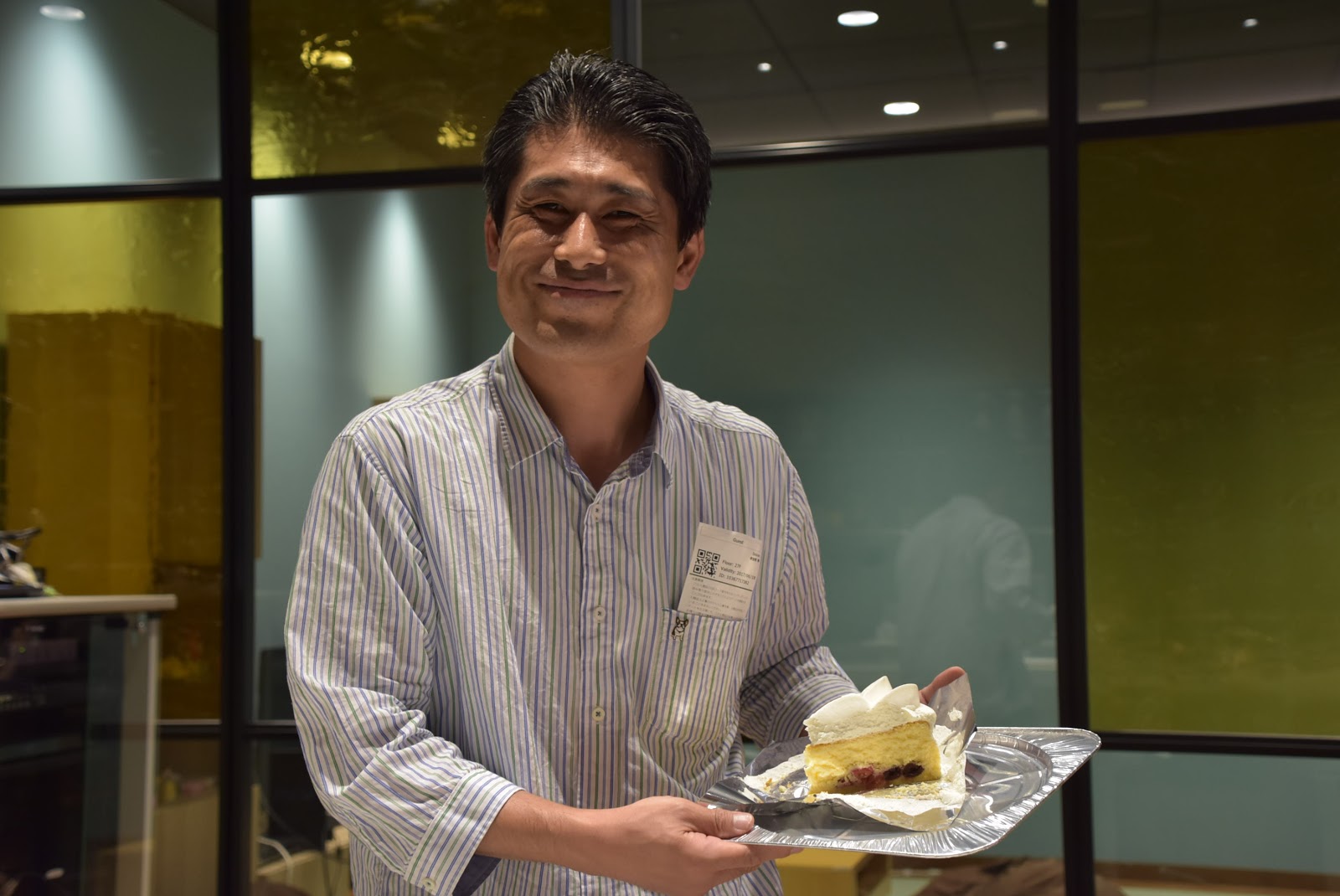
Hideki Yamane: Debian9 release party in Tokyo

We celebrated Debian9 "stretch" release in Tokyo (thanks to Cybozu, Inc. for the place).


We enjoyed beer, wine, sake, soft drinks, pizza, sandwich, snacks and cake&coffee (Nicaraguan one, it reminds me DebConf12 :)

13 June 2017

Dirk Eddelbuettel: RcppMsgPack 0.1.1

A new package! Or at least new on CRAN as the very initial version 0.1.0 had been available via the ghrr drat for over a year. But now we have version 0.1.1 to announce as a CRAN package. RcppMspPack provides R with MessagePack header files for use via C++ (or C, if you must) packages such as RcppRedis. MessagePack itself is an efficient binary serialization format. It lets you exchange data among multiple languages like JSON. But it is faster and smaller. Small integers are encoded into a single byte, and typical short strings require only one extra byte in addition to the strings themselves. MessagePack is used by Redis and many other projects, and has bindings to just about any language. To use this package, simply add it to the LinkingTo: field in the DESCRIPTION field of your R package---and the R package infrastructure tools will then know how to set include flags correctly on all architectures supported by R. More information may be on the RcppMsgPack page. Issues and bugreports should go to the GitHub issue tracker.

This post by Dirk Eddelbuettel originated on his Thinking inside the box blog. Please report excessive re-aggregation in third-party for-profit settings.

9 June 2017

Petter Reinholdtsen: Release 0.1.1 of free software archive system Nikita announced

I am very happy to report that the Nikita Noark 5 core project tagged its second release today. The free software solution is an implementation of the Norwegian archive standard Noark 5 used by government offices in Norway. These were the changes in version 0.1.1 since version 0.1.0 (from NEWS.md): If this sound interesting to you, please contact us on IRC (#nikita on irc.freenode.net) or email (nikita-noark mailing list).

6 June 2017

Reproducible builds folks: Reproducible Builds: week 110 in Stretch cycle

Here's what happened in the Reproducible Builds effort between Sunday May 28 and Saturday June 3 2017: Past an upcoming events Documentation updates Toolchain development and fixes Patches and bugs filed 4 package reviews have been added, 6 have been updated and 25 have been removed in this week, adding to our knowledge about identified issues. Weekly QA work During our reproducibility testing, FTBFS bugs have been detected and reported by: diffoscope development tests.reproducible-builds.org Mattia Rizzolo: Daniel Kahn Gillmor: Vagrant Cascadian: Holger Levsen: Misc. This week's edition was written by Chris Lamb, Bernhard M. Wiedemann and Holger Levsen & reviewed by a bunch of Reproducible Builds folks on IRC & the mailing lists.

31 May 2017

Chris Lamb: Free software activities in May 2017

Here is my monthly update covering what I have been doing in the free software world (previous month):
Reproducible builds

Whilst anyone can inspect the source code of free software for malicious flaws, most software is distributed pre-compiled to end users. The motivation behind the Reproducible Builds effort is to permit verification that no flaws have been introduced either maliciously or accidentally during this compilation process by promising identical results are always generated from a given source, thus allowing multiple third-parties to come to a consensus on whether a build was compromised. (I have generously been awarded a grant from the Core Infrastructure Initiative to fund my work in this area.) This month I:
I also made the following changes to our tooling:
diffoscope

diffoscope is our in-depth and content-aware diff utility that can locate and diagnose reproducibility issues.

  • Don't fail when run under perversely-recursive input files. (#780761).

strip-nondeterminism

strip-nondeterminism is our tool to remove specific non-deterministic results from a completed build.

  • Move from verbose_print to nonquiet_print so we print when normalising a file. This is so we can start to target the removal of strip-nondeterminism itself.
  • Only print log messages by default if the file was actually modified. (#863033)
  • Update package long descriptions to clarify that the tool itself is a temporary workaround. (#862029)


Debian My activities as the current Debian Project Leader are covered in my "Bits from the DPL" email to the debian-devel-announce list. However, I:
  • Represented Debian at the OSCAL 2017 in Tirana, Albania.
  • Attended the Reproducible Builds hackathon in Hamburg, Germany. (Report)
  • Finally, I attended Debian SunCamp 2017 in Lloret de Mar in Catalonia, Spain.

Patches contributed
  • xarchiver: Adding files to .tar.xz deletes existing content. (#862593)
  • screen-message: Please invert the default colours. (#862056)
  • fontconfig: fc-cache returns with exit code 0 on 256 errors. (#863427)
  • quadrapassel: Segfaults when unpausing a paused finished game. (#863106)
  • camping: Broken symlink. (#861040)
  • dns-root-data: Does not build if /bin/sh is Bash. (#862252)
  • dh-python: bit.ly link doesn't work anymore. (#863074)

Debian LTS

This month I have been paid to work 18 hours on Debian Long Term Support (LTS). In that time I did the following:
  • "Frontdesk" duties, triaging CVEs, adding links to upstream patches, etc.
  • Issued DLA 930-1 fixing a remote application crash vulnerability in libxstream-java, a Java library to serialize objects to XML and back again
  • Issued DLA 935-1 correcting a local denial of service vulnerability in lxterminal, the terminal emulator for the LXDE desktop environment.
  • Issued DLA 940-1 to remedy an issue in sane-backends which allowed remote attackers to obtain sensitive memory information via a crafted SANE_NET_CONTROL_OPTION packet.
  • Issued DLA 943-1 for the deluge bittorrent client to fix a directory traversal attack vulnerability in the web user interface.
  • Issued DLA 949-1 fixing an integer signedness error in the miniupnpc UPnP client that could allow remote attackers to cause a denial of service attack.
  • Issued DLA 959-1 for the libical calendaring library. A use-after-free vulnerability could allow remote attackers could cause a denial of service and possibly read heap memory via a specially crafted .ICS file.

Uploads
  • redis (3:3.2.9-1) New upstream release.
  • python-django:
    • 1:1.11.1-1 New upstream minor release.
    • 1:1.11.1-2 & 1:1.11.1-3 Add missing Build-Depends on libgdal-dev due to new GIS tests.
  • docbook-to-man:
    • 1:2.0.0-36 Adopt package. Apply a patch to prevent undefined behaviour caused by a memcpy(3) parameter overlap. (#842635, #858389)
    • 1:2.0.0-37 Install manpages using debian/docbook-to-man.manpages over manual calls.
  • installation-birthday Initial upload and misc. subsequent fixes.
  • bfs:
    • 1.0-3 Fix FTBFS on hurd-i386. (#861569)
    • 1.0.1-1 New upstream release & correct debian/watch file.

I also made the following non-maintainer uploads (NMUs):
  • ca-certificates (20161130+nmu1) Remove StartCom and WoSign certificates as they are now untrusted by the major browser vendors. (#858539)
  • sane-backends (1.0.25-4.1) Correct missing error handler in (generated) prerm script. (#862334)
  • seqan2 (2.3.1+dfsg-3.1) Fix broken /usr/bin/splazers symlink on 32-bit architectures. (#863669)
  • jackeq (0.5.9-2.1) Fix a segmentation fault caused by passing a truncated pointer instead of a GtkType. (#863416)
  • kluppe (0.6.20-1.1) Fix segmentation fault at startup. (#863421)
  • coyim (0.3.7-2.1) Skip tests that require internet access to avoid FTBFS. (#863414)
  • pavuk (0.9.35-6.1) Fix segmentation fault when opening "Limitations" window. (#863492)
  • porg (2:0.10-1.1) Fix broken LD_PRELOAD path. (#863495)
  • timemachine (0.3.3-2.1) Fix two segmentation faults caused by truncated pointers. (#863420)

Debian bugs filed
  • acct: Docs incorrectly installed to "accounting.html" directory. (#862180)
  • git-hub: Does not work with 2FA-enabled accounts. (#863265)
  • libwibble: Homepage and Vcs-Darcs fields are outdated. (#861673)


I additionally filed 2 bugs for packages that access the internet during build against flower and r-bioc-gviz.


I also filed 6 FTBFS bugs against cronutils, isoquery, libgnupg-interface-perl, maven-plugin-tools, node-dateformat, password-store & simple-tpm-pk11.

FTP Team

As a Debian FTP assistant I ACCEPTed 105 packages: boinc-app-eah-brp, debug-me, e-mem, etcd, fdroidcl, firejail, gcc-6-cross-ports, gcc-7-cross-ports, gcc-defaults, gl2ps, gnome-software, gnupg2, golang-github-dlclark-regexp2, golang-github-dop251-goja, golang-github-nebulouslabs-fastrand, golang-github-pkg-profile, haskell-call-stack, haskell-foundation, haskell-nanospec, haskell-parallel-tree-search, haskell-posix-pty, haskell-protobuf, htmlmin, iannix, libarchive-cpio-perl, libexternalsortinginjava-java, libgetdata, libpll, libtgvoip, mariadb-10.3, maven-resolver, mysql-transitional, network-manager, node-async-each, node-aws-sign2, node-bcrypt-pbkdf, node-browserify-rsa, node-builtin-status-codes, node-caseless, node-chokidar, node-concat-with-sourcemaps, node-console-control-strings, node-create-ecdh, node-create-hash, node-create-hmac, node-cryptiles, node-dot, node-ecc-jsbn, node-elliptic, node-evp-bytestokey, node-extsprintf, node-getpass, node-gulp-coffee, node-har-schema, node-har-validator, node-hawk, node-jsprim, node-memory-fs, node-pbkdf2, node-performance-now, node-set-immediate-shim, node-sinon-chai, node-source-list-map, node-stream-array, node-string-decoder, node-stringstream, node-verror, node-vinyl-sourcemaps-apply, node-vm-browserify, node-webpack-sources, node-wide-align, odil, onionshare, opensvc, otb, perl, petsc4py, pglogical, postgresql-10, psortb, purl, pymodbus, pymssql, python-decouple, python-django-rules, python-glob2, python-ncclient, python-parse-type, python-prctl, python-sparse, quoin-clojure, quorum, r-bioc-genomeinfodbdata, radlib, reprounzip, rustc, sbt-test-interface, slepc4py, slick-greeter, sparse, te923con, trabucco, traildb, typescript-types & writegood-mode. I additionally filed 6 RC bugs against packages that had incomplete debian/copyright files against: libgetdata, odil, opensvc, python-ncclient, radlib and reprounzip.

30 May 2017

Steinar H. Gunderson: Nageru 1.6.0 released

I've released version 1.6.0 of Nageru, my live video mixer, together with dependent libraries Movit 1.5.1 and bmusb 0.7.0. The primray new feature this time is integration with CasparCG, the dominating open-source broadcast graphics system, which opens up a whole new world of possibilities for intelligent overlay graphics. (Actually, the feature is a bit more generic than that; any FFmpeg file or stream will do as input. Audio isn't supported yet, though.) You can see a simple HTML5 CasparCG setup in the ultimate tournament stream test we did in April, in preparation of a larger event in September; CasparCG generates a stream with alpha, which is then fed into Nageru and used on top of the three camera sources. Apart from that, there's a new frame analyzer that helps with calibrating your signal chain; there are lots of devices that will happily mess with your signal, and measuring is the first step in counteracting that. (There's also a few input interpretation tweaks that will help most common issues.) 1.6.0 is on its way to Debian experimental, along with its dependencies (stretch will release with Nageru 1.4.2); there are likely to be backports when stretch releases and the backport queue opens up.

28 May 2017

Antonio Terceiro: Debian CI: new data retention policy

When I started debci for Debian CI, I went for the simplest thing that could possibly work. One of the design decisions was to use the filesystem directly for file storage. A large part of the Debian CI data is log files and test artifacts (which are just files), and using the filesystem directly for storage makes it a lot easier to handle it. The rest of the data which is structured (test history and status of packages) is stored as JSON files. Another nice benefit of using the filesystem like this is that I get a sort of REST API for free by just exposing the file storage to the web. For example, getting the latest test status of debci itself on unstable/amd64 is as easy as:

$ curl https://ci.debian.net/data/packages/unstable/amd64/d/debci/latest.json
 
  "run_id": "20170528_173652",
  "package": "debci",
  "version": "1.5.1",
  "date": "2017-05-28 17:43:05",
  "status": "pass",
  "blame": [],
  "previous_status": "pass",
  "duration_seconds": "373",
  "duration_human": "0h 6m 13s",
  "message": "Tests passed, but at least one test skipped",
  "last_pass_version": "1.5.1",
  "last_pass_date": "2017-05-28 17:43:05"
 

Now, nothing in life is without compromises. One big disadvantage of the way debci stored its data is that there were a lot of files, which ends up using a large number of inodes in the filesystem. The current Debian CI master has more than 10 million inodes in its filesystem, and almost all of them were being used. This is clearly unsustainable. You will notice that I said stored, because as of version 1.6, debci now implements a data retention policy: log files and test artifacts will now only be kept for a configurable amount of days (default: 180). So there you have it: effective immediately, Debian CI will not provide logs and test artifacts older than 180 days. If you are reporting bugs based on logs from Debian CI, please don t hotlink the log files. Instead, make sure you download the logs in question and attach them to the bug report, because in 6 months they will be gone.

23 May 2017

Reproducible builds folks: Reproducible Builds: week 108 in Stretch cycle

Here's what happened in the Reproducible Builds effort between Sunday May 14 and Saturday May 20 2017: News and Media coverage IRC meeting Our next IRC meeting has been scheduled for Thursday June 1 at 16:00 UTC. Packages reviewed and fixed, bugs filed, etc. Bernhard M. Wiedemann: Chris Lamb: Reviews of unreproducible packages 35 package reviews have been added, 28 have been updated and 12 have been removed in this week, adding to our knowledge about identified issues. 2 issue types have been added: diffoscope development strip-nondeterminism development tests.reproducible-builds.org Holger wrote a new systemd-based scheduling system replacing 162 constantly running Jenkins jobs which were slowing down job execution in general: Misc. This week's edition was written by Chris Lamb, Holver Levsen, Bernhard M. Wiedemann, Vagrant Cascadian and Maria Glukhova & reviewed by a bunch of Reproducible Builds folks on IRC & the mailing lists.

19 May 2017

Michael Prokop: Debian stretch: changes in util-linux #newinstretch

We re coming closer to the Debian/stretch stable release and similar to what we had with #newinwheezy and #newinjessie it s time for #newinstretch! Hideki Yamane already started the game by blogging about GitHub s Icon font, fonts-octicons and Arturo Borrero Gonzalez wrote a nice article about nftables in Debian/stretch. One package that isn t new but its tools are used by many of us is util-linux, providing many essential system utilities. We have util-linux v2.25.2 in Debian/jessie and in Debian/stretch there will be util-linux >=v2.29.2. There are many new options available and we also have a few new tools available. Tools that have been taken over from other packages New tools New features/options addpart (show or change the real-time scheduling attributes of a process):
--reload reload prompts on running agetty instances
blkdiscard (discard the content of sectors on a device):
-p, --step <num>    size of the discard iterations within the offset
-z, --zeroout       zero-fill rather than discard
chrt (show or change the real-time scheduling attributes of a process):
-d, --deadline            set policy to SCHED_DEADLINE
-T, --sched-runtime <ns>  runtime parameter for DEADLINE
-P, --sched-period <ns>   period parameter for DEADLINE
-D, --sched-deadline <ns> deadline parameter for DEADLINE
fdformat (do a low-level formatting of a floppy disk):
-f, --from <N>    start at the track N (default 0)
-t, --to <N>      stop at the track N
-r, --repair <N>  try to repair tracks failed during the verification (max N retries)
fdisk (display or manipulate a disk partition table):
-B, --protect-boot            don't erase bootbits when creating a new label
-o, --output <list>           output columns
    --bytes                   print SIZE in bytes rather than in human readable format
-w, --wipe <mode>             wipe signatures (auto, always or never)
-W, --wipe-partitions <mode>  wipe signatures from new partitions (auto, always or never)
New available columns (for -o):
 gpt: Device Start End Sectors Size Type Type-UUID Attrs Name UUID
 dos: Device Start End Sectors Cylinders Size Type Id Attrs Boot End-C/H/S Start-C/H/S
 bsd: Slice Start End Sectors Cylinders Size Type Bsize Cpg Fsize
 sgi: Device Start End Sectors Cylinders Size Type Id Attrs
 sun: Device Start End Sectors Cylinders Size Type Id Flags
findmnt (find a (mounted) filesystem):
-J, --json             use JSON output format
-M, --mountpoint <dir> the mountpoint directory
-x, --verify           verify mount table content (default is fstab)
    --verbose          print more details
flock (manage file locks from shell scripts):
-F, --no-fork            execute command without forking
    --verbose            increase verbosity
getty (open a terminal and set its mode):
--reload               reload prompts on running agetty instances
hwclock (query or set the hardware clock):
--get            read hardware clock and print drift corrected result
--update-drift   update drift factor in /etc/adjtime (requires --set or --systohc)
ldattach (attach a line discipline to a serial line):
-c, --intro-command <string>  intro sent before ldattach
-p, --pause <seconds>         pause between intro and ldattach
logger (enter messages into the system log):
-e, --skip-empty         do not log empty lines when processing files
    --no-act             do everything except the write the log
    --octet-count        use rfc6587 octet counting
-S, --size <size>        maximum size for a single message
    --rfc3164            use the obsolete BSD syslog protocol
    --rfc5424[=<snip>]   use the syslog protocol (the default for remote);
                           <snip> can be notime, or notq, and/or nohost
    --sd-id <id>         rfc5424 structured data ID
    --sd-param <data>    rfc5424 structured data name=value
    --msgid <msgid>      set rfc5424 message id field
    --socket-errors[=<on off auto>] print connection errors when using Unix sockets
losetup (set up and control loop devices):
-L, --nooverlap               avoid possible conflict between devices
    --direct-io[=<on off>]    open backing file with O_DIRECT 
-J, --json                    use JSON --list output format
New available --list column:
DIO  access backing file with direct-io
lsblk (list information about block devices):
-J, --json           use JSON output format
New available columns (for --output):
HOTPLUG  removable or hotplug device (usb, pcmcia, ...)
SUBSYSTEMS  de-duplicated chain of subsystems
lscpu (display information about the CPU architecture):
-y, --physical          print physical instead of logical IDs
New available column:
DRAWER  logical drawer number
lslocks (list local system locks):
-J, --json             use JSON output format
-i, --noinaccessible   ignore locks without read permissions
nsenter (run a program with namespaces of other processes):
-C, --cgroup[=<file>]      enter cgroup namespace
    --preserve-credentials do not touch uids or gids
-Z, --follow-context       set SELinux context according to --target PID
rtcwake (enter a system sleep state until a specified wakeup time):
--date <timestamp>   date time of timestamp to wake
--list-modes         list available modes
-r, --reorder <dev>  fix partitions order (by start offset)
sfdisk (display or manipulate a disk partition table):
New Commands:
-J, --json <dev>                  dump partition table in JSON format
-F, --list-free [<dev> ...]       list unpartitioned free areas of each device
-r, --reorder <dev>               fix partitions order (by start offset)
    --delete <dev> [<part> ...]   delete all or specified partitions
--part-label <dev> <part> [<str>] print or change partition label
--part-type <dev> <part> [<type>] print or change partition type
--part-uuid <dev> <part> [<uuid>] print or change partition uuid
--part-attrs <dev> <part> [<str>] print or change partition attributes
New Options:
-a, --append                   append partitions to existing partition table
-b, --backup                   backup partition table sectors (see -O)
    --bytes                    print SIZE in bytes rather than in human readable format
    --move-data[=<typescript>] move partition data after relocation (requires -N)
    --color[=<when>]           colorize output (auto, always or never)
                               colors are enabled by default
-N, --partno <num>             specify partition number
-n, --no-act                   do everything except write to device
    --no-tell-kernel           do not tell kernel about changes
-O, --backup-file <path>       override default backup file name
-o, --output <list>            output columns
-w, --wipe <mode>              wipe signatures (auto, always or never)
-W, --wipe-partitions <mode>   wipe signatures from new partitions (auto, always or never)
-X, --label <name>             specify label type (dos, gpt, ...)
-Y, --label-nested <name>      specify nested label type (dos, bsd)
Available columns (for -o):
 gpt: Device Start End Sectors Size Type Type-UUID Attrs Name UUID
 dos: Device Start End Sectors Cylinders Size Type Id Attrs Boot End-C/H/S Start-C/H/S
 bsd: Slice Start  End Sectors Cylinders Size Type Bsize Cpg Fsize
 sgi: Device Start End Sectors Cylinders Size Type Id Attrs
 sun: Device Start End Sectors Cylinders Size Type Id Flags
swapon (enable devices and files for paging and swapping):
-o, --options <list>     comma-separated list of swap options
New available columns (for --show):
UUID   swap uuid
LABEL  swap label
unshare (run a program with some namespaces unshared from the parent):
-C, --cgroup[=<file>]                              unshare cgroup namespace
    --propagation slave shared private unchanged   modify mount propagation in mount namespace
-s, --setgroups allow deny                         control the setgroups syscall in user namespaces
Deprecated / removed options sfdisk (display or manipulate a disk partition table):
-c, --id                  change or print partition Id
    --change-id           change Id
    --print-id            print Id
-C, --cylinders <number>  set the number of cylinders to use
-H, --heads <number>      set the number of heads to use
-S, --sectors <number>    set the number of sectors to use
-G, --show-pt-geometry    deprecated, alias to --show-geometry
-L, --Linux               deprecated, only for backward compatibility
-u, --unit S              deprecated, only sector unit is supported

Next.

Previous.