Dirk Eddelbuettel: #051: A Neat Little Rcpp Trick
 Welcome to post 51 in the R4 series.
A while back I realized I should really just post a little more as
not all post have to be as deep and introspective as for example the
recent-ish two
cultures post #49.
So this post is a neat little trick I (somewhat belatedly) realized
somewhat recently. The context is the ongoing transition from
(Rcpp)Armadillo 14.6.3 and earlier to (Rcpp)Armadillo 15.0.2 or later.
(I need to write a bit more about that, but that may require a bit more
time.) (And there are a total of seven (!!) issue tickets managing the
transition with issue
#475 being the main parent issue, please see there for more
details.)
In brief, the newer and current Armadillo no longer allows C++11
(which also means it no longer allowes suppression of deprecation
warnings ). It so happens that around a decade ago packages were
actively encouraged to move towards C++11 so many either set an
explicit SystemRequirements: for it, or set
CXX_STD=CXX11
in src/Makevars .win . CRAN has for some time now issued
NOTEs asking for this to be removed, and more recently enforced this
with actual deadlines. In RcppArmadillo I opted to accomodate old(er)
packages (using this by-now anti-pattern) and flip to Armadillo 14.6.3
during a transition period. That is what the package does now: It gives
you either Armadillo 14.6.3 in case C++11 was detected (or this legacy
version was actively selected via a compile-time #define),
or it uses Armadillo 15.0.2 or later.
So this means we can have either one of two versions, and may want to
know which one we have. Armadillo carries its own version macros, as
many libraries or projects do (R of course included). Many many years
ago (git blame points to sixteen and twelve for a revision)
we added the following helper function to the package (full source here,
we show it here without the full roxygen2 comment header)
// [[Rcpp::export]]
Rcpp::IntegerVector armadillo_version(bool single)

    // These are declared as constexpr in Armadillo which actually does not define them
    // They are also defined as macros in arma_version.hpp so we just use that
    const unsigned int major = ARMA_VERSION_MAJOR;
    const unsigned int minor = ARMA_VERSION_MINOR;
    const unsigned int patch = ARMA_VERSION_PATCH;

    if (single)
        return Rcpp::wrap(10000 * major + 100 * minor + patch) ;
      else
        return Rcpp::IntegerVector::create(Rcpp::Named("major") = major,
                                           Rcpp::Named("minor") = minor,
                                           Rcpp::Named("patch") = patch);
> library(RcppArmadillo)
> armadillo_version(FALSE)
major minor patch
   15     0     2
> armadillo_version(TRUE)
[1] 150002
>package_version. (Full version of one such variant here)
// [[Rcpp::export]]
Rcpp::List armadilloVersion()
    // create a vector of major, minor, patch
    auto ver = Rcpp::IntegerVector::create(ARMA_VERSION_MAJOR, ARMA_VERSION_MINOR, ARMA_VERSION_PATCH);
    // and place it in a list (as e.g. packageVersion() in R returns)
    auto lst = Rcpp::List::create(ver);
    // and class it as 'package_version' accessing print() etc methods
    lst.attr("class") = Rcpp::CharacterVector::create("package_version", "numeric_version");
    return lst;
- create the integeer vector of known dimensions and compile-time known value
- embed it in a list (as that is what the R type expects)
- set the S3 class which is easy because Rcpp accesses attributes and create character vectors
package_version inheriting from
numeric_version can directly compare against a (human- but
not normally machine-readable) string like 15.0.0 because the simple
S3 class defines appropriate operators, as well as print()
/ format() methods as the first expression shows. It is
these little things that make working with R so smooth, and we can
easily (three statements !!) do so from Rcpp-based packages too.
The underlying object really is merely a list containing a
vector:
but the S3 glue around it makes it behave nicely.
So next time you are working with an object you plan to return to R,
consider classing it to take advantage of existing infrastructure (if it
exists, of course). It s easy enough to do, and may smoothen the
experience at the R side.
This post by Dirk Eddelbuettel originated on his Thinking inside the box blog. If you like this or other open-source work I do, you can now sponsor me at GitHub.



 I had to rent a house for a couple of months recently, which is long enough in California that it pushes you into proper tenant protection law. As landlords tend to do, they failed to return my security deposit within the 21 days

 A shot of Jewel Changi. Photo by Ravi Dwivedi. Released under the CC-BY-SA 4.0.
 A shot of Sentosa Boardwalk. Photo by Ravi Dwivedi. Released under the CC-BY-SA 4.0.
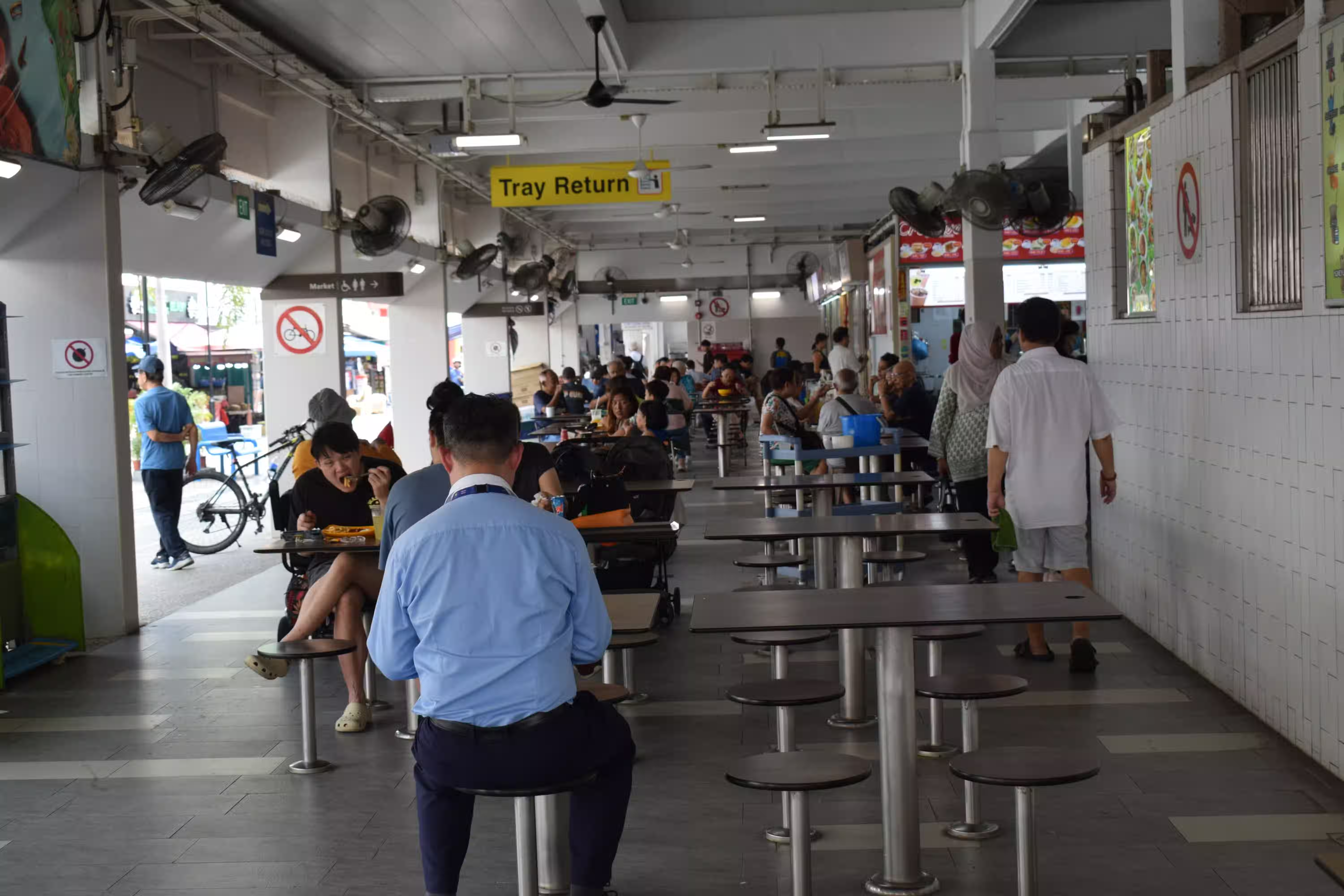 This is the hawker center we went to. Photo by Ravi Dwivedi. Released under the CC-BY-SA 4.0.
 Table littering at the hawker center was prohibited by law. Photo by Ravi Dwivedi. Released under the CC-BY-SA 4.0.
 Merlion from behind, giving a good view of Marina Bay Sands. Photo by Ravi Dwivedi. Released under the CC-BY-SA 4.0.

 If you're still using Vagrant (I am) and try to boot a box that uses UEFI (like



 DebConf26 is already in the air in Argentina. Organizing DebConf26 give us the
opportunity to talk about Debian in our country again. This is not the first
time that Debian has come here, previously Argentina has hosted DebConf 8 in Mar
del Plata.
In August, Nattie Mayer-Hutchings and Stefano Rivera from DebConf Committee
visited the venue where the next DebConf will take place. They came to Argentina
in order to see what it is like to travel from Buenos Aires to Santa Fe (the
venue of the next DebConf). In addition, they were able to observe the layout
and size of the classrooms and halls, as well as the infrastructure available at
the venue, which will be useful for the Video Team.
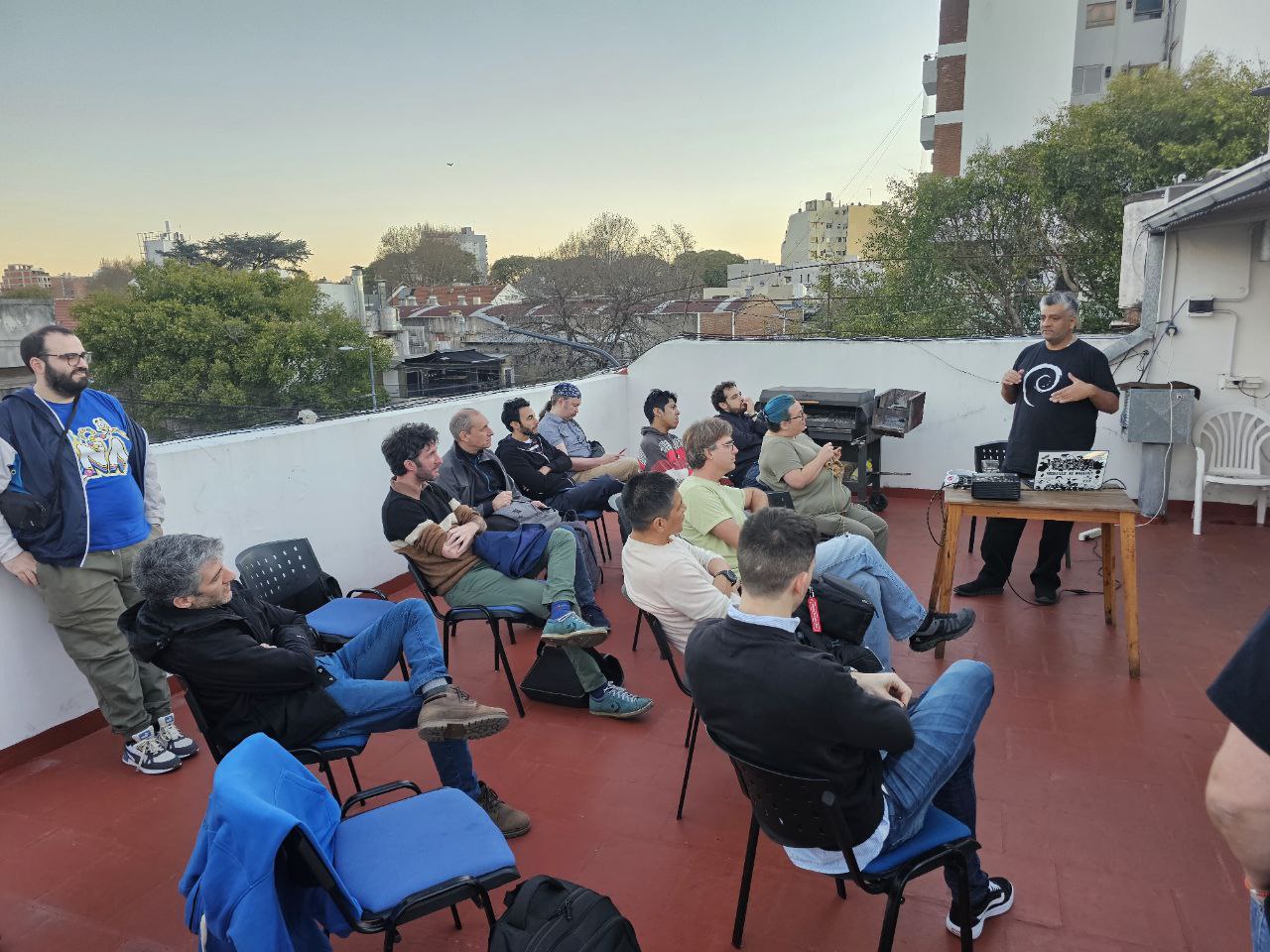
But before going to Santa Fe, on the August 27th, we organized a meetup in
Buenos Aires at
 On August 28th, we had the opportunity to get to know the Venue. We walked around
the city and, obviously, sampled some of the beers from Santa Fe.
On August 29th we met with representatives of the University and local government
who were all very supportive. We are very grateful to them for opening
their doors to DebConf.
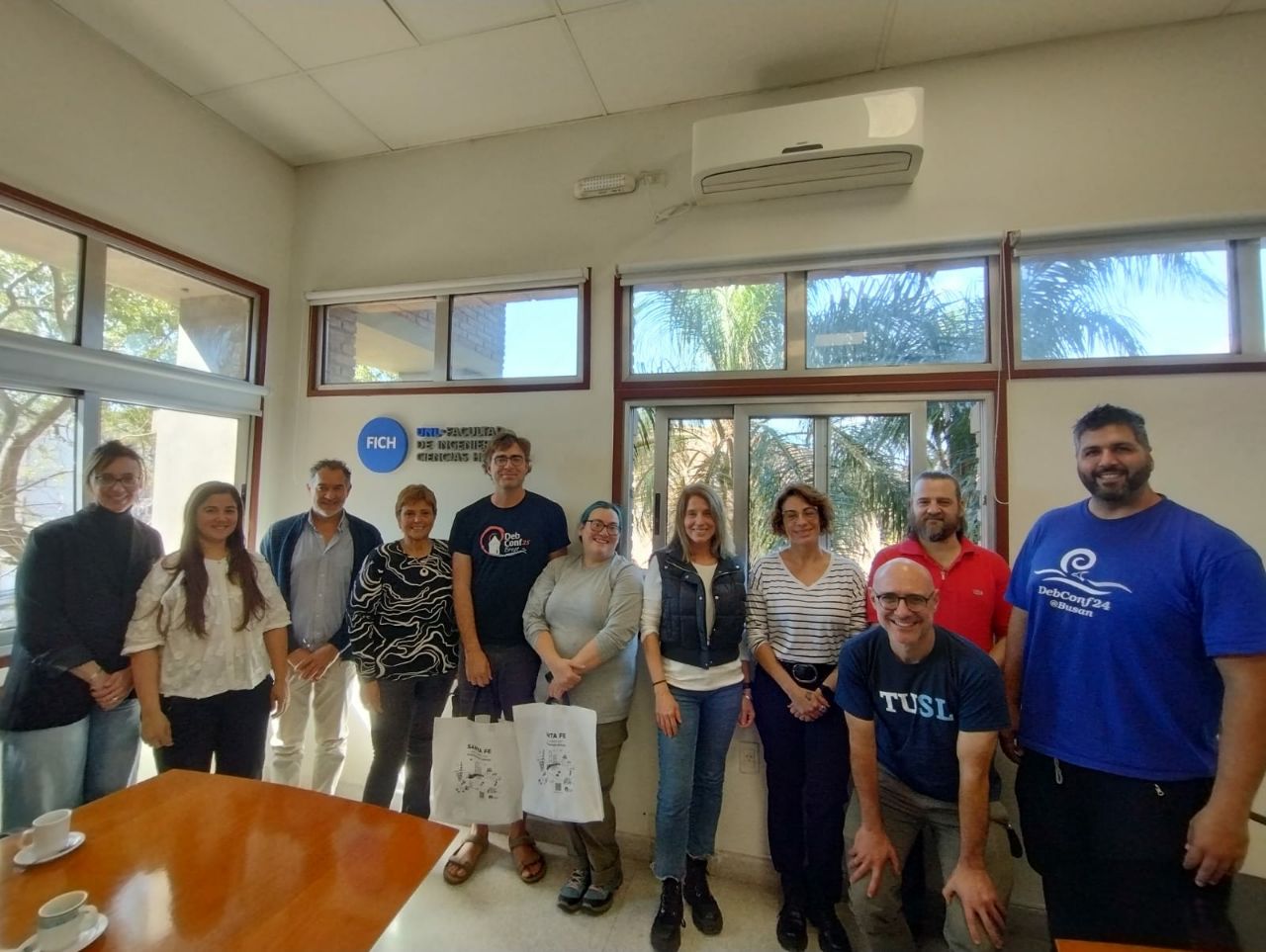 In the afternoon we met some of the local free software community at an event we
held in ATE
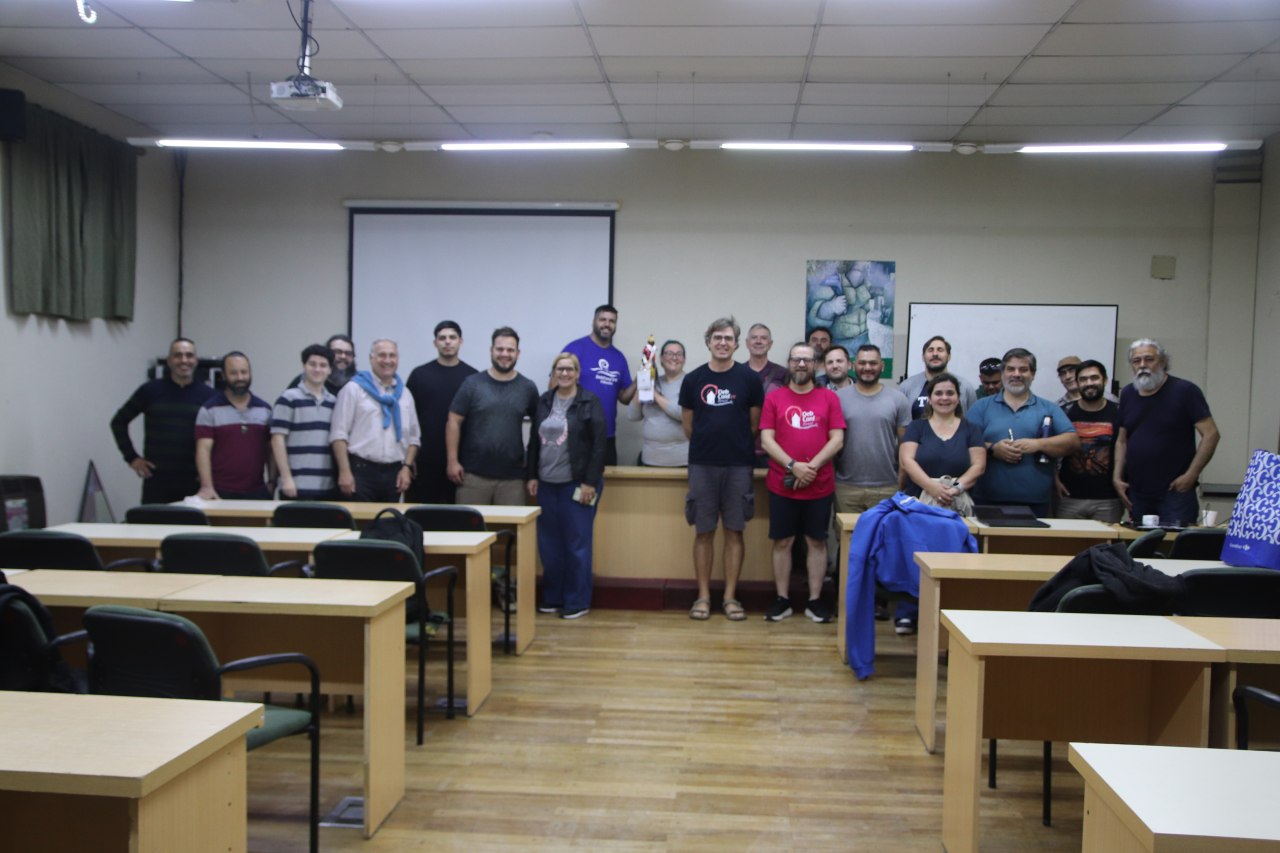 Thanks to Debian Argentina, and all the people who will make DebConf26
possible.
Thanks to Nattie Mayer-Hutchings and Stefano Rivera for reviewing an earlier
version of this article.
 tl;dr: