Search Results: "ed"

4 February 2026

Ben Hutchings: FOSS activity in January 2026

3 February 2026

Jonathan Dowland: FOSDEM 2026 talk recording available

FOSDEM 2026 was great! I hope to blog a proper postmortem in due course. But for now, The video of my talk is up, as are my slides with speaker notes and links.

Valhalla's Things: A Day Off

Posted on February 3, 2026
Tags: madeof:atoms, madeof:bits
Today I had a day off. Some of it went great. Some less so. I woke up, went out to pay our tribute to NotOurCat, and it was snowing! yay! And I had a day off, so if it had snowed enough that shovelling was needed, I had time to do it (it didn t, it started to rain soon afterwards, but still, YAY snow!). Then I had breakfast, with the fruit rye bread I had baked yesterday, and I treated myself to some of the strong Irish tea I have left, instead of the milder ones I want to finish before buying more of the Irish. And then, I bought myself a fancy new expensive fountain pen. One that costs 16 ! more than three times as much as my usual ones! I hope it will work as well, but I m quite confident it should. I ll find out when it arrives from Germany (together with a few ink samples that will result in a future blog post with some SCIENCE). I decided to try and use bank transfers instead of my visa debit card when buying from online shops that give the option to do so: it s a tiny bit more effort, but it means I m paying 0.25 to my bank1 rather than the seller having to pay some unknown amount to an US based payment provider. Unluckily, the fountain pen website offered a huge number of payment methods, but not bank transfers. sigh. And then, I could start working a bit on the connecting wires for the LED strips for our living room: I soldered two pieces, six wires each (it s one RGB strip, 4 pins, and a warm white one requiring two more), then did a bit of tests, including writing some micropython code to add a test mode that lights up each colour in sequence, and the morning was almost gone. For some reason this project, as simple as it is, is taking forever. But it is showing progress. There was a break, when the postman delivered a package of chemicals 2 for a future project or two. There will be blog posts! After lunch I spent some time finishing eyelets on the outfit I wanted to wear this evening, as I had not been able to finish it during fosdem. This one will result in two blog posts! Meanwhile, in the morning I didn t remember the name of the program I used to load software on micropython boards such as the one that will control the LED strips (that s thonny), and while searching for it in the documentation, I found that there is also a command line program I can use, mpremote, and that s a much better fit for my preferences! I mentioned it in an xmpp room full of nerds, and one of them mentioned that he could try it on his Inkplate, when he had time, and I was nerd-sniped into trying it on mine, which had been sitting unused showing the temperatures in our old house on the last day it spent there and needs to be updated for the sensors in the new house. And that lead to the writing of some notes on how to set it up from the command line (good), and to the opening on one upstream issue (bad), because I have an old model, and the board-specific library isn t working. at all. And that s when I realized that it was 17:00, I still had to cook the bread I had been working on since yesterday evening (ciabatta, one of my favourites, but it needs almost one hour in the oven), the outfit I wanted to wear in the evening was still not wearable, the table needed cleaning and some panicking was due. Thankfully, my mother was cooking dinner, so I didn t have to do that too. I turned the oven on, sewed the shoulder seams of the bodice while spraying water on the bread every 5 minutes, and then while it was cooking on its own, started to attach a closure to the skirt, decided that a safety pin was a perfectly reasonable closure for the first day an outfit is worn, took care of the table, took care of the bread, used some twine to close the bodice, because I still haven t worked out what to use for laces, realized my bodkin is still misplaced, used a long and sharp and big needle meant for sewing mattresses instead of a bodkin, managed not to stab myself, and less than half an hour late we could have dinner. There was bread, there was Swedish crispbread, there were spreads (tuna, and beans), and vegetables, and then there was the cake that caused my mother to panic when she added her last honey to the milk and it curdled (my SO and I tried it, it had no odd taste, we decided it could be used) and it was good, although I had to get a second slice just to be 100% sure of it. And now I m exhausted, and I ve only done half of the things I had planned to do, but I d still say I ve had quite a good day.

  1. Banca Etica, so one that avoids any investment in weapons and a number of other problematic things.
  2. not food grade, except for one, but kitchen-safe.

2 February 2026

Isoken Ibizugbe: How Open Source Contributions Define Your Career Path

Hi there, I m more than halfway through (8 weeks) my Outreachy internship with Debian, working on the openQA project to test Live Images.

My journey into tech began as a software engineering trainee, during which I built a foundation in Bash scripting, C programming, and Python. Later, I worked for a startup as a Product Manager. As is common in startups, I wore many hats, but I found myself drawn most to the Quality Assurance team. Testing user flows and edge-case scenarios sparked my curiosity, and that curiosity is exactly what led me to the Debian Live Image testing project.

From Manual to Automated

In my previous roles, I was accustomed to manual testing, simulating user actions one by one. While effective, I quickly realized it could be a bottleneck in fast-paced environments. This internship has been a masterclass in removing that bottleneck. I ve learned that automating repetitive actions makes life (and engineering) much easier. Life s too short for manual testing  .

One of my proudest technical wins so far has been creating Synergy across desktop environments. I proposed a solution to group common applications so we could use a single Perl script to handle tests for multiple desktop environments. With my mentor s guidance, we implemented this using symbolic links, which significantly reduced code redundancy.

Expanding My Technical Toolkit

Over the last 8 weeks, my technical toolkit has expanded significantly:

  • Perl & openQA: I ve learnt writing with Perl for automation within the openQA framework and I ve successfully automated apps_startstop tests for Cinnamon and LXQt
  • Technical Documentation: I authored a contributor guide. This required paying close attention to detail, ensuring that new contributors can have faster reviews and merged contributions
  • Ansible: I am learning that testing doesn t happen in a vacuum. To ensure new tests are truly automated, they must be integrated into the system s configuration.

Working on this project has shaped my perspective on where I fit in the tech ecosystem. In Open Source, my resume isn t just a PDF, it s a public trail of merged code, technical proposals, and collaborative discussions.

As my mentor recently pointed out, this is my proof-of-work. It s a transparent record of what I am capable of and where my interests lie.

Finally, I ve grown as a team player. Working with a global team across different time zones has taught me the importance of asynchronous communication and respecting everyone s time. Whether I am proposing a new logic or documenting a process, I am learning that open communication is just as vital as clean code.

Patryk Cisek: Bitwarden Secrets Manager With Ansible

If you d like to have a simple solution for managing all the secrets you re using in your Ansible Playbooks, keep reading on. Bitwarden s Secrets Manager provides an Ansible collection, which makes it very easy to use this particular Secrets Manager in Ansible Playbooks. I ll show you how to set up a free Secrets Manager account in Bitwarden. Then I ll walk you through the setup in an example Ansible Playbook.

YouTube Video version I ve also recorded a video version of this article. If you prefer a video, you can find it here.

Hellen Chemtai: Career Growth Through Open Source: A Personal Journey

Hello world  ! I am an intern at Outreachy working with the Debian OpenQA team on images testing. We get to know what career opportunities awaits us when we work on open source projects. In open source, we are constantly learning. The community has different sets of skills and a large network of people.

So, how did I start off in this internship

I entered the community with the these skills:

  • MERN (Mongo DB, Express JS , React JS and Node JS) for web development
  • Linux and Shell Scripting for some administrative purposes
  • Containerization using Google Cloud
  • Operating Systems
  • A learning passion for Open Source I contributed to some open source work in the past but it was in terms of documentation and bug hunting

I was a newbie at OpenQA but, I had a month to learn and contribute. Time is a critical resource but so is understanding what you are doing. I followed the installations instructions given but whenever I got errors, I had to research why I got the errors. I took time to understand errors I was solving then continued on with the tasks I wanted to do. I communicated my logic and understanding while working on the task and awaited reviews and feedback. Within a span of two months I had learned a lot by practicing and testing.

The skills I gained

As of today, I gained these technical skills from my work with Debian OpenQA team.

  • Perl the tests that we run are written in this language
  • Ansible configuration ansible configurations and settings for the machines the team runs
  • Git this is needed for code versioning and diving tasks into different branches
  • Linux shell scripting and working with the Debian Operating system
  • Virtual Machines and Operating Systems I constantly view how different operating systems are booted and run on virtual machines during testing
  • Testing I keep watch of needles and ensure the tests work as required
  • Debian I use a Debian system to run my Virtual Machines
  • OpenQA the tool that is used to automate testing of Images

With open source comes the need of constant communication. The community is diverse and the team is usually on different time zones. These are some of the soft / social skills I gained when working with the team

  • Communication this is essential especially in taking tasks with confidence, talking about issues encountered and stating the progress of the tasks
  • Interpersonal skills this is for general communication within the community
  • Flexibility we have to adapt to changes because we are a community of different people with different skills

With these skills and the willingness to learn , open source is a great area to focus on . Aside from your career you will extend your network. My interests are set on open source and Linux in general. Working with a wider network has really skilled me up and I will continue learning. Working with the Debian OpenQA team has been very great. The team is great at communication and I learn every day. The knowledge I gain from the team is helping me build a great career in open source.

Paul Tagliamonte: Paging all Radio Curious Hackers

After years of thinking about and learning about how radios work, I figured it was high-time to start to more aggressively share the things i ve been learning. I had a ton of fun at DistrictCon year 0, so it was a pretty natural place to pitch an RF-focused introductory talk. I was selected for Year 1, and able to give my first ever RF related talk about how to set off restaurant pagers (including one on stage!) by reading and writing IQ directly using a little bit of stdlib only Python. This talk is based around the work I ve written about previously (here, here and here), but the all-in-one form factor was something I was hoping would help encourage folks out there to take a look under the hood of some of the gear around them. (In case the iframe above isn t working, direct link to the YouTube video recording is here) I ve posted my slides from the talk at PARCH.pdf to hopefully give folks some time to flip through them directly. All in all, the session was great It was truely humbling to see so many folks interested in hearing me talk about radios. I had a bit of an own-goal in picking a 20 minute form-factor, so the talk is paced wrong (it feels like it went way too fast). Hopefully being able to see the slides and pause the video is helpful. We had a short ad-hoc session after where I brought two sets of pagers and my power switch; but unfortunately we didn t have anyone who was able to trigger any of the devices on their own (due to a mix of time between sessions and computer set-up). Hopefully it was enough to get folks interested in trying this on their own!

1 February 2026

Benjamin Mako Hill: What do people do when they edit Wikipedia through Tor?

Note: I have not published blog posts about my academic papers over the past few years. To ensure that my blog contains a more comprehensive record of my published papers and to surface these for folks who missed them, I will be periodically (re)publishing blog posts about some older published projects. This post is closely based on a previously published post by Kaylea Champion on the Community Data Science Blog.

Many individuals use Tor to reduce their visibility to widespread internet surveillance.
One popular approach to protecting our privacy online is to use the Tor network. Tor protects users from being identified by their IP address, which can be tied to a physical location. However, if you d like to contribute to Wikipedia using Tor, you ll run into a problem. Although most IP addresses can edit without an account, Tor users are blocked from editing.
Tor users attempting to contribute to Wikipedia are shown a screen that informs them that they are not allowed to edit Wikipedia.
Other research by my team has shown that Wikipedia s attempt to block Tor is imperfect and that some people have been able to edit despite the ban. As part of this work, we built a dataset of more than 11,000 contributions to Wikipedia via Tor and used quantitative analysis to show that contributions from Tor were of about the same quality as contributions from other new editors and other contributors without accounts. Of course, given the unusual circumstances Tor-based contributors face, we wondered whether a deeper look at the content of their edits might reveal more about their motives and the kinds of contributions they seek to make. Kaylea Champion (then a student, now faculty at UW Bothell) led a qualitative investigation to explore these questions. Given the challenges of studying anonymity seekers, we designed a novel forensic qualitative approach inspired by techniques common in computer security and criminal investigation. We applied this new technique to a sample of 500 editing sessions and categorized each session based on what the editor seemed to be intending to do. Most of the contributions we found fell into one of the two following categories: Although these were most of what we observed, we also found evidence of several types of contributor intent:
An exploratory mapping of our themes in terms of the value a type of contribution represents to the Wikipedia community and the importance of anonymity in facilitating it. Anonymity-protecting tools play a critical role in facilitating contributions on the right side of the figure, while edits on the left are more likely to occur even when anonymity is impossible. Contributions toward the top reflect valuable forms of participation in Wikipedia, while edits at the bottom reflect damage.
In all, these themes led us to reflect on how the risks individuals face when contributing to online communities sometimes diverge from the risks the communities face in accepting their work. Expressing minoritized perspectives, maintaining community standards even when you may be targeted by the rulebreaker, highlighting injustice, or acting as a whistleblower can be very risky for an individual, and may not be possible without privacy protections. Of course, in platforms seeking to support the public good, such knowledge and accountability may be crucial.

This work was published as a paper at CSCW: Kaylea Champion, Nora McDonald, Stephanie Bankes, Joseph Zhang, Rachel Greenstadt, Andrea Forte, and Benjamin Mako Hill. 2019. A Forensic Qualitative Analysis of Contributions to Wikipedia from Anonymity Seeking Users. Proceedings of the ACM on Human-Computer Interaction. 3, CSCW, Article 53 (November 2019), 26 pages. https://doi.org/10.1145/3359155

This project was conducted by Kaylea Champion, Nora McDonald, Stephanie Bankes, Joseph Zhang, Rachel Greenstadt, Andrea Forte, and Benjamin Mako Hill. This work was supported by the National Science Foundation (awards CNS-1703736 and CNS-1703049) and included the work of two undergraduates supported through an NSF REU supplement.

Russ Allbery: Review: Paladin's Faith

Review: Paladin's Faith, by T. Kingfisher
Series: The Saint of Steel #4
Publisher: Red Wombat Studio
Copyright: 2023
ISBN: 1-61450-614-0
Format: Kindle
Pages: 515
Paladin's Faith is the fourth book in T. Kingfisher's loosely connected series of fantasy novels about the berserker former paladins of the Saint of Steel. You could read this as a standalone, but there are numerous (spoilery) references to the previous books in the series. Marguerite, who was central to the plot of the first book in the series, Paladin's Grace, is a spy with a problem. An internal power struggle in the Red Sail, the organization that she's been working for, has left her a target. She has a plan for how to break their power sufficiently that they will hopefully leave her alone, but to pull it off she's going to need help. As the story opens, she is working to acquire that help in a very Marguerite sort of way: breaking into the office of Bishop Beartongue of the Temple of the White Rat. The Red Sail, the powerful merchant organization Marguerite worked for, makes their money in the salt trade. Marguerite has learned that someone invented a cheap and reproducible way to extract salt from sea water, thus making the salt trade irrelevant. The Red Sail wants to ensure that invention never sees the light of day, and has forced the artificer into hiding. Marguerite doesn't know where they are, but she knows where she can find out: the Court of Smoke, where the artificer has a patron.
Having grown up in Anuket City, Marguerite was familiar with many clockwork creations, not to mention all the ways that they could go horribly wrong. (Ninety-nine times out of a hundred, it was an explosion. The hundredth time, it ran amok and stabbed innocent bystanders, and the artificer would be left standing there saying, "But I had to put blades on it, or how would it rake the leaves?" while the gutters filled up with blood.)
All Marguerite needs to put her plan into motion is some bodyguards so that she's not constantly distracted and anxious about being assassinated. Readers of this series will be unsurprised to learn that the bodyguards she asks Beartongue for are paladins, including a large broody male one with serious self-esteem problems. This is, like the other books in this series, a slow-burn romance with infuriating communication problems and a male protagonist who would do well to seek out a sack of hammers as a mentor. However, it has two things going for it that most books in this series do not: a long and complex plot to which the romance takes a back seat, and Marguerite, who is not particularly interested in playing along with the expected romance developments. There are also two main paladins in this story, not just one, and the other is one of the two female paladins of the Saint of Steel and rather more entertaining than Shane. I generally like court intrigue stories, which is what fills most of this book. Marguerite is an experienced operative, so the reader gets some solid competence porn, and the paladins are fish out of water but are also unexpectedly dangerous, which adds both comedy and satisfying table-turning. I thoroughly enjoyed the maneuvering and the culture clashes. Marguerite is very good at what she does, knows it, and is entirely uninterested in other people's opinions about that, which short-circuits a lot of Shane's most annoying behavior and keeps the story from devolving into mopey angst like some of the books in this series have done. The end of this book takes the plot in a different direction that adds significantly to the world-building, but also has a (thankfully short) depths of despair segment that I endured rather than enjoyed. I am not really in the mood for bleak hopelessness in my fiction at the moment, even if the reader is fairly sure it will be temporary. But apart from that, I thoroughly enjoyed this book from beginning to end. When we finally meet the artificer, they are an absolute delight in that way that Kingfisher is so good at. The whole story is infused with the sense of determined and competent people refusing to stop trying to fix problems. As usual, the romance was not for me and I think the book would have been better without it, but it's less central to the plot and therefore annoyed me less than any of the books in this series so far. My one major complaint is the lack of gnoles, but we get some new and intriguing world-building to make up for it, along with a setup for a fifth book that I am now extremely curious about. By this point in the series, you probably know if you like the general formula. Compared to the previous book, Paladin's Hope, I thought Paladin's Faith was much stronger and more interesting, but it's clearly of the same type. If, like me, you like the plots but not the romance, the plot here is more substantial. You will have to decide if that makes up for a romance in the typical T. Kingfisher configuration. Personally, I enjoyed this quite a bit, except for the short bleak part, and I'm back to eagerly awaiting the next book in the series. Rating: 8 out of 10

31 January 2026

Michael Prokop: apt, SHA-1 keys + 2026-02-01

You might have seen Policy will reject signature within a year warnings in apt(-get) update runs like this:
root@424812bd4556:/# apt update
Get:1 http://foo.example.org/debian demo InRelease [4229 B]
Hit:2 http://deb.debian.org/debian trixie InRelease
Hit:3 http://deb.debian.org/debian trixie-updates InRelease
Hit:4 http://deb.debian.org/debian-security trixie-security InRelease
Get:5 http://foo.example.org/debian demo/main amd64 Packages [1097 B]
Fetched 5326 B in 0s (43.2 kB/s)
All packages are up to date.
Warning: http://foo.example.org/debian/dists/demo/InRelease: Policy will reject signature within a year, see --audit for details
root@424812bd4556:/# apt --audit update
Hit:1 http://foo.example.org/debian demo InRelease
Hit:2 http://deb.debian.org/debian trixie InRelease
Hit:3 http://deb.debian.org/debian trixie-updates InRelease
Hit:4 http://deb.debian.org/debian-security trixie-security InRelease
All packages are up to date.    
Warning:  http://foo.example.org/debian/dists/demo/InRelease: Policy will reject signature within a year, see --audit for details
Audit:  http://foo.example.org/debian/dists/demo/InRelease: Sub-process /usr/bin/sqv returned an error code (1), error message is:
   Signing key on 54321ABCD6789ABCD0123ABCD124567ABCD89123 is not bound:
              No binding signature at time 2024-06-19T10:33:47Z
     because: Policy rejected non-revocation signature (PositiveCertification) requiring second pre-image resistance
     because: SHA1 is not considered secure since 2026-02-01T00:00:00Z
Audit: The sources.list(5) entry for 'http://foo.example.org/debian' should be upgraded to deb822 .sources
Audit: Missing Signed-By in the sources.list(5) entry for 'http://foo.example.org/debian'
Audit: Consider migrating all sources.list(5) entries to the deb822 .sources format
Audit: The deb822 .sources format supports both embedded as well as external OpenPGP keys
Audit: See apt-secure(8) for best practices in configuring repository signing.
Audit: Some sources can be modernized. Run 'apt modernize-sources' to do so.
If you ignored this for the last year, I would like to tell you that 2026-02-01 is not that far away (hello from the past if you re reading this because you re already affected). Let s simulate the future:
root@424812bd4556:/# apt --update -y install faketime
[...]
root@424812bd4556:/# export LD_PRELOAD=/usr/lib/x86_64-linux-gnu/faketime/libfaketime.so.1 FAKETIME="2026-08-29 23:42:11" 
root@424812bd4556:/# date
Sat Aug 29 23:42:11 UTC 2026
root@424812bd4556:/# apt update
Get:1 http://foo.example.org/debian demo InRelease [4229 B]
Hit:2 http://deb.debian.org/debian trixie InRelease                                 
Err:1 http://foo.example.org/debian demo InRelease
  Sub-process /usr/bin/sqv returned an error code (1), error message is: Signing key on 54321ABCD6789ABCD0123ABCD124567ABCD89123 is not bound:            No binding signature at time 2024-06-19T10:33:47Z   because: Policy rejected non-revocation signature (PositiveCertification) requiring second pre-image resistance   because: SHA1 is not considered secure since 2026-02-01T00:00:00Z
[...]
Warning: An error occurred during the signature verification. The repository is not updated and the previous index files will be used. OpenPGP signature verification failed: http://foo.example.org/debian demo InRelease: Sub-process /usr/bin/sqv returned an error code (1), error message is: Signing key on 54321ABCD6789ABCD0123ABCD124567ABCD89123 is not bound:            No binding signature at time 2024-06-19T10:33:47Z   because: Policy rejected non-revocation signature (PositiveCertification) requiring second pre-image resistance   because: SHA1 is not considered secure since 2026-02-01T00:00:00Z
[...]
root@424812bd4556:/# echo $?
100
Now, the proper solution would have been to fix the signing key underneath (via e.g. sq cert lint &dash&dashfix &dash&dashcert-file $PRIVAT_KEY_FILE > $PRIVAT_KEY_FILE-fixed). If you don t have access to the according private key (e.g. when using an upstream repository that has been ignoring this issue), you re out of luck for a proper fix. But there s a workaround for the apt situation (related see apt commit 0989275c2f7afb7a5f7698a096664a1035118ebf):
root@424812bd4556:/# cat /usr/share/apt/default-sequoia.config
# Default APT Sequoia configuration. To overwrite, consider copying this
# to /etc/crypto-policies/back-ends/apt-sequoia.config and modify the
# desired values.
[asymmetric_algorithms]
dsa2048 = 2024-02-01
dsa3072 = 2024-02-01
dsa4096 = 2024-02-01
brainpoolp256 = 2028-02-01
brainpoolp384 = 2028-02-01
brainpoolp512 = 2028-02-01
rsa2048  = 2030-02-01
[hash_algorithms]
sha1.second_preimage_resistance = 2026-02-01    # Extend the expiry for legacy repositories
sha224 = 2026-02-01
[packets]
signature.v3 = 2026-02-01   # Extend the expiry
Adjust this according to your needs:
root@424812bd4556:/# mkdir -p /etc/crypto-policies/back-ends/
root@424812bd4556:/# cp /usr/share/apt/default-sequoia.config /etc/crypto-policies/back-ends/apt-sequoia.config
root@424812bd4556:/# $EDITOR /etc/crypto-policies/back-ends/apt-sequoia.config
root@424812bd4556:/# cat /etc/crypto-policies/back-ends/apt-sequoia.config
# APT Sequoia override configuration
[asymmetric_algorithms]
dsa2048 = 2024-02-01
dsa3072 = 2024-02-01
dsa4096 = 2024-02-01
brainpoolp256 = 2028-02-01
brainpoolp384 = 2028-02-01
brainpoolp512 = 2028-02-01
rsa2048  = 2030-02-01
[hash_algorithms]
sha1.second_preimage_resistance = 2026-09-01    # Extend the expiry for legacy repositories
sha224 = 2026-09-01
[packets]
signature.v3 = 2026-02-01   # Extend the expiry
Then we re back into the original situation, being a warning instead of an error:
root@424812bd4556:/# apt update
Hit:1 http://deb.debian.org/debian trixie InRelease
Get:2 http://foo.example.org/debian demo InRelease [4229 B]
Hit:3 http://deb.debian.org/debian trixie-updates InRelease
Hit:4 http://deb.debian.org/debian-security trixie-security InRelease
Warning: http://foo.example.org/debian/dists/demo/InRelease: Policy will reject signature within a year, see --audit for details
[..]
Please note that this is a workaround, and not a proper solution.

Benjamin Mako Hill: Dialogue

Me: Do you want your coffee in a Japanese or Western style tea cup? M: Yunomi. Me: Apparently not as well as you think I do!

Russ Allbery: Review: Dragon Pearl

Review: Dragon Pearl, by Yoon Ha Lee
Series: Thousand Worlds #1
Publisher: Rick Riordan Presents
Copyright: 2019
ISBN: 1-368-01519-0
Format: Kindle
Pages: 315
Dragon Pearl is a middle-grade space fantasy based on Korean mythology and the first book of a series. Min is a fourteen-year-old girl living on the barely-terraformed world of Jinju with her extended family. Her older brother Jun passed the entrance exams for the Academy and left to join the Thousand Worlds Space Forces, and Min is counting the years until she can do the same. Those plans are thrown into turmoil when an official investigator appears at their door claiming that Jun deserted to search for the Dragon Pearl. A series of impulsive fourteen-year-old decisions lead to Min heading for a spaceport alone, determined to find her brother and prove his innocence. This would be a rather improbable quest for a young girl, but Min is a gumiho, one of the supernaturals who live in the Thousand Worlds alongside non-magical humans. Unlike the more respectable dragons, tigers, goblins, and shamans, gumiho are viewed with suspicion and distrust because their powers are useful for deception. They are natural shapeshifters who can copy the shapes of others, and their Charm ability lets them influence people's thoughts and create temporary illusions of objects such as ID cards. It will take all of Min's powers, and some rather lucky coincidences, to infiltrate the Space Forces and determine what happened to her brother. It's common for reviews of this book to open with a caution that this is a middle-grade adventure novel and you should not expect a story like Ninefox Gambit. I will be boring and repeat that caution. Dragon Pearl has a single first-person viewpoint and a very linear and straightforward plot. Adult readers are unlikely to be surprised by plot twists; the fun is the world-building and seeing how Min manages to work around plot obstacles. The world-building is enjoyable but not very rigorous. Min uses and abuses Charm with the creative intensity of a Dungeons & Dragons min-maxer. Each individual event makes sense given the implication that Min is unusually powerful, but I'm dubious about the surrounding society and lack of protections against Charm given what Min is able to do. Min does say that gumiho are rare and many people think they're extinct, which is a bit of a fig leaf, but you'll need to bring your urban fantasy suspension of disbelief skills to this one. I did like that the world-building conceit went more than skin deep and influenced every part of the world. There are ghosts who are critical to the plot. Terraforming is done through magic, hence the quest for the Dragon Pearl and the miserable state of Min's home planet due to its loss. Medical treatment involves the body's meridians, as does engineering: The starships have meridians similar to those of humans, and engineers partly merge with those meridians to adjust them. This is not the sort of book that tries to build rigorous scientific theories or explain them to the reader, and I'm not sure everything would hang together if you poked at it too hard, but Min isn't interested in doing that poking and the story doesn't try to justify itself. It's mostly a vibe, but it's a vibe that I enjoyed and that is rather different than other space fantasy I've read. The characters were okay but never quite clicked for me, in part because proper character exploration would have required Min take a detour from her quest to find her brother and that was not going to happen. The reader gets occasional glimpses of a military SF cadet story and a friendship on false premises story, but neither have time to breathe because Min drops any entanglement that gets in the way of her quest. She's almost amoral in a way that I found believable but not quite aligned with my reading mood. I also felt a bit wrong-footed by how her friendships developed; saying too much more would be a spoiler, but I was expecting more human connection than I got. I think my primary disappointment with this book was something I knew going in, not in any way its fault, and part of the reason why I'd put off reading it: This is pitched at young teenagers and didn't have quite enough plot and characterization complexity to satisfy me. It's a linear, somewhat episodic adventure story with some neat world-building, and it therefore glides over the spots where an adult novel would have added political and factional complexity. That is exactly as advertised, so it's up to you whether that's the book you're in the mood for. One warning: The text of this book opens with an introduction by Rick Riordan that is just fluff marketing and that spoils the first few chapters of the book. It is unmarked as such at the beginning and tricked me into thinking it was the start of the book proper, and then deeply annoyed me. If you do read this book, I recommend skipping the utterly pointless introduction and going straight to chapter one. Followed by Tiger Honor. Rating: 6 out of 10

30 January 2026

Joey Hess: the local weather

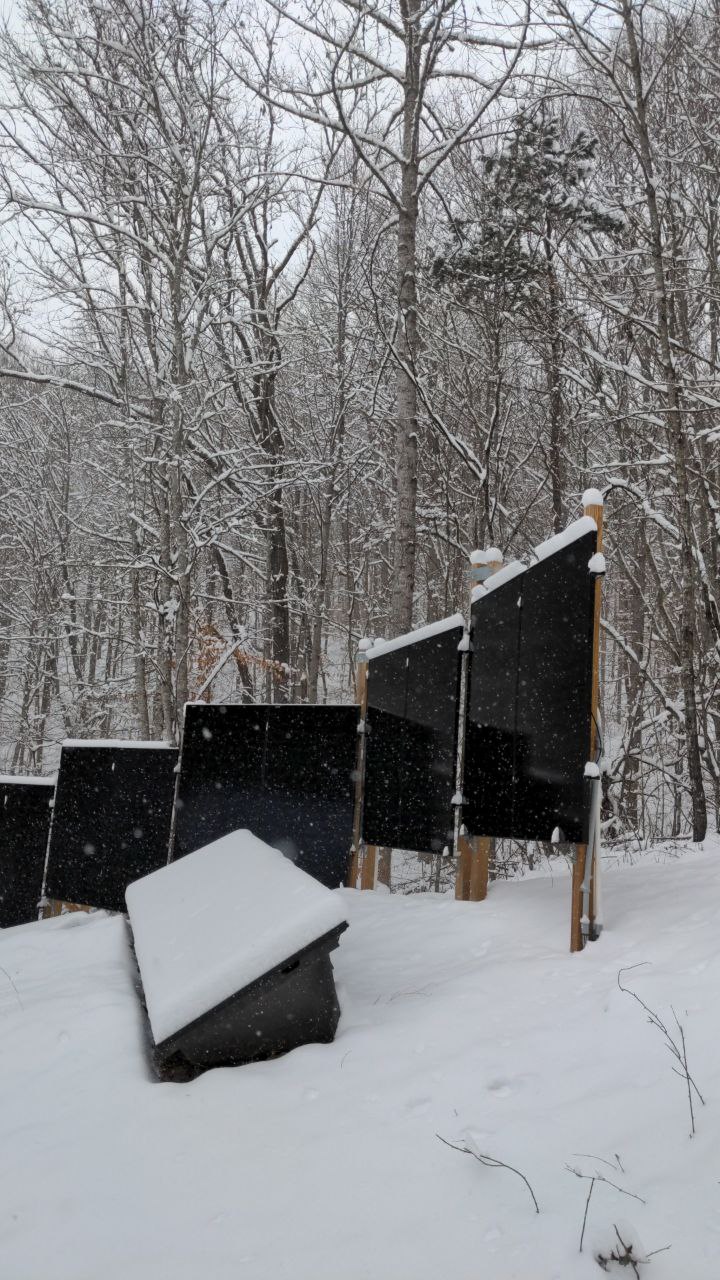
Snow coming. I'm tuned into the local 24 hour slop weather stream. AI generated, narrated, up to the minute radar and forecast graphics. People popping up on the live weather map with questions "snow soon?" (They pay for the privilege.) LLM generating reply that riffs on their name. Tuned to keep the urgency up, something is always happening somewhere, scanners are pulling the police reports, live webcam description models add verisimilitude to the description of the morning commute. Weather is happening. In the subtext, climate change is happening. Weather is a growth industry. The guy up in Kentucky coal country who put this thing together is building an empire. He started as just another local news greenscreener. Dropped out and went twitch weather stream. Hyping up tornado days and dicy snow forecasts. Nowcasting, hyper individualized, interacting with chat. Now he's automated it all. On big days when he's getting real views, the bot breaks into his live streams, gives him a break. Only a few thousand watching this morning yet. Perfect 2026 grade slop. Details never quite right, but close enough to keep on in the background all day. Nobody expects a perfect forecast after all, and it's fed from the National Weather Center discussion too. We still fund those guys? Why bother when a bot can do it? He knows why he's big in these states, these rural areas. Understands the target audience. Airbrushed AI aesthetics are ok with them, receive no pushback. Flying more under the radar coastally, but weather is big there and getting bigger. The local weather will come for us all. 6 inches of snow covering some ground mount solar panels with a vertical solar panel fence behind them free of snow except cute little caps (Not fiction FYI.)
Utkarsh Gupta: FOSS Activites in January 2026

Here s my monthly but brief update about the activities I ve done in the FOSS world.

Debian
Whilst I didn t get a chance to do much, here are still a few things that I worked on:
  • A few discussions with the new DFSG team, et al.
  • Assited a few folks in getting their patches submitted via Salsa.
  • Reviewing pyenv MR for Ujjwal.
  • Mentoring for newcomers.
  • Moderation of -project mailing list.

Ubuntu
I joined Canonical to work on Ubuntu full-time back in February 2021. Whilst I can t give a full, detailed list of things I did, here s a quick TL;DR of what I did:
  • Successfully released Resolute Snapshot 3!
    • This one was also done without the ISO tracker and cdimage access.
    • We also worked very hard to build and promote all the image in due time.
  • Worked further on the whole artifact signing story for cdimage.
  • Assisted a bunch of folks with my Archive Admin and Release team hats to:
    • Helped in EOL ing Plucky.
    • Starting to help with the upcoming 24.04.4 release.
  • With that, the mid-cycle sprints are around the corner, so quite busy preparing for that.

Debian (E)LTS
This month I have worked 59 hours on Debian Long Term Support (LTS) and on its sister Extended LTS project and did the following things:

Released Security Updates

Work in Progress
  • knot-resolver: Affected by CVE-2023-26249, CVE-2023-46317, and CVE-2022-40188, leading to Denial of Service.
  • ruby-rack: There were multiple vulnerabilities reported in Rack, leading to DoS (memory exhaustion) and proxy bypass.
    • [ELTS]: After completing the work for LTS myself, Bastien picked it up for ELTS and reached out about an upstream regression and we ve been doing some exchanges. Bastien has done most of the work backporting the patches but needs a review and help backporting CVE-2025-61771. Haven t made much progress since last month and will carry it over.
  • node-lodash: Affected by CVE-2025-13465, lrototype pollution in baseUnset function.
    • [stable]: The patch for trixie and bookworm are ready but haven t been uploaded yet as I d like for the unstable upload to settle a bit before I proceed with stable uploads.
    • [LTS]: The bullseye upload will follow once the stable uploads are in and ACK d by the SRMs.
  • xrdp: Affected by CVE-2025-68670, leading to a stack-based buffer overflow.

Other Activities
  • [ELTS] Helped Bastien Roucaries debug a tomcat9 regression for buster.
    • I spent quite a lot of time trying to help Bastien (with Markus and Santiago involved via mail thread) by reproducing the regression that the user(s) reported.
    • I also helped suggest a path forward by vendoring everything, which I was then requested to also help perform.
    • Whilst doing that, I noticed circular dependency hellhole and suggested another path forward by backporting bnd and its dependencies as separate NEW packages.
    • Bastien liked the idea and is going to work on that but preferred to revert the update to remedy the immediate regressions reported. I further helped him in reviewing his update. This conversation happened on #debian-elts IRC channel.
  • [LTS] Assisted Ben Hutchings with his question about the next possible steps with a plausible libvirt regression caused by the Linux kernel update. This was a thread on debian-lts@ mailing list.
  • [LTS] Attended the monthly LTS meeting on IRC. Summary here.
  • [E/LTS] Monitored discussions on mailing lists, IRC, and all the documentation updates.

Until next time.
:wq for today.

29 January 2026

C.J. Collier: Part 3: Building the Keystone Dataproc Custom Images for Secure Boot & GPUs

Part
3: Building the Keystone Dataproc Custom Images for Secure Boot &
GPUs In Part 1, we established a secure, proxy-only network. In Part 2, we
explored the enhanced install_gpu_driver.sh initialization
action. Now, in Part 3, we ll focus on using the LLC-Technologies-Collier/custom-images
repository (branch proxy-exercise-2025-11) to build the
actual custom Dataproc images embedded with NVIDIA drivers signed for
Secure Boot, all within our proxied environment.

Why Custom Images? To run NVIDIA GPUs on Shielded VMs with Secure Boot enabled, the
NVIDIA kernel modules must be signed with a key trusted by the VM s EFI
firmware. Since standard Dataproc images don t include these
custom-signed modules, we need to build our own. This process also
allows us to pre-install a full stack of GPU-accelerated software.

The
custom-images Toolkit
(examples/secure-boot) The examples/secure-boot directory within the
custom-images repository contains the necessary scripts and
configurations, refined through significant development to handle proxy
and Secure Boot challenges. Key Components & Development Insights:
  • env.json: The central configuration
    file (as used in Part 1) for project, network, proxy, and bucket
    details. This became the single source of truth to avoid configuration
    drift.
  • create-key-pair.sh: Manages the Secure
    Boot signing keys (PK, KEK, DB) in Google Secret Manager, essential for
    the module signing.
  • build-and-run-podman.sh: Orchestrates
    the image build process in an isolated Podman container. This was
    introduced to standardize the build environment and encapsulate
    dependencies, simplifying what the user needs to install locally.
  • pre-init.sh: Sets up the build
    environment within the container and calls
    generate_custom_image.py. It crucially passes metadata
    derived from env.json (like proxy settings and Secure Boot
    key secret names) to the temporary build VM.
  • generate_custom_image.py: The core
    Python script that automates GCE VM creation, runs the customization
    script, and creates the final GCE image.
  • gce-proxy-setup.sh: This script from
    startup_script/ is vital. It s injected into the temporary
    build VM and runs first to configure the OS, package
    managers (apt, dnf), tools (curl, wget, GPG), Conda, and Java to use the
    proxy settings passed in the metadata. This ensures the entire build
    process is proxy-aware.
  • install_gpu_driver.sh: Used as the
    --customization-script within the build VM. As detailed in
    Part 2, this script handles the driver/CUDA/ML stack installation and
    signing, now able to function correctly due to the proxy setup by
    gce-proxy-setup.sh.
Layered Image Strategy: The pre-init.sh script employs a layered approach:
  1. secure-boot Image: Base image with
    Secure Boot certificates injected.
  2. tf Image: Based on
    secure-boot, this image runs the full
    install_gpu_driver.sh within the proxy-configured build VM
    to install NVIDIA drivers, CUDA, ML libraries (TensorFlow, PyTorch,
    RAPIDS), and sign the modules. This is the primary target image for our
    use case.
(Note: secure-proxy and proxy-tf layers
were experiments, but the -tf image combined with runtime
metadata emerged as the most effective solution for 2.2-debian12). Build Steps:
  1. Clone Repos & Configure
    env.json: Ensure you have the
    custom-images and cloud-dataproc repos and a
    complete env.json as described in Part 1.
  2. Run the Build:
    bash # Example: Build a 2.2-debian12 based image set # Run from the custom-images repository root bash examples/secure-boot/build-and-run-podman.sh 2.2-debian12
    This command will build the layered images, leveraging the proxy
    settings from env.json via the metadata injected into the
    build VM. Note the final image name produced (e.g.,
    dataproc-2-2-deb12-YYYYMMDD-HHMMSS-tf).

Conclusion of Part 3 Through an iterative process, we ve developed a robust workflow
within the custom-images repository to build Secure
Boot-compatible GPU images in a proxy-only environment. The key was
isolating the build in Podman, ensuring the build VM is fully
proxy-aware using gce-proxy-setup.sh, and leveraging the
enhanced install_gpu_driver.sh from Part 2. In Part 4, we ll bring it all together, deploying a Dataproc cluster
using this custom -tf image within the secure network, and
verifying the end-to-end functionality.

Bits from Debian: New Debian Developers and Maintainers (November and December 2025)

The following contributors got their Debian Developer accounts in the last two months: The following contributors were added as Debian Maintainers in the last two months: Congratulations!

28 January 2026

C.J. Collier: Part 2: Taming the Beast Deep Dive into the Proxy-Aware GPU Initialization Action

Part
2: Taming the Beast Deep Dive into the Proxy-Aware GPU Initialization
Action In Part 1 of this series, we laid the network foundation for running
secure Dataproc clusters. Now, let s zoom in on the core component
responsible for installing and configuring NVIDIA GPU drivers and the
associated ML stack in this restricted environment: the
install_gpu_driver.sh script from the LLC-Technologies-Collier/initialization-actions
repository (branch gpu-202601). This isn t just any installation script; it has been significantly
enhanced to handle the nuances of Secure Boot and to operate seamlessly
behind an HTTP/S proxy.

The
Challenge: Installing GPU Drivers Without Direct Internet Our goal was to create a Dataproc custom image with NVIDIA GPU
drivers, sign the kernel modules for Secure Boot, and ensure the entire
process works seamlessly when the build VM and the eventual cluster
nodes have no direct internet access, relying solely on an HTTP/S proxy.
This involved:
  1. Proxy-Aware Build: Ensuring all build steps within
    the custom image creation process (package downloads, driver downloads,
    GPG keys, etc.) correctly use the customer s proxy.
  2. Secure Boot Signing: Integrating kernel module
    signing using keys managed in GCP Secret Manager, especially when
    drivers are built from source.
  3. Conda Environment: Reliably and speedily installing
    a complex Conda environment with PyTorch, TensorFlow, Rapids, and other
    GPU-accelerated libraries through the proxy.
  4. Dataproc Integration: Making sure the custom image
    works correctly with Dataproc s own startup, agent processes, and
    cluster-specific configurations like YARN.

The
Development Journey: Key Enhancements in
install_gpu_driver.sh To address these challenges, the script incorporates several key
features:
  • Robust Proxy Handling (set_proxy
    function):
    • Challenge: Initial script versions had spotty proxy
      support. Many tools like apt, curl,
      gpg, and even gsutil failed in proxy-only
      environments.
    • Enhancements: The set_proxy function
      (also used in gce-proxy-setup.sh) was completely overhauled
      to parse various proxy metadata (http-proxy,
      https-proxy, proxy-uri,
      no-proxy). Critically, environment variables
      (HTTP_PROXY, HTTPS_PROXY,
      NO_PROXY) are now set before any network
      operations. NO_PROXY is carefully set to include
      .google.com and .googleapis.com to allow
      direct access to Google APIs via Private Google Access. System-wide
      trust stores (OS, Java, Conda) are updated with the proxy s CA
      certificate if provided via http-proxy-pem-uri.
      gcloud, apt, dnf, and
      dirmngr are also configured to use the proxy.
  • Reliable GPG Key Fetching (import_gpg_keys
    function):
    • Challenge: Importing GPG keys for repositories
      often failed as keyservers use non-HTTP ports (e.g., 11371) blocked by
      firewalls, and gpg --recv-keys is not proxy-friendly.
    • Solution: A new import_gpg_keys
      function now fetches keys over HTTPS using curl, which
      respects the environment s proxy settings. This replaced all direct
      gpg --recv-keys calls.
  • GCS Caching is King:
    • Challenge: Repeatedly downloading large files
      (drivers, CUDA, source code) through a proxy is slow and
      inefficient.
    • Solution: Implemented extensive GCS caching for
      NVIDIA drivers, CUDA runfiles, NVIDIA Open Kernel Module source
      tarballs, compiled kernel modules, and even packed Conda environments.
      Scripts now check a GCS bucket (dataproc-temp-bucket)
      before hitting the internet.
    • Impact: Dramatically speeds up subsequent runs and
      init action execution times on cluster nodes after the cache is
      warmed.
  • Conda Environment Stability & Speed:
    • Challenge: Large Conda environments are prone to
      solver conflicts and slow installation times.
    • Solution: Integrated Mamba for faster package
      solving. Refined package lists for better compatibility. Added logic to
      force-clean and rebuild the Conda environment cache on GCS and locally
      if inconsistencies are detected (e.g., driver installed but Conda env
      not fully set up).
  • Secure Boot & Kernel Module Signing:
    • Challenge: Custom-compiled kernel modules must be
      signed to load when Secure Boot is enabled.
    • Solution: The script integrates with GCP Secret
      Manager to fetch signing keys. The build_driver_from_github
      function now includes robust steps to compile, sign (using
      sign-file), install, and verify the signed modules.
  • Custom Image Workflow & Deferred Configuration:
    • Challenge: Cluster-specific settings (like YARN GPU
      configuration) should not be baked into the image.
    • Solution: The install_gpu_driver.sh
      script detects when it s run during image creation
      (--metadata invocation-type=custom-images). In this mode,
      it defers cluster-specific setups to a systemd service
      (dataproc-gpu-config.service) that runs on the first boot
      of a cluster instance. This ensures that YARN and Spark configurations
      are applied in the context of the running cluster, not at image build
      time.

Conclusion of Part 2 The install_gpu_driver.sh initialization action is more
than just an installer; it s a carefully crafted tool designed to handle
the complexities of secure, proxied environments. Its robust proxy
support, comprehensive GCS caching, refined Conda management, Secure
Boot signing capabilities, and awareness of the custom image build
lifecycle make it a critical enabler. In Part 3, we ll explore how the LLC-Technologies-Collier/custom-images
repository (branch proxy-exercise-2025-11) uses this
initialization action to build the complete, ready-to-deploy Secure Boot
GPU custom images.

C.J. Collier: Dataproc GPUs, Secure Boot, & Proxies

Part
1: Building a Secure Network Foundation for Dataproc with GPUs &
SWP Welcome to the first post in our series on running GPU-accelerated
Dataproc workloads in secure, enterprise-grade environments. Many
organizations need to operate within VPCs that have no direct internet
egress, instead routing all traffic through a Secure Web Proxy (SWP).
Additionally, security mandates often require the use of Shielded VMs
with Secure Boot enabled. This series will show you how to meet these
requirements for your Dataproc GPU clusters. In this post, we ll focus on laying the network foundation using
tools from the LLC-Technologies-Collier/cloud-dataproc
repository (branch proxy-sync-2026-01).

The Challenge: Network
Isolation & Control Before we can even think about custom images or GPU drivers, we need
a network environment that:
  1. Prevents direct internet access from Dataproc cluster nodes.
  2. Forces all egress traffic through a manageable and auditable
    SWP.
  3. Provides the necessary connectivity for Dataproc to function and for
    us to build images later.
  4. Supports Secure Boot for all VMs.

The Toolkit:
LLC-Technologies-Collier/cloud-dataproc To make setting up and tearing down these complex network
environments repeatable and consistent, we ve developed a set of bash
scripts within the gcloud directory of the
cloud-dataproc repository. These scripts handle the
creation of VPCs, subnets, firewall rules, service accounts, and the
Secure Web Proxy itself. Key Script:
gcloud/bin/create-dpgce-private This script is the cornerstone for creating the private, proxied
environment. It automates:
  • VPC and Subnet creation (for the cluster, SWP, and management).
  • Setup of Certificate Authority Service and Certificate Manager for
    SWP TLS interception.
  • Deployment of the SWP Gateway instance.
  • Configuration of a Gateway Security Policy to control egress.
  • Creation of necessary firewall rules.
  • Result: Cluster nodes in this VPC have NO default
    internet route and MUST use the SWP.
Configuration via env.json We use a single env.json file to drive the
configuration. This file will also be used by the
custom-images scripts in Part 3. This env.json
should reside in your custom-images repository clone, and
you ll symlink it into the cloud-dataproc/gcloud
directory. Running the Setup:
# Assuming you have cloud-dataproc and custom-images cloned side-by-side
# And your env.json is in the custom-images root
cd cloud-dataproc/gcloud
# Symlink to the env.json in custom-images
ln -sf ../../custom-images/env.json env.json
# Run the creation script, but don't create a cluster yet
bash bin/create-dpgce-private --no-create-cluster
cd ../../custom-images

Node
Configuration: The Metadata Startup Script for Runtime For the Dataproc cluster nodes to function correctly in this proxied
environment, they need to be configured to use the SWP on boot. We
achieve this using a GCE metadata startup script. The script startup_script/gce-proxy-setup.sh (from the
custom-images repository) is designed to be run on each
cluster node at boot. It reads metadata like http-proxy and
http-proxy-pem-uri (which our cluster creation scripts in
Part 4 will pass) to configure the OS environment, package managers, and
other tools to use the SWP. Upload this script to your GCS bucket:
# Run from the custom-images repository root
gsutil cp startup_script/gce-proxy-setup.sh gs://$(jq -r .BUCKET env.json)/custom-image-deps/
This script is essential for the runtime behavior of the
cluster nodes.

Conclusion of Part 1 With the cloud-dataproc scripts, we ve laid the
groundwork by provisioning a secure VPC with controlled egress through
an SWP. We ve also prepared the essential node-level proxy configuration
script (gce-proxy-setup.sh) in GCS, ready to be used by our
clusters. Stay tuned for Part 2, where we ll dive into the
install_gpu_driver.sh initialization action from the
LLC-Technologies-Collier/initialization-actions repository
(branch gpu-202601) and how it s been adapted to install
all GPU-related software through the proxy during the image build
process.

Sven Hoexter: Decrypt TLS Connection with wireshark and curl

With TLS 1.3 more parts of the handshake got encrypted (e.g. the certificate), but sometimes it's still helpful to look at the complete handshake. curl uses the somewhat standardized env variable for the key log file called SSLKEYLOGFILE, which is also supported by Firefox and Chrome. wireshark hides the setting in the UI behind Edit -> Preferences -> Protocols -> TLS -> (Pre)-Master-Secret log filename which is uncomfortable to reach. Looking up the config setting in the Advanced settings one can learn that it's called internally tls.keylog_file. Thus we can set it up with:
sudo wireshark -o "tls.keylog_file:/home/sven/curl.keylog"
SSLKEYLOGFILE=/home/sven/curl.keylog curl -v https://www.cloudflare.com/cdn-cgi/trace
Depending on the setup root might be unable to access the wayland session, that can be worked around by letting sudo keep the relevant env variables:
$ cat /etc/sudoers.d/wayland 
Defaults   env_keep += "XDG_RUNTIME_DIR"
Defaults   env_keep += "WAYLAND_DISPLAY"
Or setup wireshark properly and use the wireshark group to be able to dump traffic. Might require a sudo dpkg-reconfigure wireshark-common. Regarding curl: In some situations it could be desirable to force a specific older TLS version for testing, which requires a minimal and maximal version. E.g. to force TLS 1.2 only:
curl -v --tlsv1.2 --tls-max 1.2 https://www.cloudflare.com/cdn-cgi/trace

27 January 2026

Sergio Cipriano: Query Debian changelogs by keyword with the FTP-Master API

Query Debian changelogs by keyword with the FTP-Master API In my post about tracking my Debian uploads, I used the ProjectB database directly to retrieve how many uploads I had so far. I was pleasantly surprised to receive a message from Joerg Jaspert, who introduced me to the Debian Archive Kit web API (dak), also known as the FTP-Master API. Joerg gave the idea of integrating the query I had written into the dak API, so that anyone could obtain the same results without needing to use the mirror host, with a simple http request. I liked the idea and I decided to work on it. The endpoint is already available and you can try by yourself by doing something like this:
$ curl https://api.ftp-master.debian.org/changelogs?search_term=almeida+cipriano
WARNING: Check v2: https://people.debian.org/~gladk/blog/posts/202601_ftp-master-changelog-v2/
The query provides a way to search through the changelogs of all Debian packages currently published. The source code is available at Salsa. I'm already using it to track my uploads, I made this page that updates every day. If you want to setup something similar, you can use my script and just change the search_term to the name you use in your changelog entries. I m running it using a systemd timer. Here s what I ve got:
# .config/systemd/user/track-uploads.service
[Unit]
Description=Track my uploads using the dak API
StopWhenUnneeded=yes
[Service]
Type=oneshot
WorkingDirectory=/home/cipriano/public_html/uploads
ExecStart=/usr/bin/python3 generate.py
# .config/systemd/user/track-uploads.timer
[Unit]
Description=Run track-uploads script daily
[Timer]
OnCalendar=daily
Persistent=true
[Install]
WantedBy=timers.target
After placing every file in the right place you just need to run:
$ systemctl --user daemon-reload
$ systemctl --user enable --now track-uploads.timer
$ systemctl --user start track-uploads.service # generates the html now
If you want to get a bit fancier, I m also using an Ansible playbook for that. The source code is available on my GitLab repository. If you want to learn more about dak, there is a web docs available. I d like to thank Joerg once again for suggesting the idea and for reviewing and merging the change so quickly.

Next.

Previous.