Search Results: "daniel"

14 December 2014

Gregor Herrmann: RC bugs 2014/49-50

it's getting harder to find "nice" RC bugs, due to the efforts of various bug hunters & the awesome auto-removal-from-testing feature. anyway, here's the list of bugs I worked on in the last 2 weeks:

12 December 2014

Daniel Kahn Gillmor: a10n for l10n

The abbreviated title above means "Appreciation for Localization" :) I wanted to say a word of thanks for the awesome work done by debian localization teams. I speak English, and my other language skills are weak. I'm lucky: most software I use is written by default in a language that I can already understand. The debian localization teams do great work in making sure that packages in debian gets translated into many other languages, so that many more people around the world can take advantage of free software. I was reminded of this work recently (again) with the great patches submitted to GnuPG and related packages. The changes were made by many different people, and coordinated with the debian GnuPG packaging team by David Pr vot. This work doesn't just help debian and its users. These localizations make their way back upstream to the original projects, which in turn are available to many other people. If you use debian, and you speak a language other than english, and you want to give back to the community, please consider joining one of the localization teams. They are a great way to help out our project's top priorities: our users and free software. Thank you to all the localizers! (this post was inspired by gregoa's debian advent calendar. i won't be posting public words of thanks as frequently or as diligently as he does, any more than i'll be fixing the number of RC bugs that he fixes. This are just two of the ways that gregoa consistently leads the community by example. He's an inspiration, even if living up to his example is a daunting challenge.)

3 December 2014

Diego Escalante Urrelo: Link pack #01

Following the lead of my dear friend Daniel and his fantastic and addictive Summing up series, here s a link pack of recent stuff I read around the web. Link pack is definitely a terrible name, but I m working on it.
How to Silence Negative Thinking
On how to avoid the pitfall of being a Negatron and not an Optimist Prime. You might be your own worst enemy and you might not even know it:
Psychologists use the term automatic negative thoughts to describe the ideas that pop into our heads uninvited, like burglars, and leave behind a mess of uncomfortable emotions. In the 1960s, one of the founders of cognitive therapy, Aaron Beck, concluded that ANTs sabotage our best self, and lead to a vicious circle of misery: creating a general mindset that is variously unhappy or anxious or angry (take your pick) and which is (therefore) all the more likely to generate new ANTs. We get stuck in the same old neural pathways, having the same negative thoughts again and again.
Meet Harlem s Official Street Photographer
A man goes around Harlem with his camera, looking to give instead of taking. Makes you think about your approach to people and photography, things can be simpler. Kinda like Humans of New York, but in Harlem. And grittier, and on film but as touching, or more:
I tell people that my camera is a healing mechanism, Allah says. Let me photograph it and take it away from you.
What Happens When We Let Industry and Government Collect All the Data They Want
Why having nothing to hide is not about the now, but about the later. It s not that someone is going to judge for pushing every detail of your life to Twitter and Instagram, it s just that something you do might be illegal a few years later:
There was a time when it was essentially illegal to be gay. There was a time when it was legal to own people and illegal for them to run away. Sometimes, society gets it wrong. And it s not just nameless bureaucrats; it s men like Thomas Jefferson. When that happens, strong privacy protections including collection controls that let people pick who gets their data, and when allow the persecuted and unpopular to survive.
The Sex-Abuse Scandal Plaguing USA Swimming
Abusive coaches and a bullying culture in sports training are the perfect storm for damaging children. And it s amazing the extent to which a corporation or institution is willing to look the other way, as long as they save face. Very long piece, but intriguing to read. What Cities Would Look Like if Lit Only by the Stars
Thierry Cohen goes around the world and builds beautiful and realistic composite images of how would big cities look like if lit only by stars. The original page has some more cities: Villes teintes (Darkened Cities). On Muppets & Merchandise: How Jim Henson Turned His Art into a Business
Lessons from how Jim Henson managed to juggle both art and business without selling out for the wrong reasons. Really interesting, and reminds you to put Henson in perspective as a very smart man who managed to convince everyone to give him money for playing with muppets. The linked video on How the Muppet Show is Made is also cool. Made me curious enough to get the book. Barbie, Remixed: I (really!) can be a computer engineer
Mattel launched the most misguided book about empowering Barbie to be anything but a computer engineer in a book about being a computer engineer. The internet did not disappoint and fixed the problem within hours. There s now even an app for that (includes user submitted pages).

2 December 2014

Daniel Leidert: WISO Steuer-Sparbuch unter Debian Linux

Ich bin begeistert, denn meine USB-Stick Installation vom WISO Steuer-Sparbuch l sst sich ganz einfach unter Debian Linux mit Wine nutzen:
wine32 /media/pfad/mein/stick/WISO/Steuersoftware\ 2014/usbstart.exe
Es gab berhaupt keine Probleme w hrend der mehrst ndigen Arbeit!! Die Update-Funktion werde ich bei Gelegenheit noch testen, genauso wie die Installation auf den USB-Stick unter Wine. F r letzteres hatte ich noch auf Windows zur ckgegriffen. Genial :)

28 November 2014

Daniel Pocock: XCP / XenServer and Debian Jessie

In 2013, Debian wheezy was released with a number of great virtualization options include the Xen Cloud Platform (XCP / Xen-API) toolstack packaged by Thomas Goirand to run in a native Debian host environment. Unfortunately, XCP is not available as a host (dom0) solution for the upcoming Debian 8 (jessie) release. However, it is possible to continue running a Debian wheezy system as the dom0 host and run virtualized (domU) jessie systems inside it. It may also be possible to use the packages from wheezy on a jessie system, but I haven't looked into that myself so far. Newer kernel boot failures in Xen After successfully upgrading a VM (domU in Xen terminology) from wheezy to jessie, I tried to reboot the VM and found that it wouldn't start. People have reported similar problems booting newer versions of Ubuntu and Fedora in XCP and XenServer environments. PyGrub displayed an error on the dom0 console:
# xe vm-start name-label=server05
Error code: Using  to parse /grub/grub.cfg
Error parameters: Traceback (most recent call last):,
   File "/usr/lib/xcp/lib/pygrub.xcp", line 853, in ,
     raise RuntimeError, "Unable to find partition containing kernel"
There is a quick and easy workaround. Hard-code the kernel and initrd filenames into config values that will be used to boot. A more thorough solution will probably involve using a newer version of PyGrub in wheezy. If the /boot tree is a separate filesystem inside the VM, use commands like the following (substitute the correct UUID for the VM and the exact names/versions of the vmlinuz and initrd.img files):
xe vm-param-set uuid=da654fd0-74db-11e4-82f8-0800200c9a66 \
   PV-bootloader-args="--kernel=/vmlinuz-3.16-3-amd64
   --ramdisk=/initrd.img-3.16-3-amd64"
xe vm-param-set uuid=da654fd0-74db-11e4-82f8-0800200c9a66 \
   PV-args="root=/dev/mapper/vg00-root ro quiet"
and if /boot is on the root filesystem of the VM, this will do the trick:
xe vm-param-set uuid=da654fd0-74db-11e4-82f8-0800200c9a66 \
   PV-bootloader-args="--kernel=/boot/vmlinuz-3.16-3-amd64
   --ramdisk=/boot/initrd.img-3.16-3-amd64"
xe vm-param-set uuid=da654fd0-74db-11e4-82f8-0800200c9a66 \
   PV-args="root=/dev/mapper/vg00-root ro quiet"
Future strategy Once a comprehensive XCP solution appears in Debian again, hopefully it will be possible to migrate running VMs into the new platform without any downtime and retire the wheezy dom0. Other upgrade/migration options exist and the choice will depend on various factors, such as whether or not you have built your own tools around the XCP API and whether you use a solution like OpenStack that depends on it. Debian's pkg-xen-devel mailing list may be a good place to discuss these options further.

22 November 2014

Daniel Pocock: rtc.debian.org updated for latest browsers

I've just updated rtc.debian.org with the latest versions of JSCommunicator and JsSIP. The version of JsSIP that had been on the site was actually quite old, from February 2014 and the browsers have evolved a lot since then. If you've tried it before and it didn't work consistently please try again and feel free to share any feedback you have.

21 November 2014

Daniel Pocock: PostBooks 4.7 packages available, xTupleCon 2014 award

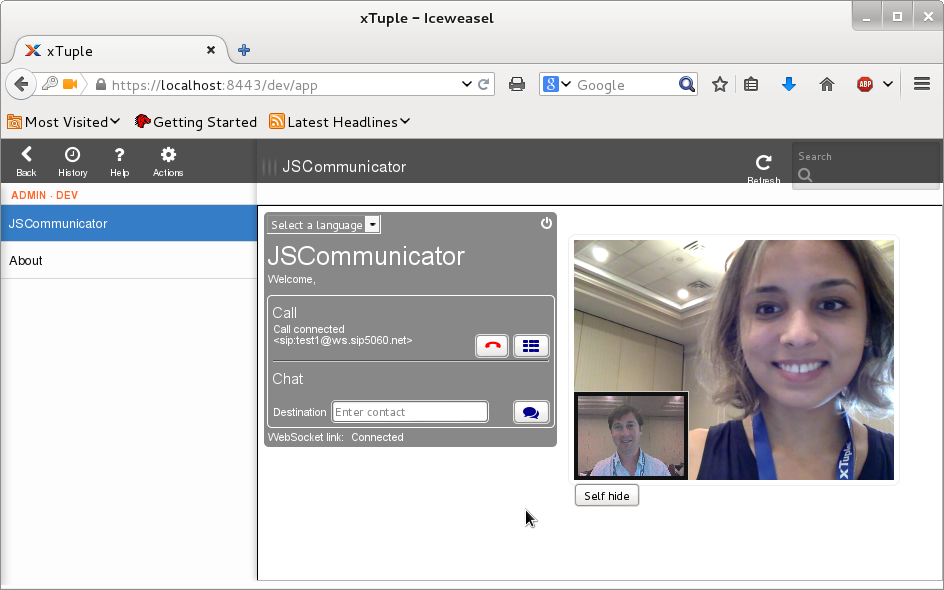
I recently updated the PostBooks packages in Debian and Ubuntu to version 4.7. This is the version that was released in Ubuntu 14.10 (Utopic Unicorn) and is part of the upcoming Debian 8 (jessie) release. Better prospects for Fedora and RHEL/CentOS/EPEL packages As well as getting the packages ready, I've been in contact with xTuple helping them generalize their build system to make packaging easier. This has eliminated the need to patch the makefiles during the build. As well as making it easier to support the Debian/Ubuntu packages, this should make it far easier for somebody to create a spec file for RPM packaging too. Debian wins a prize While visiting xTupleCon 2014 in Norfolk, I was delighted to receive the Community Member of the Year award which I happily accepted not just for my own efforts but for the Debian Project as a whole. Steve Hackbarth, Director of Product Development at xTuple, myself and the impressive Community Member of the Year trophy This is a great example of the productive relationships that exist between Debian, upstream developers and the wider free software community and it is great to be part of a team that can synthesize the work from so many other developers into ready-to-run solutions on a 100% free software platform. Receiving this award really made me think about all the effort that has gone into making it possible to apt-get install postbooks and all the people who have collectively done far more work than myself to make this possible: Here is a screenshot of the xTuple web / JSCommunicator integration, it was one of the highlights of xTupleCon: and gives a preview of the wide range of commercial opportunities that WebRTC is creating for software vendors to displace traditional telecommunications providers. xTupleCon also gave me a great opportunity to see new features (like the xTuple / Drupal web shop integration) and hear about the success of consultants and their clients deploying xTuple/PostBooks in various scenarios. The product is extremely strong in meeting the needs of manufacturing and distribution and has gained a lot of traction in these industries in the US. Many of these features are equally applicable in other markets with a strong manufacturing industry such as Germany or the UK. However, it is also flexible enough to simply disable many of the specialized features and use it as a general purpose accounting solution for consulting and services businesses. This makes it a good option for many IT freelancers and support providers looking for a way to keep their business accounts in a genuinely open source solution with a strong SQL backend and a native Linux desktop interface.

20 November 2014

Daniel Pocock: Is Amnesty giving spy victims a false sense of security?

Amnesty International is getting a lot of attention with the launch of a new tool to detect government and corporate spying on your computer. I thought I would try it myself. I went to a computer running Microsoft Windows, an operating system that does not publish its source code for public scrutiny. I used the Chrome browser, users often express concern about Chrome sending data back to the vendor about the web sites the users look for. Without even installing the app, I would expect the Amnesty web site to recognise that I was accessing the site from a combination of proprietary software. Instead, I found a different type of warning. Beware of Amnesty? Instead, the only warning I received was from Amnesty's own cookies: Even before I install the app to find out if the government is monitoring me, Amnesty is keen to monitor my behaviour themselves. While cookies are used widely, their presence on a site like Amnesty's only further desensitizes Internet users to the downside risks of tracking technologies. By using cookies, Amnesty is effectivley saying a little bit of tracking is justified for the greater good. Doesn't that sound eerily like the justification we often hear from governments too? Is Amnesty part of the solution or part of the problem? Amnesty is a well known and widely respected name when human rights are mentioned. However, their advice that you can install an app onto a Windows computer or iPhone to detect spyware is like telling people that putting a seatbelt on a motorbike will eliminate the risk of death. It would be much more credible for Amnesty to tell people to start by avoiding cloud services altogether, browse the web with Tor and only use operating systems and software that come with fully published source code under a free license. Only when 100% of the software on your device is genuinely free and open source can independent experts exercise the freedom to study the code and detect and remove backdoors, spyware and security bugs. It reminds me of the advice Kim Kardashian gave after the Fappening, telling people they can continue trusting companies like Facebook and Apple with their private data just as long as they check the privacy settings (reality check: privacy settings in cloud services are about as effective as a band-aid on a broken leg). Write to Amnesty Amnesty became famous for their letter writing campaigns. Maybe now is the time for people to write to Amnesty themselves, thank them for their efforts and encourage them to take more comprehensive action. Feel free to cut and paste some of the following potential ideas into an email to Amnesty:
I understand you may not be able to respond to every email personally but I would like to ask you to make a statement about these matters on your public web site or blog. I understand it is Amnesty's core objective to end grave abuses of human rights. Electronic surveillence, due to its scale and pervasiveness, has become a grave abuse in itself and in a disturbing number of jurisdictions it is an enabler for other types of grave violations of human rights. I'm concerned that your new app Detekt gives people a false sense of security and that your campaign needs to be more comprehensive to truly help people and humanity in the long term. If Amnesty is serious about solving the problems of electronic surveillance by government, corporations and other bad actors, please consider some of the following:
  • Instead of displaying a cookie warning on Amnesty.org, display a warning to users who access the site from a computer running closed-source software and give them a link to download a free and open source web browser like Firefox.
  • Redirect all visitors to your web site to use the HTTPS encrypted version of the site.
  • Using free software such as the GNU/Linux operating system (using one of the Debian, Fedora or Ubuntu systems is one of the more common ways to achieve this) and LibreOffice for all Amnesty's own operations, making a public statement about your use of free software and mentioning this in the closing paragraph of all press releases relating to surveillance topics.
  • Encouraging Amnesty donors, members and supporters to choose similar software especially when engaging in any political activities.
  • Make a public statement that Amnesty will not use cloud services such as SalesForce or Facebook to store, manage or interact with data relating to members, donors or other supporters.
  • Encouraging the public to move away from centralized cloud services such as those provided by their smartphone or social networks and use de-centralized or federated services such as XMPP chat.
Given the immense threat posed by electronic surveillance, I'd also like to call on Amnesty to allocate at least 10% of annual revenue towards software projects releasing free and open source software that offers the public an alternative to the centralized cloud.

While publicity for electronic privacy is great, I hope Amnesty can go a step further and help people use trustworthy software from the ground up.

17 November 2014

Vincent Sanders: NetSurf Developer workshop IV

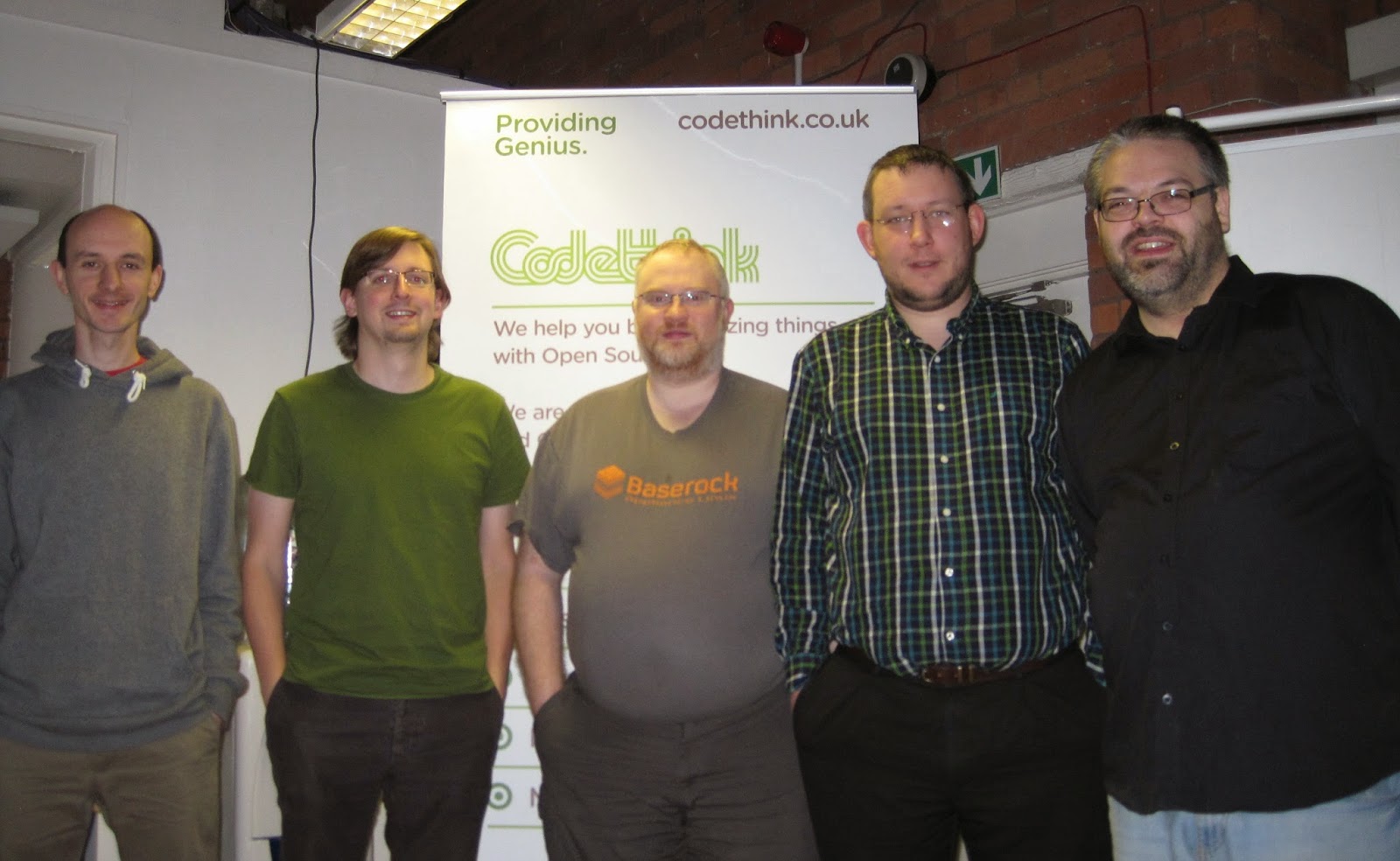
Michael Drake, John-Mark Bell, Daniel Silverstone, Rob Kendrick and Vincent Sanders at the Codethink manchester office
Over the weekend the NetSurf developers met to make a concentrated effort on improving the browser. This time we were kindly hosted by Codethink in their Manchester office in a pleasant environment with plenty of refreshments.

Five developers managed to attend in person from around the UK: Michael Drake, John-Mark Bell, Daniel Silverstone, Rob Kendrick and Vincent Sanders. We also had Chris Young providing some bug fixes remotely.

We started the weekend by discussing all the thorny core issues that had been put on the agenda and ensuring the outcomes were properly noted. We also held the society AGM which was minuted by Daniel.

The emphasis of this weekend was very much on planning and doing the disruptive changes we had been putting off until we were all together.

John-Mark and myself managed to change the core build system as used by all the libraries to using standard triplets to identify systems and use the gnu autoconf style of naming for parameters (i.e. HOST, BUILD and CC being used correctly).

This was accompanied by improvements and configuration changes to the CI system to accommodate the new usage.

Several issues from the bug tracker were addressed and we put ourselves in a stronger position to address numerous other usability problems in the future.

We managed to pack a great deal into the 20 hours of work on Saturday and Sunday although because we were concentrating much more on planning and infrastructure rather than a release the metrics of commits and files changed were lower than at previous events.

Daniel Leidert: Rsync files between two machines over SSH and limit read access

From time to time I need to get contents from a remote machine to my local workstation. The data sometimes is big and I don't want to start all over again if something fails. Further the transmission should be secure and the connection should be limited to syncing only this path and its sub-directories. So I've setup a way to do this using rsync and ssh and I'm going to describe this setup. Consider you have already created a SSH key, say ~/.ssh/key_rsa together with ~/.ssh/key_rsa.pub, and on the remote machine there is an SSH server running allowing to login by a public key and rsync is available. Lets further assume the following:
  • the remote machine is rsync.domain.tld
  • the path on the remote machine that holds the data is /path/mydata
  • the user on the remote machine being able to read /path/mydata and to login via SSH is remote_user
  • the path on the local machine to put the data is /path/mydest
  • the user on the local machine being able to write /path/mydest is local_user
  • the user on the local machine has the private key ~local_user/.ssh/key_rsa and the public key ~local_user/.ssh/key_rsa.pub
Now the public key ~local_user/.ssh/key_rsa.pub is added to the remote users ~remote_user/.ssh/authorized_keys file. The file will then probably look like this (there is just one very long line with the key, here cut out by [..]):
ssh-rsa [..]= user@domain.tld
Now I would like to limit the abilities for a user logging in with this key to only rsync the special directory /path/mydata. I therefor preceed the key with a command prefix, which is explained in the manual page sshd(8). The file then looks like this:
command="/usr/bin/rsync --server --sender -vlogDtprze . /path/mydata",no-port-forwarding,no-X11-forwarding,no-agent-forwarding,no-pty ssh-rsa [..]= user@domain.tld
I then can rsync the remote directory to a local location over SSH by running:
rsync -avz -P --delete -e 'ssh remote_user@rsync.domain.tld' rsync.domain.tld:/path/mydata/ /path/mydest
That's it.

Daniel Leidert: Removal of debian.wgdd.de and cvs,svn,vcs .wgdd.de

If you've recently tried to browse to or apt-get from either cvs.wgdd.de, svn.wgdd.de, vcs.wgdd.de, debian.wgdd.de or ubuntu.wgdd.deyou've probably seen (and still are) an error (410, Gone) coming up and I'd like to give a short explanation why. cvs,svn,vcs .wgdd.deI've left my server provider and shut down the above services and only keep a small amount of services running. The domains cvs,svn,vcs .wgdd.de were used to provide (a) a subversion (SVN) server (via HTTPS and dav_svn) for some public and private work and (b) a CVS web-client to some old project works in CVS.Among the latter was e.g. old code to generate manual pages for the proprietary fglrx graphics driver, stuff that laid there untouched for many years. So I guess, it was about time to finally remove it :)The subversion web-client gave public access to some packaging work I do for the Debian GNU/Linux distribution, e.g. for the cvsweb, gtypist packages and some non-official packaging work. For the official packages I plan to move the files into the collab-maint web space and adjust the packages control files accordingly. Everything else will be hosted non-publicly in the future. I still intend to move stuff, that turns out to be useful for more people, to public places like github and Co. Update 17.11.2014: cvsweb, gurlchecker and gtypist have been moved to collab-maint. debian.wgdd.deI used this site to describe my usage of Debian GNU/Linux on the hardware I own ... laptop, servers etc. I wrote a few HOWTOs and provided a link collection with useful links. You can still find all of this using the archive.org service. I also had a repository up and working, especially to provide bluefish packages for users of Debian stable and Ubuntu. Half a year ago I dropped the Ubuntu build environments and packages and moved the Debian stable backports to official places. This effectively emptied the repository and left only the wgdd-archive-keyring package in place. So, there is no real need for a public repository anymore and the linklist probably got outdated too. All in all, I decided to stop this service (maybe I'll forward the site to here later :)).If you see an error regarding the debian.wgdd.de URL running apt-get or aptitude, then there is a reference to this site in /etc/apt/sources.list or /etc/apt/sources.list.d/*, which can be safely removed. Further you should get rid of the wgdd-archive-keyring package:
apt-get autoremove --purge wgdd-archive-keyring
... or the repository key:
apt-key del E394D996
What elseIn case you need any content from the mentioned services, just let me know.

16 November 2014

Daniel Leidert: Getting the audio over HDMI to work for the HP N54L microserver running Debian Wheezy and a Sapphire Radeon HD 6450

Conclusion: Sound over HDMI works with the Sapphire Radeon HD 6450 card in my HP N54L microserver. It requires a recent kernel and firmware from Wheezy 7.7 backports and the X.org server. There is no sound without X.org, even if audio has been enabled for the radeon kernel module. Last year I couldn't get audio over HDMI to work after I installed a Sapphire Radeon HD 6450 1 GB (11190-02-20g) card into my N54L microserver. The cable that connects the HDMI interfaces between the card and the TV monitor supports HDMI 1.3, so audio should have been possible even then. However, I didn't get any audio output by XBMC playing video or music files. Nothing happened with stock Wheezy 7.1 and X.org/XBMC installed. So I removed the latter two and used the server as stock server without X/desktop and delayed my plans for an HTPC.Now I tried again after I found some new hints, that made me curious for a second try :) Imagine my joy, when (finally) speaker-test produced noise on the TV! So here is my configuration and a step-by-step guide to
  • enable Sound over HDMI for the Radeon HD 6450
  • install a graphical environment
  • install XBMC
  • automatically start XBMC on boot
The latter two will be covered by a second post. Also note, that there is lot of information out there to achive the above tasks. So this is only about my configuration. Some packages below are marked as optional. A few are necessary only for the N54L microserver (firmware) and for a few I'm not sure they are necessary at all. Step 1 - Prepare the systemAt this point I don't have any desktop nor any other graphical environment (X.org) installed. First I purged pulseaudio and related packages completely and only use ALSA:
# apt-get autoremove --purge pulseaudio pulseaudio-utils pulseaudio-module-x11 gstreamer0.10-pulseaudio
# apt-get install alsa-base alsa-utils alsa-oss
Next I installed a recent linux kernel and recent firmware from Wheezy backports:
# apt-get install -t wheezy-backports linux-image-amd64 firmware-linux-free firmware-linux firmware-linux-nonfree firmware-atheros firmware-bnx2 firmware-bnx2x
This put linux-image-3.16-0.bpo.3-amd64 and recent firmware onto my system. I've chosen to upgrade linux-image-amd64 instead to pick a special (recent) linux kernel package from Wheezy backports to keep up-to-date with recent kernels from there.Then I enabled the audio output of the kernel radeon module. Essentially there are at least three ways to do this. I use the one to modify /etc/modules.d/radeon.conf and set the audio parameter there. The hw_i2c parameter is disabled. I read, that it might cause trouble with the audio output here although I never personally experienced it:
options radeon audio=1 hw_i2c=0
JFTR: This is how I boot the N54L by default:
GRUB_CMDLINE_LINUX_DEFAULT="quiet splash acpi=force pcie_aspm=force nmi_watchdog=0"
After rebooting I see this for the Radeon card in question:

# lsmod egrep snd\ radeon\ drm awk ' print $1 ' sort
[..]
drm
drm_kms_helper
i2c_algo_bit
i2c_core
radeon
snd
snd_hda_codec
snd_hda_codec_hdmi
snd_hda_controller
snd_hda_intel
snd_hwdep
snd_pcm
snd_seq
snd_seq_device
snd_timer
soundcore
ttm
[..]
# lspci -k
[..]
01:00.0 VGA compatible controller: Advanced Micro Devices, Inc. [AMD/ATI] Caicos [Radeon HD 6450/7450/8450 / R5 230 OEM]
Subsystem: PC Partner Limited / Sapphire Technology Device e204
Kernel driver in use: radeon
01:00.1 Audio device: Advanced Micro Devices, Inc. [AMD/ATI] Caicos HDMI Audio [Radeon HD 6400 Series]
Subsystem: PC Partner Limited / Sapphire Technology Radeon HD 6450 1GB DDR3
Kernel driver in use: snd_hda_intel
[..]
# cat /sys/module/radeon/parameters/audio
1
# cat /sys/module/radeon/parameters/hw_i2c
0
# aplay -l
**** List of PLAYBACK Hardware Devices ****
card 0: HDMI [HDA ATI HDMI], device 3: HDMI 0 [HDMI 0]
Subdevices: 0/1
Subdevice #0: subdevice #0
# aplay -L
null
Discard all samples (playback) or generate zero samples (capture)
pulse
PulseAudio Sound Server
hdmi:CARD=HDMI,DEV=0
HDA ATI HDMI, HDMI 0
HDMI Audio Output
At this point, without having the X.org server installed, I still have no audio output to the connected monitor. Running alsamixer I only see the S/PDIF bar for the HDA ATI HDMI device, showing a value of 00. I can mute and un-mute this device but not change the value. No need to worry, sound comes with step two. Step 2 - Install a graphical environment (X.org server)Next is to install a graphical environment, basically the X.org server. This is done in Debian by the desktop task. Unfortunately tasksel makes use of APT::Install-Recommends="true" and would install a desktop environment and some more recommended packages. At the moment I don't want this, only X. So basically I installed only the task-desktop package with dependencies:
# apt-get install task-desktop xfonts-cyrillic
Next is to install a display manager. I've chosen lightdm:
# apt-get install lightdm accountsservice
Done. Now (re-)start the X server. Simply ...
# service lightdm restart
... should do. And now there is sound, probably due to the X.org Radeon driver. The following command created noise on the two monitor speakers :)
# speaker-test -c2 -D hdmi:0 -t pink
Finally there is sound over HDMI! Step 3 - Install XBMC To be continued ...

Daniel Leidert: Install automatically starting XBMC to N54L microserver under Debian Wheezy 7.7

This is a followup to my previous post about getting sound output from the Sapphire Radeon HD 6450 card in my HP N54L microserver via HDMI. This post will describe, howto install XBMC from Wheezy backports and how to automatically start it. Again, there are vaious ways and I'll only describe mine. Further, this is, what I did so far: enable the audio output for the Radeon card and install X.org together with lightdm. Step 3 - Install XBMCThis is a pretty easy task. I've chosen to install XBMC 13.2 from the Wheezy backports repository.
# apt-get install -t wheezy-backports xbmc
Step 4 - Automically start XBMCThere are various ways; some involve starting it a s a service using init scripts f r sysvinit or upstrart or systemd. You'll easily find them. I've chosen to create a user, automatically log him into X and start XBMC. The user is called xbmc.
# adduser --home /home/xbmc --add_extra_groups xbmc
I used to choose a password. But I wonder, if using --disabled-password would work too? Next I adjusted /etc/lightdm/lightdm.conf. Below are only the differences to the stock version of this file. I haven't touched other lines.
[SeatDefaults]
greeter-session=lightdm-gtk-greeter
user-session=XBMC
autologin-guest=false
autologin-user=xbmc
autologin-user-timeout=0
The file /usr/share/xsessions/XBMC.desktop is the stock one, no changes made. After restarting lightdm:
# service lightdm restart
XBMC is started automatically. If anything goes wrong or doesn't work, I suggest to check /var/log/auth.log, /home/xbmc/.xsession-errors and /var/log/lightdm/*.log. In a few cases it seems necessary to login the user xbmc manually once although it wasn't necessary here.JFTR: When I checked /var/log/auth.log I saw a few errors and installed gnome-keyring too:
apt-get install --install-recommends gnome-keyring
Step 5 - Useful packagesThere are some packages, which might be useful running XBMC, e.g. ConclusionI'm now running XBMC on top of Debian Wheezy on the N54L microserver without a bloated desktop environment. The system automatically starts the XBMC session on start/reboot. Video and sound are working fine, though it was necessary to install recent firmware and a recent kernel from Wheezy backports to get it done. Thanks to the whole OSS community for aksing, for answering, for blogging, for using and for continue developing! I currently enjoy the results :)

6 November 2014

Daniel Kahn Gillmor: GnuPG 2.1.0 in debian experimental

Today, i uploaded GnuPG 2.1.0 into debian's experimental suite. It's built for amd64 and i386 and powerpc already. You can monitor its progress on the buildds to see when it's available for your architecture. ChangesGnuPG 2.1 offers many new and interesting features, but one of the most important changes is the introduction of elliptic curve crypto (ECC). While GnuPG 2.1 discourages the creation of ECC keys by default, it's important that we have the ability to verify ECC signatures and to encrypt to ECC keys if other people are using this tech. It seems likely, for example, that Google's End-To-End Chrome OpenPGP extension will use ECC. GnuPG users who don't have this capability available won't be able to communicate with End-To-End users. There are many other architectural changes, including a move to more daemonized interactions with the outside world, including using dirmngr to talk to the keyservers, and relying more heavily on gpg-agent for secret key access. The gpg-agent change is a welcome one -- the agent now holds the secret key material entirely and never releases it -- as of 2.1 gpg2 never has any asymmetric secret key material in its process space at all. One other nice change for those of us with large keyrings is the new keybox format for public key material. This provides much faster indexed access to the public keyring. I've been using GnuPG 2.1.0 betas regularly for the last month, and i think that for the most part, they're ready for regular use. Timing for debian The timing between the debian freeze and the GnuPG upstream is unfortunate, but i don't think i'm prepared to push for this as a jessie transition yet, without more backup. I'm talking to other members of the GnuPG packaging team to see if they think this is worth even bringing to the attention of the release team, but i'm not pursuing it at the moment. If you really want to see this in debian jessie, please install the experimental package and let me know how it works for you. Long term migration concerns GnuPG upstream is now maintaining three branches concurrently: modern (2.1.x), stable (2.0.x), and classic (1.4.x). I think this is stretches the GnuPG upstream development team too thin, and we should do what we can to help them transition to supporting fewer releases concurrently. In the long-term, I'd ultimately like to see gnupg 2.1.x to replace all use of gpg 1.4.x and gpg 2.0.x in debian, but unlikely to to happen right now. In particular, the following two bugs make it impossible to use my current, common monkeysphere workflow: And GnuPG 2.1.0 drops support for the older, known-weak OpenPGPv3 key formats. This is an important step for simplification, but there are a few people who probably still need to use v3 keys for obscure/janky reasons, or have data encrypted to a v3 key that they need to be able to decrypt. Those people will want to have GnuPG 1.4 around. Call for testing Anyway, if you use debian testing or unstable, and you are interested in these features, i invite you to install gnupg2 and its friends from experimental. If you want to be sensibly conservative, i recommend backing up ~/.gnupg before trying to use it:
cp -aT .gnupg .gnupg.bak
sudo apt install -t experimental gnupg2 gnupg-agent dirmngr gpgsm gpgv2 scdaemon
If you find issues, please file them via the debian BTS as usual. I (or other members of the pkg-gnupg team) will help you triage them to upstream as needed. Tags: ecc, experimental, gnupg

30 October 2014

Juliana Louback: JSCommunicator at xTupleCon 2014

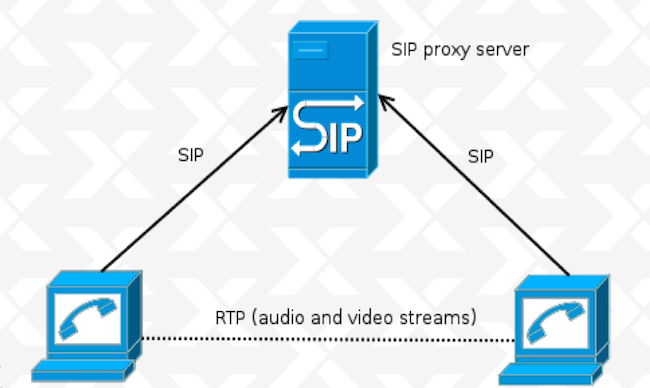
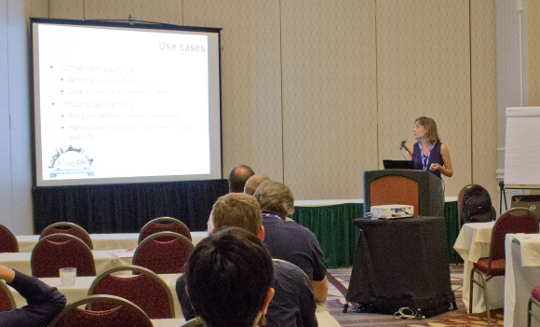
Two weeks ago I left NYC for a day trip to Norfolk, Virginia, to attend xTupleCon 2014. For those who don t know, xTuple is an incredibly reknown open source Enterprise Resource Planning (ERP) software. If you ve been following this blog, you might recall that during my participation in the Google Summer of Code 2014, I wrote a beta JSCommunicator extension for xTuple (to see how I went about doing that, look up Kickstarting the JSCommunicator-xTuple extension). Now, I wasn t flying down to Virginia on the eve of my first grad school midterms (gasp!) for fun - although I will admit, I enjoyed myself a fair amount. My GSoC mentor, Daniel Pocock was giving a talk about WebRTC and JSCommunicator at xTupleCon and invited me to participate. So that was the first perk of going to xTupleCon, I got to finally meet my GSoC mentor in person! During the presentation, Daniel provided a high level expanation of WebRTC and how it works. WebRTC (Web Real Time Communications) enables real time transmission of audio, video and data streams through browser-to-browser applications. This is one of the many perks of WebRTC; it doesn t require installation of plugins, making its use less vulnerable to security breaches. Websockets are used for the signalling channel and the SIP or XMPP can be used as the signaling protocol - in JSCommunicator, we used SIP. What was also done in JSCommunicator and can be done in other applications is to use a library to implement the signaling and SIP stack. JSCommunicator uses (and I highly reccomend) JsSIP. The basic SIP architecture is comprised of peers and a SIP Proxy Server that supports SIP over Websockets transport: sipArch If you have users behind NAT, you ll also need a TURN server for relay: sipArch2 In both cases, setup is not too difficult, particularly if using reSIProcate which offers both the SIP proxy and the TURN server. Daniel Pocock has an excellent post on how to setup and configure your SIP proxy and TURN server. With regard to JSCommunicator, it is a generic telephone in HTML5 which can easily be embedded in any web site or web app. Almost every aspect of JSCommunicator is easily customizable. More about JSCommunicator setup and architecture is detailed in a previous post. The JSCommunicator-xTuple extension can be installed in xTuple as an npm package (xtuple-jscommunicator). It is still at a very beta - or even pre-beta - stage and there are various limitations; the configuration must be hard-coded and dialing is done manually as opposed to clicking on a contact. Some of these limitations are features are on the wish list for future work. For example, some ideas for the next version of the extension are a click to dial from CRM records functionality and to bring up CRM records for an incomming call. Additionaly, the SIP proxy could be automatically installed with the xTuple server installation if desired. We closed the presentation with a live demo during which I made a video call from a JSCommunicator instance embedded in freephonebox.net to the JSCommunicator xTuple extension running on Daniel s laptop. Despite the occasionally iffy hotel Wifi, the demo was a hit - at one point I even left the conference room and took a quick walk around the hotel and invited other xTupleCon attendees to say hello to those in the room. The audience s reception was more enthusiastic than I anticipated, giving way to a pretty extensive Q&A session. It s great to see more and more people interested in WebRTC, I can t emphasize enough what a useful and versatile tool it is. Here s an action shot of part of the xTuple WebRTC presentation: xtuple

24 October 2014

Daniel Pocock: Positive results from Outreach Program for Women

In 2013, Debian participated in both rounds of the GNOME Outreach Program for Women (OPW). The first round was run in conjunction with GSoC and the second round was a standalone program. The publicity around these programs and the strength of the Google and Debian brands attracted a range of female candidates, many of whom were shortlisted by mentors after passing their coding tests and satisfying us that they had the capability to complete a project successfully. As there are only a limited number of places for GSoC and limited funding for OPW, only a subset of these capable candidates were actually selected. The second round of OPW, for example, was only able to select two women. Google to the rescue Many of the women applying for the second round of OPW in 2013 were also students eligible for GSoC 2014. Debian was lucky to have over twenty places funded for GSoC 2014 and those women who had started preparing project plans for OPW and getting to know the Debian community were in a strong position to be considered for GSoC. Chandrika Parimoo, who applied to Debian for the first round of OPW in 2013, was selected by the Ganglia project for one of five GSoC slots. Chandrika made contributions to PyNag and the ganglia-nagios-bridge. Juliana Louback, who applied to Debian during the second round of OPW in 2013, was selected for one of Debian's GSoC 2014 slots working on the Debian WebRTC portal. The portal is built using JSCommunicator, a generic HTML5 softphone designed to be integrated in other web sites, portal frameworks and CMS systems. Juliana has been particularly enthusiastic with her work and after completing the core requirements of her project, I suggested she explore just what is involved in embedding JSCommunicator into another open source application. By co-incidence, the xTuple development team had decided to dedicate the month of August to open source engagement, running a program called haxTuple. Juliana had originally applied to OPW with an interest in financial software and so this appeared to be a great opportunity for her to broaden her experience and engagement with the open source community. Despite having no prior experience with ERP/CRM software, Juliana set about developing a plugin/extension for the new xTuple web frontend. She has published the extension in Github and written a detailed blog about her experience with the xTuple extension API. Participation in DebConf14 Juliana attended DebConf14 in Portland and gave a presentation of her work on the Debian RTC portal. Many more people were able to try the portal for the first time thanks to her participation in DebConf. The video of the GSoC students at DebConf14 is available here. Continuing with open source beyond GSoC Although GSoC finished in August, xTuple invited Juliana and I to attend their annual xTupleCon in Norfolk, Virginia. Google went the extra mile and helped Juliana to get there and she gave a live demonstration of the xTuple extension she had created. This effort has simultaneously raised the profile of Debian, open source and open standards (SIP and WebRTC) in front of a wider audience of professional developers and business users. Juliana describes her work at xTupleCon, Norfolk, 15 October 2014 It started with OPW The key point to emphasize is that Juliana's work in GSoC was actually made possible by Debian's decision to participate in and promote Outreach Program for Women in 2013. I've previously attended DebConf myself to help more developers become familiar with free and open RTC technology. I wasn't able to get there this year but thanks to the way GSoC and OPW are expanding our community, Juliana was there to help out.

27 September 2014

DebConf team: Wrapping up DebConf14 (Posted by Paul Wise, Donald Norwood)

The annual Debian developer meeting took place in Portland, Oregon, 23 to 31 August 2014. DebConf14 attendees participated in talks, discussions, workshops and programming sessions. Video teams captured a lot of the main talks and discussions for streaming for interactive attendees and for the Debian video archive. Between the video, presentations, and handouts the coverage came from the attendees in blogs, posts, and project updates. We ve gathered a few articles for your reading pleasure: Gregor Herrmann and a few members of the Debian Perl group had an informal unofficial pkg-perl micro-sprint and were very productive. Vincent Sanders shared an inspired gift in the form of a plaque given to Russ Allbery in thanks for his tireless work of keeping sanity in the Debian mailing lists. Pictures of the plaque and design scheme are linked in the post. Vincent also shared his experiences of the conference and hopes the organisers have recovered. Noah Meyerhans adventuring to Debian by train, (Inter)netted some interesting IPv6 data for future road and railwarriors. Hideki Yamane sent a gentle reminder for English speakers to speak more slowly. Daniel Pocock posted of GSoC talks at DebConf14, highlights include the Java Project Dependency Builder and the WebRTC JSCommunicator. Thomas Goirand gives us some insight into a working task list of accomplishments and projects he was able to complete at DebConf14, from the OpenStack discussion to tasksel talks, and completion of some things started last year at DebConf13. Antonio Terceiro blogged about debci and the Debian Continuous Integration project, Ruby, Redmine, and Noosfero. His post also shares the atmosphere of being able to interact directly with peers once a year. Stefano Zacchiroli blogged about a talk he did on debsources which now has its own HACKING file. Juliana Louback penned: DebConf 2014 and How I Became a Debian Contributor. Elizabeth Krumbach Joseph s in-depth summary of DebConf14 is a great read. She discussed Debian Validation & CI, debci and the Continuous Integration project, Automated Validation in Debian using LAVA, and Outsourcing webapp maintenance. Lucas Nussbaum by way of a blog post releases the very first version of Debian Trivia modelled after the TCP/IP Drinking Game. Fran ois Marier s shares additional information and further discussion on Outsourcing your webapp maintenance to Debian. Joachim Breitner gave a talk on Haskell and Debian, created a new tool for binNMUs for Haskell packages which runs via cron job. The output is available for Haskell and for OCaml, and he still had a small amount of time to go dancing. Jaldhar Harshad Vyas was not able to attend DebConf this year, but he did tune in to the videos made available by the video team and gives an insightful viewpoint to what was being seen. J r my Bobbio posted about Reproducible builds in Debian in his recap of DebConf14. One of the topics at hand involved defining a canonical path where packages must be built and a BOF discussion on reproducible builds from where the conversation moved to discussions in both Octave and Groff. New helpers dh_fixmtimes and dh_genbuildinfo were added to BTS. The .buildinfo format has been specified on the wiki and reviewed. Lots of work is being done in the project, interested parties can help with the TODO list or join the new IRC channel #debian-reproducible on irc.debian.org. Steve McIntyre posted a Summary from the d-i / debian-cd BoF at DC14, with some of the session video available online. Current jessie D-I needs some help with the testing on less common architectures and languages, and release scheduling could be improved. Future plans: Switching to a GUI by default for jessie, a default desktop and desktop choice, artwork, bug fixes and new architecture support. debian-cd: Things are working well. Improvement discussions are on selecting which images to make I.E. netinst, DVD, et al., debian-cd in progress with http download support, Regular live test builds, Other discussions and questions revolve around which ARM platforms to support, specially-designed images, multi-arch CDs, and cloud-init based images. There is also a call for help as the team needs help with testing, bug-handling, and translations. Holger Levsen reports on feedback about the feedback from his LTS talk at DebConf14. LTS has been perceived well, fits a demand, and people are expecting it to continue; however, this is not without a few issues as Holger explains in greater detail the lacking gatekeeper mechanisms, and how contributions are needed from finance to uploads. In other news the security-tracker is now fixed to know about old stable. Time is short for that fix as once jessie is released the tracker will need to support stable, oldstable which will be wheezy, and oldoldstable. Jonathan McDowell s summary of DebConf14 includes a fair perspective of the host city and the benefits of planning of a good DebConf14 location. He also talks about the need for facetime in the Debian project as it correlates with and improves everyone s ability to work together. DebConf14 also provided the chance to set up a hard time frame for removing older 1024 bit keys from Debian keyrings. Steve McIntyre posted a Summary from the State of the ARM BoF at DebConf14 with updates on the 3 current ports armel, armhf and arm64. armel which targets the ARM EABI soft-float ARMv4t processor may eventually be going away, while armhf which targets the ARM EABI hard-float ARMv7 is doing well as the cross-distro standard. Debian is has moved to a single armmp kernel flavour using Device Tree Blobs and should be able to run on a large range of ARMv7 hardware. The arm64 port recently entered the main archive and it is hoped to release with jessie with 2 official builds hosted at ARM. There is talk of laptop development with an arm64 CPU. Buildds and hardware are mentioned with acknowledgements for donated new machines, Banana Pi boards, and software by way of ARM s DS-5 Development Studio - free for all Debian Developers. Help is needed! Join #debian-arm on irc.debian.org and/or the debian-arm mailing list. There is an upcoming Mini-DebConf in November 2014 hosted by ARM in Cambridge, UK. Tianon Gravi posted about the atmosphere and contrast between an average conference and a DebConf. Joseph Bisch posted about meeting his GSOC mentors, attending and contributing to a keysigning event and did some work on debmetrics which is powering metrics.debian.net. Debmetrics provides a uniform interface for adding, updating, and viewing various metrics concerning Debian. Harlan Lieberman-Berg s DebConf Retrospective shared the feel of DebConf, and detailed some of the work on debugging a build failure, work with the pkg-perl team on a few uploads, and work on a javascript slowdown issue on codeeditor. Ana Guerrero L pez reflected on Ten years contributing to Debian.

24 September 2014

Vincent Sanders: I wanted to go to Portland because it's a really good book town.

Plane at Heathrow terminal 5 taking me to America for Debconf 14Patti Smith is right, more than any other US city I have visited, Portland feels different. Although living in Cambridge, which sometimes feels like where books were invented, might give me a warped sense of a place.

Jo McIntyre getting on the tram at PDX
I have visited Portland a few times previously and I feel comfortable every time I arrive at PDX. Sure the place still suffers from the american obsession with the car but similar to New York you can rely on public transport to get about.

On this occasion my visit was for the Debian Conference which i was excited to attend having missed the previous one in Switzerland. This time the conference has changed its format to being 10 days long and mixing the developer time in with the more formal sessions.

The opening session gave Steve McIntyre and myself the opportunity to present a small token of our appreciation to Russ. The keynote speakers that afternoon were all very interesting both Stefano Zacchiroli and Gabriella Coleman giving food for thought on two very different subjects.

The sponsored accomodation rooms were plesent
Several conferences in the past have experienced issues with sponsored accommodation and food, I am very pleased to report that both were very good this time. The room I was in had a small kitchen area, en-suite bathroom, desks and most importantly comfortable beds.

Andy and Patty in the Ondine dining area
The food provision was in the form of a buffet in the Ondine facility. The menu was not greatly varied but catered to all requirements including vegetarian and gluten free diets.

Neil, Rob, Jo, Steve , Neil, Daniel and Andy dining under the planes
Some of us went on a visit to the Evergreen air and space museum to look at some rare aircraft and rockets. I can thoroughly recommend a visit if you are in the area.

These are just the highlights of the week though, the time in the hack-labs was productive with several practical achievements Including:
- Uploading new packages reducing the bug count
- Sorting out getting an updated key into the Debian keyring.

Overall I had a thoroughly enjoyable time and got a lot out of the conference this year. The new format suited me surprisingly well and as usual the social side was as valuable as the practical.

I hope the organisers have recovered enough to appreciate just how good a job they did and not get hung up on the small number of things that went wrong when the majority of things went perfectly to plan.

19 September 2014

Daniel Pocock: reSIProcate migration from SVN to Git completed

This week, the reSIProcate project completed the move from SVN to Git. With many people using the SIP stack in both open source and commercial projects, the migration was carefully planned and tested over an extended period of time. Hopefully some of the experience from this migration can help other projects too. Previous SVN committers were tracked down using my script for matching emails to Github accounts. This also allowed us to see their recent commits on other projects and see how they want their name and email address represented when their previous commits in SVN were mapped to Git commits. For about a year, the sync2git script had been run hourly from cron to maintain an official mirror of the project in Github. This allowed people to test it and it also allowed us to start using some Github features like travis-CI.org before officially moving to Git. At the cut-over, the SVN directories were made read-only, sync2git was run one last time and then people were advised they could commit in Git. Documentation has also been created to help people get started quickly sharing patches as Github pull requests if they haven't used this facility before.

18 September 2014

Jonathan McDowell: Automatic inline signing for mutt with RT

I spend a surprising amount of my time as part of keyring-maint telling people their requests are badly formed and asking them to fix them up so I can actually process them. The one that's hardest to fault anyone on is that we require requests to be inline PGP signed (i.e. the same sort of output as you get with "gpg --clearsign"). That's because RT does various pieces of unpacking[0] of MIME messages that mean that a PGP/MIME signatures that have passed through it are no longer verifiable. Daniel has pointed out that inline PGP is a bad idea and got as far as filing a request that RT handle PGP/MIME correctly (you need a login for that but there's a generic read-only one that's easy to figure out), but until that happens the requirement stands when dealing with Debian's RT instance. So today I finally added the following lines to my .muttrc rather than having to remember to switch Mutt to inline signing for this one special case:
send-hook . "unset pgp_autoinline; unset pgp_autosign"
send-hook rt.debian.org "set pgp_autosign; set pgp_autoinline"
i.e. by default turn off auto inlined PGP signatures, but when emailing anything at rt.debian.org turn them on. (Most of the other things I tell people to fix are covered by the replacing keys page; I advise anyone requesting a key replacement to read that page. There's even a helpful example request template at the bottom.) [0] RT sticks a header on the plain text portion of the mail, rather than adding a new plain text part for the header if there are multiple parts (this is something Mailman handles better). It will also re-encode received mail into UTF-8 which I can understand, but Mutt will by default try to find an 8 bit encoding that can handle the mail, because that's more efficient, which tends to mean it picks latin1. Update: Apparently Mutt in Jessie and beyond doesn't have the pgp_autosign option; you want crypt_autosign instead (and maybe crypt_autopgp but that defaults to yes so unless you've configured your setup to do S/MIME by default you should be fine). Thanks to Luca Capello for pointing this out.

Next.

Previous.