Search Results: "bod"

25 October 2022

Russ Allbery: Review: A Spaceship Repair Girl Supposedly Named Rachel

Review: A Spaceship Repair Girl Supposedly Named Rachel, by Richard Roberts
Publisher: Mystique Press
Copyright: 2022
ISBN: 1-63789-763-4
Format: Kindle
Pages: 353
Rachel had snuck out of the house to sit on the hill, to write and draw in rare peace and quiet, when a bus fell out of the sky like a meteor and plowed into the ground in front of her. This is quickly followed by a baffling encounter with a seven-foot-tall man with a blunderbuss, two misunderstandings and a storytelling lie, and a hurried invitation to get into the bus and escape before they're both infected by math. That's how Rachel discovers that she's able to make on-the-fly repairs to bicycle-powered spaceships, and how she ends up at the Lighthouse of Ceres. The title comes from Rachel's initial hesitation to give her name, which propagates through the book to everyone she meets as certainty that Rachel isn't really her name. I enjoyed this running gag way more than I expected to. I don't read enough young adult and middle-grade books to be entirely clear on the boundaries, but this felt very middle-grade. It has a headlong plot, larger-than-life characters, excitingly imaginative scenery (such as a giant space lighthouse dwarfing the asteroid that it's attached to), a focus on friendship, and no romance. This is, to be clear, not a complaint. But it's a different feel than my normal fare, and there were a few places where I was going one direction and the book went another. The conceit of this book is that Earth is unique in the solar system in being stifled by the horrific weight of math, which infects anyone who visits and makes the routine wonders of other planets impossible. Other planets have their own styles and mythos (Saturn is full of pirates, the inhabitants of Venus are space bunnies with names like Passionfruit Nectar Ecstasy), but throughout the rest of the solar system, belief, style, and story logic reign supreme. That means Rachel's wild imagination and reflexive reliance on tall tales makes her surprisingly powerful. The first wild story she tells, to the man who crashed on earth, shapes most of the story. She had written in her sketchbook that it was the property of the Witch Queen of Eloquent Verbosity and Grandiose Ornamentation, and when challenged on it, says that she stole it to cure her partner. Much to her surprise, everyone outside of Earth takes this completely seriously. Also much to her surprise, her habit of sketching spaceships and imaginative devices makes her a natural spaceship mechanic, a skill in high demand. Some of the story is set on Ceres, a refuge for misfits with hearts of gold. That's where Rachel meets Wrench, a kobold who is by far my favorite character of the book and the one relationship that I thought had profound emotional depth. Rachel's other adventures are set off by the pirate girl Violet (she's literally purple), who is the sort of plot-provoking character that I think only works in middle-grade fiction. By normal standards, Violet's total lack of respect for other people's boundaries or consent would make her more of a villain. Here, while it often annoys Rachel, it's clear that both Rachel and the book take Violet's steamroller personality in good fun, more like the gentle coercion between neighborhood friends trying to pull each other into games. I still got rather tired of Violet, though, which caused me a few problems around the middle of the book. There's a bit of found family here (some of it quite touching), a lot of adventures, a lot of delightful spaceship repair, and even some more serious plot involving the actual Witch Queen of Charon. There is a bit of a plot arc to give some structure to the adventures, but this is not the book to read if you're looking for complex plotting or depth. I thought the story fell apart a bit at the tail end, with a conflict that felt like it was supposed to be metaphorical and then never resolved for me into something concrete. I was expecting Rachel to eventually have to do more introspection and more direct wrestling with her identity, but the resolution felt a bit superficial and unsatisfying. Reading this as an adult, I found it odd but fun. I wanted more from the ending, and I was surprised that Roberts does not do more to explain to the reader why Rachel does not regret leaving Earth and her family behind. It feels like something Rachel will have to confront eventually, but this is not the book for it. Instead we get some great friendships (some of which I agreed with wholeheartedly, and some of which I found annoying) and an imaginative, chaotic universe that Rachel takes to like a fish to water. The parts of the story focused on her surprising competence (and her delight in her own competence) were my favorites. The book this most reminds me of is Norton Juster's The Phantom Tollbooth. It is, to be clear, nowhere near as good as The Phantom Tollbooth, which is a very high bar, and it's not as focused on puns. But it has the same sense of internal logic and the same tendency to put far more weight on belief and stories than our world does, and to embrace the resulting chaos. I'm not sure this will be anyone's favorite book (although I'm also not the target age), but I enjoyed reading it. It was a great change of pace after Nona the Ninth. Recommended if you're in the mood for some space fantasy that doesn't take itself seriously. Rating: 7 out of 10

24 October 2022

Russ Allbery: Review: Nona the Ninth

Review: Nona the Ninth, by Tamsyn Muir
Series: The Locked Tomb #3
Publisher: Tordotcom
Copyright: 2022
ISBN: 1-250-85412-1
Format: Kindle
Pages: 480
Nona the Ninth is the third book of the Locked Tomb series and entirely pointless to read if you have not read the series to date. It completely spoils the previous books, assuming you would be able to figure out who these people were and why you should care about them. This is only for readers who are already invested. This series was originally supposed to be a trilogy, and this book was supposed to be Alecto the Ninth. Muir says in the acknowledgments, and has said at more length elsewhere, that Nona changed all of her plans and demanded her own book. Hence this book, postponing the end of the series and lengthening it to four books. After reading it, I understand why Muir decided to write a whole book about Nona. She's an interesting character in ways that wouldn't have come out if she was a small part of the concluding book. Unfortunately, it's also obvious that this book wasn't part of the plan. It's not entirely correct to say that Nona the Ninth is devoid of series plot, but the plot advances very little, and mostly at the end. Instead, we get Nona, who is physically a teenager who acts like someone several years younger, most of the time. She lives with her family (who I won't name to avoid spoilers for Harrow the Ninth), helps at a local school (although her level of understanding is about that of the students), and is a member of a kid's gang. She also has dreams every night about a woman with a painted face, dreams her family are very interested in. This sounds weirdly normal for this series, but Nona and her family live in a war-torn city full of fighting, refugees, and Blood of Eden operatives. The previous books of the series took place in the rarefied spaces of the Houses. Here we see a bit of the rest of the universe, although it's not obvious at first what we're looking at and who these people are. Absolutely no concession is made to the reader's fading memory, so expect to need either a re-read, help from friends with better memories, or quality time with a wiki. And, well, good luck with the latter if you've not already read this book, since the Locked Tomb Wiki has now been updated with spoilers for Nona. The other challenge, besides memory for the plot, is that this book is told from a tight third-person focus on Nona, and Nona is not a very reliable narrator. She doesn't lie, exactly, but she mostly doesn't understand what's going on, often doesn't care, and tends not to focus on what the reader is the most interested in. Nona is entirely uninterested in developing the series plot. Her focus is on her child friends (who are moderately interesting but not helpful if you're trying to figure out the rest of the story) and the other rhythms of a strange life that's normal to her. For me at least, that meant the first half of this book involved a lot of "what the heck is going on and why do I care about any of this?" I liked Harrow the Ninth a lot, despite how odd and ambiguous it was, but I was ready for revelations and plot coherence and was not thrilled by additional complexity, odd allusions, and half-revealed details. I didn't mind the layers of complexity added on by Harrow, but for me Nona was a bit too much and I started getting frustrated rather than intrigued. We do, at last, get most of the history of this universe, including the specific details of how John became God Emperor and how the Houses were founded. That happens in odd interludes with a forced and somewhat artificial writing style, but it's more straightforward and comprehensible than I feared at first. The pace of the story picks up considerably towards the end of the book, finally providing the plot momentum that I was hoping for. Unfortunately, it also gets more cryptic at the end of the book in ways that I didn't enjoy. The epilogue, which is vital to understanding the climax of the novel, took me three readings before I think I understood what happened. If you preferred the clarity of Gideon the Ninth, be warned that Nona is more like Harrow and Muir seems to be making the plot more cryptic as she goes. I am hoping this trend reverses in Alecto the Ninth. This book made me grumpy. Nona is okay as a character, but the characters in this series that I really like mostly do not appear or appear in heavily damaged and depressing forms. Muir does bring back a couple of my favorite characters, but then does something to them that's a major spoiler but that I think was intended to be a wonderful moment for them and instead left me completely cold and unhappy. There are still some great moments of humor, but overall it felt more strained. That said, I still had tons of fun discussing this book and its implications with friends who were reading it at the same time. I think that is the best way to read this series. Muir is being intentionally confusing and is inserting a blizzard of references. Some of them are pop culture jokes, but some of them are deep plot clues, and I'm not up to deciphering them all by myself. Working through them with other people is much more fun. (It also gives me an opportunity to feel smug about guessing correctly what was happening at the end of Harrow the Ninth, when I'm almost never the person who makes correct guesses about that sort of thing.) I think your opinion of this one will depend on how much you like Nona as a character, how much patience you have for the postponement of plot resolution, and how much tolerance you have for even more cryptic references. I'm still invested in this series until the end, but this was not my favorite installment. I suspect it (and the rest of the series) would benefit immensely from re-reading, but life is short and my reading backlog is long. What Muir is doing is interesting and has a lot of depth, but she's asking quite a lot of the reader. Content warning: Nona has an eating disorder, which occupied rather more of my mental space while reading this book than I was comfortable with. Followed by Alecto the Ninth, which does not have a publication date scheduled as of this writing. Rating: 7 out of 10

19 October 2022

Shirish Agarwal: Pune Rains, Uncosted Budgets, Hearing Loss Covid, Fracking

Pune Rains Lemme start with a slightly funny picture that tells as much about Pune, my city as anything else does.
Pune- Leave your attitude behind, we have our own
This and similar tags, puns and whatnot you will find if you are entering Pune from the road highway. You can also find similar similar symbols and Puns all over the city and they are partly sarcasm and ironic and partly the truth. Puneities work from the attitude that they know everything rather than nothing, including yours truly  . What is the basis of that or why is there such kind of confidence I have no clue or idea, it is what it is. Approximately 24 hrs. ago, apparently we had a cloudburst. What I came to know later is that we got 100 mm of rain. Sharing from local news site. Much more interesting was a thread made on Reddit where many people half-seriously asked where they can buy a boat. One of the reasons being even if it s October, in fact, we passed middle of October and it s still raining. Even today in the evening, it rained for quite a while. As I had shared in a few blog posts before, June where rains should have started, it didn t, it actually started late July or even August, so something has shifted. The current leadership does not believe in Anthropogenic Climate Change or human activity induced climate change even though that is a reality. I could share many links and even using the term above should give links to various studies. Most of the people who are opposed to it are either misinformed or influenced from the fossil fuel industry. Again, could share many links, but will share just one atm. I have talked to quite a few people about it but nobody has ever been able to give a convincing answer as to why GM had to crush the cars. Let s even take the argument that it was the worst manufactured car in history and there have been quite a few, have the others been crushed? If not, then the reason shared or given by most people sounds hollow. And if you look into it, they had an opportunity that they let go, and now most of them are scrambling and yet most of the legacy auto manufacturers will be out of existence if they don t get back into the game in the next 2-3 years. There have been a bunch of announcements but we are yet to see. The Chinese though have moved far ahead, although one has to remark that they have been doing that for the last decade, so they have a 10-year head start, hardly surprising then. But I need to get back to the subject, another gentleman on Reddit remarked that if you start to use boat, and others start to use boat, then the Govt. will tax it. In fact, somebody had shared the below the other day
Different types of taxes collected by GOI
Many of the taxes that I have shared above are by the Modi Govt. who came on the platform, manifesto that once they come to power they will reduce taxes for the common man, they have reduced taxes but only for the Corporates. For the common man, the taxes have only gone up, both direct tax and indirect tax. Any reference to the Tory party who have also done similar things and have also shared that it is labor who had done large expenditures even though they have been 8 years in power, I am sure for most is purely coincidental. Incidentally, that is the same tack that was taken even by the Republican party. They all like to give tax benefits to the 1% while for the rest is austerity claiming some reason, even if it has been proven to be false.
Corporate Tax Rate, Revenue Loss to Govt.
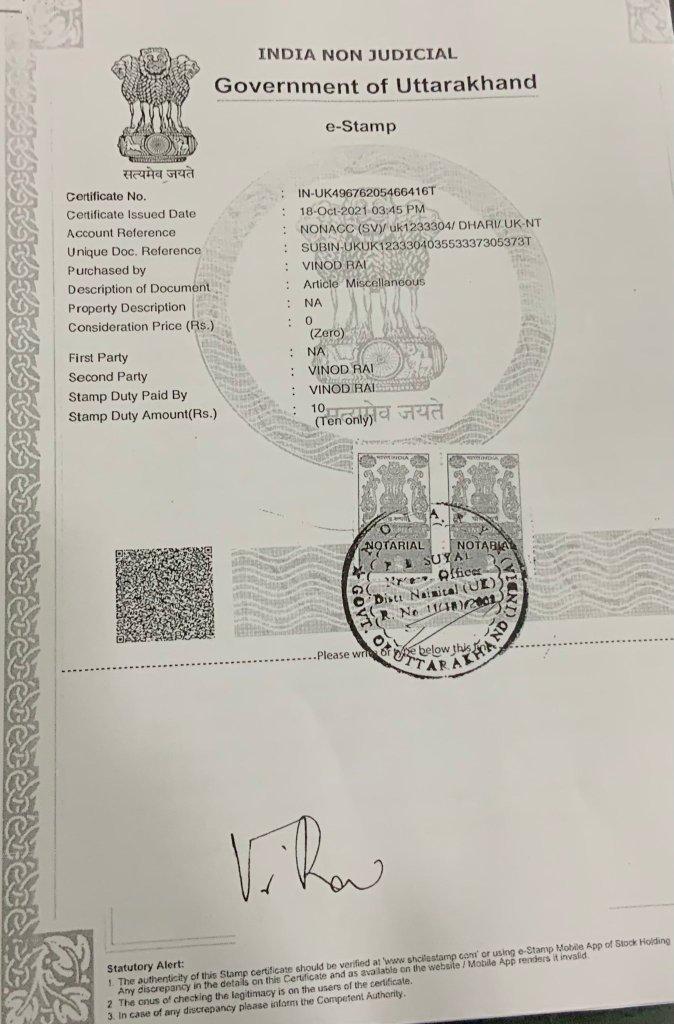
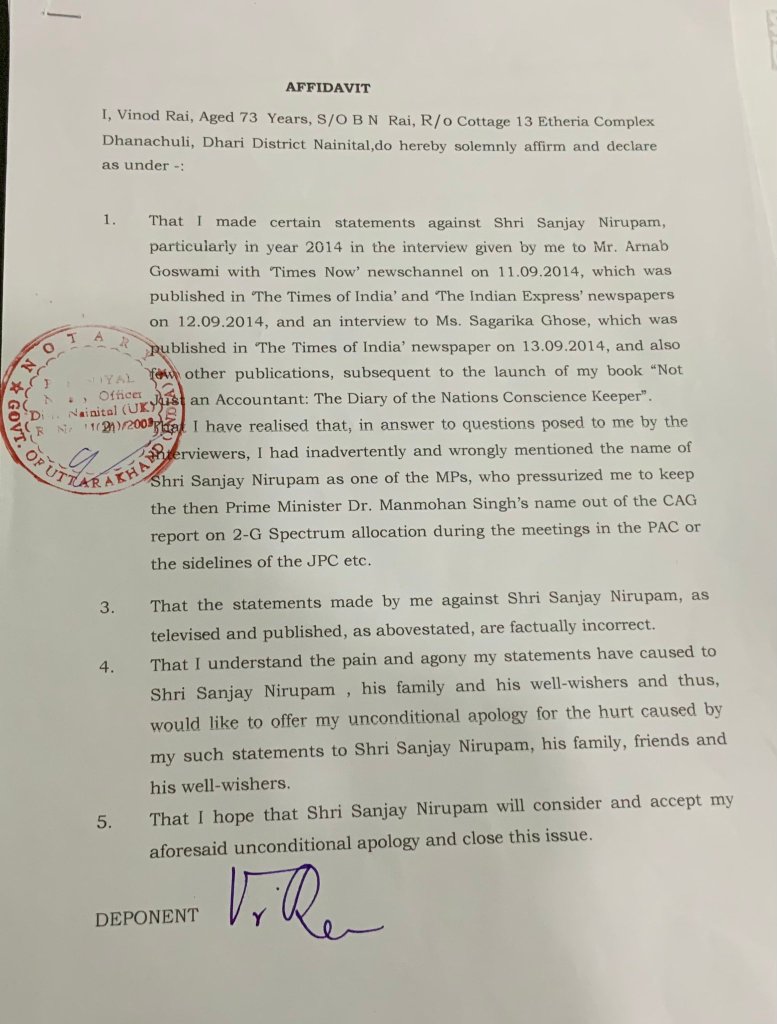
The figures mentioned above are findings of parliamentary panel so nobody can accuse of anybody having a bias. Also, I probably had shared this but still feel the need to re-share it as people still believe that 2G scam happened even though there are plenty of arguments I can share to prove how it was all a fabricated lie.
Vinod Rai Mafinama in Uttarakhand High Court.
Part 2 of the same Mafinama.
How pathetic Mr. Rai s understanding of economics is can be gauged from the fact that he was made Chairman of IDFC and subsequently had to be thrown out. That whole lie was engineered to throw UPA out and it worked. There are and have been many such coincidences happening over the last 8 years, parallel stories happening in India and UK. This was just yesterday, about a year back Air India was given back to the Tatas, There was controversy about the supposed auctions as only Indigo was the only other party allowed to be at auction but not allowed to buy but more as a spectator as they already have 60% of the Indian civil aviation market. And there was lot of cheering from the Govt. side that finally Air India has been bought home to its true owners, the Tatas. The Tatas too started cheering and sharing how they will take down all the workers, worker unions and everything will be happy glory within a year. In fact, just couple of days back they shared new plans. Btw for the takeover of Air India, they had bought loans from the Banks and they are in the category of too big to fail. As I have shared couple of times before, RBI has not shared any inspection reports of nationalized or private banks after 2013/14. While by law, RBI is supposed to do inspection reports every 3 months and share them in the Public domain. And if you ask any of their supporter, for everything they will say UPA did x or y, which only goes to show morally bankrupt the present Govt. is. Coming back to the topic, before I forget, the idea of sharing their plans is so that they can again borrow money from the banks. But that is not the only story. Just one day back, Smita Prakash, one of the biggest cheerleaders of the present Govt. (she is the boss at Asia News International (ANI)) posted how Air India had treated her sister and other 21 passengers. Basically, they had bought business tickets but the whole cabin was dirty, they complained and they were forced to sit in economy class, not just her cousin sister but the other 21 odd passengers too. Of course Ms Smita became calm as her sister was given free air tickets on Vistara and other goodies. Of course, after that she didn t post anything about the other 21 odd passengers after that. And yes, I understand she is supposed to be a reporter but as can be seen from the twitter thread, there is or was no follow up. Incidentally, she is one of many who has calling others about Revdi culture (freebies to the masses.) but guess that only applies to other people not her or her sister. Again, if there are any coincidences of similar nature in the UK or when Trump was P.M. of the U.S. they are just coincidental .

The Uncosted budget India and the UK have many parallels, it s mind boggling. Before we get into the nitty-gritties, saw something that would be of some interest to the people here.
For those who might not be able to see above, apparently there is place in UK called Tufton Street where there are quite a few organizations that are shadowy and whose finances are not known as to how they are financed. Ms. Truss and quite a few of the people in the cabinet are from the same shadowy organizations. Mr. Kwasi Kwarteng, the just-departed chancellor is and was part of the same group. Now even for me it was a new term to learn and understand what is an uncosted budget is. To make it much more easier I share the example using a common person who goes to the bank for a loan

Now M/S X wants a loan of say Rs. 1000/- for whatever reason. He/she/they go to the bank and asks give me a loan of say INR 1000/- The banks asks them to produce a statement of accounts to show what their financial position is. They produce a somewhat half-filled statement of accounts In which all liabilities are shown, but incomes are not. The bank says you already have so much liabilities, how are you gonna pay those, accounts have to be matched otherwise you are not solvent. M/s X adamantly refuses to do any changes citing that they don t need to. At this point, M/s X credit rating goes down and nobody in the market will give them a loan. At the same time, the assets they had held, their value also depreciates because it became known that they can t act responsibly. So whose to say whether or not M/s X has those number of assets and priced them accurately. But the drama doesn t end there, M/s X says this is the responsibility of actually Mr. Z ( cue The Bank of England) as they are my accountant/lawyer etc. M/s Z says as any lawyer/accountant should. This is not under my remit. If the clients either gives incomplete information or false information or whatever then it is their responsibility not mine. And in fact, the Chancellor is supposed to be the one who is given the responsibility of making the budget. The Chancellor is very similar to our Finance Minister. Because the UK has constitutional monarchy, I am guessing the terms are slightly different, otherwise the functionality seems to be the same. For two weeks, there was lot of chaos, lot of pension funds lost quite a bit in the market and in the end Mr. Kwasi Kwarteng was ousted out of the job. Incredibly, the same media and newspapers who had praised Mr. Kwarteng just few weeks back as the best Tory budget, they couldn t wait to bury him. And while I have attempted to simplify what happened, the best explanation of what has happened can be found in an article from the guardian. Speculation is rife in the UK as to who s ruling atm as the new Chancellor has reversed almost all the policies that Ms. Truss had bought and she is now more or less a figurehead. Mr. Hunt, the new chancellor doesn t have anybody behind him. Apparently, the gentleman wanted to throw his hat the ring in the Tory leadership contest that was held about a month back and he couldn t get 20 MP s to support him. Another thing that is different between UK and India is that in UK by law the PM has to answer questions put up to him or her by the opposition leaders. That is the way accountability is measured there. This is known as PMQ s or Prime Minister Questions and Answers. One can just go to YouTube or any streaming service and give Liz Truss and PMQ s and if they are interested of a certain date, give a date and they can see how she answered the questions thrown at her. Unfortunately, all she could do in both times were non-answers. In fact, the Tories seem to be using some of Labor s policies after they had bad-mouthed the same policies. Politics of right-wing both in the UK and the US seems so out of touch with the people whom they are supposed to protect and administer. An article about cyclists which is sort of half-truth, half irony shows how screwed up the policies are of the RW (right-wing). Now they are questions about the pensions triple-lock. Sadly, it is the working class who would suffer the most, most of the rich have already moved their money abroad several years ago. The Financial Times, did share a video about how things have been unfolding

Seems Ms. Truss forgot to add Financial Times in the list of anti-growth coalition she is so fond of. Also, the Tory party seems to want to create more tax havens in the UK and calling them investment zones. Of course, most of the top tax havens are situated around the UK itself. I wouldn t go more into as that would probably require its own article, although most of that information is all in public domain. Fracking I don t really want to take much time as the blog post has become long. There have been many articles written why Fracking is bad and that is why even the Tories had put in their Manifesto that they won t allow Fracking but apparently, today they are trying to reopen Fracking. And again how bad it is and can be found out by the article in Guardian.

17 October 2022

Dima Kogan: gnuplot output in an FLTK widget

Overview
I make a lot of plots, and the fragmentation of tools in this space really bugs me. People writing Python code mostly use matplotlib, R people use ggplot2. MS people use the internal Excel thing. I've seen people use gtkdatabox for GTK widgets, rrdtool for logging, qcustomplot for qt. And so on. This is really unhelpful, and it would benefit everybody if there was a single solid plotting backend with lots of bindings to different languages and tools. For my own usage, I've been fighting this quixotic battle, using gnuplot as the plotting backend for all my use cases. gnuplot is
  • very mature
  • stable
  • fast
  • powerful
  • supported on every (with reason) platform
  • supports lots and lots of output backends
There are some things it can't do, but those can be added, and I haven't felt it to be limiting in over 20 years of using it. I rarely use it directly, and usually interact with it through one of I wrote all of these, although the Perl library was taken over by others long ago. Recently I needed a plotting widget for an FLTK program written in Python. It would be great if there was a C++ class deriving from Fl_Widget that would be wrapped by pyfltk, but there isn't. But it turns out that I already had all the tools to quickly hack together something that mostly works. This is a not-ready-for-primetime hack, but it works so well, I'd like to write it up. Hopefully this will be done "properly" someday.

Approach
Alright. So here I'm trying to tie together a Python program, gnuplot output and an FLTK widget. This is a Python program, I can use gnuplotlib to talk to the gnuplot backend. In a perfect world, gnuplot would ship a backend interfacing to FLTK. But it doesn't. What it does do is to ship an x11 backend that makes plots with X11 commands, and it allows these commands to be directed to an arbitrary X11 window. So we
  1. Make an FLTK widget that simply creates an X11 window, and never actually draws into it
  2. Tell gnuplot to plot into this window

Demo
This is really simple, and works shockingly well. Here's my Fl_gnuplotlib widget:
#!/usr/bin/python3
import sys
import gnuplotlib as gp
import fltk
class Fl_Gnuplotlib_Window(fltk.Fl_Window):
    def __init__(self, x,y,w,h, **plot_options):
        super().__init__(x,y,w,h)
        self.end()
        self._plot                 = None
        self._delayed_plot_options = None
        self.init_plot(**plot_options)
    def init_plot(self, **plot_options):
        if 'terminal' in plot_options:
            raise Exception("Fl_Gnuplotlib_Window needs control of the terminal, but the user asked for a specific 'terminal'")
        if self._plot is not None:
            self._plot = None
        self._delayed_plot_options = None
        xid = fltk.fl_xid(self)
        if xid == 0:
            # I don't have an xid (yet?), so I delay the init
            self._delayed_plot_options = plot_options
            return
        # will barf if we already have a terminal
        gp.add_plot_option(plot_options,
                           terminal = f'x11 window "0x xid:x "')
        self._plot = gp.gnuplotlib(**plot_options)
    def plot(self, *args, **kwargs):
        if self._plot is None:
            if self._delayed_plot_options is None:
                raise Exception("plot has not been initialized")
            self.init_plot(**self._delayed_plot_options)
            if self._plot is None:
                raise Exception("plot has not been initialized. Delayed initialization failed")
        self._plot.plot(*args, **kwargs)
Clearly it's simply making an Fl_Window, and pointing gnuplotlib at it. And a sample application that uses this widget:
#!/usr/bin/python3
import sys
import numpy as np
import numpysane as nps
from fltk import *
from Fl_gnuplotlib import *
window = Fl_Window(800, 600, "plot")
plot   = Fl_Gnuplotlib_Window(0, 0, 800,600)
iplot = 0
plotx = np.arange(1000)
ploty = nps.cat(plotx*plotx,
                np.sin(plotx/100),
                plotx)
def timer_callback(*args):
    global iplot, plotx, ploty, plot
    plot.plot(plotx,
              ploty[iplot],
              _with = 'lines')
    iplot += 1
    if iplot == len(ploty):
        iplot = 0
    Fl.repeat_timeout(1.0, timer_callback)
window.resizable(window)
window.end()
window.show()
Fl.add_timeout(1.0, timer_callback)
Fl.run()
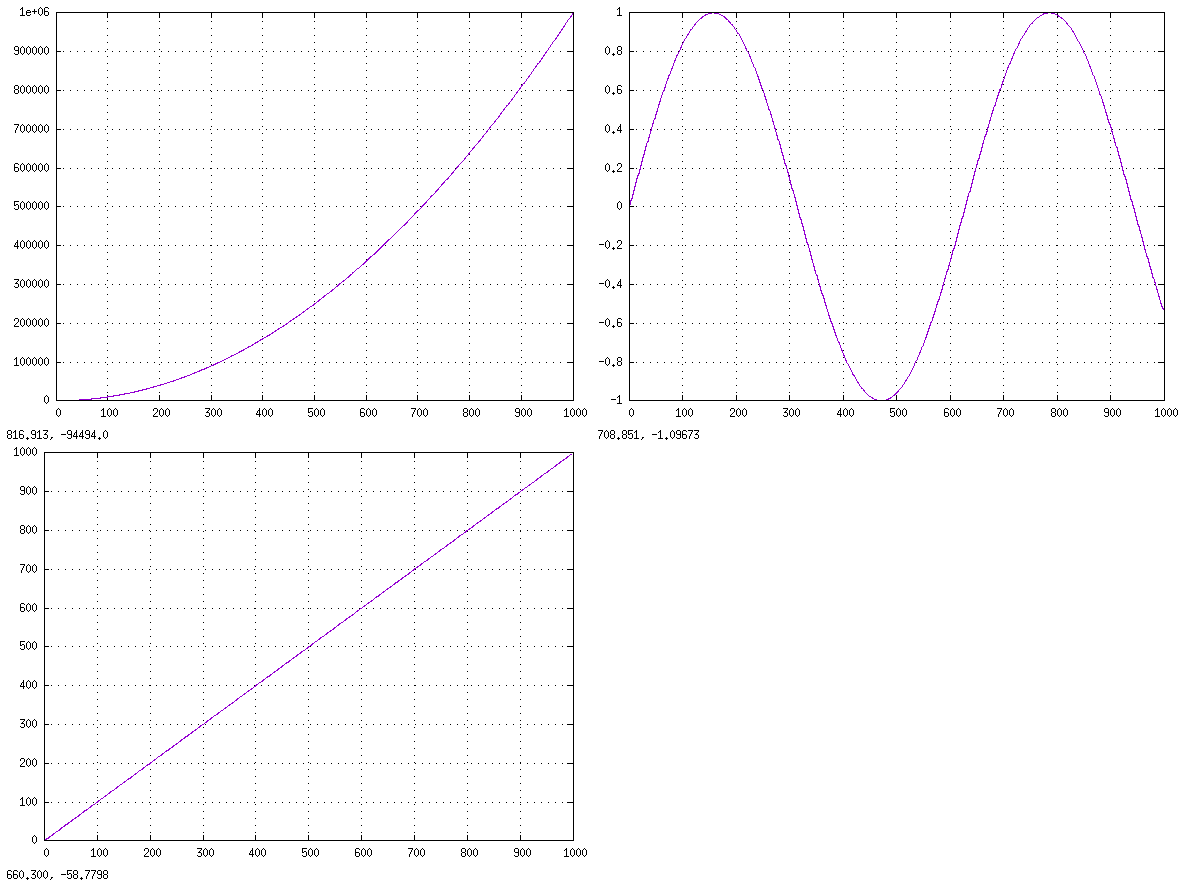
This is nice and simple. Exactly what a program using a widget to make a plot (while being oblivious to the details) should look like. It creates a window, places the one plotting widget into it, and cycles the plot inside it at 1Hz (cycling between a parabola, a sinusoid and a line). Clearly we could place other UI elements around it, or add more plots, or whatever. The output looks like this:
Fl_gnuplotlib_demo.gif
To run you need to apt install python3-numpysane python3-gnuplotlib python3-fltk. If running an older distro on a non-Debian-based distro, you should grab those from source.

Discussion
This works. But it's a hack. Some issues:
  • This plotting widget currently can output only. It can make whatever plot we like, but it cannot accept UI input from the container program in any way
  • More than that, when focused it completely replaces the FLTK event logic for that window. So all keyboard input is swallowed, including the keys to access FLTK menus, to exit the application, etc, etc.
  • This approach requires us to use the x11 gnuplot terminal. This works, but it's no longer the terminal preferred by the gnuplot devs, and it it's maintained as vigilantly as the others.
  • And it has bugs. For instance, asking to plot into a window that doesn't yet exist, causes it to create a new window. This breaks FLTK applications that start up and create a plot immediately. Here's a mailing list thread discussing these issues.
So this is a very functional hack, but it's still hack. And it feels like making this solid will take a lot of work. Maybe. I'll push more on this as I need it. Stay tuned!

14 October 2022

Shirish Agarwal: Dowry, Racism, Railways

Dowry Few days back, had posted about the movie Raksha Bandhan and whatever I felt about it. Sadly, just couple of days back, somebody shared this link. Part of me was shocked and part of me was not. Couple of acquaintances of mine in the past had said the same thing for their daughters. And in such situations you are generally left speechless because you don t know what the right thing to do is. If he has shared it with you being an outsider, how many times he must have told the same to their wife and daughters? And from what little I have gathered in life, many people have justified it on similar lines. And while the protests were there, sadly the book was not removed. Now if nurses are reading such literature, how their thought process might be forming, you can tell :(. And these are the ones whom we call for when we are sick and tired :(. And I have not taken into account how the girls/women themselves might be feeling. There are similar things in another country but probably not the same, nor the same motivations though although feeling helplessness in both would be a common thing. But such statements are not alone. Another gentleman in slightly different context shared this as well
The above is a statement shared in a book recommended for CTET (Central Teacher s Eligibility Test that became mandatory to be taken as the RTE (Right To Education) Act came in.). The statement says People from cold places are white, beautiful, well-built, healthy and wise. And people from hot places are black, irritable and of violent nature. Now while I can agree with one part of the statement that people residing in colder regions are more fair than others but there are loads of other factors that determine fairness or skin color/skin pigmentation. After a bit of search came to know that this and similar articulation have been made in an idea/work called Environmental Determinism . Now if you look at that page, you would realize this was what colonialism is and was all about. The idea that the white man had god-given right to rule over others. Similarly, if you are fair, you can lord over others. Seems simplistic, but yet it has a powerful hold on many people in India. Forget the common man, this thinking is and was applicable to some of our better-known Freedom fighters. Pune s own Bal Gangadhar Tilak The Artic Home to the Vedas. It sort of talks about Aryans and how they invaded India and became settled here. I haven t read or have access to the book so have to rely on third-party sources. The reason I m sharing all this is that the right-wing has been doing this myth-making for sometime now and unless and until you put a light on it, it will continue to perpetuate  . For those who have read this blog, do know that India is and has been in casteism from ever. They even took the fair comment and applied it to all Brahmins. According to them, all Brahmins are fair and hence have god-given right to lord over others. What is called the Eton boy s network serves the same in this casteism. The only solution is those idea under limelight and investigate. To take the above, how does one prove that all fair people are wise and peaceful while all people black and brown are violent. If that is so, how does one count for Mahatma Gandhi, Martin Luther King Junior, Nelson Mandela, Michael Jackson the list is probably endless. And not to forget that when Mahatma Gandhiji did his nonviolent movements either in India or in South Africa, both black and brown people in millions took part. Similar examples of Martin Luther King Jr. I know and read of so many non-violent civl movements that took place in the U.S. For e.g. Rosa Parks and the Montgomery Bus Boycott. So just based on these examples, one can conclude that at least the part about the fair having exclusive rights to being fair and noble is not correct. Now as far as violence goes, while every race, every community has had done violence in the past or been a victim of the same. So no one is and can be blameless, although in light of the above statement, the question can argumentated as to who were the Vikings? Both popular imagination and serious history shares stories about Vikings. The Vikings were somewhat nomadic in nature even though they had permanent settlements but even then they went on raids, raped women, captured both men and women and sold them at slaves. So they are what pirates came to be, but not the kind Hollywood romanticizes about. Europe in itself has been a tale in conflict since time immemorial. It is only after the formation of EU that most of these countries stopped fighting each other From a historical point perspective, it is too new. So even the part of fair being non-violent dies in face of this evidence. I could go on but this is enough on that topic.

Railways and Industrial Action around the World. While I have shared about Railways so many times on this blog, it continues to fascinate me that how people don t understand the first things about Railways. For e.g. Railways is a natural monopoly. What that means is and you can look at all and any type of privatization around the world, you will see it is a monopoly. Unlike the road or Skies, Railways is and would always be limited by infrastructure and the ability to have new infrastructure. Unlike in road or Skies (even they have their limits) you cannot run train services on a whim. At any particular point in time, only a single train could and should occupy a stretch of Railway network. You could have more trains on one line, but then the likelihood of front or rear-end collisions becomes a real possibility. You also need all sorts of good and reliable communications, redundant infrastructure so if one thing fails then you have something in place. The reason being a single train can carry anywhere from 2000 to 5000 passengers or more. While this is true of Indian Railways, Railways around the world would probably have some sort of similar numbers.It is in this light that I share the below videos.
To be more precise, see the fuller video
Now to give context to the recording above, Mike Lynch is the general secretary at RMT. For those who came in late, both UK and the U.S. have been threatened by railway strikes. And the reason for the strikes or threat of strikes is similar. Now from the company perspective, all they care is to invest less and make the most profits that can be given to equity shareholders. At the same time, they have freezed the salaries of railway workers for the last 3 years. While the politicians who were asking the questions, apparently gave themselves raise twice this year. They are asking them to negotiate at 8% while inflation in the UK has been 12.3% and projected to go higher. And it is not only the money. Since the 1980s when UK privatized the Railways, they stopped investing in the infrastructure. And that meant that the UK Railway infrastructure over period of time started getting behind and is even behind say Indian Railways which used to provide most bang for the buck. And Indian Railways is far from ideal. Ironically, most of the operators on UK are nationalized Railways of France, Germany etc. but after the hard Brexit, they too are mulling to cut their operations short, they have too  There is also the EU Entry/Exit system that would come next year. Why am I sharing about what is happening in UK Rail, because the Indian Government wants to follow the same thing, and fooling the public into saying we would do it better. What inevitably will happen is that ticket prices go up, people no longer use the service, the number of services go down and eventually they are cancelled. This has happened both in Indian Railways as well as Airlines. In fact, GOI just recently announced a credit scheme just a few days back to help Airlines stay afloat. I was chatting with a friend who had come down to Pune from Chennai and the round-trip cost him INR 15k/- on that single trip alone. We reminisced how a few years ago, 8 years to be precise, we could buy an Air ticket for 2.5k/- just a few days before the trip and did it. I remember doing/experiencing at least a dozen odd trips via air in the years before 2014. My friend used to come to Pune, almost every weekend because he could afford it, now he can t do that. And these are people who are in the above 5-10% of the population. And this is not just in UK, but also in the United States. There is one big difference though, the U.S. is mainly a freight carrier while the UK Railway Operations are mostly passenger based. What was and is interesting that Scotland had to nationalize their services as they realized the Operators cannot or will not function when they were most needed. Most of the public even in the UK seem to want a nationalized rail service, at least their polls say so. So, it would definitely be interesting to see what happens in the UK next year. In the end, I know I promised to share about books, but the above incidents have just been too fascinating to not just share the news but also share what I think about them. Free markets function good where there is competition, for example what is and has been happening in China for EV s but not where you have natural monopolies. In all Railway privatization, you have to handover the area to one person, then they have no motivation. If you have multiple operators, then there would always be haggling as to who will run the train and at what time. In either scenario, it doesn t work and raises prices while not delivering anything better  I do take examples from UK because lot of things are India are still the legacy of the British. The whole civil department that was created in 1953 is/was a copy of the British civil department at that time and it is to this day. P.S. Just came to know that the UK Chancellor Kwasi Kwarteng was just sacked as UK Chancellor. I do commend Truss for facing the press even though she might be dumped a week later unlike our PM who hasn t faced a single press conference in the last 8 odd years.

https://www.youtube.com/watch?v=oTP6ogBqU7of The difference in Indian and UK politics seems to be that the English are now asking questions while here in India, most people are still sleeping without a care in the world. Another thing to note Minidebconf Palakkad is gonna happen 12-13th November 2022. I am probably not gonna go but would request everyone who wants to do something in free software to attend it. I am not sure whether I would be of any use like this and also when I get back, it would be an empty house. But for people young and old, who want to do anything with free/open source software it is a chance not to be missed. Registration of the same closes on 1st of November 2022. All the best, break a leg  Just read this, beautifully done.

4 October 2022

Jonathan Dowland: rewrite rule representation

I've begun writing up my phd and, not for the first time, I'm pondering issues of how best to represent things. Specifically, rewrite rules. Here's one way of representing an example rewrite rule:
streamFilter g . streamFilter f = streamFilter (g . f)
This is a fairly succinct representation. It's sort-of Haskell, but not quite. It's an equation. The left-hand side is a pattern: it's intended to describe not one expression but a family of expressions that match. The lower case individual letters g and f are free variables: labelled placeholders within the pattern that can be referred to on the right hand side. I haven't stipulated what defines a free variable and what is a more concrete part of the pattern. It's kind-of Haskell, and I've used the well-known operator . to represent the two stream operators (streamFilters) being connected together. (In practice, when we get to the system where rules are actually applied, the connecting operator is not going to be . at all, so this is also an approximation). One thing I don't like about . here, despite its commonness, is having to read right-to-left. I adopted the habit of using the lesser-known >>> in a lot of my work (which is defined as (>>>) = flip (.)), which reads left-to-right. And then I have the reverse problem: people aren't familiar with >>>, and, just like ., it's a stand-in anyway. Towards the beginning of my PhD, I spent some time inventing rewrite rules to operate on pairs of operators taken from a defined, known set. I began representing the rules much as in the example above. Later on, I wanted to encode them as real Haskell, in order to check them more thoroughly. The above rule, I first encoded like this
filterFilterPre     = streamFilter g . streamFilter f
filterFilterPost    = streamFilter (g . f)
prop_filterFilter s = filterFilterPre s == filterFilterPost s
This is real code: the operators were already implemented in StrIoT, and the final expression defined a property for QuickCheck. However, it's still not quite a rewrite rule. The left-hand side, which should be a pattern, is really a concrete expression. The names f and g are masquerading as free variables but are really concretely defined in a preamble I wrote to support running QuickCheck against these things: usually simple stuff like g = odd, etc. Eventually, I had to figure out how to really implement rewrite rules in StrIoT. There were a few approaches I could take. One would be to express the rules in some abstract form like the first example (but with properly defined semantics) and write a parser for them: I really wanted to avoid doing that. As a happy accident, the solution I landed on was enabled by the semantics of algebraic-graphs, a Graph library we adopted to support representing a stream-processing topology. I wrote more about that in data-types for representing stream-processing programs. I was able to implement rewrite rules as ordinary Haskell functions. The left-hand side of the rewrite rule maps to the left-hand side (pattern) part of a function definition. The function body implements the right-hand side. The system that applies the rules attempts to apply each rewrite rule to every sub-graph of a stream-processing program. The rewrite functions therefore need to signal whether or not they're applicable at runtime. For that reason, the return type is wrapped in Maybe, and we provide a catch-all pattern for every rule which simply returns Nothing. The right-hand side implementation can be pretty thorny. On the left-hand side, the stream operator connector we've finally ended up with is Connect from algebraic-graphs. Here's filter fuse, taken from the full ruleset:
filterFuse :: RewriteRule
filterFuse (Connect (Vertex a@(StreamVertex i (Filter sel1) (p:_) ty _ s1))
                    (Vertex b@(StreamVertex _ (Filter sel2) (q:_) _ _ s2))) =
    let c = a   operator    = Filter (sel1 * sel2)
              , parameters  = [\[  (\p q x -> p x && q x) $(p) $(q)  ]]
              , serviceTime = sumTimes s1 sel1 s2
               
    in Just (removeEdge c c . mergeVertices ( elem  [a,b]) c)
filterFuse _ = Nothing
That's perhaps the simplest rule in the set. (See e.g. hoistOp for one of the worst!) The question that remains to me, is, which representation, or representations, to use in the thesis? I'm currently planning to skip the abstract example I started with and start with the concrete Haskell encoding using QuickCheck. I'm not sure if it seems weird to have two completely separate implementations of the rules, but the simpler QuickCheck-checked rules are much closer to the "core essence" of the rules than the final implementation in StrIoT. And the derivation of the rules comes earlier in the timeline than the design work that led to the final StrIoT implementation. The middle-option is still compromised, however, by having concrete expressions pretending to be patterns. So I'm not sure.

Abhijith PA: Laptop refreshment

(Sorry if you have read this already, due to a tag mistake, my draft copy got published) laptop I recently bought a refurbished thinkpad x260. If you have read my post of my <a href= <!DOCTYPE html> Laptop refreshment