Search Results: "ean"

24 January 2012

Gunnar Wolf: BugCon friends, are you trying to scare away 50%+ of the target audience?

You are scaring away much more than that. I just came across an invitation for BugCon 2012. BugCon is a Mexican conference devoted to computer security I cannot comment on its level or value because, although it's a topic that has long interested me, I must recognize each day I feel less of an expert, nowadays finding myself at the level of a "sysadmin who tries not to be too dumb for his own job security". Oh, and also because it would be completely off-topic for this post. If you look at Vendetta's (the main organizer) blog post, it will probably give you the impression that the conference is just an excuse for the afterparty: Lets go see some b00bs! Do you think your fellow female hackers will have any interest in joining a bunch of sex-starved, hormone-infested teenagers who only want to pwn a website and grab more pr0n? Do you think females will feel welcome (or even mildly safe) between you? I would not think so. And I also think you are alienating any professional who might have any interest in joining your community, be it as a member, as a mentor, or whatnot. I cannot right now do a coherent post on this topic, but I can reference you to what I have seen (and read) over the last almost 10 years, when the issue was first brought up to our attention. I am very glad to see that, at least in the Free Software area, there has been a real change of mindset. I hope you are in time to think about it and rectify. Oh, and not the description of an incident, but a very interesting and thoughtful take on this: [pdf] Interesting analysis by Hannah Wallach on the numbers and motivations of women in Free Software groups. I don't know if Hannah has published this in article form, but many interesting points can be understood by looking at the presentation. My good friend Vendetta: I don't mean this post (longer than what I originally intended) as a way to say you and the conference you are organizing for the third year (IIRC) already is unprofessional or targetted to pimply teenagers. I know the work you have put in it. I hope you see the points I'm trying to drive You are of course free to have whatever afterparty you have. But, if as the main organizer, you are giving the images of nice chicks at Hooters more weight and relevance than to the conference itself... you are doing yourself a disservice. I hope you can rectify it, and make BugCon attractive to hacker women as well.

23 January 2012

Neil Williams: Emdebian Grip automated dependency resolution

The script isn't fully automated yet, I'm running it manually and watching for errors, but I do now have a simple script (~100 lines of perl) which runs edos-debcheck against each of the supported Emdebian architectures for unstable-grip and picks out those packages which are missing from the subset of packages which Emdebian monitors for Grip.

I was hoping to make these scripts into a normal Debian package but there are some limitations in that the scripts need to assume various pieces of Debian infrastructure. e.g. I started off using rsync to pull in the Packages files (along with Release and Sources) because apt has annoying behaviours with multiple architectures. (Emdebian Grip processes 7 architectures simultaneously on blavet.debian.org). Peter Palfrader kindly arranged for a local mirror to be available and now the entire Packages processing can be done using symlinks. Much, much better.

Actual package movement data comes directly from dak via projectb - something else which makes packaging these scripts for use on non debian.org boxes a bit hard.

Once again, I am indebted to the EDOS team (please, please keep working on edos-debcheck - it hasn't had uploads recently) because I tried to get this working with germinate but failed. (Colin - I'll be looking to borrow some of your time to work out what was going wrong.)

The dependency resolution script now means that I can meet release team requirements that when foo is updated in sid to depend on libbar2 but Emdebian Grip only has libbar1, the scripts will automatically pick up libbar2 and add it to Emdebian Grip. The current sid version gets pulled in and (the theory goes) will migrate into testing-grip as an almost automatically valid candidate. Processing of the dependency can happen within hours of the updated version of foo arriving in Emdebian Grip but as long as it happens within a few days I think everyone will be fine with it.

I've got a sync script too which can periodically run across the entire suite and check for packages which have slipped the net. I'll have to see how often that needs to run but once a week doesn't sound too painful.

Processing for Emdebian Grip is very fast. Most of the time is taken uploading:

2012-01-23 22:24:42 add sid-grip deb main armhf libfltk-images1.3 1.3.0-5em1
2012-01-23 22:24:52 add sid-grip deb main i386 libfltk-images1.3 1.3.0-5em1
2012-01-23 22:25:07 add sid-grip deb main mips libfltk-images1.3 1.3.0-5em1
2012-01-23 22:25:25 add sid-grip deb main powerpc libfltk-images1.3 1.3.0-5em1
2012-01-23 22:26:00 add sid-grip deb main amd64 libstdc++6-4.5-dev 4.5.3-12em1
2012-01-23 22:26:34 add sid-grip deb main armel libstdc++6-4.5-dev 4.5.3-12em1


(It was a lot longer, comparatively, when I was having to rsync and then dget instead of just read from the local filesystem.)

I've also been working on an init script which will gradually work through the subset of packages by order of Priority - approximately what a new architecture (like armhf) would do. Note that Emdebian Grip supports armhf already. The only slight concern is whether the init script needs to be throttled back to not flood the queues with hundreds of uploads an hour (which it could end up doing, at least for the first 24 hours).

Logs of package movements are available: http://www.emdebian.org/grip/logs.php

Packages can be searched too: http://www.emdebian.org/grip/search.php

More on Emdebian Integration on the Debian wiki: http://wiki.debian.org/EmdebianIntegration

Now all I need is a fix for #655919 :-) FTP team?

Matthew Garrett: UEFI and bugs

I gave a presentation on UEFI at LCA 2012 - you can watch it here, with the bonus repeat (and different jokes) here. It's a gentle introduction to UEFI, followed by some discussion of the problems we've faced in dealing with implementation bugs.

The fundamental problem is that UEFI is a lot of code. And I really do mean a lot of code. Ignoring drivers, the x86 Linux kernel is around 30MB of code. A comparable subset of the UEFI tree is around 35MB. UEFI is of a comparable degree of complexity to the Linux kernel. There's no reason to assume that the people who've actually written this code are significantly more or less competent than an average Linux developer, so all else being equal we'd probably expect somewhere around the same number of bugs per line. Of course, not all else is equal.

Even today, basically all hardware is shipping with BIOS by default. The only people to enable UEFI are enthusiasts. Various machines will pop up all kinds of dire warnings if you try to turn it on. UEFI has had very little real world testing. And it really does show. In the few months I've been working on UEFI I've discovered machines where SetVirtualAddressMap() calls code that has already been (per spec) discarded. I've seen cases where it was possible to create variables, but not to delete them. I've seen a machine that would irreparably corrupt its firmware when you tried to set a variable. I've tripped over code that fails to parse invalid boot variables, bricking the hardware. Many vendors independently fail to report the correct framebuffer stride. And those are just the ones that have ended up on hardware which crosses my desk, which means I haven't even tested the majority of consumer-grade hardware with UEFI.

The problems with UEFI have very little to do with its design or the ability of the people implementing it. After a few years of iterative improvements it stands a good chance of being more reliable and useful than BIOS. Increased commonality of code between vendors is a blessing and a curse - in the long term it means that these bugs can be shaken out, but in the short term it means that at least one hardware-destroying bug has ended up carried by multiple vendors. Right now we're still in the short term and it's likely that we'll find yet more UEFI bugs that cause all sorts of problems. The next few years will probably be a bumpy ride.

comment count unavailable comments

22 January 2012

Jonathan McDowell: I want you to see my storage automagically

For my day job I build storage systems. A lot of what I do at present involves caring a lot about how different OSes deal with things like new LUNs being presented from a SCSI target, or errors along a subset of the available paths to a device. It will come as no surprise to you to discover that they all suck (for values of all equal to Linux, Solaris, Windows and VMWare). New LUNs are particularly annoying. I'm in the situation that creation and removal of a LUN is exceptionally easy. Hmmm. Maybe I need to back up here a bit first. SCSI has the concept of a target (think, device, eg hard drive). Each target can present multiple logical units. Each of these is assigned a number - a Logical Unit Number. Most devices (a hard drive, or a CDROM drive) will present a single LUN. A storage array will tend to present multiple LUNs; one for each volume that is exported to the host. At the host level each LUN really just looks like a separate device (for Linux /dev/sda and /dev/sdb may well be separate LUNs on the same array, rather than 2 separate arrays/hard drives, for example. At the block device level you don't care about the difference usually). Anyway. For various reasons I end up adding and removing LUNs quite often. And there are ways for the array to indicate that this has happened to the host (the UNIT ATTENTION/REPORT LUNS DATA CHANGED check condition seems to be favoured these days, as a complete Fibre Channel LIP can be disruptive). What I'd like to happen in that case is the host to pick up the check condition and drop and/or add the devices that have changed. Instead everything wants a manual rescan. rescan-scsi-bus tends to be simplest for Linux. Windows wants a manual refresh in Disk Administrator. VMWare a "Rescan HBAs" from vSphere. Solaris a "devfsadm -C" and possibly a "cfgadm -al" first. And all of these can be temperamental about picking up the changes. We've done a lot about hotplug for the desktop user experience, without doing the same level for the server experience. I appreciate that there are situations that you don't want your server to reconfigure things without being told to, but the current situation can be detrimental (for example Linux multipathing will hold a device open even after it's disappeared and is returning an "INVALID LUN" response; it would be much better if it could cleanly close that device and wait for it to return). Storage is capable of being much more than just a single block device these days, and it's a shame that nothing seems to deal fully with that fact. (Yes, yes, I should write and submit patches, but I appreciate that there's not always a simple answer, nor necessarily an answer that works for all situations automatically. Plus, y'know, not enough hours in the day and I hope you all appreciate I've taken a break from watching BSG to write this.)

Jon Dowland: bugs

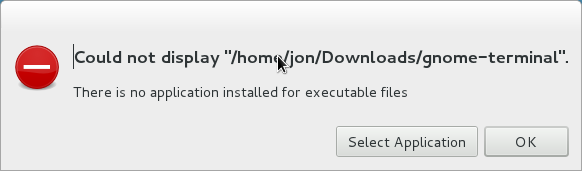
[pic]
Bugs I've hit in GNOME 3, in the last 5 minutes: I didn't set out to bug-hunt this morning, I'm actually trying to get some work done. Whilst this is a particularly bad case of stacked-bugs, it's unfortunately, pretty representative of what it's like to try and use a Linux desktop at the moment. Every day I go through a similar experience. I've just had to give up and log out and back in again. The shell path bug above has re-surfaced in a new session. Great. I'm waiting on a delayed laptop at work. I'm very tempted to cancel the order and just use a Mac Air instead (we have one spare). It seems I'm walking the inevitable path of F/OSS desktop frustration and the end for many people seems to be the Mac perhaps I should spare myself the pain of the journey. In the mean time, It's bye-bye to GNOME and off to Xfce for me.

21 January 2012

David Welton: Thinking at the Margin

Something I've picked up from reading about economics is the concept of "the margin". It's a way of thinking about problems that more people ought to take into consideration. What is "the margin"? It's that space on a line, in the middle, between two extremes, where the transition from "yes" to "no" occurs. If I offered you a million dollars for the computer you're reading this on (for broad definitions of 'computing device'), you'd probably take me up on the offer. For 0 dollars, you would not. Somewhere, in the middle, is a number where you'd change your mind from "nope, won't sell" to "well... sure, what the heck". That is, loosly defined, a margin. As an example, when people debate about "intellectual property", they often use terrible examples: companies like Microsoft, or performers such as Lady Gaga. Those are bad examples because they are complete outliers, way off on one end of the curve. It's hard to disagree with "so what if Lady Gaga earns a bit less revenue from her music, she's got plenty to live on" when you talk about copyright being a means for artists to support themselves with. Thinking "at the margin" is about those bands that currently barely sell enough music to work professionally as musicians. In scenario A, they are able to work creating music, thus creating more, and likely better music than if they merely pursued it as a hobby. In scenario B, they fall on the other side of the margin and therefore have to get 'real jobs'. This means that their music takes a back seat, and they produce less of it. Now, copyright and company are a complex conundrum with many facets; my point is simply that when thinking about big changes, we should think what will happen at the margin, not what will happen to the outliers.

Andrew Pollock: [debian] Bits from the ISC DHCP Maintainer

I really should write these a bit more often. Wow, I can't believe it was over 4 years ago that I started having occasional face to face meetings with the ISC DHCP folks. The entire ISC DHCP team (of 5) was in town for an all-hands meeting, and Larissa Shapiro, the Product Manager for DHCP (and BIND) suggested it would be a good opportunity for another catch up. Given the current (bad) state of DHCP 4.2 in unstable, I thought this was an excellent idea, and so we all had lunch on Tuesday. I pretty much set the agenda, and it was The general state of 4.2.2 in Debian In a nutshell, it's a bit of a mess. We've got release critical bugs, build failures, the whole cat and kaboodle. It makes me very sad, because 4.2.2 was the first 4.2 series that I had a chance to upload, and I was very excited to do so, because it contains the hotly desired LDAP patches merged upstream. Unfortunately, it's also got the beginnings of the BIND/DHCP merger that's going to be BIND 10, and that is all a bit of a mess. It's directly responsible for the kFreeBSD FTBFS and the introduction of the RFCs, which are both keeping 4.2.2 out of testing. I gave the ISC folks a high-level overview of how Debian development works, and the normal progression of packages from unstable to testing to stable, and the release process and whatnot, and impressed upon them the implications of the current release critical bugs. I also showed them how Ubuntu development fitted into the picture. Finally, I showed them the popcon statistics for DHCP. I think they found it useful. FTBFS issues on kFreeBSD This was a good segue to #643569. The issue is actually with the embedded BIND sources. I'd already forwarded this bug upstream when it first happened, but I don't know what had happened to it. They seemed to act as if this was the first they'd heard of it. I'm hoping that they can get this fixed in 4.2.3, which is due around the end of the quarter. Embedded BIND sources Since we were already talking about an issue caused by the embedded BIND sources, we moved on to talking about #645760 and the existence of the embedded BIND sources in general. It should be pretty straightforward for them to strip the RFCs out of the source. They've already done it in the past for the DHCP sources, so I'm also hopeful that this will get resolved in 4.2.3. The issue of the embedded BIND sources is apparently a bit more complicated, although the day before our meeting, Michael Gilbert filed #643569 and #645760, so I hope that the ISC folks can take a look at these patches and see if it's feasible to adopt them. Patches for GNU/Hurd Finally we talked about #616290, which I know is near and dear to the GNU/Hurd porters' hearts. We probably spent the most time talking about this. The DHCP developers have concerns about accepting a patch for an OS that they do absolutely no testing on, and also questioned the viability of the OS in general. They stressed that they're fairly thin in numbers relative to what they have on their plate to achieve this year, and so pushed back pretty firmly on accepting the current patch. I relayed the frustration that the Hurd folks were having about a lack of dialogue around the patch (most of the interaction has been via an ISC support person). There was actually a bit of a split between the developers, with one of them appreciating that the Hurd was unlikely to go anywhere as a platform without a working DHCP client, so in some regards, they were condemning the platform by taking the position they were taking. They're going to go away and take another look at the patch and try to come back with some actionable feedback on what needs to change to make it more acceptable to them, so we'll see what comes of this. I'm not particularly optimistic that anything acceptable to the GNU/Hurd folks is likely to happen any time soon, but maybe if the patch gets cleaned up a bit more, I'll just bite the bullet and start applying it to the Debian package. BIND 10 One of the guys is more involved in BIND 10 than DHCP, and asked if I could help out with the packaging of a build dependency for BIND 10. It seemed like #578387 was languishing so I offered to pick it up. I've not packaged a library before, mainly because the library packaging guide has scared me off it (I feel I lack the deep C fu that seems necessary), but I figured that this would be a good learning opportunity, so I'm going to dive in.

Steve Kemp: So mega-upload is gone

So the site http://megaupload.com/ has been taken offline, amidst allegations of knowingly conducting in piracy. There are probably a lot of legitimate users who have lost access to their uploaded files, even if they were offsite backups you can imagine a user owning a website which now has a million dead-links. This reminds me of a conversation I overheard on Jon Dowlands blog - the summary is that he'd written a (useful) tool to extract attachments from Maildir folders and was wondering how to store and access those attachments. The upshot seemed to be magical URLs of the form:
  • https://file.example.com/sha1/509c2fe2eba509e93987c3024a74d74583c274bd
The comments covered an alternative which was hash:///sha1/xxxxxxxxxxxxxxxx, which then becomes close to the magnet:// schema. I've not yet thought things through, but I can't help thinking that with the redundency already present in the internet we should be looking at non-server-specific links. Yes there are times right now when you might want to address a specific file on a specific server - but otherwise? Wouldn't it be nice if you could just access a file from "anywhere" which happened to have the right contents? Already my nonporn-but-definitely-adult-site makes its images available as /img/$md5sum.jpg - and similarly the storage at the back-end of my random image upload site uses SHA1 hashes to store the actual files. To make this more complete what we need is something that crawls the internet to find files by hash; then add support in browsers. Obviously this must be async and could introduce timing issues, but fundamentally it seems like a reasonable approach to the problem of a single host going offline. (Consider what happens if imgur.com disappears. All those links would die, yet 99% of the images would still be available somewhere.) I'm tempted to suggest microformat format but I need to consider the matter. Right now I'm going to immediately update my current image hosts to use, at the very least:
 <a href="/foo" rel="sha1:xxxxx md5sum:xxxx">
  <img src="foo.jpg" alt="img name">
 </a>
The unfortunate thing is you cannot have a 'rel="xx"' attribute for an image. So you either have to encode it in the parent link, or add it to the alt attribute which is suboptimal. ObQuote: "Now, they tell me I paid my debt to society." - Oceans Eleven (2001)

20 January 2012

Enrico Zini: Debtags for derivative distributions

Debtags for derivative distributions Sometimes I do cool stuff and I forget to announce it. Ok, so I recently announced a new Debtags website. I forgot to say in the announcement that the new website does not only know of Debian packages: see for example this page, at the very bottom it says: "Distributions: oneiric, precise, sid, testing". This means that already, here and now, debtags.debian.net can be used to tag packages from both Debian and Ubuntu, and can easily be extended to cover the entire Debian ecosystem. If you are a package maintainer, you will notice that your maintainer page shows your packages from everywhere. If you want to filter things a bit, for example hide obsolete packages from an old Debian Stable or Ubuntu LTS, just click on the "Settings" link on the top right to configure the page. How it works The magic is in this mergepackages script, which is run daily, and exports merged Packages files at dde.debian.net. The debtags.debian.net concept of Packages and Sources files are just those all-merged.gz and all-merged-sources.gz. The merging is simple: that rebuild script processes files in order, and the first version of a package that is found is chosen as the base for the one that will go in the merged Packages file. Some fields like "Description" are just taken from this pivot package, others like Architecture or dependencies are merged into it. It's arbitrary, but works for me: the result has all the packages with all their possible architectures and dependencies, and is ready to be indexed with apt-xapian-index. At the moment I pull data from Debian and Ubuntu, but you can see that the script can easily be extended to pull data from any Debian-style ftp archive, so any Debian derivative can go in. I've already started negotiations with the Derivatives Census on how to add any Debian derivative and keep the list up to date. How to export tags for your own distribution I'll use Ubuntu as an example since the data is already available. The way you add Debtags to the Ubuntu packages file is just this one:
  1. Get the full reviewed tag database
  2. Optionally filter out those packages that you are not interested in
  3. Tweak this script to build an overrides file.
  4. Give the overrides file to your favourite ftp archive building tool.
The make-overrides is a bit rusty: if you improve it, please send me your changes. That is it, nothing else required, no excuses, it's ready, here, now! Hitches and gotchas This merged Packages file is a bit of a hack, and suffers from name conflicts across distributions, where two different softwares are packaged in two different distributions with the same name. Ideally, name conflicts should not happen: if a derivative decided to package kate and call it gedit, they deserve to have it tagged uitoolkit::gtk. I think it's rather important that the whole Debian ecosystem works as much as possible with a single package namespace. However, that reasoning fails if you take time into account: packages get renamed, like git and chromium, and may mean completely different things, for example, if you compare Debian Stable with Debian Sid. This last is a problem caused by debtags only working with package names but not package versions. I have a strategy in mind based on being able to override the stable tag database using headers in debian/control; it still needs some details sorted out, but I'm confident we will be able to address these issues properly soon enough. Why stop at the Debian ecosystem? Why indeed. I'm clearly trying to use FOSDEM, and the CrossDistribution devroom as the venue to discuss just that.

19 January 2012

Obey Arthur Liu: State of the Aptitude (week 12)

Hi folks!

We're almost done for the official Summer of Code program and I thought that I couldn't let it end without another update, so here we are (you may thank Daniel Burrows for additional poking).

The Gtk+ interface for Aptitude is making great progress. The product is not final yet but already implements many of the planned ideas, with others to come.
Here are the screenies:


So, let's see the tasks presented in my previous update:

In some more details: we are now much closer to the final interface. Some things are not done yet, for example, notification bars la Iceweasel (or is it Firefox ?) are in the works for unobtrusive notifications about important things and a little guidance.

We are much more reliable now. We eliminated lots of memory management problems that resulted from, mmh, imperfect coding discipline. We also lock the interface when important backend stuff reload to prevent the user from shooting himself in the foot when triggering an install when the APT cache is reloading for example.. The backend refactoring took a sizable part of this second term but it was worth it. The code is now much cleaner and uses no more (at least much fewer) ugly unscalable hacks.

One very important feature of Aptitude is the ability to easily display all kinds of dependencies and navigate through them by hyperlinking. It's now working in the Gtk+ interface as well. Feel free to click on whatever looks like a package or a package version.

We now support the powerful Aptitude package searching syntax. Daniel Burrows is talking with Enrico Zini to bring the power of apt-xapian-index to Aptitude: autocompletion! lightning fast full-text searches! tag clouds! ponies!

There is still a lot to be done. I'm not going away after the GSoC program. I'm here to stay, for Aptitude and Debian. Daniel Burrows has been very helpful and supportive. The Debian community is as awesome as I knew it before participating in the program.

Daniel Burrows is planning to merge the Gtk+ interface into the main branch in September and packages may appear into Experimental. With the very interesting evolutions of the upcoming Adept-3, Lenny+1 will show very interesting changes in the area of packages managers.

Now for you. I need you to test my interface. All necessary instructions are on the development trac : http://dev.graffit.net/aptitude/trac.

Obey Arthur Liu: Aptitude 0.5.0 (aka Aptitude-gtk) released

Long time no post. Anyway, I have some good news.

The Gtk code for Aptitude has been merged some time ago into the main development trunk and we now have a release in Experimental.


For those that don't know about it, here's what it's all about : "The new frontend is is an effort to bring some of the design principles of the curses frontend to a GUI environment, while also exploiting the unique features a GUI gives us and exploring ways to deal with changes in the environment in the nine years since aptitude was first designed."

I had a very good time this summer working on Aptitude with Daniel Burrows in the Google Summer of Code program and I'm very glad we now have a real release. This version is by no means final or perfect but it's a good start.

Head for the blog post from Daniel for some other informations : [Daniel Burrows]

Obey Arthur Liu: FOSDEM 2009

Are you going?

I was also entertaining the idea of giving a lightning talk in the Debian room (not as part of the general lightning talks) about aptitude-gtk. I certainly don't feel like talking for a whole hour talk or what. I don't have that much interesting stuff to say. Maybe we could do it with other 2008 european GSoCers. That could be useful as we didn't do much publicity-wise (see) in a timely maneer.

Certainly I should write a mail about that to the soc-coordination list about this or ramble about it on the planet. :) Oh, I'll get around it.

So any Debian GSoCers going to FOSDEM ?

Christian Perrier: 2012 update 5 for Debian Installer localization

Status for D-I level 1 (core D-I files): Status for D-I level 2 (packages that have localized material that may appear during default installs, such as iso-codes, tasksel, etc.): Status for D-I level 3 (packages that have localized material that may appear during non-default installs, such as win32-loader) Full 100% completeness (hall of fame) for: Czech, German, Spanish, French, Italian, Kazakh, Dutch, Portuguese, Russian, Slovak

Rapha&#235;l Hertzog: Debian related goals for 2012

Like last year, here s a list of Debian related goals that I d like to achieve this year. I might not have the time to implement all the projects, but I like to write them down to keep me motivated. And maybe it can inspire other people to implement some of them (or to help me).
  1. Finish the translation of the Debian Administrator s Handbook The target is to have the book available in April. It would be nice to complete the liberation fund until then so that the book is immediately made available under a DFSG-free license.
  2. Update the Debian Administrator s Handbook for Wheezy
  3. Translating the book in English is only the start of the journey. The real challenge is to keep the book up-to-date with each subsequent release of Debian. And Wheezy should hopefully be released in 2012 since the freeze is in June.
  4. Design and implement the Debian Package Maintenance Hub It s an ambitious project that aims to merge and replace the PTS, the DDPO and their respective mail variants. It should also standardize the flow of information directed towards package maintainers. I m going to use the DEP process to drive this project. This could easily take most of the year, but hopefully I ll motivate other people to chime in and help.
  5. Implement dpkg --check-db and dpkg --repair-db While dpkg is fairly reliable, it s not exempt of bugs and more annoyingly, harddrives/filesystems are not 100% reliable either, thus it happens that some internal database files get corrupted. Given that most files are text based, advanced users can manually fix them but many less skilled users are just left with a broken system that they tend to reinstall. To avoid this, we could provide a command that would try to automatically bring back the internal database to a sane state by looking for a working backup to restore (while at the same time marking some packages as requiring re-installation since we have some indications that they were present).
  6. Implement storage of dpkg s internal files in Git This would be an extension of the former idea. Installing a package dpkg-db-history (any idea for a better name?) would setup dpkg hooks that would record every database change in a git repository. This repository could then be used to restore the last working version of the database.
Besides those concrete projects, I want to do better than last year on the topic of funding my Debian work. I will thus reiterate some objectives:
  1. Write useful articles for Debian users and Debian contributors. They should complete the pages Mastering Debian, Contributing to Debian 101, Debian Packaging Tutorials, and help me increase the audience of this blog.
  2. Write at least one Debian-related ebook (different from the Debian Admin Handbook) and sell it. It could be an ebook targetting testing users since I believe that many more users could benefit from it if they had some better knowledge of the limitations and of the way to mitigate the problems that arise from time to time. Or maybe it could be an ebook for people who want to start contributing to Debian, it could even be bundled with a few hours of mentoring.
  3. By the end of the year, have at least 1/3 of my time funded by donations and/or earnings of my information products. This means doing 3,5 times better than in 2011. It should be doable given that the sales of the Debian Administrator s Handbook will contribute to this goal (once the translation is over).
That makes up lots of challenges for this year. Feel free subscribe to my newsletter to stay up-to-date with my progress and to get my monthly summary of the Debian/Ubuntu news. It s also a good way to help me reach those goals since you will be informed of all my new projects.

11 comments Liked this article? Click here. My blog is Flattr-enabled.

18 January 2012

Ross Burton: Volunteers Needed!

Those lovely people over at Flickr have finally bitten the bullet and are turning off FlickrAuth in the summer, meaning that all applications that use the Flickr API need to use OAuth. This is something I totally agree with, whilst FlickrAuth works and was clearly an important influence on OAuth, it's a single-service protocol when OAuth has managed to get massive adoption and a huge developer base. The problem I've got is libsocialweb, which has a Flickr module that allows both fetching of your contact's recent photos and uploading images. This uses FlickrAuth so at the end of July will suddenly stop working. I've got enough on my plate at the moment and would love for more people to understand how the entire social spagetti works, so this is a call for a volunteer to work on this, for which I'll obviously be available to offer any guidance and mentoring required. There are two ways of approaching this, the easy way and the slightly harder way. The easy way is to update libsocialweb to use an OAuthProxy instead of a FlickrProxy, and update the module metadata so that Bisho uses the generic OAuth flow instead of a Flickr-specific flow. This should be fairly simple and needs to happen soon so that any distributions that are using libsocialweb don't break in the summer. The harder way is to add Flickr support to gnome-online-accounts, using the Twitter service as an example, and then port the Flickr service in libsocialweb to use gnome-online-accounts to authenticate. I've a proof of concept for the librest-goa integration which will be a useful starting point. This is more of a proof of concept for libsocialweb, we've been looking at moving away from Bisho but haven't done anything substantial yet. Ideally both of these happen, so the current code will continue to work in the future and the GOA work demonstrates how GOA and libsocialweb would work together. So, anyone interested?

Matthew Garrett: Why UEFI secure boot is difficult for Linux

I wrote about the technical details of supporting the UEFI secure boot specification with Linux. Despite me pretty clearly saying that this was ignoring issues of licensing and key distribution and the like, people are now using it to claim that Linux could support secure boot with minimal effort. In a sense, they're right. The technical implementation details are fairly straightforward. But they're not the difficult bit.
Secure boot requires that all code that can touch hardware be trustedRight now, if you can run unstrusted code before the OS then you can subvert the OS. Secure boot gives you a mechanism for making sure you only run trusted code, which protects against that. So your UEFI drivers have to be signed, your bootloader has to be signed, and your bootloader must only load a signed kernel. If you've only booted trusted code then you know that your OS is safe. But, unlike trusted boot, secure boot provides no way for you to know that only trusted code was executed. That has to be ensured by OS policy.

This doesn't sound like too much of a problem. But it is. Imagine we have a signed Linux bootloader and a signed Linux kernel, and that these signatures are made with a globally trusted key. These will boot on any hardware using secure boot. Now imagine that an attacker writes a kernel module that sets up a fake UEFI environment, stops the kernel from running code and then executes the Windows bootloader - kind of like kexec, but a little more fiddly. The Windows bootloader believes that it's performing a secure boot, but in fact everything that it believes is trustworthy is the attacker's fake UEFI code. The user's encryption passphrase is logged, the Windows kernel is modified to hide the Linux code and despite everything looking fine your credit card details are on their way to China. In this scenario, the signed Linux kernel is simply used as a malware loader. The only sign that anything is wrong is that boot will be slightly slowed down.

Signing the kernel isn't enough. Signed Linux kernels must refuse to load any unsigned kernel modules. Virtualbox on Linux? Dead. Nvidia binary driver on Linux? Dead. All out of tree kernel modules? Utterly, utterly dead. Building an updated driver locally? Not going to happen. That's going to make some people fairly unhappy.

(The same applies to Windows, of course. Windows 7 allows you to disable driver integrity checks. Windows 8 will have to forbid that when the system's using secure boot)
LicensingGPLv3 has various requirements for signing keys to be available. Microsoft's new requirement that systems support the installation of user keys would let users boot their own modified bootloaders, so that may end up being sufficient to satisfy the license. But we're then beholden on Microsoft - if they remove that requirement then users lose that freedom, and suddenly we're in an awkward licensing situation. There are ongoing conversations about exactly what we're able to do here, but it's not a solved problem.
Key distributionThe UEFI spec doesn't describe or mandate a central certifying authority. Microsoft require that everyone carry their key. We could generate our own, but we have much less sway with vendors. There's no way to guarantee that all hardware vendors will generate our key. And, obviously, if we generate a key, we can't just hand the private half out to others. That means that it becomes impossible for people to produce derivative versions of Linux distributions without getting their own key. The kind of identity verification that would be required for getting such a key is likely to be expensive, and also fairly likely to require that the distribution have a legally registered company in order to facilitate the identity verification. Think Extended Validation certificates, not Startssl Free. Hobbyist Linux distributions will be a thing of the past.
Doesn't custom mode fix this?Microsoft's certification requirements now state that all systems must support a custom mode, implying that it will be possible for a user to install their own keys. Linux vendors would then be able to ship with their own keys on the install media and impose their own policies. Everyone's happy. It's not really good enough, though. People have spent incredible amounts of time and effort making it easy to install Linux by doing little more than putting a CD in a drive. Asking them to go into the firmware and reconfigure things adds an extra barrier that restricts the ability to install Linux to more technically skilled users. And it's even worse than that. This is the full description of the requirement for custom mode:
  1. It shall be possible for a physically present user to use the Custom Mode firmware setup option to modify the contents of the Secure Boot signature databases and the PK.
  2. If the user ends up deleting the PK then, upon exiting the Custom Mode firmware setup, the system will be operating in Setup Mode with Secure Boot turned off.
  3. The firmware setup shall indicate if Secure Boot is turned on, and if it is operated in Standard or Custom Mode. The firmware setup must provide an option to return from Custom to Standard Mode which restores the factory defaults.

There's a few things missing from this, namely:

So no, custom mode doesn't make everything ok. Custom mode with a mandated UI and a documented key format would be much closer, but it wouldn't solve the problem of unattended automated installs.
SummaryWe can write the code required to support secure boot on Linux in a minimal amount of time - in fact, most of it's now done. But significant practical problems remain, and so far we have no workable solutions for any of them.

comment count unavailable comments

17 January 2012

Michal &#268;iha&#345;: ColorHug has arrived

Yesterday, I've unpacked new toy - ColorHug. It came in small packet with CD (which is unfortunately not that useful as it should be), mini USB cable and a letter from Richard Hughes. First attempt to use was of course just connect and make it work :-). The basic access works out of the box:
$ /usr/lib/colorhug-client/colorhug get-firmware-version
1.0.3
$ /usr/lib/colorhug-client/colorhug get-hardware-version
Hardware Version 1
$ /usr/lib/colorhug-client/colorhug get-serial-number
000019
Unfortunately calibration with colord does not yet work out of the box on Debian due to bug 655888. Hopefully it will be fixed soon and it will work nicer. For now you have to rebuild Argyll with Colorhug support (with extra pain caused by Debian package using different build system than upstream). I won't provided binary packages as I pretty much gave up after effort to build clean packages from same sources on i386 and amd64, which always failed on patched autoconf based build system. Side note: I somehow hoped that I won't hit new (in meaning that I don't know them) open source projects which do not use some version control. Unfortunately Argyll CMS is one of such projects... After this update (and restarting GNOME), when connecting ColorHug, the Gnome Color Manager pops up and man can calibrate the screen. The biggest problem is to make ColorHug hold on desired place on screen, if it is not close enough to screen, you will get really bad results. The first result is of course far from being perfect, but colors are definitely better than without calibration or with ICC profile shipped with notebook.

Filed under: Debian English Photography 0 comments Flattr this!

16 January 2012

Eddy Petri&#537;or: What's common between Windows 7 and GNOME 3 / gnome-shell?

Update: I managed to make sound work. For some weird reason, a mute switch option of some the many (and who knows how useful) switches of my sound card was enabled. Now the damn thing works. Did I mention that since I did the upgrade all my sound cards (I have a USB sound card, too) have listed as available inputs all the inputs of my internal sound card (mic, front mic, line in, CD, etc.) in Audacity? That makes for a very confusing and loooong sound input sources list! The upside is that I can finally record clips from televisions that do not provide such a feature and FastVideoDownload doesn't handle.

I also seem to have found a possible fix for the caps-ctrl issue in Xfce4 (obviously, setting "-option ctrl:swapcap" in ~/.Xkbmap, instead of that Alt modifier).


As I said in my previous post, I will tell you what do GNOME 3 and Windows 7 have in common.

Before everything else, I want to make it clear that when I am saying GNOME 3, I am referring to Debian Wheezy's GNOME 3, since I recently upgraded from Squeeze on my laptop. I'll probably drop a line or two about that, too.

First, I'll tell you about the (boring, probably for many) experience with Windows 7. As I said before, my new job requires me to use a Windows machine, so up until a few months ago I was using Windows XP with some additional software and tweaks to make it usable. Then came the Windows 7 upgrade . I am using quotes since the more appropriate term would be fresh installation on a new partition , not even close to what Debian users are used to call an upgrade.

So after a fresh Windows 7 installation, my first shock was the fact there was NO Quick Launch*. Some of you might be laughing, but I had never used Windows 7 up until then, just saw it on a laptop of a friend of mine (Ovidiu, one of the guys with whom I am doing this podcast, went to Denkfest with, and made these interviews). That was the first shock. Initial discussions about this with Windows users lead me to believe Quick Launch was dead and for some unexplained reason, I believed them. Later, much later, a week ago, to be precise, I found out that you can bring back the Quick Launch through some convoluted way**. Up until that point I had to have some icons pinned to the task bar, but some others on the desktop (and I hate that) because some of them, like Cygwin, if pinned, would start a cmd console, since Win 7 pins the process, not the starting script.

Among other things which broke in Win 7 and used to work fine in XP, the Virtual Dimension application which provides me with a virtual desktop, was the first one which was broken. I have been using a liniar 4 desktops-wide virtual desktop for over 5 years and I am worthless and inefficient if all my apps are on the same desktop. Mail application is always on the first desktop, work and file managers are on the second, the third is for extras and multimedia editing while the fourth is my gateway to the internet, containing the browser, instant messenger, or whatever.

The shortcuts I use to get to the various desktops are Win+1 ... Win+4 keyboard shortcuts, but the M$ Evil Empire decided that those shortcuts are going to start or bring foreward the first, second and so on applications pinned on the task bar. And you can't change those shortcuts***. Nor is disabling just those possible since they are all disabled through a huge switch which disables ALL Win+x keyboard shortcuts, among which Win+E (file expolrer) and Win+D (Show Desktop) were also. Luckly, Win+L (lock screen) was not disabled. So I disabled al those Win+ shortcuts, since I need virtual desktops.

Now, imagine if I had to start a Cygwin console and I had all sorts of apps open! Win+D was disabled, so I had to minimize the apps covering the desktop shortcut for Cygwin, click on the icon to start it, bring back the minimized windows and go on with my work. What a waste of clicks, mouse movement, energy and time, just because some dudes thought a Quick Launch-like feature was useless****.


You might wonder already what do those '*' sings mean. Well, sadly, that's what GNOME 3 / gnome-shell and Windows 7 have in common.

Gnome 3 was a shock for me. An empty desktop right after upgrade. No panels, no shortcuts*, no power indicators, no wicd indicator, no virtual desktops, no desktop icons, (I have a few dirs and docs there). Sounds like an Evil Empire decision, doesn't it?

Luckly I have been using Tilda as my always-ready console and I could fire up iceweasel from the console in order to understand where my panel disappeared.

I then realised that the upgrade brought me Network Manager, that app which wicd replaced. As a consequence, I had no working wlan since Network Manager made sure to mess up with the network manager I chose.

After looking through the documentation of Network Manager and realising I either had it set up to leave wlan0 alone or I didn't understood NM's documentation, I simply stopped the service, which let Wicd its job flawlessly.

The first thing I searched was Gnome 3 panel or something of that sort and I was confronted with the obvious option to appeal to the Forced Fallback Mode which was disabled. I figured I either had an old version, or Debian disabled this feature (hoping they provided an alternative). There was also the option to conform to this convoluted way of working** with Actions and such uselessness like that. I still wonder, what is the purpose of the Favourites bar on the left side, since it's accessible only after wasting a lot of mouse movement and time? For Joe's Pesci sake, I use focus under mouse just to avoid needless mouse and keyboard manipulation. Why? Why? WHY would I want every time I need to start or SWITCH to another application to move the mouse to the upper-left corner then take my hands off the mouse to type, move the mouse downwards or move across the whole width of the screen to get to my beloved virtual desktops and pick the app I want?

Making a long story short, after even trying XFCE4 (which for some unknown reason resets almost immediately my keyboard layout to the default layout with the Caps on Caps, instead of my preferred and set Ctrl on Caps - yes, it's global), I managed to find GNOME Shell Frippery** which made the experience better.

Later I found out that GNOME 3's file manager, Nautilus, has decided that an up on level button is useless, since the default is to use that uncopy-pastable button location bar instead of a sane text location bar. And it seems the GNOME developers decided this*** and I should conform to it.

To add insult to injury, those icons on my old panel are apparently useless**** and even in the fallback version I can't get them back. Or so the GNOME developers decided.

At some point this sunday, don't know how or why this change happened, producing sound was impossible. I know the problem is pulseaudio since when I kill the pulseaudio daemon from the console I can play audio. BTW, great timing, just when I needed sound the most, before releasing episode 32 of our podcast (yay, I reaslised that xfce just decided to reset my caps to be caps, after setting to ctrl a few minutes ago).

I know I praised pulseaudio when I first tried it, but failing to make it work out of the box or after some tinkering is a deal breaker for me, so I removed it. Now I find it that is a default in GNOME, yet all it manages to do is prevent audio from working. At least on my machine.

Other problems? Gnome Power Manager manages to hang and block my session, GNOME managed somehow to fail to start at some point. Yeah, and that sound problem which I didn't fix yet, didn't went away after removing all the pulseaudio packages which could be removed (e.g.: ryhtmbox depends on libpulse0, same do some other apps like audacity, so I couldn't remove all pulse related packages).

I got involved with Debian and GNU/Linux because it was tweakable and customisable, didn't use to force all sorts of option on me and now I find with its increasing popularity it becomes more and more like a product of a corporation which decides to change some things just to change and totally disregadring user experience and uses.

So, in the light of all of these problems I think it's time to probably consider trying KDE. Is it any good lately?

Rapha&#235;l Hertzog: Review of my Debian related goals for 2011

Last year I shared my Debian related goals for 2011 . I tend to put more goals than what I can reasonably complete alone and this year was no exception. Let s have a look.
  1. Translate my Debian book into English: PARTLY DONE
    It took more time than expected to prepare and to run the fundraising campaign but it has been successful and the translation is happening right now.
  2. Finish multiarch support in dpkg: DONE BUT NOT ENTIRELY MERGED YET
    Yes, multiarch support was already in the pipe last year in January. I completed the development between January and April (it was sponsored by Linaro) and since then it has mostly been waiting on Guillem to review it, tweak it, and integrate it.
  3. Make deb files use XZ compression by default: TRIED BUT ABANDONED
    After discussing the issue with Colin Watson and Joey Hess during debconf, I came to the conclusion that it was not really desirable at this point. The objections were that debian-installer was not ready for it and that it adds a new dependency on xz for debootstrap to work on non-Debian systems. I believe that the debian-installer side is no longer a problem since unxz is built in busybox-udeb (since version 1:1.19.3-2). For the other side, there s not much to do except ensuring that xz is portable to all the other OS we care about. DAK has been updated too (see #556407).
  4. Be more reactive to review/merge dpkg patches: PARTLY DONE
    I don t think we had any patch that received zero input. We still have a backlog of patches, and the situation is far from ideal but the situation improved.
  5. Implement the rolling distribution proposed as part of the CUT project and try to improve the release process: NOT DONE
    We had a BoF during debconf, we discussed it at length on debian-devel, but in the end we did nothing out of it. Except Josselin Mouette who wrote a proof of concept for his idea. For me testing is already what people are expecting from a rolling distribution. It s just a matter of documenting how to effectively use testing, and of some marketing by defining rolling as alias to testing.
  6. Work more regularly on the developers-reference: PARTLY DONE
    I did contribute some new material to the document but not as much as I could have hoped. On the other hand, I have been rather reactive to ensure that sane patches got merged. We need more people writing new parts and updating the existing content.
  7. Write a 10-lesson course called Smart Package Management : NOT DONE
  8. Create an information product (most likely an ebook or an online training) and sell it on my blog: NOT DONE
    This was supposed to happen after the translation of the Debian Administrator s Handbook. Since the translation is not yet over, I did not start to work on this yet.
  9. By the end of the year, have at least 1/3 of my time funded by donations and/or earnings of my information products: NOT REACHED
    My target was rather aggressive with 700 each month, and given that I did not manage to complete any information product, I m already very pleased to have achieved a mean amount of 204 of donations each month (min: 91 , max: 364 ). It s more than two times better than in 2010. Thank you! Note that those figures do not take into account the revenues of the fundraising of the Debian Administrator s Handbook since they will be used for its translation.
That makes quite a lot of red (for things that I did not achieve) on the other hand I completed projects that I did not foresee and did not plan. For instance improving dpkg-buildflags and then merging Kees Cook work on hardened build flags was an important step for Debian. This was waiting for so long already

2 comments Liked this article? Click here. My blog is Flattr-enabled.

Next.

Previous.