Search Results: "tar"

18 January 2015

EvolvisForge blog: Debian/m68k hacking weekend cleanup

OK, time to clean up tarent so people can work again tomorrow. Not much to clean though (the participants were nice and cleaned up after themselves ), so it s mostly putting stuff back to where it belongs. Oh, and drinking more of the cool Belgian beer Geert (Linux upstream) brought We were productive, reporting and fixing kernel bugs, fixing hardware, swapping and partitioning discs, upgrading software, getting buildds (mostly Amiga) back to work, trying X11 (kdrive) on a bare metal Atari Falcon (and finding a window manager that works with it), etc. I hope someone else writes a report; for now we have a photo and a screenshot (made with trusty xwd). Watch the debian-68k mailing list archives for things to come. I think that, issues with electric cars aside, everyone liked the food places too ;-)

Andreas Metzler: Another new toy

Given that snow is yet a little bit sparse for snowboarding and the weather could be improved on I have made myself a late christmas present: Torggler TS 120 Tourenrodel Spezial It is a rather sporty rodel (Torggler TS 120 Tourenrodel Spezial 2014/15, 9kg weight, with fast (non stainless) "racing rails" and 22 angle of the runners) but not a competition model. I wish I had bought this years ago. It is a lot more comfortable than a classic sled ("Davoser Schlitten"), since one is sitting in instead of on top of the sled somehow like in a hammock. Being able to steer without putting a foot into the snow has the nice side effect that the snow stays on the ground instead of ending up in my face. Obviously it is also faster which is a huge improvement even for recreational riding, since it makes the difference between riding the sledge or pulling it on flattish stretches. Strongly recommended. FWIW I ordered this via rodelfuehrer.de (they started with a guidebook of luge tracks, which translates to "Rodelf hrer"), where I would happily order again.

Guido G nther: whatmaps 0.0.9

I have released whatmaps 0.0.9 a tool to check which processes map shared objects of a certain package. It can integrate into apt to automatically restart services after a security upgrade. This release fixes the integration with recent systemd (as in Debian Jessie), makes logging more consistent and eases integration into downstream distributions. It's available in Debian Sid and Jessie and will show up in Wheezy-backports soon. This blog is flattr enabled.

17 January 2015

Tim Retout: CPAN PR Challenge - January - IO-Digest

I signed up to the CPAN Pull Request Challenge - apparently I'm entrant 170 of a few hundred. My assigned dist for January was IO-Digest - this seems a fairly stable module. To get the ball rolling, I fixed the README, but this was somehow unsatisfying. :) To follow-up, I added Travis-CI support, with a view to validating the other open pull request - but that one looks likely to be a platform-specific problem. Then I extended the Travis file to generate coverage reports, and separately realised the docs weren't quite fully complete, so fixed this and added a test. Two of these have already been merged by the author, who was very responsive. Part of me worries that Github is a centralized, proprietary platform that we now trust most of our software source code to. But activities such as this are surely a good thing - how much harder would it be to co-ordinate 300 volunteers to submit patches in a distributed fashion? I suppose you could do something similar with the list of Debian source packages and metadata about the upstream VCS, say...

Ulrike Uhlig: Updating a profile in Debian s apparmor-profiles-extra package

I have gotten my first patch to the Pidgin AppArmor profile accepted upstream. One of my mentors thus suggested that I d patch the updated profile in the Debian package myself. This is fairly easy and requires simply that one knows how to use Git. If you want to get write access to the apparmor-profiles-extra package in Debian, you first need to request access to the Collaborative Maintenance Alioth project, collab-maint in short. This also requires setting up an account on Alioth. Once all is set up, one can export the apparmor-profiles-extra Git repository.
If you simply want to submit a patch, it s sufficient to clone this repository anonymously.
Otherwise, one should use the auth parameter with debcheckout . The debcheckout command is part of the devscripts package:
debcheckout --auth apparmor-profiles-extra
Go into the apparmor-profiles-extra folder and create a new working branch:
git branch workingtitle
git checkout workingtitle
Get the latest version of profiles from upstream. In profiles , one can edit the profiles. Test. The debian/README.Debian file should be edited: add what relevant changes one just imported from upstream. Then, one could either push the branch to collab-maint:
git commit -a
git push origin workingtitle
or simply submit a patch to the Debian Bug Tracking System against the apparmor-profiles-extra package. The Debian AppArmor packaging team mailing list will receive a notification of this commit. This way, commits can be peer reviewed and merged by the team.

Guido G nther: krb5-auth-dialog 3.15.4

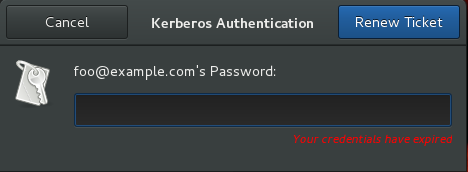
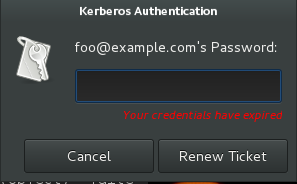
To keep up with GNOMEs schedule I've released krb5-auth-dialog 3.15.4. The changes of 3.15.1 and 3.15.4 include among updated translations, the replacement of deprecated GTK+ widgets, minor UI cleanups and bug fixes a header bar fix that makes us only use header bar buttons iff the desktop environment has them enabled: krb5-auth-dialog with header bar krb5-auth-dialog without header bar This makes krb5-auth-dialog better ingtegrated into other desktops again thanks to mclasen's awesome work. This blog is flattr enabled.

Diego Escalante Urrelo: Link Pack #03

What s that? The third edition of Link Pack of course!
Playing with Power (7 minutes, Vimeo)
A super awesome story about a stop motion animator that turned a Nintendo Power Glove into the perfect animation tool. It s a fun, inspiring video :-). I love the Power Glove, it s so bad. The Power Glove Angry Video Game Nerd Episode 14 (12 minutes, YouTube)
On the topic of the Power Glove, here s the now classic Angry Video Game Nerd video about it. James Rolfe is funny. Ship Your Enemies Glitter
A rising star in the internet business landscape. You pay them $9.99 and they send an envelope full of glitter to your worst enemy. They promise it will jump into everything, as usual. Damn you glitter. A Guide to Practical Contentment
Be happy with what you have, but understand why:
( ) if you start in this place of fixing what s wrong with you, you keep looking for what else is wrong with you, what else you need to improve. So maybe now feel like you don t have enough muscles, or six pack abs, or you think your calves don t look good, or if it s not about your body, you ll find something else. So it s this never-ending cycle for your entire life. You never reach it. If you start with a place of wanting to improve yourself and feeling stuck, even if you re constantly successful and improving, you re always looking for happiness from external sources. You don t find the happiness from within, so you look to other things.
The Comments Section For Every Video Where Someone Does A Pushup
Comments. From YouTube. Enough said.
These are dips. Not pushups. In the entire history of the world, no one has ever successfully performed a pushup. They re all just dips. STOP DRIVING WITH YOUR HIPS. IF YOU RE DOING A PUSHUP CORRECTLY, YOUR HIPS SHOULD CEASE TO EXIST. You could do 100 pushups like this and it wouldn t improve your strength at all. You re just bending your arms.
Self-Taught Chinese Street Photographer Tao Liu Has an Eye for Peculiar Moments
This Chinese photog uses his lunch break to snap interesting street photography. Funny selection by PetaPixel, his Flickr page has even more stuff. Even more in his photoblog.
From https://www.flickr.com/photos/58083590@N05/14613273495/By Liu Tao. https://www.flickr.com/photos/58083590@N05/14613273495/
Enrique Castro-Mendivil s Agua Dulce photo set
Another interesting photo link. This time it s the most popular beach in Lima, with most people coming from low income neighborhoods, it shows how fragmented the city is.
By Enrique Castro-Mendivil. http://www.castromendivilphoto.com/index.php/component/content/article/11-work/69-agua-dulceBy Enrique Castro-Mendivil. http://www.castromendivilphoto.com/index.php/component/content/article/11-work/69-agua-dulce

Also on Link Pack

16 January 2015

EvolvisForge blog: Debian/m68k hacking weekend commencing soonish

As I said, I did not certain events that begun with lea and end with ing prevent me from organising a Debian/m68k hack weekend. Well, that weekend is now. I m too unorganised, and I spent too much time in the last few evenings to organise things so I built up a sleep deficit already and the feedback was slow. (But so are the computers.) And someone I d have loved to come was hurt and can t come. On the plus side, several people I ve long wanted to meet IRL are coming, either already today or tomorrow. I hope we all will have a lot of fun. Legal disclaimer: Debian/m68k is a port of Debian to m68k. It used to be official, but now isn t. It belongs to debian-ports.org, which may run on DSA hardware, but is not acknowledged by Debian at large, unfortunately. Debian is a registered trademark owned by Software in the Public Interest, Inc.

Rhonda D'Vine: Polygons

I stumbled upon this site thanks to Helga: Parable of the Polygons. On the site you can interactively find out how harmless choices can make a harmful world. I found it quite eye opening. And what most catched me but isn't part of the site is that only unhappy polygons are willing to move. Those who are just ok with their neighbourhood but not really happy about it aren't willing to move. Which made me try it out in my own way: Trying to create the most diverse possible environment by temporarily making as many polygons unhappy to find out if it's possible to make as many polygons happy in the long run as possible. ... which is actually part of the way I see my own life. I always sort-of tried to confront people to think. I mean, it's not that common that you see a by-the-looks male person wearing a skirt. And ... since I moved out in July into a small intermediate flat and thus a new neighbourhood, I found the confidence (in parts also to be attributed to the confidence built up at these fine feministic conferences) to walk my hometown in a skirt. Only on some few occations, when meeting up with friends, mostly at evening/night, but it was always a nice experience. And I only felt once uncomfortable to be honest, when there was a probably right-winged skinhead at the subway station. Too many other people around, so I tried to avoid eye contact, but it didn't feel good. Diversity is something that society needs. In all aspects. Also within the Debian project. I believe strongly in that there can't be much of innovation and moving forward if all people do think the same direction. That only means that potential alternative paths won't even get considered, and potentially get lost. That's one of the core parts of what makes the Free Software community lively and useful. People try different approaches, and in the end there will be adopters of what they believe is the better project. Projects pop up every now and then, others starve because of loss of interest, users not picking it up, developers spending their time on other stuff, and that's absolutely fine too. There is always something to be learned even from those situations. Speaking of diversity, there is this protest going on later today because the boss of a cafe here in Vienna considered it a good idea to kick out a lesbian couple because they kissed each other for greeting and told them that they don't have a place for their "otherness" in her traditional viennese cafe and they rather should take it to a brothel. She excused yesterday for her tone that she used, she said she should have been more relaxed as the CEO of that cafe. Which literally means that she only exused for the tone she used in her role, but not at all for the message she transported. So meh, hope there will be many people at the protest. Yes, there is some anti discrimination law around, but that only covers the workplace, and not service areas. Welcome to Austria.
On the upside, court striked down ban on same-sex couple adoption just the other day. Hopefully there is still hope for this country. :)

/personal permanent link Comments: 2 Flattr this

Raphaël Hertzog: Freexian s fifth report about Debian Long Term Support

Like each month, here comes a report about the work of paid contributors to Debian LTS. Individual reports In December 46 work hours have been equally split among 4 paid contributors (note that Thorsten and Rapha l have actually spent more hours because they took over some hours that Holger did not do over the former months). Their reports are available: Evolution of the situation Compared to last month, the number of paid work hours has almost not increased (we are at 48 hours per month). We still have a couple of new sponsors in the pipe but with the new year they did not complete the process yet. Hopefully next month will see a noticeable increase. As usual, we are looking for more sponsors to reach our our minimal goal of funding the equivalent of a half-time position. Those of you who are struggling to spend money in the last quarter due to budget overrun, now is a good time to see if you want to include Debian LTS support in your 2015 budget! In terms of security updates waiting to be handled, the situation looks similar to last month: the dla-needed.txt file lists 30 packages awaiting an update (3 more than last month), the list of open vulnerabilities in Squeeze shows about 56 affected packages in total. We do not manage to clear the backlog but it s not getting significantly worse either. Thanks to our sponsors

No comment Liked this article? Click here. My blog is Flattr-enabled.

15 January 2015

Daniel Pocock: Disk expansion

A persistent problem that I encounter with hard disks is the capacity limit. If only hard disks could expand like the Tardis. My current setup at home involves a HP Microserver. It has four drive bays carrying two SSDs (for home directories) and two Western Digital RE4 2TB drives for bulk data storage (photos, source tarballs and other things that don't change often). Each pair of drives is mirrored. I chose the RE4 because I use RAID1 and they offer good performance and error recovery control which is useful in any RAID scenario. When I put in the 2TB drives, I created a 1TB partition on each for Linux md RAID1 and another 1TB partition on each for BtrFs. Later I added the SSDs and I chose BtrFs again as it had been working well for me. Where to from here? Since getting a 36 megapixel DSLR that produces 100MB raw images and 20MB JPEGs I've been filling up that 2TB faster than I could have ever imagined. I've also noticed that vendors are offering much bigger NAS and archive disks so I'm tempted to upgrade. First I looked at the Seagate Archive 8TB drives. 2TB bigger than the nearest competition. Discussion on Reddit suggests they don't have Error Recovery Control / TLER however and that leaves me feeling they are not the right solution for me. Then I had a look at WD Red. Slightly less performant than the RE4 drives I run now, but with the possibility of 6TB per drive and a little cheaper. Apparently they have TLER though, just like the RE4 and other enterprise drives. Will 6 or 8TB create new problems? This all leaves me scratching my head and wondering about a couple of things though:
  • Will I run into trouble with the firmware in my HP Microserver if I try to use such a big disk?
  • Should I run the whole thing with BtrFs and how well will it work at this scale?
  • Should I avoid the WD Red and stick with RE4 or similar drives from Seagate or elsehwere?
If anybody can share any feedback it would be really welcome.

Lunar: 80%

Unfortunately I could not go on stage at the 31st Chaos Communication Congress to present reproducible builds in Debian alongside Mike Perry from the Tor Project and Seth Schoen from the Electronic Frontier Foundation. I've tried to make it up for it, though and we have made amazing progress. Wiki reorganization What was a massive and frightening wiki page now looks really more welcoming: Screenshot of ReproducibleBuilds on Debian wiki Depending on what one is looking for, it should be much easier to find. There's now a high-level status overview given on the landing page, maintainers can learn how to make their packages reproducible, enthusiasts can more easily find what can help the project, and we have even started writing some history. .buildinfo for all packages New year's eve saw me hacking Perl to write dpkg-genbuildinfo. Similar to dpkg-genchanges, it's run by dpkg-buildpackage to produce .buildinfo control files. This is where the build environment, and hash of source and binary packages are recorded. This script, integrated with dpkg, replace the previous debhelper interim solution written by Niko Tyni. We used to fix mtimes in control.tar and data.tar using a specific addition to debhelper named dh_fixmtimes. To better support the ALWAYS_EXCLUDE environment variable and for pragramtic reasons, we moved the process in dh_builddeb. Both changes were quickly pushed to our continuous integration platform. Before, only packages using dh would create a .buildinfo and thus eventually be considered reproducible. With these modifications, many more packages had their chance and this shows: Growing amount of packages considered reproducible Yes, with our experimental toolchain we are now at more than eighty percent! That's more than 17200 source packages! srebuild Another big item on the todo-list was crossed over by Johannes Schauer. srebuild is a wrapper around sbuild:
Given a .buildinfo file, it first finds a timestamp of Debian Sid from snapshot.debian.org which contains the requested packages in their exact versions. It then runs sbuild with the right architecture as given by the .buildinfo file and the right base system to upgrade from, as given by the version of the base-files package version in the .buildinfo file. Using two hooks it will install the right package versions and verify that the installed packages are in the right version before the build starts.
Understanding problems Over 1700 packages have now been reviewed to understand why build results could not be reproduced on our experimental platform. The variations between the two builds are currently limited to time and file ordering, but this still has uncovered many problems. There are still toolchain fixes to be made (more than 180 packages for the PHP registry) which can make many packages reproducible at once, but others like C pre-processor macros will require many individual changes. debbindiff, the main tool used to understand differences, has gained support for .udeb, TrueType and OpenType fonts, PNG and PDF files. It's less likely to crash on problems with encoding or external tool. But most importantly for large package, it has been made a lot faster, thanks to Reiner Herrmann and Helmut Grohne. Helmut has also been able to spot cross-compilation issues by using debbindiff! Targeting our efforts It gives warm fuzzy feelings to hit the 80% mark, but it would be a bit irrelevant if this would not concern packages that matter. Thankfully, Holger worked on producing statistics for more specific package sets. Mattia Rizzolo has also done great work to improve the scripts generating the various pages visible on reproducible.debian.net. All essential and build-esential packages, except gcc and bash, are considered reproducible or have patches ready. After some lengthy builds, I also managed to come up with a patch to make linux build reproducibly. Miscellaneous After my initial attempt to modify r-base to remove a timestamp in R packages, Dirk Eddelbuettel discussed the issue with upstream and came up with a better patch. The latter has already been merged upstream! Dirk's solution is to allow timestamps to be set using an external environment variable. This is also how I modified FontForge to make it possible to reproduce fonts. Identifiers generated by xsltproc have also been an issue. After reviewing my initial patch, Andrew Awyer came up with a much nicer solution. Its potential performance implications need to be evaluated before submission, though. Chris West has been working on packages built with Maven amongst other things. PDF generated by GhostScript, another painful source of troubles, is being worked on by Peter De Wachter. Holger got X.509 certificates signed by the CA cartel for jenkins.debian.net and reproducible.debian.net. No more scary security messages now. Let's hope next year we will be able to get certificates through Let's Encrypt! Let's make a difference together As you can imagine with all that happened in the past weeks, the #debian-reproducible IRC channel has been a cool place to hang out. It's very energizing to get together and share contributions, exchange tips and discuss hardest points. Mandatory quote:
* h01ger is very happy to see again and again how this is a nice
         learning circle...! i've learned a whole lot here too... in
         just 3 months... and its going on...!
Reproducible builds are not going to change anything for most of our users. They simply don't care how they get software on their computer. But they care to get the right software without having to worry about it. That's our responsibility, as developers. Enabling users to trust their software is important and a major contribution, we as Debian, can make to the wider free software movement. Once Jessie is released, we should make a collective effort to make reproducible builds an highlight of our next release.

Tim Retout: Docker London Meetup - January 2015

Last week, I visited London for the January Docker meetup, which was the first time I'd attended this group. It was a talk-oriented format, with around 200 attendees packed into Shoreditch Village Hall; free pizza and beer was provided thanks to the sponsors, which was awesome (and makes logistics easier when you're travelling there from work). There were three talks. First, Andrew Martin from British Gas spoke about how they use Docker for testing and continuous deployment of their Node.js microservices - buzzword bingo! But it's helpful to see how companies approach these things. Second, Johan Euphrosine from Google gave a short demo of Google Cloud Platform for running Docker containers (mostly around Container Engine, but also briefly App Engine). This was relevant to my interests, but I'd already seen this sort of talk online. Third, Dan Williams presented his holiday photos featuring a journey on a container ship, which wins points from me for liberal interpretation of the meetup topic, and was genuinely very entertaining/interesting - I just regret having to leave to catch a train halfway through. In summary, this was worth attending, but as someone just getting started with containers I'd love some sort of smaller meetings with opportunities for interaction/activity. There's such a variety of people/use cases for Docker that I'm not sure how much everyone had in common with each other; it would be interesting to find out.

13 January 2015

Simon Josefsson: Replicant 4.2 0003 on I9300

The Replicant project released version 4.2 0003 recently. I have been using Replicant on a Samsung SIII (I9300) for around 14 months now. Since I have blogged about issues with NFC and Wifi earlier, I wanted to give a status update after upgrading to 0003. I m happy to report that my NFC issue has been resolved in 0003 (the way I suggested; reverting the patch). My issues with Wifi has been improved in 0003, with my merge request being accepted. What follows below is a standalone explanation of what works and what doesn t, as a superset of similar things discussed in my earlier blog posts. What works out of the box: Audio, Telephony, SMS, Data (GSM/3G), Back Camera, NFC. 2D Graphics is somewhat slow compared to stock ROM, but I m using it daily and can live with that so it isn t too onerus. Stability is fine, similar to other Android device I m used to. Video playback does not work (due to non-free media decoders?), which is not a serious problem for me but still likely the biggest outstanding issue except for freedom concerns. 3D graphics apparently doesn t work, and I believe it is what prevents Firefox from working properly (it crashes). I m having one annoying but strange problem with telephony: when calling one person I get scrambled audio around 75% of the time. I can still hear what the other person is saying, but can barely make anything out of it. This only happens over 3G, so my workaround when calling that person is to switch to 2G before and switch back after. I talk with plenty other people, and have never had this problem with anyone else, and it has never happened when she talks with anyone else but me. If anyone has suggestion on how to debug this, I m all ears. Important apps to get through daily life for me includes K9Mail (email), DAVDroid (for ownCloud CalDav/CardDAV), CalDav Sync Adapter (for Google Calendars), Conversations (XMPP/Jabber chat), FDroid (for apps), ownCloud (auto-uploading my photos), SMS Backup+, Xabber (different XMPP/Jabber accounts), Yubico Authenticator, MuPDF and oandbackup. A couple of other apps I find useful are AdAway (remove web ads), AndStatus, Calendar Widget, NewsBlur and ownCloud News Reader (RSS readers), Tinfoil for Facebook, Twidere (I find its UI somewhat nicer than AndStatus s), and c:geo. A number of things requires non-free components. As I discussed in my initial writeup from when I started using Replicant I don t like this, but I m accepting it temporarily. The list of issues that can be fixed by adding non-free components include the front camera, Bluetooth, GPS, and Wifi. After flashing the Replicant ROM image that I built (using the fine build instructions), I m using the following script to add the missing non-free files from Cyanogenmod.

# Download Cyanogenmod 10.1.3 (Android 4.2-based) binaries:
# wget http://download.cyanogenmod.org/get/jenkins/42508/cm-10.1.3-i9300.zip
# echo "073a464a9f5129c490502c77374495c38a25ba790c10e27f51b43845baeba6bf  cm-10.1.3-i9300.zip"   sha256sum -c 
# unzip cm-10.1.3-i9300.zip
adb root
adb remount
adb shell mkdir /system/vendor/firmware
adb shell chmod 755 /system/vendor/firmware
# Front Camera
adb push cm-10.1.3-i9300/system/vendor/firmware/fimc_is_fw.bin /system/vendor/firmware/fimc_is_fw.bin
adb push cm-10.1.3-i9300/system/vendor/firmware/setfile.bin /system/vendor/firmware/setfile.bin
adb shell chmod 644 /system/vendor/firmware/fimc_is_fw.bin /system/vendor/firmware/setfile.bin
# Bluetooth
adb push cm-10.1.3-i9300/system/bin/bcm4334.hcd /system/vendor/firmware/
adb shell chmod 644 /system/vendor/firmware/bcm4334*.hcd
# GPS
adb push cm-10.1.3-i9300/system/bin/gpsd /system/bin/gpsd
adb shell chmod 755 /system/bin/gpsd
adb push cm-10.1.3-i9300/system/lib/hw/gps.exynos4.so /system/lib/hw/gps.exynos4.so
adb push cm-10.1.3-i9300/system/lib/libsecril-client.so /system/lib/libsecril-client.so
adb shell chmod 644 /system/lib/hw/gps.exynos4.so /system/lib/libsecril-client.so
# Wifi
adb push cm-10.1.3-i9300/system/etc/wifi/bcmdhd_apsta.bin_b1 /system/vendor/firmware/
adb push cm-10.1.3-i9300/system/etc/wifi/bcmdhd_apsta.bin_b2 /system/vendor/firmware/
adb push cm-10.1.3-i9300/system/etc/wifi/bcmdhd_mfg.bin_b0 /system/vendor/firmware/
adb push cm-10.1.3-i9300/system/etc/wifi/bcmdhd_mfg.bin_b1 /system/vendor/firmware/
adb push cm-10.1.3-i9300/system/etc/wifi/bcmdhd_mfg.bin_b2 /system/vendor/firmware/
adb push cm-10.1.3-i9300/system/etc/wifi/bcmdhd_p2p.bin_b0 /system/vendor/firmware/
adb push cm-10.1.3-i9300/system/etc/wifi/bcmdhd_p2p.bin_b1 /system/vendor/firmware/
adb push cm-10.1.3-i9300/system/etc/wifi/bcmdhd_p2p.bin_b2 /system/vendor/firmware/
adb push cm-10.1.3-i9300/system/etc/wifi/bcmdhd_sta.bin_b0 /system/vendor/firmware/
adb push cm-10.1.3-i9300/system/etc/wifi/bcmdhd_sta.bin_b1 /system/vendor/firmware/
adb push cm-10.1.3-i9300/system/etc/wifi/bcmdhd_sta.bin_b2 /system/vendor/firmware/
adb push cm-10.1.3-i9300/system/etc/wifi/nvram_mfg.txt /system/vendor/firmware/
adb push cm-10.1.3-i9300/system/etc/wifi/nvram_mfg.txt_murata /system/vendor/firmware/
adb push cm-10.1.3-i9300/system/etc/wifi/nvram_mfg.txt_murata_b2 /system/vendor/firmware/
adb push cm-10.1.3-i9300/system/etc/wifi/nvram_mfg.txt_semcosh /system/vendor/firmware/
adb push cm-10.1.3-i9300/system/etc/wifi/nvram_net.txt /system/vendor/firmware/
adb push cm-10.1.3-i9300/system/etc/wifi/nvram_net.txt_murata /system/vendor/firmware/
adb push cm-10.1.3-i9300/system/etc/wifi/nvram_net.txt_murata_b2 /system/vendor/firmware/
adb push cm-10.1.3-i9300/system/etc/wifi/nvram_net.txt_semcosh /system/vendor/firmware/
I hope this helps others switch to a better phone environment!

Jonathan McDowell: Tracking a ship around the world

I moved back from the California Bay Area to Belfast a while back and for various reasons it looks like I m going to be here a while, so it made sense to have my belongings shipped over here. They haven t quite arrived yet, and I ll do another post about that process once they have, but I ve been doing various tweets prefixed with [shipping] during the process. Various people I ve spoken to (some who should know me better) thought this was happening manually. It wasn t. If you care about how it was done, read on. I d been given details of the ship carrying my container, and searching for that turned up the excellent MarineTraffic which let me see the current location of the ship. Turns out ships broadcast their location using AIS and anyone with a receiver can see the info. Very cool, and I spent some time having a look at various bits of shipping around the UK out of interest. I also found the ship s itinerary which give me some idea of where it would be calling and when. Step one was to start recording this data; it was time sensitive and I wanted to be able to see historical data. I took the easy route and set up a cron job to poll the location and itinerary on an hourly basis, and store the results. That meant I had the data over time, if my parsing turned out to miss something I could easily correct it, and that I wasn t hammering Marine Traffic while writing the parsing code. Next I wanted to parse the results, store them in a more manageable format than the HTML, and alert me when the ship docked somewhere or set off again. I ve been trying to learn more Python rather than doing my default action of turning to Perl for these things, and this seemed like a simple enough project to try out. Beautiful Soup seemed to turn up top for HTML parsing in Python, so that formed the basis. Throwing the info into a database so I could do queries felt like the right move so I used SQLite - if this had been more than a one off I d have considered looking at PostgreSQL and its GIS support. Finally Tweepy made it very easy to tweet from Python in about 4 lines of code. The whole thing weighed in at only 175 lines of code, mostly around pulling the info out of the HTML and then a little to deal with checking for state changes against the current status and the last piece of info in the database. The pieces of information I chose to store were the time of the update (i.e. when the ship sent it, not when my script ran), reported area, reported state, the position + course, reported origin, reported destination and eta. The fact this is all in a database makes it very easy to do a few queries on the data. How fast did the ship go?
sqlite> SELECT MAX(speed) FROM status;
MAX(speed)
21.9
What areas did it report?
sqlite> SELECT area FROM status GROUP BY area;
area
-
Atlantic North
California
Caribbean Sea
Celtic Sea
English Channel
Hudson River
Pacific North
Panama Canal
What statuses did we see?
sqlite> SELECT status FROM status GROUP BY status;
status
At Anchor
Moored
Stopped
Underway
Underway using Engine
Finally having hourly data lets me draw a map of where the ship went. The data isn t complete, because the free AIS info depends on the ship being close enough to a receiving station. That means there were a few days in the North Atlantic without updates, for example. However there s enough to give a good idea of just how well traveled my belongings are, and it gave me an excuse to play with OpenLayers.
(Apologies if the zoom buttons aren t working for you here; I think I need to kick the CSS in some manner I haven t quite figured out yet.)

12 January 2015

Russell Coker: Systemd Notes

A few months ago I gave a lecture about systemd for the Linux Users of Victoria. Here are some of my notes reformatted as a blog post: Scripts in /etc/init.d can still be used, they work the same way as they do under sysvinit for the user. You type the same commands to start and stop daemons. To get a result similar to changing runlevel use the systemctl isolate command. Runlevels were never really supported in Debian (unlike Red Hat where they were used for starting and stopping the X server) so for Debian users there s no change here. The command systemctl with no params shows a list of loaded services and highlights failed units. The command journalctl -u UNIT-PATTERN shows journal entries for the unit(s) in question. The pattern uses wildcards not regexs. The systemd journal includes the stdout and stderr of all daemons. This solves the problem of daemons that don t log all errors to syslog and leave the sysadmin wondering why they don t work. The command systemctl status UNIT gives the status and last log entries for the unit in question. A program can use ioctl(fd, TIOCSTI, ) to push characters into a tty buffer. If the sysadmin runs an untrusted program with the same controlling tty then it can cause the sysadmin shell to run hostile commands. The system call setsid() to create a new terminal session is one solution but managing which daemons can be started with it is difficult. The way that systemd manages start/stop of all daemons solves this. I am glad to be rid of the run_init program we used to use on SE Linux systems to deal with this. Systemd has a mechanism to ask for passwords for SSL keys and encrypted filesystems etc. There have been problems with that in the past but I think they are all fixed now. While there is some difficulty during development the end result of having one consistent way of managing this will be better than having multiple daemons doing it in different ways. The commands systemctl enable and systemctl disable enable/disable daemon start at boot which is easier than the SysVinit alternative of update-rc.d in Debian. Systemd has built in seat management, which is not more complex than consolekit which it replaces. Consolekit was installed automatically without controversy so I don t think there should be controversy about systemd replacing consolekit. Systemd improves performance by parallel start and autofs style fsck. The command systemd-cgtop shows resource use for cgroups it creates. The command systemd-analyze blame shows what delayed the boot process and
systemd-analyze critical-chain shows the critical path in boot delays. Sysremd also has security features such as service private /tmp and restricting service access to directory trees. Conclusion For basic use things just work, you don t need to learn anything new to use systemd. It provides significant benefits for boot speed and potentially security. It doesn t seem more complex than other alternative solutions to the same problems. https://wiki.debian.org/systemd http://freedesktop.org/wiki/Software/systemd/Optimizations/ http://0pointer.de/blog/projects/security.html

11 January 2015

Diego Escalante Urrelo: Practical contentment and art

I was browsing Eric Kim s street photography blog, when I stumbled across one article about the well-known Gear Acquisition Syndrome that plagues enthusiast photographers. Gear Acquisition Syndrome is the obsession that enthusiasts tend to have for new gear, new gadgets, new stuff, as an excuse for not developing their skills or taking action. You can recognize it by phrases like: If only I had that new gear, I would be better at what I do I can t do that project until I buy this gear My super expensive camera is not good for that, I need an even more expensive one (etc). The article, How to Be Grateful For What You Have is a funny and well argued look on why photographers, or artists in general, can get lost in what they don t have, instead of what they have. The article is a recommended read in itself and delivers the point whether you are into photography or not. That said, inside the article I found three nice links worth noting: The Tiny Collective
A group of photographers that use only their phones as their camera. It s inspiring to see a specific, curated, selection of images made with phones. It definitely makes you wonder why would you need anything but a phone to make great images (answer: phones work great, even old ones). A Guide to Practical Contentment
One of the most simple and effective messages about contentment that I have read. It s not about not wanting things or settling for whatever . It s all about taking a step back and realizing that life is not about absolutes. If you are not a billionaire, that doesn t mean you have failed in life. Perhaps you are just a millionaire, and that s fine :).
( ) if you start in this place of fixing what s wrong with you, you keep looking for what else is wrong with you, what else you need to improve. So maybe now feel like you don t have enough muscles, or six pack abs, or you think your calves don t look good, or if it s not about your body, you ll find something else. So it s this never-ending cycle for your entire life. You never reach it. If you start with a place of wanting to improve yourself and feeling stuck, even if you re constantly successful and improving, you re always looking for happiness from external sources. You don t find the happiness from within, so you look to other things. If you re externally looking for happiness, it s easy to get too into food, or shopping, or partying, or overwork, to try to be happy. If instead, you can find contentment within and not need external sources of happiness, then you ll have a reliable source of happiness.
So, instead of looking at sources of external happiness, why don t you look into sources of internal happiness? It s one of the hardest things to learn how to do, but I m personally slowly getting there. It s life changing. Bonus points: quotes on simplification and minimalism
For extra credit, here are some interesting quotes on the above topics, note that as every internet quote page it might be filled with false quotes. I happen to like the one attributed to Donald Horban, who apparently doesn t exist outside quote pages in the internet. Maybe that s the biggest minimalism? Not existing?
We don t need to increase our goods nearly as much as we need to scale down our wants. Not wanting something is as good as possessing it.
Anyway, take these with a grain of salt, and just read them as interesting phrases. Just take it easy :).

10 January 2015

Mike Gabriel: Shifting my Focus in X2Go

Dear X2Go Community, dear friends, as many of you may know, I have been contributing a considerable amount
of time to upstream-maintaining X2Go over the past 4 years. I provided
new X2Go components (Python X2Go, PyHoca X2Go Client, a publicly
available X2Go Session Broker, X2Go MATE Bindings, etc.) and focused on
making X2Go a wide-spread community project. For the last 2-3 years I
have been in the role of the X2Go project coordinator and various other
roles. With the beginning of 2015, I will pass on several of those roles to
other people in the project, see the below list for already assigned and
unassigned roles: The reasons for tremendously reducing my workload on X2Go are these: In several internal exchanges we (Heinz, Stefan, Mihai, Mike#2, read more

9 January 2015

Chris Lamb: Uploading a large number of files to Amazon S3

I recently had to upload a large number (~1 million) of files to Amazon S3. My first attempts revolved around s3cmd (and subsequently s4cmd) but both projects seem to based around analysing all the files first rather than blindly uploading them. This not only requires a large amount of memory, non-trivial experimentation, fiddling and patching is also needed to avoid unnecessary stat(2) calls. I even tried a simple find xargs -P 5 s3cmd put [..] but I just didn't trust the error handling correctly. I finally alighted on s3-parallel-put, which worked out well. Here's a brief rundown on how to use it:
  1. First, change to your source directory. This is to ensure that the filenames created in your S3 bucket are not prefixed with the directory structure of your local filesystem whilst s3-parallel-put has a --prefix option, it is ignored if you pass a fully-qualified source, ie. one starting with a /.
  2. Run with --dry-run --limit=1 and check that the resulting filenames will be correct after all:
$ export AWS_ACCESS_KEY_ID=FIXME
$ export AWS_SECRET_ACCESS_KEY=FIXME
$ /path/to/bin/s3-parallel-put \
    --bucket=my-bucket \
    --host=s3.amazonaws.com \
    --put=stupid \
    --insecure \
    --dry-run --limit=1 \
    .
[..]
INFO:s3-parallel-put[putter-21714]:./yadt/profile.Profile/image/circle/807.jpeg -> yadt/profile.Profile/image/circle/807.jpeg
[..]
  1. Remove --dry-run --limit=1, and let it roll.

Patrick Matth i: php-redis Wheezy backport

Hello, I have just backported the php-redis (php5-redis) 2.2.5-1~bpo70+1 package for Debian Wheezy. Thanks to the ftp-masters for their quick ACCEPT :)
Now you can install and use the redis PHP extension from the offical repositories, see: Instructions: http://backports.debian.org/Instructions/
Package: https://packages.debian.org/wheezy-backports/php5-redis

Next.

Previous.