Search Results: "tar"

27 January 2015

Thomas Goirand: OpenStack debian image available from cdimage.debian.org

About a year and a half after I started writing the openstack-debian-images package, I m very happy to announce to everyone that, thanks to Steve McIntyre s help, the official OpenStack Debian image is now generated at the same time as the official Debian CD ISO images. If you are a cloud user, if you use OpenStack on a private cloud, or if you are a public cloud operator, then you may want to download the weekly build of the OpenStack image from here: http://cdimage.debian.org/cdimage/openstack/testing/ Note that for the moment, there s only the amd64 arch available, but I don t think this is a problem: so far, I haven t found any public cloud provider offering anything else than Intel 64 bits arch. Maybe this will change over the course of this year, and we will need arm64, but this can be added later on. Now, for later plans: I still have 2 bugs to fix on the openstack-debian-images package (the default 1GB size is now just a bit too small for Jessie, and the script exits with zero in case of error), but nothing that prevents its use right now. I don t think it will be a problem for the release team to accept these small changes before Jessie is out. When generating the image, Steve also wants to generate a sources.tar.gz containing all the source packages that we include on the image. He already has the script (which is used as a hook script when running the build-openstack-debian-image script), and I am planning to add it as a documentation in /usr/share/doc/openstack-debian-images. Last, probably it would be a good idea to install grub-xen, just as Ian Campbell suggested to make it possible for this image to run in AWS or other Xen based clouds. I would need to be able to test this though. If you can contribute with this kind of test, please get in touch. Feel free to play with all of this, and customize your Jessie images if you need to. The script is (on purpose) very small (around 400 lines of shell script) and easy to understand (no function, it s mostly linear from top to bottom of the file), so it is also very easy to hack, plus it has a convenient hook script facility where you can do all sorts of things (copying files, apt-get install stuff, running things in the chroot, etc.). Again, thanks so much to Steve for working on using the script during the CD builds. This feels me with joy that Debian finally has official images for OpenStack.

26 January 2015

Vincent Fourmond: Linux kernels for a macbook pro retina

I was unhappy about the recent Linux (3.14-3.16, and I think 3.17 too) kernels on my Macbook Pro Retina (15'), for a few reasons:The latest 3.18-trunk kernel fixes essentially all the above problems, which is just great. Kudos to everyone involved ! Hope it helps...

Tanguy Ortolo: Scale manufacturers

Dear manufacturers of kitchen scales, could you please stop considering your clients as idiots, and start developing useful features?Liquid measurement: this is one feature that is available on almost every electronic scale available. Except it is completely useless to people that use the metric system, as all it does is replace the usual display in grammes by centilitres and divide the number on display by ten. Thank you, but no person that has been to school in a country that uses the metric system needs electronic assistance to determine the volume corresponding to a given weight of water, and for people that have not, a simple note written on the scale, stating that for water or milk, divide the weight in grammes by ten to get the volume in centilitres should be enough. Now, there is still one thing that an electronic scale could be useful for, which is determining the volume of liquids other than water (density 1 g/ml) or milk (density approx. equal to 1 g/ml), most importantly: oil (density approx. equal to .92 g/ml for edible oils like sunflower, peanut, olive and canola).

Francois Marier: Using unattended-upgrades on Rackspace's Debian and Ubuntu servers

I install the unattended-upgrades package on almost all of my Debian and Ubuntu servers in order to ensure that security updates are automatically applied. It works quite well except that I still need to login manually to upgrade my Rackspace servers whenever a new rackspace-monitoring-agent is released because it comes from a separate repository that's not covered by unattended-upgrades. It turns out that unattended-upgrades can be configured to automatically upgrade packages outside of the standard security repositories but it's not very well documented and the few relevant answers you can find online are still using the old whitelist syntax.

Initial setup The first thing to do is to install the package if it's not already done:
apt-get install unattended-upgrades
and to answer yes to the automatic stable update question. If you don't see the question (because your debconf threshold is too low -- change it with dpkg-reconfigure debconf), you can always trigger the question manually:
dpkg-reconfigure -plow unattended-upgrades
Once you've got that installed, the configuration file you need to look at is /etc/apt/apt.conf.d/50unattended-upgrades.

Whitelist matching criteria Looking at the unattended-upgrades source code, I found the list of things that can be used to match on in the whitelist:
  • origin (shortcut: o)
  • label (shortcut: l)
  • archive (shortcut: a)
  • suite (which is the same as archive)
  • component (shortcut: c)
  • site (no shortcut)
You can find the value for each of these fields in the appropriate _Release file under /var/lib/apt/lists/. Note that the value of site is the hostname of the package repository, also present in the first part these *_Release filenames (stable.packages.cloudmonitoring.rackspace.com in the example below). In my case, I was looking at the following inside /var/lib/apt/lists/stable.packages.cloudmonitoring.rackspace.com_debian-wheezy-x86%5f64_dists_cloudmonitoring_Release:
Origin: Rackspace
Codename: cloudmonitoring
Date: Fri, 23 Jan 2015 18:58:49 UTC
Architectures: i386 amd64
Components: main
...
which means that, in addition to site, the only things I could match on were origin and component since there are no Suite or Label fields in the Release file. This is the line I ended up adding to my /etc/apt/apt.conf.d/50unattended-upgrades:
 Unattended-Upgrade::Origins-Pattern  
         // Archive or Suite based matching:
         // Note that this will silently match a different release after
         // migration to the specified archive (e.g. testing becomes the
         // new stable).
 //      "o=Debian,a=stable";
 //      "o=Debian,a=stable-updates";
 //      "o=Debian,a=proposed-updates";
         "origin=Debian,archive=stable,label=Debian-Security";
         "origin=Debian,archive=oldstable,label=Debian-Security";
+        "origin=Rackspace,component=main";
  ;

Testing To ensure that the config is right and that unattended-upgrades will pick up rackspace-monitoring-agent the next time it runs, I used:
unattended-upgrade --dry-run --debug
which should output something like this:
Initial blacklisted packages: 
Starting unattended upgrades script
Allowed origins are: ['origin=Debian,archive=stable,label=Debian-Security', 'origin=Debian,archive=oldstable,label=Debian-Security', 'origin=Rackspace,component=main']
Checking: rackspace-monitoring-agent (["<Origin component:'main' archive:'' origin:'Rackspace' label:'' site:'stable.packages.cloudmonitoring.rackspace.com' isTrusted:True>"])
pkgs that look like they should be upgraded: rackspace-monitoring-agent
...
Option --dry-run given, *not* performing real actions
Packages that are upgraded: rackspace-monitoring-agent

Making sure that automatic updates are happening In order to make sure that all of this is working and that updates are actually happening, I always install apticron on all of the servers I maintain. It runs once a day and emails me a list of packages that need to be updated and it keeps doing that until the system is fully up-to-date. The only thing missing from this is getting a reminder whenever a package update (usually the kernel) requires a reboot to take effect. That's where the update-notifier-common package comes in. Because that package will add a hook that will create the /var/run/reboot-required file whenever a kernel update has been installed, all you need to do is create a cronjob like this in /etc/cron.daily/reboot-required:
#!/bin/sh
cat /var/run/reboot-required 2> /dev/null   true
assuming of course that you are already receiving emails sent to the root user (if not, add the appropriate alias in /etc/aliases and run newaliases).

25 January 2015

Chris Lamb: Recent Redis hacking

I've done a bunch of hacking on the Redis key/value database server recently:
I also made the following changes to the Debian packaging:

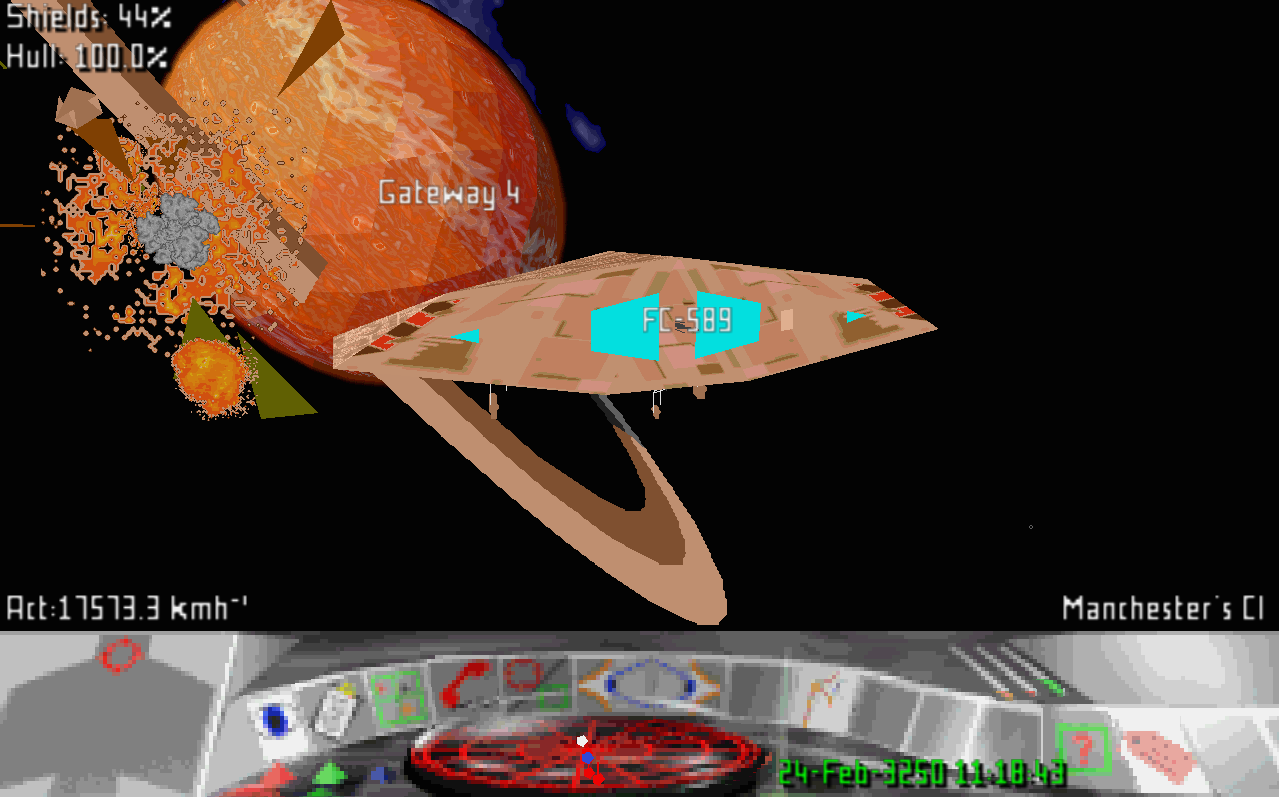
Jonathan Dowland: Frontier: First Encounters

Cobra mk. 3 Cobra mk. 3
Four years ago, whilst looking for something unrelated, I stumbled across Tom Morton's port of "Frontier: Elite II" for the Atari to i386/OpenGL. This took me right back to playing Frontier on my Amiga in the mid-nineties. I spent a bit of time replaying Frontier and its sequel, First Encounters, for which there exists an interesting family of community-written game engines based on a reverse-engineering of the original DOS release. I made some scrappy notes about engines, patches etc. at the time, which are on my frontier page. With the recent release of Elite: Dangerous, I thought I'd pick up where I left in 2010 and see if I could get the Thargoid ship. I'm nowhere near yet, but I've spent some time trying to maximize income during the game's initial Soholian Fever period. My record in a JJFFE-derived engine (and winning the Wiccan Ware race during the same period) is currently 727,800. Can you do better?

23 January 2015

Chris Lamb: Slack integration for Django

I recently started using the Slack group chat tool in a few teams. Wishing to add some vanity notifications such as sales and user growth milestones from some Django-based projects, I put together an easy-to-use integration between the two called django-slack. Whilst you can use any generic Python-based method of sending messages to Slack, using a Django-specific integration has some advantages:
Here is an example of how to send a message from a Django view:
from django_slack import slack_message
@login_required
def view(request, item_id):
    item = get_object_or_404(Item, pk=item_id)
    slack_message('items/viewed.slack',  
        'item': item,
        'user': request.user,
     )
    return render(request, 'items/view.html',  
        'item': item,
     )
Where items/viewed.slack (in your templates directory) might contain:
 % extends django_slack % 
 % block text % 
  user.get_full_name   just viewed   item.title   (  item.content urlize  ).
 % endblock % 
.slack files are regular Django templates text is automatically escaped as appropriate and that you can use the regular template filters and tags such as urlize, loops, etc. By default, django-slack posts to the #general channel, but it can be overridden on a per-message basis by specifying a channel block:
 % block channel % 
#mychannel
 % endblock % 
You can also set the icon, URL and emoji in a similar fashion. You can set global defaults for all of these attributes to avoid DRY violations within .slack templates as well. For more information please see the project homepage or read the documentation. Patches and other contributions are welcome via the django-slack GitHub project.

Jaldhar Vyas: Mini-Debconf Mumbai 2015

Last weekend I went to Mumbai to attend the Mini-Debconf held at IIT-Bombay. These are my impressions of the trip. Arrival and Impressions of Mumbai Getting there was a quite an adventure in itself. Unlike during my ill-fated attempt to visit a Debian event in Kerala last year when a bureaucratic snafu left me unable to get a visa, the organizers started the process much earlier at their end this time and with proper permissions. Yet in India, the wheels only turn as fast as they want to turn so despite their efforts, it was only literally at the last minute that I actually managed to secure my visa. I should note however that Indian government has done a lot to improve the process compared to the hell I remember from, say, a decade ago. It's fairly straightforward for tourist visas now and I trust they will get around to doing the same for conference visas in the fullness of time. I didn't want to commit to buying a plane ticket until I had the visa so I became concerned that the only flights left would be either really expensive or on the type of airline that flies you over Syria or under the Indian Ocean. I lucked out and got a good price on a Swiss Air flight, not non-stop but you can't have everything. So Thursday afternoon I set off for JFK. With only one small suitcase getting there by subway was no problem and I arrived and checked in with plenty of time. Even TSA passed me through with only a minimal amount of indignity. The first leg of my journey took me to Zurich in about eight hours. We were only in Zurich for an hour and then (by now Friday) it was another 9 hours to Mumbai. Friday was Safala Ekadashi but owing to the necessity of staying hydrated on a long flight I drank a lot of water and ate some fruit which I don't normally do on a fasting day. It was tolerable but not too pleasant; I definitely want to try and make travel plans to avoid such situations in the future. Friday evening local time I got to Mumbai. Chhattrapati Shivaji airport has improved a lot since I saw t last and now has all the amenities an international traveller needs including unrestricted free wifi (Zurich airport are you taking notes?) But here my first ominous piece of bad luck began. No sign of my suitcase. Happily some asking around revealed that it had somehow gotten on some earlier Swiss Air flight instead of the one I was on and was actually waiting for me. I got outside and Debian Developer Praveen Arimbrathodiyil was waiting to pick me up. Normally I don't lke staying in Mumbai very much even though I have relatives there but that's because we usually went during July-August the monsoon season when Mumbai reverts back to the swampy archipelago it was originally built on. This time the weather was nice, cold by local standards, but lovely and spring-like to someone from snowy New Jersey. There have been a lot of improvements to the road infrastructure and people are actually obeying the traffic laws. (Within reason of course. Whether or not a family of six can arrange themselves on one Bajaj scooter is no business of the cops.) The Hotel Tuliip (yes, two i's. Manager didn't know why.) Residency where I was to stay while not quite a five star establishment was adequate for my needs with a bed, hot water shower, and air conditioning. And a TV which to the bellhops great confusion I did not want turned on. (He asked about five times.) There was no Internet access per se but the manager offered to hook up a wireless router to a cable. Which on closer inspection turned out to have been severed at the base. He assured me it would be fixed tomorrow so I didn't complain and decided to do something more productive thank checking my email like sleeping. The next day I woke up in total darkness. Apparently there had been some kind of power problem during the night which tripped a fuse or something. A call to the front desk got them to fix that and then the second piece of bad luck happened. I plugged my Thinkpad in and woke it up from hibernation and a minute later there was a loud pop from the power adapter. Note I have a travel international plug adapter with surge protector so nothing bad ought to have happened but the laptop would on turning on display the message "critical low battery error" and immediately power off. I was unable to google what that meant without Internet access but I decided not to panic and continue getting ready. I would have plenty of opportunity to troubleshoot at the conference venue. Or so I thought... I took an autorickshaw to IIT. There also there have been positive improvements. Being quite obviously a foreigner I was fully prepared to be taken along the "scenic route." But now there are fair zones and the rickshaws all have (tamperproof!) digital fare meters so I was deposited at the main gate without fuss. After reading a board with a scary list of dos and don'ts I presented myself at security only to be inexplicably waved through without a second glance. Later I found out they've abandoned all the security theatre but not got around to updating the signs yet. Mumbai is one of the biggest, densely populated cities in the world but the IIT campus is an oasis of tranquility on the shores of Lake Powai. It's a lot bigger than it looked on the map so I had to wander around a bit before I reached the conference venue but I did make for the official registration time. Registration I was happy to meet several old friends (Such as Kartik Mistry and Kumar Appiah who along with Praveen and myself were the other DDs there,) people who I've corresponded with but never met, and many new people. I'm told 200+ people registered altogether. Most seemed to be students from IIT and elsewhere in Mumbai but there were also some Debian enthusiasts from further afield and most hearteningly some "civilians" who wanted to know what this was all about. With the help of a borrowed Thinkpad adapter I got my laptop running again. (Thankfully, despite the error message, the battery itself was unharmed.) However, my streak of bad luck was not yet over. It was that very weekend that IIT had a freak campus-wide network outage something that had never happened before. And as the presentation for the talk I was to give had apparently been open when I hibernated my laptop the night before, the sudden forced shutdown had trashed the file. (ls showed it as 0 length. An fsck didn't help.) I possibly had a backup on my server but with no Internet access I had no way to retrieve it. I still remained cool. The talk was scheduled for the second day so I could recover it at the hotel. Keynotes Professor Kannan Maudgalya of the FOSSEE (Free and Open Source Software for Education) Project which is part of the central government Ministry for Human Resource Development spoke about various activities of his project. Of particular interest to us are: FOSSEE is well funded, backed by the government and has enthusiastic staff so we should be seeing a lot more from them in the future. Veteran Free Software activist Venky Hariharan spoke about his experiences in lobbying the government on tech issues. He noted that there has been a sea change in attitudes towards Linux and Open source in the bureacracy of late. Several states have been aggressively mandating the use of it as have several national ministries and agencies. We the community can provide a valuable service by helping them in the transition. They also need to be educated on how to work with the community (contributing changes back, not working behind closed doors etc.) Debian History and Debian Cycle Shirish Agarwal spoke about the Debian philosophy and foundational documents such as the social contract and DFSG and how the release cycle works. Nothing new to an experienced user but informative to the newcomers in the audience and sparked some questions and discussion. Keysigning One of my main missions in attending was to help get as many isolated people as possible into the web of trust. Unfortunately the keysigning was not adequately publicized and few people were ready. I would have led them through the process of creating a new key there and then but with the lack of connectivity that idea had to be abandoned. I did manage to sign about 8-10 keys during other times. Future Directions for Debian-IN BOF I led this one. Lots of spirited discussion and I found feedback from new users in particular to be very helpful. Some take aways are: Lil' Debi Kumar Sukhani was a Debian GSoC student and his project which he demonstrated was to be able to install Debian on an Android phone. Why would you want to do this? Apart from the evergreen "Because I can", you can run server software such as sshd on your phone or even use it as an ARM development board. Unfortunately my phone uses Blackberry 10 OS which can run android apps (emulated under QNX) but wouldn't be able to use this. When I get a real Android phone I will try it out. Debian on ARM Siji Sunny gave this talk which was geared more towards hardware types which I am not but one thing I learned was thee difference between all the different ARM subarchitectures. I knew Siji first from a previous incarnation when he worked at CDAC with the late and much lamented Prof. R.K. Joshi. We had a long conversation about those days. Prof. Joshi/CDAC had developed an Indic rendering system called Indix which alas became the Betamax to Pango's VHS but he was also very involved in other Indic computing issues such as working with the Unicode Consortium and the preseration of Sanskrit manuscripts which is also an interest of mine. One good thing that cameout of Indix was some rather nice fonts. I had thought they were still buried in the dungeons of CDAC but apparently they were freed at one point. That's one more thing for me to look into. Evening/Next morning< My cousin met me and we had a leisurely dinner together. It was quite late by the time I got back to the hotel. FOSSEE had kindly lent me one of their tablets (which incidently are powerful enough to run LibreOffice comfortably.) so I thought I might be able to quickly redo my presentation before bedtime. Well, wouldn't you know it the wifi was not fixed. As I should have guessed but all the progress I'd had made me giddily optimistic. There was an option of trying to find an Internet cafe in a commercial area 15-20 minutes walk away. If this had been Gujarat I would have tried it but although I can more or less understand Hindi I can barely put together two sentences and Marathi I don't know at all. So I gave up that idea. I redid the slides from memory as best I could and went to sleep. In the morning I checked out and ferried myself and my suitcase via rickshaw back to the IIT campus. This time I got the driver to take me all the way in to the conference venue. Prof. Maudgalya kindly offered to let me keep the tablet to develop stuff on. I respectfully had to decline because although I love to collect bits of tech the fact it is it would have just gathered dust and ought to go to someone who can make a real contribution with it. I transferred my files to a USB key and borrowed a loaner laptop for my talk. Debian Packaging Workshop While waiting to do my talk I sat in on a workshop Praveen ran taking participants through the whole process of creating a Debian package (a ruby gem was the example.) He's done this before so it was a good presentation and well attended but the lack of connectivity did put a damper on things. Ask Me Anything It turned out the schedule had to be shuffled a bit so my talk was moved later from the announced time. A few people had already showed up so I took some random questions about Debian from them instead. GNOME Shell Accessibility With Orca Krishnakant Mane is remarkable. Although he is blind, he is a developer and a major contributor to Open Source projects. He talked about the Accessibility features of GNOME and compared them (favorably I might add) with proprietary screen readers. Not a subject that's directly useful to me but I found it interesting nonetheless. Rust: The memory safe language Manish Goregaokar talked about one of the new fad programming languages that have gotten a lot of buzz lately. This one is backed by Mozilla and it's interesting enough but I'll stick with C++ and Perl until one of the new ones "wins." Building a Mail Server With Debian Finally I got to give my talk and, yup, the video out on my borrowed laptop was incompatible with the projector. A slight delay to transfer everything to another laptop and I was able to begin. I talked about setting up BIND, postfix, and of course dovecot along with spamassassin, clamav etc. It turned out I had more than enough material and I went atleast 30 minutes over time and even then I had to rush at the end. People said they liked it so I'm happy. The End I gave the concluding remarks. Various people were thanked (including myself) mementos were given and pictures were taken. Despite a few mishaps I enjoyed myself and I am glad I attended. The level of enthusiasm was very high and lessons were learned so the next Debian-IN event should be even better. My departing flight wasn't due to leave until 1:20AM so I killed a few hours with my family before the flight. Once again I was stopping in Zurich, this time for most of a day. The last of my blunders was not to take my coat out of my suitcase and the temperature outside was 29F so I had to spend that whole time enjoing the (not so) many charms of Zurich airport. Atleast the second flight took me to Newark instead of JFK so I was able to get home a little earlier on Monday evening, exhausted but happy I made the trip.

22 January 2015

Erich Schubert: Year 2014 in Review as Seen by a Trend Detection System

We ran our trend detection tool Signi-Trend (published at KDD 2014) on news articles collected for the year 2014. We removed the category of financial news, which is overrepresented in the data set. Below are the (described) results, from the top 50 trends (I will push the raw result to appspot if possible due to file limits).
I have highlighted the top 10 trends in bold, but otherwise ordered them chronologically.
Updated: due to an error in a regexp, I had filtered out too many stories. The new results use more articles.

January
2014-01-29: Obama's state of the union address
February
2014-02-07: Sochi Olympics gay rights protests
2014-02-08: Sochi Olympics first results
2014-02-19: Violence in Ukraine and Maidan in Kiev
2014-02-20: Wall street reaction to Facebook buying WhatsApp
2014-02-22: Yanukovich leaves Kiev
2014-02-28: Crimea crisis begins
March
2014-03-01: Crimea crisis escalates futher
2014-03-02: NATO meeting on Crimea crisis
2014-03-04: Obama presents U.S. fiscal budget 2015 plan
2014-03-08: Malaysia Airlines MH-370 missing in South China Sea
2014-03-08: MH-370: many Chinese on board of missing airplane
2014-03-15: Crimean status referencum (upcoming)
2014-03-18: Crimea now considered part of Russia by Putin
2014-03-21: Russian stocks fall after U.S. sanctions.
April
2014-04-02: Chile quake and tsunami warning
2014-04-09: False positive? experience + views
2014-04-13: Pro-russian rebels in Ukraine's Sloviansk
2014-04-17: Russia-Ukraine crisis continues
2014-04-22: French deficit reduction plan pressure
2014-04-28: Soccer World Cup coverage: team lineups
May
2014-05-14: MERS reports in Florida, U.S.
2014-05-23: Russia feels sanctions impact
2014-05-25: EU elections
June
2014-06-06: World cup coverage
2014-06-13: Islamic state Camp Speicher massacre in Iraq
2014-06-14: Soccer world cup: Spain surprisingly destoyed by Netherlands
July
2014-07-05: Soccer world cup quarter finals
2014-07-17: Malaysian Airlines MH-17 shot down over Ukraine
2014-07-18: Russian blamed for 298 dead in airline downing
2014-07-19: Independent crash site investigation demanded
2014-07-20: Israel shelling Gaza causes 40+ casualties in a day
August
2014-08-07: Russia bans food imports from EU and U.S.
2014-08-08: Obama orders targeted air strikes in Iraq
2014-08-20: IS murders journalist James Foley, air strikes continue
2014-08-30: EU increases sanctions against Russia
September
2014-09-05: NATO summit with respect to IS and Ukraine conflict
2014-09-11: Scottish referendum upcoming - poll results are close
2014-09-23: U.N. on legality of U.S. air strikes in Syria against IS
2014-09-26: Star manager Bill Gross leaves Allianz/PIMCO for Janus
October
2014-10-22: Ottawa parliament shooting
2014-10-26: EU banking review
November
2014-11-05: U.S. Senate and governor elections
2014-11-12: Foreign exchange manipulation investigation results
2014-11-17: Japan recession
December
2014-12-11: CIA prisoner and U.S. torture centers revieled
2014-12-15: Sydney cafe hostage siege
2014-12-17: U.S. and Cuba relations improve unexpectedly
2014-12-18: Putin criticizes NATO, U.S., Kiev
2014-12-28: AirAsia flight QZ-8501 missing

As you can guess, we are really happy with this result - just like the result for 2013 it mentiones (almost) all the key events.
There probably is one "false positive" there: 2014-04-09 has a lot of articles talking about "experience" and "views", but not all refer to the same topic (we did not do topic modeling yet).
There are also some events missing that we would have liked to appear; many of these barely did not make it into the top 50, but do appear in the top 100, such as the Sony cyberattack (#51) and the Fergusson riots on November 11 (#66).
You can also explore the results online in a snapshot.

Diego Escalante Urrelo: Link Pack #04

Writing Your Way to Happiness (nytimes.com)
Researches believe that the way we think about, and remember, our story can be so powerful that it can actually influence our happiness and success. It s a nice little article summarizing actual research. The main study referred put fresh university students to test: a group received tools to rewrite their memory and story of their academic performance, another group didn t. The first group improved their grades and had only 1 student drop school within a year, the other group had 4 drop outs and no specific improvement. I ve been thinking about this as I recently rewrote my About page and also started writing down some past Travel journals. Looking back and rewriting your own story is incredibly empowering, it s a fantastic rush of confidence and self-assertion. Memory is always betraying us, and remembering our success is not particularly high on the list of things to keep.
The concept is based on the idea that we all have a personal narrative that shapes our view of the world and ourselves. But sometimes our inner voice doesn t get it completely right. Some researchers believe that by writing and then editing our own stories, we can change our perceptions of ourselves and identify obstacles that stand in the way of better health. It may sound like self-help nonsense, but research suggests the effects are real. Students who had been prompted to change their personal stories improved their grade-point averages and were less likely to drop out over the next year than the students who received no information. In the control group, which had received no advice about grades, 20 percent of the students had dropped out within a year. But in the intervention group, only 1 student or just 5 percent dropped out.
Old Masters at the Top of Their Game (nytimes.com)
Fantastic read on how these artists defy the conventions of old meaning useless. Masters at their art, they haven t quit nor have laid to rest and cash their reputation. They keep making, they stay alive (physically and metaphorically) through art. No rush to get to their age, but still a really interesting letter from the future . Full of cheat codes, read this now.
Now I am 79. I ve written many hundreds of essays, 10 times that number of misbegotten drafts both early and late, and I begin to understand that failure is its own reward. It is in the effort to close the distance between the work imagined and the work achieved wherein it is to be found that the ceaseless labor is the freedom of play, that what s at stake isn t a reflection in the mirror of fame but the escape from the prison of the self. T. H. White, the British naturalist turned novelist to write The Once and Future King, calls upon the druid Merlyn to teach the lesson to the young prince Arthur: You may grow old and trembling in your anatomies, you may lie awake at night listening to the disorder of your veins, you may miss your only love, you may see the world about you devastated by evil lunatics, or know your honour trampled in the sewers of baser minds. There is only one thing for it then to learn. Learn why the world wags and what wags it. That is the only thing which the mind can never exhaust, never alienate, never be tortured by, never fear or distrust, and never dream of regretting.
A Life with a View (ribbonfarm.com)
A somewhat tricky read, but with a nice payback. Take your time, and savor it slowly. It s a very interesting look into how we keep wanting new stuff, and how we shield from ourselves by looking for the place with no yearns , the place where we won t want anything anymore doesn t exist. Chains very well into the reads I shared a few days ago on practical contentment.
The arrival fallacy is about seeking a life from which one can look with a complacent equanimity upon the rest of reality, without yearning. It is an ideal of a life that is defined primarily by blindness to itself. You yearn while you see your life as others see it, until you arrive at a situation where you can disappear into the broader background, and see comfortably without being seen discomfittingly, especially by yourself. Once you re there, the yearning stops, so the theory goes. Of course it is a laughably bad theory.
How To Escape From A Moving Car (mrporter.com)
By Adam Kirley, stunt double for Daniel Craig in the crazy crane scene of Casino Royale (where 007 jumps from monkey nuts high to donkey bonkers high, a badger bum crazy distance). Really funny, and one of those things I always find myself thinking Almost as much as what to do in case of a Post Office Showdown (xkcd.com)
Everyone s first instinct is to put their hands or legs down first. That s the worst thing you can do: you will break something. The pointy parts of your body hurt elbows, knees, hips, ankles. Put your fists under your chin, and bring your elbows together. Keep your chin tucked in to your chest to protect your head. The best point of impact is the back of the shoulder and your back. If you dive out directly onto your shoulder you ll break it.
What the World Looks Like with Social Anxiety (collegehumor.com)
Funny vignettes about how the world looks like when you are socially anxious. I can only really identify with the last one:
cfd04d22a6dfa4fb858dee8d3d5592afShea Strauss.
Helsinki Bus Station Theory (fotocommunity.com)
Don t get off the bus. Art comes to those who wait and persevere. At first, you replicate the same route others have done, but only if you stay long enough in such path you begin to find your own path. Although perhaps a little more classic in conception, this is an interesting text advising artists to don t give up just because they don t compare well to the masters of their current art or genre. Only those who persevere will catch up and diverge from the masters. You could say that diverging early is also a way to find your path, but there s still a case to be made for learning from those who came before. Whether you want to imitate them, or rebel against them, you still need to know them. My take: it doesn t hurt to pick up some biographies or works from past masters and see what made them masters. Create your master genealogy, kinda like in Steal Like an Artist (which I recently read but haven t got around to write about yet).
Georges Braque has said that out of limited means, new forms emerge. I say, we find out what we will do by knowing what we will not do. And so, if your heart is set on 8 10 platinum landscapes in misty southern terrains, work your way through those who inspire you, ride their bus route and damn those who would say you are merely repeating what has been done before. Wait for the months and years to pass and soon your differences will begin to appear with clarity and intelligence, when your originality will become visible, even the works from those very first years of trepidation when everything you did seemed so done before.
At 90, She s Designing Tech For Aging Boomers (npr.org)
The inspiring tale of a 90 year old woman who joined IDEO to contribute a unique point of view to the design process. You can never stop learning, life never ceases to be interesting. It s short, and not incredibly shocking, but that this has happened somewhere as referenced and revered as IDEO says a lot.
And for the bulging demographic of baby boomers growing old, Beskind has this advice: Embrace change and design for it.

Previously on Link Pack

21 January 2015

Jonathan McDowell: Moving to Jekyll

I ve been meaning to move away from Movable Type for a while; they no longer provide the Open Source variant, I ve had some issues with the commenting side of things (more the fault of spammers than Movable Type itself) and there are a few minor niggles that I wanted to resolve. Nothing has been particularly pressing me to move and I haven t been blogging as much so while I ve been keeping an eye open for a replacement I haven t exerted a lot of energy into the process. I have a little bit of time at present so I asked around on IRC for suggestions. One was ikiwiki, which I use as part of helping maintain the SPI website (and think is fantastic for that), the other was Jekyll. Both are available as part of Debian Jessie. Jekyll looked a bit fancier out of the box (I m no web designer so pre-canned themes help me a lot), so I decided to spend some time investigating it a bit more. I d found a Movable Type to ikiwiki converter which provided a starting point for exporting from the SQLite3 DB I was using for MT. Most of my posts are in markdown, the rest (mostly from my Blosxom days) are plain HTML, so there wasn t any need to do any conversion on the actual content. A minor amount of poking convinced Jekyll to use the same URL format (permalink: /:year/:month/:title.html in the _config.yml did what I wanted) and I had to do a few bits of fix up for some images that had been uploaded into MT, but overall fairly simple stuff. Next I had to think about comments. My initial thought was to just ignore them for the moment; they weren t really working on the MT install that well so it s not a huge loss. I then decided I should at least see what the options were. Google+ has the ability to embed in your site, so I had a play with that. It worked well enough but I didn t really want to force commenters into the Google ecosystem. Next up was Disqus, which I ve seen used in various places. It seems to allow logins via various 3rd parties, can cope with threading and deals with the despamming. It was easy enough to integrate to play with, and while I was doing so I discovered that it could cope with importing comments. So I tweaked my conversion script to generate a WXR based file of the comments. This then imported easily into Disqus (and also I double checked that the export system worked). I m sure the use of a third party to handle comments will put some people off, but given the ability to export I m confident if I really feel like dealing with despamming comments again at some point I can switch to something locally hosted. I do wish it didn t require Javascript, but again it s a trade off I m willing to make at present. Anyway. Thanks to Tollef for the pointer (and others who made various suggestions). Hopefully I haven t broken (or produced a slew of new posts for) any of the feed readers pointed at my site (but you should update to use feed.xml rather than any of the others - I may remove them in the future once I see usage has died down). (On the off chance it s useful to someone else the conversion script I ended up with is available. There s a built in Jekyll importer that may be a better move, but I liked ending up with a git repository containing a commit for each post.)

Jo Shields: mono-project.com Linux packages, January 2015 edition

The latest version of Mono has released (actually, it happened a week ago, but it took me a while to get all sorts of exciting new features bug-checked and shipshape). Stable packages This release covers Mono 3.12, and MonoDevelop 5.7. These are built for all the same targets as last time, with a few caveats (MonoDevelop does not include F# or ASP.NET MVC 4 support). ARM packages will be added in a few weeks time, when I get the new ARM build farm working at Xamarin s Boston office. Ahead-of-time support This probably seems silly since upstream Mono has included it for years, but Mono on Debian has never shipped with AOT d mscorlib.dll or mcs.exe, for awkward package-management reasons. Mono 3.12 fixes this, and will AOT these assemblies optimized for your computer on installation. If you can suggest any other assemblies to add to the list, we now support a simple manifest structure so any assembly can be arbitrarily AOT d on installation. Goodbye Mozroots! I am very pleased to announce that as of this release, Mono users on Linux no longer need to run mozroots to get SSL working. A new command, cert-sync , has been added to this release, which synchronizes the Mono SSL certificate store against your OS certificate store and this tool has been integrated into the packaging system for all mono-project.com packages, so it is automatically used. Just make sure the ca-certificates-mono package is installed on Debian/Ubuntu (it s always bundled on RPM-based) to take advantage! It should be installed on fresh installs by default. If you want to invoke the tool manually (e.g. you installed via make install, not packages) use
cert-sync /path/to/ca-bundle.crt
On Debian systems, that s
cert-sync /etc/ssl/certs/ca-certificates.crt
and on Red Hat derivatives it s
cert-sync /etc/pki/tls/certs/ca-bundle.crt
Your distribution might use a different path, if it s not derived from one of those. Windows installer back from the dead Thanks to help from Alex Koeplinger, I ve brought the Windows installer back from the dead. The last release on the website was for 3.2.3 (it s actually not this version at all it s complicated ), so now the Windows installer has parity with the Linux and OSX versions. The Windows installer (should!) bundles everything the Mac version does F#, PCL facades, IronWhatever, etc, along with Boehm and SGen builds of the Mono runtime done with Visual Studio 2013. An EXPERIMENTAL OH MY GOD DON T USE THIS IN PRODUCTION 64-bit installer is in the works, when I have the time to try and make a 64-build of Gtk#.

Dimitri John Ledkov: Python 3 ports of launchpadlib & ubuntu-dev-tools (library) are available

I'm happy to announce that Python 3 ports of launchpadlib & ubuntu-dev-tools (library) are available for consumption.

These are 1.10.3 & 0.155 respectfully.

This means that everyone should start porting their reports, tools, and scriptage to python3.

ubuntu-dev-tools has the library portion ported to python3, as I did not dare to switch individual scripts to python3 without thorough interactive testing. Please help out porting those and/or file bug reports against the python3 port. Feel free to subscribe me to the bug reports on launchpad.

For the time being, I believe some things will not be easy to port to python3 because of the elephant in the room - bzrlib. For some things like lp-shell, it should be easy to move away from bzrlib, as non-vcs things are used there. For other things the current suggestion is to probably fork to bzr binary or a python2 process. I ponder if a minimal usable python3-bzrlib wrapper around python2 bzrlib is possible to satisfy the needs of basic and common scripts.

On a side note, launchpadlib & lazr.restfulclient have out of the box proxy support enabled. This makes things like add-apt-repository work behind networks with such setup. I think a few people will be happy about that.

All of these goodies are available in Ubuntu 15.04 (Vivid Vervet) or Debian Experimental (and/or NEW queue).

20 January 2015

Jonathan Wiltshire: Never too late for bug-squashing

With over a hundred RC bugs still outstanding for Jessie, there s never been a better time to host a bug-squashing party in your local area. Here s how I do it.
  1. At home is fine, if you don t mind guests. You don t need to seek out a sponsor and borrow or hire office space. If there isn t room for couch-surfers, the project can help towards travel and accommodation expenses. My address isn t secret, but I still don t announce it it s fine to share it only with the attendees once you know who they are.
  2. You need a good work area. There should be room for people to sit and work comfortably a dining room table and chairs is ideal. It should be quiet and free from distractions. A local mirror is handy, but a good internet connection is essential.
  3. Hungry hackers eat lots of snacks. This past weekend saw five of us get through 15 litres of soft drinks, two loaves of bread, half a kilo of cheese, two litres of soup, 22 bags of crisps, 12 jam tarts, two pints of milk, two packs of chocolate cake bars, and a large bag of biscuits (and we went out for breakfast and supper). Make sure there is plenty available before your attendees arrive, along with a good supply of tea and coffee.
  4. Have a work plan. Pick a shortlist of RC bugs to suit attendees strengths, or work on a particular packaging group s bugs, or have a theme, or something. Make sure there s a common purpose and you don t just end up being a bunch of people round a table.
  5. Be an exemplary host. As the host you re allowed to squash fewer bugs and instead make sure your guests are comfortable, know where the bathroom is, aren t going hungry, etc. It s an acceptable trade-off. (The reverse is true: if you re attending, be an exemplary guest and don t spend the party reading news sites.)
Now, go host a BSP of your own, and let s release!
Never too late for bug-squashing is a post from: jwiltshire.org.uk Flattr

Sven Hoexter: python-ipcalc bumped from 0.3 to 1.1.3

I've helped a friend to get started with Debian packaging and he has now adopted python-ipcalc. Since I've no prior experience with packaging of Python modules and there were five years of upstream development in between, I've uploaded to experimental to give it some exposure. So if you still use the python-ipcalc package, which is part of all current Debian releases and the upcoming jessie release, please check out the package from experimental. I think the only reverse dependency within Debian is sshfp, that one of course also requires some testing.

Raphael Geissert: Edit Debian, with iceweasel

Soon after publishing the chromium/chrome extension that allows you to edit Debian online, Moez Bouhlel sent a pull request to the extension's git repository: all the changes needed to make a firefox extension!

After another session of browser extensions discovery, I merged the commits and generated the xpi. So now you can go download the Debian online editing firefox extension and hack the world, the Debian world.

Install it and start contributing to Debian from your browser. There's no excuse now.

19 January 2015

Daniel Pocock: jSMPP project update, 2.1.1 and 2.2.1 releases

The jSMPP project on Github stopped processing pull requests over a year ago and appeared to be needing some help. I've recently started hosting it under https://github.com/opentelecoms-org/jsmpp and tried to merge some of the backlog of pull requests myself. There have been new releases:
  • 2.1.1 works in any project already using 2.1.0. It introduces bug fixes only.
  • 2.2.1 introduces some new features and API changes and bigger bug fixes
The new versions are easily accessible for Maven users through the central repository service. Apache Camel has already updated to use 2.1.1. Thanks to all those people who have contributed to this project throughout its history.

18 January 2015

Gregor Herrmann: RC bugs 2014/51-2015/03

I have to admit that I was a bit lazy when it comes to working on RC bugs in the last weeks. here's my not-so-stellar summary:

Mark Brown: Heating the Internet of Things

Internet of Things seems to be trendy these days, people like the shiny apps for controlling things and typically there are claims that the devices will perform better than their predecessors by offloading things to the cloud but this makes some people worry that there are potential security issues and it s not always clear that internet usage is actually delivering benefits over something local. One of the more widely deployed applications is smart thermostats for central heating which is something I ve been playing with. I m using Tado, there s also at least Nest and Hive who do similar things, all relying on being connected to the internet for operation. The main thing I ve noticed has been that the temperature regulation in my flat is better, my previous thermostat allowed the temperature to vary by a couple of degrees around the target temperature in winter which got noticeable, with this the temperature generally seems to vary by a fraction of a degree at most. That does use the internet connection to get the temperature outside, though I m fairly sure that most of this is just a better algorithm (the thermostat monitors how quickly the flat heats up when heating and uses this when to turn off rather than waiting for the temperature to hit the target then seeing it rise further as the radiators cool down) and performance would still be substantially improved without it. The other thing that these systems deliver which does benefit much more from the internet connection is that it s easy to control them remotely. This in turn makes it a lot easier to do things like turn the heating off when it s not needed you can do it remotely, and you can turn the heating back on without being in the flat so that you don t need to remember to turn it off before you leave or come home to a cold building. The smarter ones do this automatically based on location detection from smartphones so you don t need to think about it. For example, when I started this post this I was sitting in a coffee shop so the heating had been turned off based on me taking my phone with me and as a result the temperature gone had down a bit. By the time I got home the flat was back up to normal temperature all without any meaningful intervention or visible difference on my part. This is particularly attractive for me given that I work from home I can t easily set a schedule to turn the heating off during the day like someone who works in an office so the heating would be on a lot of the time. Tado and Nest will to varying extents try to do this automatically, I don t know about Hive. The Tado one at least works very well, I can t speak to the others. I ve not had a bill for a full winter yet but I m fairly sure looking at the meter that between the two features I m saving a substantial amount of energy (and hence money and/or the environment depending on what you care about) and I m also seeing a more constant temperature within the flat, my guess would be that most of the saving is coming from the heating being turned off when I leave the flat. For me at least this means that having the thermostat internet connected is worthwhile.

Dirk Eddelbuettel: Running UBSAN tests via clang with Rocker

Every now and then we get reports from CRAN about our packages failing a test there. A challenging one concerns UBSAN, or Undefined Behaviour Sanitizer. For background on UBSAN, see this RedHat blog post for gcc and this one from LLVM about clang. I had written briefly about this before in a blog post introducing the sanitizers package for tests, as well as the corresponding package page for sanitizers, which clearly predates our follow-up Rocker.org repo / project described in this initial announcement and when we became the official R container for Docker. Rocker had support for SAN testing, but UBSAN was not working yet. So following a recent CRAN report against our RcppAnnoy package, I was unable to replicate the error and asked for help on r-devel in this thread. Martyn Plummer and Jan van der Laan kindly sent their configurations in the same thread and off-list; Jeff Horner did so too following an initial tweet offering help. None of these worked for me, but further trials eventually lead me to the (already mentioned above) RedHat blog post with its mention of -fno-sanitize-recover to actually have an error abort a test. Which, coupled with the settings used by Martyn, were what worked for me: clang-3.5 -fsanitize=undefined -fno-sanitize=float-divide-by-zero,vptr,function -fno-sanitize-recover. This is now part of the updated Dockerfile of the R-devel-SAN-Clang repo behind the r-devel-ubsan-clang. It contains these settings, as well a new support script check.r for littler---which enables testing right out the box. Here is a complete example:
docker                              # run Docker (any recent version, I use 1.2.0)
  run                               # launch a container 
    --rm                            # remove Docker temporary objects when dome
    -ti                             # use a terminal and interactive mode 
    -v $(pwd):/mnt                  # mount the current directory as /mnt in the container
    rocker/r-devel-ubsan-clang      # using the rocker/r-devel-ubsan-clang container
  check.r                           # launch the check.r command from littler (in the container)
    --setwd /mnt                    # with a setwd() to the /mnt directory
    --install-deps                  # installing all package dependencies before the test
    RcppAnnoy_0.0.5.tar.gz          # and test this tarball
I know. It is a mouthful. But it really is merely the standard practice of running Docker to launch a single command. And while I frequently make this the /bin/bash command (hence the -ti options I always use) to work and explore interactively, here we do one better thanks to the (pretty useful so far) check.r script I wrote over the last two days. check.r does about the same as R CMD check. If you look inside check you will see a call to a (non-exported) function from the (R base-internal) tools package. We call the same function here. But to make things more interesting we also first install the package we test to really ensure we have all build-dependencies from CRAN met. (And we plan to extend check.r to support additional apt-get calls in case other libraries etc are needed.) We use the dependencies=TRUE option to have R smartly install Suggests: as well, but only one level (see help(install.packages) for details. With that prerequisite out of the way, the test can proceed as if we had done R CMD check (and additional R CMD INSTALL as well). The result for this (known-bad) package:
edd@max:~/git$ docker run --rm -ti -v $(pwd):/mnt rocker/r-devel-ubsan-clang check.r --setwd /mnt --install-deps RcppAnnoy_0.0.5.tar.gz 
also installing the dependencies  Rcpp ,  BH ,  RUnit 
trying URL 'http://cran.rstudio.com/src/contrib/Rcpp_0.11.3.tar.gz'
Content type 'application/x-gzip' length 2169583 bytes (2.1 MB)
opened URL
==================================================
downloaded 2.1 MB
trying URL 'http://cran.rstudio.com/src/contrib/BH_1.55.0-3.tar.gz'
Content type 'application/x-gzip' length 7860141 bytes (7.5 MB)
opened URL
==================================================
downloaded 7.5 MB
trying URL 'http://cran.rstudio.com/src/contrib/RUnit_0.4.28.tar.gz'
Content type 'application/x-gzip' length 322486 bytes (314 KB)
opened URL
==================================================
downloaded 314 KB
trying URL 'http://cran.rstudio.com/src/contrib/RcppAnnoy_0.0.4.tar.gz'
Content type 'application/x-gzip' length 25777 bytes (25 KB)
opened URL
==================================================
downloaded 25 KB
* installing *source* package  Rcpp  ...
** package  Rcpp  successfully unpacked and MD5 sums checked
** libs
clang++-3.5 -fsanitize=undefined -fno-sanitize=float-divide-by-zero,vptr,function -fno-sanitize-recover -I/usr/local/lib/R/include -DNDEBUG -I../inst/include/ -I/usr/local/include    -fpic  -pipe -Wall -pedantic -
g  -c Date.cpp -o Date.o
[...]
* checking examples ... OK
* checking for unstated dependencies in  tests  ... OK
* checking tests ...
  Running  runUnitTests.R 
 ERROR
Running the tests in  tests/runUnitTests.R  failed.
Last 13 lines of output:
  +     if (getErrors(tests)$nFail > 0)  
  +         stop("TEST FAILED!")
  +      
  +     if (getErrors(tests)$nErr > 0)  
  +         stop("TEST HAD ERRORS!")
  +      
  +     if (getErrors(tests)$nTestFunc < 1)  
  +         stop("NO TEST FUNCTIONS RUN!")
  +      
  +  
  
  
  Executing test function test01getNNsByVector  ... ../inst/include/annoylib.h:532:40: runtime error: index 3 out of bounds for type 'int const[2]'
* checking PDF version of manual ... OK
* DONE
Status: 1 ERROR, 2 WARNINGs, 1 NOTE
See
   /tmp/RcppAnnoy/..Rcheck/00check.log 
for details.
root@a7687c014e55:/tmp/RcppAnnoy# 
The log shows that thanks to check.r, we first download and the install the required packages Rcpp, BH, RUnit and RcppAnnoy itself (in the CRAN release). Rcpp is installed first, we then cut out the middle until we get to ... the failure we set out to confirm. Now having a tool to confirm the error, we can work on improved code. One such fix currently under inspection in a non-release version 0.0.5.1 then passes with the exact same invocation (but pointing at RcppAnnoy_0.0.5.1.tar.gz):
edd@max:~/git$ docker run --rm -ti -v $(pwd):/mnt rocker/r-devel-ubsan-clang check.r --setwd /mnt --install-deps RcppAnnoy_0.0.5.1.tar.gz
also installing the dependencies  Rcpp ,  BH ,  RUnit 
[...]
* checking examples ... OK
* checking for unstated dependencies in  tests  ... OK
* checking tests ...
  Running  runUnitTests.R 
 OK
* checking PDF version of manual ... OK
* DONE
Status: 1 WARNING
See
   /mnt/RcppAnnoy.Rcheck/00check.log 
for details.
edd@max:~/git$
This proceeds the same way from the same pristine, clean container for testing. It first installs the four required packages, and the proceeds to test the new and improved tarball. Which passes the test which failed above with no issues. Good. So we now have an "appliance" container anybody can download from free from the Docker hub, and deploy as we did here in order to have fully automated, one-command setup for testing for UBSAN errors. UBSAN is a very powerful tool. We are only beginning to deploy it. There are many more useful configuration settings. I would love to hear from anyone who would like to work on building this out via the R-devel-SAN-Clang GitHub repo. Improvements to the littler scripts are similarly welcome (and I plan on releasing an updated littler package "soon").

This post by Dirk Eddelbuettel originated on his Thinking inside the box blog. Please report excessive re-aggregation in third-party for-profit settings.

Next.

Previous.