Search Results: "ema"

15 August 2010

Kai Hendry: Debian powered Web applications

Blars dining Francois Freeing the Cloud talk at Debconf10, showed members of the Debian community keen to help see opensource Web applications. The proposed open&free implementation of Gravatar is a great example, whereby a user uploads an image of him/herself which corresponds to a hash of their email address. In order to make this Web "cloud" service rock, super quick downloads of that image are needed. Debian knows about mirroring data to distribute data amongst free software agents. And we also now know about CDN, aka content delivery networks and GEO DNS, which point to your local mirror. So lets pool our resources and offer CDN Web space (100MB?) to free software Web application projects. This will make the opensource Web services competitive in all important page load times and perhaps make it easier for user contributed data to be exported and "open". I have Debian server space in Germany I'm happy to contribute to Francois's avatar project and other similar opensource Web apps. If you think this is a good idea, please get in touch.

Julien Danjou: Updating muse-el in Debian

The Debian package of Emacs Muse was maintained by Michael W. Wolson, who is also the upstream author of that software. He announced months ago that Muse needed a new upstream maintainer. That's not something I'm willing to do, since I really think Muse has been superseded by Org mode nowadays. However, I'm still using Muse to maintain this blog with my muse-blog extension, since Org still lacks some infrastructure to maintain and publish a blog. Therefore, I adopted the Emacs Muse Debien package and updated it to the latest version! Flattr this

Bernhard R. Link: common inefficient shell code

There is hardly any use in:
cat filename   while ...
do
...
done
Just do:
while ...
do
...
done < filename
If you want the while run in a subshell, use some parentheses, but you do not need the cat at all. Another unnecessary inefficient idiom often seen is
foo="$(echo "$bar"   sed -e 's/ .*//')"
which can be replaced with the less forky
foo="$ bar%% * "
Similary there is
foo="$ bar% * "
as short and fast variant of
foo="$(echo "$bar"   sed -e 's/ [^ ]*$//')"
and the same with # instead of % for removing stuff from the beginning. (Note that both are POSIX, only the $ name/re/new not discussed here is bash-specific).

14 August 2010

Biella Coleman: Debconf 10: the comfort of the familiar with the thrill of the new

P1050820 Debconf10 has come and gone and its effects are still with me. This is not so surprising as this year I was not only a participant but on the local team. When we first started to hold in person meetings, I was a totally overwhelmed knowing that with each passing month, the demands on my time would grow and then explode. Then I got news that I landed a year long fellowship that would relieve me of all teaching for the 2010-2011 year and was able to breathe a little and enjoy what I don t get to do all that often in my academic job: work collectively. As Debcamp started, I was not sure whether I would enjoy the conference given that I had to pay attention to the nuts and bolts of the conference. I got my answer the first day as folks started to pour in hack lab. Due to the pressure cooker nature of my job, I did not attend the last two Debconfs. Seeing friends that I only see during these fairly intense weeks stirred up a lot of inside of me. It felt really good to be back . This was also my first Debcamp, and now I understand why people enjoy it so much. It gives you a chance to meet new folks instead of gravitating to those you already know and still get some work done. It also allows the orga team to hammer out some final details and test run some stuff before the swarm descends into the venue. One of the things I enjoyed the most during the week were the take out dinners. Logistically it was a bit of nightmare but it aligned very much with the culinary culture of NY and we had some nice outdoor picnics on the Columbia campus and one in Riverside Park. The pace picked up a lot during Debconf, which we kicked off with Debian Day. We managed to get a lot of NYC folks it was one of the best attended Debian Days. One of the highlights was Gale Brewer s talk. She is a public servant in the full sense of the word, dedicating thirty years of her life to this job and really understands what technology can and cannot due for New Yorkers. It was very inspirational talk. Aside from a few moments, such as the day trip and the wine and cheese party (btw, party does not capture the quantity of cheese featured and consumed ), Debconf itself has already become a bit of a blur, it all happened so quickly and under sleep deprived conditions. Nearly every vessel of time was filled, overflowing, at times bursting. I enjoyed a number of the talks Eben Moglen s, Joey Hess s CUT proposal, Marga s talk on Making Debian Rule, Zack s Bits from the DPL, the derivates BOF, and others. I also enjoyed preparing and moderating the welcome talk, which is not yet online (only the last bit is and the sound is distorted so I sound like a mouse). My sense is that the relationship between Ubuntu and Debian is improving, which is important. We need alliances and allies, not foes in the world of F/OSS (watch Eben s talk to get a sense of why this is so). I mostly ate on campus but managed two African based dinners with friends (Ethiopian and Senegalese) and only wished we had a little more time to talk. The late nights in the Carman lounge were pretty epic, if somewhat collegiate and during the end, hot and humid. Here are a few of the pictures I managed to take. I love Debconf for it so perfectly conjoins the comfort of the familiar with the thrill of the new. For those who experience it in its full intensity, it can be an artistic moment, at least in the way described by the poet John Keats: The excellence of every Art is its intensity, capable of making all disagreeables evaporate, from their being in close relationship with Beauty . . . And now, I am, of course, totally beat :-)

13 August 2010

Biella Coleman: Rare Sharing of Data Leads to Progress on Alzheimer s

Finally. Let s hope other scientists follow in their footsteps and make rare a marker of the past:
No one would own the data. No one could submit patent applications, though private companies would ultimately profit from any drugs or imaging tests developed as a result of the effort. It was unbelievable, said Dr. John Q. Trojanowski, an Alzheimer s researcher at the University of Pennsylvania. It s not science the way most of us have practiced it in our careers. But we all realized that we would never get biomarkers unless all of us parked our egos and intellectual-property noses outside the door and agreed that all of our data would be public immediately.

Clint Adams: Layers and layers

I am betting that Luakit will be more usable than Uzbl within a week. I am also betting that I will hear chirping about Luakit not integrating with the Monkeysphere, and though I agree that this is a problem, it seems to be difficult to solve. To do it correctly, one would need hooks or callbacks in WebKitGTK+, which, in turn, would need support in LibSoup, which would probably then need support in GnuTLS. Since apparently this will take years of bickering to accomplish, perhaps some sort of hack is called for. I suppose one could, for each HTTPS URL visited, make an OOB connection, download the certificate, and then run it through Monkeysphere validation, before then letting WebKitGTK+ make another connection and download (hopefully the same) certificate a second time. This strikes me as ugly and problematic. Ideas?

Alexander Reichle-Schmehl: Release Critical Bug report for Week 32

The unofficial rc bug tracker currently knows about the following bugs:
In Total:448
Affecting Squeeze:329
Squeeze only:108
Remaining to be fixed in Squeeze:221
Of these 221 bugs, the following tags are set:
Pending in Squeeze:24
Patched in Squeeze:43
Duplicates in Squeeze:19
Contrib or non-free in Squeeze:11
Claimed in Squeeze:2
Delayed in Squeeze:8
Can fixed in a security Update:12
Otherwise fixed in Squeeze:21
Ignoring all the above (multiple tags possible), 121 bugs need to be fixed by Debian Contributers to get Debian 6.0 Squeeze released. However, with the view of the Release Managers, 271 need to be dealt with for the release to happen. Please see my older post for an explanation of the different numbers.

12 August 2010

Olivier Berger: Report on Debbugs New developments in the ongoing struggle against bugs by Don Armstrong at Debconf

Here are some notes I took about the lecture Debbugs New developments in the ongoing struggle against bugs by Don Armstrong at Debconf 10 (that I watched from the stream). Note that the slides are at : http://rzlab.ucr.edu/debian/debbugs_presentation_debconf10.pdf, and here, I ll only mention most noteworthy elements I ve noticed. There s a linear growth of number of bugs reported for several years, from the statistics made by Don. In average, there s same number of bugs filed / archived per day : Debian s not losing ground against bugs ;) A new affect command has been added, for bugs present in a package affecting another package. The summary command which can be used to quickly spot the summary of lengthy discussions deserves more love. Included summary -1 to send a new summary by email. The new local-debbugs package : can mirror your bugs locally and allow to search, show, etc. even offline. Lots of ideas for new features still in development (but lacking manpower). Interesting idea about action required sorting which exhibits different interests for triager, maintainer, user, to maximize productivity. I guess this should be implemented in clients of the BTS also. Interesting ideas about distributed bug tracking : sharing status with other bugtrackers (see other report), sideways syncing with other distributions, and making it available to upstream also. Note this was discussed in a subsequent BoF, which I ve already blogged about. Some elements taken from the Q&A : Overall, a very interesting presentation. Well worth watching the video recording. See also my report on the presentation by Christine Spang on Distributing bugtracking for Debian with SD which also discussed some debbugs things.

Olivier Berger: My report after the BOF on distributed bugtrackers at DebConf

Here are my notes about the very insteresting BOF on distributed bugtrackers held at DebConf This is just some elements of report (some taken from the gobby edits, and written down by me after watching the video (unfortunately missing 2 mins of sound in the beginning of the video stream/recording)). This is not a full report of all the discussions, as some discussed elements weren t of interest IMHO. You ll find here many ideas of mine, links and pointers (resulting of our work in the context of the Helios project on similar topics), so this is in no way a report of what was said exactly during the BOF. Aspects of interest: Note that these topics may in principle be discussed on the Distributed bug trackers mailing list: http://kitenet.net/cgi-bin/mailman/listinfo/dist-bugs Tools / implementation ideas : Storage of repositories / databases of remote bugs : About such storage, and the RDF store option, here s a prototype of ours that exposes UDD s bug facts through a SPARQL interface, allowing to publish bug facts as RDF (setup in the frame of the Helios project). It includes both Debian and Ubuntu bugs, and allows interlinking them in a standard way (with Semantically described links in RDF). See http://testforge.int-evry.fr/d2r-server/resource/spackage/evolution for an example. The problem is not how to distribute (distributed database systems exist), but the semantics of bug properties, and the different implementations of interfaces of different tools : which standard to implement, or how many converters are necessary if no standard ? We believe that navigation/referencing/tracking of external bugs would be much easier if bugs were LinkedData citizens, i.e. they would be exposed with (standard) formats like Semantic Web ontologies served with Semantic Web standards (like RDF). The worst case is currently to have to perform web scraping on bugtracker interfaces. How to avoiding scraping ? A solution could be to publish RDFa / microformats using common standard semantics, directly from the bugtracker pages at bugs URLs (see my wishlist for debbugs on that subject : 590931: Would be great to integrate RDFa metadata into debbugs pages). Now some pointers to historical details on the same subject and Debian (old posts by Lars Wirzenius) : Overall, the discussion was quite interesting, but didn t reach any sensitive progress regarding the state of the art. Much needs to be worked on, mainly on standardizing APIs, semantic descriptions of bugs, and implementation in tools like SD for instance. Stay tuned for more progress.

Gerfried Fuchs: Why new Design isn't deployed yet

This blog post is actually a response to a talk that was given at the debconf last week. It was marga's talk about Making Debian Rule, again. Now that the beta versions of the talks are available for download I'm able to proper quote what I want to respond to: Is there a reason why we haven't yet updated the website?, perhaps someone can answer. I feel the need to respond to this as I am the main person driving that effort. Unfortunately the question was asked in a talk with no-one involved in that work around instead of addressing those people directly, and the question wasn't brought to my attention before the talk so that I could have provided an answer to offer in the presentation already. Also, as disclaimer, this is my personal story for it and doesn't need to get shared by the other people involved. I hope it can be seen as an answer anyway. As a little of background, Kalle's proposal went a long path before even I found out about it. I was simply in awe in several ways about it because it wasn't just a great mockup of the page (which it actually is, IMHO) but was accompanied by thoughts about not only the main site but also about several sub sites. Also, it was accompanied by patches, so it was seemingly ready to get deployed right ahead. I started working on it, got accused of being discouraging while doing that, got told that it would require a proper vote for a decision and can't happen just as, but those are just the Debian way of communication. I nevertheless did set up several test sites for some over the time to play with it. Some did work out better (like the git one, though this one came last and Kalle improved the CSS over time a fair bit), some weren't ready yet (like wiki, missing e.g. the coloring for the version diff, or the packages one where the separation between the different sections isn't that visible yet). Time passed, other things demanded their attention too. Like the thing where our system administrators did send me a request along about a new www-master server that needs to get set up from scratch. Given that the documentation about the required packages for the website was lacking a fair bit (to say the least) it did require a lot of attention, especially when doing things from scratch the wish to document the dependencies properly is just natural. There are still some issues with that as can e.g. be seen on this page in the empty table at the bottom. The same issue also appears on my testsite for the new design. The last part though is currently the biggest blocking issue for both efforts. There is no way to move forward with either without having that addressed. Simon Paillard did a great job on helping the move along so far, keeping the thread about the server move requirements that I started on the debian-www mailinglist updated with information about what's still pending. Unfortunately Kalle, Simon and me are also facing some private time constraints (amongst other duties that require attention) which weren't helping to move forward at a bigger pace. Unfortunately not very many people actually has shown interest in helping out neither, after all it's easier to go and ask questions about why it's not done yet to the completely wrong audience. My plan is to switch many sites at the same time instead of one after the other simply for the effect but also for less distraction for our users, including less people repeatedly pestering about when this or that site gets done, too. At least we need a final discussion on what should go into the header links and what should be at the bottom before a switch can be made anyway. And for some there is still the opinion that such a switch is nothing that we are rightfully allowed to decide without a vote, so that's also part of the reason to not just deploy it. I hope this answers the question to some extend and like said, if only I would had been addressed about this before the talk was given an answer to it would had been ready for presentation right ahead instead of having a pretty terse statement getting relayed through IRC (thanks, Yoe!) because I was fortunate enough to be around and watching the talk at that time. Feel free to discuss it further or offer your help on debian-www, especially if you are familiar with working on CSS files.

/debian permanent link Comments: 3 Flattr this

David Bremner: Batch processing mails from caff

What is it? I was a bit daunted by the number of mails from people signing my gpg keys at debconf, so I wrote a script to mass process them. The workflow, for those of you using notmuch is as follows:
$ notmuch show --format=mbox tag:keysign > sigs.mbox
$ ffac sigs.mbox
where previously I have tagged keysigning emails as "keysign" if I want to import them. You also need to run gpg-agent, since I was too lazy/scared to deal with passphrases. This will import them into a keyring in ~/.ffac; uploading is still manual using something like
$ gpg --homedir=$HOME/.ffac --send-keys $keyid 
UPDATE Before you upload all of those shiny signatures, you might want to use the included script fetch-sig-keys to add the corresponding keys to the temporary keyring in ~/.ffac. After
$ fetch-sig-keys $keyid
then
$ gpg --homedir ~/.ffac --list-sigs $keyid  
should have a UID associated with each signature. How do I use it At the moment this is has been tested once or twice by one person. More testing would be great, but be warned this is pre-release software until you can install it with apt-get. I have a patched version of the debian package that I could make available if there was interest.

11 August 2010

Kapil Paranjape: Science, Technology, Computing and Monads

(This blog has slept since I wrote the previous post. That post had to wait for a year to be made public! Anyway, here I go again ) One of the ways people characterise science and technology is by saying that science is about prediction and technology is about design. This is not wrong but I feel that it misses something. An astrologer too claims to predict the future and claims to tell you how to re-design your future. So the above explanation of science and technology could make it indistinguishable from magic! One thing that does distinguish science is that the prediction and design is done by calculation ; this is not restricted to mathematical calculation but includes recipes like mix so much of this reagent with so much of that solvent . In fact, the notion of calculation can be expanded to anything that I can teach someone else to do even an idiot like a computer. This leads us to the view that science is not only about making predictions and designing things but also about teaching others to do the same. At the very first level, this is done by providing formulas which other people can use to make predictions and design things. However, this is not quite far enough, since it would still make the act of creating these formulas a magical thing! So we must take this a step further and be able to teach others how to create their own formulas. In other words, we want to provide formulas for creating new formulas. It does look as if we could be in infinite regression here, for who will then create formulas to provide formulas for creating new formulas! Luckily, the monadic thinking of Turing helps us here. He realised that formulas for creating new formuals are themselves just (slightly more complicated) formulas. Just as a gift-wrapped box containing a gift can be thought of as just a box containing a gift.

10 August 2010

Asheesh Laroia: "Debian for Shy People": What's next

What do you do when you have a technical question that you're embarrassed to ask? The first Sunday of Debconf, I led a birds of a feather (BoF) session called Debian for Shy People. The conference team scheduled it on "Debian Day," a pre-conference day that was open to the public and still had plenty of Debian Developers in attendance. I just uploaded the slides to the "Penta" page for the talk. I led it because of my own experience. In 2004 or so, I saw Debian as the cool kids' club, that awesome project that I wished I could be a part of. By 2006, I managed to get over myself, read the New Maintainer's Guide, and find a way to get involved. As of mid 2009, I am a full-blown Debian Developer. I have real ultimate power. But I sometimes do still feel hesitation akin to "Imposter Syndrome". (A bunch of people at Debconf didn't really believe I'm "shy," since I asked a lot of questions at the conference. At core, I don't naturally believe that the things I say are worth hearing, but I patch over this hesitation. Sometimes I speak too much, and then I feel ashamed of burdening everyone. But anyway, this is about Debconf not, me -- so moving on....) In the past year of being a Developer, one thing I've seen is that other contributors ask me privately for help. Rather than blast the public lists like debian-mentors, they email or IRC private-message me, or SMS me, or find me at a Linux Users Group event. I'm lucky to know these people, and they're lucky to have me as a safe person to ask questions of. Moreover, Debian is better because these people could move past their confusion to make a technical contribution. I began the BoF session by talking about when someone asked me for help. Then I asked, "How many of you have someone you can ask embarrassing questions of?" Of the forty people crammed into Schapiro 414, two people' raised their hands. One person put it plainly, "I don't know anyone else who does Debian." It reminded me of a fact that Karen discovered when she was doing market research for us at OpenHatch: the vast majority of free software programmers know zero other people who do free software. I had seen the figure; we even used it in a talk to try and convince venture capitalists to fund OpenHatch last year. But I didn't really feel it until I heard it from a room full of Debian contributors. I structured the BoF in two parts: First, I talked in front of some slides to set the tone properly, and then we enjoyed open discussion. As I was preparing thoes slides, Daniel Morais asked me, "What's the point of having the session? Why not just come up with some ideas, implement them, and not bother also talking about it at the conference?" I had considered this; I decided I wasn't self-confident enough to start implementing ideas without talking to people to make sure I wasn't the only one who saw a problem. But I discovered another benefit of giving the talk: people who want to make Debian more welcoming knew to reach out to me. So here are some thoughts that came from our discussion (and later discussions during the conference): I set up an Etherpad document on cjb's OpenEtherpad.org. This is what we learned together: One idea I had before the BoF was to create a discussion area that was safe for all questions, even if they seem silly. We talked for a while about what name that would take, if it were to become a new IRC channel. We reached something of a conclusion, but in the conference that followed Emmet Hickory offered to help make the debian-mentors IRC channel friendlyer. I think that's the best direction to take things, so the next step is for him and me to write up what we want and send a note to the debian-mentors email list explaining our vision. In the Etherpad document, people discussed the idea of doing Debian discussion over XMPP (also known as Google Talk, also known as Jabber). We weren't sure how such a place would get critical mass; someone briefly mentioned the idea of an IRC/XMPP gateway. I actually think this discussion is along a very reeasonable path, namely discovering what discussion method(s) Debian contributors want to use. (That might explain why I'm now an admin on forums.debian.net.) We also briefly discussed the idea of an anonymous question-answering service. I realize now that I'm not going to be able to have time to run that, but I still think it'd be a really cool idea. Biella would remind me that Debian is already successful at bringing in new contributors. I agree! As a free software project, we have an enormous number of participants. This is a really good thing, and we're clearly doing something right. The purpose of this talk was to figure out how to make contributing to Debian less stressful for those who participate. Truly, a "Debian for Shy People" effort isn't about shy people. It's about the moments of self-doubt we all have in which we don't know what to do and are too embarrassed to ask. I think that if the project more friendly, we can find more participants, make better use of our current ones, and see improvements to our diversity. Whew, that was long. What do you think of all this?

Sune Vuorela: Previous weekend in Debian KDE land

3 interesting small things happened in the weekend. Due to the hard work of mostly Florian Reinhard and George Kiagiadakis, Bluedevil is now available. Bluedevil is a new and improved bluetooth handling thing targetted the KDE Workspaces. The Debconf people have uploaded the Qt Debconf frontend that I blogged about a while ago, so now it should be available. Last, but not least, applications now has more accurate data for if they are online or not, by using the ntrack library. This was especially problematic for people having some interfaces defined in /etc/network/interfaces, and other interfaces managed by NetworkManager.
This feature will be committed to upstream KDE whenever Will gets around to do it. As a added bonus, KDEBindings in Debian has seen a release critical bugfix (python plugins, e.g. plasma widgets, related), and the brokenness of Konsole (libkpty) on the kFreeBSD-arches have been tracked down to a libc issue and a patch has been made. All of this is expected to be part of next stable Debian release, codename Squeeze.

Gunnar Wolf: Back home, back from DebConf And, hopefully, cleaner than ever!

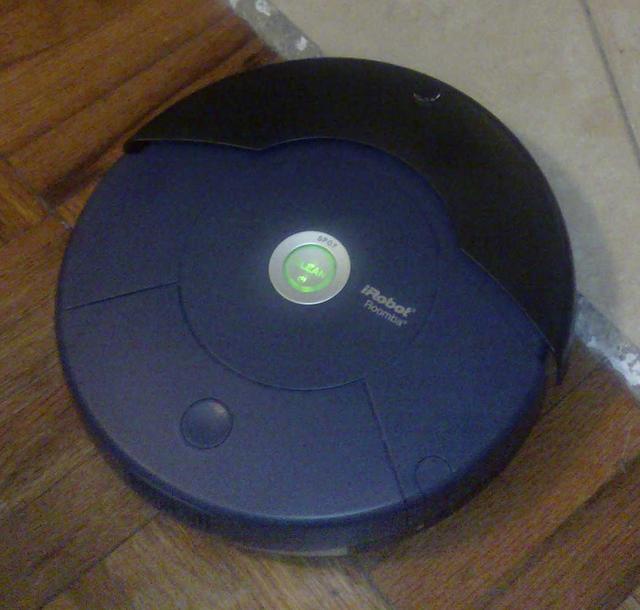
So, DebConf time is over once again. The two weeks worth of fifty weeks waiting are left behind once again, and it's back to get back to normal. DebConf was great Yes, it always is, and that's what we are all saying, but hey - Seriously! Being in the same building than 300 crazed developers is always fun, and it's always better than last year's fun. A good highlight this year is that, given the number of Free Software and Free Culture groups that exist in USA's north-eastern coast, we had the opportunity to join a large crowd which has never been part of DebConf. Also, I must agree that the USA bid for DebConf was aiming to attract as many Debian people (developers, maintainers, or just happy users) which had not yet been to a DebConf before as possible. And it was a great success! I finally met several people I have long read in the mailing lists, in blogs or in IRC. A much higher proportion than usual, I'd venture to say. Another interesting phenomenon /methinks is that this year's DebCamp started much more staffed than usual: I arrived on the first day, Sunday 25, and there were ~40 people there already; I don't have the actual numbers, but we quickly grew, and the number started to stabilize past mid-week, only to (sharply) rise in the weekend, in time for DebianDay and DebConf start. Great time! But, they say, nobody can go to the USA without buying some sweet toys, right? Well, being the proud owner of six very hairy cats, I have thought into entering the looming and weaving industry... But cat hair, while abundant, I have heard is untreadable... Maybe due to the indisciplined, natural and independent personality of the cats (catonality should I say?)... So I had two choices: Clean up my home quite often, or live in a literally hairy mess. Enter choice #3: The Roomba! I had been waiting to buy this thing for several years, as they refuse to send to Mexico or charge Mexican cards. So, I walked across Manhattan and got my very own robot cleaner! For my further surprise, although I have not yet tried it (I don't even have a suitable cable yet), I found this: Yay, the Roomba is actually hackable (via a 7 pin miniDIN serial port)! Wikipedia says that:
Roomba comes with a Mini-DIN TTL serial interface, which is incompatible with standard PC/Mac serial ports and cables, both electrically and physically. However, third-party adapters are available to access the Roomba's computer via Bluetooth, USB, or RS-232 (PC/Mac serial). New, 500-series, and 410/420 series Roombas upgraded with the OSMO hacker device allow the user to monitor Roomba's many sensors and modify its behavior. The Roomba Open Interface (formerly "Roomba Serial Command Interface") API allows programmers and roboticists to create their own enhancements to Roomba. ( )
My first impressions? Well, the Roomba lazily charged its battery throughout the day today, and was hungry and ready when I arrived home. It is a but louder than what I expected, and of course my cats were not thrilled by the presence of a eighth animated and apparently sentient being at home. Their initial reaction was of course to be verrry alert of the thing. Twelve eyes were constantly pointing at the Roomba while mine alternated between them. As they measured the thing's speed and (I guess) inferred its movement patterns, they started escaping upstairs A flat, round thing with no legs to be seen will not likely be able to climb the stairs. And they were completely right. At first, only Chupchic remained downstairs. After a bit, I went up to show them the Roomba didn't jump on us to eat our brains, and after a bit, Santa and Macusa joined. The Roomba roombed for maybe 90 minutes (this space is large, and decided it was enough... And slowly, the rest of them started coming down. I would not say Roomba's cleaning is perfect, of course. Its room discovery algorithm is funny, and it even seems it's based on the mere chance of covering most (never all) of the space it has to clean. I had, of course, not fully studied it (after a single run, how could I?). It does make a honestly good attempt at cleaning under coaches, chairs and tables. It collected a fair amount of dust (on a house that seemed quite clean to me, I cannot imagine what would happen on a messy one). I have not yet played with the virtual walls (infrared transmitters which limit rooms as if a door was closed), but given the size of this house (and that I don't want it to clean around the cats' designated bathroom area), I guess I will end up using them regularly. During DebConf, I heard one bad (stupid useless noisy thing) and two very good (it has radically changed my life) comments on the Roomba. I hope to shift the balance towards 3/4 and not towards 2/2! Anyways... Thanks to each and every one of you. DebConf is great. Always great. Always a success. I cannot even thank specific teams. Debian Rules, and DebConf Rocks!

Dirk Eddelbuettel: RQuantLib 0.3.4

A fresh release of RQuantLib is now on CRAN and in Debian. RQuantLib combines (some of) the quantitative analytics of QuantLib with the R statistical computing environment and language. This follows the 0.3.3 release from last week and has again a number of internal changes. All uses of objects from external namespaces are now explicit as I removed the remaining using namespace QuantLib;. This makes things a little more verbose, but should be much clearer to read, especially for those not yet up to speed on whether a given object comes from any one of the Boost, QuantLib or Rcpp namespaces. We also generalized an older three-dimensional plotting function used for option surfaces -- which had already been used in the demo() code -- and improved the code underlying this: arrays of option prices and analytics given two input vectors are now computed at the C++ level for a nice little gain in efficiency. This also illustrates the possible improvements from working with the new Rcpp API that is now used throughout the package, Full changelog details, examples and more details about this package are at my RQuantLib page.

Julien Danjou: Update on rainbow-mode

rainbow-mode had a big success and good feedbacks when I released it for the first time a couple of months ago. Several users asked to me request its inclusion into Emacs. Therefore, some days ago, I proposed to merge it inside Emacs trunk. My request has been denied, but the mode has been added to the Emacs 24 package repository. In the mean time, I've added support for hsl() and hsla() support, and added CSS 3/SVG color names. Flattr this

8 August 2010

Petter Reinholdtsen: Testing if a file system can be used for home directories...

A few years ago, I was involved in a project planning to use Windows file servers as home directory servers for Debian Edu/Skolelinux machines. This was thought to be no problem, as the access would be through the SMB network file system protocol, and we knew other sites used SMB with unix and samba as the file server to mount home directories without any problems. But, after months of struggling, we had to conclude that our goal was impossible. The reason is simply that while SMB can be used for home directories when the file server is Samba running on Unix, this only work because of Samba have some extensions and the fact that the underlying file system is a unix file system. When using a Windows file server, the underlying file system do not have POSIX semantics, and several programs will fail if the users home directory where they want to store their configuration lack POSIX semantics. As part of this work, I wrote a small C program I want to share with you all, to replicate a few of the problematic applications (like OpenOffice.org and GCompris) and see if the file system was working as it should. If you find yourself in spooky file system land, it might help you find your way out again. This is the fs-test.c source:
/*
 * Some tests to check the file system sematics.  Used to verify that
 * CIFS from a windows server do not work properly as a linux home
 * directory.
 * License: GPL v2 or later
 * 
 * needs libsqlite3-dev and build-essential installed
 * compile with: gcc -Wall -lsqlite3 -DTEST_SQLITE fs-test.c -o fs-test
*/
#define _FILE_OFFSET_BITS 64
#define _LARGEFILE_SOURCE 1
#define _LARGEFILE64_SOURCE 1
#define _GNU_SOURCE /* for asprintf() */
#include <errno.h>
#include <fcntl.h>
#include <stdio.h>
#include <string.h>
#include <stdlib.h>
#include <sys/file.h>
#include <sys/stat.h>
#include <sys/types.h>
#include <unistd.h>
#ifdef TEST_SQLITE
/*
 * Test sqlite open, as done by gcompris require the libsqlite3-dev
 * package and linking with -lsqlite3.  A more low level test is
 * below.
 * See also <URL: http://www.sqlite.org./faq.html#q5 >.
 */
#include <sqlite3.h>
#define CREATE_TABLE_USERS                                              \
  "CREATE TABLE users (user_id INT UNIQUE, login TEXT, lastname TEXT, firstname TEXT, birthdate TEXT, class_id INT ); "
int test_sqlite_open(void)  
  char *zErrMsg;
  char *name = "testsqlite.db";
  sqlite3 *db=NULL;
  unlink(name);
  int rc = sqlite3_open(name, &db);
  if( rc ) 
    printf("error: sqlite open of %s failed: %s\n", name, sqlite3_errmsg(db));
    sqlite3_close(db);
    return -1;
   
  /* create tables */
  rc = sqlite3_exec(db,CREATE_TABLE_USERS, NULL,  0, &zErrMsg);
  if( rc != SQLITE_OK ) 
    printf("error: sqlite table create failed: %s\n", zErrMsg);
    sqlite3_close(db);
    return -1;
   
  printf("info: sqlite worked\n");
  sqlite3_close(db);
  return 0;
 
#endif /* TEST_SQLITE */
/*
 * Demonstrate locking issue found in gcompris using sqlite3.  This
 * work with ext3, but not with cifs server on Windows 2003.  This is
 * done in the sqlite3 library.
 * See also
 * <URL:http://www.cygwin.com/ml/cygwin/2001-08/msg00854.html> and the
 * POSIX specification
 * <URL:http://www.opengroup.org/onlinepubs/009695399/functions/fcntl.html>.
 */
int test_gcompris_locking(void)  
  struct flock fl;
  char *name = "testsqlite.db";
  unlink(name);
  int fd = open(name, O_RDWR O_CREAT O_LARGEFILE, 0644);
  printf("info: testing fcntl locking\n");
  fl.l_whence = SEEK_SET;
  fl.l_pid    = getpid();
  printf("  Read-locking 1 byte from 1073741824");
  fl.l_start  = 1073741824;
  fl.l_len    = 1;
  fl.l_type   = F_RDLCK;
  if (0 != fcntl(fd, F_SETLK, &fl) ) printf(" - error!\n"); else printf("\n");
  printf("  Read-locking 510 byte from 1073741826");
  fl.l_start  = 1073741826;
  fl.l_len    = 510;
  fl.l_type   = F_RDLCK;
  if (0 != fcntl(fd, F_SETLK, &fl) ) printf(" - error!\n"); else printf("\n");
  printf("  Unlocking 1 byte from 1073741824");
  fl.l_start  = 1073741824;
  fl.l_len    = 1;
  fl.l_type   = F_UNLCK;
  if (0 != fcntl(fd, F_SETLK, &fl) ) printf(" - error!\n"); else printf("\n");
  printf("  Write-locking 1 byte from 1073741824");
  fl.l_start  = 1073741824;
  fl.l_len    = 1;
  fl.l_type   = F_WRLCK;
  if (0 != fcntl(fd, F_SETLK, &fl) ) printf(" - error!\n"); else printf("\n");
  printf("  Write-locking 510 byte from 1073741826");
  fl.l_start  = 1073741826;
  fl.l_len    = 510;
  if (0 != fcntl(fd, F_SETLK, &fl) ) printf(" - error!\n"); else printf("\n");
  printf("  Unlocking 2 byte from 1073741824");
  fl.l_start  = 1073741824;
  fl.l_len    = 2;
  fl.l_type   = F_UNLCK;
  if (0 != fcntl(fd, F_SETLK, &fl) ) printf(" - error!\n"); else printf("\n");
  close(fd);
  return 0;
 
/*
 * Test if permissions of freshly created directories allow entries
 * below them.  This was a problem with OpenOffice.org and gcompris.
 * Mounting with option 'sync' seem to solve this problem while
 * slowing down file operations.
 */
int test_subdirectory_creation(void)  
#define LEVELS 5
  char *path = strdup("test");
  char *dirs[LEVELS];
  int level;
  printf("info: testing subdirectory creation\n");
  for (level = 0; level < LEVELS; level++)  
    char *newpath = NULL;
    if (-1 == mkdir(path, 0777))  
      printf("  error: Unable to create directory '%s': %s\n",
	     path, strerror(errno));
      break;
     
    asprintf(&newpath, "%s/%s", path, "test");
    free(path);
    path = newpath;
   
  return 0;
 
/*
 * Test if symlinks can be created.  This was a problem detected with
 * KDE.
 */
int test_symlinks(void)  
  printf("info: testing symlink creation\n");
  unlink("symlink");
  if (-1 == symlink("file", "symlink"))
    printf("  error: Unable to create symlink\n");
  return 0;
 
int main(int argc, char **argv)  
  printf("Testing POSIX/Unix sematics on file system\n");
  test_symlinks();
  test_subdirectory_creation();
#ifdef TEST_SQLITE
  test_sqlite_open();
#endif /* TEST_SQLITE */
  test_gcompris_locking();
  return 0;
 
When everything is working, it should print something like this:
Testing POSIX/Unix sematics on file system
info: testing symlink creation
info: testing subdirectory creation
info: sqlite worked
info: testing fcntl locking
  Read-locking 1 byte from 1073741824
  Read-locking 510 byte from 1073741826
  Unlocking 1 byte from 1073741824
  Write-locking 1 byte from 1073741824
  Write-locking 510 byte from 1073741826
  Unlocking 2 byte from 1073741824
I do not remember the exact details of the problems we saw, but one of them was with locking, where if I remember correctly, POSIX allow a read-only lock to be upgraded to a read-write lock without unlocking the read-only lock (while Windows do not). Another was a bug in the CIFS/SMB client implementation in the Linux kernel where directory meta information would be wrong for a fraction of a second, making OpenOffice.org fail to create its deep directory tree because it was not allowed to create files in its freshly created directory. Anyway, here is a nice tool for your tool box, might you never need it. :)

Next.

Previous.
