Search Results: "ag"

14 March 2020

Dirk Eddelbuettel: RcppAPT 0.0.6

A new version of RcppAPT our interface from R to the C++ library behind the awesome apt, apt-get, apt-cache, commands and their cache powering Debian, Ubuntu and the like is now on CRAN. RcppAPT allows you to query the (Debian or Ubuntu) package dependency graph at will, with build-dependencies (if you have deb-src entries), reverse dependencies, and all other goodies. See the vignette and examples for illustrations. This new version corrects builds failures under the new and shiny Apt 2.0 release (and the pre-releases like the 1.9.* series in Ubuntu) as some header files moved around. My thanks to Kurt Hornik for the heads-up. I accomodated the change in the (very simple and shell-based) configure script by a) asking pkg-config about the version of pkg-apt and then using that to b) compare to a threshold value of 1.9.0 and c) setting another compiler #define if needed so that d) these headers could get included if defined. The neat part is that a) and b) are done in an R one-liner, and the whole script is still in shell. Now, CRAN being CRAN, I now split the script into two: one almost empty one not using bash that passes the omg but bash is not portable test, and which calls a second bash script doing the work. Fun and games The full set of changes follows.

Changes in version 0.0.6 (2020-03-14)
  • Accomodate Apt 2.0 code changes by including more header files
  • Change is backwards compatible and conditional
  • Added configure call using pkg-config and package version comparison (using R) to determine if the define is needed
  • Softened unit tests as we cannot assume optional source deb information to be present, so demo code runs but zero results tolerated

Courtesy of CRANberries, there is also a diffstat report for this release. A bit more information about the package is available here as well as as the GitHub repo. If you like this or other open-source work I do, you can now sponsor me at GitHub. For the first year, GitHub will match your contributions.

This post by Dirk Eddelbuettel originated on his Thinking inside the box blog. Please report excessive re-aggregation in third-party for-profit settings.

12 March 2020

Dirk Eddelbuettel: RInside 0.2.16

A new release 0.2.16 of RInside arrived on CRAN and in Debian today. This comes almost exactly one year after the previous release 0.2.15. RInside provides a set of convenience classes which facilitate embedding of R inside of C++ applications and programs, using the classes and functions provided by Rcpp. This release brings one new feature, contributed by Lance Bachmeier (with some additional post-processing by me). It adds the ability to embed and call R from C programs and applications. The interface is more limited as we do not get Rcpp for automagic conversion. But this offers the door to a number of applications supporting plain C interface, and the new examples directory for example shows one for ruby. We may add others. The short list of changes since the last release were:

Changes in RInside version 0.2.16 (2020-03-12)
  • RInside is now embeddable (with a reduced interface) from C applications thanks to Lance Bachmeier (who is now co-author) plus some polish by Dirk in #43)
  • Added R_SESSION_INIIALIZED to list of excluded variables.
  • Added simple diagnostics function to have a registered function.

CRANberries also provides a short report with changes from the previous release. More information is on the RInside page. Questions, comments etc should go to the rcpp-devel mailing list off the Rcpp R-Forge page, or to issues tickets at the GitHub repo. If you like this or other open-source work I do, you can now sponsor me at GitHub. For the first year, GitHub will match your contributions.

This post by Dirk Eddelbuettel originated on his Thinking inside the box blog. Please report excessive re-aggregation in third-party for-profit settings.

Julien Danjou: One year of Mergify

One year of MergifyIt has been close to a year now that I've incorporated my new company, Mergify. I've been busy, and I barely wrote anything about it so far. Now is an excellent time to take a break and reflect a bit on what happened during those last 12 months.
One year of Mergify

What problem does Mergify solve?Mergify is a powerful automation engine for GitHub pull requests. It allows you to automate everything and especially merging. You write rules, and it handles the rest.
One year of MergifyExample of rule matching returned in GitHub checks
For example, let's say you want your pull request to be merged, e.g., once your CI passes and the pull request has been approved. You just write such a rule, and our engine merges the pull request as soon as it's ready.We also deal with more advanced use cases. For instance, we provide a merge queue so your pull requests are merged serially and tested by your CI one after another avoiding any regression in your code.Our goal is to make pull request management and automation easy. You can use your bot to trigger a rebase of your pull requests, or a backport to a different branch, just with a single comment.
One year of MergifySome people like to make bots talk to each other.

A New AdventureMergify is the first company that I ever started. I did run some personal businesses before, created non-profit organizations, built FOSS projects but I never created a company from scratch, even less with an associate.Indeed, I've chosen to build the company with my old friend Mehdi. We've known each others for 7 years now, and have worked together all that time on different open-source projects. Having worked with each other for so long has probably been a critical factor in the success of our venture so far.I had little experience sharing the founding seats with someone, and tons of reading seemed to indicate that it would be a tough ride. Picking the right business partner(s) can be a hard task. Luckily, after working so much time together, Mehdi and I both know our strengths and weaknesses well enough to be able to circumvent them. On the other hand, we both have similar backgrounds as software engineers. That does not help to cover all the hats you need to wear when building a company. Over time, we found arrangements to cover most of those equally between us.We don't have any magical advice to give on this. As in every relationship, communication is the key, and the #1 factor of success.

Getting UsersI don't know if we got lucky, but we got users and customers pretty early. We used a few cooperative projects as guinea pigs first, and they were brave enough to try our service and give us feedback. No repository has been harmed during this first phase!Then, as soon as we managed to get our application on the GitHub Marketplace, we saw a steady number of users coming to us.This has been fantastic as it allowed us to get feedback rapidly. We set up a form asking users for feedback after they used Mergify for a couple of weeks. What we hear is that users were happy, that the documentation was confusing and that some features were buggy or missing. We planned all of those ideas as our future work in our roadmap, using the principles we described a few months ago.
How we handle our roadmap for Mergify
Whatever you re building a company, a product, or a house a time comes where you need planning. Pushing random buttons to move forward does not work anymore. You need to take a step back to
One year of Mergify
If you're curious, you can read this article.
We tried various strategies to get new users, but so far, organic growth has been our #1 way of onboarding new users. Like many small startups out there, we're not that good at marketing and executing strategies.We provide our service for free for open-source projects We are now powering many organizations, such as Mozilla, Amazon Web Services, Ceph and Fedora.

Working with GitHubWorking with GitHub has been complicated. When you build an application for a marketplace, your business is entirely dependent on the platform you develop for both in terms of features and quality of service.In our case, we hit quite many bugs with GitHub. Their support has mostly been fast to answer, but some significant issues are still opened months later. The truth is that the GitHub API could deserve more love and care from GitHub. For example, their GraphQL API is a work in progress for years and miss out many essential features.
One year of MergifyGitHub service status is not always green.
We dealt and still deal with all those issues. It obviously impacts our operations and decreases our overall velocity. We regularly have to find new ways to sidestep GitHub limitations.You have no idea how we wished for GitHub to be open-source. The idea of not having access to their code and understand how it works is so frustrating that we publish our engine as an open-source project. That allows all of our users to see how it works and even propose enhancements.
One year of Mergify

Automate all the wayWe're a tiny startup, and we decided to bootstrap our company. We never took any funding. From the beginning, it has been clear to us that we had to think and act like we had no resources. We're built around a scarcity mindset. Every decision we make is based on the assumption that we basically are very limited in terms of money and time.We basically act like any wrong choice we do could (virtually) kill the company. We only do what is essential, we ship fast, and we automate everything.For example, we have built our whole operation about CI/CD systems, and pushing any new fix or feature in production is done in a matter of minutes. It's not uncommon for us to push a fix from our phone, just by reviewing some code or editing a file.

GrowthWe're extremely happy with our steady growth and more users using our service. We now manage close to 30k repositories and merge 15k pull requests per month for our users.That's a lot of mouse clicks saved!If you want to try Mergify yourself, it's a single click log-in using your GitHub account. Check it out!

11 March 2020

Riku Voipio: This is the year not to fly

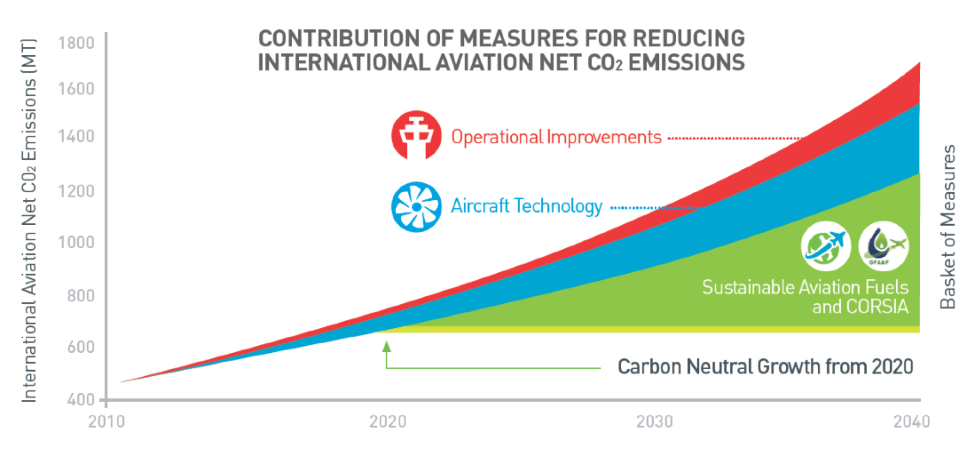
If you have to choose one year when you won't fly, this year, 2020, is the one to choose. Why? Because CORSIA. What the heck is CORSIA? CORSIA is not a novel virus, but "Carbon Offsetting and Reduction Scheme for International Aviation". In a nutshell, the aviation industry says they will freeze their co2 emissions from growing. Actually, aviation emissions are still going to grow. The airlines will just pay someone else to reduce emissions with the same amount aviation emissions rise - the "Offsetting" word in CORSIA. If that sounds like greenwashing, well it pretty much is. But that was expected. Getting every country and airline abroad CORSIA would not have been possible if the scheme would actually bite. So it's pretty much a joke. What does it have to do with *this* Year? The first phase of CORSIA will start next year, so the emissions are frozen to year 2020 levels. Due to certain recent events, lots of flights have already been cancelled - which means the reference year aviation emissions are already a lot less than the aviation industry was expecting. By avoiding flying this year, the aviation emissions are going to be frozen at an even lower level. This will increase cost of co2 offsetting for airlines, and the joke is going to be on them. So consider skipping business travel and taking your holiday trip this year with something else than a plane. Wouldn't recommend a cruise ship, tho...

Raphaël Hertzog: Keeping Debian 8 Jessie alive for longer than 5 years

Just like we did for Debian 7 Wheezy, some of the paid Debian LTS contributors will continue to maintain Debian 8 Jessie after its 5 years of support as part of Freexian s Extended LTS service. This service works differently than regular LTS: Some packages will not be supported: If you expect to have Debian 8 servers/devices running after June 30th 2020, and would like to have security updates for them, please get in touch with us. We re building a list of potential sponsors right now and we expect to provide cost estimations at the end of the month.

No comment Liked this article? Click here. My blog is Flattr-enabled.

Steve Kemp: Goodbye twitter

I was slow to start using twitter, but found it a lot of fun. Often it would be useful at times when websites were slow; I'd hop to the website and search "edinburgh network", "github down", or "helsinki outage" and find live updates as people disclosed problems before the appropriate companies updated their status pages. I've found a lot of useful information, in near real-time, over the past few years. For example I remember hearing a loud explosion a few years back and had no idea what it was. Turns out it was an electrical substation catching fire nearby. Anyway recently I've been getting a lot of fake notifications, things that aren't real: You can't disable these notifications, the only thing you can do is click "see less often". For a couple of days I did that every time I saw them, to no avail. So I'm done. I've removed references to my account anywhere I could spot them, and I've signed out for good. (I read twitter on my desktop 99% of the time, though I did use my mobile phone to make posts, especially when images/pictures were involved.) I've not deleted my account, but I'd uninstalled the application and deleted the entry from my password-store. No doubt in a few years they'll delete my account, though they seem to have recently backtracked on their attempts to nuke inactive accounts.

Axel Beckert: Backup over Tor with BackupPC

I have a Raspberry Pi at my parents home. They have internet access via some ISP using Carrier Grade NAT (CGN). Hence their home router is not reachable via IPv4 from the outside, they do have IPv6 and the devices can also be made accessible via IPv6 via the local router. Did that, was able to access my Raspberry Pi over IPv6 and SSH from the outside. So doing backup of that Raspberry Pi with BackupPC from the outside was a walk in the park. Unfortunately the IPv6 prefix seems to change occasionally and the router only allows to configure explicit IPv6 addresses in firewall rules so after a prefix change the configured rules no more match the devices IPv6 addresses. Meh. So there were multiple possibilities to work around these restrictions and access a devices behind the router: Enabling a Tor Hidden Service for port 22 is a no-brainer and was done most quickly (actually it already was in place as I already suspected that an IPv6 prefix change might happen) and I so far was too lazy to replace it with something more proper. But my backup was relying on direct SSH access via IPv6. So I needed to get that working over Tor, too. Here s what was needed for the host named sherpa (named after the Fiberfab Sherpa) to be backed up via Tor: That s it basically. Of course you also need to have the SSH public host key in the .ssh/known_hosts file also for the .onion hostname. And the Tor Hidden Service needs to be configured on the target device. But that s left as exercise for the reader. There s a lot of documentation about that on the internet, including slides and video recordings of talks and live demos I gave about this topic in German. Ah, and in case you might think that s unfair and misuse of the resources of the Tor Project: No, I explicitly asked and they said more or less any additional traffic helps to make it more difficult to analyse Tor traffic or to track Tor users and is hence welcome. Addendum: The last direct full backup of that Raspberry Pi (5.5 GB) took around 32 minutes. The first full backup over Tor (8.7 GB) took 341 minutes. Seems much slower, but there might be other factors as well: Most backups which ran last night were running at only 0.85 MB/s to 1 MB/s, probably because too many backups were running in parallel after a recent backup server downtime with file system check the backup server was probably the bottleneck. The backup of the Raspberry Pi over Tor ran at 0.42 MB/s, so about half the speed of the other backups. (Will probably add some more notes if I have more statistics over time.)

Markus Koschany: My Free Software Activities in February 2020

Welcome to gambaru.de. Here is my monthly report (+ the first week in March) that covers what I have been doing for Debian. If you re interested in Java, Games and LTS topics, this might be interesting for you. Debian Games Debian Java Misc Debian LTS This was my 48. month as a paid contributor and I have been paid to work 10 hours on Debian LTS, a project started by Rapha l Hertzog. In that time I did the following: ELTS Extended Long Term Support (ELTS) is a project led by Freexian to further extend the lifetime of Debian releases. It is not an official Debian project but all Debian users benefit from it without cost. The current ELTS release is Debian 7 Wheezy . This was my 21. month and I have been paid to work 8 hours on ELTS. Thanks for reading and see you next time.

Antoine Beaupr : Font changes

I have worked a bit on the fonts I use recently. From the main font I use every day in my text editor and terminals to this very website, I did a major and (hopefully) thoughtful overhaul of my typography, in the hope of making things easier to use and, to be honest, just prettier.

Editor and Terminal: Fira mono This all started when I found out about the Jetbrains Mono font. I found the idea of ligatures fascinating: the result is truly beautiful. So I do what I often do (sometimes to the despair of some fellow Debian members) and filed a RFP to document my research. As it turns out, Jetbrains Mono is not free enough to be packaged in Debian, because it requires proprietary tools to build. I nevertheless figured I could try another font so I looked at other monospace alternatives. I found the following packages in debian: Those are also "programmer fonts" that caught my interest but somehow didn't land in Debian yet: Because Fira code had ligatures, i ended up giving it a shot. I really like the originality of the font. See, for example, how the @ sign looks when compared to my previous font, Liberation Mono:
A dark terminal window showing the prompt '[SIGPIPE]anarcat@angela:~(master)$' in the Liberation Mono font Liberation Mono
A dark terminal window showing the prompt '[SIGPIPE]anarcat@angela:~(master)$' in the Fira mono font Fira Mono
Interestingly, a colleague (thanks ahf!) pointed me to the Practical Typography post "Ligatures in programming fonts: hell no", which makes the very convincing argument that ligatures are downright dangerous to programming environment. In my experiences with the fonts, it was also not always giving the result I would expect. I also remembered that the Emacs Haskell mode would have this tendency of inserting crazy syntactic sugar like this in source code without being asked, which I found extremely frustrating. Besides, Emacs doesn't support ligatures, unless you count such horrendous hacks which hack at the display time. That's because Emacs' display layer is not based on a modern rendering library like Pango but some scary legacy code that very few people understand. On top of the complexity of the codebase, there is also resistance in including a modern font. So I ended up using Fira mono everywhere I use fixed-width fonts, even though it's not packaged in Debian. That involves the following configuration in my .Xresources (no, I haven't switched to Wayland):
! font settings
Emacs*font: Fira mono
rofi*font: Fira mono 12
! Symbola is to get emojis to display correctly, apt install fonts-symbola
!URxvt*font: xft:Monospace,xft:Symbola
URxvt*font: xft:Fira mono,xft:Symbola
I also dropped this script in ~/.local/share/fonts/download.sh, for lack of a better way, to download all the fonts I'm interested in:
#!/bin/sh
set -e
set -u
wget --no-clobber --continue https://practicaltypography.com/fonts/charter.zip
unzip -u charter.zip
wget --no-clobber --continue https://github.com/adobe-fonts/source-serif-pro/releases/download/3.001R/source-serif-pro-3.001R.zip
unzip -u source-serif-pro-3.001R.zip
wget --no-clobber --continue https://github.com/adobe-fonts/source-sans-pro/releases/download/3.006R/source-sans-pro-3.006R.zip
unzip -u source-sans-pro-3.006R.zip
wget --no-clobber --continue https://github.com/adobe-fonts/source-code-pro/releases/download/2.030R-ro%2F1.050R-it/source-code-pro-2.030R-ro-1.050R-it.zip
unzip -u source-code-pro-2.030R-ro-1.050R-it.zip
wget --no-clobber --continue -O Fira-4.202.zip https://github.com/mozilla/Fira/archive/4.202.zip   true
unzip -u Fira-4.202.zip
Update: I forgot to mention one motivation behind this was to work around a change in the freetype interpreter, discussed in bug 866685 and my upgrades documentation.

Website: Charter That "hell no" article got me interested in the Practical Typography web book, which I read over the weekend. It was an eye opener and I realized I had already some of those concepts implanted; in fact it's probably after reading the Typography in ten minutes guide that I ended up trying Fira sans a few years ago. I have removed that font since then, however, after realising it was taking up an order of magnitude more bandwidth space than the actual page content. I really loved the book, so much that I actually bought it. I liked the concept of it, the look, and the fact that it's a living document. There's a lot of typography work I would need to do on this site to catchup with the recommendations from Matthew Butterick. Switching fonts is only one part of this, but it's something I was excited to work on. So I sat down and reviewed the free fonts Butterick recommends and tried out a few. I ended up settling on Charter, a relatively old (in terms of computing) font designed by Matthew Carter (of Verdana fame) in 1987. Charter really looks great and is surprisingly small. While a single version of Fira varies between 96KiB (Fira Sans Condensed) and 308KiB (Fira Sans Medium Italic), Charter is only 28KiB! While it's still about as large as most of my articles, I found it was a better compromise and decided to make the jump. This site is now in Serif, which is a huge change for me. The change was done with the following CSS:
h1, h2, h3, h4, h5, body  
    /* 
     * Charter: Butterick's favorite, freely available, found on https://practicaltypography.com/free-fonts.html
     * Palatino: Mac OS
     * Palatino Linotype: Windows
     * Noto serif: Android, packaged in Debian
     * Liberation serif: Linux fallback
     * Serif: fallback
     */
    font-family: Charter, Palatino, "Palatino Linotype", "Noto serif", "Liberation serif", serif;
    /* Charter is available from https://practicaltypography.com/charter.html under the liberal Bitstream license */
 
I have also decided to outline headings by making them slanted, using the beautiful italic version of Charter:
h1, h2, h3, h4, h5  
    font-style: italic;
 
I also made the point size larger, if the display is large enough:
/* enlarge body point size for charter for larger displays */
@media (min-device-width: 750px)  
    body  
        font-size: 20px;
        line-height: 1.3; /* default in FF is ~1.48 */
     
 
Modern display (including fonts) have a much higher resolution and the point size on my website was really getting too small to be readable. This, in turn, required a change to the max-width:
#content  
    /* about 2.5 alphabets with charter */
    max-width: 35em;
 
I have kept the footers and "UI" elements in sans-serif though, and kept those aligned on operating system defaults or "system fonts":
/* some hacking at typefaces to get some fresh zest in here
 * fallbacks from:
 * https://en.wikipedia.org/wiki/List_of_typefaces_included_with_Microsoft_Windows
 * https://en.wikipedia.org/wiki/List_of_typefaces_included_with_macOS
 */
.navbar, .footer  
    /*
     * Avenir: Mac, quite different but should still be pretty
     * Gill sans: Mac, Windows, somewhat similar to Avenir (indulge me)
     * Noto sans: Android, packaged in Debian
     * Open sans: Texlive extras AKA Linux, packaged in Debian
     * Fira sans: Mozilla's Firefox OS
     * Liberation sans: Linux fallback
     * Helvetica: general fallback
     * Sans-serif: fallback
     */
    font-family: Avenir, "Gill sans", "Noto sans", "Open sans", "Fira sans", "Liberation sans", Helvetica, sans-serif;
    /* Fira is available from https://github.com/mozilla/Fira/ under the SIL Open Font License */
    /* alternatively, just use system fonts for "controls" instead:
    font-family: -apple-system, BlinkMacSystemFont, "Segoe UI", "Roboto", "Oxygen", "Ubuntu", "Cantarell", "Fira Sans", "Droid Sans", "Helvetica Neue", sans-serif;
    gitlab uses: -apple-system, BlinkMacSystemFont, "Segoe UI", Roboto, "Noto Sans", Ubuntu, Cantarell, "Helvetica Neue", sans-serif, "Apple Color Emoji", "Segoe UI Emoji", "Segoe UI Symbol", "Noto Color Emoji"
    */
 
I've only done some preliminary testing of how this will look like. Although I tested on a few devices (my phone, e-book tablet, an iPad, and of course my laptop), I fully expect things to break on your device. Do let me know if things look better or worse. For future comparison, my site is well indexed in the Internet Wayback Machine and can be used to look at the site before the change. For example, compare the previous article here with its earlier style. The changes to the theme are of course available in my custom ikiwiki bootstrap theme (see in particular commits 0bca0fb7 and d1901fb8), as usual. Enjoy, and let me know what you think! PS: I considered just setting the Charter font in CSS and not adding it as a @font-face. I'm still considering that option and might do so if the performance cost is too big. The Fira mono font is actually set like this for the preformatted sections of the site, but because it's more common (and it's too big) I haven't added it as a font-face. You might want to download the font locally to benefit from the full experience as well. PPS: As it turns out, an earlier version of this post featured exactly that: a non-webfont version of Charter, which works fine if you have a good Charter font available. But it looks absolutely terrible if, like many Linux users, you have the nasty bitmap font shipped with xfonts-100dpi and xfonts-75dpi. So I fixed the webfont and it's unlikely this site will be able to load reasonably well in Linux until those packages are removed or bitmap font rendering is disabled.

10 March 2020

Enrico Zini: COVID-19 links

COVID-19 #CoronaVirus Infographic Datapack Information is Beautiful
chart covid19 health archive.org
COVID-19 Infographic Datapack, Regularly updated
European Centre for Disease Prevention and Control infographics
COVID-19 Italia - Monitoraggio situazione
Real-time tracking of pathogen evolution
Community sharing resources, verified information, and support initiatives, on COVID-19
Live world statistics on population, government and economics, society and media, environment, food, water, energy and health.
Your friends and colleagues are talking about something called Bayes s Theorem or Bayes s Rule, or something called Bayesian reasoning. They sound really enthusiastic about it, too, so you google and find a web page about Bayes s Theorem and... It s this equation. That s all. Just one equation. The page you found gives a definition of it, but it doesn t say what it is, or why it s useful, or why your friends would be interested in it. It looks like this random statistics thing. Why does a mathematical concept generate this strange enthusiasm in its students? What is the so-called Bayesian Revolution now sweeping through the sciences, which claims to subsume even the experimental method itself as a special case? What is the secret that the adherents of Bayes know? What is the light that they have seen? Soon you will know. Soon you will be one of us. While there are a few existing online explanations of Bayes s Theorem, my experience with trying to introduce people to Bayesian reasoning is that the existing online explanations are too abstract. Bayesian reasoning is very counterintuitive. People do not employ Bayesian reasoning intuitively, find it very difficult to learn Bayesian reasoning when tutored, and rapidly forget Bayesian methods once the tutoring is over. This holds equally true for novice students and highly trained professionals in a field. Bayesian reasoning is apparently one of those things which, like quantum mechanics or the Wason Selection Test, is inherently difficult for humans to grasp with our built-in mental faculties. Or so they claim. Here you will find an attempt to offer an intuitive explanation of Bayesian reasoning an excruciatingly gentle introduction that invokes all the human ways of grasping numbers, from natural frequencies to spatial visualization. The intent is to convey, not abstract rules for manipulating numbers, but what the numbers mean, and why the rules are what they are (and cannot possibly be anything else). When you are finished reading this, you will see Bayesian problems in your dreams.
Continuiamo a lavorare, studiare, socializzare grazie a Jitsi Meet

Utkarsh Gupta: Debian Activities for February 2020

Here s my (fifth) monthly update about the activities I ve done in Debian this February.

Debian LTS This was my fifth month as a Debian LTS paid contributor.
I was assigned 20.00 hours and worked on the following things:

CVE Fixes and Announcements:
  • Issued DLA 2095-1, fixing CVE-2020-7040, for storebackup.
    Details here:
    storeBackup.pl in storeBackup through 3.5 relies on the /tmp/storeBackup.lock pathname, which allows symlink attacks that possibly lead to privilege escalation.
    For Debian 8 Jessie , this problem has been fixed in version 3.2.1-1+deb8u1.
    Furthermore, sent the patch for the security update for Stretch and Buster to the maintainer.
  • Issued DLA 2113-1, fixing CVE-2020-8631 and CVE-2020-8632 for cloud-init.
    Details here:
    For CVE-2020-8631, in cloud-init, relies on Mersenne Twister for a random password, which makes it easier for attackers to predict passwords, because rand_str in cloudinit/util.py calls the random.choice function.
    For CVE-2020-8632, in cloud-init, rand_user_password in cloudinit/config/cc_set_passwords.py has a small default pwlen value, which makes it easier for attackers to guess passwords.
    For Debian 8 Jessie , this problem has been fixed in version 0.7.6~bzr976-2+deb8u1.
  • Issued DLA 2116-1, fixing CVE-2015-9542, for libpam-radius-auth.
    Details here:
    A vulnerability was found in pam_radius: the password length check was done incorrectly in the add_password() function in pam_radius_auth.c, resulting in a stack based buffer overflow.
    This could be used to crash (DoS) an application using the PAM stack for authentication. For Debian 8 Jessie , this problem has been fixed in version 1.3.16-4.4+deb8u1.
  • Issued DLA 2127-1, fixing CVE-2019-10785, for dojo.
    Details here:
    dojox was vulnerable to Cross-site Scripting. This was due to dojox.xmpp.util.xmlEncode only encoding the first occurrence of each character, not all of them.
    For Debian 8 Jessie , this problem has been fixed in version 1.10.2+dfsg-1+deb8u2.
  • Whilst Dylan issued DLA 2120-1, fixing CVE-2020-8130, for rake, I, with the Ruby team hat on, fixed the same issue for Stretch and Buster via proposed-updates.
    This CVE was fixed via 10.5.0-2+deb9u1 and 12.3.1-3+deb10u1 respectively.

Other LTS Work:
  • Triaged cloud-init, slirp, libpam-radius-auth, dojo, and qemu.
  • Triaged CVE-2020-1711 and CVE-2020-8608 with more precision and discussed the details with Ola.
  • Started working on rrdtool for CVE-2014-6262.

Debian Work This was a great month! MiniDebCamp -> FOSDEM -> Ruby Sprints. Blog post soon :D
In the month of February, I did a lot of Debian work. // given limited time in March, this section is yet to be updated.
One exciting blog post coming very soon. Until next time.
:wq for today.

9 March 2020

Sam Hartman: Forged Email

Last night, a series of forged emails was sent to a number of places around the Debian, Ubuntu and Free Software communities. The meat of the mail was a fake message from me to debian-private with the subject "DebConf19 Diversity Girls." I didn't write such a message.
I view this message as the latest installment in a campaign of attacks on Debian that attempt to undermine the project and take up the time of our members.
I was expecting something like this: yesterday, I banned Daniel Pocock from the project.There's been a pattern of related events over the past year and a half:

8 March 2020

Enrico Zini: Self perception links

Self-handicapping - Wikipedia
empowerment archive.org
Self-handicapping is a cognitive strategy by which people avoid effort in the hopes of keeping potential failure from hurting self-esteem.[1] It was first theorized by Edward E. Jones and Steven Berglas,[2] according to whom self-handicaps are obstacles created, or claimed, by the individual in anticipation of failing performance.[3]
Learned Helplessness is behaviour exhibited by a subject after enduring repeated aversive stimuli beyond their control. It was initially thought to be caused from the subject's acceptance of their powerlessness: discontinuing attempts to escape or avoid the aversive stimulus, even when such alternatives are unambiguously presented. Upon exhibiting such behavior, the subject was said to have acquired learned helplessness.[1][2] Over the past few decades, neuroscience has provided insight into learned helplessness and shown that the original theory actually had it backwards: the brain's default state is to assume that control is not present, and the presence of "helpfulness" is what is actually learned.[3]
One of the "classics" of Magic literature. Stuck In The Middle With Bruce by John F. Rizzo.

Ulrike Uhlig: Implementing feedback into our work culture

Everywhere I worked in the past, the only feedback that was asked of employees was during a yearly evaluation meeting. These meetings always felt to me like talking to Santa Claus and his Knecht Ruprecht. I was asked: Were you a good employee last year? If yes, we might give you a raise. If no, admit all your mistakes now, even if we already know everything, ho ho ho. And don't you talk about your feelings, or your well-being, or say anything about the organization's (invisible) hierarchies, otherwise we will put you on the "naughty list", and that's it with candy. The yearly evaluation set aside, there was no other place to give feedback (except by escalating a matter by involving the Labour Court, if you happen to work in France, or going on strike, also mostly part of French culture). Feedback allows to reflect on work processes, to situate oneself, and to get closure. How surprised was I when, some years ago, I received an email from a collaborator asking me: kindly for just few paragraphs (doesn t have to be anything long) to hear from you about the process, your work, challenges you had, or anything else you want to mention there.. Wow!
This simple email allowed me to reflect about: How do we get to a feedback culture? How do we get from German Christmas folklore, protestant work ethics, and the deeply rooted principles of disciplining and punishing to a feedback culture on eye level? It sounds a bit like going from the dark ages to a really cool science fiction utopia with universal peace, telepathy, and magic between all sentient beings on all inhabited planets in the cosmos at least that's how I imagined it as a child, just like some of my heroes did: the cosmonaut girl who saves Earth, the boy who talks to space flowers that give him the capacity to fly, and the little onion who fights for justice (the Italian author was so popular on our side of the iron curtain that a soviet astronomer named a minor planet after him. His wife meanwhile immortalized Karl Marx.) and some romantic part of me hangs on to these ideas. Feedback is not always easy to hear and to give. I-Statements Giving and receiving feedback is hard in a culture where people learnt that when they made a mistake they won't get candy. Or that they have to constantly please other people because they are not worthy by themselves. This can lead to people putting mistakes on one another. Every sentence that starts with You are has the potential of creating a lot of hurt, and anger. Have you heard of I-Statements? They have very powerfully changed my world view, as they shift from accusation to ownership of feelings. So instead of telling someone Your writing style is impossible! You really need to change the way you write., with an I-Statement one could say I have a hard time understanding that part of the text. I-Statements make cooperation possible. Listening actively Feedback is not about being right or wrong, it's first of all about being able to see how another person has experienced a situation. Active listening is a tool that helps with understanding. It might seem easy, but needs quite some practice and a safe space. One part of active listening is to restate what you hear the other person say (by mirroring, or paraphrasing), to make sure you understood, and make sure they know you understood what they were trying to say. You can practise this: in a circle of three people, have one person tell how they experienced a (possibly conflictual) situation, have one person do the active listening, and the third person observing in order to give feedback to the active listener about how they did. Then switch roles, for example clockwise, until everyone has had every role. Encouraging continuous feedback A working feedback culture does not take place only once a year. It needs to be a continuous process and therefore implemented in meetings, teams, eventually on the level of a project. Making clear: Who can I talk to if I experience an issue? is not different than telling developers and users where and how they can report a bug, or request a feature. A safe space to express feedback is key. Encouraging multiple feedback channels Some people might feel less empowered or more vulnerable over a channel than others. Make sure to have different channels for receiving feedback such as email, a point on each meeting agenda, a one-to-one meeting, or a poll. Giving and receiving feedback on eye level In a workplace that does not have a working feedback culture, feedback is easily perceived as policing. If your feedback process consists of asking people to upload a form to a cloud server every 3 months, and you notice that some people don't do it, you could ask yourself if there is an issue with how your colleagues perceive giving feedback in your organization. Do you meet your colleagues on eye level when it comes to feedback? Do you take feedback seriously and act on it? How do you deal with unpleasant feedback? How do you react when colleagues don't meet your expectations? Can people participate in the feedback process within their paid work time? Did everybody understand what the feedback process is about? Don't jump to conclusions Humans are problem solving animals. When someone comes to us with a problem, the first thing we want to do is to solve it, to help them. But sometimes this is uncalled for, it can be disempowering, or prevent people from acquiring competences themselves, and it can even break people's boundaries. So instead of asking What can I do for you?, try asking What do you need right now? People will often reply something that you did not expect at all. Acting on feedback Make sure you have a process to collect feedback (possibly anonymized) and to regularly evaluate if the organization needs to implement changes to thrive. Conclusion I stumbled upon Hans-Christian Dany's critique of feedback again recently, therefore I need to make it clear: I'm not interested in improving capitalist work culture by using cybernetic principles of self-regulation through feedback. Instead, I am interested in improving cooperation between people who work either individually or in organizations on eye level. In this framework, I see feedback processes as profoundly anti-capitalist methods to improve cooperation while working towards common good. Implementing these ideas should be doable: there are organizations who provide feedback training for example. This document, initially aiming at people in cooperatives, gives many insights on communication skills and feedback, the agile and UX worlds do feedback "retrospectives". and otherwise I'll have to go and write science fiction stories for children myself.

7 March 2020

Julian Andres Klode: APT 2.0 released

After brewing in experimental for a while, and getting a first outing in the Ubuntu 19.10 release; both as 1.9, APT 2.0 is now landing in unstable. 1.10 would be a boring, weird number, eh? Compared to the 1.8 series, the APT 2.0 series features several new features, as well as improvements in performance, hardening. A lot of code has been removed as well, reducing the size of the library.

Highlighted Changes Since 1.8

New Features
  • Commands accepting package names now accept aptitude-style patterns. The syntax of patterns is mostly a subset of aptitude, see apt-patterns(7) for more details.
  • apt(8) now waits for the dpkg locks - indefinitely, when connected to a tty, or for 120s otherwise.
  • When apt cannot acquire the lock, it prints the name and pid of the process that currently holds the lock.
  • A new satisfy command has been added to apt(8) and apt-get(8)
  • Pins can now be specified by source package, by prepending src: to the name of the package, e.g.:
    Package: src:apt
    Pin: version 2.0.0
    Pin-Priority: 990
    
    Will pin all binaries of the native architecture produced by the source package apt to version 2.0.0. To pin packages across all architectures, append :any.

Performance
  • APT now uses libgcrypt for hashing instead of embedded reference implementations of MD5, SHA1, and SHA2 hash families.
  • Distribution of rred and decompression work during update has been improved to take into account the backlog instead of randomly assigning a worker, which should yield higher parallelization.

Incompatibilities
  • The apt(8) command no longer accepts regular expressions or wildcards as package arguments, use patterns (see New Features).

Hardening
  • Credentials specified in auth.conf now only apply to HTTPS sources, preventing malicious actors from reading credentials after they redirected users from a HTTP source to an http url matching the credentials in auth.conf. Another protocol can be specified, see apt_auth.conf(5) for the syntax.

Developer changes
  • A more extensible cache format, allowing us to add new fields without breaking the ABI
  • All code marked as deprecated in 1.8 has been removed
  • Implementations of CRC16, MD5, SHA1, SHA2 have been removed
  • The apt-inst library has been merged into the apt-pkg library.
  • apt-pkg can now be found by pkg-config
  • The apt-pkg library now compiles with hidden visibility by default.
  • Pointers inside the cache are now statically typed. They cannot be compared against integers (except 0 via nullptr) anymore.

python-apt 2.0 python-apt 2.0 is not yet ready, I m hoping to add a new cleaner API for cache access before making the jump from 1.9 to 2.0 versioning.

libept 1.2 I ve moved the maintenance of libept to the APT team. We need to investigate how to EOL this properly and provide facilities inside APT itself to replace it. There are no plans to provide new features, only bugfixes / rebuilds for new apt versions.

Fran ois Marier: Fixing MariaDB InnoDB errors after upgrading to MythTV 30

After upgrading to MythTV 30 and MariaDB 10.3.18 on Debian buster, I noticed the following errors in my logs:
Jan 14 02:00:05 hostname mysqld[846]: 2020-01-14  2:00:05 62 [Warning] InnoDB: Cannot add field  rating  in table  mythconverg . internetcontentarticles  because after adding it, the row size is 8617 which is greater than maximum allowed size (8126) for a record on index leaf page.
Jan 14 02:00:05 hostname mysqld[846]: 2020-01-14  2:00:05 62 [Warning] InnoDB: Cannot add field  playcommand  in table  mythconverg . videometadata  because after adding it, the row size is 8243 which is greater than maximum allowed size (8126) for a record on index leaf page.
The root cause is that the database is using an InnoDB row format that cannot handle the new table sizes. To fix it, I put the following in alter_tables.sql:
ALTER TABLE archiveitems ROW_FORMAT=DYNAMIC;
ALTER TABLE bdbookmark ROW_FORMAT=DYNAMIC;
ALTER TABLE callsignnetworkmap ROW_FORMAT=DYNAMIC;
ALTER TABLE capturecard ROW_FORMAT=DYNAMIC;
ALTER TABLE cardinput ROW_FORMAT=DYNAMIC;
ALTER TABLE channel ROW_FORMAT=DYNAMIC;
ALTER TABLE channelgroup ROW_FORMAT=DYNAMIC;
ALTER TABLE channelgroupnames ROW_FORMAT=DYNAMIC;
ALTER TABLE channelscan ROW_FORMAT=DYNAMIC;
ALTER TABLE channelscan_channel ROW_FORMAT=DYNAMIC;
ALTER TABLE channelscan_dtv_multiplex ROW_FORMAT=DYNAMIC;
ALTER TABLE codecparams ROW_FORMAT=DYNAMIC;
ALTER TABLE credits ROW_FORMAT=DYNAMIC;
ALTER TABLE customexample ROW_FORMAT=DYNAMIC;
ALTER TABLE diseqc_config ROW_FORMAT=DYNAMIC;
ALTER TABLE diseqc_tree ROW_FORMAT=DYNAMIC;
ALTER TABLE displayprofilegroups ROW_FORMAT=DYNAMIC;
ALTER TABLE displayprofiles ROW_FORMAT=DYNAMIC;
ALTER TABLE dtv_multiplex ROW_FORMAT=DYNAMIC;
ALTER TABLE dtv_privatetypes ROW_FORMAT=DYNAMIC;
ALTER TABLE dvdbookmark ROW_FORMAT=DYNAMIC;
ALTER TABLE dvdinput ROW_FORMAT=DYNAMIC;
ALTER TABLE dvdtranscode ROW_FORMAT=DYNAMIC;
ALTER TABLE eit_cache ROW_FORMAT=DYNAMIC;
ALTER TABLE filemarkup ROW_FORMAT=DYNAMIC;
ALTER TABLE gallery_directories ROW_FORMAT=DYNAMIC;
ALTER TABLE gallery_files ROW_FORMAT=DYNAMIC;
ALTER TABLE gallerymetadata ROW_FORMAT=DYNAMIC;
ALTER TABLE housekeeping ROW_FORMAT=DYNAMIC;
ALTER TABLE inputgroup ROW_FORMAT=DYNAMIC;
ALTER TABLE internetcontent ROW_FORMAT=DYNAMIC;
ALTER TABLE internetcontentarticles ROW_FORMAT=DYNAMIC;
ALTER TABLE inuseprograms ROW_FORMAT=DYNAMIC;
ALTER TABLE iptv_channel ROW_FORMAT=DYNAMIC;
ALTER TABLE jobqueue ROW_FORMAT=DYNAMIC;
ALTER TABLE jumppoints ROW_FORMAT=DYNAMIC;
ALTER TABLE keybindings ROW_FORMAT=DYNAMIC;
ALTER TABLE keyword ROW_FORMAT=DYNAMIC;
ALTER TABLE livestream ROW_FORMAT=DYNAMIC;
ALTER TABLE logging ROW_FORMAT=DYNAMIC;
ALTER TABLE music_albumart ROW_FORMAT=DYNAMIC;
ALTER TABLE music_albums ROW_FORMAT=DYNAMIC;
ALTER TABLE music_artists ROW_FORMAT=DYNAMIC;
ALTER TABLE music_directories ROW_FORMAT=DYNAMIC;
ALTER TABLE music_genres ROW_FORMAT=DYNAMIC;
ALTER TABLE music_playlists ROW_FORMAT=DYNAMIC;
ALTER TABLE music_radios ROW_FORMAT=DYNAMIC;
ALTER TABLE music_smartplaylist_categories ROW_FORMAT=DYNAMIC;
ALTER TABLE music_smartplaylist_items ROW_FORMAT=DYNAMIC;
ALTER TABLE music_smartplaylists ROW_FORMAT=DYNAMIC;
ALTER TABLE music_songs ROW_FORMAT=DYNAMIC;
ALTER TABLE music_stats ROW_FORMAT=DYNAMIC;
ALTER TABLE music_streams ROW_FORMAT=DYNAMIC;
ALTER TABLE mythlog ROW_FORMAT=DYNAMIC;
ALTER TABLE mythweb_sessions ROW_FORMAT=DYNAMIC;
ALTER TABLE networkiconmap ROW_FORMAT=DYNAMIC;
ALTER TABLE oldfind ROW_FORMAT=DYNAMIC;
ALTER TABLE oldprogram ROW_FORMAT=DYNAMIC;
ALTER TABLE oldrecorded ROW_FORMAT=DYNAMIC;
ALTER TABLE people ROW_FORMAT=DYNAMIC;
ALTER TABLE phonecallhistory ROW_FORMAT=DYNAMIC;
ALTER TABLE phonedirectory ROW_FORMAT=DYNAMIC;
ALTER TABLE pidcache ROW_FORMAT=DYNAMIC;
ALTER TABLE playgroup ROW_FORMAT=DYNAMIC;
ALTER TABLE powerpriority ROW_FORMAT=DYNAMIC;
ALTER TABLE profilegroups ROW_FORMAT=DYNAMIC;
ALTER TABLE program ROW_FORMAT=DYNAMIC;
ALTER TABLE programgenres ROW_FORMAT=DYNAMIC;
ALTER TABLE programrating ROW_FORMAT=DYNAMIC;
ALTER TABLE recgrouppassword ROW_FORMAT=DYNAMIC;
ALTER TABLE recgroups ROW_FORMAT=DYNAMIC;
ALTER TABLE record ROW_FORMAT=DYNAMIC;
ALTER TABLE record_tmp ROW_FORMAT=DYNAMIC;
ALTER TABLE recorded ROW_FORMAT=DYNAMIC;
ALTER TABLE recordedartwork ROW_FORMAT=DYNAMIC;
ALTER TABLE recordedcredits ROW_FORMAT=DYNAMIC;
ALTER TABLE recordedfile ROW_FORMAT=DYNAMIC;
ALTER TABLE recordedmarkup ROW_FORMAT=DYNAMIC;
ALTER TABLE recordedprogram ROW_FORMAT=DYNAMIC;
ALTER TABLE recordedrating ROW_FORMAT=DYNAMIC;
ALTER TABLE recordedseek ROW_FORMAT=DYNAMIC;
ALTER TABLE recordfilter ROW_FORMAT=DYNAMIC;
ALTER TABLE recordingprofiles ROW_FORMAT=DYNAMIC;
ALTER TABLE recordmatch ROW_FORMAT=DYNAMIC;
ALTER TABLE scannerfile ROW_FORMAT=DYNAMIC;
ALTER TABLE scannerpath ROW_FORMAT=DYNAMIC;
ALTER TABLE schemalock ROW_FORMAT=DYNAMIC;
ALTER TABLE settings ROW_FORMAT=DYNAMIC;
ALTER TABLE storagegroup ROW_FORMAT=DYNAMIC;
ALTER TABLE tvchain ROW_FORMAT=DYNAMIC;
ALTER TABLE tvosdmenu ROW_FORMAT=DYNAMIC;
ALTER TABLE upnpmedia ROW_FORMAT=DYNAMIC;
ALTER TABLE user_permissions ROW_FORMAT=DYNAMIC;
ALTER TABLE user_sessions ROW_FORMAT=DYNAMIC;
ALTER TABLE users ROW_FORMAT=DYNAMIC;
ALTER TABLE videocast ROW_FORMAT=DYNAMIC;
ALTER TABLE videocategory ROW_FORMAT=DYNAMIC;
ALTER TABLE videocollection ROW_FORMAT=DYNAMIC;
ALTER TABLE videocountry ROW_FORMAT=DYNAMIC;
ALTER TABLE videogenre ROW_FORMAT=DYNAMIC;
ALTER TABLE videometadata ROW_FORMAT=DYNAMIC;
ALTER TABLE videometadatacast ROW_FORMAT=DYNAMIC;
ALTER TABLE videometadatacountry ROW_FORMAT=DYNAMIC;
ALTER TABLE videometadatagenre ROW_FORMAT=DYNAMIC;
ALTER TABLE videopart ROW_FORMAT=DYNAMIC;
ALTER TABLE videopathinfo ROW_FORMAT=DYNAMIC;
ALTER TABLE videosource ROW_FORMAT=DYNAMIC;
ALTER TABLE videotypes ROW_FORMAT=DYNAMIC;
ALTER TABLE weatherdatalayout ROW_FORMAT=DYNAMIC;
ALTER TABLE weatherscreens ROW_FORMAT=DYNAMIC;
ALTER TABLE weathersourcesettings ROW_FORMAT=DYNAMIC;
and then ran it like this:
mysql -umythtv -pPassword1 mythconverg < alter_tables.sql

Matthias Klumpp: Introducing the MetaInfo Creator

This year s FOSDEM conference was a lot of fun one of the things I always enjoy most about this particular conference (besides having some of the outstanding food you can get in Brussels and meeting with friends from the free software world) is the ability to meet a large range of new people who I wouldn t usually have interacted with, or getting people from different communities together who otherwise would not meet in person as each bigger project has their own conference (for example, the amount of VideoLAN people is much lower at GUADEC and Akademy compared to FOSDEM). It s also really neat to have GNOME and KDE developers within reach at the same place, as I care about both desktops a lot. An unexpected issue This blog post however is not about that. It s about what I learned when talking to people there about AppStream, and the outcome of that. Especially when talking to application authors but also to people who deal with larger software repositories, it became apparent that many app authors don t really want to deal with the extra effort of writing metadata at all. This was a bit of a surprise to me, as I thought that there would be a strong interest for application authors to make their apps look as good as possible in software catalogs. A bit less surprising was the fact that people apparently don t enjoy reading a large specification, reading a long-ish intro guide with lots of dos and don ts or basically reading any longer text at all before being able to create an AppStream MetaInfo/AppData file describing their software. Another common problem seems to be that people don t immediately know what a reverse-DNS ID is, the format AppStream uses for uniquely identifying each software component. So naturally, people either have to read about it again (bah, reading!  ) or make something up, which occasionally is wrong and not the actual component-ID their software component should have. The MetaInfo Creator It was actually suggested to me twice that what people really would like to have is a simple tool to put together a MetaInfo file for their software. Basically a simple form with a few questions which produces the final file. I always considered this a nice to have, but not essential feature, but now I was convinced that this actually has a priority attached to it. So, instead of jumping into my favourite editor and writing a bunch of C code to create this make MetaInfo file form as part of appstreamcli, this time I decided to try what the cool kids are doing and make a web application that runs in your browser and creates all metadata there. So, behold the MetaInfo Creator! If you click this link, you will end up at an Angular-based web application that will let you generate MetaInfo/AppData files for a few component-types simply by answering a set of questions. The intent was to make this tool as easy to use as possible for someone who basically doesn t know anything about AppStream at all. Therefore, the tool will: For the Meson feature, the tool simply can not generate a use this and be done script, as each Meson snippet needs to be adjusted for the individual project. So this option is disabled by default, but when enabled, a few simple Meson snippets will be produced which can be easily adjusted to the project they should be part of. The tool currently does not generate any release information for a MetaInfo file at all, This may be added in future. The initial goal was to have people create any MetaInfo file in the first place, having projects also ship release details would be the icing on the cake. I hope people find this project useful and use it to create better MetaInfo files, so distribution repositories and Flatpak repos look better in software centers. Also, since MetaInfo files can be used to create an inventory of software and to install missing stuff as-needed, having more of them will help to build smarter software managers, create smaller OS base installations and introspect what software bundles are made of easily. I welcome contributions to the MetaInfo Creator! You can find its source code on GitHub. This is my first web application ever, the first time I wrote TypeScript and the first time I used Angular, so I d bet a veteran developer more familiar with these tools will cringe at what I produced. So, scratch that itch and submit a PR!  Also, if you want to create a form for a new component type, please submit a patch as well. C developer s experience notes for Angular, TypeScript, NodeJS This section is just to ramble a bit about random things I found interesting as a developer who mostly works with C/C++ and Python and stepped into the web-application developer s world for the first time. For a project like this, I would usually have gone with my default way of developing something for the web: Creating a Flask-based application in Python. I really love Python and Flask, but of course using them would have meant that all processing would have had to be done on the server. One the one hand I could have used libappstream that way to create the XML, format it and validate it, but on the other hand I would have had to host the Python app on my own server, find a place at Purism/Debian/GNOME/KDE or get it housed at Freedesktop somehow (which would have taken a while to arrange) and I really wanted to have a permanent location for this application immediately. Additionally, I didn t want people to send the details of new unpublished software to my server. TypeScript I must say that I really like TypeScript as a language compared to JavaScript. It is not really revolutionary (I looked into Dart and other ways to compile $stuff to JavaScript first), but it removes just enough JavaScript weirdness to be pleasant to use. At the same time, since TS is a superset of JS, JavaScript code is valid TypeScript code, so you can integrate with existing JS code easily. Picking TS up took me much less than an hour, and most of its features you learn organically when working on a project. The optional type-safety is a blessing and actually helped me a few times to find an issue. It being so close to JS is both a strength and weakness: On the one hand you have all the JS oddities in the language (implicit type conversion is really weird sometimes) and have to basically refrain from using them or count on the linter to spot them, but on the other hand you can immediately use the massive amount of JavaScript code available on the web. Angular The Angular web framework took a few hours to pick up there are a lot of concepts to understand. But ultimately, it s manageable and pretty nice to use. When working at the system level, a lot of complexity is in understanding how the CPU is processing data, managing memory and using the low-level APIs the operating system provides. With the web application stuff, a lot of the complexity for me was in learning about all the moving parts the system is comprised of, what their names are, what they are, and what works with which. And that is not a flat learning curve at all. As C developer, you need to know how the computer works to be efficient, as web developer you need to know a bunch of different tools really well to be productive. One thing I am still a bit puzzled about is the amount of duplicated HTML templates my project has. I haven t found a way to reuse template blocks in multiple components with Angular, like I would with Jinja2. The documentation suggests this feature does not exist, but maybe I simply can t find it or there is a completely different way to achieve the same result. NPM Ecosystem The MetaInfo Creator application ultimately doesn t do much. But according to GitHub, it has 985 (!!!) dependencies in NPM/NodeJS. And that is the bare minimum! I only added one dependency myself to it. I feel really uneasy about this, as I prefer the Python approach of having a rich standard library instead of billions of small modules scattered across the web. If there is a bug in one of the standard library functions, I can submit a patch to Python where some core developer is there to review it. In NodeJS, I imagine fixing some module is much harder. That being said though, using npm is actually pretty nice there is a module available for most things, and adding a new dependency is easy. NPM will also manage all the details of your dependency chain, GitHub will warn about security issues in modules you depend on, etc. So, from a usability perspective, there isn t much to complain about (unlike with Python, where creating or using a module ends up as a fight the system event way too often and the question which random file do I need to create now to achieve what I want? always exists. Fortunately, Poetry made this a bit more pleasant for me recently). So, tl;dr for this section: The web application development excursion was actually a lot of fun, and I may make more of those in future, now that I learned more about how to write web applications. Ultimately though, I enjoy the lower-level software development and backend development a bit more. Summary Check out the MetaInfo Creator and its source code, if you want to create MetaInfo files for a GUI application, console application, addon or service component quickly.

6 March 2020

Reproducible Builds: Reproducible Builds in February 2020

Welcome to the February 2020 report from the Reproducible Builds project. One of the original promises of open source software is that distributed peer review and transparency of process results in enhanced end-user security. However, whilst anyone may inspect the source code of free and open source software for malicious flaws, almost all software today is distributed as pre-compiled binaries. This allows nefarious third-parties to compromise systems by injecting malicious code into ostensibly secure software during the various compilation and distribution processes. The motivation behind the reproducible builds effort is to provide the ability to demonstrate these binaries originated from a particular, trusted, source release: if identical results are generated from a given source in all circumstances, reproducible builds provides the means for multiple third-parties to reach a consensus on whether a build was compromised via distributed checksum validation or some other scheme. In this month s report, we cover:

If you are interested in contributing to the project, please visit our Contribute page on our website.

Media coverage & upstream news Omar Navarro Leija, a PhD student at the University Of Pennsylvania, published a paper entitled Reproducible Containers that describes in detail the workings of a new user-space container tool called DetTrace:
All computation that occurs inside a DetTrace container is a pure function of the initial filesystem state of the container. Reproducible containers can be used for a variety of purposes, including replication for fault-tolerance, reproducible software builds and reproducible data analytics. We use DetTrace to achieve, in an automatic fashion, reproducibility for 12,130 Debian package builds, containing over 800 million lines of code, as well as bioinformatics and machine learning workflows.
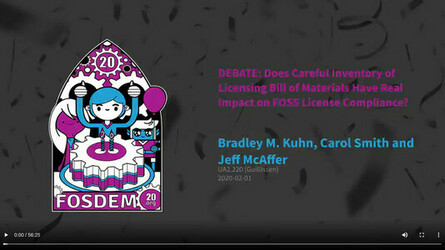
There was also considerable discussion on our mailing list regarding this research and a presentation based on the paper will occur at the ASPLOS 2020 conference between March 16th 20th in Lausanne, Switzerland. The many virtues of Reproducible Builds were touted as benefits for software compliance in a talk at FOSDEM 2020, debating whether the Careful Inventory of Licensing Bill of Materials Have Impact of FOSS License Compliance which pitted Jeff McAffer and Carol Smith against Bradley Kuhn and Max Sills. (~47 minutes in). Nobuyoshi Nakada updated the canonical implementation of the Ruby programming language a change such that filesystem globs (ie. calls to list the contents of filesystem directories) will henceforth be sorted in ascending order. Without this change, the underlying nondeterministic ordering of the filesystem is exposed to the language which often results in an unreproducible build. Vagrant Cascadian reported on our mailing list regarding a quick reproducible test for the GNU Guix distribution, which resulted in 81.9% of packages registering as reproducible in his installation:
$ guix challenge --verbose --diff=diffoscope ...
2,463 store items were analyzed:
  - 2,016 (81.9%) were identical
  - 37 (1.5%) differed
  - 410 (16.6%) were inconclusive
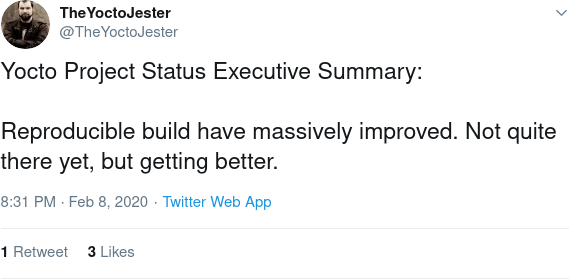
Jeremiah Orians announced on our mailing list the release of a number of tools related to cross-compilation such as M2-Planet and mescc-tools-seed. This project attemps a full bootstrap of a cross-platform compiler for the C programming language (written in C itself) from hex, the ultimate goal being able to demonstrate fully-bootstrapped compiler from hex to the GCC GNU Compiler Collection. This has many implications in and around Ken Thompson s Trusting Trust attack outlined in Thompson s 1983 Turing Award Lecture. Twitter user @TheYoctoJester posted an executive summary of reproducible builds in the Yocto Project: Finally, Reddit user tofflos posted to the /r/Java subreddit asking about how to achieve reproducible builds with Maven and Chris Lamb noticed that the Linux kernel documentation about reproducible builds of it is available on the kernel.org homepages in an attractive HTML format.

Distribution work

Debian Chris Lamb created a merge request for the core debian-installer package to allow all arguments and options from sources.list files (such as [check-valid-until=no] , etc.) in order that we can test the reproducibility of the installer images on the Reproducible Builds own testing infrastructure. (#13) Thorsten Glaser followed-up to a bug filed against the dpkg-source component that was originally filed in late 2015 that claims that the build tool does not respect permissions when unpacking tarballs if the umask is set to 0002. Matthew Garrett posted to the debian-devel mailing list on the topic of Producing verifiable initramfs images as part of a wider conversation on being able to trust the entire software stack on our computers. 59 reviews of Debian packages were added, 30 were updated and 42 were removed this month adding to our knowledge about identified issues. Many issue types were noticed and categorised by Chris Lamb, including:

openSUSE In openSUSE, Bernhard M. Wiedemann published his monthly Reproducible Builds status update as well as provided the following patches:

Software development

diffoscope diffoscope is our in-depth and content-aware diff-like utility that can locate and diagnose reproducibility issues. It is run countless times a day on our testing infrastructure and is essential for identifying fixes and causes of nondeterministic behaviour. Chris Lamb made the following changes this month, including uploading version 137 to Debian:
  • The sng image utility appears to return with an exit code of 1 if there are even minor errors in the file. (#950806)
  • Also extract classes2.dex, classes3.dex from .apk files extracted by apktool. (#88)
  • No need to use str.format if we are just returning the string. [ ]
  • Add generalised support for ignoring returncodes [ ] and move special-casing of returncodes in zip to use Command.VALID_RETURNCODES. [ ]

Other tools disorderfs is our FUSE-based filesystem that deliberately introduces non-determinism into directory system calls in order to flush out reproducibility issues. This month, Vagrant Cascadian updated the Vcs-Git to specify the debian packaging branch. [ ] reprotest is our end-user tool to build same source code twice in widely differing environments and then checks the binaries produced by each build for any differences. This month, versions 0.7.13 and 0.7.14 were uploaded to Debian unstable by Holger Levsen after Vagrant Cascadian added support for GNU Guix [ ].

Project documentation & website There was more work performed on our documentation and website this month. Bernhard M. Wiedemann added a Java Gradle Build Tool snippet to the SOURCE_DATE_EPOCH documentation [ ] and normalised various terms to unreproducible [ ]. Chris Lamb added a Meson.build example [ ] and improved the documentation for the CMake [ ] to the SOURCE_DATE_EPOCH documentation, replaced anyone can with anyone may as, well, not everyone has the resources, skills, time or funding to actually do what it refers to [ ] and improved the pre-processing for our report generation [ ][ ][ ][ ] etc. In addition, Holger Levsen updated our news page to improve the list of reports [ ], added an explicit mention of the weekly news time span [ ] and reverted sorting of news entries to have latest on top [ ] and Mattia Rizzolo added Codethink as a non-fiscal sponsor [ ] and lastly Tianon Gravi added a Docker Images link underneath the Debian project on our Projects page [ ].

Upstream patches The Reproducible Builds project detects, dissects and attempts to fix as many currently-unreproducible packages as possible. We endeavour to send all of our patches upstream where appropriate. This month, we wrote a large number of such patches, including: Vagrant Cascadian submitted patches via the Debian bug tracking system targeting the packages the Civil Infrastructure Platform has identified via the CIP and CIP build depends package sets:

Testing framework We operate a fully-featured and comprehensive Jenkins-based testing framework that powers tests.reproducible-builds.org. This month, the following changes were made by Holger Levsen: In addition, Mattia Rizzolo added an Apache web server redirect for buildinfos.debian.net [ ] and reverted the reshuffling of arm64 architecture builders [ ]. The usual build node maintenance was performed by Holger Levsen, Mattia Rizzolo [ ][ ] and Vagrant Cascadian.

Getting in touch If you are interested in contributing to the Reproducible Builds project, please visit our Contribute page on our website. However, you can get in touch with us via:

This month s report was written by Bernhard M. Wiedemann, Chris Lamb and Holger Levsen. It was subsequently reviewed by a bunch of Reproducible Builds folks on IRC and the mailing list.

4 March 2020

Noah Meyerhans: Daily VM image builds are available from the cloud team

Did you know that the cloud team generates daily images for buster, bullseye, and sid? They re available for download from cdimage.debian.org and are published to Amazon EC2 and Microsoft Azure. This is done both to exercise our image generation infrastructure, and also to facilitate testing of the actual images and distribution in general. I ve often found it convenient to have easy access to a clean, up-to-date, disposable virtual machine, and you might too. Please note that these images are intended for testing purposes, and older ones may be removed at any time in order to free up various resources. You should not hardcode references to specific images in any tools or configuration. If you re downloading an image for local use, you ll probably want one of the nocloud images. They have an empty root password (the security ramifications of this should be obvious, so please be careful!), and don t rely on any cloud service for configuration. You can use the qcow2 images with QEMU on any Linux system, or retrieve the raw images for use with another VMM. If you want to use the images on Amazon EC2, you can identify the latest nightly build using the AWS CLI as follows:
# Select the most recent bullseye image for arm64 instance types:
$ aws ec2 describe-images --owner 903794441882 \
--region us-east-1 --output json \
--query "Images[?Architecture=='arm64']   [?starts_with(Name, 'debian-11-')]   max_by([], &Name)"
 
"Architecture": "arm64",
"CreationDate": "2020-03-04T05:31:12.000Z",
"ImageId": "ami-056a2fe946ef98607",
"ImageLocation": "903794441882/debian-11-arm64-daily-20200304-189",
"ImageType": "machine",
"Public": true,
"OwnerId": "903794441882",
"State": "available",
"BlockDeviceMappings": [
 
"DeviceName": "/dev/xvda",
"Ebs":  
"Encrypted": false,
"DeleteOnTermination": true,
"SnapshotId": "snap-0d7a569b159964d87",
"VolumeSize": 8,
"VolumeType": "gp2"
 
 
],
"Description": "Debian 11 (daily build 20200304-189)",
"EnaSupport": true,
"Hypervisor": "xen",
"Name": "debian-11-arm64-daily-20200304-189",
"RootDeviceName": "/dev/xvda",
"RootDeviceType": "ebs",
"SriovNetSupport": "simple",
"VirtualizationType": "hvm"
 
# Similarly, select the most recent sid amd64 AMI:
$ aws ec2 describe-images --owner 903794441882 \
--region us-east-1 --output json \
--query "Images[?Architecture=='x86_64']   [?starts_with(Name, 'debian-sid-')]   max_by([], &Name)"
 
"Architecture": "x86_64",
"CreationDate": "2020-03-04T05:13:58.000Z",
"ImageId": "ami-00ec9272298ca9059",
"ImageLocation": "903794441882/debian-sid-amd64-daily-20200304-189",
"ImageType": "machine",
"Public": true,
"OwnerId": "903794441882",
"State": "available",
"BlockDeviceMappings": [
 
"DeviceName": "/dev/xvda",
"Ebs":  
"Encrypted": false,
"DeleteOnTermination": true,
"SnapshotId": "snap-07c3fad3ff835248a",
"VolumeSize": 8,
"VolumeType": "gp2"
 
 
],
"Description": "Debian sid (daily build 20200304-189)",
"EnaSupport": true,
"Hypervisor": "xen",
"Name": "debian-sid-amd64-daily-20200304-189",
"RootDeviceName": "/dev/xvda",
"RootDeviceType": "ebs",
"SriovNetSupport": "simple",
"VirtualizationType": "hvm"
 
If you re using Microsoft Azure images, you can inspect the images with az vm image list and az vm image show, as follows:
$ az vm image list -o table --publisher debian --offer debian-sid-daily --location westeurope --all   sort -k 5   tail
debian-sid-daily Debian sid-gen2 Debian:debian-sid-daily:sid-gen2:0.20200228.184 0.20200228.184
debian-sid-daily Debian sid Debian:debian-sid-daily:sid:0.20200229.185 0.20200229.185
debian-sid-daily Debian sid-gen2 Debian:debian-sid-daily:sid-gen2:0.20200229.185 0.20200229.185
debian-sid-daily Debian sid Debian:debian-sid-daily:sid:0.20200301.186 0.20200301.186
debian-sid-daily Debian sid-gen2 Debian:debian-sid-daily:sid-gen2:0.20200301.186 0.20200301.186
debian-sid-daily Debian sid Debian:debian-sid-daily:sid:0.20200302.187 0.20200302.187
debian-sid-daily Debian sid-gen2 Debian:debian-sid-daily:sid-gen2:0.20200302.187 0.20200302.187
debian-sid-daily Debian sid Debian:debian-sid-daily:sid:0.20200303.188 0.20200303.188
debian-sid-daily Debian sid-gen2 Debian:debian-sid-daily:sid-gen2:0.20200303.188 0.20200303.188
Offer Publisher Sku Urn Version
$ az vm image show --location westeurope --urn debian:debian-sid-daily:sid:latest
 
"automaticOsUpgradeProperties":  
"automaticOsUpgradeSupported": false
 ,
"dataDiskImages": [],
"hyperVgeneration": "V1",
"id": "/Subscriptions/428325bd-cc87-41f1-b0d8-8caf8bb80b6b/Providers/Microsoft.Compute/Locations/westeurope/Publishers/debian/ArtifactTypes/VMImage/Offers/debian-sid-daily/Skus/sid/Versions/0.20200303.188",
"location": "westeurope",
"name": "0.20200303.188",
"osDiskImage":  
"operatingSystem": "Linux",
"sizeInBytes": 32212255232,
"sizeInGb": 30
 ,
"plan": null,
"tags": null
 
More information about cloud computing with Debian is available on the wiki.

Norbert Preining: Okular and restoration of tabs (plus Debian packages)

I have the need to restore my okular tab setup on restart, since I often have quite a lot of pdfs open to view at the same time. Unfortunately, the current okular doesn t provide this feature. There is a merge request by one of the main authors of okular, but it doesn t work for me in a stand-alone setup, that is not running KDE but only Okular. I developed a much simpler fix for the restoration problem (because most of the code is already there!), see this merge request, which although not perfect for sure does the trick for me. I have recently updated Okular for Debian in my private repository, which maybe has triggered an update of the maintainers of Okular to update the package in the main repository, too. Thanks a lot to the maintainers for their work. But since it does not contain my own tab-restore patches, I still provide NMU versioned Okular packages in my private repo:
deb https://www.preining.info/debian unstable main
deb-src https://www.preining.info/debian unstable main
and the git changes to it in this git repo. Enjoy.

Next.

Previous.