Search Results: "don"

29 July 2014

Ian Campbell: Debian Installer ARM64 Dailies

It's taken a while but all of the pieces are finally in place to run successfully through Debian Installer on ARM64 using the Debian ARM64 port. So I'm now running nightly builds locally and uploading them to http://www.hellion.org.uk/debian/didaily/arm64/. If you have CACert in your CA roots then you might prefer the slightly more secure version. Hopefully before too long I can arrange to have them building on one of the project machines and uploaded to somewhere a little more formal like people.d.o or even the regular Debian Installer dailies site. This will have to do for now though. Warning The arm64 port is currently hosted on Debian Ports which only supports the unstable "sid" distribution. This means that installation can be a bit of a moving target and sometimes fails to download various installer components or installation packages. Mostly it's just a case of waiting for the buildd and/or archive to catch up. You have been warned! Installing in a Xen guest If you are lucky enough to have access to some 64-bit ARM hardware (such as the APM X-Gene, see wiki.xen.org for setup instructions) then installing Debian as a guest is pretty straightforward. I suppose if you had lots of time (and I do mean lots) you could also install under Xen running on the Foundation or Fast Model. I wouldn't recommend it though. First download the installer kernel and ramdisk onto your dom0 filesystem (e.g. to /root/didaily/arm64). Second create a suitable guest config file such as:
name = "debian-installer"
disk = ["phy:/dev/LVM/debian,xvda,rw"]
vif = [ '' ] 
memory = 512
kernel = "/root/didaily/arm64/vmlinuz"
ramdisk= "/root/didaily/arm64/initrd.gz"
extra = "console=hvc0 -- "
In this example I'm installing to a raw logical volume /dev/LVM/debian. You might also want to use randmac to generate a permanent MAC address for the Ethernet device (specified as vif = ['mac=xx:xx:xx:xx:xx:xx']). Once that is done you can start the guest with:
xl create -c cfg
From here you'll be in the installer and things carry on as usual. You'll need to manually point it to ftp.debian-ports.org as the mirror, or you can preseed by appending to the extra line in the cfg like so:
mirror/country=manual mirror/http/hostname=ftp.debian-ports.org mirror/http/directory=/debian
Apart from that there will be a warning about not knowing how to setup the bootloader but that is normal for now. Installing in Qemu To do this you will need a version of http://www.qemu.org which supports qemu-system-aarch64. The latest release doesn't yet so I've been using v2.1.0-rc3 (it seems upstream are now up to -rc5). Once qemu is built and installed and the installer kernel and ramdisk have been downloaded to $DI you can start with:
qemu-system-aarch64 -M virt -cpu cortex-a57 \
    -kernel $DI/vmlinuz -initrd $DI/initrd.gz \
    -append "console=ttyAMA0 -- " \
    -serial stdio -nographic --monitor none \
    -drive file=rootfs.qcow2,if=none,id=blk,format=qcow2 -device virtio-blk-device,drive=blk \
    -net user,vlan=0 -device virtio-net-device,vlan=0
That's using a qcow2 image for the rootfs, I think I created it with something like:
qemu-img create -f qcow2 rootfs.qcow2 4G
Once started installation proceeds much like normal. As with Xen you will need to either point it at the debian-ports archive by hand or preseed by adding to the -append line and the warning about no bootloader configuration is expected. Installing on real hardware Someone should probably try this ;-).

Daniel Pocock: Pruning Syslog entries from MongoDB

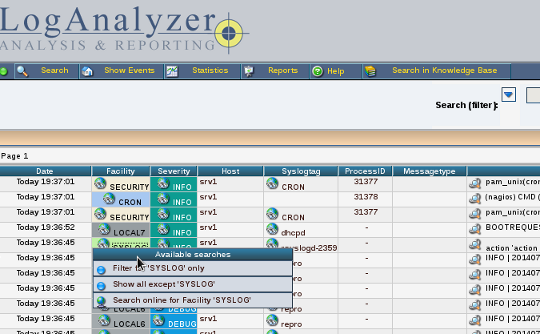
I previously announced the availability of rsyslog+MongoDB+LogAnalyzer in Debian wheezy-backports. This latest rsyslog with MongoDB storage support is also available for Ubuntu and Fedora users in one way or another. Just one thing was missing: a flexible way to prune the database. LogAnalyzer provides a very basic pruning script that simply purges all records over a certain age. The script hasn't been adapted to work within the package layout. It is written in PHP, which may not be ideal for people who don't actually want LogAnalyzer on their Syslog/MongoDB host. Now there is a convenient solution: I've just contributed a very trivial Python script for selectively pruning the records. Thanks to Python syntax and the PyMongo client, it is extremely concise: in fact, here is the full script:
#!/usr/bin/python
import syslog
import datetime
from pymongo import Connection
# It assumes we use the default database name 'logs' and collection 'syslog'
# in the rsyslog configuration.
with Connection() as client:
    db = client.logs
    table = db.syslog
    #print "Initial count: %d" % table.count()
    today = datetime.datetime.today()
    # remove ANY record older than 5 weeks except mail.info
    t = today - datetime.timedelta(weeks=5)
    table.remove( "time":  "$lt": t  , "syslog_fac":   "$ne" : syslog.LOG_MAIL  )
    # remove any debug record older than 7 days
    t = today - datetime.timedelta(days=7)
    table.remove( "time":  "$lt": t  , "syslog_sever": syslog.LOG_DEBUG )
    #print "Final count: %d" % table.count()
Just put it in /usr/local/bin and run it daily from cron. Customization Just adapt the table.remove statements as required. See the PyMongo tutorial for a very basic introduction to the query syntax and full details in the MongoDB query operator reference for creating more elaborate pruning rules. Potential improvements
  • Indexing the columns used in the queries
  • Logging progress and stats to Syslog

LogAnalyzer using a database backend such as MongoDB is very easy to set up and much faster than working with text-based log files

Christian Perrier: Developers per country (July 2014)

This is time again for my annual report about the number of developers per country. This is now the sixth edition of this report. Former editions: So, here we are with the July 2014 version, sorted by the ratio of *active* developers per million population for each country.
Act: number of active developers
Dev: total number of developers
A/M: number of active devels per million pop.
D/M: number of devels per million pop.
2009: rank in 2009
2010: rank in 2010
2011: rank in 2011 (June)
2012: rank in 2012 (June)
2013: rank in 2012 (July)
2014: rank now
Code Name Population Act Dev Dev Act/Million Dev/Million 2009 2010 June 2011 June 2012 July 2013 July 2014
fi Finland 5259250 19 31 3,61 5,89 1 1 1 1 1 1
ie Ireland 4670976 13 17 2,78 3,64 13 9 6 2 2 2
nz New Zealand 4331600 11 15 2,54 3,46 4 3 5 7 7 3 *
mq Martinique 396404 1 1 2,52 2,52

3 4 4 4
se Sweden 9088728 22 37 2,42 4,07 3 6 7 5 5 5
ch Switzerland 7870134 19 29 2,41 3,68 2 2 2 3 3 6 *
no Norway 4973029 11 14 2,21 2,82 5 4 4 6 6 7 *
at Austria 8217280 18 29 2,19 3,53 6 8 10 10 10 8 *
de Germany 81471834 164 235 2,01 2,88 7 7 9 9 8 9 *
lu Luxemburg 503302 1 1 1,99 1,99 8 5 8 8 9 10 *
fr France 65350000 101 131 1,55 2 12 12 11 11 11 11
au Australia 22607571 32 60 1,42 2,65 9 10 12 12 12 12
be Belgium 11071483 14 17 1,26 1,54 10 11 13 13 13 13
uk United-Kingdom 62698362 77 118 1,23 1,88 14 14 14 14 14 14
nl Netherlands 16728091 18 40 1,08 2,39 11 13 15 15 15 15
ca Canada 33476688 34 63 1,02 1,88 15 15 17 16 16 16
dk Denmark 5529888 5 10 0,9 1,81 17 17 16 17 17 17
es Spain 46754784 34 56 0,73 1,2 16 16 19 18 18 18
it Italy 59464644 36 52 0,61 0,87 23 22 22 19 19 19
hu Hungary 10076062 6 12 0,6 1,19 18 25 26 20 24 20 *
cz Czech Rep 10190213 6 6 0,59 0,59 21 20 21 21 20 21 *
us USA 313232044 175 382 0,56 1,22 19 21 25 24 22 22
il Israel 7740900 4 6 0,52 0,78 24 24 24 25 23 23
hr Croatia 4290612 2 2 0,47 0,47 20 18 18 26 25 24 *
lv Latvia 2204708 1 1 0,45 0,45 26 26 27 27 26 25 *
bg Bulgaria 7364570 3 3 0,41 0,41 25 23 23 23 27 26 *
sg Singapore 5183700 2 2 0,39 0,39


33 33 27 *
uy Uruguay 3477778 1 2 0,29 0,58 22 27 28 28 28 28
pl Poland 38441588 11 15 0,29 0,39 29 29 30 30 30 29 *
jp Japan 127078679 36 52 0,28 0,41 30 28 29 29 29 30 *
lt Lithuania 3535547 1 1 0,28 0,28 28 19 20 22 21 31 *
gr Greece 10787690 3 4 0,28 0,37 33 38 34 35 35 32 *
cr Costa Rica 4301712 1 1 0,23 0,23 31 30 31 31 31 33 *
by Belarus 9577552 2 2 0,21 0,21 35 36 39 39 32 34 *
ar Argentina 40677348 8 10 0,2 0,25 34 33 35 32 37 35 *
pt Portugal 10561614 2 4 0,19 0,38 27 32 32 34 34 36 *
sk Slovakia 5477038 1 1 0,18 0,18 32 31 33 36 36 37 *
rs Serbia 7186862 1 1 0,14 0,14


38 38
tw Taiwan 23040040 3 3 0,13 0,13 37 34 37 37 39 39
br Brazil 192376496 18 21 0,09 0,11 36 35 38 38 40 40
cu Cuba 11241161 1 1 0,09 0,09
38 41 41 41 41
co Colombia 45566856 4 5 0,09 0,11 41 44 46 47 46 42 *
kr South Korea 48754657 4 6 0,08 0,12 39 39 42 42 42 43 *
gt Guatemala 13824463 1 1 0,07 0,07


43 44 *
ec Ecuador 15007343 1 1 0,07 0,07
40 43 43 45 45
cl Chile 16746491 1 2 0,06 0,12 42 41 44 44 47 46 *
za South Africa 50590000 3 10 0,06 0,2 38 48 48 48 48 47 *
ru Russia 143030106 8 9 0,06 0,06 43 42 47 45 49 48 *
mg Madagascar 21281844 1 1 0,05 0,05 44 37 40 40 50 49 *
ro Romania 21904551 1 2 0,05 0,09 45 43 45 46 51 50 *
ve Venezuela 28047938 1 1 0,04 0,04 40 45 50 49 44 51 *
my Malaysia 28250000 1 1 0,04 0,04

49 50 52 52
pe Peru 29907003 1 1 0,03 0,03 46 46 51 51 53 53
tr Turkey 74724269 2 2 0,03 0,03 47 47 52 52 54 54
ua Ukraine 45134707 1 1 0,02 0,02 48 53 58 59 55 55
th Thailand 66720153 1 2 0,01 0,03 50 50 54 54 56 56
eg Egypt 80081093 1 3 0,01 0,04 51 51 55 55 57 57
mx Mexico 112336538 1 1 0,01 0,01 49 49 53 53 58 58
cn China 1344413526 10 14 0,01 0,01 53 53 57 56 59 59
in India 1210193422 8 9 0,01 0,01 52 52 56 57 60 60
sv El Salvador 7066403 0 1 0 0,14

36 58 61 61


969 1561 62,08%


A few interesting facts:

Russell Coker: Happiness and Lecture Questions

I just attended a lecture about happiness comparing Australia and India at the Australia India Institute [1]. The lecture was interesting but the questions were so bad that it makes a good case for entirely banning questions from public lectures. Based on this and other lectures I ve attended I ve written a document about how to recognise worthless questions and cut them off early [2]. As you might expect from a lecture on happiness there were plenty of stupid comments from the audience about depression, as if happiness is merely the absence of depression. Then they got onto stupidity about suicide. One question claimed that Australia has a high suicide rate, Wikipedia however places Australia 49th out of 110 countries, that means Australia is slightly above the median for suicide rates per country. Given some of the dubious statistics in the list (for example the countries claiming to have no suicides and the low numbers reported by some countries with extreme religious policies) I don t think we can be sure that Australia would be above the median if we had better statistics. Another question claimed that Sweden had the highest suicide rate in Europe, while Greenland, Belgium, Finland, Austria, France, Norway, Denmark, Iceland, and most of Eastern Europe are higher on the list. But the bigger problem in regard to discussing suicide is that the suicide rate isn t about happiness. When someone kills themself because they have a terminal illness that doesn t mean that they were unhappy for the majority of their life and doesn t mean that they were any unhappier than the terminally ill people who don t do that. Some countries have a culture that is more positive towards suicide which would increase the incidence, Japan for example. While people who kill themselves in Japan are probably quite unhappy at the time I don t think that there is any reason to believe that they are more unhappy than people in other countries who only keep living because suicide is considered to be wrong. It seems to me that the best strategy when giving or MCing a lecture about a potentially contentious topic is to plan ahead for what not to discuss. For a lecture about happiness it would make sense to rule out all discussion of suicide, anti-depressants, and related issues as they aren t relevant to the discussion and can t be handled in an appropriate manner in question time.

Ricardo Mones: Switching PGP keys

Finally I find the mood to do this, a process which started 5 years ago in DebConf 9 at C ceres by following Ana's post, of course with my preferred options and my name, not like some other ;-).

Said that, dear reader, if you have signed my old key:

1024D/C9B55DAC 2005-01-19 [expires: 2015-10-01]
Key fingerprint = CFB7 C779 6BAE E81C 3E05  7172 2C04 5542 C9B5 5DAC

And want to sign my "new" and stronger key:

4096R/DE5BCCA6 2009-07-29
Key fingerprint = 43BC 364B 16DF 0C20 5EBD  7592 1F0F 0A88 DE5B CCA6

You're welcome to do so :-)

The new key is signed with the old, and the old key is still valid, and will probably be until expiration date next year. Don't forget to gpg --recv-keys DE5BCCA6 to get the new key and gpg --refresh-keys C9B55DAC to refresh the old (otherwise it may look expired).

Debian's Keyring Team has already processed my request to add the new key, so all should keep working smoothly. Kudos to them!

28 July 2014

Chris Lamb: start-stop-daemon: --exec vs --startas

start-stop-daemon is the classic tool on Debian and derived distributions to manage system background processes. A typical invokation from an initscript is as follows:
start-stop-daemon \
    --quiet \
    --oknodo \
    --start \
    --pidfile /var/run/daemon.pid \
    --exec /usr/sbin/daemon \
    -- -c /etc/daemon.cfg -p /var/run/daemon.pid
The basic operation is that it will first check whether /usr/sbin/daemon is not running and, if not, execute /usr/sbin/daemon -c /etc/daemon.cfg -p /var/run/daemon.pid. This process then has the responsibility to daemonise itself and write the resulting process ID to /var/run/daemon.pid. start-stop-daemon then waits until /var/run/daemon.pid has been created as the test of whether the service has actually started, raising an error if that doesn't happen. (In practice, the locations of all these files are parameterised to prevent DRY violations.)
Idempotency By idempotence we are mostly concerned with repeated calls to /etc/init.d/daemon start not starting multiple versions of our daemon. This might not seem to be particularly big issue at first but the increased adoption of stateless configuration management tools such as Ansible (which should be completely free to call start to ensure a started state) mean that one should be particularly careful of this apparent corner case. In its usual operation, start-stop-daemon ensures only one instance of the daemon is running with the --exec parameter: if the specified pidfile exists and the PID it refers to is an "instance" of that executable, then it is assumed that the daemon is already running and another copy is not started. This is handled in the pid_is_exec method (source) - the /proc/$PID/exe symlink is resolved and checked against the value of --exec.
Interpreted scripts However, one case where this doesn't work is interpreted scripts. Lets look at what happens if /usr/sbin/daemon is such a script, eg. a file that starts:
#!/usr/bin/env python
# [..]
The problem this introduces is that /proc/$PID/exe now points to the interpreter instead, often with an essentially non-deterministic version suffix:
$ ls -l /proc/14494/exe
lrwxrwxrwx 1 www-data www-data 0 Jul 25 15:18
                              /proc/14494/exe -> /usr/bin/python2.7
When this process is examined using the --exec mechanism outlined above it will be rejected as an instance of /usr/sbin/daemon and therefore another instance of that daemon will be incorrectly started.
--startas The solution is to use the --startas parameter instead. This omits the /proc/$PID/exe check and merely tests whether a PID with that number is running:
start-stop-daemon \
    --quiet \
    --oknodo \
    --start \
    --pidfile /var/run/daemon.pid \
    --startas /usr/sbin/daemon \
    -- -c /etc/daemon.cfg -p /var/run/daemon.pid
Whilst it is therefore less reliable (in that the PID found in the pidfile could actually be an entirely different process altogether) it's probably an acceptable trade-off against the case of running multiple instances of that daemon. This danger can be ameliorated by using some of start-stop-daemon's other matching tests, such as --user or even --name.

Daniel Pocock: Secure that Dictaphone

2014 has been a big year for dictaphones so far. First, it was France and the secret recordings made by Patrick Buisson during the reign of President Sarkozy. Then, a US court ordered the release of the confidential Boston College tapes, part of an oral history project. Originally, each participant had agreed their recording would only be released after their death. Sinn Fein leader Gerry Adams was arrested and questioned over a period of 100 hours and released without charge. Now Australia is taking its turn. In #dictagate down under, a senior political correspondent from a respected newspaper recorded (most likely with consent) some off-the-record comments of former conservative leader Ted Baillieu. Unfortunately, this journalist misplaced the dictaphone at the state conference of Baillieu's arch-rivals, the ALP. A scandal quickly errupted. Secure recording technology There is no question that electronic voice recordings can be helpful for people, including journalists, researchers, call centers and many other purposes. However, the ease with which they can now be distributed is only dawning on people. Twenty years ago, you would need to get the assistance of a radio or TV producer to disseminate such recordings so widely. Today there is email and social media. The Baillieu tapes were emailed directly to 400 people in a matter of minutes. Just as technology brings new problems, it also brings solutions. Encryption is one of them. Is encryption worthwhile? Coverage of the Snowden revelations has revealed that many popular security technologies are not one hundred percent safe. In each of these dictaphone cases, however, NSA-level expertise was not a factor. Even the most simplistic encryption would have caused endless frustration to the offenders who distributed the Baillieu tape. How can anybody be sure encryption is reliable? Part of the problem is education. Everybody using the technology needs to be aware of the basic concepts, for example, public key cryptography. Another big question mark is back doors. There is ongoing criticism of Apple iPhone/iPod devices and the many ways that their encryption can be easily disabled by Apple engineers and presumably many former staff, security personnel and others. The message is clear: proprietary, closed-source solutions should be avoided. Free and open source technologies are the alternative. If a company does not give you the source code, how can anybody independently audit their code for security? With encryption software, what use is it if nobody has verified it? What are the options? However, given that the majority of people don't have a PhD in computer science or mathematics, are there convenient ways to get started with encryption? Reading is a good start. The Code Book by Simon Singh (author of other popular science books like Fermat's Last Theorem) is very accessible, not classified and assumes no formal training in mathematics. Even for people who do know these topics inside out, it is a good book to share with friends and family. The Guardian Project (no connection with Guardian Media of Edward Snowden fame) aims to provide a secure and easy to use selection of apps for pocket devices. This project has practical applications in business, journalism and politics alike. How should a secure dictaphone app work? Dictaphone users typically need to take their dictaphones in the field, so there is a risk of losing it or having it stolen. A strong security solution in this situation may involve creating an RSA key pair on a home/office computer, keeping the private key on the home computer and putting the public key on the dictaphone device. Configured this way, the dictaphone will not be able to play back any of the recordings itself - the user will always have to copy them to the computer for decryption.

27 July 2014

Christian Perrier: Developers per country (July 2014)

This is time again for my annual report about the number of developers per country. This is now the sixth edition of this report. Former editions: So, here we are with the July 2014 version, sorted by the ratio of *active* developers per million population for each country.
Act: number of active developers
Dev: total number of developers
A/M: number of active devels per million pop.
D/M: number of devels per million pop.
2009: rank in 2009
2010: rank in 2010
2011: rank in 2011 (June)
2012: rank in 2012 (June)
2013: rank in 2012 (July)
2014: rank now
Code Name Population Act Dev Dev Act/Million Dev/Million 2009 2010 June 2011 June 2012 July 2013 July 2014
fi Finland 5259250 19 31 3,61 5,89 1 1 1 1 1 1
ie Ireland 4670976 13 17 2,78 3,64 13 9 6 2 2 2
nz New Zealand 4331600 11 15 2,54 3,46 4 3 5 7 7 3 *
mq Martinique 396404 1 1 2,52 2,52

3 4 4 4
se Sweden 9088728 22 37 2,42 4,07 3 6 7 5 5 5
ch Switzerland 7870134 19 29 2,41 3,68 2 2 2 3 3 6 *
no Norway 4973029 11 14 2,21 2,82 5 4 4 6 6 7 *
at Austria 8217280 18 29 2,19 3,53 6 8 10 10 10 8 *
de Germany 81471834 164 235 2,01 2,88 7 7 9 9 8 9 *
lu Luxemburg 503302 1 1 1,99 1,99 8 5 8 8 9 10 *
fr France 65350000 101 131 1,55 2 12 12 11 11 11 11
au Australia 22607571 32 60 1,42 2,65 9 10 12 12 12 12
be Belgium 11071483 14 17 1,26 1,54 10 11 13 13 13 13
uk United-Kingdom 62698362 77 118 1,23 1,88 14 14 14 14 14 14
nl Netherlands 16728091 18 40 1,08 2,39 11 13 15 15 15 15
ca Canada 33476688 34 63 1,02 1,88 15 15 17 16 16 16
dk Denmark 5529888 5 10 0,9 1,81 17 17 16 17 17 17
es Spain 46754784 34 56 0,73 1,2 16 16 19 18 18 18
it Italy 59464644 36 52 0,61 0,87 23 22 22 19 19 19
hu Hungary 10076062 6 12 0,6 1,19 18 25 26 20 24 20 *
cz Czech Rep 10190213 6 6 0,59 0,59 21 20 21 21 20 21 *
us USA 313232044 175 382 0,56 1,22 19 21 25 24 22 22
il Israel 7740900 4 6 0,52 0,78 24 24 24 25 23 23
hr Croatia 4290612 2 2 0,47 0,47 20 18 18 26 25 24 *
lv Latvia 2204708 1 1 0,45 0,45 26 26 27 27 26 25 *
bg Bulgaria 7364570 3 3 0,41 0,41 25 23 23 23 27 26 *
sg Singapore 5183700 2 2 0,39 0,39


33 33 27 *
uy Uruguay 3477778 1 2 0,29 0,58 22 27 28 28 28 28
pl Poland 38441588 11 15 0,29 0,39 29 29 30 30 30 29 *
jp Japan 127078679 36 52 0,28 0,41 30 28 29 29 29 30 *
lt Lithuania 3535547 1 1 0,28 0,28 28 19 20 22 21 31 *
gr Greece 10787690 3 4 0,28 0,37 33 38 34 35 35 32 *
cr Costa Rica 4301712 1 1 0,23 0,23 31 30 31 31 31 33 *
by Belarus 9577552 2 2 0,21 0,21 35 36 39 39 32 34 *
ar Argentina 40677348 8 10 0,2 0,25 34 33 35 32 37 35 *
pt Portugal 10561614 2 4 0,19 0,38 27 32 32 34 34 36 *
sk Slovakia 5477038 1 1 0,18 0,18 32 31 33 36 36 37 *
rs Serbia 7186862 1 1 0,14 0,14


38 38
tw Taiwan 23040040 3 3 0,13 0,13 37 34 37 37 39 39
br Brazil 192376496 18 21 0,09 0,11 36 35 38 38 40 40
cu Cuba 11241161 1 1 0,09 0,09
38 41 41 41 41
co Colombia 45566856 4 5 0,09 0,11 41 44 46 47 46 42 *
kr South Korea 48754657 4 6 0,08 0,12 39 39 42 42 42 43 *
gt Guatemala 13824463 1 1 0,07 0,07


43 44 *
ec Ecuador 15007343 1 1 0,07 0,07
40 43 43 45 45
cl Chile 16746491 1 2 0,06 0,12 42 41 44 44 47 46 *
za South Africa 50590000 3 10 0,06 0,2 38 48 48 48 48 47 *
ru Russia 143030106 8 9 0,06 0,06 43 42 47 45 49 48 *
mg Madagascar 21281844 1 1 0,05 0,05 44 37 40 40 50 49 *
ro Romania 21904551 1 2 0,05 0,09 45 43 45 46 51 50 *
ve Venezuela 28047938 1 1 0,04 0,04 40 45 50 49 44 51 *
my Malaysia 28250000 1 1 0,04 0,04

49 50 52 52
pe Peru 29907003 1 1 0,03 0,03 46 46 51 51 53 53
tr Turkey 74724269 2 2 0,03 0,03 47 47 52 52 54 54
ua Ukraine 45134707 1 1 0,02 0,02 48 53 58 59 55 55
th Thailand 66720153 1 2 0,01 0,03 50 50 54 54 56 56
eg Egypt 80081093 1 3 0,01 0,04 51 51 55 55 57 57
mx Mexico 112336538 1 1 0,01 0,01 49 49 53 53 58 58
cn China 1344413526 10 14 0,01 0,01 53 53 57 56 59 59
in India 1210193422 8 9 0,01 0,01 52 52 56 57 60 60
sv El Salvador 7066403 0 1 0 0,14

36 58 61 61


969 1561 62,08%


A few interesting facts:

25 July 2014

Richard Hartmann: Release Critical Bug report for Week 30

I have been asked to publish bug stats from time to time. Not exactly sure about the schedule yet, but I will try and stick to Fridays, as in the past; this is for the obvious reason that it makes historical data easier to compare. "Last Friday of each month" may or may not be too much. Time will tell. The UDD bugs interface currently knows about the following release critical bugs: Graphical overview of bug stats thanks to azhag:

Juliana Louback: Extending an xTuple Business Object

xTuple is in my opinion incredibly well designed; the code is clean and the architecture ahderent to a standardized structure. All this makes working with xTuple software quite a breeze. I wanted to integrate JSCommunicator into the web-based xTuple version. JSCommunicator is a SIP communication tool, so my first step was to create an extension for the SIP account data. Luckily for me, the xTuple development team published an awesome tutorial for writing an xTuple extension. xTuple cleverly uses model based business objects for the various features available. This makes customizing xTuple very straightforward. I used the tutorial mentioned above for writing my extension, but soon noticed my goals were a little different. A SIP account has 3 data fields, these being the SIP URI, the account password and an optional display name. xTuple currently has a business object in the core code for a User Account and it would make a lot more sense to simply add my 3 fields to this existing business object rather than create another business object. The tutorial very clearly shows how to extend a business object with another business object, but not how to extend a business object with only new fields (not a whole new object). Now maybe I m just a whole lot slower than most people, but I had a ridiculously had time figuring this out. Mind you, this is because I m slow, because the xTuple documentation and code is understandable and as self-explanatory as it gets. I think it just takes a bit to get used to. Either way, I thought this just might be useful to others so here is how I went about it. Setup First you ll have to set up your xTuple development environment and fork the xtuple and xtuple-extesions repositories as shown in this handy tutorial. A footnote I d like to add is please verify that your version of Vagrant (and anything else you install) is the one listed in the tutorial. I think I spent like two entire days or more on a wild goose (bug) chase trying to set up my environment when the cause of all the errors was that I somehow installed an older version of Vagrant - 1.5.4 instead of 1.6.3. Please don t make the same mistake I did. Actually if for some reason you get the following error when you try using node:
<<ERROR 2014-07-10T23:52:46.948Z>> Unrecoverable exception. Cannot call method 'extend' of undefined
    at /home/vagrant/dev/xtuple/lib/backbone-x/source/model.js:37:39
    at Object.<anonymous> (/home/vagrant/dev/xtuple/lib/backbone-x/source/model.js:1364:3)
    ...
chances are, you have the wrong version. That s what happened to me. The Vagrant Virtual Development Environment automatically installs and configures everything you need, it s ready to go. So if you find yourself installing and updating and apt-gets and etc, you probably did something wrong. Coding So by now we should have the Vagrant Virtual Development Environment set up and the web app up and running and accessible at localhost:8443. So far so good. Disclaimer: You will note that much of this is similar - or rather, nearly identical - to xTuple s tutorial but there are some small but important differences and a few observations I think might be useful. Other Disclaimer: I m describing how I did it, which may or may not be up to snuff . Works for me though. Schema First let s make a schema for the table we will create with the new custom fields. Be sure to create the correct directory stucture, aka /path/to/xtuple-extensions/source/<YOUR EXTENSION NAME>/database/source or in my case /path/to/xtuple-extensions/source/sip_account/database/source, and create the file create_sa_schema.sql, sa is the name of my schema. This file will contain the following lines:
do $$
  /* Only create the schema if it hasn't been created already */
  var res, sql = "select schema_name from information_schema.schemata where schema_name = 'sa'",
  res = plv8.execute(sql);
  if (!res.length)  
    sql = "create schema sa; grant all on schema sa to group xtrole;"
    plv8.execute(sql);
   
$$ language plv8;
Of course, feel free to replace sa with your schema name of choice. All the code described here can be found in my xtuple-extensions fork, on the sip_ext branch. Table We ll create a table containing your custom fields and a link to an existing table - the table for the existing business object you want to extend. If you re wondering why make a whole new table for a few extra fields, here s a good explanation, the case in question is adding fields to the Contact business object. You need to first figure out what table you want to link to. This might not be uber easy. I think the best way to go about it is to look at the ORMs. The xTuple ORMs are a JSON mapping between the SQL tables and the object-oriented world above the database, they re .json files found at path/to/xtuple/node_modules/xtuple/enyo-client/database/orm/models for the core business objects and at path/to/xtuplenyo-client/extensions/source/<EXTENSION NAME>/database/orm/models for exension business objects. I ll give two examples. If you look at contact.json you will see that the Contact business object refers to the table cntct . Look for the type : Contact on the line above, so we know it s the Contact business object. In my case, I wanted to extend the UserAccount and UserAccountRelation business objects, so check out user_account.json. The table listed for UserAccount is xt.usrinfo and the table listed for UserAccountRelation is xt.usrlite. A closer look at the sql files for these tables (usrinfo.sql and usrlite.sql) revealed that usrinfo is in fact a view and usrlite is A light weight table of user information used to avoid punishingly heavy queries on the public usr view . I chose to refer to xt.usrlite - that or I received error messages when trying the other table names. Now I ll make the file /path/to/xtuple-extensions/source/sip_account/database/source/usrlitesip.sql, to create a table with my custom fields plus the link to the urslite table. Don t quote me on this, but I m under the impression that this is the norm for naming the sql file joining tables: the name of the table you are referring to ( usrlite in this case) and your extension s name. Content of usrlitesip.sql:
select xt.create_table('usrlitesip', 'sa');
select xt.add_column('usrlitesip','usrlitesip_id', 'serial', 'primary key', 'sa');
select xt.add_column('usrlitesip','usrlitesip_usr_username', 'text', 'references xt.usrlite (usr_username)', 'sa');
select xt.add_column('usrlitesip','usrlitesip_uri', 'text', '', 'sa');
select xt.add_column('usrlitesip','usrlitesip_name', 'text', '', 'sa');
select xt.add_column('usrlitesip','usrlitesip_password', 'text', '', 'sa');
comment on table sa.usrlitesip is 'Joins User with SIP account';
Breaking it down, line 1 creates the table named usrlitesip (no duh), line 2 is for the primary key (self-explanatory). You can then add any columns you like, just be sure to add one that references the table you want to link to. I checked usrlite.sql and saw the primary key is usr_username, be sure to use the primary key of the table you are referencing. You can check what you made by executing the .sql files like so:
$ cd /path/to/xtuple-extensions/source/sip_account/database/source
$ psql -U admin -d dev -f create_sa_schema.sql
$ psql -U admin -d dev -f usrlitesip.sql
After which you will see the table with the columns you created if you enter:
$ psql -U admin -d dev -c "select * from sa.usrlitesip;"
Now create the file /path/to/xtuple-extensions/source/sip_account/database/source/manifest.js to put the files together and in the right order. It should contain:
 
  "name": "sip_account",
  "version": "1.4.1",
  "comment": "Sip Account extension",
  "loadOrder": 999,
  "dependencies": ["crm"],
  "databaseScripts": [
    "create_sa_schema.sql",
    "usrlitesip.sql",
    "register.sql"
  ]
 
I think the name has to be the same you named your extension directory as in /path/to/xtuple-extensions/source/<YOUR EXTENSION NAME>. I think the comment can be anything you like and you want your loadOrder to be high so it s the last thing installed (as it s an add on.) So far we are doing exactly what s instructed in the xTuple tutorial. It s repetitive, but I think you can never have too many examples to compare to. In databaseScripts you will list the two .sql files you just created for the schema and the table, plus another file to be made in the same directory named register.sql. I m not sure why you have to make the register.sql or even if you indeed have to. If you leave the file empty, there will be a build error, so put a ; in the register.sql or remove the line register.sql from manifest.js as I think for now we are good without it. Now let s update the database with our new extension:
$ cd /path/to/xtuple
$ ./scripts/build_app.js -d dev -e ../xtuple-extensions/source/sip_account
$ psql -U admin -d dev -c "select * from xt.ext;"
That last command should display a table with a list of extensions; the ones already in xtuple like crm and billing and some others plus your new extension, in this case sip_account . When you run build_app.js you ll probably see a message along the lines of <Extension name> has no client code, not building client code and that s fine because yeah, we haven t worked on the client code yet. ORM Here s where things start getting different. So ORMs link your object to an SQL table. But we DON T want to make a new business object, we want to extend an existing business object, so the ORM we will make will be a little different than the xTuple tutorial. Steve Hackbarth kindly explained this new business object/existing business object ORM concept here. First we ll create the directory /path/to/xtuple-extensions/source/sip_account/database/orm/ext, according to xTuple convention. ORMs for new business objects would be put in /path/to/xtuple-extensions/source/sip_account/database/orm/models. Now we ll create the .json file /path/to/xtuple-extensions/source/sip_account/database/orm/ext/user_account.jscon for our ORM. Once again, don t quote me on this, but I think the name of the file should be the name of the business object you are extending, as is done in the turorial example extending the Contact object. In our case, UserAccount is defined in user_account.json and that s what I named my extension ORM too. Here s what you should place in it:
 1 [
 2    
 3     "context": "sip_account",
 4     "nameSpace": "XM",
 5     "type": "UserAccount",
 6     "table": "sa.usrlitesip",
 7     "isExtension": true,
 8     "isChild": false,
 9     "comment": "Extended by Sip",
10     "relations": [
11        
12         "column": "usrlitesip_usr_username",
13         "inverse": "username"
14        
15     ],
16     "properties": [
17        
18         "name": "uri",
19         "attr":  
20           "type": "String",
21           "column": "usrlitesip_uri",
22           "isNaturalKey": true
23          
24        ,
25        
26         "name": "displayName",
27         "attr":  
28           "type": "String",
29           "column": "usrlitesip_name"
30          
31        ,
32        
33         "name": "sipPassword",
34         "attr":  
35           "type": "String",
36           "column": "usrlitesip_password"
37          
38        
39     ],
40     "isSystem": true
41    ,
42    
43     "context": "sip_account",
44     "nameSpace": "XM",
45     "type": "UserAccountRelation",
46     "table": "sa.usrlitesip",
47     "isExtension": true,
48     "isChild": false,
49     "comment": "Extended by Sip",
50     "relations": [
51        
52         "column": "usrlitesip_usr_username",
53         "inverse": "username"
54        
55     ],
56     "properties": [
57        
58         "name": "uri",
59         "attr":  
60           "type": "String",
61           "column": "usrlitesip_uri",
62           "isNaturalKey": true
63          
64        ,
65        
66         "name": "displayName",
67         "attr":  
68           "type": "String",
69           "column": "usrlitesip_name"
70          
71        ,
72        
73         "name": "sipPassword",
74         "attr":  
75           "type": "String",
76           "column": "usrlitesip_password"
77          
78        
79     ],
80     "isSystem": true
81    
82 ]
Note the context is my extension name, because the context + nameSpace + type combo has to be unique. We already have a UserAccount and UserAccountRelation object in the XM namespace in the xtuple context in the original user_account.json, now we will have a UserAccount and UserAccountRelation object in the XM namespace in the sip_account conext. What else is important? Note that isExtension is true on lines 7 and 47 and the relations item contains the column of the foreign key we referenced. This is something you might want to verify: column (lines 12 and 52) is the name of the attribute on your table. When we made a reference to the primary key usr_usrname from the xt.usrlite table we named that column usrlitesip_usr_usrname. But the inverse is the attribute name associated with the original sql column in the original ORM. Did I lose you? I had a lot of trouble with this silly thing. In the original ORM that created a new UserAccount business object, the primary key attribute is named username , as can be seen here. That is what should be used for the inverse value. Not the sql column name (usr_username) but the object attribute name (username). I m emphasizing this because I made that mistake and if I can spare you the pain I will. If we rebuild our extension everything should come along nicely, but you won t see any changes just yet in the web app because we haven t created the client code. Client Create the directory /path/to/xtuple-extensions/source/sip_account/client which is where we ll keep all the client code. Extend Workspace View I want the fields I added to show up on the form to create a new User Account, so I need to extend the view for the User Account workspace. I ll start by creating a directory /path/to/xtuple-extensions/source/sip_account/client/views and in it creating a file named workspace.js containing this code:
XT.extensions.sip_account.initWorkspace = function ()  
	var extensions = [
  	 kind: "onyx.GroupboxHeader", container: "mainGroup", content: "_sipAccount".loc() ,
  	 kind: "XV.InputWidget", container: "mainGroup", attr: "uri"  ,
  	 kind: "XV.InputWidget", container: "mainGroup", attr: "displayName"  ,
  	 kind: "XV.InputWidget", container: "mainGroup", type:"password", attr: "sipPassword"  
	];
	XV.appendExtension("XV.UserAccountWorkspace", extensions);
 ;
So I m initializing my workspace and creating an array of items to add (append) to view XV.UserAccountWorkspace. The first item is this onyx.GroupboxHeader which is a pretty divider for my new form fields, the kind you find in the web app at Setup > User Accounts, like Overview . I have no idea what other options there are for container other than mainGroup , so let s stick to that. I ll explain content: _sipAccount .loc() in a bit. Next I created three input fields of the XV.InputWidget kind. This also confused me a bit as there are different kinds of input to be used, like dropdowns and checkboxes. The only advice I can give is snoop around the webapp, find an input you like and look up the corresponding workspace.js file to see what was used. What we just did is (should be) enough for the new fields to show up on the User Account form. But before we see things change, we have to package the client. Create the file /path/to/xtuple-extensions/source/sip_account/client/views/package.js. This file is needed to package groups of files and indicates the order the files should be loaded (for more on that, see this). For now, all the file will contain is:
enyo.depends(
"workspace.js"
);
You also need to package the views directory containing workspace.js, so create the file Create the file /path/to/xtuple-extensions/source/sip_account/client/package.js and in it show that the directory views and its contents must be part of the higher level package:
enyo.depends(
"views"
);
I like to think of it as a box full of smaller boxes. This will sound terrible, but apparently you also need to create the file /path/to/xtuple-extensions/source/sip_account/client/core.js containing this line:
XT.extensions.icecream =  ;
I don t know why. As soon as I find out I ll be sure to inform you. As we ve added a file to the client directory, be sure to update /path/to/xtuple-extensions/source/sip_account/client/package.js so it included the new file:
enyo.depends(
"core.js",
"views"
);
Translations Remember _sipAccount .loc() in our workspace.js file? xTuple has great internationalization support and it s easy to use. Just create the directory and file /path/to/xtuple-extensions/source/sip_account/client/en/strings.js and in it put key-value pairs for labels and their translation, like this:
(function ()  
  "use strict";
  var lang = XT.stringsFor("en_US",  
    "_sipAccount": "Sip Account",
    "_uri": "Sip URI",
    "_displayName": "Display Name",
    "_sipPassword": "Password"
   );
  if (typeof exports !== 'undefined')  
    exports.language = lang;
   
 ());
So far I included all the labels I used in my Sip Account form. If you write the wrong label (key) or forget to include a corresponding key-value pair in strings.js, xTuple will simply name your lable _lableName , underscore and all. Now build your extension and start up the server:
$ cd /path/to/xtuple 
$ ./scripts/build_app.js -d dev -e ../xtuple-extensions/source/sip_account
$ node node-datasource/main.js
If the server is already running, just stop it and restart it to reflect your changes. Now if you go to Setup > User Accounts and click the + button, you should see a nice little addition to the form with a Sip Account divider and three new fields. Nice, eh? Extend Parameters Currently you can search your User Accounts list using any of the User Account fields. It would be nice to be able to search with the Sip account fields we added as well. To do that, let s create the directory /path/to/xtuple-extensions/source/sip_account/client/widgets and there create the file parameter.js to extend XV.UserAccountListParameters. One again, you ll have to look this up. In the xTuple code you ll find the application s parameter.js in /path/to/xtuple/enyo-client/application/source/widgets. Search for the business object you are extending (for example, XV.UserAccount) and look for some combination of the business object name and Parameters . If there s more than one, try different ones. Not a very refined method, but it worked for me. Here s the content of our parameter.js:
XT.extensions.sip_account.initParameterWidget = function ()  
  var extensions = [
     kind: "onyx.GroupboxHeader", content: "_sipAccount".loc() ,
     name: "uri", label: "_uri".loc(), attr: "uri", defaultKind: "XV.InputWidget" ,
     name: "displayName", label: "_displayName".loc(), attr: "displayName", defaultKind: "XV.InputWidget" 
  ];
  XV.appendExtension("XV.UserAccountListParameters", extensions);
 ;
Node that I didn t include a search field for the password attribute for obvious reasons. Now once again, we package this new code addition by creating a /path/to/xtuple-extensions/source/sip_account/client/widgets/package.js file:
enyo.depends(
"parameter.js"
);
We also have to update /path/to/xtuple-extensions/source/sip_account/client/package.js:
enyo.depends(
"core.js",
"widgets"
"views"
);
Rebuild the extension (and restart the server) and go to Setup > User Accounts. Press the magnifying glass button on the upper left side of the screen and you ll see many options for filtering the User Accounts, among them the SIP Uri and Display Name. Extend List View You might want your new fields to show up on the list of User Accounts. There s a bit of an issue here because unlike what we did in workspace.js and parameter.js, we can t append new things to the list of UserAccounts with the funciton XV.appendExtension(args). First I tried overwriting the original UserAccountList, which works but it s far from ideal as this could result in a loss of data from the core implementation. After some discussion with the xTuple dev community, now there s a better alternative: Create the file /path/to/xtuple-extensions/source/sip_account/client/views/list.js and add the following:
1 var oldUserAccountListCreate = XV.UserAccountList.prototype.create;
2 
3 XV.UserAccountList.prototype.create = function ()  
4   oldUserAccountListCreate.apply(this, arguments);
5   this.createComponent(
6    kind: "XV.ListColumn", container: this.$.listItem, components: [
7         kind: "XV.ListAttr", attr: "uri" 
8    ] )
9  ;
To understand what I m doing, check out the XV.UserAccountList implementation in /path/to/xtuple/enyo-client/application/source/views/list.js the entire highlighted part. What we are doing is extending XV.UserAccountList through prototype-chaining ; this is how inheritance works with Enyo. In line 1 we create a prototype and in line 4 we inherit the features including original components array which the list is based on. We then create an additional component immitating the setup shown in XV.UserAccountList: An XV.ListColumn containing an XV.ListAttr, which should be placed in the XV.ListItem components array as is done with the existing columns (refer to implementation). Components can or should (?) have names which are used to access said components. You d refer to a specific component by the this.$.componentName hash. The components in XV.UserAccountList don t have names, so Enyo automatically names them (apparently) based on the kind name, for example something of the kind ListItem is named listItem. I found this at random after a lot of trial and error and it s not a bullet proof solution. Can be bettered. It s strange because if you encapsulate that code with
XT.extensions.sip_account.initList = function ()  
 //Code here
 ;
as is done with parameter.js and workspace.js (and in the xTuple tutorial you are supposed to do that with a new business object), it doesn t work. I have no idea why. This might be wrong or against xTuple coding norms; I will find out and update this post ASAP. But it does work this way. * shrugs * That said, as we ve created the list.js file, we need to ad it to our package by editing /path/to/xtuple-extensions/source/sip_account/client/views/package.js:
enyo.depends(
"list.js",
"workspace.js"
);
That s all. Rebuild the app and restart your server and when you select Setup > User Accounts in the web app you should see the Sip URI displayed on the User Accounts that have the Sip Account data. Add a new User Account to try this out.

Wouter Verhelst: Multiarchified eID libraries for Debian

A few weeks back, I learned that some government webinterfaces require users to download a PDF files, sign them with their eID, and upload the signed PDF document. On Linux, the only way to do this appeared to be to download Adobe Reader for Linux, install the eID middleware, make sure that the former would use the latter, and from there things would just work. Except for the bit where Adobe Reader didn't exist in a 64-bit version. Since the eid middleware packages were not multiarch ready, that meant you couldn't use Adobe Reader to create signatures with your eID card on a 64-bit Linux distribution. Which is, pretty much, "just about everything out there". For at least the Debian packages, that has been fixed now (I still need to handle the RPM side of things, but that's for later). When I wanted to test just now if everything would work right, however... ... I noticed that Adobe no longer provides any downloads of the Linux version of Adobe Reader. They're just gone. There is an ftp.adobe.com containing some old versions, but nothing more recent than a 5.x version. Well, I suppose that settles that, then. Regardless, the middleware package has been split up and multiarchified, and is ready for early adopters. If you want to try it out, you should: You should, however, note that the continuous repository is named so because it contains the results of our continuous integration system; that is, every time a commit is done to the middleware, packages in this repository are updated automatically. This means the software in the continuous repository might break. Or it might eat your firstborn. Or it might cause nasal daemons. As such, FedICT does not support these versions of the middleware. Don't try the above if you're not prepared to deal with that...

Tim Retout: London.pm's July 2014 tech meeting

Last night, I went to the London.pm tech meeting, along with a couple of colleagues from CV-Library. The talks, combined with the unusually hot weather we're having in the UK at the moment, combined with my holiday all last week, make it feel like I'm at a software conference. :) The highlight for me was Thomas Klausner's talk about OX (and AngularJS). We bought him a drink at the pub later to pump him for information about using Bread::Board, with some success. It was worth the long, late commute back to Southampton. All very enjoyable, and I hope they have more technical meetings soon. I'm planning to attend the London Perl Workshop later in the year.

Gunnar Wolf: Nice read: The Fasinatng Frustrating Fascinating History of Autocorrect

A long time ago, I did some (quite minor!) work on natural language parsing. Most of what I got was the very basic rudiments on what needs to be done to begin with. But I like reading some texts on the subject every now and then. I am also a member of the ACM Association for Computing Machinery. Most of you will be familiar with it, it's one of the main scholarly associations for the field of computing. One of the basic perks of being an ACM member is the subscription to a very nice magazine, Communications of the ACM. And, of course, although I enjoy the physical magazine, I like reading some columns and articles as they appear along the month using the RSS feeds. They also often contain pointers to interesting reads on other media As happened today. I found quite a nice article, I think, worth sharing with whoever thinks I have interesting things to say. They published a very short blurb titled The Fasinatng Frustrating Fascinating History of Autocorrect. I was somewhat skeptical reading it links to an identically named article, published in Wired. But gave it a shot, anyway... The article follows a style that's often abused and not very amusing, but I think was quite well done: The commented interview. Rather than just drily following through an interview, the writer tells us a story about that interview. And this is the story of Gideon Lewis-Kraus interviewing Dean Hachamovitch, the creator of the much hated (but very much needed) autocorrect feature that appeared originally in Microsoft Word. The story of Hachamovitch's work (and its derivations, to the much maligned phone input predictors) over the last twenty-something years is very light to read, very easy to enjoy. I hope you find it as interesting as I did.

24 July 2014

Matthew Palmer: First Step with Clojure: Terror

$ sudo apt-get install -y leiningen
[...]
$ lein new scratch
[...]
$ cd scratch
$ lein repl
Downloading: org/clojure/clojure/1.3.0/clojure-1.3.0.pom from repository central at http://repo1.maven.org/maven2
Transferring 5K from central
Downloading: org/sonatype/oss/oss-parent/5/oss-parent-5.pom from repository central at http://repo1.maven.org/maven2
Transferring 4K from central
Downloading: org/clojure/clojure/1.3.0/clojure-1.3.0.jar from repository central at http://repo1.maven.org/maven2
Transferring 3311K from central
[...]
Wait what? lein downloads some random JARs from a website over HTTP1, with, as far as far I can tell, no verification that what I m asking for is what I m getting (has nobody ever heard of Man-in-the-Middle attacks in Maven land?). It downloads a .sha1 file to (presumably) do integrity checking, but that s no safety net if I can serve you a dodgy .jar, I can serve you an equally-dodgy .sha1 file, too (also, SHA256 is where all the cool kids are at these days). Finally, jarsigner tells me that there s no signature on the .jar itself, either. It gets better, though. The repo1.maven.org site is served by the fastly.net2 pseudo-CDN3, which adds another set of points in the chain which can be subverted to hijack and spoof traffic. More routers, more DNS zones, and more servers. I ve seen Debian take a kicking more than once because packages aren t individually signed, or because packages aren t served over HTTPS. But at least Debian s packages can be verified by chaining to a signature made by a well-known, widely-distributed key, signed by two Debian Developers with very well-connected keys. This repository, on the other hand oy gevalt. There are OpenPGP (GPG) signatures available for each package (tack .asc onto the end of the .jar URL), but no attempt was made to download the signatures for the .jar I downloaded. Even if the signature was downloaded and checked, there s no way for me (or anyone) to trust the signature the signature was made by a key that s signed by one other key, which itself has no signatures. If I were an attacker, it wouldn t be hard for me to replace that key chain with one of my own devising. Even ignoring everyone living behind a government- or company-run intercepting proxy, and everyone using public wifi, it s pretty well common knowledge by now (thanks to Edward Snowden) that playing silly-buggers with Internet traffic isn t hard to do, and there s no shortage of evidence that it is, in fact, done on a routine basis by all manner of people. Serving up executable code to a large number of people, in that threat environment, with no way for them to have any reasonable assurance that code is trustworthy, is very disappointing. Please, for the good of the Internet, improve your act, Maven. Putting HTTPS on your distribution would be a bare minimum. There are attacks on SSL, sure, but they re a lot harder to pull off than sitting on public wifi hijacking TCP connections. Far better would be to start mandating signatures, requiring signature checks to pass, and having all signatures chain to a well-known, widely-trusted, and properly secured trust root. Signing all keys that are allowed to upload to maven.org with a maven.org distribution root key (itself kept in hardware and only used offline), and then verifying that all signatures chain to that key, wouldn t be insanely difficult, and would greatly improve the security of the software supply chain. Sure, it wouldn t be perfect, but don t make the perfect the enemy of the good. Cost-effective improvements are possible here. Yes, security is hard. But you don t get to ignore it just because of that, when you re creating an attractive nuisance for anyone who wants to own up a whole passel of machines by slipping some dodgy code into a widely-used package.
  1. To add insult to injury, it appears to ignore my http_proxy environment variable, and the repo1.maven.org server returns plain-text error responses with Content-Type: text/xml. But at this point, that s just icing on the shit cake.
  2. At one point in the past, my then-employer (a hosting provider) blocked Fastly s caching servers from their network because they took down a customer site with a massive number of requests to a single resource, and the incoming request traffic was indistinguishable from a botnet-sourced DDoS attack. The requests were coming from IP space registered to a number of different ISPs, with no distinguishing rDNS (184-106-82-243.static.cloud-ips.com doesn t help me to distinguish between I m a professionally-run distributed proxy and I m a pwned box here to hammer your site into the ground ).
  3. Pretty much all of the new breed of so-called CDNs aren t actually pro-actively distributing content, they re just proxies. That isn t a bad thing, per se, but I rather dislike the far-too-common practice of installing varnish (and perhaps mod_pagespeed, if they re providing advanced capabilities) on a couple of AWS instances, and hanging out your shingle as a CDN. I prefer a bit of truth in my advertising.

23 July 2014

Russ Allbery: WebAuth 4.6.1

This is a bug-fix release of the WebAuth site-wide web authentication system. As is typical, I accumulated a variety of minor bug fixes and improvements that I wanted to get into a release before starting larger work (in this case, adding JSON support for the user information service protocol). The most severe bug fix is something that only folks at Stanford would notice: support for AuthType StanfordAuth was broken in the 4.6.0 release. This is for legacy compatibility with WebAuth 2.5. It has been fixed in this release. In other, more minor bug fixes, build issues when remctl support is disabled have been fixed, expiring password warnings are shown in WebLogin after any POST-based authentication, the confirmation page is forced if authorization identity switching is available, the username field is verified before multifactor authentication to avoid subsequent warnings, newlines and tabs are allowed in the XML sent from the WebKDC for user messages, empty RT and ST parameters are correctly diagnosed, and there are some documentation improvements. The main new feature in this release is support for using FAST armor during password authentication in mod_webkdc. A new WebKdcFastArmorCache directive can be set to point at a Kerberos ticket cache to use for FAST armor. If set, FAST is required, so the KDC must support it as well. This provides better wire security for the initial password authentication to protect against brute-force dictionary attacks against the password by a passive eavesdropper. This release also adds a couple of new factor types, mp (mobile push) and v (voice), that Stanford will use as part of its Duo Security integration. Note that, for the FAST armor feature, there is also an SONAME bump in the shared library in this release. Normally, I wouldn't bump the SONAME in a minor release, but in this case the feature was fairly minor and most people will not notice the change, so it didn't feel like it warranted a major release. I'm still of two minds about that, but oh well, it's done and built now. (At least I noticed that the SONAME bump was required prior to the release.) You can get the latest release from the official WebAuth distribution site or from my WebAuth distribution pages.

Petter Reinholdtsen: 98.6 percent done with the Norwegian draft translation of Free Culture

This summer I finally had time to continue working on the Norwegian docbook version of the 2004 book Free Culture by Lawrence Lessig, to get a Norwegian text explaining the problems with todays copyright law. Yesterday, I finally completed translated the book text. There are still some foot/end notes left to translate, the colophon page need to be rewritten, and a few words and phrases still need to be translated, but the Norwegian text is ready for the first proof reading. :) More spell checking is needed, and several illustrations need to be cleaned up. The work stopped up because I had to give priority to other projects the last year, and the progress graph of the translation show this very well: If you want to read the result, check out the github project pages and the PDF, EPUB and HTML version available in the archive directory. Please report typos, bugs and improvements to the github project if you find any.

Andrew Pollock: [tech] Going solar

With electricity prices in Australia seeming to be only going up, and solar being surprisingly cheap, I decided it was a no-brainer to invest in a solar installation to reduce my ongoing electricity bills. It also paves the way for getting an electric car in the future. I'm also a greenie, so having some renewable energy happening gives me the warm and fuzzies. So today I got solar installed. I've gone for a 2 kWh system, consisting of 8 250 watt Seraphim panels (I'm not entirely sure which model) and an Aurora UNO-2.0-I-OUTD inverter. It was totally a case of decision fatigue when it came to shopping around. Everyone claims the particular panels they want to sell at the best. It's pretty much impossible to make a decent assessment of their claims. In the end, I went with the Seraphim panels because they scored well on the PHOTON tests. That said, I've had other solar companies tell me the PHOTON tests aren't indicative of Australian conditions. It's hard to know who to believe. In the end, I chose Seraphim because of the PHOTON test results, and they're also apparently one of the few panels that pass the Thresher test, which tests for durability. The harder choice was the inverter. I'm told that yield varies wildly by inverter, and narrowed it down to Aurora or SunnyBoy. Jason's got a SunnyBoy, and the appeal with it was that it supported Bluetooth for data gathering, although I don't much care for the aesthetics of it. Then I learned that there was a WiFi card coming out soon for the Aurora inverter, and that struck me as better than Bluetooth, so I went with the Aurora inverter. I discovered at the eleventh hour that the model of Aurora inverter that was going to be supplied wasn't supported by the WiFi card, but was able to switch models to the one that was. I'm glad I did, because the newer model looks really nice on the wall. The whole system was up at running just in time to catch the setting sun, so I'm looking forward to seeing it in action tomorrow. Apparently the next step is Energex has to come out to replace my analog power meter with a digital one. I'm grateful that I was able to get Body Corporate approval to use some of the roof. Being on the top floor helped make the installation more feasible too, I think.

Matthew Palmer: Per-repo update hooks with gitolite

Gitolite is a popular way to manage collections of git repositories entirely from the command line it s configured using configuration stored in a git repo, which is nicely self-referential. Providing per-branch access control and a wide range of addons, it s quite a valuable system. In recent versions (3.6), it added support for configuring per-repository git hooks from within the gitolite-admin repo itself something which previously required directly jiggering around with the repo metadata on the filesystem. It allows you to chain multiple hooks together, too, which is a nice touch. You can, for example, define hooks for validate style guidelines , submit patch to code review and push to the CI server . Then for each repo you can pick which of those hooks to execute. It s neat. There s one glaring problem, though you can only use these chained, per-repo hooks on the pre-receive, post-receive, and post-update hooks. The update hook is special, and gitolite wants to make sure you never, ever forget it. You can hook into the update processing chain by using something called a virtual ref ; they re stored in a separate configuration directory, use a different syntax in the config file, and if you re trying to learn what they do, you ll spend a fair bit of time on them. The documentation describes VREFs as a mechanism to add additional constraints to a push . The association between that and the update hook is one you get to make for yourself. The interesting thing is that there s no need for this gratuitous difference in configuration methods between the different hooks. I wrote a very small and simple patch that makes the update hook configurable in exactly the same way as the other server-side hooks, with no loss of existing functionality. The reason I m posting it here is that I tried to submit it to the primary gitolite developer, and was told I m not touching the update hook [ ] I m not discussing this [ ] take it or leave it . So instead, I m publicising this patch for anyone who wants to locally patch their gitolite installation to have a consistent per-repo hook UI. Share and enjoy!

22 July 2014

Tim Retout: Cowbuilder and Tor

You've installed apt-transport-tor to help prevent targeted attacks on your system. Great! Now you want to build Debian packages using cowbuilder, and you notice these are still using plain HTTP. If you're willing to fetch the first few packages without using apt-transport-tor, this is as easy as: Now any future builds should fetch build-dependencies over Tor. Unfortunately, creating a base.cow from scratch is more problematic. Neither 'debootstrap' nor 'cdebootstrap' actually rely on apt acquire methods to download files - they look at the URL scheme themselves to work out where to fetch from. I think it's a design point that they shouldn't need apt, anyway, so that you can debootstrap on non-Debian systems. I don't have a good solution beyond using some other means to route these requests over Tor.

Neil Williams: Validating ARMMP device tree blobs

I ve done various bits with ARMMP and LAVA on this blog already, usually waiting until I ve got all the issues ironed out before writing it up. However, this time I m just going to do a dump of where it s at, how it works and what can be done. I m aware that LAVA can seem mysterious at first, the package description has improved enormously recently, thanks to exposure in Debian: LAVA is a continuous integration system for deploying operating systems onto physical and virtual hardware for running tests. Tests can be simple boot testing, bootloader testing and system level testing, although extra hardware may be required for some system tests. Results are tracked over time and data can be exported for further analysis. The LAVA documentation has a glossary of terms like result bundle and all the documentation is also available in the lava-server-doc package. The goal is to validate the dtbs built for the Debian ARMMP kernel. One of the most accessible ways to get the ARMMP kernel onto a board for testing is tftp using the Debian daily DI builds. Actually using the DI initrd can come later, once I ve got a complete preseed config so that the entire install can be automated. (There are some things to sort out in LAVA too before a full install can be deployed and booted but those are at an early stage.) It s enough at first to download the vmlinuz which is common to all ARMMP deployments, supply the relevant dtb, partner those with a minimal initrd and see if the board boots. The first change comes when this process is compared to how boards are commonly tested in LAVA with a zImage or uImage and all/most of the modules already built in. Packaged kernels won t necessarily raise a network interface or see the filesystem without modules, so the first step is to extend a minimal initramfs to include the armmp modules.

apt install pax u-boot-tools
The minimal initramfs I selected is one often used within LAVA:
wget http://images.armcloud.us/lava/common/linaro-image-minimal-initramfs-genericarmv7a.cpio.gz.u-boot
It has a u-boot header added, as most devices using this would be using u-boot and this makes it easier to debug boot failures as the initramfs doesn t need to have the header added, it can simply be downloaded to a local directory and passed to the board as a tftp location. To modify it, the u-boot header needs to be removed. Rather than assuming the size, the u-boot tools can (indirectly) show the size:
$ ls -l linaro-image-minimal-initramfs-genericarmv7a.cpio.gz.u-boot
-rw-r--r-- 1 neil neil  5179571 Nov 26  2013 linaro-image-minimal-initramfs-genericarmv7a.cpio.gz.u-boot
$ mkimage -l linaro-image-minimal-initramfs-genericarmv7a.cpio.gz.u-boot 
Image Name:   linaro-image-minimal-initramfs-g
Created:      Tue Nov 26 22:30:49 2013
Image Type:   ARM Linux RAMDisk Image (gzip compressed)
Data Size:    5179507 Bytes = 5058.11 kB = 4.94 MB
Load Address: 00000000
Entry Point:  00000000
Referencing http://www.omappedia.com/wiki/Development_With_Ubuntu, the header size is the file size minus the data size listed by mkimage.
5179571 - 5179507 == 64
So, create a second file without the header:
dd if=linaro-image-minimal-initramfs-genericarmv7a.cpio.gz.u-boot of=linaro-image-minimal-initramfs-genericarmv7a.cpio.gz skip=64 bs=1
decompress it
gunzip linaro-image-minimal-initramfs-genericarmv7a.cpio.gz
Now for the additions
dget http://ftp.uk.debian.org/debian/pool/main/l/linux/linux-image-3.14-1-armmp_3.14.12-1_armhf.deb
(Yes, this process will need to be repeated when this package is rebuilt, so I ll want to script this at some point.)
dpkg -x linux-image-3.14-1-armmp_3.14.12-1_armhf.deb kernel-dir
cd kernel-dir
Pulling in the modules we need for most needs, comes thanks to a script written by the Xen folks. The set is basically disk, net, filesystems and LVM.
find lib -type d -o -type f -name modules.\*  -o -type f -name \*.ko  \( -path \*/kernel/lib/\* -o  -path \*/kernel/crypto/\* -o  -path \*/kernel/fs/mbcache.ko -o  -path \*/kernel/fs/ext\* -o  -path \*/kernel/fs/jbd\* -o  -path \*/kernel/drivers/net/\* -o  -path \*/kernel/drivers/ata/\* -o  -path \*/kernel/drivers/scsi/\* -o -path \*/kernel/drivers/md/\* \)   pax -x sv4cpio -s '%lib%/lib%' -d -w >../cpio
gzip -9f cpio
original Xen script (GPL-3+) I found it a bit confusing that i is used for extract by cpio, but that s how it is. Extract the minimal initramfs to a new directory:
sudo cpio -id < ../linaro-image-minimal-initramfs-genericarmv7a.cpio
Extract the new cpio into the same location. (Yes, I could do this the other way around and pipe the output of find into the already extracted location but that's for when I get a script to do this):
sudo cpio --no-absolute-filenames -id < ../ramfs/cpio
CPIO Manual Use newc format, the new (SVR4) portable format, which supports file systems having more than 65536 i-nodes. (4294967295 bytes)
(41M)
find .   cpio -H newc -o > ../armmp-image.cpio
... and add the u-boot header back:
mkimage -A arm -T ramdisk -C none -d armmp-image.cpio.gz debian-armmp-initrd.cpio.gz.u-boot
Now what? Now send the combination to LAVA and test it. Results bundle for a local LAVA test job using this technique. (18k) submission JSON - uses file:// references, so would need modification before being submitted to LAVA elsewhere. complete log of the test job (72k) Those familiar with LAVA will spot that I haven't optimised this job, it boots the ARMMP kernel into a minimal initramfs and then expects to find apt and other tools. Actual tests providing useful results would use available tools, add more tools or specify a richer rootfs. The tests themselves are very quick (the job described above took 3 minutes to run) and don't need to be run particularly often, just once per board type per upload of the ARMMP kernel. LAVA can easily run those jobs in parallel and submission can be automated using authentication tokens and the lava-tool CLI. lava-tool can be installed without lava-server, so can be used in hooks for automated submissions. Extensions That's just one DTB and one board. I have a range of boards available locally: * iMX6Q Wandboard (used for this test)
* iMX.53 Quick Start Board (needs updated u-boot)
* Beaglebone Black
* Cubie2
* CubieTruck
* arndale (no dtb?)
* pandaboard Other devices available could involve ARMv7 devices hosted at www.armv7.com and validation.linaro.org - as part of a thank you to the Debian community for providing the OS which is (now) running all of the LAVA infrastructure. That doesn't cover all of the current DTBs (and includes many devices which have no DTBs) so there is plenty of scope for others to get involved. Hopefully, the above will help get people started with a suitable kernel+dtb+initrd and I'd encourage anyone interested to install lava-server and have a go at running test jobs based on those so that we start to build data about as many of the variants as possible. (If anyone in DI fancies producing a suitable initrd with modules alongside the DI initrd for armhf builds, or if anyone comes up with a patch for DI to do that, it would help enormously.) This will at least help Debian answer the question of what the Debian ARMMP package can actually support. For help on LAVA, do read through the documentation and then come to us at #linaro-lava or the linaro-validation mailing list or file bugs in Debian: reportbug lava-server. , so you can ask me. I'm giving one talk on the LAVA software and there will be a BoF on validation and CI in Debian.

Next.

Previous.

