Search Results: "ron"

5 October 2012

Martín Ferrari: KGB 1.16 is out!

It was a surprisingly busy week. The commit notification service CIA was shut down about a week ago, so I spammedsent some messages to announce that KGB could be used as a replacement, and Don Armstrong wrote a great tutorial on how to set it up. As a result, many people came to us to use our bots, or to set-up their own instances. Since then, 14 Debian sub-projects started using our bots, and we know of at least two other bots being run independently. For a small project that was mainly developed and maintained for our own use, this was quite some unexpected popularity! With bug reports and feature requests starting to flow in, Damyan Ivanov (who's basically the one doing most of the work these days) sat down and produced a new release. So, I present you, KGB 1.16! What's new Bug fixes Coming up soon Tags: Planet Debian, KGB

3 October 2012

Stefano Zacchiroli: put some Debian salt in the Ubuntu charity marathon

Fellow geeks of the Canonical community team will be doing something pretty weird this week. They're fund-raising for charity, for causes ranging from environment to autism, from homeless support to kids education, from poverty fight to water supplies. But that's not weird. What's weird is that the fund-raising will culminate in a 24-hour work marathon stream live, which will kick off tomorrow (Thursday) at 10:00 UTC. As I like charity, and as I like contributing to Free Software, I gladly accepted to rely here a challenge to the Debian community by one of the marathon "horsemen", Michael Hall: Raising the stakes, Nick Skaggs has decided to propose a similar challenge: Wanna take the challenge? And how about the other 4 horsemen? No challenges to the Debian community? Feel free to leave a comment and I'll raise the stakes even more, updating the list above. Update 4/10/2012, 13:35 +0200: Daniel Holbach added his own challenge to the Debian community:

Petter Reinholdtsen: Why is your local library collecting the "wrong" computer books?

I just read the blog post from Tim Retout about the computer science book collection available in his local library, and just wanted to share my comment on his theory about computer books becoming obsolete so soon. That is part of the reason why the selection is so sad in almost any local library (it is in mine too), but I believe the major contributing factor is that the people buying books to the library have no way to know a good and future computer classic from trash. And they need to know which one will become a classic in the future, as they would normally buy one of the recently published books. During my university years, I worked for a while at the university library, and even there the person in charge of buying computer related books (and in fact any natural science related book), did not know enough about computers to make a good educated guess. Once, just before Christmas, they had some leftover money on the book budget and I was asked if I could pick out a lot of computer books in the university book store, for the library to buy for their collection. I had a great time picking all the books I dreamt of buying and reading, and the books I knew were classics (like most of the Stevens collection). I picked several of the generic O'Reilly books (ie documenting protocols, formats and systems, not specific versions of products) and stayed away from the 'teach yourself X in N days' class. I had a great time, and probably picked out more than a hundred books for the library that evening. The sad fact is that there is no way a overworked librarian is going to know that for example The Practice of Programming is a must-have in any computer library, and they will most of the time end up picking the wrong books to buy. Perhaps you can help your local library make better choices by giving the suggestions for books to get? I know they would love to hear from you, even if their budget might block them from getting your favourite book right away.

Kumar Appaiah: A backup workflow with bup

It's important to back things up. You should also make your life easier by using some good software. I use obnam for some backups, but I wanted to try out bup for a new backup workflow I needed. I will describe the workflow here.The situation: I have a laptop with things to be backed up. I also have a Raspberry Pi which I use as a network attached storage (it has a 1 TB external drive attached to it) and runs Raspbian Wheezy on it. Naturally, you can do this on any NAS running some GNU/Linux variant. In addition, I also have an external portable USB hard disk where another backup copy will be stored. How do I automate this?Here is how I went about this process. First, for the Raspberry Pi:
  1. First, identify the directory or directories to be backed up. To keep this simple, the directory I am backing up is /home/kumar/Work.
  2. On the Raspberry Pi, install bup. If you want to build it from the git clone, you would need python-dev, and pandoc for the documentation.
    sudo aptitude install pandoc python-dev
    git clone git://github.com/apenwarr/bup.git
    cd bup;make;sudo make install
    
  3. Initialize the backup directory on the Raspberry Pi:
    BUP_DIR=/home/kumar/BACKUPS bup init
    BACKUPS is the place where bup is asked to store the backups (much like it's analogue of .git). You can store all your backups within this directory, and you can still classify backup sets within this directory with different names (much like git branches).
  4. On the local machine, initialize the backup directory.
    bup index -uv /home/kumar/Work
  5. Back it up. This will take time the first time, if the Work directory has several contents within it.
    bup save -r kumar@<raspberry_pi_ip_address>:BACKUPS -n workbackup /home/kumar/Work
    
    workbackup is the name of the backup set. This can be paperbackup or databackup or notesbackup so that several classes can be backed up within the BACKUPS directory.
  6. Now, you have backed things up. Make changes in the Work directory. For instance, add/edit/remove/move some files.
  7. Rerun the index and save commands from steps 4 and 5 above. Enjoy the speedup and ability to rewind to the previous state.
  8. Test restoration of ONE directory of backup (just to save time) on Pi itself directly on the Pi:
    bup -d /home/kumar/BACKUPS/ restore -C /tmp/ /workbackup/latest/home/kumar/Work/offset-coupling-params
    
    Then scp it back if you need it.
  9. Alternative: Use fuse. On the Pi:
    sudo aptitude install python-fuse
    sudo adduser kumar fuse
    mkdir Mount
    bup -d /home/kumar/BACKUPS fuse Mount
    Then cd into Mount and cp/scp the correct files wherever.
    fusermount -u Mount
    
  10. Once happy, write the bup index/bup save commands into a script and run it periodically to back up (check this at the end of the post). Have fun.
Next, to prepare the external hard disk, I went with the old-style autofs automounting solution:
  1. To automount the disk, in /etc/auto.master, add
    /auto			/etc/auto.misc	--timeout=60
    
  2. In /etc/auto.misc add:
    backupdrive	-fstype=btrfs	:UUID="7927a7ab-8c3f-4198-bd73-d3cc519a9ac3"
    
    fstype may need changing for your file system, and UUID can be found using blkid on the exact partition of the hard disk you wish to back up to.
  3. Initialize the backup directory:
    sudo mkdir /auto/backupdrive/BACKUPS
    sudo chown kumar.kumar /auto/backupdrive/BACKUPS
    bup -d /auto/backupdrive/BACKUPS/ init
    
  4. Index and back up:
    bup -d /auto/backupdrive/BACKUPS/ index -uv /home/kumar/Work
    bup -d /auto/backupdrive/BACKUPS/ save -n workbackup /home/kumar/Work
    
  5. Make changes in the Work directory. Add/edit/remove/move files.
  6. Rerun index and save commands from step 5. Enjoy the speed.
  7. Test restoration of ONE directory of backup from removable disk:
    bup -d /auto/backupdrive/BACKUPS/ restore -C /tmp/ /workbackup/latest/home/kumar/Work/offset-coupling-params
    
  8. Once happy, write the bup index/bup save commands into a script and run it periodically to back up. Have fun.
Finally, a quick script to automate all of the above.
#!/bin/sh
bup index -u /home/kumar/Work
bup save -r kumar@<raspberry_pi_ip_address>:BACKUPS -n workbackup /home/kumar/Work
if ls /auto/backupdrive/ 2> /dev/null;then
    echo Backing up to the removable disk...
    bup -d /auto/backupdrive/BACKUPS/ index -u /home/kumar/Work
    bup -d /auto/backupdrive/BACKUPS/ save -n workbackup /home/kumar/Work
    echo Backed up to the removable disk! Yay!
else
    echo WARNING: Not backing up to the removable disk
fi
What this script does it, it backs up to the NAS, and then checks if the external disk is connected. If the disk is mounted, then it backs up to that disk as well. It might be a good idea to cron or anacron this script, or have someone remind you to run this periodically. The only limitation I have is that you can't use bup restore to restore from a remote repository yet, but that isn't a huge issue for me now. In addition, metadata is not stored by the bup save/restore commands. You would have to use split and join with tar to get that. However, bup is fast moving, so I'd expect these features soon. Till then, this workflow works all right for data only backups.Although this is just a mental dump of the procedure I made for myself, suggestions for improvement are welcome. Thanks.

2 October 2012

Philipp Kern: How to maintain an OpenWRT installation

I wondered how to properly maintain an OpenWRT installation that needs to track trunk for one reason or another. For instance the OpenWRT release pace is quite slow and "new" devices or various fixes are only available in this particular branch.

Now the OpenWRT project does offer snapshot builds. These are images built with the default config for the particular device type. You can even upgrade most models using sysupgrade, which preserves a list of configuration files you specify when flashing the new image, instead of doing a dreadful tftp upload. But you still lose all the packages you installed and accumulate a bit of cruft when reinstalling them. If you do not flash new images, you will be unable to install kernel modules after a while, because the kernel version they're based upon was updated.

So what's suggested is this:
The advantage of building an image that includes all the packages is that you don't get to reinstall them and due to the use of squashfs, all files provided by those packages are actually kept in compressed form in flash. The image I built has a size of about 7 MB and contains "heavyweight" packages like isc-dhcpd, bind, openvpn (using openssl), bash, vim-tiny, tcpdump-mini, luci, and a webserver with TLS support.

As always: Take great care when you're flashing devices. The devices I bought cannot be bricked, but this might not be true for all devices that run OpenWRT. You might need and go doing a tftp image upload if something goes wrong. Check the OpenWRT wiki for instructions and possibly make your computer ready for them before starting to play with your box. For my Buffalo WZR-HP-AG300H the sysupgrade procedure is stable.

Russell Coker: Asperger Syndrome Disability vs Over Pathologising

Is Asperger Syndrome a Disability? Some people tell me that I m disabled. Usually it s an unstated implication such as referring to Asperger Syndrome as a disability with the assumption that I ll agree. One time I had someone assume that I had never had a paid job because they knew I m an Aspie, maybe I should boast more about my career successes. One interesting take on this is represented by Maco s bost about Disablism/Ablism where she says Vocab note: A person has an impairment. Society s treatment of that impairment is what disables the person [1]. The same concept is presented by BRAINHE in their Social Model of Disability document [2]. The Wikipedia page on Ableism says The ableist worldview holds that disability is an error, a mistake, or a failing, rather than a simple consequence of human diversity, akin to race, ethnicity, sexual orientation or gender [3]. This is fairly close to the position that Neurodiversity [4] advocates take on Autism. Jaarsma P and Welin S wrote an interesting paper titled Autism as a Natural Human Variation: Reflections on the Claims of the Neurodiversity Movement [5] which considers these issues in depth and comes to the conclusion that High Functioning Autism (for which Asperger Syndrome is generally regarded as a synonym) is a difference while Low Functioning Autism is a disability. I think that generally we should accept the opinion of the person in question. Someone who is unable to communicate or is too young to make an informed decision could have their disability status determined by carers. But anyone who is capable of making an informed decision and communicating it should have their opinion respected. I am not going to argue with any of the people who claim that they are disabled due to an Autism Spectrum Disorder. But I don t think that I am disabled and I think that people shouldn t argue with me about this. Over Pathologising Lynne Soraya wrote an interesting article for Psychology Today about one aspect of the supposed over-diagnosis [6]. She responds to Paul Steinberg, a psychiatrist who made a number of claims about Asperger Syndrome which lack evidence. Paul s main idea seems to be that anyone who has social problems but who seems to be successful regardless shouldn t have an Autism Spectrum diagnosis and he claims that such people should be regarded as having a social disability instead. His main idea seems to be that having a diagnosis is a bad thing, but his idea of having a social disability diagnosis instead doesn t seem so great. In many other discussions I ve seen people claim that a large number of diagnosis of anything is a problem. Their idea seems to be that the vast majority of the population shouldn t have a diagnosis for anything and that whenever a significant number of people are diagnosed with a psychological condition (and 1% of the population seems to be a significant number) then it s a problem. I don t think that having a large portion of the population diagnosed is necessarily a problem, I think that it would be OK if the majority of the population was diagnosed with something. The issue is not whether people are diagnosed but what happens after the diagnosis. When a child is diagnosed their parents can help them deal with whatever the issues are this may or may not require further involvement with psychologists or special schools. For the milder cases (of Autism, ADHD, and other conditions) merely knowing what areas will cause difficulty and teaching kids how to deal with them will be enough to solve many problems. When someone is diagnosed as a child but doesn t have obvious symptoms as an adult that is more likely to be an indication that they were taught good coping mechanisms and protected from bad situations as a child not that the diagnosis was wrong. There are some serious issues with special schools and psychiatric drugs, but diagnosis doesn t necessarily imply mistreatment and avoiding a diagnosis is not the correct way to avoid such mistreatment. When someone is diagnosed as an adult they have to learn to deal with it. The general lack of psychologists (waiting times as long as 6 months are common) and the fact that most psychologists won t do any good for someone on the Autism Spectrum is a real problem. But merely knowing the source of your problems is a major step towards alleviating or solving them. One of the arguments that is commonly used against so-called over-diagnosis is that adults don t show apparent symptoms. The issue here is that with some effort and planning adults on the spectrum can act like NTs. Acting like an NT doesn t imply being an NT, it usually requires a lot of ongoing effort that could be applied to other things if society didn t expect us to act like NTs all the time. Conclusion I wish people would stop telling me that I m either disabled or too high functioning to be on the Autism Spectrum. I will never think like an NT and I don t want to, so I ll always be an Aspie. By most objective measures I m at least as successful as the general population in all things that require social skills, so unless something like always losing at Poker is considered a disability I don t think that it s reasonable to consider me to be disabled. It would be nice if I could lock the people who claim that Autism is always a disability in a room with the people who think it s over-diagnosed and let them debate it, no matter which side lost the debate the result would be good! Update: I removed a broken link to a Youtube video, I published this post from a 3G connection and didn t test that the Youtube link still worked. For some reason the author had marked it private since the last time I visited it. Related posts:
  1. Autism vs Asperger Syndrome Diagnostic Changes for Autism Spectrum Disorders Currently Asperger Syndrome (AS)...
  2. Is Asperger Syndrome a Good Thing? A meme that keeps going around is that Asperger Syndrome...
  3. Autism Awareness and the Free Software Community It s Autism Awareness Month April is Autism Awareness month, there...

1 October 2012

Andrew Pollock: [opinion] On helicopter parenting and strangers in day care facilities

It appears that a recent incident at a different campus of the "preschool" (I call it day care) that Zoe goes to has gotten the attention of the Free-Range Kids blog. Firstly, I need to say that on the parenting spectrum, I definitely self-identify closer to the free-range end than the helicopter end. I'm not sure that I'd let an 8 year old ride the New York subway on their own, but Zoe's not 8 yet, so I really can't say. Sarah and I received the same email that is reprinted on the blog, on Friday night, and we were both (very) mildly alarmed at the situation, but not particularly concerned, mostly because it wasn't the facility that Zoe goes to. I'm not sure I'd be that much more concerned if it was, to be honest. I did like the statistics that the parent quoted in response. I thought that that put things into perspective, but didn't really take abductions by estranged parents into consideration. My one reaction to reading the email was, "why did they wait until after the incident to escalate it?" but then, from my own experiences in dropping off or picking up Zoe, I could totally understand not all the staff knowing on sight all the parents or guardians that do pickups and drop offs. This does lead to one asking how they know who to buzz in, but that's another can of worms. Anyway, I read the 50 or so varyingly indignant comments on the Free Range Kids blog, and since they were talking about the company that I give a not inconsequential amount of money to, I feel the need to write a response. The whole episode raises the question: who was this person and what were they doing there? Some of the commentators hypothesize that they were casing the joint for a future incident, or just giving themselves an impromptu tour before placing their child there (Zoe and I toured before we signed up, but that was an official, prearranged thing). It really is unfortunate that the staff didn't challenge this person, but as I said, they probably all had to review the video surveillance footage together to ascertain that none of them knew who the person was. I consider this a bit of a deficiency itself, but I don't really expect them to all have photographic memory, especially if one parent mostly does drop off and pick up. The other (expensive) option would be to issue each authorized person with an electronically revocable proximity card, so they can let themselves in, but I feel that that's taking things to the extreme. They staff all carry portable radios. If they don't have a discreet "code" they can call when one of them sees a person they don't know, I'm sure they will have after this incident. I personally found the majority of the comments on the Free Range Kids blog to be on the extreme overreaction side of things. As much as I'm a believer in Free Range parenting, I think the day care provider has mostly reacted appropriately. Do I agree with their "locked facility" policy? It's my first experience with a commercial day care facility, so I don't have anything to compare it with. As I said earlier, I can totally understand where they're coming from in terms of limiting their liability. Previously, Zoe was in a "home day care" facility, without any locks, and I for one wasn't constantly worrying about someone wandering into that provider's home and abducting my daughter, so I guess the whole "locked facility" thing is on the more extreme end of the scale for me in the first place, but like I said, I'm uncalibrated for commercial day care centres. I'd certainly like to see the primary school environment that Zoe goes to not be such a locked down affair.

Jonas Smedegaard: Building a remote-control for real cars

SMS is used to lock car doors Copenhagen Carpool soon receive a new batch of electric cars. The new cars will contain a cellphone tied to the door locks, to only let into the car the member who booked its current timeslot. I am setting up the system to connect the cars with their booking calendar. The general idea is to
  1. Connect a standard cellphone to a computer.
  2. Forward sms messages received on the phone to the calendar.
  3. Send messages from the calendar through the phone.
  4. Leave the system in a corner, turned on 24/7.
Most of my work is in trying to avoid ways things might go wrong which so often happens when computers are involved. What if
  • messages are delayed or lost?
  • a chain of messages arrive out of order?
  • messages are sent faster than they can be delivered?

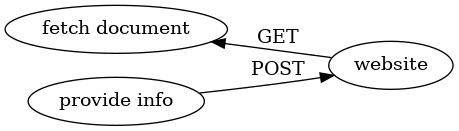
Reliable conversation Human conversation is most reliable when using plain speak. Slang, sarcasm or jokes raise the risk of misunderstandings. This is quite similar in computer conversation. When surfing the Web, you normally "GET" a web page or "POST" new data like a search query. The words "GET" and "POST" are "plain speak" of the World Wide Web defined as a principle called "REST" or "RESTful design". I use the Kannel tool to talk directly to the phones. When an sms arrives on the phone, Kannel "GET"s it to the calendar. That's weakly expressed better if it had "POST"ed the message instead. Kannel is a quite reliable tool, but not RESTful in conversations. That requires extra attention at other parts of the setup to avoid breakage in special situations. That worries me.

Each car has a blog So I setup a gateway from Kannel to RESTful conversation. And choose classic blogging as style of conversation:
  • The carpool fleet is a blogroll
  • each car has a blog
  • each sms emitted from a car is a blog entry
Blogging comes in two flavors, RSS and Atom. Both cover distribution of messages. I use Atom because it is newest and coolest, and because it also covers creating and editing meesages with the AtomPub extension. AtomPub allows the calendar to create an empty message which then triggers an sms from the car which "fills it in." AtomPub also let the calendar "PUT" tags onto existing messages, to mark them as processed, read etc., and let an admin or a cleanup script "DELETE" outdated entries or blogs. The words "PUT" and "DELETE" are RESTful conversation as well.

The system is dancing! My sms-to-blog gateway is written in Perl, using the Dancer toolkit. Dancer makes it simple to setup a RESTful web conversation, and when I contacted the authors on IRC, they swiftly added support for the non-RESTful quirk that I needed. My sms-to-blog gateway is not yet ready, but basic routines work. The project is public, and code is Free Software.

29 September 2012

Jonathan Carter: LLXC: My little python3-lxc based project


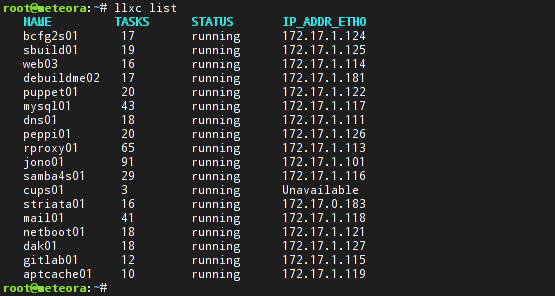
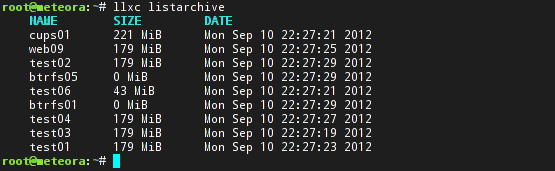
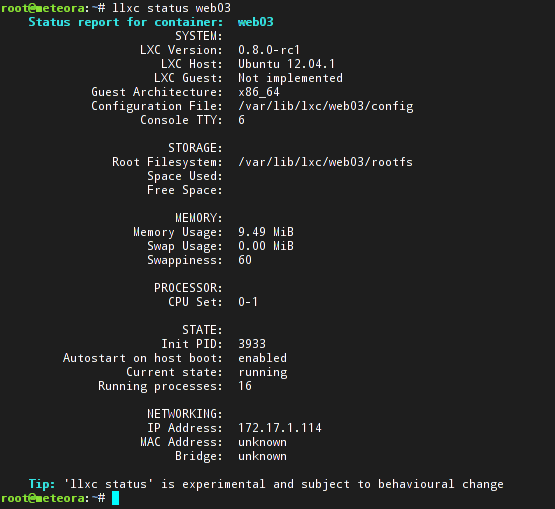
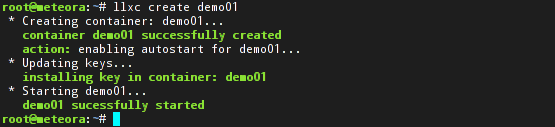
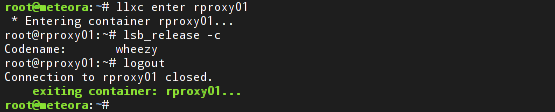
My foray into the world of LXC and RLXC A few months ago, I started trying out LXC (Linux Containers). Before that I used to use OpenVZ, which is an older and more mature contextualization implementation. I was pleased with how well LXC worked and started replacing my personal OpenVZ hosts with LXC. It worked great, but it had a few quirks. While LXC itself works well, the user scripts that ship with it has some space for improvement. The lxc-list command lists anything that s a directory in /var/lib/lxc, so if you have a lost+found directory, it will list it as a container (This has since been fixed upstream). Also, in some cases it would list containers twice or not at all. I was a bit annoyed with that, since OpenVZ s vzlist tool prints out a nice table of your containers along with their IP addresses and other information. Since it s very trivial to implement what I want in a shell script, I went ahead and did just that and called it RLXC. I also missed the vzctl exec <containername> command to execute commands in containers and vzctl enter <containername> to gain a shell inside the container, so I added some more functionality to it so that I could configure ssh keys for these containers and use rlxc enter and rlxc exec like I used to do with the OpenVZ tools, but by using SSH. I also realised that there are others too who wanted similar improvements in the LXC scripts and decided to continue improving RLXC and making it public. Enter LLXC I spoke to St phane about my ideas at the time and he introduced me to python3-lxc that he introduced on his blog yesterday. It provides Python bindings for liblxc, so I took the advantage of that and mostly re-implemented RLXC in Python and called it LLXC. The name doesn t particularly mean anything, I m open to suggestions for what to call it, if anyone cares. Here are some screenshots that explains some of it better than I could do in words: How to get it As St phane mentioned in the python3-lxc blog entry, the API hasn t yet been finalized and llxc itself is in an early state and many changes are planned, so it s definitely not meant for production use yet, but since we believe in release early, release often in the free software community, here goes Currently, llxc.py itself is *very* Ubuntu specific and its only been tested on Ubuntu 12.04, but that will be fixed once more of its kinks have been ironed out. Some people are also working on getting python3-lxc on other distributions, which will help a lot. The llxc.py script itself is hosted on Github: https://github.com/highvoltage/llxc For python3-lxc and friends, you need to enable St phane s experimental PPA: https://launchpad.net/~stgraber/+archive/experimental You will then need to install the following packages: lxc, python3-lxc, python3-crypto, lvm, btrfs-tools To generate the ssh keys used for ssh interaction between the containers, you need to run llxc gensshkeys . The enter and exec commands also rely on your containers being in dns or in your /etc/hosts file, at least for now, which you may have to configure manually. The Future There is a lot that I m planning to add, mostly to scratch my own itches. These include: I ll have some packaging for this available soon and work on making more things work right out of the box, updates will follow. Also, feedback and patches are very welcome!

28 September 2012

Don Armstrong: Switching to KGB from CIA

CIA.vc has unfortunately disappeared, and is unlikely to return any time soon. I personally have decided to switch to KGB, but other alternatives such as FBI and irker exist. To switch, you first need to find or set up a kgb bot. If this is a Debian associated FOSS project, feel free to contact me or join #kgb-devel on irc.oftc.net and ask for someone to allow your project to talk to their bot. Once you've found a bot, we need to set up the client. [I'll talk about bot set up at the end.]

kgb-client configuration Install the kgb-client and kgb-client-git packages. Currently, kgb only supports subversion and git, but I suspect this will be rectified shortly. For git repositories, add a post-receive hook like the following:
#!/bin/sh
tee hooks/reflog   kgb-client --conf /path/to/kgbclient.conf --repository git --git-reflog -
For subversion repositories, add a post-commit hook like the following:
#!/bin/sh
kgb-client --conf /path/to/kgbclient.conf --repository svn "$1" "$2"
Then update the configuration file /path/to/kgbclient.conf:
---
repo-id: my-repository
servers:
 - uri: http://servername:9999/
   password: verysecret
# optional link to a website where the commits are;
# needs newish kgb-client and server
web-link: http://example.com/?p=my-repository;a=commitdiff;h=$ commit 
Then, send the bot owner the password, repo-id, channel, and network you'd like the changes to be reported to.

Configuring kgb-bot The bots just listen to soap requests and if the password matches, sends the commit to the appropriate IRC channel. To set one up, install kgb-bot. Then, enable the bot (set BOT_ENBALED=1 in /etc/default/kgb-bot), and configure the bot's configuration file /etc/kgb-bot/kgb.conf:
---
soap:
  server_addr: 0.0.0.0
  server_port: 9999
  service_name: KGB
queue_limit: 150
log_file: "/var/log/kgb-bot.log"
repositories:
  # just a name to identify it
  my-repository:
    # needs to be the same on the client
    password: verysecret
networks:
  oftc:
    nick: KGB-you
    ircname: KGB bot
    username: kgb
    password: ~
    nickserv_password: yournickservpassword
    server: irc.oftc.net
    port: 6667
  freenode:
    nick: KGB-you
    ircname: KGB bot
    username: kgb
    password: ~
    nickserv_password: yournickservpassword
    server: irc.freenode.net
    port: 6667
channels:
  - name: '#your-channel'
    network: oftc
    repos:
     - your-repo
  - name: '#commits'
    network: freenode
    repos:
     - your-repo
Then start the bot (/etc/init.d/kgb-bot start), and watch as it joins channels and reports your changes! You'll probably actually want to register whatever nick you are using on the networks, etc... but you can figure that out yourself!

Keith Packard: DRI-Next

Thoughts about DRI.Next On the way to the X Developer s Conference in Nuremberg, Eric and I chatted about how the DRI2 extension wasn t really doing what we wanted. We came up with some fairly rough ideas and even held an informal presentation about it. We didn t have slides that day, having come up with the content for the presentation in the hours just before the conference started. This article is my attempt to capture both that discussion and further conversations held over roast pork dinners that week. A brief overview of DRI2 Here s a list of the three things that DRI2 currently offers. Application authentication. The current kernel DRM authentication mechanism restricts access to the GPU to applications connected to the DRM master. DRI2 implements this by having the application request the DRM cookie from the X server which can then be passed to the kernel to gain access to the device. This is fairly important because once given access to the GPU, an application can access any flink d global buffers in the system. Given that the application sends screen data to the X server using flink d buffers, that means all screen data is visible to any GPU-accessing application. This bypasses any GPU hardware access controls. Allocating buffers. DRI2 defines a set of attachment points for buffers which can be associated with an X drawable. An application needing a specific set of buffers for a particular rendering operation makes a request of the X server which allocates the buffers and passes back their flink names. The server automatically allocates new buffers when window sizes change, sending an event to the application so that it knows to request the new buffers at some point in the future. Presenting data to the user. The original DRI2 protocol defined only the DRI2CopyRegion request which copied data between the allocated buffers. SwapBuffers was implemented by simply copy data from the back buffer to the front buffer. This didn t provide any explicit control over frame synchronization, so a new request, DRI2SwapBuffers, was added to expose controls for that. This new request only deals with the front and back buffers, and either copies from back to front or exchanges those two buffers. Along with DRI2SwapBuffers, there are new requests that wait for various frame counters and expose those to GL applications through the OMLsynccontrol extension What s wrong with DRI2? DRI2 fixed a lot of the problems present with the original DRI extension, and made reliable 3D graphics on the Linux desktop possible. However, in the four years since it was designed, we ve learned a lot, and the graphics environment has become more complex. Here s a short list of some DRI2 issues that we d like to see fixed. Proposed changes for DRI.Next Given the three basic DRI2 operations (authentication, allocation, presentation), how can those be improved? Eliminate DRI/DRM magic-cookie based authentication Kristian H gsberg, Martin Peres, Timoth e Ravier & Daniel Vetter gave a talk on DRM2 authentication at XDC this year that outlined the problems with the current DRM access control model and proposed some fairly simple solutions, including using separate device nodes one for access to the GPU execution environment and a separate, more tightly controlled one, for access to the display engine. Combining that with the elimination of flink for communicating data between applications and there isn t a need for the current magic-cookie based authentication mechanism; simple file permissions should suffice to control access to the GPU. Of course, this ignores the whole memory protection issue when running on a GPU that doesn t provide access control, but we already have that problem today, and this doesn t change that, other than to eliminate the global uncontrolled flink namespace. Allocate all buffers in the application DRI2 does buffer allocation in the X server. This ensures that that multiple (presumably cooperating) applications drawing to the same window will see the same buffers, as is required by the GLX extension. We suspected that this wasn t all that necessary, and it turns out to have been broken several years ago. This is the traditional way in X to phase out undesirable code, and provides an excellent opportunity to revisit the original design. Doing buffer allocations within the client has several benefits: Present buffers through DMA-buf The new DMA-buf infrastructure provides a cross-driver/cross-process mechanism for sharing blobs of data. DMA-buf provides a way to take a chunk of memory used by one driver and pass it to another. It also allows applications to create file descriptors that reference these objects. For our purposes, it s the file descriptor which is immediately useful. This provides a reliable and secure way to pass a reference from an underlying graphics buffer from the client to the X server by sending the file descriptor over the local X socket. An additional benefit is that we get automatic integration of data from other devices in the system, like video decoders or non-primary GPUs. The Prime support added in DRI version 2.8 hacks around this by sticking a driver identifier in the driverType value. Once the buffer is available to the X server, we can create a request much like the current DRI2SwapBuffers request, except instead of implicitly naming the back and front buffers, we can pass an arbitrary buffer and have those contents copied or swapped to the drawable. We also need a way to copy a region into the drawable. I don t know if that needs the same level of swap control, but it seems like it would be nice. Perhaps the new SwapBuffers request could take a region and offset as well, copying data when swapping isn t possible. Managing buffer allocations One trivial way to use this new buffer allocation mechanism would be to have applications allocate a buffer, pass it to the X server and then simply drop their reference to it. The X server would keep a reference until the buffer was no longer in use, at which point the buffer memory would be reclaimed. However, this would eliminate a key optimization in current drivers the ability to re-use buffers instead of freeing and allocating new ones. Re-using buffers takes advantage of the work necessary to setup the buffer, including constructing page tables, allocating GPU memory space and flushing caches. Notifying the application of idle buffers Once the X server is finished using a buffer, it needs to notify the application so that the buffer can be re-used. We could send these notifications in X events, but that ends up in the twisty mess of X client event handling which has already caused so much pain with Invalidate events. The obvious alternative is to send them back in a reply. That nicely controls where the data are delivered, but causes the application to block waiting for the X server to send the reply. Fortunately, applications already want to block when swapping buffers so that they get throttled to the swap buffers rate. That is currently done by having them wait for the DRI2SwapBuffers reply. This provides a nice place to stick the idle buffer data. We can simply list buffers which have become idle since the last SwapBuffers reply was delivered. Releasing buffer memory Applications which update only infrequently end up with a back buffer allocated after their last frame which can t be freed by the system. The fix for this is to mark the buffer purgable, but that can only be done after all users of the buffer are finished with it. With this new buffer management model, the application effectively passes ownership of its buffers to the X server, and the X server knows when all use of the buffer are finished. It could mark buffers as purgable at that point. When the buffer was sent back in the SwapBuffers reply, the application would be able to ask the kernel to mark it un-purgable again. A new extension? Or just a new DRI2 version? If we eliminate the authentication model and replace the buffer allocation and presentation interfaces, what of the existing DRI2 protocol remains useful? The only remaining bits are the other synchronization requests: DRI2GetMSC, DRI2WaitMSC, DRI2WaitSBC and DRI2SwapInterval. Given this, does it make more sense to leave DRI2 as it is and plan on deprecating, and eventually eliminating, it? Doing so would place a support burden on existing applications, as they d need to have code to use the right extension for the common requests. They ll already need to support two separate buffer management versions though, so perhaps this burden isn t that onerous?

Johannes Schauer: visit at Paris IRILL

Last week, I was invited to give a talk about my Debian bootstrapping efforts at IRILL in Paris. The slides of my talk are online as pdf. The time I spent in Paris with Pietro Abate was very fruitful. I have to thank him and Roberto di Cosmo for inviting me and even compensating for my travel expenses. The things we actually managed to implement during my visit: The two most important things (in my opinion) that we came up with for future implementation, were the idea to harvest reduced build dependency information from Gentoo as well as finding a flaw in the way the current dependency graph relates to binary packages and their installation sets. I am still busy with evaluating output from my trials with Gentoo, so I will cover this topic in a later blog post once I generated the actual impact on the dependency graph. The current status is, that Gentoo USE flags allow me to find possibly droppable build dependencies for 250 out of the 350 interesting Debian source packages that are part of the main scc. Pietro also found a current flaw in how the dependency graph is generated. While source package A and B might both depend on binary package C (and its installation set), it is wrong to add a dependency to C from both source packages without further verification. Due to virtual packages and disjunctive dependencies, C might have many possible installation sets. Only one of them is chosen in the current code. The problem is, that this one chosen set might conflict with the other build dependencies of source packages depending on C. Therefor, there must exist multiple binary package nodes C, each with a different installation set, dynamically generated as they are needed. Source packages must point to the node for C that possesses an installation set that doesnt conflict with its own build dependencies. Other TODO notes that we came up with and that I will be implementing are: As I cannot always depend on new dose3 versions being pushed to Debian Sid right after their release, I will do the dose3 git submodule integration over the weekend. This will allow me to evaluate the results I got from my evaluation of Gentoo USE flags that I gathered over the past week.

27 September 2012

Benjamin Mako Hill: Pregnant with Suspense

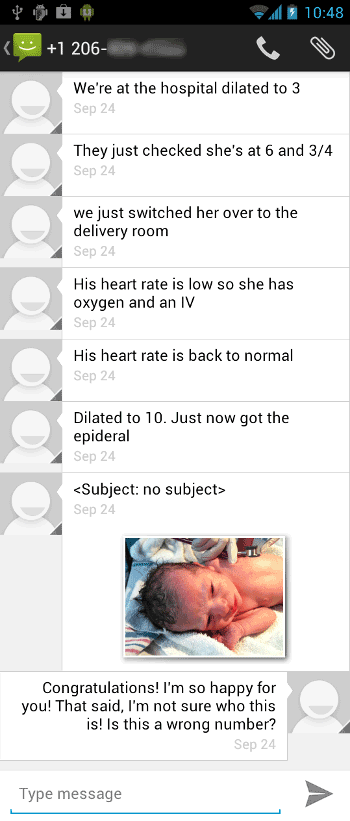
A couple days ago, I woke up to this exciting series of text messages from a unfamiliar phone number. Text messages describing the birth of a child, a picture of a newborn, and a response at the end asking who it is and if it was a wrong number. Because I've not received a reply in the last couple days, because it was a Seattle phone number but I haven't lived in Seattle for years, and because I don't know of anyone in Seattle who was about to give birth, I'm pretty confident that this was indeed a case of misdirected text messages! But whoever you are: Congratulations! I know it was a mistake, but that really made my day!

26 September 2012

Eddy Petri&#537;or: Security, so easy to be done wrong

I just finished reading this article about data security and how easily it can be done wrong. A real eye opener, if you're thinking about breeding your own solution. I highly recommend it, in spite of the initially weird feeling of reading something that looks like a script.

Russell Coker: Server Use Per Person

I ve just read Diego s response to an ill-informed NYT article about data-center power efficiency [1]. This makes me wonder, how much server use does each person have? Google Almost everyone uses Google, most of us use it a lot. The main Google product is also probably the most demanding, their search engine. In a typical day I probably do about 50 to 100 Google searches, that sounds like a lot, but half of them would probably be for one topic that is difficult to find. I don t think that I do that many Google searches because I generally know what I m doing and when I find what I need I spend a lot of time reading it. I m sure that many people do a lot more. Each Google search takes a few seconds to complete (or maybe more if it s an image search and I m on a slow link), but I think it s safe to assume that more than a few seconds of CPU time are involved. How much work would each Google search take if performed on a single system? Presumably Google uses the RAM of many systems as cache which gives a result more similar to a NUMA system than one regular server working for a longer time so there is no way of asking how long it would take to do a Google search with a single server. But I m sure that Google has some ratio of servers to the rate of requests coming in, it s almost certainly a great secret, but we can make some guesses. If the main Google user base comprises people who collectively do an average of 100 searches per day then we can probably guess at the amount of server use required for each search based on the number of servers Google would run. I think it s safe to assume that Google doesn t plan to buy one server for every person on the planet and that they want to have users significantly outnumbering servers. So even for core users they should be aiming to have each user only take a fraction of the resources that one server adds to the pool. So 100 searches probably each take more than 1 second of server use. But they almost certainly take a lot less than 864 seconds (the server use if Google had one server for every 100 daily requests which would imply one server for each of the heavier users). Maybe it takes 10 seconds of server use (CPU, disk, or network whichever is the bottleneck) to complete one search request. That would mean that if the Google network was at 50% utilisation on average then they would have 86400*.5/10/100 == 43 users per server for the core user base who average 100 daily requests. If there are 80M core users that would be about 2M servers, and then maybe something like another 4M servers for the rest of the world. So I could be using 1000 seconds of server time per day on Google searches. I also have a Gmail account which probably uses a few seconds for storing email and giving it to Fetchmail, and I have a bunch of Android devices which use Google calendars, play store, etc. The total Google server use on my behalf for everything other than search is probably a rounding error. But I could be out by an order of magnitude, if it only took 1 second of server use for a Google search then I would be at 100 server seconds per day and Google would only need one server for every 430 users like me. Google also serves lots of adverts on web sites that I visit, I presume that serving the adverts doesn t take much resources by Google standards. But accounting for it, paying the people who host content, and detecting fraud probably takes some significant resources. Other Big Services There are many people who spend hours per day using services such as Facebook. No matter how I try to estimate the server requirements it s probably going to be fairly wrong. But I ll make a guess at a minute of server time per hour. So someone who averages 3 hours of social networking per day (which probably isn t that uncommon) would be using 180 seconds of server time. Personal Servers The server that hosts my blog is reasonably powerful and has two other people as core users. So that could count as 33% of a fairly powerful server in my name. But if we are counting server use per USER then most of the resources of my blog server would be divided among the readers. My blog has about 10,000 people casually reading it through Planet syndication, that could mean that each person who casually reads my blog has 1/30,000 of a server allocated to them for that. Another way of considering it is that 10% of a server (8640 seconds) is covered by me maintaining my blog and writing posts, 20% is for users who visit my blog directly, and 3% is for the users who just see a Planet feed. That would mean that a Planet reader gets 1/330,000 of a server (250ms per day) and someone who reads directly gets 1/50,000 of a server (1.72s per day) as I have about 10,000 people visiting my blog directly in a month. My mail server which is also shared by a dozen or so people (maybe that counts as 5% of a server for me or 4320 seconds per day). Then there s the server I use for SE Linux development (including my Play Machine) and a server I use as a DNS secondary and a shell server for various testing and proxying. Other People s Servers If every reader of a Planet instance like Planet Debian and Planet Linux Australia counts as 1/330,000 of a server for their usage of my blog, then how would that count for my own use of blogs? I tend to read blogs written by the type of people who like to run things themselves, so there would be a lot of fairly under-utilised servers that run blogs. Through Planet Debian and Planet Linux Australia I could be reading 100 or more blogs which are run in the same manner as mine, and in a typical day I probably directly visit a dozen blogs that are run in such a manner. This could give me 50 seconds of server time for blog reading. Home Servers I have a file server at home which is also a desktop system for my wife. In terms of buying and running systems that doesn t count as an extra server as she needs to have a desktop system anyway and using bigger disks doesn t make much difference to the power use (7W is the difference between a RAID-1 server and a single disk desktop system). I also have a PC running as an Internet gateway and firewall. Running servers at home isn t making that much of an impact on my computer power use as there is only one dedicated 24*7 server and that is reasonably low power. But having two desktop systems on 24*7 is a significant factor. Where Power is Used/Wasted No matter how things are counted or what numbers we make up it seems clear that having a desktop system running 24*7 is the biggest use of power that will be assigned to one person. Making PCs more energy efficient through better hardware design and better OS support for suspending would be the best way of saving energy. Nothing that can be done at the server side can compare. Running a server that is only really used by three people is a significant waste by the standards of the NYT article. Of course the thing is that Hetzner is really cheap (and I m not contributing any money) so there isn t a great incentive to be more efficient in this regard. Even if I allocate some portion of the server use to blog readers then there s still a significant portion that has to be assigned to me for my choice to not use a managed service. Running a mail server for a small number of users and running a DNS server and a SE Linux development server are all ways of wasting more power. But the vast majority of the population don t have the skills to run their own server directly, so this sort of use doesn t affect the average power use for the population. Nothing else really matters. No matter what Google does in terms of power use it just doesn t matter when compared to all the desktop systems running 24*7. Small companies may be less efficient, but that will be due to issues of how to share servers among more people and the fact that below a certain limit you can t save money by using less resources particularly if you pay people to develop software. Conclusion I blame Intel for most of the power waste. Android phones and tablets can do some amazing things, which is hardly surprising as by almost every measure they are more powerful than the desktop systems we were all using 10 years ago and by many measures they beat desktop systems from 5 years ago. The same technology should be available in affordable desktop systems. I d like to have a desktop system running Debian based on a multi-core ARM CPU that can drive a monitor at better than FullHD resolution and which uses so little power that it is passively cooled almost all the time. A 64bit ARM system with 8G of RAM a GPU that can decode video (with full Linux driver support) and a fast SSD should compete well enough with typical desktop systems on performance while being quiet, reliable, and energy efficient. Finally please note that most of this post relies on just making stuff up. I don t think that this is wrong given the NYT article that started this. I also think that my estimates are good enough to draw some sensible conclusions. Related posts:
  1. Name Server IP and a Dead Server About 24 hours ago I rebooted the system that runs...
  2. Google Custom Search Engine I ve just been experimenting with Google Custom Search [1]. Below...
  3. Google Server Design Cnet has an article on the design of the Google...

25 September 2012

Arnaud Quette: Power management and NUT #1: an introduction

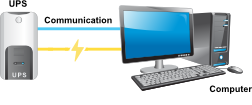
in this series of articles, I will be talking in depth about power management through the NUT project, its packaging on Debian, how to use it in general and how I see it being part of the GreenIT thing. So, let's start with an introduction: NUT is a Free Software (GPL v2+ and 3 to be precise), originally created for power protection using UPS, from home to data-centers:
To shortly describe the main features, I would say that NUT: NUT used to stand for Network UPS Tools. That is, a software for talking to your UPS and shutting down your systems when needed. This definition is a bit limited nowadays, since NUT supports 4 types of power device: Considering this, is the name Network UPS Tools still suitable? Not really! But the acronym NUT is well known! So, for the time being, I just stick using it, and focus on other more important things, until a better opportunity (ideas and comments are welcome!). That said, what can you do exactly with NUT? Currently, you can: All the above is available in a standardized way: Well, this is already a long and dense post, so I will stop there for today. In the next post, we will have a deeper dive into using NUT, for various use cases: submit yours if you can ;-) cheers,
-- Arno

21 September 2012

Philipp Kern: IPv6 support in debian-installer, take 2

The IPv6 patch set for netcfg (part of debian-installer) has landed in Debian unstable. In follow-up uploads I diverged from the Ubuntu patch set a little bit:
Thanks to Michael Tokarev's recent upload of busybox, we now also have a more featureful ping and ping6 in debian-installer's environment.

Known bugs:
If you could take another look at a current d-i daily, install a system with it and look if the installed system has a correct network configuration, that would still be appreciated. I also need somebody to test the GNU/kFreeBSD image. I fixed it up to build there but the result might be entirely wrong.

My sincere thanks go to Bernhard Schmidt and Karsten Merker, who successfully completed installations over IPv6 in various environments!

Gerfried Fuchs: BSP Essen November 2012

Wheezy is coming closer to the release, there though are still way too many release critical bugreports outstanding for it. Squeeze has already been released, but it has collected even more release critical bugreports than wheezy since. To be able to reduce these amounts I will be at the Linuxhotel in Essen at the weekend from 23rd to 25th of November, and it would be a great pleasure if I could convince you to join me in this effort. As readers of my blog might assume, my main aim will be those RC bugs affecting squeeze and I would be happy if some people interested to work on those could join me, I plan to give a quick quick explanation about the version tracking of the BTS and why we should care about stable too, but the event will definitely not be limited to squeeze RC bugs. Also, it will be a good chance to improve your key stats for the web of trust in case your GnuPG key hasn't got enough signatures yet or you want to transition to a stronger one. Please read the Community page of the Linuxhotel for what they offer for accommodation in case you want to use their lodging. Personally I'll go for the two-bed room with breakfast option, but you are of course free to bring your own sleeping bag and mat if you want to cut short on the expenses. In case of any questions, feel free to ask me right ahead. It would be great if we could help both our stable release and the next stable release during the weekend, and if you could join in! Please add yourself to the wiki page about the BSP.

/debian permanent link Comments: 0 Flattr this

20 September 2012

Aigars Mahinovs: You though NVidia was bad, don t try AMD

Remember when Linus Torvalds lambasted NVidia for not supporting their Optimus technology in their Linux drivers for half a decade and counting? Well, I went out and bought an AMD/ATi video card as mu upgrade. And you know what? Its Linux drivers are far, far worse than NVidia.
1. Most of the games I had working fine on NVidia, do not work on AMD. And those that do suffer far more visual corruption, synchronization bugs (like bottom 40% of the screen rendering half a second after the top 60%), strange visual artifacts (weird triangles popping out of everywhere) and crashes, lots of crashes.
2. There were crashes with NVidia too, but NVidia never managed to crash Compiz along with it or crash the whole X server or lock up the system so far that only SysRq works or even lock up the system so far that only powering it off manually works.
3. And then there is the configuration atrocity. Apparently AMD is too good to store its configuration in /etc/X11/xorg.conf. Or even to document the supported options there. Instead they have their own (also undocumented) configuration file in /etc/ati folder. And it is undocumented because it is a cryptic mess and the only supported way to change it is to use their tools aticonfig and amdccccle. The command line tool is almost reasonable, except it is also barely documented. For example, one of my screens somehow was always stared at 1920 1080@30Hz. There were 3 different ways to specify default resolution, but none of them used or saved the refresh rate. And when I changed it in the GUI tool the refresh rate did change, but it was never saved. Oh there nowhere is a save button. It just works , except when it doesn t. Like: both of my screens for some reason started with huge black borders around the screen, I finally narrowed it down to the GUI setting overscan which defaulted to 10%. Ok, so I change it, it works, but next time I reboot, the overscan is back! I had to find an undocumented invocation of the aticonfig that would change the default value to 0%. Why did this one setting not save? Oh and fun note the refresh rate of that second screen was correct on the login screen, but it then swiched back as I logged in. Fun, huh?
4. Even at basic desktop tasks fglrx if inferior to not only the free driver, but also to the nvidia driver even simple scrolling of a large folder in nautilus seems to tax the 200$ card to its limits the bottom row blinks into place almost half a second after I stop scrolling. Another example with NVidia when I switch my TV to the HDMI input from the card, the sound starts at the same moment as the picture, however with AMD the sound only decides to show up 10-15 seconds later. And sometime it does not show up at all, unless I start the AMD Control GUI tool and only then the sound shows up 15 seconds later (without doing anything in the GUI). It may be that one part of AMD is better than NVidia at talking to free driver developers, but another part is so much worse at actual technical work of writing a driver, it is not even funny. They are busy reinventing the bycicle of configuration and display management, while their core driver is just not good enough. TL/DR: Anyone wanna buy a HD 6850 cheaply off my hands? Crossposted to Google+ https://plus.google.com/u/0/107099528362923100900/posts/6PC7RFQpm8K P.S. I also noticed the color difference with NVidia there was no difference between colors on my LCD TV and my IPS monitor, but with AMD there is a huge difference, the TV color just got washed out. I guess there is no proper color calibration support in the AMD driver? Update: I have managed to return the HD 6850 to the shop where I got it from (thanks to a nice law requiring web shops to take stuff back within 14 days no questions asked) and got the new NVidia GeForce GTX 660 instead. I had to build an updated NVidia driver (304.48 from this post, just like here or here) but other than that it was smooth and painless and everything is working great again. Only even faster :)

Matthew Garrett: UEFI Bootkits

The Register covered a story on a UEFI-based attack on Windows 8. It's actually covering this technical writeup, which is a discussion of a proof of concept implementation of an attack on the Windows 8 kernel from the firmware environment. The first approach they describe is pretty straightforward, in that they simply patch the Windows bootloader directly. Since this is what's reading the kernel off disk and launching it, patching that code means you can modify the kernel in-place and run it with built-in privilege elevation exploits.

The second approach is a little more interesting, and is based on their observation that the UEFI ExitBootServices() function is called after the kernel is loaded but before it's executed. UEFI calls are simply function pointers, so if you can run code in the firmware environment it's trivial to simply replace the function pointer with one to code of your own which does whatever you want before calling the original code. This makes it pretty straightforward to add a hook that gets run when ExitBootServices() is called, finds the kernel, patches it and then continues on its way. Since the kernel is patched after it's been read, this gets around any kind of signature checking that the bootloader might carry out.

But both these cases have something in common: they rely on the ability to run arbitrary code in the firmware environment, and that's precisely the thing that UEFI Secure Boot prevents. A system with a correct implementation of Secure Boot isn't vulnerable to the described attacks, but it's fairly unsurprising that running UEFI without Secure Boot is vulnerable. UEFI on its own doesn't provide any additional security. You're as vulnerable to bootkits as you are with BIOS.

So this isn't really a story about a surprising vulnerability. It's a story about someone taking the logical step of implementing a bootkit on top of UEFI, which is what everyone should have been expecting all along. Computers that are configured to run arbitrary code will run arbitrary code, and if that arbitrary code happens to modify your kernel so your credit card details are automatically posted to pastebin, well, that's a plausible outcome.

comment count unavailable comments

Next.

Previous.