A hotfix release for the Finance-YahooQuote Perl module on CPAN is now available. Available Yahoo! Finance decided to change the base URL. My thanks to Nicola Chiapolini who not only noticed but also sent me the one-line patch fixing this:
--- YahooQuote.pm~      2010-03-27 01:44:10.000000000 +0100
+++ YahooQuote.pm       2015-04-29 11:31:20.407926674 +0200
@@ -34,7 +34,7 @@
 $VERSION = '0.24';

 ## these variables govern what type of quote the modules is retrieving
-$QURLbase = "http://download.finance.yahoo.com/d/quotes.csvr?e=.csv&f=";
+$QURLbase = "http://download.finance.yahoo.com/d/quotes.csv?e=.csv&f=";
 $QURLformat = "snl1d1t1c1p2va2bapomwerr1dyj1x";        # default up to 0.19
 $QURLextended = "s7t8e7e8e9r6r7r5b4p6p5j4m3m4";        # new in 0.20
 $QURLrealtime = "b2b3k2k1c6m2j3"; # also new in 0.20
If need be, edit your file YahooQuote.pm by hand.
This change in Finance-YahooQuote will also affect Beancounter and smtm both of which use this module.
The fix has been pushed to Debian for the corresponding package and to PAUSE for CPAN package.
Having maintained this since 2002 in RCS, I also just created a GitHub repo for it where development/maintenance will now happen.
A small project I worked on during the last few weeks has now come together in new package RcppTOML which arrived on CRAN yesterday.
It provides R with a reader for TOML files. TOML stands for Tom's Obvious Markup Language. And before you roll your eyes, glance at the TOML site. It really is different, and has a number of rather wonderful features:
free-format indentation as you please
comments anywhere, even on the same line
actual types such as string, integer, float, bool and datetime (!!) which are all native
vectors, of course, of the above
arbitrary nesting of tables
Here is a simple illustration where we parse the TOML example file derived from what is part of the main TOML README
R>p <-parseTOML(system.file("toml", "example.toml", package="RcppTOML"))
R>summary(p)
toml object with top-level slots:
clients, database, owner, servers, title
read from /usr/local/lib/R/site-library/RcppTOML/toml/example.toml
R>p
List of 5
$clients :List of 2
..$data :List of 2
.. ..$:chr [1:2] "gamma""delta"
.. ..$:int [1:2] 12
..$hosts:chr [1:2] "alpha""omega"
$database:List of 4
..$connection_max:int 5000
..$enabled :logi TRUE
..$ports :int [1:3] 800180018002
..$server :chr "192.168.1.1"
$owner :List of 4
..$bio :chr "GitHub Cofounder & CEO\\nLikes tater tots and beer."
..$dob :POSIXct[1:1], format: "1979-05-27 07:32:00"
..$name :chr "Tom Preston-Werner"
..$organization:chr "GitHub"
$servers :List of 2
..$alpha:List of 2
.. ..$dc:chr "eqdc10"
.. ..$ip:chr "10.0.0.1"
..$beta :List of 2
.. ..$dc:chr "eqdc10"
.. ..$ip:chr "10.0.0.2"
$title :chr "TOML Example"NULL
R>
See much more at the TOML site. I converted one first project at work to this and it really rocks. Point to a file, get a list back and index all components by their names.
We also added really simple S3 classes to the default print() method uses str() for a more compact presentation of what (in R) is of course nested list types.
Internally, the RcppTOML packages use the splendid cpptoml parser by Chase Geigle. This brings in modern C++11 and makes it that CRAN simply cannot build a binary for R on Windows as the g++ version (still, as of April 2015) in Rtools is too old. There is word of an update to Rtools and that point should we able to support Windows as well. Until then, no mas.
A bit more information is on the package page here as well as as the GitHub repo.
That's all I need to enjoy the best best party ever.
Oh! Shall I mention that we got a beautiful present for the kids from our very dear DebConf official Laminatrix! Photos not yet available, but will provide soon.
Edit to add: These patches on their own won't enable this functionality, they just give us a better set of options. Once they're merged we can look at changing the defaults so people get the benefit of this out of the box.
Haswell and Broadwell (Intel's previous and current generations of x86) both introduced a range of new power saving states that promised significant improvements in battery life. Unfortunately, the typical experience on Linux was an increase in power consumption. The reasons why are kind of complicated and distinctly unfortunate, and I'm at something of a loss as to why none of the companies who get paid to care about this kind of thing seemed to actually be caring until I got a Broadwell and looked unhappy, but here we are so let's make things better.
Recent Intel mobile parts have the Platform Controller Hub (Intel's term for the Southbridge, the chipset component responsible for most system i/o like SATA and USB) integrated onto the same package as the CPU. This makes it easier to implement aggressive power saving - the CPU package already has a bunch of hardware for turning various clock and power domains on and off, and these can be shared between the CPU, the GPU and the PCH. But that also introduces additional constraints, since if any component within a power management domain is active then the entire domain has to be enabled. We've pretty much been ignoring that.
The tldr is that Haswell and Broadwell are only able to get into deeper package power saving states if several different components are in their own power saving states. If the CPU is active, you'll stay in a higher-power state. If the GPU is active, you'll stay in a higher-power state. And if the PCH is active, you'll stay in a higher-power state. The last one is the killer here. Having a SATA link in a full-power state is sufficient to keep the PCH active, and that constrains the deepest package power savings state you can enter.
SATA power management on Linux is in a kind of odd state. We support it, but we don't enable it by default. In fact, right now we even remove any existing SATA power management configuration that the firmware has initialised. Distributions don't enable it by default because there are horror stories about some combinations of disk and controller and power management configuration resulting in corruption and data loss and apparently nobody had time to investigate the problem.
I did some digging and it turns out that our approach isn't entirely inconsistent with the industry. The default behaviour on Windows is pretty much the same as ours. But vendors don't tend to ship with the Windows AHCI driver, they replace it with the Intel Rapid Storage Technology driver - and it turns out that that has a default-on policy. But to make things even more awkwad, the policy implemented by Intel doesn't match any of the policies that Linux provides.
In an attempt to address this, I've written some patches. The aim here is to provide two new policies. The first simply inherits whichever configuration the firmware has provided, on the assumption that the system vendor probably didn't configure their system to corrupt data out of the box[1]. The second implements the policy that Intel use in IRST. With luck we'll be able to use the firmware settings by default and switch to the IRST settings on Intel mobile devices.
This change alone drops my idle power consumption from around 8.5W to about 5W. One reason we'd pretty much ignored this in the past was that SATA power management simply wasn't that big a win. Even at its most aggressive, we'd struggle to see 0.5W of saving. But on these new parts, the SATA link state is the difference between going to PC2 and going to PC7, and the difference between those states is a large part of the CPU package being powered up.
But this isn't the full story. There's still work to be done on other components, especially the GPU. Keeping the link between the GPU and an internal display panel active is both a power suck and requires additional chipset components to be powered up. Embedded Displayport 1.3 introduced a new feature called Panel Self-Refresh that permits the GPU and the screen to negotiate dropping the link, leaving it up to the screen to maintain its contents. There's patches to enable this on Intel systems, but it's still not turned on by default. Doing so increases the amount of time spent in PC7 and brings corresponding improvements to battery life.
This trend is likely to continue. As systems become more integrated we're going to have to pay more attention to the interdependencies in order to obtain the best possible power consumption, and that means that distribution vendors are going to have to spend some time figuring out what these dependencies are and what the appropriate default policy is for their users. Intel's done the work to add kernel support for most of these features, but they're not the ones shipping it to end-users. Let's figure out how to make this right out of the box.
[1] This is not necessarily a good assumption, but hey, let's see
(No, I'm not talking about a future Ubuntu release... After all, what kind of weird animal would a weekend be?)
This weekend we took the kids outside for the first time (not counting, of course, visits to the pediatrician). We were quite anxious... Of course, they were born somewhat under weight and at 7 months of gestation. But this Saturday we feelt adventurous, and took the kids out for a day among people!
It might not sound like a big deal, but... Well, we took a not such beautiful or scenic route: We took them to the supermarket, and had a small lunch out. For the first time in the already two months they have been with us.
Dinner with friends at home, having a very good time, and as expected a... Very hard night for us. All that excitement had the babies very nervous.
Today again, for the first time we took the children out to visit some friends of ours. Again, it was great, they behaved very nicely, and were lovely all around.
Lets see what this night holds in place for us.
Anyway, with them growing slowly but steadily... We are very happy, thankful parents. For the first time since Regina is with me in Mexico, this time we decided we would not have a birthday party (yes, I'm 30 minutes away from being 39 year old). I cannot imagine a fuller, better celebration than what we are having. This two babies are the real event in our lives.
Oh... And by the way, this weekend also saw the release of a great new Debian release: Debian 8, codenamed Jessie. Thanks, folks, for such a great birthday present ;-) For reasons that should by now be obvious, I wasn't able to go to either of the release parties I knew of in Mexico City (even one of them was ~500m from home!)
This release has a somewhat random collection of accumulated fixes.
A couple of them are for the PAM libraries: new support for the Mac OS X
PAM implementation, which doesn't use the same options and error codes as
the rest of the world. It also uses a different pattern of const
declaration, which required some additional Autoconf probing for the fake
PAM library for testing.
There are also a few fixes for the systemd probe framework:
libsystemd-daemon has been rolled into libsystemd in current versions, and
the probe was using $(), which doesn't work on Solaris 10.
The Kerberos Autoconf macros should now hopefully work with the version of
Kerberos bundled with Solaris 10.
Finally, this release supports checking for Clang as a compiler and
choosing compiler warning flags accordingly, although rra-c-util isn't
warning-free with Clang -Weverything yet.
You can get the latest release from the rra-c-util distribution page.
This post is a follow-up to my earlier post on the
"sad state of sysadmin in the age of containers".
While I was drafting this post, that story got picked up by HackerNews, Reddit
and Twitter, sending a lot of comments and emails my way.
Surprisingly many of the comments are supportive of my impression - I would
have expected to see much more insults along the lines "you just don't like
my-favorite-tool, so you rant against using it". But a lot of people seem to share
my concerns. Thanks, you surprised me!
Here is the new rant post, in the slightly different context of big data:
Everybody is doing "big data" these days. Or at least, pretending to do so
to upper management. A lot of the time, there is no big data. People do more
data anylsis than before, and therefore stick the "big data" label on them to
promote themselves and get green light from management, isn't it?
"Big data" is not a technical term. It is a business term, referring to any
attempt to get more value out of your business by analyzing data
you did not use before. From this point of view, most of such projects
are indeed "big data" as in "data-driven revenue generation" projects.
It may be unsatisfactory to those interested in the challenges of volume and
the other "V's", but this is the reality how the term is used.
But even in those cases where the volume and complexity of the data would
warrant the use of all the new toys tools, people overlook
a major problem: security of their systems and of their data.
The currently offered "big data technology stack" is all but secure.
Sure, companies try to earn money with security add-ons such as Kerberos
authentication to sell multi-tenancy, and with offering their version of
Hadoop (their "Hadoop distribution").
The security problem is deep inside the "stack". It comes from the way this
world ticks: the world of people that constantly follow the latest
tool-of-the-day. In many of the projects, you no longer have mostly Linux
developers that co-function as system administrators, but you see a lot of
Apple iFanboys now. They live in a world where technology is outdated after
half a year, so you will not need to support product longer than that. They
love reinstalling their development environment frequently - because each time,
they get to change something. They also live in a world where you would simply
get a new model if your machine breaks down at some point. (Note that this will
not work well for your big data project, restarting it from scratch every half
year...)
And while Mac users have recently been surprisingly unaffected by various attacks
(and unconcerned about e.g. GoToFail, or the fail to fix the
rootpipe exploit)
the operating system is
not
considered to be very secure. Combining this with users who do not care is an
explosive mixture...
This type of developer, who is good at getting a prototype website for a startup
kicking in a short amount of time, rolling out new features every day to beta
test on the live users is what currently makes the Dotcom 2.0 bubble grow.
It's also this type of user that mainstream products aim at - he has already
forgotten what was half a year ago, but is looking for the next tech product
to announced soon, and willing to buy it as soon as it is available...
This attitude causes a problem at the very heart of the stack:
in the way packages are built, upgrades (and safety updates) are handled etc.
- nobody is interested in consistency or reproducability anymore.
Someone commented on my blog that all these tools "seem to be written
by 20 year old" kids. He probably is right. It wouldn't be so bad if we had
some experienced sysadmins with a cluebat around. People that have
experience on how to build systems that can be maintained for 10 years,
and securely deployed automatically, instead of relying on puppet hacks,
wget and unzipping of unsigned binary code.
I know that a lot of people don't want to hear this, but:
Your Hadoop system contains unsigned binary code in a number of
places, that people downloaded, uploaded and redownloaded a countless number of
times. There is no guarantee that .jar ever was what people
think it is.
Hadoop has a huge set of dependencies, and little of this has been
seriously audited for security - and in particular not in a way that would
allow you to check that your binaries are built from this audited code anyway.
There might be functionality hidden in the code that just sits there and waits
for a system with a hostname somewhat like "yourcompany.com" to start looking
for its command and control server to steal some key data from your company.
The way your systems are built they probably do not have much of a firewall
guarding against such. Much of the software may be constantly calling home,
and your DevOps would not notice (nor would they care, anyway).
The mentality of "big data stacks" these days is that of Windows Shareware
in the 90s. People downloading random binaries from the Internet, not
adequately checked for security (ever heard of anybody running an AntiVirus
on his Hadoop cluster?) and installing them everywhere.
And worse: not even keeping track of what they installed over time, or how.
Because the tools change every year. But what if that developer leaves? You may
never be able to get his stuff running properly again!
Fire-and-forget.
I predict that within the next 5 years, we will have a number of security
incidents in various major companies. This is industrial espionage
heaven. A lot of companies will cover it up, but some leaks will reach
mass media, and there will be a major backlash against this hipster way
of stringing together random components.
There is a big "Hadoop bubble" growing, that will eventually burst.
In order to get into a trustworthy state, the big data toolchain needs to:
Consolidate. There are too many tools for every job. There are even
too many tools to manage your too many tools, and frontends for your frontends.
Lose weight. Every project depends on way too many
other projects, each of which only contributes a tiny fragment for a
very specific use case. Get rid of most dependencies!
Modularize. If you can't get rid of a dependency, but it is
still only of interest to a small group of users, make it an optional
extension module that the user only has to install if he needs this
particular functionality.
Buildable. Make sure that everybody can build everything
from scratch, without having to rely on Maven or Ivy or SBT downloading
something automagically in the background. Test your builds offline,
with a clean build directory, and document them! Everything must be
rebuildable by any sysadmin in a reproducible way, so he can ensure a
bug fix is really applied.
Distribute. Do not rely on binary downloads from your CDN
as sole distribution channel. Instead, encourage and support alternate
means of distribution, such as the proper integration in existing
and trusted Linux distributions.
Maintain compatibility. successful big data projects will
not be fire-and-forget. Eventually, they will need to go into
production and then it will be necessary to run them over years.
It will be necessary to migrate them to newer, larger clusters. And you
must not lose all the data while doing so.
Sign. Code needs to be signed, end-of-story.
Authenticate. All downloads need to come with a way of checking the
downloaded files agree with what you uploaded.
Integrate. The key feature that makes Linux systems so very
good at servers is the all-round integrated software management. When you
tell the system to update - and you have different update channels available,
such as a more conservative "stable/LTS" channel, a channel that gets you
the latest version after basic QA, and a channel that gives you the latest
versions shortly after their upload to help with QA. It covers almost all
software on your system, so it does not matter whether the security fix is
in your kernel, web server, library, auxillary service, extension module,
scripting language etc. - it will pull this fix and update you in no time.
Now you may argue that Hortonworks, Cloudera, Bigtop etc. already provide
packages. Well ... they provide crap. They have something they call a "package",
but it fails by any quality standards. Technically, a
Wartburg is a car;
but not one that would pass todays safety regulations...
For example, they only support Ubuntu 12.04 - a three year old Ubuntu is the
latest version they support... Furthermore, these packages are roughly
the same. Cloudera eventually handed over their efforts to "the community" (in
other words, they gave up on doing it themselves, and hoped that someone else
would clean up their mess); and Hortonworks HDP (any maybe Pivotal HD, too)
is derived from these efforts, too.
Much of what they do is offering some extra documentation and training for
the packages they built using Bigtop with minimal effort.
The "spark" .deb packages of Bigtop, for example, are empty. They
forgot to include the .jars in the package. Do I really need to give
more examples of bad packaging decisions? All bigtop packages now depend on
their own version of groovy - for a single script. Instead of rewriting this
script in an already required language - or in a way that it would run
on the distribution-provided groovy version - they decided to make yet another
package, bigtop-groovy.
When I read about Hortonworks and IBM announcing their "Open Data Platform",
I could not care less. As far as I can tell, they are only sticking their label
on the existing tools anyway. Thus, I'm also not surprised that Cloudera and
MapR do not join this rebranding effort - given the low divergence of Hadoop, who
would need such a label anyway?
So why does this matter? Essentially, if anything does not work,
you are currently toast. Say there is a bug in Hadoop that makes it fail to
process your data. Your business is belly-up because of that, no data is processed
anymore, your are vegetable. Who is going to fix it? All these "distributions"
are built from the same, messy, branch. There is probably only a dozen of people
around the world who have figured this out well enough to be able to fully build
this toolchain. Apparently, none of the "Hadoop" companies
are able to support a newer Ubuntu than 2012.04 - are you sure
they have really understood what they are selling? I have doubts. All the
freelancers out there, they know how to download and use Hadoop. But
can they get that business-critical bug fix into the toolchain to get you up
and running again? This is much worse than with Linux distributions. They have
build daemons - servers that continuously check they can compile all the software
that is there. You need to type two well-documented lines to rebuild a typical
Linux package from scratch on your workstation - any experienced developer can
follow the manual, and get a fix into the package. There are even people who
try to recompile complete distributions with
a different compiler to discover compatibility issues early that may
arise in the future.
In other words, the "Hadoop distribution" they are selling you is not
code they compiled themselves. It is mostly .jar files they downloaded
from unsigned, unencrypted, unverified sources on the internet. They have no idea
how to rebuild these parts, who compiled that, and how it was built. At most,
they know for the very last layer. You can figure out how to recompile the
Hadoop .jar. But when doing so, your computer will download a lot of binaries.
It will not warn you of that, and they are included in the Hadoop distributions, too.
As is, I can not recommend to trust your business data into Hadoop.
It is probably okay to copy the data into HDFS and play with it - in particular
if you keep your cluster and development machines isolated with strong
firewalls - but be prepared to toss everything and restart from scratch. It's
not ready yet for prime time, and as they keep on adding more and more unneeded
cruft, it does not look like it will be ready anytime soon.
One more examples of the immaturity of the toolchain:
The scala package from scala-lang.org cannot be cleanly installed as
an upgrade to the old scala package that already exists in Ubuntu and
Debian (and the distributions seem to have given up on compiling a newer Scala
due to a stupid Catch-22 build process, making it very hacky to bootstrap
scala and sbt compilation).
And the "upstream" package also cannot be easily fixed, because it is not built
with standard packaging tools, but with an automagic sbt helper that lacks
important functionality (in particular, access to the Replaces: field,
or even cleaner: a way of splitting the package properly into components)
instead - obviously written by someone with 0 experience in packaging for
Ubuntu or Debian; and instead of using the proven tools, he decided to hack
some wrapper that tries to automatically do things the wrong way...
I'm convinced that most "big data" projects will turn out to be a miserable
failure. Either due to overmanagement or undermanagement, and due to
lack of experience with the data, tools, and project management...
Except that - of course - nobody will be willing to admit these failures.
Since all these projects are political projects, they by definition must
be successful, even if they never go into production, and never earn a single
dollar.
the Debian Edu / Skolelinux project is pleased to announce the first
*beta* release of Debian Edu "Jessie" 8.0+edu0~b1, which for the first
time is composed entirely of packages from the current Debian stable
release, Debian 8 "Jessie".
(As most reading this will know, Debian "Jessie" hasn't actually been
released by now. The release is still in progress but should finish
later today ;)
We expect to make a final release of Debian Edu "Jessie" in the coming
weeks, timed with the first point release of Debian Jessie. Upgrades
from this beta release of Debian Edu Jessie to the final release will
be possible and encouraged!
Please report feedback to debian-edu@lists.debian.org and/or submit
bugs: http://wiki.debian.org/DebianEdu/HowTo/ReportBugs
Debian Edu - sometimes also known as "Skolelinux" - is a complete
operating system for schools, universities and other
organisations. Through its pre- prepared installation profiles
administrators can install servers, workstations and laptops which
will work in harmony on the school network.  With Debian Edu, the
teachers themselves or their technical support staff can roll out a
complete multi-user, multi-machine study environment within hours or
days.
Debian Edu is already in use at several hundred schools all over the
world, particularly in Germany, Spain and Norway. Installations come
with hundreds of applications pre-installed, plus the whole Debian
archive of thousands of compatible packages within easy reach.
For those who want to give Debian Edu Jessie a try, download and
installation instructions are available, including detailed
instructions in the manual explaining the first steps, such as setting
up a network or adding users.  Please note that the password for the
user your prompted for during installation must have a length of at
least 5 characters!
== Where to download ==
A multi-architecture CD / usbstick image (649 MiB) for network booting
can be downloaded at the following locations:
    http://ftp.skolelinux.org/skolelinux-cd/debian-edu-8.0+edu0~b1-CD.iso
    rsync -avzP ftp.skolelinux.org::skolelinux-cd/debian-edu-8.0+edu0~b1-CD.iso .
The SHA1SUM of this image is: 54a524d16246cddd8d2cfd6ea52f2dd78c47ee0a
Alternatively an extended DVD / usbstick image (4.9 GiB) is also
available, with more software included (saving additional download
time):
    http://ftp.skolelinux.org/skolelinux-cd/debian-edu-8.0+edu0~b1-USB.iso
    rsync -avzP ftp.skolelinux.org::skolelinux-cd/debian-edu-8.0+edu0~b1-USB.iso
The SHA1SUM of this image is: fb1f1504a490c077a48653898f9d6a461cb3c636
Sources are available from the Debian archive, see
http://ftp.debian.org/debian-cd/8.0.0/source/ for some download
options.
== Debian Edu Jessie manual in seven languages ==
Please see https://wiki.debian.org/DebianEdu/Documentation/Jessie/ for
the English version of the Debian Edu jessie manual.
This manual has been fully translated to German, French, Italian,
Danish, Dutch and Norwegian Bokm l. A partly translated version exists
for Spanish.  See http://maintainer.skolelinux.org/debian-edu-doc/ for
online version of the translated manual.
More information about Debian 8 "Jessie" itself is provided in the
release notes and the installation manual:
- http://www.debian.org/releases/jessie/releasenotes
- http://www.debian.org/releases/jessie/installmanual
== Errata / known problems ==
    It takes up to 15 minutes for a changed hostname to be updated via
    DHCP (#780461).
    The hostname script fails to update LTSP server hostname (#783087).
Workaround: run update-hostname-from-ip on the client to update the
hostname immediately.
Check https://wiki.debian.org/DebianEdu/Status/Jessie for a possibly
more current and complete list.
== Some more details about Debian Edu 8.0+edu0~b1 Codename Jessie released 2015-04-25 ==
=== Software updates ===
Everything which is new in Debian 8 Jessie, e.g.:
 * Linux kernel 3.16.7-ctk9; for the i386 architecture, support for
   i486 processors has been dropped; oldest supported ones: i586 (like
   Intel Pentium and AMD K5).
 * Desktop environments KDE Plasma Workspaces 4.11.13, GNOME 3.14,
   Xfce 4.12, LXDE 0.5.6
   * new optional desktop environment: MATE 1.8
   * KDE Plasma Workspaces is installed by default; to choose one of
     the others see the manual.
 * the browsers Iceweasel 31 ESR and Chromium 41
 * LibreOffice 4.3.3
 * GOsa 2.7.4
 * LTSP 5.5.4
 * CUPS print system 1.7.5
 * new boot framework: systemd
 * Educational toolbox GCompris 14.12
 * Music creator Rosegarden 14.02
 * Image editor Gimp 2.8.14
 * Virtual stargazer Stellarium 0.13.1
 * golearn 0.9
 * tuxpaint 0.9.22
 * New version of debian-installer from Debian Jessie.
 * Debian Jessie includes about 43000 packages available for installation.
 * More information about Debian 8 Jessie is provided in its release
   notes and the installation manual, see the link above.
=== Installation changes ===
    Installations done via PXE now also install firmware automatically
    for the hardware present.
=== Fixed bugs ===
A number of bugs have been fixed in this release; the most noticeable
from a user perspective:
 * Inserting incorrect DNS information in Gosa will no longer break
   DNS completely, but instead stop DNS updates until the incorrect
   information is corrected (710362)
 * shutdown-at-night now shuts the system down if gdm3 is used (775608).
=== Sugar desktop removed ===
As the Sugar desktop was removed from Debian Jessie, it is also not
available in Debian Edu jessie.
== About Debian Edu / Skolelinux ==
Debian Edu, also known as Skolelinux, is a Linux distribution based on
Debian providing an out-of-the box environment of a completely
configured school network. Directly after installation a school server
running all services needed for a school network is set up just
waiting for users and machines being added via GOsa , a comfortable
Web-UI. A netbooting environment is prepared using PXE, so after
initial installation of the main server from CD or USB stick all other
machines can be installed via the network. The provided school server
provides LDAP database and Kerberos authentication service,
centralized home directories, DHCP server, web proxy and many other
services.  The desktop contains more than 60 educational software
packages and more are available from the Debian archive, and schools
can choose between KDE, GNOME, LXDE, Xfce and MATE desktop
environment.
== About Debian ==
The Debian Project was founded in 1993 by Ian Murdock to be a truly
free community project. Since then the project has grown to be one of
the largest and most influential open source projects. Thousands of
volunteers from all over the world work together to create and
maintain Debian software. Available in 70 languages, and supporting a
huge range of computer types, Debian calls itself the universal
operating system.
== Thanks ==
Thanks to everyone making Debian and Debian Edu / Skolelinux happen!
You rock.
For the Technical People
This post isn t really about technology, I ll cover the technology briefly skip to the next section if you aren t interested in Linux programming or system administration.
I ve been using the Systemd init system for a long time, I first tested it in 2010 [1]. I use Systemd on most of my systems that run Debian/Wheezy (which means most of the Linux systems I run which aren t embedded systems). Currently the only systems where I m not running Systemd are some systems on which I don t have console access, while Systemd works reasonably well it wasn t a standard init system for Debian/Wheezy so I don t run it everywhere. That said I haven t had any problems with Systemd in Wheezy, so I might have been too paranoid.
I recently wrote a blog post about systemd, just some basic information on how to use it and why it s not a big deal [2]. I ve been playing with Systemd for almost 5 years and using it in production for almost 2 years and it s performed well. The most serious bug I ve found in systemd is Bug #774153 which causes a Wheezy->Jessie upgrade to hang until you run systemctl daemon-reexec [3].
I know that some people have had problems with systemd, but any piece of significant software will cause problems for some people, there are bugs in all software that is complex enough to be useful. However the fact that it has worked so well for me on so many systems suggests that it s not going to cause huge problems, it should be covered in the routine testing that is needed for a significant deployment of any new version of a distribution.
I ve been using Debian for a long time. The transitions from libc4 to libc5 and then libc6 were complex but didn t break much. The use of devfs in Debian caused some issues and then the removal of devfs caused other issues. The introduction of udev probably caused problems for some people too. Doing major updates to Debian systems isn t something that is new or which will necessarily cause significant problems, I don t think that the change to systemd by default compares to changing from a.out binaries to ELF binaries (which required replacing all shared objects and executables).
The Social Issue of the Default Init
Recently the Debian technical committee determined that Systemd was the best choice for the default init system in Debian/Jessie (the next release of Debian which will come out soon). Decisions about which programs should be in the default install are made periodically and it s usually not a big deal. Even when the choice is between options that directly involve the user (such as the KDE and GNOME desktop environments) it s not really a big deal because you can just install a non-default option.
One of the strengths of Debian has always been the fact that any Debian Developer (DD) can just add any new package to the archive if they maintain it to a suitable technical standard and if copyright and all other relevant laws are respected. Any DD who doesn t like any of the current init systems can just package a new one and upload it. Obviously the default option will get more testing, so the non-default options will need more testing by the maintainer. This is particularly difficult for programs that have significant interaction with other parts of the system, I ve had difficulties with this over the course of 14 years of SE Linux development but I ve also found that it s not an impossible problem to solve.
It s generally accepted that making demands of other people s volunteer work is a bad thing, which to some extent is a reasonable position. There is a problem when this is taken to extremes, Debian has over 1000 developers who have to work together so sometimes it s a question of who gets to do the extra work to make the parts of the distribution fit together. The issue of who gets to do the work is often based on what parts are the defaults or most commonly used options. For my work on SE Linux I often have to do a lot of extra work because it s not part of the default install and I have to make my requests for changes to other packages be as small and simple as possible.
So part of the decision to make Systemd be the default init is essentially a decision to impose slightly more development effort on the people who maintain SysVInit if they are to provide the same level of support of course given the lack of overall development on SysVInit the level of support provided may decrease. It also means slightly less development effort for the people who maintain Systemd as developers of daemon packages MUST make them work with it. Another part of this issue is the fact that DDs who maintain daemon packages need to maintain init.d scripts (for SysVInit) and systemd scripts, presumably most DDs will have a preference for one init system and do less testing for the other one. Therefore the choice of systemd as the default means that slightly less developer effort will go into init.d scripts. On average this will slightly increase the amount of sysadmin effort that will be required to run systems with SysVInit as the scripts will on average be less well tested. This isn t going to be a problem in the short term as the current scripts are working reasonably well, but over the course of years bugs may creep in and a proposed solution to this is to have SysVInit scripts generated from systemd config files.
We did have a long debate within Debian about the issue of default init systems and many Debian Developers disagree about this. But there is a big difference between volunteers debating about their work and external people who don t contribute but believe that they are entitled to tell us what to do. Especially when the non-contributors abuse the people who do the work.
The Crowd Reaction
In a world filled with reasonable people who aren t assholes there wouldn t be any more reaction to this than there has been to decisions such as which desktop environment should be the default (which has caused some debate but nothing serious). The issue of which desktop environment (or which version of a desktop environment) to support has a significant affect on users that can t be avoided, I could understand people being a little upset about that. But the init system isn t something that most users will notice apart from the boot time.
For some reason the men in the Linux community who hate women the most seem to have taken a dislike to systemd. I understand that being conservative might mean not wanting changes to software as well as not wanting changes to inequality in society but even so this surprised me. My last blog post about systemd has probably set a personal record for the amount of misogynistic and homophobic abuse I received in the comments. More gender and sexuality related abuse than I usually receive when posting about the issues of gender and sexuality in the context of the FOSS community! For the record this doesn t bother me, when I get such abuse I m just going to write more about the topic in question.
While the issue of which init system to use by default in Debian was being discussed we had a lot of hostility from unimportant people who for some reason thought that they might get their way by being abusive and threatening people. As expected that didn t give the result they desired, but it did result in a small trend towards people who are less concerned about the reactions of users taking on development work related to init systems.
The next thing that they did was to announce a fork of Debian. Forking software means maintaining a separate version due to a serious disagreement about how it should be maintained. Doing that requires a significant amount of work in compiling all the source code and testing the results. The sensible option would be to just maintain a separate repository of modified packages as has been done many times before. One of the most well known repositories was the Debian Multimedia repository, it was controversial due to flouting legal issues (the developer produced code that was legal where they lived) and due to confusion among users. But it demonstrated that you can make a repository containing many modified packages. In my work on SE Linux I ve always had a repository of packages containing changes that haven t been accepted into Debian, which included changes to SysVInit in about 2001.
The latest news on the fork-Debian front seems to be the call for donations [4]. Apparently most of the money that was spent went to accounting fees and buying a laptop for a developer. The amount of money involved is fairly small, Forbes has an article about how awful people can use controversy to get crowd-funding windfalls [5].
MikeeUSA is an evil person who hates systemd [6]. This isn t any sort of evidence that systemd is great (I m sure that evil people make reasonable choices about software on occasion). But it is a significant factor in support for non-systemd variants of Debian (and other Linux distributions). Decent people don t want to be associated with people like MikeeUSA, the fact that the anti-systemd people seem happy to associate with him isn t going to help their cause.
Conclusion
Forking Debian is not the correct technical solution to any problem you might have with a few packages. Filing bug reports and possibly forking those packages in an external repository is the right thing to do.
Sending homophobic and sexist abuse is going to make you as popular as the GamerGate and GodHatesAmerica.com people. It s not going to convince anyone to change their mind about technical decisions.
Abusing volunteers who might consider donating some of their time to projects that you like is generally a bad idea. If you abuse them enough you might get them to volunteer less of their time, but the most likely result is that they just don t volunteer on anything associated with you.
Abusing people who write technical blog posts isn t going to convince them that they made an error. Abuse is evidence of the absence of technical errors.
Whilst the rest of Debian was very busy actually making the Jessie release, I was trying to prepare the ground to test the armhf installer images.
Cubietruck is fine, it s a nice install and the documentation on the wiki works nicely. I tried to automate it (as it would be something I d like to test in LAVA which is new in Jessie) with preseeding but although I have got a jessie-x86 preseed file which works in libvirt, the cubietruck installer doesn t seem to want to listen to all of the preseeding. Some of the options (notably the wifi firmware screen, hostname and user passwords) don t go away. x86 wasn t completely as expected either though it works nicely in libvirt and Virtual Machine Manager but trying to (automate it again) do it manually on the command line with qemu raised an awkward grub2 bug where it couldn t work out where to install and failed to then reboot if manually installed.
iMX.53 was the next target got a few steps along the road with that one, except that the kernel in the installer isn t able to see the SATA even though the bootloader can, nor can it see the USB stick. This means that the only media the installer can see is the SD card from which the installer was booted trying to use that ends badly.
Beaglebone-black required a little bit of tweaking. Don t forget that the firmware & partition.img together don t give a lot of space, so creating a second partition on the SD card upon which to put the CD image itself is useful. The Debian ARMMP kernel in Jessie doesn t see USB, so the option here is actually what I wanted. Install from SD card onto eMMC. It s a 2Gb space, but it s ideal for a default location, leaving the SD card for other testing. I ran out of time to see about preseeding BBB installs to eMMC but one word of warning, installing to the eMMC doesn t mean that you have a bootloader on the eMMC the SD card is still needed to reboot, unless that is fixed manually post-install. (Haven t got that working yet either.)
Speaking of time, this post is more brief on the detail than I would like for a couple of reasons:
I haven t actually got things working well enough (clearly from some of the end states above)
the new code to test these in LAVA isn t ready yet either
I did mean to test on an iMX6.quad Wandboard will see about that, hopefully, later.
In general, the armhf SD card support is the best start for installing Jessie on a range of ARMv7 hardware. (I haven t got as far as ARMv8 yet either.) However, when I describe that as the best start , it is lacking in many areas typically due to restrictions in the u-boot support, mainline kernel support and general board variability. It s a lot easier than it used to be but ARMv7 boards are some distance from a single installer setup or even a single set of installer documentation, for any distribution.
[I liked the #newinwheezy effort for the last Debian release, so I tipped Mika off about it again this time]
A short post about what is #newinjessie, Debian's new 8.0 Jessie release. See Mika's debian-devel post for more information.
For this release cycle, I have uploaded two new packages:
dtv-scan-tables - Digital Video Broadcasting (DVB) initial scan files
This is a new package which splits out the DVB initial scan files from linux-dvb-apps (see below). This is designed to make updating of the scan files easier.
git-remote-hg - bidirectional bridge between Git and Mercurial
This is a new package which allows a Git client to read and write to Mercurial repositories. Previously provided as an example in the Git package until removed by upstream.
I've also have taken over as (co-)maintainer of some existing packages during this release cycle:
linuxtv-dvb-apps - Digital Video Broadcasting (DVB) applications
New upstream snapshot, split out DVB initial scan files into dtv-scan-files package (see above), enable hardened buildflags.
I've updated nearly all of my existing packages during this release cycle:
New upstream release, various bug and packaging fixes, fix FTBFS on arm64.
The following package received no updates during this release cycle due to a combination of no upstream releases and the existing package already being in good shape:
figlet - Make large character ASCII banners out of ordinary text
Release day is a nerve-wracking time for several teams. Happily we ve done it a few times now*, so we have a rough idea of how the process should go.
There have been some preparations going on in advance:
Last week we imposed a quiet period on migrations. That s about as frozen as we can get; it means that even RC bugs need to be exceptional if they aren t to be deferred to the first point release. Only late-breaking documentation (like the install guide) was accepted.
The security team opened jessie-updates for business, carried out a test upload, and have since released several packages so that those updates are available immediately after release.
The debian-installer team made a final release.
Final debtags data was updated.
Yesterday the testing migration script britney and other automatic maintenance scripts that the release team run were disabled for the duration.
We made final preparations of things that can be done in advance, such as drafting the publicity announcements. These have to be done in advance so translators get chance to do their work overnight (the announcement was signed off at 15:30UTC today, translations are starting to arrive right now!).
The following checklist makes the release actually happen:
Once dinstall is completed at 07:52, archive maintenance is suspended the FTP masters will do manual work for now.
Very large quantities of coffee will be prepared all across Europe.
Release managers carry out consistency checks of the Jessie index files, and confirm to FTP masters that there are no last-minute changes to be made. RMs get a break to make more coffee.
While they re away FTP masters begin the process of relabelling Wheezy as oldstable and Jessie as stable. If an installer needs to be, er, installed as well, that happens at this point. Old builds of the installer are removed.
A new suite for Stretch (Debian 9) is initialised and populated, and labelled testing.
Release managers check that the newly-generated suite index files look correct and consistent with the checks made earlier in the day. Everything is signed off both in logistical and cryptographic terms.
FTP masters trigger a push of all the changes to the CD-building mirror so that production of images can begin. As each image is completed, several volunteers download and test it in as many ways as they can dream up (booting and choosing different paths through the installer to check integrity).
Finally a full mirror push is triggered by FTP masters, and the finished CD images are published.
Announcements are sent by the publicity team to various places, and by the release team to the developers at large.
Archive maintenance scripts are re-enabled.
The release team take a break for a couple of weeks before getting back into the next cycle.
During the day much of the coordination happens in the #debian-release, #debian-ftp and #debian-cd IRC channels. You re welcome to follow along if you re interested in the process, although we ask that you are read-only while people are still concentrating (during the Squeeze release, a steady stream of people turned up to say congratulations! at the most critical junctures; it s not particularly helpful while the process is still going on). The publicity team will be tweeting and denting progress as it happens, so that makes a good overview too.
If everything goes to plan, enjoy the parties!
(Disclaimer: inaccuracies are possible since so many people are involved and there s a lot to happen in each step; all errors and omissions are entirely mine.)
* yes yes, I am being particularly English today.
What to expect on Jessie release day is a post from: jwiltshire.org.ukFlattr
This is to announce a new upcoming FLOSS project addressing the remote (desktop) computing realm in the GNU/Linux (and possibly other *nices) server world.
The new project's name will be The Arctica Project [1, 2].
In the Arctica Project, 5-6 developers from all over the world have come together to revisit the field of remote (desktop) computing and write a remote computing framework from scratch.
At the moment, there are not many solutions around that (a) are 100% Free Software, (b) work acceptable for most users and (c) also address large scale deployments and enterprise grade customers. To be honest, IMHO there is actually no such solution at all.
The Arctica Project attempts at changing this sustainably; and we are starting with it NOW.
If anyone reads this and gets curious, please join us on IRC and get in touch! If you feel like a potential contributor, we happily invite you to become one. We are open to your input. Please share it. (Thanks!)
light+love,
Mike
[1] https://github.com/ArcticaProject
[2] IRC channel #arctica on Freenode
One further contributor became a non-uploading Debian Developer in 2015, joining 11 others who achieved that status its introduction in 2010.
Non-uploading developers are really important to our project. They re a recognition of the invaluable work that contributors do which doesn t involve packaging, for which they may not have the skill nor inclination. Nevertheless we would be much weaker without those tireless contributions in the community, translations, bug handling the list is much longer and covers every aspect of Debian life.
If you re reading this and thinking I have a sustained involvement in some aspect of Debian, and make regular contributions , please consider chatting to those you work with and see if you re ready to be recognised too.
(source: https://nm.debian.org/public/people#dd)
Jessie Countdown: 1 is a post from: jwiltshire.org.ukFlattr
What happens if you remove randomness from Doom?
For some reason, recently I have been thinking about Doom. This
evening I was wanting to explore some behaviour in an old version of
Doom and to do so, I hex-edited the binary and replaced the random
number lookup table with static values.
Rather than consume system randomness, Doom has a fixed 256-value
random number table from which numbers are pulled by aspects of the
game logic. By replacing the whole table with a constant value, you
essentially make the game entirely deterministic.
What does it play like? I tried two values, 0x00 and 0xFF. With
either value, the screen "melt" effect that is used at the end of
levels is replaced with a level vertical wipe: the randomness was
used to offset each column. Monsters do not make different death
noises at different times; only one is played for each category of
monster. The bullet-based (hitscan) weapons have no spread at all:
the shotgun becomes like a sniper rifle, and the chain-gun is
likewise always true. You'd think this would make the super-shotgun
a pretty lethal weapon, but it seems to have been nerfed: the
spread pattern is integral to its function.
With 0x00, monsters never make their idle noises (breathing etc.)
On the other hand, with 0xFF, they always do: so often, that each
sample collides with the previous one, and you just get a sort-of
monster drone. This is quite overwhelming with even a small pack of
monsters.
With 0xFF, any strobing sectors (flickering lights etc.), are
static. However, with 0x00, they strobe like crazy.
With 0x00, monsters seem to choose to attack much more frequently than
usual. Damage seems to be worst-case. The most damaging floor type
("super hellslime"/20%) can hurt you even if you are wearing a radiation
suit: There was a very low chance of it hurting whilst wearing the
suit (~2.6%)
each time the game checked; this is rounded up to 100%.
Various other aspects of the game become weird. A monster may always
choose to use a ranged attack, regardless of how close you are. They
might give up pursuing you. I've seen them walk aimlessly in circles
if they are obstructed by another thing. The chance of monster
in-fighting is never, or a certainty. The player is either mute, or
cries in pain whenever he's hurt.
If you want to try this yourself, the easiest way is to hack the m_random.c
file in the source, but you can hex-edit a binary. Look for a 256-byte sequence
beginning beginning ['0x0', '0x8', '0x6d', '0xdc', '0xde', '0xf1'] and ending
['0x78', '0xa3', '0xec', '0xf9'].
I'm happy with the progress we've made for debian-installer and
related packages for the Jessie release. We're going to end up with a
release that's better in a number of ways than what we've had
before.
1. Big EFI enhancements
I've already blogged a lot about the stuff I've worked on here, so
I'll just summarise for now some of the improvements we've got over
Wheezy.
A fix for systems that (badly) dual-boot in EFI and BIOS mode such
that after installing Debian you wouldn't get a sensible choice of
which OS to boot
(#763127).
A workaround for broken EFI implementations: an option to install
the grub-efi bootloader to the removable media path in case the system
firmware does not load grub-efi from the correctly registered boot
path. (#746662).
Addition of 32-bit EFI to our i386 installation images, to support
both some older systems and some brand new systems that need it. This
has unfortunately stopped those i386 images from working on some of
the oldest Intel-based Apple Mac machines, so we've added an extra
Mac-only flavour of i386 netinst without EFI in case people need it.
Significantly better support for Intel-based Apple Macs in
general, to the point that installing Debian on lots of these machines
should now be much easier and doesn't depend on extra third-party
software such as rEFIt or rEFInd. I've massively updated the Debian
wiki page
at https://wiki.debian.org/MacMiniIntel
with more details for specific models of Mac Mini. I'm hoping to
provide similarly updated information for Mac laptops too - see below!
Massive thanks to the lovely folks
at Mythic Beasts for
providing me with a range of machines to test with here!
Support for mixed-mode EFI systems like the Intel Bay Trail: a
64-bit platform crippled with a 32-bit EFI firmware. I believe Jessie
will be the first release of a Linux distribution to support these
machines fully!
2. Openstack images
In collaboration with Thomas Goirand, we now have amd64 Openstack
Jessie image builds being produced every week, and there will be an
official image made to go with the Jessie release
too. See http://cdimage.debian.org/cdimage/openstack/testing/
for the current image.
3. Debian-live images
As of a few weeks ago, we've also added started doing weekly builds
of live Debian images for amd64 and i386, using software and
configuration from the Live Systems
Project. See http://cdimage.debian.org/cdimage/weekly-live-builds/
for the current weekly images. These will be produced in sync with the
Jessie release too.
4. New architectures
We've added installation media for the two new architectures added
in Jessie: arm64 and ppc64el.
I'm particularly proud of the arm64 images. With help from Ian
Campbell, Leif Lindholm and Thomas Schmitt I've managed to make
EFI-compatible CD images in an isohybrid design that
means they should also work when copied directly to a USB
stick. Hopefully this will help this new platform to become just as
easy to install as any x86 PC is today.
Hopefully post-Jessie we'll even be able to start providing live
images and openstack images for more architectures too.
More help needed yet!
First of all, we're planning to release Jessie as Debian 8 this
coming Saturday (25th April). Help with testing the installation and
live images as they're produced would be lovely - please join us on
the #debian-cd channel on irc.debian.org and we'll co-ordinate
there.
Secondly, there's an almost endless variety of machines out
there. I've updated information about how Debian installation works on
some of the more awkward
Mac Mini machines,
but we don't yet cover all the bases even there. It would be great to
update the information about other machines such as
the Macbook range as
well - currently a lot of these pages are well out of date and won't
be helpful for new users. Please test on machines if you have them,
and help improve Debian's documentation here.
A new major version 5.000 of Armadillo was released by Conrad a couple of days ago. Armadillo is a powerful and expressive C++ template library for linear algebra aiming towards a good balance between speed and ease of use with a syntax deliberately close to a Matlab.
This version brings several new functions for sparse matrices, and automagically switches to 64-bit matrix indices in C++11 mode. See below for a short description of all the major changes based on the NEWS.Rd file.
This version is now on CRAN, as well as in Debian. The integration into CRAN was delayed by a few days as my testing had a shortcoming. We run full reverse-dependency checks against all 115 CRAN package depending in RcppArmadillo, and we even made full pre-release 0.4.999.1 and 0.5.000.0 shipped to the drat repo of the RcppCore GitHub organization (which was described in the previous release post). But a minor flaw in my setup made it miss how the change in indexing affected packages dfcomb and dfmta. My thanks to its maintainer Marie-Karelle Riviere for providing updates to her packages permitting this release to get onto CRAN. The testing process has been tightened and this should not happen again.
Changes in RcppArmadillo version 0.5.000.0 (2015-04-12)
Upgraded to Armadillo release Version 5.000 ("Ankle Biter")
added spsolve() for solving sparse systems of linear equations
added svds() for singular value decomposition of sparse matrices
added nonzeros() for extracting non-zero values from matrices
added handling of diagonal views by sparse matrices
expanded repmat() to handle sparse matrices
expanded join_rows() and join_cols() to handle sparse matrices
sort_index() and stable_sort_index() have been placed in the delayed operations framework for increased efficiency
use of 64 bit integers is automatically enabled when using a C++11 compiler
workaround for a bug in recent releases of Apple Xcode
workaround for a bug in LAPACK 3.5
Changes in RcppArmadillo version 0.4.999.1.0 (2015-04-04)
For once you have tasted flight,
You will walk the earth with your eyes turned skyward;
For there you have been,
And there you long to return.
Leonardo da Vinci
There is something of a magic to flight, to piloting. I remember the first flight I ever took, after years of dreaming of flying in a plane: my grandma had bought me a plane ticket. In one of the early morning flights, I witnessed a sunrise above cumulus clouds. Although I was just 10 or so at the time, that still is a most beautiful image seared into my memory.
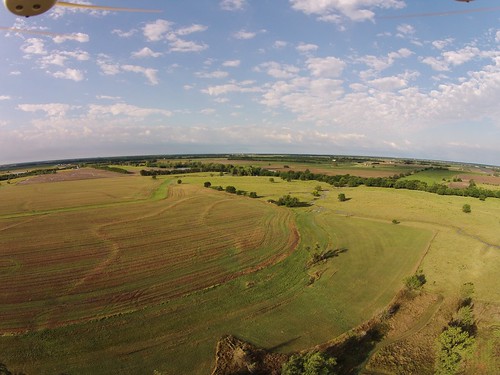
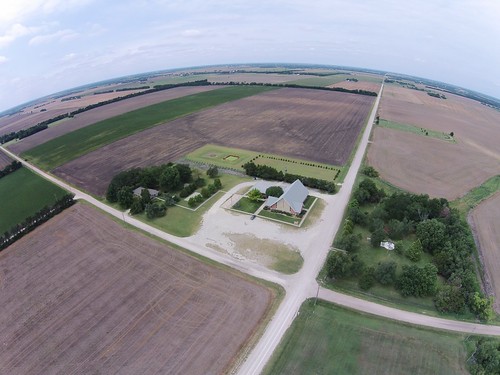
I have become meh about commercial flight over the years. The drive to the airport, the security lines, the lack of scenery at 35,000 feet. And yet, there is much more to flight than that. When I purchased what was essentially a flying camera, I saw a whole new dimension of the earth s amazing beauty. All the photos in this post, in fact, are ones I took. I then got a RC airplane, because flying the quadcopter was really way too easy.
It s wonderful to climb the liquid mountains of the sky.
Behind me and before me is God, and I have no fears.
Helen Keller
Start talking to pilots, and you notice a remarkable thing: this group of people that tends to be cool and logical, methodical and precise, suddenly finds themselves using language almost spiritual. Many have told me that being a pilot brings home how much all humans have in common, the unifying fact of sharing this beautiful planet together. Many volunteer with organizations such as Angel Flight. And having been up in small planes a few times, I start to glimpse this. Flying over my home at 1000 up, or from lake to lake in Seattle with a better view than the Space Needle, seeing places familiar and new, but from a new perspective, drives home again and again the beauty of our world, the sheer goodness of it, and the wonderful color of the humanity that inhabits it.
The air up there in the clouds is very pure and fine, bracing and delicious.
And why shouldn t it be?
It is the same the angels breathe.
Mark Twain
The view from 1000 feet, or 3000, is often so much more spectacular than the view from 35,000 ft as you get on a commercial flight. The flexibility is too; there are airports all over the country that smaller planes can use which the airlines never touch.
Here is one incredible video from a guy that is slightly crazy but does ground-skimming, flying just a few feet off the ground: (try skipping to 9:36)
So what comes next is something I blame slightly on my dad and younger brother. My dad helped get me interested in photography as a child, and that interest has stuck. It s what caused me to get into quadcopters ( a flying camera for less than the price of a nice lens! ). And my younger brother started mentioning airplanes to me last year for some reason, as if he was just trying to get me interested. Eventually, it worked. I started talking to the pilots I know (I know quite a few; there seems to be a substantial overlap between amateur radio and pilots). I started researching planes, flight, and especially safety the most important factor.
And eventually I decided I wanted to be a pilot. I ve been studying feverishly, carrying around textbooks and notebooks in the car, around the house, and even on a plane. There is a lot to learn.
And today, I took my first flight with a flight instructor. Today I actually flew a plane for awhile. Wow! There is nothing quite like that experience. Seeing a part of the world I am familiar with from a new perspective, and then actually controlling this amazing machine I really fail to find the words to describe it. I have put in many hours of study already, and there will be many more studying and flying, but it is absolutely worth it.
Here is one final video about one of the most unique places you can fly to in Kansas.
And a blog with lots of photos of a flight to Beaumont called Horse on the runway .
A few months ago, I wrote a long post about what I called back then the
"Gnocchi experiment".
Time passed and we me and the rest of the Gnocchi team continued to work on
that project, finalizing it.
It's with a great pleasure that we are going to release our first 1.0 version
this month, roughly at the same time that the integrated
OpenStack projects release their Kilo milestone. The
first release candidate numbered 1.0.0rc1
has been released this morning!
The problem to solve
Before I dive into Gnocchi details, it's important to have a good view of what
problems Gnocchi is trying to solve.
Most of the IT infrastructures out there consists of a set of resources. These
resources have properties: some of them are simple attributes whereas others
might be measurable quantities (also known as metrics).
And in this context, the cloud infrastructures make no exception. We talk about
instances, volumes, networks which are all different kind of resources. The
problems that are arising with the cloud trend is the scalability of storing
all this data and being able to request them later, for whatever usage.
What Gnocchi provides is a REST API that allows the user to manipulate
resources (CRUD) and their attributes, while preserving the history of those
resources and their attributes.
Gnocchi is fully documented and the
documentation is available online.
We are the first OpenStack project to require patches to integrate the
documentation. We want to raise the bar, so we took a stand on that. That's
part of our policy, the same way it's part of the OpenStack policy to require
unit tests.
I'm not going to paraphrase the whole Gnocchi documentation, which covers
things like installation (super easy), but I'll guide you through some basics
of the features provided by the REST API. I will show you some example so you
can have a better understanding of what you could leverage using Gnocchi!
Handling metrics
Gnocchi provides a full REST API to manipulate time-series that are called
metrics. You can easily create a metric using a simple HTTP request:
The archive_policy_name parameter defines how the measures that are being
sent are going to be aggregated. You can also define archive policies using the
API and specify what kind of aggregation period and granularity you want. In
that case , the low archive policy keeps 1 hour of data aggregated over 1
second and 1 day of data aggregated to 30 minutes. The functions used for
aggregations are the mathematical functions standard deviation, minimum,
maximum, and even 95th percentile. All of that is obviously customizable and
you can create your own archive policies.
If you don't want to specify the archive policy manually for each metric, you
can also create archive policy rule, that will apply a specific archive
policy based on the metric name, e.g. metrics matching disk.* will be high
resolution metrics so they will use the high archive policy.
It's also worth noting Gnocchi is precise up to the nanosecond and is not tied
to the current time. You can manipulate and inject measures that are years old
and precise to the nanosecond. You can also inject points with old timestamps
(i.e. old compared to the most recent one in the timeseries) with an archive
policy allowing it (see back_window parameter).
It's then possible to send measures to this metric:
These measures are synchronously aggregated and stored into the configured
storage backend. Our most scalable storage drivers for now are either based on
Swift or Ceph which are both
scalable storage objects systems.
It's then possible to retrieve these values:
As older Ceilometer users might notice here, metrics are only storing points
and values, nothing fancy such as metadata anymore.
By default, values eagerly aggregated using mean are returned for all supported
granularities. You can obviously specify a time range or a different
aggregation function using the aggregation, start and stop query
parameter.
Gnocchi also supports doing aggregation across aggregated metrics:
This computes the mean of mean for the metric
65071775-52a8-4d2e-abb3-1377c2fe5c55 and
9ccdd0d6-f56a-4bba-93dc-154980b6e69a starting on 6th October 2014 at 14:34
UTC.
Indexing your resources
Another object and concept that Gnocchi provides is the ability to manipulate
resources. There is a basic type of resource, called generic, which has very
few attributes. You can extend this type to specialize it, and that's what
Gnocchi does by default by providing resource types known for OpenStack such as
instance, volume, network or even image.
The resource is created with the UUID provided by the user. Gnocchi handles the
history of the resource, and that's what the revision_start and
revision_end fields are for. They indicates the lifetime of this revision of
the resource. The ETag and Last-Modified headers are also unique to this
resource revision and can be used in a subsequent request using If-Match or
If-Not-Match header, for example:
Which is useful to synchronize and update any view of the resources you might
have in your application.
You can use the PATCH HTTP method to modify properties of the resource, which
will create a new revision of the resource. The history of the resources are
available via the REST API obviously.
The metrics properties of the resource allow you to link metrics to a
resource. You can link existing metrics or create new ones dynamically:
Haystack, needle? Find!
With such a system, it becomes very easy to index all your resources, meter
them and retrieve this data. What's even more interesting is to query the
system to find and list the resources you are interested in!
You can search for a resource based on any field, for example:
That query will return a list of all resources owned by the user_idbd3a1e52-1c62-44cb-bf04-660bd88cd74d.
You can do fancier queries such as retrieving all the instances started by a
user this month:
And you can even do fancier queries than the fancier ones (still following?).
What if we wanted to retrieve all the instances that were on host foobar the
15th April and who had already 30 minutes of uptime? Let's ask Gnocchi to look
in the history!
I could also mention the fact that you can
search for value in metrics.
One feature that I will very likely include in Gnocchi 1.1 is the ability to
search for resource whose specific metrics matches some value. For example,
having the ability to search for instances whose CPU consumption was over 80%
during a month.
Cherries on the cake
While Gnocchi is well integrated and based on common OpenStack technology,
please do note that it is completely able to function without any other
OpenStack component and is pretty straight-forward to deploy.
Gnocchi also implements a full RBAC system based on the
OpenStack standard oslo.policy
and which allows pretty fine grained control of permissions.
There is also some work ongoing to have HTML rendering when browsing the API
using a Web browser. While still simple, we'd like to have a minimal Web
interface served on top of the API for the same price!
Ceilometer alarm subsystem supports Gnocchi with the Kilo release, meaning you
can use it to trigger actions when a metric value crosses some threshold. And
OpenStack Heat also supports auto-scaling your
instances based on Ceilometer+Gnocchi alarms.
And there are a few more API calls that I didn't talk about here, so don't
hesitate to take a peek at the
full documentation!
Towards Gnocchi 1.1!
Gnocchi is a different beast in the OpenStack community. It is under the
umbrella of the Ceilometer program, but it's one of the first projects that is
not part of the (old) integrated release. Therefore we decided to have a
release schedule not directly linked to the OpenStack and we'll release more
often that the rest of the old OpenStack components probably once every 2
months or the like.
What's coming next is a close integration with Ceilometer (e.g. moving the
dispatcher code from Gnocchi to Ceilometer) and probably more features as we
have more requests from our users. We are also exploring different backends
such as InfluxDB (storage) or MongoDB (indexer).
Stay tuned, and happy hacking!
 A hotfix release for the Finance-YahooQuote Perl module on CPAN is now available. Available Yahoo! Finance decided to change the base URL. My thanks to Nicola Chiapolini who not only noticed but also sent me the one-line patch fixing this:


 Edit to add: These patches on their own won't enable this functionality, they just give us a better set of options. Once they're merged we can look at changing the defaults so people get the benefit of this out of the box.

 Whilst the rest of Debian was very busy actually making the Jessie release, I was trying to prepare the ground to test the armhf installer images.
Cubietruck is fine, it s a nice install and the
 What happens if you remove randomness from
 I'm happy with the progress we've made for debian-installer and
related packages for the Jessie release. We're going to end up with a
release that's better in a number of ways than what we've had
before.
1. Big EFI enhancements
I've already blogged a lot about the stuff I've worked on here, so
I'll just summarise for now some of the improvements we've got over
Wheezy.



 Gnocchi provides a full REST API to manipulate time-series that are called
metrics. You can easily create a metric using a simple HTTP request:


 Another object and concept that Gnocchi provides is the ability to manipulate
resources. There is a basic type of resource, called generic, which has very
few attributes. You can extend this type to specialize it, and that's what
Gnocchi does by default by providing resource types known for OpenStack such as
instance, volume, network or even image.
