Search Results: "tim"

26 March 2016

Gunnar Wolf: Yes! I can confirm that...

I am very very (very very very!) happy to confirm that... This year, and after many years of not being able to, I will cross the Atlantic. To do this, I will take my favorite excuse: Attending DebConf! So, yes, this image I am pasting here is as far as you can imagine from official promotional material. But, having bought my plane tickets, I have to start bragging about it ;-) In case it is of use to others (at least, to people from my general geographic roundabouts), I searched for plane tickets straight from Mexico. I was accepting my lack of luck, facing an over-36-hour trip(!!) and at very high prices. Most routes were Mexico- central_europe -Arab Emirates-South Africa... Great for collecting frequent-flier miles, but terrible for anything else. Of course, requesting a more logical route (say, via Sao Paulo in Brazil) resulted in a price hike to over US$3500. Not good. I found out that Mexico-Argentina tickets for that season were quite agreeable at US$800, so I booked our family vacation to visit the relatives, and will fly from there at US$1400. So, yes, in a 48-hr timespan I will do MEX-GRU-ROS, then (by land) Rosario to Buenos Aires, then AEP-GRU-JNB-CPT. But while I am at DebConf, Regina and the kids will be at home with the grandparents and family and friends. In the end, win-win with just an extra bit of jetlag for me ;-) I *really* expect flights to be saner for USians, Europeans, and those coming from further far away. But we have grown to have many Latin Americans, and I hope we can all meet in CPT for the most intense weeks of the year! See you all in South Africa!

25 March 2016

Daniel Pocock: With Facebook, everybody can betray Jesus

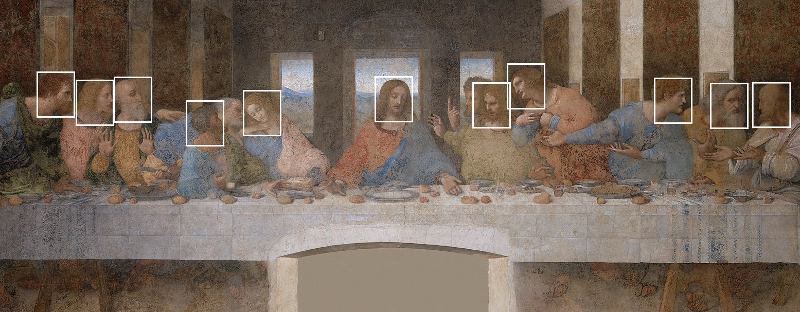
It's Easter time again and many of those who are Christian will be familiar with the story of the Last Supper and the subsequent betrayal of Jesus by his friend Judas. If Jesus was around today and didn't immediately die from a heart attack after hearing about the Bishop of Bling (who spent $500,000 just renovating his closet and flew first class to visit the poor in India), how many more of his disciples would betray him and each other by tagging him in selfies on Facebook? Why do people put the short term indulgence of social media ahead of protecting privacy in the long term? Is this how you treat your friends?

24 March 2016

Michal Čihař: stardicter 0.9

For quite some time I maintain set of scripts to convert some freely available dictionaries to StarDict format. I think it's time to make it easily available to others as well, so it has seen first release on PyPI after the code is almost 10 years old. The project originally started for English - Czech dictionary, but over the time support for more sources have been introduced and you can generate StarDict dictionaries from many other sources. So we now have German - Czech dictionary as well. There is also support for dicts.info which provides many bilingual dictionaries, unfortunately it's license doesn't allow to distribute them.

Filed under: English StarDict 0 comments

Bits from Debian: DebConf16: Call for Proposals

The DebConf Content team is pleased to announce the Call for Proposals for the DebConf16 conference, to be held in Cape Town, South Africa from 2 through 9 July 2016. Submitting an Event In order to submit an event, go to "Submit a talk" on your profile page in the DebConf16 website and describe your proposal. Please note, events are not limited to traditional presentations or informal sessions (BoFs). We welcome submissions of tutorials, performances, art installations, debates, or any other format of event that you think would be beneficial to the Debian community. Please include a short title, suitable for a compact schedule, and an engaging description of the event. You should use the field "Notes" to provide us information such as additional speakers, scheduling restrictions, or any special requirements we should consider for your event. Regular sessions may either be 20 or 45 minutes long (including time for questions), other kinds of sessions (like workshops) could have different durations. Please choose the most suitable duration for your event and explain any special requests. Timeline The first batch of accepted proposals will be announced in April. If you depend on having your proposal accepted in order to attend the conference, please submit it as soon as possible so that it can be considered during this first evaluation period. All proposals must be submitted before Sunday 1 May 2016 to be evaluated for the official schedule. Topics and Tracks Though we invite proposals on any Debian or FLOSS related subject, we have some broad topics on which we encourage people to submit proposals, including: Video Coverage Providing video of sessions amplifies DebConf achievements and is one of the conference goals. Unless speakers opt-out, official events will be streamed live over the Internet to promote remote participation. Recordings will be published later under the DebConf license, as well as presentation slides and papers whenever available. Contact and Thanks to Sponsors DebConf would not be possible without the generous support of all our sponsors, especially our platinum sponsor HPE. DebConf16 is still accepting sponsors; if you are interested, please get in touch! You are welcome to contact the Content Team with any concerns about your event, or with any ideas or questions about DebConf events in general. You can reach us at content@debconf.org. Registration Reminder Registration for DebConf is open. Please log into the DebConf16 website and register from your profile page. To request bursaries (sponsorship) for food, accommodation, or travel, you must be registered by Sunday, 10 April 2016. After this date, registrations will still be accepted in any of the basic, professional, and corporate categories. However, accommodation on the campus will no longer be guaranteed, and requests for sponsorship will no longer be accepted. Even if you are not certain you will be able to attend, we recommend registering now. You can always cancel your registration, before the deadline. We do suggest that attendees begin making travel arrangements as soon as possible, of course. We hope to see you all in Cape Town!

23 March 2016

John Goerzen: Free cars, sunsets, and Kansas

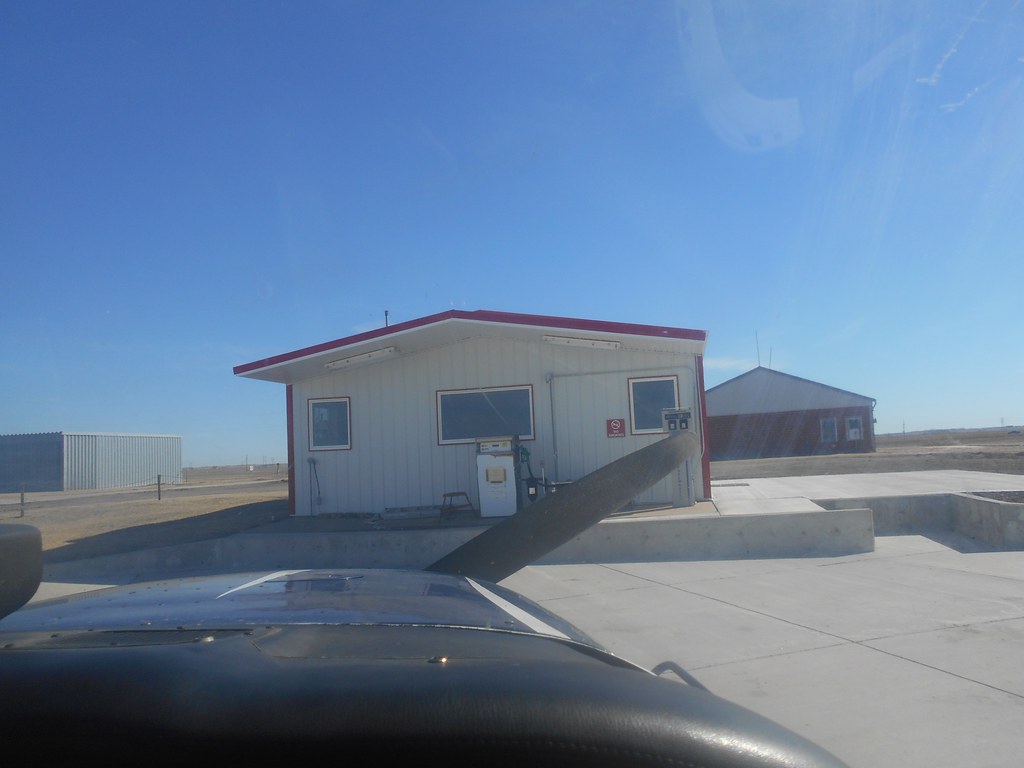
Will you have a car I can borrow? I asked. Sure. No charge. There s a sign telling you where to find the key. It is pretty common for small airports to have a car for a pilot to borrow when flying in. This lets a person go into town for lunch, or visit friends. And it s usually free, with a can to donate a few bucks or a polite request to fill up the tank when you re done. Still, when I had called ahead to ask about flying into the airport in a small town in north-central Kansas, I hadn t expected to be told to just waltz into the place and take the key. But they had no staff at the airport most of the time. So, to me another person from a small town it made perfect sense. Somehow, because of that phone call, this town I had visited once, maybe 25 years ago, seemed instantly familiar. My mom grew up in a small town near there. She wanted me to see where she grew up, to meet some people that meant a lot to her. As it s quite a distance from home, I offered to fly her there. So, Laura, mom, and I climbed into a Cessna one morning for the flight northwest. We touched down at the airport, and I pulled the plane up to the little terminal building. Smith Center, KS airport terminal After I took care of parking the plane, I went to find the car. Except the car was missing. Some other pilot had flown in the same day and was using it, according to the logbook on the desk. I called the number on a sign which rang to the sheriff s office and they confirmed it. According to the logbook, this was only the third time that car had been driven since Thanksgiving. Were we stuck at the airport a few miles out of down? Nope. Mom called the people we were going to meet, a wonderful couple in their upper 80s. They drove out to pick us up. I m rather glad the car was gone, because I had such a great time visiting with them. Norris told me about the days when the state highways were gravel how they d have to re-blade them every few days due to all the traffic. I heard about what happened when the people in that community heard of some folks in Africa in need of car equipment they modified a tractor to fit in a shipping container and shipped it to Africa, along with a lot of books, blankets, supplies, and anything else needed to fill up a huge shipping container. Sounds like something people around here would do. We drove around a couple of the small towns. The town my mom grew up in has seen better days. Its schools closed years ago, the old hotel whose owner gave her piano lessons is condemned, and many houses have been lost. But the town lives on. A new community center was built a few years ago. The grain elevator is expanding. Every time a business on Main Street closes, the grocery store expands a little bit: it s now a grocery store with a little hardware store and a little restaurant mixed in. The mall , as the locals jokingly call it. And, of course, two beautiful small churches still meet every Sunday. Here s the one my mom attended as a child. IMG_7085 We drove past the marker at the geographic center of the contiguous United States. Norris saw some other visitors, rolled down his windows, and treated them and us to an unexpected story of the time thousands of people banded together to completely build a house in a single day, just down the road. Smiles all around. So here I was, nearly 200 miles from home, in an unfamiliar town but one where I could just feel the goodness. After spending a few hours with these people, I felt like they were old friends. As I flew us home, I spotted one of my favorite Kansas sights: a beautiful sunset. From the plane, it almost looks like the land at the horizon turns blue like the ocean, and above it the last hint of sun paints the canvas-sky. In this week of controversy, politics, and reports of violence, it reminds me that we all get the privilege of sharing this beautiful Earth. I didn t ask anybody on that trip about their politics, religion, or opinions on any of the divisive issues of the day. Whether they agree with me on those things or not is irrelevant. I got to spend a day with good-hearted and delightful people, so I flew back with a smile. IMG_7099

Petter Reinholdtsen: Full battery stats collector is now available in Debian

Since this morning, the battery-stats package in Debian include an extended collector that will collect the complete battery history for later processing and graphing. The original collector store the battery level as percentage of last full level, while the new collector also record battery vendor, model, serial number, design full level, last full level and current battery level. This make it possible to predict the lifetime of the battery as well as visualise the energy flow when the battery is charging or discharging. The new tools are available in /usr/share/battery-stats/ in the version 0.5.1 package in unstable. Get the new battery level graph and lifetime prediction by running:
/usr/share/battery-stats/battery-stats-graph /var/log/battery-stats.csv
Or select the 'Battery Level Graph' from your application menu. The flow in/out of the battery can be seen by running (no menu entry yet):
/usr/share/battery-stats/battery-stats-graph-flow
I'm not quite happy with the way the data is visualised, at least when there are few data points. The graphs look a bit better with a few years of data. A while back one important feature I use in the battery stats collector broke in Debian. The scripts in /usr/lib/pm-utils/power.d/ were no longer executed. I suspect it happened when Jessie started using systemd, but I do not know. The issue is reported as bug #818649 against pm-utils. I managed to work around it by adding an udev rule to call the collector script every time the power connector is connected and disconnected. With this fix in place it was finally time to make a new release of the package, and get it into Debian. If you are interested in how your laptop battery is doing, please check out the battery-stats in Debian unstable, or rebuild it on Jessie to get it working on Debian stable. :) The upstream source is available from github. As always, patches are very welcome.

Ingo Juergensmann: Xen randomly crashing server

It's a long story... an oddessey of almost two years... But to start from the beginning: Back then I rented a server at Hetzner until they decided to bill for every IP address you got from them. I got a /26 in the past and so I would have to pay for every IP address of that subnet in addition to the server rent of 79.- EUR/month. That would have meant nearly doubling the monthly costs. So I moved with my server from Hetzner to rrbone Net, which offered me a /26 on a rented Cisco C200 M2 server for a competitve price. After migrating the VMs from Hetzner to rrbone with the same setup that was running just fine at Hetzner I experienced spontaneous reboots of the server, sometimes several times per day and in short time frame. The hosting provider was very, very helpful in debugging this like exchanging the memory, setting up a remote logging service for the CIMC and such. But in the end we found no root cause for this. The CIMC logs showed that the OS was rebooting the machine. Anyway, I then bought my own server and exchanged the Cisco C200 by my own hardware, but the reboots still happen as before. Sometimes the servers runs for weeks, sometimes the server crashes 4-6 times a day, but usually it's like a pattern: when it crashes and reboots, it will do that again within a few hours and after the second reboot the chances are high that the server will run for several days without a reboot - or even weeks. The strange thing is, that there are absolutely no hints in the logs, neither syslog or in the Xen logs, so I assume that's something quite deep in the kernel that causes the reboot. Another hint is, that the reboots fairly often happened, when I used my Squid proxy on one of the VMs to access the net. I'm connecting for example by SSH with portforwarding to one VM, whereas the proxy runs on another VM, which led to network traffic between the VMs. Sometimes the server crashed on the very firsts proxy requests. So, I exchanged Squid by tinyproxy or other proxies, moved the proxy from one VM to that VM I connect to using SSH, because I thought that the inter-VM traffic may cause the machine to reboot. Moving the proxy to another virtual server I rented at another hosting provider to host my secondary nameserver did help a little bit, but with no real hard proof and statistics, just an impression of mine. I moved from xm toolstack to xl toolstack as well, but didn't help either. The reboots are still happening and in the last few days very frequent. Even with the new server I exchanged the memory, used memory mirroring as well, because I thought that it might be a faulty memory module or something, but still rebooting out of the blue. During the last weekend I configured grub to include "noreboot" command line and then got my first proof that somehow the Xen network stack is causing the reboots: This is a screenshot of the IPMI console, so it's not showing the full information of that kernel oops, but as you can see, there are most likely such parts involved like bridge, netif, xenvif and the physical igb NIC. Here's another screenshot of a crash from this night: Slightly different information, but still somehow network involved as you can see in the first line (net_rx_action). So the big question is: is this a bug Xen or with my setup? I'm using xl toolstack, the xl.conf is basically the default, I think:
## Global XL config file ##

# automatically balloon down dom0 when xen doesn't have enough free
# memory to create a domain
autoballoon=0

# full path of the lockfile used by xl during domain creation
#lockfile="/var/lock/xl"

# default vif script
#vif.default.script="vif-bridge"
With this the default network scripts of the distribution (i.e. Debian stable) should be used. The network setup consists of two brdiges:
auto xenbr0
iface xenbr0 inet static
address 31.172.31.193
netmask 255.255.255.192
gateway 31.172.31.254
bridge_ports eth0
pre-up brctl addbr xenbr0 auto xenbr1
iface xenbr1 inet static
address 192.168.254.254
netmask 255.255.255.0
pre-up brctl addbr xenbr1
There are some more lines to that config like setting up some iptables rules with up commands and such. But as you can see my eth0 NIC is part of the "main" xen bridge with all the IP addresses that are reachable from the outside. The second bridge is used for internal networking like database connections and such. I would rather like to use a netconsole to capture the full debug output in case of a new crash, but unfortunately this only works until the bridge is brought up and in place:
[ 0.000000] Command line: placeholder root=UUID=c3....22 ro debug ignore_loglevel loglevel=7 netconsole=port@31.172.31.193/eth0,514@5.45.x.y/e0:ac:f1:4c:y:x
[ 32.565624] netpoll: netconsole: local port $port
[ 32.565683] netpoll: netconsole: local IPv4 address 31.172.31.193
[ 32.565742] netpoll: netconsole: interface 'eth0'
[ 32.565799] netpoll: netconsole: remote port 514
[ 32.565855] netpoll: netconsole: remote IPv4 address 5.45.x.y
[ 32.565914] netpoll: netconsole: remote ethernet address e0:ac:f1:4c:y:x
[ 32.565982] netpoll: netconsole: device eth0 not up yet, forcing it
[ 36.126294] netconsole: network logging started
[ 49.802600] netconsole: network logging stopped on interface eth0 as it is joining a master device
So, the first question is: how to use netconsole with an interface that is used on a bridge? The second question is: is the setup with two bridges with Xen ok? I've been using this setup for years now and it worked fairly well on the Hetzner server as well, although I used there xm toolstack with a mix of bridge and routed setup, because Hetzner didn't like to see the MAC addresses of the other VMs on the switch and shut the port down if that happens.
Kategorie:

Daniel Pocock: GSoC 2016 opportunities for Voice, Video and Chat Communication

I've advertised a GSoC project under Debian for improving voice, video and chat communication with free software. Replacing Skype, Viber and WhatsApp is a big task, however, it is quite achievable by breaking it down into small chunks of work. I've been cataloguing many of the key improvements needed to make Free RTC products work together. Many of these chunks are within the scope of a GSoC project. If you can refer any students, if you would like to help as a mentor or if you are a student, please come and introduce yourself on the FreeRTC mailing list. If additional mentors volunteer, there is a good chance we can have more than one student funded to work on this topic. The deadline is Friday, 25 March 2016 The student application deadline is 25 March 2016 19:00 UTC. This is a hard deadline for students. Mentors can still join after the deadline, during the phase where student applications are evaluated. The Google site can be very busy in the hours before the deadline so it is recommended to try and complete the application at least 8 hours before the final deadline. Action items for students:
  • Register yourself on the Google Site and submit an application. You can submit applications to multiple organizations. For example, if you wish to focus on the DruCall module for Drupal, you can apply to both Debian and Drupal.
  • Join the FreeRTC mailing list and send a message introducing yourself. Tell us which topics you are interested in, which programming languages your are most confident with and which organizations you applied to through the Google site.
  • Create an application wiki page on the Debian wiki. You are permitted to edit the page after the 25 March deadline, so if you are applying at the last minute, just create a basic list of things you will work on and expand it over the following 2-3 days
Introducing yourself and making a strong application When completing the application form for Google, the wiki page and writing the email to introduce yourself, consider including the following details:
  • Link to any public profile you have on sites like Github or bug trackers
  • Tell us about your programming language skills, list the top three programming languages you are comfortable with and tell us how many years you have used each
  • other skills you have or courses you have completed
  • any talks you have given at conferences
  • any papers you have had published
  • any conferences you have attended or would like to attend
  • where you are located and where you study, including timezone
  • any work experience you already have
  • any courses, exams or employment commitments you have between 22 May and 24 August
  • anybody from your local free software community or university who may be willing to help as an additional mentor
Further reading Please also see my other project idea, for ham radio / SDR projects and my blog Want to be selected for Google Summer of Code 2016?. If you are not selected in 2016 We try to make contact with all students who apply and give some feedback, in particular, we will try to let you know what to do to increase your chances of selection in the next year, 2017. Applying for GSoC and being interviewed by mentors is a great way to practice for applying for other internships and jobs.

22 March 2016

Michal Čihař: Weekly phpMyAdmin contributions 2016-W11

Last week was a bit less working for me as I had few days off. The 4.6.0 is about to be released in the time as this blog post will be published, so the focus was obviously on fixing bugs. Most of annoying issues I've fixed were caused by our SQL Parser which we need to generate some export statements and which didn't properly understand some more complex syntax. Most of the export issues are now fixed, but there are still situations where it doesn't parse the query right, usually this is true for nested SELECT statements or some more complex constructs (CASE). Anyway it's being improved and works better with every release. Handled issues:

Filed under: English phpMyAdmin 0 comments

Ben Hutchings: I'm super, thanks for asking!

Some of you (but though probably not many) will know that I've suffered from depression at times. It has made it very difficult for me to do my job, to keep my home in order, even to have real conversations. Many important tasks seemed to require more energy than I had, and every setback left me feeling hopeless. I have sought treatment on several occasions, with very limited results. Certainly I would get better eventually, but it was hard to tell whether this had anything to do with the medication or therapy I received. And even while I felt better, I still didn't feel particularly happy or hopeful except when going to my favourite social events like DebConf. As I was recovering from the 'flu a weeks ago, I realised that I was feeling enthusiastic and energetic for no particular reason. Obviously I was recovering from physical illness, but that was brief. I had also just started a new project at work, but it isn't that exciting (at this stage) and I'm already aware of plenty of problems with it. So nothing external seemed to have changed to make me feel better, and yet my mood was so high that I worried that my illness could have changed to bipolar disorder and that I was entering a manic phase. Thankfully, I'm not behaving manically. I have been doing a lot more shopping than usual, but almost the first purchase was a whiteboard to maintain the to-do list that I had been keeping rather unreliably in my head, and mostly I've been buying things off that list - that I've intended to get for months or years. It's just been so long since I could feel generally positive and optimistic about my life - outside of any special event - that I didn't immediately recognise this state of mind as normality. It's now been two three weeks since my recovery, and I still feel so much better: As I feel better in myself I also find myself less self-centred and more able to focus on other people's needs, particularly my wife Nattie. Frankly I've been an asshole pretty often while I was depressed, so I apologise to those who've been the brunt of that. I hope you'll find me more pleasant to deal with from now on. There's lots more I could write, but I'll end this entry now and maybe say more at a later date.

21 March 2016

Lunar: Reproducible builds: week 47 in Stretch cycle

What happened in the reproducible builds effort between March 13th and March 19th 2016:

Toolchain fixes
  • Petter Reinholdtsen uploaded naturaldocs/1.51-1.1 which makes the output reproducible. Original patch by Chris Lamb.
  • Damyan Ivanov uploaded libpdf-api2-perl/2.025-2 which will make internal font ID reproducible.
  • Christian Hofstaedtler uploaded ruby2.3/2.3.0-5 which sets gzip embedded mtime field to fixed value for rdoc-generated compressed javascript data.

Packages fixed The following packages have become reproducible due to changes in their build dependencies: diction, doublecmd, ruby-hiredis, vdr-plugin-epgsearch. The following packages became reproducible after getting fixed: Some uploads fixed some reproducibility issues, but not all of them: Patches submitted which have not made their way to the archive yet:
  • #818128 on nethack by Reiner Herrmann: implement support for SOURCE_DATE_EPOCH, set LC_ALL to C, and ensure deterministic build order when running parallel builds.
  • #818111 on debian-keyring by Satyam Zode: fix the order of files in md5sums.
  • #818067 on ncurses by Niels Thykier: strip trailing whitespaces introduced when using dash as system shell.
  • #818230 on aircrack-ng by Reiner Herrmann: build assembly code as a separate .o file.
  • #818419 on mutt by Daniel Shahaf: use C locale when listing files to be put in README.Patches.
  • #818430 on ruby-coveralls by Dhole: ensure UTC is used as the timezone when generating the documentation.
  • #818686 on littlewizard by Reiner Herrmann: use the C locale in the script for iterating over the files.
  • #818704 on strigi by Reiner Herrmann: sort keys when traversing hashes in makecode.pl.

Package reviews 44 reviews have been removed, 40 added and 5 updated in the previous week. Chris Lamb has reported 16 FTBFS.

Russ Allbery: Term::ANSIColor 4.05

This Perl (core) module provides a variety of functions and tools for manipulating ANSI color and text style escape sequences. The primary change in this release is a few internal tweaks to reduce memory usage, which apparently had ballooned by 70% since Perl 5.14. Unfortunately, that also meant dropping support for non-ASCII characters in color aliases, which I think previously would have theoretically worked (not that it was ever documented or tested). I have mixed feelings, but since the memory usage was reported as a bug (and this is the sort of module that one might legitimately want to use in some space-constrainted situations as part of core), and no one ever mentioned non-ASCII color aliases, I decided to apply this patch. Yell at me if this broke something. I also cleaned up the metadata management following all the work that others helped me with for podlators. You can get the latest release from the Term::ANSIColor distribution page.

20 March 2016

Sean Whitton: Spring Break in San Francisco

Last night I got back from spending around 5 days in the Bay Area for Spring Break. I stayed in a hostel in downtown SF for three nights and then I stayed with a friend who is doing a PhD at Stanford. When initially planning this trip my aim was just to visit somewhere interesting on the west coast of the continental United States. I chose the Bay Area because I wanted to get my PGP key signed by some Debian Developers and that area has a high concentration of DDs, and because I wanted to see my friend at Stanford. But in the end I liked San Francisco a lot more than expected to and am very glad that I had an opportunity to visit. The first thing that I liked was how easy it seemed to be to find people interested in the same kind of tech stuff that I am. I spent my first afternoon in the city exploring the famous Mission district, and at one point while sitting in the original Philz Coffee I found that the person sitting next to me was running Debian on her laptop and blogs about data privacy. We had an discussion about how viable OpenPGP is as a component of a technically unsophisticated user s attempts to stay safe online. Later that same day while riding the subway train, someone next to me fired up Emacs on their laptop. And over the course of my trip I met five Debian Developers doing all sorts of different kinds of work both in and outside of Debian, and some Debian users including one of Stanford s UNIX sysadmins. This is a far cry from my day-to-day life down in the Sonoran Desert where new releases of iOS are all anyone seems to be interested in. Perhaps I should have expected this before my trip, but I think I had assumed that most of the work being done in San Francisco was writing web apps, so I was pleased to find people working on the same kind of things that I am currently putting time into. And in saying the above, I don t mean to demean the interests of the people around me in Arizona for a moment (nor those writing web apps; I d like to learn how to write good ones at some point). I m very grateful to be able to discuss my philosophical interests with the other graduate students. It s just that I miss being able to discuss tech stuff. I guess you can t have everything you want! One particular encouraging meeting I had was with a Debian Developer employed by Google and working on Git. While my maths background sets me up with the right thinking skills to write programs, I don t have knowledge typically gained from an education in computer science that enables one to work on the most interesting software. In particular, low-level programming in C is something that I had thought it wouldn t be possible for me to get started with. So it was encouraging to meet the DD working on Git at Google because his situation was similar: his undergraduate background is in maths and he was able to learn how to code in C by himself and is now working on a exciting project at a company that it is hard to get hired by. I don t mean that doing exactly what he s doing is something that I aiming for, just that it is very encouraging to know the field is more open to me than I had thought. I was also reminded of how fortunate I am to have the Internet to learn from and projects like Debian to get involved with. Moving on from tech, I enjoyed the streets of San Francisco, and the Stanford campus. San Francisco is fantastically multicultural though with clear class and wealth divisions. A very few minutes walk from the Twitter headquarters with its tech bros , as the maths PhD students I met at Stanford call them, are legions of the un- and barely-employed passing their time on the concrete. I enjoyed riding one of the old cable cars through the aesthetically revealing and stark combination of a west coast grid system on some very steep hills. I was fortunate to be able to walk across the Golden Gate Bridge on a perfectly clear and mist-free day. Meeting people involved with Debian and meeting my old friend at Stanford had me reflecting on and questioning my life in the desert even more than usual. I try to remind myself that there is an end date in sight and I will regret spending my time here just thinking about leaving. I sometimes worry that I could easily find myself moving to the big city London, San Francisco or elsewhere and letting myself be carried by the imagined self-importance of that, sidelining and procrastinating things that I should prize more highly. I should remember that the world of writing software in big cities isn t going away and my time in the desert is an opportunity to prepare myself better for that, building my resistance to being swept away by the tides of fashion.

Norbert Preining: Debian/TeX Live 2015.20160320-1 and biber 2.4-1

About one month has passed and here is the usual updated of TeX Live packages for Debian, this time also with an update to biber to accompany the updated version of biblatex. This will be (probably) the last upload before TeX Live 2015 gets frozen in preparation for 2016. After the freeze there will be some time of piece, and updates will got to experimental with the new binaries. Debian - TeX Live 2015 From the list of updated and new packages I want to mention that biblatex has been updated together with biber, and most biblatex styles should already by updated to work with the new biblatex, too. From the new packages one has in particular caught my attention: prooftrees. As I am writing a lot of proofs in my research, I am happy to see new package dealing with this, especially because this package is built on top of the excellent package forest (which in turn uses tikz), allowing for very compact proofs. Updated packages aastex, abntex2, academicons, acro, amsmath, animate, archaeologie, asciilist, babel, babel-french, babel-friulan, babel-russian, babel-spanish, beamertheme-metropolis, bibexport, biblatex, biblatex-apa, biblatex-bookinarticle, biblatex-caspervector, biblatex-chem, biblatex-fiwi, biblatex-gost, biblatex-manuscripts-philology, biblatex-nature, biblatex-philosophy, biblatex-phys, biblatex-publist, biblatex-realauthor, biblatex-science, bxjscls, cabin, caption, cbfonts-fd, celtic, chemmacros, computational-complexity, crimson, csplain, datetime2-english, diagbox, disser, droit-fr, dtk, dvips, ejpecp, emisa, factura, fibeamer, fithesis, forest, gost, hobby, hyperxmp, inconsolata, lualatex-math, mandi, mcf2graph, media9, nameauth, ocgx2, parades, pdftex, pkuthss, poetrytex, ptex, reledmac, roundrect, showhyphens, siunitx, spath3, splitindex, suftesi, tcolorbox, tetex, tex4ht, texinfo, texlive-scripts, thuthesis, titlesec, turabian-formatting, unicode-data, uptex, velthuis, venndiagram, xassoccnt, xint, xsavebox. New packages beamercolorthemeowl, bibletext, cochineal, formation-latex-ul, gobble, keyvaltable, lroundrect, luatex85, mathpartir, miama, multidef, parades, pgfornament, prooftrees, visualpstricks, visualtikz, xsavebox, ycbook. Enjoy.

Gunnar Wolf: Busy with the worthy things...

My online activity, in most if not all of the projects I most care about, has dropped to a lifelong minimum. But that is not necessarily a bad thing Yes, I want to be more involved again in everything. And yes, I am in a permanent crisis of lack of time (and/or sleep). I didn't even remember to blog about this on time... but never mind... A little over a year after the single, most important moment I have lived, we are not only enjoying, but deeply understanding the true meaning of life.

18 March 2016

Enrico Zini: Adjusting with Moore's Law

In my last post I used zxcvbn to check the strength of passwords, and it gave estimates in hundreds of centuries. However, there's Moore's law. If we assume that every 18 months the effective computing power will double...
#!/usr/bin/python3
import sys
years = int(sys.argv[1])
# How many 18 months intervals we spent
count = 0
# How many original-computation-time-months we compute each 18 months interval
step = 18
# How many original-computation-time-months we computed so far
total = 0
# How many original-computation-time-months we need
target = years * 12
# Iterate each 18 months interval
while True:
    count += 1
    total += step
    if total > target: break
    step *= 2
print(" :.2f  years needed".format(count / 12 * 18))
...then something that is now estimated in 152 centures is likely to take, well:
$ ./actual_years 15200
9.33 years needed
Update Fixed algorithm (thanks John MacGregor). Now the estimate is a little longer, but still:
$ ./actual_years 15200
21.00 years needed
ukasz Stelmach proposed an analytic solution:
There are two cars (remember phisics in primary school?). They both have the same speed V0. It is going to take "54.697 centuries" for car A to travel the desired distance at constant speed. Car B is accelerating, its speed is 2^(t/18m)*V0 (18 [m]onths). s = V0 * T (car A, T is 54.697 centuries) s = 2^(t/18)*V0 dt (car B, we're looking for t) It's been some time but as far as I can tell it is s = V0 * 2^(t/18) * 1/((1/18) * ln 2) 2^(t/18) * 1/((1/18) * ln 2) = 54.697 * 100 * 12 [months] 2^(t/18) = 2527.54 t = 18*log2(2527.54) t = 16.96 years (still reasonable strength).

Daniel Pocock: FOSSASIA 2016 at the Science Centre Singapore

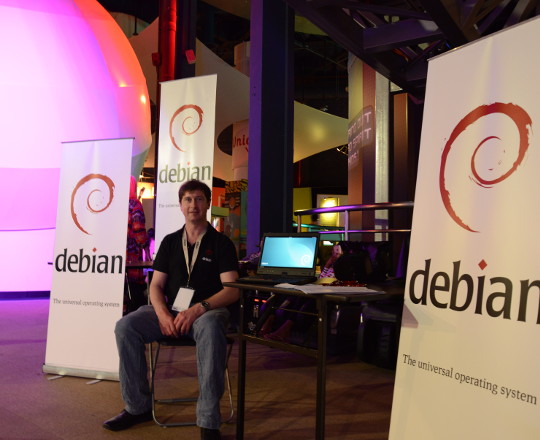
FOSSASIA 2016 is now under way. The Debian, Red Hat and Ring (Savoir-Faire Linux) teams are situated beside each other in the exhibit area. Thanks to Hong Phuc from the FOSSASIA team for helping us produce these new Debian banners Google Summer of Code 2016 If you are keen to participate in GSoC 2016, please feel free to come and discuss it with me in person or attend any of my sessions at FOSSASIA this weekend. Please also see my blog about getting selected for GSoC, attending a community event like FOSSASIA is a great way to distinguish yourself from the many applications we receive each year. (Debian Outreach / GSoC information). Real-time communications, WebRTC and mobile VoIP at FOSSASIA There are a number of events involving real-time communications technology throughout FOSSASIA 2016, please come and join us at these:
Event Time
Hands-on workshop with WebRTC and mobile VoIP (1 hr) Saturday, 14:30
Talk: Free Communications with Free Software (20 min) Saturday, 17:40
Ring: a decentralized and secure communication platform Sunday, 13:00
and the full program details, including locations, are in the schedule.

17 March 2016

Enrico Zini: Enhanced xkcd password generator

gpw and xkcdpass have entered testing. How about putting them together?
#!/usr/bin/python3
import subprocess
import random
import re
re_spaces = re.compile(r"\s+")
def get_words(cmd):
    out = subprocess.check_output(cmd, universal_newlines=True)
    return (x for x in re_spaces.split(out) if x)
words = set()
words.update(get_words(["xkcdpass", "-c", "10"]))
for l in range(6, 9):
    words.update(get_words(["gpw", "10", str(l)]))
for i in range(7):
    print(" ".join(random.sample(words, 5)))
Let's check the results:
#!/usr/bin/python
from __future__ import print_function
from zxcvbn import password_strength
import sys
for line in sys.stdin:
    pw = line.strip()
    info = password_strength(pw)
    print(" pw :  crack_time_display   entropy ".format(pw=pw, **info))
$ xkcdpass -n 5 -c 7   ./checkpass
moribund fasten cologne enamor by-and-by: centuries 132.586
woolen leptonic pogrom roster Serra: centuries 127.145
shorthand Piman suctional elution unholy: centuries 119.809
Blackwell mauvish covey selenium finished: centuries 112.936
asthma bloat crenulate clean-cut cytoplasm: centuries 150.181
agreeable refined racism Captain Cyrenaic: centuries 104.28
Bothnia stagnant atomist these revise: centuries 97.91
$ gpw 7   ./checkpass
ncenspri: 11.0 days 33.903
orsterma: instant 19.54
entsssel: 14.0 hours 29.788
tempispi: instant 20.058
nidgersi: 14.0 hours 29.725
oligalin: 51.0 minutes 25.824
iseartio: 10.0 minutes 23.207
$ ./metapass   ./checkpass
herups icirop overdub oldster cingsape: centuries 147.265
mujahidin usufruct rition porky prignam: centuries 153.684
cannula irenics tableaux ntshed calcific: centuries 152.196
stopgap stale orthente Amazonia sharer: centuries 113.474
edudives mmingsso eremab prignam tableaux: centuries 147.354
tingei heroism Nathaniel cannula molasses: centuries 103.007
Torres blood lewdness prignam eremab: centuries 118.475
The strength, according to zxcvbn, seems only marginally better, and it's a wonderful way to grow a vocabulary of nonexisting words that can be dropped into cheap talk conversation to confuse the innocents.

Patrick Matth i: Debian Jessie 8.3: Short howto for Corosync+Pacemaker Active/Passive Cluster with two nodes and DRBD/LVM

Hello, since I had to change my old heartbeat v1 setup to an more modern Corosync+Pacemaker setup, because heartbeat v1 does not support systemd (it first looks like it is working, but it fails on service start/stops), I want to share a simple setup: First you have to activate the jessie-backports repository, because the cluster stack is not available/broken in Debian Jessie. Install the required packages with:
apt-get install -t jessie-backports libqb0 fence-agents pacemaker corosync pacemaker-cli-utils crmsh drbd-utils
After that configure your DRBD and LVM (VG+LV) on it (there are enough tutorials for it). Then deploy this configuration to /etc/corosync/corosync.conf:
totem
version: 2
token: 3000
token_retransmits_before_loss_const: 10
clear_node_high_bit: yes
crypto_cipher: none
crypto_hash: none
transport: udpu
interface
ringnumber: 0
bindnetaddr: 192.168.99.0

logging
to_logfile: yes
logfile: /var/log/corosync/corosync.log
debug: off
timestamp: on
logger_subsys
subsys: QUORUM
debug: off

quorum
provider: corosync_votequorum
two_node: 1
wait_for_all: 1
nodelist
node
ring0_addr: node1-1

node
ring0_addr: node1-2

Both nodes require a passwordless keypair, which is copied to the another node, so that you can ssh from one to each other. Then you can start with crm configure:
property stonith-enabled=no
property no-quorum-policy=ignore
property default-resource-stickiness=100 primitive DRBD_r0 ocf:linbit:drbd params drbd_resource= r0 op start interval= 0 timeout= 240 \
op stop interval= 0 timeout= 100 \
op monitor role=Master interval=59s timeout=30s \
op monitor role=Slave interval=60s timeout=30s
primitive LVM_r0 ocf:heartbeat:LVM params volgrpname= data1 op monitor interval= 30s
primitive SRV_MOUNT_1 ocf:heartbeat:Filesystem params device= /dev/mapper/data1-lv1 directory= /srv/storage fstype= ext4 options= noatime,nodiratime,nobarrier op monitor interval= 40s primitive IP-rsc ocf:heartbeat:IPaddr2 params ip= 123.123.123.123 nic= eth0 cidr_netmask= 24 meta migration-threshold=2 op monitor interval=20 timeout=60 on-fail=restart
primitive IPInt-rsc ocf:heartbeat:IPaddr2 params ip= 192.168.99.4 nic= eth1 cidr_netmask= 24 meta migration-threshold=2 op monitor interval=20 timeout=60 on-fail=restart primitive MariaDB-rsc lsb:mysql meta migration-threshold=2 op monitor interval=20 timeout=60 on-fail=restart
primitive Redis-rsc lsb:redis-server meta migration-threshold=2 op monitor interval=20 timeout=60 on-fail=restart
primitive Memcached-rsc lsb:memcached meta migration-threshold=2 op monitor interval=20 timeout=60 on-fail=restart
primitive PHPFPM-rsc lsb:php5-fpm meta migration-threshold=2 op monitor interval=20 timeout=60 on-fail=restart
primitive Apache2-rsc lsb:apache2 meta migration-threshold=2 op monitor interval=20 timeout=60 on-fail=restart
primitive Nginx-rsc lsb:nginx meta migration-threshold=2 op monitor interval=20 timeout=60 on-fail=restart group APCLUSTER LVM_r0 SRV_MOUNT_1 IP-rsc IPInt-rsc MariaDB-rsc Redis-rsc Memcached-rsc PHPFPM-rsc Apache2-rsc Nginx-rsc
ms ms_DRBD_APCLUSTER DRBD_r0 meta master-max= 1 master-node-max= 1 clone-max= 2 clone-node-max= 1 notify= true colocation APCLUSTER_on_DRBD_r0 inf: APCLUSTER ms_DRBD_APCLUSTER:Master
order APCLUSTER_after_DRBD_r0 inf: ms_DRBD_APCLUSTER:promote APCLUSTER:start commit
The last (bold marked) lines made me some headache. In short they define that the DRBD device on the active node has to be the primary one and that it is required to start the APCLUSTER on the host, since the LVM, filesystem and services require to access its data. Just a short copy paste howto for an simple use case with not so much deep explanaitions..

16 March 2016

Enrico Zini: Postprocessing files saved by vim

Processing vim buffers through an external program on save, is a technique that is probably in use, and that I have not found documented anywhere, so here we go. Skip to the details for the entertaining example. I wanted to integrate egt with TaskWarrior so that every time I am editing an egt project file in vim, if I write a line in a certain way then a new taskwarrior task is created. Also, I have never written a vim plugin, and I don't want to dive into another rabbit hole just yet. Lynoure brought to my attention that taskwiki processes things when the file is saved, so I thought that I can probably get a long way by piping the file from vim into egt and reading it back before saving. I created a new egt annotate command that reads a project file, tweaks it, and then prints it out; I opened a project file in vim; I typed :%!egt annotate %:p --stdin and saw that it could be done. I find the result quite fun: I type 15 March: 18:00-21:00 in a log in egt, save the file, and it becomes 15 March: 18:00-21:00 3h. I do something in TaskWarrior, save the file in egt, and the lines that are TaskWarrior tasks update with the new task states. Details Here's a step by step example of how to hook into vim in this way. First thing, create a filter script that processes text files in some way. Let's call this /usr/local/bin/pyvimshell:
#!/usr/bin/python3
import sys
import subprocess
for line in sys.stdin:
    print(line.rstrip(), file=sys.stdout)
line = line.strip()
if line == "$":
    pass
elif line.startswith("$"):
    out = subprocess.check_output(["sh", "-c", line[1:].strip()], universal_newlines=True)
    sys.stdout.write(out)
    if not out.endswith("\n"):
        sys.stdout.write("\n")
    print("$ ", file=sys.stdout)
Then let's create a new filetype in ~/.vim/filetype.vim for our special magic text files:
if exists("did_load_filetypes")
  finish
endif
augroup filetypedetect
  au! BufNewFile,BufRead *.term setf SillyShell
augroup END
If you create a file example.term, open it in vim and type :set ft it should say SillyShell. Finally, the hook in ~/.vim/after/ftplugin/SillyShell.vim:
function! SillyShellRun()
    :%!/home/enrico/dev/egt/pyvimshell
    :$
endfunction
autocmd BufWritePre,FileWritePre <buffer> :silent call SillyShellRun()
Now you can create a file example.term, open it in vim, type $ ls, save it, and suddenly you have a terminal with infinite scrollback. For egt, I actually want to preserve my cursor position across saves, and egt also needs to know the path to the project file, so here is the egt version of the hook:
function! EgtAnnotate()
    let l:cur_pos = getpos(".")
    :%!egt annotate --stdin %:p
    call setpos(".", l:cur_pos)
endfunction
autocmd BufWritePre,FileWritePre <buffer> :silent call EgtAnnotate()
I find this adorably dangerous. Have fun.

Next.

Previous.