Search Results: "ron"

16 October 2012

Sune Vuorela: Kontact / PIM sprinting

So, a couple of days ago, I came home tired after a intense weekend of learning Akonadi and hacking on KDEPIM. At each meal, we attended 12 people, but it wasn t the same people every time. And a couple of people participated remotely. Several people, including me, got their feet wet in kdepim & akonadi code. Talks about the future with Qt 6 and Qt 7 and Akonadi 3 were also held in the corners. Hopefully, others will tell more closely about what they did, including fixing kmail memory usage to not grow until all headers of all emails was in memory and improving the address completion job to help filling in to/cc/bcc fields. Personally, I started off several times with the same issue. Not doing several synchronous calls from KMail to Akonadi during message writing and sending. On my way, I cleaned up some code and started over a couple of times. And the code is still a work in progress on my laptop. But the most important synchronous call is in that WIP patch now actually asynchronous \o/. There is still work to do on that area though and I hope to get around polishing it and finishing it this month somehow. I currently have function names like second_half_of_generateCryptoMessages and this_function_should_be_renamed . And next up will Andras Mantia hopefully blog about his accomplishments. And poke some other person for a blog post. Oh. and if you like developers taking a weekend or so out of their busy schedule to meet up for hacking, please consider supporting KDE by Joining the game

David Welton: The Dreaded Google Lockdown

It's one of those things that you read about, but are never really sure about: you think "maybe he was doing something fishy, and isn't tellling it straight in the public account of the incident". So I'll try to stick to "just the facts". A few weeks ago, I dug up some old book reviews I'd done, and posted to Facebook, and opened a site here: http://davids-book-reviews.blogspot.com/ as a way of collecting them. Naturally, I also added Amazon referral links, because, hey, it helps feed my reading habit! Last month I got enough to buy two whole Kindle books, so we're not exactly talking about "get rich quick" territory here. We're not even talking about anything remotely close to my day job, for that matter. But hey, if I can get a little bit extra to spend on books, it's nice. The reviews were basically quick notes on books I read. Nothing that I or the rest of humanity can't get along without, but I felt like writing up a little something for myself and people I know on the internet - maybe it'll help someone else find an interesting book to read. Several days later, I believe on October 8th, I woke up to find my phone was 'not signed in to Google', and, after repeated attempts, wouldn't sign in. Same thing with my Nexus 7. Logging in to my computer, in something of a cold sweat at this point, I find I can't get into Gmail or anything else, either. Luckily, on the computer, Google's system did redirect me to a page where they mentioned suspicious activity, and gave me the chance to reactivate things by sending an SMS to my phone. This did work quickly, and did a little bit to alleviate some of my stress. I understand that locking things down quickly is probably to my benefit as well as theirs in the event of an actual security breach of someone's account: it keeps the attacker from doing any more damage. However, it was sure a bad way to start a Monday morning. However, the actual 'blog' (sorry, I hate the word!) was still blocked. It too has a form to fill out to prove that you're human. Although: as a computer guy, you'd think that with all the clever people at Google, they would be able to tell from my access patterns to the site, browser footprint, IP addresses and so forth, that...well, I am me. In any event though, they promised to review the blog within two days. So, I waited patiently. A week later, still nothing. Then, the next day, I went back to check on the status, and they had reset the review request: it no longer said anything about October 8th, when I had originally made the reinstatement request. So I filled in their form again, asking to have my blog back. That was yesterday, we'll see what happens next. As far as I can tell, I did not violate their actual terms of conditions, which say nothing about referral links: http://www.blogger.com/content.g Since the people at Google are loth to speak with their users directly, it seems as if one of the best ways of getting support is to complain loudly and publicly about this kind of shennanigan. And to forestall the somewhat inevitable comments on anything related to Google: 1) Yes, I know I signed an agreement where they say they can do whatever the hell they want and I can f**k off if I don't like it. Try and do anything on line with a major company and not get a contract like that, or for even more entertainment value, try and negotiate the contract with t he company. Good luck. If you don't say yes, you're pretty much on your own; there doesn't seem to be much of a market for "more humane terms and conditions" out there. 2) I know, I know, relying on the Google beast is a great way to set yourself up for a big fall if anything ever goes wrong, because it's impossible to appeal, or pretty much even to talk with a human. But with a limited amount of time in my life, to date, Google has been a pretty good deal. I suppose it's something of a "black swan" situation: everything seems fine until one day WHACK, and Google pulls the carpet from under your legs. Conclusions? Well, I hope someone out there can help me recover my content. I wrote it myself, and I would like to save my book reviews somewhere. What alternatives are there to the Google colossus? Not too many that I can see that are anywhere at all as convenient. Edit: 2012-10-17: I don't know what did it, but they have reinstated the site. Strange and disconcerting, but I guess things are ok for the time being. Thanks to whoever it was at Google that finally had a look.

Eddy Petrișor: Zenyth Pharmaceuticals cannot face(book) critics, so they cleanse them

A few days ago I wrote an article about the lawsuit the producers of ColonHelp are trying against Wordpress in the attempt to silence a blogger who wrote some unfavourable and science-based articles on his blog.

Meanwhile Petter Reinholdtsen (who seems to be a fellow skeptic, hi!) sent further this information via his blog, but on another front, I found out the German skeptics tried to contact Zenyth Phamaceuticals on Facebook and asked them why did they use lawyers for threats against critics, instead of using words and thorough scientific studies to talk to the critics.


The people at Zenyth Pharmaceuticals probably wanted to show they do not only use lawyers, but they can be very proficient at using the 'Delete' function of Facebook, so they did just that, it seems.

This really motivates me to go ahead and translate the article Zenyth's money didn't translate, the one that shows their entire case is baseless.

15 October 2012

Eddy Petrișor: HOWTO: sudo + cowbuilder (+git-buildpackage)

In case you tried to use git-buildpackage and wanted to use cowbuilder as a builder, you might have ran into the error

sudo: sorry, you are not allowed to preserve the environment

This is due to a change in sudo default configuration in version 1.7.4p4-2 (I know, is true since 2010) which doesn't allow the execution of commands via sudo using the parameter '-E' which means 'setenv'.

The news item even explicitly states pbuilder can be affected by this because it wants to port over to the pbuilder environment the HOME environment variable and suggests using

Defaults env_keep += HOME

But adding such a line to your /etc/sudoers.d/01_pbuilders file (/etc/sudoers is recommended to be touched only by the package) will do the same for all commands and users ran via sudo, which is, according to my preferences, too permissive.

The irony is that running git-buildpackage --git-pbuilder will invoke sudo -E cowbuilder so the env_keep suggested fix will not work because for -E to be allowed, setenv needs to be set in sudoers. This would defeat the purpose of env_reset, if done for all commands, but we can do a better job if we allow this kind of change only for the cowbuilder and pbuilder commands. You do have different commands that are allowed explicitly stated, don't you?

On my system I have made a group especially for people allowed to do packaging work, the group is called 'pack'. The only account in that group is my own.

Also, I have defined a command alias named PBUILDERS which looks something like this:

Cmnd_Alias PBUILDERS = /usr/sbin/pbuilder, /usr/sbin/cowbuilder

Running PBUILDERS is already restricted to the pack group. Here is an example that requires password on run:

%pack ALL=PBUILDERS

So all that needs to be done is to allow setenv for the PBUILDERS commands. Reading through the sudoers manpage and after some trial and error (use visudo for editting sudoers files - visudo -f /etc/sudoers.d/01_pbuilders) I found out that the symbols that distinguish between commands, users and groups in a 'Defaults' line needs to be right next to the 'Defaults' word. For command the sign is an exclamation sign '!' (for user lists it's ':') so since we want to link the exception to the command, not the user list, we'll use 'Defaults!':

Defaults! PBUILDERS setenv

Assuming you also have a PBUILDERS commands alias, this is what you need to be able to use git-buildpackage in conjunction with cowbuilder and sudo.

If there is a non-intrusive way to prevent sudo to use -E when invoking cowbuilder, please add your comment, I would be interested to know it.

Kartik Mistry: [Life] Relocation and running

* In case you re not watching my twitter (and other social medias), I ve moved to none other than Bangalore. I m working with credativ. So, hello all DDs there! * On running front, I m back to track from today. Planning to run Bangalore Ultra 50K next month and then Mumbai Marathon (SCMM) in January 2013. BLR Ultra registration should be done in next 1-2 days. * It is challenging to stay along after four and half years of staying with family (and out of it 3 years of working from home!). I hope to move them here as soon as some things are fixed and start enjoying real life.

14 October 2012

Diego Escalante Urrelo: Enabling SATA AHCI on a Linux Macbook3,1

I have a Macbook3,1 with the following SATA controller: 00:1f.2 SATA controller: Intel Corporation 82801HM/HEM (ICH8M/ICH8M-E) SATA Controller [AHCI mode] (rev 03) This chip can work either in AHCI or IDE mode. Even though (in numbers) AHCI and IDE should have similar performance, I have found that AHCI mode is much better. Specially when the disk is under heavy siege by more than one application. The catch is that Macbooks turn off AHCI when booting in BIOS mode, which is the mode I use for GNU/Linux. I understand this also affects Windows.

Pictured: a girl after enabling AHCI on her Linux Macbook After some googling I found this post that explains how to activate AHCI mode using GRUB2. The fix is to just add a setpci call on your GRUB configuration. To be safe you can test it by going into command line mode in GRUB, and doing something like this: > lspci
(check for the ID for IDE mode, in my case 8086:2828)
> setpci -d 8086:2828 90.b=40
> lspci
(The 2828 ID is now gone, replaced by 8086:2829, AHCI/SATA mode)
You can add this to your GRUB configuration, and avoid losing it on upgrades, by adding a script like this to /etc/grub.d/:

#!/bin/sh
set -e
## Enable SATA (AHCI) mode on macbook 3,1
echo "setpci -d 8086:2828 90.b=40"
I understand this is also relevant for newer Macbooks and standard PC hardware, so you might want to do some googling. The easy way to know if you are on the right mode is to run lspci -nn on a regular terminal (not GRUB) and see if you have a SATA controller that is in the wrong mode.

13 October 2012

Johannes Schauer: Does it become harder to bootstrap Debian?

My last post explained how I retrieved and corrected data from snapshot.debian.org so that dose3 was able to parse it. In this post I will cover some surprising results I found when using my tools on those Packages and Sources files from 2005 until today. For each pair of Packages and Sources files I did the following:
  1. created a reduced distribution
  2. calculated the dependency graph
I call a reduced distribution the smallest set of binary and source packages with the following properties:
  • all source packages can be built with the available binary packages
  • all binary packages are built from the available source packages
Creating a reduced distribution first, greatly increases the execution speed of my algorithms as it reduces the amount of binary and source packages by an order of magnitude while still preserving the dependency cycle situation of the core packages. In many cases, once the packages of a reduced distribution are available, all the rest of Debian can be compiled from them without any dependency cycles. As also mentioned in earlier posts, there is always one central, big strongly connected component (SCC) in the dependency graph. I am especially interested in how the size of the reduced distribution and the SCC change over time as both are an indication of:
  • the amount of interdependencies between core packages
  • the amount of dependency cycles in the dependency graph
Lets look at the plots I did from the data I gathered. The gray data points indicate that at that point in time, one or more of the core source packages (the ones in the reduced distribution) in Debian Sid was not compilable. This means that the resulting values cannot be fully trusted. But as it is mostly only a single source package that doesnt compile, it doesnt influence the overall result much and therefor I included them anyways. Red and green data points represent a fully successful run. The only thing that I do not yet understand is what happened in 2007... So while a potential porter in 2005 only had to look at a graph of 150 nodes, he now needs to solve a graph of nearly 1000 nodes. The amount of edges in the dependency graph grew even more dramatic from about 500 to over 8000 edges. While the dependency situation for Debian Sid in 2005 can easily be printed using xdot and visually solved, this in not possible anymore in 2012. While dependencies of only a few dozen source packages had to manually be dropped in 2005, now even dropping build dependencies from a few hundred source packages doesnt solve the dependency situation. So my assumption is, that due to a growing amount of interdependencies between source and binary packages (as both gain more features), bootstrapping Debian for a new architecture becomes harder over time. Is this also the perceived subjective impression of people that ported Debian in the past? If my assumption is correct, then there is a growing need for official support of droppable build dependencies (or "stage builds" or "profile builds") to break dependency cycles during the bootstrapping process. Work of a porter would be much easier if source packages would already contain information about what build dependencies can be dropped (if so needed). In the best case, a machine could use those annotations to calculate a build order automatically. As one can see in the graph above, there are currently 370 source packages in the main SCC. This means that no more than this amount of packages (but probably much less) have to be annotated to break the SCC into a directed acyclic graph. Discussion about what syntax to use to mark potentially droppable build dependencies currently happens in bug#661538 but should maybe be discussed by a wider audience. The currently favored solution was proposed in said bugreport by Guillem Jover and is called "build profiles". It has the advantage that it is not only trivial to implement (a patch exist for dpkg and dose3 already supports them) but would also be useful for other purposes like embedded builds. The format is similar to how architecture restrictions for individual dependencies are specified but uses "triangular brackets":
Build-Depends: huge (>= 1.0) [i386 arm] <!embedded !bootstrap>, tiny
The work Patrick McDermott did for his GSoC project over the summer already uses above syntax.

Timo Jyrinki: OpenPhoenux GTA04

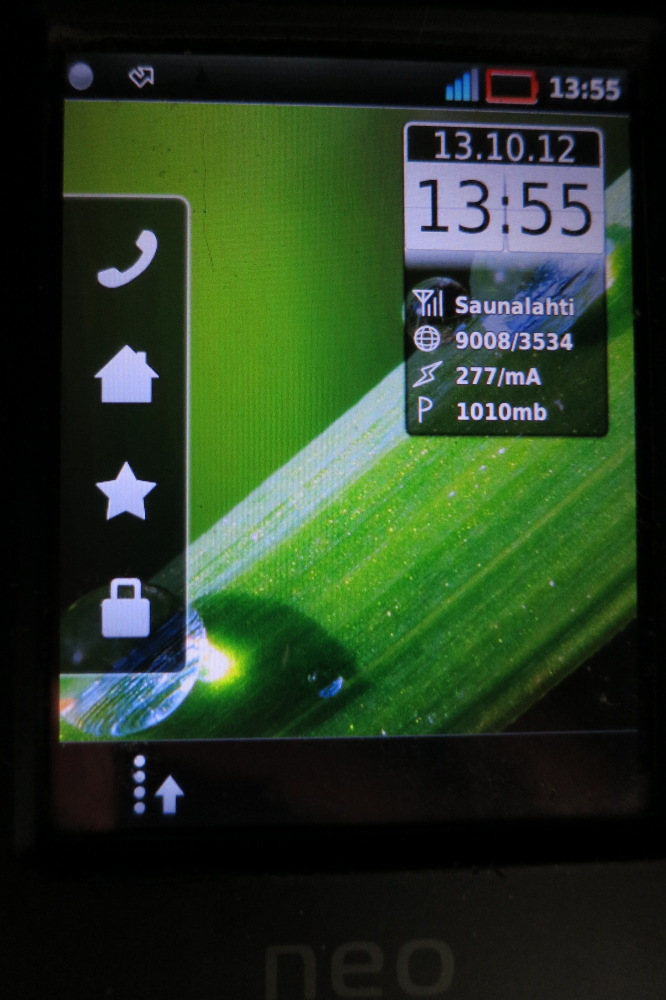
Postman was on a kind mood yesterday. My OpenPhoenux GTA04 arrived! I had my newer Neo FreeRunner upgraded via the service from Golden Delicious.

First, something rare to behold in phones nowadays - Made in Bavaria:


As a sidenote, also rare now - my Nokia N9 is one of the last phones that had this:

It's sad that's now a thing of the past for both hardware assembly and software! But that's just a hint for new companies to step in.

But back to GTA04 - a quick boot to the pre-installed Debian w/ LXDE:


And then as a shortcut unpacked and booted into QtMoko (well, it's also Debian) instead to test that phone functionality also works - and it does:


Next up: brewing something of my own!

11 October 2012

Eddy Petri&#537;or: A shitstorm is comming

It has been brought to my attention that a company selling some so-called colon cleansing product wanted to threat with a law suit a Romanian skeptical blogger because he wrote some articles showing that any such products (the one produced by the said company is the most known/popular in Romania) are pure quackery and there is no scientific basis for the claim they make in order to promote their products.

In his articles he also explained how, in fact, the mucoid plaque, the thing that supposedly proves the efficiency of the product, it is a result of taking the product due to its ingredients, and how no such mucoid plaque was ever observed in any colonoscopy, colon surgery or any other situation where you'd expect it to be seen. He also quoted specialists and lots of other scientific references, showing an honest approach to the issue.

As a response to the initial take-down message from the company doing business with people's crap, the blogger said would like to see scientific proof for the claims made for the product, and when that was to happen, he would take down the articles and publish a correction.

The company decided that the best way to continue this was to try to make a legal threat and ask 100.000 euros (one hundred thousands Euros) as damage in a country where, according to the latest data from the National Statistics Institute, the total average monthly personal income is about 180 Euros.

The blogger, as a reply, decided the threat should be made public and wrote another article which probably made the company very unhappy, because they decided to sue Wordpress so they would take down the blog.

And that's exactly what they did, they sued Wordpress, and sent some documents to Wordpress who sent them to the blogger. Among the documents there were 4 pdf files containing each an original article (in Romanian) from the blog and only 3 pdf containg English translation for only 3 of them. The one missing was the one where the blogger himself showed there wasn't any legal basis for the threats they made initially against him.

Here are the translations (ironically, made on the company's own expense):

Initial article entitled "ColonHelp doesn't help the colon. But it empties your wallet!" (original here)
Initial Article.en<iframe class="scribd_iframe_embed" data-aspect-ratio="0.701030927835051" data-auto-height="true" frameborder="0" height="600" id="doc_83859" scrolling="no" src="http://www.scribd.com/embeds/109756494/content?start_page=1&amp;view_mode=scroll&amp;access_key=key-19l4sbejfk4l4na4feoe" width="100%"></iframe>


The second article entitled "Again about ColonHelp and intestinal cleansers" (original here)
Follow Up.en<iframe class="scribd_iframe_embed" data-aspect-ratio="0.70264064293915" data-auto-height="true" frameborder="0" height="600" id="doc_46722" scrolling="no" src="http://www.scribd.com/embeds/109757646/content?start_page=1&amp;view_mode=scroll&amp;access_key=key-1d0z2779liaialmv90r5" width="100%"></iframe>


** Missing translation of the first reply to threats (original Romanian text here)


The second article about the threats entitled "People who clean the colon have filled the fan with shit" (original here)
Threats 2<iframe class="scribd_iframe_embed" data-aspect-ratio="0.705069124423963" data-auto-height="true" frameborder="0" height="600" id="doc_72956" scrolling="no" src="http://www.scribd.com/embeds/109758037/content?start_page=1&amp;view_mode=scroll&amp;access_key=key-2d3c3eq1d6lo313fogho" width="100%"></iframe>


The Romanian blogger explains himself more of the details on this issue in his latest article on his blog.

The company is called Zenyth Pharmaceuticals and Wordpress will probably lose the lawsuit by not presenting themselves in any way in the Romanian courts, but I think some Streisand effect would really help the asses of this company to get them kicked in their rightful place, at the top of the hall of shame.

The product name is called ColonHelp.

Please spread this information as wide as possible.
Do NOT link to the company's site (it would raise its search engine rank), but link to the blogger' article or the translations.


If any Romanian speaker cares to translate the untranslated article and publish it somewhere on the web, I would be more than glad to update this article and add a link to that translation.

10 October 2012

Johannes Schauer: Using Gentoo to find reduced build dependencies for Debian source packages

Automatically devising a build order that allows to bootstrap Debian, currently fails (amongst other reasons) because of the lack of metadata information about which build dependencies can potentially be dropped from source packages. If that information was available, an algorithm could decide which build dependencies to drop so that dependency cycles can be broken. Finding droppable build dependencies of a source package is something only humans can do. This is because it involves to manually analyze and test the build system of a source package. Build systems are neither uniform nor do they encode their dependencies in a way that can directly be mapped to Debian packages. Therefor they are not machine readable. One idea to solve the dilemma, is to find a Linux distribution that provides the following:
  • allows to do "profile builds" of its source packages with different features enabled or disabled
  • stores information about which feature requires which build dependency
  • stores everything in a format that can be parsed and analyzed
  • covers a similar range of software packages as Debian does
If such a distribution can be found then the information from it can be used to find dependencies that can also be dropped from Debian source packages. Gentoo is a distribution that fulfills above requirements through so called USE flags that allow to enable or disable features during compilation. Dependencies of Gentoo source packages are stored in .ebuild files that control the build process. Since .ebuild files are bash scripts, parsing them is not trivial. I therefor used the emerge software package to extract that information. Thanks to the well written emerge code and to quick help in the Gentoo IRC channel, it didnt take long to make the code run on Debian. My sourcecode is downloadable here: https://gitorious.org/debian-bootstrap/gen2deb Before I list the results of using Gentoo USE flags to determine dependencies that can potentially be dropped from Debian source packages, let me list the problems that this method entails.

Only package name matching, no version matching When writing the mapping from Debian to Gentoo packages and back I discard version information. There are just too many versions that either Debian or Gentoo have and are not present in the other. So the assumption is, that Debian Sid and Gentoo have both the most recent major versions of upstream software which has roughly the same requirements in terms of build dependencies.

Gentoo packages are matched to Debian source packages In Gentoo there are only source packages and no binary packages. So I map Gentoo packages to Debian source packages. But Gentoo source packages build depend on other source packages while Debian source packages depend on binary packages. So at some point I have to translate Gentoo packages to Debian source packages and those source packages to Debian binary packages. I do this by analyzing the original binary package build dependencies of a Debian source package and then filter out those binary packages as being droppable that are built by the Debian source packages that were found to be droppable.

Not the exact same package set There is some software that is only in Gentoo and some that is only in Debian. Debian and Gentoo also split some source packages differently.

Gentoo has more direct dependencies Many build dependencies in Debian are indirectly pulled in through dependencies of direct build dependencies. In Gentoo source packages directly depend on most things they need to build successfully. This leads to the list of dependencies in Gentoo to be much larger than the list of dependencies in the corresponding Debian source package. It also means that lots of dependencies that can be dropped in Gentoo are not found to be droppable in Debian because they are not direct dependencies of that source package.

There are no implicit dependencies Gentoo will often drop dependencies that are essential or build-essential packages in Debian and are therefor implicit build dependencies that cannot be dropped.

Result Despite the many problems, the result doesnt look too wrong. I got some Debian source packages that were found to have droppable build dependencies from Thorsten Glaser and all dependencies that Gentoo found to be droppable were also dropped by him. To put everything into numbers: the current 912 nodes big SCC in Debian Sid can be reduced to 6 individual SCC with 422, 5, 5, 3, 2 and 2 nodes each. So using Gentoo cuts the size of the central component to more than half. Surely, there will be a number of dependencies that were found to be droppable in Gentoo but are actually not droppable in Debian. The point is, that it is better to have "some" data even if it contains false positives than no data at all. It is easier for a human to verify if some suggested droppable build dependencies are actually correct than going through hundreds of source packages with thousands of dependencies manually.

Jonathan Carter: LTSP By The Sea 2012


Last weekend I was in Southwest Harbour, Maine again for the annual LTSP hackfest (called By The Sea). It s a fun and productive event and as always it s been good catching up with LTSP folk, even though we were missing Oliver, Alkis and Vagrant. Here is a summary of what I can recall from the discussions of the weekend Recent Happenings in LTSP
  • New LTSP Website After a really long time, LTSP finally has a new website. It s a big improvement, there s a new success stories page and the wiki is now self-hosted.
  • LTSP PNP - This is a new package (ltsp-pnp) that can safely be installed on existing machines to allow a user to log into an LTSP server using LDM.
Going Forward
  • Libpamssh - This has been ongoing work in the LTSP project that will allow you to authenticate against another machine using SSH with local PAM. This will make it somewhat trivial to adapt LightDM (Light Display Manager) as a remote login manager and we can then do away with LDM (LTSP Display Manager) which currently has several big limitations. Scott Balneaves and St phane Graber made big progress on this over the weekend and it s close to an initial release.
  • New LTSP Cluster Control Center - Simon Poirier has been working on a new LTSP Cluster Control Center, the old one has been rusting away and other attempts at rewriting it didn t quite work out. He did a demonstration of the proof-of-concept code and it s looking quite nice already.
  • Squashed Bugs - Marc Gari py took some time to squash some bugs: LP: #996533, LP: #1048689 and LP: #1062947
  • Documentation - I m taking it upon myself to fix some problems we have with documentation. The lts.conf documentation is incomplete and difficult to maintain, so I will be going through the client/server code and tag all the possible settings that there are so that we can auto-generate documentation from it. David Trask will be helping out there and will be writing some nice descriptions for the config settings.
  • LTSP 6.0 and the Future of LTSP - There was a good opening discussion about the future of LTSP. The combination of all the recent partial rewrites that Alkis has been doing combined with the deprecation of LDM will culminate in what will be called LTSP 6.0. There was also some interest in having an LTSP standalone distribution again (that can be installed on none-integrated distributions) and things like an LTSP live client disc. We were also wondering about the future of pure thin clients, many upstreams are writing software that aren t at all thin client friendly (Clutter-based software like Gnome Shell and Totem, Unity, etc) and at the same time, thin client hardware is becoming increasingly powerful. It s possible that there may be a focus on making diskless fat clients working even better with LTSP and make it easier to use remote-apps for running only certain applications the application servers. We re also quite interested in projects like FreeRDP for users who would still require pure thin clients.
Social
  • On Friday, Chuck Liebow took us out for a boat ride around the harbour on the Sea Princess
  • On Saturday night we had the big lobster dinner as per BTS tradition (I had steak since I m not a big seafood person). We were to busy eating and telling stories to be taking any pictures :)
  • And last but certainly not least, I finally met Eric Harrisson, who did a lot of work on K12-LTSP in the Portland schools district. He has an awesome hobby where he builds guitars out of well, almost anything he can find.
    He brought along one of the experimental guitars he slapped together recently and told me all about how it s put together. Even more amazing, he said I could have it! I was planning on getting an acoustic guitar anyway so I m very thrilled about it. Not only is it a completely unique guitar but it sounds great too. I m going to have to think of something to make back for him!
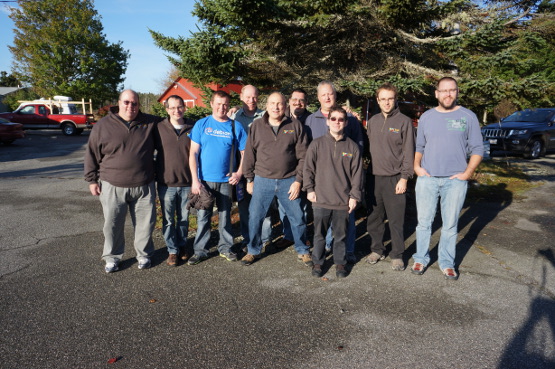
It was great seeing everyone again. I first started using LTSP around 9 years ago and never imagined back then that I d get to meet the people behind it. Ron Colcernian sourced us some really cool LTSP tops that you can see us wearing in the group photo. I hope to get to BTS again next year!

Don Armstrong: Bug Reporting Rate in Debian

Christian's most recent blog post got me wondering if the decline in the bug reporting rate in Debian was something new, or something which often happened during releases. So, lets try to figure that out. In the BTS, when a bug report is filed, the report is written to a file called bugnum.report, and then not touched from then on. Let's look at the modification date on that file to see when each bug was filed; and since we're going to plot this, lets only look at bugs ending in 00:
stat -c '%n %Y' /srv/bugs.debian.org/spool/ archive,db-h /00/*.report > ~/reporting_rate.txt
Now, lets get the data into R and plot it. [For clarity, I'm not showing the R code, but it's available in the source code for this post.] From the plot (Bugs reported per second over time with a red loess fit line), it looks like we do see a decline during certain periods. However, there's an even more alarming trend of a decrease in bug reporting in Debian which has been happening since 2006. (Note that I've truncated the y scale significantly; there are periods in Debian where the bug rate is astronomically high, usually corresponding to mass bug filings; I've also limited the plot to data from 2003 on, as I have to clean up that data significantly before I can plot it like this.) Not sure exactly what that means, but it is troubling.

9 October 2012

David Welton: Fast, Light and Asynchronous

I am a big fan of Ruby on Rails: it does a lot of things, and it does most of them pretty well. When starting a new web project, it's the first thing I would reach for: most of the time, your problem is going to be figuring out a good product/market fit, or whipping up some internal tool without wasting a lot of programmer time. Once you've got a firm grasp of the problem, then maybe you can consider optimizing. Who cares if you do something that no one wants really really fast? However, Ruby on Rails is not beautiful in terms of being particularly fast or lightweight. No complaints from me: most of the time, I'm happy to have something that does so much for me, leaving me to work on the actual problem at hand. Once in a while, though, you do need fast and relatively lightweight, and that space has been getting more interesting over the past few years, at least in terms of the web. First of all, technologies like "Comet", utilizing web sockets or some other always-on connection are becoming more common, where a socket with the server remains open in order to quickly exchange data from the server to the client - and back. That seems to be a poor fit for something like Rails, where it can tie up a lot of resources if one isn't careful. And while computing costs continue to decline, no one minds getting more for less in terms of what their server can do. Furthermore, with frameworks like Backbone.js, pushing more and more code to the client, the server can afford to be a bit simpler and do less, so it may as well be snappy to boot. Java has long been fairly popular for "heavy lifting" types of applications, partially because it does end up being reasonably fast. But it's not something I've ever had much fun using and is usually kind of wordy, and makes you feel like you need a crew of people in Palo Alto, one in Bangalore, and one in Stockholm just to churn out all the code. And it certainly is no lightweight in terms of memory either. So... while it can certainly do pretty much anything you need, I don't see it as being the strongest player when someone needs "real time web" code, and needs it to be reasonably light weight. Ruby, outside of standard Rails stuff like Passenger, seems to offer some interesting possibilities for this kind of work, like Reel but they don't seem to have the traction other solutions do. Python is in a similar situation: the Twisted framework has been around for a while, and while it has some success stories, never seems to have really 'caught fire'. Neither of these languages was built for "concurrency" from the ground up, and that seems to have, to date, inhibited people from using them extensively for this kind of job. My gut feeling is that the need for speed and "concurrency" (or at least handling a lot of concurrent users) will drive adoption of languages heretofore not so popular on the server. Let's have a look at them. Erlang: This is by no means a new language, having been developed in Ericsson in the late 1980ies; and it implements several interesting concepts. First and foremost, concurrency is handled in the form of many small "processes", which are not actually Unix processes at all, but processes internal to the Erlang VM. The Erlang system contains a scheduler that allocates resources to all of these processes, so even if one of them dies or behaves badly, it's not a problem: the system as a whole can continue to function well. The way Erlang is built, the scheduler is preemptive: the internal "processes" don't need to yield to let other processes run. Beyond the scheduler and simple processes, Erlang gives you the tools to create elaborate trees of supervisors and workers that are quite robust to failures in any one portion of the system, as well as giving you the tools to set up a system to run on multiple, distributed computers. This kind of thinking is necessary when you write applications, such as phone switches, where downtime is really, really not ok. Erlang processes comunicate almost exclusively via message passing, meaning that state is not shared. Altogether, this makes for a fast, rock solid system that can easily handle thousands of concurrent connections without breaking a sweat. The computing world being what it is though, Erlang is likely to be more of a Lisp or Smalltalk: it's a trailblazer that did many things years before their time in other languages, but I don't see it as ever quite catching on amongst 'the masses'. It has a wonky syntax, it's a functional programming language, and because it is used in environments where too much experimentation is not good, it does not have a lot of room to break with its own past and innovate in terms of the language itself: it's slow to change and improve, even where the need to is clearly perceived. Node.js: is the opposite, in some ways: being based on Javascript, it draws on a huge number of potential programmers - orders of magnitude more than Erlang. And thanks to design decisions enforcing the use of asynchronous code and callbacks for anything that could block, it deals quite well with concurrent connections, even if the language and libraries don't really give you much in terms of "true" concurrency. This is a simple model that works pretty well, even if, theoretically, all it would take is one "while (1)" loop in a callback to block the entire system. In practice, this doesn't seem to be a big problem, though. More of a problem is writing maintainable code, when everything is a callback. Keeping the network of callbacks straight can be a bit of a chore, and is probably not an optimal model in terms of programmer productivity. That said, people seem to do make due with it, although Node is young enough that we haven't seem projects that are 5 or 6 years old and maintained by people who didn't write them. One of the advantages of being such a popular language is that lots of people have a strong interest in seeing Javascript being very, very performant. That need begat the V8 Javascript engine, from Google, which they were kind enough to release as free software. So one of the advantages that Node has is that the underlying implementation is extremely fast for a dynamic language. For many people who know Javascript, picking up Node.js is also an easy choice, even though people used to browser side programming with Javascript will have to adjust their way of thinking to succesfully tackle server projects. Go language: this is an interesting one, written by some luminaries who work at Google. It can best be described as something akin to C with some updated features, such as garbage collection, that make it more suitable for working on large projects, where things like memory leaks are going to make life very frustrating. It has the feel of a "real language, for real programmers" in that it doesn't stray far too far from what people are used to - it's not going to cause the "what the hell is this?!" reactions that Erlang might in more close-minded circles. Between the big company backing it, and the approachable syntax and concepts, Go looks like it has a good shot at the mainstream. Where it gets interesting is their concurrency model, which is apparently based on something called "communicating sequential processes" which, superficially at least, looks like it has some things in common with Erlang's "actor model" of concurrency. Under the hood, Go apparently hives off its "goroutines" to different OS level threads, but does not have a preemptive scheduler like Erlang: http://code.google.com/p/go/issues/detail?id=543 - although according to this, they may change that in the future. I'm not enough of a computer science guy to comment much on the details of CSP vs Actors, but both seem like valid models with strengths compared to trying to keep threads straight, which always seems to be a source of problems for programmers. Conclusions So, what's actually going to happen? I see Node.js as the clear front runner. It takes a worse-is-better approach that seems to work well enough as people get started. If they encounter difficulties later, they can always rewrite in something else, if needs be, but by "luring people in", Node.js has gathered a large group of users who continue, in turn, to churn out more code for use with the system, making it more attractive to new users. Programming languages are not winner-take-all markets though, so perhaps there is room for a few more languages to have decent followings in this space. Hopefully the competition will lead to ever better tools for those of us utilizing them! What do you think?

Stefano Zacchiroli: bits from the DPL for September 2012

Just posted to d-d-a, bits from the DPL for Septemer 2012.
Heya,
here is the periodic report of DPL activities, this time related to September 2012 (posted here with some delay, as I've been traveling oversea on behalf of Debian for the past few days). Help needed: Google Code-In The Google Code-In (GCI) initiative is about to start again. We don't have a great track record of participating into it, and that's a pity. The initiative revolves around small tasks that other Free Software projects have come to call "easy hacks", showing how effective they're in attracting new volunteers. To participate, we need both mentors and admins. If you're interested see Ana's call for help and please volunteer on the soc-coordination list. Related to this, you've probably seen the report of our participation in GSoC 2012. I'd like to thank all students, mentors, and admins for a very well organized edition. Logo relicensing & other assets The DFSG-relicensing of the Debian logo, which I've mentioned in recent updates, has now happened. The so called Debian "Open Use" logo, in both variants (with and without "Debian") is now dually licensed under LGPL3+ / CC-BY-SA 3.0. The change has been made effective with a resolution of the SPI Board of Directors. Note that the so called "official" logo, which we seem to use very little, is still released under the terms of a non-free license. Discussion is ongoing on -project to stop promoting it. If you're using it or if you've arguments in favor of against that, please participate in the discussion. I've got from SFLC an updated draft of the new proposed trademark policy, implementing most of the changes requested during related August discussions on -project. I'll post it for review there shortly. The Japanese Trademark Office (JPO) has sent us the final confirmation that trademark transfer request (from individuals Debian contributors in the area to SPI) has happened. We've paid the needed fee of 457 CHF to conclude the transaction. We finally settled a domain transfer agreement with the current owner of the debian.eu. Technically, the domain will be transferred to FFIS in the coming weeks. Core teams (non-)news Quite some core teams are in the process of changing their formations these weeks, but most are still pending proper delegation (or equivalent). So here are just a few "teasers":
  • as you might have read in the ftp-master sprint report, we have a new ftp-master: congrats Ansgar! (delegation update pending, but no suspense here)
  • we have a new front-desk member (delegation pending + suspense)
  • we have a new debian policy team (delegation pending + suspense)
  • the tech-ctte is in the process of selecting a new candidate to fill the vacant seat. I've nominated a couple of candidates myself, and I'm now waiting for tech-ctte recommendations as per Constitution 6.2. On related news, the tech-ctte has now dealt with the conflict on Python interpreter maintenership, which was also the longest standing issue brought before them. Having invested quite some energy in that issue myself, I'm delighted to see it finally addressed.
I hope to finalize all the pending tasks above this month. Future events I've spent quite some time to plan my participation in events I'll be attending during October on behalf of Debian, such as the ACM Reflections conference in Urbana-Champaign (at the time of writing, this has already happened), the Ubuntu Developer Summit in Copenhagen, and the LinuxDay event in Turin. Cheers.
PS the day-to-day activity log for September 2012 is available at the usual place master:/srv/leader/news/bits-from-the-DPL.txt.201209

8 October 2012

Eddy Petri&#537;or: HOWTO fix git-buildpackage signs with wrong signature

If you have two or more available gpg keys that can be used for the same identity (e.g.: 'John Doe <john@doe.com>') that you might use to add entries to changelogs of packages, you might end up in situations where git-buildpackage or other similar tool might want to sign packages with the wrong key.

It seems debsign (the tool that actually does the signing) just picks up the first key that is still valid (I also have a revoked key) and matches the used identity.

There are many ways to fix this, but the one that will work for most cases is to run this command:

echo 'DEBSIGN_KEYID=0x0123ABCD' >> ~/.devscripts

Of course, you should replace 0x0123ABCD with the keyid which you prefer.

This will create a ~/.devscripts file (if it didn't exist) which will contain the DEBSIGN_KEY variable with the desired value. This file will be sourced by debsign before doing its actual work, so it will do the right thing when ran.

There are also git-buildpackage specific fixes like defining builder in the [DEFAULT] section of ~/.gbp.conf and passing '-k0x0123ABCD' to debuild something like:

[DEFAULT]
builder = debuild -i -I -k1234ABCD
...

But that probably gets ugly if you use a custom builder.


P.S.: I have just deleted my old key 0xDD1F1F9F since I won't be using it anymore. I don't remember where I put the revocation certificate, but I'll revoke the key, once and if I find the revocation certificate. Otherwise, it will expire in July, next year.

From now on, I am going to use only the key 0xE3E083A1 to which I even added a photo and some newer identities and updated with a few signatures I got during DebConf 9.

Craig Small: NTP control messages

I have had an opportunity to rework some code to query NTP servers directly in python rather than running ntpq -pn and scraping the result. The over-the-wire protocol format is reasonably straight forward and my little module is now passing all of its nosetests which is wonderful. While its only a single table, ntpq actually does multiple requests to get its results. NTP control messages are all mode 6 which tells the client and server its not time sort of things, but more about queries. A control packet has a sequence number which the server responds with so you can line up your requests with responses. For large responses, the more, offset and count fields work together to knit up a large block of data. The first packet of the response will have the offset field of 0. The count is the size of the data payload in bytes. If the response is too big, the more bit will be set to 1 to say there is more coming. The second packet will have an offset that is the same value as the previous packets count value, so you can stitch them together. The first query is a READSTAT which uses opcode 1. This returns a list of 4 byte responses with the association ID taking the first two bytes and the peer status taking the second. If you look at the output of ntpq you will notice a character in the first column which is the peer selection. The important one for us is asterix, which equates to 110 in the lower 3 bits of the first status byte. This is the system peer which is the main one. There may be others, up to 2, (usually symbol +) which are compared to the system peer. ntpq doesn t really care about the different peers and just displays the status but I want to know what peer the server is synchronised to. Next we need more details about the system peer (or all peers in ntpq). To do this a READVAR or opcode 2 is sent to the server. The association ID is set to the association or peer we are interested in. The response for my setup is sent over two packets which need to be reassembled and it is all in plain ascii which is a comma-separated list with a key=value pair. I use the following python line to split it up.
self.assoc_data.update(dict([tuple(ad.strip().split("=")) for ad in data[header_len:].split(",") if ad.find("=") &gt; -1]))
I m sure people that know python better than I will say I am doing it wrong (it looks a bit klunky to me too) but it does work. From that I can query the various values that are returned by the server about its peers, including the source of its clock.

6 October 2012

Andrea Veri: SSH Tunneling for VNC

Logging in into a Linux machine and executing the hundreds commands available is just one of the most common usages of OpenSSH. Another interesting and very useful usage is tunneling some specific (or even all) traffic from your local machine to an external machine you have access to. Today we ll analyze how to access a certain virtual machine s console by tunneling the relevant VNC port locally and accessing it through your favorite VNC client. The scenario:
  1. Machine A is our main virtualization machine and hosts several virtual machines. (VMs)
  2. Each VM has its own VNC port assigned. (usually the port range goes from 5900 to 5910 or even more if the hosted VMs are more than 10)
  3. We ll be using libvirt, thus virsh.
We first need to find out which port got assigned to the VM we want to have console access to:
sudo virsh
virsh # list
Id   Name   Status
----------------------------------------------------
5    foo    running
6    bar    running
7    foobar running
virsh # vncdisplay foobar
:3
We, then, create a tunnel which redirects all the traffic from the main virtualization machine s port to the port we gonna specify in the next command:
ssh -f -N -L 5910:localhost:5903 user@machine-A.com
A few details about the previous command:
  1. -N tells SSH to not execute any command after logging in.
  2. -f tells SSH to hide into the background just before the command gets executed.
  3. -L enables the port forwarding between the local (client) host and the host on the remote side.
And why did I choose respectively port 5903 and 5910? While you can adjust port 5910 with your own choice (that will just move the tunneled traffic from port 5910 to your favorite port), that won t work as expected with port 5903 since each VNC port is binded to the number of display virsh assigned to it. (for example, the bar VM may be running on display 5, thus its vncdisplay port will be 5905) When done, fire up your favorite VNC client and create a new connection with the following details:
Protocol: VNC - Virtual Network Computing
Server: localhost - 127.0.0.1
Port: 5910
The connection will load and you ll be put in front of your foobar VM console.

Andrea Veri: SSH Tunneling for VNC

Logging in into a Linux machine and executing the hundreds commands available is just one of the most common usages of OpenSSH. Another interesting and very useful usage is tunneling some specific (or even all) traffic from your local machine to an external machine you have access to. Today we ll analyze how to access a certain virtual machine s console by tunneling the relevant VNC port locally and accessing it through your favorite VNC client. The scenario:
  1. Machine A is our main virtualization machine and hosts several virtual machines. (VMs)
  2. Each VM has its own VNC port assigned. (usually the port range goes from 5900 to 5910 or even more if the hosted VMs are more than 10)
  3. We ll be using libvirt, thus virsh.
We first need to find out which port got assigned to the VM we want to have console access to:
sudo virsh
virsh # list
Id   Name   Status
----------------------------------------------------
5    foo    running
6    bar    running
7    foobar running
virsh # vncdisplay foobar
:3
We, then, create a tunnel which redirects all the traffic from the main virtualization machine s port to the port we gonna specify in the next command:
ssh -f -N -L 5910:localhost:5903 user@machine-A.com
A few details about the previous command:
  1. -N tells SSH to not execute any command after logging in.
  2. -f tells SSH to hide into the background just before the command gets executed.
  3. -L enables the port forwarding between the local (client) host and the host on the remote side.
And why did I choose respectively port 5903 and 5910? While you can adjust port 5910 with your own choice (that will just move the tunneled traffic from port 5910 to your favorite port), that won t work as expected with port 5903 since each VNC port is binded to the number of display virsh assigned to it. (for example, the bar VM may be running on display 5, thus its vncdisplay port will be 5905) When done, fire up your favorite VNC client and create a new connection with the following details:
Protocol: VNC - Virtual Network Computing
Server: localhost - 127.0.0.1
Port: 5910
The connection will load and you ll be put in front of your foobar VM console.

Timo Jyrinki: Light-weight security, Grub2 password setup problems 1.99 vs 2.00

I believe I'm not the only one who thinks that use case oriented Grub2 documentation is hard to find, and a lot of the documentation is obsolete or wrong. My main cause for writing this blog post is a currently unanswered question regarding 2.00, but meanwhile it seems months have passed and still most 1.99 documentation is wrong as well, which might be interesting to some.

The aim is to prevent grub entries from being edited, while not restricting actual booting. This protection is meant for computers not having any confidential stuff, but just wanting to do some light weight security with the assumption that the computer isn't physically opened.

Common setup

You will obviously want to disable any automatically generated root access giving entries, by for example uncommenting GRUB_DISABLE_RECOVERY="true" in /etc/default/grub on Debian or Ubuntu. Also you would disable allowing any external boot devices to be used in BIOS/EFI/coreboot, which you would also have protected with a password. And that often means you need to also disable USB legacy support, since some BIOSes tend to offer all USB devices as bootable without password otherwise (note that I guess that could also cause problems accessing setup on desktop computers if your only keyboard is USB).

1.99

So to first fix the false instructions in various places - no, setting the superuser in 00_header as instructed is not enough. It might be, but does not apply if eg. old kernels are put into submenu (Ubuntu bug 718670, Fedora bug 836259). The protection from editing does not apply there. And if you remove all but one kernel so that there is no submenu, a submenu will be automatically created when there is a new kernel installed via security updates. I didn't need the submenu feature anyway, so I used to comment out the following lines in /etc/grub.d/10_linux:

#if [ "$list" ] && ! $in_submenu; then
#echo "submenu \"Previous Linux versions\" "
#in_submenu=:
#fi
...
#if $in_submenu; then
# echo " "
#fi

I hope that was useful. I can imagine it causing a couple of family battles if the commonly instructed setup was the only protection used and there's for example a case of two computer savvy siblings that are eager to get to each others' computers...

2.00 & The Question

The problem with 2.00 is that the superusers setup yields a non-bootable system, ie. password is required for booting. But Google wasn't smiling at me today! Terrible. Can you help me (and others) with 2.00? The aim would be to have a 1.99-like setup where superuser password protects all entries from editing, but booting is fine without any passwords.

Update: Thanks, problem solved, see comments! Find the following line in /etc/grub.d/10_linux:

echo "menuentry '$(echo "$os" grub_quote)' $ CLASS \$menuentry_id_option 'gnulinux-simple-$boot_device_id' " sed "s/^/$submenu_indentation/"

And add --unrestricted there. Don't mix the line with the another menuentry line two lines earlier. The submenu problem doesn't exist anymore in 2.00.

5 October 2012

Keith Packard: fd-passing

FD passing for DRI.Next Using the DMA-BUF interfaces to pass DRI objects between the client and server, as discussed in my previous blog posting on DRI-Next, requires that we successfully pass file descriptors over the X protocol socket. Rumor has it that this has been tried and found to be difficult, and so I decided to do a bit of experimentation to see how this could be made to work within the existing X implementation. (All of the examples shown here are licensed under the GPL, version 2 and are available from git://keithp.com/git/fdpassing) Basics of FD passing The kernel internals that support FD passing are actually quite simple POSIX already require that two processes be able to share the same underlying reference to a file because of the semantics of the fork(2) call. Adding some ability to share arbitrary file descriptors between two processes then is far more about how you ask the kernel than the actual file descriptor sharing operation. In Linux, file descriptors can be passed through local network sockets. The sender constructs a mystic-looking sendmsg(2) call, placing the file descriptor in the control field of that operation. The kernel pulls the file descriptor out of the control field, allocates a file descriptor in the target process which references the same file object and then sticks the file descriptor in a queue for the receiving process to fetch. The receiver then constructs a matching call to recvmsg that provides a place for the kernel to stick the new file descriptor. A helper API for testing I first write a stand-alone program that created a socketpair, forked and then passed an fd from the parent to the child. Once that was working, I decided that some short helper functions would make further testing a whole lot easier. Here s a function that writes some data and an optional file descriptor:
ssize_t
sock_fd_write(int sock, void *buf, ssize_t buflen, int fd)
 
    ssize_t     size;
    struct msghdr   msg;
    struct iovec    iov;
    union  
        struct cmsghdr  cmsghdr;
        char        control[CMSG_SPACE(sizeof (int))];
      cmsgu;
    struct cmsghdr  *cmsg;
    iov.iov_base = buf;
    iov.iov_len = buflen;
    msg.msg_name = NULL;
    msg.msg_namelen = 0;
    msg.msg_iov = &iov;
    msg.msg_iovlen = 1;
    if (fd != -1)  
        msg.msg_control = cmsgu.control;
        msg.msg_controllen = sizeof(cmsgu.control);
        cmsg = CMSG_FIRSTHDR(&msg);
        cmsg->cmsg_len = CMSG_LEN(sizeof (int));
        cmsg->cmsg_level = SOL_SOCKET;
        cmsg->cmsg_type = SCM_RIGHTS;
        printf ("passing fd %d\n", fd);
        *((int *) CMSG_DATA(cmsg)) = fd;
      else  
        msg.msg_control = NULL;
        msg.msg_controllen = 0;
        printf ("not passing fd\n");
     
    size = sendmsg(sock, &msg, 0);
    if (size < 0)
        perror ("sendmsg");
    return size;
 
And here s the matching receiver function:
ssize_t
sock_fd_read(int sock, void *buf, ssize_t bufsize, int *fd)
 
    ssize_t     size;
    if (fd)  
        struct msghdr   msg;
        struct iovec    iov;
        union  
            struct cmsghdr  cmsghdr;
            char        control[CMSG_SPACE(sizeof (int))];
          cmsgu;
        struct cmsghdr  *cmsg;
        iov.iov_base = buf;
        iov.iov_len = bufsize;
        msg.msg_name = NULL;
        msg.msg_namelen = 0;
        msg.msg_iov = &iov;
        msg.msg_iovlen = 1;
        msg.msg_control = cmsgu.control;
        msg.msg_controllen = sizeof(cmsgu.control);
        size = recvmsg (sock, &msg, 0);
        if (size < 0)  
            perror ("recvmsg");
            exit(1);
         
        cmsg = CMSG_FIRSTHDR(&msg);
        if (cmsg && cmsg->cmsg_len == CMSG_LEN(sizeof(int)))  
            if (cmsg->cmsg_level != SOL_SOCKET)  
                fprintf (stderr, "invalid cmsg_level %d\n",
                     cmsg->cmsg_level);
                exit(1);
             
            if (cmsg->cmsg_type != SCM_RIGHTS)  
                fprintf (stderr, "invalid cmsg_type %d\n",
                     cmsg->cmsg_type);
                exit(1);
             
            *fd = *((int *) CMSG_DATA(cmsg));
            printf ("received fd %d\n", *fd);
          else
            *fd = -1;
      else  
        size = read (sock, buf, bufsize);
        if (size < 0)  
            perror("read");
            exit(1);
         
     
    return size;
 
With these two functions, I rewrote the simple example as follows:
void
child(int sock)
 
    int fd;
    char    buf[16];
    ssize_t size;
    sleep(1);
    for (;;)  
        size = sock_fd_read(sock, buf, sizeof(buf), &fd);
        if (size <= 0)
            break;
        printf ("read %d\n", size);
        if (fd != -1)  
            write(fd, "hello, world\n", 13);
            close(fd);


void
parent(int sock)
 
    ssize_t size;
    int i;
    int fd;
    fd = 1;
    size = sock_fd_write(sock, "1", 1, 1);
    printf ("wrote %d\n", size);
 
int
main(int argc, char **argv)
 
    int sv[2];
    int pid;
    if (socketpair(AF_LOCAL, SOCK_STREAM, 0, sv) < 0)  
        perror("socketpair");
        exit(1);
     
    switch ((pid = fork()))  
    case 0:
        close(sv[0]);
        child(sv[1]);
        break;
    case -1:
        perror("fork");
        exit(1);
    default:
        close(sv[1]);
        parent(sv[0]);
        break;
     
    return 0;
 
Experimenting with multiple writes I wanted to know what would happen if multiple writes were made, some with file descriptors and some without. So I changed the simple example parent function to look like:
void
parent(int sock)
 
    ssize_t size;
    int i;
    int fd;
    fd = 1;
    size = sock_fd_write(sock, "1", 1, -1);
    printf ("wrote %d without fd\n", size);
    size = sock_fd_write(sock, "1", 1, 1);
    printf ("wrote %d with fd\n", size);
    size = sock_fd_write(sock, "1", 1, -1);
    printf ("wrote %d without fd\n", size);
 
When run, this demonstrates that the reader gets two bytes in the first read along with a file descriptor followed by one byte in a second read, without a file descriptor. This demonstrates that a file descriptor message forms a barrier within the socket; multiple messages will be merged together, but not past a message containing a file descriptor. Reading without accepting a file descriptor What happens when the reader isn t expecting a file descriptor? Does it just get lost? Does the reader not get the message until it asks for the file descriptor? What about the boundary issue described above? Here s my test case:
void
child(int sock)
 
    int fd;
    char    buf[16];
    ssize_t size;
    sleep(1);
    size = sock_fd_read(sock, buf, sizeof(buf), NULL);
    if (size <= 0)
        return;
    printf ("read %d\n", size);
    size = sock_fd_read(sock, buf, sizeof(buf), &fd);
    if (size <= 0)
        return;
    printf ("read %d\n", size);
    if (fd != -1)  
        write(fd, "hello, world\n", 13);
        close(fd);
     
 
void
parent(int sock)
 
    ssize_t size;
    int i;
    int fd;
    fd = 1;
    size = sock_fd_write(sock, "1", 1, 1);
    printf ("wrote %d without fd\n", size);
    size = sock_fd_write(sock, "1", 1, 2);
    printf ("wrote %d with fd\n", size);
 
This shows that the first passed file descriptor is picked up by the first sockfdread call, but the file descriptor is closed. The second file descriptor passed is picked up by the second sockfdread call. Zero-length writes Can a file descriptor be passed without sending any data?
void
parent(int sock)
 
    ssize_t size;
    int i;
    int fd;
    fd = 1;
    size = sock_fd_write(sock, "1", 1, -1);
    printf ("wrote %d without fd\n", size);
    size = sock_fd_write(sock, NULL, 0, 1);
    printf ("wrote %d with fd\n", size);
    size = sock_fd_write(sock, "1", 1, -1);
    printf ("wrote %d without fd\n", size);
 
And the answer is clearly no the file descriptor is not passed when no data are included in the write. A summary of results
  1. read and recvmsg don t merge data across a file descriptor message boundary.
  2. failing to accept an fd in the receiver results in the fd being closed by the kernel.
  3. a file descriptor must be accompanied by some data.
Make X pass file descriptors I d like to get X to pass a file descriptor without completely rewriting the internals of both the library and the X server. Ideally, without making any changes to the existing code paths for regular request processing at all. On the sending side, this seems pretty straightforward we just need to get the X connection file descriptor and call sendmsg directly, passing the desired file descriptor along. In XCB, this could be done by using the xcbtakesocket interface to temporarily hijack the protocol as Xlib does. It s the receiving side where things are messier. Because a bare read will discard any delivered file descriptor, we must make sure to use recvmsg whenever we want to actually capture the file descriptor. Kludge X server fd receiving Because a passed fd creates a barrier in the bytestream, when the X server reads requests from a client, the read will stop sending data after the message with the file descriptor is consumed. Of course, this process consumes the passed file descriptor, and if that call isn t made with recvmsg set up to receive it, the fd will be lost. As a simple kludge, if we pass a meaningless fd with the X request and then the real fd with a following XNoOperation request, the existing request reading code will get the request, discard the meaningless fd and then stop reading at that point due to the barrier. Once into the request processing code, recvmsg can be called to get the real file descriptor and the associated XNoOperation request. I wrote a test for this that demonstrates how this works:
static void
child(int sock)
 
    uint8_t xreq[1024];
    uint8_t xnop[4];
    uint8_t req;
    int i, reqlen;
    ssize_t size, fdsize;
    int fd = -1, *fdp;
    int j;
    sleep (1);
    for (j = 0;; j++)  
        size = sock_fd_read(sock, xreq, sizeof (xreq), NULL);
        printf ("got %d\n", size);
        if (size == 0)
            break;
        i = 0;
        while (i < size)  
            req = xreq[i];
            reqlen = xreq[i+1];
            i += reqlen;
            switch (req)  
            case 0:
                break;
            case 1:
                if (i != size)  
                    fprintf (stderr, "Got fd req, but not at end of input %d < %d\n",
                         i, size);
                 
                fdsize = sock_fd_read(sock, xnop, sizeof (xnop), &fd);
                if (fd == -1)  
                    fprintf (stderr, "no fd received\n");
                  else  
                    FILE    *f = fdopen (fd, "w");
                    fprintf(f, "hello %d\n", j);
                    fflush(f);
                    fclose(f);
                    close(fd);
                    fd = -1;
                 
                break;
            case 2:
                fprintf (stderr, "Unexpected FD passing req\n");
                break;


int
tmp_file(int j)  
    char    name[64];
    sprintf (name, "tmp-file-%d", j);
    return creat(name, 0666);
 
static void
parent(int sock)
 
    uint8_t xreq[32];
    uint8_t xnop[4];
    int i, j;
    int fd;
    for (j = 0; j < 4; j++)  
        /* Write a bunch of regular requests */
        for (i = 0; i < 8; i++)  
            xreq[0] = 0;
            xreq[1] = sizeof (xreq);
            sock_fd_write(sock, xreq, sizeof (xreq), -1);
         
        /* Write our 'pass an fd' request with a 'useless' FD to block the receiver */
        xreq[0] = 1;
        xreq[1] = sizeof(xreq);
        sock_fd_write(sock, xreq, sizeof (xreq), 1);
        /* Pass an fd */
        xnop[0] = 2;
        xnop[1] = sizeof (xnop);
        fd = tmp_file(j);
        sock_fd_write(sock, xnop, sizeof (xnop), fd);
        close(fd);
     
 
Fixing XCB to receive file descriptors Multiple threads may be trying to get replies and events back from the X server at the same time, which means the kludge of having the real fd follow the message will likely lead to the wrong thread getting the file descriptor. Instead, I suspect the best plan will be to fix XCB to internally capture passed file descriptors and save them with the associated reply. Because the file descriptor message will form a barrier in the read stream, xcb can associate any received file descriptor with the last reply in the read data. The X server would then send the reply with an explicit sendmsg call to pass both reply and file descriptor together. Next steps The next thing to do is code up a simple fd passing extension and try to get it working, passing descriptors back and forth to the X server. Once that works, design of the rest of the DRM-Next extension should be pretty straightforward.

Next.

Previous.