Julien Danjou: Colon
Dear Lazy Web,
How the hell can you scp/rsync a file with a : (colon) in it ?!?!?!

 The Patch
How the patch works
echo 1 > /proc/sys/net/<iface>/per_node_vlan
iwpriv <iface> ap_bridge 0
vconfig add <iface> 4
 I’m visiting my parents’ house in Vermont, where they finally got cable after the provider agreed to dig up the ground and run a mile or so of cable to their house in return for a two year subscription agreement. (I think after two years the cable company will almost have broken even on the cost of the installation).
Having been absent myself from the cable world for some time, I am impressed by the variety of interactive and “on demand” options. My parents’ low-end package includes dozens of free on-demand movies and music videos, as well as built-in easy-to-use tivo-like functionality. The on-demand music videos show one brief ad before the video — it seems the tradeoff is that if you are really going to watch the ad, they can get more money and show you fewer ads. (Or, maybe I’m wrong — if it’s one ad per video, I suppose that would be more ads, but it feels like fewer because of the “on demand” nature. I guess it’s a perceptual trick.)
Anyway, getting to the title of this entry. Anybody in the field of intellectual property these days has got to find Weird Al Yankovic’s music video for Don’t Download This Song (warning, myspace page, authorized by Weird Al!) (or, here) (warning, YouTube page, also authorized by Weird Al!) at least a little amusing. If you haven’t watched it, see it now.
The opening verse goes like this:
Once in a while maybe you will feel the urgeOn the cable video-on-demand channel, however, the names of all the filesharing services (Morpheus, Grokster, Limewire, and Kazaa), are all replaced with beeps, as if they were vulgarities unfit for broadcast. Or cable. If you had never seen the video online, you’d actually be likely to think this was another Weird Al joke — that he can’t even sing the names of (the mostly now defunct) filesharing services publicly. But I’m pretty sure the video was censored by the cable provider or distributor and the irony is wholly unintended. There are a couple of possibilities here. One is that the distributor was trying to avoid inducement liability under the Supreme Court’s decision in MGM v. Grokster. Could a funny song about filesharing actually meet the inducement standard? I sure hope not. The other possibility is that the distributor just found the references too abhorrent to leave in — basically the equivalent of the seven dirty words banned from broadcast TV and radio. Either way, if Weird Al were dead, I’m sure he’d be spinning in his grave. We’re lucky he’s still kicking. (“case” is kind of a misnomer for the title here, but is included for consistency).
To break international copyright law
By downloading MP3s from file sharing sites
Like Morpheus or Grokster, or Limeware or Kazaa
But deep in your heart you know the guilt would drive you mad
And the shame would leave a perminant scar
Cuz you’d start out stealing songs, then you’re robbing liquor stores
And selling crack and running over school kids with your car
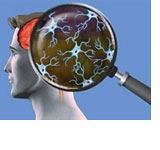 Yesterday I was catching up with my magazine reading at Chapters (the Canadian equivalent of Border) when I came across an ad for a drug ad for bipolar disorder that struck me as slightly different less euphoric, more cautious to be exact compared with the ads that have been bandied loosely in all sorts of magazines in the last decade in the US.
The ad was for a drug called Abilify which must be some verbal riff on Ability (no?) and there was a very clear pronouncement on that ad that admitted they had no idea how the drug even worked. It went like this:
ABILIFY may work by adjusting dopmamine activity instead of completely blocking it and by adjusting serotonin activity. However, the exact way any medicine for bipolar disorder works is unknown.
I find this interesting because its tone seems to depart from other ads that seem somewhat more confident (or if they were less so, it was probably kept in the fine print). But when I went to the webpage, this caveat was a little harder to find, as it was a few clicks away within a page entitlted The Brain, Bipolar I Disorder, and ABILIFY . It provides a “handy” pictoral representation of what may be going on with your brain with bipolar disorder/treatment. I found the series somewhat odd and amusing, especially the one that used a magnifying glass to see” all the neurons and nerves or whatever they are in your brain.
update: so you know, the US and New Zealand are the only 2 countries that allow drug direct to consumer advertising so I am not sure what the ad was doing in this magazine. It was American magazine but in Canada. I would think they would make them get rid of ads like that. Anyone know why it can slip through the border like that?
I would argue that a multiple conception of structures would make subjects cultural creativity easier to explain. If the cultural structures by which subjectivities are formed are multiple, then so are the subjectivities… Because persons, symbols, and objects of cultural reference overlap between structural realms, structurally generated rules, emotions, categories, and senses of self can potentially be transposed from one situation to another. Indeed, if actors commonly have the experience of negotiating and renegotiating the relationships between noncongruent cultural structures, it follows they should have some intellectual distance on the structural categories themselves, that they should be able to view one set of cultural categories from the point of view of others that are differently organized, to compare and critizise categories and categorical logics, to work out ways of harmonization or odering the seemingly contradictory demands of different cultural schemes. A multiple conception of structure, consequently makes human creativity and reflection an integral element in the theory of history, not a philosophically prior metaphysical assumption. p. 213And here is a more engaged review that is a little more critical than my very short comments. As part of a reading group organized by my tireless supervisor, I am also reading The Cultural Locations of Disability written by two of the most prolific scholars in the field, Sharon Snyder and David Mitchell. Since I am a novice in field it is hard for me to judge the two chapters we have so far read but it is a total total total treat reading a book slowly with a group of other folks from a vast range of departments. So far I appreciate the larger arguments presented in the introduction. For example, they point to two broad categories—capitalism and modernity/enlightenment– as driving forces in a new wave of obsession with the disabled. So while capitalism’s insistence on measuring the worth of humans through an abstract and actual ability to labor, marginalizes those who cannot offer their constant labor power (and makes them an “odd” cultural object), modernity–in its desire to march forward to the mysterious plane of progress, offers a technological promise to eradicate what it designates as deviant or primitive. As they nicely sum up: In a culture that endlessly assures itself that it is on the verge of conquering Nature once and for all, along with its own primitive instincts and the persistent domains of have-nots, disability is referenced with respect to these idealized visions. As a vector of human variability, disabled bodies both represent a throwback to human prehistory and serve as the barometer of a future without deviancy. p. 31 I, think, however, they should have also included some discussion of liberalism, which in many ways, was the legal and philosophical engine that helped to naturalize capitalism not to mention it also offered a vision of person, in which self-development, expression, and discrete autonomy was deeply cherished. Seen in this liberal light, disability becomes also a type of tragedy that can be resolved though new technological interventions they discuss under the guise of modernity. I have just started Michelle Murphy’s Sick Building Syndrome and the Problem of Uncertainty: Environmental Politics, Technoscience, and Women Workers, which promises to be quite a tour de force into the contentious politics of uncertainty and the play of perceptibility and imperceptibility that surround one of many many syndromes sick building syndrome that now are part and parcel of the medical and patient advocacy field. Along with this I read and finished Andrew Lakoff’s Pharmaceutical Reason: Knowledge and Value in Global Psychiatry, which will make for great teaching, and has one of the nicest discussions on the way in which psychiatry’s insecure status among the other medical science was one of the driving forces toward embracing the new scientism of the 1980s that coincided with new more general neoliberal trends. Another nice move about the ethnography is that he was able to clarify some of the trends and rationalities of American and European psychiatry by examining how it was received and resisted among more psychoanalytical Argentinian therapists. Very classicial anthropological lens in that sesne. Finally I am in the middle of Play Money: Or, How I Quit My Day Job and Made Millions Trading Virtual Loop and I will say more about it when I am done, which should be soon as I am tearing through it evern night. I have been waiting for this book for a long while now because Dibbell is part of that trinity (Steven Levy, Bruce Sterling, Julian Dibbell) that offers some of the best writing on hackers, the internet, and virtual worlds. And this book continues in that tradition of providing a fantastic read, a vivid ethnographic picture of the topic at hand, along with key insights into the nature of economies, money, and plau within (and outside of) virtual landscapes. What I respect about Julian Dibbell is that he took a long time to get this book out. He started the research in 2003 and then spent a few years writing up. I think there is a lot of pressure to get any material or book on “virtual whatever” out there as quick as possible but for the most part I think that is a mistake. You need to let these things brew a long while or else they won’t acquire that taste of a finished product.

Our itinerary for tonight
We'll be carrying a few forehead lights and a bicycle light, and will really
hope that the sky isn't cloudy at all. We're really going to need the
moonlight. The route follows the national road from Sagunt to Teruel, through
an old train track which was turned into a cycling path. Most of the trip will
be descending, so covering the 150 kilometres shouldn't be too hard, except
that neither of us are specially trained now, unlike 3 years ago. If we end up
having to stop and sleep, that's going to be a problem as we are carrying no
sleepingbags or anything, just our winter cycling clothes. We pretend to take
our time, aka most of the night, to get to our destination, as we obviously
won't be able to cycle fast in the dark. But we'll manage. This is just crazy,
not impossible. :)
 so I had a pretty free day today. This is the first of my Unexpected Series of Events (although, in retrospect, this is somewhat expected since we did lose power at the office yesterday, giving credence to Clair’s story…)
So I spent a little more time in bed, trying to get sleep; but my Mom got me ony my feet, calling via landline all the way from Daet, which just got its power restored a few days prior. She told me that my Tita Mendy will be arriving tomorrow, and she’ll be carrying some of my things too. That’s the second Unexpected.
After that I left the house to deposit my second paycheck from work and payment for my second semester at school. A quick trek back home for lunch, and a few pages of Even Grues Get Full after, I went to Robinsons Place to check mail for free (well, not really free since I usually pay for my cup of Java to have a reason for taking a table.)
As I’ve come to expect of freebies, free WiFi in Robinsons is rather limiting, as it appears to only allow HTTP ,S connections (yeah, no Yahoo! even for the unenlightened masses!) The bandwidth, in fairness, is fairly decent, allowing for a good audio or video stream to pass through without much lag (as long as its from HTTP ,S .)
However, today’s service was extra crappy, as it appears that the WiFi DHCP server went down, and I couldn’t acquire an IP address. It wasn’t much of a problem for me, though: last weekend allowed me to spend a lot of my time hanging out in the place as it was the only place nearby to have seemingly continuous DC power (the storm that passed over pretty much knocked down normal AC power everywhere,) and also gave me an excuse to explore the WiFi network, letting me know such minutiae as the right IP address block and gateway Robinsons Free WiFi used. Hence, even without DHCP, I was able to configure Perlis to connect via a statically-randomly-chosen-by-magic-255-ball IP address. This wasn’t Unexpected.
What was Unexpected was what happened next: as I was surfing the Web, I noticed that the other folks nearby were having difficulties accessing the free WiFi; of course, they didn’t have the information (that I had known by simply being observant) that they needed. Nearest to my table were a couple of Korean-looking foreigners and a doctor-looking guy inquiring each other if they were able to connect. I went near them and asked them about it too.
Yeah, my deductions were correct; the foreigners (hello, Emma and Jay) were Korean students learning English, the guy (hello, Charlie Atienza) was a dentist, and all of them couldn’t connect to the Net. Windows was choking up on them, since it could not acquire an IP address. So, needless to say, I came to the rescue, and within a few minutes (which included trying to change the Korean’s locale settings to Engrish, which we eventually gave up, and forcing me to hibernate Kubuntu and booting to Windows just to find the right Network Settings menu, duh) I got them to have a working, albeit laggy, internet. I couldn’t get Charlie’s laptop working though, since it seemed to suffer another problem althogether :/
At any rate, meeting new people over this problem was by itself quite Unexpected, but that wasn’t the only thing: Charlie noticed my Kubuntu desktop earlier and recognized it immediately as open source. It turns out that Charlie have seen FOSS operating systems in action via Knoppix, and he knows Dr. Alvin Marcelo (of CHITS fame) and Eric Pareja, and is also quite involved in bioinformatics too. Small world indeed! =)
I guess having no power at the office makes for a good adventure, after all. Well, yesterday was quite an adventure in itself (Clair can tell you all that, and more
 ) Today, however, was pretty much very Unexpected, and indeed I’m thankful that so many surprises come my way.
The last Unexpected: I forgot to update my phone number on the calling cards I gave away today. Oh well…
What are the architectural elements of the emerging web of data; how do you build services to thrive in this environment? What needs to change and what needs to return to fundamental principles? How do we bring it all together to make something awesome?An open (data) can of worms
Open data is not a panacea, and presents as many questions as answers. Technology can only solve some of these issues, this presentation outlines some of the other, more fundamental, problems.Etna, a WYSIWYG XML RELAX NG and Gecko-based editor
Startups are largely an American phenomenon. Why? What is it about America that makes startups work there? Could Silicon Valley be replicated in another country?Written up as two essays: The power of declarative thinking
This talk discussed the requirements for Web Applications, and the underpinnings necessary to make Web Applications follow in the same spirit that engendered the Web in the first place.RDF/A: The Easy Way to Publish Your Metadata
RDF/A is a new, and simpler, way of adding metadata to documents, in such a way that the document contains its own metadata--making it easy to turn a home page into a FoaF file or RSS feed.
Date:       Mon, 02 Oct 2006 14:00:11 -0600
From:       Theo de Raadt <deraadt@cvs.openbsd.org>
To:         freebsd-security@freebsd.org
Subject:    Re: FreeBSD Security Advisory FreeBSD-SA-06:22.openssh
Message-ID: <200610022000.k92K0B5P009759@cvs.openbsd.org>
> The OpenSSH project believe that the race condition can lead to a Denial
> of Service or potentially remote code execution
                ^^^^^^^^^^^^^^^^^^^^^^^^^^^^^^^^^
Bullshit.  Where did anyone say this?
Why don't you put people in charge who can READ CODE, and SEE THAT
THIS IS ABSOLUTE BULLSHIT.
and Colin Percival’s dry reply pointing out who made the “ABSOLUTE BULLSHIT”:
Date:       Mon, 02 Oct 2006 14:25:05 -0700
From:       Colin Percival <cperciva@freebsd.org>
To:         Theo de Raadt <deraadt@cvs.openbsd.org>
Cc:         freebsd-security@freebsd.org
Subject:    Re: FreeBSD Security Advisory FreeBSD-SA-06:22.openssh
Message-ID: <452183B1.7000306@freebsd.org>
Theo de Raadt wrote:
>> The OpenSSH project believe that the race condition can lead to a Denial
>> of Service or potentially remote code execution
>                ^^^^^^^^^^^^^^^^^^^^^^^^^^^^^^^^^
> Bullshit.  Where did anyone say this?
The OpenSSH 4.4 release announcement says that, actually:
 * Fix an unsafe signal hander reported by Mark Dowd. The signal
   handler was vulnerable to a race condition that could be exploited
   to perform a pre-authentication denial of service. On portable
   OpenSSH, this vulnerability could theoretically lead to
            ^^^^^^^^^^^^^^^^^^^^^^^^^^^^^^^^^^^^^^^^^^^^^^
   pre-authentication remote code execution if GSSAPI authentication
   ^^^^^^^^^^^^^^^^^^^^^^^^^^^^^^^^^^^^^^^^
   is enabled, but the likelihood of successful exploitation appears
   remote.
Colin Percival
Well, looks like an exquisite own goal. (Found by Squeeeez.)
Then, _rene_ cited a
mail from the current Debian Project Leader Anthony Towns on
debian-devel in #debian.de, who thought that Switzerland was some
foreign word meaning “snowy place” :
Date:       Tue, 3 Oct 2006 15:52:38 +1000
Subject:    Re: Bits from the DPL: Looking forward
From:	    Anthony Towns <aj@azure.humbug.org.au>
Message-ID: <20061003055238.GA4841@azure.humbug.org.au>
On Tue, Oct 03, 2006 at 03:39:20PM +1000, Anthony Towns wrote:
> BSPs in Vienna (Switzerland) [3],
I was assuming, of course, that "Switzerland" was some foreign word
meaning "snowy place", but apparently it's actually a country all of
its own, entirely separate to Austria...
On Tue, Oct 03, 2006 at 03:43:52PM +1000, Anthony Towns wrote:
> (b) Firmware vote
> proposal, as amended by Manon Srivastava (Message-id:
And while _Manon des sources_ might've been a neat French film, I don't
think it's actually got all that much to do with Manoj...
Cheers,
aj
And contrary to the usual biases, this geographic unawareness comes from Australia (which is unequal to Austria ;-) and not from the US. :-) Guys, you all made my day. Kind regards from a currently not so snowy snowy place. :-)
Next.