Search Results: "ana"

28 December 2011

Guido G nther: GNOME Prepaid Manager 0.0.3

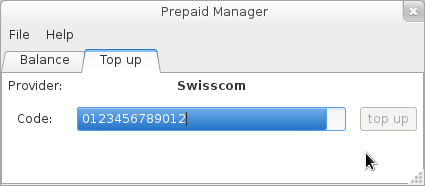
A recent trip to Switzerland made me dig out my prepaid card for UMTS usage again. This resulted in some minor enhancements for Prepaid Manager. The new release handles disabled and missing modems more reliably. It also has some visual feedback if we know the length of the top up code: GNOME Prepaid Manager screenshot This blog is flattr enabled.

27 December 2011

Julien Danjou: Using GTK+ stock icons with pynotify

It took me a while to find this, so I'm just blogging it so other people will be able to find it. I wanted to send a desktop notification using pynotify, but using a GTK+ stock icons. With the following snippet, I managed to do it.
import pynotify
pynotify.init("myapp")
import gtk
n = pynotify.Notification(summary="Summary", message="Message!")
n.set_icon_from_pixbuf(gtk.Label().render_icon(gtk.STOCK_HARDDISK, gtk.ICON_SIZE_LARGE_TOOLBAR))
n.show()
Note that the use of a Label is just to have a widget instanciated to use the render_icon() method. It could be any widget type as far as I understand.

26 December 2011

Tanguy Ortolo: GNOME 3 killing interface consistency

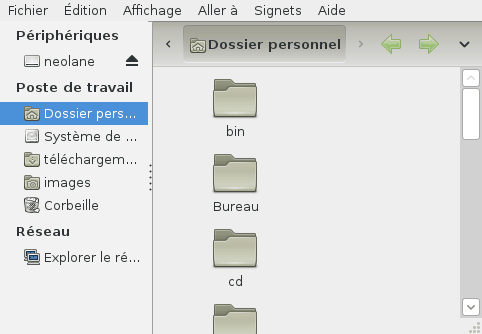
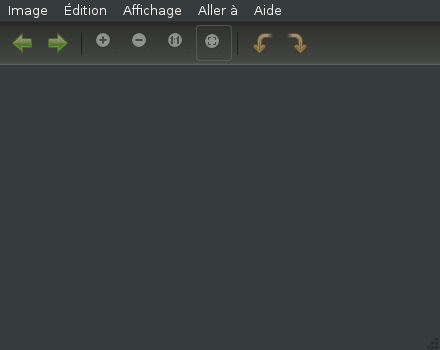
I used to recommend the GNOME desktop for simple users for two main advantages over Windows: Both points are what I call calm advantages, because users will usually enjoy them without noticing. Instead, they will enhance their experience so that they will miss them when they come back to a system which does not provide these features. In fact, being used to that, I do not really consider these points as actual advantages, but rather as a bare minimum for any decent desktop and as very important lacks of some competitors.Well, GNOME 3 already reduced the first point by replacing the menu by a single loooong list of all the available software, although there are still categories at least. Now, with a recent upgrade, it appears that they destroyed the second one, the interface consistency. There used to be a thing called the GTK theme, that the user could choose according to his taste and needs, and all the GTK-based graphical software, including GNOME programs, used to follow that theme. This is no longer the case: now, for instance, Nautilus will look clear, while for some reason Eye of GNOME and Totem will look dark, with no option to make them look like the others.

Nautilus

Eye of GNOME
I used to be a GNOME user, but it has been some time since I stopped using a desktop at all and switched to a window manager that was more efficient according to my usage. However I kept using GNOME software, and I recommended GNOME to new users. Now it seems my arguments for that have reduced to a point where I should really consider recommending Xfce instead.

25 December 2011

Matthew Palmer: The Other Way...

Chris Siebenmann sez:
The profusion of network cables strung through doorways here demonstrates that two drops per sysadmin isn t anywhere near enough.
What I actually suspect it demonstrates is that Chris company hasn t learnt about the magic that is VLANs. All of the reasons he cites in the longer, explanatory blog post could be solved with VLANs. The only time you can t get away with one gigabit drop per office and an 8 port VLAN-capable switch is when you need high capacity, and given how many companies struggle by with wifi, I m going to guess that sustained gigabit-per-machine is not a common requirement. So, for Christmas, buy your colleages a bunch of gigabit VLAN capable switches, and you can avoid both the nightmare of not having enough network ports, and the more hideous tragedy of having to crawl around the roofspace and recable an entire office.

23 December 2011

Wouter Verhelst: Static program analysis with LLVM and clang

"Static program analysis" is a technique whereby a program is verified for errors without actually running it. Finding bugs manually with a debugger and one's brain is tedious, so every shortcut that can help you avoid having to do so is great. There are some commercial tools available to do such analysis, some of which are rather expensive; but there are also some open source tools available to do similar things. One of these is built into clang, the C compiler of the LLVM project. Using it is fairly simple. Instead of compiling something with 'make', compile it with 'scan-build make'. This will set the CC (and similar) environment variable(s) so that before the compiler is ran, the clang static-analysis checker is run over the very same source code. The output of this checker is an HTML file with your source, but with comments added to explain the bugs which the tool found. What does that mean? well, let's look at an example, shall we? <iframe height="500px" src="http://barbershop.grep.be/~wouter/scan-view-example#LN1493" width="80%"></iframe> The iframe above contains one out of three reports produced by a scan-build run over the nbd source code (if there's no iframe, someone scrubbed some HTML in your RSS reader. Just follow the link just above instead). The other two are 'dead assignments', which might mean that I'm currently depending on some undefined behaviour (which would be bad), or it might mean that I'm being overly cautious (which makes my code future-proof, which would be good), or it might mean something else I still need to investigate. But this one is pretty interesting. In the example, there are eight, numbered, comments in the source code. The first seven show the code path which scan-build took through my code before getting at the eighth comment; and the eighth is where things go bad. In this case, when going through the function as shown, we have a NULL pointer dereference. When looking at the scan-build output, it's important to realize a few things. First, the code path shown may be just one of a number of possible code paths. For instance, the null pointer dereference would still happen if the phase function parameter would not contain the NEG_INIT bit with the client pointer set to NULL. However, clang does not show these other code paths; this is presumably an optimization ("if we've already shown that this kind of bug is possible at a particular location through one code path, don't bother recording future instances of that very same bug at the exact same location through another code path"). This means that sometimes, some of the branches shown may be completely irrelevant to the bug at hand. In this particular case, in fact, it's possible to show the bug with just the eighth comment; the first seven are in fact totally irrelevant. Second, the fact that the clang static analyser found a bug does not mean that it's possible to crash the application. Yet. In this particular case, the negotiate function will never be called with the NEG_INIT or NEG_MODERN bits not set, and with the client parameter set to NULL. That's an implicit assertion; there are a few ways in which this function may be called, but the client parameter may only be NULL if NEG_INIT and NEG_MODERN are both set at the same time. Since nbd-server doesn't currently call the negotiate function in that way, it is not currently possible to crash the server by exploiting this bug. But that doesn't mean it won't ever be possible, nor that there isn't a bug in the code. We may assume that the above rules are true, but we never check it. Adding an assertion to that effect should make sure that no future change to the code will accidentally introduce that error and cause a NULL pointer dereference. Is this a silly and useless precautionary measure? Not really. Usually, bugs happen in code not because someone wasn't thinking straight, but because there's so much going on inside a piece of software that it can be too much for any programmer to remember. If a function assumes that its parameters are within a given subset of all possible states, but does not check that this is in fact true, then when (not if) some future change incorrectly introduces a state that is outside of the assumed states, things will break. And that's Bad(TM).

Keith Packard: calypso

Calypso CalDAV/CardDAV/WebDAV for Android and Evolution Ever since I bought my first Palm Pilot in 1997, I ve relied upon a pocket-able device to carry a copy of my calendar and contacts, and for that same database to be present on my laptop. I went through a long list of Palm-compatible devices, including both the Palm Treo and Palm Centro telephones. I even wrote a number of my own Palm applications. Years ago, it was pretty obvious that I d have to find a new phone, but I was stuck looking for something that could provide the same hot-sync functionality. SyncML on the Series 40 I bought a Series 40 Nokia phone in Shanghai that promised SyncML support. Given that I had seen numerous SyncML implementations for Linux, it seemed like I should be able to get something to work. SyncML on the Series 40 is a disaster the phone couldn t actually store all of my contacts, and it couldn t hold half of the data fields I used. So, that phone landed in the box and back to the Centro I went. SyncML on the N900 Nokia kindly sent me an N900 at some point, so I gave SyncML another try. Given that the N900 runs evolution-data-server, and that I ve had evolution-data-server running on my laptop, it seemed like I should be in business. Well, almost. It took several days of hacking to fix bugs in the evolution SyncML back end, then another several days fussing with opensync. I ended up abandoning direct synchronization as unworkable opensync would sit in an infinite loop, or worse, trash my database completely. I finally found syncml-ds-tool , which is a debugging tool that comes with opensync. This tool simply synchronizes a set of disk files, one per contact or calendar entry, with the phone. That worked for well over a year. And then, a few months ago, Bluetooth on the laptop stopped connecting with the phone s SyncML server. I d get ECONNREFUSED every time I tried to use it. So much for the N900. DUN still worked, mostly, although it too would get ECONNREFUSED at times, but retrying seemed to make it work. However, While the N900 SyncML solution worked, I discovered another thing I wanted contacts and calendar entries stored in individual files and revision controlled with git. This makes it reasonable to delete stale calendar entries and know that they re never really gone, just left behind in an older version of the calendar. And, if you mess up, you can recover by poking at the database with git directly. I switched back to the venerable Palm Centro; it turns out that calendar and contacts are more important to me than being able to surf the web on my phone. Alas, my Centro went swimming in August and has passed on to the great electronics recycling house in the sky. I pulled the SIM out and switched back to the N900. I got my contacts imported on the N900 by copying files over the net work; not a long-term strategy, but at least I had phone numbers again. There was no hope for my calendar. I started looking for a solution in earnest. How about Android? At this point in my story, I m sure you re asking why I didn t just use one of the numerous Android phones that came through my hands. The answer is simple my calendar and contacts are probably some of my most personal data, and I m not willing to store them outside of my direct control, for reasons similar to those which are driving the development of the FreedomBox. When Android first came out, it could only talk to Google services, which didn t meet my hard requirement for personal data storage. One of my co-workers had his Google account suspended for violating the terms-of-service; he asked what he had done, but they wouldn t say. He asked if he could get his data back, and they said no . They invited him to create a new account, but it would not ever get any of the old data. A few days later, he got a nice apologetic email letting him know that they d made a mistake and that he hadn t, in fact, violated any of the terms-of-service, and that his old account was restored with all of his data intact. Wasn t that nice of Google? WebOS? I got a WebOS phone over the summer and discovered that while it had multiple contact/calendar back ends, none of them used standard protocols and so you only had the choice between multiple corporate data centers, which isn t actually a choice at all. Furthermore, the WebOS phone refused route PAN packets over the phone network, even though I have a data plan which allows this. It s not that it couldn t support it, it s that it refused. A couple of weeks after the WebOS phone arrived, HP canceled all of their WebOS hardware products, which made me less interested in trying to solve this problem. Android recovers About the same time the WebOS phone arrived, I discovered that Google had published enough information about the calendar/contacts internals for Marten Gajda to write CalDAV-Sync and CardDAV-Sync. And then, Andrew McMillan wrote aCal, which is a complete replacement for the built-in calendar and contacts applications and supports CalDAV and CardDAV. With two different standards-compliant solutions available, it seemed like it might be time to try Android again. I d love for CardDAV-Sync and CalDAV-Sync to become free software like aCal is. Andrew makes money from aCal by offering it for sale via the Android Market, while still publishing the sources for those who want to build their own copy. CalDAV/CardDAV on Linux I think the most widely known CalDAV server for Linux is probably DAViCal, a huge pile of PHP and SQL sitting on top of Apache. I m sure it s suitable for running on a server and being accessed over the internet, but I m not interested in that, nor am I interested in having my laptop run Apache and PostgreSQL. I found a tiny little CalDAV server, Radicale, which seemed like a lot better fit. It s written in Python and uses the usual Python HTTP server infrastructure, which provides SSL and authentication support along with some fairly convenient APIs for parsing and generating HTML. Before long, I discovered that Radicale was actually too simple for my needs. It stores the whole calendar in a single file, re-parsing it whenever a request is made, so a calendar with just hundreds of entries caused the server to slow down enough that evolution would time-out when talking to it. Also, Radicale doesn t actually parse the calendar entries completely, it has some ad-hoc code that finds various pieces of data, but without dealing with the whole syntax. I started hacking at Radicale to see how far I could get. I changed the storage code to store one event per file, then added hooks to use git for change management. Then, I found a full vcalendar/vcard parsing library in python, vobject, which I used to replace the ad-hoc parsing code. Finally, I added support for VCARD entries as well, allowing the system to store both calendar and contact information. Introducing Calypso, a CardDAV/CalDAV server With this much divergence from the original project, I ve figured I d best rename things to avoid confusion, so I decided to call it calypso , after a brief trip through the dictionary looking for names starting with ca . Calypso works with evolution, iceowl and the Android CalDAV/CardDAV plugins. It does not yet work with aCal; for some reason aCal cannot find any calendars on the server. Calypso also supports importing calendar changes from the command line, allowing you to integrate support into a text-based email application like notmuch or mutt. Calypso is available via git from git://keithp.com/git/calypso and is distributed under the GPL (v3 or later). I still consider it a work derived from Radicale, and so the code retains all of the Radicale copyrights along with my own. Using Calypso Initial setup Calypso runs as a regular user, all data are stored in ~/.config/calypso. To initialize calypso:
$ mkdir ~/.config/calypso ~/.config/calypso/calendars
$ cat > ~/.config/calypso/config << EOF
[server]
ssl=true
certificate=/home/keithp/.config/calypso/ssl/server.crt
key=/home/keithp/.config/calypso/ssl/server.key
[acl]
;type=htpasswd
type=fake
filename=/home/keithp/.config/calypso/passwd
Running calypso Then run calypso:
$ python ./calypso.py
No, I haven t figured out how to install it Creating new calendars To add a new database:
$ mkdir -p ~/.config/calypso/calendars/private/my_calendar
$ cd ~/.config/calypso/calendars/private/my_calendar
$ git init
$ git commit --allow-empty -m'initialize new calendar'
The new calendar should now be visible as https://localhost:5233/private/my_calendar You can add files to the directory at any time; calypso will check the directory mtime at each operation and update its internal state from that on disk automatically when the directory changes. Importing files Given a set of files with VCALENDAR or VCARD entries, you can import them with:
$ calypso --import private/my_calendar <filenames...>
This will update any changed entries and add any new ones. ToDo list for calypso
  1. Document the config file contents.
  2. Make it installable
  3. Figure out what aCal wants
  4. Support calendar creation
More Android info I m running cyanogenmod on my Nexus S as that provides PAN support. With PAN, I can create a network link between laptop and phone which doesn t depend on any local WiFi infrastructure and which gives both phone and laptop static IP addresses, allowing me to configure the sync URLs statically on the phone. I d use mDNS, but Android doesn t bother to support that.

22 December 2011

Biella Coleman: The Best of NYC

Rosco-Biella-on-Train Now that the semester is done and now that I have compiled my crazy paperwork for Canada (wow, it is a lot), I will be heading in six days to the wonderful city of Montreal to settle down, at least for a few years. I am ready to leave but it is not an easy move, as I like NYC and my job. I came to New York City for the first time at the age of 19 after spending a year on a ship and I rather did not like the city for those 5 years, although loved my college years and all the time I spent chasing a Frisbee while running on grassy fields all over the east coast. When I left in 1998, I said, never again. But the future is impossible to predict so of course I came back when I got a job, my only job, at NYU MCC and headed quite happily here (incidentally from Canada). And NYC was much much much better the second time around, most likely as I had a salary, and here is what I <3 and loved about the city. 1. Not having a car (which will still be the case in Montreal)
2. The bike path on the Hudson, especially the gardens and the Irish famine memoriall
3. The farmer s markets (won t miss the prices though)
4. High walkability factor (and though I did not love my hood, I loved being 1.5 blocks from my office)
5. The music jam circles in Washington Square Park (I was always left wondering if they were spontaneously generated or long standing groups // prolly both) and the occasional but mighty impressive hawks in the park.
6. Coney Island especially under certain special conditions when you can rly enjoy the lights radiating out of the amusement park
7. Leaving the city for some nature time
8. 24 hour trains (despite not loving them cuz the noise robbed some life from me every time I took them)
9. Grand Central Station s ceiling
10. The gluten free options (this is going to be the hardest to give up as Montreal sort of sucks in comparison)
11. Being able to take your small dog on the train ;-) which is only a recent pleasure
12. My department
13. East Asian Starr library at Columbia University (still my favorite library in the world) and totally loathed NYU s Bobst, ugly on the outside, ugly on the inside
14. NYC sunrises which I have like only seen 3 times (sadly) but they have been stunning every time
15. Walking across the Brooklyn Bridge
16. HOPE
17. The Highline
18. The Strand
19. My favorite thing = Massive Snow Storms in the City (good thing I am moving to Canada, eh?)

Gustavo Noronha Silva: AIClass and vacations

One of my side projects for these last months was to enroll on the online Introduction to AI class, with Peter Norvig and Sebastian Thrun, professors at Stanford. Through it I also learned about the Kahn Academy. I must say that getting to know these efforts made me feel similar to when I found Free Software: it s hard to believe that such great things exist! I learned some really cool stuff, and was also introduced to the amazing work of Sebastian Thrun with self-driving cars, it was an awesome experience! Last weekend I took the final exam, and today I got the certificate of accomplishment. It was delivered as a signed PDF which can be checked with a certificate they provided, pretty neat. I m very happy, and motivated to enroll on more such courses in the future =). Now it s time to cool down, though. My vacations start today, and on the weekend I ll travel to the sunny Fortaleza, in northeastern Brazil, to enjoy some nice beaches and get some tan. See you next year!
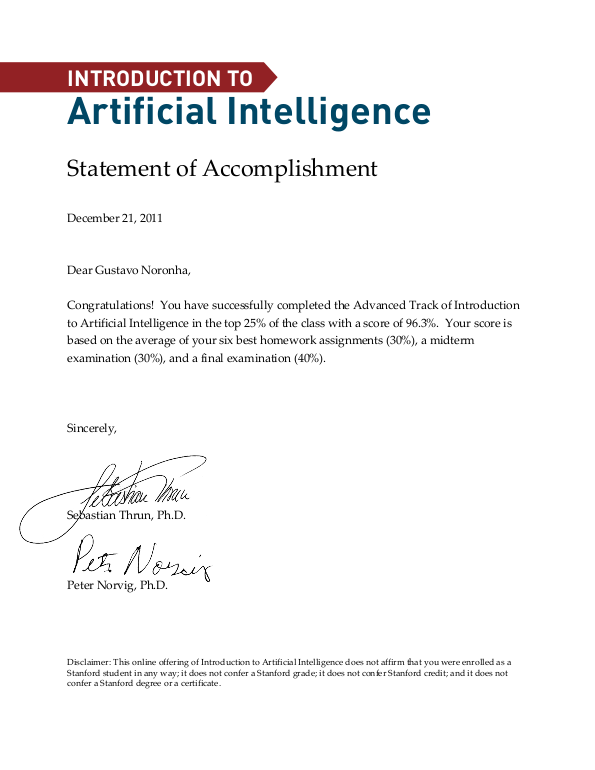
Statement of Accomplishment - AIClass 2011

Statement of Accomplishment - AIClass 2011

19 December 2011

Jonathan Wiltshire: Reinstalling at arm s length

Recently I had need to re-purpose a server and for convenience, I decided to do a complete wipe and reinstall since it had previously been used for all sorts of package testing, experiments, dak debugging, the list goes on. I took a careful backup and then cooked up some USB installation media, but it took so long to boot (USB1.1, yay) I ran out of time before the building was locked. Since this box has two hard disks, and not being one to back down from a challenge, I eventually reinstalled it over the weekend with nothing no install media, no reinstall robot or intelligent hands just a reliable internet connection and a healthy dose of courage. Here s how. Target: reinstalled machine with the same network settings, ssh host keys, and other minor configuration ported. The disk layout is to be RAID-1 containing LVM, with separate /var volume and separate /boot partition, also RAID-1.
  1. One disk in the box contained old data, so I cleared that out and wiped it (including the MBR for good measure) and partitioned it.
  2. I set up a degraded RAID-1 array for a small /boot partition, a large RAID-1 array for the LVM and a swap partition.
  3. I mounted the new partitions in the correct layout in /mnt and used debootstrap(8) to get a very basic root set up. I also bind-mounted /sys, /proc, /dev and /dev/pts for now, they can be done properly when the root is a bit more mature.
  4. Next, I copied into the new root /etc/apt/sources.list and chroot(8)ed into it. Now I could apt-get update and tasksel install standard to get an almost fully-functional base system. At this point it is also sensible to install locales, tzdata and console-data and dpkg-reconfigure them, followed by mdadm and lvm2 if required and openssh-server so you can get back in after rebooting. Some or all of these may already be installed by tasksel.
  5. Time to install a kernel before leaving the chroot: apt-get install linux-image-2.6, followed by grub-pc which should detect both installations and set up menu entries for them.
  6. Back in the old system, I copied in the network, hosts, resolv and hostname configuration files, and set up /etc/fstab to my liking.
  7. Install grub to both hard disks if it isn t already so (dpkg-reconfigure grub-pc) and again check that it detects both installations and creates the right menu entries. At this stage, booting from either hard disk will allow the loading of either the new or old installations, which is exactly what we want. It s now time to umount the new installation.
  8. Now I followed the excellent guide for remote kernel upgrades at http://ariekanarie.nl, except in this case we are using the same method to try booting the new system and fall back to the old one if it s a disaster.
  9. Reboot and hope!
At this point I rebooted to find myself back in the old kernel, which was disappointing this means the new kernel has panicked and rebooted, and grub has fallen back to the old system (exactly as planned). It turned out there was nothing in /dev at boot time, and udev doesn t start early enough to populate it before panic. That s easily solved by mounting the installation again and using MAKEDEV as a seed.
  1. With a bit of luck, you re now in the new installation and can dpkg-reconfigure grub-pc again to install grub to both hard disks again. This isn t strictly necessary, but it records this choice in debconf so future upgrades will automatically upgrade the bootloader everywhere it s needed.
  2. Now I could do some tidying up, mount the old installation and copy over all the data I wanted, and after careful checking wipe the first disk clean ready to be added into the RAID arrays.
  3. Finally, add the old disk to the RAID arrays so they are fully redundant.
Sources:
http://www.michael-hammer.at/server_config/debootstrap/
http://d-i.alioth.debian.org/tmp/en.i386/apds03.html
http://www.debian.org/releases/stable/amd64/apds03.html.en
https://wiki.archlinux.org/index.php/Convert_a_single_drive_system_to_RAID
http://ariekanarie.nl/archives/211/remote-kernel-upgrade-with-debianubuntu-and-grub2
Comments
Reinstalling at arm s length is a post from: jwiltshire.org.uk Flattr

Clint Adams: HashKnownHosts

JESUS FUCKING CHRIST I HATE HashKnownHosts SOOOO MUCH

Pau Garcia i Quiles: Reminder: FOSDEM 2012 CrossDesktop DevRoom Call for Talks

FOSDEM is one of the largest gatherings of Free Software contributors in the world and happens each February in Brussels (Belgium). One of the developer rooms will be the CrossDesktop DevRoom, which will host Desktop-related talks. Are you interested in giving a talk about open source and Qt, KDE, Enlightenment, Gnome, XFCE, Windows, Mac OS X, general desktop matters, mobile development, applications that enhance desktops and/or web? Hurry up and submit your proposal, deadline is December 20th! There is more information in the Call for Talks we published one month ago. If you are interested in Qt/KDE, come visit us at the KDE booth. If you add yourself to the KDE FOSDEM 2012 wiki page, we will be able to better organize the usual dinner on Sunday and/or smaller meetings for special interest groups .

Sune Vuorela: Am I online? Network status aware apps II

So. Recently I blogged about Network status aware apps, and some time later, I got asked by a developer How do I see if I m online if I m not using network manager? and I replied with some dbus commands and he shook his head in despair. So, I ended up writing a small plasma widget targetting developers and very powerusers that can tell you the current state of the network and offers to add yet another manual datapoint to the network status. So. In line with another blog post of mine about getting the small utilities we all write and just let stay in a drawer (or somewhere in ~ on a local computer), I m announcing it s existance. That application became famous and even mentioned in Linux Weekly News, but I don t expect that here. But anyways, here it is: http://quickgit.kde.org/?p=scratch/sune/networkstatus.git. And a picture of it, it is not pretty but well, it s a tool mostly for developers, not for end users. Have fun, and I hope to see more of these small projects from various people.

18 December 2011

Kai Wasserb ch: Miscellaneous stuff #1

This year is in its last throes and a few things, that don't really warrant their own blog post, have piled up here. To get them out of the door before 2012 starts, I'd like to go over them in the next few lines. First: there seem to be a group of rather cheap people who want to have the Humble Indie Bundle #4, but don't like to give at least 0.01 USD. Really guys, you seem to have enough money for a fast-enough computer and a (broadband) internet connection (otherwise downloading the circa 2.8 GB of games won't be a lot of fun), but you don't have the 0.01 USD to spare? If you don't like closed-source games (a sentiment I can truly understand, in fact, that was something I really pondered before buying) then just don't play them. But searching for a torrent for the HIB#4 while it is still being sold to just avoid paying the minimal fee, I can't understand. Now, some might wonder how I know this. The easy answer is, I blogged about buying the HIB#4 and mentioned, that I downloaded the games through a torrent (you can choose between direct downloads and torrents on your "login page") and a lot of people started hitting the blog entry with a referrer from a search engine, showing they'd searched for "humble indie bundle 4 torrent". Please make a decision: don't play the games or if you wish to, then pay something. The people behind those games make it easy and, in comparison to many other game studios, a fair offer. That should be worth something. For those of you who loved Josephine, there is a new awesome piece of art, Creative Commons licensed, by An-U (German homepage). The title (and the drawing) are derived from the equally awesome Katzenjammer song "On the Devil's Back" (in case you're still looking for a present, you might want to consider one of their CDs or a ticket to their next concert near you). Then, I wanted to thank all those people, who donated something over the course of 2011! Thanks a lot, especially for showing me, that you liked my services/work enough to even consider a donation! It means a lot to me, to know this. At year's end everybody is doing statistics and while I won't bore you with long in-depth analysis, I thought I throw out, what the top posts/things where (so far). Maybe you find yourself represented in there or maybe you find something new. In no particular order: I hope your 2011 was a good year and I wish you all the best for 2012! I'm pretty sure Debian will continue to grow, but there is also a lot of work ahead, maybe you can join the effort and make Debian that much more awesome!

16 December 2011

Julien Danjou: My OpenStack work

Like I already wrote here last week, I've been heavily working on OpenStack for the last weeks. My first assignment was to package OpenStack for Debian. The packages already present in unstable were mainly done by Thomas Goirand, who based its work on the one done in Ubuntu. Therefore, the packages where not in a very good shape for Debian. Today Ghe Rivero and I (members of the OpenStack Debian packaging team) managed to push the OpenStack Essex 2 milestone into unstable with great success. You can now test and deploy OpenStack Essex 2 very easily! Packaging OpenStack made me write several patches, mainly related to packaging, patches which were all accepted and merged by upstream. This is nice because most of the OpenStack Debian packages lost their debian/patches directories now! Finally, I've finished to implement one blueprint I really missed: the ability to boot from an ISO image using libvirt. The code still needs a review, but it should be included in the Essex 3 milestone if everything's right.

Jamie McClelland: Privilege Separation

What are the biggest security threats to my laptop? Almost all the software I install is vetted and signed by a member of the Debian team. I run reliable virus software on our mail server. My disk is encrypted and xscreensaver locks my screen after a few minutes of inactivity. What else? The two biggest threats I've recently considered are: web browsing and non-free software or software that doesn't come from Debian (I regularly have to use skype and zimbra, for example). To mitigate these risks, I've configured these programs to run as their own users, thus adding a layer of separation between the programs and my primary user account, which has access to my gpg/ssh keys and email. With a program like zimbra it's fairly easy. I created a zimbra user, added my primary account's public ssh key to /home/zimbra/.ssh/authorized_keys, and add the following stanza to ~/.ssh/config:
Host zimbra 
Hostname localhost 
User zimbra 
ForwardX11 yes
Now I can start zimbra with:
ssh zimbra ./zdesktop-launch
Skype was a little harder, since the skype client has to access the audio system. With pulseaudio, though, it's a snap. I copied /etc/pulse/default.pa to ~/.pulse/ and added the line:
load-module module-native-protocol-tcp auth-ip-acl=127.0.0.1
Then, I added /home/skype/.pulse/client.conf with the contents:
default-server = 127.0.0.1
[Note: Jamie Rollins and dkg have pointed out that this arrangement allows any user on my laptop to send arbitrary data to pulseaudio, running as my primay account. They suggested configuring pulseaudio to listen on a unix-domain socket, and then configuring pulseaudio to only permit access to users in a particular group.] iceweasel is the most complicated. In addition to the pulseaudio trick, I had to make two other allowances. First, there are a lot of processes that launch a web browser in a number of different ways (sometimes asking for a new session, other times adding a tab to an existing one, sometimes passing an URL as an argument, etc). The one that I got the most stuck on was mutt. Sometimes I want to see how an HTML message looks in iceweasel. Via mailcap, mutt creates a temp file with the html content and then launches a web browser to view the file. As can be reasonably expected, this temp file is owned by my primary user, and only read-able by the owner. That means my iceweasel user can't read it. Eventually, I decided the easiest way to deal with these various scenarios was to write a simple bash script to launch my web browser (see below). I registered it via update-alternatives, so most reasonable programs that want to launch a web browser will use it. The second issue is that I use the monkeysphere xul plugin to verify TLS certificates, which requires iceweasel to communicate with my monkeysphere validation agent. My agent runs as my primary user and by default only responds to queries from my primary user. Fortunately, monkeysphere is well-designed and can handle this situation. As you can see from my web launcher script, I pass MONKEYSPHEREVALIDATIONAGENTSOCKET=$MONKEYSPHEREVALIDATIONAGENTSOCKET when calling iceweasel. In addition, I added the following before I exec monkeysphere-validation-agent:
export MSVA_ALLOWED_USERS="iceweasel jamie"
With this simple infrastructure setup, it's possible to easily isolate future programs as well. Lastly... here's the script for launching iceweasel.
#!/bin/bash
stdin=
new_session=no
url=
for arg in "$@"; do
  if <span class="createlink"> &#34;&#36;arg&#34; &#61;&#126; &#94;-- </span>; then 
    if [ "$arg" = "--new-session" ]; then
      new_session=yes
    elif [ "$arg" = "--from-stdin" ]; then
      stdin=yes
    fi
  else
    url="$1"
  fi
done
if [ "$stdin" = "yes" ]; then
  temp=$(mktemp)
  while read line; do
    echo "$line" >> "$temp"
  done
  # it must be readable by the iceweasel user
  chmod 755 "$temp"
  url="file:///$temp"
fi
args=
if [ "$new_session" = "yes" ]; then
  args="--no-remote -ProfileManager"
fi
if [ -n "$url" ]; then
  args="$args '$url'"
fi
ssh iceweasel "MONKEYSPHERE_VALIDATION_AGENT_SOCKET=$MONKEYSPHERE_VALIDATION_AGENT_SOCKET iceweasel $args" &
[ -f "$temp" ] && sleep 5 && rm "$temp"
Comments by email... Hi, http://current.workingdirectory.net/posts/2011/privilege-separation/ has good intentions but afaik it does not improve security much. X applications can sniff your passwords and inject commands to your terminal emulators. I personally use xpra to get a similar solution without the hazards of X. I've been using it for two months now both at work and home. There are still bugs but svn version is getting better all the time. See for example my reply to https://grepular.com/ProtectingaLaptopfromSimpleandSophisticated_Attacks Timo

Alexander Reichle-Schmehl: Release Critical Bug report for Week 50

The bug webinterface of the Ultimate Debian Database currently knows about the following release critical bugs:
In Total:1680
Affecting Wheezy:1038
Wheezy only:139
Remaining to be fixed in Wheezy:899
Of these 899 bugs, the following tags are set:
Pending in Wheezy:56
Patched in Wheezy:154
Duplicates in Wheezy:52
Can be fixed in a security Update:34
Contrib or non-free in Wheezy:10
Claimed in Wheezy:0
Delayed in Wheezy:5
Otherwise fixed in Wheezy:68
Ignoring all the above (multiple tags possible) 595 bugs need to be fixed by Debian Contributors to get Debian 7.0 Wheezy released. However, with the view of the Release Managers, 929 need to be dealt with for the release to happen. Please see Interpreting the release critical bug statistics for an explanation of the different numbers.

Kai Wasserb ch: Humble Indie Bundle #4 rocks!

Yesterday I bought my copy of the Humble Indie Bundle #4. And while the donation part is a good thing, I directed most of my payment to the developers of the games to allow them to make more games, which run natively on Linux. I haven't played much yet (no time) and just tried out the game for which the Torrent finished first (Bit.Trip.Runner). The nice thing about that game is, it is available as a Debian package, the not-so-nice thing about said package is, that it installs stuff in places where it shouldn't and has tons of wrong file properties like ownership of the files... The Depends line is also more or less pointless, as it just lists the needed packages, but not the minimal versions. Hopefully these things will be fixed in a future package version. Apart from that, the game in its retro look is sort of addictive. Yes, it's "just" simple Jump'n'Run, but it is a lot of fun to play. Partly because you "play" a simple melody, when you clear obstacles and collect the gold and other goodies. Anyway, long story short, if you want a few nice DRM-free games running natively on Linux (in my case with the Mesa3D drivers for my Radeon), I can recommend this bundle. And maybe the games get open-sourced in the future as has been done previously. None of these games are so called AAA titles, but that doesn't mean they can't provide some fun hours. And to top it off you don't need Wine or something else to run them on your Linux system.

Kai Wasserb ch: QApt was accepted into Debian's archives

Today QApt was accepted into Debian's archives. It took me some time, in fact a lot more than I hoped it'd take, to get the final pieces into place [UPDATE](the inital work was done by Jos , the co-maintainer of QApt)[/UPDATE], but now you're able to use QApt as a simple-to-use wrapper around the whole APT, DPKG and Xapian stack. The target users are C++ programs using the Qt framework. The use cases range from graphical package manager to allowing easy updates of certain packages from within another program. My interest in QApt comes from me being co-maintainer of Kingston, the update notification Plasmoid for KDE. We have a wishlist bug open against Kingston, requesting the addition of a "do update" button. We could have used the update-manager infrastructure, but both Sune and myself weren't too thrilled with that. Luckily there is an alternative in the form of QApt. I'll hope I find some time during the next weeks to implement the update mechanism for Kingston. The next things to come for QApt will be minor cleanups, already waiting in Git, a new upstream bug fix release (no date is set yet) and a multiarchification (already partly done in a local branch).

Patrick Schoenfeld: Why Gnome3 sucks (for me)

When I started using Linux, I started with a desktop environment (KDE) and then tried a lot of (standalone) window managers, including but not limited to Enlightenment, Blackbox, Fluxbox and Sawfish. But I was never really satisfied as it felt as if something was missing.
It then came, that I became a user of a desktop environment again. Now I have been a GNOME user for at least five years.

Among the users of desktop environments, I'm probably not a typical user. In 2009 my setup drifted from a more or less standard GNOME 2.3 to a combination of GNOME and a tiling window manager, which I called Gnomad, as a logical continuation of something I've done for a long time since using computers: Simplifying tasks, which are not my main business.
I just didn't want to care about the hundred techniques to auto mount an USB stick or similar tasks, which are handed just fine by a common Desktop Environment. And I didn't want to care about arranging windows, because after all the arrangement of my windows was always more or less the same.

But there were rumors that GNOME3 significantly changed the user experience and I wanted to give it a try at some point in the future. This try was forced by latest updates in Debian unstable, so I tested it for some days.

Day 1: Getting to know each other
My first day was GNOME3 was a non-working-day. When I'm at home I'm mostly using my computer for some chatting and surfing in the web, so I don't have great demands on the
Window manager/Desktop Environment.
Accordingly the very first experience with GNOME3 was mostly a good one, except some minor issues.
The first thing to notice in a positive way, is the activities screen. I guess this one is inspired by Mac Expos , but its nevertheless a nice thing, as it provides an overview over opened applications.
Apart from that, its possible to launch applications from there. The classical application menu is gone, but this one is better. One can either choose with the mouse or start typing the applications name and it will incrementally search for it and show it immediately. Hitting Enter is enough to launch the application.
Additionally, on the left, there is a launcher for your favorite applications.

This one lead to the first question mark above my head.

I had opened a terminal via this launcher and now wanted to open another terminal, after I switched to a different workspace.
So I just clicked it again and had to notice that GNOME developers and I have a different perception, of whats intuitive, because that click
led me back to the terminal on the first workspace. It took me some minutes to realize how I'm able to start a second terminal, by just right clicking on the icon and click on Open new window or similar.

Day 2: Doing productive work
The next day was a work day and I was on a customer appointment to do support/maintenance tasks. On this appointments my notebook is not my primary work machine and so I could softly go over to using GNOME3 when doing productive work.
I can say that it worked, although I soon started to miss some keystrokes which I'm used to. Like switching workspaces with Meta4+Number or at least switch workspaces by cycling through them with STRG+Alt+Left and Right Arrow Keys. While the first is a shortcut specific to my GNOmad setup, the latter is something I knew back from the good old Gnome2 days.
It just vanished from the default keybindings and did nothing. Appearently, as I learned afterwards, it has been decided to use the Up/Down arrow keys instead.

While for new users this will not be a problem at all, this is really hard for someone using GNOME for about 5 years as these are keystrokes one is really used to.

Day 3: Going mulithead

The appointment ended on the third day at afternoon, so when I came back into the office, I had the chance to test the whole thing in my usual work environment. At office I have my notebook attached to a docking station which has a monitor attached to it. So usually I work in dual head mode, with my primary work screen being the bigger external screen.

That was the point, where GNOME3 became painful.

At first everything was fine. GNOME3 detected the second monitor and made it available for use with the correct resolution. But things started to become ugly, when I actually wanted to work with it. GNOME3 decided that the internal screen is the primary screen, so the panel (or what has stood around from it) was on that screen. I can live with that, as thats basically the same with GNOME2, but the question was: How to start an application in a way that its started on the big screen?
I knew that I couldn't just use the keystrokes I'm used to, like Meta4+p, which were bound to launching dmenu in my GNOmad setup, as I knew that I was not running GNOmad at present. So I thought hard and remembered that GNOME had a run dialog itself, bound to Alt+F2. Relieved I noticed, that this shortcut had not gone away. I typed 'chromium' and waited. A message appeared telling me that the file was not found. Okay. No, wait. What? I did not uninstall it, so I guess it should be there.
I tried several other applications and all were told not to be available. Most likely this is a bug and bugs happen but this was really serious for me.

Another approach was to use the activity screen. At first I used it manually, by moving the mouse to there, launch chromium (surprise, surprise, it was still there) and moved it to the right screen, because I haven't found a shorter way to do that. There must be a better way to that, I thought and so I googled. Actually there are more then one better way to do it.

  1. There is a hidden hot spot in the corner of the second screen, too. If one finds and moves the mouse over it, the activity screen will open on the primary monitor and on the secondary monitor, but the application list is only one the first. One can now type what he wants to start, hit Enter and Tada its on the screen where my mouse is. Not very intuitive, in my opinion, and I really would prefer if I had the same level of choice on the second screen.
  2. I can hit Meta4 and its opening the activitiy screen. From there everything is the same as described above.

There were many other small quirks that disturbed me, like that the desktop has vanished away (I used it seldom, but it was irritating that it wasn't there anymore), shortcuts I were missing and so on. lot of this is really specific to me being used to my previous setup, but I can't help myself but I really need those little helpers.

So, at some point I decided to go back to GNOmad again, knowing that I will run into the next problem again, because I would have to permanently disable the new gnome3 mode and instead launch GNOME in the fallback mode. Luckily that is as easy as typing the following in a terminal

gsettings set org.gnome.desktop.session session-name 'gnome-fallback'

I quickly got this working again, but had to notice another cruel thing in GNOME3, that even disturbed my GNOmad experience. GNOME3 now binds to Meta4+p to a function, which switches internal/extern monitor setting, and now that is a real PITA.

From this point on another journey began, that eventually ended in switch to a Gnome/Awesome setup but this is a different story for a different time.

15 December 2011

Dirk Eddelbuettel: R / Finance 2012 Call for Papers

Last night, the text below went out to r-sig-finance along with updates to the R/Finance website and its Call for Papers page; followed by some tweeting and Goggle+'ing (and please do feel free to retweet and share at will...)
Call for Papers: R/Finance 2012: Applied Finance with R
May 11 and 12, 2012
University of Illinois, Chicago, IL, USA
The fourth annual R/Finance conference for applied finance using R will be held on May 11 and 12, 2012 in Chicago, IL, USA on the campus of the University of Illinois at Chicago. The two-day conference will cover topics including portfolio management, time series analysis, advanced risk tools, high-performance computing, market microstructure, and econometrics. All will be discussed within the context of using R as a primary tool for financial risk management, portfolio construction, and trading. Over the past three years, R/Finance has included attendees from around the world and featured keynote presentations from prominent academics and practitioners. We anticipate another exciting line-up for 2012 --- including keynote presentations from Blair Hull, Paul Gilbert, Rob McCulloch, and Simon Urbanek. We invite you to submit complete papers or one-page abstracts (in txt or pdf format) for consideration. Academic and practitioner proposals related to R are encouraged. We welcome submissions for full talks, abbreviated "lightning talks", and for a limited number of (longer) pre-conference seminar sessions. Presenters are strongly encouraged to provide working R code to accompany the presentation/paper. Data sets should also be made public for the purposes of reproducibility (though we realize this may be limited due to contracts with data vendors). Preference may be given to presenters who have released R packages. Travel and accommodation grants may be available for selected presenters at the discretion of the committee. In addition, the conference will award prizes for best papers. To be eligible for a best paper award, a submission must be a full paper. Extended abstracts, even if a full paper by conference time, are not eligible for a best paper award. Please send submissions to: committee at RinFinance.com. The submission deadline is January 31, 2012. Submitters will be notified of acceptance via email by February 28, 2012. Notification of whether a presentation will be a long presentation or a lightning talk will also be made at that time. Additional details will be announced at this website as they become available. Information on previous year's presenters and their presentations are also at the conference website R/Finance 2009, 2010 and 2011. For the program committee:
Gib Bassett, Peter Carl, Dirk Eddelbuettel, Brian Peterson,
Dale Rosenthal, Jeffrey Ryan, Joshua Ulrich
So see you in Chicago in May! Update: Corrected urls to past conference thanks to heads-up by Josh. Thanks!

Next.

Previous.