Search Results: "ag"

13 April 2020

Giovanni Mascellani: DKIM for Debian Developers

What is DKIM? DKIM (DomainKeys Identified Mail), as Wikipedia puts it, "is an email authentication method designed to detect forged sender addresses in emails (email spoofing), a technique often used in phishing and email spam". More prosaically, one of the reasons email spam is so abundant is that, given a certain email message, there is no simple way to know for certain who sent it and how reputable they are. So even if people having addresses @debian.org are very nice and well-behaving, any random spammer can easily send emails from whatever@debian.org, and even if you trust people from @debian.org you cannot easily configure your antispam filter to just accept all emails from @debian.org, because spammers would get in too. Since nearly ten years DKIM is there to help you. If you send an email from @debian.org with DKIM, it will have a header like this:
DKIM-Signature: v=1; a=rsa-sha256; c=simple/simple; d=debian.org;
    s=vps.gio.user; t=1586779391;
    bh=B6tckJy2cynGjNRdm3lhFDrp0tD7fF8hS4x0FCfLADo=;
    h=From:Subject:To:Date:From;
    b=H4EDlATxVm7XNqPy2x7IqCchBUz1SxFtUSstB23BAsdyTKJIohM0O4RRWhrQX+pqE
     prPVhzcfNALMwlfExNE69940Q6pMCuYsoxNQjU7Jl/UX1q6PGqdVSO+mKv/aEI+N49
     vvYNgPJNLaAFnYqbWCPI8mNskLHLe2VFYjSjE4GJFOxl9o2Gpe9f5035FYPJ/hnqBF
     XPnZq7Osd9UtBrBq8agEooTCZHbNFSyiXdS0qp1ts7HAo/rfrBfbQSk39fOOQ5GbjV
     6FehkN4GAXFNoFnjfmjrVDJC6hvA8m0tJHbmZrNQS0ljG/SyffW4OTlzFzu4jOmDNi
     UHLnEgT07eucw==
The field d=debian.org is the domain this email claims to be from and the fields bh= and b= are a cryptographic public key signature certifying this fact. How do I check that the email is actually from @debian.org? I use the selector s=vps.gio.user to fetch the public key via DNS, and then use the public key to verify the signature.
$ host -t TXT vps.gio.user._domainkey.debian.org
vps.gio.user._domainkey.debian.org descriptive text "v=DKIM1; k=rsa; s=email; h=sha256; p=" "MIIBIjANBgkqhkiG9w0BAQEFAAOCAQ8AMIIBCgKCAQEAsM/W/kxtKWT58Eak0cfm/ntvurfbkkvugrG2jfvSMnHHkFyfJ34Xvn/HhQPLwX1QsjhuLV+tW+BQtxY7jxSABCee6nHQRBrpDej1t86ubw3CSrxcg1mzJI5BbL8un0cwYoBtUvhCYAZKarv1W2otCGs43L0s" "GtEqqtmYN/hIVVm4FcqeYS1cYrZxDsjPzCEocpYBhqHh1MTeUEddVmPHKZswzvllaWF0mgIXrfDNAE0LiX39aFKWtgvflrYFKiL4hCDnBcP2Mr71TVblfDY0wEdAEbGEJqHR1SxvWyn0UU1ZL4vTcylB/KJuV2gMhznOjbnQ6cjAhr2JYpweTYzz3wIDAQAB"
There it is! Debian declares in its DNS record that that key is authorized to sign outbound email from @debian.org. The spammer hopefully does not have access to Debian's DKIM keys, and they cannot sign emails. Many large and small email services have already deployed DKIM since years, while most @debian.org emails still do not use it. Why not? Because people send @debian.org emails from many different servers. Basically, every DD used their @debian.org address sends email from their own mail server, and those mail servers (fortunately) do not have access to Debian's DNS record to install their DKIM keys. Well, that was true until yesterday! :-) A few weeks ago I poked DSA asking to allow any Debian Developer to install their DKIM keys, so that DDs could use DKIM to sign their emails and hopefully reduce the amount of spam sent from @debian.org. They have done it (thank you DSA very much, especially adsb), and now it is possible to use it! How do I configure it? I will not write here a full DKIM tutorial, there are many around. You have to use opendkim-genkey to generate a key and then configure your mail server to use opendkim to digitally sign outbound email. There are a few Debian-specific things you have to care about, though. First the have to choose a selector, which is a string used to distinguish many DKIM keys belonging to the same domain. Debian allows you to installa a key whose selector is <something>.<uid>.user, where <uid> is your Debian uid (this is done both for namespacing reasons and for exposing who might be abusing the system). So check carefully that your selector has this form. Then you cannot edit directly Debian's DNS record. But you can use the email-LDAP gateway on db.debian.org to install your key in a way similar to how entries in debian.net are handled (see the updated documentation). Specifically, suppose that opendkim-genkey generated the following thing for selector vps.gio.user and domain debian.org:
vps.gio.user._domainkey IN  TXT ( "v=DKIM1; h=sha256; k=rsa; "
      "p=MIIBIjANBgkqhkiG9w0BAQEFAAOCAQ8AMIIBCgKCAQEAsM/W/kxtKWT58Eak0cfm/ntvurfbkkvugrG2jfvSMnHHkFyfJ34Xvn/HhQPLwX1QsjhuLV+tW+BQtxY7jxSABCee6nHQRBrpDej1t86ubw3CSrxcg1mzJI5BbL8un0cwYoBtUvhCYAZKarv1W2otCGs43L0sGtEqqtmYN/hIVVm4FcqeYS1cYrZxDsjPzCEocpYBhqHh1MTeUE"
      "ddVmPHKZswzvllaWF0mgIXrfDNAE0LiX39aFKWtgvflrYFKiL4hCDnBcP2Mr71TVblfDY0wEdAEbGEJqHR1SxvWyn0UU1ZL4vTcylB/KJuV2gMhznOjbnQ6cjAhr2JYpweTYzz3wIDAQAB" )  ; ----- DKIM key vps.gio.user for debian.org
Then you have to carefully copy the content of the p= field (without being fooled by it being split between different strings) and construct a request of the form:
dkimPubKey: vps.gio.user MIIBIjANBgkqhkiG9w0BAQEFAAOCAQ8AMIIBCgKCAQEAsM/W/kxtKWT58Eak0cfm/ntvurfbkkvugrG2jfvSMnHHkFyfJ34Xvn/HhQPLwX1QsjhuLV+tW+BQtxY7jxSABCee6nHQRBrpDej1t86ubw3CSrxcg1mzJI5BbL8un0cwYoBtUvhCYAZKarv1W2otCGs43L0sGtEqqtmYN/hIVVm4FcqeYS1cYrZxDsjPzCEocpYBhqHh1MTeUEddVmPHKZswzvllaWF0mgIXrfDNAE0LiX39aFKWtgvflrYFKiL4hCDnBcP2Mr71TVblfDY0wEdAEbGEJqHR1SxvWyn0UU1ZL4vTcylB/KJuV2gMhznOjbnQ6cjAhr2JYpweTYzz3wIDAQAB
and then send it GPG-signed to changes@db.debian.org:
echo 'dkimPubKey: vps.gio.user blahblahblah'   gpg --clearsign   mail changes@db.debian.org
Then use host -t TXT vps.gio.user._domainkey.debian.org to chech the key gets published (it will probably take some minutes/hours, I don't know). Once it is published, you can enable DKIM in you mail server and your email will be signed. Congratulations, you will not look like a spammer any more! You can send an email to check-auth@verifier.port25.com to check that your setup is correct. They will reply with a report, including the success of DKIM test. Notice that currently Debian's setup only allows you to use RSA DKIM keys and doesn't allow you to set other DKIM fields (but you probably won't need to set them). EDIT DSA made an official announcement about DKIM support, which you might want to check out as well, together with its links. EDIT 2 Now ed25519 keys are supported, the syntax for specifying keys on LDAP is a little bit more flexible and you can also insert CNAME records. See the official documentation for the updated details. So we have solved our problems with spam? Ha, no! DKIM is only a small step. Useful, also because it enable other steps to be taken in the future, but small. In particular, DKIM enables you to say: "This particular email actually comes from @debian.org", but doesn't tell anybody what to do with emails that are not signed. A third-party mail server might wonder whether @debian.org emails are actually supposed to be signed or not. There is another standard for dealing with that, which is called DMARD, and I believe that Debian should eventually use it, but not now: the problem is that currently virtually no email from @debian.org is signed with DKIM, so if DMARC was enabled other mail servers would start to nuke all @debian.org emails, except those which are already signed, a minority. If people and services sending emails from @debian.org will start configuring DKIM on their servers, which is now possible, it will eventually come a time when DMARC can be enabled, and spammers will find themselves unable to send forged @debian.org emails. We are not there yet, but todays we are a little step closer than yesterday. Also, notice that having DKIM on @debian.org only counters spam pretending to be from @debian.org, but there is much more. The policy on what to accept is mostly independent on that on what you send. However, knowing that @debian.org emails have DKIM and DMARC would mean that we can set our spam filters to be more aggressive in general, but whitelist official Debian Developers and services. And the same can be done for other domains using DKIM and DMARC. Finally, notice that some incompatibilities between DKIM and mailing lists are known, and do not have a definitive answer yet. Basically, most mailing list engines modify either the body of the headers in forwarded emails, which means that DKIM does not validate any more. There are many proposed solutions, possibly none completely satisfying, but since spam is not very satisfying as well, something will have to be worked out. I wrote a lot already, though, so I wont't discuss this here.

Norbert Preining: TeX Live 2020 in Debian

A few days ago we have released upstream TeX Live 2020, and Debian packages are already available in the sid/unstable suite, and will (hopefully) migrate to testing rather soon.
All the changes listed in the upstream release blog apply also to the Debian packages: The currently available versions in unstable are There are also updates to texworks and asymptote available. Enjoy.

Shirish Agarwal: Migrant worker woes and many other stories

I was gonna use this blog post to share about the migrant worker woes as there has been multiple stories doing the rounds. For e.g. a story which caught the idea of few people but most of us, i.e. middle-class people are so much into our own thing that we care a fig leaf about what happens to migrants. This should not be a story coming from a humane society but it seems India is no different than any other country of the world and in not a good way. Allow me to share
Or for those who don t like youtube, here s an alternative link https://www.invidio.us/watch?v=JGEgZq_1jmc Now the above two editorial shares two stories, one of Trump retaliatory threat to India in the Q&A of the journalist. In fact, Trump has upped the ante on visa sanctions as India buckled so easily under pressure. There have been other stories doing the rounds how people who have illnesses who need HCQ in India are either dying or are close to death because of unavailability of HCQ in the medicine shop. There have been reports in Pune as well as South Mumbai (one of the poshest localities in Mumbai/Bombay) that medicine shops are running empty or emptier. There have been so many stories on that, with reporters going to shops and asking owners of the medicine shops and shop-owners being clueless. I think the best article which vividly describes the Government of India (GOI) response to the pandemic is the free-to-read article shared by Arundhati Roy in Financial Times. It has reduced so much of my work or sharing that it s unbelievable. And she has shared it with pictures and all so I can share other aspects of how the pandemic has been affecting India and bringing the worst out in the Government in its our of need. In fact, not surprisingly though, apparently there was also a pro-Israel similar thing which happened in Africa too . As India has too few friends now globally, hence it decided to give a free pass to them.

Government of India, news agencies and paid News One of the attempts the state tried to do, although very late IMHO is that it tried to reach out to the opposition i.e. Congress party and the others. Mrs. Sonia Gandhi, who is the Congress president asked that the Government should not run any of its ads on private television channels for a period of two years. There had been plenty of articles, both by medianama and others who have alleged that at least from the last 6 odd years, Government ads. comprise of almost 50-60% advertising budget of a channel advertising budget. This has been discussed also in medianama s roundtable on online content which happened few months back. While an edited version is out there on YT, this was full two day s event which happened across two different cities.
or the alternative to youtube https://www.invidio.us/watch?v=c1PhWR1-Urs It was as if the roundtable discussions were not enough, Mrs. Gandhi clarion call was answered by News Broadcaster s Association (NBA) and this is what they had to say
News Broadcasters Association reply to Mrs. Gandhi
To put it simply, NBA deplored the suggestion by Mrs. Gandhi and even called the economy in recession and all they had were the Government s own advertising budget to justify their existence. The statements in themselves are highly pregnant and reveal both the relationship that the media, print or mainstream news channels have with the Government of India. Now if you see that, doesn t it make sense that media always slants the story from the Government s perspective rather than remaining neutral. If my bread basket were on the onus of me siding with the Govt. that is what most sane persons would do, otherwise they would resign and leave which many reporters who had a conscience did. Interestingly enough, the NBA statement didn t just end there but also used the word recession , this is the term that Government of India (GOI) hates and has in turn has been maintaining the word, terminology slowdown . While from a layman s perspective the two terms may seem to be similar, if India has indeed been in recession then the tools and the decisions that should have been taken by GOI should have been much different than what they took. Interestingly, enough GOI has refrained from saying anything on the matter which only reveals their own interests in the matter. Also if an association head is making the statement, it is more than likely that he consulted a lawyer or two and used application of mind while drafting the response. In other words, or put more simply, this was a very carefully drafted letter because they know that tomorrow the opposition party may come into power so they don t want to upset the power dynamics too much.

Privacy issues arising due to the Pandemic On the same Financial Times, two stories which dealt with the possible privacy violations due to the Pandemic have been doing the rounds. The first one, by Yuval Noah Harari is more exploratory by nature and makes some very good points without going far too deep into specific instances of recent times but rather goes into history and past instances where Governments have used the pandemics to exert more control over their populace and drive their agenda. I especially liked the last few lines which he shared in his op-ed Even if the current administration eventually changes tack and comes up with a global plan of action, few would follow a leader who never takes responsibility, who never admits mistakes, and who routinely takes all the credit for himself while leaving all the blame to others. Yuval Noah Harari . The whole statement could right fit onto the American President which he was talking about while at the same time, fits right into the current Indian Prime Minister, Boris Johnson of UK and perhaps Jair Bolsanaro of Brazil. All these three-four individuals have in common is that most of them belong to right-wing and hence cater only to the rich industrialist s agenda. While I don t know about Jair Bolsanaro much, at least three out of four had to turn to socialism and had to give some bailout packages to the public at large, even though continuing to undermine their own actions. More on this probably a bit down the line. The second story shared by Nic Fildes and Javier Espinoza who broke the story of various surveillance attempts and the privacy concerns that people have. Even the Indian PMO has asked this data and because there was no protest by the civil society, a token protest was done by COAI (Cellular Operator Association of India) but beyond that nothing, I am guessing because the civil society didn t make much noise as everybody is busy with their own concerns of safety and things going on, it s possible that such data may have gone to the Government. There is not much new here that people who had been working on the privacy issues know, it s just how easy Governments are finding to do it. The part of informed consent is really a misnomer . Governments lie all the time, for e.g. in the UK, did the leave party and people take informed consent, no they pushed their own agenda. This is and will be similar in many countries of the world.

False Socialism by RW parties In at least the three countries I have observing, simply due to available time, that lot of false promises are being made by our leaders and more often than not, the bailouts will be given to already rich industrialists. An op-ed by Vivek Kaul, who initially went by his handle which means somebody who is educated but unemployed. While Vivek has been one-man army in revealing most of the Government s mischiefs especially as fudging numbers are concerned among other things, there have been others too. As far as the US is concerned, an e-zine called free press (literally) has been sharing Trump s hollowness and proclamations for U.S. . Far more interestingly, I found New York times investigated and found a cache of e-mails starting from early January, which they are calling Red Dawn . The cache is undeniable proof that medical personnel in the U.S. were very much concerned since January 2020 but it was only after other countries started lock-down that U.S. had to follow suit. I am sure Indian medical professionals may have done similar mail exchanges but we will never know as the Indian media isn t independent enough.

Domestic violence and Patriarchy There have been numerous reports of domestic violence against women going up, in fact two prominent publications have shared pieces about how domestic violence has gone up in India since the lockdown but the mainstream press is busy with its own tropes, the reasons already stated above. In fact, interestingly enough, most women can t wear loose fitting clothes inside the house because of the near ones being there 24 7 . This was being shared as India is going through summer where heat waves are common and most families do not have access to A/C s and rely on either a fan or just ventilation to help them out. I can t write more about this as simply I m not a woman so I haven t had to face the pressures that they have to every day. Interestingly though, there was a piece shared by arre. Interestingly, also arre whose content I have shared a few times on my blog has gone from light, funny to be much darker and more serious tone. Whether this is due to the times we live in is something that a social scientist or a social anthropologist may look into in the times to come. One of the good things though, there hasn t been any grid failures as no industrial activity is happening (at all). In fact SEB s (State Electricity Boards) has shown a de-growth in electricity uptake as no industrial activity has been taken. While they haven t reduced any prices (which they ideally should have) as everybody is suffering.

Loot and price rise Again, don t think it is an Indian issue but perhaps may be the same globally. Because of broken supply chains, there are both real and artificial shortages happening which is leading to reasonable and unreasonable price hikes in the market. Fresh veggies which were normally between INR 10/- to INR 20/- for 250 gm have reached INR 40/- 50/- and even above. Many of the things that we have to become depend upon are not there anymore. The shortage of plastic bottles being case in point.
Aryan Plastic bottle
This and many others like these pictures have been shared on social media but it seems the Government is busy doing something else. The only thing we know for sure is that the lock-down period is only gonna increase, no word about PPE s (Personal Protection Equipment) or face masks or anything else. While India has ordered some, those orders are being diverted to US or EU. In fact, many doctors who have asked for the same have been arrested, sacked or suspended for asking such inconvenient questions, although whether in BJP ruled states or otherwise. In fact, the Centre has suspended MPLADS funds , members of parliament get funds which they can use to provide relief work or whatever they think the money is best to spend upon.

Conditions of Labor in the Pandemic Another sort of depressing story has been how the Supreme Court CJI Justice SA Bobde has made statements and refrained from playing any role in directing the Center to provide relief to the daily wage laborers. In fact, Mr. Bobde made statements such as why they need salaries if they are getting food. This was shared by barandbench, a site curated by lawyers and reporters alike. Both livelaw as well as barandbench have worked to enhance people s awareness about the legal happenings in our High Courts and Supreme Court. And while sadly, they cannot cover all, they at least do attempt to cover a bit of what s hot atm. The Chief Justice who draws a salary of INR 250,000 per month besides other perks is perhaps unaware or doesn t care about fate of millions of casual workers, 400 460 million workers who will face abject poverty and by extension even if there are 4 members of the family so probably 1.2 billion people will fall below the poverty line. Three, four major sectors are going to be severely impacted, namely Agriculture, Construction and then MSME (Micro, small and medium enterprises) which cover everything from autos, industrial components, FMCG, electronics, you name it, it s done by the MSME sector. We know that the Rabi crop, even though it was gonna be a bumper crop this year will rot away in the fields. Even the Kharif crop whose window for sowing is at the most 2-3 weeks will not be able to get it done in time. In fact, with the extended lockdown of another 21 days, people will probably return home after 2 months by which time they would have nothing to do there as well as here in the cities. Another good report was done by the wire, the mainstream media has already left the station.

Ministry of Public Health There was an article penned by Dr. Edmond Fernandes which he published last year. The low salary along with the complexities that Indian doctors are and may face in the near future are just mind-boggling.

The Loss Losses have already started pouring in. Just today Air Deccan has ceased all its operations. I had loved Mr. Gopinath s airline which was started in the early 2000 s. While I won t bore you with the history, most of it can be seen from simplify Deccan . This I believe is just the start and it s only after the few months after the lock-down has been lifted would we really know the true extent of losses everywhere. And the more lenghthier the lockdown, the more difficult it would be businesses to ramp back. People have already diagnosed at the very least 15-20 sectors of the economy which would be hit and another similar or more number of sectors which will have first and second-order of losses and ramp-downs. While some guesses are being made, many are wildly optimistic and many are wildly pessimistic, as shared we would only know the results when the lockdown is opened up.

Predictions for the future While things are very much in the air, some predictions can be made or rationally deduced. For instance, investments made in automation and IT would remain and perhaps even accelerate a little. Logistics models would need to be re-worked and maybe, just maybe there would be talk and action in making local supply chains a bit more robust. Financing is going to be a huge issue for at least 6 months to a year. Infrastructure projects which require huge amount of cash upfront will either have to be re-worked or delayed, how they will affect projects like Pune Metro and other such projects only time will tell.

Raghuram Rajan Raghuram Rajan was recently asked if he would come back and let bygones be bygones. Raghuram in his own roundabout way said no. He is right now with Chicago Booth doing the work that he always love. Why would he leave that and be right in the middle of the messes other people have made. He probably gets more money, more freedom and probably has a class full of potential future economists. Immigration Control, Conferences and thought experiment There are so many clueless people out there, who don t know why it takes so long for any visa to be processed. From what little I know, it is to verify who you say you are and you have valid reason to enter the country. The people from home ministry verify credentials, as well as probably check with lists of known criminals and their networks world-wide. They probably have programs for such scenarios and are part and parcel of their everyday work. The same applies to immigration control at Airports. there has been a huge gap at immigration counters and the numbers of passengers who were flying internationally to and fro from India. While in India, we call them as Ministry of Home Affairs, in U.S. it s Department of Homeland security, other countries using similar jargons. Now even before this pandemic happened, the number of people who are supposed to do border control and check people was way less and there have been scenes of Air rage especially in Indian airports after people came after a long-distance flight. Now there are couple of thought experiments, just day before yesterday scientists discovered six new coronaviruses in bats and scientists in Iceland found 40 odd mutations of the virus on people. Now are countries going to ban people from Iceland as in time the icelandic people probably would have anti-bodies on all the forty odd mutations. Now if and when they come in contact onto others who have not, what would happen ? And this is not specifically about one space or ethnicity or whatever, microbes and viruses have been longer on earth than we have. In our greed we have made viruses resistant to antibiotics. While Mr. Trump says as he discovered it today, this has been known to the medical fraternity since tht 1950 s. CDC s own chart shows it. We cannot live in fear of a virus, the only way we can beat it is by understanding it and using science. Jon Cohen shared some of the incredible ways science is looking to beat this thing
or as again an alternative to youtube https://www.invidio.us/watch?v=MPVG_n3w_vM One of the most troubling question is how the differently-abled communities which don t have media coverage at the best of times, haven t had any media coverage at all during the pandemic. What are their stories and what they are experiencing ? How are they coping ? Are there anyways we could help each other ? By not having those stories, we perhaps have left them more vulnerable than we intend. And what does that speak about us, as people or as a community or a society ?

Silver Linings While there is not a lot to be positive about, one interesting project I came about is openbreath.tech . This is an idea, venture started by IISER (Indian Institute of Science Education and Research) , IUCAA (Inter-University Centre for Astronomy and Astrophysics). They are collaborating with octogeneraian Capt (Retd) Rustom Barucha from Barucha Instrumentation and Control, besides IndoGenius, New Delhi, and King s College, London. The first two institutes are from my home town, Pune. While I don t know much of the specifics of this idea other than that there is an existing Barucha ventilator which they hope to open-source and make it easier for people to produce their own. While I have more questions than answers at this point, this is something hopefully to watch out for in the coming days and weeks. The other jolly bit of good news has come from Punjab where after several decades, people in Northern Punjab are finally able to see the Himalayas or the Himalayan mountain range.
Dhauladhar range Northern Punjab Copyright CNN.Com

There you have it, What I have covered is barely scratching the surface. As a large section of the media only focuses on one narrative, other stories and narratives are lost. Be safe, till later.

Matthew Garrett: Implementing support for advanced DPTF policy in Linux

Intel's Dynamic Platform and Thermal Framework (DPTF) is a feature that's becoming increasingly common on highly portable Intel-based devices. The adaptive policy it implements is based around the idea that thermal management of a system is becoming increasingly complicated - the appropriate set of cooling constraints to place on a system may differ based on a whole bunch of criteria (eg, if a tablet is being held vertically rather than lying on a table, it's probably going to be able to dissipate heat more effectively, so you should impose different constraints). One way of providing these criteria to the OS is to embed them in the system firmware, allowing an OS-level agent to read that and then incorporate OS-level knowledge into a final policy decision.

Unfortunately, while Intel have released some amount of support for DPTF on Linux, they haven't included support for the adaptive policy. And even more annoyingly, many modern laptops run in a heavily conservative thermal state if the OS doesn't support the adaptive policy, meaning that the CPU throttles down extremely quickly and the laptop runs excessively slowly.

It's been a while since I really got stuck into a laptop reverse engineering project, and I don't have much else to do right now, so I've been working on this. It's been a combination of examining what source Intel have released, reverse engineering the Windows code and staring hard at hex dumps until they made some sort of sense. Here's where I am.

There's two main components to the adaptive policy - the adaptive conditions table (APCT) and the adaptive actions table (APAT). The adaptive conditions table contains a set of condition sets, with up to 10 conditions in each condition set. A condition is something like "is the battery above a certain charge", "is this temperature sensor below a certain value", "is the lid open or closed", "is the machine upright or horizontal" and so on. Each condition set is evaluated in turn - if all the conditions evaluate to true, the condition set's target is implemented. If not, we move onto the next condition set. There will typically be a fallback condition set to catch the case where none of the other condition sets evaluate to true.

The action table contains sets of actions associated with a specific target. Once we've picked a target by evaluating the conditions, we execute the actions that have a corresponding target. Actions are things like "Set the CPU power limit to this value" or "Load a passive policy table". Passive policy tables are simply tables associating sensors with devices and an associated temperature limit. If the limit is exceeded, the associated device should be asked to reduce its heat output until the situation is resolved.

There's a couple of twists. The first is the OEM conditions. These are conditions that refer to values that are exposed by the firmware and are otherwise entirely opaque - the firmware knows what these mean, but we don't, so conditions that rely on these values are magical. They could be temperature, they could be power consumption, they could be SKU variations. We just don't know. The other is that older versions of the APCT table didn't include a reference to a device - ie, if you specified a condition based on a temperature, you had no way to express which temperature sensor to use. So, instead, you specified a condition that's greater than 0x10000, which tells the agent to look at the APPC table to extract the device and the appropriate actual condition.

Intel already have a Linux app called Thermal Daemon that implements a subset of this - you're supposed to run the binary-only dptfxtract against your firmware to parse a few bits of the DPTF tables, and it writes out an XML file that Thermal Daemon makes use of. Unfortunately it doesn't handle most of the more interesting bits of the adaptive performance policy, so I've spent the past couple of days extending it to do so and to remove the proprietary dependency.

My current work is here - it requires a couple of kernel patches (that are in the patches directory), and it only supports a very small subset of the possible conditions. It's also entirely possible that it'll do something inappropriate and cause your computer to melt - none of this is publicly documented, I don't have access to the spec and you're relying on my best guesses in a lot of places. But it seems to behave roughly as expected on the one test machine I have here, so time to get some wider testing?

comment count unavailable comments

12 April 2020

Enrico Zini: Some inventors links

Cleopatra the Alchemist - Wikipedia
history people archive.org
Cleopatra the Alchemist who likely lived during the 3rd century AD, was a Greek alchemist, author, and philosopher. She experimented with practical alchemy but is also credited as one of the four female alchemists that could produce the Philosopher's stone. Some writers consider her to be the inventor of the alembic, a distillation apparatus.
Hedy Lamarr (/ he di/), born Hedwig Eva Maria Kiesler (November 9, 1914[a] January 19, 2000), was an Austrian-born American film actress and inventor who was posthumously inducted into the National Inventors Hall of Fame.[1]
Radia Joy Perlman (born December 18, 1951) is an American computer programmer and network engineer. She is most famous for her invention of the spanning-tree protocol (STP), which is fundamental to the operation of network bridges, while working for Digital Equipment Corporation. She also made large contributions to many other areas of network design and standardization, such as link-state routing protocols.
Stephanie Louise Kwolek (July 31, 1923 June 18, 2014) was an American chemist who is known for inventing Kevlar. She was of Polish heritage and her career at the DuPont company spanned more than 40 years.[1] She discovered the first of a family of synthetic fibres of exceptional strength and stiffness: poly-paraphenylene terephthalamide.
This page aims to list inventions and discoveries in which women played a major role.

Dirk Eddelbuettel: #25: Test, test, test, those R 4.0.0 binaries with Ubuntu 20.04 and Rocker

Welcome to the 25nd post in the randomly recurring R recitations series, or R4 for short. Just yesterday, we posted a short post along with a video and supporting slides. It covered how to test the soon-to-be-released R 4.0.0 on a custom Ubuntu 18.04 Rocker container. A container for Ubuntu 20.04, which is itself in final beta stages, was being built while the video was made. As it is available now, we created a quick follow-up video showing the use under Ubuntu 20.04:

The updated supporting slides from the video are still at this link. What we showed in both videos does of course also work directly on Ubuntu (or Debian, using those source repos) installations; the commands shown in the Rocker use case generally apply equally to a normal installation. If you like this or other open-source work I do, you can now sponsor me at GitHub. For the first year, GitHub will match your contributions.

This post by Dirk Eddelbuettel originated on his Thinking inside the box blog. Please report excessive re-aggregation in third-party for-profit settings.

Emmanuel Kasper: Putting a Red Hat on

I am switching jobs, and after a two year stint as a full stack developer at BPMasters, I am joining Red Hat as a Technical Account Manager (Platform and Openshift). A good friend of a good friend already worked at Red Hat, and advised me to apply, which I did, and I am starting in May in Vienna, the place where I live.
I have heard that there is already a number of Debian Developers working for Red Hat, so if you happen to be one of them, I hope we ll get in touch !

Dirk Eddelbuettel: #24: Test, test, test, those R 4.0.0 binaries with Ubuntu and Rocker

Welcome to the 24nd post in the relentlessly regular R ravings series, or R4 for short. R 4.0.0 will be released in less than two weeks, and testing is very important. I had uploaded two alpha release builds (at the end of March and a good week ago) as well as a first beta release yesterday, all to the Debian experimental distribution (as you can see here) tracking the release schedule set by Peter Dalgaard. Because R 4.0.0 will require reinstallation of all packages, it makes some sense to use a spare machine. Or a Docker container. So to support that latter mode, I have now complemented the binaries created from the r-base source package with all base and recommended packages, providing a starting point for actually running simple tests. Which is what we do in the video, using again the R on Ubuntu (18.04) Rocker container:

Slides from the video are at this link. This container based on 18.04 is described here on the Docker Hub; a new 20.04 container with the pre-release of the next Ubuntu LTS should be there shortly once it leaves the build queue. What we showed does of course also work on direct Ubuntu (or Debian, using those source repos) installations; the commands shown in the Rocker use case generally apply equally to a normal installation. If you like this or other open-source work I do, you can now sponsor me at GitHub. For the first year, GitHub will match your contributions.

This post by Dirk Eddelbuettel originated on his Thinking inside the box blog. Please report excessive re-aggregation in third-party for-profit settings.

11 April 2020

Fran ois Marier: Using Gogo WiFi on Linux

Gogo, the WiFi provider for airlines like Air Canada, is not available to Linux users even though it advertises "access using any Wi-Fi enabled laptop, tablet or smartphone". It is however possible to work-around this restriction by faking your browser user agent. I tried the User-Agent Switcher for Chrome extension on Chrome and Brave but it didn't work for some reason. What did work was using Firefox and adding the following prefs in about:config to spoof its user agent to Chrome for Windows:
general.useragent.override=Mozilla/5.0 (Windows NT 10.0; Win64; x64) AppleWebKit/537.36 (KHTML, like Gecko) Chrome/79.0.3945.117 Safari/537.36
general.useragent.updates.enabled=false
privacy.resistFingerprinting=false
The last two prefs are necessary in order for the hidden general.useragent.override pref to not be ignored.

Opt out of mandatory arbitration As an aside, the Gogo terms of service automatically enroll you into mandatory arbitration unless you opt out by sending an email to customercare@gogoair.com within 30 days of using their service. You may want to create an email template for this so that you can fire off a quick email to them as soon as you connect. I will probably write a script for it next time I use this service.

Wouter Verhelst: Married!

If you read this post through Planet Debian, then you may already know this through "Johnathan"'s post on the subject: on the 29th of February this year, Tammy and I got married. Yes. Really. No, I didn't expect this to happen myself about five years ago, but here we are. Tammy and I met four years ago at DebConf16 in Cape Town, South Africa, where she was a local organizer. If you were at dc16, you may remember the beautifully designed conference stationery, T-shirts, and bag; this was all her work. In addition, the opening and closing credits on the videos of that conference were designed by her. As it happens, that's how we met. I've been a member of the Debconf video team since about 2010, when I first volunteered to handle a few cameras. In 2015, since someone had to do it, I installed Carl's veyepar on Debian's on-site servers, configured, and ran it. I've been in charge of the postprocssing infrastructure -- first using veyepar, later using my own SReview -- ever since. So when I went to the Debconf organizers in 2016 to ask for preroll and postroll templates for the videos, they pointed me to Tammy; and we haven't quite stopped talking since. I can speak from experience now when saying that a long-distance relationship is difficult. My previous place of residence, Mechelen, is about 9600km away from Cape Town, and so just seeing Tammy required about a half month's worth of pay -- not something I always have to spare. But after a number of back-and-forth visits and a lot of paperwork, I have now been living in Cape Town for just over a year. Obviously, this has simplified things a lot. The only thing left for me to do now is to train my brain to stop thinking there's something stuck on my left ring finger. It's really meant to be there, after all...

10 April 2020

Utkarsh Gupta: Debian Activities for March 2020

Here s my (sixth) monthly update about the activities I ve done in Debian this March.

Debian LTS This was my sixth month as a Debian LTS paid contributor.
I was assigned 24.00 hours and worked on the following things:

CVE Fixes and Announcements:
  • Issued DLA 2131-1, fixing CVE-2014-6262, for rrdtool.
    For Debian 8 Jessie , this problem has been fixed in version 1.4.8-1.2+deb8u1.
  • Issued DLA 2131-2, fixing regression caused by DLA 2131-1, for rrdtool.
    For Debian 8 Jessie , this problem has been fixed in version 1.4.8-1.2+deb8u2.
  • Issued DLA 2135-1, fixing CVE-2020-9546, CVE-2020-9547, and CVE-2020-9548, for jackson-databind.
    For Debian 8 Jessie , these problems have been fixed in version 2.4.2-2+deb8u12.
  • Issued DLA 2137-1, fixing CVE-2020-10232, for sleuthkit.
    For Debian 8 Jessie , this problem has been fixed in version 4.1.3-4+deb8u2.
  • Issued DLA 2139-1, fixing CVE-2020-5258 and CVE-2020-5259, for dojo.
    For Debian 8 Jessie , these problems have been fixed in version 1.10.2+dfsg-1+deb8u3.
  • Issued DLA 2141-1, fixing CVE-2020-10184 and CVE-2020-10185, for yubikey-val.
    For Debian 8 Jessie , these problems have been fixed in version 2.27-1+deb8u1.
  • Issued DLA 2146-1, fixing CVE-2019-15690, for libvncserver.
    For Debian 8 Jessie , this problem has been fixed in version 0.9.9+dfsg2-6.1+deb8u7.
  • Issued DLA 2147-1, fixing CVE-2019-17546, for gdal.
    For Debian 8 Jessie , this problem has been fixed in version 1.10.1+dfsg-8+deb8u2.
  • Issued DLA 2149-1, fixing CVE-2020-5267, for rails.
    For Debian 8 Jessie , this problem has been fixed in version 2:4.1.8-1+deb8u6.
  • Issued DLA 2153-1, fixing CVE-2020-10672 and CVE-2020-10673, for jackson-databind.
    For Debian 8 Jessie , these problems have been fixed in version 2.4.2-2+deb8u13.
  • Issued DLA 2154-1, fixing CVE-2020-10802 and CVE-2020-10803, for phpmyadmin.
    For Debian 8 Jessie , these problems have been fixed in version 4:4.2.12-2+deb8u9.

Other LTS Work:

Debian Work

Uploads to the Archive:
  • micro (2.0.2-1~bpo10+1) to buster-backports.
  • rails (2:5.2.4.1+dfsg-1) to unstable.
  • ruby-rack (2.0.8-1) to unstable.
  • ruby-grape (1.3.0-1) to experimental.
  • libgit2 (0.28.4+dfsg.1-3) to unstable.
  • micro (2.0.2-2) to unstable.
  • ruby-octokit (4.17.0-1) to unstable.
  • ruby-power-assert (1.1.6-1) to unstable.
  • rails (2:5.2.4.1+dfsg-2) to unstable.
  • ruby-octokit (4.17.0-2) to unstable.
  • ruby-method-source (1.0.0-1) to unstable.
  • libwebservice-ils-perl (0.18-1) to unstable.
  • libdata-hal-perl (1.001-1) to unstable.
  • rails (2:4.2.7.1-1+deb9u2) to stretch.
  • rails (2:5.2.2.1+dfsg-1+deb10u1) to buster.
  • libgit2 (0.28.4+dfsg.1-4) to unstable.
  • ruby-grape (1.3.1+git20200320.c8fd21b-1) to experimental.
  • ruby-grape-logging (1.8.3-1) to unstable.
  • ruby-grape (1.3.1+git20200320.c8fd21b-2) to unstable.
  • ruby-dry-equalizer (0.3.0-2) to unstable.
  • ruby-dry-core (0.4.9-2) to unstable.
  • ruby-dry-logic (1.0.5-2) to unstable.
  • ruby-dry-inflector (0.2.0-2) to unstable.
  • ruby-dry-container (0.7.2-2) to unstable.
  • ruby-dry-configurable (0.9.0-2) to unstable.
  • ruby-dry-types (1.2.2-2) to unstable.
  • micro (2.0.2-2~bpo10+1) to buster-backports.
  • golang-vbom-util (0.0~git20180919.efcd4e0-2) to unstable.
  • golang-github-tonistiigi-units (0.0~git20180711.6950e57-2) to unstable.
  • golang-github-jaguilar-vt100 (0.0~git20150826.2703a27-2) to unstable.
  • golang-github-grpc-ecosystem-grpc-opentracing (0.0~git20180507.8e809c8-2) to unstable.
  • rails (2:6.0.2.1+dfsg-3) to experimental.
  • libgit2 (0.99.0+dfsg.1-1) to experimental.
  • golang-github-goji-param (0.0~git20160927.d7f49fd-5) to unstable.
  • phpmyadmin-sql-parser (4.6.1-2) to unstable.
  • mariadb-mysql-kbs (1.2.10-2) to unstable.
  • golang-github-aleksi-pointer (1.1.0-1) to unstable.
  • golang-github-andreyvit-diff (0.0~git20170406.c7f18ee-2) to unstable.
  • golang-github-audriusbutkevicius-go-nat-pmp (0.0~git20160522.452c976-2) to unstable.
  • ruby-power-assert (1.1.7-1) to unstable.
  • ruby-test-unit (3.3.5-1) to unstable.
  • ruby-omniauth (1.9.1-1) to unstable.
  • ruby-warden (1.2.8-1) to unstable.
  • python-libais (0.17+git.20190917.master.e464cf8-2) to unstable.
  • lolcat (100.0.1-3) to unstable.
  • ruby-vips (2.0.17-1) to unstable.

Bug Fixes:
  • #836206 for lolcat.
  • #940338 for golang-github-audriusbutkevicius-go-nat-pmp.
  • #940335 for golang-github-andreyvit-diff.
  • #940334 for golang-github-aleksi-pointer.
  • #940362 for golang-github-goji-param.
  • #952025 for ruby-grape.
  • #867027 for ruby-grape.
  • #954529 for libgit2.
  • #954304 for rails (CVE-2020-5267) buster-pu.
  • #954304 for rails (CVE-2020-5267) stretch-pu.
  • #954304 for rails (CVE-2020-5267) unstable.
  • #953400 for micro.
  • #927889 for libgit2.
  • #952111 for micro.

Miscellaneous:
  • Sponsored a lot of uploads :)
  • Outreachy mentoring for GitLab project for Sakshi Sangwan.
  • Opened PRs & MRs upstream.

Until next time.
:wq for today.

Norbert Preining: TeX Live 2020 released

Get the Champagne ready, we have released the final images of TeX Live 2020.
Due to COVID-19, DVD production will be delayed, but we have decided to release the current image and update the net installer. The .iso image is available on CTAN, and the net installer will pull all the newest stuff. Currently we are working on getting those packages updated during the freeze to the newest level in TeX Live. Before providing the full list of changes, here a few things I would like to pick out: Most of the above features have been available already either via tlpretest or via regular updates, but are now fully released on the DVD version. Thanks goes to all the developers, builders, the great CTAN team, and everyone who has contributed to this release! Finally, here are the changes as listed in the master TeX Live documentation: General: epTeX, eupTeX: New primitives \Uchar, \Ucharcat, \current(x)spacingmode, \ifincsname; revise \fontchar?? and \iffontchar. For eupTeX only: \currentcjktoken. LuaTeX: Integration with HarfBuzz library, available as new engines luahbtex (used for lualatex) and luajithbtex. New primitives: \eTeXgluestretchorder, \eTeXglueshrinkorder. pdfTeX: New primitive \pdfmajorversion; this merely changes the version number in the PDF output; it has no e ect on any PDF content. \pdfximage and similar now search for image les in the same way as \openin. pTeX: New primitives \ifjfont, \iftfont. Also in epTeX, upTeX, eupTeX. XeTeX: Fixes for \Umathchardef, \XeTeXinterchartoks, \pdfsavepos. Dvips: Output encodings for bitmap fonts, for better copy/paste capabilities (https://tug.org/TUGboat/tb40-2/tb125rokicki-type3search.pdf). MacTeX: MacTeX and x86_64-darwin now require 10.13 or higher (High Sierra, Mojave, and Catalina); x86_64-darwinlegacy supports 10.6 and newer. MacTeX is notarized and command line programs have hardened runtimes, as now required by Apple for install packages. BibDesk and TeX Live Utility are not in MacTeX because they are not notarized, but a README le lists urls where they can be obtained. tlmgr and infrastructure:

Dirk Eddelbuettel: Rcpp 1.0.4.6: Bug fix interim version

rcpp logo Rcpp 1.0.4 was released on March 17, following the usual sequence of fairly involved reverse-depends check along with a call for community testing issued weeks before the release. In that email I specifically pleaded with folks to pretty-please test non-standard setups:
It would be particularly beneficial if those with unsual build dependencies tested it as we would increase overall coverage beyond what I get from testing against 1800+ CRAN packages. BioConductor would also be welcome.
Alas, you can t always get what you want. Shortly after the release we were made aware that the two (large) pull request at the book ends of the 1.0.3 to 1.0.4 release period created trouble. Of these two, the earliest PR in the 1.0.4 release upset older-than-CRAN-tested installation, i.e. R 3.3.0 or before. (Why you d want to run R 3.3.* when R 3.6.3 is current is something I will never understand, but so be it.) This got addressed in two new PRs. And the matching last PR had a bit of sloppyness leaving just about everyone alone, but not all those macbook-wearing data scientists when using newer macOS SDKs not used by CRAN. In other words, unsual setups. But boy, do those folks have an ability to complain. Again, two quick PRs later that was addressed. Along came a minor PR with two more Rcpp::Shield<> uses (as life is too short to manually count PROTECT and UNPROTECT). And then a real issue between R 4.0.0 and Rcpp first noticed with RcppParallel builds on Windows but then also affecting RcppArmadillo. Another quickly issued fix. So by now the count is up to six, and we arrived at Rcpp 1.0.4.6. Which is now on CRAN, after having sat there for nearly a full week, and of course with no reason given. Because the powers that be move in mysterious ways. And don t answer to earthlings like us. As may transpire here, I am little tired from all this. I think we can do better, and I think we damn well should, or I may as well throw in the towel and just release to the drat repo where each of the six interim versions was available for all to take as soon as it materialized. Anyway, here is the state of things. Rcpp has become the most popular way of enhancing R with C or C++ code. As of today, 1897 packages on CRAN depend on Rcpp for making analytical code go faster and further, along with 191 in BioConductor. And per the (partial) logs of CRAN downloads, we are running steasy at one millions downloads per month. The changes for this interim version are summarized below.

Changes in Rcpp patch release version 1.0.4.6 (2020-04-02)
  • Changes in Rcpp API:
    • The exception handler code in #1043 was updated to ensure proper include behavior (Kevin in #1047 fixing #1046).
    • A missing Rcpp_list6 definition was added to support R 3.3.* builds (Davis Vaughan in #1049 fixing #1048).
    • Missing Rcpp_list 2,3,4,5 definition were added to the Rcpp namespace (Dirk in #1054 fixing #1053).
    • A further updated corrected the header include and provided a missing else branch (Mattias Ellert in #1055).
    • Two more assignments are protect with Rcpp::Shield (Dirk in #1059)
  • Changes in Rcpp Attributes:
    • Empty strings are not passed to R CMD SHLIB which was seen with R 4.0.0 on Windows (Kevin in #1062 fixing #1061).
  • Changes in Rcpp Deployment:
    • Travis CI unit tests now run a matrix over the versions of R also tested at CRAN (rel/dev/oldrel/oldoldrel), and coverage runs in parallel for a net speed-up (Dirk in #1056 and #1057).

Thanks to CRANberries, you can also look at a diff to the previous release. Questions, comments etc should go to the rcpp-devel mailing list off the R-Forge page. Bugs reports are welcome at the GitHub issue tracker as well (where one can also search among open or closed issues); questions are also welcome under rcpp tag at StackOverflow which also allows searching among the (currently) 2356 previous questions. If you like this or other open-source work I do, you can now sponsor me at GitHub. For the first year, GitHub will match your contributions.

This post by Dirk Eddelbuettel originated on his Thinking inside the box blog. Please report excessive re-aggregation in third-party for-profit settings.

9 April 2020

Antoine Beaupr : Mumble dreams

With everyone switching to remote tools for social distancing, I've been using Mumble more and more. That's partly by choice -- I don't like videoconferencing much, frankly -- and partly by necessity: sometimes my web browser fails and Mumble is generally more reliable. Some friend on a mailing list recently asked "shouldn't we make Mumble better?" and opened the door for me to go on a long "can I get a pony?" email. Because I doubt anyone on that mailing list has the time or capacity to actually fix those issues, I figured I would copy this to a broader audience in the hope that someone else would pick it up.

Why Mumble rocks Before I go on with the UI critique, I should show why care: Mumble is awesome. When you do manage to configure it correctly, Mumble just works; it's highly reliable. It uses little CPU, both on the client and the server side, and can have rooms with tens if not hundreds of participants. The server can be easily installed and configured: there's a Debian package and resource requirements are minimal. It's basically network-bound. There are at least three server implementations, the official one called Murmur, the minimalist umurmur and Grumble, a Go rewrite. It has great quality: echo canceling, when correctly configured, is solid and latency is minimal. It has "overlays" so you can use it while gaming or demo'ing in full screen while still having an idea of who's talking. It also supports positional audio for gaming that integrates with popular games like Counterstrike or Half-Life. It's moderately secure: it doesn't support end-to-end encryption, but client/server communication is encrypted with TLS. It supports a server password and some moderation mechanisms.

UI improvements Mumble should be smarter about a bunch of things. Having all those settings is nice for geeky control freaks, but it makes the configuration absolutely unusable for most people. Hide most settings by default, and make better defaults. Specifically, those should be on by default:
  • RNNoise
  • echo cancellation (the proper "monitor" channels)
  • pre-configured shortcut for PTT (Push To Talk) -- right-shift is my favorite
  • "double-PTT" to hold it enabled
  • be more silent by default (I understand why it would want to do voice synthesis, but it would need to be much better at it before it's default)
The echo test should be more accessible, one or two clicks away from the main UI. I have only found out about that feature when someone told me where to find it. This basically means to take it out of the settings page and into its own dialog. The basic UI should be much simpler. It could look something like Jitsi: just one giant mute button with a list of speakers. Basically:
  1. Take that status bar and make it use the entire space of the main window
  2. Push the chat and room list dialog to separate, optional dialog (e.g. the room list could be a popup on login, but we don't need to continuously see the damn thing)
  3. Show the name of the person talking in the main UI, along with other speakers (Big Blue Button does this well: just a label that fades away with time after a person talks)
Some features could be better explained. For example, the "overlay" feature makes no sense at all for most users. It only makes sense when you're a gamer and use Mumble alongside another full-screen program, to show you who's talking. Improved authentication. The current authentication systems in Mumble are somewhat limited: the server can have a shared password to get access to it, and from there it's pretty much free-for-all. There are client certificates but those are hard to understand and the most common usage scenario is that someone manages to configure it once, forgets about it and then cannot login again with the same username. It should be easier to get the audio right. Now, to be fair, this is hard to do in any setup, and Mumble is only a part of this. There are way too many moving parts in Linux for this to be easy: between your hardware, ALSA drivers, Pulseaudio mixers and Mumble, too many things can go wrong. So this is a general problem when doing multimedia in general, and the Linux ecosystem in particular, but Mumble is especially hard to configure in there. Improved speaker stats. When you right-click on a user in Mumble, you get detailed stats about the user: packet loss, latency, bandwidth, codecs... It's pretty neat. But that is hard to parse for a user. Jitsi, in contrast, shows a neat little "bar graph" (similar to what you get on a cell phone) with a color code to show network conditions for that user. Then you can drill down to show more information. Having that info for the user would be really useful to figure out which user is causing that echo or latency. Heck, while I'm dreaming, we could do the same thing Jitsi and tell the user when we detect too much noise on their side and suggest muting! There's probably more UI issues, but at that point you have basically rebuilt the entire user interface. This problem is hard to fix because UX people are unlikely to have the skills required to hack at an (old) Qt app, and C++ hackers are unlikely to have the best UX skills...

Missing features Video. It has been on the roadmap since 2011, so I'm not holding my breath. It is, obviously, the key feature missing from the software when compared to other conferencing tools and it's nice to see they are considering it. Screensharing and whiteboarding would also be a nice addition. Unfortunately, all that is a huge undertaking and it's unlikely to happen in the short term. And even if it does, it's possible hard-core Mumble users would be really upset at the change... A good web app -- a major blocker to the adoption of Mumble is the need for that complex app. If users could join just with a web browser, adoption would be much easier. There is a web app called mumble-web out there, but it seems to work only for listening as there are numerous problems with recording: quality issues, audio glitches, voice activation, voice activation.. The CCC seems to be using that app to stream talk translation, so that part supposedly works correctly. Dial-in -- allow plain old telephones to call into conferences. There seems to be a program called mumsi that can do this, but it's unmaintained and it's unclear if any of the forks work at all. Update: according to samba, mumsi works, but sometimes freezes and needs to be restarted. Each SIP account shows up as a bot that comes up when someone calls the number. It supports multiple callers, although apparently mumsi crashes after a while with 4 callers. A comment here also mentioned there's a fork that mentions using a "pin" as well for dialing in.

Caveats Now the above will probably not happen soon. Unfortunately, Mumble has had trouble with their release process recently. It took them a long time to even agree on releasing 1.3, and when they did agree, it took them a long time again to actually do the release. There has been much more activity on the Mumble client and web app recently, so hopefully I will be proven wrong. The 1.3.1 release actually came out recently(correction:) is actually being worked on, which is encouraging. All in all, mumble has some deeply ingrained UI limitations. it's built like an app from the 1990, all the way down to the menu system and "status bar" buttons. It's definitely not intuitive for a new user and while there's an audio wizard that can help you get started, it doesn't always work and can be confusing in itself. I understand that I'm just this guy saying "please make this for me ktxbye". I'm not writing this as a critic of Mumble: I love the little guy, the underdog. Mumble has been around forever and it kicks ass. I'm writing this in a spirit of solidarity, in the hope the feedback can be useful and to provide useful guidelines on how things could be improved. I wish I had the time to do this myself and actually help the project beyond just writing, but unfortunately the reality is I'm a poor UI designer and I have little time to contribute to more software projects. So hopefully someone could take those ideas and make Mumble even greater. And if not, we'll just have to live with it. Thanks to all the Mumble developers who, over all those years, managed to make and maintain such an awesome product. You rock!

Update: a chat with Mumble folks Update: it seems the idea of simplifying the Mumble interface will take some time to sink in. After presenting this article in the #mumble Freenode IRC channel, it became obvious that having a more usable interface is not a priority. To put it in the words of a participant in the channel:
If someone is too stupid to use a piece of software than they should probably use something else or have someone capable of critical thinking set it up for them. -- meep
So I guess "I'm with stupid": I do not believe we should make software only for "smart" people because that leads to overly complicated and over-engineered user interfaces that are needlessly hard to use and configure. Mumble is actually an excellent example of such programs: powerful software, but too hard to use to actually reach critical mass. Thankfully, meep is not a Mumble developer and does not actually represent the official position of the Mumble project. A core developer (not representing the project either) was more nuanced:
The UI being not up to date is a matter of taste. The kind of UI you are describing is the kind of UI I certainly don't want. More gernally though I agree that the UI needs some rework and especially: Flexibility so that each user can (ideally) make it appear as (s)he wants. Before this can happen though, we'll have to rewrite a fair bit of code as we'll have to separate backend and frontend from one another. -- krzmbrzl
So this will take time. The fact that Qt seems to be moving back to closed-source does not help the situation with Mumble's GUI development, unfortunately. But the other hand, maybe it will provide the necessary "kick" to write a new, simpler GUI.

Elana Hashman: Repack Zoom .debs to remove the ibus dependency

For whatever reason, Zoom distributes .debs that have a dependency on ibus. ibus is the "intelligent input bus" package and as far as I'm aware, might be used for emoji input in chat or something?? But is otherwise not actually a dependency of the Zoom package. I've tested this extensively... the client works fine without it. I noticed when I installed ibus along with the Zoom package that ibus would frequently eat an entire core of CPU. I'm sure this is a bug in the ibus package or service, but I have no energy to try to get that fixed. If it's not a hard dependency, Zoom shouldn't depend on it in the first place. Anyways, here's how you can repack a Zoom .deb to remove the ibus dependency:
scratch=$(mktemp -d)
# Extract package contents
dpkg -x zoom_amd64.deb $scratch
# Extract package control information
dpkg -e zoom_amd64.deb $scratch/DEBIAN
# Remove the ibus dependency
sed -i -E 's/(ibus,  , ibus)//' $scratch/DEBIAN/control
# Rebuild the .deb
dpkg -b $scratch patched_zoom_amd64.deb
Now you can install the patched .deb with
dpkg -i patched_zoom_amd64.deb
The upstream fix would be for Zoom to move the ibus "Dependency" to a "Recommends", but they have been unwilling to do this for over a year. But wait, what version even is my package? By the way, you may have also noticed that the Zoom client downloads do not conform to the standard Debian package naming scheme (i.e. including the version in the filename). If you're not sure what version a zoom_amd64.deb package you've downloaded is, you can quickly extract that information with dpkg-deb:
dpkg-deb -I zoom_amd64.deb   grep Version
# Version: 3.5.383291.0407

8 April 2020

Louis-Philippe V ronneau: Using Jitsi Meet with Puppet for self-hosted video conferencing

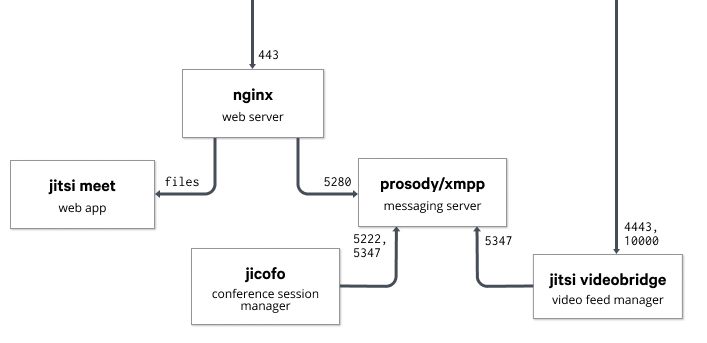
Here's a blog post I wrote for the puppet.com blog. Many thanks to Ben Ford and all their team!. With everything that is currently happening around the world, many of us IT folks have had to solve complex problems in a very short amount of time. Pretty quickly at work, I was tasked with finding a way to make virtual meetings easy, private and secure. Whereas many would have turned to a SaaS offering, we decided to use Jitsi Meet, a modern and fully on-premise FOSS videoconferencing solution. Jitsi works on all platforms by running in a browser and comes with nifty Android and iOS applications. We've been using our instance quite a bit, and so far everyone from technical to non-technical users have been pretty happy with it. Jitsi Meet is powered by WebRTC and can be broken into multiple parts across multiple machines if needed. In addition to the webserver running the Jitsi Meet JavaScript code, the base configuration uses the Videobridge to manage users' video feeds, Jicofo as a conference focus to manage media sessions and the Prosody XMPP server to tie it all together. Here's a network diagram I took from their documentation to show how those applications interact: A network diagram that shows how the different bits of jitsi meet work together Getting started with the Jitsi Puppet module First of all, you'll need a valid domain name and a server with decent bandwidth. Jitsi has published a performance evaluation of the Videobridge to help you spec your instance appropriately. You will also need to open TCP ports 443, 4443 and UDP port 10000 in your firewall. The puppetlabs/firewall module could come in handy here. Once that is done, you can use the smash/jitsimeet Puppet module on a Debian 10 (Buster) server to spin up an instance. A basic configuration would look like this:
  class   'jitsimeet':
    fqdn                 => 'jitsi.example.com',
    repo_key             => puppet:///files/apt/jitsimeet.gpg,
    manage_certs         => true,
    jitsi_vhost_ssl_key  => '/etc/letsencrypt/live/jitsi.example.com/privkey.pem'
    jitsi_vhost_ssl_cert => '/etc/letsencrypt/live/jitsi.example.com/cert.pem'
    auth_vhost_ssl_key   => '/etc/letsencrypt/live/auth.jitsi.example.com/privkey.pem'
    auth_vhost_ssl_cert  => '/etc/letsencrypt/live/auth.jitsi.example.com/cert.pem'
    jvb_secret           => 'mysupersecretstring',
    focus_secret         => 'anothersupersecretstring',
    focus_user_password  => 'yetanothersecret',
    meet_custom_options  =>  
      'enableWelcomePage'         => true,
      'disableThirdPartyRequests' => true,
     ;
   
The jitsimeet module is still pretty young: it clearly isn't perfect and some external help would be very appreciated. If you have some time, here are a few things that would be nice to work on: If you use this module to manage your Jitsi Meet instance, please send patches and bug reports our way! Learn more

7 April 2020

Shirish Agarwal: GMRT 2020 and lots of stories

First of all, congratulations to all those who got us 2022 Debconf, so we will finally have a debconf in India. There is of course, lot of work to be done between now and then. For those who would be looking forward to visit India and especially Kochi I would suggest you to hear this enriching tale
I am sorry I used youtube link but it is too good a podcast not to be shared. Those who don t want youtube can use the invidio.us link for the same as shared below. https://www.invidio.us/watch?v=BvjgKuKmnQ4 I am sure there are lot more details, questions, answers etc. but would direct them gently to Praveen, Shruti, Balasankar and the rest who are from Kochi to answer if you have any questions about that history.

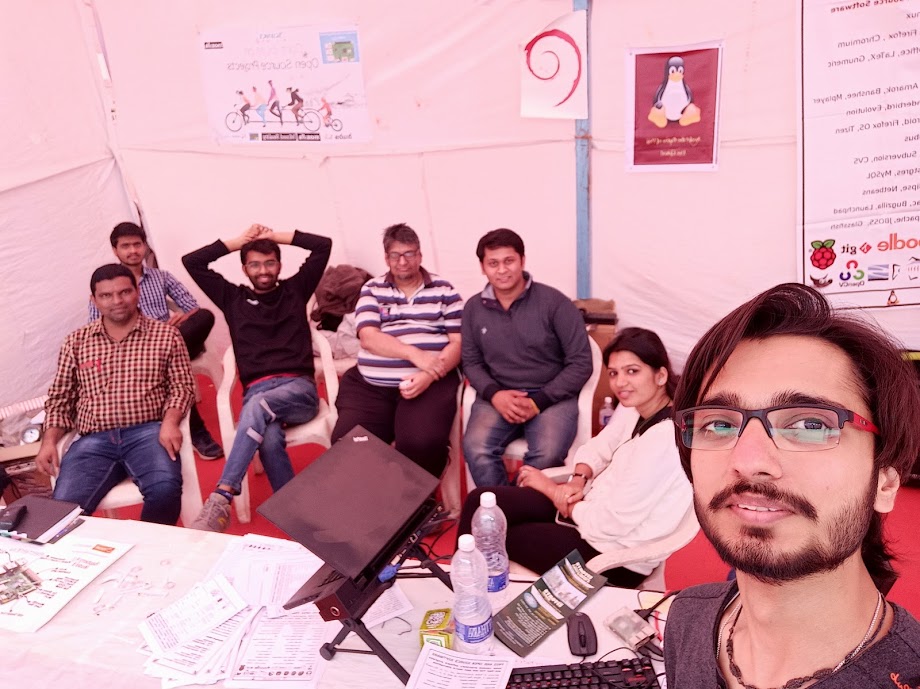
National Science Day, GMRT 2020 First, as always, we are and were grateful to both NCRA as well as GMRT for taking such good care of us. Even though Akshat was not around, probably getting engaged, a few of us were there. About 6-7 from the Mozilla Nasik while the rest representing the foss community. Here is a small picture which commentrates the event
National Science Day, GMRT 2020
While there is and was a lot to share about the event. For e.g. Akshay had bought RPI- Zero as well as RPI-2 (Raspberry Pi s ) and showed some things. He had also bought up a Debian stable live drive with persistence although the glare from the sun was too much that we couldn t show it to clearly to students. This was also the case with RPI but still we shared what and how much we could. Maybe next year, we either ask them to have double screens or give us dark room so we can showcase things much better. We did try playing with contrast and all but it didn t have much of an effect  . Of course in another stall few students had used RPI s as part of their projects so at times we did tell some of the newbies to go to those stalls and see and ask about those projects so they would have a much wider experience of things. The Mozilla people were pushing VR as well as Mozilla lite the browser for the mobile. We also gossiped quite a bit. I shared about indicatelts , a third-party certificate extension although I dunno if I should file a wnpp about it or not. We didn t have a good experience of when I had put an RFP (Request for Package) which was accepted for an extension which had similar functionality which we later come to know was sharing the sites people were using the extension to call home and share both the URL and the IP Address they were using it from. Sadly, didn t leave a good taste in mouth

Delhi Riots One thing I have been disappointed with is the lack of general awareness about things especially in the youth. We have people who didn t know that for e.g. in the Delhi riots which happened recently the law and order (Police) lies with Home Minister of India, Amit Shah. This is perhaps the only capital in the world which has its own Chief Minister but doesn t have any say on its law and order. And this has been the case for last 70 years i.e. since independance. The closest I know so far is the UK but they too changed their tune in 2012. India and especially Delhi seems to be in a time-capsule which while being dysfunctional somehow is made to work. In many ways, it s three body or a body split into three personalities which often makes governance a messy issue but that probably is a topic for another day. In fact, scroll had written a beautiful editorial that full statehood for Delhi was not only Arvind Kejriwal s call (AAP) but also something that both BJP as well as Congress had asked in the past. In fact, nothing about the policing is in AAP s power. All salaries, postings, transfers of police personnel everything is done by the Home Ministry, so if any blame has to be given it has to be given to the Home Ministry for the same.

American Capitalism and Ventilators America had been having a history of high cost healthcare as can be seen in this edition of USA today from 2017 . The Affordable Care Act was signed as a law by President Obama in 2010 which Mr. Trump curtailed when he came into power couple of years back. An estimated 80,000 people died due to seasonal flu in 2018-19 . Similarly, anywhere between 24-63,000 have supposed to have died from Last October to February-March this year. Now if the richest country can t take care of their population which is 1/3rd of the population of this country while at the same time United States has thrice the area that India has. This I am sharing as seasonal flu also strikes the elderly as well as young children more than adults. So in one senses, the vulnerable groups overlap although from some of the recent stats, for Covid-19 even those who are 20+ are also vulnerable but that s another story altogether. If you see the CDC graph of the seasonal flu it is clear that American health experts knew about it. One another common factor which joins both the seasonal flu and covid is both need ventilators for the most serious cases. So, in 2007 it was decided that the number of ventilators needed to be ramped up, they had approximately 62k ventilators at that point in time all over U.S. The U.S. in 2010, asked for bids and got bid from a small californian company called Newport Medic Instruments. The price of the ventilators was approximately INR 700000 at 2010 prices, while Newport said they would be able to mass-produce at INR 200000 at 2010 prices. The company got the order and they started designing the model which needed to be certified by FDA. By 2011, they got the product ready when a big company called Covidgen bought Newport Medic and shutdown the project. This was shared in a press release in 2012. The whole story was broken by New York Times again, just a few days ago which highlighted how America s capitalism rough shod over public health and put people s life unnecessarily in jeopardy. If those new-age ventilators would have been a reality then not just U.S. but India and many other countries would have bought the ventilators as every county has same/similar needs but are unable to pay the high cost which in many cases would be passed on to their citizens either as price of service, or by raising taxes or a mixture of both with public being none the wiser. Due to dearth of ventilators and specialized people to operate it and space, there is possibility that many countries including India may have to make tough choices like Italian doctors had to make as to who to give ventilator to and have the mental and emotional guilt which would be associated with the choices made.

Some science coverage about diseases in wire and other publications Since Covid coverage broke out, the wire has been bringing various reports of India s handling of various epidemics, mysteries, some solved, some still remaining unsolved due to lack of interest or funding or both. The Nipah virus has been amply discussed in the movie Virus (2019) which I shared in the last blog post and how easily it could have been similar to Italy in Kerala. Thankfully, only 24 people including a nurse succumbed to that outbreak as shared in the movie. I had shared about Kerala nurses professionalism when I was in hospital couple of years back. It s no wonder that their understanding of hygeine and nursing procedures are a cut above the rest hence they are sought after not just in India but world-over including US and UK and the middle-east. Another study on respitory illness was bought to my attention by my friend Pavithran.

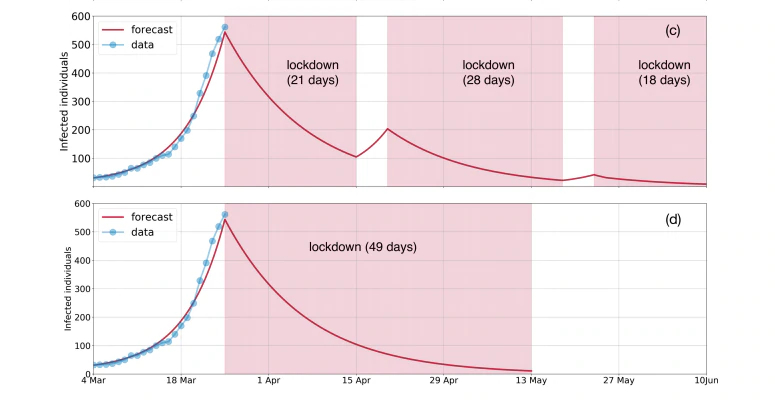
Possibility of extended lockdown in India There was talk in the media of extended lockdown or better put an environment is being created so that an extended lockdown can be done. This is probably in part due to a mathematical model and its derivatives shared by two Indian-origin Cambridge scholars who predict that a minimum 49 days lockdown may be necessary to flatten the covid curve about a week back.
Predictions of the outcome of the current 21-day lockdown (Source: Rajesh Singh, R. Adhikari, Cambridge University)
Alternative lockdown strategies suggested by the Cambridge model (Source: Rajesh Singh, R. Adhikari, Cambridge University)
India caving to US pressure on Hydroxychloroquine While there has been lot of speculation in U.S. about Hydroxychloroquine as the wonder cure, last night Mr. Trump threatened India in a response to a reporter that Mr. Modi has to say no for Hydroxychloroquine and there may be retaliations.
As shared before if youtube is not your cup you can see the same on invidio.us https://www.invidio.us/watch?v=YP-ewgoJPLw Now while there have been several instances in the past of U.S. trying to bully India, going all the way back to 1954. In fact, in recent memory, there were sanctions on India by US under Atal Bihari Vajpayee Government (BJP) 1998 but he didn t buckle under the pressure and now we see our current PM taking down our own notification from a day ago and not just sharing Hydroxychloroquine but also Paracetemol to other countries so it would look as if India is sharing with other countries. Keep in mind, that India, Brazil haven t seen eye to eye on trade agreements of late and Paracetemol prices have risen in India. The price rise has been because the API (Active Pharmaceutical Ingredients) for the same come from China where the supply chain will take time to be fixed and we would also have to open up, although should we, should we not is another question altogether. I talk about supply chains as lean supply chains were the talk since late 90 s when the Japanese introduced Just-in-time manufacturing which lead to lean supply chains as well as lot of outsourcing as consequence. Of course, the companies saved money but at the cost of flexibility and how this model was perhaps flawed was shared by a series of articles in Economist as early as 2004 when there were lot of shocks to that model and would be exaberated since then. There have been frequent shocks to these fragile ecosystem more since 2008 after the financial meltdown and this would put more companies out of business than ever before. The MSME sector in India had already been severely impacted first by demonetization and then by the horrendous implementation of GST whose cries can be heard from all sectors. Also the frequent changing of GST taxes has made markets jumpy and investors unsure. With judgements such as retrospective taxes, AGR (Adjusted Gross Revenue) etc. it made not only the international investors scared, but also domestic investors. The flight of the capital has been noticeable. This I had shared before when Indian Government shared about LRS report which it hasn t since then. In fact Outlook Business had an interesting article about it where incidentally it talked about localcircles, a community networking platform where you get to know of lot of things and whom I am also a member of. At the very end I apologize for not sharing the blog post before but then I was feeling down but then I m not the only one.

Reproducible Builds: Reproducible Builds in March 2020

Welcome to the March 2020 report from the Reproducible Builds project. In our reports we outline the most important things that we have been up to over the past month and some plans for the future.
What are reproducible builds? One of the original promises of open source software is that distributed peer review and transparency of process results in enhanced end-user security. However, whilst anyone may inspect the source code of free and open source software for malicious flaws, almost all software today is distributed as pre-compiled binaries. This allows nefarious third-parties to compromise systems by injecting malicious code into ostensibly secure software during the various compilation and distribution processes.

News The report from our recent summit in Marrakesh was published and is now available in both PDF and HTML formats. A sincere thank you to all of the Reproducible Builds community for the input to the event a sincere thank you to Aspiration for preparing and collating this report. Harmut Schorrig published a detailed document on how to compile Java applications in such as way that the .jar build artefact is reproducible across builds. A practical and hands-on guide, it details how to avoid unnecessary differences between builds by explicitly declaring an encoding as the default value differs across Linux and MS Windows systems and ensuring that the generated .jar a variant of a .zip archive does not embed any nondeterministic filesystem metadata, and so on. Janneke gave a quick presentation on GNU Mes and reproducible builds during the lighting talk session at LibrePlanet 2020. [ ] Vagrant Cascadian presented There and Back Again, Reproducibly! video at SCaLE 18x in Pasadena in California which generated some attention on Twitter. Herv Boutemy mentioned on our mailing list in a thread titled Rebuilding and checking Reproducible Builds from Maven Central repository that since the update of a central build script (the parent POM ) every Apache project using the Maven build system should build reproducibly. A follow-up discussion regarding how to perform such rebuilds was also started on the Apache mailing list. The Telegram instant-messaging platform announced that they had updated their iOS and Android OS applications and claim that they are reproducible according to their full instructions, verifying that its original source code is exactly the same code that is used to build the versions available on the Apple App Store and Google Play distribution platforms respectfully. Herv Boutemy also reported about a new project called reproducible-central which aims to allow anyone to rebuild a component from the Maven Central Repository that is expected to be reproducible and check that the result is as expected. In last month s report we detailed Omar Navarro Leija s work in and around an academic paper titled Reproducible Containers which describes in detail the workings of a user-space container tool called dettrace (PDF). Since then, the PhD student from the University Of Pennsylvania presented on this tool at the ASPLOS 2020 conference in Lausanne, Switzerland. Furthermore, there were contributions to dettrace from the Reproducible Builds community itself. [ ][ ]

Distribution work

openSUSE In openSUSE, Bernhard M. Wiedemann published his monthly Reproducible Builds status update as well as made the following changes within the distribution itself:

Debian Chris Lamb further refined his merge request for the debian-installer component to allow all arguments from sources.list files (such as [check-valid-until=no] ) in order that we can test the reproducibility of the installer images on the Reproducible Builds own testing infrastructure. (#13) Holger Levsen filed a number of bug reports against the debrebuild tool that attempts to rebuild a Debian package given a .buildinfo file as input, including: 48 reviews of Debian packages were added, 17 were updated and 34 were removed this month adding to our knowledge about identified issues. Many issue types were noticed, categorised and updated by Chris Lamb, including: Finally, Holger opened a bug report against the software running tracker.debian.org, a service for Debian Developers to follow the evolution of packages via web and email interfaces to request that they integrate information from buildinfos.debian.net (#955434) and Chris Lamb kept isdebianreproducibleyet.com up to date. [ ]

Software development

diffoscope Chris Lamb made the following changes to diffoscope, the Reproducible Builds project s in-depth and content-aware diff utility that can locate and diagnose reproducibility issues, including preparing and uploading version 138 to Debian:
  • Improvements:
    • Don t allow errors with R script deserialisation cause the entire operation to fail, for example if an external library cannot be loaded. (#91)
    • Experiment with memoising output from expensive external commands, eg. readelf. (#93)
    • Use dumppdf from the python3-pdfminer if we do not see any other differences from pdftext, etc. (#92)
    • Prevent a traceback when comparing two R .rdx files directly as the get_member method will return a file even if the file is missing. [ ]
  • Reporting:
    • Display the supported file formats into the package long description. (#90)
    • Print a potentially-helpful message if the PyPDF2 module is not installed. [ ]
    • Remove any duplicate comparator descriptions when formatting in the --help output or in the package long description. [ ]
    • Weaken Install the X package to get a better output message to may produce a better output as the former is not actually guaranteed. [ ]
  • Misc:
    • Ensure we only parse the recommended packages from --list-debian-substvars when we want them for debian/tests/control generation. [ ]
    • Add upstream metadata file [ ] and add a Lintian override for upstream-metadata-in-native-source as we are upstream. [ ]
    • Inline the RequiredToolNotFound.get_package method s functionality as it is only used once. [ ]
    • Drop the deprecated py36 = [..] argument in the pyproject.toml file. [ ]
In addition, Vagrant Cascadian updated diffoscope in GNU Guix to version 138 [ ], as well as updating reprotest our end-user tool to build same source code twice in widely differing environments and then checks the binaries produced by each build for any differences to version 0.7.14 [ ].

Upstream patches The Reproducible Builds project detects, dissects and attempts to fix as many currently-unreproducible packages as possible. We endeavour to send all of our patches upstream where appropriate. This month we wrote a large number of such patches, including:

Project documentation There was further work performed on our documentation and website this month including Alex Wilson adding a section regarding using Gradle for reproducible builds in JVM projects [ ] and Holger Levsen added the report from our recent summit in Marrakesh [ ][ ]. In addition, Chris Lamb made a number of changes, including correcting the syntax of some CSS class formatting [ ], improved some filed against copy a little better [ ] and corrected a reference to calendar.monthrange Python method in a utility function. [ ]

Testing framework We operate a large and many-featured Jenkins-based testing framework that powers tests.reproducible-builds.org that, amongst many other tasks, tracks the status of our reproducibility efforts as well as identifies any regressions that have been introduced. This month, Chris Lamb reworked the web-based package rescheduling tool to:
  • Require a HTTP POST method in the web-based scheduler as not only should HTTP GET requests be idempotent but this will allow many future improvements in the user interface. [ ][ ][ ]
  • Improve the authentication error message in said rescheduler to suggest that the developer s SSL certificate may have expired. [ ]
In addition, Holger Levsen made the following changes:
  • Add a new ath97 subtarget for the OpenWrt distribution.
  • Revisit ordering of Debian suites; sort the experimental distribution last and reverse the ordering of suites to prioritise the suites in development. [ ][ ][ ]
  • Schedule Debian buster and bullseye a little less in order to allow unstable to catch up on the i386 architecture. [ ][ ]
  • Various cosmetic changes to the web-based scheduler. [ ][ ][ ][ ]
  • Improve wordings in the node health maintenance output. [ ]
Lastly, Vagrant Cascadian updated a link to the (formerly) weekly news to our reports page [ ] and kpcyrd fixed the escaping in an Alpine Linux inline patch [ ]. The usual build nodes maintenance was performed by Holger Levsen [ ][ ], Mattia Rizzolo [ ] and Vagrant Cascadian [ ][ ].
If you are interested in contributing to the Reproducible Builds project, please visit our Contribute page on our website. However, you can get in touch with us via:

This month s report was written by Bernhard M. Wiedemann, Chris Lamb, Holger Levsen and Vagrant Cascadian. It was subsequently reviewed by a bunch of Reproducible Builds folks on IRC and the mailing list.

Jonathan Dowland: Morphite

Further Switch game recommendations Morphite is a first-person space exploration game, with a very distinctive aesthetic, which reminds me a little bit of No Man's Sky. This is a fairly child-friendly game of exploration and discovery. It also reminds me a little bit of Frontier: First Encounters, the second sequel to Elite.
[pic]
It's currently discounted in the Nintendo Switch eShop by 83%, an all-time low price of 2.29, until 5th May. I've barely scratched the surface of this one, so I don't know how deep the game will go, but it looks promising. Certainly worth sacrificing one Flat White for.
[pic]

Steve Kemp: A busy few days

Over the past few weeks things have been pretty hectic. Since I'm not working at the moment I'm mostly doing childcare instead. I need a break, now and again, so I've been sending our child to p iv koti two days a week with him home the rest of the time. I love taking care of the child, because he's seriously awesome, but it's a hell of a lot of work when most of our usual escapes are unavailable. For example we can't go to the (awesome) Helsinki Central Library as that is closed. Instead of doing things outdoors we've been baking bread together, painting, listening to music and similar. He's a big fan of any music with drums and shouting, so we've been listening to Rammstein, The Prodigy, and as much Queen as I can slip in without him complaining ("more bang bang!"). I've also signed up for some courses at the Helsinki open university, including Devops with Docker so perhaps I have a future career working with computers? I'm hazy. Finally I saw a fun post the other day on reddit asking about the creation of a DSL for server-setup. I wrote a reply which basically said two things: Anyway I had an idea of just expressing things in a simple fashion, borrowing Puppet syntax (which I guess is just Ruby hash literals). So a module to do stuff with files would just look like this:
file   name   => "This is my rule",
       target => "/tmp/blah",
       ensure => "absent"  
The next thing to do is to allow that to notify another rule, when it results in a change. So you add in:
notify => "Name of rule"
# or
notify => [ "Name of rule", "Name of another rule" ]
You could also express dependencies the other way round:
shell   name => "Do stuff",
        command => "wc -l /etc/passwd > /tmp/foo",
        requires => [ "Rule 1", "Rule 2"]  
Anyway the end result is a simple syntax which allows you to do things; I wrote a file to allow me to take a clean system and configure it to run a simple golang application in an hour or so. The downside? Well the obvious one is that there's no support for setting up cron jobs, setting up docker images, MySQL usernames/passwords, etc. Just a core set of primitives. Adding new things is easy, but also an endless job. So I added the ability to run external/binary plugins stored outside the project. To support that is simple with the syntax we have: All good. People can write modules, if they like, and they can do that in any language they like. Fun times. We'll call it marionette since it's all puppet-inspired: And that concludes this irregular update.

Next.

Previous.