Search Results: "don"

31 August 2014

Steve Kemp: A diversion - The National Health Service

Today we have a little diversion to talk about the National Health Service. The NHS is the publicly funded healthcare system in the UK.
Actually there are four such services in the UK, only one of which has this name:
  • The national health service (England)
  • Health and Social Care in Northern Ireland.
  • NHS Scotland.
  • NHS Wales.
In theory this doesn't matter, if you're in the UK and you break your leg you get carried to a hospital and you get treated. There are differences in policies because different rules apply, but the basic stuff "free health care" applies to all locations. (Differences? In Scotland you get eye-tests for free, in England you pay.)
My wife works as an accident & emergency doctor, and has recently changed jobs. Hearing her talk about her work is fascinating. The hospitals she's worked in (Dundee, Perth, Kirkcaldy, Edinburgh, Livingstone) are interesting places. During the week things are usually reasonably quiet, and during the weekend things get significantly more busy. (This might mean there are 20 doctors to hand, versus three at quieter times.) Weekends are busy largely because people fall down hills, get drunk and fight, and are at home rather than at work - where 90% of accidents occur. Of course even a "quiet" week can be busy, because folk will have heart-attacks round the clock, and somebody somewhere will always be playing with a power tool, a ladder, or both! So what was the point of this post? Well she's recently transferred to working for a childrens hospital (still in A&E) and the patiences are so very different. I expected the injuries/patients she'd see to differ. Few 10 year olds will arrive drunk (though it does happen), and few adults fall out of trees, or eat washing machine detergent, but talking to her about her day when she returns home is fascinating how many things are completely different from how I expected. Adults come to hospital mostly because they're sick, injured, or drunk. Children come to hospital mostly because their parents are paranoid. A child has a rash? Doctors are closed? Lets go to the emergency ward! A child has fallen out of a tree and has a bruise, a lump, or complains of pain? Doctors are closed? Lets go to the emergency ward! I've not kept statistics, though I wish I could, but it seems that she can go 3-5 days between seeing an actually injured or chronicly-sick child. It's the first-time-parents who bring kids in when they don't need to. Understandable, completely understandable, but at the same time I'm sure it is more than a little frustrating for all involved. Finally one thing I've learned, which seems completely stupid, is the NHS-Scotland approach to recruitment. You apply for a role, such as "A&E doctor" and after an interview, etc, you get told "You've been accepted - you will now work in Glasgow". In short you apply for a post, and then get told where it will be based afterward. There's no ability to say "I'd like to be a Doctor in city X - where I live", you apply, and get told where it is post-acceptance. If it is 100+ miles away you either choose to commute, or decline and go through the process again. This has lead to Kirsi working in hospitals with a radius of about 100km from the city we live in, and has meant she's had to turn down several posts. And that is all I have to say about the NHS for the moment, except for the implicit pity for people who have to pay (inflated and life-changing) prices for things in other countries.

Alexander Wirt: cgit on alioth.debian.org

Recently I was doing some work on the alioth infrastructure like fixing things or cleaning up things. One of the more visible things I done was the switch from gitweb to cgit. cgit is a lot of faster and looks better than gitweb. The list of repositories is generated every hour. The move also has the nice effect that user repositories are available via the cgit index again. I don t plan to disable the old gitweb, but I created a bunch of redirect rules that - hopefully - redirect most use cases of gitweb to the equivalent cgit url. If I broke something, please tell me, if I missed a common use case, please tell me. You can usually reach me on #alioth@oftc or via mail (formorer@d.o) People also asked me to upload my cgit package to Debian, the package is now waiting in NEW. Thanks to Nicolas Dandrimont (olasd) we also have a patch included that generates proper HTTP returncodes if repos doesn t exist.

30 August 2014

Francois Marier: Outsourcing your webapp maintenance to Debian

Modern web applications are much more complicated than the simple Perl CGI scripts or PHP pages of the past. They usually start with a framework and include lots of external components both on the front-end and on the back-end. Here's an example from the Node.js back-end of a real application:
$ npm list   wc -l
256
What if one of these 256 external components has a security vulnerability? How would you know and what would you do if of your direct dependencies had a hard-coded dependency on the vulnerable version? It's a real problem and of course one way to avoid this is to write everything yourself. But that's neither realistic nor desirable. However, it's not a new problem. It was solved years ago by Linux distributions for C and C++ applications. For some reason though, this learning has not propagated to the web where the standard approach seems to be to "statically link everything". What if we could build on the work done by Debian maintainers and the security team?

Case study - the Libravatar project As a way of discussing a different approach to the problem of dependency management in web applications, let me describe the decisions made by the Libravatar project.

Description Libravatar is a federated and free software alternative to the Gravatar profile photo hosting site. From a developer point of view, it's a fairly simple stack: The service is split between the master node, where you create an account and upload your avatar, and a few mirrors, which serve the photos to third-party sites. Like with Gravatar, sites wanting to display images don't have to worry about a complicated protocol. In a nutshell, all that a site needs to do is hash the user's email and add that hash to a base URL. Where the federation kicks in is that every email domain is able to specify a different base URL via an SRV record in DNS. For example, francois@debian.org hashes to 7cc352a2907216992f0f16d2af50b070 and so the full URL is:
http://cdn.libravatar.org/avatar/7cc352a2907216992f0f16d2af50b070
whereas francois@fmarier.org hashes to 0110e86fdb31486c22dd381326d99de9 and the full URL is:
http://fmarier.org/avatar/0110e86fdb31486c22dd381326d99de9
due to the presence of an SRV record on fmarier.org.

Ground rules The main rules that the project follows is to:
  1. only use Python libraries that are in Debian
  2. use the versions present in the latest stable release (including backports)

Deployment using packages In addition to these rules around dependencies, we decided to treat the application as if it were going to be uploaded to Debian:
  • It includes an "upstream" Makefile which minifies CSS and JavaScript, gzips them, and compiles PO files (i.e. a "build" step).
  • The Makefile includes a test target which runs the unit tests and some lint checks (pylint, pyflakes and pep8).
  • Debian packages are produced to encode the dependencies in the standard way as well as to run various setup commands in maintainer scripts and install cron jobs.
  • The project runs its own package repository using reprepro to easily distribute these custom packages.
  • In order to update the repository and the packages installed on servers that we control, we use fabric, which is basically a fancy way to run commands over ssh.
  • Mirrors can simply add our repository to their apt sources.list and upgrade Libravatar packages at the same time as their system packages.

Results Overall, this approach has been quite successful and Libravatar has been a very low-maintenance service to run. The ground rules have however limited our choice of libraries. For example, to talk to our queuing system, we had to use the raw Python bindings to the C Gearman library instead of being able to use a nice pythonic library which wasn't in Debian squeeze at the time. There is of course always the possibility of packaging a missing library for Debian and maintaining a backport of it until the next Debian release. This wouldn't be a lot of work considering the fact that responsible bundling of a library would normally force you to follow its releases closely and keep any dependencies up to date, so you may as well share the result of that effort. But in the end, it turns out that there is a lot of Python stuff already in Debian and we haven't had to package anything new yet. Another thing that was somewhat scary, due to the number of packages that were going to get bumped to a new major version, was the upgrade from squeeze to wheezy. It turned out however that it was surprisingly easy to upgrade to wheezy's version of Django, Apache and Postgres. It may be a problem next time, but all that means is that you have to set a day aside every 2 years to bring everything up to date.

Problems The main problem we ran into is that we optimized for sysadmins and unfortunately made it harder for new developers to setup their environment. That's not very good from the point of view of welcoming new contributors as there is quite a bit of friction in preparing and testing your first patch. That's why we're looking at encoding our setup instructions into a Vagrant script so that new contributors can get started quickly. Another problem we faced is that because we use the Debian version of jQuery and minify our own JavaScript files in the build step of the Makefile, we were affected by the removal from that package of the minified version of jQuery. In our setup, there is no way to minify JavaScript files that are provided by other packages and so the only way to fix this would be to fork the package in our repository or (preferably) to work with the Debian maintainer and get it fixed globally in Debian. One thing worth noting is that while the Django project is very good at issuing backwards-compatible fixes for security issues, sometimes there is no way around disabling broken features. In practice, this means that we cannot run unattended-upgrades on our main server in case something breaks. Instead, we make use of apticron to automatically receive email reminders for any outstanding package updates. On that topic, it can occasionally take a while for security updates to be released in Debian, but this usually falls into one of two cases:
  1. You either notice because you're already tracking releases pretty well and therefore could help Debian with backporting of fixes and/or testing;
  2. or you don't notice because it has slipped through the cracks or there simply are too many potential things to keep track of, in which case the fact that it eventually gets fixed without your intervention is a huge improvement.
Finally, relying too much on Debian packaging does prevent Fedora users (a project that also makes use of Libravatar) from easily contributing mirrors. Though if we had a concrete offer, we would certainly look into creating the appropriate RPMs.

Is it realistic? It turns out that I'm not the only one who thought about this approach, which has been named "debops". The same day that my talk was announced on the DebConf website, someone emailed me saying that he had instituted the exact same rules at his company, which operates a large Django-based web application in the US and Russia. It was pretty impressive to read about a real business coming to the same conclusions and using the same approach (i.e. system libraries, deployment packages) as Libravatar. Regardless of this though, I think there is a class of applications that are particularly well-suited for the approach we've just described. If a web application is not your full-time job and you want to minimize the amount of work required to keep it running, then it's a good investment to restrict your options and leverage the work of the Debian community to simplify your maintenance burden. The second criterion I would look at is framework maturity. Given the 2-3 year release cycle of stable distributions, this approach is more likely to work with a mature framework like Django. After all, you probably wouldn't compile Apache from source, but until recently building Node.js from source was the preferred option as it was changing so quickly. While it goes against conventional wisdom, relying on system libraries is a sustainable approach you should at least consider in your next project. After all, there is a real cost in bundling and keeping up with external dependencies. This blog post is based on a talk I gave at DebConf 14: slides, video.

John Goerzen: 2AM to Seattle

Monday morning, 1:45AM. Laura and I walk into the boys room. We turn on the light. Nothing happens. (They re sound sleepers.) Boys, it s time to get up to go get on the train! Four eyes pop open. Yay! Oh I m so excited! And then, Meow! (They enjoy playing with their stuffed cats that Laura got them for Christmas.) Before long, it was out the door to the train station. We even had time to stop at a donut shop along the way. We climbed into our family bedroom (a sleeping car room on Amtrak specifically designed for families of four), and as the train started to move, the excitement of what was going on crept in. Yes, it s 2:42AM, but these are two happy boys: 2014-08-04 02 Jacob and Oliver love trains, and this was the beginning of a 3-day train trip from Newton to Seattle that would take us through Kansas, Colorado, the Rocky Mountains of New Mexico, Arizona, Los Angeles, up the California coast, through the Cascades, and on to Seattle. Whew! Here we are later that morning before breakfast: IMG_3776 Here s our train at a station stop in La Junta, CO: IMG_3791 And at the beautiful small mountain town of Raton, NM: IMG_3805 Some of the passing scenery in New Mexico: IMG_3828 Through it all, we found many things to pass the time. I don t think anybody was bored. I took the boys exploring the train several times we d walk from one end to the other and see what all was there. There was always the dining car for our meals, the lounge car for watching the passing scenery, and on the Coast Starlight, the Pacific Parlor Car. Here we are getting ready for breakfast one morning. IMG_3830 Getting to select meals and order in the train restaurant was a big deal for the boys. IMG_3832 Laura brought one of her origami books, which even managed to pull the boys away from the passing scenery in the lounge car for quite some time. IMG_3848 Origami is serious business: IMG_3869 They had some fun wrapping themselves around my feet and challenging me to move. And were delighted when I could move even though they were trying to weight me down! IMG_3880 Several games of Uno were played, but even those sometimes couldn t compete with the passing scenery: IMG_3898 The Coast Starlight features the Pacific Parlor Car, which was built over 50 years ago for the Santa Fe Hi-Level trains. They ve been updated; the upper level is a lounge and small restaurant, and the lower level has been turned into a small theater. They show movies in there twice a day, but most of the time, the place is empty. A great place to go with little boys to run around and play games. IMG_3896 The boys and I sort of invented a new game: roadrunner and coyote, loosely based on the old Looney Tunes cartoons. Jacob and Oliver would be roadrunners, running around and yelling MEEP MEEP! Meanwhile, I was the coyote, who would try to catch them even briefly succeeding sometimes but ultimately fail in some hilarious way. It burned a lot of energy. And, of course, the parlor car was good for scenery-watching too: IMG_3908 We were right along the Pacific Ocean for several hours sometimes there would be a highway or a town between us and the beach, but usually there was nothing at all between us and the coast. It was beautiful to watch the jagged coastline go by, to gaze out onto the ocean, watching the birds apparently so beautiful that I didn t even think to take some photos. Laura s parents live in California, and took a connecting train. I had arranged for them to have a sleeping car room near ours, so for the last day of the trip, we had a group of 6. Here are the boys with their grandparents at lunch Wednesday: 2014-08-06 11 We stepped off the train in Seattle into beautiful King Street Station. P8100197 Our first day in Seattle was a quiet day of not too much. Laura s relatives live near Lake Washington, so we went out there to play. The boys enjoyed gathering black rocks along the shore. IMG_3956 We went blackberry picking after that filled up buckets for a cobbler. The next day, we rode the Seattle Monorail. The boys have been talking about this for months a kind of train they ve never been on. That was the biggest thing in their minds that they were waiting for. They got to ride in the very front, by the operator. P8080073 Nice view from up there. P8080078 We walked through the Pike Market I hadn t been in such a large and crowded place like that since I was in Guadalajara: P8080019 At the Seattle Aquarium, we all had a great time checking out all the exhibits. The please touch one was a particular hit. P8080038 Walking underneath the salmon tank was fun too. We spent a couple of days doing things closer to downtown. Laura s cousin works at MOHAI, the Museum of History and Industry, so we spent a morning there. The boys particularly enjoyed the old periscope mounted to the top of the building, and the exhibit on chocolate (of course!) P8100146 They love any kind of transportation, so of course we had to get a ride on the Seattle Streetcar that comes by MOHAI. P8090094 All weekend long, we had been noticing the seaplanes taking off from Lake Washington and Lake Union (near MOHAI). So finally I decided to investigate, and one morning while Laura was doing things with her cousin, the boys and I took a short seaplane ride from one lake to another, and then rode every method of transportation we could except for ferries (we did that the next day). Here is our Kenmore Air plane: P8100100 The view of Lake Washington from 1000 feet was beautiful: P8100109 I think we got a better view than the Space Needle, and it probably cost about the same anyhow. P8100117 After splashdown, we took the streetcar to a place where we could eat lunch right by the monorail tracks. Then we rode the monorail again. Then we caught a train (it went underground a bit so it was a subway to them!) and rode it a few blocks. There is even scenery underground, it seems. P8100151 We rode a bus back, and saved one last adventure for the next day: a ferry to Bainbridge Island. 2014-08-11 14 2014-08-11 16 Laura and I even got some time to ourselves to go have lunch at an amazing Greek restaurant to celebrate a year since we got engaged. It s amazing to think that, by now, it s only a few months until our wedding anniversary too! There are many special memories of the weekend I could mention visiting with Laura s family, watching the boys play with her uncle s pipe organ (it s in his house!), watching the boys play with their grandparents, having all six of us on the train for a day, flying paper airplanes off the balcony, enjoying the cool breeze on the ferry and the beautiful mountains behind the lake. One of my favorites is waking up to high-pitched Meow? Meow meow meow! Wake up, brother! sorts of sounds. There was so much cat-play on the trip, and it was cute to hear. I have the feeling we won t hear things like that much more. So many times on the trip I heard, Oh dad, I am so excited! I never get tired of hearing that. And, of course, I was excited, too.

Joachim Breitner: DebConf 14

I m writing this blog post on the plane from Portland towards Europe (which I now can!), using the remaining battery live after having watched one of the DebConf talks that I missed. (It was the systemd talk, which was good and interesting, but maybe I should have watched one of the power management talks, as my battery is running down faster than it should be, I believe.) I mostly enjoyed this year s DebConf. I must admit that I did not come very prepared: I had neither something urgent to hack on, nor important things to discuss with the other attendees, so in a way I had a slow start. I also felt a bit out of touch with the project, both personally and technically: In previous DebConfs, I had more interest in many different corners of the project, and also came with more naive enthusiasm. After more than 10 years in the project, I see a few things more realistic and also more relaxed, and don t react on Wouldn t it be cool to have crazy idea very easily any more. And then I mostly focus on Haskell packaging (and related tooling, which sometimes is also relevant and useful to others) these days, which is not very interesting to most others. But in the end I did get to do some useful hacking, heard a few interesting talks and even got a bit excited: I created a new tool to schedule binNMUs for Haskell packages which is quite generic (configured by just a regular expression), so that it can and will be used by the OCaml team as well, and who knows who else will start using hash-based virtual ABI packages in the future... It runs via a cron job on people.debian.org to produce output for Haskell and for OCaml, based on data pulled via HTTP. If you are a Debian developer and want up-to-date results, log into wuiet.debian.org and run ~nomeata/binNMUs --sql; it then uses the projectb and wanna-build databases directly. Thanks to the ftp team for opening up incoming.debian.org, by the way! Unsurprisingly, I also held a talk on Haskell and Debian (slides available). I talked a bit too long and we had too little time for discussion, but in any case not all discussion would have fitted in 45 minutes. The question of which packages from Hackage should be added to Debian and which not is still undecided (which means we carry on packaging what we happen to want in Debian for whatever reason). I guess the better our tooling gets (see the next section), the more easily we can support more and more packages. I am quite excited by and supportive of Enrico s agenda to remove boilerplate data from the debian/ directories and relying on autodebianization tools. We have such a tool for Haskell package, cabal-debian, but it is unofficial, i.e. neither created by us nor fully endorsed. I want to change that, so I got in touch with the upstream maintainer and we want to get it into shape for producing perfect Debian packages, if the upstream provided meta data is perfect. I d like to see the Debian Haskell Group to follows Enrico s plan to its extreme conclusion, and this way drive innovation in Debian in general. We ll see how that goes. Besides all the technical program I enjoyed the obligatory games of Mao and Werewolves. I also got to dance! On Saturday night, I found a small but welcoming Swing-In-The-Park event where I could dance a few steps of Lindy Hop. And on Tuesday night, Vagrant Cascadian took us (well, three of us) to a blues dancing night, which I greatly enjoyed: The style was so improvisation-friendly that despite having missed the introduction and never having danced Blues before I could jump right in. And in contrast to social dances in Germany, where it is often announced that the girls are also invited to ask the boys, but then it is still mostly the boys who have to ask, here I took only half a minute of standing at the side until I got asked to dance. In retrospect I should have skipped the HP reception and went there directly... I m not heading home at the moment, but will travel directly to G teborg to attend ICFP 2014. I hope the (usually worse) west-to-east jet lag will not prevent me from enjoying that as much as I could.

29 August 2014

Robert Collins: Test processes as servers

Since its very early days subunit has had a single model you run a process, it outputs test results. This works great, except when it doesn t. On the up side, you have a one way pipeline there s no interactivity needed, which makes it very very easy to write a subunit backend that e.g. testr can use. On the downside, there s no interactivity, which means that anytime you want to do something with those tests, a new process is needed and thats sometimes quite expensive particularly in test suites with 10 s of thousands of tests.Now, for use in the development edit-execute loop, this is arguably ok, because one needs to load the new tests into memory anyway; but wouldn t it be nice if tools like testr that run tests for you didn t have to decide upfront exactly how they were going to run. If instead they could get things running straight away and then give progressively larger and larger units of work to be run, without forcing a new process (and thus new discovery directory walking and importing) ? Secondly, testr has an inconsistent interface if testr is letting a user debug things to testr through to child workers in a chain, it needs to use something structured (e.g. subunit) and route stdin to the actual worker, but the final testr needs to unwrap everything this is needlessly complex. Lastly, for some languages at least, its possibly to dynamically pick up new code at runtime so a simple inotify loop and we could avoid new-process (and more importantly complete-enumeration) *entirely*, leading to very fast edit-test cycles. So, in this blog post I m really running this idea up the flagpole, and trying to sketch out the interface and hopefully get feedback on it. Taking subunit.run as an example process to do this to:
  1. There should be an option to change from one-shot to server mode
  2. In server mode, it will listen for commands somewhere (lets say stdin)
  3. On startup it might eager load the available tests
  4. One command would be list-tests which would enumerate all the tests to its output channel (which is stdout today so lets stay with that for now)
  5. Another would be run-tests, which would take a set of test ids, and then filter-and-run just those ids from the available tests, output, as it does today, going to stdout. Passing somewhat large sets of test ids in may be desirable, because some test runners perform fixture optimisations (e.g. bringing up DB servers or web servers) and test-at-a-time is pretty much worst case for that sort of environment.
  6. Another would be be std-in a command providing a packet of stdin used for interacting with debuggers
So that seems pretty approachable to me we don t even need an async loop in there, as long as we re willing to patch select etc (for the stdin handling in some environments like Twisted). If we don t want to monkey patch like that, we ll need to make stdin a socketpair, and have an event loop running to shepard bytes from the real stdin to the one we let the rest of Python have. What about that nirvana above? If we assume inotify support, then list_tests (and run_tests) can just consult a changed-file list and reload those modules before continuing. Reloading them just-in-time would be likely to create havoc I think reloading only when synchronised with test completion makes a great deal of sense. Would such a test server make sense in other languages? What about e.g. testtools.run vs subunit.run such a server wouldn t want to use subunit, but perhaps a regular CLI UI would be nice

28 August 2014

Gunnar Wolf: Ongoing crypto handling discussions

I love to see there is a lot of crypto discussions going on at DebConf. Maybe I'm skewed by my role as keyring-maint, but I have been involved in more than one discussion every day on what do/should signatures mean, on best key handling practices, on some ideas to make key maintenance better, on how the OpenPGPv4 format lays out a key and its components on disk, all that. I enjoy some of those discussions pose questions that leave me thinking, as I am quite far from having all answers. Discussions should be had face to face, but some start online and deserve to be answered online (and also pose opportunity to become documentation). Simon Josefsson blogs about The case for short OpenPGP key validity periods. This will be an important issue to tackle, as we will soon require keys in the Debian keyring to have a set expiration date (surprise surprise!) and I agree with Simon, setting an expiration date far in the future means very little. There is a caveat with using, as he suggests, very short expiry periods: We have a human factor sitting in the middle. Keyring updates in Debian are done approximately once a month, and I do not see the period shortening. That means, only once a month we (currently Jonathan McDowell and myself, and we expect to add Daniel Kahn Gillmor soon) take the full changeset and compile a new keyring that replaces the active one in Debian. This means that if you have, as Simon suggests, a 100-day validity key, you have to remember to update it at least every 70 days, or you might be locked out during the days it takes us to process it. I set my expiration period to two years, although I might shorten it to only one. I expect to add checks+notifications before we enable this requirement project-wide (so that Debian servers will mail you when your key is close to expiry); I think that mail can be sent at approximately [expiry date - 90 days] to give you time both to you and to us to act. Probably the optimal expiration periods under such conditions would be between 180 and 365 days. But, yes, this is by far not yet a ruling, but a point in the discussion. We still have some days of DebConf, and I'll enjoy revising this point. And Simon, even if we correct some bits for these details, I'd like to have your permission to use this fine blog post as part of our documentation! (And on completely unrelated news: Congratulations to our dear and very much missed friend Bubulle for completely losing his sanity and running for 28 hours and a half straight! He briefly describes this adventure when it was about to start, and we all want him to tell us how it was. Mr. Running French Guy, you are amazing!)

Lior Kaplan: The importance of close integration between distribution and upstream

Many package maintainers need to decide when to upload a new version to Debian. Should the upload be done only after the official release, or is there a place for uploads during the development process. In the latter case there s a need to balance between the benefit of early testing and feedback with the stability and not completely breaking user s environment (and package relationships) too often. With the coming PHP 5.6.0 release, Debian kept being on the cutting edge. Thanks to Ond ej, the new version was available in experimental since alpha1 and in unstable/testing since beta3. Considering the timing of the PHP release related to the Debian freeze, I m happy we started early, and did the transition to PHP 5.6 a few months ago. But just following the development releases (betas ,RCs) isn t enough. Both Ond ej and myself are part of the PHP community, and know the planned timelines, current status and what are the critical points. Such knowledge was very useful this week, when we new 5.6.0 was pending finale tagging before release (after RC4). This made take the report of Debian bug #759381: php5: TLS connections broken in 5.6.0 RC4 seriously and contact the release managers. First it was a heads up and then a real problem. After a quick discussion (both private mails by me and on github by Ond ej), the relevant commit was reverted by the release managers (Julien Pauli & Ferenc Kovacs), and 5.6.0 was retagged. The issue will get more checks towards 5.6.1 without any time pressure. Although 5.6.0 isn t in production for anyone (yet), and like any major release can have issues, the close connectivity between everyone saved complaints from the PHP users and ecosystem. I don t imagine the issue been sorted so quickly 16 hours later. This is also due to the bug been reported on difference between two close release (regression in RC4 comparing to RC3). To close the loop, if we ve uploaded 5.6.0 only after the release, the report would be regression between 5.5.x and 5.6.0, which is obviously much harder to pinpoint. So, I m not sure I have a good answer for the question in the beginning of the post, but for this case our policy proved itself.
Filed under: Debian GNU/Linux, PHP

Tim Retout: Pump.io update 1

[The story so far: I'm packaging pump.io for Debian.] 4 packages uploaded to NEW: 2 packages eliminated as not needed: 1 package in progress: Got my eye on: Thoughts Currently I'm averaging around one package upload a day, I think? Which would mean ~1 month to go? But there may be challenges around getting packages through the NEW queue in time to build-depend on them. Someone has asked my temporary Twitter account whether I have a pump.io account. Technically, yes, I do - but I don't post anything on it, because I want to run my own server in the long term. As part of running my own server, I always find that easier if I'm installing software from Debian packages. Hence this work. Sledgehammer, meet nut.

26 August 2014

Simon Josefsson: The Case for Short OpenPGP Key Validity Periods

After I moved to a new OpenPGP key (see key transition statement) I have received comments about the short life length of my new key. When I created the key (see my GnuPG setup) I set it to expire after 100 days. Some people assumed that I would have to create a new key then, and therefore wondered what value there is to sign a key that will expire in two months. It doesn t work like that, and below I will explain how OpenPGP key expiration works; how to extend the expiration time of your key; and argue why having a relatively short validity period can be a good thing.
The OpenPGP message format has a sub-packet called the Key Expiration Time, quoting the RFC:
5.2.3.6. Key Expiration Time
   (4-octet time field)
   The validity period of the key.  This is the number of seconds after
   the key creation time that the key expires.  If this is not present
   or has a value of zero, the key never expires.  This is found only on
   a self-signature.
You can print the sub-packets in your OpenPGP key with gpg --list-packets. See below an output for my key, and notice the created 1403464490 (which is Unix time for 2014-06-22 21:14:50) and the subpkt 9 len 4 (key expires after 100d0h0m) which adds up to an expiration on 2014-09-26. Don t confuse the creation time of the key ( created 1403464321 ) with when the signature was created ( created 1403464490 ).
jas@latte:~$ gpg --export 54265e8c   gpg --list-packets  head -20
:public key packet:
	version 4, algo 1, created 1403464321, expires 0
	pkey[0]: [3744 bits]
	pkey[1]: [17 bits]
:user ID packet: "Simon Josefsson "
:signature packet: algo 1, keyid 0664A76954265E8C
	version 4, created 1403464490, md5len 0, sigclass 0x13
	digest algo 10, begin of digest be 8e
	hashed subpkt 27 len 1 (key flags: 03)
	hashed subpkt 9 len 4 (key expires after 100d0h0m)
	hashed subpkt 11 len 7 (pref-sym-algos: 9 8 7 13 12 11 10)
	hashed subpkt 21 len 4 (pref-hash-algos: 10 9 8 11)
	hashed subpkt 30 len 1 (features: 01)
	hashed subpkt 23 len 1 (key server preferences: 80)
	hashed subpkt 2 len 4 (sig created 2014-06-22)
	hashed subpkt 25 len 1 (primary user ID)
	subpkt 16 len 8 (issuer key ID 0664A76954265E8C)
	data: [3743 bits]
:signature packet: algo 1, keyid EDA21E94B565716F
	version 4, created 1403466403, md5len 0, sigclass 0x10
jas@latte:~$ 
So the key will simply stop being valid after that time? No. It is possible to update the key expiration time value, re-sign the key, and distribute the key to people you communicate with directly or indirectly to OpenPGP keyservers. Since that date is a couple of weeks away, now felt like the perfect opportunity to go through the exercise of taking out my offline master key and boot from a Debian LiveCD and extend its expiry time. See my earlier writeup for LiveCD and USB stick conventions.
user@debian:~$ export GNUPGHOME=/media/FA21-AE97/gnupghome
user@debian:~$ gpg --edit-key 54265e8c
gpg (GnuPG) 1.4.12; Copyright (C) 2012 Free Software Foundation, Inc.
This is free software: you are free to change and redistribute it.
There is NO WARRANTY, to the extent permitted by law.
Secret key is available.
pub  3744R/54265E8C  created: 2014-06-22  expires: 2014-09-30  usage: SC  
                     trust: ultimate      validity: ultimate
sub  2048R/32F8119D  created: 2014-06-22  expires: 2014-09-30  usage: S   
sub  2048R/78ECD86B  created: 2014-06-22  expires: 2014-09-30  usage: E   
sub  2048R/36BA8F9B  created: 2014-06-22  expires: 2014-09-30  usage: A   
[ultimate] (1). Simon Josefsson 
[ultimate] (2)  Simon Josefsson 
gpg> expire
Changing expiration time for the primary key.
Please specify how long the key should be valid.
         0 = key does not expire
        = key expires in n days
      w = key expires in n weeks
      m = key expires in n months
      y = key expires in n years
Key is valid for? (0) 150
Key expires at Fri 23 Jan 2015 02:47:48 PM UTC
Is this correct? (y/N) y
You need a passphrase to unlock the secret key for
user: "Simon Josefsson "
3744-bit RSA key, ID 54265E8C, created 2014-06-22
pub  3744R/54265E8C  created: 2014-06-22  expires: 2015-01-23  usage: SC  
                     trust: ultimate      validity: ultimate
sub  2048R/32F8119D  created: 2014-06-22  expires: 2014-09-30  usage: S   
sub  2048R/78ECD86B  created: 2014-06-22  expires: 2014-09-30  usage: E   
sub  2048R/36BA8F9B  created: 2014-06-22  expires: 2014-09-30  usage: A   
[ultimate] (1). Simon Josefsson 
[ultimate] (2)  Simon Josefsson 
gpg> key 1
pub  3744R/54265E8C  created: 2014-06-22  expires: 2015-01-23  usage: SC  
                     trust: ultimate      validity: ultimate
sub* 2048R/32F8119D  created: 2014-06-22  expires: 2014-09-30  usage: S   
sub  2048R/78ECD86B  created: 2014-06-22  expires: 2014-09-30  usage: E   
sub  2048R/36BA8F9B  created: 2014-06-22  expires: 2014-09-30  usage: A   
[ultimate] (1). Simon Josefsson 
[ultimate] (2)  Simon Josefsson 
gpg> expire
Changing expiration time for a subkey.
Please specify how long the key should be valid.
         0 = key does not expire
        = key expires in n days
      w = key expires in n weeks
      m = key expires in n months
      y = key expires in n years
Key is valid for? (0) 150
Key expires at Fri 23 Jan 2015 02:48:05 PM UTC
Is this correct? (y/N) y
You need a passphrase to unlock the secret key for
user: "Simon Josefsson "
3744-bit RSA key, ID 54265E8C, created 2014-06-22
pub  3744R/54265E8C  created: 2014-06-22  expires: 2015-01-23  usage: SC  
                     trust: ultimate      validity: ultimate
sub* 2048R/32F8119D  created: 2014-06-22  expires: 2015-01-23  usage: S   
sub  2048R/78ECD86B  created: 2014-06-22  expires: 2014-09-30  usage: E   
sub  2048R/36BA8F9B  created: 2014-06-22  expires: 2014-09-30  usage: A   
[ultimate] (1). Simon Josefsson 
[ultimate] (2)  Simon Josefsson 
gpg> key 2
pub  3744R/54265E8C  created: 2014-06-22  expires: 2015-01-23  usage: SC  
                     trust: ultimate      validity: ultimate
sub* 2048R/32F8119D  created: 2014-06-22  expires: 2015-01-23  usage: S   
sub* 2048R/78ECD86B  created: 2014-06-22  expires: 2014-09-30  usage: E   
sub  2048R/36BA8F9B  created: 2014-06-22  expires: 2014-09-30  usage: A   
[ultimate] (1). Simon Josefsson 
[ultimate] (2)  Simon Josefsson 
gpg> key 1
pub  3744R/54265E8C  created: 2014-06-22  expires: 2015-01-23  usage: SC  
                     trust: ultimate      validity: ultimate
sub  2048R/32F8119D  created: 2014-06-22  expires: 2015-01-23  usage: S   
sub* 2048R/78ECD86B  created: 2014-06-22  expires: 2014-09-30  usage: E   
sub  2048R/36BA8F9B  created: 2014-06-22  expires: 2014-09-30  usage: A   
[ultimate] (1). Simon Josefsson 
[ultimate] (2)  Simon Josefsson 
gpg> expire
Changing expiration time for a subkey.
Please specify how long the key should be valid.
         0 = key does not expire
        = key expires in n days
      w = key expires in n weeks
      m = key expires in n months
      y = key expires in n years
Key is valid for? (0) 150
Key expires at Fri 23 Jan 2015 02:48:14 PM UTC
Is this correct? (y/N) y
You need a passphrase to unlock the secret key for
user: "Simon Josefsson "
3744-bit RSA key, ID 54265E8C, created 2014-06-22
pub  3744R/54265E8C  created: 2014-06-22  expires: 2015-01-23  usage: SC  
                     trust: ultimate      validity: ultimate
sub  2048R/32F8119D  created: 2014-06-22  expires: 2015-01-23  usage: S   
sub* 2048R/78ECD86B  created: 2014-06-22  expires: 2015-01-23  usage: E   
sub  2048R/36BA8F9B  created: 2014-06-22  expires: 2014-09-30  usage: A   
[ultimate] (1). Simon Josefsson 
[ultimate] (2)  Simon Josefsson 
gpg> key 3
pub  3744R/54265E8C  created: 2014-06-22  expires: 2015-01-23  usage: SC  
                     trust: ultimate      validity: ultimate
sub  2048R/32F8119D  created: 2014-06-22  expires: 2015-01-23  usage: S   
sub* 2048R/78ECD86B  created: 2014-06-22  expires: 2015-01-23  usage: E   
sub* 2048R/36BA8F9B  created: 2014-06-22  expires: 2014-09-30  usage: A   
[ultimate] (1). Simon Josefsson 
[ultimate] (2)  Simon Josefsson 
gpg> key 2
pub  3744R/54265E8C  created: 2014-06-22  expires: 2015-01-23  usage: SC  
                     trust: ultimate      validity: ultimate
sub  2048R/32F8119D  created: 2014-06-22  expires: 2015-01-23  usage: S   
sub  2048R/78ECD86B  created: 2014-06-22  expires: 2015-01-23  usage: E   
sub* 2048R/36BA8F9B  created: 2014-06-22  expires: 2014-09-30  usage: A   
[ultimate] (1). Simon Josefsson 
[ultimate] (2)  Simon Josefsson 
gpg> expire
Changing expiration time for a subkey.
Please specify how long the key should be valid.
         0 = key does not expire
        = key expires in n days
      w = key expires in n weeks
      m = key expires in n months
      y = key expires in n years
Key is valid for? (0) 150
Key expires at Fri 23 Jan 2015 02:48:23 PM UTC
Is this correct? (y/N) y
You need a passphrase to unlock the secret key for
user: "Simon Josefsson "
3744-bit RSA key, ID 54265E8C, created 2014-06-22
pub  3744R/54265E8C  created: 2014-06-22  expires: 2015-01-23  usage: SC  
                     trust: ultimate      validity: ultimate
sub  2048R/32F8119D  created: 2014-06-22  expires: 2015-01-23  usage: S   
sub  2048R/78ECD86B  created: 2014-06-22  expires: 2015-01-23  usage: E   
sub* 2048R/36BA8F9B  created: 2014-06-22  expires: 2015-01-23  usage: A   
[ultimate] (1). Simon Josefsson 
[ultimate] (2)  Simon Josefsson 
gpg> save
user@debian:~$ gpg -a --export 54265e8c > /media/KINGSTON/updated-key.txt
user@debian:~$ 
I remove the transport USB stick from the offline computer, and back on my laptop I can inspect the new updated key. Let s use the same command as before. The key creation time is the same ( created 1403464321 ), of course, but the signature packet has a new time ( created 1409064478 ) since it was signed now. Notice created 1409064478 and subpkt 9 len 4 (key expires after 214d19h35m) . The expiration time is computed based on when the key was generated, not when the signature packet was generated. You may want to double-check the pref-sym-algos, pref-hash-algos and other sub-packets so that you don t accidentally change anything else. (Btw, re-signing your key is also how you would modify those preferences over time.)
jas@latte:~$ cat /media/KINGSTON/updated-key.txt  gpg --list-packets   head -20
:public key packet:
	version 4, algo 1, created 1403464321, expires 0
	pkey[0]: [3744 bits]
	pkey[1]: [17 bits]
:user ID packet: "Simon Josefsson "
:signature packet: algo 1, keyid 0664A76954265E8C
	version 4, created 1409064478, md5len 0, sigclass 0x13
	digest algo 10, begin of digest 5c b2
	hashed subpkt 27 len 1 (key flags: 03)
	hashed subpkt 11 len 7 (pref-sym-algos: 9 8 7 13 12 11 10)
	hashed subpkt 21 len 4 (pref-hash-algos: 10 9 8 11)
	hashed subpkt 30 len 1 (features: 01)
	hashed subpkt 23 len 1 (key server preferences: 80)
	hashed subpkt 25 len 1 (primary user ID)
	hashed subpkt 2 len 4 (sig created 2014-08-26)
	hashed subpkt 9 len 4 (key expires after 214d19h35m)
	subpkt 16 len 8 (issuer key ID 0664A76954265E8C)
	data: [3744 bits]
:user ID packet: "Simon Josefsson "
:signature packet: algo 1, keyid 0664A76954265E8C
jas@latte:~$ 
Being happy with the new key, I import it and send it to key servers out there.
jas@latte:~$ gpg --import /media/KINGSTON/updated-key.txt 
gpg: key 54265E8C: "Simon Josefsson " 5 new signatures
gpg: Total number processed: 1
gpg:         new signatures: 5
jas@latte:~$ gpg --send-keys 54265e8c
gpg: sending key 54265E8C to hkp server keys.gnupg.net
jas@latte:~$ gpg --keyserver keyring.debian.org  --send-keys 54265e8c
gpg: sending key 54265E8C to hkp server keyring.debian.org
jas@latte:~$ 
Finally: why go through this hassle, rather than set the key to expire in 50 years? Some reasons for this are:
  1. I don t trust myselt to keep track of a private key (or revocation cert) for 50 years.
  2. I want people to notice my revocation certificate as quickly as possible.
  3. I want people to notice other changes to my key (e.g., cipher preferences) as quickly as possible.
Let s look into the first reason a bit more. What would happen if I lose both the master key and the revocation cert, for a key that s valid 50 years? I would start from scratch and create a new key that I upload to keyservers. Then there would be two keys out there that are valid and identify me, and both will have a set of signatures on it. None of them will be revoked. If I happen to lose the new key again, there will be three valid keys out there with signatures on it. You may argue that this shouldn t be a problem, and that nobody should use any other key than the latest one I want to be used, but that s a technical argument and at this point we have moved into usability, and that s a trickier area. Having users select which out of a couple of apparently all valid keys that exist for me is simply not going to work well. The second is more subtle, but considerably more important. If people retrieve my key from keyservers today, and it expires in 50 years, there will be no need to refresh it from key servers. If for some reason I have to publish my revocation certificate, there will be people that won t see it. If instead I set a short validity period, people will have to refresh my key once in a while, and will then either get an updated expiration time, or will get the revocation certificate. This amounts to a CRL/OCSP-like model. The third is similar to the second, but deserves to be mentioned on its own. Because the cipher preferences are expressed (and signed) in my key, and that ciphers come and go, I would expect that I will modify those during the life-time of my long-term key. If I have a long validity period of my key, people would not refresh it from key servers, and would encrypt messages to me with ciphers I may no longer want to be used. The downside of having a short validity period is that I have to do slightly more work to get out the offline master key once in a while (which I have to once in a while anyway because I m signing other peoples keys) and that others need to refresh my key from the key servers. Can anyone identify other disadvantages? Also, having to explain why I m using a short validity period used to be a downside, but with this writeup posted that won t be the case any more. :-) flattr this!

Christian Perrier: [life] Follow bubulle running adventures....

Just in case some of my free software friends would care and try understanding why I'm currently not attending my first DebConf since 2004... Starting tomorrow 07:00am EST (so, 22:00 PST for Debconfers), I'll be running the "TDS" race of the Ultra-Trail du Mont-Blanc races. Ultra-Trail du Mont-Blanc (UTMB) is one of the world famous long distance moutain trail races. It takes places in Chamonix, just below the Mont-Blanc, France's and Europe's highest moutain. The race is indeed simple : "go around the Mont-Blanc in a big circle, 160km long, with 10,000 meters positive climb cumulated on the climb of about 10 high passes between 2000 and 2700 meters altitude". "My" race is a shortened version of UTMB that does half of the full loop, from Courmayeur in Italy (just "the other side" of Mont-Blanc, from Chamonix) and goes back to Chamonix. It is "only" 120 kilometers long with 7200 meters of positive climb. Some of these are however know as more difficult than UTMB itself. Many firsts for me in this race : first "over 100km", first "over 24 hours running". Still, I trained hard for this, achieved a very though race in early July (60km, 5000m climb) with a very good result, and I expect to make it well. Top runners complete this in 17 hours.....last arrivals are expected after 33 hours "running" (often fast walking, indeed). I plan to achieve the race in 28 hours but, indeed, I have no idea..:-) So, in case you're boring in a night hacklab, or just want to draw your attention out of IRC, or don't have any package to polish...or just want to have a thought for an old friend, you can try to use the following link and follow all this live : http://utmb.livetrail.net/coureur.php?rech=6384 =en Race start : 7am EST, Wednesday Aug 27th. bubulle arrival: Thursday Aug. 28th, between 10am and 4pm (best projection is 11am). And there will be cheese at pit stops....

25 August 2014

Steve Kemp: Updates on git-hosting and load-balancing

To round up the discussion of the Debian Administration site yesterday I flipped the switch on the load-balancing. Rather than this:
  https -> pound \
                  \
  http  -------------> varnish  --> apache
We now have the simpler route for all requests:
http  -> haproxy -> apache
https -> haproxy -> apache
This means we have one less HTTP-request for all incoming secure connections, and these days secure connections are preferred since a Strict-Transport-Security header is set. In other news I've been juggling git repositories; I've setup an installation of GitBucket on my git-host. My personal git repository used to contain some private repositories and some mirrors. Now it contains mirrors of most things on github, as well as many more private repositories. The main reason for the switch was to get a prettier interface and bug-tracker support. A side-benefit is that I can use "groups" to organize repositories, so for example: Most of those are mirrors of the github repositories, but some are new. When signed in I see more sources, for example the source to http://steve.org.uk. I've been pleased with the setup and performance, though I had to add some caching and some other magic at the nginx level to provide /robots.txt, etc, which are not otherwise present. I'm not abandoning github, but I will no longer be using it for private repositories (I was gifted a free subscription a year or three ago), and nor will I post things there exclusively. If a single canonical source location is required for a repository it will be one that I control, maintain, and host. I don't expect I'll give people commit access on this mirror, but it is certainly possible. In the past I've certainly given people access to private repositories for collaboration, etc.

Erich Schubert: Analyzing Twitter - beware of spam

This year I started to widen up my research; and one data source of interest was text because of the lack of structure in it, that makes it often challenging. One of the data sources that everybody seems to use is Twitter: it has a nice API, and few restrictions on using it (except on resharing data). By default, you can get a 1% random sample from all tweets, which is more than enough for many use cases.
We've had some exciting results which a colleague of mine will be presenting tomorrow (Tuesday, Research 22: Topic Modeling) at the KDD 2014 conference:
SigniTrend: Scalable Detection of Emerging Topics in Textual Streams by Hashed Significance Thresholds
Erich Schubert, Michael Weiler, Hans-Peter Kriegel
20th ACM SIGKDD Conference on Knowledge Discovery and Data Mining
You can also explore some (static!) results online at signi-trend.appspot.com

In our experiments, the "news" data set was more interesting. But after some work, we were able to get reasonable results out of Twitter as well. As you can see from the online demo, most of these fall into pop culture: celebrity deaths, sports, hip-hop. Not much that would change our live; and even less that wasn't before captured by traditional media.
The focus of this post is on the preprocessing needed for getting good results from Twitter. Because it is much easier to get bad results!
The first thing you need to realize about Twitter is that due to the media attention/hype it gets, it is full of spam. I'm pretty sure the engineers at Twitter already try to reduce spam; block hosts and fraud apps. But a lot of the trending topics we discovered were nothing but spam.
Retweets - the "like" of Twitter - are an easy source to see what is popular, but are not very interesting if you want to analyze text. They just reiterate the exact same text (except for a "RT " prefix) than earlier tweets. We found results to be more interesting if we removed retweets. Our theory is that retweeting requires much less effort than writing a real tweet; and things that are trending "with effort" are more interesting than those that were just liked.
Teenie spam. If you ever searched for a teenie idol on Twitter, say this guy I hadn't heard of before, but who has 3.88 million followers on Twitter, and search for Tweets addressed to him, you will get millions over millions of results. Many of these tweets look like this: Now if you look at this tweet, there is this odd "x804" at the end. This is to defeat a simple spam filter by Twitter. Because this user did not tweet this just once: instead it is common amongst teenie to spam their idols with follow requests by the dozen. Probably using some JavaScript hack, or third party Twitter client. Occassionally, you see hundreds of such tweets, each sent within a few seconds of the previous one. If you get a 1% sample of these, you still get a few then...
Even worse (for data analysis) than teenie spammers are commercial spammers and wannabe "hackers" that exercise their "sk1llz" by spamming Twitter. To get a sample of such spam, just search for weight loss on Twitter. There is plenty of fresh spam there, usually consisting of some text pretending to be news, and an anonymized link (there is no need to use an URL shortener such as bit.ly on Twitter, since Twitter has its own URL shortener t.co; and you'll end up with double-shortened URLs). And the hacker spam is even worse (e.g. #alvianbencifa) as he seems to have trojaned hundreds of users, and his advertisement seems to be a nonexistant hash tag, which he tries to get into Twitters "trending topics".
And then there are the bots. Plenty of bots spam Twitter with their analysis of trending topics, reinforcing the trending topics. In my opinion, bots such as trending topics indonesia are useless. No wonder there are only 280 followers. And of the trending topics reported, most of them seem to be spam topics...

Bottom line: if you plan on analyzing Twitter data, spend considerable time on preprocessing to filter out spam of various kind. For example, we remove singletons and digits, then feed the data through a duplicate detector. We end up discarding 20%-25% of Tweets. But we still get some of the spam, such as that hackers spam.
All in all, real data is just messy. People posting there have an agenda that might be opposite to yours. And if someone (or some company) promises you wonders from "Big data" and "Twitter", you better have them demonstrate their use first, before buying their services. Don't trust visions of what could be possible, because the first rule of data analysis is: Garbage in, garbage out.

23 August 2014

Thorsten Alteholz: Moving WordPress to another server

Today I moved this blog from a vServer to a dedicated server. The migration went surprisingly smooth. I just had to apt-get install the Debian packages apache2, mysql-server and wordpress. Afterwards only the following steps were necessary: and almost done Finally some fine tuning of /etc/wordpress/htaccess and access rights of a few directories to allow installation of plugins. As I wanted to clean up my wp-content-directory, I manually reinstalled all plugins instead of just copying them. Thankfully all of the important plugins store their data in the database and all settings survived the migration.

Antti-Juhani Kaijanaho: A milestone toward a doctorate

Yesterday I received my official diploma for the degree of Licentiate of Philosophy. The degree lies between a Master s degree and a doctorate, and is not required; it consists of the coursework required for a doctorate, and a Licentiate Thesis, in which the student demonstrates good conversance with the field of research and the capability of independently and critically applying scientific research methods (official translation of the Government decree on university degrees 794/2004, Section 23 Paragraph 2). The title and abstract of my Licentiate Thesis follow:
Kaijanaho, Antti-Juhani
The extent of empirical evidence that could inform evidence-based design of programming languages. A systematic mapping study.
Jyv skyl : University of Jyv skyl , 2014, 243 p.
(Jyv skyl Licentiate Theses in Computing,
ISSN 1795-9713; 18)
ISBN 978-951-39-5790-2 (nid.)
ISBN 978-951-39-5791-9 (PDF)
Finnish summary Background: Programming language design is not usually informed by empirical studies. In other fields similar problems have inspired an evidence-based paradigm of practice. Central to it are secondary studies summarizing and consolidating the research literature. Aims: This systematic mapping study looks for empirical research that could inform evidence-based design of programming languages. Method: Manual and keyword-based searches were performed, as was a single round of snowballing. There were 2056 potentially relevant publications, of which 180 were selected for inclusion, because they reported empirical evidence on the efficacy of potential design decisions and were published on or before 2012. A thematic synthesis was created. Results: Included studies span four decades, but activity has been sparse until the last five years or so. The form of conditional statements and loops, as well as the choice between static and dynamic typing have all been studied empirically for efficacy in at least five studies each. Error proneness, programming comprehension, and human effort are the most common forms of efficacy studied. Experimenting with programmer participants is the most popular method. Conclusions: There clearly are language design decisions for which empirical evidence regarding efficacy exists; they may be of some use to language designers, and several of them may be ripe for systematic reviewing. There is concern that the lack of interest generated by studies in this topic area until the recent surge of activity may indicate serious issues in their research approach. Keywords: programming languages, programming language design, evidence-based paradigm, efficacy, research methods, systematic mapping study, thematic synthesis
A Licentiate Thesis is assessed by two examiners, usually drawn from outside of the home university; they write (either jointly or separately) a substantiated statement about the thesis, in which they suggest a grade. The final grade is almost always the one suggested by the examiners. I was very fortunate to have such prominent scientists as Dr. Stefan Hanenberg and Prof. Stein Krogdahl as the examiners of my thesis. They recommended, and I received, the grade very good (4 on a scale of 1 5). The thesis has been accepted for publication published in our faculty s licentiate thesis series and will in due course appear has appeared in our university s electronic database (along with a very small number of printed copies). In the mean time, if anyone wants an electronic preprint, send me email at antti-juhani.kaijanaho@jyu.fi.
Figure 1 of the thesis: an overview of the mapping processFigure 1 of the thesis: an overview of the mapping process
As you can imagine, the last couple of months in the spring were very stressful for me, as I pressed on to submit this thesis. After submission, it took me nearly two months to recover (which certain people who emailed me on Planet Haskell business during that period certainly noticed). It represents the fruit of almost four years of work (way more than normally is taken to complete a Licentiate Thesis, but never mind that), as I designed this study in Fall 2010.
Figure 8 of the thesis: Core studies per publication yearFigure 8 of the thesis: Core studies per publication year
Recently, I have been writing in my blog a series of posts in which I have been trying to clear my head about certain foundational issues that irritated me during the writing of the thesis. The thesis contains some of that, but that part of it is not very strong, as my examiners put it, for various reasons. The posts have been a deliberately non-academic attempt to shape the thoughts into words, to see what they look like fixed into a tangible form. (If you go read them, be warned: many of them are deliberately provocative, and many of them are intended as tentative in fact if not in phrasing; the series also is very incomplete at this time.) I closed my previous post, the latest post in that series, as follows:
In fact, the whole of 20th Century philosophy of science is a big pile of failed attempts to explain science; not one explanation is fully satisfactory. [...] Most scientists enjoy not pondering it, for it s a bit like being a cartoon character: so long as you don t look down, you can walk on air.
I wrote my Master s Thesis (PDF) in 2002. It was about the formal method called B ; but I took a lot of time and pages to examine the history and content of formal logic. My supervisor was, understandably, exasperated, but I did receive the highest possible grade for it (which I never have fully accepted I deserved). The main reason for that digression: I looked down, and I just had to go poke the bridge I was standing on to make sure I was not, in fact, walking on air. In the many years since, I ve taken a lot of time to study foundations, first of mathematics, and more recently of science. It is one reason it took me about eight years to come up with a doable doctoral project (and I am still amazed that my department kept employing me; but I suppose they like my teaching, as do I). The other reason was, it took me that long to realize how to study the design of programming languages without going where everyone has gone before. Debian people, if any are still reading, may find it interesting that I found significant use for the dctrl-tools toolset I have been writing for Debian for about fifteen years: I stored my data collection as a big pile of dctrl-format files. I ended up making some changes to the existing tools (I should upload the new version soon, I suppose), and I wrote another toolset (unfortunately one that is not general purpose, like the dctrl-tools are) in the process. For the Haskell people, I mainly have an apology for not attending to Planet Haskell duties in the summer; but I am back in business now. I also note, somewhat to my regret, that I found very few studies dealing with Haskell. I just checked; I mention Haskell several times in the background chapter, but it is not mentioned in the results chapter (because there were not studies worthy of special notice). I am already working on extending this work into a doctoral thesis. I expect, and hope, to complete that one faster.

Daniel Pocock: Want to be selected for Google Summer of Code 2015?

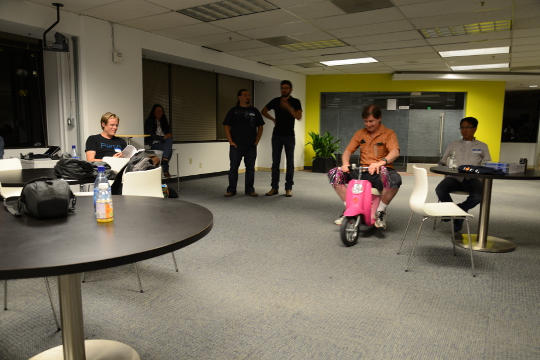
I've mentored a number of students in 2013 and 2014 for Debian and Ganglia and most of the companies I've worked with have run internships and graduate programs from time to time. GSoC 2014 has just finished and with all the excitement, many students are already asking what they can do to prepare and be selected in 2015. My own observation is that the more time the organization has to get to know the student, the more confident they can be selecting that student. Furthermore, the more time that the student has spent getting to know the free software community, the more easily they can complete GSoC. Here I present a list of things that students can do to maximize their chance of selection and career opportunities at the same time. These tips are useful for people applying for GSoC itself and related programs such as GNOME's Outreach Program for Women or graduate placements in companies. Disclaimers There is no guarantee that Google will run the program again in 2015 or any future year. There is no guarantee that any organization or mentor (including myself) will be involved until the official list of organizations is published by Google. Do not follow the advice of web sites that invite you to send pizza or anything else of value to prospective mentors. Following the steps in this page doesn't guarantee selection. That said, people who do follow these steps are much more likely to be considered and interviewed than somebody who hasn't done any of the things in this list. Understand what free software really is You may hear terms like free software and open source software used interchangeably. They don't mean exactly the same thing and many people use the term free software for the wrong things. Not all open source projects meet the definition of free software. Those that don't, usually as a result of deficiencies in their licenses, are fundamentally incompatible with the majority of software that does use genuinely free licenses. Google Summer of Code is about both writing and publishing your code and it is also about community. It is fundamental that you know the basics of licensing and how to choose a free license that empowers the community to collaborate on your code well after GSoC has finished. Please review the definition of free software early on and come back and review it from time to time. The The GNU Project / Free Software Foundation have excellent resources to help you understand what a free software license is and how it works to maximize community collaboration. Don't look for shortcuts There is no shortcut to GSoC selection and there is no shortcut to GSoC completion. The student stipend (USD $5,500 in 2014) is not paid to students unless they complete a minimum amount of valid code. This means that even if a student did find some shortcut to selection, it is unlikely they would be paid without completing meaningful work. If you are the right candidate for GSoC, you will not need a shortcut anyway. Are you the sort of person who can't leave a coding problem until you really feel it is fixed, even if you keep going all night? Have you ever woken up in the night with a dream about writing code still in your head? Do you become irritated by tedious or repetitive tasks and often think of ways to write code to eliminate such tasks? Does your family get cross with you because you take your laptop to Christmas dinner or some other significant occasion and start coding? If some of these statements summarize the way you think or feel you are probably a natural fit for GSoC. An opportunity money can't buy The GSoC stipend will not make you rich. It is intended to make sure you have enough money to survive through the summer and focus on your project. Professional developers make this much money in a week in leading business centers like New York, London and Singapore. When you get to that stage in 3-5 years, you will not even be thinking about exactly how much you made during internships. GSoC gives you an edge over other internships because it involves publicly promoting your work. Many companies still try to hide the potential of their best recruits for fear they will be poached or that they will be able to demand higher salaries. Everything you complete in GSoC is intended to be published and you get full credit for it. Imagine a young musician getting the opportunity to perform on the main stage at a rock festival. This is how the free software community works. It is a meritocracy and there is nobody to hold you back. Having a portfolio of free software that you have created or collaborated on and a wide network of professional contacts that you develop before, during and after GSoC will continue to pay you back for years to come. While other graduates are being screened through group interviews and testing days run by employers, people with a track record in a free software project often find they go straight to the final interview round. Register your domain name and make a permanent email address Free software is all about community and collaboration. Register your own domain name as this will become a focal point for your work and for people to get to know you as you become part of the community. This is sound advice for anybody working in IT, not just programmers. It gives the impression that you are confident and have a long term interest in a technology career. Choosing the provider: as a minimum, you want a provider that offers DNS management, static web site hosting, email forwarding and XMPP services all linked to your domain. You do not need to choose the provider that is linked to your internet connection at home and that is often not the best choice anyway. The XMPP foundation maintains a list of providers known to support XMPP. Create an email address within your domain name. The most basic domain hosting providers will let you forward the email address to a webmail or university email account of your choice. Configure your webmail to send replies using your personalized email address in the From header. Update your ~/.gitconfig file to use your personalized email address in your Git commits. Create a web site and blog Start writing a blog. Host it using your domain name. Some people blog every day, other people just blog once every two or three months. Create links from your web site to your other profiles, such as a Github profile page. This helps reinforce the pages/profiles that are genuinely related to you and avoid confusion with the pages of other developers. Many mentors are keen to see their students writing a weekly report on a blog during GSoC so starting a blog now gives you a head start. Mentors look at blogs during the selection process to try and gain insight into which topics a student is most suitable for. Create a profile on Github Github is one of the most widely used software development web sites. Github makes it quick and easy for you to publish your work and collaborate on the work of other people. Create an account today and get in the habbit of forking other projects, improving them, committing your changes and pushing the work back into your Github account. Github will quickly build a profile of your commits and this allows mentors to see and understand your interests and your strengths. In your Github profile, add a link to your web site/blog and make sure the email address you are using for Git commits (in the ~/.gitconfig file) is based on your personal domain. Start using PGP Pretty Good Privacy (PGP) is the industry standard in protecting your identity online. All serious free software projects use PGP to sign tags in Git, to sign official emails and to sign official release files. The most common way to start using PGP is with the GnuPG (GNU Privacy Guard) utility. It is installed by the package manager on most Linux systems. When you create your own PGP key, use the email address involving your domain name. This is the most permanent and stable solution. Print your key fingerprint using the gpg-key2ps command, it is in the signing-party package on most Linux systems. Keep copies of the fingerprint slips with you. This is what my own PGP fingerprint slip looks like. You can also print the key fingerprint on a business card for a more professional look. Using PGP, it is recommend that you sign any important messages you send but you do not have to encrypt the messages you send, especially if some of the people you send messages to (like family and friends) do not yet have the PGP software to decrypt them. If using the Thunderbird (Icedove) email client from Mozilla, you can easily send signed messages and validate the messages you receive using the Enigmail plugin. Get your PGP key signed Once you have a PGP key, you will need to find other developers to sign it. For people I mentor personally in GSoC, I'm keen to see that you try and find another Debian Developer in your area to sign your key as early as possible. Free software events Try and find all the free software events in your area in the months between now and the end of the next Google Summer of Code season. Aim to attend at least two of them before GSoC. Look closely at the schedules and find out about the individual speakers, the companies and the free software projects that are participating. For events that span more than one day, find out about the dinners, pub nights and other social parts of the event. Try and identify people who will attend the event who have been GSoC mentors or who intend to be. Contact them before the event, if you are keen to work on something in their domain they may be able to make time to discuss it with you in person. Take your PGP fingerprint slips. Even if you don't participate in a formal key-signing party at the event, you will still find some developers to sign your PGP key individually. You must take a photo ID document (such as your passport) for the other developer to check the name on your fingerprint but you do not give them a copy of the ID document. Events come in all shapes and sizes. FOSDEM is an example of one of the bigger events in Europe, linux.conf.au is a similarly large event in Australia. There are many, many more local events such as the Debian France mini-DebConf in Lyon, 2015. Many events are either free or free for students but please check carefully if there is a requirement to register before attending. On your blog, discuss which events you are attending and which sessions interest you. Write a blog during or after the event too, including photos. Quantcast generously hosted the Ganglia community meeting in San Francisco, October 2013. We had a wild time in their offices with mini-scooters, burgers, beers and the Ganglia book. That's me on the pink mini-scooter and Bernard Li, one of the other Ganglia GSoC 2014 admins is on the right. Install Linux GSoC is fundamentally about free software. Linux is to free software what a tree is to the forest. Using Linux every day on your personal computer dramatically increases your ability to interact with the free software community and increases the number of potential GSoC projects that you can participate in. This is not to say that people using Mac OS or Windows are unwelcome. I have worked with some great developers who were not Linux users. Linux gives you an edge though and the best time to gain that edge is now, while you are a student and well before you apply for GSoC. If you must run Windows for some applications used in your course, it will run just fine in a virtual machine using Virtual Box, a free software solution for desktop virtualization. Use Linux as the primary operating system. Here are links to download ISO DVD (and CD) images for some of the main Linux distributions: If you are nervous about getting started with Linux, install it on a spare PC or in a virtual machine before you install it on your main PC or laptop. Linux is much less demanding on the hardware than Windows so you can easily run it on a machine that is 5-10 years old. Having just 4GB of RAM and 20GB of hard disk is usually more than enough for a basic graphical desktop environment although having better hardware makes it faster. Your experiences installing and running Linux, especially if it requires some special effort to make it work with some of your hardware, make interesting topics for your blog. Decide which technologies you know best Personally, I have mentored students working with C, C++, Java, Python and JavaScript/HTML5. In a GSoC program, you will typically do most of your work in just one of these languages. From the outset, decide which language you will focus on and do everything you can to improve your competence with that language. For example, if you have already used Java in most of your course, plan on using Java in GSoC and make sure you read Effective Java (2nd Edition) by Joshua Bloch. Decide which themes appeal to you Find a topic that has long-term appeal for you. Maybe the topic relates to your course or maybe you already know what type of company you would like to work in. Here is a list of some topics and some of the relevant software projects:



  • System administration, servers and networking: consider projects involving monitoring, automation, packaging. Ganglia is a great community to get involved with and you will encounter the Ganglia software in many large companies and academic/research networks. Contributing to a Linux distribution like Debian or Fedora packaging is another great way to get into system administration.
  • Desktop and user interface: consider projects involving window managers and desktop tools or adding to the user interface of just about any other software.
  • Big data and data science: this can apply to just about any other theme. For example, data science techniques are frequently used now to improve system administration.
  • Business and accounting: consider accounting, CRM and ERP software.
  • Finance and trading: consider projects like R, market data software like OpenMAMA and connectivity software (Apache Camel)
  • Real-time communication (RTC), VoIP, webcam and chat: look at the JSCommunicator or the Jitsi project
  • Web (JavaScript, HTML5): look at the JSCommunicator
Before the GSoC application process begins, you should aim to learn as much as possible about the theme you prefer and also gain practical experience using the software relating to that theme. For example, if you are attracted to the business and accounting theme, install the PostBooks suite and get to know it. Maybe you know somebody who runs a small business: help them to upgrade to PostBooks and use it to prepare some reports. Make something Make some small project, less than two week's work, to demonstrate your skills. It is important to make something that somebody will use for a practical purpose, this will help you gain experience communicating with other users through Github. For an example, see the servlet Juliana Louback created for fixing phone numbers in December 2013. It has since been used as part of the Lumicall web site and Juliana was selected for a GSoC 2014 project with Debian. There is no better way to demonstrate to a prospective mentor that you are ready for GSoC than by completing and publishing some small project like this yourself. If you don't have any immediate project ideas, many developers will also be able to give you tips on small projects like this that you can attempt, just come and ask us on one of the mailing lists. Ideally, the project will be something that you would use anyway even if you do not end up participating in GSoC. Such projects are the most motivating and rewarding and usually end up becoming an example of your best work. To continue the example of somebody with a preference for business and accounting software, a small project you might create is a plugin or extension for PostBooks. Getting to know prospective mentors Many web sites provide useful information about the developers who contribute to free software projects. Some of these developers may be willing to be a GSoC mentor. For example, look through some of the following: Getting on the mentor's shortlist Once you have identified projects that are interesting to you and developers who work on those projects, it is important to get yourself on the developer's shortlist. Basically, the shortlist is a list of all students who the developer believes can complete the project. If I feel that a student is unlikely to complete a project or if I don't have enough information to judge a student's probability of success, that student will not be on my shortlist. If I don't have any student on my shortlist, then a project will not go ahead at all. If there are multiple students on the shortlist, then I will be looking more closely at each of them to try and work out who is the best match. One way to get a developer's attention is to look at bug reports they have created. Github makes it easy to see complaints or bug reports they have made about their own projects or other projects they depend on. Another way to do this is to search through their code for strings like FIXME and TODO. Projects with standalone bug trackers like the Debian bug tracker also provide an easy way to search for bug reports that a specific person has created or commented on. Once you find some relevant bug reports, email the developer. Ask if anybody else is working on those issues. Try and start with an issue that is particularly easy and where the solution is interesting for you. This will help you learn to compile and test the program before you try to fix any more complicated bugs. It may even be something you can work on as part of your academic program. Find successful projects from the previous year Contact organizations and ask them which GSoC projects were most successful. In many organizations, you can find the past students' project plans and their final reports published on the web. Read through the plans submitted by the students who were chosen. Then read through the final reports by the same students and see how they compare to the original plans. Start building your project proposal now Don't wait for the application period to begin. Start writing a project proposal now. When writing a proposal, it is important to include several things:
  • Think big: what is the goal at the end of the project? Does your work help the greater good in some way, such as increasing the market share of Linux on the desktop?
  • Details: what are specific challenges? What tools will you use?
  • Time management: what will you do each week? Are there weeks where you will not work on GSoC due to vacation or other events? These things are permitted but they must be in your plan if you know them in advance. If an accident or death in the family cut a week out of your GSoC project, which work would you skip and would your project still be useful without that? Having two weeks of flexible time in your plan makes it more resilient against interruptions.
  • Communication: are you on mailing lists, IRC and XMPP chat? Will you make a weekly report on your blog?
  • Users: who will benefit from your work?
  • Testing: who will test and validate your work throughout the project? Ideally, this should involve more than just the mentor.
If your project plan is good enough, could you put it on Kickstarter or another crowdfunding site? This is a good test of whether or not a project is going to be supported by a GSoC mentor. Learn about packaging and distributing software Packaging is a vital part of the free software lifecycle. It is very easy to upload a project to Github but it takes more effort to have it become an official package in systems like Debian, Fedora and Ubuntu. Packaging and the communities around Linux distributions help you reach out to users of your software and get valuable feedback and new contributors. This boosts the impact of your work. To start with, you may want to help the maintainer of an existing package. Debian packaging teams are existing communities that work in a team and welcome new contributors. The Debian Mentors initiative is another great starting place. In the Fedora world, the place to start may be in one of the Special Interest Groups (SIGs). Think from the mentor's perspective After the application deadline, mentors have just 2 or 3 weeks to choose the students. This is actually not a lot of time to be certain if a particular student is capable of completing a project. If the student has a published history of free software activity, the mentor feels a lot more confident about choosing the student. Some mentors have more than one good student while other mentors receive no applications from capable students. In this situation, it is very common for mentors to send each other details of students who may be suitable. Once again, if a student has a good Github profile and a blog, it is much easier for mentors to try and match that student with another project. GSoC logo generic Conclusion Getting into the world of software engineering is much like joining any other profession or even joining a new hobby or sporting activity. If you run, you probably have various types of shoe and a running watch and you may even spend a couple of nights at the track each week. If you enjoy playing a musical instrument, you probably have a collection of sheet music, accessories for your instrument and you may even aspire to build a recording studio in your garage (or you probably know somebody else who already did that). The things listed on this page will not just help you walk the walk and talk the talk of a software developer, they will put you on a track to being one of the leaders. If you look over the profiles of other software developers on the Internet, you will find they are doing most of the things on this page already. Even if you are not selected for GSoC at all or decide not to apply, working through the steps on this page will help you clarify your own ideas about your career and help you make new friends in the software engineering community.


Tim Retout: Packaging pump.io for Debian

I intend to intend to package pump.io for Debian. It's going to take a long time, but I don't know whether that's weeks or years yet. The world needs decentralized social networking. I discovered the tools that let me create this wiki summary of the progress in pump.io packaging. There are at least 35 dependencies that need uploading, so this would go a lot faster if it weren't a solo effort - if anyone else has some time, please let me know! But meanwhile I'm hoping to build some momentum. I think it's important to keep the quality of the packaging as high as possible, even while working through so many. It would cost a lot of time later if I had to go back and fix bugs in everything. I really want to be running the test suites in these builds, but it's not always easy. One of the milestones along the way might be packaging nodeunit. Nodeunit is a Nodejs unit testing framework (duh), used by node-bcrypt (and, unrelatedly, statsd, which would be pretty cool to have in Debian too). Last night I filed eight pull requests to try and fix up copyright/licensing issues in dependencies of nodeunit. Missing copyright statements are one of the few things I can't fix by myself as a packager. All I can do is wait, and package other dependencies in the meantime. Fortunately there are plenty of those. And I have not seen so many issues in direct dependencies of pump.io itself - or at least they've been fixed in git.

Steve Kemp: Updating Debian Administration, the code

So I previously talked about the setup behind Debian Administration, and my complaints about the slownes. The previous post talked about the logical setup, and the hardware. This post talks about the more interesting thing. The code. The code behind the site was originally written by Denny De La Haye. I found it and reworked it a lot, most obviously adding structure and test cases. Once I did that the early version of the site was born. Later my version became the official version, as when Denny setup Police State UK he used my codebase rather than his. So the code huh? Well as you might expect it is written in Perl. There used to be this layout:
]
yawns/cgi-bin/index.cgi
yawns/cgi-bin/Pages.pl
yawns/lib/...
yawns/htdocs/
Almost every request would hit the index.cgi script, which would parse the request and return the appropriate output via the standard CGI interface. How did it know what you wanted? Well sometimes there would be a paramater set which would be looked up in a dispatch-table:
/cgi-bin/index.cgi?article=40         - Show article 40
/cgi-bin/index.cgi?view_user=Steve    - Show the user Steve
/cgi-bin/index.cgi?recent_comments=10 - Show the most recent comments.
Over time the code became hard to update because there was no consistency, and over time the site became slow because this is not a quick setup. Spiders, bots, and just average users would cause a lot of perl processes to run. So? What did I do? I moved the thing to using FastCGI, which avoids the cost of forking Perl and loading (100k+) the code. Unfortunately this required a bit of work because all the parameter handling was messy and caused issues if I just renamed index.cgi -> index.fcgi. The most obvious solution was to use one parameter, globally, to specify the requested mode of operation. Hang on? One parameter to control the page requested? A persistant environment? What does that remind me of? Yes. CGI::Application. I started small, and pulled some of the code out of index.cgi + Pages.pl, and over into a dedicated CGI::Application class: So now every part of the site that is called by Ajax has one persistent handler, and every part of the site which returns RSS feeds has another. I had some fun setting up the sessions to match those created by the old stuff, but I quickly made it work, as this example shows: The final job was the biggest, moving all the other (non-feed, non-ajax) modes over to a similar CGI::Application structure. There were 53 modes that had to be ported, and I did them methodically, first porting all the Poll-related requests, then all the article-releated ones, & etc. I think I did about 15 a day for three days. Then the rest in a sudden rush. In conclusion the code is now fast because we don't use CGI, and instead use FastCGI. This allowed minor changes to be carried out, such as compiling the HTML::Template templates which determine the look and feel, etc. Those things don't make sense in the CGI environment, but with persistence they are essentially free. The site got a little more of a speed boost when I updated DNS, and a lot more when I blacklisted a bunch of IP-space. As I was wrapping this up I realized that the code had accidentally become closed - because the old repository no longer exists. That is not deliberate, or intentional, and will be rectified soon. The site would never have been started if I'd not seen Dennys original project, and although I don't think others would use the code it should be possible. I remember at the time I was searching for things like "Perl CMS" and finding Slashcode, and Scoop, which I knew were too heavyweight for my little toy blog. In conclusion Debian Administration website is 10 years old now. It might not have changed the world, it might have become less relevant, but I'm glad I tried, and I'm glad there were years when it really was the best place to be. These days there are HowtoForges, blogs, spam posts titled "How to install SSH on Trusty", "How to install SSH on Wheezy", "How to install SSH on Precise", and all that. No shortage of content, just finding the good from the bad is the challenge. Me? The single best resource I read these days is probably LWN.net. Starting to ramble now. Go look at my quick hack for remote command execution https://github.com/skx/nanoexec ?

Next.

Previous.