Search Results: "stone"

16 May 2010

Russell Coker: Noise Canceling Headphones and People Talking

The Problem I was asked for advice on buying headphones to protect students who have medical conditions that make them sensitive to noise, such headphones would have to allow them to hear human voices. Due to the significant differences in hearing issues (including physical damage and sensory issues) it seems unlikely that getting identical headphones for all students will give an ideal result. The person who asked me the question didn t explain what type of students are being taught. If it s an adult education class then getting everyone the ideal headset wouldn t be particularly difficult. If however it s the special needs class in a high school then students would probably want the most shiny headphones rather than the ones that are a best match to their hearing issues. Also some combinations of hearing problems and ambient noise can t be addressed by such headsets. A friend who developed Noise Induced Hearing Loss from shooting tells me that he really can t stand brass instruments. But the high frequencies from such instruments tend not to be filtered well by noise canceling headphones, so any student who has such a problem would probably need hearing aids that filter out high frequencies I believe that such hearing aids are available but don t have any particular knowledge about them. Test Results I did a quick test on my Bose QC-15 noise canceling headphones [1] which cost me $320US including tax and my cheap Bauhn headphones from Aldi [2] which cost me $69AU (and which apparently could later be purchased on special for $35AU to clear stock). I found that when not playing music they seemed to perform about equally well in terms of allowing me to hear people speaking, although I admit that just having a conversation with the nearest people wasn t the most scientific test. When I was playing music I found that the Bose headset made it significantly more difficult to hear people speak than the Bauhn headset. This is an advantage for the Bose for it s intended use, and I expect that students who need a headset for medical reasons won t want to listen to music while studying so it s never a disadvantage. In both cases, if the headphones are used for just canceling unwanted noise the speaker shouldn t need to raise their voice significantly to be heard. In some situations the noise canceling headphones make it easier for someone with good hearing to hear what people are saying, for example a conversation in a car or plane could probably be held at a lower volume if all people involved were wearing suitable noise canceling headphones. If however the students have damaged hearing then I can t make any prediction as to whether the teacher could speak at a lower volume or whether they would be required to use a higher volume if the students wore such headphones. The Brookstone on-ear headphones that I tested [3] seem particularly noteworthy in this regard due to the way they canceled the melody of the store background music and just left the singing. If someone wants to buy headphones for people with physical damage to their ears then the Brookstone product is really worth investigating. If however the target market happens to be people on the Autism Spectrum then they may hate anything that presses on their ears (as I do) in which case the Brookstone product can t be considered. The Brookstone price of $150US (presumably $160 including tax) was also the best price I saw when shopping in the US but I presume that I could have found something with a similar quality and price to Bauhn in the US if I looked hard enough. Conclusion The big advantage of the Bose for this use is that it blocks a wider range of frequencies than some other noise canceling headsets. They all work really well on regular low frequency noise such as car engine noise (whether a car passenger or a pedestrian) but to stop certain higher frequencies such as those from air conditioning systems the Bose wins hands down. I guess this may depend on what noise is to be blocked, if a class was held in the same room every time and noise canceling headsets were purchased specifically for that class then it would probably make sense to ensure that the acoustic capabilities of the headsets match the unwanted background noise and the hearing issue that each student has. Here s an Amazon link: Bose QuietComfort 15 Acoustic Noise Cancelling Headphones I ve been reading about Sensory Processing Disorder. I m sure that some children are doing poorly in the default school system because they either have an undiagnosed case of SPD or who don t have enough symptoms to get a diagnosis. I think it would make a good experiment to try noise canceling headphones on some of the difficult children, I wouldn t expect a high success rate but if it worked in as little as 5% of cases and did no harm to the children who didn t benefit then it would be worth doing.

7 May 2010

David Welton: Better Software 2010

Florence, Italy, is an extremely popular tourist destination, and for a good reason: it's absolutely full of beautiful architecture and famous art. It apparently gets more than a million tourists a year. So it felt kind of odd for me, as a foreigner, to hole up in a conference talking about computers, software and business within a stone's throw of this. It was well worth it though. "Better Software" was a very interesting conference, and extremely professional. One anecdote: since there were so many people signed up, they did the lunch and coffee breaks in another facility nearby, about a block away. However, the weather wasn't very nice, so the organizers rounded up a bunch of umbrellas, and put them near the door with a sign saying "take one if you need it", so that people could stay dry while going back and forth. Of course, having grown up in Oregon, I don't trust the weather much, and carry an umbrella, but it was a really nice gesture and attention to detail. I expected it to be good, but it ended up being a really great event. Some memorable bits: I suppose that, given the huge success of the event this year, they may look for a larger facility for future events, but I hope it doesn't end up in some soulless place in the suburbs; even if I didn't do any sightseeing, I liked being in the city center. While the organizers would be more than capable of putting on a more international event, I enjoyed the focus on Italy, and the cool things people are doing here, and I feel it also contributed some to the positive atmosphere. It's one thing to have some guy come in from abroad and tell you something, another to see someone like Peldi talk about how he did what he did. And what with all the problems Italy has right now, some "positive energy" was more than welcome. Like I said, Italy has a lot of really talented people; the problems lie elsewhere. A big thanks to the organizers and everyone who came, and I hope to see you there next year.

3 May 2010

Mike Hommey: Important milestone for Iceweasel in Debian

I just uploaded a pre-release of Iceweasel 3.6.4 to experimental. This is an important milestone for several reasons:

27 April 2010

Diego Escalante Urrelo: Summer lessons

Over the last few months I ve been working for Igalia, as an intern, fixing regressions in Epiphany, which extends to WebKitGTK+ sometimes. Surely a dream job: working on my favourite projects, on a great company, surrounded by great teammates and friends. Igalia: Free Software Engineering I m happy about it, really really happy. I love this job, totally, completely!. I ve had the chance to learn a lot. Here I d like to share some things I have learned so far, I look forward to post again with more ideas, but meanwhile here you have two. Different timezones are hard The time when I find most of the Igalia crew online is between 2am and 12pm. Of course this doesn t mean you can t find them past 12pm, but it s already 7pm or 8pm in Europe then. I m on UTC-5 and Spain is on UTC+1 or (now) UTC+2. You probably agree that asking anyone to wake up at 7am in summer is unrealistic. Luckily, Igalia doesn t make me pass a turing test everyday at a fixed time. This rocks.

valpo
Valpara so, Chile I love it when people understand that a happy hacker working at midnight is better than an unhappy hacker working on a set in stone schedule. Kudos to Igalia for that. Your code should explain and defend itself My written expression teacher says Your text should be good enough to explain and defend itself . This applies to code too. I confirmed this at the expense of Xan s patience. It s a common situation: when the maintainer reviews your patch you are not around to explain it, or present the rationale you put into the change. The solution? well, simple, your patch and commit log should explain by themselves.

Felix, chillin
Don t just post a patch and do this.
Review it yourself. I saw, after realising how much ping-pong Xan and I had to play to get a patch in, that my patches lacked a harder review by myself before being posted. You have to be your first reviewer. Be a severe judge of your patch, ask yourself if you would accept such a patch, if you would like a commit message like that, if that variable name is really good, if someone could quickly grasp what s it all about, etc. Get into the flippy flops of the maintainer, don t assume everything is obvious to everyone.

23 April 2010

Jonathan McDowell: Out, damn'd PGP v3

Nearly a year ago people starting worrying about the complexity of SHA-1 being reduced and the potential availability of viable attacks against things such as PGP keys that used SHA-1. Many people (myself included) generated a new key, or updated preferences on keys that were otherwise strong enough. There were worries about what this might mean for Debian. We were getting ahead of ourselves a bit though. Firstly there haven't been any public viable attacks that I'm aware of (though of course this doesn't mean we shouldn't continue to migrate away), but secondly there's a much easier method of attack. PGP v3 keys. To quote RFC4880:

V3 keys are deprecated. They contain three weaknesses. First, it is relatively easy to construct a V3 key that has the same Key ID as any other key because the Key ID is simply the low 64 bits of the public modulus. Secondly, because the fingerprint of a V3 key hashes the key material, but not its length, there is an increased opportunity for fingerprint collisions. Third, there are weaknesses in the MD5 hash algorithm that make developers prefer other algorithms. See below for a fuller discussion of Key IDs and fingerprints.
At the time of writing Debian has 21 remaining v3 keys. This is a significant improvement over a year ago, when we had 200, but it's still 21 more than I'd like. I've been chasing people since last May (starting with those who had v3 + v4 keys, all of whom now only have a v4 key) and we're down to the stragglers. So it's time to name and shame, in the hope of kicking them into action. The following keys are what's left (doesn't match the currently active keyring because we've had a few replacements since the last promote):

0x0D2156BD3D97C149 Michael Stone <mstone>
0x225FD911CD269B31 Carlos Barros <cbf>
0x31E73F14E298966D James R. Van Zandt <jrv>
0x366CD3FEEBC11B01 Chris Waters <xtifr>
0x37A73FE355E8BC4D Frederic Lepied <lepied>
0x3E973117DCC528E9 Ardo van Rangelrooij <ardo>
0x5C7A46637953F711 Rich Sahlender <rsahlen>
0x5D6560F85F30F005 Craig Brozefsky <craig>
0x6B0E322836129171 Jim Westveer <jwest>
0x723724B4A5B6DD31 Christian Meder <meder>
0x7629B22ED71DAABD Adrian Bridgett <bridgett>
0x8FFC405EFD5A67CD Adam Di Carlo <aph>
0xB0D269DE17F3D4D1 Matthew Vernon <matthew>
0xBC151FC8D2A913A1 Peter S Galbraith <psg>
0xC1A0A171C2DCD3B1 Jim Mintha <jmintha>
0xC3168EBA23F5ADDB Ian Jackson <iwj>
0xCE951B1160D74C7D Patrick Cole <ltd>
0xE82A8B0D57137FE5 Paul Seelig <pseelig>
0xF20E242CE77AC835 Brian White <bcwhite>
0xFBAA570C3087194D Alan Bain <afrb2>
0xFFD1B4AC7C19FD19 David Engel <david>

Of these keys only 2 voted in the recent DPL election. 8 have failed to make any response to my mails (3 since last August). Only 9 have uploaded a package since August 2008. And 10 were already known to the MIA database. Some of them have stated they'll sort out a new key, but not yet done so.

If you are one of these people, please either get a new key sorted and signed and reply to the mails I've sent you, or reply and say you no longer wish to be involved in Debian. And if you know any of these people, encourage them to get a new key sorted and offer to sign it for them.

15 April 2010

Biella Coleman: Cultural Cornucopia

Today all across America, many are experiencing a soft form of hell, anxiety, and constant cursing for it is tax day. Thankfully last night I squared those away (more or less). Today is also the last day to register forDebconf sponsored registration. Even if there is a chance you can t make it, it is worth filling out the form just in case. For those spending a little extra time in NYC or planning on sneaking out to take a whirl in the city, here are some more fun options. NYC is known to be a cultural cornucopia of sorts and one reason are the many museums. I just found a twitter list listing those museums with a feed. Probably one of my favorite museums is located in the far north of Manhattan, the Cloisters. It is a haven, an oasis with small beautiful gardens, as well large stone rooms and buildings filled with medieval art, tapestry, and manuscripts. If you need to get away from people, chatter, and computers, this might be a good place to visit. Museums are easy enough to find but there are other spots in NYC that may be a little harder to spot. If you want to hit Chinatown for dim sum, I would recommend Jing Fong, which is mind blowing largely because of its LARGE (like there are escalators that take you up) room, which gets pretty darn packed on the weekend. If you want something that involves not just food but involves sweat, water, food, sun, hot rocks, body scrubs, funny looking pink, orange and blue uniforms and all in a cross-cultural context, then Spa Castle is the place to go to. Just check out the website and you will see what I am talking about. It s family friendly, has a cornucopia of saunas (filled with jade, gold, ice, Tibetan bricks), some decent Korean food, among many other attractions. In general is one of the best deals in NY.

9 April 2010

Ingo Juergensmann: Syncing N97

We now have year 2010 but sometimes it still feels like living in the Stone Age of Computing. There's a smartphone, let's call it N97, with Symbian on it. Then there are a bunch of client computers such as a Debian workstation/homeserver running Sid, a Laptop running OS X with iCal and a Windows XP machine at work. Every machine itself (well, with the exception of the XP machine) is a nice piece of hard- and software offering a bunch of possibilities: you can manage your calendars, contacts and tasks.

The difficulty arise when you want to sync those calendars, contacts and tasks between all of the different machines.

There are several ways to address this task:

  1. WebDAV:
    Setting up a WebDAV is no rocket science and you can easily sync your calendars easily with Sunbird or Thunderbird/Lightning for example. But that leaves the N97 ouf of syncing. The N97 can be synced with iSync on OS X, but iCal is not able to work on a single calendar. You can either export a calendar to a remote WebDAV or subscribe it. iCal ignores changes done in other clients and will overwrite those.


  2. CalDAV 1:
    CalDAV (calendarserver) does require some more configuration before you can use it properly, but when done, it should be capable of syncing calendars, resources, tasks and such. Using CalDAV should work aorund the limitations of WebDAV as mentioned above. The calendars can be synced to CalDAV from iCal by creating a remote account and you can sync with iSync via Bluetooth. But you will need a local calendar in iCal, because you can't use iSync to sync your smartphone to your CalDAV remote calendar in iCal.

    iSync unable to use CalDAV for syncing


    Additionally there are problems when you delete an event from your CalDAV calendar on your smartphone. iSync will report an error like this:

    Freitag, 9. April 2010 21:45
    [Nokia N97]
    Changes of Events in writeprotected calendar on this phone are not permitted. These changes were ignored: test, 04/09/2010 23:00


    Deleting events in your local iCal calendar, however, is working well. In the end this result is not encouraging as I need the CalDAV calendars being in sync.
    Syncing with Sunbird on OS X doesn't work either. Maybe it would with DAViCal as server frontend?


  3. CalDAV 2:
    Because syncing via iSync doesn't work as expected it would be a decent solution if the N97 could sync directly to CalDAV. Unfortunately it can't, although there seems some progress with Symbian there. If that is already integrated into v21.0.102 of N97 firmware, it would nice if someone could point me to how configure the N97 properly.


  4. SyncML:
    Maybe another option would be to use some sort of SyncML server in order to sync calendars and stuff between those machines, but I don't know how OS X will work with that approach. Again, hints are welcome!


Syncing calendars and other stuff really seems to be painful. Using a third party webservice such as .Mac or Google Calendar is no option at all. I don't want to give private data out of my hands and control. So, a self hosted service is needed.
Dear lazyweb, is there a solution available for my problem? I hope so...

8 April 2010

Stefano Zacchiroli: RC bugs of the week - issue 26

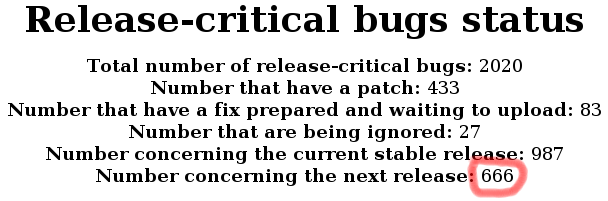
RCBW - #26 RC bug count: 666 It is getting down, even though the current number is scary. My personal RC bug count is not so mystical and as low as 205 RC bugs to go, which is quite encouraging. Without any further ado, here are this week squashes: Random points:

7 April 2010

Joey Hess: the neverending game

(While I have a lot big stuff going on in my life right now, I don't feel most of it's suitable for blogging. So here's a bit of insignificant fluff.) I have this nethack game that won't end. I started it before Christmas, and got much, much deeper into the dungeon than I've ever managed before. Taunted Jerry with it as we hung out over the holidays; he repeatedly losing while I quested and cleared out the castle, and genocided liches to get through the valley of the dead, and generally just kept building up a character that wouldn't quit. Yeoj the Student of Metals St:18/06 Dx:18 Co:18 In:16 Wi:18 Ch:14 Lawful Dlvl:42 $:0 HP:138(138) Pw:29(147) AC:-15 Xp:20/5196103 T:66175 Hungry Burdened I should mention: I mostly don't play nethack often, only swinging back around to give it another try every year or two. So for many years I'd play a few games that quickly ended in Yet Another Stupid Death, and occasionally feel proud when I got as far as Minetown or the Oracle. Recently, though, I've started focusing on Monks, and gotten rather good at playing them in the early game. So, this is my first character who got through the early game, completed the quest, and went well into the late-game. I know where that vibrating square is, I have plenty of wishes to round out my kit. So it would be an ascention candidate, except my chances of doing that on the first try are ... slim. And, do I want to? The descriptions of what I'd need to do to even try seem a bit tedious. So, unsure if he wants to ascend, and fearing YASD, my monk sits in his recently aquired tower at level 42 of the dungeon. For months. And so I can't play nethack. The character I'm role playing has decided to opt out of the game. (Oops, I meant to leave real life out of this, but it's somehow snuck back in there.) Meanwhile, this Dungeon Crawl Stone Soup that @Play keeps talking about looks interesting... (previously previously)

6 April 2010

Uwe Hermann: Miro 3.0 released, Debian package available

Miro 3.0 Yep, the new major release, Miro 3.0, of the cross-platform Internet RSS audio/video aggregator and player has been released. Please check the release notes and the feature list for details. Overall more than 139 issues have been fixed since the last 2.x series release. The most notable changes are probably the dropping of xine support upstream (gstreamer is used now for all video/audio on Linux) and the introduction of subtitle support. I have uploaded a new Miro 3.0 Debian package to unstable recently (which have been a delayed a bit due to Debian server issues), by now it should be available from most mirrors. Let me know if there are any issues...

Sylvestre Ledru: Update of the linear algebra libraries in Debian

In the numerical computing world, the cornerstones libraries are BLAS and LAPACK. They have been used in most of the numerical software for decades (like Scilab, R, numpy, OpenOffice with calc, etc). During that time, many implementations appeared to improve the performances taking advantages of clusters, multicore, SEE 1,2,3,4 , various levels of cache...
Between the reference BLAS (refblas) to an optimized one like ATLAS or MKL (Math Kernel Library by Intel - non-free), it is not rare to have a 15 factor. In Debian, we use by default the reference implementation of BLAS (168 reverse dependencies) and LAPACK (178 reverse dependencies). If the results are usually bad, they are pretty easy to use. What is hard to use, is switch between highly optimized libraries.
For now, the main one in the archive is ATLAS. ATLAS build process will launch many computations to know what will work best on the architecture. Results are usually excellent. 1) Upload of a refactoring of the ATLAS package.
I have been working on this for a while and after 19 uploads into Debian Experimental and I am happy (and kind of relief) to upload into debian unstable the release 3.8.3 of ATLAS. The new key elements in this release are: Note that, as before, all prebuilt binaries of ATLAS will be always slower than if you built them on the target architecture (but using Debian binary packages will save a few kilograms of Uranium). And one of most important feature is the capability to switch to any ATLAS implementation. 2) Switch between the different implementation
The problem in Debian (and Ubuntu) was that it was hard to switch between the ref BLAS/LAPACK and the optimized libraries. The user has to play with the LD_LIBRARY_PATH to use the various optimized packages and since there is no convention between the various distribution, the upstream developer has to develop crappy tricks to handle such things. It is why I implemented the following proposal: Handle different versions of BLAS and LAPACK. The main idea is to use the update-alternatives system to allow a quick and easy switch. For example:
# update-alternatives --config libblas.so.3gf 
There are 3 choices for the alternative libblas.so.3gf (providing /usr/lib/libblas.so.3gf).
  Selection    Path                                           Priority   Status
------------------------------------------------------------
* 0            /usr/lib/atlas-core2sse3/atlas/libblas.so.3gf   55        auto mode
  1            /usr/lib/atlas-base/atlas/libblas.so.3gf        35        manual mode
  2            /usr/lib/atlas-core2sse3/atlas/libblas.so.3gf   55        manual mode
  3            /usr/lib/libblas/libblas.so.3gf                 10        manual mode
# update-alternatives --config liblapack.so.3gf
There are 3 choices for the alternative liblapack.so.3gf (providing /usr/lib/liblapack.so.3gf).
  Selection    Path                                             Priority   Status
------------------------------------------------------------
* 0            /usr/lib/atlas-core2sse3/atlas/liblapack.so.3gf   55        auto mode
  1            /usr/lib/atlas-base/atlas/liblapack.so.3gf        35        manual mode
  2            /usr/lib/atlas-core2sse3/atlas/liblapack.so.3gf   55        manual mode
  3            /usr/lib/lapack/liblapack.so.3gf                  10        manual mode
Thanks to this, it is just trivial to switch from one to the other... Conclusion:
I just pushed the changes into Debian unstable for blas, lapack and atlas.
I have been testing a lot these deep modifications and I fixed all the problems that I found. However, in case I missed something, please report a bug...

26 March 2010

John Goerzen: Trip part 3: L beck

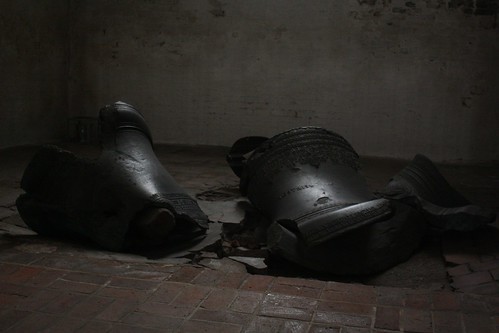
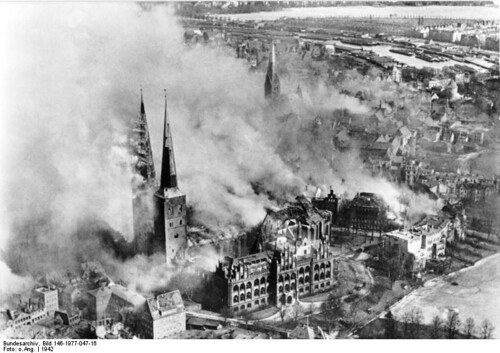
Note: This post was written in March 14-15 and posted after our return. When I think about L beck, the first thing that strikes me is the feeling of history underfoot. It struck me most when we set foot inside the Marienkirche. I had never quite felt a wave of a feeling of stepping back in time like that before. The stones on the floor were uneven and imperfect. L beck has had a wet and snowy winter, so the city had spread sand everywhere: sidewalks and roads. Walking into any grand church, I could hear the sound of sand under the shoes of everyone nearby, and feel it under my own shoes. I think I will long associate with L beck the feeling of walking into a grand old church, looking up at the top of the old building at seemingly impossible heights, while feeling the grit of sand and uneven stone beneath my feet. IMG_2643 Marienkirche isn t perfect, like some American churches I ve been in, such as the Basilica of Notre Dame. It doesn t have a lot of gold, either, and both of these attributes are wonderful. Look at a column of bricks, and you can see that each brick isn t exactly like its neighbor, and the entire column isn t perfectly straight. Lots of things in L beck are so old that they aren t perfectly straight, and it made me think that our American notion of always having to fix such things might be somewhat off sometimes. IMG_2629 Look up, and you see the frescos from the 1300s, revealed after many years after the building was struck by an allied bombing raid in 1942. This heavily damaged the building and knocked down plaster from the walls and ceiling, revealing the old artwork. Many parts of Marienkirche were lost as a result of the bombing, which perhaps adds to its slightly sparse and ancient feel. The church bells were sadly melted and crashed to the ground due to the bombing, and have been left exactly where they fell as a memorial. IMG_2641 Look down, and you see the uneven floor, and the concrete slabs above where important people were buried under the floor an attribute common to many of the churches we visited. It was common to see dates of graves from the 1600s and 1700s, though in some places it would go as far back as the 900s. The main part of the church has no heating or cooling, and visiting it on a day just a bit above freezing adds to the feeling of, well, old. Marienkirche has to be my favorite sight in L beck. Walking around the city, I get a similar feel. Many streets and sidewalks are made of stone. The streets that weren t damaged in the war have rows of beautiful old facades. Walk down many streets, and every so often I d see a little tunnel ( just wide enough for a coffin ) that goes under the street-facing houses to a nice little inner courtyard. These are open to the public, but tend to be very quiet and somewhat private. In the courtyard are smaller houses, which would have originally been used by the less wealthy. We also saw the L beck Dom (cathedral), which had a small museum about the destruction due to the Royal Air Force bombing in 1942. It was very sad to see the photo of the Dom in ruins, still smoking, even now. Burning L beck Cathedral after an air raid in 1942 I can only imagine what it must have felt like to residents of L beck to wake up to see many of their priceless centuries-old landmarks and places of worship so horribly destroyed and all of this for little strategic purpose really focused on the morale of the enemy civil population . It s sad that the allies would do such a short-sighted and terrible thing. Europeans have long had to live with the legacy of war upon war, while we Americans have rarely had to see the consequences of war up close. I think it would be good for more of us to visit these sites and come up face to face with what a bomb can do, and then perhaps we will be more judicious with them in the future. Shifting gears now to where we stayed: Andreas & Sigrid, with whom we stayed, have a beautiful 500-year-old house, with lots of original wood beams exposed, and some very old paintings on the walls and ceilings. Nearby were excellent bakeries and a chocolate shop. Terah and I visited it today and bought some very good chocolate. And this brings me to the second thing I ll remember: Andreas & Sigrid s children, Lukas and Rahel. Now, Terah knows no German, I know only a little bit, and the children know no English. So it was a bit slow getting to know each other to start out, but we managed to work around the communication barrier and had a great time. Terah played board games with Rahel, while with me, she kept inventing games to play: hiding somewhere, saying Hallo! , and laughing at how many unsuccessful attempts I might make to find her. I showed Lukas the camera on my Droid, which he used a lot, though a racing game on Terah s iPod Touch was more exciting. They both enjoyed looking at videos of American trains a bit, but especially pictures of our house and yard with Jacob and Oliver. They tried to teach me the German words for things, and also made futile attempts to correct my pronunciation! When we were leaving today, Rahel came over and gave me a kiss on the hand, then the same to Terah s hand, then a little kiss on one of our suitcases. It was touching and sweet. This was one of those experiences no guidebook prepared me for, and no tour bus would have provided. It is something neat to make friends with children despite the large language barrier. On to the rest of the visit We had arrived a little late into Hamburg. After getting our bags and some Euros at an ATM, the next step was to find the bus to L beck. No signs for it were evident, so I found an information desk. The person at the desk was carrying on a conversation in German with the person ahead of me in line. I figured an information desk person in a busy airport would speak English, and was all ready to ask Sprechen Sie Englisch? , but when I walked up, he got a polite smile, and said, Good morning! How can I help? Guess I m obvious. He directed me to the bus, gave me a brochure about it, and told me what time it would leave. Terah and I found the spot to wait, and for a moment I stepped inside the airport terminal. Terah won t let me forget that someone came up to her and asked a question in German, whereas I was spoken to in English. Anyhow, we found the bus, managed to communicate with the driver that doesn t speak English, and sat next to the friendly person that was talking to Terah. He turned out to be a violin player from Munich, and we had a great conversation for the next hour he asking questions about the USA, us asking questions about Germany and Munich. At one point, he commented, You two are so open minded and you re also Americans! He sounded surprised. We exchanged email addresses at the train station. Andreas found us there, and we walked through the city to his house, with him pointing out the sights along the way. L beck is a beautiful city, and though it was damaged in World War II, much of the really old parts still remain. The famous Holstentor Gate has a museum inside, which was fascinating to visit. On Sunday, we went to church with the family we were staying with, Andreas helpfully translating for us. There I met a British Python programmer, which was fun. His wife is a social worker, which was fun for Terah. Monday it was time to get on the train to Berlin. We again walked through a cold and rainy city to the Hauptbahnhof, ready to head to Berlin. There we got on a train to Hamburg, then an ICE train to Berlin. Despite having just a few minutes for a connection in Hamburg, it all went perfectly smoothly. The train left Leipzig about 10 seconds late the clock inside turned over to the minute, then the doors closed and we were off. Impressive. Note: the rest of my photos from L beck are available on Flickr.

15 March 2010

Gerfried Fuchs: stable RC Bug Squashing, Part 2

A while ago I blogged about squashing release-critical bugs in stable. Yesterday we have reached a big milestone on that area: The amount of release-critical bugs in stable dropped below 1000 (blue graph). This might sound like it's still pretty high but given that we were well over 1600 RC bugs in stable a while ago I consider this quite a success. This is though no time for rest. There is still way too many RC bugs in stable, there are definitely still a lot of bugs that just aren't affecting stable and thus can be marked as such meaning no upload needs to get done for them. I'm taking a close look at those with higher numbers and most of those seem to be validly affecting stable too so they might require a bit more work than just tagging them. Thanks to all people who helped on that area, I can just remember a few names and don't want to make anyone else also working on stable to feel singled out, though I want to thank Lucas for tagging his FTBFS rounds with squeeze sid right from the start because the packages obviously have built before due to his regular rebuilds. Thanks to all, but like said, not the time to rest. The green squeeze graph is still around 250 bugs away from us!

6 March 2010

Andrew Pollock: [life] Kitchen update

The kitchen renovations are slooowly progressing. Running away to New York for a week certainly helped. The cabinets arrived on Monday, and our contractor started installation on Wednesday. Templating for the counter tops is supposed to happen on Monday, and then it apparently takes a couple of weeks for the stone to get cut to size. So much for this whole thing only taking a couple of weeks :-( I expect the overhead cabinets can be installed once the templating is done (that's something I need to check with the contractor today). It's very exciting to see the kitchen start to take shape. I'm dying to be able to actually use it. Photos of the progress so far are here

4 March 2010

Daniel Stone: damn right you can

'Can you get cp to give a progress bar like wget?'

3 March 2010

MJ Ray: Paypal and Ethical Business

DoctorMO is calling Paypal the Pocketing Police after this Paypal [...] decided we were scammers and took our money comment by Daniel Stone during the Xorg foundation election discussions. Our co-op has avoided Paypal for a number of years for two reasons:
  1. Paypal didn t recognise UK company registration numbers that contain letters (like ours) for years after they first occurred, so we couldn t register as a seller;
  2. the terms and conditions are very unequal, there are shedloads of complaints like paypalsucks.com and I don t believe they re all fiction.
We ve not boycotted it yet because there are two of our current suppliers who are very expensive for us to pay by international bank transfer, accept Paypal and don t offer much alternative. I think I ll go ask them again. At least one of them should be sympathetic to Xorg.

27 February 2010

Jos Parrella: DC11 on BIH!

DebConf 11 will be held in Banja Luka, Bosnia and Herzegovina. Munich, Germany arrived on a close second and our bid, Quito, Ecuador, arrived last, allegedly because some points flipped over since DC 11 was meant to happen in Europe. So, after having three DebConfs hosted in America in the last four years, DebConf 11 will travel to Europe in 2011! Good news for all our fellow DDs and contributors over there. The Banja Luka team managed to get an important support from their Government. They even met with the Prime Minister and got him to sign an offer of full support. I think this becomes dangerous for a DebConf, given that I ve worked and have had mishaps while funding conferences with at least three governments (Ecuador, Venezuela and Brazil) with stronger levels of support (Law-like level) for free software and I know that at least other two governments in the World have unfortunately done this in the past. So we need backup plans and lots of follow-up activities with the stakeholders. However, this agreement sets an important milestone in government support for free and open source software as well as Debian. I ll use it in my Debian slides, and congratulations! IMO, Munich would have made a great host for DC11 in terms of air travel connectivity, at a bigger hit on local costs, but nothing that would differ that much from DC7, though! I don t think I ll be able to make it at this moment to Bosnia (struggling for NYC) and at this point it s premature to think on supporting Quito s again for DC12. People and sponsors get gradually tired, even with spiritual commitment. The DC10 decision meeting was long and lots of things needed to be improved. At that moment I thought the Project learnt useful lessons for future meetings, but we re repeating ourselves now on the DC11 decision meeting. And now, I m just hoping for the best, for the sake of the time and sanity of all us here. Ditch the priority list altogether, increase the stakeholders on the global team, filter bids early in the process and use more technology to improve the information flow before the decision!

17 February 2010

Daniel Stone: sam varghese not part of the open source community

I'm glad to see that Sam 'When All Else Fails, Call 'Em Racists' Varghese has admitted that he's definitely not a part of the open source community. Which is good, because I'd be pretty upset if he was. (Though his claim to be a professional journalist is no doubt fairly upsetting and phenomenally insulting to actual journalists.)

15 February 2010

Russell Coker: Will Aliens be Alien?

The Telegraph has a silly article titled Aliens are likely to look and behave like us [1]. It s based on the ideas of Professor Simon Conway Morris [2] who is a big fan of evolutionary convergence. He seems to believe that humans evolved in a way that is close to optimal and that aliens would have to evolve in a similar manner. The article s claim that aliens will look and behave like us has three flaws, one is assuming that humans are the ideal form for space travel, another is the significant possibilities for vast objective differences between species, and the final one is the human tendency to regard small differences as being really significant. The Arrogance of Assuming that Humans are Ideal. It seems extremely arrogant to assume that humans have the ideal form for performing tasks that we have not yet performed such as traveling to another star system. To assume that it is certain that humans will colonise the stars is also extremely arrogant and foolish as well, I think that a significant amount of money should be devoted to existential risks that we face. People who believe that humans will inevitably colonise the stars (probably because God told them there s no other reason for such certainty) will tend to oppose taking prudent measures to reduce the probability of failure. We should also consider the possibility that a human society that colonises another star system at some future time might be so different from us that we regard them as alien. How Might Aliens be Different? It seems to me that one problem with the theory of convergent evolution (as applied to different planets) is that evolution doesn t seem to work in big steps. It seems to me that for an increasing portion of the jobs in our technological society there would be a benefit in having four arms and two legs, and maybe having more than four fingers on two of the hands. But evolving a bone structure that makes four arms useful is not a minor tweak so it seems unlikely to happen naturally we might be able to genetically modify humans to have four arms and two legs with some future technology. I can t believe that four limbs is the optimal number for every mammal, amphibian and reptile (apart from the legless ones), that two legs plus two wings is the optimal number for every bird, and that six legs is the optimal number for every insect. I also can t believe that two arms and two legs is the optimum number for every primate with the only significant difference in limbs being the primates that possess a prehensile tail. Evolution doesn t produce perfect creatures, what it does is to produce creatures that tend to be slightly fitter than their ancestors. So even if there was an optimal form for a species that develops interstellar-craft, there would be no reason to assume that humans have such a form even if we had developed interstellar travel. I think it s relatively safe to assume that aliens would have two eyes (stereoscopic vision is a significant advantage), but apart from that I don t think we can assume much about their appearance. For example I don t think that there s any inherent reason why creatures as intelligent as current humans could not evolve from octopuses 8 arms would be quite useful for operating machines. Aliens that spread beyond their own home planet don t have to be optimal for such tasks, they only need to become the dominant species on their planet, develop decent technology, and then want to leave their planet. A species that took 100,000 years to achieve what humans have achieved in the past 100 years might not be considered optimal but it might still be able to eventually launch interstellar craft. I don t think it s reasonable to assume that aliens would have to be as intelligent as humans to do that. But it does seem most likely that any aliens who manage to get here would be more intelligent than us. Guns, Germs, and Steel: The Fates of Human Societies by Jared Diamond has a really interesting analysis of how human history was determined by geography and the availability of plants and animals suitable for domestication. Part of the explanation for the apparent lack of intelligent aliens could be planets where the dominant species was stuck in a situation like that of the people of New Guinea, the lack of plants and animals suitable for domestication prevented their society from developing. A stone-age human civilisation could potentially be stable for millions of years. The article says Extra-terrestrials might not only resemble us but have our foibles, such as greed, violence and a tendency to exploit others resources . Well for starters a species that can displace all other contenders to become the dominant species in their planet would have to be capable of greed and violence. So that is probably correct but is not really going out on a limb. Physorg.com has a short article describing the benefits of sexual reproduction in terms of the rate of accumulation of harmful mutations [3]. So it seems that sexual reproduction is most likely among intelligent aliens. But I don t think that there is any reason to assume that aliens couldn t be hermaphrodites. The Telegraph article claims that Star Wars and Star Trek could be more accurate than they ever imagined in depicting alien life , but given that Star Trek has avoided homosexuality even when demanded by the plot it seems that whatever aliens do in the bedroom would be way outside the range of activities alluded to in Star Trek. It seems that almost all sci-fi has aliens that are less alien than a significant portion of the human population. I think it s safe to predict that if we should meet aliens they will not look like humans wearing cheap make-up or rubber suits that has more to do with the budgets assigned to movie studios than any claim to potential realism. It seems most likely that a society capable of developing space travel would need a great deal of training for it s young before they become self-sufficient. Species of animal that abandon their eggs and hope for the best seem unlikely to succeed in doing that. I think that this implies that a pair-bonded species that spends an extended amount of time raising their young is most likely to succeed. Perceptions of Aliens Vulcans are widely regarded as being on the Autism spectrum. So it seems that having some similarities in personality to about 1% of the human population is enough to convince most human viewers that the character in question is an alien. A Google search for such things just turns up many references to people on the Autism spectrum who feel like aliens which incidentally is the source of the alias ETBE [4] that I used for more than 10 years before being diagnosed as an Aspie. Star Trek aliens aren t actually very alien by human standards! Given the repeated demonstrations of the general human inability to recognise the psychological similarities in people from different countries or racial/ethnic/religious backgrounds it seems likely that few people would recognise aliens as being at all similar to us. As so many people are unable to recognise the fundamental similarities in people who happen to have a different skin color I can t imagine many people immediately regarding beings that look like octopuses as having human traits. Could an eusocial organism (such as bees or ants) develop space travel? It seems to me that most people wouldn t regard humans who act in a manner that resembles ants (such as the Borg Collective) as being like us . The possibility of an eusocial race evolved from humans is explored in Coalescent: A Novel (Destiny s Children, Bk. 1) by Stephen Baxter (and more briefly in the sequels). Probability The universe is a large place. Making a specific prediction about the first alien species that we might encounter might make some sense. But given the potentially billions of species that might be out there we should assume that some of the more improbable forms are represented. Claiming that anything in particular is impossible seems very rash. Also anyone who makes claims about what evolution should do seems to have missed the point. What evolution does is to give rise to species that tend to be a better fit for the environment. Different environments result in different creatures. We can try and predict what creatures might evolve, but we don t get to say that things should happen.

Next.

Previous.