Michal Čihař: Ukolovnik 1.1
 New version of simple todo manager called Ukolovnik has been just
released. The only updates are in translations (added French, German and
Russian translations) and locales setup.
New version of simple todo manager called Ukolovnik has been just
released. The only updates are in translations (added French, German and
Russian translations) and locales setup.
Yesterday I finally found some time to analyze all filesystem message dumps
for Nokia phones. I always hated way Gammu used to decode these messages,
because in most cases decoding was almost same function just with added some
random offsets.
After some time looking into the dumps, I finally came out with
description of the format. It it still not complete, but it allowed to
simplify the code a lot while fixing bugs with some messages previous solution
did not catch.
Now I hope I did not miss anything and new code will not introduce new
regressions.
I've just set up system for translating documentation using gettext, so
you have another great opportunity to bring phpMyAdmin closer to non
English speaking audience.
The translation is done using po4a and gettext, what makes it more
standard and probably also easier than translating phpMyAdmin itself.
The easiest way to start translating is to go to
https://l10n.cihar.com/projects/pmadoc/, login and translate.
If you prefer more control, you can get po file (either by
svn co https://phpmyadmin.svn.sourceforge.net/svnroot/phpmyadmin/trunk/localized_docs/po
or by finding it online using ViewVC) and send us updates.
I added all languages which have reasonable amount of translation
and/or recent activity in phpMyAdmin. If your language is missing feel
free to ask me to add one, but consider first translating phpMyAdmin
itself.
Dear students, the Community Bonding Period is almost over and I have not
seen much activity from most of you. Maybe you really do not have any
questions about the project or existing code base, but I really doubt it
(well, the code documentation is always the weak point).
The summer is not that long as you might think and you will have lot of things
to do during it!
PS: phpMyAdmin's GSoC 2009 Student Guide is still valid.
I finally found some time to work on planet phpMyAdmin. It now has same
look as phpmyadmin.net website, links to feeds are more visible and the
website links to it at some places.
All templates and planet configuration are now stored in our SVN repository.
Now let's hope that I will not be the only one who regularly posts there :-).
I finally find time to make another release of Gammu. This time it is
really just bug fixing and I will stay in this mode for some time, because I
have simply too much things to do in real life.
Full list of changes follows:
More a year from last release, I decided to push out version 0.7 of
Photo uploader. If you don't know this tool yet, it is
helper to upload photos (or images) over net. It was created when I
became too lazy to upload hundreds of photos to digilab, but generally
it can support any service which allows you uploading of whatever using
HTML forms.
News in this release:
I finally managed to ask my hosting provider for a IPv6 addresses and it went
surprisingly smoothly. So since today, all what is running on my server
(for example Wammu website or phpMyAdmin wiki and demo) should be accessible
natively over IPv6.
And thanks to Sixxs guys for providing tunnel which I've been using up to
now.
Now when there is already some content, it's time to announce planet
phpMyAdmin. You will find there posts from phpMyAdmin contributors
including Google Summer of Code students, so you might find there what
interesting ideas they have. Please note that this blog does not have
to contain only phpMyAdmin related posts, it's just for all what
contributors do (as usual on other planets).
It currently lives on http://pmaplanet.cihar.com/.
PS: If you think your blog is missing there, please drop me a note.
This Friday, I will finally change hardware which runs this server. As there
are quite a lot of services to migrate, you can expect downtime tomorrow
evening (starting around 18:00 CEST) of unexpected length.
As soon as everything is up, feel free to complain what is broken and did not
survive migration.
This year it looks like Google Summer of Code will bring me much more work
than it has brought in past years. Currently I have four students on the
track:
Gammu 1.24.0 is out! It does not bring any new outstanding features, just
small optimizations in SMSD, documentation improvements and various bug fixes.
Full list of changes:
Looking at student proposals for phpMyAdmin, we have at least five for
improving import functionality in same way. It's good to have a choice, but if
you are thinking about filing another proposal for import, I have to say it is
really not a good idea, because we simply have too much of them already.
PS: Student checklist can help you to increase your chance being the
chosen one ;-).
I decided to change a bit short term plans for Gammu releases and I'm now
approaching to 1.24.0 which will be mostly bug fixing and documentation
release without any major changes, because it turned out that there is lot of
things to fix ;-).
This time there are no really major changes since 1.23.90, only some small
fixes in AT code, messages and translation cleanup and better logging from
SMSD in some cases.
Full list of changes follows:
Today I finally spend few minutes and installed OpenID extension into
Mediawiki which runs phpMyAdmin wiki. The installation was quite
straightforward, I only had to debug SimpleID a bit while testing the
setup, because I was hit by one long known bug.
But it should work for now and feel free to use OpenID on our wiki!
Today we finally got to setup official URLs for phpMyAdmin wiki -
http://wiki.phpmyadmin.net/ and demo server - http://demo.phpmyadmin.net/.
Now I should find time to match demo server look and feel with rest of
phpmyadmin.net website, just make people feel they are still on our official
pages.
Update: http://demo.phpmyadmin.net/ layout now matches http://www.phpmyadmin.net/!
When some Debian developers set up microblogging for whole Debian
project, I decided it's really time to at least try it ;-). So if you are
interested in reading my rants, you can follow them on identi.ca or
twitter. I'm not really sure how long I will actually use it, but for now
it seems to be good way to dump thoughts which are really not worth anything
more.
Do you have free time in summer? Are you student? It's great chance to improve
some free software through Google Summer of Code! This year (same as year
ago), phpMyAdmin is not direct participant, however nice folks at MySQL
offered us cooperation. That means that you can submit our ideas to a
MySQL project and we will pick up few of them. So go ahead and submit your
applications, you have time till 3rd April!
Welcome back on weekly schedule of Gammu releases. The biggest change in
this release is in SMSD and RunOnReceive scripting support, which has been
improved and now can contain any arbitrary command. Besides that support for
vNote format has been added for backups/restores and some minor bugs were
fixed.
Full list of changes follows:
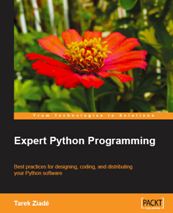
The book Expert Python Programming comes with subtitle Best practices for
designing, coding, and distributing your Python software. Well this seems to
be quite broad area to be covered by a single book, but the book really tries
to cover all topics at least in some form of overview and pointing user to
other documentation sources.
 In first chapter you can find information about installing Python on various
platforms. As the book seems to be targeted to more experienced users, this
chapter seems to be a bit useless, but author decided to give a chance also to
users, who do not know the basics.
Next chapters describe best practices for writing Python code, which was the
most interesting part for me. I use Python several years, but I never really
found time time to properly look at using decorators, generators and other
"recently" introduced language features. Second chapter nicely covers these
and I really appreciated that I got idea for what decorators can be used.
Third chapter into class level and describes how to use metaclasses,
attributes, constructors and other things you can face on class level. Fourth
moves the topic to even more abstract way and in short summarises PEP 8 best
coding practices.
Here we leave solid ground of writing code and we move to more abstract areas
of managing projects, testing, documenting and distributing software. It
begins with description of distutils and setuptools in chapters five and six,
where you will find basic information about distributing your software.
Seventh chapter covers zc.buildout, which can help you with setting up and
deploying applications in way Zope and Plone do.
Next chapter is not really related to Python, it just describes advantages of
version control. The most Python related part is using Mercurial VCS, which is
written in Python, but you can of course use it for managing any project.
Next tree chapters are devoted to project development in general, describing
management of the project, generating documentation for project using Sphinx
(what actually made me into starting documentation for python-gammu in it) and
test-driven development practices.
Now comes again two more interesting chapters describing optimization of
Python code, giving the best advice not to optimize unless you are sure it is
needed ;-). But it also goes more deeper and describes benchmarking
procedures, how to debug memory usage and some basic tips for general things
which might improve performance.
Last chapter is some kind of extra in the book and to me it looks it was added
just to use buzzwords design patters, but well it is there and it covers few
design patterns which might be useful in Python like singleton or more
advanced version of it called borg.
In general this book covers quite wide range of topics, what can be seen as
biggest advantage and disadvantage. You will get basic overview of creating
Python project using modern methods (test driven development, design patters,
best practices for Python code), but you can not expect it will go into much
deep details.
The book can extend your knowledge of development in Python, but you
should carefully check examples with errata, because otherwise several of them
will fail. I'm not that good at spotting problems in written English (as you
can probably see in this post), but I spotted several errors in code and I
think more careful editor work on the book would improve my feelings a bit.
Also I personally would prefer much deeper look into some topics and skipping
the others, but one book can not fit all ;-).
Next.