Search Results: "nic"

28 April 2025

Freexian Collaborators: Monthly report about Debian Long Term Support, March 2025 (by Roberto C. S nchez)

Like each month, have a look at the work funded by Freexian s Debian LTS offering.

Debian LTS contributors In March, 20 contributors have been paid to work on Debian LTS, their reports are available:
  • Adrian Bunk did 51.5h (out of 0.0h assigned and 51.5h from previous period).
  • Andreas Henriksson did 20.0h (out of 20.0h assigned).
  • Andrej Shadura did 6.0h (out of 10.0h assigned), thus carrying over 4.0h to the next month.
  • Bastien Roucari s did 20.0h (out of 20.0h assigned).
  • Ben Hutchings did 12.0h (out of 12.0h assigned and 12.0h from previous period), thus carrying over 12.0h to the next month.
  • Chris Lamb did 18.0h (out of 18.0h assigned).
  • Daniel Leidert did 26.0h (out of 23.0h assigned and 3.0h from previous period).
  • Emilio Pozuelo Monfort did 37.0h (out of 36.5h assigned and 0.75h from previous period), thus carrying over 0.25h to the next month.
  • Guilhem Moulin did 8.25h (out of 11.0h assigned and 9.0h from previous period), thus carrying over 11.75h to the next month.
  • Jochen Sprickerhof did 18.0h (out of 24.25h assigned and 3.0h from previous period), thus carrying over 9.25h to the next month.
  • Lee Garrett did 10.25h (out of 0.0h assigned and 42.0h from previous period), thus carrying over 31.75h to the next month.
  • Lucas Kanashiro did 4.0h (out of 0.0h assigned and 56.0h from previous period), thus carrying over 52.0h to the next month.
  • Markus Koschany did 27.25h (out of 27.25h assigned).
  • Roberto C. S nchez did 8.25h (out of 7.0h assigned and 17.0h from previous period), thus carrying over 15.75h to the next month.
  • Santiago Ruano Rinc n did 17.5h (out of 19.75h assigned and 5.25h from previous period), thus carrying over 7.5h to the next month.
  • Sean Whitton did 7.0h (out of 7.0h assigned).
  • Sylvain Beucler did 32.0h (out of 31.0h assigned and 1.25h from previous period), thus carrying over 0.25h to the next month.
  • Thorsten Alteholz did 11.0h (out of 11.0h assigned).
  • Tobias Frost did 7.75h (out of 12.0h assigned), thus carrying over 4.25h to the next month.
  • Utkarsh Gupta did 15.0h (out of 15.0h assigned).

Evolution of the situation In March, we have released 31 DLAs.
  • Notable security updates:
    • linux-6.1 (1 2)and linux, prepared by Ben Hutchings, fixed an extensive list of vulnerabilities
    • firefox-esr, prepared by Emilio Pozuelo Monfort, fixed a variety of vulnerabilities
    • intel-microcode, prepared by Tobias Frost, fixed several local privilege escalation, denial of service, and information disclosure vulnerabilities
    • vim, prepared by Sean Whitton, fixed a multitude of vulnerabilities, including many application crashes, buffer overflows, and out-of-bounds reads
The recent trend of contributions from contributors external to the formal LTS team has continued. LTS contributor Sylvain Beucler reviewed and facilitated an update to openvpn proposed by Aquila Macedo, resulting in the publication of DLA 4079-1. Thanks a lot to Aquila for preparing the update. The LTS Team continues to make contributions to the current stable Debian release, Debian 12 (codename bookworm ). LTS contributor Bastien Roucari s prepared a stable upload of krb5 to ensure that fixes made in the LTS release, Debian 11 (codename bullseye ) were also made available to stable users. Additional stable updates, for tomcat10 and jetty9, were prepared by LTS contributor Markus Koschany. And, finally, LTS contributor Utkarsh Gupta prepared stable updates for rails and ruby-rack. LTS contributor Emilio Pozuelo Monfort has continued his ongoing improvements to the Debian security tracker and its associated tooling, making the data contained in the tracker more reliable and easing interaction with it. The ckeditor3 package, which has been EOL by upstream for some time, is still depended upon by the PHP Horde packages in Debian. Sylvain, along with Bastien, did monumental work in coordinating with maintainers, security team fellows, and other Debian teams, to formally declare the EOL of the ckeditor3 package in Debian 11 and in Debian 12. Additionally, as a result of this work Sylvain has worked towards the removal of ckeditor3 as a dependency by other packages in order to facilitate the complete removal of ckeditor3 from all future Debian releases.

Thanks to our sponsors Sponsors that joined recently are in bold.

27 April 2025

Marco d'Itri: On the use of SaaS in systems engineering

We want to use an hyperscaler cloud because it is cheaper to delegate operating a scalable and redundant database to an hyperscaler is something that can be debated from business and technical points of view. We want to use an hyperscaler cloud because our developers do not want to operate a scalable and redundant database just means that you need to hire competent developers and/or system administrators. We must stop normalizing the idea that the people whose only skill is gluing together a few dozens of AWS services can continue calling themselves developers. We should also find a sufficiently demeaning name to refer to them...

26 April 2025

John Goerzen: Memoirs of the Early Internet

The Internet is an amazing place, and occasionally you can find things on the web that have somehow lingered online for decades longer than you might expect. Today I ll take you on a tour of some parts of the early Internet. The Internet, of course, is a network of networks and part of its early (and continuing) promise was to provide a common protocol that all sorts of networks can use to interoperate with each other. In the early days, UUCP was one of the main ways universities linked with each other, and eventually UUCP and the Internet sort of merged (but that s a long story). Let s start with some Usenet maps, which were an early way to document the UUCP modem links between universities. Start with this PDF. The first page is a Usenet map (which at the time mostly flowed over UUCP) from April of 1981. Notice that ucbvax, a VAX system at Berkeley, was central to the map. ucbvax continued to be a central node for UUCP for more than a decade; on page 5 of that PDF, you ll see that it asks for a Path from a major node (eg, ucbvax, devcax, harpo, duke) . Pre-Internet email addresses used a path; eg, mark@ucbvax was duke!decvax!ucbvax!mark to someone. You had to specify the route from your system to the recipient on your email To line. If you gave out your email address on a business card, you would start it from a major node like ucbvax, and the assumption was that everyone would know how to get from their system to the major node. On August 19, 1994, ucbvax was finally turned off. TCP/IP had driven UUCP into more obscurity; by then, it was mostly used by people without a dedicated Internet connection to get on the Internet, rather than an entire communication network of its own. A few days later, Cliff Frost posted a memoir of ucbvax; an obscurbe bit of Internet lore that is fun to read. UUCP was ad-hoc, and by 1984 there was an effort to make a machine-parsable map to help automate routing on UUCP. This was called the pathalias project, and there was a paper about it. The Linux network administration guide even includes a section on pathalias. Because UUCP mainly flowed over phone lines, long distance fees made it quite expensive. In 1985, the Stargate Project was formed, with the idea of distributing Usenet by satellite. The satellite link was short-lived, but the effort eventually morphed into UUNET. It was initially a non-profit, but eventually became a commercial backbone provider, and later ISP. Over a long series of acquisitions, UUNET is now part of Verizon. An article in ;login: is another description of this history. IAPS has an Internet in 1990 article, which includes both pathalias data and an interesting map of domain names to UUCP paths. As I was pondering what interesting things a person could do with NNCPNET Internet email, I stumbled across a page on getting FTP files via e-mail. Yes, that used to be a thing! I remember ftpmail@decwrl.dec.com. It turns out that page is from a copy of EFF s (Extended) Guide to the Internet from 1994. Wow, what a treasure! It has entries such as A Slice of Life in my Virtual Community, libraries with telnet access, Gopher, A Statement of Principle by Bruce Sterling, and I could go on. You can also get it as a PDF from Internet Archive. UUCP is still included with modern Linux and BSD distributions. It was part of how I experienced the PC and Internet revolution in rural America. It lacks modern security, but NNCP is to UUCP what ssh is to telnet.

25 April 2025

Simon Josefsson: GitLab Runner with Rootless Privilege-less Capability-less Podman on riscv64

I host my own GitLab CI/CD runners, and find that having coverage on the riscv64 CPU architecture is useful for testing things. The HiFive Premier P550 seems to be a common hardware choice. The P550 is possible to purchase online. You also need a (mini-)ATX chassi, power supply (~500W is more than sufficient), PCI-to-M2 converter and a NVMe storage device. Total cost per machine was around $8k/ 8k for me. Assembly was simple: bolt everything, connect ATX power, connect cables for the front-panel, USB and and Audio. Be sure to toggle the physical power switch on the P550 before you close the box. Front-panel power button will start your machine. There is a P550 user manual available. Below I will guide you to install the GitLab Runner on the pre-installed Ubuntu 24.04 that ships with the P550, and configure it to use Podman in root-less mode and without the --privileged flag, without any additional capabilities like SYS_ADMIN. Presumably you want to migrate to some other OS instead; hey Trisquel 13 riscv64 I m waiting for you! I wouldn t recommend using this machine for anything sensitive, there is an awful lot of non-free and/or vendor-specific software installed, and the hardware itself is young. I am not aware of any riscv64 hardware that can run a libre OS, all of them appear to require non-free blobs and usually a non-mainline kernel.
apt-get install minicom
minicom -o -D /dev/ttyUSB3
#cmd: ifconfig
inet 192.168.0.2 netmask: 255.255.240.0
gatway 192.168.0.1
SOM_Mac0: 8c:00:00:00:00:00
SOM_Mac1: 8c:00:00:00:00:00
MCU_Mac: 8c:00:00:00:00:00
#cmd: setmac 0 CA:FE:42:17:23:00
The MAC setting will be valid after rebooting the carrier board!!!
MAC[0] addr set to CA:FE:42:17:23:00(ca:fe:42:17:23:0)
#cmd: setmac 1 CA:FE:42:17:23:01
The MAC setting will be valid after rebooting the carrier board!!!
MAC[1] addr set to CA:FE:42:17:23:01(ca:fe:42:17:23:1)
#cmd: setmac 2 CA:FE:42:17:23:02
The MAC setting will be valid after rebooting the carrier board!!!
MAC[2] addr set to CA:FE:42:17:23:02(ca:fe:42:17:23:2)
#cmd:
apt-get install openocd
wget https://raw.githubusercontent.com/sifiveinc/hifive-premier-p550-tools/refs/heads/master/mcu-firmware/stm32_openocd.cfg
echo 'acc115d283ff8533d6ae5226565478d0128923c8a479a768d806487378c5f6c3 stm32_openocd.cfg' sha256sum -c
openocd -f stm32_openocd.cfg &
telnet localhost 4444
...
echo 'ssh-ed25519 AAA...' > ~/.ssh/authorized_keys
sed -i 's;^#PasswordAuthentication.*;PasswordAuthentication no;' /etc/ssh/sshd_config
service ssh restart
parted /dev/nvme0n1 print
blkdiscard /dev/nvme0n1
parted /dev/nvme0n1 mklabel gpt
parted /dev/nvme0n1 mkpart jas-p550-nvm-02 ext2 1MiB 100% align-check optimal 1
parted /dev/nvme0n1 set 1 lvm on
partprobe /dev/nvme0n1
pvcreate /dev/nvme0n1p1
vgcreate vg0 /dev/nvme0n1p1
lvcreate -L 400G -n glr vg0
mkfs.ext4 -L glr /dev/mapper/vg0-glr
Now with a reasonable setup ready, let s install the GitLab Runner. The following is adapted from gitlab-runner s official installation instructions documentation. The normal installation flow doesn t work because they don t publish riscv64 apt repositories, so you will have to perform upgrades manually.
# wget https://s3.dualstack.us-east-1.amazonaws.com/gitlab-runner-downloads/latest/deb/gitlab-runner_riscv64.deb
# wget https://s3.dualstack.us-east-1.amazonaws.com/gitlab-runner-downloads/latest/deb/gitlab-runner-helper-images.deb
wget https://gitlab-runner-downloads.s3.amazonaws.com/v17.11.0/deb/gitlab-runner_riscv64.deb
wget https://gitlab-runner-downloads.s3.amazonaws.com/v17.11.0/deb/gitlab-runner-helper-images.deb
echo '68a4c2a4b5988a5a5bae019c8b82b6e340376c1b2190228df657164c534bc3c3 gitlab-runner-helper-images.deb' sha256sum -c
echo 'ee37dc76d3c5b52e4ba35cf8703813f54f536f75cfc208387f5aa1686add7a8c gitlab-runner_riscv64.deb' sha256sum -c
dpkg -i gitlab-runner-helper-images.deb gitlab-runner_riscv64.deb
Remember the NVMe device? Let s not forget to use it, to avoid wear and tear of the internal MMC root disk. Do this now before any files in /home/gitlab-runner appears, or you have to move them manually.
gitlab-runner stop
echo 'LABEL=glr /home/gitlab-runner ext4 defaults,noatime 0 1' >> /etc/fstab
systemctl daemon-reload
mount /home/gitlab-runner
Next install gitlab-runner and configure it. Replace token glrt-REPLACEME below with the registration token you get from your GitLab project s Settings -> CI/CD -> Runners -> New project runner. I used the tags riscv64 and a runner description of the hostname.
gitlab-runner register --non-interactive --url https://gitlab.com --token glrt-REPLACEME --name $(hostname) --executor docker --docker-image debian:stable
We install and configure gitlab-runner to use podman, and to use non-root user.
apt-get install podman
gitlab-runner stop
usermod --add-subuids 100000-165535 --add-subgids 100000-165535 gitlab-runner
You need to run some commands as the gitlab-runner user, but unfortunately some interaction between sudo/su and pam_systemd makes this harder than it should be. So you have to setup SSH for the user and login via SSH to run the commands. Does anyone know of a better way to do this?
# on the p550:
cp -a /root/.ssh/ /home/gitlab-runner/
chown -R gitlab-runner:gitlab-runner /home/gitlab-runner/.ssh/
# on your laptop:
ssh gitlab-runner@jas-p550-01
systemctl --user --now enable podman.socket
systemctl --user --now start podman.socket
loginctl enable-linger gitlab-runner gitlab-runner
systemctl status --user podman.socket
We modify /etc/gitlab-runner/config.toml as follows, replace 997 with the user id shown by systemctl status above. See feature flags documentation for more documentation.
...
[[runners]]
environment = ["FF_NETWORK_PER_BUILD=1", "FF_USE_FASTZIP=1"]
...
[runners.docker]
host = "unix:///run/user/997/podman/podman.sock"
Note that unlike the documentation I do not add the privileged = true parameter here. I will come back to this later. Restart the system to confirm that pushing a .gitlab-ci.yml with a job that uses the riscv64 tag like the following works properly.
dump-env-details-riscv64:
stage: build
image: riscv64/debian:testing
tags: [ riscv64 ]
script:
- set
Your gitlab-runner should now be receiving jobs and running them in rootless podman. You may view the log using journalctl as follows:
journalctl --follow _SYSTEMD_UNIT=gitlab-runner.service
To stop the graphical environment and disable some unnecessary services, you can use:
systemctl set-default multi-user.target
systemctl disable openvpn cups cups-browsed sssd colord
At this point, things were working fine and I was running many successful builds. Now starts the fun part with operational aspects! I had a problem when running buildah to build a new container from within a job, and noticed that aardvark-dns was crashing. You can use the Debian aardvark-dns binary instead.
wget http://ftp.de.debian.org/debian/pool/main/a/aardvark-dns/aardvark-dns_1.14.0-3_riscv64.deb
echo 'df33117b6069ac84d3e97dba2c59ba53775207dbaa1b123c3f87b3f312d2f87a aardvark-dns_1.14.0-3_riscv64.deb' sha256sum -c
mkdir t
cd t
dpkg -x ../aardvark-dns_1.14.0-3_riscv64.deb .
mv /usr/lib/podman/aardvark-dns /usr/lib/podman/aardvark-dns.ubuntu
mv usr/lib/podman/aardvark-dns /usr/lib/podman/aardvark-dns.debian
My setup uses podman in rootless mode without passing the privileged parameter or any add-cap parameters to add non-default capabilities. This is sufficient for most builds. However if you try to create container using buildah from within a job, you may see errors like this:
Writing manifest to image destination
Error: mounting new container: mounting build container "8bf1ec03d967eae87095906d8544f51309363ddf28c60462d16d73a0a7279ce1": creating overlay mount to /var/lib/containers/storage/overlay/23785e20a8bac468dbf028bf524274c91fbd70dae195a6cdb10241c345346e6f/merged, mount_data="lowerdir=/var/lib/containers/storage/overlay/l/I3TWYVYTRZ4KVYCT6FJKHR3WHW,upperdir=/var/lib/containers/storage/overlay/23785e20a8bac468dbf028bf524274c91fbd70dae195a6cdb10241c345346e6f/diff,workdir=/var/lib/containers/storage/overlay/23785e20a8bac468dbf028bf524274c91fbd70dae195a6cdb10241c345346e6f/work,volatile": using mount program /usr/bin/fuse-overlayfs: unknown argument ignored: lazytime
fuse: device not found, try 'modprobe fuse' first
fuse-overlayfs: cannot mount: No such file or directory
: exit status 1
According to GitLab runner security considerations, you should not enable the privileged = true parameter, and the alternative appears to run Podman as root with privileged=false. Indeed setting privileged=true as in the following example solves the problem, and I suppose running podman as root would too.
[[runners]]
[runners.docker]
privileged = true
Can we do better? After some experimentation, and reading open issues with suggested capabilities and configuration snippets, I ended up with the following configuration. It runs podman in rootless mode (as the gitlab-runner user) without --privileged, but add the CAP_SYS_ADMIN capability and exposes the /dev/fuse device. Still, this is running as non-root user on the machine, so I think it is an improvement compared to using --privileged and also compared to running podman as root.
[[runners]]
[runners.docker]
privileged = false
cap_add = ["SYS_ADMIN"]
devices = ["/dev/fuse"]
Still I worry about the security properties of such a setup, so I only enable these settings for a separately configured runner instance that I use when I need this docker-in-docker (oh, I meant buildah-in-podman) functionality. I found one article discussing Rootless Podman without the privileged flag that suggest isolation=chroot but I have yet to make this work. Suggestions for improvement are welcome. Happy Riscv64 Building! Update 2025-05-05: I was able to make it work without the SYS_ADMIN capability too, with a GitLab /etc/gitlab-runner/config.toml like the following:
[[runners]]
  [runners.docker]
    privileged = false
    devices = ["/dev/fuse"]
And passing --isolation chroot to Buildah like this:
buildah build --isolation chroot -t $CI_REGISTRY_IMAGE:name image/
I ve updated the blog title to add the word capability-less as well. I ve confirmed that the same recipe works on podman on a ppc64el platform too. Remaining loop-holes are escaping from the chroot into the non-root gitlab-runner user, and escalating that privilege to root. The /dev/fuse and sub-uid/gid may be privilege escalation vectors here, otherwise I believe you ve found a serious software security issue rather than a configuration mistake.


24 April 2025

Jonathan McDowell: Local Voice Assistant Step 1: An ATOM Echo voice satellite

Back when I setup my home automation I ended up with one piece that used an external service: Amazon Alexa. I d rather not have done this, but voice control is extremely convenient, both for us, and guests. Since then Home Assistant has done a lot of work in developing the capability of a local voice assistant - 2023 was their Year of Voice. I ve had brief looks at this in the past, but never quite had the time to dig into setting it up, and was put off by the fact a lot of the setup instructions were just Download our prebuilt components . While I admire the efforts to get Home Assistant fully packaged for Debian I accept that s a tricky proposition, and settle for running it in a venv on a Debian stable container. Voice requires a lot more binary components, and I want to have voice satellites in more than one location, so I set about trying to understand a bit better what I was deploying, and actually building the binary bits myself. This is the start of a write-up of that. I ll break it into a bunch of posts, trying to cover one bit in each, because otherwise this will get massive. Let s start with some requirements: My house server is an AMD Ryzen 7 5700G, so my expectation was that I d have enough local processing power to be able to do this. That turned out to be a valid assumption - speech to text really has come a long way in recent years. I m still running Home Assistant 2024.3.3 - the last one that supports (but complains about) Python 3.11. Trixie has started the freeze process, so once it releases I ll look at updating the HA install. For now what I have has turned out to be Good Enough, but I know there have been improvements upstream I m missing. Finally, before I get into the details, I should point out that if you just want to get started with a voice assistant on Home Assistant and don t care about what s under the hood, there are a bunch of more user friendly details on Home Assistant s site itself, and they have pre-built images you can just deploy. My first step was sorting out a voice satellite . This is the device that actually has a microphone and speaker and communicates with the main Home Assistant setup. I d seen the post about a $13 voice assistant, and as a result had an ATOM Echo sitting on my desk I hadn t got around to setting up. Here, we ignore a bit about delving into exactly what s going on under the hood, even if we re compiling locally. This is a constrained embedded device and while I m familiar with the ESP32 IDF build system I just accepted that using ESPHome and letting it do it s thing was the quickest way to get up and running. It is possible to do this all via the web with a pre-built image, but I wanted to change the wake word to Hey Jarvis rather than the default Okay Nabu , and that was a good reason to bother doing a local build. We ll get into actually building a voice satellite on Debian in later posts. I started with the default upstream assistant config and tweaked it a little for my setup:

diff of my configuration tweaks
$ diff -u m5stack-atom-echo.yaml assistant.yaml
--- m5stack-atom-echo.yaml    2025-04-18 13:41:21.812766112 +0100
+++ assistant.yaml  2025-01-20 17:33:24.918585244 +0000
@@ -1,7 +1,7 @@
 substitutions:
-  name: m5stack-atom-echo
+  name: study-atom-echo
   friendly_name: M5Stack Atom Echo
-  micro_wake_word_model: okay_nabu  # alexa, hey_jarvis, hey_mycroft are also supported
+  micro_wake_word_model: hey_jarvis  # alexa, hey_jarvis, hey_mycroft are also supported
 
 esphome:
   name: $ name 
@@ -16,15 +16,26 @@
     version: 4.4.8
     platform_version: 5.4.0
 
+# Enable logging
 logger:
+
+# Enable Home Assistant API
 api:
+  encryption:
+    key: "TGlrZVRoaXNJc1JlYWxseUl0Rm9vbGlzaFBlb3BsZSE="
 
 ota:
   - platform: esphome
-    id: ota_esphome
+    password: "itsnotarealthing"
 
 wifi:
+  ssid: "My Wifi Goes Here"
+  password: "AndThePasswordGoesHere"
+
+  # Enable fallback hotspot (captive portal) in case wifi connection fails
   ap:
+    ssid: "Study-Atom-Echo Fallback Hotspot"
+    password: "ThisIsRandom"
 
 captive_portal:

(I note that the current upstream config has moved on a bit since I first did this, but I double checked the above instructions still work at the time of writing. I end up pinning ESPHome to the right version below due to that.) It turns out to be fairly easy to setup ESPHome in a venv and get it to build + flash the image for you:
Instructions for building + flashing ESPHome to ATOM Echo
noodles@sevai:~$ python3 -m venv esphome-atom-echo
noodles@sevai:~$ . esphome-atom-echo/bin/activate
(esphome-atom-echo) noodles@sevai:~$ cd esphome-atom-echo/
(esphome-atom-echo) noodles@sevai:~/esphome-atom-echo$  pip install esphome==2024.12.4
Collecting esphome==2024.12.4
  Using cached esphome-2024.12.4-py3-none-any.whl (4.1 MB)
 
Successfully installed FontTools-4.57.0 PyYAML-6.0.2 appdirs-1.4.4 attrs-25.3.0 bottle-0.13.2 defcon-0.12.1 esphome-2024.12.4 esphome-dashboard-20241217.1 freetype-py-2.5.1 fs-2.4.16 gflanguages-0.7.3 glyphsLib-6.10.1 glyphsets-1.0.0 openstep-plist-0.5.0 pillow-10.4.0 platformio-6.1.16 protobuf-3.20.3 puremagic-1.27 ufoLib2-0.17.1 unicodedata2-16.0.0
(esphome-atom-echo) noodles@sevai:~/esphome-atom-echo$ esphome compile assistant.yaml 
INFO ESPHome 2024.12.4
INFO Reading configuration assistant.yaml...
INFO Updating https://github.com/esphome/esphome.git@pull/5230/head
INFO Updating https://github.com/jesserockz/esphome-components.git@None
 
Linking .pioenvs/study-atom-echo/firmware.elf
/home/noodles/.platformio/packages/toolchain-xtensa-esp32@8.4.0+2021r2-patch5/bin/../lib/gcc/xtensa-esp32-elf/8.4.0/../../../../xtensa-esp32-elf/bin/ld: missing --end-group; added as last command line option
RAM:   [=         ]  10.6% (used 34632 bytes from 327680 bytes)
Flash: [========  ]  79.8% (used 1463813 bytes from 1835008 bytes)
Building .pioenvs/study-atom-echo/firmware.bin
Creating esp32 image...
Successfully created esp32 image.
esp32_create_combined_bin([".pioenvs/study-atom-echo/firmware.bin"], [".pioenvs/study-atom-echo/firmware.elf"])
Wrote 0x176fb0 bytes to file /home/noodles/esphome-atom-echo/.esphome/build/study-atom-echo/.pioenvs/study-atom-echo/firmware.factory.bin, ready to flash to offset 0x0
esp32_copy_ota_bin([".pioenvs/study-atom-echo/firmware.bin"], [".pioenvs/study-atom-echo/firmware.elf"])
==================================================================================== [SUCCESS] Took 130.57 seconds ====================================================================================
INFO Successfully compiled program.
(esphome-atom-echo) noodles@sevai:~/esphome-atom-echo$ esphome upload --device /dev/serial/by-id/usb-Hades2001_M5stack_9552AF8367-if00-port0 assistant.yaml 
INFO ESPHome 2024.12.4
INFO Reading configuration assistant.yaml...
INFO Updating https://github.com/esphome/esphome.git@pull/5230/head
INFO Updating https://github.com/jesserockz/esphome-components.git@None
 
INFO Upload with baud rate 460800 failed. Trying again with baud rate 115200.
esptool.py v4.7.0
Serial port /dev/serial/by-id/usb-Hades2001_M5stack_9552AF8367-if00-port0
Connecting....
Chip is ESP32-PICO-D4 (revision v1.1)
Features: WiFi, BT, Dual Core, 240MHz, Embedded Flash, VRef calibration in efuse, Coding Scheme None
Crystal is 40MHz
MAC: 64:b7:08:8a:1b:c0
Uploading stub...
Running stub...
Stub running...
Configuring flash size...
Auto-detected Flash size: 4MB
Flash will be erased from 0x00010000 to 0x00176fff...
Flash will be erased from 0x00001000 to 0x00007fff...
Flash will be erased from 0x00008000 to 0x00008fff...
Flash will be erased from 0x00009000 to 0x0000afff...
Compressed 1470384 bytes to 914252...
Wrote 1470384 bytes (914252 compressed) at 0x00010000 in 82.0 seconds (effective 143.5 kbit/s)...
Hash of data verified.
Compressed 25632 bytes to 16088...
Wrote 25632 bytes (16088 compressed) at 0x00001000 in 1.8 seconds (effective 113.1 kbit/s)...
Hash of data verified.
Compressed 3072 bytes to 134...
Wrote 3072 bytes (134 compressed) at 0x00008000 in 0.1 seconds (effective 383.7 kbit/s)...
Hash of data verified.
Compressed 8192 bytes to 31...
Wrote 8192 bytes (31 compressed) at 0x00009000 in 0.1 seconds (effective 813.5 kbit/s)...
Hash of data verified.
Leaving...
Hard resetting via RTS pin...
INFO Successfully uploaded program.

And then you can watch it boot (this is mine already configured up in Home Assistant):
Watching the ATOM Echo boot
$ picocom --quiet --imap lfcrlf --baud 115200 /dev/serial/by-id/usb-Hades2001_M5stack_9552AF8367-if00-port0
I (29) boot: ESP-IDF 4.4.8 2nd stage bootloader
I (29) boot: compile time 17:31:08
I (29) boot: Multicore bootloader
I (32) boot: chip revision: v1.1
I (36) boot.esp32: SPI Speed      : 40MHz
I (40) boot.esp32: SPI Mode       : DIO
I (45) boot.esp32: SPI Flash Size : 4MB
I (49) boot: Enabling RNG early entropy source...
I (55) boot: Partition Table:
I (58) boot: ## Label            Usage          Type ST Offset   Length
I (66) boot:  0 otadata          OTA data         01 00 00009000 00002000
I (73) boot:  1 phy_init         RF data          01 01 0000b000 00001000
I (81) boot:  2 app0             OTA app          00 10 00010000 001c0000
I (88) boot:  3 app1             OTA app          00 11 001d0000 001c0000
I (96) boot:  4 nvs              WiFi data        01 02 00390000 0006d000
I (103) boot: End of partition table
I (107) esp_image: segment 0: paddr=00010020 vaddr=3f400020 size=58974h (362868) map
I (247) esp_image: segment 1: paddr=0006899c vaddr=3ffb0000 size=03400h ( 13312) load
I (253) esp_image: segment 2: paddr=0006bda4 vaddr=40080000 size=04274h ( 17012) load
I (260) esp_image: segment 3: paddr=00070020 vaddr=400d0020 size=f5cb8h (1006776) map
I (626) esp_image: segment 4: paddr=00165ce0 vaddr=40084274 size=112ach ( 70316) load
I (665) boot: Loaded app from partition at offset 0x10000
I (665) boot: Disabling RNG early entropy source...
I (677) cpu_start: Multicore app
I (677) cpu_start: Pro cpu up.
I (677) cpu_start: Starting app cpu, entry point is 0x400825c8
I (0) cpu_start: App cpu up.
I (695) cpu_start: Pro cpu start user code
I (695) cpu_start: cpu freq: 160000000
I (695) cpu_start: Application information:
I (700) cpu_start: Project name:     study-atom-echo
I (705) cpu_start: App version:      2024.12.4
I (710) cpu_start: Compile time:     Apr 18 2025 17:29:39
I (716) cpu_start: ELF file SHA256:  1db4989a56c6c930...
I (722) cpu_start: ESP-IDF:          4.4.8
I (727) cpu_start: Min chip rev:     v0.0
I (732) cpu_start: Max chip rev:     v3.99 
I (737) cpu_start: Chip rev:         v1.1
I (742) heap_init: Initializing. RAM available for dynamic allocation:
I (749) heap_init: At 3FFAE6E0 len 00001920 (6 KiB): DRAM
I (755) heap_init: At 3FFB8748 len 000278B8 (158 KiB): DRAM
I (761) heap_init: At 3FFE0440 len 00003AE0 (14 KiB): D/IRAM
I (767) heap_init: At 3FFE4350 len 0001BCB0 (111 KiB): D/IRAM
I (774) heap_init: At 40095520 len 0000AAE0 (42 KiB): IRAM
I (781) spi_flash: detected chip: gd
I (784) spi_flash: flash io: dio
I (790) cpu_start: Starting scheduler on PRO CPU.
I (0) cpu_start: Starting scheduler on APP CPU.
[I][logger:171]: Log initialized
[C][safe_mode:079]: There have been 0 suspected unsuccessful boot attempts
[D][esp32.preferences:114]: Saving 1 preferences to flash...
[D][esp32.preferences:143]: Saving 1 preferences to flash: 0 cached, 1 written, 0 failed
[I][app:029]: Running through setup()...
[C][esp32_rmt_led_strip:021]: Setting up ESP32 LED Strip...
[D][template.select:014]: Setting up Template Select
[D][template.select:023]: State from initial (could not load stored index): On device
[D][select:015]: 'Wake word engine location': Sending state On device (index 1)
[D][esp-idf:000]: I (100) gpio: GPIO[39]  InputEn: 1  OutputEn: 0  OpenDrain: 0  Pullup: 0  Pulldown: 0  Intr:0 
[D][binary_sensor:034]: 'Button': Sending initial state OFF
[C][light:021]: Setting up light 'M5Stack Atom Echo 8a1bc0'...
[D][light:036]: 'M5Stack Atom Echo 8a1bc0' Setting:
[D][light:041]:   Color mode: RGB
[D][template.switch:046]:   Restored state ON
[D][switch:012]: 'Use listen light' Turning ON.
[D][switch:055]: 'Use listen light': Sending state ON
[D][light:036]: 'M5Stack Atom Echo 8a1bc0' Setting:
[D][light:047]:   State: ON
[D][light:051]:   Brightness: 60%
[D][light:059]:   Red: 100%, Green: 89%, Blue: 71%
[D][template.switch:046]:   Restored state OFF
[D][switch:016]: 'timer_ringing' Turning OFF.
[D][switch:055]: 'timer_ringing': Sending state OFF
[C][i2s_audio:028]: Setting up I2S Audio...
[C][i2s_audio.microphone:018]: Setting up I2S Audio Microphone...
[C][i2s_audio.speaker:096]: Setting up I2S Audio Speaker...
[C][wifi:048]: Setting up WiFi...
[D][esp-idf:000]: I (206) wifi:
[D][esp-idf:000]: wifi driver task: 3ffc8544, prio:23, stack:6656, core=0
[D][esp-idf:000]: 
[D][esp-idf:000][wifi]: I (1238) system_api: Base MAC address is not set
[D][esp-idf:000][wifi]: I (1239) system_api: read default base MAC address from EFUSE
[D][esp-idf:000][wifi]: I (1274) wifi:
[D][esp-idf:000][wifi]: wifi firmware version: ff661c3
[D][esp-idf:000][wifi]: 
[D][esp-idf:000][wifi]: I (1274) wifi:
[D][esp-idf:000][wifi]: wifi certification version: v7.0
[D][esp-idf:000][wifi]: 
[D][esp-idf:000][wifi]: I (1286) wifi:
[D][esp-idf:000][wifi]: config NVS flash: enabled
[D][esp-idf:000][wifi]: 
[D][esp-idf:000][wifi]: I (1297) wifi:
[D][esp-idf:000][wifi]: config nano formating: disabled
[D][esp-idf:000][wifi]: 
[D][esp-idf:000][wifi]: I (1317) wifi:
[D][esp-idf:000][wifi]: Init data frame dynamic rx buffer num: 32
[D][esp-idf:000][wifi]: 
[D][esp-idf:000][wifi]: I (1338) wifi:
[D][esp-idf:000][wifi]: Init static rx mgmt buffer num: 5
[D][esp-idf:000][wifi]: 
[D][esp-idf:000][wifi]: I (1348) wifi:
[D][esp-idf:000][wifi]: Init management short buffer num: 32
[D][esp-idf:000][wifi]: 
[D][esp-idf:000][wifi]: I (1368) wifi:
[D][esp-idf:000][wifi]: Init dynamic tx buffer num: 32
[D][esp-idf:000][wifi]: 
[D][esp-idf:000][wifi]: I (1389) wifi:
[D][esp-idf:000][wifi]: Init static rx buffer size: 1600
[D][esp-idf:000][wifi]: 
[D][esp-idf:000][wifi]: I (1399) wifi:
[D][esp-idf:000][wifi]: Init static rx buffer num: 10
[D][esp-idf:000][wifi]: 
[D][esp-idf:000][wifi]: I (1419) wifi:
[D][esp-idf:000][wifi]: Init dynamic rx buffer num: 32
[D][esp-idf:000][wifi]: 
[D][esp-idf:000]: I (1441) wifi_init: rx ba win: 6
[D][esp-idf:000]: I (1441) wifi_init: tcpip mbox: 32
[D][esp-idf:000]: I (1450) wifi_init: udp mbox: 6
[D][esp-idf:000]: I (1450) wifi_init: tcp mbox: 6
[D][esp-idf:000]: I (1460) wifi_init: tcp tx win: 5760
[D][esp-idf:000]: I (1471) wifi_init: tcp rx win: 5760
[D][esp-idf:000]: I (1481) wifi_init: tcp mss: 1440
[D][esp-idf:000]: I (1481) wifi_init: WiFi IRAM OP enabled
[D][esp-idf:000]: I (1491) wifi_init: WiFi RX IRAM OP enabled
[C][wifi:061]: Starting WiFi...
[C][wifi:062]:   Local MAC: 64:B7:08:8A:1B:C0
[D][esp-idf:000][wifi]: I (1513) phy_init: phy_version 4791,2c4672b,Dec 20 2023,16:06:06
[D][esp-idf:000][wifi]: I (1599) wifi:
[D][esp-idf:000][wifi]: mode : sta (64:b7:08:8a:1b:c0)
[D][esp-idf:000][wifi]: 
[D][esp-idf:000][wifi]: I (1600) wifi:
[D][esp-idf:000][wifi]: enable tsf
[D][esp-idf:000][wifi]: 
[D][esp-idf:000][wifi]: I (1605) wifi:
[D][esp-idf:000][wifi]: Set ps type: 1
[D][esp-idf:000][wifi]: 
[D][wifi:482]: Starting scan...
[D][esp32.preferences:114]: Saving 1 preferences to flash...
[D][esp32.preferences:143]: Saving 1 preferences to flash: 1 cached, 0 written, 0 failed
[W][micro_wake_word:151]: Wake word detection can't start as the component hasn't been setup yet
[D][esp-idf:000][wifi]: I (1646) wifi:
[D][esp-idf:000][wifi]: Set ps type: 1
[D][esp-idf:000][wifi]: 
[W][component:157]: Component wifi set Warning flag: scanning for networks
 
[I][wifi:617]: WiFi Connected!
 
[D][wifi:626]: Disabling AP...
[C][api:026]: Setting up Home Assistant API server...
[C][micro_wake_word:062]: Setting up microWakeWord...
[C][micro_wake_word:069]: Micro Wake Word initialized
[I][app:062]: setup() finished successfully!
[W][component:170]: Component wifi cleared Warning flag
[W][component:157]: Component api set Warning flag: unspecified
[I][app:100]: ESPHome version 2024.12.4 compiled on Apr 18 2025, 17:29:39
 
[C][logger:185]: Logger:
[C][logger:186]:   Level: DEBUG
[C][logger:188]:   Log Baud Rate: 115200
[C][logger:189]:   Hardware UART: UART0
[C][esp32_rmt_led_strip:187]: ESP32 RMT LED Strip:
[C][esp32_rmt_led_strip:188]:   Pin: 27
[C][esp32_rmt_led_strip:189]:   Channel: 0
[C][esp32_rmt_led_strip:214]:   RGB Order: GRB
[C][esp32_rmt_led_strip:215]:   Max refresh rate: 0
[C][esp32_rmt_led_strip:216]:   Number of LEDs: 1
[C][template.select:065]: Template Select 'Wake word engine location'
[C][template.select:066]:   Update Interval: 60.0s
[C][template.select:069]:   Optimistic: YES
[C][template.select:070]:   Initial Option: On device
[C][template.select:071]:   Restore Value: YES
[C][gpio.binary_sensor:015]: GPIO Binary Sensor 'Button'
[C][gpio.binary_sensor:016]:   Pin: GPIO39
[C][light:092]: Light 'M5Stack Atom Echo 8a1bc0'
[C][light:094]:   Default Transition Length: 0.0s
[C][light:095]:   Gamma Correct: 2.80
[C][template.switch:068]: Template Switch 'Use listen light'
[C][template.switch:091]:   Restore Mode: restore defaults to ON
[C][template.switch:057]:   Optimistic: YES
[C][template.switch:068]: Template Switch 'timer_ringing'
[C][template.switch:091]:   Restore Mode: always OFF
[C][template.switch:057]:   Optimistic: YES
[C][factory_reset.button:011]: Factory Reset Button 'Factory reset'
[C][factory_reset.button:011]:   Icon: 'mdi:restart-alert'
[C][captive_portal:089]: Captive Portal:
[C][mdns:116]: mDNS:
[C][mdns:117]:   Hostname: study-atom-echo-8a1bc0
[C][esphome.ota:073]: Over-The-Air updates:
[C][esphome.ota:074]:   Address: study-atom-echo.local:3232
[C][esphome.ota:075]:   Version: 2
[C][esphome.ota:078]:   Password configured
[C][safe_mode:018]: Safe Mode:
[C][safe_mode:020]:   Boot considered successful after 60 seconds
[C][safe_mode:021]:   Invoke after 10 boot attempts
[C][safe_mode:023]:   Remain in safe mode for 300 seconds
[C][api:140]: API Server:
[C][api:141]:   Address: study-atom-echo.local:6053
[C][api:143]:   Using noise encryption: YES
[C][micro_wake_word:051]: microWakeWord:
[C][micro_wake_word:052]:   models:
[C][micro_wake_word:015]:     - Wake Word: Hey Jarvis
[C][micro_wake_word:016]:       Probability cutoff: 0.970
[C][micro_wake_word:017]:       Sliding window size: 5
[C][micro_wake_word:021]:     - VAD Model
[C][micro_wake_word:022]:       Probability cutoff: 0.500
[C][micro_wake_word:023]:       Sliding window size: 5
[D][api:103]: Accepted 192.168.39.6
[W][component:170]: Component api cleared Warning flag
[W][component:237]: Component api took a long time for an operation (58 ms).
[W][component:238]: Components should block for at most 30 ms.
[D][api.connection:1446]: Home Assistant 2024.3.3 (192.168.39.6): Connected successfully
[D][ring_buffer:034]: Created ring buffer with size 2048
[D][micro_wake_word:399]: Resetting buffers and probabilities
[D][micro_wake_word:195]: State changed from IDLE to START_MICROPHONE
[D][micro_wake_word:107]: Starting Microphone
[D][micro_wake_word:195]: State changed from START_MICROPHONE to STARTING_MICROPHONE
[D][esp-idf:000]: I (11279) I2S: DMA Malloc info, datalen=blocksize=1024, dma_buf_count=4
[D][micro_wake_word:195]: State changed from STARTING_MICROPHONE to DETECTING_WAKE_WORD

That s enough to get a voice satellite that can be configured up in Home Assistant; you ll need the ESPHome Integration added, then for the noise_psk key you use the same string as I have under api/encryption/key in my diff above (obviously do your own, I used dd if=/dev/urandom bs=32 count=1 base64 to generate mine). If you re like me and a compulsive VLANer and firewaller even within your own network then you need to allow Home Assistant to connect on TCP port 6053 to the ATOM Echo, and also allow access to/from UDP port 6055 on the Echo (it ll send audio from that port to Home Assistant, then receive back audio to the same port). At this point you can now shout Hey Jarvis, what time is it? at the Echo, and the white light will turn flashing blue (indicating it s heard the wake word). Which means we re ready to teach Home Assistant how to do something with the incoming audio.

23 April 2025

Thomas Lange: FAI 6.4 and new ISO images available

The new FAI release 6.4 comes with some nice new features. It now supports installing the Xfce edition of Linux Mint 22.1 'Xia'. There's now an additional Linux Mint ISO [1] which does an unattended Linux Mint installation via FAI and does not need a network connection because all packages are available on the ISO. The package_config configurations now support arbitrary boolean expressions with FAI classes like this:
PACKAGES install UBUNTU && XORG && ! MINT
If you use the command ifclass in customization scripts you can now also use these expressions. The tool fai-kvm for starting a KVM virtual machine now uses UEFI variables if the VM is started with an UEFI environment, so boot settings are saved during a reboot. For the installation of Rocky Linux and Almalinux in an UEFI environment some configuration files were added. New ISO images [2] are available but it may take some time until the FAIme service [3] will supports customized Linux Mint images.

Russell Coker: Last Post About the Yoga Gen3

Just over a year ago I bought myself a Thinkpad Yoga Gen 3 [1]. That is a nice machine and I really enjoyed using it. But a few months ago it started crashing and would often play some music on boot. The music is a diagnostic code that can be interpreted by the Lenovo Android app. Often the music translated to code 0284 TCG-compliant functionality-related error which suggests a motherboard problem. So I bought a new motherboard. The system still crashes with the new motherboard. It seems to only crash when on battery so that indicates that it might be a power issue causing the crashes. I configured the BIOS to disable the TPM and that avoided the TCG messages and tunes on boot but it still crashes. An additional problem is that the design of the Yoga series is that the keys retract when the system is opened past 180 degrees and when the lid is closed. After the motherboard replacement about half the keys don t retract which means that they will damage the screen more when the lid is closed (the screen was already damaged from the keys when I bought it). I think that spending more money on trying to fix this would be a waste. So I ll use it as a test machine and I might give it to a relative who needs a portable computer to be used when on power only. For the moment I m back to the Thinkpad X1 Carbon Gen 5 [2]. Hopefully the latest kernel changes to zswap and the changes to Chrome to suspend unused tabs will make up for more RAM use in other areas. Currently it seems to be giving decent performance with 8G of RAM and I usually don t notice any difference from the Yoga Gen 3. Now I m considering getting a Thinkpad X1 Carbon Extreme with a 4K display. But they seem a bit expensive at the moment. Currently there s only one on ebay Australia for $1200ono.

21 April 2025

Louis-Philippe V ronneau: One last Bookworm for the road report from the Montreal 2025 BSP

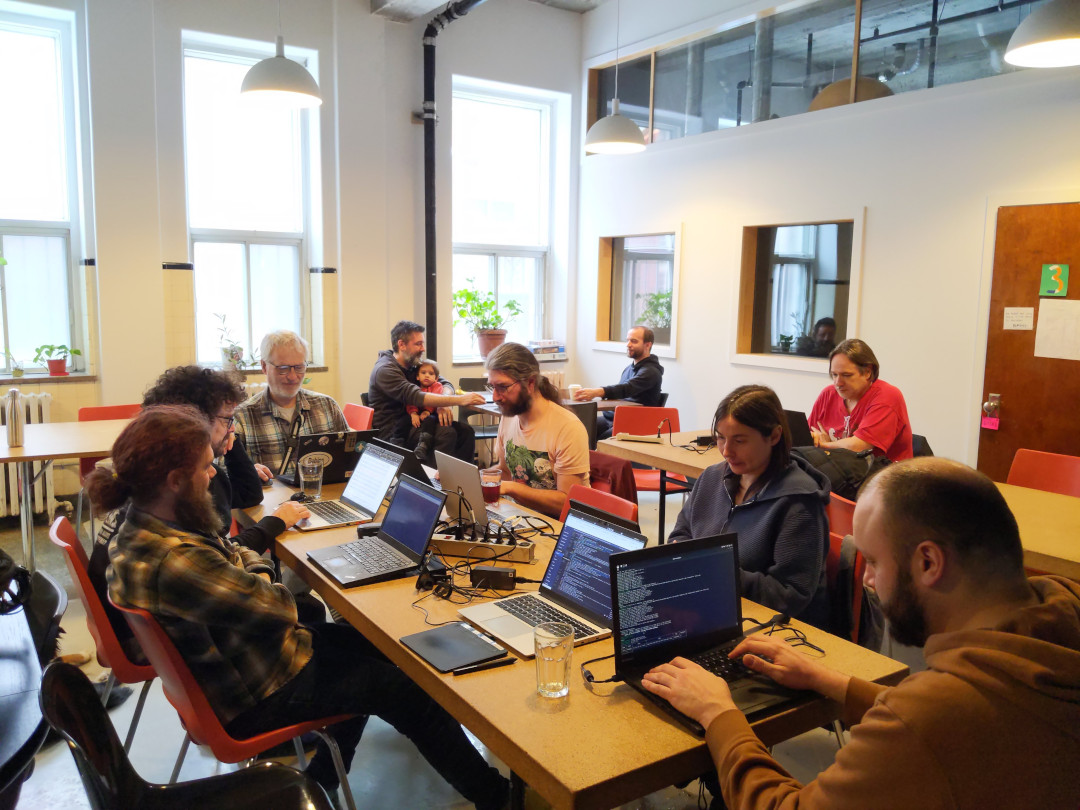
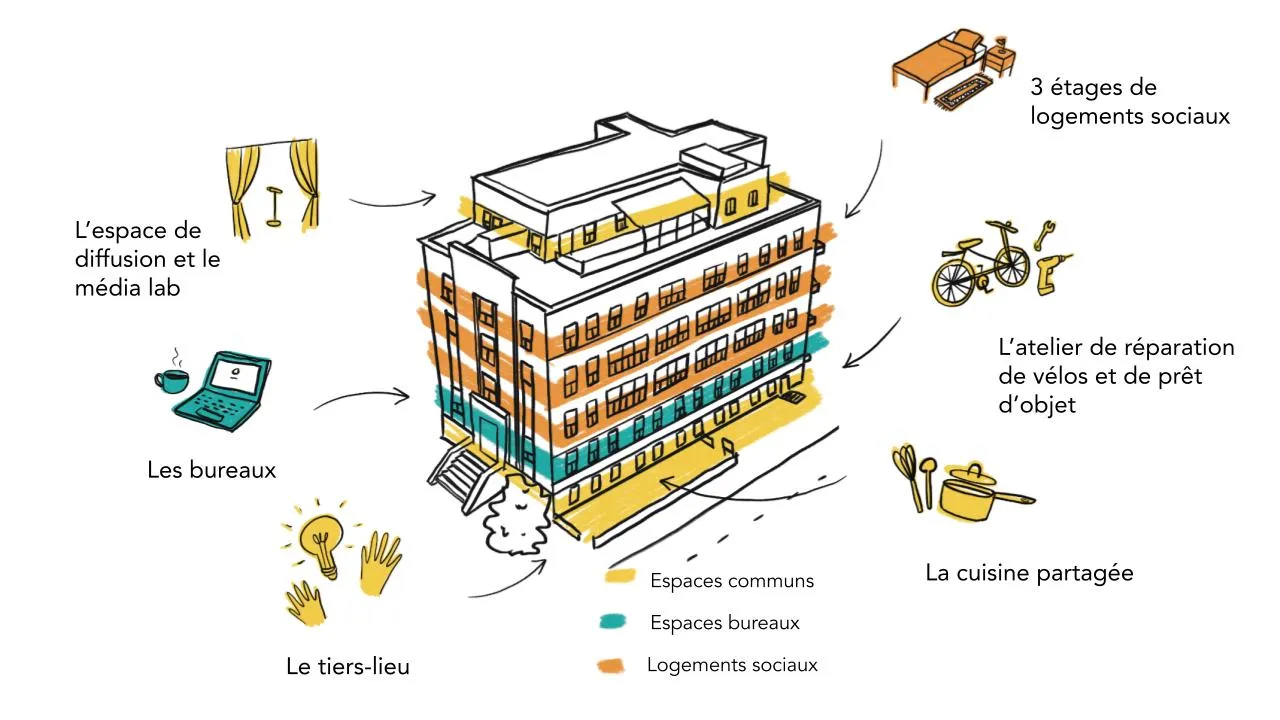
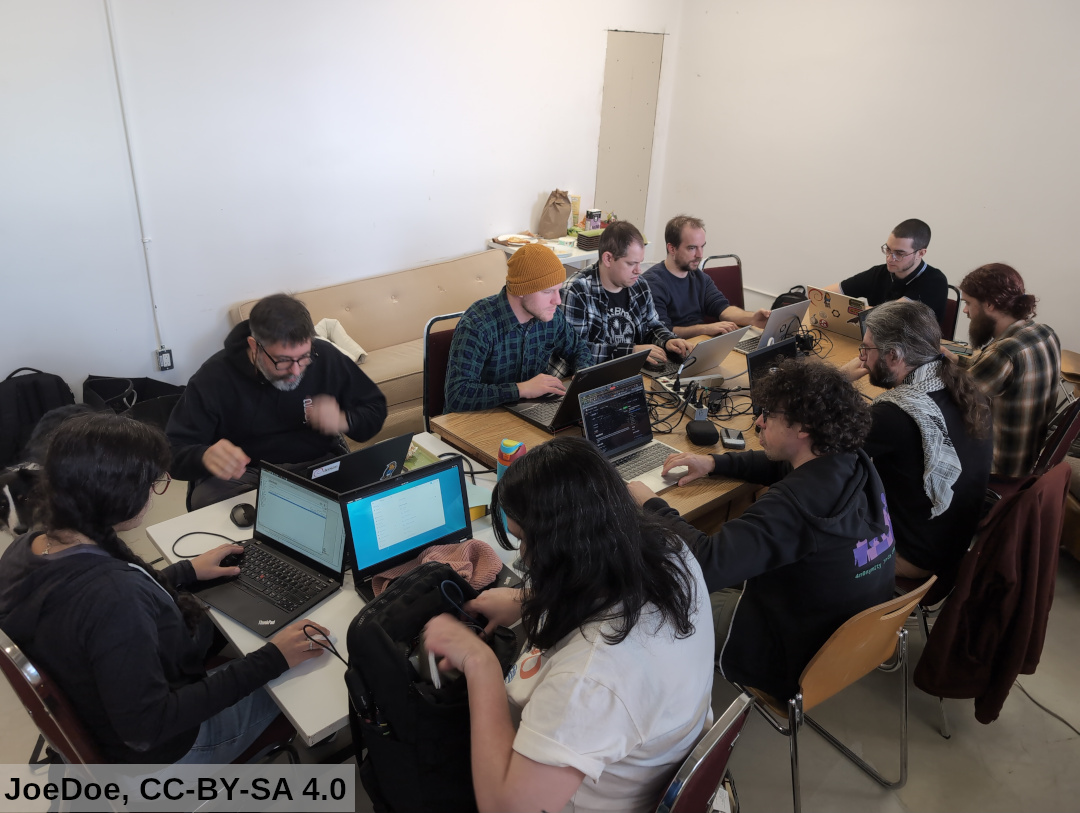
Hello, hello, hello! This report for the Bug Squashing Party we held in Montreal on March 28-29th is very late ... but better late than never? We're now at our fifth BSP in a row1, which is both nice and somewhat terrifying. Have I really been around for five Debian releases already? Geez... This year, around 13 different people showed up, including some brand new folks! All in all, we ended up working on 77 bugs, 61 of which have since been closed. This is somewhat skewed by the large number of Lintian bugs I closed by merging and releasing the very many patches submitted by Maytham Alsudany (hello Maytham!), but that was still work :D For our past few events, we have been renting a space at Ateliers de la transition socio- cologique. This building used to be nunnery (thus the huge cross on the top floor), but has since been transformed into a multi-faceted project. A drawing of the building where the BSP was hosted BSPs are great and this one was no exception. You should try to join an upcoming event or to organise one if you can. It is loads of fun and you will be helping the Debian project release its next stable version sooner! As always, thanks to Debian for granting us a budget for the food and to rent the venue. Pictures Here are a bunch of pictures of the BSP, mixed in with some other pictures I took at this venue during a previous event. Some of the people present on Friday, in the smaller room we had that day A picture of a previous event, which includes many of the folks present at the BSP and the larger room we used on Saturday A sticker on the door of the bathroom with text saying 'All Employees Must Wash Away Sin Before Returning To Work', a tongue-in-cheek reference to the building's previous purpose A wall with posters for upcoming events A drawing on one of the single-occupancy rooms in the building, warning people the door can't be opened from the inside (yikes!) A table at the entrance with many flyers for social and political events
  1. See our previous BSPs in 2017, 2019, 2021 and 2023!

20 April 2025

Russ Allbery: Review: Up the Down Staircase

Review: Up the Down Staircase, by Bel Kaufman
Publisher: Vintage Books
Copyright: 1964, 1991, 2019
Printing: 2019
ISBN: 0-525-56566-3
Format: Kindle
Pages: 360
Up the Down Staircase is a novel (in an unconventional format, which I'll describe in a moment) about the experiences of a new teacher in a fictional New York City high school. It was a massive best-seller in the 1960s, including a 1967 movie, but seems to have dropped out of the public discussion. I read it from the library sometime in the late 1980s or early 1990s and have thought about it periodically ever since. It was Bel Kaufman's first novel. Sylvia Barrett is a new graduate with a master's degree in English, where she specialized in Chaucer. As Up the Down Staircase opens, it is her first day as an English teacher in Calvin Coolidge High School. As she says in a letter to a college friend:
What I really had in mind was to do a little teaching. "And gladly wolde he lerne, and gladly teche" like Chaucer's Clerke of Oxenford. I had come eager to share all I know and feel; to imbue the young with a love for their language and literature; to instruct and to inspire. What happened in real life (when I had asked why they were taking English, a boy said: "To help us in real life") was something else again, and even if I could describe it, you would think I am exaggerating.
She instead encounters chaos and bureaucracy, broken windows and mindless regulations, a librarian who is so protective of her books that she doesn't let any students touch them, a school guidance counselor who thinks she's Freud, and a principal whose sole interaction with the school is to occasionally float through on a cushion of cliches, dispensing utterly useless wisdom only to vanish again.
I want to take this opportunity to extend a warm welcome to all faculty and staff, and the sincere hope that you have returned from a healthful and fruitful summer vacation with renewed vim and vigor, ready to gird your loins and tackle the many important and vital tasks that lie ahead undaunted. Thank you for your help and cooperation in the past and future. Maxwell E. Clarke
Principal
In practice, the school is run by James J. McHare, Clarke's administrative assistant, who signs his messages JJ McH, Adm. Asst. and who Sylvia immediately starts calling Admiral Ass. McHare is a micro-managing control freak who spends the book desperately attempting to impose order over school procedures, the teachers, and the students, with very little success. The title of the book comes from one of his detention slips:
Please admit bearer to class Detained by me for going Up the Down staircase and subsequent insolence. JJ McH
The conceit of this book is that, except for the first and last chapters, it consists only of memos, letters, notes, circulars, and other paper detritus, often said to come from Sylvia's wastepaper basket. Sylvia serves as the first-person narrator through her long letters to her college friend, and through shorter but more frequent exchanges via intraschool memo with Beatrice Schachter, another English teacher at the same school, but much of the book lies outside her narration. The reader has to piece together what's happening from the discarded paper of a dysfunctional institution. Amid the bureaucratic and personal communications, there are frequent chapters with notes from the students, usually from the suggestion box that Sylvia establishes early in the book. These start as chaotic glimpses of often-misspelled wariness or open hostility, but over the course of Up the Down Staircase, some of the students become characters with fragmentary but still visible story arcs. This remains confusing throughout the novel there are too many students to keep them entirely straight, and several of them use pseudonyms for the suggestion box but it's the sort of confusion that feels like an intentional authorial choice. It mirrors the difficulty a teacher has in piecing together and remembering the stories of individual students in overstuffed classrooms, even if (like Sylvia and unlike several of her colleagues) the teacher is trying to pay attention. At the start, Up the Down Staircase reads as mostly-disconnected humor. There is a strong "kids say the darnedest things" vibe, which didn't entirely work for me, but the send-up of chaotic bureaucracy is both more sophisticated and more entertaining. It has the "laugh so that you don't cry" absurdity of a system with insufficient resources, entirely absent management, and colleagues who have let their quirks take over their personalities. Sylvia alternates between incredulity and stubbornness, and I think this book is at its best when it shows the small acts of practical defiance that one uses to carve out space and coherence from mismanaged bureaucracy. But this book is not just a collection of humorous anecdotes about teaching high school. Sylvia is sincere in her desire to teach, which crystallizes around, but is not limited to, a quixotic attempt to reach one delinquent that everyone else in the school has written off. She slowly finds her footing, she has a few breakthroughs in reaching her students, and the book slowly turns into an earnest portrayal of an attempt to make the system work despite its obvious unfitness for purpose. This part of the book is hard to review. Parts of it worked brilliantly; I could feel myself both adjusting my expectations alongside Sylvia to something less idealistic and also celebrating the rare breakthrough with her. Parts of it were weirdly uncomfortable in ways that I'm not sure I enjoyed. That includes Sylvia's climactic conversation with the boy she's been trying to reach, which was weirdly charged and ambiguous in a way that felt like the author's reach exceeding their grasp. One thing that didn't help my enjoyment is Sylvia's relationship with Paul Barringer, another of the English teachers and a frustrated novelist and poet. Everyone who works at the school has found their own way to cope with the stress and chaos, and many of the ways that seem humorous turn out to have a deeper logic and even heroism. Paul's, however, is to retreat into indifference and alcohol. He is a believable character who works with Kaufman's themes, but he's also entirely unlikable. I never understood why Sylvia tolerated that creepy asshole, let alone kept having lunch with him. It is clear from the plot of the book that Kaufman at least partially understands Paul's deficiencies, but that did not help me enjoy reading about him. This is a great example of a book that tried to do something unusual and risky and didn't entirely pull it off. I like books that take a risk, and sometimes Up the Down Staircase is very funny or suddenly insightful in a way that I'm not sure Kaufman could have reached with a more traditional novel. It takes a hard look at what it means to try to make a system work when it's clearly broken and you can't change it, and the way all of the characters arrive at different answers that are much deeper than their initial impressions was subtle and effective. It's the sort of book that sticks in your head, as shown by the fact I bought it on a whim to re-read some 35 years after I first read it. But it's not consistently great. Some parts of it drag, the characters are frustratingly hard to keep track of, and the emotional climax points are odd and unsatisfying, at least to me. I'm not sure whether to recommend it or not, but it's certainly unusual. I'm glad I read it again, but I probably won't re-read it for another 35 years, at least. If you are considering getting this book, be aware that it has a lot of drawings and several hand-written letters. The publisher of the edition I read did a reasonably good job formatting this for an ebook, but some of the pages, particularly the hand-written letters, were extremely hard to read on a Kindle. Consider paper, or at least reading on a tablet or computer screen, if you don't want to have to puzzle over low-resolution images. The 1991 trade paperback had a new introduction by the author, reproduced in the edition I read as an afterward (which is a better choice than an introduction). It is a long and fascinating essay from Kaufman about her experience with the reaction to this book, culminating in a passionate plea for supporting public schools and public school teachers. Kaufman's personal account adds a lot of depth to the story; I highly recommend it. Content note: Self-harm, plus several scenes that are closely adjacent to student-teacher relationships. Kaufman deals frankly with the problems of mostly-poor high school kids, including sexuality, so be warned that this is not the humorous romp that it might appear on first glance. A couple of the scenes made me uncomfortable; there isn't anything explicit, but the emotional overtones can be pretty disturbing. Rating: 7 out of 10

17 April 2025

Simon Josefsson: Verified Reproducible Tarballs

Remember the XZ Utils backdoor? One factor that enabled the attack was poor auditing of the release tarballs for differences compared to the Git version controlled source code. This proved to be a useful place to distribute malicious data. The differences between release tarballs and upstream Git sources is typically vendored and generated files. Lots of them. Auditing all source tarballs in a distribution for similar issues is hard and boring work for humans. Wouldn t it be better if that human auditing time could be spent auditing the actual source code stored in upstream version control instead? That s where auditing time would help the most. Are there better ways to address the concern about differences between version control sources and tarball artifacts? Let s consider some approaches: While I like the properties of the first solution, and have made effort to support that approach, I don t think normal source tarballs are going away any time soon. I am concerned that it may not even be a desirable complete solution to this problem. We may need tarballs with pre-generated content in them for various reasons that aren t entirely clear to us today. So let s consider the second approach. It could help while waiting for more experience with the first approach, to see if there are any fundamental problems with it. How do you know that the XZ release tarballs was actually derived from its version control sources? The same for Gzip? Coreutils? Tar? Sed? Bash? GCC? We don t know this! I am not aware of any automated or collaborative effort to perform this independent confirmation. Nor am I aware of anyone attempting to do this on a regular basis. We would want to be able to do this in the year 2042 too. I think the best way to reach that is to do the verification continuously in a pipeline, fixing bugs as time passes. The current state of the art seems to be that people audit the differences manually and hope to find something. I suspect many package maintainers ignore the problem and take the release source tarballs and trust upstream about this. We can do better. I have launched a project to setup a GitLab pipeline that invokes per-release scripts to rebuild that release artifact from git sources. Currently it only contain recipes for projects that I released myself. Releases which where done in a controlled way with considerable care to make reproducing the tarballs possible. The project homepage is here: https://gitlab.com/debdistutils/verify-reproducible-releases The project is able to reproduce the release tarballs for Libtasn1 v4.20.0, InetUtils v2.6, Libidn2 v2.3.8, Libidn v1.43, and GNU SASL v2.2.2. You can see this in a recent successful pipeline. All of those releases were prepared using Guix, and I m hoping the Guix time-machine will make it possible to keep re-generating these tarballs for many years to come. I spent some time trying to reproduce the current XZ release tarball for version 5.8.1. That would have been a nice example, wouldn t it? First I had to somehow mimic upstream s build environment. The XZ release tarball contains GNU Libtool files that are identified with version 2.5.4.1-baa1-dirty. I initially assumed this was due to the maintainer having installed libtool from git locally (after making some modifications) and made the XZ release using it. Later I learned that it may actually be coming from ArchLinux which ship with this particular libtool version. It seems weird for a distribution to use libtool built from a non-release tag, and furthermore applying patches to it, but things are what they are. I made some effort to setup an ArchLinux build environment, however the now-current Gettext version in ArchLinux seems to be more recent than the one that were used to prepare the XZ release. I don t know enough ArchLinux to setup an environment corresponding to an earlier version of ArchLinux, which would be required to finish this. I gave up, maybe the XZ release wasn t prepared on ArchLinux after all. Actually XZ became a good example for this writeup anyway: while you would think this should be trivial, the fact is that it isn t! (There is another aspect here: fingerprinting the versions used to prepare release tarballs allows you to infer what kind of OS maintainers are using to make releases on, which is interesting on its own.) I made some small attempts to reproduce the tarball for GNU Shepherd version 1.0.4 too, but I still haven t managed to complete it. Do you want a supply-chain challenge for the Easter weekend? Pick some well-known software and try to re-create the official release tarballs from the corresponding Git checkout. Is anyone able to reproduce anything these days? Bonus points for wrapping it up as a merge request to my project. Happy Supply-Chain Security Hacking!

Arturo Borrero Gonz lez: My experience in the Debian LTS and ELTS projects

Debian Last year, I decided to start participating in the Debian LTS and ELTS projects. It was a great opportunity to engage in something new within the Debian community. I had been following these projects for many years, observing their evolution and how they gained traction both within the ecosystem and across the industry. I was curious to explore how contributors were working internally especially how they managed security patching and remediation for older software. I ve always felt this was a particularly challenging area, and I was fortunate to experience it firsthand. As of April 2025, the Debian LTS project was primarily focused on providing security maintenance for Debian 11 Bullseye. Meanwhile, the Debian ELTS project was targeting Debian 8 Jessie, Debian 9 Stretch, and Debian 10 Buster. During my time with the projects, I worked on a variety of packages and CVEs. Some of the most notable ones include: There are several technical highlights I d like to share things I learned or had to apply while participating: In March 2025, I decided to scale back my involvement in the projects due to some changes in my personal life. Still, this experience has been one of the highlights of my career, and I would definitely recommend it to others. I m very grateful for the warm welcome I received from the LTS/ELTS community, and I don t rule out the possibility of rejoining the LTS/ELTS efforts in the future. The Debian LTS/ELTS projects are currently coordinated by folks at Freexian. Many thanks to Freexian and sponsors for providing this opportunity!

16 April 2025

Otto Kek l inen: Going Full-Time as an Open Source Developer

Featured image of post Going Full-Time as an Open Source DeveloperAfter careful consideration, I ve decided to embark on a new chapter in my professional journey. I ve left my position at AWS to dedicate at least the next six months to developing open source software and strengthening digital ecosystems. My focus will be on contributing to Linux distributions (primarily Debian) and other critical infrastructure components that our modern society depends on, but which may not receive adequate attention or resources.

The Evolution of Open Source Open source won. Over the 25+ years I ve been involved in the open source movement, I ve witnessed its remarkable evolution. Today, Linux powers billions of devices from tiny embedded systems and Android smartphones to massive cloud datacenters and even space stations. Examine any modern large-scale digital system, and you ll discover it s built upon thousands of open source projects. I feel the priority for the open source movement should no longer be increasing adoption, but rather solving how to best maintain the vast ecosystem of software. This requires building robust institutions and processes to secure proper resourcing and ensure the collaborative development process remains efficient and leads to ever-increasing quality of software.

What is Special About Debian? Debian, established in 1993 by Ian Murdock, stands as one of these institutions that has demonstrated exceptional resilience. There is no single authority, but instead a complex web of various stakeholders, each with their own goals and sources of funding. Every idea needs to be championed at length to a wide audience and implemented through a process of organic evolution. Thanks to this approach, Debian has been consistently delivering production-quality, universally useful software for over three decades. Having been a Debian Developer for more than ten years, I m well-positioned to contribute meaningfully to this community. If your organization relies on Debian or its derivatives such as Ubuntu, and you re interested in funding cyber infrastructure maintenance by sponsoring Debian work, please don t hesitate to reach out. This could include package maintenance and version currency, improving automated upgrade testing, general quality assurance and supply chain security enhancements.
Best way to reach me is by e-mail otto at debian.org. You can also book a 15-minute chat with me for a quick introduction.

Grow or Die My four-year tenure as a Software Development Manager at Amazon Web Services was very interesting. I m grateful for my time at AWS and proud of my team s accomplishments, particularly for creating an open source contribution process that got Amazon from zero to the largest external contributor to the MariaDB open source database. During this time, I got to experience and witness a plethora of interesting things. I will surely share some of my key learnings in future blog posts. Unfortunately, the rate of progress in this mammoth 1.5 million employee organization was slowing down, and I didn t feel I learned much new in the last years. This realization, combined with the opportunity cost of not spending enough time on new cutting-edge technology, motivated me to take this leap. Being a full-time open source developer may not be financially the most lucrative idea, but I think it is an excellent way to force myself to truly assess what is important on a global scale and what areas I want to contribute to. Working fully on open source presents a fascinating duality: you re not bound by any external resource or schedule limitations, and can the progress you make is directly proportional to how much energy you decide to invest. Yet, you also depend on collaboration with people you might never meet and who are not financially incentivized to collaborate. This will undoubtedly expose me to all kinds of challenges. But what would be better in fostering holistic personal growth? I know that deep down in my DNA, I am not made to stay cozy or to do easy things. I need momentum. OK, let s get going

15 April 2025

Russell Coker: What Desktop PCs Need

It seems to me that we haven t had much change in the overall design of desktop PCs since floppy drives were removed, and modern PCs still have bays the size of 5.25 floppy drives despite having nothing modern that can fit in such spaces other than DVD drives (which aren t really modern) and carriers for 4*2.5 drives both of which most people don t use. We had the PC System Design Guide [1] which was last updated in 2001 which should have been updated more recently to address some of these issues, the thing that most people will find familiar in that standard is the colours for audio ports. Microsoft developed the Legacy Free PC [2] concept which was a good one. There s a lot of things that could be added to the list of legacy stuff to avoid, TPM 1.2, 5.25 drive bays, inefficient PSUs, hardware that doesn t sleep when idle or which prevents the CPU from sleeping, VGA and DVI ports, ethernet slower than 2.5Gbit, and video that doesn t include HDMI 2.1 or DisplayPort 2.1 for 8K support. There are recently released high-end PCs on sale right now with 1gbit ethernet as standard and hardly any PCs support resolutions above 4K properly. Here are some of the things that I think should be in a modern PC System Design Guide. Power Supply The power supply is a core part of the computer and it s central location dictates the layout of the rest of the PC. GaN PSUs are more power efficient and therefore require less cooling. A 400W USB power supply is about 1/4 the size of a standard PC PSU and doesn t have a cooling fan. A new PC standard should include less space for the PSU except for systems with multiple CPUs or that are designed for multiple GPUs. A Dell T630 server has an option of a 1600W PSU that is 20*8.5*4cm = 680cc. The typical dimensions of an ATX PSU are 15*8.6*14cm = 1806cc. The SFX (small form factor variant of ATX) PSU is 12.5*6.3*10cm = 787cc. There is a reason for the ATX and SFX PSUs having a much worse ratio of power to size and that is the airflow. Server class systems are designed for good airflow and can efficiently cool the PSU with less space and they are also designed for uses where people are less concerned about fan noise. But the 680cc used for a 1600W Dell server PSU that predates GaN technology could be used for a modern GaN PSU that supplies the ~600W needed for a modern PC while being quiet. There are several different smaller size PSUs for name-brand PCs (where compatibility with other systems isn t needed) that have been around for ~20 years but there hasn t been a standard so all white-box PC systems have had really large PSUs. PCs need USB-C PD ports that can charge a laptop etc. There are phones that can draw 80W for fast charging and it s not unreasonable to expect a PC to be able to charge a phone at it s maximum speed. GPUs should have USB-C alternate mode output and support full USB functionality over the cable as well as PD that can power the monitor. Having a monitor with a separate PSU, a HDMI or DP cable to the PC, and a USB cable between PC and monitor is an annoyance. There should be one cable between PC and monitor and then keyboard, mouse, etc should connect to the monior. All devices that are connected to a PC should use USB-C for power connection. That includes monitors that are using HDMI or DisplayPort for video, desktop switches, home Wifi APs, printers, and speakers (even when using line-in for the audio signal). The European Commission Common Charger Directive is really good but it only covers portable devices, keyboards, and mice. Motherboard Features Latest verions of Wifi and Bluetooth on the motherboard (this is becoming a standard feature). On motherboard video that supports 8K resolution. An option of a PCIe GPU is a good thing to have but it would be nice if the motherboard had enough video capabilities to satisfy most users. There are several options for video that have a higher resolution than 4K and making things just work at 8K means that there will be less e-waste in future. ECC RAM should be a standard feature on all motherboards, having a single bit error cause a system crash is a MS-DOS thing, we need to move past that. There should be built in hardware for monitoring the system status that is better than BIOS beeps on boot. Lenovo laptops have a feature for having the BIOS play a tune on a serious error with an Android app to decode the meaning of the tune, we could have a standard for this. For desktop PCs there should be a standard for LCD status displays similar to the ones on servers, this would be cheap if everyone did it. Case Features The way the Framework Laptop can be expanded with modules is really good [3]. There should be something similar for PC cases. While you can buy USB devices for these things they are messy and risk getting knocked out of their sockets when moving cables around. While the Framework laptop expansion cards are much more expensive than other devices with similar functions that are aimed at a mass market if there was a standard for PCs then the devices to fit them would become cheap. The PC System Design Guide specifies colors for ports (which is good) but not the feel of them. While some ports like Ethernet ports allow someone to feel which way the connector should go it isn t possible to easily feel which way a HDMI or DisplayPort connector should go. It would be good if there was a standard that required plastic spikes on one side or some other way of feeling which way a connector should go. GPU Placement In modern systems it s fairly common to have a high heatsink on the CPU with a fan to blow air in at the front and out the back of the PC. The GPU (which often dissipates twice as much heat as the CPU) has fans blowing air in sideways and not out the back. This gives some sort of compromise between poor cooling and excessive noise. What we need is to have air blown directly through a GPU heatsink and out of the case. One option for a tower case that needs minimal changes is to have the PCIe slot nearest the bottom of the case used for the GPU and have a grille in the bottom to allow air to go out, the case could have feet to keep it a few cm above the floor or desk. Another possibility is to have a PCIe slot parallel to the rear surface of the case (right angles to the other PCIe slots). A common case with desktop PCs is to have the GPU use more than half the total power of the PC. The placement of the GPU shouldn t be an afterthought, it should be central to the design. Is a PCIe card even a good way of installing a GPU? Could we have a standard GPU socket on the motherboard next to the CPU socket and use the same type of heatsink and fan for GPU and CPU? External Cooling There are a range of aftermarket cooling devices for laptops that push cool air in the bottom or suck it out the side. We need to have similar options for desktop PCs. I think it would be ideal to have a standard attachments for airflow on the front and back of tower PCs. The larger a fan is the slower it can spin to give the same airflow and therefore the less noise it will produce. Instead of just relying on 10cm fans at the front and back of a PC to push air in and suck it out you could have a conical rubber duct connected to a 30cm diameter fan. That would allow quieter fans to do most of the work in pushing air through the PC and also allow the hot air to be directed somewhere suitable. When doing computer work in summer it s not great to have a PC sending 300+W of waste heat into the room you are in. If it could be directed out a window that would be good. Noise For restricting noise of PCs we have industrial relations legislation that seems to basically require that workers not be exposed to noise louder than a blender, so if a PC is quieter than that then it s OK. For name brand PCs there are specs about how much noise is produced but there are usually caveats like under typical load or with a typical feature set that excuse them from liability if the noise is louder than expected. It doesn t seem possible for someone to own a PC, determine that the noise from it is what is acceptable, and then buy another that is close to the same. We need regulations about this, and the EU seems the best jurisdiction for it as they cover the purchase of a lot of computer equipment that is also sold without change in other countries. The regulations need to also cover updates, for example I have a Dell T630 which is unreasonably loud and Dell support doesn t have much incentive to be particularly helpful about it. BIOS updates routinely tweak things like fan speeds without the developers having an incentive to keep it as quiet as it was when it was sold. What Else? Please comment about other things you think should be standard PC features.

11 April 2025

Reproducible Builds: Reproducible Builds in March 2025

Welcome to the third report in 2025 from the Reproducible Builds project. Our monthly reports outline what we ve been up to over the past month, and highlight items of news from elsewhere in the increasingly-important area of software supply-chain security. As usual, however, if you are interested in contributing to the Reproducible Builds project, please visit our Contribute page on our website. Table of contents:
  1. Debian bookworm live images now fully reproducible from their binary packages
  2. How NixOS and reproducible builds could have detected the xz backdoor
  3. LWN: Fedora change aims for 99% package reproducibility
  4. Python adopts PEP standard for specifying package dependencies
  5. OSS Rebuild real-time validation and tooling improvements
  6. SimpleX Chat server components now reproducible
  7. Three new scholarly papers
  8. Distribution roundup
  9. An overview of Supply Chain Attacks on Linux distributions
  10. diffoscope & strip-nondeterminism
  11. Website updates
  12. Reproducibility testing framework
  13. Upstream patches

Debian bookworm live images now fully reproducible from their binary packages Roland Clobus announced on our mailing list this month that all the major desktop variants (ie. Gnome, KDE, etc.) can be reproducibly created for Debian bullseye, bookworm and trixie from their (pre-compiled) binary packages. Building reproducible Debian live images does not require building from reproducible source code, but this is still a remarkable achievement. Some large proportion of the binary packages that comprise these live images can (and were) built reproducibly, but live image generation works at a higher level. (By contrast, full or end-to-end reproducibility of a bootable OS image will, in time, require both the compile-the-packages the build-the-bootable-image stages to be reproducible.) Nevertheless, in response, Roland s announcement generated significant congratulations as well as some discussion regarding the finer points of the terms employed: a full outline of the replies can be found here. The news was also picked up by Linux Weekly News (LWN) as well as to Hacker News.

How NixOS and reproducible builds could have detected the xz backdoor Julien Malka aka luj published an in-depth blog post this month with the highly-stimulating title How NixOS and reproducible builds could have detected the xz backdoor for the benefit of all . Starting with an dive into the relevant technical details of the XZ Utils backdoor, Julien s article goes on to describe how we might avoid the xz catastrophe in the future by building software from trusted sources and building trust into untrusted release tarballs by way of comparing sources and leveraging bitwise reproducibility, i.e. applying the practices of Reproducible Builds. The article generated significant discussion on Hacker News as well as on Linux Weekly News (LWN).

LWN: Fedora change aims for 99% package reproducibility Linux Weekly News (LWN) contributor Joe Brockmeier has published a detailed round-up on how Fedora change aims for 99% package reproducibility. The article opens by mentioning that although Debian has been working toward reproducible builds for more than a decade , the Fedora project has now:
progressed far enough that the project is now considering a change proposal for the Fedora 43 development cycle, expected to be released in October, with a goal of making 99% of Fedora s package builds reproducible. So far, reaction to the proposal seems favorable and focused primarily on how to achieve the goal with minimal pain for packagers rather than whether to attempt it.
The Change Proposal itself is worth reading:
Over the last few releases, we [Fedora] changed our build infrastructure to make package builds reproducible. This is enough to reach 90%. The remaining issues need to be fixed in individual packages. After this Change, package builds are expected to be reproducible. Bugs will be filed against packages when an irreproducibility is detected. The goal is to have no fewer than 99% of package builds reproducible.
Further discussion can be found on the Fedora mailing list as well as on Fedora s Discourse instance.

Python adopts PEP standard for specifying package dependencies Python developer Brett Cannon reported on Fosstodon that PEP 751 was recently accepted. This design document has the purpose of describing a file format to record Python dependencies for installation reproducibility . As the abstract of the proposal writes:
This PEP proposes a new file format for specifying dependencies to enable reproducible installation in a Python environment. The format is designed to be human-readable and machine-generated. Installers consuming the file should be able to calculate what to install without the need for dependency resolution at install-time.
The PEP, which itself supersedes PEP 665, mentions that there are at least five well-known solutions to this problem in the community .

OSS Rebuild real-time validation and tooling improvements OSS Rebuild aims to automate rebuilding upstream language packages (e.g. from PyPI, crates.io, npm registries) and publish signed attestations and build definitions for public use. OSS Rebuild is now attempting rebuilds as packages are published, shortening the time to validating rebuilds and publishing attestations. Aman Sharma contributed classifiers and fixes for common sources of non-determinism in JAR packages. Improvements were also made to some of the core tools in the project:
  • timewarp for simulating the registry responses from sometime in the past.
  • proxy for transparent interception and logging of network activity.
  • and stabilize, yet another nondeterminism fixer.

SimpleX Chat server components now reproducible SimpleX Chat is a privacy-oriented decentralised messaging platform that eliminates user identifiers and metadata, offers end-to-end encryption and has a unique approach to decentralised identity. Starting from version 6.3, however, Simplex has implemented reproducible builds for its server components. This advancement allows anyone to verify that the binaries distributed by SimpleX match the source code, improving transparency and trustworthiness.

Three new scholarly papers Aman Sharma of the KTH Royal Institute of Technology of Stockholm, Sweden published a paper on Build and Runtime Integrity for Java (PDF). The paper s abstract notes that Software Supply Chain attacks are increasingly threatening the security of software systems and goes on to compare build- and run-time integrity:
Build-time integrity ensures that the software artifact creation process, from source code to compiled binaries, remains untampered. Runtime integrity, on the other hand, guarantees that the executing application loads and runs only trusted code, preventing dynamic injection of malicious components.
Aman s paper explores solutions to safeguard Java applications and proposes some novel techniques to detect malicious code injection. A full PDF of the paper is available.
In addition, Hamed Okhravi and Nathan Burow of Massachusetts Institute of Technology (MIT) Lincoln Laboratory along with Fred B. Schneider of Cornell University published a paper in the most recent edition of IEEE Security & Privacy on Software Bill of Materials as a Proactive Defense:
The recently mandated software bill of materials (SBOM) is intended to help mitigate software supply-chain risk. We discuss extensions that would enable an SBOM to serve as a basis for making trust assessments thus also serving as a proactive defense.
A full PDF of the paper is available.
Lastly, congratulations to Giacomo Benedetti of the University of Genoa for publishing their PhD thesis. Titled Improving Transparency, Trust, and Automation in the Software Supply Chain, Giacomo s thesis:
addresses three critical aspects of the software supply chain to enhance security: transparency, trust, and automation. First, it investigates transparency as a mechanism to empower developers with accurate and complete insights into the software components integrated into their applications. To this end, the thesis introduces SUNSET and PIP-SBOM, leveraging modeling and SBOMs (Software Bill of Materials) as foundational tools for transparency and security. Second, it examines software trust, focusing on the effectiveness of reproducible builds in major ecosystems and proposing solutions to bolster their adoption. Finally, it emphasizes the role of automation in modern software management, particularly in ensuring user safety and application reliability. This includes developing a tool for automated security testing of GitHub Actions and analyzing the permission models of prominent platforms like GitHub, GitLab, and BitBucket.

Distribution roundup In Debian this month:
The IzzyOnDroid Android APK repository reached another milestone in March, crossing the 40% coverage mark specifically, more than 42% of the apps in the repository is now reproducible Thanks to funding by NLnet/Mobifree, the project was also to put more time into their tooling. For instance, developers can now run easily their own verification builder in less than 5 minutes . This currently supports Debian-based systems, but support for RPM-based systems is incoming. Future work in the pipeline, including documentation, guidelines and helpers for debugging.
Fedora developer Zbigniew J drzejewski-Szmek announced a work-in-progress script called fedora-repro-build which attempts to reproduce an existing package within a Koji build environment. Although the project s README file lists a number of fields will always or almost always vary (and there are a non-zero list of other known issues), this is an excellent first step towards full Fedora reproducibility (see above for more information).
Lastly, in openSUSE news, Bernhard M. Wiedemann posted another monthly update for his work there.

An overview of Supply Chain Attacks on Linux distributions Fenrisk, a cybersecurity risk-management company, has published a lengthy overview of Supply Chain Attacks on Linux distributions. Authored by Maxime Rinaudo, the article asks:
[What] would it take to compromise an entire Linux distribution directly through their public infrastructure? Is it possible to perform such a compromise as simple security researchers with no available resources but time?

diffoscope & strip-nondeterminism diffoscope is our in-depth and content-aware diff utility that can locate and diagnose reproducibility issues. This month, Chris Lamb made the following changes, including preparing and uploading versions 290, 291, 292 and 293 and 293 to Debian:
  • Bug fixes:
    • file(1) version 5.46 now returns XHTML document for .xhtml files such as those found nested within our .epub tests. [ ]
    • Also consider .aar files as APK files, at least for the sake of diffoscope. [ ]
    • Require the new, upcoming, version of file(1) and update our quine-related testcase. [ ]
  • Codebase improvements:
    • Ensure all calls to our_check_output in the ELF comparator have the potential CalledProcessError exception caught. [ ][ ]
    • Correct an import masking issue. [ ]
    • Add a missing subprocess import. [ ]
    • Reformat openssl.py. [ ]
    • Update copyright years. [ ][ ][ ]
In addition, Ivan Trubach contributed a change to ignore the st_size metadata entry for directories as it is essentially arbitrary and introduces unnecessary or even spurious changes. [ ]

Website updates Once again, there were a number of improvements made to our website this month, including:

Reproducibility testing framework The Reproducible Builds project operates a comprehensive testing framework running primarily at tests.reproducible-builds.org in order to check packages and other artifacts for reproducibility. In March, a number of changes were made by Holger Levsen, including:
  • reproduce.debian.net-related:
    • Add links to two related bugs about buildinfos.debian.net. [ ]
    • Add an extra sync to the database backup. [ ]
    • Overhaul description of what the service is about. [ ][ ][ ][ ][ ][ ]
    • Improve the documentation to indicate that need to fix syncronisation pipes. [ ][ ]
    • Improve the statistics page by breaking down output by architecture. [ ]
    • Add a copyright statement. [ ]
    • Add a space after the package name so one can search for specific packages more easily. [ ]
    • Add a script to work around/implement a missing feature of debrebuild. [ ]
  • Misc:
    • Run debian-repro-status at the end of the chroot-install tests. [ ][ ]
    • Document that we have unused diskspace at Ionos. [ ]
In addition:
  • James Addison made a number of changes to the reproduce.debian.net homepage. [ ][ ].
  • Jochen Sprickerhof updated the statistics generation to catch No space left on device issues. [ ]
  • Mattia Rizzolo added a better command to stop the builders [ ] and fixed the reStructuredText syntax in the README.infrastructure file. [ ]
And finally, node maintenance was performed by Holger Levsen [ ][ ][ ] and Mattia Rizzolo [ ][ ].

Upstream patches The Reproducible Builds project detects, dissects and attempts to fix as many currently-unreproducible packages as possible. We endeavour to send all of our patches upstream where appropriate. This month, we wrote a large number of such patches, including:
Finally, if you are interested in contributing to the Reproducible Builds project, please visit our Contribute page on our website. However, you can get in touch with us via:

10 April 2025

John Goerzen: Announcing the NNCPNET Email Network

From 1995 to 2019, I ran my own mail server. It began with a UUCP link, an expensive long-distance call for me then. Later, I ran a mail server in my apartment, then ran it as a VPS at various places. But running an email server got difficult. You can t just run it on a residential IP. Now there s SPF, DKIM, DMARC, and TLS to worry about. I recently reviewed mail hosting services, and don t get me wrong: I still use one, and probably will, because things like email from my bank are critical. But we ve lost the ability to tinker, to experiment, to have fun with email. Not anymore. NNCPNET is an email system that runs atop NNCP. I ve written a lot about NNCP, including a less-ambitious article about point-to-point email over NNCP 5 years ago. NNCP is to UUCP what ssh is to telnet: a modernization, with modern security and features. NNCP is an asynchronous, onion-routed, store-and-forward network. It can use as a transport anything from the Internet to a USB stick. NNCPNET is a set of standards, scripts, and tools to facilitate a broader email network using NNCP as the transport. You can read more about NNCPNET on its wiki! The easy mode is to use the Docker container (multi-arch, so you can use it on your Raspberry Pi) I provide, which bundles: It is open to all. The homepage has a more extensive list of features. I even have mailing lists running on NNCPNET; see the interesting addresses page for more details. There is extensive documentation, and of course the source to the whole thing is available. The gateway to Internet SMTP mail is off by default, but can easily be enabled for any node. It is a full participant, in both directions, with SPF, DKIM, DMARC, and TLS. You don t need any inbound ports for any of this. You don t need an always-on Internet connection. You don t even need an Internet connection at all. You can run it from your laptop and still use Thunderbird to talk to it via its optional built-in IMAP server.

9 April 2025

Taavi V n nen: Writing a custom rsync server to automatically update a static site

Inspired by some friends,1 I too wanted to make a tiny website telling which event I am at this exact moment. Thankfully I already had an another toy project with that information easily available, so generating the web page was a matter of just querying that project's API and feeding that data to a HTML template. Now the obvious way to host that would be to hook up the HTML-generating code to a web server, maybe add some caching for the API calls, and then route external HTTPS traffic to it. However, that'd a) require that server to be constantly available to serve traffic, and b) be boring. For context: I have an existing setup called staticweb, which is effectively a fancy name for a couple of Puppet-managed servers that run Apache httpd to serve static web pages and have a bunch of systemd timers running rsync to ensure they're serving the same content. It works really well and I use it for things ranging from my website or whyisbetabroken.com to things like my internal apt repository. Now, there are two ways to get new content into that mechanism: it can be manually pushed in from e.g. a CI job, or the system can be configured to periodically pull it from a separate server. The latter mechanism was initially created so that I could pull the Debian packages from my separate reprepro server into the staticweb setup. It turns out that the latter makes a really neat method for handling other dynamically-generated static sites as well. So, for my "where is Taavi at" site, I ended up writing the server part in Go, and included an rsync server using the gokrazy/rsync package. Initially I just implemented a static temporary directory with a timer to regularly update the HTML file in it, but then I got an even more cursed idea: what if the HTML was dynamically generated when an rsync client connected to the server? So I did just that. For deployment, I slapped the entire server part in a container and deployed it to my Kubernetes cluster. The rsync server is exposed directly as a service to my internal network with no authentication or encryption - I think that's fine since that's a read-only service in a private LAN and the resulting HTML is going to be publicly exposed anyway. (Thanks to some DNS magic, just creating a LoadBalancer Service object with a special annotation is enough to have a DNS name provisioned for the assigned IP address, which is neat.) Overall the setup works nice, at least for now. I need to add some sort of a cache to not fetch unchanged information from the API since for every update. And I guess I could write some cursed rsyncd reverse proxy with per-module rules if I end up creating more sites like this to avoid creating new LoadBalancer services for each of them.

  1. Mostly from Sammy's where.fops.at.

4 April 2025

Gunnar Wolf: Naming things revisited

How long has it been since you last saw a conversation over different blogs syndicated at the same planet? Well, it s one of the good memories of the early 2010s. And there is an opportunity to re-engage! I came across Evgeni s post naming things is hard in Planet Debian. So, what names have I given my computers? I have had many since the mid-1990s I also had several during the decade before that, but before Linux, my computers didn t hve a formal name. Naming my computers something nice Linux gave me. I have forgotten many. Some of the names I have used:

Guido G nther: Booting an Android custom kernel on a Pixel 3a for QMI debugging

As you might know I'm not much of an Android user (let alone developer) but in order to figure out how something low level works you sometimes need to peek at how vendor kernels handles this. For that it is often useful to add additional debugging. One such case is QMI communication going on in Qualcomm SOCs. Joel Selvaraj wrote some nice tooling for this. To make use of this a rooted device and a small kernel patch is needed and what would be a no-brainer with Linux Mobile took me a moment to get it to work on Android. Here's the steps I took on a Pixel 3a to first root the device via Magisk, then build the patched kernel and put that into a boot.img to boot it. Flashing the factory image If you still have Android on the device you can skip this step. You can get Android 12 from developers.google.com. I've downloaded sargo-sp2a.220505.008-factory-071e368a.zip. Then put the device into Fastboot mode (Power + Vol-Down), connect it to your PC via USB, unzip/unpack the archive and reflash the phone:
unpack sargo-sp2a.220505.008-factory-071e368a.zip
./flash-all.sh
This wipes your device! I had to run it twice since it would time out on the first run. Note that this unpacked zip contains another zip (image-sargo-sp2a.220505.008.zip) which will become useful below. Enabling USB debugging Now boot Android and enable Developer mode by going to Settings About then touching Build Number (at the very bottom) 7 times. Go back one level, then go to System Developer Options and enable "USB Debugging". Obtaining boot.img There are several ways to get boot.img. If you just flashed Android above then you can fetch boot.img from the already mentioned image-sargo-sp2a.220505.008.zip:
unzip image-sargo-sp2a.220505.008.zip boot.img
If you want to fetch the exact boot.img from your device you can use TWRP (see the very end of this post). Becoming root with Magisk Being able to su via adb will later be useful to fetch kernel logs. For that we first download Magisk as APK. At the time of writing v28.1 is current. Once downloaded we upload the APK and the boot.img from the previous step onto the phone (which needs to have Android booted):
adb push Magisk-v28.1.apk /sdcard/Download
adb push boot.img /sdcard/Download
In Android open the Files app, navigate to /sdcard/Download and install the Magisk APK by opening the APK. We now want to patch boot.img to get su via adb to work (so we can run dmesg). This happens by hitting Install in the Magisk app, then "Select a file to patch". You then select the boot.img we just uploaded. The installation process will create a magisk_patched-<random>.img in /sdcard/Download. We can pull that file via adb back to our PC:
adb pull /sdcard/Download/magisk_patched-28100_3ucVs.img
Then reboot the phone into fastboot (adb reboot bootloader) and flash it (this is optional see below):
fastboot flash boot magisk_patched-28100_3ucVs.img
Now boot the phone again, open the Magisk app, go to SuperUser at the bottom and enable Shell. If you now connect to your phone via adb again and now su should work:
adb shell
su
As noted above if you want to keep your Android installation pristine you don't even need to flash this Magisk enabled boot.img. I've flashed it so I have su access for other operations too. If you don't want to flash it you can still test boot it via:
fastboot boot magisk_patched-28100_3ucVs.img
and then perform the same adb shell su check as above. Building the custom kernel For our QMI debugging to work we need to patch the kernel a bit and place that in boot.img too. So let's build the kernel first. For that we install the necessary tools (which are thankfully packaged in Debian) and fetch the Android kernel sources:
sudo apt install repo android-platform-tools-base kmod ccache build-essential mkbootimg
mkdir aosp-kernel && cd aosp-kernel
repo init -u https://android.googlesource.com/kernel/manifest -b android-msm-bonito-4.9-android12L
repo sync
With that we can apply Joel's kernel patches and also compile in the touch controller driver so we don't need to worry if the modules in the initramfs match the kernel. The kernel sources are in private/msm-google. I've just applied the diffs on top with patch and modified the defconfig and committed the changes. The resulting tree is here. We then build the kernel:
PATH=/usr/sbin:$PATH ./build_bonito.sh
The resulting kernel is at ./out/android-msm-pixel-4.9/private/msm-google/arch/arm64/boot/Image.lz4-dtb. In order to boot that kernel I found it to be the simplest to just replace the kernel in the Magisk patched boot.img as we have that already. In case you have already deleted that for any reason we can always fetch the current boot.img from the phone via TWRP (see below). Preparing a new boot.img To replace the kernel in our Magisk enabled magisk_patched-28100_3ucVs.img from above with the just built kernel we can use mkbootimgfor that. I basically copied the steps we're using when building the boot.img on the Linux Mobile side:
ARGS=$(unpack_bootimg --format mkbootimg --out tmp --boot_img magisk_patched-28100_3ucVs.img)
CLEAN_PARAMS="$(echo "$ ARGS "   sed -e "s/ --cmdline '.*'//" -e "s/ --board '.*'//")"
cp android-kernel/out/android-msm-pixel-4.9/private/msm-google/arch/arm64/boot/Image.lz4-dtb tmp/kernel
mkbootimg -o "boot.patched.img" $ CLEAN_PARAMS  --cmdline "$ ARGS "
This will give you a boot.patched.img with the just built kernel. Boot the new kernel via fastboot We can now boot the new boot.patched.img. No need to flash that onto the device for that:
fastboot boot boot.patched.img
Fetching the kernel logs With that we can fetch the kernel logs with the debug output via adb:
adb shell su -c 'dmesg -t' > dmesg_dump.xml
or already filtering out the QMI commands:
adb shell su -c 'dmesg -t'    grep "@QMI@"   sed -e "s/@QMI@//g" &> sargo_qmi_dump.xml
That's it. You can apply this method for testing out other kernel patches as well. If you want to apply the above to other devices you basically need to make sure you patch the right kernel sources, the other steps should be very similar. In case you just need a rooted boot.img for sargo you can find a patched one here. If this procedure can be improved / streamlined somehow please let me know. Appendix: Fetching boot.img from the phone If, for some reason you lost boot.img somewhere on the way you can always use TWRP to fetch the boot.img currently in use on your phone. First get TWRP for the Pixel 3a. You can boot that directly by putting your device into fastboot mode, then running:
fastboot boot twrp-3.7.1_12-1-sargo.img
Within TWRP select Backup Boot and backup the file. You can then use adb shell to locate the backup in /sdcard/TWRP/BACKUPS/ and pull it:
adb pull /sdcard/TWRP/BACKUPS/97GAY10PWS/2025-04-02--09-24-24_SP2A220505008/boot.emmc.win
You now have the device's boot.img on your PC and can e.g. replace the kernel or make modifications to the initramfs.

3 April 2025

Junichi Uekawa: I was hoping to go to debconf but the frequent travel is painful for me right now that I probably won't make it.
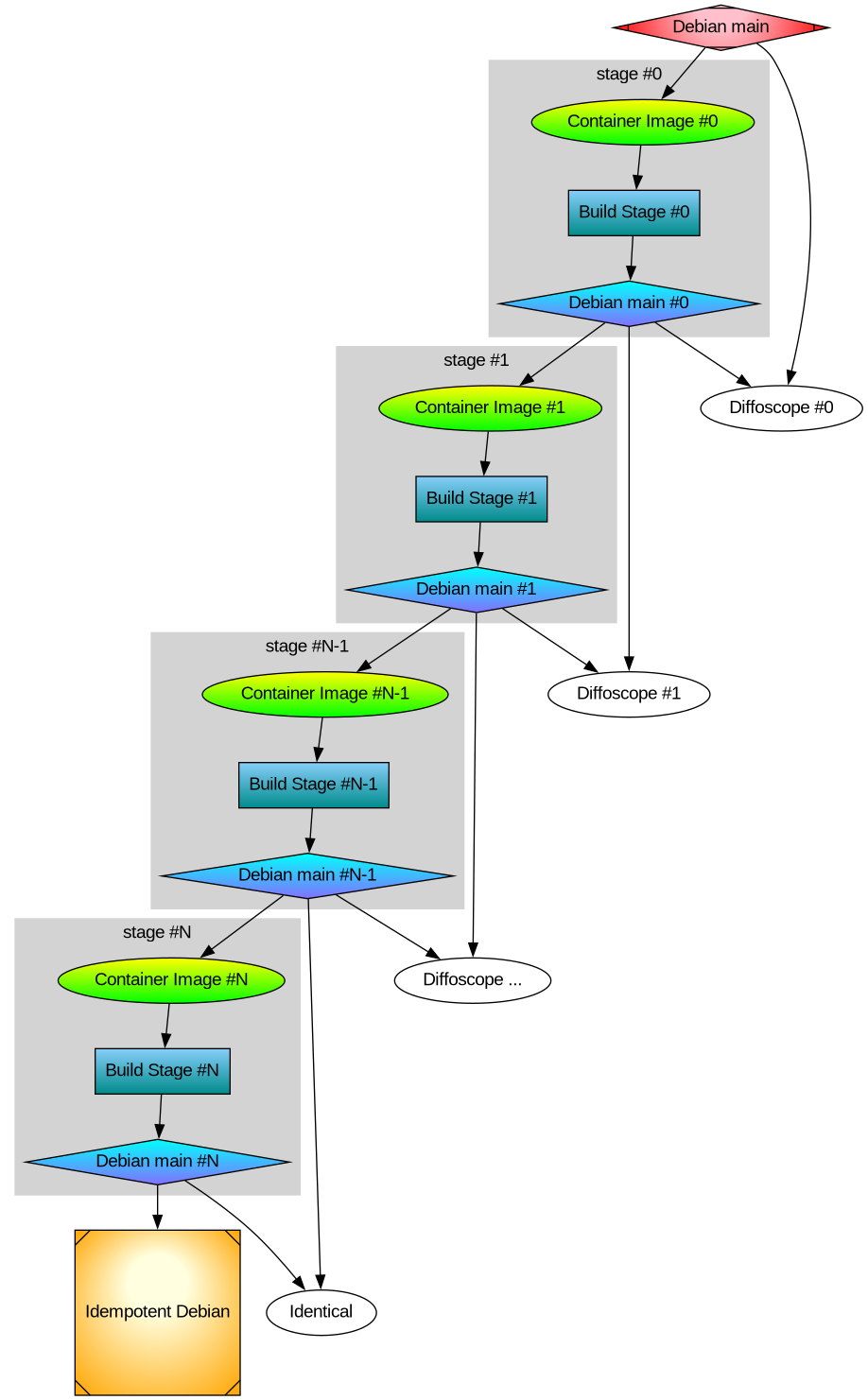
I was hoping to go to debconf but the frequent travel is painful for me right now that I probably won't make it.

31 March 2025

Simon Josefsson: On Binary Distribution Rebuilds

I rebuilt (the top-50 popcon) Debian and Ubuntu packages, on amd64 and arm64, and compared the results a couple of months ago. Since then the Reproduce.Debian.net effort has been launched. Unlike my small experiment, that effort is a full-scale rebuild with more architectures. Their goal is to reproduce what is published in the Debian archive. One differences between these two approaches are the build inputs: The Reproduce Debian effort use the same build inputs which were used to build the published packages. I m using the latest version of published packages for the rebuild. What does that difference imply? I believe reproduce.debian.net will be able to reproduce more of the packages in the archive. If you build a C program using one version of GCC you will get some binary output; and if you use a later GCC version you are likely to end up with a different binary output. This is a good thing: we want GCC to evolve and produce better output over time. However it means in order to reproduce the binaries we publish and use, we need to rebuild them using whatever build dependencies were used to prepare those binaries. The conclusion is that we need to use the old GCC to rebuild the program, and this appears to be the Reproduce.Debian.Net approach. It would be a huge success if the Reproduce.Debian.net effort were to reach 100% reproducibility, and this seems to be within reach. However I argue that we need go further than that. Being able to rebuild the packages reproducible using older binary packages only begs the question: can we rebuild those older packages? I fear attempting to do so ultimately leads to a need to rebuild 20+ year old packages, with a non-negligible amount of them being illegal to distribute or are unable to build anymore due to bit-rot. We won t solve the Trusting Trust concern if our rebuild effort assumes some initial binary blob that we can no longer build from source code. I ve made an illustration of the effort I m thinking of, to reach something that is stronger than reproducible rebuilds. I am calling this concept a Idempotent Rebuild, which is an old concept that I believe is the same as John Gilmore has described many years ago.
The illustration shows how the Debian main archive is used as input to rebuild another stage #0 archive. This stage #0 archive can be compared with diffoscope to the main archive, and all differences are things that would be nice to resolve. The packages in the stage #0 archive is used to prepare a new container image with build tools, and the stage #0 archive is used as input to rebuild another version of itself, called the stage #1 archive. The differences between stage #0 and stage #1 are also useful to analyse and resolve. This process can be repeated many times. I believe it would be a useful property if this process terminated at some point, where the stage #N archive was identical to the stage #N-1 archive. If this would happen, I label the output archive as an Idempotent Rebuild of the distribution. How big is N today? The simplest assumption is that it is infinity. Any build timestamp embedded into binary packages will change on every iteration. This will cause the process to never terminate. Fixing embedded timestamps is something that the Reproduce.Debian.Net effort will also run into, and will have to resolve. What other causes for differences could there be? It is easy to see that generally if some output is not deterministic, such as the sort order of assembler object code in binaries, then the output will be different. Trivial instances of this problem will be caught by the reproduce.debian.net effort as well. Could there be higher order chains that lead to infinite N? It is easy to imagine the existence of these, but I don t know how they would look like in practice. An ideal would be if we could get down to N=1. Is that technically possible? Compare building GCC, it performs an initial stage 0 build using the system compiler to produce a stage 1 intermediate, which is used to build itself again to stage 2. Stage 1 and 2 is compared, and on success (identical binaries), the compilation succeeds. Here N=2. But this is performed using some unknown system compiler that is normally different from the GCC version being built. When rebuilding a binary distribution, you start with the same source versions. So it seems N=1 could be possible. I m unhappy to not be able to report any further technical progress now. The next step in this effort is to publish the stage #0 build artifacts in a repository, so they can be used to build stage #1. I already showed that stage #0 was around ~30% reproducible compared to the official binaries, but I didn t save the artifacts in a reusable repository. Since the official binaries were not built using the latest versions, it is to be expected that the reproducibility number is low. But what happens at stage #1? The percentage should go up: we are now compare the rebuilds with an earlier rebuild, using the same build inputs. I m eager to see this materialize, and hope to eventually make progress on this. However to build stage #1 I believe I need to rebuild a much larger number packages in stage #0, it could be roughly similar to the build-essentials-depends package set. I believe the ultimate end goal of Idempotent Rebuilds is to be able to re-bootstrap a binary distribution like Debian from some other bootstrappable environment like Guix. In parallel to working on a achieving the 100% Idempotent Rebuild of Debian, we can setup a Guix environment that build Debian packages using Guix binaries. These builds ought to eventually converge to the same Debian binary packages, or there is something deeply problematic happening. This approach to re-bootstrap a binary distribution like Debian seems simpler than rebuilding all binaries going back to the beginning of time for that distribution. What do you think? PS. I fear that Debian main may have already went into a state where it is not able to rebuild itself at all anymore: the presence and assumption of non-free firmware and non-Debian signed binaries may have already corrupted the ability for Debian main to rebuild itself. To be able to complete the idempotent and bootstrapped rebuild of Debian, this needs to be worked out.

Next.

Previous.