Melissa Wen: Display/KMS Meeting at XDC 2024: Detailed Report
XDC 2024 in Montreal was another fantastic gathering for the Linux Graphics
community. It was again a great time to immerse in the world of graphics
development, engage in stimulating conversations, and learn from inspiring
developers.
Many Igalia colleagues and I participated in the
conference again, delivering multiple talks about our work on the Linux
Graphics stack and also organizing the Display/KMS meeting. This blog post is a
detailed report on the Display/KMS meeting held during this XDC edition.
Short on Time?
TL;DR
This meeting took 3 hours and tackled a variety of topics related to DRM/KMS
(Linux/DRM Kernel Modesetting):
- Catch the lightning talk summarizing the meeting here (you can even speed up 2x):
- For a quick written summary, scroll down to the TL;DR section.
TL;DR
This meeting took 3 hours and tackled a variety of topics related to DRM/KMS
(Linux/DRM Kernel Modesetting):
- Sharing Drivers Between V4L2 and KMS: Brainstorming solutions for using a
single driver for devices used in both camera capture and display pipelines.
- Real-Time Scheduling: Addressing issues with non-blocking page flips
encountering sigkills under real-time scheduling.
- HDR/Color Management: Agreement on merging the current proposal, with
NVIDIA implementing its special cases on VKMS and adding missing parts on top
of Harry Wentland s (AMD) changes.
- Display Mux: Collaborative design discussions focusing on compositor
control and cross-sync considerations.
- Better Commit Failure Feedback: Exploring ways to equip compositors with
more detailed information for failure analysis.
Bringing together Linux display developers in the XDC 2024
While I didn t present a talk this year, I co-organized a Display/KMS meeting (with
Rodrigo Siqueira of AMD) to build upon the momentum from the 2024 Linux
Display Next hackfest.
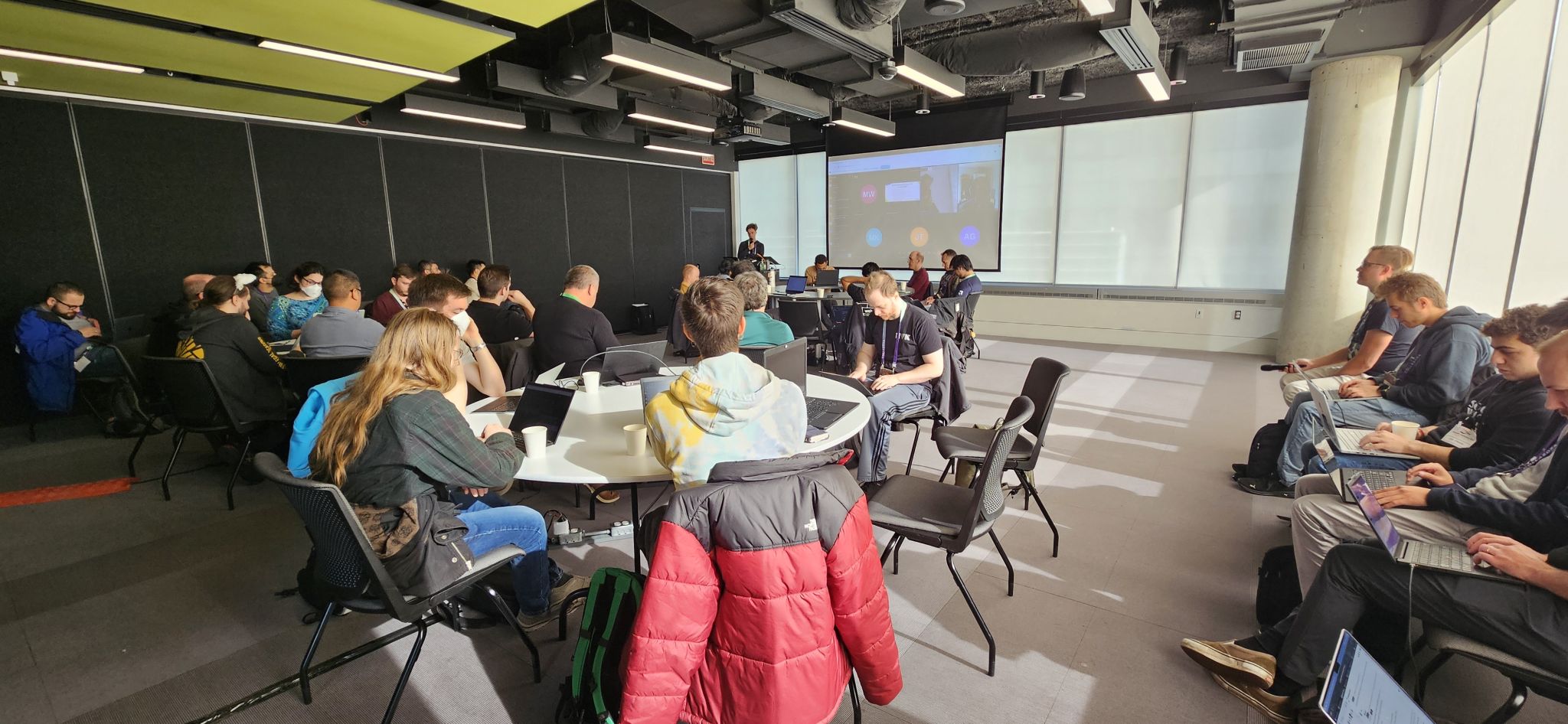
The meeting was attended by around 30 people in person and 4 remote participants.
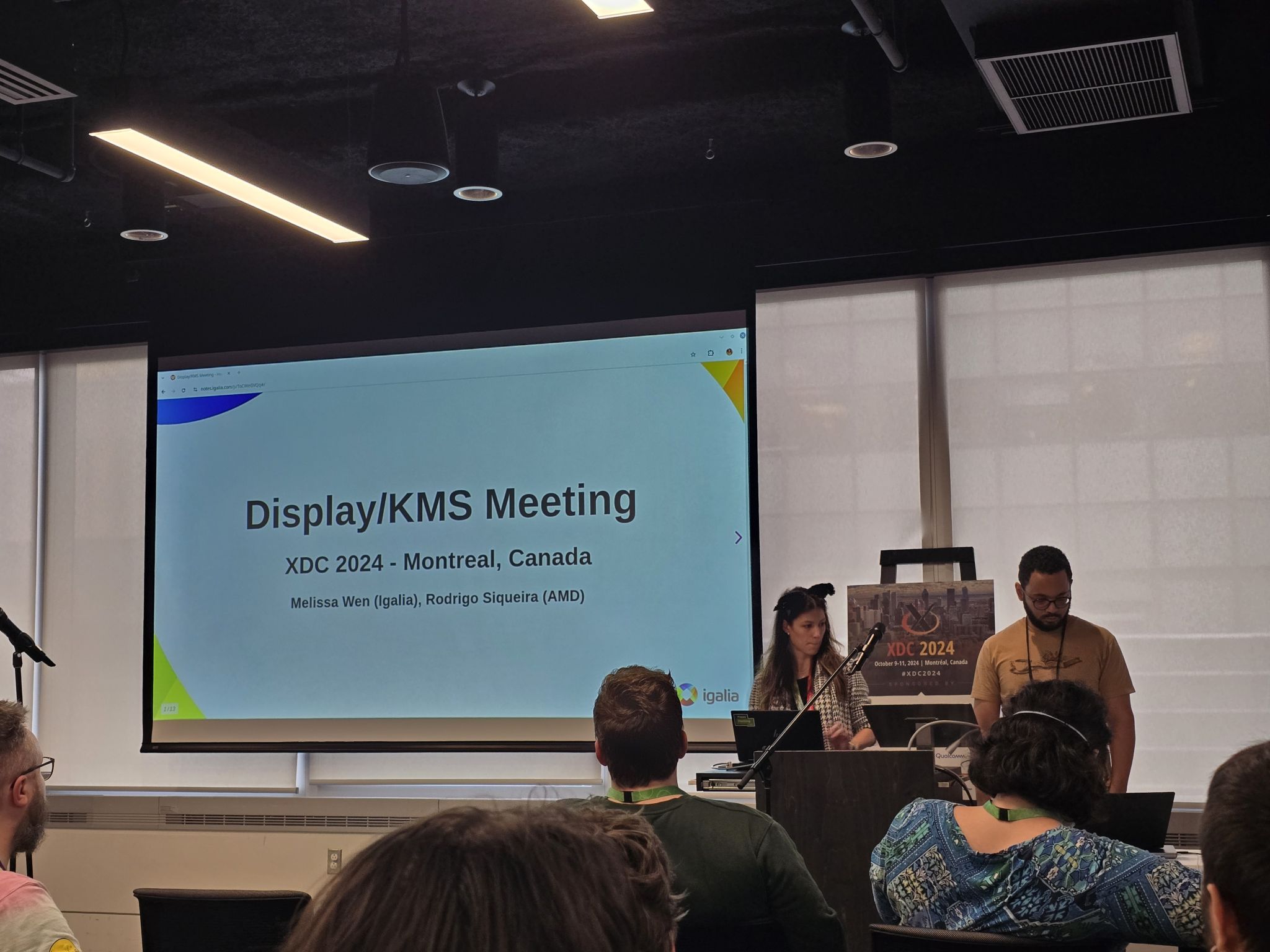
 Speakers: Melissa Wen (Igalia) and Rodrigo Siqueira (AMD)
Link: https://indico.freedesktop.org/event/6/contributions/383/
Topics: Similar to the hackfest, the meeting agenda was built over the
first two days of the conference and mixed talks follow-up with new ideas and
ongoing community efforts.
The final agenda covered five topics in the scheduled order:
- How to share drivers between V4L2 and DRM for bridge-like components (new
topic);
- Real-time Scheduling (problems encountered after the Display Next hackfest);
- HDR/Color Management (ofc);
- Display Mux (from Display hackfest and XDC 2024 talk, bringing AMD and
NVIDIA together);
- (Better) Commit Failure Feedback (continuing the last minute topic of the
Display Next hackfest).
Unpacking the Topics
Similar to the hackfest, the meeting agenda evolved over the conference.
During the 3 hours of meeting, I coordinated the room and discussion rounds,
and Rodrigo Siqueira took notes and also contacted key developers to provide a
detailed report of the many topics discussed.
 From his notes, let s dive into the key discussions!
How to share drivers between V4L2 and KMS for bridge-like components.
Led by Laurent Pinchart, we delved into the challenge of creating a unified
driver for hardware devices (like scalers) that are used in both camera capture
pipelines and display pipelines.
- Problem Statement: How can we design a single kernel driver to handle
devices that serve dual purposes in both V4L2 and DRM subsystems?
- Potential Solutions:
- Multiple Compatible Strings: We could assign different compatible
strings to the device tree node based on its usage in either the camera or
display pipeline. However, this approach might raise concerns from device tree
maintainers as it could be seen as a layer violation.
- Separate Abstractions: A single driver could expose the device to both
DRM and V4L2 through separate abstractions: drm-bridge for DRM and V4L2 subdev
for video. While simple, this approach requires maintaining two different
abstractions for the same underlying device.
- Unified Kernel Abstraction: We could create a new, unified kernel
abstraction that combines the best aspects of drm-bridge and V4L2 subdev. This
approach offers a more elegant solution but requires significant design effort
and potential migration challenges for existing hardware.
Real-Time Scheduling Challenges
We have discussed real-time scheduling during this year Linux Display Next
hackfest and,
during the XDC 2024, Jonas Adahl brought up issues uncovered while
progressing on this front.
- Context: Non-blocking page-flips can, on rare occasions, take a long time
and, for that reason, get a sigkill if the thread doing the atomic commit is
a real-time schedule.
- Action items:
- Explore alternative backtraces during the busy wait (e.g., ftrace).
- Investigate the maximum thread time in busy wait to reproduce issues faced
by compositors. Tools like RTKit (mutter) can be used for better control
(Michel D nzer can help with this setup).
HDR/Color Management
This is a well-known topic with ongoing effort on all layers of the Linux
Display stack and has been discussed online and in-person in conferences and
meetings over the last years.
Here s a breakdown of the key points raised at this meeting:
- Talk: Color operations for Linux color pipeline on AMD
devices: In the previous day,
Alex Hung (AMD) presented the implementation of this API on AMD display driver.
- NVIDIA Integration: While they agree with the overall proposal, NVIDIA
needs to add some missing parts. Importantly, they will implement these on
top of Harry Wentland s (AMD) proposal. Their specific requirements will be
implemented on VKMS (Virtual Kernel Mode Setting driver) for further
discussion. This VKMS implementation can benefit compositor developers by
providing insights into NVIDIA s specific needs.
- Other vendors: There is a version of the KMS API applied on Intel color
pipeline. Apart from that, other vendors appear to be comfortable with the
current proposal but lacks the bandwidth to implement it right now.
- Upstream Patches: The relevant upstream patches were can be found
here.
[As humorously notes, this series is eagerly awaiting your Acked-by
(approval)]
- Compositor Side: The compositor developers have also made significant
progress.
- KDE has already implemented and validated the API through an experimental
implementation in
Kwin.
- Gamescope currently uses a driver-specific implementation but has
a draft that utilizes
the generic version. However, some work is still required to fully transition
away from the driver-specific approach.
AP: work on porting gamescope to KMS generic API
- Weston has also begun exploring implementation, and we might see something
from them by the end of the year.
- Kernel and Testing: The kernel API proposal is well-refined and meets the
DRM subsystem requirements. Thanks to Harry Wentland effort, we already
have the API attached to two hardware vendors
and IGT tests, and,
thanks to Xaver Hugl, a compositor implementation in place.
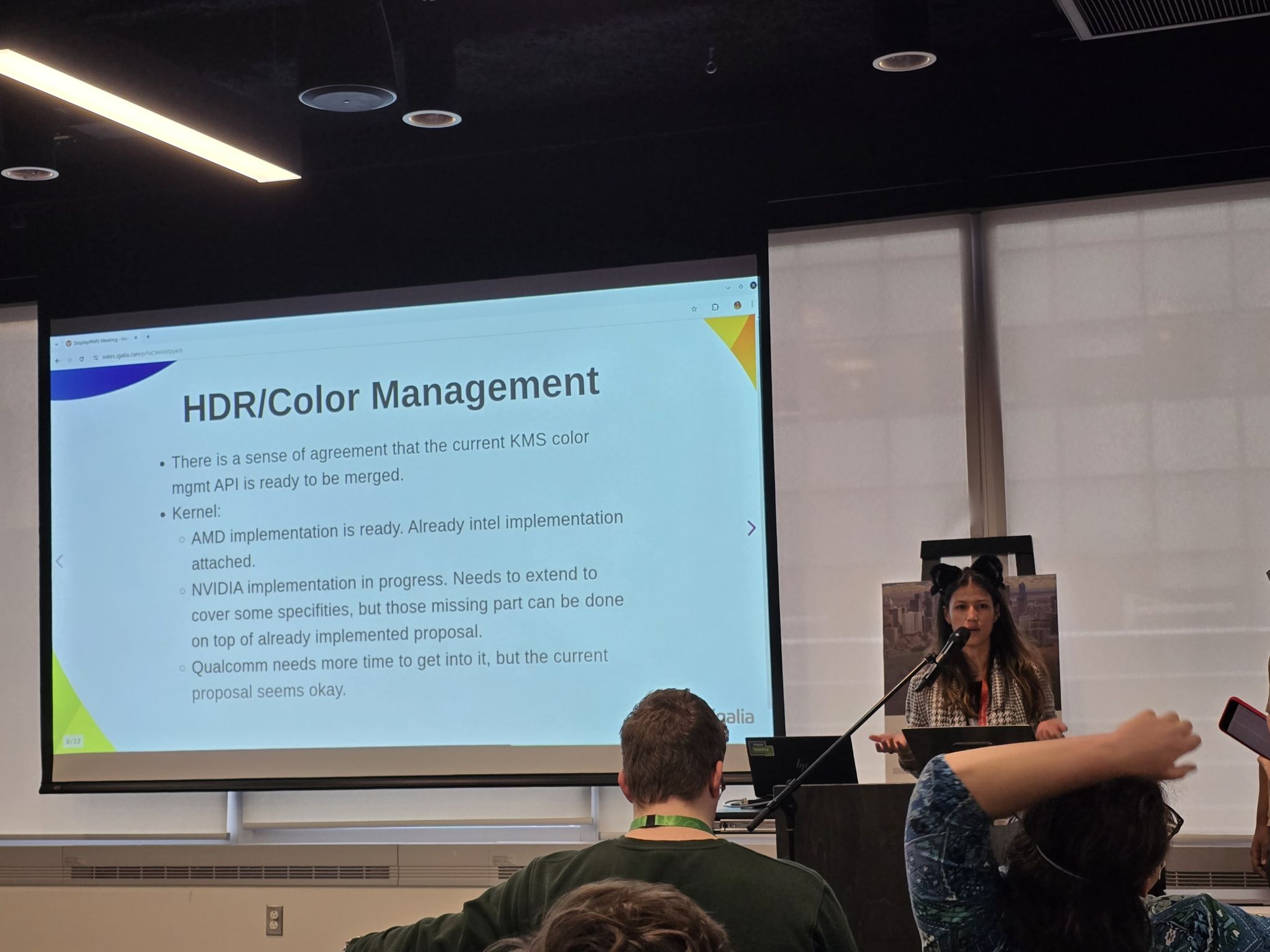
Finally, there was a strong sense of agreement that the current proposal for
HDR/Color Management is ready to be merged. In simpler terms, everything seems
to be working well on the technical side - all signs point to merging and
shipping the DRM/KMS plane color management API!
Display Mux
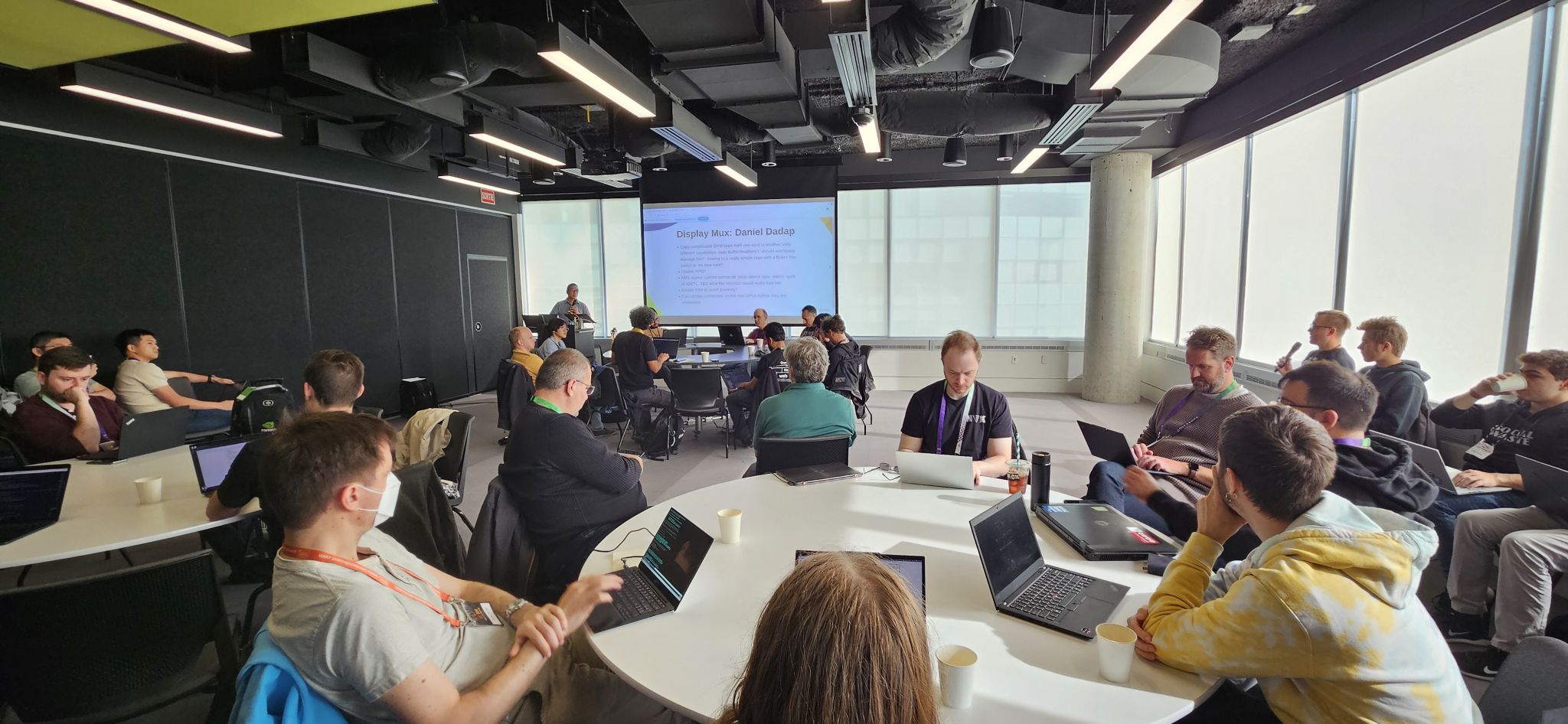
During the meeting, Daniel Dadap led a brainstorming session on the
design of the display mux switching sequence, in which the compositor would arm
the switch via sysfs, then send a modeset to the outgoing driver, followed by a
modeset to the incoming driver.
- Context:
- During this year Linux Display Next hackfest, Mario Limonciello (AMD)
introduced the topic and led a discussion on Display Mux.
- Daniel Dadap (NVIDIA) retook this discussion with the
XDC 2024 talk: Dynamic Switching of Display Muxes on Hybrid GPU Systems.
- Key Considerations:
- HPD Handling: There was a general consensus that disabling HPD can be
part of the sequence for internal panels and we don t need to focus on it
here.
- Cross-Sync: Ensuring synchronization between the compositor and the
drivers is crucial. The compositor should act as the drm-master to
coordinate the entire sequence, but how can this be ensured?
- Future-Proofing: The design should not assume the presence of a mux. In
future scenarios, direct sharing over DP might be possible.
- Action points:
- Sharing DP AUX: Explore the idea of sharing DP AUX and its implications.
- Backlight: The backlight definition represents a problem in the mux
switch context, so we should explore some of the current specs available
for that.
Towards Better Commit Failure Feedback
In the last part of the meeting, Xaver Hugl asked for better commit failure
feedback.
- Problem description: Compositors currently face challenges in collecting
detailed information from the kernel about commit failures. This lack of
granular data hinders their ability to understand and address the root causes
of these failures.
To address this issue, we discussed several potential improvements:
- Direct Kernel Log Access: One idea is to directly load relevant kernel logs
into the compositor. This would provide more detailed information about the
failure and potentially aid in debugging.
- Finer-Grained Failure Reporting: We also explored the possibility of
separating atomic failures into more specific categories. Not all failures
are critical, and understanding the nature of the failure can help compositors
take appropriate action.
- Enhanced Logging: Currently, the dmesg log doesn t provide enough
information for user-space validation. Raising the log level to capture more
detailed information during failures could be a viable solution.
By implementing these improvements, we aim to equip compositors with the
necessary tools to better understand and resolve commit failures, leading to a
more robust and stable display system.
A Big Thank You!
Huge thanks to Rodrigo Siqueira for these detailed meeting notes. Also, Laurent
Pinchart, Jonas Adahl, Daniel Dadap, Xaver Hugl, and Harry Wentland for
bringing up interesting topics and leading discussions. Finally, thanks to all
the participants who enriched the discussions with their experience, ideas, and
inputs, especially Alex Goins, Antonino Maniscalco, Austin Shafer, Daniel
Stone, Demi Obenour, Jessica Zhang, Joan Torres, Leo Li, Liviu Dudau, Mario
Limonciello, Michel D nzer, Rob Clark, Simon Ser and Teddy Li.
This collaborative effort will undoubtedly contribute to the continued
development of the Linux display stack.
Stay tuned for future updates!
Speakers: Melissa Wen (Igalia) and Rodrigo Siqueira (AMD)
Link: https://indico.freedesktop.org/event/6/contributions/383/
Topics: Similar to the hackfest, the meeting agenda was built over the
first two days of the conference and mixed talks follow-up with new ideas and
ongoing community efforts.
The final agenda covered five topics in the scheduled order:
- How to share drivers between V4L2 and DRM for bridge-like components (new topic);
- Real-time Scheduling (problems encountered after the Display Next hackfest);
- HDR/Color Management (ofc);
- Display Mux (from Display hackfest and XDC 2024 talk, bringing AMD and NVIDIA together);
- (Better) Commit Failure Feedback (continuing the last minute topic of the Display Next hackfest).
Unpacking the Topics
Similar to the hackfest, the meeting agenda evolved over the conference.
During the 3 hours of meeting, I coordinated the room and discussion rounds,
and Rodrigo Siqueira took notes and also contacted key developers to provide a
detailed report of the many topics discussed.
From his notes, let s dive into the key discussions!
How to share drivers between V4L2 and KMS for bridge-like components.
Led by Laurent Pinchart, we delved into the challenge of creating a unified
driver for hardware devices (like scalers) that are used in both camera capture
pipelines and display pipelines.
- Problem Statement: How can we design a single kernel driver to handle
devices that serve dual purposes in both V4L2 and DRM subsystems?
- Potential Solutions:
- Multiple Compatible Strings: We could assign different compatible
strings to the device tree node based on its usage in either the camera or
display pipeline. However, this approach might raise concerns from device tree
maintainers as it could be seen as a layer violation.
- Separate Abstractions: A single driver could expose the device to both
DRM and V4L2 through separate abstractions: drm-bridge for DRM and V4L2 subdev
for video. While simple, this approach requires maintaining two different
abstractions for the same underlying device.
- Unified Kernel Abstraction: We could create a new, unified kernel
abstraction that combines the best aspects of drm-bridge and V4L2 subdev. This
approach offers a more elegant solution but requires significant design effort
and potential migration challenges for existing hardware.
Real-Time Scheduling Challenges
We have discussed real-time scheduling during this year Linux Display Next
hackfest and,
during the XDC 2024, Jonas Adahl brought up issues uncovered while
progressing on this front.
- Context: Non-blocking page-flips can, on rare occasions, take a long time
and, for that reason, get a sigkill if the thread doing the atomic commit is
a real-time schedule.
- Action items:
- Explore alternative backtraces during the busy wait (e.g., ftrace).
- Investigate the maximum thread time in busy wait to reproduce issues faced
by compositors. Tools like RTKit (mutter) can be used for better control
(Michel D nzer can help with this setup).
HDR/Color Management
This is a well-known topic with ongoing effort on all layers of the Linux
Display stack and has been discussed online and in-person in conferences and
meetings over the last years.
Here s a breakdown of the key points raised at this meeting:
- Talk: Color operations for Linux color pipeline on AMD
devices: In the previous day,
Alex Hung (AMD) presented the implementation of this API on AMD display driver.
- NVIDIA Integration: While they agree with the overall proposal, NVIDIA
needs to add some missing parts. Importantly, they will implement these on
top of Harry Wentland s (AMD) proposal. Their specific requirements will be
implemented on VKMS (Virtual Kernel Mode Setting driver) for further
discussion. This VKMS implementation can benefit compositor developers by
providing insights into NVIDIA s specific needs.
- Other vendors: There is a version of the KMS API applied on Intel color
pipeline. Apart from that, other vendors appear to be comfortable with the
current proposal but lacks the bandwidth to implement it right now.
- Upstream Patches: The relevant upstream patches were can be found
here.
[As humorously notes, this series is eagerly awaiting your Acked-by
(approval)]
- Compositor Side: The compositor developers have also made significant
progress.
- KDE has already implemented and validated the API through an experimental
implementation in
Kwin.
- Gamescope currently uses a driver-specific implementation but has
a draft that utilizes
the generic version. However, some work is still required to fully transition
away from the driver-specific approach.
AP: work on porting gamescope to KMS generic API
- Weston has also begun exploring implementation, and we might see something
from them by the end of the year.
- Kernel and Testing: The kernel API proposal is well-refined and meets the
DRM subsystem requirements. Thanks to Harry Wentland effort, we already
have the API attached to two hardware vendors
and IGT tests, and,
thanks to Xaver Hugl, a compositor implementation in place.
Finally, there was a strong sense of agreement that the current proposal for
HDR/Color Management is ready to be merged. In simpler terms, everything seems
to be working well on the technical side - all signs point to merging and
shipping the DRM/KMS plane color management API!
Display Mux
During the meeting, Daniel Dadap led a brainstorming session on the
design of the display mux switching sequence, in which the compositor would arm
the switch via sysfs, then send a modeset to the outgoing driver, followed by a
modeset to the incoming driver.
- Context:
- During this year Linux Display Next hackfest, Mario Limonciello (AMD)
introduced the topic and led a discussion on Display Mux.
- Daniel Dadap (NVIDIA) retook this discussion with the
XDC 2024 talk: Dynamic Switching of Display Muxes on Hybrid GPU Systems.
- Key Considerations:
- HPD Handling: There was a general consensus that disabling HPD can be
part of the sequence for internal panels and we don t need to focus on it
here.
- Cross-Sync: Ensuring synchronization between the compositor and the
drivers is crucial. The compositor should act as the drm-master to
coordinate the entire sequence, but how can this be ensured?
- Future-Proofing: The design should not assume the presence of a mux. In
future scenarios, direct sharing over DP might be possible.
- Action points:
- Sharing DP AUX: Explore the idea of sharing DP AUX and its implications.
- Backlight: The backlight definition represents a problem in the mux
switch context, so we should explore some of the current specs available
for that.
Towards Better Commit Failure Feedback
In the last part of the meeting, Xaver Hugl asked for better commit failure
feedback.
- Problem description: Compositors currently face challenges in collecting
detailed information from the kernel about commit failures. This lack of
granular data hinders their ability to understand and address the root causes
of these failures.
To address this issue, we discussed several potential improvements:
- Direct Kernel Log Access: One idea is to directly load relevant kernel logs
into the compositor. This would provide more detailed information about the
failure and potentially aid in debugging.
- Finer-Grained Failure Reporting: We also explored the possibility of
separating atomic failures into more specific categories. Not all failures
are critical, and understanding the nature of the failure can help compositors
take appropriate action.
- Enhanced Logging: Currently, the dmesg log doesn t provide enough
information for user-space validation. Raising the log level to capture more
detailed information during failures could be a viable solution.
By implementing these improvements, we aim to equip compositors with the
necessary tools to better understand and resolve commit failures, leading to a
more robust and stable display system.
A Big Thank You!
Huge thanks to Rodrigo Siqueira for these detailed meeting notes. Also, Laurent
Pinchart, Jonas Adahl, Daniel Dadap, Xaver Hugl, and Harry Wentland for
bringing up interesting topics and leading discussions. Finally, thanks to all
the participants who enriched the discussions with their experience, ideas, and
inputs, especially Alex Goins, Antonino Maniscalco, Austin Shafer, Daniel
Stone, Demi Obenour, Jessica Zhang, Joan Torres, Leo Li, Liviu Dudau, Mario
Limonciello, Michel D nzer, Rob Clark, Simon Ser and Teddy Li.
This collaborative effort will undoubtedly contribute to the continued
development of the Linux display stack.
Stay tuned for future updates!
- Problem Statement: How can we design a single kernel driver to handle devices that serve dual purposes in both V4L2 and DRM subsystems?
- Potential Solutions:
- Multiple Compatible Strings: We could assign different compatible strings to the device tree node based on its usage in either the camera or display pipeline. However, this approach might raise concerns from device tree maintainers as it could be seen as a layer violation.
- Separate Abstractions: A single driver could expose the device to both DRM and V4L2 through separate abstractions: drm-bridge for DRM and V4L2 subdev for video. While simple, this approach requires maintaining two different abstractions for the same underlying device.
- Unified Kernel Abstraction: We could create a new, unified kernel abstraction that combines the best aspects of drm-bridge and V4L2 subdev. This approach offers a more elegant solution but requires significant design effort and potential migration challenges for existing hardware.
Real-Time Scheduling Challenges
We have discussed real-time scheduling during this year Linux Display Next
hackfest and,
during the XDC 2024, Jonas Adahl brought up issues uncovered while
progressing on this front.
- Context: Non-blocking page-flips can, on rare occasions, take a long time
and, for that reason, get a sigkill if the thread doing the atomic commit is
a real-time schedule.
- Action items:
- Explore alternative backtraces during the busy wait (e.g., ftrace).
- Investigate the maximum thread time in busy wait to reproduce issues faced
by compositors. Tools like RTKit (mutter) can be used for better control
(Michel D nzer can help with this setup).
HDR/Color Management
This is a well-known topic with ongoing effort on all layers of the Linux
Display stack and has been discussed online and in-person in conferences and
meetings over the last years.
Here s a breakdown of the key points raised at this meeting:
- Talk: Color operations for Linux color pipeline on AMD
devices: In the previous day,
Alex Hung (AMD) presented the implementation of this API on AMD display driver.
- NVIDIA Integration: While they agree with the overall proposal, NVIDIA
needs to add some missing parts. Importantly, they will implement these on
top of Harry Wentland s (AMD) proposal. Their specific requirements will be
implemented on VKMS (Virtual Kernel Mode Setting driver) for further
discussion. This VKMS implementation can benefit compositor developers by
providing insights into NVIDIA s specific needs.
- Other vendors: There is a version of the KMS API applied on Intel color
pipeline. Apart from that, other vendors appear to be comfortable with the
current proposal but lacks the bandwidth to implement it right now.
- Upstream Patches: The relevant upstream patches were can be found
here.
[As humorously notes, this series is eagerly awaiting your Acked-by
(approval)]
- Compositor Side: The compositor developers have also made significant
progress.
- KDE has already implemented and validated the API through an experimental
implementation in
Kwin.
- Gamescope currently uses a driver-specific implementation but has
a draft that utilizes
the generic version. However, some work is still required to fully transition
away from the driver-specific approach.
AP: work on porting gamescope to KMS generic API
- Weston has also begun exploring implementation, and we might see something
from them by the end of the year.
- Kernel and Testing: The kernel API proposal is well-refined and meets the
DRM subsystem requirements. Thanks to Harry Wentland effort, we already
have the API attached to two hardware vendors
and IGT tests, and,
thanks to Xaver Hugl, a compositor implementation in place.
Finally, there was a strong sense of agreement that the current proposal for
HDR/Color Management is ready to be merged. In simpler terms, everything seems
to be working well on the technical side - all signs point to merging and
shipping the DRM/KMS plane color management API!
Display Mux
During the meeting, Daniel Dadap led a brainstorming session on the
design of the display mux switching sequence, in which the compositor would arm
the switch via sysfs, then send a modeset to the outgoing driver, followed by a
modeset to the incoming driver.
- Context:
- During this year Linux Display Next hackfest, Mario Limonciello (AMD)
introduced the topic and led a discussion on Display Mux.
- Daniel Dadap (NVIDIA) retook this discussion with the
XDC 2024 talk: Dynamic Switching of Display Muxes on Hybrid GPU Systems.
- Key Considerations:
- HPD Handling: There was a general consensus that disabling HPD can be
part of the sequence for internal panels and we don t need to focus on it
here.
- Cross-Sync: Ensuring synchronization between the compositor and the
drivers is crucial. The compositor should act as the drm-master to
coordinate the entire sequence, but how can this be ensured?
- Future-Proofing: The design should not assume the presence of a mux. In
future scenarios, direct sharing over DP might be possible.
- Action points:
- Sharing DP AUX: Explore the idea of sharing DP AUX and its implications.
- Backlight: The backlight definition represents a problem in the mux
switch context, so we should explore some of the current specs available
for that.
Towards Better Commit Failure Feedback
In the last part of the meeting, Xaver Hugl asked for better commit failure
feedback.
- Problem description: Compositors currently face challenges in collecting
detailed information from the kernel about commit failures. This lack of
granular data hinders their ability to understand and address the root causes
of these failures.
To address this issue, we discussed several potential improvements:
- Direct Kernel Log Access: One idea is to directly load relevant kernel logs
into the compositor. This would provide more detailed information about the
failure and potentially aid in debugging.
- Finer-Grained Failure Reporting: We also explored the possibility of
separating atomic failures into more specific categories. Not all failures
are critical, and understanding the nature of the failure can help compositors
take appropriate action.
- Enhanced Logging: Currently, the dmesg log doesn t provide enough
information for user-space validation. Raising the log level to capture more
detailed information during failures could be a viable solution.
By implementing these improvements, we aim to equip compositors with the
necessary tools to better understand and resolve commit failures, leading to a
more robust and stable display system.
A Big Thank You!
Huge thanks to Rodrigo Siqueira for these detailed meeting notes. Also, Laurent
Pinchart, Jonas Adahl, Daniel Dadap, Xaver Hugl, and Harry Wentland for
bringing up interesting topics and leading discussions. Finally, thanks to all
the participants who enriched the discussions with their experience, ideas, and
inputs, especially Alex Goins, Antonino Maniscalco, Austin Shafer, Daniel
Stone, Demi Obenour, Jessica Zhang, Joan Torres, Leo Li, Liviu Dudau, Mario
Limonciello, Michel D nzer, Rob Clark, Simon Ser and Teddy Li.
This collaborative effort will undoubtedly contribute to the continued
development of the Linux display stack.
Stay tuned for future updates!
- Explore alternative backtraces during the busy wait (e.g., ftrace).
- Investigate the maximum thread time in busy wait to reproduce issues faced by compositors. Tools like RTKit (mutter) can be used for better control (Michel D nzer can help with this setup).
- Talk: Color operations for Linux color pipeline on AMD devices: In the previous day, Alex Hung (AMD) presented the implementation of this API on AMD display driver.
- NVIDIA Integration: While they agree with the overall proposal, NVIDIA needs to add some missing parts. Importantly, they will implement these on top of Harry Wentland s (AMD) proposal. Their specific requirements will be implemented on VKMS (Virtual Kernel Mode Setting driver) for further discussion. This VKMS implementation can benefit compositor developers by providing insights into NVIDIA s specific needs.
- Other vendors: There is a version of the KMS API applied on Intel color pipeline. Apart from that, other vendors appear to be comfortable with the current proposal but lacks the bandwidth to implement it right now.
- Upstream Patches: The relevant upstream patches were can be found here. [As humorously notes, this series is eagerly awaiting your Acked-by (approval)]
- Compositor Side: The compositor developers have also made significant
progress.
- KDE has already implemented and validated the API through an experimental implementation in Kwin.
- Gamescope currently uses a driver-specific implementation but has a draft that utilizes the generic version. However, some work is still required to fully transition away from the driver-specific approach. AP: work on porting gamescope to KMS generic API
- Weston has also begun exploring implementation, and we might see something from them by the end of the year.
- Kernel and Testing: The kernel API proposal is well-refined and meets the DRM subsystem requirements. Thanks to Harry Wentland effort, we already have the API attached to two hardware vendors and IGT tests, and, thanks to Xaver Hugl, a compositor implementation in place.
Display Mux
During the meeting, Daniel Dadap led a brainstorming session on the
design of the display mux switching sequence, in which the compositor would arm
the switch via sysfs, then send a modeset to the outgoing driver, followed by a
modeset to the incoming driver.
- Context:
- During this year Linux Display Next hackfest, Mario Limonciello (AMD)
introduced the topic and led a discussion on Display Mux.
- Daniel Dadap (NVIDIA) retook this discussion with the
XDC 2024 talk: Dynamic Switching of Display Muxes on Hybrid GPU Systems.
- Key Considerations:
- HPD Handling: There was a general consensus that disabling HPD can be
part of the sequence for internal panels and we don t need to focus on it
here.
- Cross-Sync: Ensuring synchronization between the compositor and the
drivers is crucial. The compositor should act as the drm-master to
coordinate the entire sequence, but how can this be ensured?
- Future-Proofing: The design should not assume the presence of a mux. In
future scenarios, direct sharing over DP might be possible.
- Action points:
- Sharing DP AUX: Explore the idea of sharing DP AUX and its implications.
- Backlight: The backlight definition represents a problem in the mux
switch context, so we should explore some of the current specs available
for that.
Towards Better Commit Failure Feedback
In the last part of the meeting, Xaver Hugl asked for better commit failure
feedback.
- Problem description: Compositors currently face challenges in collecting
detailed information from the kernel about commit failures. This lack of
granular data hinders their ability to understand and address the root causes
of these failures.
To address this issue, we discussed several potential improvements:
- Direct Kernel Log Access: One idea is to directly load relevant kernel logs
into the compositor. This would provide more detailed information about the
failure and potentially aid in debugging.
- Finer-Grained Failure Reporting: We also explored the possibility of
separating atomic failures into more specific categories. Not all failures
are critical, and understanding the nature of the failure can help compositors
take appropriate action.
- Enhanced Logging: Currently, the dmesg log doesn t provide enough
information for user-space validation. Raising the log level to capture more
detailed information during failures could be a viable solution.
By implementing these improvements, we aim to equip compositors with the
necessary tools to better understand and resolve commit failures, leading to a
more robust and stable display system.
A Big Thank You!
Huge thanks to Rodrigo Siqueira for these detailed meeting notes. Also, Laurent
Pinchart, Jonas Adahl, Daniel Dadap, Xaver Hugl, and Harry Wentland for
bringing up interesting topics and leading discussions. Finally, thanks to all
the participants who enriched the discussions with their experience, ideas, and
inputs, especially Alex Goins, Antonino Maniscalco, Austin Shafer, Daniel
Stone, Demi Obenour, Jessica Zhang, Joan Torres, Leo Li, Liviu Dudau, Mario
Limonciello, Michel D nzer, Rob Clark, Simon Ser and Teddy Li.
This collaborative effort will undoubtedly contribute to the continued
development of the Linux display stack.
Stay tuned for future updates!
- During this year Linux Display Next hackfest, Mario Limonciello (AMD) introduced the topic and led a discussion on Display Mux.
- Daniel Dadap (NVIDIA) retook this discussion with the XDC 2024 talk: Dynamic Switching of Display Muxes on Hybrid GPU Systems.
- HPD Handling: There was a general consensus that disabling HPD can be part of the sequence for internal panels and we don t need to focus on it here.
- Cross-Sync: Ensuring synchronization between the compositor and the drivers is crucial. The compositor should act as the drm-master to coordinate the entire sequence, but how can this be ensured?
- Future-Proofing: The design should not assume the presence of a mux. In future scenarios, direct sharing over DP might be possible.
- Sharing DP AUX: Explore the idea of sharing DP AUX and its implications.
- Backlight: The backlight definition represents a problem in the mux switch context, so we should explore some of the current specs available for that.
- Problem description: Compositors currently face challenges in collecting detailed information from the kernel about commit failures. This lack of granular data hinders their ability to understand and address the root causes of these failures.
- Direct Kernel Log Access: One idea is to directly load relevant kernel logs into the compositor. This would provide more detailed information about the failure and potentially aid in debugging.
- Finer-Grained Failure Reporting: We also explored the possibility of separating atomic failures into more specific categories. Not all failures are critical, and understanding the nature of the failure can help compositors take appropriate action.
- Enhanced Logging: Currently, the dmesg log doesn t provide enough information for user-space validation. Raising the log level to capture more detailed information during failures could be a viable solution.


 In basically every engineering organization I ve ever regarded as particularly
high functioning, I ve sat through one specific recurring conversation which is
not a conversation about complexity . Things are good or bad because they
are or aren t complex, architectures needs to be redone because it s too
complex some refactor of whatever it is won t work because it s too complex.
You may have even been a part of some of these conversations or even been
the one advocating for simple light-weight solutions. I ve done it. Many times.
Rarely, if ever, do we talk about complexity within its rightful context
complexity for whom. Is a solution complex because it s complex for the
end user? Is it complex if it s complex for an API consumer? Is it complex if
it s complex for the person maintaining the API service? Is it complex if it s
complex for someone outside the team maintaining it to understand?
Complexity within a problem domain I ve come to believe, is fairly zero-sum
there s a fixed amount of complexity in the problem to be solved, and you can
choose to either solve it, or leave it for those downstream of you
to solve that problem on their own.
That being said, while I believe there is a lower bound in complexity to
contend with for a problem, I do not believe there is an upper bound to the
complexity of solutions possible. It is always possible, and in fact, very
likely that teams create problems for themselves while trying to solve a
problem. The rest of this post is talking to the lower bound. When getting
feedback on an early draft of this blog post, I ve been informed that Fred
Brooks coined a term for what I call lower bound complexity Essential
Complexity , in the paper





 The topic of this posting already tells you that an old Unix guy tells
stories about old techniques.
I'm a happy NIS (formerly YP) user since 30+ years. I started using it
with SunOS 4.0, later using it with Solaris and with Linux since 1999.
In the past, a colleague wasn't happyly using NIS+ when he couldn't
log in as root after a short time because of some well known bugs and wrong
configs. NIS+ was also much slower than my NIS setup. I know
organisations using NIS for more than 80.000 user accounts in 2024.
I know the security implications of NIS but I can live with them,
because I manage all computers in the network that have access to the
NIS maps. And NIS on Linux offers to use shadow maps, which are only
accessible to the root account. My users are forced to use very
long passwords.
Unfortunately NIS support for the PAM modules was removed in Debian
in pam 1.4.0-13, which means Debian 12 (bookworm) is
lacking NIS support in PAM, but otherwise it is still supported.
This only affects changing the NIS password via passwd. You can still
authenticate users and use other NIS maps.
But

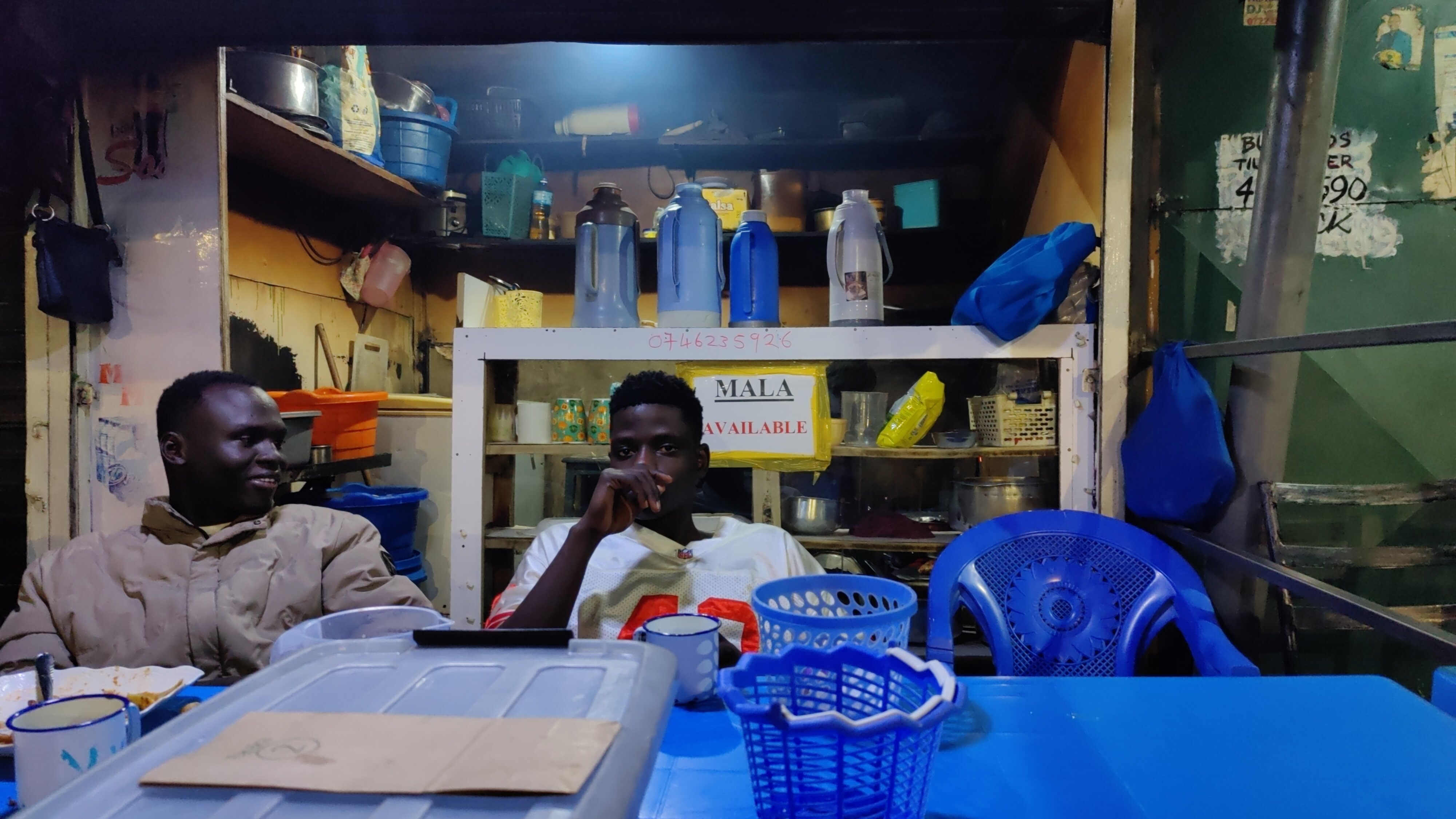 The coffee shop Ibtehal and me used to visit during the midnight
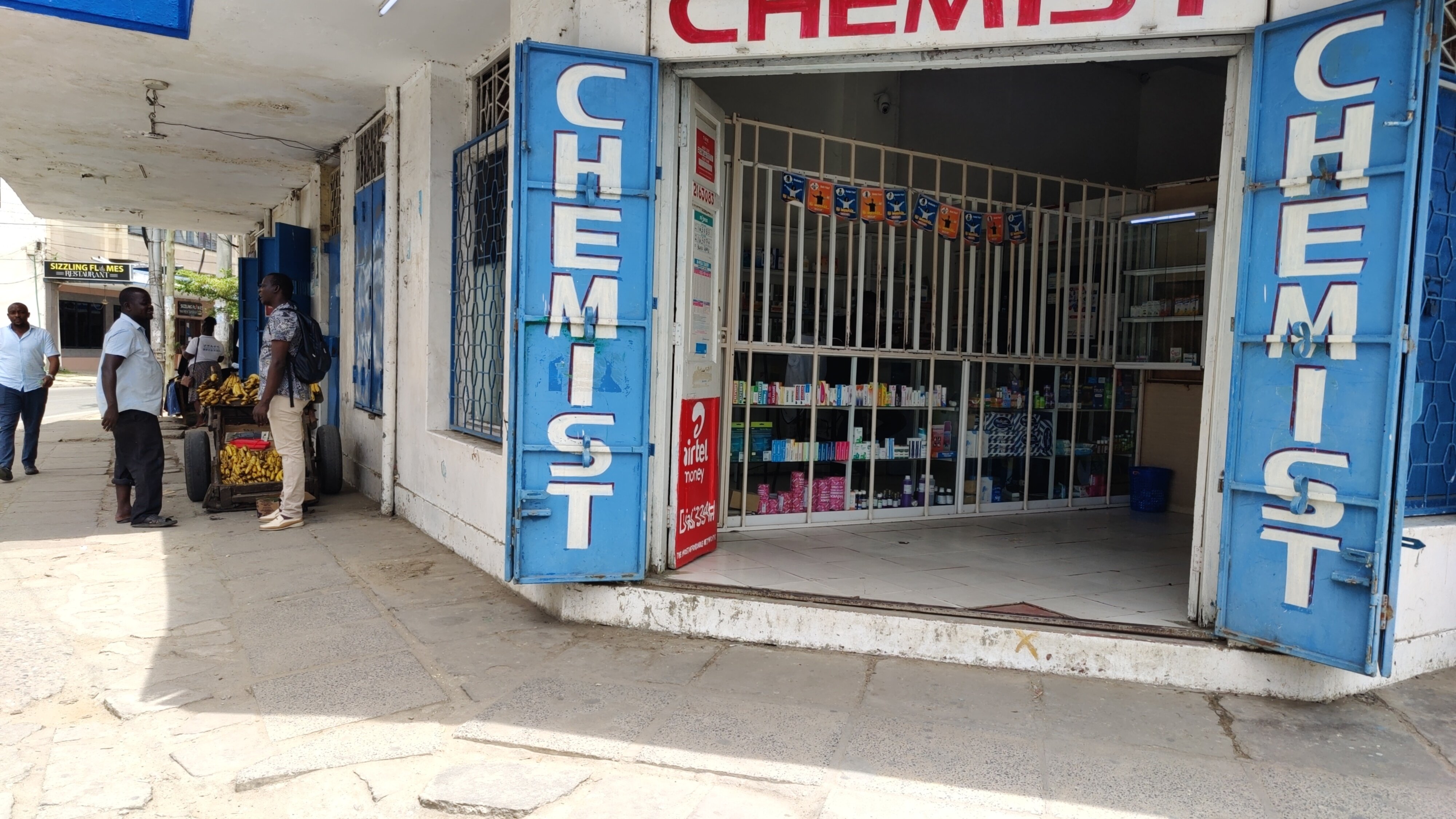 Grating at a chemist shop in Mombasa, Kenya
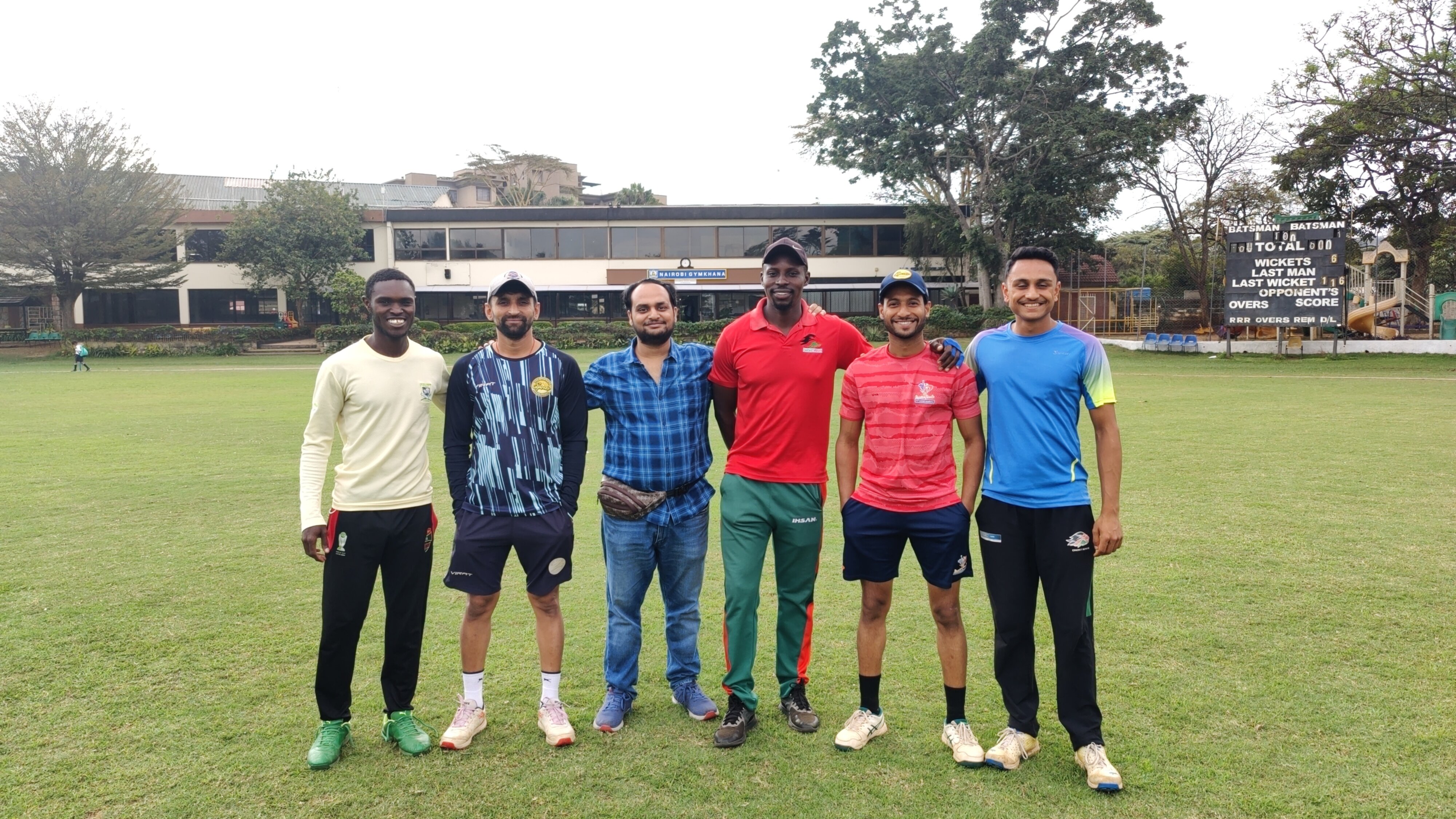 Me with players at the Nairobi Gymkhana Club
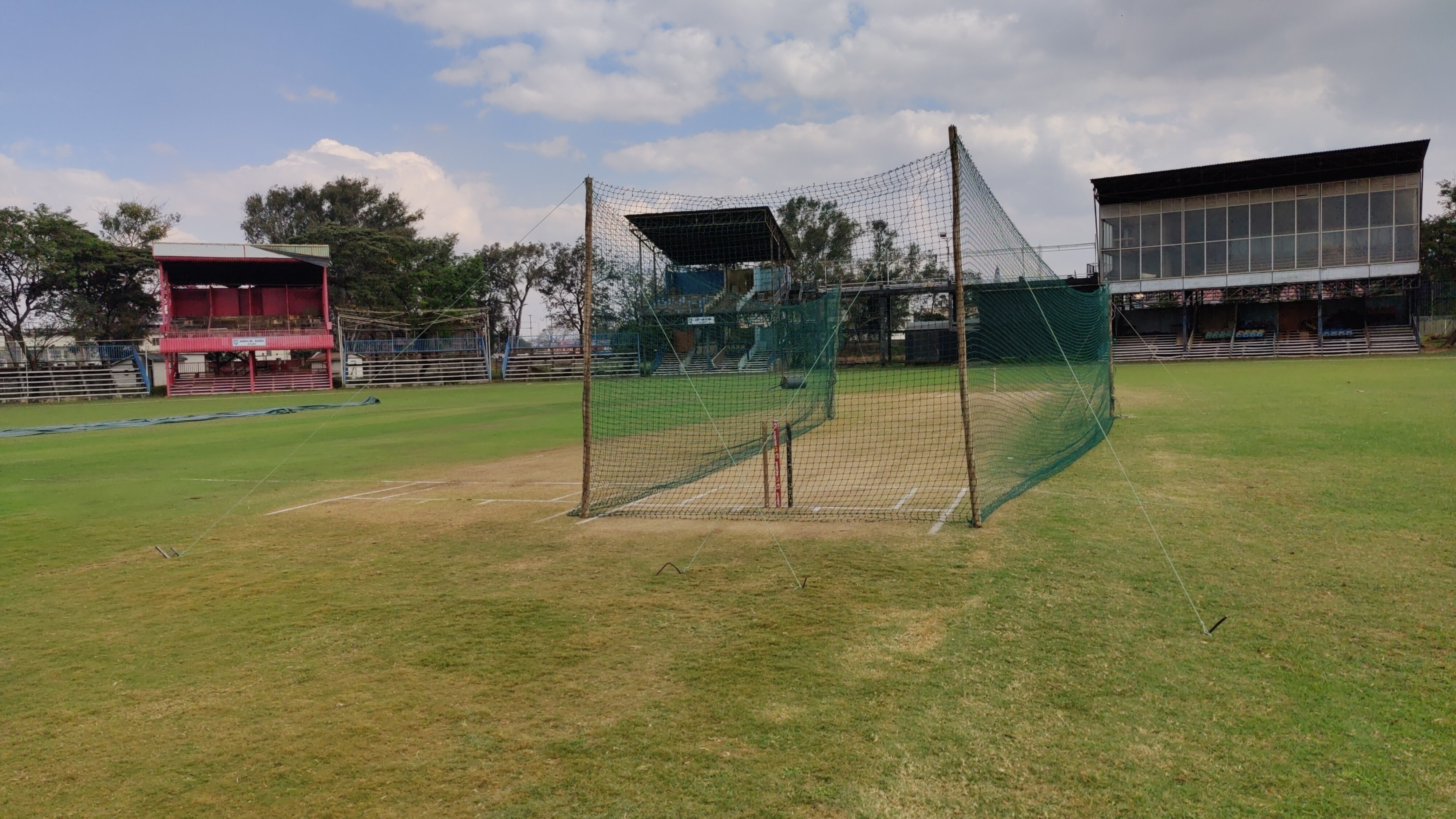 Cricket pitch at the Nairobi Gymkhana Club
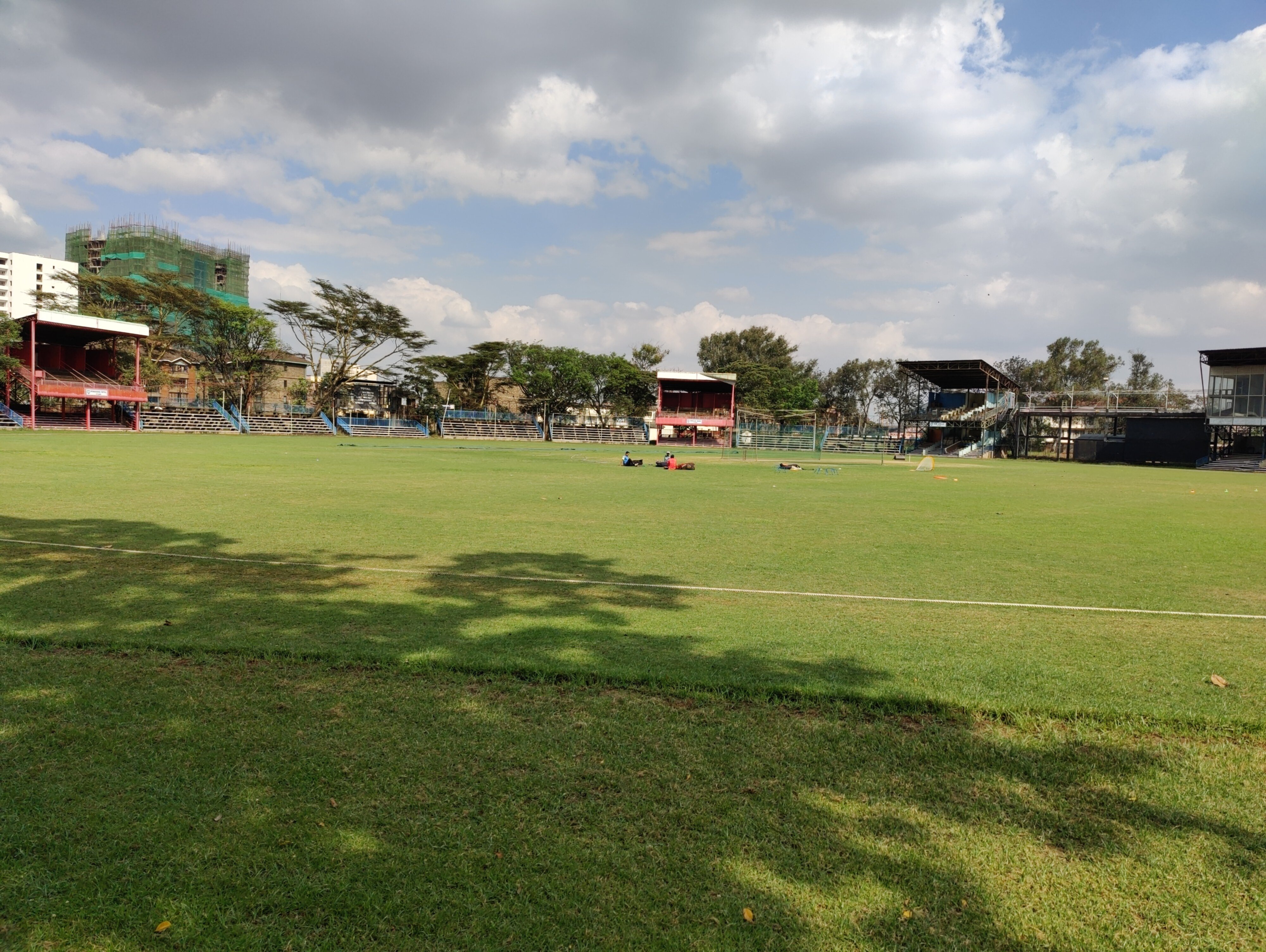 A view of the cricket ground inside the Nairobi Gymkhana Club
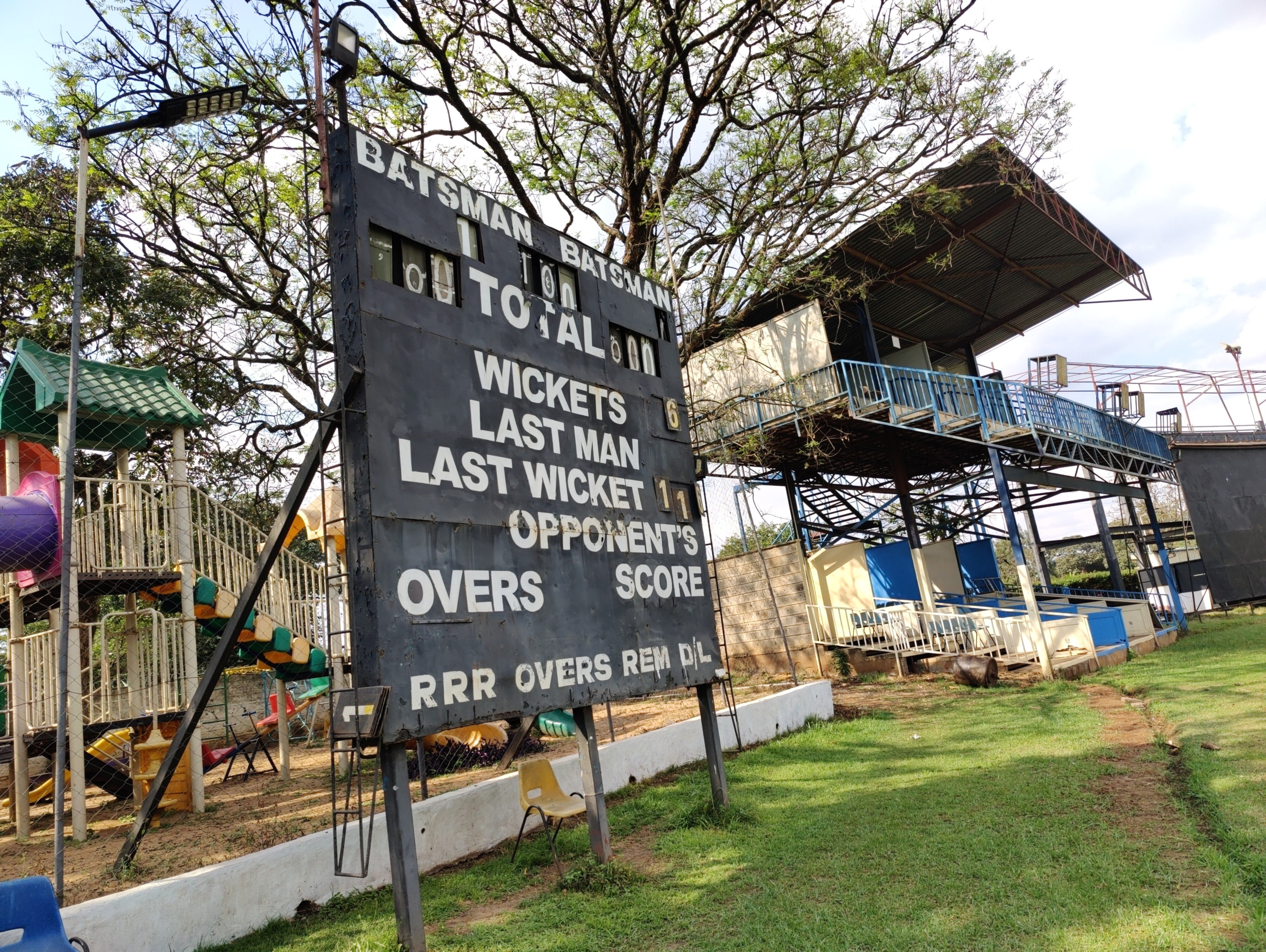 Scoreboard at the Nairobi Gymkhana cricket ground
 A matatu with a Notorious BIG portrait.
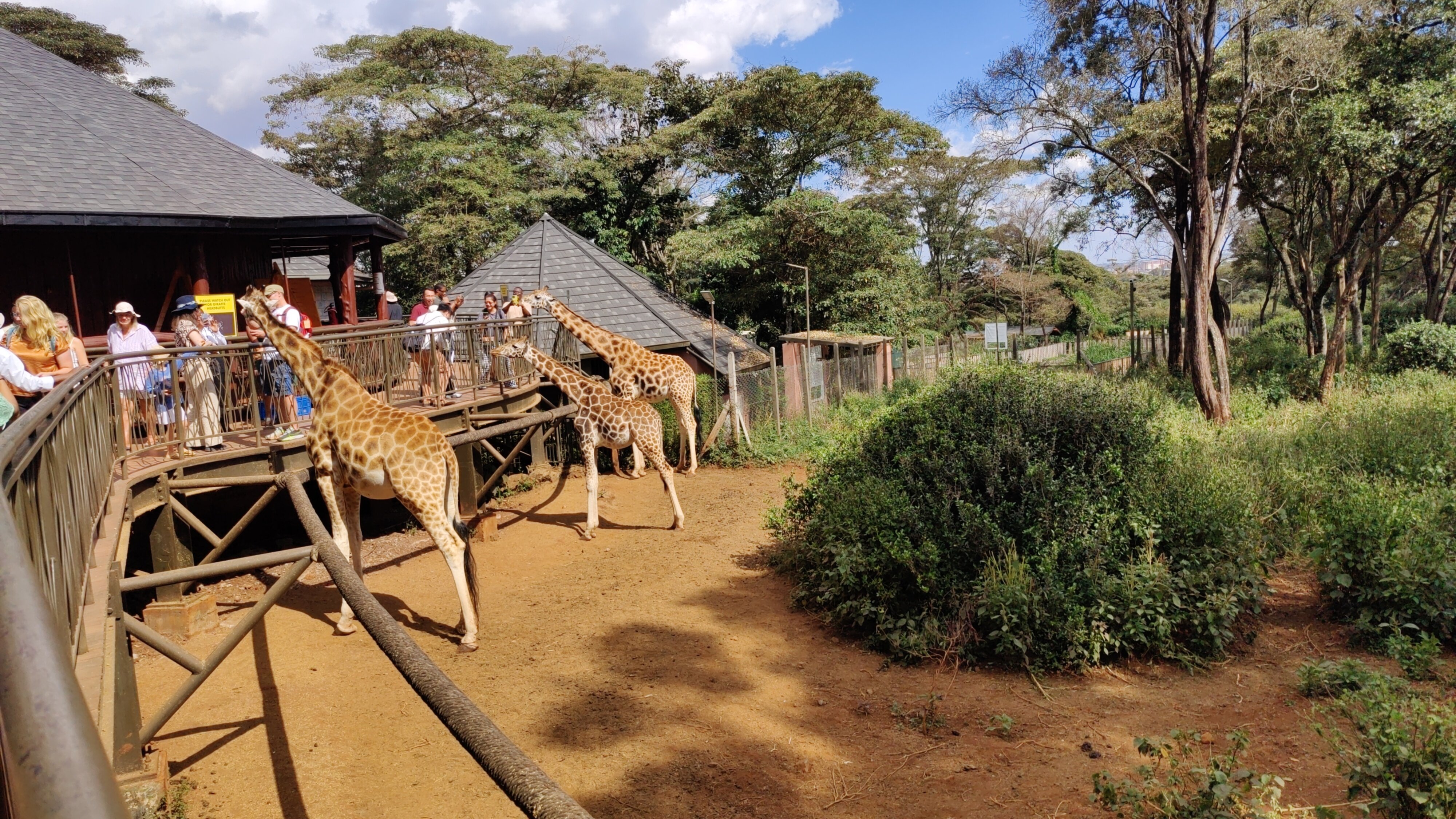 Inside the Giraffe Center
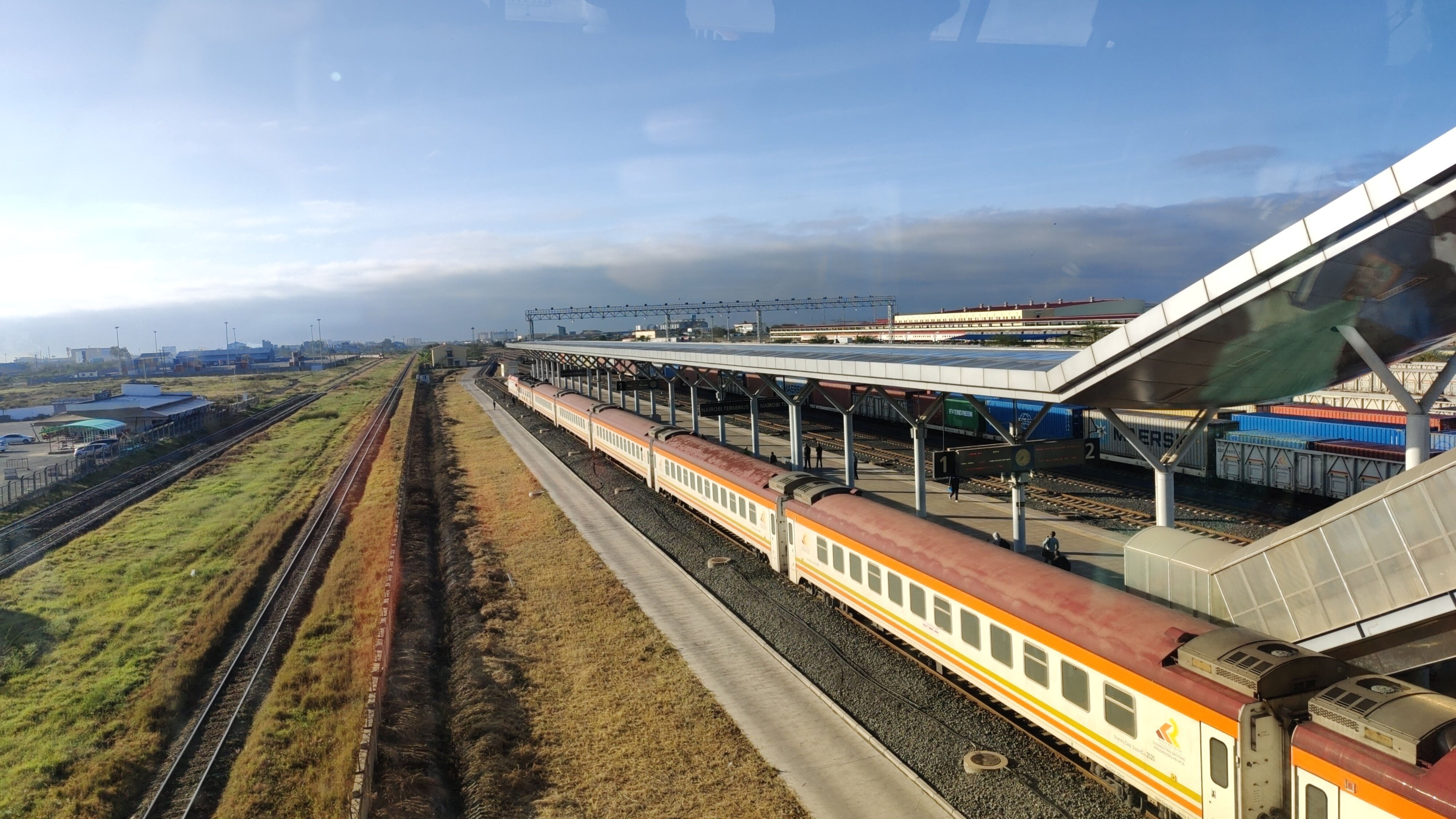 SGR train at Nairobi Terminus.
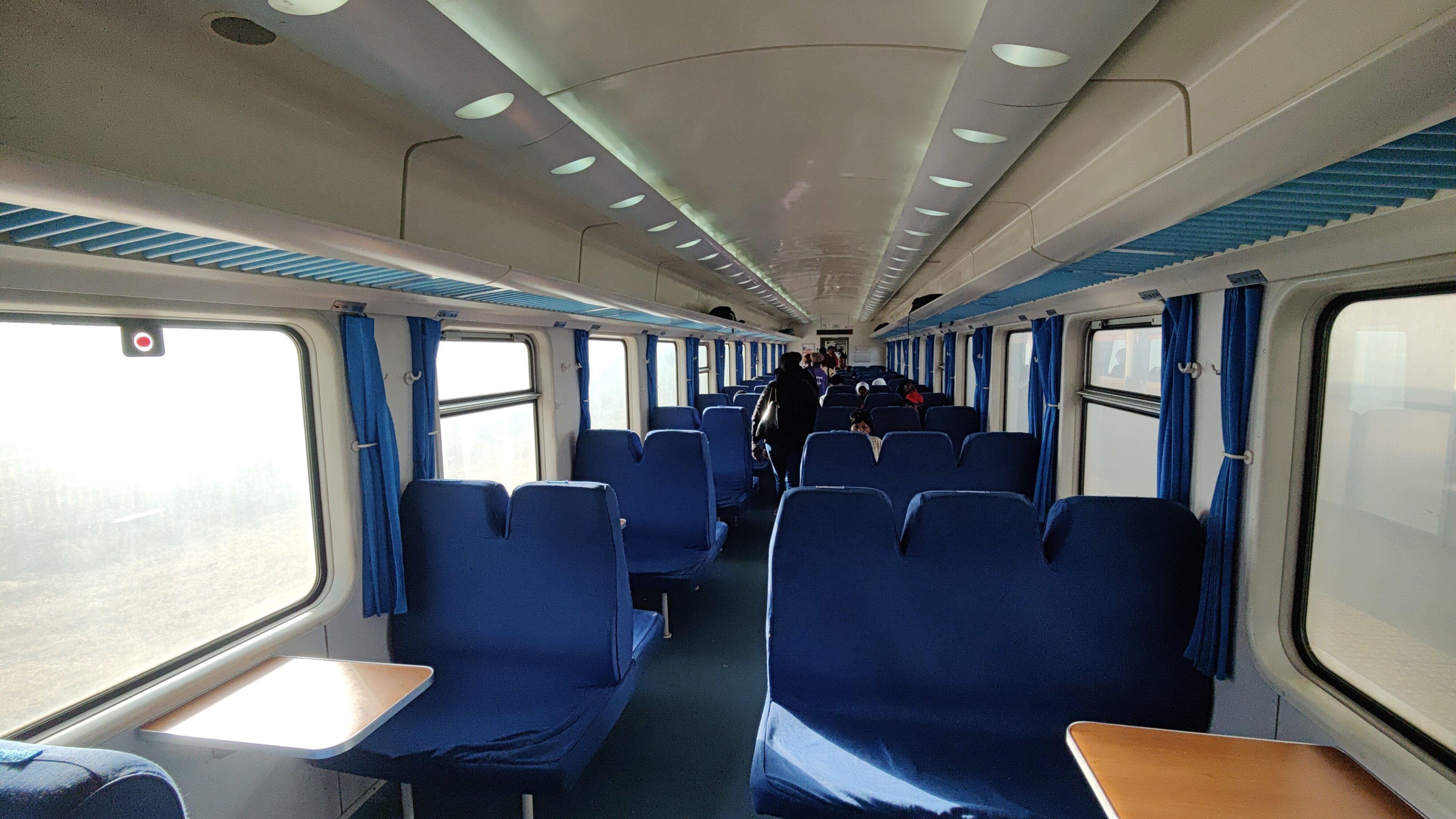 Interior of the SGR train
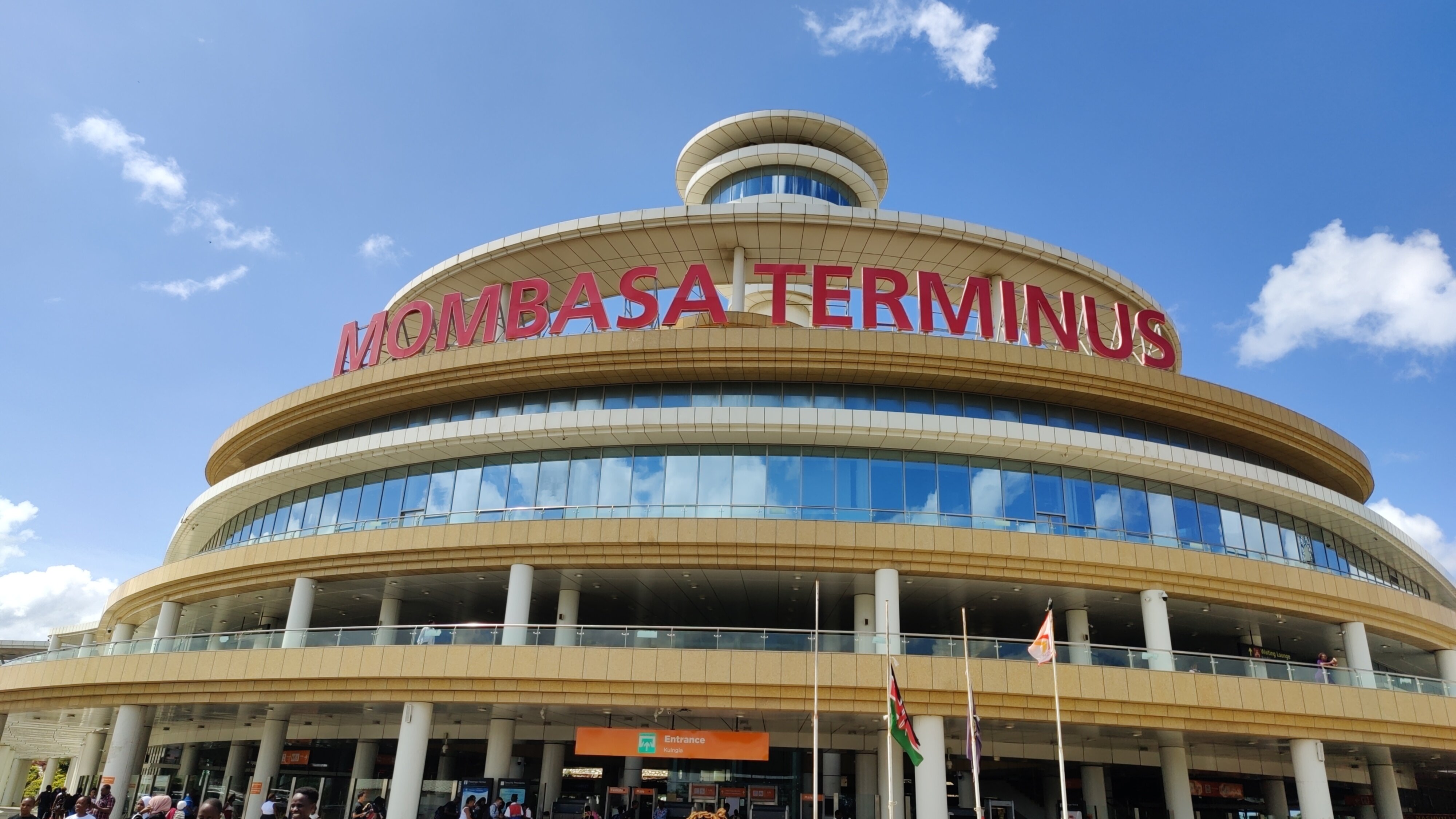 Mombasa Terminus station.
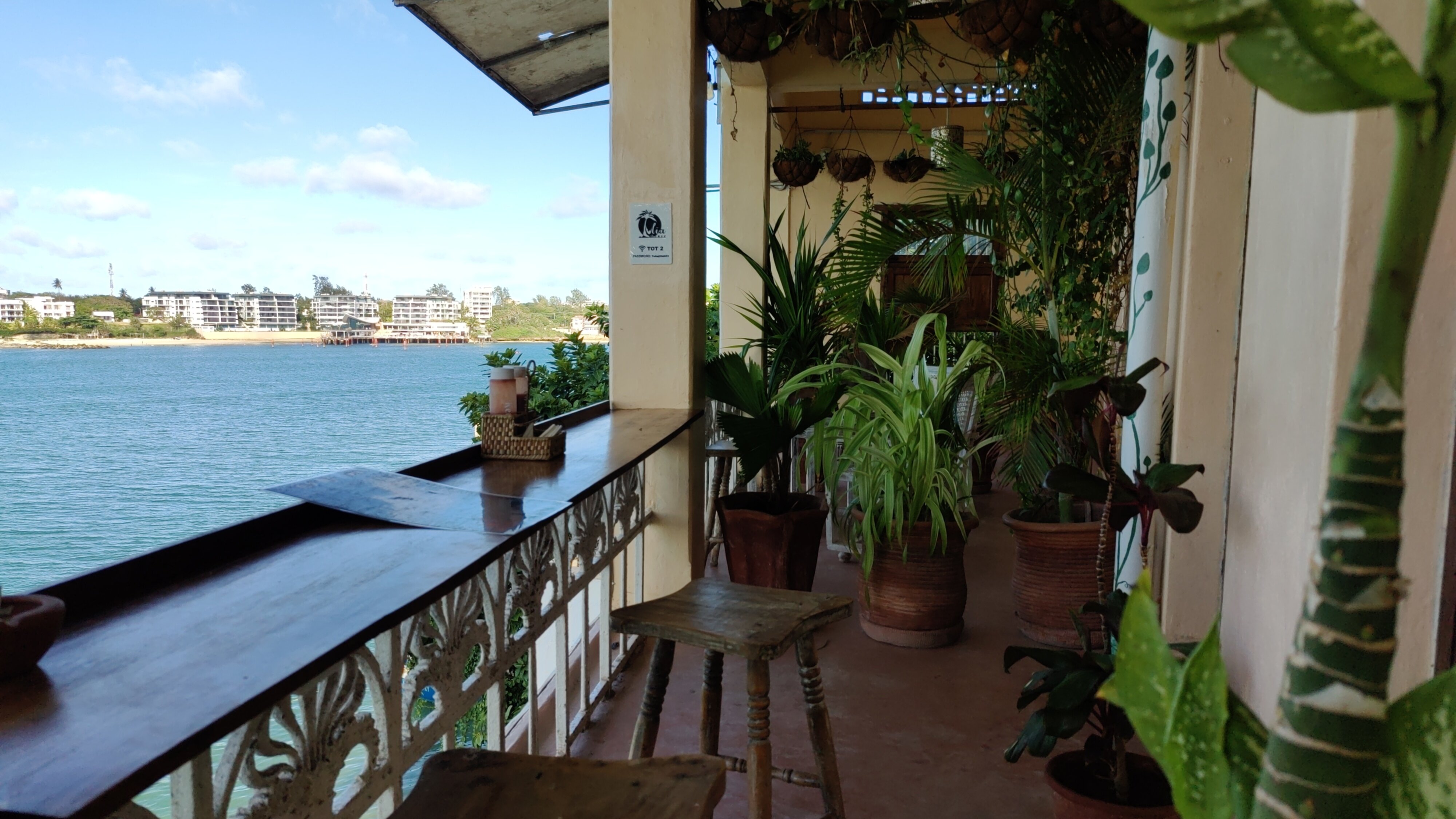 The balcony at Tulia Backpackers Hostel had a nice view of the ocean.
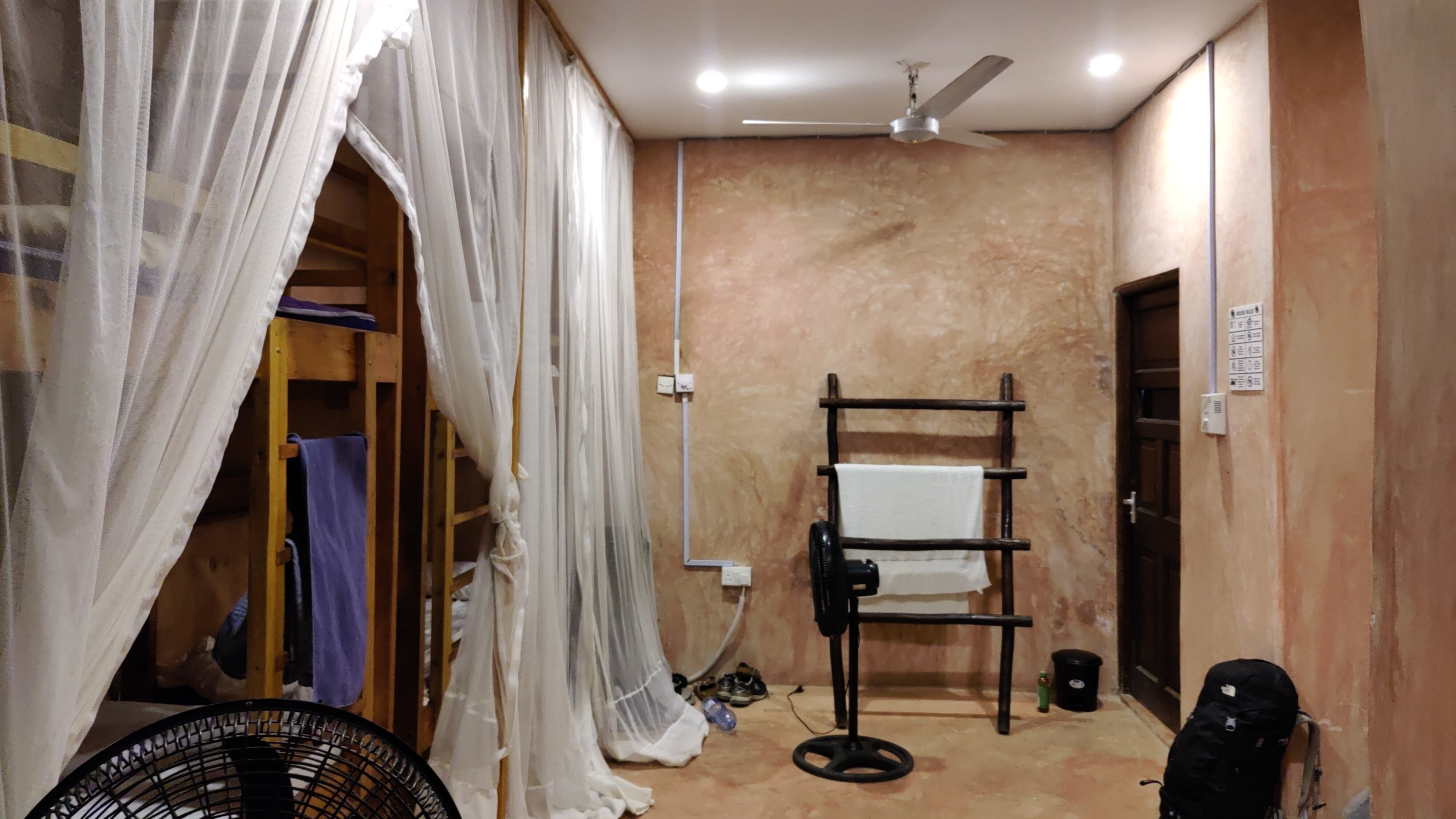 A room inside the hostel with fans and mosquito nets on the beds
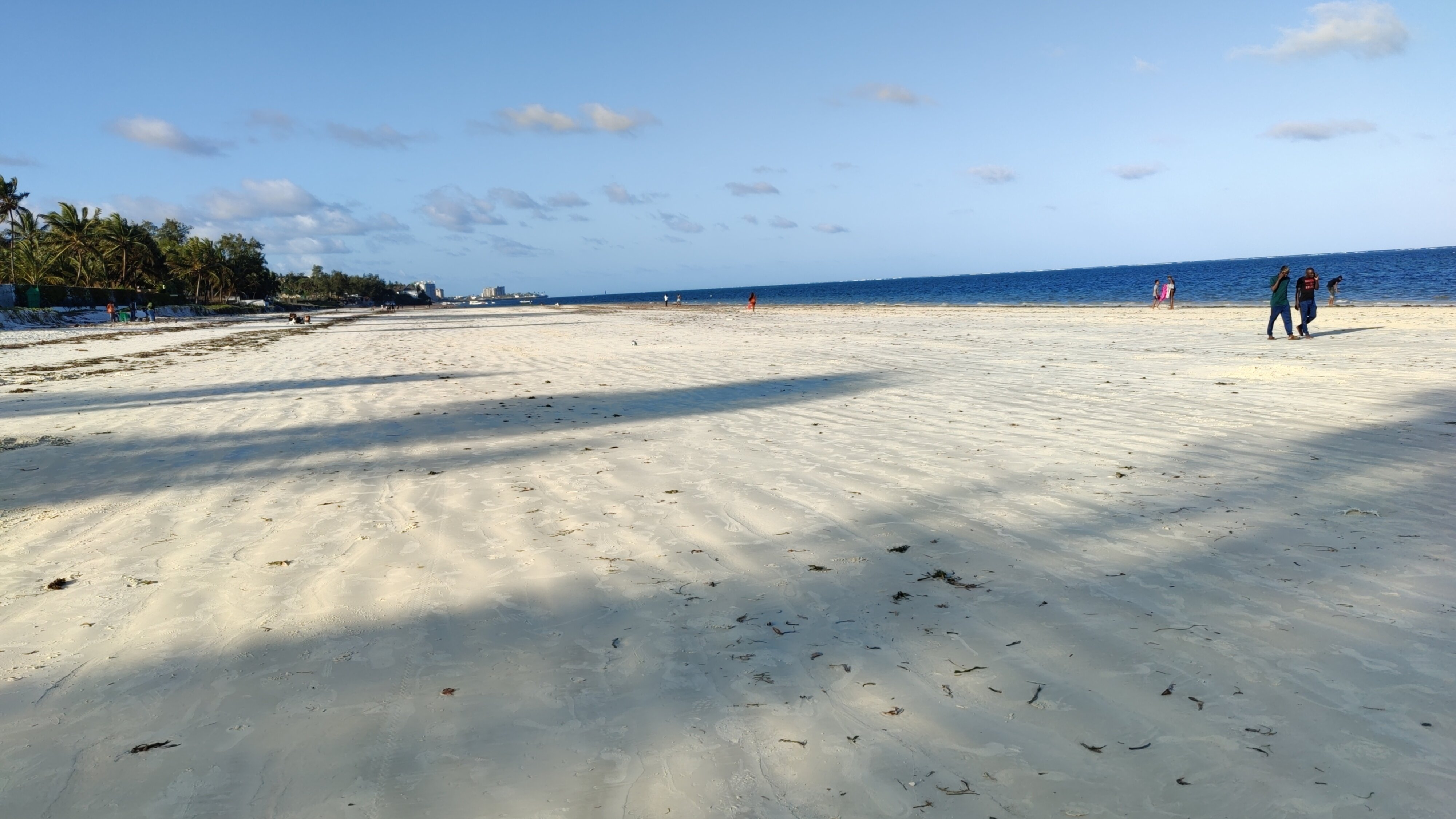 Nyali beach is a white sand beach
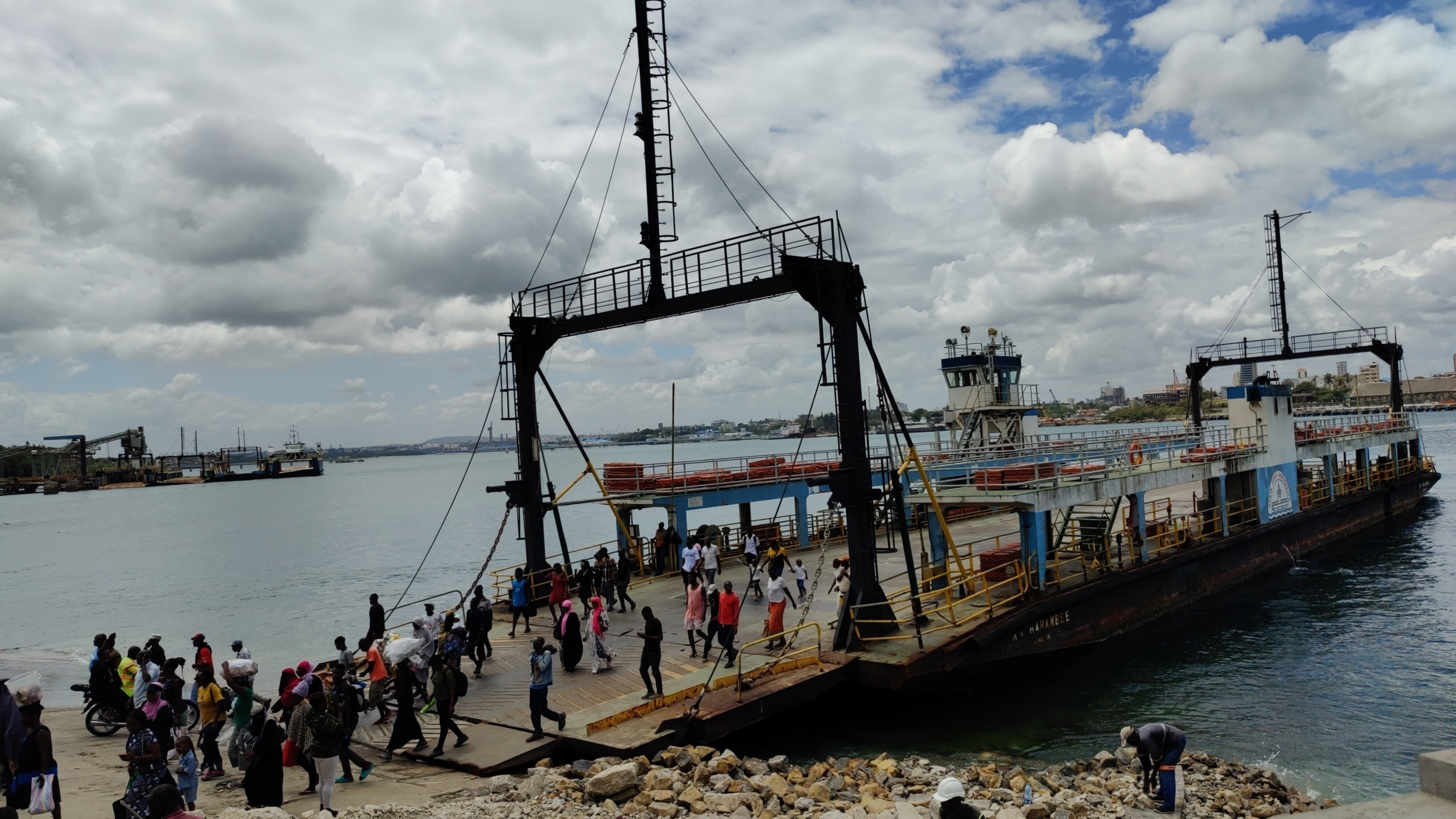 This is the ferry service for crossing the river.
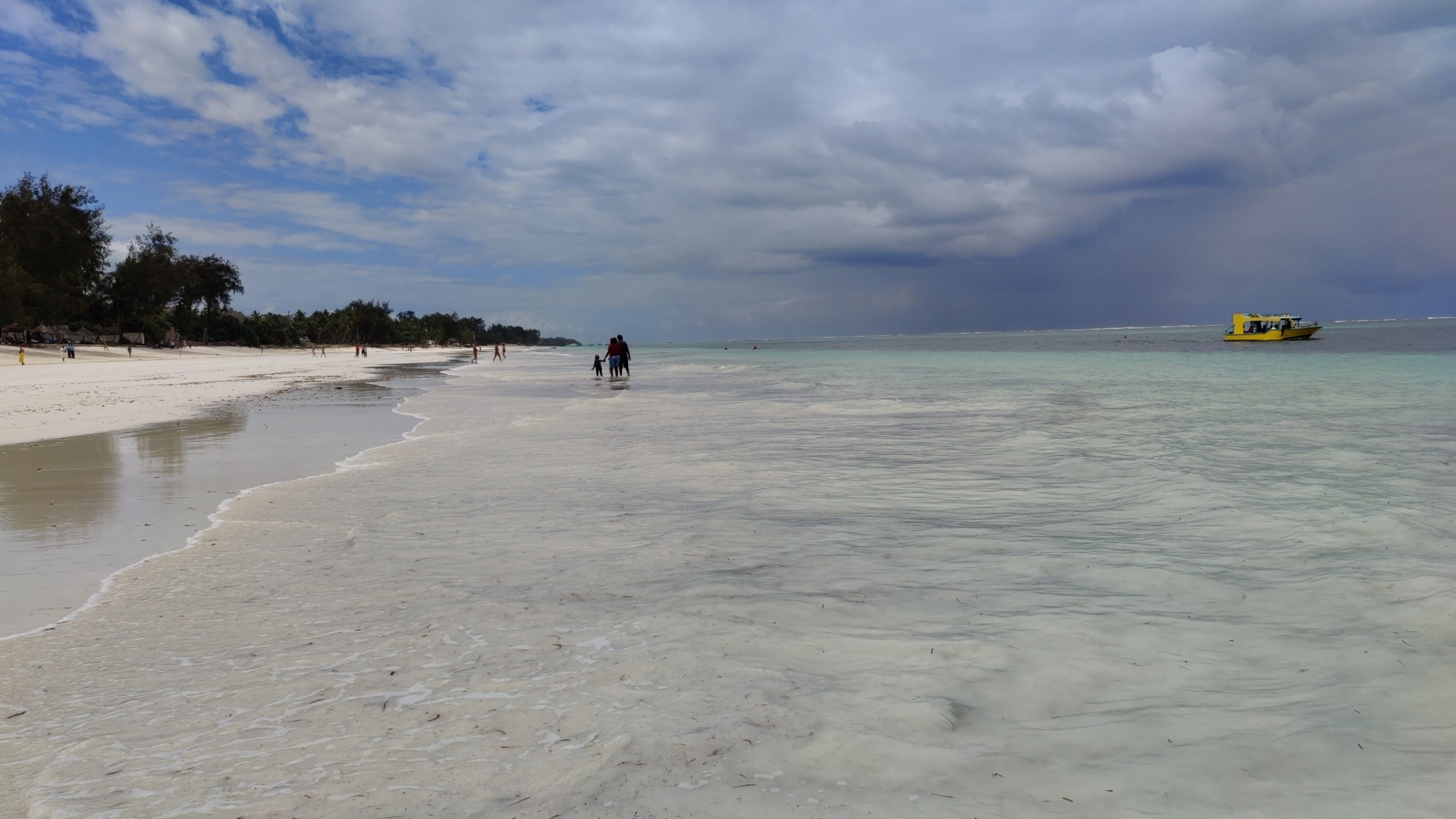 Diani beach is a popular beach in Kenya. It is a white sand beach.
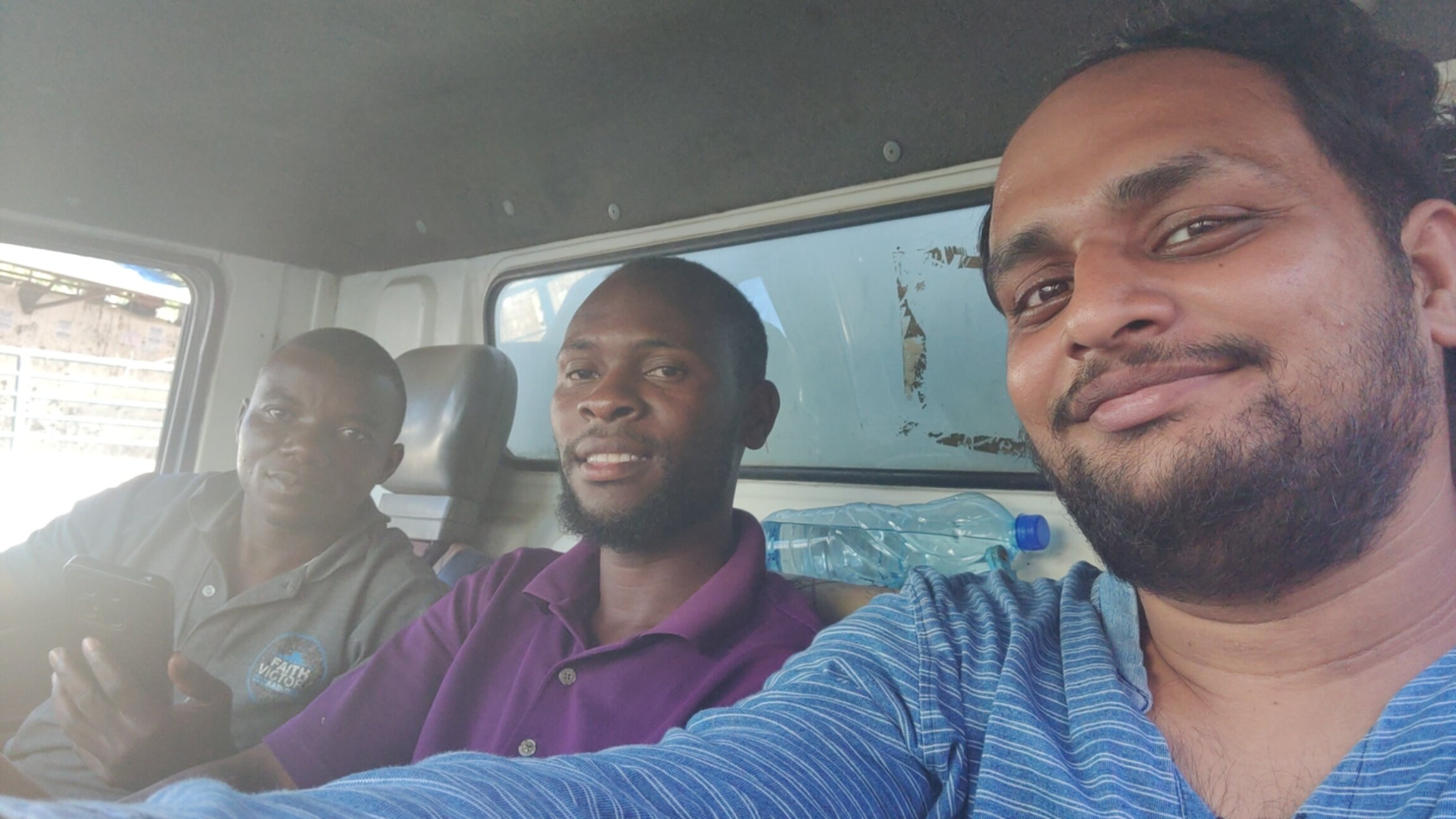 Selfie with truck drivers who gave me the free ride
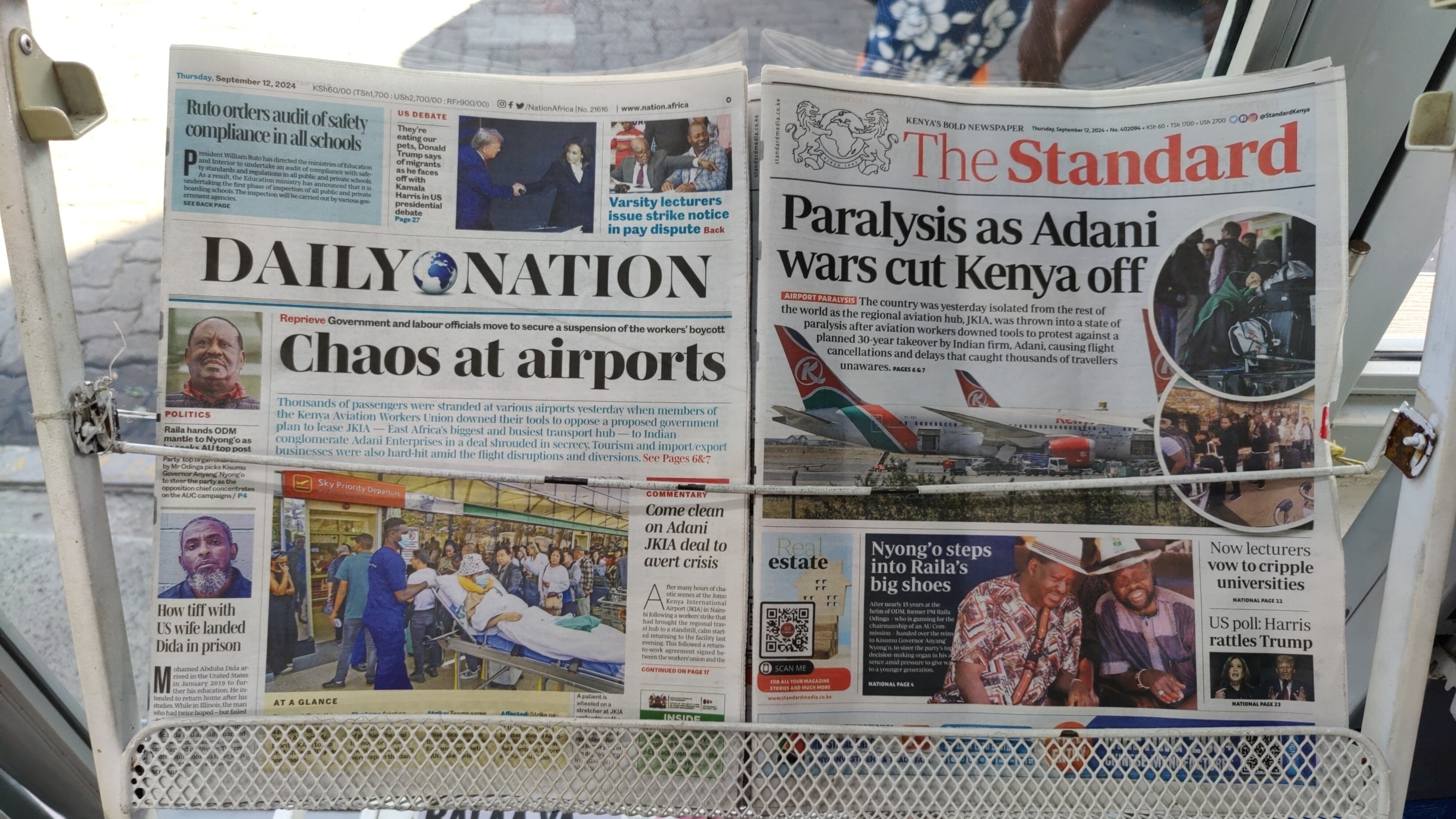 Newspapers at a stand in Kenya covering news on the airport closure
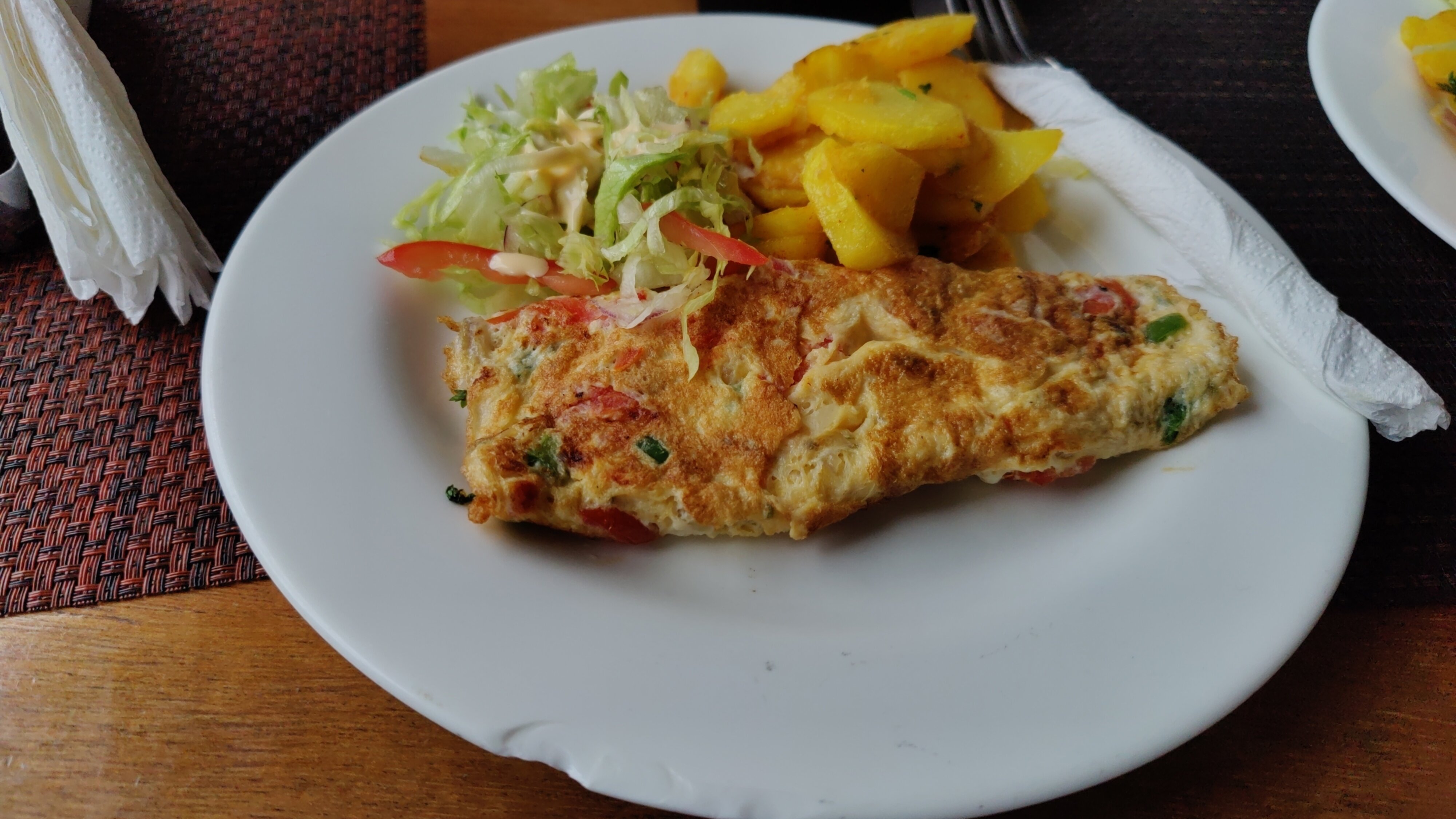 Spanish Omelette served in breakfast at Nairobi Transit Hotel
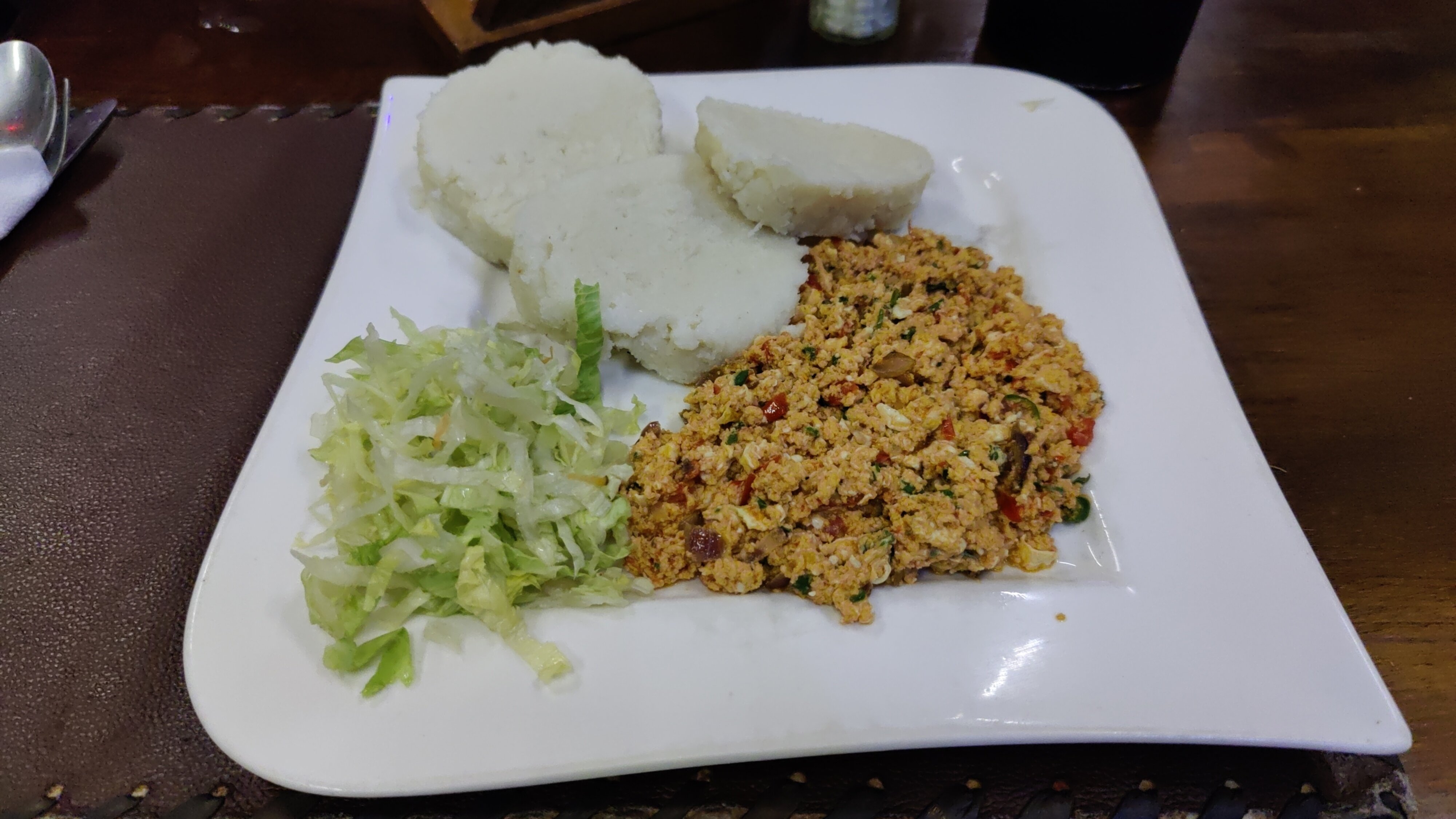 Ugali with eggs.
 A hot-fix release 1.0.13-1, consisting of two small PRs relative to
the last regular
 Almost all of my Debian contributions this month were


 A new minor release of the