Search Results: "eof"

20 June 2011

Mohammed Sameer: Introducing vcamera, a virtual V4L2 camera.

This is a kernel module I cooked in a couple of days. The idea is to expose a v4l device that gets its data from user space.

I had 2 use cases in mind:
1) Educational purpose for myself (I'm really a kernel noob).
2) Streaming movies over skype, google talk, ... etc.

The idea could be good or completely rubbish but hey ? Learning can only be done with stupid ideas!

The code is highly unstable. It shouldn't oops the kernel but I'm not responsible. I've been developing and testing it inside qemu.

Clone it from the git repository via:

git clone git@gitorious.org:vcamera/vcamera.git

Here are a few missing bits off the top of my head:

* I'm not following the kernel coding style yet ;-)
* I'm sure my locking, unlocking and concurrency handling is flawed.
* The code is a bit fragile.
* It'd be nice to implement mmap support for the character device. This should eliminate data copies.
* Perhaps expose the character device all the time and generate "fake" frames when streaming starts ? Problem now is one has to be very fast in feeding data to the module otherwise select() on the v4l device will timeout.
* Many more...

If someone finds this idea useful, please drop me a line.
Comments, use cases, ideas and tips are really welcomed!

If I see a lot of interest, I might try to push it to the kernel tree one day ;-)

Update: Seems vloopback already exists and renders my code useless. I might still do something with it as my idea seems a bit simpler but whatever.

Update 2: There's also v4l2loopback and its fork. read more

7 June 2011

Gerfried Fuchs: pal versus wyrd

Whenever someone asked me about a calendar application, especially for the textmode, I always encouraged them to give pal a try. I always loved the looks of it, the interactive mode is helpful, it has HTML output format to inject the calendar into a webpage, mail output format for a daily reminder cronjob, and other useful features. I even created a file with the Austrian holidays for it which got included in the original project for the benefit of all its users.
If you haven't tried it yet and are looking for a calendar tool with support for very flexible recurring events and categories, this might be a good look. I am still happy with pal, though someone recently suggested a different tool on IRC, and that was wyrd. From a quick glance it looked promising, so I started to dig into it. My first task was to convert the former mentioned pal file for the Austrian holidays into remind format. remind is the backend for wyrd, and its definition language seems to be extremely powerful. It though took me a while to figure out how to put in Easter date related events into it, the examples weren't really hinting me in the right direction. This is part of what I am using now:
REM [trigger(easterdate(current())-47)] +6 TAG noweight MSG Faschingsdienstag %b The look and view of wyrd is different to pal in several ways. Where the granularity of pal is a pure day view, wyrd scales in hours (or half, quarter thereof). Also, wyrd offers the possibility to color the days differently by busy level. Of course it's possible to exempt tasks from adding weight to a day. pal on the other hand is able to color events differently by category. Decide yourself what you actually need, test it, and ... enjoy!

/cli permanent link Comments: 0 Flattr this

1 June 2011

Vincent Bernat: GNOME Power Manager without GNOME desktop

When I installed my new laptop, I decided to switch from sleepd to GNOME Power Manager (GPM). The rationale behind this decision was to get screen dimming for free while keeping other features because GPM uses UPower which uses pm-suspend and pm-powersave behind the scene. This means that it is easy to execute scripts on suspend or when the AC is unplugged by putting them in /etc/pm. I don t use a full GNOME desktop. My desktop is running FVWM which is just a window manager. However, I already use some parts of the GNOME environment:

What s working It happens that most of the features just do not work. However, suspend when closing the lid works fine. The icon in the systray works fine too (but there is a small bug). The screen dimming feature on idle also works (but there are annoying bugs with it). The visual feedback when pressing brightness keys works too.

What s not working It seems that I am not the only one to have problem with GPM: there are currently 115 bugs opened in the Debian BTS. If you want to get some debug output from gnome-power-manager, run it with --verbose flag. --debug flag does nothing (and supersedes --verbose).

Nothing happens when pressing the power button I have configured GPM to ask me what to do when I press the power button. But when I press the button, nothing happens. Looking at the source, here is the snippet of code that is executed:
1
2
3
4
5
6
7
if (policy == GPM_ACTION_POLICY_INTERACTIVE)  
    GpmSession *session;
    egg_debug ("logout, reason: %s", reason);
    session = gpm_session_new ();
    gpm_session_logout (session);
    g_object_unref (session);
 
In fact, this is not GPM that will ask you the question, but GNOME session manager because GPM triggers logout. If you don t run a full GNOME session, nothing will happen. My workaround is just to set the action to Suspend .

Does not sleep when idle GPM is configured to go to sleep after 2 hours on AC or 30 minutes on battery. This does not work for me because idle detection is delegated to external programs. There are four variables used by GPM to determine if we are idle:
  • session_idle which is the idle hint from ConsoleKit,
  • idle_inhibited which is set when another program asks to disable idle detection (a video player which does not want the screen to be dimmed),
  • suspend_inhibited which means a program do not want we going to sleep (a music player for example)
  • x_idle which tells if X is idle or not (someone is moving the mouse or typing on the keyboard).
To allow GPM to suspend when we are idle, x_idle and session_idle must be true while suspend_inhibited and idle_inhibited must be false. For screen dimming purpose, you just need to have x_idle set to true and idle_inhibited set to false. Currently, only GNOME Screensaver seems to tell ConsoleKit if the session is idle or not. XScreenSaver does not contain anything about this. I am using xautolock with xlock and I am pretty sure they won t tell GPM if I am idle. You can use dbus-send to circumvent this problem:
 1
 2
 3
 4
 5
 6
 7
 8
 9
10
11
$ dbus-send --system --dest=org.freedesktop.ConsoleKit \
>   --type=method_call --print-reply --reply-timeout=2000 \
>   /org/freedesktop/ConsoleKit/Manager \
>   org.freedesktop.ConsoleKit.Manager.GetCurrentSession
method return sender=:1.6 -> dest=:1.106 reply_serial=2
   object path "/org/freedesktop/ConsoleKit/Session1"
$ dbus-send --system --dest=org.freedesktop.ConsoleKit \
>   --type=method_call --print-reply --reply-timeout=2000 \
>   /org/freedesktop/ConsoleKit/Session1 \
>   org.freedesktop.ConsoleKit.Session.SetIdleHint boolean:true          
method return sender=:1.6 -> dest=:1.108 reply_serial=2
While I understand what is the rationale behind those choices (no code duplicate and allowing external programs to hinder power management), it lacks some fallback in case you don t use GNOME Screensaver (which is the key component here). I first though this was bug #594706 but this is not the case. I have opened (and closed) bug #628755. UPDATED: Jump to the conclusion for an updated solution for this problem.

Brightness is not restored to the previous value after idle When GPM undims the screen, it does not restore the previous value. It seems to be bug #617310 which is marked as fixed in upstream. I did not investigate it.

Wrong number of batteries reported I only have one battery but after one suspend/resume cycle, GPM thinks I have two. Maybe this is a bug of UPower. Maybe this is bug #606434. I did not investigate it. Maybe there is an happy interaction with bug #456280.

Inability to set configure actions when the UPS runs out of battery This is bug #390602. In addition to laptop batteries, UPower also supports UPS. In this case, GPM displays a special icon to tell if the UPS is fully charged. However, there is no possibility to execute special actions when the UPS is unplugged, like hibernate after 10 minutes or something like this. This seems to be a problem with the interface because looking with gconftool-2, we can spot variables like low_ups or critical_ups which allow to set actions when the UPS is almost out of battery. Moreover, the UPS icon only displays after one suspend/resume cycle but I am too lazy to report and debug this issue. Since, the icon disappear if I restart GPM, I am confident that the bug is in GPM.

Conclusion The conclusion is that GPM is not really that buggy but it really needs to be run in a full-blown GNOME desktop. The main problem is not really GPM. New technologies like UPower and ConsoleKit get pushed by freedesktop.org initiative, they get implemented by GNOME (and, I suppose, KDE) because they have tons of people following the appropriate mailing lists and any alternative just gets crushed by all those unpublicized changes. UPDATED: I got several helpful comments about this problem. There are two possible solutions:
  1. Use xfce4-power-manager. It handles brightness control in a better way and don t need an external program to tell when the current session is idle. It still needs a session manager to ask what to do when using the power button. The drawback to this solution is that you start to pull another desktop environment into your environment. You had some parts of GNOME and now you have some parts of XFCE. This solution was proposed by Sylvain Collilieux.
  2. Use gnome-session, gnome-screensaver and keep gnome-power-manager. As pointed by Julien Valroff, gnome-screensaver needs gnome-session to detect idleness. However, gnome-session starts a whole GNOME desktop. Again, there are two solutions. The first one is to replace gnome-session by something lighter implementing the bare minimum to make gnome-screensaver happy. Another suggestion is to configure gnome-session to start your favorite environment.
I start mine from ~/.xsession and here is what I have added at the top of it:
 1
 2
 3
 4
 5
 6
 7
 8
 9
10
11
12
13
14
15
16
17
# If not done, restart ourself with gnome-session
if [ -z "$SESSION_MANAGER" ]; then
    [ -d ~/.config/autostart ]   mkdir ~/.config/autostart
    rm -f ~/.config/autostart/*
    cat <<EOF > ~/.config/autostart/xsession.desktop
[Desktop Entry]
Name=Xsession
Comment=Start .xsession
Exec=$(readlink -f $0)
Type=Application
X-GNOME-Autostart-enabled=true
EOF
    exec gnome-session --autostart=$HOME/.config/autostart
fi
# Otherwise, keep starting stuff
# [...]
exec fvwm-crystal

13 May 2011

Christoph Egger: Thouhts on secure software archives

From the java point of view Recently I had to get some Scala Tool working correctly. Unfortunately there are basically no packages in the Debian Archive at all so I had to use maven to install these (or download + install manually). Being a highly paranoid person downloading and executing code from the internet without any cryptographic verification at all one after the other practically drove me nuts. Looking a bit deeper I noticed that some of the software in maven's repository have some signatures next to them -- signed by the author or release manager of this specific project. Why secure sources matters With my experience in mind I got some Input from other people. One of the things I was told is that some scala tools just aren't security critical -- they're only installed and used as the current user. In my opinion this is, for my desktop system, totally wrong. The important things on my private Computers are my GPG and SSH keys as well as my private data. For messing with these no super user access is needed at all. Comparing to the Common Lisp situation Being a Common Lisp fan of course I noticed basically the same problem for installing Common Lisp libraries. Here the situation in Debian is quite a bit better -- and I'm working in the pkg-common-lisp Team to improve this even more. Common Lisp has some maven-alike tool for downloading and installing dependency trees called quicklisp -- without any cryptographic verification as well. However there's light at the end of this tunnel: There are plans to add GPG verification of the package lists really soon. Comparing the maven and the quicklisp model So there are basically two different approaches to be seen here. In maven the software author confirms with his signature the integrity of his software while in quicklisp the distributor confirms all users get the same software that he downloaded. Now the quicklisp author can't and won't check all the software that is downloadable using quicklisp. This won't be doable anyway as there's way to much software or a single person to check. Now in some kind of perfect World the maven way would be vastly superior as there's a End-To-End verification and verification of the full way the software takes. However there's a big problem: I don't know any of these Authors personally and there's no reason I should just trust any of them. Now comparing this to the Distribution / quicklisp model. Here I would just have to trust one person or group -- here the quicklisp team -- to benefit from the crypto which might be possible based on karma inside the using community. However here I don't gain the possibility that the software is integer. However idealized if some of these pieces of software was forged between upstream and the quicklisp team and attacker would also intercept me downloading the software from the same address so I get the source from upstream matching the checksum from quicklisp -- assuming the quicklisp team does indeed know the correct website. Additionally I get the confirmation that all other quicklisp users get the same source (if the quicklisp guys are fine of course) so no-one inside the community complaining is a good indication the software is fine. For this to work there's of course a relevant user-base of the distributor (quicklisp) necessary. Relevance for Debian So how do conventional Linux Distributions like Debian fit in here. Ideally we would have maintainers understanding and checking the software and confirming the integrity using their private key or at least know their upstreams and having at least a secured way getting the software from upstream and a trust relationship with them. Of course that's just illusionary thinking of complex and important software (think libreoffice, gcc or firefox for example). Maintainers won't fully understand a lot simpler pieces of software. And loads of upstream projects don't provide a verified way of getting the correct source code though that's a bit better on the real high-impact projects where checksums signed by the Release Manager are more common than in small projects. A misguided thought at the end As I'm a heavy emacs user I like to have snapshots from current emacs development available. Fortunately binary packages with this are available from a Debian guy I tend to trust who is also involved upstream so adding the key from his repository to the keyring apt trusts. Now my first thoughts were along the lines "It would be really nice if I could pin that key to only the emacs snapshot packages" so this guy can't just put libc packages in his repository and my apt would trust them. Now thinking of it again a bogus upload of the emacs snapshot package could just as well put some binary or library on the system at some place in front of the real on in the system path which would be rather similar bad. b

10 May 2011

Daniel Kahn Gillmor: the bleeding edge: btrfs (poor performance, alas)

I'm playing with btrfs to get a feel for what's coming up in linux filesystems. To be daring, i've configured a test machine using only btrfs for its on-disk filesystems. I really like some of the ideas put forward in the btrfs design. (i'm aware that btrfs is considered experimental-only at this point). I'm happy to report that despite several weeks of regular upgrade/churn from unstable and experimental, i have yet to see any data loss or other serious forms of failure. Unfortunately, i'm not impressed with the performance. The machine feels sluggish in this configuratiyon, compared to how i remember it running with previous non-btrfs installations. So i ran some benchmarks. The results don't look good for btrfs in its present incarnation. UPDATE: see the comments section for revised statistics from a quieter system, with the filesystems over the same partition (btrfs is still much slower). The simplified test system i'm running has Linux kernel 2.6.39-rc6-686-pae (from experimental), 1GiB of RAM (no swap), and a single 2GHz P4 CPU. It has one parallel ATA hard disk (WDC WD400EB-00CPF0), with two primary partitions (one btrfs and one ext3). The root filesystem is btrfs. The ext3 filesystem is mounted at /mnt I used bonnie++ to benchmark the ext3 filesystem against the btrfs filesystem as a non-privileged user. Here are the results on the test ext3 filesystem:
consoleuser@loki:~$ cat bonnie-stats.ext3 
Reading a byte at a time...done
Reading intelligently...done
start 'em...done...done...done...done...done...
Create files in sequential order...done.
Stat files in sequential order...done.
Delete files in sequential order...done.
Create files in random order...done.
Stat files in random order...done.
Delete files in random order...done.
Version  1.96       ------Sequential Output------ --Sequential Input- --Random-
Concurrency   1     -Per Chr- --Block-- -Rewrite- -Per Chr- --Block-- --Seeks--
Machine        Size K/sec %CP K/sec %CP K/sec %CP K/sec %CP K/sec %CP  /sec %CP
loki          2264M   331  98 23464  11 10988   4  1174  85 39629   6 130.4   5
Latency             92041us    1128ms    1835ms     166ms     308ms    6549ms
Version  1.96       ------Sequential Create------ --------Random Create--------
loki                -Create-- --Read--- -Delete-- -Create-- --Read--- -Delete--
              files  /sec %CP  /sec %CP  /sec %CP  /sec %CP  /sec %CP  /sec %CP
                 16  9964  26 +++++ +++ 13035  26 11089  27 +++++ +++ 11888  24
Latency             17882us    1418us    1929us     489us      51us     650us
1.96,1.96,loki,1,1305039600,2264M,,331,98,23464,11,10988,4,1174,85,39629,6,130.4,5,16,,,,,9964,26,+++++,+++,13035,26,11089,27,+++++,+++,11888,24,92041us,1128ms,1835ms,166ms,308ms,6549ms,17882us,1418us,1929us,489us,51us,650us
consoleuser@loki:~$ 
And here are the results for btrfs (on the main filesystem):
consoleuser@loki:~$ cat bonnie-stats.btrfs 
Reading a byte at a time...done
Reading intelligently...done
start 'em...done...done...done...done...done...
Create files in sequential order...done.
Stat files in sequential order...done.
Delete files in sequential order...done.
Create files in random order...done.
Stat files in random order...done.
Delete files in random order...done.
Version  1.96       ------Sequential Output------ --Sequential Input- --Random-
Concurrency   1     -Per Chr- --Block-- -Rewrite- -Per Chr- --Block-- --Seeks--
Machine        Size K/sec %CP K/sec %CP K/sec %CP K/sec %CP K/sec %CP  /sec %CP
loki          2264M    43  99 22682  17 10356   6  1038  79 28796   6  86.8  99
Latency               293ms     727ms    1222ms   46541us     504ms   13094ms
Version  1.96       ------Sequential Create------ --------Random Create--------
loki                -Create-- --Read--- -Delete-- -Create-- --Read--- -Delete--
              files  /sec %CP  /sec %CP  /sec %CP  /sec %CP  /sec %CP  /sec %CP
                 16  1623  33 +++++ +++  2182  57  1974  27 +++++ +++  1907  44
Latency             78474us    6839us    8791us    1746us      66us   64034us
1.96,1.96,loki,1,1305040411,2264M,,43,99,22682,17,10356,6,1038,79,28796,6,86.8,99,16,,,,,1623,33,+++++,+++,2182,57,1974,27,+++++,+++,1907,44,293ms,727ms,1222ms,46541us,504ms,13094ms,78474us,6839us,8791us,1746us,66us,64034us
consoleuser@loki:~$ 
As you can see, btrfs is significantly slower in several categories: I'm hoping that i just configured the test wrong somehow, or that i've done something grossly unfair in the system setup and configuration. (or maybe i'm mis-reading the bonnie++ output?) Maybe someone can point out my mistake, or give me pointers for what to do to try to speed up btrfs. I like the sound of the features we will eventually get from btrfs, but these performance figures seem like a pretty rough tradeoff.Tags: benchmarks, bonnie, btrfs, ext3

4 May 2011

Daniel Kahn Gillmor: test-driven development: refactoring, difficulties

liw recently wrote about test-driven development:
This all sounds like a lot of bureaucratic nonsense, but what I get out of this is this: once all tests pass, I have a strong confidence that the software works. As soon as I've added all the features I want to have for a release, I can push a button to push it out
To my mind, this is only one of the benefits. He doesn't describe another major benefit, which is the confidence with which you can take on re-factoring in projects with well-developed test infrastructure. If your project has no test infrastructure at all, and you make a deep and/or potentially invasive change, you might well produce something that is heinously broken for users who have a different pattern of using the tool than you do. But if you have a well-developed, reasonable test suite with fairly wide coverage, you can make a deep or invasive change, and be confident that -- if the tests all pass -- the stuff you release isn't going to be too horrific. And if you do break something with a change which the test suite didn't cover, that's an indication that the test suite is lacking. Hopefully, you can factor out a problem report into its own test, so that future changes will ensure that the behavior doesn't regress too. The upshot of more-confident re-factoring is that your development can be much bolder, you can roll out new features more quickly, and you can spend less time agonizing about whether you've got the various abstraction layers exactly right the first time through. These are all good things (though i do think the agony of abstraction perfectionism is well-warranted in some contexts, like API definitions, and wouldn't want test-driven development to make people give up on that necessary task). when testing can't cover everything Some things are just hard to test well. for example, if you have 20 different boolean options to a command-line tool, you can't realistically test them in all combinations and permutations; that would be over a million tests. User experience is also notoriously difficult to test, as are tools that rely heavily on network interaction, which can be flakey and unpredictable. other downsides Test suites themselves require maintenance, as the components they rely on can change over time. More than once, i've had a test suite failure that was really a failure of the test infrastructure, not the code itself. But in those same projects, that's usually followed or preceded by a test suite failure that picks out a particularly nasty or subtle bug in the tested code that might have persisted for quite a while unnoticed. So the test suite does in some sense create more work all around. more and better testing is good for Debian Even when we know that coverage isn't perfect, and even with its additional overhead, well-integrated tests (at the unit level and more generally) are worth the tradeoffs. It's worth doing because of the robustness and guarantees that we can give each other with regularly-tested code. It's a more stable foundation which surprisingly also gives us more flexibility going forward. This is good for free software in general. It also helps us find our bugs before our users do, so it's better for our users. So more and better testing directly supports the two main priorities outlined in the Debian Social Contract.

29 April 2011

Ian Wienand: Toolchains, libc and interesting interactions

When building a user space binary, the -lc that gcc inserts into the final link seems pretty straight forward link the C library. As with all things system-library related there is more to investigate. If you look at /usr/lib/libc.so; the "library" that gets linked when you specify -lc, it is not a library as such, but a link script which specifies the libraries to link, which also includes the dynamic linker itself:
$ cat /usr/lib/libc.so
/* GNU ld script
   Use the shared library, but some functions are only in
   the static library, so try that secondarily.  */
OUTPUT_FORMAT(elf64-x86-64)
GROUP ( /lib/libc.so.6 /usr/lib/libc_nonshared.a  AS_NEEDED ( /lib/ld-linux-x86-64.so.2 ) )
On very old glibc's the AS_NEEDED didn't appear; so every binary really did have a DT_NEEDED entry for the dynamic linker itself. This can be somewhat confusing if you're ever doing forensics on an old binary which seems to have these entries for not apparent reason. However, we can see that that /lib/libc.so itself does actually require symbols from the dynamic linker:
$ readelf --dynamic /lib/libc.so.6   grep NEEDED
 0x0000000000000001 (NEEDED)             Shared library: [ld-linux-x86-64.so.2]
Although you're unlikely to encounter it, a broken toolchain can cause havoc if it gets the link order wrong here, because the glibc dynamic linker defines minimal versions of malloc and friends -- you've got a chicken-and-egg problem using libc's malloc before you've loaded it! You can simulate this havoc with something like:
$ cat foo.c
#include <stdio.h>
#include <syslog.h>
int main(void)
 
   syslog(LOG_DEBUG, "hello, world!");
   return 0;
 
$ cat libbroken.so
GROUP ( /lib/ld-linux-x86-64.so.2 )
$ gcc -o -Wall -Wl,-rpath=. -L. -lbroken -g -o foo foo.c
$ ./foo
Inconsistency detected by ld.so: dl-minimal.c: 138: realloc: Assertion  ptr == alloc_last_block' failed!
Depending on various versions of things, you might see that assert or possibly just strange, corrupt output in your logs as syslog calls the wrong malloc. You could debug something like this by asking the dynamic linker to show you its bindings as it resolves them:
$ LD_DEBUG_OUTPUT=foo.txt LD_DEBUG=bindings ./foo
Inconsistency detected by ld.so: dl-minimal.c: 138: realloc: Assertion  ptr == alloc_last_block' failed!
$ cat foo.txt.11360   grep "\ malloc'"
     11360:	binding file /lib/libc.so.6 [0] to /lib64/ld-linux-x86-64.so.2 [0]: normal symbol  malloc' [GLIBC_2.2.5]
     11360:	binding file /lib64/ld-linux-x86-64.so.2 [0] to /lib64/ld-linux-x86-64.so.2 [0]: normal symbol  malloc' [GLIBC_2.2.5]
     11360:	binding file /lib/libc.so.6 [0] to /lib64/ld-linux-x86-64.so.2 [0]: normal symbol  malloc' [GLIBC_2.2.5]
Above, because the dynamic loader comes first in the link order, libc.so.6's malloc has bound to the minimal implementation it provides, rather the full-featured one it provides internally. As an aside, AFAICT, there is really only one reason why a normal library will link against the dynamic loader -- for the thread-local storage support function __tls_get_addr. You can try this yourself:
$ cat tls.c
char __thread *foo;
char* moo(void)  
	return foo;
 
$ gcc -fPIC -o libtls.so -shared tls.c
$ readelf -d ./libtls.so    grep NEED
 0x00000001 (NEEDED)                     Shared library: [libc.so.6]
 0x00000001 (NEEDED)                     Shared library: [ld-linux.so.2]
 0x6ffffffe (VERNEED)                    0x314
 0x6fffffff (VERNEEDNUM)                 2
Thread-local storage is worthy of a book of its own, but the gist is that this support function says "hey, give me an address of foo in libtls.so", the magic being that if the current thread has never accessed foo then it may not actually have any storage for foo yet, so the dynamic linker can allocate some memory for it lazily and then return the right thing. Otherwise, every thread that started would need to reserve room for foo "just in case", even if it never cares about moo. But looking a little closer at the symbols of libc.so is also interesting. libc.so doesn't actually have many functions you can override. You can see what it is possible to override by checking the relocations against the procdure-lookup table (PLT).
Relocation section '.rela.plt' at offset 0x1e770 contains 8 entries:
  Offset          Info           Type           Sym. Value    Sym. Name + Addend
00000035b000  084600000007 R_X86_64_JUMP_SLO 00000000000a2100 sysconf + 0
00000035b008  02e000000007 R_X86_64_JUMP_SLO 0000000000075e50 calloc + 0
00000035b010  01dd00000007 R_X86_64_JUMP_SLO 0000000000077910 realloc + 0
00000035b018  029300000007 R_X86_64_JUMP_SLO 00000000000661c0 feof + 0
00000035b020  046f00000007 R_X86_64_JUMP_SLO 00000000000768c0 malloc + 0
00000035b028  000400000007 R_X86_64_JUMP_SLO 0000000000000000 __tls_get_addr + 0
00000035b030  01b400000007 R_X86_64_JUMP_SLO 0000000000076dd0 memalign + 0
00000035b038  086000000007 R_X86_64_JUMP_SLO 00000000000767e0 free + 0
i.e. instead of jumping directly to the malloc defined in the libc code section, any internal calls will jump to this stub which, the first time, asks the dynamic linker to go out and find the address of malloc (it then saves it, so the second time the stub just jumps to the saved location). This is an interesting list, seemingly without much order. feof, for example, stands out as worth checking out a bit closer why would that be there when fopen isn't, say? We can track down where it comes from with a bit of detective work; knowing that the value of the symbol feof will be placed into 0x35b018 we can disassemble libc.so to see that this address is used by the feof PLT stub at 0x1e870 (luckily, objdump has done the math to offest from the rip for us; i.e. 0x1e876 + 0x33c7a2 = 0x35b018)
000000000001e870 <feof@plt>:
   1e870:       ff 25 a2 c7 33 00       jmpq   *0x33c7a2(%rip)        # 35b018 <_IO_file_jumps+0xb18>
   1e876:       68 03 00 00 00          pushq  $0x3
   1e87b:       e9 b0 ff ff ff          jmpq   1e830 <h_errno+0x1e7dc>
From there we can search for anyone jumping to that address, and find out the caller:
$ objdump --disassemble-all /lib/libc.so.6   grep 1e870
000000000001e870 <feof@plt>:
   1e870:	ff 25 a2 c7 33 00    	jmpq   *0x33c7a2(%rip)        # 35b018 <_IO_file_jumps+0xb18>
   f19f7:	e8 74 ce f2 ff       	callq  1e870 <feof@plt>
$ addr2line -e /lib/libc.so.6 f19f7
/home/aurel32/eglibc/eglibc-2.11.2/sunrpc/bindrsvprt.c:70
Which turns out to be part of a local patch which probably gets things a little wrong, as described below. The sysconf relocation is from a similar add-on patch (being used to find the page size, it seems). libc, like all sensible libraries, uses the hidden attribute on symbols to restrict what is exported by the library. The benefit of this is that when the linker knows you are referencing a hidden symbol it knows that the value can never be overridden, and thus does not need to emit extra code to do indirection just in case you ever wish to redirect the symbols. In the above, it appears that feof has never been marked as hidden, probably because no internal glibc functions used it until that add-on patch, and since it is not considered an internal function the linker must allow for the possibility that it will be overridden at run time and provide a PLT slot for it. There are consequences; if this was on a fast-path then the extra jumps required to go via the PLT may matter for performance and it may also cause strange behaviour if somebody had preloaded something that took over feof. Note, this is different from saying that your library can override symbols provided by libc.so; such as when you LD_PRELOAD a library to wrap an open call. What you can not override is the open call that say, the internal libc.so function getusershell does to read /etc/shells. Having the malloc related calls as preemptable seems intentional and sane; although I can not find a comment to the effect of "we deliberately leave these like this so that users may use alternative malloc implementations", it makes sense so that libc.so is internally using the same malloc as everything else if you choose to use something such as tc-malloc. tl;dr? Digging into your system libraries is always interesting. Be careful with your link order when creating toolchains, and be careful about symbol visibility when you're working with libraries.

19 April 2011

Craig Small: Passwords in PHP

Category:WikiProject Cryptography participants

Image via Wikipedia

Generally speaking it is a really bad idea to hold passwords in cleartext. I am actually amazed people still do this! The standard way of holding passwords that has been around for years is to encrypt or hash the password and store the result, called a ciphertext. There have been many ways of hashing the password, starting off with plain old crypt with no salt (a random pair of characters) then crypt with salt through to MD5 and SHA. The thing is, each one of these hashing techniques results in a ciphertext in a different length. Now with most languages, this doesn t matter because you know what hash you are using; its simply the name of the function or some flag you set. PHP is different, because all of these methods use the one function called crypt which is a little confusing because it is more than plain old crypt. Around the PHP version 5.3 the developers started putting in the more complex hash algorithms which is good, but the ciphertext has been growing. A lot of applications store this hashed password in a database and the decision needs to be made; how big should this field be? For a long while, 50 characters would be enough and this is what programs like jffnms use. Unfortunately the SHA-512 algorithm needs 98 characters so what you get is half a hash stored. When the user enters their password, the program compares the full hash from that password to the half hash in the database and it always fails. I ve adjusted JFFNMS to use 200 character long fields which is fine for now. The problem is who knows what the future will bring?

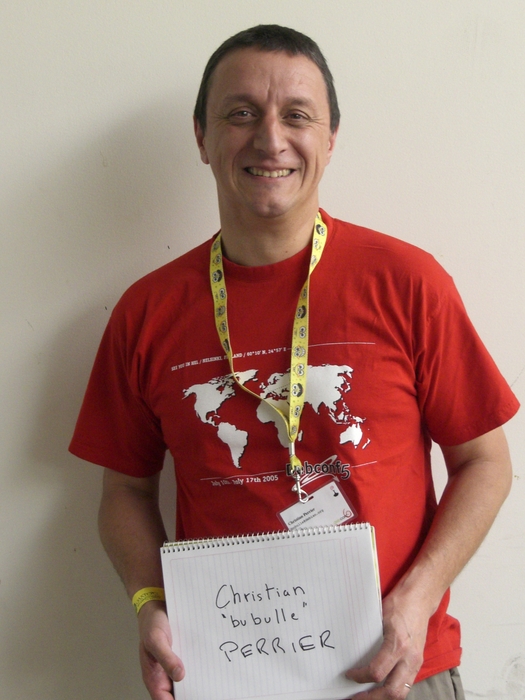
Christian Perrier: [life] [running] Boston marathon 2011

For marathon freaks, Boston marathon is a mythical one. Probably more than New York marathon, because this is the world's oldest annual marathon. Also because is is quite difficult to register for it (this year, the 20,000 seats reserved for qualifiers were distributed in....8 hours). In order to qualify, runners must have a previous mark that depends on their age and gender. For instance, in my age category (50-54), the required mark for men is 3h30, something I never achieved yet. This is what's required for the 2013 race. For 2012, it will be still 3h35, but a rolling process will be held to give best runners priority. So, in short, it will probably stay among my dream marathons forever..:-) The 2011 race happened yesterday and was a great event. Kenyan runners Geoffrey Mutai and Moses Mosop even broke Haile Gebresselassie's world record, set in Berlin, back in 2008. The ran in 2h03'02" while Gebresselassie's mark is 2h03'59". However, this record will not become official because Boston's race is one-way (thus with a possibility of consistent tailwind) and has a too big altitude difference between start and finish. However, many consider that hills on the race compensate this quite strongly, so this year's time is a really great time. And, really, from all reports I read and all images I saw, the level of support you get from the crowd is incredible there, with world famous moments like Wellesley College "scream tunnel", or Kenmore Square where, traditionnaly, the Red Sox have a game prior to marathon and the crowd then goes from Fenway Park to Kenmore Square to cheer the runners for their final mile (I have no idea how they can manage the unpredictable length of a base-ball game). And I can't even mention the final mile on Commonwealth Av., then Bolston St. Everybody who ran this once says this is something you have to do once in your life. So, well, I'm still crossing fingers..:-)...Maybe, one day a miracle happens, I can qualify *and* I get a seat and I fly to Boston...

31 March 2011

Pau Garcia i Quiles: A wish a day 7: make emerge a generic package manager for Windows

A while ago I said Koen from Emweb made an interesting proposal at FOSDEM about emerge, the KDE Windows build tool. Yesterday, Jaros aw Staniek and I reaffirmed our commitment to emerge . Today, I d like to go a bit further: let s bring more developers to emerge by opening it up to other projects. Keep reading! What is emerge, why is it important and what was Koen s proposal? Fact: Microsoft Windows is very different to Unix in regards to development. On Unix platforms -that includes Linux and Mac OS X-, software is usually installed to /usr: applications in /usr/bin and /usr/sbin, libraries in /usr/lib, headers in /usr/include, common resources in /usr/share, etc. Also, dependency management is usually something you can count on: when you install kdelibs5-dev in Ubuntu, it will automatically install libqt4-dev, kdelibs5-data, libfreetype (runtime), etc That makes setting up a development environment a very easy task: look for shared libraries, header files, etc in the common places and you will probably find them. On Windows there is nothing like that. When you want to compile an application, you need to provide (build and install) all its dependencies, and you need to tell Visual Studio where to find everything. Even CMake usually needs some help in the form of a hint for CMAKE_PREFIX_PATH. As you may imagine, building KDE, which has more than 200 third party dependencies and tens of modules (and with the move + split to git, many more) becomes an almost insurmountable task. Emerge to the rescue: inspired by Gentoo s emerge, Ralf Habacker, Christian Ehrlicher, Patrick Spendrin and others (yours faithfully included) developed a tool which downloads the source, configures, builds, installs and packages KDE and its dependencies. It makes a world of difference when building KDE. Actually, it makes building KDE on Windows possible. Once more: thank you very much guys, impressive tool. There are two well-differentiated parts in emerge, the engine and the recipes . The engine takes care of downloading the sources (tarballs, checkouts from Subversion and git clones, etc) , configuring and building for the usual build systems (QMake, CMake, NMake makefiles, etc), installing, bundling packages together and much more. All that for four compilers (MSVC2008, MSVC2010, MinGW32 and MinGW-W64). It s the equivalent to Gentoo s emerge, Debian s dpkg + debhelper/cdbs or Homebrew and MacPorts for Macintosh. The recipes are the package-specific instructions a particular piece of software needs to build: what s the name of the tarball? URL to download from? What versions are available? What build system to use to configure and build? Does it need any Windows-specific patch? They are written in Python using some helper modules emerge provides (the debhelper-like part I mentioned above). Currently, there are about 70 recipes in emerge, organized in our portage tree (bear in mind the names are taken from Gentoo but the internals of the tool are completely different). With those 70 recipes, we are able to build most KDE modules. Problem is to provide all the optional features, we are missing probably 200 to 250 more recipes. Given that KDE on Windows is quite short on developers, we have to decide: either we fix bugs and improve the integration of KDE on Windows, or we keep track of the dependencies. I won t lie: for KDE on Windows, I d rather focus on development than on packaging. Given that writing and maintaining recipes does not strictly require programming skills (although they help :-) ), during my talk at FOSDEM I kept asking people to join the KDE on Windows team as packagers, even if you know little to nothing about software development. If you think about it, that s what we have in Linux distributions: there are hundreds (thousands?) of packagers in Debian, Fedora, openSuse, etc which take care of the recipes to build software developed by someone else ( upstream , in the parlance). What we have in KDE on Windows, where we are the KDE packagers, the KDE developers (upstream) and the emerge developers, is actually an anomaly. Then Koen took the microphone and said: why don t you open emerge to other projects? And I there I realized he was damn right We have developed an awesome tool to download, configure, build, package and install third party software on Windows, to manage dependencies, to update, etc. For four compilers, no less. The engine of emerge is not really tied to KDE. We already have a lot of recipes for software which is not KDE specific: openssl, Qt, bzip2, libpng, mysql, etc. I see no actual reason to disallow Gnome, GStreamer, OpenSceneGraph, LibreOffice and many others in (assuming someone wants to take care of them, of course no, do not look at me! I don t have time!). Currently, the only barrier preventing those recipes in is emerge is developed in the KDE repository and you need a KDE developer account to commit your recipes. That s about it. There is also a perception problem: if emerge is developed in KDE, it s because it s a KDE-thingy, right? . Well, no. One way to avoid that would be to graduate emerge from KDE and make it an independent project, one in which the current developers have accounts, and new developers get an emerge project account instead of a KDE account to commit recipes. Please note graduating does not mean expelling , firing or anything peyorative. It does not mean that emerge developers (engine and recipes) are worse than KDE developers, or less KDE developers than our god David Faure: in KDE, we consider Debian, Fedora, openSuse, etc KDE packagers as equals, they are also KDE developers and many of them are in the KDE eV (funny thing is I am not). My wish for today: think of one application or library you d like to see in Windows and become its maintainer in emerge for Windows. For now, let s do this in the kde-windows mailing list and if this idea succeeds, then we ll talk about graduating. You could also try to add support for a new compiler (OpenWatcom, Intel C++, etc) but that s a lot more more and it s not a priority now. PS: Yes, I know about CoApp, Microsoft s similar effort, with some magic involved. I ve been watching and trying it since day 1. I m really interested. It s just not there yet and I do not have spare time to help Garrett (hey Microsoft, hire me and I ll have all the time in the world! :-) )

16 March 2011

Thorsten Glaser: HOWTO OpenID Delegate with Launchpad Login Service

Rhonda suggested I document how to use the LLS (Launchpad Login Service their implementation of an OpenID provider) as Delegate, which basically means, you can put something up on your webpage, which can be a simple static (X)HTML page like mine (a /index.htm is especially nice, a /~user/index.htm works too), and use its URI and not https://launchpad.net/~me to login. For example, this often hides the LLS from view e.g. in blog comments, such as those where Canonical is being criticised but it s also yours, easier to type and to change if you switch service providers. The basic idea is to go to your Launchpad user page and view its page source. Look for openid relation links in the header on Rhonda s the value we re looking for is cyLQbcp , and you see it several times.

Now you put this on your web page:

	<!-- begin: OpenID delegation to LP -->
	 <link rel="openid.server" href="https://login.launchpad.net/+openid" />
	 <link rel="openid.delegate" href="https://login.launchpad.net/+id/cyLQbcp" />
	 <link rel="openid2.provider" href="https://login.launchpad.net/+openid" />
	 <link rel="openid2.local_id" href="https://login.launchpad.net/+id/cyLQbcp" />
	<!-- end: OpenID delegation -->
 

Of course, insert your, not Rhonda s, ID. Do note that we don t copy the X-XRDS-Location tag (that breaks things for some unknown reason), but otherwise, what we insert on our page is pretty much a copy of the info on the user page (maybe it s a Delegate page, too?). As usual, try at your own risk, bug Canonical if it breaks. It works with AO3, Gerrit Code Review, and others though (interestingly enough, better in Lynx than GUI browsers because I stay logged in across Lynx sessions (and just have to confirm sending my information to the accessing site), whereas I have to re-login to the LLS in every GUI browser session). As with the LLS generally, to access a site which is not recognised is expected and worked on with low urgency (mostly cosmetical, I think).

9 March 2011

Rog rio Brito: (Some) Solutions with Chromium

In my previous post, I was pointing out some of my frustrations with Chromium/Chrome. A very kind reader, Timo Juhani Lindfors, gave me answers to many of the problems that I pointed out and got me straight on some issues:
  • I can disable full zoom in Iceweasel (i.e., I only want to zoom the text, not the images). According to Chromium's project BTS, it seems that this will be a WONTFIX bug, despite many people asking for it (and it having a lot of duplicates).
Timo told me that there is an extension called "Font Size Increase" (ID: ombpcpigmndepfckcifdblemkabaoihk) that adds a button on the side of the URL bar that you can click to increase the size of the text, without affecting the size of the images. Highly recommended. Not that I need this one as much as "Font Size Increase", but there is also a "Font Size Decrease" (ID: mpajngnpcmjjeoflljdjpnehcfaldcia) that, as the name implies, decreases the size of the text. It is nice to have this one when you clicked on the button to increase the size of the font one or two times too many.
  • In Iceweasel, I have a way (without resorting to many extensions or hackish solutions) to use the equivalent of Firefox's "View > Page Style > No Style" (i.e., to ignore any CSS sheet that the document author may have specified on the page).
Timo also told me that there is a very cool extension called "Chrome Page Style" (ID: ddpkgkegfklikkmfmneldonhldahhacb) that allows you to alternate between stylesheets provided by the page (see Joey Hess's ikiwiki's CSS Market for an example of that). It also has the possibility of disabling all the CSS'es that a page may have, which, in many cases around the web actually improves the readability of the pages, for many "fancy" things detract from readability, especially if you have poor eyesight. Although I had said that I didn't want to resort to extensions, this was a simple solution enough that made me consider revisit my requirements. I do, though, wonder why some frequently used extensions are not built into the programs from stock.
  • In Iceweasel, I can press Ctrl+Q and make the damn browser quit, instead of me having to use the mouse/trackpad/pointing device. This is probably a lack of my understanding on how to associate key bindings to Chromium, but the problem still stands.
Of course, Timo also set me straight and told me about Ctrl+Shift+Q for that purpose, which I had missed completely.
  • Similarly, when there is only one tab open, pressing Ctrl+W in Chromium does not close the tab (say, presenting me a blank tab or the list of most visited sites), nor it closes the application.
As a poor writing of my part, Ctrl+W does close the tabs. But when there is only one tab present, it doesn't close the window. I'm OK with that, since I now know the way to close the window. Thanks again Timo. Oh, and one point that may not be known by many is that using about:flags in Chrome does something analogue to Firefox's about:config (even with the warning). And tweaking with it you can try to see if you can enable hardware acceleration of some parts of your pages, as present in newer releases of Chromium. So, there I am: way more satisfied than with earlier with Chromium, but still having Firefox/Iceweasel as my primary browser. Good to have two usable browsers now.

MJ Ray: SPI March 2011

Software in the Public Interest, the contributor-led not-for-profit corporation that supports debian GNU/Linux, OpenVAS, OpenOffice.org and an ole load of other free software projects meets tonight (Wednesday 9th) at 20:30 UTC in #spi on irc.spi-inc.org. The agenda has been published and the main item to be discussed is adding LibreOffice as an associated project. What do you think of that, then? SPI supporting both LibreOffice and OpenOffice? A balanced position, fence-sitting or something else?

3 March 2011

Rapha&#235;l Hertzog: People behind Debian: Christian Perrier, translation coordinator

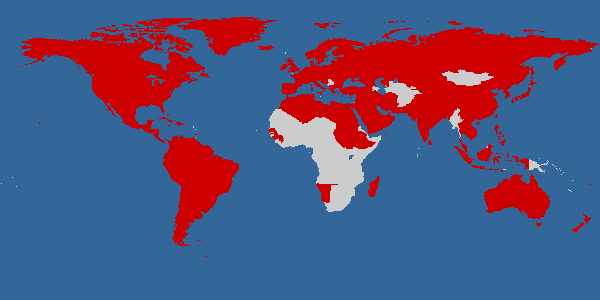
Christian is a figure of Debian, not only because of the tremendous coordination work that he does within the translation project, but also because he s very involved at the social level. He s probably in the top 5 of the persons who attended most often the Debian conference. Christian is a friend (thanks for hosting me so many times when I come to Paris for Debian related events) and I m glad that he accepted to be interviewed. He likes to speak and that shows in the length of his answers :-) but you ll be traveling the world while reading him. My questions are in bold, the rest is by Christian. Who are you? I am a French citizen (which is easy to guess unless you correct my usual mistakes in what follows). I m immensely proud of being married for nearly 26 years with Elizabeth (who deserves a statue from Debian for being so patient with my passion and my dedication to the project). I m also the proud father of 3 wonderful kids , aged 19 to 23. I work as team manager in the Networks and Computers Division of Onera the French Aerospace lab , a public research institute about Aeronautics, Space and Defense. My team provides computer management services for research divisions of Onera, with a specific focus put on individual computing. I entered the world of free software as one of the very first users of Linux in France. Back in the early 1990 s, I happened (though the BBS users communities) to be a friend of several early adopters of Linux and/or BSD386/FreeBSD/NetBSD in France. More specifically, I discovered Linux thanks with my friend Ren Cougnenc (all my free software talks are dedicated to Ren , who passed away in 1996). You re not a programmer, not even a packager. How did you come to Debian? I m definitely not a programmer and I never studied computing (I graduated in Materials Science and worked in that area for a few years after my PhD). However, my daily work always involved computing (I redesigned the creep testing laboratory and its acquisition system all by myself during my thesis research work). An my hobbies often involved playing with home computers, always trying to learn about something new. So, first learning about a new operating system then trying to figure out how to become involved in its development was quite a logical choice. Debian is my distro of choice since it exists. I used Slackware on work machines for a while, but my home server, kheops, first ran Debian 1.1 when I stopped running a BBS on an MS-DOS machine to host a news server. That was back in October 1996. I then happened to be a user, and more specifically a user of genealogy software, also participating very actively in Usenet from this home computer and server, that was running this Debian thing. So, progressively, I joined mailing lists and, being a passionate person, I tried to figure out how I could bring my own little contribution to all this. This is why I became a packager (yes, I am one!) by taking over the geneweb package, which I was using to publish my genealogy research. I applied as DD in January 2001, then got my account in July 2001. My first upload to the Debian archive occurred on August 22nd 2001: that was of course geneweb, which I still maintain. Quite quickly, I became involved in the work on French localization. I have always been a strong supporter of localized software (I even translated a few BBS software back in the early 90 s) as one of the way to bring the power and richness of free software to more users. Localization work lead me to work on the early version of Debian Installer, during those 2003-2005 years where the development of D-I was an incredibly motivating and challenging task, lead by Joey Hess and his inspiring ideas. From user to contributor to leader, I suddenly discovered, around 2004, that I became the coordinator of D-I i18n (internationalization) without even noticing :-) You re the main translation coordinator in Debian. What plans and goals have you set for Debian Wheezy? As always: paint the world in red. Indeed, this is my goal for years. I would like our favorite distro to be able to be used by anyone in the world, whether she speaks English, Northern Sami, Wolof, Uyghur or Secwepemcts n. As a matter of symbol, I use the installer for this. My stance is that one should be able to even install Debian in one s own language. So, for about 7 years, I use D-I as a way to attract new localization contributors. This progress is represented on this page where the world is gradually painted in red as long as the installer supports more languages release after release. The map above tries to illustrate this by painting in red countries when the most spoken language in the country is supported in Debian Installer. However, that map does not give enough reward to many great efforts made to support very different kind of languages. Not only various national languages, but also very different ones: all regional languages of Spain, many of the most spoken languages in India, minority languages such as Uyghur for which an effort is starting, Northern Sami because it is taught in a few schools in Norway, etc., etc. Still, the map gives a good idea of what I would like to see better supported: languages from Africa, several languages in Central Asia. And, as a very very personal goal, I m eagerly waiting for support of Tibetan in Debian Installer, the same way we support its sister language, Dzongkha from Bhutan. For this to happen, we have to make contribution to localization as easy as possible. The very distributed nature of Debian development makes this a challenge, as material to translate (D-I components, debconf screens, native packages, packages descriptions, website, documentation) is very widely spread. A goal, for years, is to set a centralized place where translators could work easily without even knowing about SVN/GIT/BZR or having to report bugs to send their work. The point, however, would be to have this without making compromises on translation quality. So, with peer review, use of thesaurus and translation memory and all such techniques. Tools for this exist: we, for instance, worked with the developers of Pootle to help making it able to cope with the huge amount of material in Debian (think about packages descriptions translations). However, as of now, the glue between such tools and the raw material (that often lies in packages) didn t come. So, currently, translation work in Debian requires a great knowledge of how things are organized, where is the material, how it can be possible to make contribution reach packages, etc. And, as I m technically unable to fulfill the goal of building the infrastructure, I m fulfilling that role of spreading out the knowledge. This is how I can define my coordinator role. Ubuntu uses a web-based tool to make it easy to contribute translations directly in Launchpad. At some point you asked Canonical to make it free software. Launchpad has been freed in the mean time. Have you (re)considered using it? Why not? After all, it more or less fills in the needs I just described. I still don t really figure out how we could have all Debian material gathered in Rosetta/Launchpad .and also how Debian packagers could easily get localized material back from the framework without changing their development processes. I have always tried to stay neutral wrt Ubuntu. As many people now in Debian, I feel like we have reached a good way to achieve our mutual development. When it comes at localization work, the early days where the everything in Rosetta and translates who wants stanza did a lot of harm to several upstream localization projects is, I think, way over. Many people who currently contribute to D-I localization were indeed sent to me by Ubuntu contributors .and by localizing D-I, apt, debconf, package descriptions, etc., they re doing translation work for Ubuntu as well as for Debian. Let s say I m a Debian user and I want to help translate Debian in my language. I can spend 1 hour per week on this activity. What should I do to start? Several language teams use Debian mailing lists to coordinate their work. If you re lucky enough to be a speaker of one of these languages, try joining debian-l10n-<yourlanguage> and follow what s happening there. Don t try to immediately jump in some translation work. First, participate to peer reviews: comment on others translations. Learn about the team s processes, jargon and habits. Then, progressively, start working on a few translations: you may want to start with translations of debconf templates: they are short, often easy to do. That s perfect if you have few time. If no language team exists for your language, try joining debian-i18n and ask about existing effort for your language. I may be able to point you to individuals working on Debian translations (very often along with other free software translation efforts). If I am not, then you have just been named coordinator for your language :-) I may even ask you if you want to work on translating the Debian Installer. What s the biggest problem of Debian? We have no problems, we only have solutions :-) We are maybe facing a growth problem for a few years. Despite the increased welcoming aspects of our processes (Debian Maintainers), Debian is having hard times in growing. The overall number of active contributors is probably stagnating for quite a while. I m still amazed, however, to see how we can cope with that and still be able to release over the years. So, after all, this is maybe not a problem :-) Many people would point communication problems here. I don t. I think that communication inside the Debian project is working fairly well now. Our famous flame wars do of course still happen from time to time, but what large free software project doesn t have flame wars? In many areas, we indeed improved communication very significantly. I want to take as an example the way the release of squeeze has been managed. I think that the release team did, even more this time, a very significant and visible effort to communicate with the entire project. And the release of squeeze has been a great success in that matter. So, there s nearly nothing that frustrates me in Debian. Even when a random developer breaks my beloved 100% completeness of French translations, I m not frustrated for more than 2 minutes. You re known in the Debian community as the organizer of the Cheese & Wine Party during DebConf. Can you tell us what this is about? This is an interesting story about how things build themselves in Debian. It all started in July 2005, before DebConf 5 in Helsinki. Denis Barbier, Nicolas Fran ois and myself agreed to bring at Debconf a few pieces of French cheese as well as 1 or 2 bottles of French wine and share them with some friends. Thus, we settled an informal meeting in the French room where we invited some fellows: from memory, Benjamin Mako Hill, Hannah Wallach, Matt Zimmermann and Moray Allan. All of us fond of smelly cheese, great wine plus some extra p t home-made by Denis in Toulouse. It finally happened that, by word of mouth, a few dozens of other people slowly joined in that French room and turned the whole thing into an improvized party that more or less lasted for the entire night. The tradition was later firmly settled in 2006, first in Debconf 6 in Mexico where I challenged the French DDs to bring as many great cheese as possible, then during the Debian i18n meeting in Extremadura (Sept 2006) where we reached the highest amount of cheese per participant ever. I think that the Creofonte building in Casar de C ceres hasn t fully recovered from it and is still smelling cheese 5 years after. This party later became a real tradition for DebConf, growing over and over each year. I see it as a wonderful way to illustrate the diversity we have in Debian, as well as the mutual enrichment we always felt during DebConfs. My only regret about it is that it became so big over the years that organizing it is always a challenge and I more and more feel pressure to make it successful. However, over the years, I always found incredible help by DebConf participants (including my own son, last year a moment of sharing which we will both remember for years, i think). And, really, in 2010, standing up on a chair, shouting (because the microphone wasn t working) to thank everybody, was the most emotional moment I had at Debconf 10. Is there someone in Debian that you admire for their contributions? So many people. So, just like it happens in many awards ceremonies, I will be very verbose to thank people, sorry in advance for this. The name that comes first is Joey Hess. Joey is someone who has a unique way to perceive what improvements are good for Debian and a very precise and meticulous way to design these improvements. Think about debconf. It is designed for so long now and still reaching its very specific goal. So well designed that it is the entire basis for Joey s other achievement: designing D-I. Moreover, I not only admire Joey for his technical work, but also for his interaction with others. He is not he loudest person around, he doesn t have to .just giving his point in discussion and, guess what? Most of the time, he s right. Someone I would like to name here, also, is Colin Watson. Colin is also someone I worked with for years (the D-I effect, again ) and, here again, the very clever way he works on technical improvements as well as his very friendly way to interact with others just make it. And, how about you, Rapha l? :-) I m really admirative of the way you work on promoting technical work on Debian. Your natural ability to explain things (as good in English as it is in French) and your motivation to share your knowledge are a great benefit for the project. Not to mention the technical achievements you made with Guillem on dpkg of course! Another person I d like to name here is Steve Langasek. We both maintain samba packages for years and collaboration with him has always been a pleasure. Just like Colin, Steve is IMHO a model to follow when it comes at people who work for Canonical while continuing their involvment in Debian. And, indeed, Steve is so patient with my mistakes and stupid questions in samba packaging that he deserves a statue. We re now reaching the end of the year where Stefano Zacchiroli was the Debian Project Leader. And, no offense intended to people who were DPL before him (all of them being people I consider to be friends of mine), I think he did the best term ever. Zack is wonderful in sharing his enthusiasm about Debian and has a unique way to do it. Up to the very end of his term, he has always been working on various aspects of the project and my only hope is that he ll run again (however, I would very well understand that he wants to go back to his hacking activities!). Hat off, Zack!I again have several other people to name in this Bubulle hall of Fame : Don Armstrong, for his constant work on improving Debian BTS, Margarita Manterola as one of the best successes of Debian Women (and the most geeky honeymoon ever), Denis Barbier and Nicolas Fran ois because i18n need really skilled people, Cyril Brulebois and Julien Cristau who kept X.org packaging alive in lenny and squeeze, Otavio Salvador who never gave up on D-I even when we were so few to care about it. I would like to make a special mention for Frans Pop. His loss in 2010 has been a shock for many of us, and particularly me. Frans and I had a similar history in Debian, both mostly working on so-called non technical duties. Frans has been the best release manager for D-I (no offense intended, at all, to Joey or Otavio .I know that both of them share this feeling with me). His very high involvment in his work and the very meticulous way he was doing it lead to great achievements in the installer. The Installation Guide work was also a model and indeed a great example of non technical work that requires as many skills as more classical technical work. So, and even though he was sometimes so picky and, I have to admit, annoying, that explains why I m still feeling sad and, in some way, guilty about Frans loss. One of my goals for wheezy is indeed to complete some things Frans left unachieved. I just found one in bug #564441: I will make this work reach the archive, benefit our users and I know that Frans would have liked that.

Thank you to Christian for the time spent answering my questions. I hope you enjoyed reading his answers as I did. Subscribe to my newsletter to get my monthly summary of the Debian/Ubuntu news and to not miss further interviews. You can also follow along on Identi.ca, Twitter and Facebook.

7 comments Liked this article? Click here. My blog is Flattr-enabled.

20 February 2011

Evgeni Golov: Desktop in a shell

People are using computers, everywhere, really! ;)
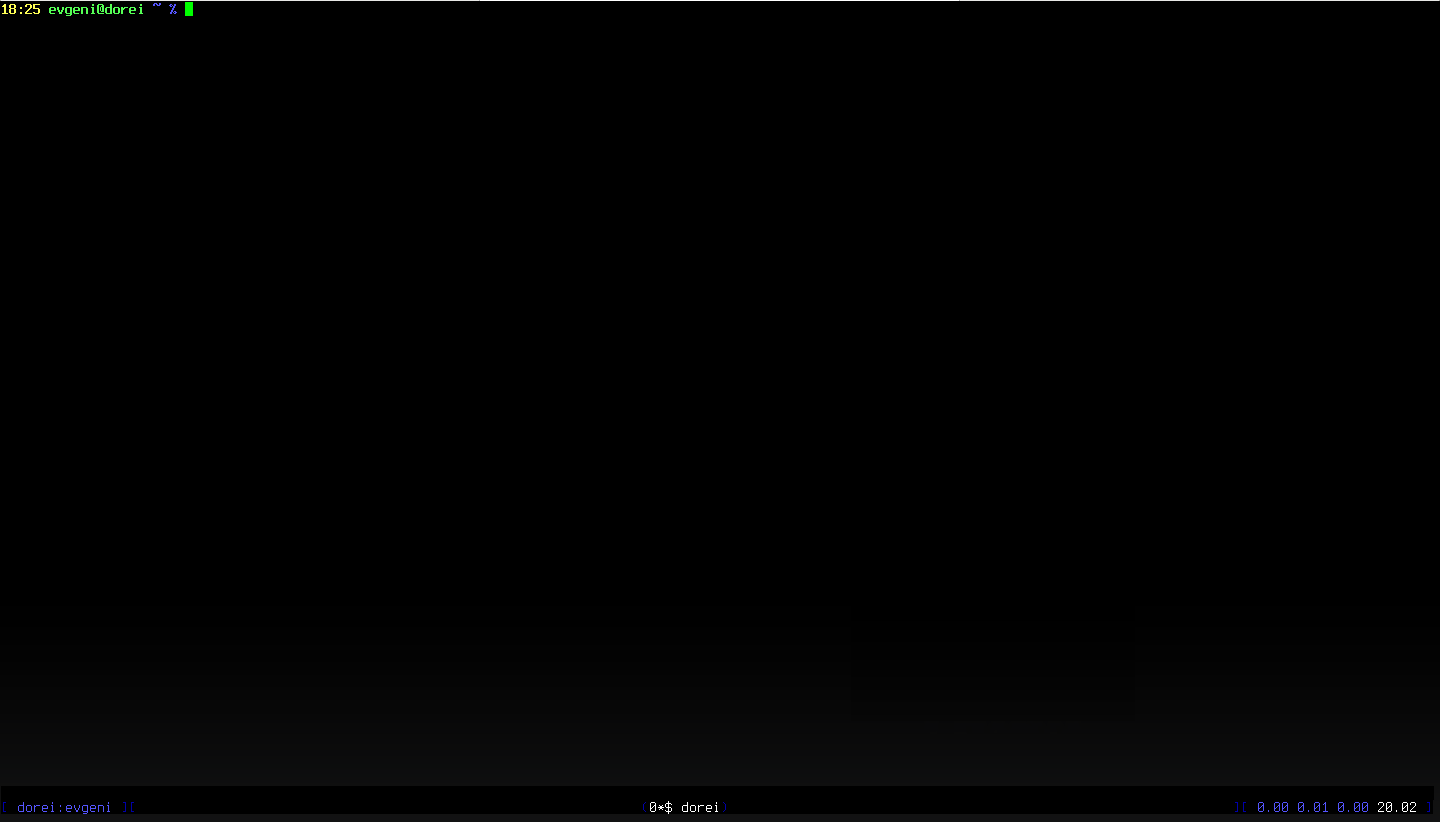
As you might guess correctly, so do I.Basically, I am using three computers: my laptop (ThinkPad X201s, awesome machine, but pabs told me not to post any more adverts for ThinkPads on Planet Debian *g*), my smartphone (Motorola Milestone, yes, that counts as a computer) and random_pc (for random as in my girlfriends or some other trusted (!!!) friends computer).
My laptop is running Debian GNU/Linux unstable with Xfce4.6, my smartphone is running Android 2.2.1 Froyo, my girlfriend has Ubuntu with GNOME, a friend runs Debian unstable with GNOME, another one Arch Linux with KDE4 and so on. And on all these machines I want be able to work, which means I have to read mail and rss, chat via IRC, JabberXMPP and ICQ, have a look at my to-do list, ssh into different machines, write some code, tweet and dent etc.In the following series of posts I will describe how I can handle about 90% of my work on every (trusted) computer out there, using ssh, screen, mutt, irssi, BitlBee, newsbeuter etc.As I am describing the setup as a Desktop in a shell , let s start with a login- and desktop/window-manager: ssh+screen.sshObviously, you need a machine to ssh into it, where the Desktop will live on. For me, that s my home router/fileserver/vm-server dorei, running Debian GNU/Linux LennySqueeze with OpenSSH as a kind of login manager ;)Yes, my user is allowed to login with a password instead of a public key. And well, that s all for the login-manager, no extra configuration needed.screenAfter logging in, I start my window-manager with screen -rd, -r for reattach a running screen session, -d for detach it if it is already attached somewhere else. Or I can start a new session by just typing screen. Inside the screen I have multiple windows (one can create new ones with ^A c) with all the needed software running. I can switch windows by pressing ^A N, N being the number of the window, ^A n for the next window, ^A p for the previous one or ^A ^a for the last one. Or I can get a window-list with ^A w. If needed, I can rename windows with ^A A, followed by the new name. That should be enough for almost everyone. Let s just add a window-list to the bottom (as you might have seen on GNOME, Xfce, KDE and even Windows ;) by adding the following to the ~/.screenrc:
caption always " "                    # clear line before hardstatus
hardstatus alwayslastline "% = kb [ % B %H:$USER % b ][ %=% w %?%-Lw%?% b (% W %n*%f %t%?(%u)%?% b )% w %?%+Lw%?%?%= % b ][% B  %l % B % W %d.%0m % b ]"
You get the current host- and username, the machine load and the date for free ;)Even if it is possible, I do not have any autostart like stuff in my .screenrc as the machine is running stable and I start the screen and the apps inside maybe once a year after a reboot.screenrcMy .screenrc looks like this:
# detach on hangup
  autodetach on
# don't display the copyright page
  startup_message off
# set scrollback to 2000 lines, default 100
  defscrollback 2000
# set silencewait to 15 seconds, default 30
  silencewait 15
# new shells should be started as login-shells
  shell -$SHELL
# make a fancy statusline
  caption always " "                    # clear line before hardstatus
  hardstatus alwayslastline "% = kb [ % B %H:$USER % b ][ %=% w %?%-Lw%?% b (% W %n*%f %t%?(%u)%?% b )% w %?%+Lw%?%?%= % b ][% B  %l % B % W %d.%0m % b ]"
# make higlighting bold, black on blue background
  sorendition +b bk
# some fixes, no I do not know where they come from :)
  termcap  xterm hs@:cs=\E[%i%d;%dr:im=\E[4h:ei=\E[4l
  terminfo xterm hs@:cs=\E[%i%p1%d;%p2%dr:im=\E[4h:ei=\E[4l
  termcapinfo  xterm Z0=\E[?3h:Z1=\E[?3l:is=\E[r\E[m\E[2J\E[H\E[?7h\E[?1;4;6l
  termcapinfo xterm* OL=100
  termcapinfo xterm 'VR=\E[?5h:VN=\E[?5l'
  termcapinfo xterm 'k1=\E[11~:k2=\E[12~:k3=\E[13~:k4=\E[14~'
  termcapinfo xterm 'kh=\EOH:kI=\E[2~:kD=\E[3~:kH=\EOF:kP=\E[5~:kN=\E[6~'
  termcapinfo xterm 'hs:ts=\E]2;:fs=\007:ds=\E]2;screen\007'
  termcapinfo xterm 'vi=\E[?25l:ve=\E[34h\E[?25h:vs=\E[34l'
  termcapinfo xterm 'XC=K%,%\E(B,[\304,\\\\\326,]\334, \344, \366, \374,~\337'
  termcapinfo xterm* be
  termcapinfo xterm xterms xs ti@:te=\E[2J
  termcapinfo wy75-42 xo:hs@
  termcapinfo wy* CS=\E[?1h:CE=\E[?1l:vi=\E[?25l:ve=\E[?25h:VR=\E[?5h:VN=\E[?5l:cb=\E[1K:CD=\E[1J
  termcapinfo  hp700 'Z0=\E[?3h:Z1=\E[?3l:hs:ts=\E[62"p\E[0$~\E[2$~\E[1$ :fs=\E[0 \E[61"p:ds=\E[62"p\E[1$~\E[61"p:ic@'
  termcap  vt100* ms:AL=\E[%dL:DL=\E[%dM:UP=\E[%dA:DO=\E[%dB:LE=\E[%dD:RI=\E[%dC
  terminfo vt100* ms:AL=\E[%p1%dL:DL=\E[%p1%dM:UP=\E[%p1%dA:DO=\E[%p1%dB:LE=\E[%p1%dD:RI=\E[%p1%dC
  termcapinfo linux C8
# some bindings
  bind k
  bind ^k
  bind .
  bind ^\
  bind \\
  bind ^h
  bind h
  bind 'w' windowlist -b
  bind 'W' windows
  bind 'K' kill
  bind 'I' login on
  bind 'O' login off
  bind ' ' history
  bind = resize =
  bind + resize +3
  bind - resize -3
# Mutt demands this
# http://wiki.mutt.org/?MuttFaq/Appearance
 defbce on
 term screen-bce
That s all for my screen setup. The obvious, boring screenshot follows:See you next time, when I will present my mutt setup here.

18 February 2011

Vincent Sanders: Shedding

For some time now Melodie has wanted more outside storage.

The current outhouse is an 3 foot by 8 foot converted outside toilet. Due to its age (built 1884) this building is no longer watertight and is generally disintegrating at an alarming rate. One day soon it will have to be demolished. That day has not yet arrived, instead we purchased a plastic shed.

Unfortunately the only viable place for the new shed was next to the old one, this required removing a six foot section of flower bed complete with ivy, bamboo and an old sink.

Last Saturday I completed this removal and lay a concrete base ready to take the new shed. You would not think such a small area (2.8m square) would require so much material and effort to concrete over. 300Kg of 3:2:1 aggregate:sand:cement concrete mix went into the hole along with 100Kg of instant set concrete (for a rapid surface in the changable weather).

Thursday afternoon Geoff (my nice helpful neighbour) offered to assist me in the assembly of the shed. I re-arranged my work schedule (yay home working) and after three hours the shed was assembled.

This morning it occurred to me that my webcam had recorded a time-lapse movie of the construction. I uploaded it to YouTube and present it here for your amusement.

<iframe allowfullscreen="" frameborder="0" height="240" src="http://www.youtube.com/embed/brTXLO2R5D0?rel=0" title="YouTube video player" width="320"></iframe>

14 February 2011

Julien Blache: QLogic QLE73xx InfiniBand adapters, QDR, ib_qib, OFED 1.5.2 and Debian Squeeze

A few weeks ago, I ve had to look into getting a QLogic QLE7342 InfiniBand adapter working on a Debian Squeeze system, with OFED 1.5.2. This post will probably save quite some time to anyone trying to do the same; it applies to all the QLogic adapters supported by the ib_qib kernel module. Note: on the ibverbs side of things, the adapters are supported by the ipath plugin, just like older QLogic adapters (that use the ib_ipath kernel module). First of all: grab a recent version of the ofa-kernel package. The ib_qib module in ofa-kernel from OFED 1.5.2 did not work at all for me. I used the ofa-kernel snapshot from 20110203. There are two things to know about the QLogic adapters: QLogic offers a complete IB stack based on OFED and dubbed QLogic OFED+ . The complete package weighs in at over 500 MB and contains the QLogic-blessed drivers, OFED stack, libraries and, of utmost importance to us, the QLogic-specific utilities. Unfortunately, as simple as the QLogic utilities are, they don t come with source. The package also only exists for RedHat 4 and 5. So, go to the QLogic support website, select your hardware and download the QLogic OFED+ Host Software for RHEL 5 package. In the tarball, one directory contains the OFED stack and another contains all the utilities (QLogic-Tools.*). For setting the adapter speed, you ll want the iba_portconfig utility along with the initscript (shipped as iba_portconfig.sh). The desired adapter speed is set in the initscript by choosing the proper arguments to iba_portconfig (-s 1 for SDR, -s 2 for DDR, -s 4 for QDR or any combination thereof). The iba_portconfig initscript must run after the drivers have been loaded. Which brings us to loading the driver and mounting the ipathfs. This is all handled by the openibd initscript provided in ofa-kernel (under ofed_scripts/) and its companion script dedicated to QLogic adapters, truescale.cmds. This initscript will load the OFED stack and drivers; if a QLogic adapter is present, it ll mount the ipathfs in the right place. Voila, once this is done, the adapter should happily report itself ACTIVE/LinkUp.

10 February 2011

Adrian von Bidder: Freedom

LWN Coverage of Eben Moglen's FOSDEM keynote. A very thoughtful article on freedom and how to get there. While we can, technically, build these free systems that Eben Moglen talks about, history has shown that we won't. People don't care until it's too late until the police is on their doorstep with an arrest warrant (if the regime cares about such details at all.) So it's up to the small minority of people who actually cares and is prepared to pay the price (in money or in being isolated by not being on Facebook or whatever) to create systems that are both Free and also appealing to the uneducated masses. People will move to Free systems only when they're much cheaper and also offer more value as perceived by them, in terms of features, or coolness or whatever. Bling. We're almost there in terms of software (Firefox managed to get noticeable market share, and people at least talk about OpenOffice / LibreOffice.) We're nowhere close in terms of networks and content, though. Wikipedia and Openstreetmap are the rare exceptions, but there's not much in terms of social networking, searching, messaging, collaboration platforms etc.: all firmly in corporate hands. I'm not sure that Moglen's Freedom Box idea will succeed either: so far, I can't see the must have element for people who don't care about these things that might change the game.

5 February 2011

Craig Small: JFFNMS and IPv6

ipv6-google-rrt.png One of the many Free Software projects I work on is JFFNMS, which is a network management system written in PHP. In light that the last IPv4 address blocks have now been allocated to APNIC it s probably timely to look at how to manage network devices in a new IPv6 world. First you need to get the basics sorted out and for that it is best to use the net-snmp command line utilities to check all is well. Then its onto what to do in JFFNMS itself. Now fixed with proper markup, I hope.
    strlcpy(hostname, a1, sizeof(hostname));
        if ((pptr = strchr (hostname, ':')))  
            remote_port = strtol (pptr + 1, NULL, 0);
         
Special Agent 6 All devices that are capable of being managed with SNMP have an agent. It s basically the SNMP server on the router, switch or server. The first step is to make sure it can accept and send traffic using IPv6. Depending on what the device is, it can be real simple. For example, my little Juniper router its a matter of setting the community and access control, just like IPv4 settings:
csmall@juniper1# set snmp community public clients 2001:db8:62:d0::/64
And then run snmpget on the command line to check
csmall@elmo$ snmpget -v 1 -c public udp6:2001:44b8:62:d0::4 system.sysObjectID.0
SNMPv2-MIB::sysObjectID.0 = OID: SNMPv2-SMI::enterprises.2636.1.1.1.2.41
We have success! For Linux systems that use net-snmp you will need to make the snmp daemon listen on UDPv6 ports as well as adjusting the access control. Access control is a matter of adding com2sec6 lines to /etc/snmp/snmpd.conf They are the same format as com2sec lines and are reasonably straight forward. Next, get the daemon to listen to requests on the IPv6 ports as well. The snmpd(8) man page says:
By default, snmpd listens for incoming SNMP requests on UDP port 161 on all IPv4 interfaces. However, it is possible to modify this behaviour by specifying one or more listening addresses as arguments to snmpd.
It wouldn t of killed them to put comma separated list somewhere, now would it? My /etc/default/snmpd file now looks like:
SNMPDOPTS= -Lf /dev/null -u snmp -g snmp -I -smux -p /var/run/snmpd.pid udp:127.0.0.1,udp6:[::1]:161
The bits in bold are the changes. Then its a quick check:
csmall@elmo$ snmpget -v 1 -c public udp6:[::1] system.sysObjectID.0
SNMPv2-MIB::sysObjectID.0 = OID: NET-SNMP-MIB::netSnmpAgentOIDs.10
And we have working agents! JFFNMS Changes OK, we have a working IPv6 network and snmp works across our network so we can query devices. JFFNMS uses PHP so all should be well, shouldn t it? Database Tables This is an almost classic problem with converting IPv4 to IPv6. You have 15 bytes for a IP address string 111.222.333.444 . Ipv6 can be much larger than that. JFFNMS has things like
  CREATE TABLE  hosts (
    [...]
   ip  char(20) NOT NULL default '',
A simple fix to use a char(39) or varchar(39) will do the trick. Fixing the JFFNMS code One of the most troubling problems with the host entries is that the values entered by a user can be a hostname, IP address or IP address and port separated by a colon. There are lots of bits of code that separate out the port or address by just finding the colon or use non-IPv6 aware functions like gethostbyname() that will need to be fixed. I ve got a function to check for an IPv6 address, using the inet_pton() function.
  function is_ipv6($addr)
 
  $net_addr = @inet_pton($addr);
  if ($net_addr === FALSE   strlen($net_addr) < 16)
    return FALSE;
  return TRUE;
 
PHP functions PHP still has the old IPv4 only functions, but unlike libc does not have the Address Family independent functions. The most significant absence is the replacement functions for gethostbyname(). There is dnsgetrecord() but it is quite low-level (it won t recurse lookups if you get alias or CNAME results). It s a little hit and miss in PHP-land with what functions work with IPv6 addresses and what ones do not. fsockopen() and file() do work with IPv6. PHP and SNMP To query remote devices using SNMP, JFFNMS uses the PHP SNMP functions. Unfortunately, while there is some IPv6 support in PHP, it doesn t extend to the SNMP functions. The library does it, as the net-snmp command lines use the same library, it is just that the small shim between the script and net-snmp that is PHP gets in the way. Looking at the PHP code itself you find things like
    strlcpy(hostname, a1, sizeof(hostname));
        if ((pptr = strchr (hostname, ':')))  
            remote_port = strtol (pptr + 1, NULL, 0);
         
which definitely need to be fixed for IPv6. There is also some simple address lookup going on somewhere as well which will also need to fixed. In short, JFFNMS won t be doing SNMP based queries over IPv6 until php5-snmp can do it. Reachability JFFNMS also has a different sort of query called a reachability type. It s essentially a ping from the server running JFFNMS out to the device being managed. It uses fping to do this work, but there is also a program called fping6. It s a simple matter of checking the address type and then selecting fping or fping6 to do the reachability work. The JFFNMS code soon to be pushed into git has this change in it now. Anything Else? The next stage is to find anything else that will work with IPv6. A likely candidate is the TCP and UDP port types as they use nmap to discover the ports and the fsockopen() function call to poll it. fsockopen() does handle IPv6 addresses if you escape them in square brackets.

2 February 2011

Enrico Zini: Gzip streaming in Python (or lack thereof)

Gzip streaming in Python (or lack thereof) Consider this simple Python snippet:
#!/usr/bin/python
import gzip
from urllib import urlopen
zfd = urlopen("http://ftp.debian.org/debian/dists/sid/Contents-udeb.gz")
fd = gzip.GzipFile(fileobj=zfd, mode="r")
for line in fd:
    foobar(line)
It does not work: it turns out GzipFile wants to seek() and tell() on its file object:
$ /tmp/z.py 
Traceback (most recent call last):
  File "/tmp/z.py", line 8, in <module>
    for line in fd:
  File "/usr/lib/python2.6/gzip.py", line 438, in next
    line = self.readline()
  File "/usr/lib/python2.6/gzip.py", line 393, in readline
    c = self.read(readsize)
  File "/usr/lib/python2.6/gzip.py", line 219, in read
    self._read(readsize)
  File "/usr/lib/python2.6/gzip.py", line 247, in _read
    pos = self.fileobj.tell()   # Save current position
AttributeError: addinfourl instance has no attribute 'tell'
Oh dear... this really shouldn't be. Let's look around the internet for details:
Since opener.open returns a file-like object, and you know from the headers that when you read it, you're going to get gzip-compressed data, why not simply pass that file-like object directly to GzipFile? As you read from the GzipFile instance, it will read compressed data from the remote HTTP server and decompress it on the fly. It's a good idea, but unfortunately it doesn't work. Because of the way gzip compression works, GzipFile needs to save its position and move forwards and backwards through the compressed file. This doesn't work when the file is a stream of bytes coming from a remote server; all you can do with it is retrieve bytes one at a time, not move back and forth through the data stream. So the inelegant hack of using StringIO is the best solution: download the compressed data, create a file-like object out of it with StringIO, and then decompress the data from that.
Oh really, so it's a limitation of "the way gzip compression works", and the only way to work around this fundamental design flaw of gzip is to buffer the lot in memory or to a temporary file? [facepalm]
# Apparently, this is not how gzip compression works:
curl http://ftp.debian.org/debian/dists/sid/Contents-udeb.gz   zcat
This is not the first time that, after finding a frustrating spot in core Python things, looking around the internet for extra information has the effect of amplifying my frustration by destroying my expectations of common sense. What is the gzip module doing anyway?
    if self._new_member:
        # If the _new_member flag is set, we have to
        # jump to the next member, if there is one.
        #
        # First, check if we're at the end of the file;
        # if so, it's time to stop; no more members to read.
        pos = self.fileobj.tell()   # Save current position
        self.fileobj.seek(0, 2)     # Seek to end of file
        if pos == self.fileobj.tell():
            raise EOFError, "Reached EOF"
        else:
            self.fileobj.seek( pos ) # Return to original position
        self._init_read()
        self._read_gzip_header()
        self.decompress = zlib.decompressobj(-zlib.MAX_WBITS)
        self._new_member = False
Right, tell() and seek() in order to check if it's reached end of file. Oh dear... So, there's a flaw in the Python standard library, and: I wish core Python documentation started properly documenting Python flaws so that one can code with language limitations in mind, insted of having to rediscover them and their work arounds every time.

Next.

Previous.