Search Results: "angel"

26 March 2016

Dirk Eddelbuettel: Rcpp 0.12.4: And another one

The fourth update in the 0.12.* series of Rcpp has now arrived on the CRAN network for GNU R, and has just been pushed to Debian as well. This follows four days of idleness in the incoming/ directory: Word is that the tireless CRAN maintainers were traveling and only covering simpler packages. The 0.12.4 release follows the 0.12.0 release from late July, the 0.12.1 release in September, the 0.12.2 release in November, and the 0.12.3 release in January -- making it the eight release at the steady bi-montly release frequency. As before, this release is more of a maintenance release addressing a number of small bugs, nuisances or documentation issues without adding any major new features. Rcpp has become the most popular way of enhancing GNU R with C or C++ code. As of today, 615 packages on CRAN depend on Rcpp for making analytical code go faster and further. That is up by more than sixty packages from the last release in January! As during the last few releases, we have new first-time contributors. Kirill Mueller extended Nullable<> to const objects. James "coatless" Balamuta helped with a much-needed update to the Rcpp FAQ concerning recommendations for OS X installations. Colin Gillespie corrected another (small) vignette issue. Contributions from the rest of the gang as well as by-now regular contributors such as Nathan or Dan are detailed below.
Changes in Rcpp version 0.12.4 (2016-03-22)
  • Changes in Rcpp API:
    • New accessors as() and clone() were added to the Nullable class (Dan in PR #423 closing #421)
    • The Nullable<>::operator SEXP() and Nullable<>::get() now also work for const objects (Kirill Mueller in PR #417).
    • A subsetting error was fixed (Qiang via #432 closing #431).
  • Changes in Rcpp Sugar:
    • Added new Sugar function median() (Nathan in PR #425 closing #424)
    • Added new Sugar function cbind() (Nathan in PR #447 closing #407)
  • Changes in Rcpp Attributes:
    • A plugin for C++14 was added (Dan in PR #427)
  • Changes in Rcpp Documentation:
    • An entry was added to the Rcpp-FAQ vignette describing the required packages for vignette building (#422).
    • Use on OS X was further detailed (James Balamuta in #433 with further review by Bob Rudis).
    • An entry was added concerning the hard-code limit of arguments to some constructor and function (cf #435).
    • The Rcpp-FAQ vignette now contains a table of content.
    • Typos and indentation were corrected in the Rcpp Sugar vignette (#445 by Colin Gillespie).
Thanks to CRANberries, you can also look at a diff to the previous release. As always, even fuller details are on the Rcpp Changelog page and the Rcpp page which also leads to the downloads page, the browseable doxygen docs and zip files of doxygen output for the standard formats. A local directory has source and documentation too. Questions, comments etc should go to the rcpp-devel mailing list off the R-Forge page.

This post by Dirk Eddelbuettel originated on his Thinking inside the box blog. Please report excessive re-aggregation in third-party for-profit settings.

23 March 2016

John Goerzen: Free cars, sunsets, and Kansas

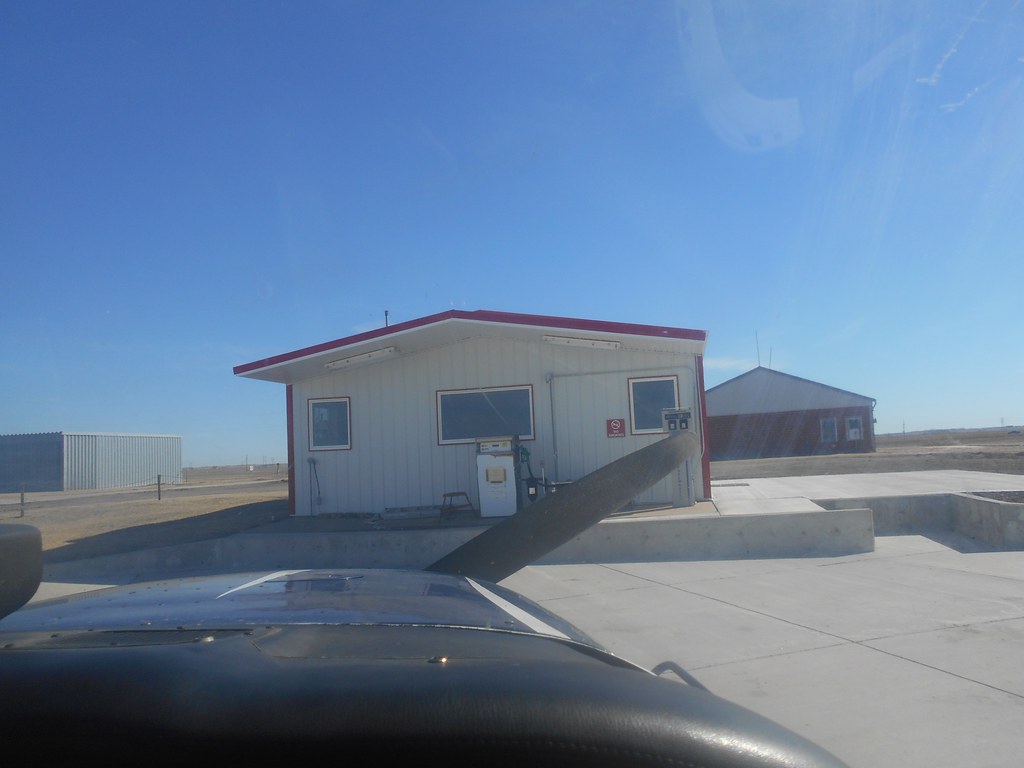
Will you have a car I can borrow? I asked. Sure. No charge. There s a sign telling you where to find the key. It is pretty common for small airports to have a car for a pilot to borrow when flying in. This lets a person go into town for lunch, or visit friends. And it s usually free, with a can to donate a few bucks or a polite request to fill up the tank when you re done. Still, when I had called ahead to ask about flying into the airport in a small town in north-central Kansas, I hadn t expected to be told to just waltz into the place and take the key. But they had no staff at the airport most of the time. So, to me another person from a small town it made perfect sense. Somehow, because of that phone call, this town I had visited once, maybe 25 years ago, seemed instantly familiar. My mom grew up in a small town near there. She wanted me to see where she grew up, to meet some people that meant a lot to her. As it s quite a distance from home, I offered to fly her there. So, Laura, mom, and I climbed into a Cessna one morning for the flight northwest. We touched down at the airport, and I pulled the plane up to the little terminal building. Smith Center, KS airport terminal After I took care of parking the plane, I went to find the car. Except the car was missing. Some other pilot had flown in the same day and was using it, according to the logbook on the desk. I called the number on a sign which rang to the sheriff s office and they confirmed it. According to the logbook, this was only the third time that car had been driven since Thanksgiving. Were we stuck at the airport a few miles out of down? Nope. Mom called the people we were going to meet, a wonderful couple in their upper 80s. They drove out to pick us up. I m rather glad the car was gone, because I had such a great time visiting with them. Norris told me about the days when the state highways were gravel how they d have to re-blade them every few days due to all the traffic. I heard about what happened when the people in that community heard of some folks in Africa in need of car equipment they modified a tractor to fit in a shipping container and shipped it to Africa, along with a lot of books, blankets, supplies, and anything else needed to fill up a huge shipping container. Sounds like something people around here would do. We drove around a couple of the small towns. The town my mom grew up in has seen better days. Its schools closed years ago, the old hotel whose owner gave her piano lessons is condemned, and many houses have been lost. But the town lives on. A new community center was built a few years ago. The grain elevator is expanding. Every time a business on Main Street closes, the grocery store expands a little bit: it s now a grocery store with a little hardware store and a little restaurant mixed in. The mall , as the locals jokingly call it. And, of course, two beautiful small churches still meet every Sunday. Here s the one my mom attended as a child. IMG_7085 We drove past the marker at the geographic center of the contiguous United States. Norris saw some other visitors, rolled down his windows, and treated them and us to an unexpected story of the time thousands of people banded together to completely build a house in a single day, just down the road. Smiles all around. So here I was, nearly 200 miles from home, in an unfamiliar town but one where I could just feel the goodness. After spending a few hours with these people, I felt like they were old friends. As I flew us home, I spotted one of my favorite Kansas sights: a beautiful sunset. From the plane, it almost looks like the land at the horizon turns blue like the ocean, and above it the last hint of sun paints the canvas-sky. In this week of controversy, politics, and reports of violence, it reminds me that we all get the privilege of sharing this beautiful Earth. I didn t ask anybody on that trip about their politics, religion, or opinions on any of the divisive issues of the day. Whether they agree with me on those things or not is irrelevant. I got to spend a day with good-hearted and delightful people, so I flew back with a smile. IMG_7099

10 March 2016

Lunar: Reproducible builds: week 45 in Stretch cycle

What happened in the reproducible builds effort between February 28th and March 5th:

Toolchain fixes
  • Antonio Terceiro uploaded gem2deb/0.27 that forces generated gemspecs to use the date from debian/changelog.
  • Antonio Terceiro uploaded gem2deb/0.28 that forces generated gemspecs to have their contains file lists sorted.
  • Robert Luberda uploaded ispell/3.4.00-5 which make builds of hashes reproducible.
  • C dric Boutillier uploaded ruby-ronn/0.7.3-4 which will make the output locale agnostic. Original patch by Chris Lamb.
  • Markus Koschany uploaded spring/101.0+dfsg-1. Fixed by Alexandre Detiste.
Ximin Luo resubmitted the patch adding the --clamp-mtime option to Tar on Savannah's bug tracker. Lunar rebased our experimental dpkg on top of the current master branch. Changes in the test infrastructure are required before uploading a new version to our experimental repository. Reiner Herrmann rebased our custom texlive-bin against the latest uploaded version.

Packages fixed The following 77 packages have become reproducible due to changes in their build dependencies: asciidoctor, atig, fuel-astute, jekyll, libphone-ui-shr, linkchecker, maven-plugin-testing, node-iscroll, origami-pdf, plexus-digest, pry, python-avro, python-odf, rails, ruby-actionpack-xml-parser, ruby-active-model-serializers, ruby-activerecord-session-store, ruby-api-pagination, ruby-babosa, ruby-carrierwave, ruby-classifier-reborn, ruby-compass, ruby-concurrent, ruby-configurate, ruby-crack, ruby-css-parser, ruby-cucumber-rails, ruby-delorean, ruby-encryptor, ruby-fakeweb, ruby-flexmock, ruby-fog-vsphere, ruby-gemojione, ruby-git, ruby-grack, ruby-htmlentities, ruby-jekyll-feed, ruby-json-schema, ruby-listen, ruby-markerb, ruby-mathml, ruby-mini-magick, ruby-net-telnet, ruby-omniauth-azure-oauth2, ruby-omniauth-saml, ruby-org, ruby-origin, ruby-prawn, ruby-pygments.rb, ruby-raemon, ruby-rails-deprecated-sanitizer, ruby-raindrops, ruby-rbpdf, ruby-rbvmomi, ruby-recaptcha, ruby-ref, ruby-responders, ruby-rjb, ruby-rspec-rails, ruby-rspec, ruby-rufus-scheduler, ruby-sass-rails, ruby-sass, ruby-sentry-raven, ruby-sequel-pg, ruby-sequel, ruby-settingslogic, ruby-shoulda-matchers, ruby-slack-notifier, ruby-symboltable, ruby-timers, ruby-zip, ticgit, tmuxinator, vagrant, wagon, yard. The following packages became reproducible after getting fixed: Some uploads fixed some reproducibility issues, but not all of them: Patches submitted which have not made their way to the archive yet:
  • #816209 on elog by Reiner Herrmann: use printf instead of echo which is shell-independent.
  • #816214 on python-pip by Reiner Herrmann: removes timestamp from generated Python scripts.
  • #816230 on rows by Reiner Herrmann: tell grep to always treat the input as text.
  • #816232 on eficas by Reiner Herrmann: use printf instead of echo which is shell-independent.
Florent Daigniere and bancfc reported that linux-grsec was currently built with GRKERNSEC_RANDSTRUCT which will prevent reproducible builds with the current packaging.

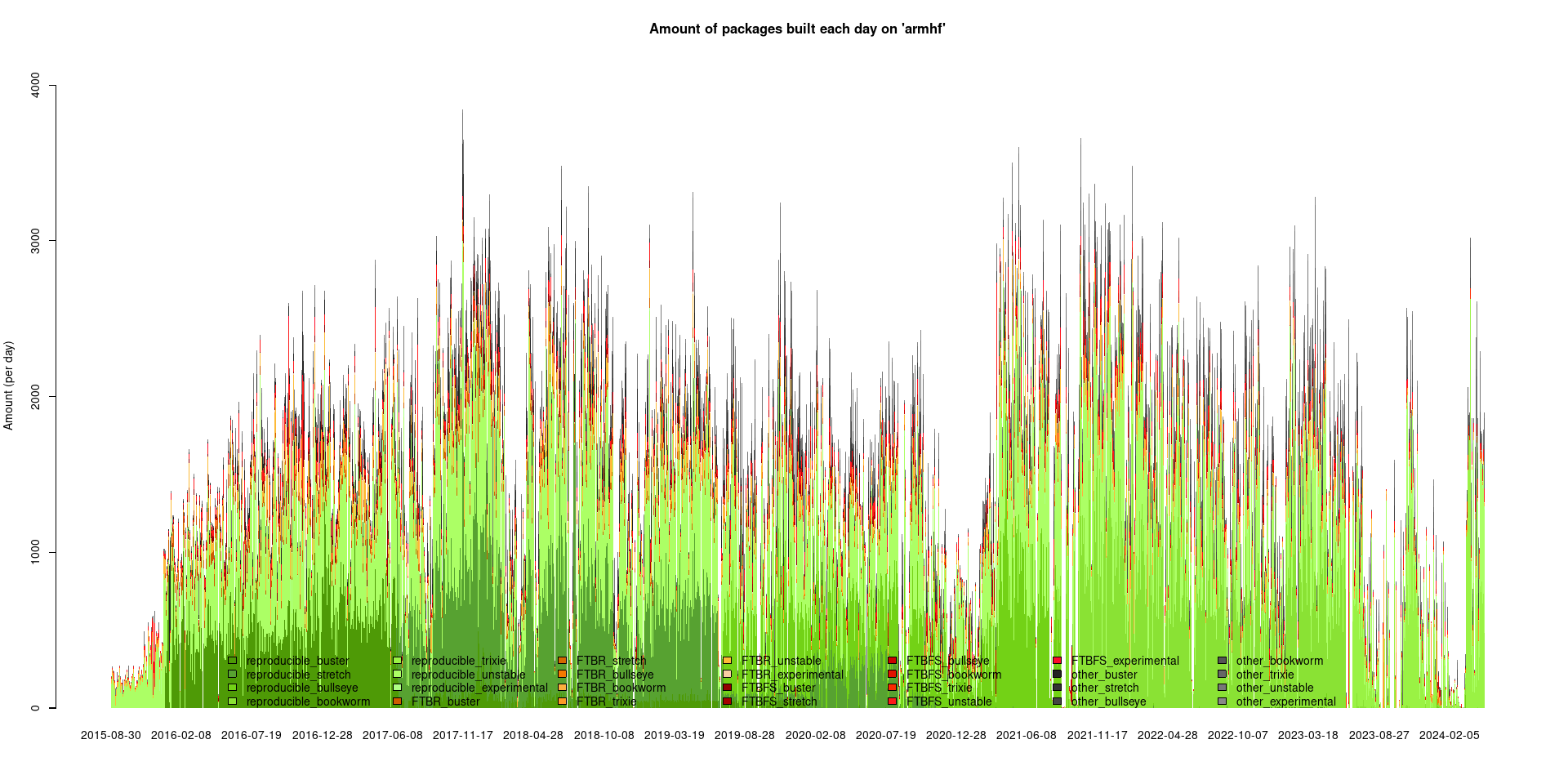
tests.reproducible-builds.org pbuilder has been updated to the last version to be able to support Build-Depends-Arch and Build-Conflicts-Arch. (Mattia Rizzolo, h01ger) New package sets have been added for Subgraph OS, which is based on Debian Stretch: packages and build dependencies. (h01ger) Two new armhf build nodes have been added (thanks Vagrant Cascadian) and integrated in our Jenkins setup with 8 new armhf builder jobs. (h01ger)

strip-nondeterminism development strip-nondeterminism version 0.016-1 was released on Sunday 28th. It will now normalize the POT-Creation-Date field in GNU Gettext .mo files. (Reiner Herrmann) Several improvements to the packages metadata have also been made. (h01ger, Ben Finney)

Package reviews 185 reviews have been removed, 91 added and 33 updated in the previous week. New issue: fileorder_in_gemspec_files_list. 43 FTBFS bugs were reported by Chris Lamb, Martin Michlmayr, and gregor herrmann.

Misc. After merging the patch from Dhiru Kholia adding support for SOURCE_DATE_EPOCH in rpm, Florian Festi opened a discussion on the rpm-ecosystem mailing list about reproducible builds. On March 4th, Lunar gave an overview of the general reproducible builds effort at the Internet Freedom Festival in Valencia.

Antoine Beaupr : Trying out Keybase

I was privileged enough to get access to the alpha preview of Keybase.io. Last year, the project raised 11M$ in venture capital and they seem to be attacking the hard problems, so it is a serious project, worth considering for any cryptography hacker like me. This was obviously discussed elsewhere previously but since Keybase has evolved a bit since then, I figured it would be worth adding my grain of salt.

The elite alpha problem My first problem with Keybase was of course that I wasn't in the elite club of invited people. Somehow, I finally got in but the problem remains for the everyone else. In my case, it was the Keybase filesystem announcement that brought my attention back to the project, although I have yet to test that itself - yet another invite-only problem (need to email chris@keybase.io to get access, I guess). Still, 10GB of storage might be interesting for some people, but considering the number of hurdles or "friction", as they say, that needs to be jumped over to get access, I am not sure how much traction this will get for now. The project has been in alpha for a while now (more than a year) with no announced public beta just yet, which is way slower than similarly challenging projects with less capital. Let's encrypt, as a comparison, was publicly announced in 2014 and by the end of 2015, the public beta was opened.

Private key leakage My second major concern is that Keybase does worrisome things to private key material. If you tell it to import your regular GPG keys, it will copy them into the keybase keyring, which is already a problem: now you have two places where you store sensitive secrets. But worse, Keybase offers you to upload your private key material on the server, without clearly and explicitely exposing the potential risks that means to the user. The key, presumably, is encrypted (at least that is what I can parse from the Keybase privacy policy). Yet this is still a concern: a determined attacker (e.g. the government or another malicious entity) could force Keybase to give up the encrypted private key material and install sniffers that would reveal the passphrase that would allow decryption and impersonation of the related identity. That is a huge deal. This is what caused Hushmail's demise in 2007: they had similar promises about how they had a "secure" email (in this case) service based on OpenPGP, but since they key was stored on the server, they only had to serve a malicious applet to victims and were able to give cleartext data to the US government (12 CDs!) under a Mutual Legal Assistance Treaty with Canada. In Keybase, When I generate a new key, it asks me if I want to upload the key to their servers, and "Yes" is chosen as a default, so it is clearly a policy that is encouraged. This is presumably to enable browser-based crypto, yet this could be done by storing keys within the browser, not on the server. The mere possibility that the client can meddle with secret key material in such a way is a problem. Even if uploading secret keys to the server is optional, the fact that it is a possibility widens the attack surface on the client significantly. GPG has been working on isolating private key operations to a different process (gpg-agent) or smart cards, SSH has privilege seperation. The idea of uploading secret key material online is so beyond current practices that it should bring the project to a full stop already. My private key material is pretty sensitive. I am a Debian developer: if someone gets access to that key, they can upload arbitrary code for thousands of packages, affecting thousands if not millions of users. That is a huge deal, and I am not ready to give that power to an arbitrary third party that I know little about.

Privacy policy issues Furthermore, the Keybase privacy policy explicitely states that "Logs of this information may persist for an indefinite period", which include, and I quote:
  • Your computer s IP address
  • Your preferences and settings (time zone, language, privacy preferences, application preferences, etc.)
  • The URL of the site that referred you to the Service
  • The buttons and controls you clicked on (if any) within the Service
  • How long you used the Service and which parts and features you used
  • Session times and lengths
For a company working to improve user's privacy, this is a pretty bad policy. It exposes Keybase users to undue surveillance, on a lot of private information that is not necessary to operate the service. I haven't actually read the remaining of the policy, as I was already scared as hell and figure I would just log off for now and try not to add any extra personal information in that already growing pile. Let's mention, while I'm here, that the keybase commandline client has this odd way of working that it forks a daemon in the background all the time, even to run just keybase status. One has to wonder if this thing is included in the surveillance data above, which would make the keybase client an amazing surveillance device in itself. To stop all this, you need:
keybase logout
keybase ctl stop
Not quite obvious...

Usability issues Which brings me to a series of usability issues I have found while working with Keybase. Having worked on usability myself in the Monkeysphere project, I understand how hard those problems can be. But right now, the fact is that keybase is only a commandline client, with some web-based sugar sprinkled on top. I recognize the huge efforts that have been done to make the user experience (UX) as easy as possible through the commandline, but this is definitely not "grand public" material yet. Even as a OpenPGP hacker, Keybase can get confusing. Since it has its own separate keyring from GPG, things that used to be obvious before are suddenly new things to learn. For example, I originally generated a key for anarcat@debian.org in keybase, thinking it would be a separate thing from my current GPG identity. Well, that ended up creating a new key in my GPG keyring, duplicating my existing identity, with no way for me to tell this was a Keybase copy. This could have ended up on the keyservers and confuse anyone looking for my PGP key.

Revoking keys So I revoked that key, which, in itself, is not such an obvious process either. I first had to "drop" the key:
keybase pgp drop '010143572d4e438f457a7447c9758804cc7be44c1ee2b7915c3904567d0a3fb5cf590a'
To find that magic number, I had to go on the website and click through the PGP key to end up on the revoke link which told me which magic string to put. The web UI was telling me I could use keybase status to get that information, but I couldn't find that in the output here:
$ keybase status
Username:      anarcat
Logged in:     no
Device:
    name:      angela
    ID:        070f6a13f2a66afbb463f49dadfd4518
    status:    active
Keybase keys:  unlocked
Session:       anarcat [salt only]
KBFS:
    status:    not running
    version:
    log:       /home/anarcat/.cache/keybase/keybase.kbfs.log
Service:
    status:    running
    version:   1.0.14-1
    log:       /home/anarcat/.cache/keybase/keybase.service.log
Platform Information:
    OS:        linux
    Runtime:   go1.5.3
    Arch:      amd64
Client:
    version:   1.0.14-1
Desktop app:
    status:    not running
    version:
    log:       /home/anarcat/.cache/keybase/Keybase.app.log
Config path:   /home/anarcat/.config/keybase/config.json
Default user:  anarcat
Other users:
command-line client:
    keybase status [pid: 14562, version: 1.0.14-1]
So keybase drop "deletes" the key from the keybase client (and presumably the server). One problem here is that we have three different verbs to mean the same thing: in some places, the website says "deleted" (in the web graph), the commandline client uses "drop" and everyone else using PGP in the world uses "revoke". So what is it? Also note that just dropping that key is not enough to eradicate that key: you still need to generate and import a revocation certificate on GPG's side as well, for that key. This makes sense, because you may have imported that key and you may not want to destroy it when you remove it from keybase, but there could be a little better guessing and UX here as well.

Password usage Then another problem is that, when you signup on the commandline, it asks you to choose a passphrase. It's not clear at all from the UI what that passphrase is for. Is it to protect the private key material? To login the website? Both? It turns out it is actually to login to the website and the Keybase API. It could also be the key to the private key material, but I haven't quite figured that out yet. Similarly, the "paper devices" are a little confusing to me as well. The registration process is fairly insistent that I need to write a series of secret words down on a piece of paper and put it my wallet. This is based on the idea that you can use that key to recover your account and setup new devices. However, it is not made clear at all how those credentials should be protected or used. What if I lose my wallet? What do I do then? Is it okay if i write it on the back of my laptop instead? I know it sounds like stupid questions to crypto geek, but it's definitely stuff people will do, and education, at all levels, is necessary here.

The existing web of trust Finally, I found it surprisingly counter-intuitive to sign keys with keybase. I was assuming the whole point of the thing was to expand the web of trust, but it seems their mission lies somewhere else: there is no facility to sign keys directly in keybase. You sign statements on various social sites (Github, Twitter, Reddit...) but doing traditional key exchanges seems to be off limits. My obvious use case was to sign my existing key material with my newly generated anarcat@keybase.io key, so that keybase would become another way of verifying my identity. Well, this is not possible with keybase directly - you still have to go through the regular:
gpg --sign-key DEADBEEF
Which is really unfortunate, because some craaaazy people like me insist on doing in person, actually secure key exchanges sometimes, and the tools to do this right now (mainly gpg, caff and monkeysign) really need a lot of love and help. Keybase could have helped a lot in pushing those initiatives forward and bring new ways of doing secure key exchanges, instead of only lowering the standards on cryptographic identity.

Usual proprietary startup rant I can't help but finish by noticing that the whole basic problem with Keybase is more fundamental than a few usability issues, which can all be fixed fairly easily. Keybase.IO is a web-based service that is entirely proprietary. The client is freely downloadable and free software - but the server side is not. This makes us rely on a central point of failure and the goodwill of those operators to not only keep the service running (for free?) indefinitely, but to protect us against all attackers, state-run or otherwise. This is definitely against basic free software principles and the open architecture of the internet federation, well embodied in the Franklin street statement. Online services should be decentralized and open like the OpenPGP keyservers have always been, period.

Conclusion I am curious to see where Keybase brings us, as a community. So far, I am concerned about centralization and devaluation of the web of trust as cryptographic system. I do not believe that trusting multiple corporate social networking sites bring much benefit to our security, although it does improve usability significantly and is certainly better than TOFU, so that part of the project is definitely interesting, especially since it allows leveraging classical internet protocols like DNS and HTTPS. Key exchange is a critical problem that still hasn't properly been resolved in the cryptographic community. Most efforts at building communication tools (say like Signal or Telegram) mostly ignore the problem and expect people to read up strings of numbers or rely on synchronous communications (see the Axolotl rachet for Signal's take on it). Keybase's attempts at fixing this are great, but needs much more work to actually resolve the PKI issues in a significant way. More fundamentally, the practice of storing keys on the servers should just stop: it is a definite no go for me, and a classic crypto mistake that has bitten way too many people. In my mind, it discredits the whole project. The point of OpenPGP is end to end encryption across devices: storing the keys on a server breaks that apart, and doesn't improve much on the existing HTTPS security systems already in place on the web. It is especially a problem given the new waves of attacks on cryptography from western governments, from the UK to California... Until those issues are resolved, I can't get myself to recommend Keybase to anyone just yet.

Post-scriptum Note to Keybase developers: I have considered filing issues regarding the above, but unfortunately, I was unable to filter through the gigantic github issues list for duplicates, and didn't have time to file detailed reports for everything. I apologize for bypassing those usual conventions. If you want to try out Keybase to make your own opinion, I do have 4 invites I can give away, but I will do so only if you need to test specific issues. Otherwise, I note that there is a Request For Package for the Debian package to become official, that Debian developers (or Keybase developers!) may be interested in completing.

7 March 2016

Dirk Eddelbuettel: Rblpapi 'Release Candidate' 0.3.2.5

We have a made numerous changes to Rblpapi since the previous release 0.3.2 in early December. You can see the commits, or look at the ChangeLog or NEWS.Rd to get an indea of the changes. We have new functions, improved internals, bug fixes and more. In order to facilitate more widespread testing, I have just placed source and (Windows) binaries in the ghrr drat repo from which you can install the new version simply via
drat:::add("ghrr")          # if you have drat installed
install.packages("Rblpapi") # uses the drat version b/c higher version number than release
Alternatively you can also do
drat:::add("ghrr")          # if you have drat installed
update.packages()           # refresh all packages against all repos
We would appreciate wider testing, and feedback / bug reports / ... via the issue tracker. PRs with unit test suggestions would also be most welcome -- we now use RUnit and run the tests if a file ~/.R/rblpapiOptions.R exists which sets the options() values for automatic connection (see help(blpConnect)) as well as the blpUnitTests=TRUE option. This is needed to 'opt-in' as standard test setups at [Travis])(https://travis-ci.org/) or CRAN will not have access to a Bloomberg terminal.

This post by Dirk Eddelbuettel originated on his Thinking inside the box blog. Please report excessive re-aggregation in third-party for-profit settings.

4 March 2016

Mike Gabriel: My FLOSS activities in February 2016

February 2016 has been a very active month regarding me contributing to the FLOSS world. Honouring my Sponsors I am happy to share that this month's FLOSS work has been sponsored by various sponsors. Thanks to all people and companies sponsoring my work on FLOSS projects. This month's MATE uploads to Debian With regards to the Beta 1 Freeze date of Ubuntu 16.04 LTS (18th Feb 2016), Martin Wimpress, Vangelis Mouhtsis and I performed quite some work on Debian MATE. Uploads to Debian unstable: The Debian MATE Packaging Team also took over maintenance of the GTK-2+ legacy package libwnck [13]. The first upload introducing some major changes and package clean-ups caused a slight wave [14] because of a missing dependency in libwnck-dev (that fell victim to some clean-ups in debian/control). Those issues have been addressed immediately and have now been settled. The main reason for working on a legacy package like libwnck was the need for having gir1.2-wnck-1.0 (back) in Debian. The new MATE dock applet requires the libwnck GIR package to be present at runtime. One of the novelties in Ubuntu MATE 16.04 LTS will be the option to adapt the look and feel of the MATE desktop to how a Unity-based desktop looks like. Martin Wimpress is giving intense work to providing a dock applet and topmenu support as one alternative among the various Ubuntu MATE desktop experiences provided. The alternative desktop layouts can be configured with the MATE Tweak tool. Work on RDP related packages Work on FreeRDP 1.1 as currently in Debian I finally managed to give some priority (and thus time) to fixing various issues in the freerdp package in Debian [15]. Many people had provided patches and solutions to open issues and I tried to honour as many of those, as possible. Please note that I had to disable the GStreamer support in FreeRDP for the recent uploads, as the currently used Git snapshot of FreeRDP only supports GStreamer 0.10's API whereas the security team is in the process of having gstreamer0.10-* packages removed from the Debian stretch/unstable archives. Work on FreeRDP 2.0, coming to Debian soon Furthermore, Bernhard Miklautz is currently working on a freerdp2 package, which will bring the latest Git snapshot of FreeRDP upstream into Debian (and also re-introduce GStreamer support, based on GStreamer 1.0). Bernhard invested a lot of time on pushing the current HEAD of FreeRDP upstream [16] towards a FreeRDP 2.x version. Starting with FreeRDP 2.x it will be possible to install different FreeRDP versions on one system without file naming conflicts. For March 2016, I have doing the final freerdp2 reviewing on my todo list (possibly together with H ctor Or n Mart nez who is highly interested in the RDP backend support in Wayland/Weston), so that we can provide first uploads to Debian experimental sometime the coming month. The packaging progress is continuously discussed on the #freerdp channel on Freenode and can also be viewed on Github [17]. Review of revised XRDP package Recently, Dominik George from Teckids e.V. [18] contacted me about reviewing their effort of updating the Debian package xrdp, which currently is in ITA state [19]. Feedback has been provided and I am waiting for a ping from his side so that I can take some (ideally) final looks at the package and sponsor the upload. Work on Debian Edu related packages This month, I spent a couple of hours of work on several Debian Edu related tasks, some of them induced by problems at local school sites we support. Work on Debian LTS My 8h-portion of work for the Debian LTS Project, I performed at the very end of February. With the Debian squeeze LTS EOL date on 29th February, I saw to finalizing my personal open todos regarding Debian squeeze LTS, which basically was getting two CVE issues fixed in the lxc package [26]. The rest of the work hours has been spent on helping out the Security Team of Debian with open CVE issues in Debian wheezy packages: The gosa .debdiff has been approved by a member of the Security Team, the upload will happen today. With my LTS frontdesk hat on (during week 9 / 2016) I also spent some time providing help regarding SVN checkout problems and raised a couple of questions on how to coordinate the work phase between the Debian squeeze LTS EOL and the official launch of the Debian wheezy LTS project phase [27]. Work on nx-libs At the end of February, I finally managed to propose a way of dropping the libNX_Xrender.so bundled library from the nx-libs code base. I filed a PR [28] against nx-libs that proposes its removal and provides a patch for using X.Org's libXrender.so version. As a preview for nx-libs work in March 2016... I have started with removing the complete libNX_X11.so library from nx-libs and using X.Org's X11 client library. This will introduce a code removal of around 160.000 lines of code to nx-libs. More to come on this later... light+love,
Mike [1] http://ubuntu-mate.org/
[2] https://www.freexian.com/
[3] http://www.qindel.com/ [4] (caja)
https://lists.debian.org/debian-devel-changes/2016/02/msg00468.html
https://lists.debian.org/debian-devel-changes/2016/02/msg02080.html
https://lists.debian.org/debian-devel-changes/2016/02/msg02086.html
https://lists.debian.org/debian-devel-changes/2016/02/msg02183.html [5] (mate-menu)
https://lists.debian.org/debian-devel-changes/2016/02/msg00469.html [6] (mate-panel)
https://lists.debian.org/debian-devel-changes/2016/02/msg01900.html [7] (mate-dock-applet)
https://lists.debian.org/debian-devel-changes/2016/02/msg01935.html
https://lists.debian.org/debian-devel-changes/2016/02/msg02481.html
https://lists.debian.org/debian-devel-changes/2016/02/msg03097.html [8] (mate-polkit)
https://lists.debian.org/debian-devel-changes/2016/02/msg01936.html
https://lists.debian.org/debian-devel-changes/2016/02/msg02395.html [9] (eom)
https://lists.debian.org/debian-devel-changes/2016/02/msg02073.html [10] (pluma)
https://lists.debian.org/debian-devel-changes/2016/02/msg02128.html [11] (topmenu-gtk)
https://lists.debian.org/debian-devel-changes/2016/02/msg02399.html
https://lists.debian.org/debian-devel-changes/2016/02/msg02501.html [12] (mate-tweak)
https://lists.debian.org/debian-devel-changes/2016/02/msg03086.html [13] (libwnck)
https://lists.debian.org/debian-devel-changes/2016/02/msg01248.html
https://lists.debian.org/debian-devel-changes/2016/02/msg01404.html
https://lists.debian.org/debian-devel-changes/2016/02/msg01825.html [14] https://bugs.debian.org/cgi-bin/bugreport.cgi?bug=814585
https://bugs.debian.org/cgi-bin/bugreport.cgi?bug=814588
https://bugs.debian.org/cgi-bin/bugreport.cgi?bug=814697 [15] (freerdp)
https://lists.debian.org/debian-devel-changes/2016/02/msg02487.html
https://lists.debian.org/debian-devel-changes/2016/02/msg02630.html [16] https://github.com/FreeRDP/FreeRDP
[17] https://github.com/bmiklautz/debian-freerdp2 [18] https://www.teckids.org/ [19] https://bugs.debian.org/cgi-bin/bugreport.cgi?bug=719624 [20] (gosa)
https://lists.debian.org/debian-devel-changes/2016/02/msg01554.html
https://lists.debian.org/debian-devel-changes/2016/02/msg01954.html [21] https://sunweavers.net/blog/node/34 [22] (ldap2zone)
https://lists.debian.org/debian-devel-changes/2016/02/msg01966.html
https://lists.debian.org/debian-devel-changes/2016/02/msg01967.html [23] (shutdown-at-night)
https://lists.debian.org/debian-devel-changes/2016/02/msg03605.html [24] (italc)
https://lists.debian.org/debian-devel-changes/2016/02/msg01944.html [25] https://bugs.debian.org/cgi-bin/bugreport.cgi?bug=815948 [26] (lxc, Debian squeeze LTS)
https://lists.debian.org/debian-lts-changes/2016/02/msg00037.html [27] https://lists.debian.org/debian-lts/2016/02/msg00155.html
(The thread continues in March 2016) [28] https://github.com/ArcticaProject/nx-libs/pull/93

3 March 2016

Antonio Terceiro: Debian Ruby Sprint 2016 - day 3: Ruby 2.3 in unstable, Reproducible Builds, and Data Structures for Dinner Booths

Day 3 was again a full of useful work. Since the beginning of the sprint, we were able to fix more than 50 FTBFS bugs, alongside general quality improvements in the packages.
in the Debian jargon, FTBFS means that a package fails to build from source , which in Debian is a critical bug because users need to be able to produce binary packages from their source code to fully exercise the free software principles.
An important milestone that was also achieved on day 3 was the upload of ruby-defaults 1:2.3.0+1, making ruby2.3 the new default version of Ruby. That is the version that will shipped in the next Debian release, codenamed stretch. This is the culmination of a joint effort between the Ruby team and Debian Release Team that involves rebuilding a little more than 130 packages that use the Ruby C API to make sure everything will just work on upgrades, both from the previous stable release, and from earlier snapshots of the current development release. Another small change that will have a big impact for Debian and for free software was an improvement to gem2deb that fixes a reproducibility issue in Ruby packages and will help currently more than 100 Ruby packages become reproducible. The full list of items that have been worked on is this: The day ended at Outback, where we had an amount of beer that led us to formulate what we will now call the One-Sided Dinner Booth Problem. In a party arranged like above, when the people closest to wall need to go alleviate themselves of some beer, you basically have to perform a removal from the bottom of a stack, which requires popping all the elements at the top. When they come back, you have to options: The One-Sided Dinner Booth Problem is finding the optimal data structure and algorithm for this situation. It is postulated that this is an NP-complete problem, and that only probabilistic solutions are cost-effective.

1 March 2016

Stein Magnus Jodal: February contributions

The following is a short summary of my open source work in February, just like in previous months.

Debian

Mopidy
  • Released Mopidy-Spotify 2.3.1: Works around search being broken in libspotify by using the Spotify Web API for the search functionality, and nothing else.
  • Wrapped up and released Mopidy 2.0 release. This was a quite large release that ports to GStreamer 1.x and adds support for gapless playback. It was uploaded to Debian in time to be part of Ubuntu 16.04 LTS.
  • Released Mopidy-Spotify 3.0.0: A couple of small compatibility fixes to work with Mopidy 2.x and GStreamer 1.x.
  • Updates to packages not in Debian, only at apt.mopidy.com:
    • Uploaded mopidy-spotify-tunigo 1.0.0-0mopidy1. Far down the chain, it depends on libspotify, which is not in Debian.
    • Uploaded mopidy-spotify 2.0.0-0mopidy1.
  • Updated homebrew-mopidy with lots of new releases:
    • Mopidy 2.0.0
    • Mopidy-Dirble 1.3.0
    • Mopidy-SoundCloud 2.0.2
    • Mopidy-Spotify 2.3.0, 2.3.1 and 3.0.0
    • python-backports-abc 0.4
    • python-backports-ssl-match-hostname 3.5.0.1
    • python-certifi 2015.11.20.1
    • python-cffi 1.5.0 and 1.5.2
    • python-requests 2.9.1
    • python-singledispatch 3.4.0.3
    • python-six 1.10.0
    • python-tornado 4.3
  • Rebased my feature/py3-compat branch on top of Mopidy 2.0.
  • Planned breaking changes for Mopidy 3.0: unbundling of Mopidy.js, removal of deprecated core APIs, model APIs, audio APIs and removal of the http/static_dir config.
  • Planned breaking changes to modernize Mopidy.js: change default calling convention to by-position-or-by-name, replace When.js with ES6 Promise, replace Bane.js with EventEmitter, and replace Buster.js with Karma+Mocha.

Comics
  • Started working on the upgrade to Django 1.8. Most deps are upgraded. The major remaining pieces is to upgrade django-registration from 0.8 to 2.0 and to replace the years-old vendored copy of django-invitation (singular) with django-invitations (plural).

29 February 2016

Chris Lamb: Free software activities in February 2016

Here is my monthly update covering a large part of what I have been doing in the free software world (previously):
Debian
  • Updated travis.debian.net a hosted script to easily test and build Debian packages on the Travis CI continuous integration platform to support:
    • Automatic bumping of the version number in debian/changelog based on TRAVIS_BUILD_NUMBER. (#14)
    • Security repositories. Thanks to Stefan Jenkner for the initial pull request. These are additionally now enabled by default. (#15)
    • The backports repositories. (#13)
  • Applied #812830 and #812830 from James Clark to the Debian Archive Kit to improve the interface of various webpages it generates.
  • Updated the SSL certificate for try.diffoscope.org, a hosted version of the diffoscope in-depth and content-aware diff utility. Thanks to Bytemark for sponsoring the hardware.
  • Worked on my slides for Reproducible Builds - fulfilling the original promise of free software, to be presented at FOSSASIA '16.
My work in the Reproducible Builds project was also covered in more depth in Lunar's weekly reports (#40, #41, #42, #43)
LTS

This month I have been paid to work 18 hours on Debian Long Term Support (LTS). In that time I did the following:
  • "Frontdesk" duty for the week of 22nd 28th, triaging CVEs, etc.
  • Proofread announcements, etc. for the upcoming migration to wheezy-lts.
  • Issued DLA 417-1 for xdelta3 to fix a buffer overflow that allowed arbitrary code execution from input files.
  • Issued DLA 420-1 for libmatroska, correcting a heap information leak.
  • Issued DLA 428-1 for websvn fixing a cross-site scripting vulnerability.
  • Issued DLA 429-1 for pixman fixing a buffer overflow issue.
  • Issued DLA 430-1 & DLA 431-1 for libfcgi and libfcgi-perl respectfully, fixing a remote denial-of-service (DoS) vulnerability.

Uploads
  • redis (2:3.0.7-2) Correcting my SOURCE_DATE_EPOCH reproducibility patch as the conditional was accidentally inverted. Thanks to Reiner Herrmann (deki).
  • disque (1.0~rc1-5) Making the parallel SOURCE_DATE_EPOCH patch change and additionally tidying the packaging after introducing procps as a build-dependency.


RC bugs


I also filed 137 FTBFS bugs against aac-tactics, angular.js, astyle, bcftools, blacs-mpi, bogofilter, boxes, caldav-tester, ccdproc, ckeditor, coq-float, cqrlog, dasher, django-recurrence, dspdfviewer, eclipse-egit, ess, etcd, felix-latin, fio, flexml, funny-manpages, gap-atlasrep, garmin-plugin, gitlab, gnome-mines, graphicsmagick, haskell-nettle, healpy, hg-git, hunspell, hwloc, ijs, ipset, janest-core-extended, jpathwatch, kcompletion, kcompletion, keyrings.alt, kodi-pvr-hts, kodi-pvr-vdr-vnsi, libcommons-compress-java, libgnome2-wnck-perl, libkate, liblrdf, libm4ri, libnet-server-mail-perl, libsis-jhdf5-java, libspectre, libteam, libwnck, libwnckmm, libxkbcommon, lombok, lombok-patcher, mako, maven-dependency-analyzer, mopidy-mpris, mricron, multcomp, netty-3.9, numexpr, ocaml-textutils, openimageio, openttd-openmsx, osmcoastline, osmium-tool, php-guzzle, php-net-smartirc, plexus-component-metadata, polari, profitbricks-client, pyentropy, pynn, pyorbital, pypuppetdb, python-aioeventlet, python-certifi, python-hglib, python-kdcproxy, python-matplotlib-venn, python-mne, python-mpop, python-multipletau, python-pbh5tools, python-positional, python-pydot-ng, python-pysam, python-snuggs, python-tasklib, r-cran-arm, r-cran-httpuv, r-cran-tm, rjava, ros-geometry-experimental, ros-image-common, ros-pluginlib, ros-ros-comm, rows, rr, ruby-albino, ruby-awesome-print, ruby-default-value-for, ruby-fast-gettext, ruby-github-linguist, ruby-gruff, ruby-hipchat, ruby-omniauth-crowd, ruby-packetfu, ruby-termios, ruby-thinking-sphinx, ruby-tinder, ruby-versionomy, ruby-zentest, sbsigntool, scikit-learn, scolasync, sdl-image1.2, signon-ui, sisu-guice, sofa-framework, spykeutils, ssreflect, sunpy, tomcat-maven-plugin, topmenu-gtk, trocla, trocla, tzdata, verbiste, wcsaxes, whitedune, wikidiff2, wmaker, xmlbeans, xserver-xorg-input-aiptek & zeroc-icee-java.

FTP Team

As a Debian FTP assistant I ACCEPTed 107 packages: androguard, android-platform-dalvik, android-platform-development, android-platform-frameworks-base, android-platform-frameworks-native, android-platform-libnativehelper, android-platform-system-core, android-platform-system-extras, android-platform-tools-base, android-sdk-meta, apktool, armci-mpi, assertj-core, bart, bind9, caja, caldav-tester, clamav, class.js, diamond, diffoscope, django-webpack-loader, djangocms-admin-style, dnsvi, esptool, fuel-astute, gcc-6-cross, gcc-6-cross-ports, gdal, giella-core, gnupg, golang-github-go-ini-ini, golang-github-tarm-serial, gplaycli, gradle-jflex-plugin, haskell-mountpoints, haskell-simple, hurd, iceweasel, insubstantial, intellij-annotations, jetty9, juce, keyrings.alt, leptonlib, libclamunrar, libdate-pregnancy-perl, libgpg-error, libhtml5parser-java, libica, libvoikko, linux, llvm-toolchain-3.8, lombok-patcher, mate-dock-applet, mate-polkit, mono-reference-assemblies, mxt-app, node-abab, node-array-equal, node-array-flatten, node-array-unique, node-bufferjs, node-cors, node-deep-extend, node-original, node-setimmediate, node-simplesmtp, node-uglify-save-license, node-unpipe, oar, openjdk-8, openjdk-9, pg8000, phantomjs, php-defaults, php-random-compat, php-symfony-polyfill, pnetcdf, postgresql-debversion, pulseaudio-dlna, pyconfigure, pyomo, pysatellites, python-fuelclient, python-m3u8, python-pbh5tools, python-qtpy, python-shellescape, python-tunigo, pyutilib, qhull, r-cran-rjsonio, r-cran-tm, reapr, ruby-fog-dynect, scummvm-tools, symfony, talloc, tesseract, twextpy, unattended-upgrades, uwsgi, vim-command-t, win-iconv, xkcdpass & xserver-xorg-video-ast. I additionally REJECTed 4 packages.

21 February 2016

Lunar: Reproducible builds: week 43 in Stretch cycle

What happened in the reproducible builds effort between February 14th and February 20th 2016:

Toolchain fixes Yaroslav Halchenko uploaded cython/0.23.4+git4-g7eed8d8-1 which makes its output deterministic. Original patch by Chris Lamb. Didier Raboud uploaded pyppd/1.0.2-3 to experimental which now serialize PPD deterministically. Lunar submitted two patches for lcms to add a way for clients to set the creation date/time in profile headers and initialize all bytes when writing named colors.

Packages fixed The following packages have become reproducible due to changes in their build dependencies: dbconfig-common, dctrl-tools, dvdwizard, ekg2, expeyes, galternatives, gpodder, icewm, latex-mk, libiio, lives, navit, po4a, tasksel, tilda, vdr-plugin-infosatepg, xaos. The following packages became reproducible after getting fixed: Some uploads fixed some reproducibility issues, but not all of them: Unknown status:
  • tomcat7/7.0.68-1 by Emmanuel Bourg (test suite fails in test environment).
Patches submitted which have not made their way to the archive yet:
  • #814840 on tor by Petter Reinholdtsen: use the UTC timezone when calling asciidoc.
  • #815082 on arachne-pnr by Dhole: use the C locale to format the changelog date.
  • #815192 on manpages-de by Reiner Herrmann: tell grep to always treat the input as text so that it works with non-UTF-8 locales.
  • #815193 on razorqt by Reiner Herrmann: tell grep to always treat the input as text so that it works with non-UTF-8 locales.
  • #815250 on jacal by Reiner Herrmann: use the C locale to format the build date.
  • #815252 on colord by Lunar: remove extra timestamps when generating CMF and spectra and implement support for SOURCE_DATE_EPOCH.

reproducible.debian.net Two new package sets have been added: freedombox and freedombox_build-depends. (h01ger)

diffoscope development diffoscope version 49 was released on February 17th. It continues to improve handling of debug symbols for ELF files. Their content will now be compared separately to make them more readable. The search for matching debug packages is more efficient by looking only for .deb files in the same parent directory. Alongside more bug fixes, support for ICC profiles has been added, and libarchive is now also used to read metadata for ar archives.

strip-nondeterminism development Reiner Herrmann added support to normalize Gettext .mo files.

Package reviews 170 reviews have been removed, 172 added and 54 updated in the previous week. 34 new FTBFS bugs have been opened by Chris Lamb, h01ger and Reiner Herrmann. New issues added this week: lxqt_translate_desktop_binary_file_matched_under_certain_locales, timestamps_in_manpages_generated_by_autogen. Improvements to the prebuilder script: avoid ccache, skip disorderfs hook if device nodes cannot be created, compatibility with grsec trusted path execution (Reiner Herrmann), code cleanup (Esa Peuha).

Misc. Steven Chamberlain highlighted reproducibility problems due to differences in how Linux and FreeBSD handle permissions for symlinks. Some possible ways forward have been discussed on the reproducible-builds mailing list. Bernhard M. Wiedemann reported on some reproducibility tests made on OpenSuse mentioning the growing support for SOURCE_DATE_EPOCH. If you are eligible for Outreachy or Google Summer of Code, consider spending the summer working on reproducible builds!

18 February 2016

Stein Magnus Jodal: A guide to poor API management

This is the story of libspotify, as experienced by a Spotify customer and libspotify developer for six years.

Step 1: Support your API for years Since April 2009, libspotify has been a mostly nice although proprietary C library for integrating with the Spotify music streaming service, providing both music metadata and full playback capabilities. Language wrappers have been written for a plenitude of programming languages (including my own pyspotify). libspotify is integrated into numerous open source projects (including my own Mopidy), networked AV receivers, and rumour has it: even cars. In addition to being closed source, there was another catch: in order to use it, you need the Spotify premium subscription. Speaking from my own experience supporting a project integrating with Spotify for the last six years: lots of end users upgraded to premium in order to use the projects built on top of libspotify.

Step 2: Stop accepting bug reports and stop releasing updates In May 2012, Spotify released libspotify 12.1.51 for all supported architectures, which now even included Android. After months of endless requests from the quickly growing hoards of Raspberry Pi users, Spotify released libspotify 12.1.103 for hardfloat armv6 on January 22 2013. The release included minor API additions, like the addition of explicit lyrics and means for accepting Spotify s Terms of Service. The additions in 12.1.103 never reached the other supported architectures and 12.1.51 remains the last release for those. There was no clear communication about this being the end of libspotify, releases have just ceased. libspotify has not been mentioned in a single developer blog post or developer email newsletter since. That s now more than three years ago.

Step 3: Create new APIs Over the next couple of years Spotify released a new Web API and iOS and Android SDKs. Through their developer blog, they communicated quite a bit both about these and about the deprecation of the apps inside the Spotify desktop client. Here are some pieces from their developer blog to illustrate: The Web API grew steadily, as documented by the Web APIs changelog. Over time, its feature list improved, supporting anonymous endpoints for generic music metadata as well as OAuth protected endpoints for managing your own music collection and playlists. The only major part missing that prevented developers replacing libspotify was music playback, as the Web API only provides 30 second previews. From what I recall of 2014 IRC discussions with Spotify employees, they had built a new much smaller library for streaming music. The iOS and Android SDKs were simply platform specific wrappers around this new playback library and the new Web API. My impression is that, after a number of beta releases, the iOS and Android SDKs seamlessly replaced libspotify on those platforms. The plan was apparently to release the new playback library for desktop too, so that it, in combination with the Web API, could replace libspotify there as well. That was all back in 2014.

Step 4: Deprecate old APIs At some point, Spotify deprecated their old web API, the Metadata API. There was no blog post about it and it was not mentioned in any Spotify Developer News email I ve received in recent years. I guess they only published this fact as a note on the Metadata API web page; it is therefore hard to track down exactly when it was deprecated and how the deprecation was communicated. Anyway, it was deprecated, and the natural upgrade path was to the new Web API. Spotify even has a migration guide mapping the concepts of the Metadata API to the new Web API. All good. In May 2015, after 28 months without a single release or any news, libspotify is officially deprecated. The communication channel of choice? A note on the libspotify web page. No post on the developer blog. No Spotify Developer News email. To be able to use libspotify, all developers have registered and requested a personal application key. To my knowledge, none of these registered library users were notified directly.

Step 5: Shut down an old API On January 20 2016 Spotify end-of-lifed their Metadata API. I don t know if this date was communicated on the Metadata API web page well in advance of this shutdown. There s no blog post on the topic. There s no news email. There s no tweet from @SpotifyPlatform or @SpotifyStatus. I can t find anything except users commenting on various Spotify documentation pages that the text is outdated because the API is no longer merely deprecated, but entirely shut down. Hopefully they did publish the shutdown date ahead of time. It had a full replacement API and a migration guide. Fair and square. Nothing much to complain about here. It s time to get porting your code to the Web API! But frankly, I don t really care about this Metadata API because I don t use the Metadata API, do I?

Step 6: Break your API without warning February 3 2016, Mopidy users start reporting General transient error when searching Spotify. This is a libspotify error message known as SP_ERROR_OTHER_TRANSIENT with error code 16. This error usually means that there is some unspecified issue with the Spotify service. We ve actually seen it before and like its name suggests, it is indeed transient and soon goes away. According to a series of tweets between my fellow Mopidy developer Nick Steel and @SpotifyCares it appears that the libspotify search functionality was backed by the Metadata API s search functionality. Who knew? I m not aware of any relation between these APIs ever being mentioned publicly. No libspotify user could possibly have known that the Metadata API shutdown would affect them. Let s summarize: libspotify hasn t had any releases for three years and it was officially deprecated in May last year. But, there have been no warnings about any shutdown. The libspotify project is likely no longer staffed at all. Did someone just forget that libspotify depended on the Metadata API they were shutting down? Many newer networked AV receivers use the Spotify Connect libraries that are exclusive to Spotify s commercial partners. But some receivers probably still use libspotify. If so, did Spotify just break hardware sold with Spotify support as a major feature? Something that people are paying a monthly fee to use? It seems they did! In the Spotify Community forums there are numerous reports of broken devices and software that all have two things in common: the date the problem started occurring, and that search is the only feature that is broken. Surely, Spotify will quickly explain themselves and fix this?

Step 7: Stay quiet Since the API shutdown, Spotify has been very quiet. No posts on the developer blog. No email newsletter. No tweets from @SpotifyPlatform since December 1 last year. Some users at The Spotify Community forum are quoting responses from Spotify. Most responses seem to link to the Metadata API migration docs and state that application developers must migrate. In other cases the responses point the finger at the commercial partner which only adds to the confusion. Some of these devices may use the Metadata API directly, and in those cases the application maintainers are probably to blame. However, I m quite certain that the libspotify search issue is responsible for a fair share of these complaints. libspotify, in contrast to the Metadata API, has never been officially shut down. The responsibility for any breakage caused by libspotify is Spotify s alone.

What I want from Spotify
  1. Apologize to your paying customers and supporters.
  2. Get substantially better at communicating deprecations and shutdowns. We want all news, not just good news.
  3. Give us a new supported C library for audio playback. Now! Not later this year. I ve heard that promise for three consecutive years now. We can live with pre-release software quality initially. Getting the library out sooner rather than later shows us that there is a road ahead for all the projects that stream music from Spotify. Let us get started making new language wrappers.
  4. Release Spotify Connect specifications and libraries. We want to make music players that can be controlled by the Spotify mobile app. We want to make music controllers that can play music on all the Spotify Connect software and hardware players we ve invested in. You ve created this technology, now let us use it.
Thanks to Nick Steel for reviewing this blog post.

11 February 2016

Jose M. Calhariz: Preview of amanda 3.3.8-1, second try.

I found a bug in amanda-3.3.8 that was quickly fixed by upstream. Please upgrade to this version. The updates will go to collab-maint.The debs files for jessie are here: amanda-common_3.3.8-1_cal1_i386.deb amanda-server_3.3.8-1_cal1_i386.deb amanda-client_3.3.8-1_cal1_i386.deb Here comes the changelog:
amanda (1:3.3.8-1~cal1) unstable; urgency=low
  * New Upstream version
    * Changes for 3.3.8
      * s3 devices
          New NEARLINE S3-STORAGE-CLASS for Google storage.
          New AWS4 STORAGE-API
      * amcryptsimple
          Works with newer gpg2.
      * amgtar
          Default SPARSE value is NO if tar < 1.28.
          Because a bug in tar with some filesystem.
      * amstar
          support include in backup mode.
      * ampgsql
          Add FULL-WAL property.
      * Many bugs fix.
    * Changes for 3.3.7p1
      * Fix build in 3.3.7
    * Changes for 3.3.7
      * amvault
          new --no-interactivity argument.
          new --src-labelstr argument.
      * amdump
          compute crc32 of the streams and write them to the debug files.
      * chg-robot
          Add a BROKEN-DRIVE-LOADED-SLOT property.
      * Many bugs fix.
  * Refreshed patches.
  * Dropped patches that were applied by the upstream: fix-misc-typos,
    automake-add-missing, fix-amcheck-M.patch,
    fix-device-src_rait-device.c, fix-amreport-perl_Amanda_Report_human.pm
  * Change the email of the maintainer.
  * "wrap-and-sort -at" all control files.
  * swig is a new build depend.
  * Bump standard version to 3.9.6, no changes needed.
  * Replace deprecated dependency perl5 by perl, (Closes: #808209), thank
    you Gregor Herrmann for the NMU.
  * New patch fix-amgtar-exclude to fix amgtar when the exclude file don't
    exist.
 -- Jose M Calhariz <jose@calhariz.com>  Thu, 11 Feb 2016 17:52:08 +0000

5 February 2016

Jose M. Calhariz: Preview of amanda 3.3.8-1

While I sort out a sponsor, my sponsor is very busy, here is a preview of the new packages. So anyone can install and test them on jessie. The source of the packages is in collab-maint.The debs files for jessie are here: amanda-common_3.3.8-1_cal0_i386.deb amanda-server_3.3.8-1_cal0_i386.deb amanda-client_3.3.8-1_cal0_i386.deb Here comes the changelog:
amanda (1:3.3.8-1~cal0) unstable; urgency=low
  * New Upstream version
    * Changes for 3.3.8
      * s3 devices
          New NEARLINE S3-STORAGE-CLASS for Google storage.
          New AWS4 STORAGE-API
      * amcryptsimple
          Works with newer gpg2.
      * amgtar
          Default SPARSE value is NO if tar < 1.28.
          Because a bug in tar with some filesystem.
      * amstar
          support include in backup mode.
      * ampgsql
          Add FULL-WAL property.
      * Many bugs fix.
    * Changes for 3.3.7p1
      * Fix build in 3.3.7
    * Changes for 3.3.7
      * amvault
          new --no-interactivity argument.
          new --src-labelstr argument.
      * amdump
          compute crc32 of the streams and write them to the debug files.
      * chg-robot
          Add a BROKEN-DRIVE-LOADED-SLOT property.
      * Many bugs fix.
  * Refreshed patches.
  * Dropped patches that were applied by the upstream: fix-misc-typos,
    automake-add-missing, fix-amcheck-M.patch,
    fix-device-src_rait-device.c, fix-amreport-perl_Amanda_Report_human.pm
  * Change the email of the maintainer.
  * "wrap-and-sort -at" all control files.
  * swig is a new build depend.
  * Bump standard version to 3.9.6, no changes needed.
  * Replace deprecated dependency perl5 by perl, (Closes: #808209), thank
    you Gregor Herrmann for the NMU.
 -- Jose M Calhariz <jose@calhariz.com>  Tue, 02 Feb 2016 19:56:12 +0000

4 February 2016

Vincent Fourmond: Making oprofile work again with recent kernels

I've been using oprofile for profiling programs for a while now (and especially QSoas, because it doesn't require specific compilation options, and doesn't make your program run much more slowly (like valgrind does, which can also be used to some extent for profiling). It's a pity the Debian package was dropped long ago, but the ubuntu packages work out of the box on Debian. But, today, while trying to see what takes so long in some fits I'm running, here's what I get:
~ operf QSoas
Unexpected error running operf: Permission denied

Looking further using strace, I could see that what was not working was the first call to perf_event_open.
It took me quite a long time to understand why it stopped working and how to get it working again, so here's for those of you who googled the error and couldn't find any answer (including me, who will probably have forgotten the anwser in a couple of months). The reason behing the change is that, for security reason, non-privileged users do not have the necessary privileges since Debian kernel 4.1.3-1; here's the relevant bit from the changelog:

  * security: Apply and enable GRKERNSEC_PERF_HARDEN feature from Grsecurity,
    disabling use of perf_event_open() by unprivileged users by default
    (sysctl: kernel.perf_event_paranoid)

The solution is simple, just run as root:
~ sysctl kernel.perf_event_paranoid=1

(the default value seems to be 3, for now). Hope it helps !

1 February 2016

Mike Gabriel: My FLOSS activities in January 2016

In January 2016 I was finally able to work on various FLOSS topics again (after two months of heavily focussed local customer work): Upload of MATE 1.12 to Debian testing/unstable At the beginning of the new year, I finalized the bundle upload of MATE 1.12 to Debian unstable [1]. All uploaded packages are available in Debian testing (stretch) and Ubuntu xenial by now. MATE 1.12 will also be the version shipped in Ubuntu MATE 16.04 LTS. Additionally, I finally uploaded caja-dropbox to Debian unstable (non-free), thanks to Vangelis Mouhtsis and Martin Wimpress for doing first steps preparations. The package has already left Debian's NEW queue, but unfortunately has been removed from Debian testing (stretch) again due to build failures in one of its dependencies. Debian LTS work In January 2016 I did my first round of Debian LTS front desk work [2]. Before actually starting with my front desk duty, I worked myself through the documentation and found it difficult to understand the output of the lts-cve-triage.py script. So, I proposed various improvments to the output of that script (all committed by now). During the second week of January then, I triaged the following packages regarding known/open CVE issues: read more

28 January 2016

Michal &#268;iha&#345;: Security work

As you can now see on phpMyAdmin's security page, we've managed to spend 9 security announcements on todays release. Hopefully it won't continue that bad in rest of the year. Anyway receiving such extensive report was really challenging for us - correctly tracking and fixing all reported issues, discovering which versions are affected. This proven to be quite difficult given that most of the affected code has been refactored meanwhile. But I'm quite happy we've managed to fix ll issues on three supported branches in two weeks. Another challenge (especially for Isaac) was that this all came with change of our release manager, so forgive us some minor problems with the releases (especially not updated changelogs), we will do it better next time! PS: Updated packages are on their way to Debian and phpMyAdmin PPA. PS2: It seems we've messed few more things, so expect quick followup releases for older versions.

Filed under: Debian English phpMyAdmin 4 comments

Joachim Breitner: Dreaming of role playing

Recently, at a summer-school-like event, we were discussing pen-and-paper role playing. I m not sure if this was after a session of role-playing, but I was making the point that you don t need much or any at all of the rules, and scores, and dice, if you are one of the story-telling role players, and it can actually be more fun this way. As an example, I said, it can make sense if one of the players (and the game master, I suppose) reads up a lot about one aspect of the fantasy world, e.g. one geographical area, one cult, one person, and then this knowledge is used to create an exciting puzzle, even without any opponents. I m not quite sure, but I think I fell asleep shortly after, and I dreamed of such a role playing session. It was going roughly like this:
I (a human), and my fellows (at least a dwarf, not sure about the rest) went to some castle. It was empty, but scary. We crossed its hall, and went into a room on the other side. It was locked towards the hall by a door that covered the door frame only partly, and suddenly we could see a large Ogre, together with other foul folk not worth mentioning, hammered at the door. My group (which was a bit larger in that moment) all prepared shooting arrows at him the moment it burst through the door. I had the time to appreciate the ingenuity that we all waited for him to burst through, so that none of the arrows would bounce of the door, but it did not help, and we ran from the castle, over a field, through a forest, at the other side of which we could see, below a sleep slope, a house, so we went there. The path towards that was filled with tracks that looked surprisingly like car tracks. When we reached the spot there was no house any more, but rather a cold camp side. We saw digging tools, and helmets (strangely, baseball helmets) were arranged in a circle, as if it was a burial site. We set up camp there and slept. It occurred to me that I must have been the rightful owner of the castle, and it was taken by me from my brother and his wife, who denied my existence or something treacherously like that. When we woke up at the camp side, she were there, together with what must be my niece. My sister in law mocked us for fighting unsuccessfully at the castle, but my niece was surprised to see me, as I must have a very similar appearance to my brother. She said that her mother forbid it, but she nevertheless sneakily takes out something which looks like a Gameboy with a camera attachment and a CompactFlash card from her mothers purse, puts it in and take a photo of me. This is when I realize that I will get my castle back.
At that moment, I woke up. I somewhat liked the story (and it was a bit more coherent in my mind than what I then wrote down here), so I wanted to write it down. I quickly fetched my laptop. My friends at the summer school were a bit worried, and I promised not to mention their names and concrete places, and started writing. They distracted me, so I searched for a place of my own, lied down (why? no idea), and continued writing. I had to to touch writing on my belly, because my laptop was not actually there. I also noticed that I am back at the camp side, and that I am still wearing my back protector that I must have been wearing while fighting in the castle, and which I did not take off while sleeping at the camp side. Funnily, it was not a proper medieval amour, but rather my snowboarding back protector.
At that moment, I woke up. I somewhat liked the story (and it was a bit more coherent in my mind than what I then wrote down here), so I wanted to write it down. I quickly got up, started my laptop, and wrote it down. And this is what you are reading right now. Off to bed again, let s see what happens next.

27 January 2016

John Goerzen: Bach, Dot Matrix Printers, and Dinner

Dinner last night started out all normal. Then Jacob and Oliver started asking me about printers. First they wanted to know how an ink jet printer works. Then they wanted to know how a laser printer works. Then they wanted to know what would happen if you d put ink in a laser printer or toner in an ink jet. They were fascinated as I described the various kinds of clogging and ruining that would inevitably occur. Then these words: What other kinds of printers are there? So our dinner conversation started to resolve around printers. I talked about daisy wheel printers, line printers, dot matrix printers. I explained the type chain of line printers, the pins of dot matrix. More printers! I had to dig deeper into my memory: wax transfer printers, thermal printers, dye sublimation, always describing a bit about how each one worked except for dye sublimation, which I couldn t remember many details about. More printers! So we went onwards towards the printing press, offset printing, screen printing, mimeograph, and photocopiers. Although I could give them plenty of details about most of the printers, I also failed under their barrage of questions about offset printing. So I finally capitulated, and said should I go get my phone and look it up while you finish eating? YEAH! So I looked up the misty details of dye sublimation and offset printing and described how they worked. That seemed to satisfy them. Then they asked me what my favorite kind of printer was. I said dot matrix, because it makes the best sound. That had their attention. They stopped eating to ask the vitally important question: Dad, what sound does it make? At this point, I did my best dot matrix impression at the dinner table, to much laughter and delight. Before long, they wanted to see videos of dot matrix printers. They were fascinated by them. And then I found this gem of a dot matrix printer playing a famous Bach tune, which fascinated me also: I guess it must have all sunk in, because this morning before school Jacob all of a sudden begged to see the fuser in my laser printer. So we turned it around, opened up the back panel to his obvious excitement and then I pointed to the fuser, with its hot label. I even heard a breathy wow from him.

25 January 2016

Antoine Beaupr : Internet in Cuba

A lot has been written about the Internet in Cuba over the years. I have read a few articles, from New York Times' happy support for Google's invasion of Cuba to RSF's dramatic and fairly outdated report about censorship in Cuba. Having written before about Internet censorship in Tunisia, I was curious to see if I could get a feel of what it is like over there, now that a new Castro is in power and the Obama administration has started restoring diplomatic ties with Cuba. With those political changes coming signifying the end of an embargo that has been called genocidal by the Cuban government, it is surprisingly difficult to get fresh information about the current state of affairs. This article aims to fill that gap in clarifying how the internet works in Cuba, what kind of censorship mechanisms are in place and how to work around them. It also digs more technically into the network architecture and performance. It is published in the hope of providing both Cubans and the rest of the world with a better understanding of their network and, if possible, Cubans ways to access the internet more cheaply or without censorship.

"Censorship" and workarounds Unfortunately, I have been connected to the internet only through the the Varadero airport and the WiFi of a "full included" resort near Jibacoa. I have to come to assume that this network is likely to be on a segregated, uncensored internet while the rest of the country suffers the wrath of the Internet censorship in Cuba I have seen documented elsewhere. Through my research, I couldn't find any sort of direct censorship. The Netalyzr tool couldn't find anything significantly wrong with the connection, other than the obvious performance problems related both to the overloaded uplinks of the Cuban internet. I ran an incomplete OONI probe as well, and it seems there was no obvious censorship detected there as well, at least according to folks in the helpful #ooni IRC channel. Tor also works fine, and could be a great way to avoid the global surveillance system described later in this article. Nevertheless, it still remains to be seen how the internet is censored in the "real" Cuban internet, outside of the tourist designated areas - hopefully future visitors or locals can expand on this using the tools mentioned above, using the regular internet. Usual care should be taken when using any workaround tools, mentioned in this post or not, as different regimes over the world have accused, detained, tortured and killed sometimes for the mere fact of using or distributing circumvention tools. For example, a Russian developer was arrested and detained in 2001 by United States' FBI for exposing vulnerabilities in the Adobe e-books copy protection mechanisms. Similarly, people distributing Tor and other tools have been arrested during the period prior to the revolution in Tunisia.

The Cuban captive portal There is, however, a more pernicious and yet very obvious censorship mechanism at work in Cuba: to get access to the internet, you have to go through what seems to be a state-wide captive portal, which I have seen both at the hotel and the airport. It is presumably deployed at all levels of the internet access points. To get credentials through that portal, you need a username and password which you get by buying a Nauta card. Those cards cost 2$CUC and get you an hour of basically unlimited internet access. That may not seem like a lot for a rich northern hotel party-goer, but for Cubans, it's a lot of money, given that the average monthly salary is around 20$CUC. The system is also pretty annoying to use, because it means you do not get continuous network access: every hour, you need to input a new card, which will obviously make streaming movies and other online activities annoying. It also makes hosting servers basically impossible. So while Cuba does not have, like China or Iran, a "great firewall", there is definitely a big restriction to going online in Cuba. Indeed, it seems to be how the government ensures that Cubans do not foment too much dissent online: keep the internet slow and inaccessible, and you won't get too many Arab spring / blogger revolutions.

Bypassing the Cuban captive portal The good news is that it is perfectly possible for Cubans (or at least for a tourist like me with resources outside of the country) to bypass the captive portal. Like many poorly implemented portals, the portal allows DNS traffic to go through, which makes it possible to access the global network for free by using a tool like iodine which tunnels IP traffic over DNS requests. Of course, the bandwidth and reliability of the connection you get through such a portal is pretty bad. I have regularly seen 80% packet loss and over two minutes of latency:
--- 10.0.0.1 ping statistics ---
163 packets transmitted, 31 received, 80% packet loss, time 162391ms
rtt min/avg/max/mdev = 133.700/2669.535/64188.027/11257.336 ms, pipe 65
Still, it allowed me to login to my home server through SSH using Mosh to workaround the reliability issues. Every once in a while, mosh would get stuck and keep on trying to send packets to probe the server, which would clog the connection even more. So I regularly had to restart the whole stack using these commands:
killall iodine # stop DNS tunnel
nmcli n off # turn off wifi to change MAC address
macchanger -A wlan0 # change MAC address
nmcli n on # turn wifi back on
sleep 3 # wait for wifi to settle
iodine-client-start # restart DNS tunnel
The Koumbit Wiki has good instructions on how to setup a DNS tunnel. I am wondering if such a public service could be of use for Cubans, although I am not sure how it could be deployed only for Cubans, and what kind of traffic it could support... The fact is that iodine does require a server to operate, and that server must be run on the outside of the censored perimeter, something that Cubans may not be able to afford in the first place. Another possible way to save money with the captive portal would be to write something that automates connecting and disconnecting from the portal. You would feed that program a list of credentials and it would connect to the portal only on demand, and disconnect as soon as no traffic goes through. There are details on the implementation of the captive portal below that may help future endeavours in that field.

Private information revealed to the captive portal It should be mentioned, however, that the captive portal has a significant amount of information on clients, which is a direct threat to the online privacy of Cuban internet users. Of course the unique identifiers issued with the Nauta cards can be correlated with your identity, right from the start. For example, I had to give my room number to get a Nauta card issued. Then the central portal also knows which access point you are connected to. For example, the central portal I was connected to Wifi_Memories_Jibacoa which, for anyone that cares to research, will give them a location of about 20 square meters where I was located when connected (there is only one access point in the whole hotel). Finally, the central portal also knows my MAC address, a unique identifier for the computer I am using which also reveals which brand of computer I am using (Mac, Lenovo, etc). While this address can be changed, very few people know that, let alone how. This led me to question whether I would be allowed back in Cuba (or even allowed out!) after publishing this blog post, as it is obvious that I can be easily identified based on the time this article was published, my name and other details. Hopefully the Cuban government will either not notice or not care, but this can be a tricky situation, obviously. I have heard that Cuban prisons are not the best hangout place in Cuba, to say the least...

Network configuration assessment This section is more technical and delves more deeply in the Cuban internet to analyze the quality and topology of the network, along with hints as to which hardware and providers are being used to support the Cuban government.

Line quality The internet is actually not so bad in the hotel. Again, this may be because of the very fact that I am in that hotel, and I get a privileged access to the new fiber line to Venezuela, the ALBA-1 link. The line speed I get is around 1mbps, according to speedtest, which selected a server from LIME in George Town, Cayman Islands:
[1034]anarcat@angela:cuba$ speedtest
Retrieving speedtest.net configuration...
Retrieving speedtest.net server list...
Testing from Empresa de Telecomunicaciones de Cuba (152.206.92.146)...
Selecting best server based on latency...
Hosted by LIME (George Town) [391.78 km]: 317.546 ms
Testing download speed........................................
Download: 1.01 Mbits/s
Testing upload speed..................................................
Upload: 1.00 Mbits/s
Latency to the rest of the world is of couse slow:
--- koumbit.org ping statistics ---
122 packets transmitted, 120 received, 1,64% packet loss, time 18731,6ms
rtt min/avg/max/sdev = 127,457/156,097/725,211/94,688 ms
--- google.com ping statistics ---
122 packets transmitted, 121 received, 0,82% packet loss, time 19371,4ms
rtt min/avg/max/sdev = 132,517/160,095/724,971/93,273 ms
--- redcta.org.ar ping statistics ---
122 packets transmitted, 120 received, 1,64% packet loss, time 40748,6ms
rtt min/avg/max/sdev = 303,035/339,572/965,092/97,503 ms
--- ccc.de ping statistics ---
122 packets transmitted, 72 received, 40,98% packet loss, time 19560,2ms
rtt min/avg/max/sdev = 244,266/271,670/594,104/61,933 ms
Interestingly, Koumbit is actually the closest host in the above test. It could be that Canadian hosts are less affected by bandwidth problems compared to US hosts because of the embargo.

Network topology The various traceroutes show a fairly odd network topology, but that is typical of what I would described as "colonized internet users", which have layers and layers of NAT and obscure routing that keep them from the real internet. Just like large corporations are implementing NAT in a large scale, Cuba seems to have layers and layers of private RFC 1918 IPv4 space. A typical traceroute starts with:
traceroute to koumbit.net (199.58.80.33), 30 hops max, 60 byte packets
 1  10.156.41.1 (10.156.41.1)  9.724 ms  9.472 ms  9.405 ms
 2  192.168.134.137 (192.168.134.137)  16.089 ms  15.612 ms  15.509 ms
 3  172.31.252.113 (172.31.252.113)  15.350 ms  15.805 ms  15.358 ms
 4  pos6-0-0-agu-cr-1.mpls.enet.cu (172.31.253.197)  15.286 ms  14.832 ms  14.405 ms
 5  172.31.252.29 (172.31.252.29)  13.734 ms  13.685 ms  14.485 ms
 6  200.0.16.130 (200.0.16.130)  14.428 ms  11.393 ms  10.977 ms
 7  200.0.16.74 (200.0.16.74)  10.738 ms  10.019 ms  10.326 ms
 8  ix-11-3-1-0.tcore1.TNK-Toronto.as6453.net (64.86.33.45)  108.577 ms  108.449 ms
Let's take this apart line by line:
 1  10.156.41.1 (10.156.41.1)  9.724 ms  9.472 ms  9.405 ms
This is my local gateway, probably the hotel's wifi router.
 2  192.168.134.137 (192.168.134.137)  16.089 ms  15.612 ms  15.509 ms
This is likely not very far from the local gateway, probably still in Cuba. It in one bit away from the captive portal IP address (see below) so it is very likely related to the captive portal implementation.
 3  172.31.252.113 (172.31.252.113)  15.350 ms  15.805 ms  15.358 ms
 4  pos6-0-0-agu-cr-1.mpls.enet.cu (172.31.253.197)  15.286 ms  14.832 ms  14.405 ms
 5  172.31.252.29 (172.31.252.29)  13.734 ms  13.685 ms  14.485 ms
All those are withing RFC 1918 space. Interestingly, the Cuban DNS servers resolve one of those private IPs as within Cuban space, on line #4. That line is interesting because it reveals the potential use of MPLS.
 6  200.0.16.130 (200.0.16.130)  14.428 ms  11.393 ms  10.977 ms
 7  200.0.16.74 (200.0.16.74)  10.738 ms  10.019 ms  10.326 ms
Those two lines are the only ones that actually reveal that the route belongs in Cuba at all. Both IPs are in a tiny (/24, or 256 IP addresses) network allocated to ETECSA, the state telco in Cuba:
inetnum:     200.0.16/24
status:      allocated
aut-num:     N/A
owner:       EMPRESA DE TELECOMUNICACIONES DE CUBA S.A. (IXP CUBA)
ownerid:     CU-CUBA-LACNIC
responsible: Rafael L pez Guerra
address:     Ave. Independencia y 19 Mayo, s/n,
address:     10600 - La Habana - CH
country:     CU
phone:       +53 7 574242 []
owner-c:     JOQ
tech-c:      JOQ
abuse-c:     JEM52
inetrev:     200.0.16/24
nserver:     NS1.NAP.ETECSA.NET
nsstat:      20160123 AA
nslastaa:    20160123
nserver:     NS2.NAP.ETECSA.NET
nsstat:      20160123 AA
nslastaa:    20160123
created:     20030512
changed:     20140610
Then the last hop:
 8  ix-11-3-1-0.tcore1.TNK-Toronto.as6453.net (64.86.33.45)  108.577 ms  108.449 ms  108.257 ms
...interestingly, lands directly in Toronto, in this case going later to Koumbit but that is the first hop that varies according to the destination, hops 1-7 being a common trunk to all external communications. It's also interesting that this shoves a good 90 milliseconds extra in latency, showing that a significant distance and number of equipment crossed. Yet a single hop is crossed, not showing the intermediate step of the Venezuelan link or any other links for that matter. Something obscure is going on there... Also interesting to note is the traceroute to the redirection host, which is only one hop away:
traceroute to 192.168.134.138 (192.168.134.138), 30 hops max, 60 byte packets
 1  192.168.134.138 (192.168.134.138)  6.027 ms  5.698 ms  5.596 ms
Even though it is not the gateway:
$ ip route
default via 10.156.41.1 dev wlan0  proto static  metric 1024
10.156.41.0/24 dev wlan0  proto kernel  scope link  src 10.156.41.4
169.254.0.0/16 dev wlan0  scope link  metric 1000
This means a very close coordination between the different access points and the captive portal system. Finally, note that there seems to be only three peers to the Cuban internet: Teleglobe, formerly Canadian, now owned by the Indian [[!wiki Tata group]], and Telef nica, the Spanish Telco that colonized most of Latin America's internet, all the way down to Argentina. This is confirmed by my traceroutes, which show traffic to Koumbit going through Tata and Google's going through Telef nica.

Captive portal implementation The captive portal is https://www.portal-wifi-temas.nauta.cu/ (not accessible outside of Cuba) and uses a self-signed certificate. The domain name resolves to 190.6.81.230 in the hotel. Accessing http://1.1.1.1/ gives you a status page which allows you to disconnect from the portal. It actually redirects you to https://192.168.134.138/logout.user. That is also a self-signed, but different certificate. That certificate actually reveals the implication of Gemtek which is a "world-leading provider of Wireless Broadband solutions, offering a wide range of solutions from residential to business". It is somewhat unclear if the implication of Gemtek here is deliberate or a misconfiguration on the part of Cuban officials, especially since the certificate is self-signed and was issued in 2002. It could be, however, a trace of the supposed involvement of China in the development of Cuba's networking systems, although Gemtek is based in Taiwan, and not in the China mainland. That IP, in turn, redirects you to the same portal but in a page that shows you the statistics:
https://www.portal-wifi-temas.nauta.cu/?mac=0024D1717D18&script=logout.user&remain_time=00%3A55%3A52&session_time=00%3A04%3A08&username=151003576287&clientip=10.156.41.21&nasid=Wifi_Memories_Jibacoa&r=ac%2Fpopup
Notice how you see the MAC address of the machine in the URL (randomized, this is not my MAC address), along with the remaining time, session time, client IP and the Wifi access point ESSID. There may be some potential in defrauding the session time there, I haven't tested it directly. Hitting Actualizar redirects you back to the IP address, which redirects you to the right URL on the portal. The "real" logout is at:
http://192.168.134.138/logout.user?cmd=logout
The login is performed against https://www.portal-wifi-temas.nauta.cu/index.php?r=ac/login with a referer of:
https://www.portal-wifi-temas.nauta.cu/?&nasid=Wifi_Memories_Jibacoa&nasip=192.168.134.138&clientip=10.156.41.21&mac=EC:55:F9:C5:F2:55&ourl=http%3a%2f%2fgoogle.ca%2f&sslport=443&lang=en-US%2cen%3bq%3d0.8&lanip=10.156.41.1
Again, notice the information revealed to the central portal.

Equipment and providers I ran Nmap probes against both the captive portal and the redirection host, in the hope of finding out how they were built and if they could reveal the source of the equipment used. The complete nmap probes are available in nmap, but it seems that the captive portal is running some embedded device. It is confusing because the probe for the captive portal responds as if it was the gateway, which blurs even more the distinction between the hotel's gateway and the captive portal. This raises the distinct possibility that all access points are actually captive portal that authenticate to another central server. The nmap traces do show three distinct hosts however:
  • the captive portal (www.portal-wifi-temas.nauta.cu, 190.6.81.230)
  • some redirection host (192.168.134.138)
  • the hotel's gateway (10.156.41.1)
They do have distinct signatures so the above may be just me misinterpreting traceroute and nmap results. Your comments may help in clarifying the above. Still, the three devices show up as running Linux, in the two last cases versions between 2.4.21 and 2.4.31. Now, to find out which version of Linux it is running is way more challenging, and it is possible it is just some custom Linux distribution. Indeed, the webserver shows up as G4200.GSI.2.22.0155 and the SSH server is running OpenSSH 3.0.2p1, which is basically prehistoric (2002!) which corroborates the idea that this is some Gemtek embedded device. The fact that those devices are running 14 years old software should be a concern to the people responsible for those networks. There is, for example, a remote root vulnerability that affects that specific version of OpenSSH, among many other vulnerabilities.

A note on Nauta card's security Finally, one can note that it is probably trivial to guess card UIDs. All cards i have here start with the prefix 15100, the following digits being 3576 or 4595, presumably depending on the "batch" that was sent to different hotels, which seems to be batches of 1000 cards. You can also correlate the UID with the date at which the card was issued. For example, 15100357XXX cards are all valid until 19/03/2017, and 151004595XXX cards are all valid until 23/03/2017. Here's the list of UIDs I have seen:
151004595313
151004595974
151003576287
151003576105
151003576097
The passwords, on the other hand, do seem fairly random (although my sample size is small). Interestingly, those passwords are also 12 digits long, which is about as strong as a seven-letter password (mixed uppercase and lowercase). If there are no rate-limiting provisions on that captive portal, it could be possible to guess those passwords, since you have free rein on accessing those routers. Depending on the performance of the routers, you could be lucky and find a working password for free...

Conclusion Clearly, Internet access in Cuba needs to be modernized. We can clearly see that Cuba years behind the rest of the Americas, if only through the percentage of the population with internet access, or download speeds. The existence of a centralized captive portal also enables a huge surveillance potential that should be a concern for any Cuban, or for that matter, anyone wishing to live in a free society. The answer, however, lies not in the liberalization of commerce and opening the doors to the US companies and their own systems of surveillance. It should be possible, and even desirable for Cubans to establish their own neutral network, a proposal I have made in the past even for here in Qu bec. This network could be used and improved by Cubans themselves, prioritizing local communities that would establish their own infrastructure according to their own needs. I have been impressed by this article about the El Paquete system - it shows great innovation and initiative from Cubans which are known for engaging in technology in a creative way. This should be leveraged by letting Cubans do what they want with their networks, not telling them what to do. The best the Googles of this world can do to help Cuba is not to colonize Cuba's technological landscape but to cleanup their own and make their own tools more easily accessible and shareable offline. It is something companies can do right now, something I detailed in a previous article.

14 January 2016

Lunar: Reproducible builds: week 37 in Stretch cycle

What happened in the reproducible builds effort between January 3rd and January 9th 2016:

Toolchain fixes David Bremner uploaded dh-elpa/0.0.18 which adds a --fix-autoload-date option (on by default) to take autoload dates from changelog. Lunar updated and sent the patch adding the generation of .buildinfo to dpkg.

Packages fixed The following packages have become reproducible due to changes in their build dependencies: aggressive-indent-mode, circe, company-mode, db4o, dh-elpa, editorconfig-emacs, expand-region-el, f-el, geiser, hyena, js2-mode, markdown-mode, mono-fuse, mysql-connector-net, openbve, regina-normal, sml-mode, vala-mode-el. The following packages became reproducible after getting fixed: Some uploads fixed some reproducibility issues, but not all of them: Patches submitted which have not made their way to the archive yet:
  • #809780 on flask-restful by Chris Lamb: implement support for SOURCE_DATE_EPOCH in the build system.
  • #810259 on avfs by Chris Lamb: implement support for SOURCE_DATE_EPOCH in the build system.
  • #810509 on apt by Mattia Rizzolo: ensure a stable file order is given to the linker.

reproducible.debian.net Add 2 more armhf build nodes provided by Vagrant Cascadian. This added 7 more armhf builder jobs. We now run around 900 tests of armhf packages each day. (h01ger) The footer of each page now indicates by which Jenkins jobs build it. (h01ger)

diffoscope development diffoscope 45 has been released on January 4th. It features huge memory improvements when comparing large files, several fixes of squashfs related issues that prevented comparing two Tails images, and improve the file list of tar and cpio archive to be more precise and consistent over time. It also fixes a typo that prevented the Mach-O to work (Rainer M ller), improves comparisons of ELF files when specified on the command line, and solves a few more encoding issues.

Package reviews 134 reviews have been removed, 30 added and 37 updated in the previous week. 20 new fail to build from source issues were reported by Chris Lamb and Chris West. prebuilder will now skip installing diffoscope to save time if the build results are identical. (Reiner Herrmann)

Next.

Previous.