Search Results: "sto"

1 April 2014

Joey Hess: adding docker support to propellor

Propellor development is churning away! (And leaving no few puns in its wake..) Now it supports secure handling of private data like passwords (only the host that owns it can see it), and fully end-to-end secured deployment via gpg signed and verified commits. And, I've just gotten support for Docker to build. Probably not quite work, but it should only be a few bugs away at this point. Here's how to deploy a dockerized webserver with propellor:
host hostname@"clam.kitenet.net" = Just
    [ Docker.configured
    , File.dirExists "/var/www"
    , Docker.hasContainer hostname "webserver" container
    ]
container _ "webserver" = Just $ Docker.containerFromImage "joeyh/debian-unstable"
        [ Docker.publish "80:80"
        , Docker.volume "/var/www:/var/www"
        , Docker.inside
            [ serviceRunning "apache2"
                 requires  Apt.installed ["apache2"]
            ]
        ]
Docker containers are set up using Properties too, just like regular hosts, but their Properties are run inside the container. That means that, if I change the web server port above, Propellor will notice the container config is out of date, and stop the container, commit an image based on it, and quickly use that to bring up a new container with the new configuration. If I change the web server to say, lighttpd, Propellor will run inside the container, and notice that it needs to install lighttpd to satisfy the new property, and so will update the container without needing to take it down. Adding all this behavior took only 253 lines of code, and none of it impacts the core of Propellor at all; it's all in Propellor.Property.Docker. (Well, I did need another hundred lines to write a daemon that runs inside the container and reads commands to run over a named pipe... Docker makes running ad-hoc commands inside a container a PITA.) So, I think that this vindicates the approach of making the configuration of Propellor be a list of Properties, which can be constructed by abitrarily interesting Haskell code. I didn't design Propellor to support containers, but it was easy to find a way to express them as shown above. Compare that with how Puppet supports Docker: http://docs.docker.io/en/latest/use/puppet/
docker::run   'helloworld':
  image        => 'ubuntu',
  command      => '/bin/sh -c "while true; do echo hello world; sleep 1; done"',
  ports        => ['4444', '4555'],
...
All puppet manages is running the image and a simple static command inside it. All the complexities that puppet provides for configuring servers cannot easily be brought to bear inside the container, and a large reason for that is, I think, that its configuration file is just not expressive enough.

Russ Allbery: Review: Asimov's, September 2011

Review: Asimov's Science Fiction, September 2011
Editor: Sheila Williams
Issue: Volume 35, No. 9
ISSN: 1065-2698
Pages: 112
Due to various other life priorities, it's been quite a while since I read this magazine. Let's see if I can remember the contents well enough to review it properly. The editorial this issue was about the Readers' Awards. Vaguely interesting, but Williams didn't have much to add beyond announcing the winners. I'm very happy to see Rusch's "Becoming One with the Ghosts" win best novella, though. The Silverberg column was more interesting: some musings and pop history about the Japanese convention of a retired emperor and how that fit into national politics. Di Filippo's book review column is all about short story collections, continuing the trend of Di Filippo mostly being interested in things I don't care about. "The Observation Post" by Allen M. Steele: A bit of alternate history set during the Cuban Missile Crisis, but with airships. The protagonist was a radioman aboard a blimp that was patrolling the ocean for Russian vessels sailing to Cuba. A storm forces them down on an island, resulting in an encounter with some claimed tourists who may be Russian spies. The SFnal twist is unlikely to come as much surprise to an experienced reader, and the barb at the end of the story suffers from the same problem. I appreciate the ethical dilemma, but I've also seen it in lots of stories and have a hard time getting fully invested in another version of it. But the story is otherwise competently written. (6) "D.O.C.S." by Neal Barrett, Jr.: Everyone has an author or two that they just don't get. Barrett is one of mine, although this story is a bit less surreal than most of his. I'm fairly sure it's an odd twist on the "death panel" conspiracy theory given a fantastic twist, but it's not entirely forthright about what's going on. Possibly of more interest to those who like Barrett better. (5) "Danilo" by Carol Emshwiller: Emshwiller's stories are always distinctive and not quite like anyone else's, involving odd outsiders and their attempts to make sense of their world. This one involves, as is common, an out-of-the-way village. Lewella claims that she's going to be married to a stranger from the north. No one believes her, although they give her bridal gifts anyway, and then one day she takes her gifts and leaves. The protagonist follows her, to look after her. The rest of the story walks the boundary that Emshwiller often walks, leaving the reader unsure whether the characters are in touch with some deeper reality or insane and suffering, but the ending is even more ambiguous than normal and, at least for me, entirely unsatisfying. (4) "Shadow Angel" by Erick Melton: This is another retread of an old SF idea. This time, it's that piloting through hyperspace involves alternate modes of consciousness and has profound effects on the pilot. The risk of this sort of story is that it turns hallucinatory and a bit incoherent, and I think that happened here. I like the world-building; the glimmers of future politics and trade and the way he weaves alternate timelines into the story caught my interest. But the story wasn't quite coherent enough (although part of this may be reviewing it quite some time after I originally read it). Promising, but not clear, and without quite enough agency for the protagonist. (6) "The Odor of Sanctity" by Ian Creasey: I found this story more memorable. The conceit is that a future society has developed technology that allows the capture and replay of scents, which has created a huge market for special scent experiences and the triggering of memories. The story is set in the Philippines and revolves around a Catholic priest who takes the mission to the poor seriously. He's dying, and several people wonder if it is possible to capture the mythical odor of scantity: the sweet scent said to follow the death of a saint rather than the normal odor of human death. Creasey handles this idea well, blending postulated future technology, the practical and cynical world of the poor streets, and a balance between mystical belief and practical skepticism. Nothing in the story is that surprising, but I was happy with the eventual resolution. (7) "Grandma Said" by R. Neube: This story's protagonist is a cleanser on a frontier planet made extremely dangerous by a virulent alien fungus. It is almost always fatal and very difficult to eradicate. Vic's job is to completely sanitize anything that had been in contact with a victim and maintain the other rules of strict quarantine required to keep the fungal infection from spreading uncontrolled. Nuebe weaves world-building together with Vic's background and adds a twist in the form of deeply unhealthy responses to the constant stress of living near death. Well told, if a bit disturbing. (7) "Stalker" by Robert Reed: Reed has a knack for fascinating and disturbing stories, and this is an excellent example of the type. The protagonist is a manufactured companion who is completely devoted to its owner. Their commercial name is Adorers, but everyone calls them Stalkers. In this case, the protagonist's owner is a serial rapist and murderer; given that, and given how good Reed is at writing these sorts of stories, you can probably imagine how chilling it is. As usual, there is a sharp barb in the ending, and not the one I was expecting. Good if you can handle the graphic violence and disturbing subject material. (7) "Burning Bibles" by Alan Wall: This is an interesting twist on the spy thriller. A three-letter agency in charge of investigating possible terrorist plots becomes suspicious after a warehouse of Bibles burns in mysterious circumstances. The agent they send in is a deaf-mute with special powers of intuition. This prompted some eye-rolling, and there's a lot of magic disability powers here to annoy, but it's played mostly straight after that introduction. The rest is a fairly conventional spy story, despite special empathic powers, but it's one I enjoyed and thought was fairly well-written. (7) Rating: 6 out of 10

Andrew Pollock: [life] Day 63: Productive procrastination, pizza dough, podiatrist, positive

parenting and a haircut with a spot of painting How's that for some alliteration? Today was a really good day. And that's before I started drinking red wine. I got up this morning and successfully banged out a 10km run. It wasn't pretty, but I did it in under an hour, so I was happy. I got home, and after breakfast I pretty much flopped on the couch with my laptop and procrastinated instead of doing my taxes. But it was productive procrastination. I: I also (finally) got my taxes to a point where I'm ready to send them off to my US accountant and deal with the rest of it incrementally. So it was a productive day! I had a follow up appointment with my podiatrist in the afternoon to see how my orthotics were going. I biked to Kindergarten early, ditched the bike trailer, and then biked over to the podiatrist, and made it back to Kindergarten about 10 minutes before pick up time. Zoe was, unsurprisingly, fast asleep. I decided to try applying sunscreen to her while she was asleep as a way of killing two birds with one stone. I got as far as getting her legs done before she woke up and had a massive meltdown. Poor kid really doesn't deal well with being woken up. One of the teachers took pity on us and distracted Zoe by letting her cuddle one of the baby chicks, which snapped her out of it for the duration, but she had another meltdown once it was over. Another teacher gave her a cuddle for a bit, and she eventually calmed down enough for me to get sunscreen on her arms. I'd foolishly left the bike trailer separated from the bike, so I had to drag the trailer back to the bike, whilst carrying Zoe. Fortunately another teacher took sympathy on us and helped me with the trailer. Turns out trying to drag a single-wheeled trailer single-handed whilst carrying a toddler and having excess sunscreen on my hands is extremely difficult. We finally got the trailer on the bike, and Zoe in the trailer, and headed towards home. Zoe's ballerina pumps aren't great on the bike because the straps on the pedals cross the tops of her exposed feet and irritate her, so there were multiple meltdowns on the way home, culminating in needing to go to the toilet "right now" before we got home. I stopped at the health food shop on the way home, to see if they had a toilet we could use. Luckily I'm a customer and the naturopath let us use the toilet in the clinic. Zoe had another meltdown in there, announcing she "didn't like being woken up". Poor kid. It wasn't a good afternoon for her. I'm just glad I was in a sufficiently good mood to be able to deal with it all in a satisfactorily positive parenting way. We finally made it home, and I'd promised her we could have a big cuddle on the couch once we got home, so we did that and read a library book, and then it was time to head to the hairdressers for our haircuts. We started out on foot, and had made it one block from home, and she saw another kid on a scooter and announced she wanted to ride her scooter too. Initially tried saying we couldn't do it this time, because we'd be late, but she was on the verge of having another meltdown, so I capitulated, and we went back and grabbed it. I'm actually really glad I did, because she was as happy as Larry from that point on, and we were only a couple of minutes late at the hairdresser. We did her fringe trim first, and then she had a great play in the kid's corner while I got my haircut. She even cleaned up the corner better than she found it without argument. We then had plenty of time to scooter back home, so I decided to check out the 'OO'niverse Family Cafe, which is next door to the Hawthorne Cinemas. It's this thing I've never gotten around to checking out, and it was the second thing I was glad I did this afternoon. It's not a big place, and it was super quiet. There was just us and two twin Kindergarten-aged girls being babysat. Zoe had a banana milkshake and got a dolphin painted on her arm and a balloon dog made, and I had a coffee and we just chilled out for a bit while I chatted with the owner (who was babysitting the twins). By this stage Anshu was already at my place, and Sarah wasn't far off leaving work to pick up Zoe, so we made our way back home. Zoe had a great time playing with Anshu until Sarah arrived. So I was basically really happy that I managed to turn around a massively molten afternoon and give Zoe a really good afternoon instead. Anshu and I then proceeded to made a couple of really fantastic pizzas. I really love my Thermomix. I made the pizza dough earlier today, and tonight I made some pizza sauce, some pesto sauce and caramelized some onions in it, and we were still done with dinner by 8pm.

31 March 2014

John Goerzen: Springtime in the Mountains

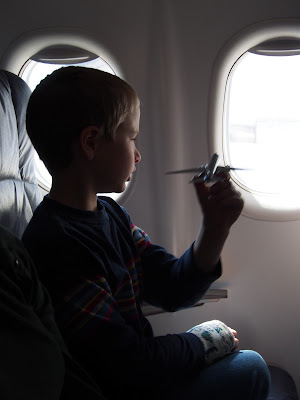
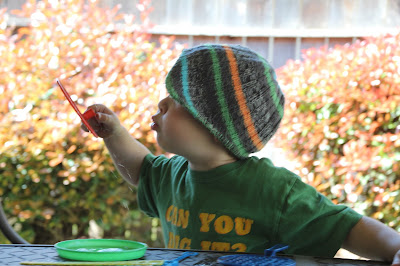
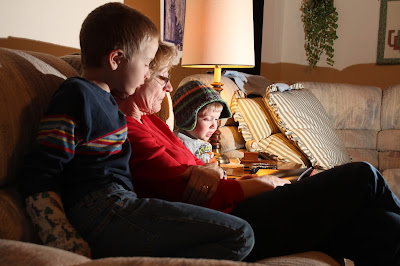
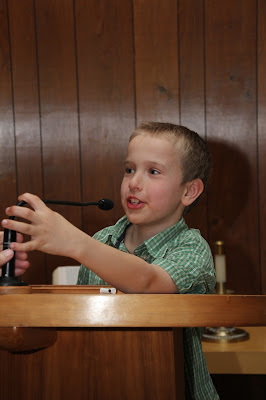
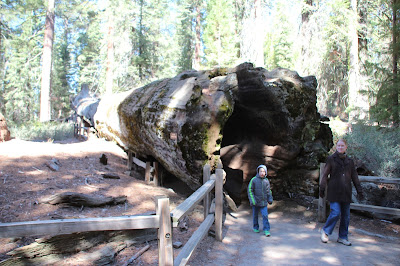
The scene: early one morning as the sun has just started to rise. Jacob and Oliver, ages 7 and 4, are the first people to wake up in the house their grandparents in California, where the four of us are visiting for the first time as a family. They have a conversation and decide that would be a good to go find a mystery. They decide to take their flashlights pink and blue, matching each boy s favorite color and slowly, but not very quietly, open their bedroom door and creep out. Brother, you forgot your flashlight! says Oliver. Oh, thanks brother! I ll get it! says Jacob. Meanwhile, Laura s mom wakes up, and notices two boys with flashlights creeping through the living room. Pretty soon they reach the kitchen, open the dishwasher, spy a suspicious-looking bowl, and decide that they have found the mystery a clean bowl! Or, at least that s the story that I pieced together based on what a 4-year-old and the grandma he awakened told me. We were on our first family trip to the Fresno, California area, to visit Laura s parents Jacob and Oliver s new grandparents. They ve played together before, but as this was our first visit to their place, there was quite the excitement. The boys had flown before, but it was several years ago and neither of them remember it well, so they were excited about that, too. The night before, Jacob woke up to tell me Dad, I am too excited to sleep. I think I will go downstairs and watch some TV. He didn t get too far with that plan. But he was excited. We went through security at the laid-back Wichita airport (where the TSA agents smile and there are often no security lines at all). We found our gate with enough time to grab lunch, which we did. The boys and I then did what we often do to kill time: explore. We explored the terminal, watching carpet-layers cut out carpet for the jetway, watching the construction of the new Terminal 3 out the window. And, of course, watching airplanes take off and land from the terminal s large windows. Finally it was our turn to board, and we all got on the plane: Jacob and Oliver with their backpacks of on-board activites, Laura and me with the rest of our carryon luggage, for the short trip to Denver. Jacob and Oliver s noses were pressed against the windows. Or, well, Jacob s was. Oliver s window was a little too high for him, but he was thrilled anyhow. They delighted in the airplane snacks, and the fact that they were allowed to drink pop on the plane. We packed books and some new art supplies for them (colored post-its, pages from a train-themed page-a-day calendar, a notebook, and a set of colored pens really seemed to do the trick.) We had a choice of 35 minutes or 4 hours between flights in Denver, and I had chosen 4 hours, thinking that would be a lot less stressful with boys. And it was. We found a nice corner of the mezzanine to sit for awhile they did art projects and played a game with Laura. Then I took them exploring Denver. We rode the moving sidewalks up and down the terminal, took a train ride to another terminal and back, ate supper all together, and flew to Fresno. We had stopped in the Wichita airport to buy them each a souvenir airplane, and these came out often during the rest of the trip. They enjoyed the mockups of the sequoias in Fresno Yosemite International Airport, enjoyed their beds and their room at the house, and did actually manage to fall asleep eventually. We had a few days there, where they played in a park, with bubbles on the patio, or croquet in the yard (I even discovered Jacob happily using the cast his broken arm is in as a hammer to pound the hoops into the ground!) There are a lot of miniatures in the house, and the boys enjoyed exploring the dollhouses and especially the N-gauge model train. Jacob enjoyed it so much he asked me to record a video of him playing with the trains. Evenings often brought book-reading, from the many children s books in the house. At home, Laura and I and both boys often scrunch onto an oversized chair and read a book and sing a song (one I make up on whatever topic they choose). Over there, we often had Laura, Jacob, Oliver, Laura s mom, and me scrunched up somewhere while the boys heard a story read to them by their grandma. That happened plenty of times other than bedtime, too. (Or Jacob would take his favorite books and read them to himself.) Laura s parents organized a reception Sunday for us, for the people from that area that couldn t make it to our wedding. Jacob and Oliver, predictably, had fun playing and even talked to some of the adults. The adults that didn t ask Jacob about his cast, anyhow (he dislikes talking about it). The boys discovered a live mic at the church where the reception was, and do I detect two future pastors in our midst? We had a great time at Laura s uncle and aunt s place. The boys were happy to discover an orange tree in their backyard, a tetherball post not far away, and an uncle ready to give them a demonstration of a swimming pool vacuum cleaner or sit at the piano with them. Jacob s favorite part, though, was when the hamburger buns his great uncle were toasting were left on the grill during the prayer before the meal, got a bit scorched, and the uncle remarked with a chuckle that I guess the Lord was tired of listening to me drone on! Jacob loved his meal, and cackled at the thought of a prayer causing buns to get scorched. But their highlight was the visit to the sequoias at Kings Canyon National Park the next day. The excitement had been building for that day all weekend. On the way out, we stopped at a fruit stand and bought some delicious strawberries the fresh, juicy, sweet and tasty kind that are red all the way through. We continued up through the foothills, stopping periodically to get out and stretch, look at the sights, take some photos, or borrow grandpa s binoculars. I knew we d be traveling in two cars, so I had the thought to pack some 2-way radios before we left. I gave one to the boys and one to the grandparents. All weekend long, whenever the six of us went somewhere, the boys (and especially Jacob) would give directions to the car that was following. Turn right! The light is green! Catch up, you re going too slow! So all the way into the mountains, Jacob would send back instructions on what to do. We saw Grant Grove, home to the worlds third-largest tree (267ft/81m tall and 3000 years old). It s quite the impressive tree the trunk s diameter near the ground is 29ft or almost 9m. As we walked the trails, their speed kept increasing as they were hunting for the tree tunnel I had told them about a tree that fell centuries ago and had been hollowed out to make a home. That trunk was easily 8ft or more in diameter, and I could stand up completely in places. We found it, to much delight from the boys So this is what it s like to be inside a tree! Our trip home brought a delay in Denver and a missed flight, which excited the boys when I told them now we get to eat supper in the airport! I wonder how long that tactic will work But Jacob was also excited because the plane we were put on in the end was bigger than the one we were scheduled on, so that was another piece of excitement. We got home, and I carried two sleeping boys in from the car, upstairs, tucked them in, pulled off their shoes, and put their favorite stuffed animals in their arms. They were happy to be home, and with memories to treasure for a long time.



Laura Arjona: MiniDebConf Barcelona 2014

Wow, I cannot believe it has already been 2 weeks from MiniDebConf Barcelona.
It has been the first Debian event (and free software conference) that I have attended in person, and I took the opportunity to get more involved, giving a talk about translations together with Francesca Ciceri, and two lightning talks about two free software projects that I use and love and I d like to see them packaged for Debian: Pump.io and GNU MediaGoblin (videos coming soon). I also somehow-promoted Keysigning during the conference (well, in fact, I just sent some two emails to the mailing list before, and printed stickers with May I sign your key? slogan so we could keysign easily in the freetime between talks). The people I ve met some people in person, who I was following in the Debian mailing lists and identi.ca for long time (years, in some cases \o/). It has been amazing to meet Francesca Ciceri and Enrico Zini, since their blogposts and vision about Debian diversity skills have influenced very much in my involvement in Debian. It has been very important to me to be able to say THANK YOU to Tiago from the Debian video team (sorry Holger, I couldn t manage to meet you face to face), because I have learned so many things watching videos from Debconfs! Videos helped me to feel that I m part of the community, even when I cannot attend to the events, by following the streaming and being able to recognize the faces of the people and the work they do in Debian. I ve met many Debian Women, of course. I m so fan of all of them! I m enjoying a welcoming and diverse community thanks to many of them that worked since many years ago to make Debian what it is now, and faced bitter moments too. I cannot say that I engaged in many deep conversations (well, maybe some 2 or 3, and me mostly listening), but the most important thing that I keep from them was simply being there , watching and listening, enjoying the voices of the experience like Ana and Miriam, and the freshness and joy of Tassia, Solveig and Elena, for example. I ve tried to be welcoming too, I m not a newbie anymore as new people come to the group :) New projects (and renewing forces for other) Debian contributors I wanted to get more involved in the Debian contributors project and it has been a perfect opportunity to understand better all what I had read and watched about it before going to Barcelona. My plan is, apart of doing promotion as with all the projects that I use and love, to try to get translator work credited via Debian Contributors. That means to hack the l10n bot that now gathers info from the mailing lists to build the coordination pages for translators. It shouldn t be difficult to make it send that info to contributors.debian.org site, but I ll try to understand how it works and propose an elegant patch. No idea about Perl, btw, but anyway, it s a good excuse to start learning. Mediagoblin and pump.io packaging I m not sure I can help on this, but I ll keep an eye in the evolution of the Debian packaging of GNU MediaGoblin and the Pumpiverse software. I ll give moral support, at least, to the people actually working on that :) Website and Publicity team After Solveig s talk about bug triaging I ve been thinking about some bugs that I reviewed in the Website and Publicity team, and I think I should make a new round on the pending bugs to close them if they don t apply anymore, or to try to push a bit more towards a solution, if I can. Tails website translation Tails is a Debian derivative preconfigured to work out-of-the-box with privacy and anonymity features, since uses the Tor network for all the outgoing and ingoing connections.
Solveig proposed me to join the Spanish translators team at Tails. I just joined the translators mailing list, in order to help translating the Tails website into Spanish (the software is already translated, under the Tor Project). This is a new challenge from the translation point of view, since they work with PO files. And now, what? Well, first, I ll try to clean a bit my TODO list, mainly about translations, and other things not related to Debian. From now on until summer, I ll keep an eye and a hand on all the projects in which I am involved, and also I ll try to keep on engaging with the community via pump.io, the mailing lists, and IRC channels. Next summer, if I can put in order my GPG keys (long story), I ll try to join the Debian New Member process. If not, I ll try to get new keys and some signs, and then I ll apply. OTOH, thanks to the end of Windows XP support, it seems that some people are willing to migrate to any GNU/Linux distribution, and of course I m recommending Debian. Expect some blog posts about these migrations (wow, I should migrate some servers that still run Squeeze too ) and my new role of Debian help desk at job, if finally some people decide to migrate. I have gathered Debian stickers to proudly give to anyone that installs Debian in their computer!
Filed under: Events, My experiences and opinion, Videos Tagged: Communities, Contributing to libre software, Debian, English, Free Software, libre software, MediaGoblin, Moving into free software, pump.io, translations

Francesca Ciceri: Random notes from MiniDebconf Barcelona 2014

First of all, let me say this: Barcelona MiniDebconf was awesome. So the most important part of this post is a very big thank you to the organizers, volunteers, speakers, sponsors and attendees. Now, down to business. Day 0 Day 0 was a day of travelling, more or less: the Italian Cabal (me, Enrico, Elena and Diego) left in the early morning from Varese (where we had an epic Munchkin Apocalypse game the night before), and we travelled by car across Liguria and France and finally reached Barcelona in the evening. (Boring! Even more if you don't drive. I hate long trips by car) We reached Barcelona in time for the pre-registration event at Falstaff Bar, eat a great Falafel and hugged lots of people. Day 1 To me the highlight of Day 1 was to finally meet in person Laura Arjona, Spanish translator, publicity volunteer, pump.io and mediagoblin contributor. We had decided to have a workshop together about translations and we spent the morning more or less tweaking our presentation and chatting :). So, save for Elena's talk on 3d printing in Debian ("The Universal OS: now making tabletop games and cookie cutters!" -- which was great!) I missed all the talks in the morning. But thanks to the always amazing videoteam, I'll be able to watch them later, when the recordings will be published :). For me, the best talk of the day - well, no, actually of the conference! - was that afternoon: Ana Isabel Carvalho told us about the Libre Graphics Magazine project. Libre Graphics Magazine is a well written and designed magazine at the crossroad between Free Software tools and ideals and graphic arts and design. A crossroad not very much frequented, I'd say. But then, maybe I'm wrong: it's not that graphic artists don't use Free Software tools, it's more like the one who do are invisible.
This is one purpose of a Libre Graphics Magazine: to serve as a catalyst for discussion, to build a home for the users of Libre Graphics software, standards and methods. In such a magazine, we may unite all our previously disparate successes, all the successes which have, until now, stood alone as small examples, disjointed from the larger community. We have the opportunity to elevate the discourse around Libre Graphics as a professionally viable option, to raise previously unmentioned issues and to push forward the conception of just what Libre Graphics can produce.
If you are even only vagued interested in typefaces, fonts, design and graphic art take a look at the magazine: it's CC-BY-SA licensed and you can download it for free, or buy a paper copy (which is amazing, really!). And it's not just about graphic arts: if you skim over the titles of the issues, you can find that they've talked about things like "Localisation/Internationalization", "Use Cases and Affordances" and, my favourite, "Gendering F/LOSS". On a similar topic, Siri's talk about "Why aren't more designers using Debian or working for Debian?" tried to shed a light on the difficult relationship between Free Software tools and graphic artists. These are the voices we need to listen to if we want to bring more graphic artists to Debian, and $deity knows that Debian needs them a lot :). After Solveig's talk about bug triaging and Miriam's one on packaging, it was time for the l10n workshop. I think it went well: we tried to briefly explain the translation workflow in Debian, and to translate together with the audience a po-debconf message. It wasn't maybe enough to complete and submit a translation, but hopefully it gave the audience an idea about how to do it. The day ended with a party for Debian Women 10th anniversary. And the cake wasn't a lie, beside being very good. Day 2 This, I'll remember as "the day I exited my comfort zone". Ok, I'm making a bit of fuss about it, but it was my first talk in English all alone. I spoke about the non-uploading DD process and how to keep your (and others') sanity in a big community project (slides here). I think it's very important to remind people that not all DDs are coding persons. And you don't need to be a developer to love Debian, contribute to it and become an official member of the project. But writing this presentation was for me also the occasion to take stock of my experience in Debian so far: in that talk slipped many of my demons, as impostor syndrome or overcommitment. But all the things I said are more or less, common sense - nothing new! - and lesson learned on the road: it's been now 2 years as DD and 4 as contributor. I'm pretty sure it's thanks to the special conditions of this conference (only speakers identifying themselves as female, a safe and very friendly environment) that I had the courage to give a talk. So the conference was a complete success on that regard, too. In the afternoon I was able to do one of the things I love: videoteam duty. Though I convinced Riccio to switch roles and to give me the camera: my experience in directing during last DebConf left me a bit scarred. Special mention for Laura speaking of pump.io and MediaGoblin and Solveig of Tails during the "Lightning Talks" and the people from LelaCoders during the "Bits from Local Communities" session. The Day(s) after: a Debian Contributors hackathon In my experience a measure of a conference's success is the burst of activity in pet projects just afterwards. In this, also, Barcelona MiniConf was a success: during the weekend, Enrico, Laura and I had the chance to talk together about Debian Contributors and make some plans.
So, as soon as we got in Italy again, I took possession of Enrico's couch for a couple of days and we did a little bit of hacking on Contributors. For my part, I mostly worked in trying to add more data sources to the site: my (not so) secret agenda is to map most of the non-coding contributions. That basically means: translators, publicity editors, event organizers and volunteers, etc. Being in the same room as Enrico, gave me the chance to ask him how to add data sources and to test the existing code (we spot a little problem in the prototype for svn repository mining he made a while ago). At the end of the hackathon, I had managed to: Please note that if you have contributed to one of the repo above and you are not listed there, it means that the automatic recognition of your email address didn't work. We still need to implement a manual interface for the recognition of email addresses: patches are very much welcome! Meanwhile Enrico: If you care about recognition of diverse contributions in Debian, help us: read the project todo list and subscribe to the low traffic mailing list or browse the project Git repository.

Martín Ferrari: Fun with Linux telephony

Continuing with my tendency to vent about stuff, today I want to talk about telephony. Since a few years ago, I need to use different VoIP providers to keep in touch with friends and family, in different parts of the world. So, I have a DID in Argentina (bought trough the excellent DIDWW), and another one in Ireland (which came for free when I was using BlueFace for call termination). I also have a service to handle outbound calls (FlowRoute), but it is not necessarily the only one I use, as cost and quality of Internet calls vary wildly. I have also used several Betamax providers, the aforementioned BlueFace, tried Netelip, etc. This results in having soft-phones installed in my mobile devices and laptop, and a hardware SIP phone that I carry around; all of them having configurations for at least 3 different providers. This does not lead to hilarity. In light of this, it's been a long time since I want to set up my own SIP router to be able to handle all of this, and be able to register to a single SIP proxy that will handle all the complexity. Last Friday, the Irish DID decided to stop working. It turns out, that since I don't have my own setup, I was using that provider as a kind of hub, with their provided voicemail, and terminating the Argentinian DID there. So the damage was big. This made me spend way too many hours during the weekend trying to set up some SIP solution. And I am not pleased.

Asterisk First, I went with the old and known Asterisk. The default installation in Debian puts 95 configuration files in /etc/asterisk, which you are supposed to review and adjust. Yes, you've read correctly: ninety-five different configuration files. None of them having anything close to a sensible explanation of their syntax or function. Also, not a remote hint of consistency. I could not find any configuration helper in the Debian archive, just hundreds of PHP-based projects scattered around the web. All the started guides I've found only guided you for the most basic tasks, but did not give you a way to have a functioning system. Needless to say, after a short time I grew tired of this, and decided to try something else.

Way too many options After this, I have spent an inordinate amount of hours, just trying to comprehend the difference between the gazillion different VoIP systems out there, I am still struggling to see that. Even if I understand that X is not a PBX, I don't exactly need a PBX, and most products deliver at least some of the features I need. It seems none of them makes a good job of just explaining what you can or can't do with their software. Documentation is awful in all the projects I researched. When it is there at all, it is incomplete, maybe super detailed at points, but in most cases, there is just no big picture view of the system to just start understanding how things work, and how to find your way. Sadly, not even the distros seems to be able to put a list of "recommended VoIP software for different needs".

Yate Finally, I've found YATE (Yet Another Telephony Engine). It seemed promising: not too bloated, fairly extensible, and scriptable in a few languages! Sadly, after many hours, it turned out to be a fiasco. The documentation seems decent, until you realise there are many key details left out. Basic information about how a call is handled cannot be found anywhere. Using the scripting power, I was able to find out at least the variables that were available, but that was not enough. I found a mailing list (with the worst archive reader I've seen in ages), where people made the very same questions I have, and nobody has replied. In years. So here I am, stuck with not being able to tell if a call is coming from a random host on the internet, or one of my DIDs, or one of the authenticated clients. I guess I will have to start from scratch with Yet Another (Another) Telephony Engine.

Russ Allbery: Review: Sundiver

Review: Sundiver, by David Brin
Series: Uplift #1
Publisher: Bantam
Copyright: February 1980
Printing: September 1995
ISBN: 0-553-26982-8
Format: Mass market
Pages: 340
Sundiver is the first book of Brin's Uplift series, which I think it's fair to say are the books that made his reputation as an author. It's less well-known than the later sequels Startide Rising and The Uplift War for reasons that I'll get into in a moment. This was a re-read; I've read the first Uplift series before (and Startide Rising separately before that), but not in many years, and I wanted to re-read them and review them. I haven't finished doing that yet, several months after I re-read Sundiver, largely because this book wasn't as enjoyable as I remembered. The Uplift series is set in a heavily populated galaxy with a multitude of alien races. It follows the SF alien life pattern where the galaxy was well-populated and fully developed long before humans discovered it. The Earth is a relatively obscure backwater, and humans are expected to adopt to and follow the rules and restrictions that the other races had long-since established. This primarily means a complex and very formal system of caste and patronage: species brought to sapience by the technology of their patrons are expected to serve their patron races for millennia, and one's status in the galaxy is determined by the length of those patronage chains and the number of species one has fostered in turn. As is typical for stories of this sort, humans break the rules in unexpected ways. They have no known patrons, having apparently evolved sapience entirely on their own (although the galactic races are quite dubious of this theory). And they have uplifted two species to sapience (chimpanzees and dolphins) before their discovery by the rest of galactic civilization, although in fairly primitive ways and not properly by galactic standards. Set against this background, Sundiver is a science fiction puzzle story of a fairly old style. The protagonist, Jacob Demwa, is a scientific investigator who retired after a tragedy that killed his love. He's recruited out of that retirement and into this plot by an alien who is sympathetic to humans. A human exploration mission into the chromosphere of the Sun, treated as ridiculous by most of the galactics since the shared Library Institute certainly contains more information about stars than human technology could possibly uncover, has found strange and apparently sapient creatures living there: flocks of cattle-like creatures that are apparently being herded. There is no reference to such star-dwellers in the Library, which raises the possibility that humans have discovered something novel. That would be quite a coup against the galactics. But after the destruction of one of the solar exploration ships, it starts looking like these creatures are hostile. Jacob reminded me of a mix between a Larry Niven short story protagonist, working through the practical impact of a physics puzzle, and Isaac Asimov's Elijah Baley. What exactly is going on, both scientifically and politically, remains unclear for nearly the entire book. Both Jacob and the reader are constantly forming and then discarding hypotheses as events overtake them. The stakes are more interesting than a lot of science fiction novels: rather than survival or war, the stakes are prestige, influence, and status, with subtle but possibly vital effects on what position humans will take among the other species of the galaxy. All this sounds promising, and is why I remembered this book fondly. Unfortunately, re-reading it was a disappointing experience on several fronts. First, the characterization varies between trite and stereotyped. The aliens suffer from the standard alien characterization problem: each of them is an exemplar of their species, and all of the aliens feel like archetypes. While there are some twists in the inter-alien politics, one never gets a sense of the aliens as varied and complex societies in their own right. The humans are more varied, but that primarily means varieties of irritating. The worst is Peter LaRoque, a journalist who is set up as a villain of the story, and who is such an unremitting and over-the-top stereotype of everything possibly bad about journalists (and French people) that every scene containing him felt like someone scraping fingernails on a chalkboard. The other characters are a bit better, but not by much. Jacob himself has a bizarre, semi-mystical psychological problem from trauma that seems to give his amoral subconscious a life of its own. Brin appears to be setting this up to have major plot significance, but it never made any sense to me, didn't matter much in the end, and seems to mostly be an excuse for Jacob's hypercompetence. Sundiver's treatment of female characters also annoyed me enough to be worth a mention. The primary female character, Helene, is clearly intended to be a strong character with her own agency (she's both station commander and a starship captain), and Brin makes a lot of the humans switching to different words than male and female as a sign of a more egalitarian future. But this all feels skin-deep. The inevitable romance is all about Helene's attractiveness and ability to listen to Jacob, her logic is described as unscientific, and I got more and more annoyed by her portrayal as the book went along. She's not entirely without agency in the story, but she's much closer to a damsel in distress than the independent character Brin appeared to be trying for. It's hard to shake the feeling that she's being persistently belittled by the story. But this is a scientific puzzle story more than a mystery; characterization would be nice, but isn't strictly required. On re-read, the part of Sundiver that annoyed me the most was how much of a letdown the plot resolution was. I'm going to avoid any specific spoilers here, but I found the ending of both quite disappointing and a sign of the major problem with this series as a whole. The setup over-promises and Brin fails to deliver, a pattern that will repeat itself in this series. We get tantalizing hints of a new solar species, of revelations about the past of humanity, of deep galactic politics, and of vast knowledge contained in the Library that humans don't yet have access to. We get superficial archetypes for characters, politics that seem more like the bickering of children, plot twists that persistently take the story in more mundane and less interesting directions, and a sense of wonder, or lack thereof, that feels more like a Scooby Doo story than what I expect from science fiction. Some of the plot twists are unexpected and almost add some interest to the story, but don't make enough sense in the context of the story to be satisfying. And, of course, there's an climactic action sequence involving physical combat, as is required of all good Star Trek (original series) episodes. (I was waiting for Jacob's shirt to fall off.) The problem I have always had with Brin as a writer is that his ideas are far better than his ability to write characters and plots. In the hands of a better author, the Uplift universe background has so much potential. And I think Brin is a better author a few years later; my recollection is that both Startide Rising and The Uplift War do a better job of delivering on their promises. But Sundiver is deservedly forgettable. The good ideas rarely go anywhere beyond the obvious, the characters are irritating and often don't make sense, and the story is disappointing. I can't say I'm sorry to have read it, since my memory edited it down into a much better story, but I can only recommend it as background for later, better books. Rating: 4 out of 10

30 March 2014

Joey Hess: propellor

Whups, I seem to have built a configuration management system this evening! Propellor has similar goals to chef or puppet or ansible, but with an approach much more like slaughter. Except it's configured by writing Haskell code. The name is because propellor ensures that a system is configured with the desired PROPerties, and also because it kind of pulls system configuration along after it. And you may not want to stand too close. Disclaimer: I'm not really a sysadmin, except for on the scale of "diffuse administration of every Debian machine on planet earth or nearby", and so I don't really understand configuration management. (Well, I did write debconf, which claims to be the "Debian Configuration Management system".. But I didn't understand configuration management back then either.) So, propellor makes some perhaps wacky choices. The least of these is that it's built from a git repository that any (theoretical) other users will fork and modify; a cron job can re-make it from time to time and pull down configuration changes, or something can be run to push changes. A really simple configuration for a Tor bridge server using propellor looks something like this:
main = ensureProperties
    [ Apt.stdSourcesList Apt.Stable  onChange  Apt.upgrade
    , Apt.removed ["exim4"]  onChange  Apt.autoRemove
    , Hostname.set "bridget"
    , Ssh.uniqueHostKeys
    , Tor.isBridge
    ]
Since it's just haskell code, it's "easy" to refactor out common configurations for classes of servers, etc. Or perhaps integrate reclass? I don't know. I'm happy with just pure functions and type-safe refactorings of my configs, I think. Properties are also written in Haskell of course. This one ensures that all the packages in a list are installed.
installed :: [Package] -> Property
installed ps = check (isInstallable ps) go
  where
        go = runApt $ [Param "-y", Param "install"] ++ map Param ps
Here's one that ensures the hostname is set to the desired value, which shows how to specify content for a file, and also how to run another action if a change needed to be made to satisfy a property.
set :: HostName -> Property
set hostname = "/etc/hostname"  File.hasContent  [hostname]
         onChange  cmdProperty "hostname" [Param hostname]
Here's part of a custom one that I use to check out a user's home directory from git. Shows how to make a property require that some other property is satisfied first, and how to test if a property has already been satisfied.
installedFor :: UserName -> Property
installedFor user = check (not <$> hasGitDir user) $
        Property ("githome " ++ user) (go =<< homedir user)
                     requires  Apt.installed ["git", "myrepos"]
  where
    go ... -- 12 lines elided
I'm about 37% happy with the overall approach to listing properties and combining properties into larger properties etc. I think that some unifying insight is missing -- perhaps there should be a Property monad? But as long as it yields a list of properties, any smarter thing should be able to be built on top of this. Propellor is 564 lines of code, including 25 or so built-in properties like the examples above. It took around 4 hours to build. I'm pretty sure it was easier to write it than it would have been to look into ansible and salt and slaughter (and also liw's human-readable configuration language whose name I've forgotten) in enough detail to pick one, and learn how its configuration worked, and warp it into something close to how I wanted this to work. I think that's interesting.. It's partly about NIH and I-want-everything-in-Haskell, but it's also about a complicated system that is a lot of things to a lot of people -- of the kind I see when I look at ansible -- vs the tools and experience to build just the thing you want without the cruft. Nice to have the latter!

29 March 2014

Steve Kemp: Some things on DNS and caching

Although there wasn't too many comments on my what would you pay for? post I did get some mails. I was reminded about this via Mario Langs post, which echoed a couple of private mails I received. Despite being something that I take for granted, perhaps because my hosting comes from the Bytemark, people do seem willing to pay money for DNS hosting. Which is odd. I mean you could do it very very very cheaply if you had just four virtual machines. You can get complex and be geo-fancy, and you could use anycast on a small AS, but really? You could just deploy four virtual machines0 to provide a.ns, b.ns, c.ns, d.ns, and be better than 90% of DNS hosters out there. The thing that many people mentioned was Git-backed, or Git-based DNS. Which would be trivial if you used tinydns, and no much harder if you used bind. I suspect I'm "not allowed" to do DNS-things for a while, due to my contract with Dyn, but it might be worth checking... ObRandom: Beat me to it. Register gitdns.io, or similar, and configure hooks from github to compile tinydns records. In other news I started documenting early thoughts about my caching reverse proxy, which has now got a name stockpile. I wrote some stub code using node.js, and although it was functional it soon became callback hell: Expressing the rules neatly is also a challenge. I want the server core to be simple and the configuration to be something like:
is_cachable ( vhost, source, request, backened )
 
    /**
     * If the file is static, then it is cachable.
     */
    if ( request.url.match( /\.(jpg png txt html? gif)$/i ) )  
        return true;
     
    /**
     * If there is a cookie then the answer is false.
     */
    if ( request.has_cookie? )   return false ;  
    /**
     * If the server is alive we'll now pass the remainder through it
     * if not then we'll serve from the cache.
     */
    if ( backend.alive? )  
        return false;
     
    else  
        return true;
     
 
I can see there is value in judging the cachability based on the server response, but I plan to ignore that except for "Expires:", "Etag", etc ,etc) Anyway callback hell does make me want to reexamine the existing C/C++ libraries out there. Because I think I could do better.

28 March 2014

Thomas Goirand: WordPress auto-updates stupidity

Out of laziness, like many, I use WordPress for this blog. I did try others, but was disappointed (after my blog got hacked a few times), so I just use that. WordPress has a long history of security issues. So upstream decided to preform automatic updates. This would have been a good thing if automatic update didn t completely mess my blog each and every single time. On my hosting system, PHP scripts have to be chmod +x to be executed. Otherwise, there s a error, and Apache wont execute the PHP script. The same way, an error will happen if a directory is world writable (eg: chmod 777). This is in order to prevent some of the most common hacks: a hacker finds a way to upload a PHP script (often via a feature of the hosted software), and then uses the uploaded script to do nasty things (like installing phishing sites, send spam, you name it ). Checking on these basic unix rights prevents uploaded scripts to be executed, and it s normally a way harder for hackers to find a way to chmod the PHP scripts than it is to just upload it. Unfortunately, WordPress, on each upgrade, is resetting these unix rights. Someone got to explain to me the reason why it absolutely needs to chmod 777 the hosted folders, and why it wouldn t keep the chmod +x on the php scripts. Direct result? My blog often gets completely broken by these automated updates. And I didn t find a way to disable them (if someone knows, please send me a quick email). I have reported the bug upstream: https://core.trac.wordpress.org/ticket/27568

Andrew Pollock: [life] Day 59: Rain, BJJ, play cafe, bunk beds and a car wash

Today was another wet day. Sarah dropped Zoe around in the morning, and she watched a little bit of TV before we drove to Brazilian Jiu-Jitsu class. My cycling fitness is going to go completely to hell. Zoe's really taken to her teacher, Patrick. The classes have pretty much been just Zoe and I on Friday's, with the occasional other kids, and so she's formed a pretty close relationship with her teacher. The last few weeks, Zoe's really liked to help Patrick set up and tidy up the space before and after the classes. She loves to tell Patrick about what's been going on in her life. It's really sweet to watch. Today there was another 3 year old boy, but he was much less focused than Zoe. I will miss the classes, because I've seen real self-defense value in what they've been teaching. For proper comparison, I should see tae kwon do clases as well, but currently I'd be pretty happy with what I've seen taught in Brazilian Jiu-Jitsu. I can see the practical application of it. We're going to go watch Patrick compete in May, and I'm looking forward to seeing some adult-level stuff. Megan's Dad was looking for something to do with his kids, so I suggested we meet at Lollipops Playland & Cafe in Cannon Hill after BJJ class. We were a bit late in getting there, mostly because Zoe wanted to hang around after class for a bit, but we got there eventually, and Zoe and Megan had a great time. We stayed for lunch and the girls played a bit more. It's the first time I've used a play cafe since coming back to Australia, and I found it almost overwhelmingly loud and busy. These places must love it when it rains. It was nice that Zoe's at an age now where she can go off and play on her own. Having Megan there was a great help in that regard, but the girls did keep losing each other, although that wasn't a big problem for either of them. While we were at the play cafe, I received an email saying that the Kindergarten working bee for tomorrow had been canceled on account of the wet weather, so that's opened up our Saturday significantly. After that, we headed down to Bunkers to place the order for the bunk bed I want to get Zoe for her birthday. I'd expected with all the morning's activities, for her to pass out in the car immediately, but surprisingly she lasted the distance, and had a great time sampling all the different bunk beds at the store. Even on the way back home, it took her a little while to fall asleep, so I extended the car ride by driving around the Port of Brisbane to see how much there was to see that might be interesting for Zoe when she's awake. After that, we went to the car wash to get the car cleaned, because it's been a while. Zoe had a babyccino and we sorted through the DreamWorks cards we'd traded with Megan that morning. It was time for dinner after the car wash, so we headed home, and Zoe watched some TV while I prepared dinner. At bath time, I realised that we hadn't had time to do anything for Science Friday. Yesterday at Bunnings I bought a roll of clear tubing for the heck of it, so we made a siphon in the bath. Zoe thought the tube was great fun, and had a good time blowing bubbles in the bath with it. Tomorrow we'll have to use some bubble bath for added entertainment. Bedtime went smoothly enough.

27 March 2014

Aigars Mahinovs: Photo migration from Flickr to Google Plus

I've been with Flickr since 2005 now, posting a lot of my photos there, so that other poeple from the events, that I usually take photos of, could enjoy them. But lately I've become annoyed with it. It is very slow to uplaod to and even worse to get photos out of it - there is no large shiny button to Download a set of photos, like I noticed in G+. So I decided to try and copy my photos over. I am not abandoning or deleting my Flickr account yet, but we'll see. The process was not as simple as I hoped. There is this FlickrToGpluss website tool. It would have been perfect .. if it worked. In that tool you simply log in to both services, check which albums you want to migrate over and at what photo size and that's it - the service will do the migration directly on their servers. It actually feeds Google the URLs of the Flickr photos so the photos don't even go trought the service itself, only metadata does. Unfortunately I hit a couple snags - first of all the migration stopped progressing a few days and ~20 Gb into the process (out of ~40 Gb). And for the photos that were migrated their titles were empty and their file names were set to Flickr descriptions. Among other things that meant that when you downloaded the album as a zip file with all the photots (which was the feature that I was doing this whole thing for) you got photos in almost random order - namely in the order of their sorted titles. Ugh. So I canceled that migration (by revoking priviledges to that app on G+, there is no other way to see or modify progress there) and sat down to make a manual-ish solution. First, I had to get my photos out of Flickr. For that I took Offlickr and ran it in set mode:
./Offlickr.py -i 98848866@N00 -p -s -c 32
The "98848866@N00" is my Flickr ID which I got from this nice service, then -p to download photos (and not just metadata), -s to download all sets and -c 32 to do the download in 32 parallel threads. An important thing to do is to take all you photos that are not in a set in Flickr and add them to a new 'nonset" so that those photos are also picked up here, there is an option under Organize to select all non-set photos. It worked great, but there were a couple tiny issues:
  1. There is a bug in Offlickr that it does not honor pages in Flickr sets, so it only downloads first 500 images in each set, fix for that is in that bug;
  2. It also wanted Python2.6 for some reason, but worked fine with Python2.7
  3. With that number of threads sometimes Flickr actually failed to respond with the photo, serving a 500 error page instead. Offlickr does not check return code and happily daves that HTML page as the photo. To work around that I simply deleted the HTML errors and then ran the same Offlickr command again so that it re-downloads the missing files. Had to repeat that a few times to get all of them:
ack-grep -l -R "504 Gateway Time-out" dst/   xargs rm
After all that I had my photos, all 40 Gb of them on my computer. Should I upload them to G+ now? Not yet! See the photos all had lost their original file names. It turns out Flickr simply throws that little nugget of information away. It is nowhere to be found, neither in metadata or the UI or the Exif of the photos. Also some of my photos had clever descriptions that I did not want to loose or re-enter in G+ and also geolocation information. Flickr does not embed that info into the Exif of the image, instead it is provided separately - Offlickr saves that as an XML file next to each image. So I wrote a simple and hacky script to re-embed that info. It did 3 things:
  1. Embed title of the photo into the Description EXIF tag, so that G+ automatically picks it up as title of the photo;
  2. Embed the GEO location information into the proper EXIF tags, so that G+ picks that up automatically;
  3. Create a new file name based on original picture taken datetime and EXIF Canon FileNumber field (if such exists), so that all photos in an album are sequential.
It uses exiftool for the actual heavy lifting. After all that was finished I tested the result by uploading a few images to G+ and testing that their title is being set correctly, that they have a sane file name and that geo information works. After that I just uploaded them all. I tried figuring out the G+ API (they actually have it) but I was unable to pass the tutorial, so I abandoned it and simply uploaded the photos of each set int their own tab via a browser. That took a few hours. But that is much faster that with Flickr. Like 4 MB/s versus 0.5 MB/s faster. And here is the result. So far I kind of like it. We'll see how it goes after a year or so. Now on to an even more fun problem - I now have ~40 Gb of photos from Flickr/G+ and ~100 Gb of photos locally. Those sets partially intersect. I know for a fact that there are photos in Flickr set that are not in my local set and it is pretty obvoious that there are some the other way round. Now I need to find them. Oh and I cann't use simple hashes, because Exif has changed and so have the file names for most of them. And not to forget that I often take a burst of 3-4 pictures, so there are bound to be a some near-duplicate photos in each set too. This shall be fun :)

Gunnar Wolf: Getting rid of rodents

So a good friend of mine talked about something in the debian-private mailing list. And we should not disclose that something outside such a sensible space without his approval. But Jakub is right. Once the discussion goes over to only messages talking about non-private stuff, the discussion should be moved to a non-private area. After all, we will not hide problems yada yada, right? So, not knowing where in the Debian lists this should go to, it will land on my blog, reformatting mail to make sense in this media:
Luca Filipozzi dijo [Wed, Mar 26, 2014 at 03:36:49PM +0000]:
Or don't use a mouse. When I started getting shoulder strain from using a mouse too much, I switched to an Adesso touchpad keyboard and was very happy with the positive outcome. I'm a touch (that's punny) less efficient with the touchpad compared to a mouse, but the lack of permanent injury and ongoing pain is worth it.
Right. I also have this keyboard (same brand even, different model). The keyboard is not that good (keys are not as smooth as in my previous, stock-Dell keyboard), but not having to move my right hand just to feed the rodent has made my back way way happier. I even feel better using a trackpad than a mouse (mabye because I use too much my netbook?). Luca, just out of curiosity: Did you ever manage to recognize the keyboard under the Synaptics driver, or to get it running under ChordMiddle or Emulate3Buttons? I had to fall to a ugly hack, mapping the "XF86Search" key to the middle button by telling my window manager (i3) to "bindsym X86Search exec xdotool click 2".
[ this can be declassified at any time ]
my contributions to this thread too...
my contribution unclassified, also
My classifications remain contributed. Do as you will with my bits of this message.

Diego Escalante Urrelo: Setting up Apache + PHP + MySQL on OSX with Homebrew

Recently I ve been doing some hacking for Chamilo LMS, a Free Software E-Learning system. For various reasons I had to do this on OSX, which meant setting up a web development environment. This lead me to MAMP, an OSX bundle with Apache + MySQL + PHP. However MAMP had many weird quirks that forced me to maintain a local set of patches just to get things working. I finally had the time to look into a saner option, take some notes in the process, and write a blog post.
Important advice. This post enables it.

Important life advice. This post enables it.

A popular alternative was using OSX s installed Apache with a newer PHP version from Homebrew. This sounded dangerous because you can t just apt-get install --reinstall apache if you break something. I preferred a pure Homebrew installation also because: I couldn t find a simple and straightforward resource for this specific setup, so I present you with my tutorial/recipe to get Apache + MySQL + PHP, via Homebrew, running on OSX. I took these notes on OSX 10.7.5 while building Apache/2.2.26 (Unix) with PHP 5.5.10 and MySQL 5.6.16. #1- A healthy Homebrew install First of all you need to install Homebrew. Head over to Homebrew s homepage for instructions. Even if you already have it, I recommend a health check and an update+upgrade: $ brew doctor
$ brew update && brew upgrade
Pay attention to whatever that says and follow the instructions if there s any. You also want to add Homebrew binary paths to your $PATH, even if the directories don t exist yet. Add this to .bash_profile or whatever your shell uses:
PATH=/usr/local/opt/php55/bin/:/usr/local/sbin:/usr/local/bin:$PATH #2- PHP and all its additional recipes The PHP recipes are maintained in a different repo, but don t worry, this is not a duct taped chaos, it s properly maintained: $ brew tap jgonzales/php
$ brew install php55 --with-intl
You might want to add --with-pgsql if you want to work with PostgreSQL. MySQL, Apache and CLI support is built by default. After the installation there are two quick things to do. First, timezone configuration:
(editing /usr/local/etc/php/5.5/php.ini)
date.timezone = America/Lima (or whatever works for you)
And second, PEAR permissions:
$ chmod -R ug+w /usr/local/Cellar/php55/5.5.10/lib/php #3- Setting up boring MySQL Now let s brew MySQL:
$ brew install mysql With that done, go ahead and start the server so we can initialize the basic tables, and secure the installation defaults:
$ unset TMPDIR
$ mysql_install_db --verbose --user= whoami --basedir="$(brew --prefix mysql)" --datadir=/usr/local/var/mysql --tmpdir=/tmp
$ mysql.server start
$ mysql_secure_installation

Remember: You shouldn t use sudo, so be careful with your muscle memory!
Clint Eastwood... Yeah.

Mr. Eastwood acknowledges the warning.

#4- Brewing Apache (httpd) And finally, it s time to brew Apache. You can do so with:
$ brew install httpd When that s done burning your lap, you can start configuring Apache. I chose to keep httpd.conf as pristine as possible and do everything in a VirtualHost. Remember you need to run this on something other than port 80 because you won t run httpd as root: Note that I m enabling virtual hosts and using my own paths. If you want to configure Apache differently, you probably know what you are doing. So, get off my lawn you damn kid. #5- Brownie points: PHPMyAdmin In my virtual hosts configuration I included some lines for PHPMyAdmin. That s because I m old school and I love PHPMyAdmin. You can follow into my wrinkled foot steps with:
$ brew install phpmyadmin #6- Profit You can check everything is fine by creating an index.php with a call to phpinfo() inside your configured root from httpd-vhosts.conf. Make sure OSX s Apache is not running and start (or restart) the servers:
$ apachectl start/stop/graceful(restart)
$ mysql.server start/stop/restart
Now open go to http://localhost:8000/ and http://localhost:8000/phpmyadmin. Enjoy your success. Maybe do a victory dance:
This might seem like a lot of work, but it s fairly quick with this cheat sheet. It s also very safe and easy to keep updated with brew update && upgrade. A final note: All the suggestions and instructions that are printed after installing each package can be read again with brew info <recipe>. No need to write them down. Happy hacking!

Andrew Pollock: [life] Day 58: Playgroup, rain and errands

My yoga teacher was out sick this morning. I had grand plans of instead biking to the pool and going for a swim, but when my alarm went off, and the weather outside was grey and miserable, having an extra half an hour lie in seemed more attractive. I think I made the right choice, because I felt like a million bucks today. I did all of the preparation to bake a batch of carrot and kale muffins before Zoe arrived, and we baked a batch as soon as she arrived and had them out of the oven in time to drive to Playgroup. I was expecting a larger crowd today on account of the wet weather, but it turned out quite the opposite. That said, Zoe still had a good time. There's really no other kids her age though, so it's still winding up as a "play with Dad in a different environment". My ABN came through yesterday, so after Playgroup we walked to the bank to give it to them and sort out a business credit card. Zoe was super well behaved while I did that, so we grabbed a fresh hot cross bun from Brumby's across the street afterwards. I needed some more stamps, so I figured we could just walk down to the post office down the other end of Oxford Street while we were there. That was slow going, but Zoe was enjoying walking with her umbrella in the rain. We got to the post office, and I discovered that postage is going up to 70 cents next week, and they couldn't sell be 70 cent stamps yet, and buying 60 cent stamps would be pointless after Monday, so I left empty handed. Zoe was eyeing off the umbrellas they had for sale in the post office. No sooner had we walked out of the post office and Zoe managed to walk all over her umbrella and totally destroy it. If I hadn't seen it happen, I'd have said she did it deliberately to get a new umbrella, but it really was an accident, so we had to turn around and buy one of the umbrellas from the post office. We made our way back down Oxford Street, and stopped in the boutique toy shop there. Zoe was particularly enthralled by the musical jewelery boxes, and really wanted one. I negotiated with her for it to be a birthday present, and got it gift wrapped. She seemed fine with the idea of not being able to have it until her birthday. We then made our way back to the car and drove home for a rather late lunch. I'm glad Zoe had the hot cross bun after the bank to keep her going, as she didn't seem to mind the late lunch at all. I made fritters with some left over corned beef, and then after we'd had lunch I thought we might as well get out of the house. Zoe's Kindergarten has a working bee on Saturday (I'm expecting it'll get canceled due to the wet weather, though). Incidentally, I have no idea where the "bee" in "working bee" comes from. Megan's Dad is Welsh, and I was lost for words when it came to explaining what a working bee was. Anyway, I wanted to get some gardening gloves, so we went to Bunnings. I managed to find some cute little kids ones as well, so Zoe can help. After Bunnings, we went to the pet shop to get some more cat litter. The pet shop seems to be a great source of entertainment for Zoe. She absolutely loved playing around with the hutches they had on display, and checking out all the fish, and the aquarium accessories. We eventually made it out of the pet shop, and we went around to the adjacent shopping mall in search of some craft supplies at some of the cheap shops there. It turns out the cheap shops are also a great source of entertainment. By the time we were done there, it was time to get home so Sarah could pick Zoe up, so we headed home. There was enough time for Zoe to watch a little bit of TV before Sarah arrived. So despite the weather, and no real plan for the day, we managed to completely fill the day, and Zoe had a great time. She seemed no worse for wear for powering through without a nap. There was a few small tantrums at Bunnings, but that mostly revolved around her tipping over her miniature shopping trolley.

26 March 2014

Steve Kemp: A diversion on off-site storage

Yesterday I took a diversion from thinking about my upcoming cache project, largely because I took some pictures inside my house, and realized my offsite backup was getting full. I have three levels of backups: Unfortunately my rsync-based personal server is getting a little too full, and will certainly be full by next year. S3 is pricy, and I don't trust the "unlimited" storage people (backblaze,etc) to be sustainable and reliable long-term. The pricing on Google-drive seems appealing, but I guess I'm loathe to share more data with Google. Perhaps I could dedicated a single "backup.account@gmail.com" login to that, separate from all-else. So the diversion came along when I looked for Amazon S3-comptible, self-hosted, servers. There are a few, most of them are PHP-based, or similarly icky. So far cloudfoundry's vlob looks the most interesting, but the main project seems stalled/dead. Sadly using s3cmd to upload files failed, but certainly the curl based API works as expected. I looked at Gluster, CEPH, and similar, but didn't yet come up with a decent plan for handling offsite storage, but I know I have only six months or so before the need becomes pressing. I imagine the plan has to be using N-small servers with local storage, rather than 1-Large server, purely because pricing is going to be better that way. Decisions decisions.

Andrew Pollock: [life] Day 57: UnderWater World (now known as Sea Life: Mooloolaba)

My late biological maternal grandmother ("Nana"), remarried late in her life to a long-time friend named Bryce. I was probably an early teenager. He was a nice guy, and I kept in loose contact with him after my Nana passed away. After my Nana passed away, he moved out of the retirement home he'd been living in with my Nana, and in with one of his sons. Sometime before I moved back to Australia, in ailing physical health, he moved from his son's place into Masonic Care's aged-care hostel in Sandgate. He turned 90 last year. Mentally, he's doing pretty good. Physically, he's very wobbly on his legs. He's had a few falls, which was the main catalyst for moving from his son's place to the aged-care hostel. Other than that, he's in pretty good physical health though. I remember the first time I visited him in the hostel. After I left, I wept uncontrollably. Here was a man who was literally just waiting out the rest of his life in a small cupboard of a room. I was appalled at how small the room was, and the fact that he was just sitting around waiting to die really upset me. I've visited him a few times since I've been back. I've taken him over to my parent's place when I've taken Zoe to visit them, just so he gets out. I should say that I'm sure his own family do spend some time with him, so it's not like he's spending all his time rotting in this place, but probably still a fair chunk of it. Growing old sucks. Yesterday, when the weather forecast for today was looking like it was going to be pretty wet and miserable, I decided I'd use the day to take Zoe to Underwater World (which I've since learned has rebranded it self as "Sea Life: Mooloolaba". I had the presence of mind to call up Bryce yesterday to see if he'd like to join us today. We had to pass in his general direction to get up there, so it wasn't particularly out of my way. He informed me that he was now in a wheelchair, which I thought was fine for this excursion. So this morning, after we got ourselves going, we stopped at Sandgate to pick up Bryce, and made it to Underwater World by about 10am. I was a bit leery of the drive, because from home, it was another 30 minutes on top of the drive to Wet and Wild, and 15 minutes on top of the drive to Sea World, so I wasn't sure how Zoe would take that length car trip. It turned out that she took it pretty well. She started getting a bit restless in the last 30 minutes, but it was manageable. I was a little apprehensive about how wrangling Zoe and looking after a frail 90 year old in a wheelchair was going to work out. It turned out it worked out just fine. I could leave Bryce wherever he was, if I had to chase after Zoe, and Zoe quite liked helping push the wheelchair around. Towards the end of the day, when she got tired, I could just pop her in Bryce's lap, and push the pair of them around. It was a really good outing. I have only vague memories of visiting the place in my childhood, and it's become significantly better since then. Zoe really enjoyed going through the glass tunnels under the main ocean exhibit. We did several laps of that. We were fortunate enough to catch the sting ray feeding almost immediately upon arrival, and we also saw the seal show and made the otter feeding. The place was more focused on salt water aquatic life, hence the name, but there was also some freshwater exhibits. I never thought that much of the Monterey Aquarium, much preferring the California Academy of Science's aquariums, especially in terms of drive time accessibility. If you ignore the freshwater/salt water diversity, I think Sea Life is even better than the California Academy of Sciences. We left at about 2pm, and after a lot of hunting around, tracked down the photo they took when we entered, and then drove home closer to 3pm. To my surprise, Zoe didn't fall asleep immediately, but she did fall asleep on the way back to Bryce's place. She woke up to say goodbye to him, and then we drove home, stopping off in the Valley to check my post office box along the way, and arrived back home about 15 minutes before Sarah arrived to pick her up. It ended up being a very full day. Bryce really enjoyed himself, and I felt really happy that I was able to relatively easily brighten up his day. I've resolved to try another such outing again, I just need to figure out what to do. I thought I'd try for a 10km run, but it started to rain at the 4km mark. I was also not feeling particularly confident about lasting the distance, so I decided to just turn it into a 5km run instead.

Wouter Verhelst: LDAP and Kerberos authentication

Kerberos is a great protocol for single sign-on authentication. It's supported by many protocols, allowing you to not have to enter a password to each and every one of them; instead, the protocols behind the scenes (not "just" Kerberos, but also the things that embed tickets, such as GSSAPI, or the things that embed GSSAPI, such as SASL or SPNEGO) use your ticket-granting-ticket to ask for security credentials for the service you're trying to use, magic happens, and you're authenticated. I blogged about kerberos before (even if it was ages ago); since then, I've not only used it on my own systems, but also on the systems of various customers. One thing I've learned in that time, however, is that most web application developers have a bad case of NIHilism when it comes to authentication. Most webservers that I've seen have a wide range of methods to do authentication in the webserver through various means, including things like certificate-based authentication, one-time password modules, and, yes, kerberos. Yet almost no webapp out there will look at the magic variables that those webservers set to explain we're authenticated, instead reinventing the wheel through webforms and other various stupid means. Sigh. So, that means, no kerberos authentication for webapps. Worse, if the application has no way to pass on authentication to something external, that means users will now have to learn another password: one for Kerberos, one for the webapp. And, probably, one for this other webapp, too -- because once you add one webapp, people expect you to add more of them. Well, mostly. In some cases, webapps do have ways to externalize authentication. In most cases this means "store passwords in a database", or "try authenticating against this other service here". When "this other service here" is an IMAP server, then all you need to do is make sure cleartext authentication on the IMAP server eventually ends up trying to authenticate against the Kerberos server, and you're all set. When "this other service here" is an LDAP server, however, you're out of luck. Right? It turns out that no, you're not. I recently learned that OpenLDAP can, in fact, check "simple" bind requests by checking some other service, and that this other service can be a Kerberos realm. Doing so is called "Pass-through authentication" in the OpenLDAP documentation, and this is how you do it:

mech_list: plain
pwcheck_method: saslauthd

This directs the SASL libraries, loaded by slapd, to talk to saslauthd when trying to authenticate some SASL things - Make sure slapd has the correct permissions to access the saslauthd unix domain socket. On Debian, that means you need to add the "openldap" user to the "sasl" group:
 adduser openldap sasl 
(obviously that won't be active until the next slapd restart) And that's it; if you now try a simple bind against the LDAP directory, and enter your Kerberos password, you should be in. If it doesn't work, try running "testsaslauthd"; if that works, it means the error is in your slapd configuration. If it doesn't, then the problem is in saslauthd. Some notes: Oh, and if you're a webapp developer: please please please make it easy for me to use an external authentication mechanism. This isn't hard; all you need is a separate page that will read the magic variables (probably REMOTE_USER if you're using apache), set a session variable or whatever, and then redirect to your normal "we've just logged in" page. ikiwiki gets this right; you can too! (for added bonus points, have some way to declare a mapping from REMOTE_USER values to internal, readable, usernames, but it's not too crucial)

Mario Lang: Accessible DNS hosting with LuaDNS

I used to host my internet infrastructure at Hurricane Electric. It all started in october 1998 with POP3/SMTP, HTTP and DNS. In the coming years, I began to host all services except DNS on my own. But I kept using he.net for its DNS management interface. It was dead simple, and therefore accessible. All they had was a basic textarea with BIND alike configuration in it. I could log in to their admin interface and change my DNS records as desired. A few years ago, they auto-upgraded my account to their new shiny DNS panel, which, surprise surprise, is no longer accessible with a simple text browser. After a bit of bitching with support, they ended up downgrading my account back to the old functionality, so I was happy again. However, as you might guess, last time I needed to change a DNS record, I found that the DNS panel has been ugpraded yet again and is again no longer accessible to me. So it was time to leave the sinking ship. But I needed to find an accessible DNS hosting service. Not an easy task, given that everyone seems to do more or less the same thing these days.
Git to the rescue! After a bit of web searching it became apparent that most offers these days are not what I want. I want a simple interface without any danger of accessibility issues. In most cases, you can not test the DNS management interface before signup. After a few dead ends, I took a step back and said to myself: "So, what is it that I am actually looking for? If this were a wishlist item, how would I like my workflow to be?" And the answer came immediately: "I want my zonefiles in a git repo!" So I decided to turn my search upside down and search exactly for that. And guess what, I found exactly what I was looking for: LuaDNS. LuaDNS has 5 nameservers in Europe, Asia and North America. As the name implies, it offers a way to write your zone files with Lua. This can be quite helpful for programmatically generating zones. However, it also supports BIND alike zone files, which is what I use. The idea is simple: You create a Git repository on GitHub or BitBucket and let LuaDNS know where it is. A web hook can be setup to automatically trigger zone rebuilds once you push to your repository. So all my accessibility problems around DNS hosting are suddenly completely gone. Once I edited/commited my zone files and pushed to my repository, LuaDNS will automatically pull from the repository and update my zones.
  • I can edit my zones with my editor of choice without having to go through the web.
  • I have history for my DNS changes.
  • I can revert changes easily.
  • Changes can have descriptive commit log entries.
  • All the usual advantages of Git.
And I will never have to fight with an inaccessible web interface again. That said, LuaDNS has a web interface for administering account settings. It works very nice with Lynx. I hope they keep it that way.
Current LuaDNS limitations There are two things I don't particularily like about LuaDNS currently:
  • There are currently no AAAA records for their DNS servers. This is apparently being worked on and is supposed to be fixed somewhere around april 2014. Note that AAAA records are perfectly supported by LuaDNS zone files, it is just that none of the DNS servers they provide to you offers any AAAA records yet. So IPv6-only hosts might have trouble to reach your site if they don't use an IPv4 enabled recursor (a rather rare setup I guess).
  • Due to the way BIND alike zone files work in LuaDNS (SOA records are autogenerated), you can currently not sign your zones. I've been told DNSSEC is on the list of things to work on at LuaDNS, so I am looking forward to see what they will implement.
The team is friendly and was very fast to react on a question via email. Looks good, I'll stay. Now that I think of it, this article might be considered an answer to Steve Kemps question what would you pay for: I'd pay for a VCS based DNS hosting solution that allows me to use DNSSEC, if its web interface were kept clean and simple and therefore accessible. However, I don't mind a free account for low volume usage at all. Especially if that makes it easy to test the service and make sure it works as expected.

Next.

Previous.