Search Results: "cas"

11 December 2011

Stefano Zacchiroli: bits from the DPL for November 2011

Mako's IronBlogger is a great idea. I often find myself postponing blog posts for a very long time, simply out of laziness. IronBlogger provides a nice community incentive to counter (my) laziness and blogging more often. As a related challenge, we have to face the fact that different subsets of our communities use different media to stay informed: mailing lists, blog (aggregators), social media, IRC, etc. Disparities in how they stay informed are a pity and can be countered using multiple medias at a time. Although I haven't blogged very often as of lately, I managed to keep the Debian (Developer) community informed of what happens in "DPL land" on a monthly basis, by the means of bits from the DPL mails sent to d-d-a. While the target of bits mails perfectly fits d-d-a, there is no reason to exclude a broader public from them. After all, who knows, maybe we'll find the next DPL victim^W candidate among Planet readers! Bonus point: blogging this also helped me realize that my mails are not as markdown-clean as I thought they were. I still have no IronBlogger squad, though. (And sharing beers with folks in the Boston area is not terribly handy for me ). Anyone interested in setting up a BloggeurDeFer in the Paris area? (SCNR)
Dear Project Members,
another month has passed, it's time to bother you again about what has happened in DPL land in November (this time, with even less delay than the last one, ah!). Call for Help: press/publicity team I'd like to highlight the call for help by the press / publicity teams. They are "hiring" and have sent out a call for new members a couple of weeks ago. The work they do is amazing and is very important for Debian, as important as maintaining packages or fixing RC bugs during a freeze. It is only by letting the world know what Debian is and what we do, that we can keep the Project thriving. And letting the world know is exactly what the publicity and press teams do. If you're into writing, blogging, or simply have a crush for social media, please read the call and "apply"! Interviews November has apparently been the "let's interview the DPL" month. I've spent quite some time giving interviews to interested journalists about various topics. For both my embarrassment and transparency on what I've said on behalf of Debian, here are the relevant links: Assets Legal advice (work in progress) Relationships with others Miscellanea Thanks for reading thus far,
and happy hacking.
PS as usual, the boring day-to-day activity log is available at master:/srv/leader/news/bits-from-the-DPL.*

10 December 2011

Patrick Schoenfeld: Migrating from blogspot to Movable Type

A while ago I decided to migrate my existing blogspot blog to an own domain and webspace again. My reasoning was mostly, that blogspot lacked some features, which I'd like to have in my blog.
Additionally, my requirements have changed a bit since I originally moved to blogspot and, last but not least, Blogspot was a compromise anyway.

So I started re-evaluating a possible software platform for my blog. In my numerous previous attempts to start blogging (there were several blogs of me in the internet since at least 2006), before I moved to Blogspot, I used Wordpress. But there were quiet some reasons against it, one of the biggest concerns being its security history. Also, while I worked a lot with PHP in the past years, I have developed a serious antipathy against software written in PHP, which I couldn't just ignore.

In the end, the decision fell on Movable Type, because its written in Perl, which is the language I prefer for most of my projects, because its features were matching my wishes (mostly) and because I heard some good opinions about it. Also it is used by my employer for our company blog.

So the next question was: How to migrate?

I decided to use Movable Type 5, although, at present, it seems not to be the communities choice. At least the list of plugins supporting MT5 is really short. Foremost there was no plugin to import blogger posts, which, after all, was the most important thing about the migration.
Luckily there is such a plugin for Movable Type and so I basically did the following:

  1. Install Movable Type 4
  2. Install the Blogger Import Plugin
  3. Import posts (it supports either the export file of blogger or directly importing posts via the Google API)
  4. Upgrade to Movable Type 5
  5. Check the result
Check the results, or: The missing parts

Obviously such an import is not perfect. Some posts contain images or in-site links. The importer is not able to detect that and honestly it would have a hard time to track that anyway.
So as soon as content is migrated, its time to look for the missing parts.

The process to find missing parts is basically very easy and common among the various missing parts:
Just search for your blogspot URL via the Search & Replace option in the Movable Type administration.

Now how to fix that? For links its quiet easy (although I forgot about them in the first run), as long as the permalinks have kept the same scheme.
In my case that is the case, since I decided to use the Preferred Archive option "Entry" in the blog settings for the new blog and the default (if there is an option, because I don't know)
in Blogspot. The importer does import the Basename of the document, so fixing links is just a matter of replacing the domain part of the URL.

For images its some more work. One has to get the images somehow and upload them in Movable Type. Eventually it then boils down to search and replace, but I decided to do that manually, since I only have a very low number of images in my posts so far.

After that I did everything else, which is not specific to the migration, like picking a template, modifying it to my wishes, considering the additions of plugin etc.
And here we are. There were some issues during the migration, which I haven't handled here. I will blog about them another time.

9 December 2011

Alexander Reichle-Schmehl: RCBW (Release Critical Bugs of the Week) work flow addendum

Gregor Herrmann kindly posted his usual workflow for preparing non maintainer uploads (NMUs) fixing Release Critical bugs. I'd like to add, that it is usually a very good idea to also pts-subscribe to the package you uploaded, just in case you introduce some new bugs (see for #651452 or #651112 for examples of bugs I got to know after uploading NMUs). When subscribing you'll get copies of BTS activity, teesting migration and similar. You can either subscribe to that via the package tracking system at http://packages.qa.debian.org/<packagename> (see for example the iftop PTS) in the lower left box, or via the pts-subscribe command in the devscripts package. I prefer the later method, as that also creates a pts-unsubscribe job via at. But please know, that you need a working mail transfer agent as well as the tool at for that. Well, and it helps if you have a machine running most of the time ;)

Russell Coker: Cocolo Chocolate

Cocolo Overview I recently wrote about buying a fridge for storing chocolate [1]. Jason Lewis (the co-founder of Organic Trader [2]) read that post and sent me some free samples of Cocolo chocolate [3] (Cocolo is an Organic Trader product that is made in Switzerland). It s interesting to note that Cocolo seem very focussed on a net presence [3], their URL is printed on the back of the packet in an equal size font to the main label on the front (although the front label is in upper case). The main web page has a prominent link to their Twitter page which appears to be updated a couple of times a month. PIcture of Cocolo chocolate packaging Cocolo makes only organic fair-trade chocolate. Every pack lists the percentage of ingredients that are Fairtrade (presumably milk and some other ingredients are sourced locally in Switzerland and Fairtrade doesn t apply to them). Their chocolate packages have the URL www.fairtrade.com.au printed on them and their web site links to an international Fairtrade organisation. The packages also list the organic and Fairtrade certification details and state that they are GMO free. The final geek data on the package is advise to store the chocolate at a temperature between 16C and 18C (I have now set my fridge thermostat to 17C). The above picture shows the front of a pack of Dark Orange chocolate and the back of a pack of Milk chocolate. Reviews One thing that is different about Cocolo is that they use only unrefined evaporated organic cane sugar juice to sweeten their chocolate. This gives it a hint of molasses in the flavor. Children who like white sugar with brown coloring might not appreciate this, but I think that the use of natural cane sugar juice will be appreciated by most people who appreciate products with complex and subtle flavors. The Milk chocolate contains a minimum of 32% cocoa solids, this compares to the EU standard of a minimum of 25% for milk chocolate and the UK standard of a minimum of 20% for Family Milk Chocolate . The EU standard for dark chocolate specifies a minimum of 35% cocoa solids, so it seems that Cocolo milk chocolate is almost as strong as dark chocolate. If you are used to eating dark and bittersweet chocolate then the Cocolo milk chocolate is obviously not that strong, but it is also significantly more concentrated than most milk chocolate that is on the market. The high chocolate content combined with the evaporated cane sugar extract gives a much stronger flavor than any of the milk chocolates that I have eaten in recent times. The Dark Mint Crisp chocolate has a minimum of 61% cocoa mass. The mint crisp is in very small pieces that give a good texture to the chocolate with a faint crunch when you bite it. It has a good balance of mint and chocolate flavors. The Dark Orange chocolate contains 58% cocoa solids and has a subtle orange flavor. The white chocolate tastes quite different from most white chocolate. While most white chocolate is marketed to children the Cocolo white chocolate will probably appeal more to adults than children. This is one of the few white chocolates that I ve wanted to eat since the age of about 14. They also have many other flavors, most common types of chocolate (such as with almonds or hazelnuts) are available. I highly recommend Cocolo products!

8 December 2011

Craig Sanders: How to set the application icon for chromium

This has been a minor annoyance for the last few months, and I've finally figured out how to fix it: Sometime within the last few months, an upgrade prevented Chromium from finding its application icon with the result that when minimised (or displayed in the panel window list or Alt-Tab) it used the default application icon. It looks to me as if the problem is that Chromium is now looking for chromium-browser.svg but chromium.svg is what's on my debian system. To restore, all you need to do is:
$ mkdir -p ~/.local/share/icons/hicolor/scalable/apps
$ cd ~/.local/share/icons/hicolor/scalable/apps
$ ln -s /usr/share/icons/hicolor/scalable/apps/chromium.svg chromium-browser.svg
great, done. Now my chromium windows don't look the same as my mrxvt windows in Alt-Tab, they're quite clearly Chromium windows. The icon now looks like this: rather than an icon i'd insert here if i knew what its filename is it looks like a white window with a blue title bar and a thinner blue bar at the bottom (about half the height/thickness of the "title bar") I've spent half an hour searching for it and have given up anyone know what it is? alternatively, use cp rather than ln just in case some future upgrade removes or renames the chromium.svg file How to set the application icon for chromium is a post from: Errata

7 December 2011

Daniel Stone: why you don't actually want dpi

Inspired by a discussion in #wayland today, here are snippets from three people explaining why X declares its DPI as 96, and why a single 'DPI' sledgehammer isn't actually what basically anyone<super>*</super> wants. Please read them. Thanks. Adam Jackson:
I am clearly going to have to explain this one more time, forever. Let's see if I can't write it authoritatively once and simply answer with a URL from here out.
Matthew Garrett:
But what about the single monitor case? Let's go back to your Vaio. It's got a high DPI screen, so let's adjust to that. Now you're happy. Right up until you plug in an external monitor and now when you run any applications on the external display your fonts are twice the size they should be. WOOHOO GO TEAM of course that won't make us look like amateurs at all. So you need another heuristic to handle that, and of course "heuristic" is an ancient african word meaning "maybe bonghits will make this problem more tractable".
Federico Mena-Quintero:
People who know a bit of typography may know a few factoids:
- Printed books generally use fonts which can be from about 9 to about 12 points in size.
- A point is roughly 1/72 of an inch. For people in civilized countries, this translates to "I have no idea what the fuck a quarter pounder is".
*: Yes, I know you need to have actual point equivalence, and you've had all your displays and printer colour-calibrated for the past ten years too. You're doing all this in the GIMP or some other kind of design tool, so please yell at them to use the display size information that XRandR gives you right now, already, today.

6 December 2011

John Goerzen: Snapshots of Life

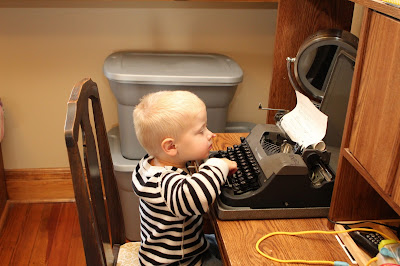
It s been busy lately, and I haven t had the time to blog. With the change in job, various travel, and settling into a new routine, I ve not done as much writing of late. But life marches on, and before memories grow too fleeting, I think I should share a few. We recently changed the arrangements for the boys. Instead of them each having their own room in which they sleep and sometimes play, we purchased a bunk bed. Oliver graduated from his crib to the lower bunk, and Jacob has the higher bunk. This has, predictably, created a few opportunities for behavior issues. Overall, it s going well, and they appreciate their new, more open, play room. Both boys sleep with their stuffed animals. Jacob calls his my friends . He still likes his butterfly, which he has had since he was an infant. He sometimes talks about how much he loves his friends, and how they like to get hugs, and how they are happy. Jacob continues to enjoy reading. He has a toy low-res camera and he even recorded a video of himself reading Brown Bear, Brown Bear. Oliver s vocabulary is coming alive and is fun to watch. Jacob has taken to trying to teach Oliver how to say things. One day, Jacob saw a number like 451 on the side of a train, producing a conversation like this: Oliver, can you say four hundred and fifty-one? Four dred iffy on! You got it!!! YAY! Today as I was walking past Oliver s train track on the floor, he grabbed me by the hand, had me sit down, and kept holding on to make sure I d stay right where he wanted me as he pointed and talked all about his trains. Aww. One cold and windy Saturday morning, the boys were getting restless. What to do, we thought? I decided to bring out one of the manual typewriters from my collection. Oliver loved watching it do things as he pressed buttons. Jacob enjoyed spelling mom . New problem: boys fighting over how long each one s turn at the typewriter is. This has gone on for a month now. Ahh, winter. A few weeks ago, Jacob informed us that he built an antenna out of blocks. He was REALLY proud of it, and even, incredibly, insisted I take his picture with it! I m pleased to have a 5-year-old that calls this structure an antenna instead of a skyscraper or tower or some such thing ;-) We took a train trip to Portland, OR, recently. That s about 2.5 days on the train each way. It went pretty well we had quite a bit of excitement though it got a little long for the boys at times. One evening, Jacob excitedly noted that the sky was almost really dark blue, just like my song! Wow. That was a song he made up in New York in summer 2010. Jacob enjoyed collecting leaves as we walked around in Portland. He would then stash his pile of leaves outside the door of whatever building we d enter, then hope to find them still there when we got back out. It usually worked out OK for him.

Steve Langasek: Making jam from bugs

This weekend, we held a combined Debian Bug Squashing Party and Ubuntu Local Jam in Portland, OR. A big thank you to PuppetLabs for hosting! Thanks to a brilliant insight from Kees Cook, we were able to give everyone access to their own pre-configured build environment as soon as they walked in the door by deploying schroot/sbuild instances in "the cloud" (in this case, Amazon EC2). Small blips with the mirrors notwithstanding, this worked out pretty well, and let people start to get their hands dirty as soon as they walked in the door instead of spending a lot of time up front doing the boring work of setting up a build environment. This was a big win for people who had never done a package build before, and I highly recommend it for future BSPs. You can read about the build environment setup in the Debian wiki, and details on setting up your own BSP cloud in Kees's blog. (And the cloud instances were running Ubuntu 11.10 guests, with Debian unstable chroots - a perfect pairing for our joint Debian/Ubuntu event!) So how did this curious foray into a combined Ubuntu/Debian event go? Not too shabby: When all was said and done, we didn't get a chance to tackle any wheezy release critical bugs like we'd hoped. That's ok, that leaves us something to do for our next event, which will be bigger and even better than this one. Maybe even big enough to rival one of those crazy, all-weekend BSPs that they have in Germany...

Kees Cook: EC2 instances in support of a BSP

On Sunday, I brought up EC2 instances to support the combined Debian Bug Squashing Party/Ubuntu Local Jam that took place at PuppetLabs in Portland, OR, USA. The intent was to provide each participant with their own sbuild environment on a 64bit machine, since we were going to be working on Multi-Arch support, and having both 64bit and 32bit chroots would be helpful. The host was an Ubuntu 11.10 (Oneiric) instance so it would be possible to do SRU verifications in the cloud too. I was curious about the juju provisioning system, since it has an interesting plugin system, called charms , that can be used to build out services. I decided to write an sbuild charm, which was pretty straight forward and quite powerful (using this charm it would be possible to trigger the creation of new schroots across all instances at any time, etc). The juju service itself works really well when it works correctly. When something goes wrong, unfortunately, it becomes nearly impossible to debug or fix. Repeatedly while working on charm development, the provisioning system would lose its mind, and I d have to destroy the entire environment and re-bootstrap to get things running again. I had hoped this wouldn t be the case while I was using it during production on Sunday, but the provisioner broke spectacularly on Sunday too. Due to the fragility of the juju agents, it wasn t possible to restart the provisioner it lost its mind, the other agent s couldn t talk to it any more, etc. I would expect the master services on a cloud instance manager to be extremely robust since having it die would mean totally losing control of all your instances. On Sunday morning, I started 8 instances. 6 came up perfectly and were excellent work-horses all day at the BSP. 2 never came up. The EC2 instances started, but the service provisioner never noticed them. Adding new units didn t work (instances would start, but no services would notice them), and when I tried to remove the seemingly broken machines, the instance provisioner completely went crazy and started dumping Python traces into the logs (which seems to be related to this bug, though some kind of race condition seems to have confused it much earlier than this total failure), and that was it. We used the instances we had, and I spent 3 hours trying to fix the provisioner, eventually giving up on it. I was very pleased with EC2 and Ubuntu Server itself on the instances. The schroots worked, sbuild worked (though I identified some additional things that the charm should likely do for setup). I think juju has a lot of potential, but I m surprised at how fragile it is. It didn t help that Amazon had rebooted the entire West Coast the day before and there were dead Ubuntu Archive Mirrors in the DNS rotation. For anyone else wanting to spin up builders in the cloud using juju, I have a run-down of what this looks like from the admin s perspective, and even include a little script to produce little slips of paper to hand out to attendees with an instance s hostname, ssh keys, and builder SSH password. Seemed to work pretty well overall; I just wish I could have spun up a few more. :) So, even with the fighting with juju and a few extra instances that came up and I had to shut down again without actually using them, the total cost to run the instances for the whole BSP was about US$40, and including the charm development time, about US$45. UPDATE: some more details on how to avoid the glitches I hit.

2011, Kees Cook. This work is licensed under a Creative Commons Attribution-ShareAlike 3.0 License.
Creative Commons License

5 December 2011

Philipp Kern: New Debian buildd at Karlsruhe Institute of Technology

It took quite a lot of effort to persuade all decision makers to make this happen, but here it is: A new Debian buildd is being hosted at Karlsruhe Institute of Technology, to support the s390(x) ports. Its name is zemlinsky. So we've got some redundancy now and despite them being some sort of fringe architectures, they're looking pretty good. s390x is currently bootstrapped in the archive and it's progressing pretty quick. This new fast builder is one of the reasons why the slope is so steep.

Pointing people at the Debian Machine Usage Policies (DMUP) is pretty helpful to get a consent, with relation to network usage and acceptable use of the machines themselves. In this case the hardest part was drafting a user agreement that allows other non-university persons to log into the box, which is crucial to have it maintained by the Debian System Administrators.

Thanks to all the people at IPD Reussner, Steinbuch Centre for Computing and BelW who helped me getting this done.

Axel Beckert: automounter vs procmail

At work we use .procmailrc files generated by CGIpaf to let non-technical users create forwards, out-of-office mails, etc. and any combination thereof. This also has the advantage that we can filter out double bounces and spam (which also prevents us from being listed in spammer blacklists). Unfortunately autofs (seems independent if autofs4 or autofs5 is used) seems to be unreliable if there are bursts of mount or umount requests, resulting either in File or directory not found error message while trying to access the home directory of a user, or Directory not empty error messages if the automounter tries to remove the mount point after unmounting. In that case a not mounted directory owned by root is left over. In the end both cases lead to procmail behaving as if that user does not have a .procmailrc which looks like sporadically lost mails to those who forward all mails. (The mails then can be found in the local default INBOX for that user.) Additionally there are similar issues when the NFS servers are not available. The most effective countermeasure we found so far was adding tests to the global /etc/procmailrc to check if the user s home directory exists and belongs to the correct user:
# -----------------
# Global procmailrc
# -----------------
# For debugging, turn off if everything works well
VERBOSE=1
LOGFILE=/var/log/procmail.log
# This only works with bourne shells, $SHELL defaults to the user's
# login shell. And by experience dash seems not work, so we use bash.
OLDSHELL=$SHELL
SHELL=/bin/bash
# temporary failure (see EX_TEMPFAIL in /usr/include/sysexits.h) if
# $LOGNAME is not set for some reason. (Just to be sure our paths
# later on are not senseless.
:0
* ? test -z "$LOGNAME"
 
    LOG="Expected variable LOGNAME not set. "
    EXITCODE=75
    :0
    /dev/null
 
# temporary failure (see EX_TEMPFAIL in /usr/include/sysexits.h) if
# $HOME is not readable. ~$LOGNAME does not seem to work, so this uses
# a hard wired /home/.
:0
* ? test ! -r /home/$LOGNAME
 
    LOG="Home of user $LOGNAME not readable: /home/$LOGNAME "
    EXITCODE=75
    :0
    /dev/null
 
# temporary failure (see EX_TEMPFAIL in /usr/include/sysexits.h) if
# $HOME has wrong owner. ~$LOGNAME does not seem to work, so this uses
# a hard wired /home/.
:0
* ? test ! -O /home/$LOGNAME
 
    LOG="Home of user $LOGNAME has wrong owner: /home/$LOGNAME "
    EXITCODE=75
    :0
    /dev/null
 
[ ]
If you want to store a copy of these mails for debugging purposes on every delivery attempt, replace /dev/null with some Maildir or mbox only accessible for root. One small but important part was to explicitly declare bash as shell for executing the tests, otherwise mails for users with tcsh or zsh as login shell filled up the mail queue and never get delivered (if the SHELL variable never gets fixed). Only drawback so far: This leads to more lagging e-mail on e-mail bursts also for those users who have no .procmailrc because procmail can t check if there s really no .procmailrc. Extensive procmail documentation can be found online at the Procmail Documentation Project as well as in the man pages procmail(1), procmailrc(5) and procmailex(5).

Russell Coker: CyanogenMod and the Galaxy S

Thanks to some advice from Philipp Kern I have now got my Galaxy S running CyanogenMod 7.1.0 which is based on Android 2.3.7 [1]. CyanogenMod has lots of configuration options that seem to be lacking in the stock releases and also supports some advanced features such as OpenVPN and a command-line. I can t properly compare CyanogenMod to the stock Android as I ve only used versions 2.1 and 2.2 of the stock Android. Presumably some of the things that I like about CyanogenMod are in the stock Android 2.3.7 release. The process of updating a phone is difficult and has some risk. Fortunately Samsung provided Download mode in the BIOS to allow recovery. If you mess up the process of updating a Galaxy S and you can get Download mode by holding down volume-down, home, and then power buttons then you can almost certainly recover (so don t panic). The CyanogenMod people don t provide any documentation on upgrading from Android 2.2 (which is what Optus is still shipping AFAIK). So you will probably have some difficulty when upgrading a Galaxy S that you get in Australia (it seems that Optus is the only company shipping them in volume). As an aside if you want to buy a Gel Case for a Galaxy S in Australia then visit an Optus store. It seems that Optus is the only phone store that hasn t run out their Galaxy S accessories in favor of the Galaxy S2. I have previously written about the Galaxy S and Three Networking [2]. Now that I have the Galaxy S as my primary phone on the Virgin network all my data corruption problems are solved, the problem is entirely related to Three. With CyanogenMod there is an option to be able to toggle the LED Flash as a torch from the drop-down menu, this makes the lack of such a LED on the Galaxy S even more of an annoyance. I have also discovered that the Galaxy S apparently doesn t have a status LED! This makes it the only phone that I ve ever owned that has no clear way of informing me when the battery is charged! It s also really useful to have a flashing LED to indicate low battery when running a full screen app, and to have a flashing LED to indicate that email has been received. Someone should design a phone with multiple LEDs to indicate different things. I d like to have one LED to indicate charging status and another to indicate whether there is unread email or SMS. Whatever the cost of including a LED during manufacture it would have to be almost nothing compared to the ~$500 sale price of a phone. Wikipedia says The Samsung Galaxy S features a PowerVR graphics processor, yielding 20 million triangles per second, making it the fastest graphics processing unit in any smartphone at the time of release. Also, upon release, the Galaxy S was both the first Android phone to be certified for DivX HD, and at 9.9 mm was the thinnest smartphone available . I don t care about any of that, I want a phone with decent battery life, a LED Flash , and a status LED. The main benefit I get from the Galaxy S over the Xperia X10 is the greater storage. The Xperia X10 has a total of 1G of storage and only 465M of that is available for application install. My Galaxy S has 16G of internal storage of which 1.8G is available for phone apps and 13G is available for pictures and other mass storage. Having 1.8G for phone apps and internal phone storage used by such apps (which includes the offline IMAP cache) is a massive benefit, enough to outweigh the lack of a staus LED and a Flash LED. What I Really Want I d rather have a Samsung Galaxy Note. The Note has a LED flash, a 5.3 screen with 1280*800 resolution which is much better for running as a SSH client and also good for web browsing. I m not inclined to spend money on a phone now, so I ll probably use the Galaxy S until Virgin offers me a new phone or someone just gives me a new phone (I can always hope). One of the many nice features in the Galaxy Note is a built in stylus. When using my current phones for web browsing I sometimes find it difficult to have a touch registered to the desired part of the screen, this is a real problem with the Opera web browser which requires a long press to open a URL in a new tab.

4 December 2011

Gregor Herrmann: RC bugs 2011/48

here's my report about RC bug related activities for the last week. besides working on the bugs mentioned below I've also documented my RCBW work flow for the NMUs, just in case it's interesting for others.

3 December 2011

Joachim Breitner: Some late recognition of metainit

Four years ago, during DebConf 7 in Edinburgh, I had the idea of creating init scripts not by hand, but rather describe them in a declarative way that handles most common cases and generate the real init scripts from them. Back than, this was partly motivated by the varying quality of init scripts and the advent of an alternative init system, upstart, for which proper service files could be generated as well. I implemented the idea and uploaded it as metainit to Debian, but it did not take off. Only one package uses it, and this package is not used much either. The project basically fell dormant. Yesterday, I got this mail:
Hi Joachim, I'm not very familiar with Debian ecosystem, however our company has recently switched to exclusively using Debian based servers, please forgive me if there exists a better channel for sending patches. We need (in house) to create a lot of trivial services and the sysv init system seems an ideal way to manage them, and metainit an great way to keep the config simple. However all our scripts require a heartbeat, the way we normally do this is with a bunch of checkers launched from cron. Metainit was ideal, but lacked the simple 'status' task found in most init scripts. This small patch adds that task, I hope you and others find it usefull. Regards,
together with the mentioned patch. So it turned out that the idea was a useful one after all, although it found its use on our user s machines, and not within the Debian packages, as I originally anticipated. Nice! During the recent discussions about the latest init system, systemd, there were more thoughts about generating init scripts/upstart service descriptions/systemd units from a declarative description, and if metainit had taken off back then, things would be easier now. So if anyone feels like reviving the project: Please do.

Flattr this post

Patrick Schoenfeld: Let me introduce DPKG::Log and dpkg-report

We have customers, which require a report about what we've done during maintenance windows. Usually this includes a report about upgrades, newly installed packages etc. and obviously everything we've done apart from that.
Till now we've prepared them manually. For a greater bunch of systems this is a big PITA, because to be somehow useful you have to collect the data for all systems and after that, prepare a report where you have:

Its also error-prone because humans make mistakes.

Perl to the rescue!
At least the part about generating a report about installed/upgraded/removed packages could be automated, because dpkg writes a well-formed logfile in /var/log/dpkg.log. But I noticed that there appearently is no library specialised at parsing that file. Its not a big deal, because the format of that file is really simple, but a proper library would be nice anyway.
And so I wrote such a library.
It basically takes a logfile, reads it line by line and stores each line parameterized into a generic object.

Its features include:

Based on that, I wrote another library DPKG::Log::Analyse, which takes a log, parses it with DPKG::Log and then extracts the more relevant information such as installed packages, upgraded packages, removed packages etc.

This, in turn, features:
- Info about newly installed packages
- Info about removed packages
- Info about upgraded packages
- Info about packages which got installed and removed again
- Info about packages which stayed halfinstalled or halfconfigured at the end of the logfile (or defined reporting period)


These libraries are already uploaded to CPAN and packaged for Debian.
They passed the NEW queue very quickly and are therefore available for Sid:

http://packages.debian.org/sid/libdpkg-log-perl

As an example use (and for my own use case, as stated above), I wrote dpkg-report, which uses the module and a Template::Toolkit based template to generate a report about what happened in the given logfile.
It currently misses some documentation, but it works somehow like this:

Report for a single host over the full log:
dpkg-report

Report for a single host for the last two days:
dpkg-report --last-two-days

Report for multiple hosts (and logfiles):
The script expects that each log file has the name <systemname>.dpkg.log so that it can guess the hostname from the system and can grab all such log files from a directory if a directory is specified as log-file arguments:</systemname>

dpkg-report --log-file /path/to/logs

This will generate a report about all systems without any merging.

Report for multiple hosts with merging:
dpkg-report --log-file /path/to/logs --merge

This will do the following:
A (fictive) report could look some what like this:

dpkg-Report for all:
------------------------
Newly Installed:
abc
Removed:
foo
Upgraded:
bar (0.99-12 - 1.00-1)
dpkg-Report for test*:
------------------------
Newly Installed:
blub
dpkg-Report for test1:
------------------------
Upgraded:
baz (1.0.0-1 -> 1.0.0-2)
dpkg-Report for test2:
------------------------
Upgraded:
zab (0.9.7 -> 0.9.8)

Currently this report generator is only included in the source package or in the git(hub) repository of the library. I wonder if it makes sense to let the source package build another binary package for it.
But its only a 238 lines perl script with a dependency on the perl library so I'm unsure if it warrants a new binary package. What do others think?

2 December 2011

Rapha&#235;l Hertzog: My Debian Activities in November 2011

This is my monthly summary of my Debian related activities. If you re among the people who made a donation to support my work (310.73 , thanks everybody!), then you can learn how I spent your money. Otherwise it s just an interesting status update on my various projects. Dpkg: Multi-Arch Saga I know lots of people are waiting the landing of multiarch in Debian unstable, and so am I. Things are progressing, though not as quickly as I hoped. Guillem merged about half of the branch between the 24th October and the 6th of November. After that most of the work happened on his personal repository in his pu/multiarch/master branch. I verify this repository from time to time because Guillem does not inform me when he has made progress. I noticed changes on his repository on the 10th, 19th, 23th, 28th of November and on the 1th of December. He announced a long time ago that he had some interface changes and up to now only wrote about the switch from the command-line option --foreign-architecture (to put in /etc/dpkg/dpkg.cfg) to the explicit command dpkg --add-architecture that only needs to be called once (see mail here). As of today (December 2th), the promised email for the other interface changes is still not here. On November 23th, I reviewed Guillem s work and tried to run the code in his branch. I spent the whole day chasing up regressions and submitted lots of fixes to Guillem. Thanks to the extensive test-suite I wrote when I developed my branch, it has been fairly easy to track them all down. All the issues I reported have been fixed in the latest version of Guillem s branch although the fixes are often slightly different from those that I submitted. Dpkg: Squeeze Backport At the start of the month, I uploaded what I expected to be a fairly uncontroversial backport of dpkg 1.16.1.1. It turns out I was wrong. After some discussion, I think we came to an agreement that it was acceptable to backport dpkg-dev and libdpkg-perl only. My goal was not to bring the latest dpkg to users but to make it easier for package maintainers to backport packages using new features provided by dpkg-dev >= 1.16 (such as hardening build flags, the makefile snippets provided in /usr/share/dpkg/, or the improved dpkg-buildflags interface). Thus I modified the source package uploaded to squeeze-backports to build only dpkg-dev and libdpkg-perl. It has been uploaded on November 23th and it s waiting in the NEW queue for a backports admin to process it. Misc Dpkg Work I merged a patch of Colin Watson to be able to verify build-dependencies for a foreign architecture (taking into account the Multi-Arch status of each package listed). I released dpkg 1.16.1.2 with two minor fixes that were sitting in the sid branch. I wanted to get rid of this so that the path is clear for a 1.16.2 upload with multiarch. The package just migrated to testing so we re fine. I spent another day doing dpkg bug triaging on Launchpad, we re now down to 77 bugs with many of them tagged as incomplete and likely to expire in 2 months. The Debian Administrator s Handbook eBookWe released a sample chapter so that it s easier to have an idea of the quality of the book. The chapter covers the APT tools quite extensively. I bet that even you could learn something about apt-get/aptitude The crowfunding campaign on Ulule ended on November 28th.

With 675 supporters, we raised 24385 EUR. Of those, 14935 EUR have been put in the liberation fund and the rest corresponds to the various pre-orders and rewards offered. This means that the translation will happen (we just started) but that the book is currently not going to be released under a free license. Don t despair As planned, the liberation campaign is carried on until the 25 K target is reached! Instead of being hosted on Ulule, this permanent campaign is on the project website at debian-handbook.info/liberation/. Note that any contribution of 10 EUR or more means that you get a copy of the ebook as soon as it s available (even if the liberation target is not reached). Package Tracking System At the start of the month, I filed two ideas of improvements for the PTS in the bug tracking system: #647258 is about showing outstanding bugs that relate to a release goal and #647901 is about warning maintainers that the package is affected by a current transition. If you re a coder and want to start contributing to Debian and its QA team, those bugs could be interesting targets for a start. :-) In both cases, I have been in contact with members of the release team because those ideas require some structured data from the release team as input. Thanks to Meddi Dohguy and Niels Thykier for their help. Later in the month, the topic of relocating the PTS once again came up. For historical reasons, the PTS was hosted on master.debian.org together with the BTS. Nowadays the BTS has its own host and it made no sense anymore to have the PTS separate from the rest of the QA services hosted on qa.debian.org (currently quantz.debian.org). So together with Martin Zobel Helas we took care to plan the migration and on November 19th we executed the plan. It worked like a charm and almost nobody noticed (only one undocumented dependency was missed, which broke the SOAP interface). Misc Packaging Work WordPress was broken in Ubuntu and it was also not properly synchronized with Debian due to an almost useless change on their side. Thus I requested a sync so that the working version from Debian gets imported in Ubuntu. I sponsored the docbook-xsl 1.76.1 upload that I needed for Publican. Then I updated Publican just to discover that the test-suite triggers a new bug in fop (filed as #649476). I disabled the test-suite temporarily and uploaded Publican 2.8 to unstable. BTW, I also filed 2 upstream bugs with patches for issues I discovered while trying to generate the sample chapter of my book (see here and here). I uploaded a version 0.7.1 of nautilus-dropbox and fixed #648215 at the same time. I made an NMU of bison to fix a long-standing release critical bug that hit me once more during an upgrade (see #645038). I uploaded to experimental a new version of gnome-shell-timer compatible with GNOME 3.2. I took the opportunity to install from experimental the few GNOME 3.2 packages which are not yet in unstable Thanks See you next month for a new summary of my activities.

7 comments Liked this article? Click here. My blog is Flattr-enabled.

30 November 2011

Russell Coker: Links November 2011

Forbes has an interesting article about crowd-sourcing by criminals and law enforcement [1]. Ulissescastr0 made a Youtube video showing how to install SE Linux on Debian/Etch [2]. Probably no-one is using Etch nowadays so this video is outdated, but it s a good way of teaching people. It would be good if someone made a similar video showing how to do SE Linux things on Squeeze. I discovered the above SE Linux video through Explow which provides a neat interface to multiple searches and information sources [3]. I don t think I will be using Explow much in future as I could get the same result through Google video search. They also have a news portal but there are other sites for that. But it does seem that Explow would be useful for newbies. Eric Michael Johnson wrote an interesting article about the inherent bias in Psychological research based in the US [4]. People who live in urban environments think differently in some ways to people who live in different environments or who have different lifestyles. Therefore generalising from university students in the US to the entire human race is likely to get incorrect results. This is something to consider the next time you are tempted to generalise to the wider population from your own friends, colleagues, etc. The Daily Kos has a scary article about the TSA having a woman detained for reciting part of the US constitution [5]. The US will remain on my list of countries to avoid for the forseeable future. Vorlon has written an informative article about the use of hardening options when building Debian packages [6]. It s now even easier to do this, so every package that simultaneously deals with data of differing levels of integrity or sensitivity should be built this way. Bunker Roy gave an interesting TED talk about his Barefoot College that teaches useful skills to people in rural parts of India who don t have a traditional school education [7]. His talk really shows up some of the arrogance in the people who run traditional education. Justin Hall-Tipping gave an interesting TED talk about ways of solving the world energy problems [8]. He started with explaining the problems and why they need to be urgently solved and then described in detail some of the research that his group has done to solve the problems. This includes flexible photo-voltaic cells, infra-red vision to save on lighting, and a way of using carbon nano-tubes to control the thermal properties of windows.

29 November 2011

Gustavo Noronha Silva: Accelerated Compositing in webkit-clutter

For a while now my fellow Collaboran Joone Hur has been working on implementing the Accelerated Compositing infrastructure available in WebKit in webkit-clutter, so that we can use Clutter s powers for compositing separate layers and perform animations. This work is being done by Collabora and is sponsored by BOSCH, whom I d like to thank! What does all this mean, you ask? Let me tell me a bit about it. The way animations usually work in WebKit is by repainting parts of the page every few milliseconds. What that means in technical terms is that an area of the page gets invalidated, and since the whole page is one big image, all of the pieces that are in that part of the page have to be repainted: the background, any divs, images, text that are at that part of the page. What the accelerated compositing code paths allow is the creation of separate pieces to represent some of the layers, allowing the composition to happen on the GPU, removing the need to perform lots of cairo paint operations per second in many cases. So if we have a semi-transparent video moving around the page, we can have that video be a separate texture that is layered on top of the page, made transparent and animated by the GPU. In webkit-clutter s case this is done by having separate actors for each of the layers. I have been looking at this code on and off, and recently joined Joone in the implementation of some of the pieces. The accelerated compositing infrastructure was originally built by Apple and is, for that reason, works in a way that is very similar to Core Animation. The code is still a bit over the place as we work on figuring out how to best translate the concepts into clutter concepts and there are several bugs, but some cool demos are already possible! Bellow you have one of the CSS3 demos that were made by Apple to demo this new functionality running on our MxLauncher test browser. <video controls="controls" src="http://cafe.minaslivre.org/~kov/webkit/ac.webm" width="640"></video> You can also see that the non-Accelerated version is unable to represent the 3D space correctly. Also, can you guess which of the two MxLauncher instances is spending less CPU? ;) In this second video I show the debug borders being painted around the actors that were created to represent layers. <video controls="controls" src="http://cafe.minaslivre.org/~kov/webkit/debug-borders.webm" width="640"></video> The code, should you like to peek or test is available in the ac2 branch of our webkit-clutter repository: http://gitorious.org/webkit-clutter/webkit-clutter/commits/ac2 We still have plenty of work to do, so expect to hear more about it. During our annual hackfest in A Coru a we plan to discuss how this work could be integrated also in the WebKitGTK+ port, perhaps by taking advantage of clutter-gtk, which would benefit both ports, by sharing code and maintenance, and providing this great functionality to Epiphany users. Stay tuned!

28 November 2011

Vincent Bernat: SSL/TLS & Perfect Forward Secrecy

Once the private key of some HTTPS web site is compromised, an attacker is able to build a man-in-the-middle attack to intercept and decrypt any communication with the web site. The first step against such an attack is the revocation of the associated certificate through a CRL or a protocol like OCSP. Unfortunately, the attacker could also have recorded past communications protected by this private key and therefore decrypt them. Forward secrecy allows today information to be kept secret even if the private key is compromised in the future. Achieving this property is usually costly and therefore, most web servers do not enable it on purpose. Google recently announced support of forward secrecy on their HTTPS sites. Adam Langley wrote a post with more details on what was achieved to increase efficiency of such a mechanism: with a few fellow people, he wrote an efficient implementation of some elliptic curve cryptography for OpenSSL.

Without forward secrecy To understand the problem when forward secrecy is absent, let s look at the classic TLS handshake when using a cipher suite like AES128-SHA. During this handshake, the server will present its certificate and both the client and the server will agree on a master secret. TLS full handshake This secret is built from a 48byte premaster secret generated and encrypted by the client with the public key of the server. It is then sent in a Client Key Exchange message to the server during the third step of the TLS handshake. The master secret is derived from this premaster secret and random values sent in clear-text with Client Hello and Server Hello messages. This scheme is secure as long as only the server is able to decrypt the premaster secret (with its private key) sent by the client. Let s suppose that an attacker records all exchanges between the server and clients during a year. Two years later, the server is decommissioned and sent for recycling. The attacker is able to recover the hard drive with the private key. She can now decrypt any session she recorded: the encrypted premaster secret sent by a client is decrypted with the private key and the master secret is derived from it. The attacker can now recover passwords and other sensitive information that can still be valuable today. The main problem lies in the fact that the private key is used for two purposes: authentication of the server and encryption of a shared secret. Authentication only matters while the communication is established, but encryption is expected to last for years.

Diffie-Hellman with discrete logarithm One way to solve the problem is to keep using the private key for authentication but uses an independent mechanism to agree on a shared secret. Hopefully, there exists a well-known protocol for this: the Diffie-Hellman key exchange. It is a method of exchanging keys without any prior knowledge. Here is how it works in TLS:
  1. The server needs to generate once (for example, with openssl dhparam command):
  2. The server picks a random integer a and compute g^a \mod p . After sending its regular Certificate message, it will also send a Server Key Exchange message (not included in the handshake depicted above) containing, unencrypted but signed with its private key for authentication purpose:
    • random value from the Client Hello message,
    • random value from the Server Hello message,
    • p , g ,
    • g^a\mod p=A .
  3. The client checks that the signature is correct. It also picks a random integer b and sends g^b \mod p=B in a Client Key Exchange message. It will also compute A^b\mod p=g^ ab \mod p which is the premaster secret from which the master secret is derived.
  4. The server will receive B and compute B^a\mod p=g^ ab \mod p which is the same premaster secret known by the client.
Again, the private key is only used for authentication purpose. An eavesdropper will only know p , g , g^a\mod p and g^b\mod p . Computing g^ ab \mod p from those values is the discrete logarithm problem for which there is no known efficient solution. Because the Diffie-Hellman exchange described above always uses new random values a and b , it is called Ephemeral Diffie-Hellman (EDH or DHE). Cipher suites like DHE-RSA-AES128-SHA use this protocol to achieve perfect forward secrecy1. To achieve a good level of security, parameters of the same size as the key are usually used (the security provided by the discrete logarithm problem is about the same as the security provided by factorisation of two large prime numbers) and therefore, the exponentiation operations are pretty slow as we can see in the benchmark below: Graphical comparison of speed with and without DHE

Diffie-Hellman with elliptic curves Fortunately, there exists another way to achieve a Diffie-Hellman key exchange with the help of elliptic curve cryptography which is based on the algebraic structure of elliptic curves over finite fields. To get some background on this, be sure to check first Wikipedia article on elliptic curves. Elliptic curve cryptography allows one to achieve the same level of security than RSA with smaller keys. For example, a 224bit elliptic curve is believed to be as secure as a 2048bit RSA key.

Some theory Diffie-Hellman key exchange described above can easily be translated to elliptic curves. Instead of defining p and g , you get some elliptic curve, y^2=x^3+\alpha x+\beta , a prime p and a base point G . All those parameters are public. In fact, while they can be generated by the server, this is a difficult operation and they are usually chosen among a set of published ones. The use of elliptic curves is an extension of TLS described in RFC 4492. Unlike with the classic Diffie-Hellman key exchange, the client and the server need to agree on the various paremeters. Most of this agreement is done inside Client Hello and Server Hello messages. While it is possible to define some arbitrary parameters, web browsers will only support a handful of predefined curves, usually NIST P-256, P-384 and P-521. From here, the key exchange with elliptic curves is pretty similar to the classic Diffie-Hellman one:
  1. The server picks a random integer a and compute aG which will be sent, unencrypted but signed with its private key for authentication purpose, in a Server Key Exchange message.
  2. The client checks that the signature is correct. It also picks a random integer b and sends bG in a Client Key Exchange message. It will also compute b\cdot aG=abG which is the premaster secret from which the master secret is derived.
  3. The server will receive bG and compute a\cdot bG=abG which is the same premaster secret known by the client.
An eavesdropper will only see aG and bG and won t be able to compute efficiently abG . Using ECDHE-RSA-AES128-SHA cipher suite (with P-256 for example) is already a huge speed improvement over DHE-RSA-AES128-SHA thanks to the reduced size of the various parameters involved. Web browsers only support a handful of well-defined elliptic curves, chosen to ease an efficient implementation. Bodo M ller, Emilia K sper and Adam Langley have provided 64bit optimized versions of NIST P-224, P-256 and P-521 for OpenSSL. To get even more details on the matter, you can read the end of the introduction on elliptic curves from Adam Langley, then a short paper from Emilia K sper which presents a 64bit optimized implementation of the NIST elliptic curve NIST P-224.

In practice First, keep in mind that elliptic curve cryptography is not supported by all browsers. Recent versions of Firefox and Chrome should handle NIST P-256, P-384 and P-521 but for most versions Internet Explorer, you are currently out of luck. Therefore, you need to keep accepting other cipher suites. You need a recent version of OpenSSL. Support for ECDHE cipher suites has been added in OpenSSL 1.0.0. Check with openssl ciphers ECDH that your version supports them. If you want to use the 64bit optimized version, you need to run a snapshot of OpenSSL 1.0.1, configured with enable-ec_nistp_64_gcc_128 option. A recent GCC is also required in this case. Next, you need to choose the appropriate cipher suites. If forward secrecy is an option for you, you can opt for ECDHE-RSA-AES128-SHA:AES128-SHA:RC4-SHA cipher suites which should be compatible with most browsers. If you really need forward secrecy, you may opt for ECDHE-RSA-AES128-SHA:DHE-RSA-AES128-SHA:EDH-DSS-DES-CBC3-SHA instead. Then, you need to ensure the order of cipher suites is respected. On nginx, this is done with ssl_prefer_server_ciphers on. On Apache, this is SSLHonorCipherOrder on. UPDATED: You need to check ECDHE support for your web server. For nginx, the support has been added in 1.0.6 and 1.1.0. The curve selected defaults to NIST P-256. You can specify another one with ssl_ecdh_curve directive. For Apache, it has been added in 2.3.3 and does not exist in the current stable branch. Adding support for ECDHE is quite easy. You can check how I added it in stud. This issue also exists for DHE cipher suites, in which case you also might have to specify DH parameters to use (generated with openssl dhparam) using some special directive or by appending the parameters to the certificate. Check Immerda Techblog article for more background about this point. The implementation of TLS session tickets may be incompatible with forward secrecy, depending on how they are implemented. When they are protected by a random key generated at the start of the server, the same key could be used for months. Some implementations2 may derive the key from the private key. In this case, forward secrecy is broken. If forward secrecy is a requirement for you, you need to either disable tickets or ensure that key rotation happens often. Check with openssl s_client -tls1 -cipher ECDH -connect 127.0.0.1:443 that everything works as expected.

Some benchmarks With the help of the micro-benchmark tool that I developed for my previous article, we can compare the efficiency of cipher suites providing forward secrecy: Speed comparison with/without DHE/ECDHE I have used a snapshot of OpenSSL 1.0.1 (2011/11/25). The optimized version of ECDHE is the one you get by using enable-ec_nistp_64_gcc_128 option when configuring OpenSSL. Let s focus on the server part. Enabling DHE-RSA-AES128-SHA cipher suite hinders the performance of TLS handshakes by a factor of 3. Using ECDHE-RSA-AES128-SHA instead only adds an overhead of 27%. However, if we use the 64bit optimized version, the cost is only 15%. The overhead is only per full TLS handshake. If 3 out of 4 of your handshakes are resumed, you need to adjust the numbers. Your mileage may vary but the computational cost for enabling perfect forward secrecy with an ECDHE cipher suite seems a small sacrifice for better security.

  1. Perfect forward secrecy is an enhanced version of forward secrecy. It assumes each exchanged key are independent and therefore a compromised key cannot be used to compromise another one.
  2. For example, this is the case of the implementation I have proposed for stud to enable sharing of tickets between multiple hosts.

Craig Sanders: one of the reasons i like zfs

I got home from work tonight and zfs had reported that one of the disks in my main pool was dying. no great problem. insert a disk i had spare, and run zpool replace like so:
ganesh:~# zpool replace -f export  scsi-SATA_WDC_WD10EARS-00_WD-WMAV50933036 scsi-SATA_ST31000528AS_9VP16X03
and now it s just a matter of waiting until the data has resilvered and i can remove the old dying drive.
ganesh:~# zpool status export -v
  pool: export
 state: ONLINE
status: One or more devices is currently being resilvered.  The pool will
        continue to function, possibly in a degraded state.
action: Wait for the resilver to complete.
 scan: resilver in progress since Mon Nov 28 19:25:49 2011
    75.1G scanned out of 2.29T at 88.3M/s, 7h17m to go
    18.0G resilvered, 3.21% done
config:
        NAME                                                   STATE     READ WRITE CKSUM
        export                                                 ONLINE       0     0     0
          raidz1-0                                             ONLINE       0     0     0
            scsi-SATA_WDC_WD10EACS-00_WD-WCASJ2114122          ONLINE       0     0     0
            scsi-SATA_WDC_WD10EACS-00_WD-WCASJ2195141          ONLINE       0     0     0
            scsi-SATA_WDC_WD10EARS-00_WD-WMAV50817803          ONLINE       0     0     0
            replacing-3                                        ONLINE       0     0     0
              scsi-SATA_WDC_WD10EARS-00_WD-WMAV50933036        ONLINE       0     0     0
              scsi-SATA_ST31000528AS_9VP16X03                  ONLINE       0     0     0  (resilvering)
        logs
          scsi-SATA_Patriot_Torqx_278BF0715010800025492-part6  ONLINE       0     0     0
        cache
          scsi-SATA_Patriot_Torqx_278BF0715010800025492-part7  ONLINE       0     0     0
errors: No known data errors
(I use /dev/disk/by-id device names so I don t have to care about the kernel detecting the disks and disk controllers in a different order on each reboot also makes it easier to identify which disk is having a problem as I can squint at the front of the drives in my Lian Li 4-in-3 hotswap bays and read the serial number sticker) OK, yeah, sure it s not that much different from replacing a dying drive in an mdadm or hardware raid array but one nice advantage of zfs over raid is that it only resyncs the data in use, not the empty or unused blocks. given that these are 1TB drives in a raidz vdev, and the pool is 63% used that means syncing only about 630GB rather than 1TB. ps: in the time it s taken to write this, it s up to 10.11% done. 88MB/s reading data from the existing raidz drives and writing to a single drive isn t too bad at all. one of the reasons i like zfs is a post from: Errata

Next.

Previous.